Yojimbo / Bodyguard, The (1961)

Yojimbo / Bodyguard, The (1961)

“A truce is merely the seed for an even bloodier battle.”

Synopsis:
When an itinerant samurai (Toshiro Mifune) stops by a town fueled by rivalry between a corrupt silk merchant (Kamatari Fujiwara) and a corrupt sake seller (Takashi Shimura), he decides to make money off of both sides while standing up to a cocky henchman (Tatsuya Nakadai) with a pistol.

Genres, Themes, Actors, and Directors:

  • Akira Kurosawa Films
  • Feuds
  • Japanese Films
  • Samurai
  • Toshiro Mifune Films

Response to Peary’s Review:
As Peary writes, “Akira Kurosawa’s classic,” “most financially successful film” was “influenced by westerns such as Shane and in turn influenced a whole slew of westerns itself, most notably Sergio Leone’s A Fistful of Dollars, which completely lifts the plot.” He describes the town that Mifune’s “masterless samurai” wanders through as representing “the decay of a moral, chivalrous Japanese society” given that both rival leaders are waging “a war for control of the town’s gambling,” and “both are cowards who have hired scores of evil henchmen.”

He notes that Mifune’s “Sanjuro Kuwabatake” — a name he makes up for himself by looking off into the distance at a mulberry field and adding an age — is one of the few “fast-action movie heroes who think before they act,” and thus he “devises a clever plan by which he can exploit the situation to his financial gain.”

Peary adds that “like Leone’s films, this is a bloodbath (the violence is ferocious) that we react to with laughter — it is a comedy whereby the bad guys have the misfortune to be happened upon by a hero who can challenge and defeat them on their own amoral terms.”

In addition, “as in Leone, when the hero acts with emotion — acts human for the only time — he ends up paying the price, by suffering physical punishment.”

Peary asserts that this “classic” — an example of “great movie-making” — “is beautifully photographed by Kazuo Miyagawa… who does a remarkable job with composition and deep focus;” one particularly “striking shot” involves “the coffin maker hanging in the foreground, facing us; some bad guys in the middle plane, facing away from us toward the far end of town; and the ‘resurrected’ Mifune in the distance, facing us, with myth-making dust blowing past him from our right to left.”

As pointed out by Alexander Sesonske in his essay for Criterion, this film emerged nine titles after Kurosawa’s Rashomon “shocked both East and West by its triumph at the 1950 Venice Film Festival,” with numerous others in between — including Ikiru (1952), The Seven Samurai (1954), and Throne of Blood (1957) — considered “exotic for the Westerners, but alive with characters who continually impress us with their humanity.” Yojimbo is generally seen as Kurosawa’s explicit nod to America, given its potent mix of westerns and gangster flicks, with the village gangs here “so grotesquely wicked, they become ludicrous and enlist neither our sympathy nor our belief.”

What’s most enjoyable is watching Mifune managing everything that comes his way with aplomb, humor, and mastery. Also noteworthy is Masaru Satô’s score, written in just one week. This film was followed by Sanjuro (1962), which apparently was revised to accommodate the success of the title character here.

Notable Performances, Qualities, and Moments:

  • Toshiro Mifune as Sanjuro
  • Tatsuya Nakadai as Unosuke
  • Kazuo Miyagawa’s cinematography

  • Masaru Satô’s score

Must See?
Yes, as a classic by a master director.

Categories

  • Foreign Gem
  • Genuine Classic
  • Important Director

Links:

Coogan’s Bluff (1968)

Coogan’s Bluff (1968)

“Nobody calls me mister with my boots off.”

Synopsis:
When an Arizona sheriff (Clint Eastwood) arrives in New York City to chase down a fugitive (Don Stroud), he encounters surprising resistance from a police detective (Lee J. Cobb), and woos a social worker (Susan Clark) to help track Stroud through one of his followers (Tisha Sterling).

Genres, Themes, Actors, and Directors:

  • Betty Field Films
  • Clint Eastwood Films
  • Don Siegel Films
  • Fugitives
  • Lee J. Cobb Films
  • Sheriffs and Marshals
  • Susan Clark Films

Response to Peary’s Review:
Peary points out that while “Clint Eastwood still wore a cowboy hat in Don Siegel’s taut, violent film” (their first of five movies together), “it was his first attempt to move into contemporary times.” He adds, as “a predecessor to Dirty Harry Callahan, Coogan was Eastwood’s first character to be upset by the hedonistic decadence and crime of the cities, and frustrated by the ineffectiveness of urban police departments, where everything must go through proper channels.”

Because he gets “no help from the NYPD, he employs roughshod tactics used by lawmen in the west since the 19th century and, though he ruffles a few feathers, is able to carry out his mission.” Naturally, “along the way he is charmed by” and/or beds various women, including a social worker (Susan Clark) and “the bad guy’s girlfriend (Tisha Sterling).”

Peary doesn’t provide much more critique of this film in his GFTFF — but DVD Savant bluntly refers to it as “a wince-inducing fossil that nevertheless struck a solid chord with 1968’s ‘silent majority’,” noting that it “was beautifully engineered to cut through the socio-political confusion of 1968, when conservatives feared that riots, assassinations, protests and a wild new youth drug culture were spelling an end to Western civilization.”

Meanwhile, poor Susan Clark’s Julie is “a sad character indeed;” she’s terribly used here (both by Eastwood and by the script). Faring somewhat better is Sterling’s pixie hippie, and Betty Field in a bit role (her last) as Stroud’s sassy mother.

Notable Performances, Qualities, and Moments:

  • Good use of location shooting across New York
  • Luminous Tisha Sterling as Linny Raven
  • Betty Field in a tiny role as Ellen Ringerman
  • The exciting motorcycle chase sequence
  • Lalo Schifrin’s score

Must See?
No; this one is only must-see for Eastwood fans.

Links:

  • IMDb entry
  • NY Times Original Review
  • DVD Savant Review
  • Train, The (1964)

    Train, The (1964)

    “No one’s ever hurt — just dead.”

    Synopsis:
    During the final days of World War II in Europe — when German officer Colonel Franz Von Waldheim (Paul Scofield) places a collection of priceless French art on a train, intending to send it to Germany — the museum’s director (Suzanne Flon) begs the Resistance movement, including engineer Paul Labiche (Burt Lancaster), to help save the art rather than having it blown up.

    Genres, Themes, Actors, and Directors:

    • Burt Lancaster Films
    • Jeanne Moreau Films
    • John Frankenheimer Films
    • Paul Scofield Films
    • Resistance
    • Trains and Subways
    • World War II

    Review:
    John Frankenheimer and Burt Lancaster’s fourth film together — after The Young Savages (1961), Birdman of Alcatraz (1962), and Seven Days in May (1964) — was this action-packed wartime thriller set almost entirely in, on, or around trains. After a suspenseful opening sequence in which we see countless European art treasures being deliberated over and then packaged away:

    … we are taken on a wild ride (literally) of cat-and-mouse maneuvering between determined Colonel Von Waldheim (“The paintings are mine; they always will be! Beauty belongs to the man who can appreciate it!”) and equally determined, highly agile resistance fighter Paul Labiche (“You know what’s on that train? Paintings. That’s right — paintings; art. The national heritage — the pride of France. Crazy, isn’t it?”).

    With no models used (all action was real), the film possesses a consistently heady air of real-life danger, with one expertly filmed action sequence after the other — including a railway station bombarded through “140 separate explosions and a ton of T.N.T., two thousand gallons of gas and twenty two cameras.”

    Watch for Michel Simon as a sabotaging train engineer:

    … and Jeanne Moreau as a gradually-sympathetic supporter who serves as an almost-love-interest to Lancaster.

    Notable Performances, Qualities, and Moments:

    • Paul Scofield as Colonel Franz Von Waldheim
    • Highly atmospheric cinematography
    • Numerous excitingly staged, often dangerous action sequences

    Must See?
    Yes, as a fine film by a master director. Listed as a Cult Movie in the back of Peary’s book.

    Categories

    • Good Show

    Links:

    Prime Cut (1972)

    Prime Cut (1972)

    “Uppers, downers — all the livestock get their shots.”

    Synopsis:
    When a Chicago hitman (Lee Marvin) is sent to settle a score with a rival gangster (Gene Hackman) in rural Kansas, he discovers a disturbing sex-grooming ring involving young women like orphaned Poppy (Sissy Spacek).

    Genres, Themes, Actors, and Directors:

    • Gangsters
    • Gene Hackman Films
    • Lee Marvin Films
    • Michael Ritchie Films
    • Revenge
    • Sissy Spacek Films

    Review:
    Michael Ritchie’s second cinematic feature — after Downhill Racer (1969) — was this oddball gangster revenge flick with a darkly droll theme of “flesh as livestock” at its core. From the opening sequence in a slaughterhouse (where it’s intimated that a corpse has been made into sausages):

    … to a shocking scene of a literal cattle-call for doped up, naked girls, we realize that the social commentary offered here is no-holds-barred. Indeed, as DVD Savant puts it, it’s “an undeniably gross gangster movie that packs a surfeit of purposely, pointedly taste-challenged non-PC content.” With that said, the film certainly has its fans, and does contain some redeeming elements — including cute-as-a-button Spacek in her first speaking role:

    … and some colorful, innovative set pieces.

    Also to their credit (I think), Ritchie and screenwriter Robert Dillon point out the existence of sex trafficking rings long before public consciousness allowed for the idea of such things on American soil — so that’s a “service” of sorts, though it’s exploited (naturally), and we’re meant to believe that male knights must come and save the poor girls.

    Notable Performances, Qualities, and Moments:

    • Sissy Spacek as Poppy
    • The exciting combine chase sequence

    Must See?
    No, though it’s worth a one time look if you can stomach it (bad pun), simply for its cult status. Listed as a Cult Movie in the back of Peary’s book, which makes sense.

    Links:

    Downhill Racer (1969)

    Downhill Racer (1969)

    “A good racer turns everybody on — but he’s not for the team, and he never will be.”

    Synopsis:
    When a cocky American skier (Robert Redford) arrives in Switzerland to train with an Olympics-level coach (Gene Hackman), he falls for an attractive secretary (Camilla Sparv) and struggles to connect with his fellow teammates.

    Genres, Themes, Actors, and Directors:

    • Gene Hackman Films
    • Michael Ritchie Films
    • Olympics
    • Robert Redford Films
    • Sports

    Review:
    Director Michael Ritchie’s cinematic debut — prior to helming Prime Cut (1972), The Candidate (1972), Smile (1975), and The Bad News Bears (1976) — was this insider’s glimpse into Olympics-level skiing, complete with novel (at the time) filming from the perspective of someone on the slopes. James Salter’s screenplay (based on a 1963 novel by Oakley Hall) focuses on Redford’s isolating arrogance, perhaps having emerged from his cold, no-nonsense father (Walter Stroud), who doesn’t understand his son’s desire to be a “champion”.

    The primary tension in the storyline stems from Redford’s interactions with Hackman, who is frustrated by Redford’s arrogance and wants to convince him to be more of a team-player.

    We see Redford drawn to the allure of a gorgeous but shallow “sports groupie” (Sparv):

    … with some odd connections hinted at regarding whether Redford might be sapping his “strength” by sleeping with her. Regardless, the main thing on display in this film is gorgeous location shooting (in Switzerland, France, and Austria):

    … exciting race sequences:

    … and a seemingly authentic glimpse into the minutiae of high-stakes competitive skiing.

    Note: The score (by Kenyon Hopkins) seems oddly unsuited for the material.

    Notable Performances, Qualities, and Moments:

    • Well-filmed action sequences
    • Beautiful location shooting

    Must See?
    No, though it’s worth a look.

    Links:

    Close Encounters of the Third Kind (1977/1980)

    Close Encounters of the Third Kind (1977/1980)

    “All I want to know is what’s going on!”

    Synopsis:
    An electric lineman (Richard Dreyfuss) finds his life and marriage turned upside down when he sees a UFO and becomes literally obsessed with learning more.

    Genres, Themes, Actors, and Directors:

    • Aliens
    • Family Problems
    • Francois Truffault Films [actor]
    • “No One Believes Me!”
    • Richard Dreyfuss Films
    • Science Fiction
    • Steven Spielberg Films
    • Teri Garr Films

    Response to Peary’s Review:
    As Peary writes, “While George Lucas was off making a film about intergalactic warfare, Steven Spielberg was making this film about peace and friendship (through the communication of words, music, and feelings) between alien races.” He notes it’s “a film by a dreamer for dreamers (the true SF fan),” about a man “who spots a UFO during a blackout” and “soon afterward… finds that there have been other UFO sightings and activity” — and “naturally, the government is covering it all up.” When he “starts having sensations that he’s being drawn to a huge rock formation (Devil’s Tower) in Wyoming:”

    … he leaves behind his wife and kids and goes there with “a single mother (Melinda Dillon), whose little boy was abducted by a UFO (in a classic sequence).”

    Once there, he finds that “amid great secrecy, French scientist Claude Lacombe (Francois Truffaut) and many U.S. government officials and astronauts have gathered for the first meeting with the alien visitors.”

    Peary — who nominates this as one of the Best Pictures of the Year in his Alternate Oscars — argues that “Spielberg has made a marvelous picture, an enthralling, myth-making work full of suspense, mystery, and a sense of awe and wonder about space travel and alien life.” He points out that “the special effects by Douglas Trumbull are breathtaking — when the mother ship makes its first appearance, your jaw may drop open.”

    He concedes that “the story has gaps in it and some of the bits with Roy [Dreyfuss] and his family are awkward:”

    However, he asserts that “the film is so ambitious, imaginative, and visually impressive that one can overlook its few flaws.”

    I think I’m mostly in agreement. While the screenplay is littered with issues — see CinemaSins’ “Everything Wrong with ‘Close Encounters'” video for no less than 127 “sins”, including how terribly Dreyfuss’s character acts (especially towards his family) for most of the film — it’s too visually impressive not to take notice of (and must have been triply so back in the late 1970s, before CGI).

    So much has been said and written about this Oscar-nominated blockbuster — made just after Spielberg finished up work on Jaws (1975) — that I humbly implore readers to search all that out if they’d like to learn more; meanwhile, it should definitely (as Peary says) “be seen on a large screen” if possible. Of special note are all scenes between Oscar-nominated Melinda Dillon and Cary Guffey as her enchanted young son (the abduction sequence is filmed like a horror flick scene):

    … and everything related to the spectacularly filmed spaceship landing.

    Notable Performances, Qualities, and Moments:

    • Douglas Trumbull’s special effects

    • Vilmos Zsigmond’s award-winning cinematography

    Must See?
    Yes, for its cultural significance in cinematic history, and impressive special effects.

    Categories

    • Historically Relevant

    (Listed in 1001 Movies You Must See Before You Die)

    Links:

    Goin’ Down the Road (1970)

    Goin’ Down the Road (1970)

    “Oh, Joey — there’s goin’ to be so much there, we won’t know where to begin!”

    Synopsis:
    Two Nova Scotians (Doug McGrath and Paul Bradley) head to Toronto for work, only to find that their prospects in the big city aren’t much easier.

    Genres, Themes, Actors, and Directors:

    • Canadian Films
    • Survival
    • Unemployment

    Response to Peary’s Review:
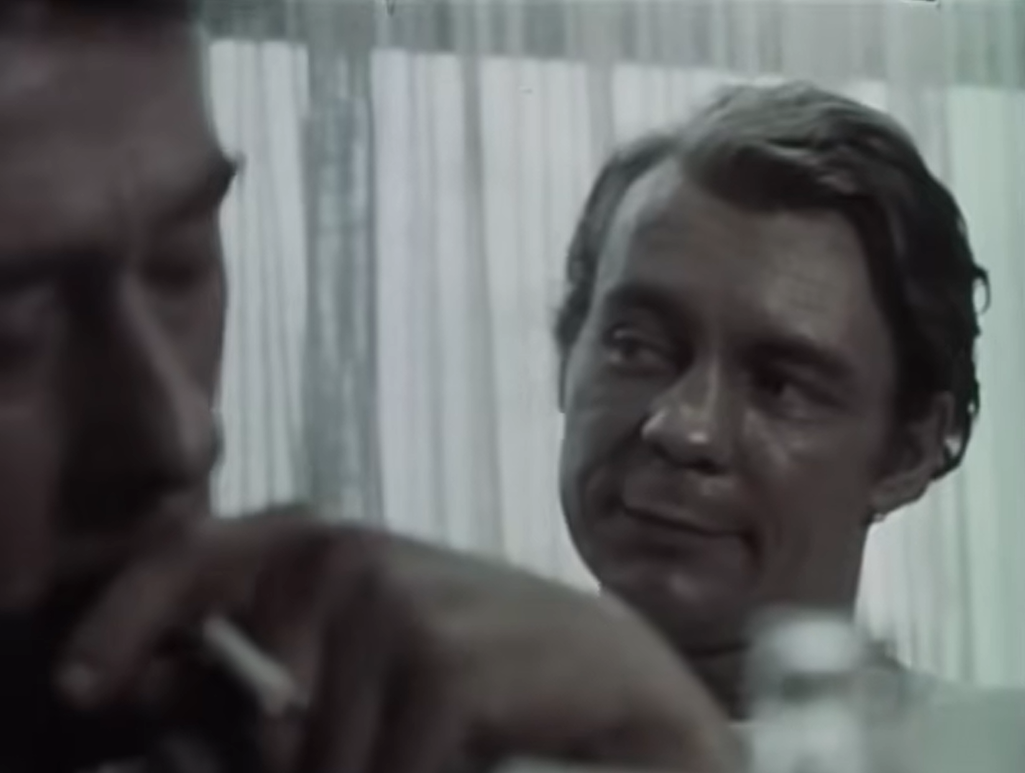
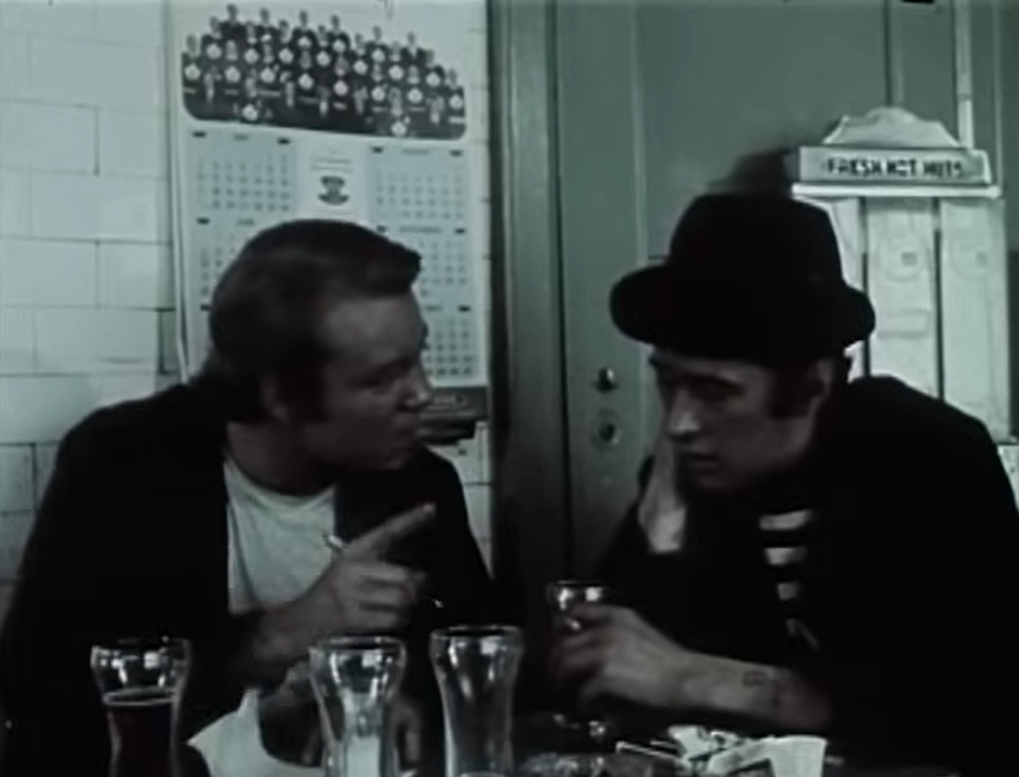
    As Peary writes, this “excellent $82,000 film (originally shot in 16 mm.)” offers “the other side of Easy Rider, where we watch workers instead of products of the hippie subculture, and people seeking a place (they get work in a bottling plant) instead of an escape.” He notes that “at first you’ll have trouble identifying with these men, who are crude, shamelessly male-chauvinistic”:

    … “and totally ignorant of the fact that their jobs exploit them” (actually, only Bradley is ignorant of this). This quickly changes, however, given that “the city is no paradise, [and] they begin to struggle for work, food, and recognition… As alienated labor, they too begin to realize that there is something inherently wrong with the system.” (Again, I would argue that McGrath sees this loud and clear, while for Bradley, it’s an elusive truth.)

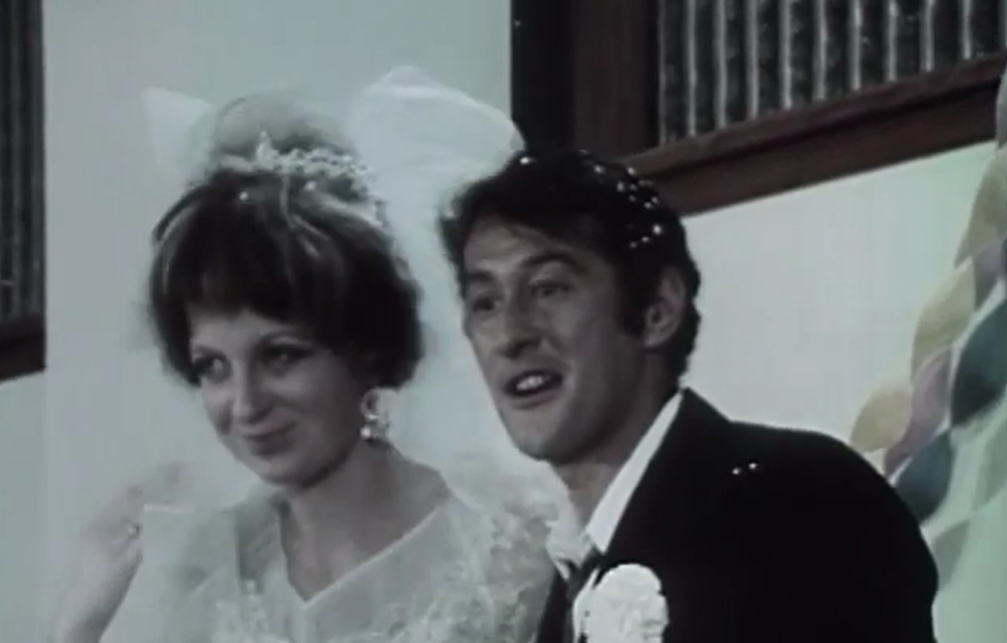
    Peary points out that the “film contains many exceptional sequences,” including Bradley telling “everyone at his wedding reception that he has married for love and not because his wife is pregnant”:

    … and “a group of unemployed hangers-on gathered around a Conway Twitty look-alike in a park, while he sings Merle Haggard’s classic ‘Sing Me Back Home.'”

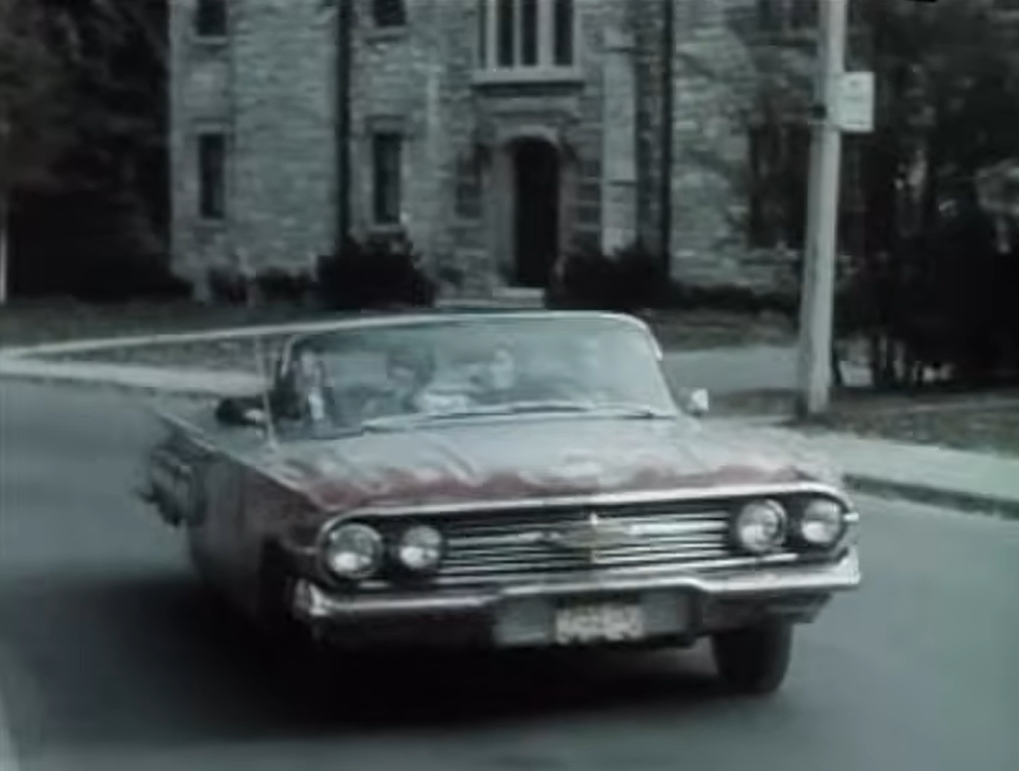
    Peary notes that McGrath and Bradley — who were “cast because of their ability to improvise” — “create a very convincing camaraderie in roles that seem influenced by English working-class films,” with “the scene in which they drive around on a double date (each closer to the other than to the woman) remind[ing] one of similar scenes in The Loneliness of the Long Distance Runner.”

    He ends his review by referring to this as a “human, sincere, powerful, and political film” which “has much to say,” and noting that “director Donald Shebib (who was literally starving during production) and writer William Fruet offer us unique insight into the everyday struggle for survival.”

    While I’m not as much of a fan of this film as Peary is, it’s a well-made low-budget tale which packs a punch in its message that survival is tough — even cruel — if you’re not already up on top.

    Notable Performances, Qualities, and Moments:

    • Doug McGrath as Peter
    • Paul Bradley as Joey
    • Jayne Eastwood as Betty
    • Fine cinema verite direction

    Must See?
    No, though it’s worth a look for its beloved historical value in Canadian cinema.

    Links:

    Bronco Billy (1980)

    Bronco Billy (1980)

    “Do you understand what Bronco Billy and the wild west show are all about? You can be anything you want — all you have to do is go out and become it!”

    Synopsis:
    When the owner (Clint Eastwood) of a struggling traveling rodeo show runs into an heiress (Sondra Locke) marrying a man (Geoffrey Lewis) simply to earn her inheritance, a series of interesting adventures ensue.

    Genres, Themes, Actors, and Directors:

    • Clint Eastwood Films
    • Comedy
    • Cross-Class Romance
    • Ex-Cons
    • Heiresses
    • Misfits
    • Rodeo
    • Westerns

    Response to Peary’s Review:
    As Peary writes, “No one expected Clint Eastwood ever to direct and star in a sweet movie, or a picture rooted in screwball comedies of the thirties, but this charmer came right out of the blue.” He notes that since this is an Eastwood movie, “his group of misfits can be whoever they want to be,” and his own character (“Bronco Billy”) is naturally “the best sharpshooter in the West.”

    When “naive, headstrong, sentimental Billy falls for snooty millionairess Antoinette Lilly (Sondra Locke), who hides out with his show,” the tables are turned given that “Eastwood is the oddball and the woman finds him beguiling rather than the other way around.” He argues that “Eastwood and Locke” (a real-life couple making their fourth of six films together) “are a wonderfully offbeat love match”:

    … though “the picture has more to do with loyalty than love.” He points out that “the fierce loyalty felt by Billy’s troupe for him and each other reflects the loyalty Eastwood felt toward the actors in his ‘stock company’ and the technicians who repeatedly worked for him.”

    Peary was writing his review of this film at a time when Eastwood was at the top of his directing game, so it’s easy to understand how critics were playing close attention to what he was putting out. These days, we have a good sense of what Eastwood’s overall oeuvre has been, and this flick is a gentle enough entry — though the gaps in its screenplay (by Dennis Hackin) are pretty glaring. For instance, the entire subplot around Locke marrying Lewis — and a plot by her stepmother (Beverlee McKinsey) and family lawyer (William Prince) to pretend Lewis has killed her — is sorely underdeveloped:

    … not to mention unrealistic. However, the main focus here is on these quirky characters being okay with who they are, and finding a way to do what they love — which is ultimately what it offers.

    Notable Performances, Qualities, and Moments:

    • Good use of location shooting

    Must See?
    No, though it’s worth a look if you’re an Eastwood fan.

    Links:

    Boot, Das / Boat, The (1981)

    Boot, Das / Boat, The (1981)

    “There’s a limit — we can only take so much pressure.”

    Synopsis:
    A photo-journalist (Herbert Gronemeyer) chronicles the harrowing existence of a captain (Jürgen Prochnow) and his crew on board a German U-boat patrolling the North Atlantic in 1941.

    Genres, Themes, Actors, and Directors:

    • At Sea
    • German Films
    • Submarines
    • Survival
    • World War Two

    Response to Peary’s Review:
    Peary writes that this “award-winning, epic WWII film by director Wolfgang Petersen, whose script was adapted from a popular autobiographical novel by former war correspondent Lothar-Günther Buchheim,” is a “well-made picture show[ing] a different, harrowing side of war: that experienced by Germany’s 40,000 U-boat men, of whom more than half were killed.”

    He points out that “we are made to feel their discomfort and claustrophobia while inside their cramped, muggy, smelly, underwater vessel [and] their monotony, constant fear, and panic when enemy ships hover above.” He argues that “the picture is frightening because Petersen uses horror-movie techniques: the giant enemy ships emerging from the mist and lurching through the water are like great sea serpents”:

    … [and] “the sweating, shouting, terrified men rushing about the ship in search of danger points (where water leaks in) could very well be characters in Alien.” Meanwhile, “the U-96 itself is like a room in a haunted house, where trapped men nervously listen to the spooky noises (i.e., death knells) on the outside. These men are in hell.”

    Indeed, they are — a version of it, anyway. Peary points out that “Peterson’s goal was to show that all men in war are victims, certainly not a controversial theme” — though the picture was “criticized by those who thought Peterson — who chose not to deal with the soldiers’ politics — was apologizing for the Nazi soldiers.” Peary adds that “the film should be praised for debunking a myth that was held forth in Germany for 40 years — that German submarine warfare was a heroic, glorious adventure.”

    In his review, Peary touches briefly on the fact that this “story became a five-hour German TV movie;” indeed, in the time since Peary’s GFTFF was published, several different home video versions have been released, including a 209-minute 1997 director’s cut version (which is what I watched for this review).

    Peary also highlights the performance by Prochnow, who “makes a strong impression as the U-boat’s commander, who hates his superiors and war.”

    Indeed, Prochnow is riveting (and perfectly cast, despite being older than the original commander) — and he’s surrounded by a cast of excellent performers, many of them inexperienced actors; the casting directors travelled around Germany to find men to represent various geographical areas.

    Just a few more interesting facts about this film, which has become a solid modern classic and a bit of a cult favorite:

    • This was the most expensive German movie ever made at the time.
    • This is a rare foreign film to be regularly referred to by its native title rather than a translation (which would be “The Boat”).
    • American directors John Sturges and Don Siegel were originally considered to helm this film.
    • This was the most successful foreign film to date at the time of its release in the U.S.
    • Das Boot received six Oscar nominations (but not one for Best Picture).
    • Cinematographer Jost Vacano used mostly a hand-held camera for interior shots, and limited himself to shooting within the real confined space limits of a submarine.
    • All actors were bilingual in German and English, and did their own voiceovers for the dubbed English version.

    Note: Film fanatics will likely notice Günter Lamprecht — star of Berlin Alexanderplatz (1980) — in a small role as Captain of the Weser.

    Notable Performances, Qualities, and Moments:

    • Jürgen Prochnow as Capt. Lehmann-Willenbrock
    • Fine supporting performances by the (largely unknown) cast
    • Jost Vacano’s cinematography
    • Highly effective sets, special effects, sound production, and editing

    Must See?
    Yes, as a powerful foreign classic.

    Categories

    • Foreign Gem
    • Oscar Winner or Nominee

    (Listed in 1001 Movies You Must See Before You Die)

    Links:

    Moonlighting (1982)

    Moonlighting (1982)

    “I must concentrate on work; I must drive them harder.”

    Synopsis:
    When a Polish construction manager (Jeremy Irons) arrives in London with three non-English-speaking co-workers (Eugene Lipinski, Jirí Stanislav, and Eugeniusz Haczkiewicz) to illegally reconstruct a condo for his boss, he becomes increasingly stressed and paranoid about ensuring the work gets done, even amidst strife in their home country.

    Genres, Themes, Actors, and Directors:

    • Corruption
    • Immigrants and Immigration
    • Jerzy Skolimowski Films
    • Living Nightmare
    • Ruthless Leaders

    Response to Peary’s Review:
    As Peary writes, this “beguiling film (shot and edited in one month’s time) from Polish director Jerzy Skolimowski” is at first “comedic in tone but later it’s an increasingly bleak and desperate political allegory.” In describing the spare but powerful story, Peary writes that Irons “is a married, educated Polish construction worker living in Warsaw” who, “because he knows how to speak English,” is sent by his “wealthy boss (looking for cheap labor)” to “London to turn a dull flat into a snazzy retreat to which the boss can take his mistress.”

    He “takes three workers with him” who he selects “because they don’t know English and are stupid [sic], so he figures they’ll be easy to supervise” — and, “indeed, they do everything he says, including staying inside so no one will know they are working illegally.”

    However, “as their stay goes on, Irons becomes more and more isolated from his men — becoming their slavedriver and watchdog and the person who rations food and clothing allotments,” “keeps all the money the boss has sent them, takes away their source of entertainment and news…, [and] manipulates them into working more hours by altering his watch.” Perhaps worst of all, “he doesn’t tell them… when he learns that there has been a military crackdown in Poland and Solidarity has been outlawed,” given “he fears they will stop work at the depressing news.”

    Ironically, “in effect, [Irons] has deprived them of all their freedoms”: their “lives are so oppressive under Irons that they are enduring (on a much less frightening level, of course) what their fellow workers are going through back in Warsaw.”

    Indeed, this film represents a living nightmare on numerous levels: not only are Irons and his men perceived either as non-entities or nuisances (much like thousands of immigrant workers continue to be all over the world), but there is nobody to keep an eye on (or temper) Irons’ increasing totalitarianism and paranoia. He is so fixated on working for a short-term monetary goal that any ends seem to justify the means — including repeated bouts of risky shoplifting. Meanwhile, he’s miserable; this is not a man getting high on his own power so much as someone blindly carrying out orders — and involving others — “as a puppet of the Polish elite.” By the film’s appropriately bleak ending, you will truly feel the hopeless injustice of their situation — which is, precisely, the point.

    Notable Performances, Qualities, and Moments:

    • Jeremy Irons as Nowak
    • Tony Pierce Roberts’ cinematography

    • Stanley Myers’ score

    Must See?
    Yes, as a uniquely effective film.

    Categories

    • Good Show

    Links: