Search, The (1948)
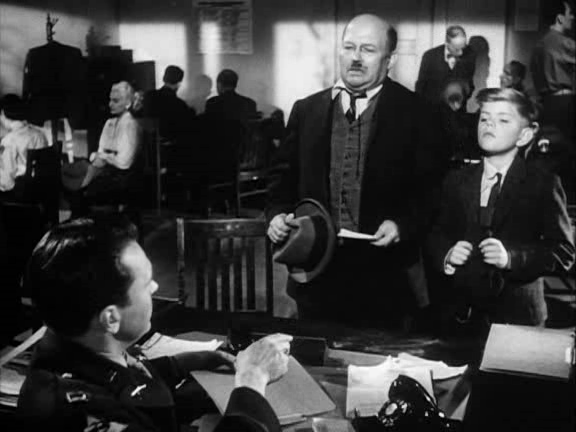
“There’s nothing in my life if I don’t find my child.”
|
Synopsis: |
|
Genres, Themes, Actors, and Directors:
Review: Redeeming Qualities and Moments:
Must See? Categories
Links: |
“The rules are the only thing we’ve got!”
|
Synopsis: |
|
Genres, Themes, Actors, and Directors:
Review: The result is a fascinating portrait of organic, lethal anarchy. Left to their own devices, the boys inevitably turn on one another and devolve into madness, spurred on by the particularly paranoid Jack (Chapin). For better or for worse, Brook cast the film according to what he saw as character types in the boys, allowing them simply to enact their own selves within the skeleton of the script. (Meeting up decades later for Time Flies, Brook was curious how much the film had impacted the boys, and/or how much they still resembled their characters; while artistically sound, this was clearly a problematic choice to reveal to them after the fact.) With that said, the boys’ naturally powerful performances — as well as Hollyman’s stark cinematography, the isolated settings, and Raymond Leppard’s unique soundtrack — all contribute to the film’s success. This remains an appropriately terrifying tale about leadership (or lack thereof) run amok, one which readers and viewers should continue to revisit — especially in light of current and ongoing world events. Redeeming Qualities and Moments:
Must See? Categories Links: |
“Just remember that while it’s your lips that are being kissed, it’s my reputation that will be suffering.”
|
Synopsis: |
|
Genres, Themes, Actors, and Directors:
Review: Redeeming Qualities and Moments:
Must See? Categories
Links: |
“Drugs eat away their will to resist, making conquest that much easier. An excellent military strategy, isn’t it?
|
Synopsis: |
|
Genres, Themes, Actors, and Directors:
Review: Redeeming Qualities and Moments:
Must See? Links: |
“Now that we’ve won the war, we musn’t lose the peace!”
|
Synopsis: |
|
Genres, Themes, Actors, and Directors:
Review:
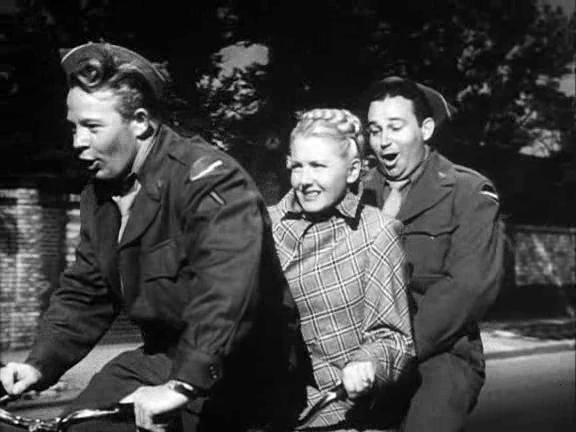
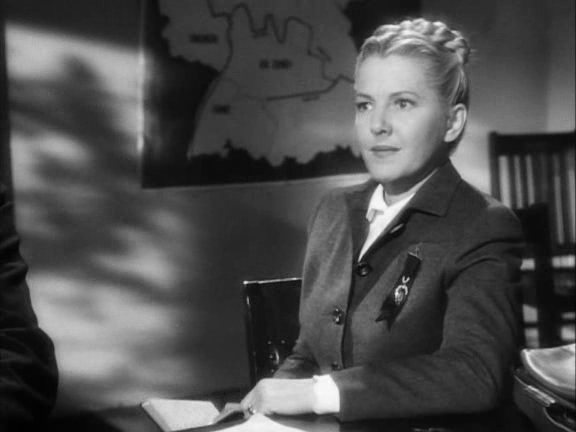
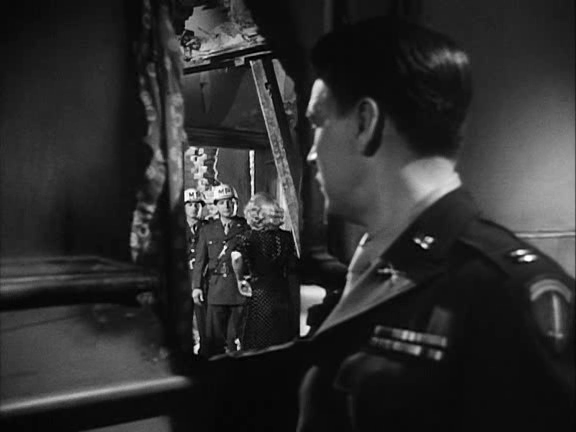
Once out of the car, Arthur herself is quickly accosted by two GIs on bicycles who use all their techniques on her (offering candy bars, etc.).
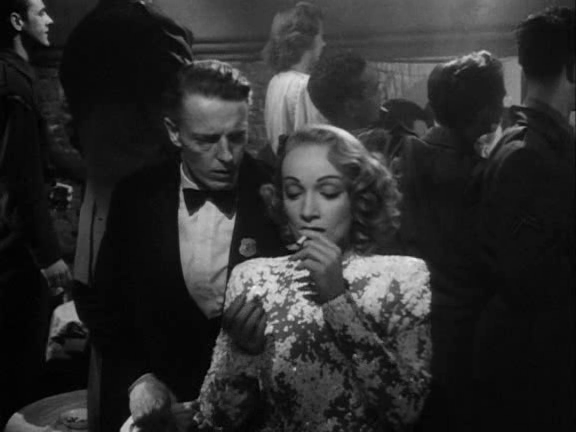
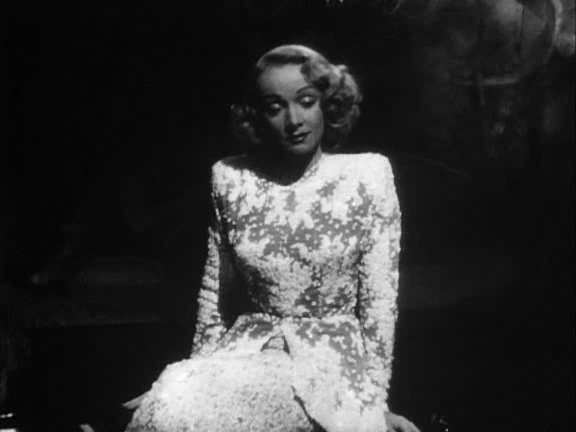
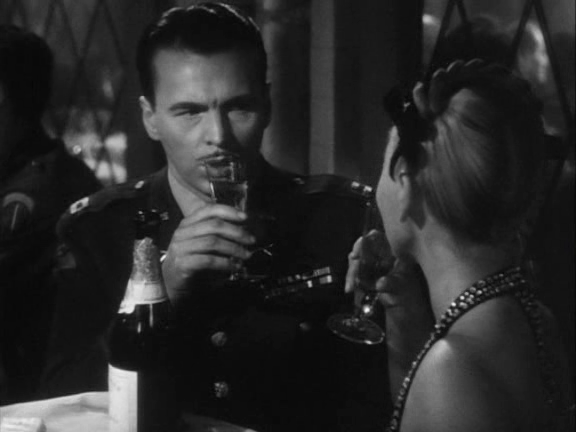
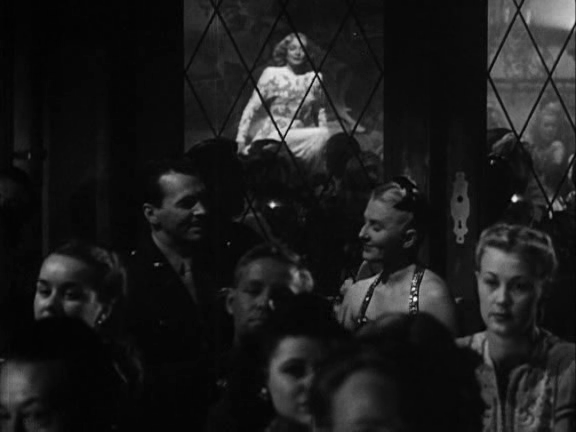
At the heart of the story, however, is Dietrich — as radiant as ever at 46, singing several sultry songs and boldly inhabiting a Nazi-sympathizing opportunist completely opposite her real-life stance as an anti-Fascist activist.
Lund fills the bill well as the central male love interest, and Charles Lang’s cinematography nicely captures the shadowy nature of an occupied city. This one remains worth a look. Redeeming Qualities and Moments:
Must See? Categories
Links: |
“We have a nasty little motto around here: every man has his price.”
|
Synopsis: |
|
Genres, Themes, Actors, and Directors:
Review:
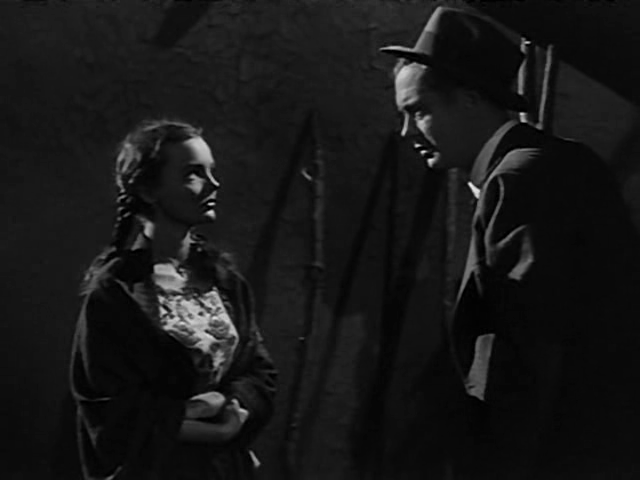
Perhaps due to logistical constraints, far too many scenes are static, simply showing Marlowe’s conversation partners talking into the camera, most of them over-emoting without subtlety. (Faring particularly poorly is Jayne Meadows as Mildred Haveland, a landlady whose nerves appear to be merely skin-deep.)
The storyline is standard private eye fare, with shady women, belligerent police, a tanned lothario (Dick Simmons):
… fistfights, and plenty of secret identities — but it’s hard to remember much about this flick once it’s done other than the highly experimental way in which it was filmed. Redeeming Qualities and Moments:
Must See? Links: |
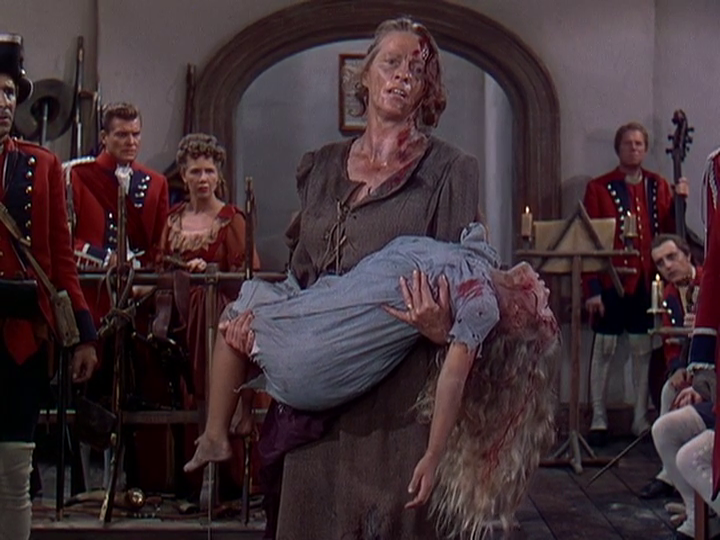
“We may need more guns than words to build a future.”
|
Synopsis: |
|
Genres, Themes, Actors, and Directors:
Review:
… albeit with an evil White profiteer (Da Silva):
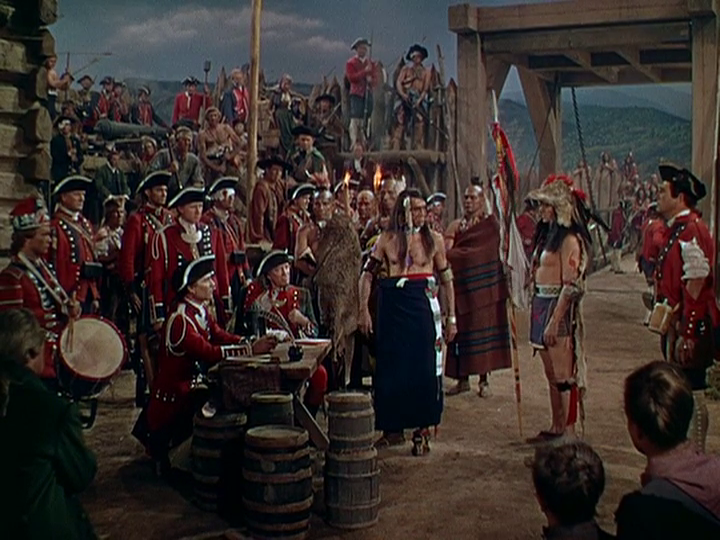
abetting their efforts. Given privileged star status are stalwart Cooper and plucky Goddard, destined to end up back together no matter how much fighting, bloodshed, and Indian torture they must endure in the meantime. Adding insult to injury is the simplified and (literally) white-washed treatment of slavery as a purely White endeavor (!) akin to indentured servitude. The redeeming elements of this flick — confidently directed, as usual, by DeMille — are the stunning Technicolor cinematography and vivid costumes and sets, which bring the era to life. Redeeming Qualities and Moments:
Must See? Links: |
“Is it my fault you’ve been a widow too long?”
|
Synopsis: |
|
Genres, Themes, Actors, and Directors:
Review:
Peary doesn’t review The Rose Tattoo in his GFTFF, but he does name Magnani Best Actress of the Year in his Alternate Oscars, where he concedes that while the film itself “doesn’t really hold up today”, “Magnani is still amazing to watch”. He adds: “There was no one else like her on the American screen. She holds nothing back; her performance is vibrant, lusty, [and] witty.” While Lancaster’s “extremely aggressive, not-too-bright trucker” is simply annoying (this falls squarely into the category of his “just too much” performances):
… it is indeed “a treat to see Magnani’s character finally let herself laugh and be happy with him” because “this actress had the uncanny ability to make us feel whatever emotions her women feel”. The Rose Tattoo‘s storyline isn’t particularly compelling — Serafina needs to face up to her former husband’s infidelity and move on, and of course her daughter should be free to make her own romantic choices — but Magnani’s performance alone does indeed make the film a must-see. Redeeming Qualities and Moments:
Must See? Categories
Links: |
“I keep saying to myself that I’m the same as everybody else — but I wanted to prove it, to show you.”
|
Synopsis: |
|
Genres, Themes, Actors, and Directors:
Review:
(Apparently Stratton himself was moved to tears by the performance, and thrilled that Stewart was chosen for the role.) Moorehead is somewhat typecast as Stewart’s stern mother, but is allowed to show a refreshing level of nuance in her eventual support of his career and wife.
The baseball scenes (utilizing plenty of real-life cameos) feel accurate and authentic to me, though I’m not a fan so can’t say for sure.
Redeeming Qualities and Moments:
Must See? Links: |
“Our friend Shorty was the kind of a crook that nobody likes, not even me — and I’m rather broad-minded about such things.”
|
Synopsis: |
|
Genres, Themes, Actors, and Directors:
Review:
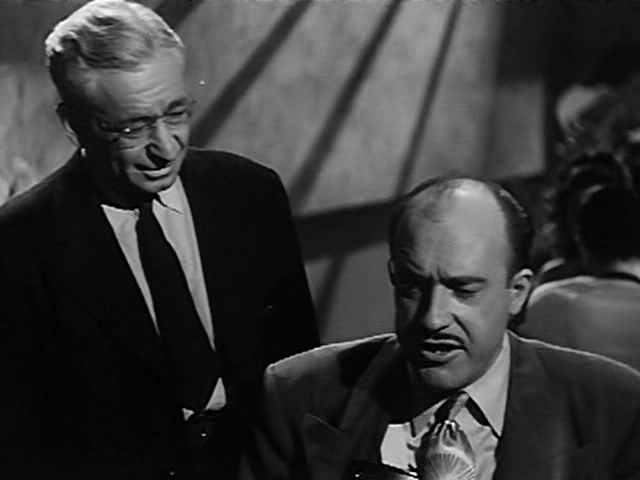
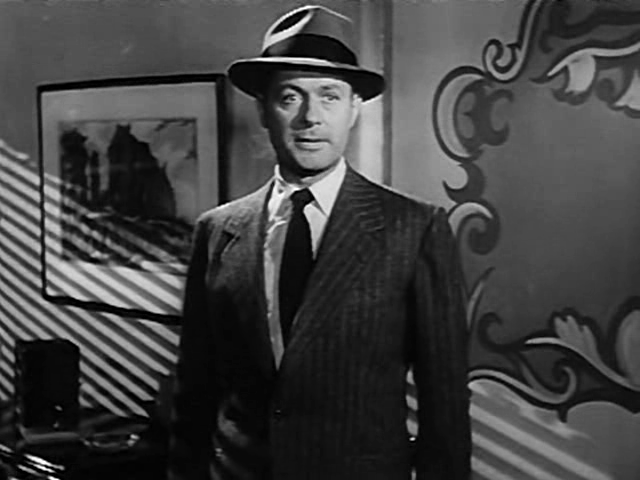
The film is atmospherically shot and well-acted throughout, particularly by Gomez (who received an Oscar nomination) as Montgomery’s unexpected supporter:
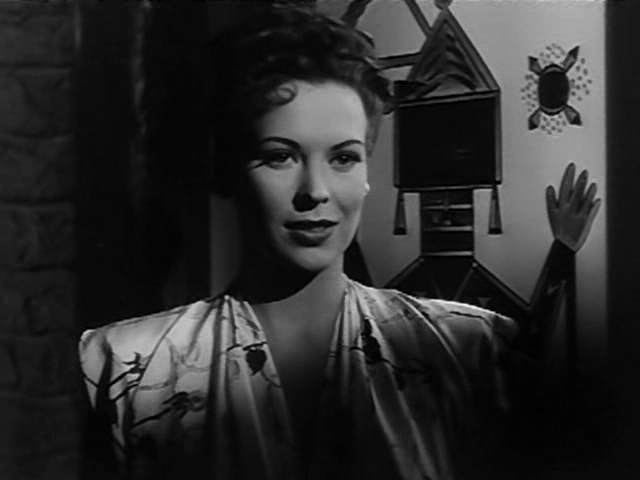
… and Hendrix as petite Pila — though her enigmatic character is a challenging one to parse, given that we never really understand the thrust behind her odd fascination with protecting Montgomery (could the cross she wears around her neck be a sign of some kind?).
With that said, Hendrix is dedicated enough to her characterization that we eventually believe in Pila, and she’s certainly a pivotal component of this story. The clever script pulls no punches in presenting a corruption-filled universe, complete with a shrill, hearing-impaired villain (Clark):
… a government operator (Art Smith) on hand to warm Montgomery that he’s three steps ahead of him; and a gangster’s moll (Andrea King) who is clearly out to game Montgomery in one way or another.
[King is intense in a different way here than her ’50s housewife character in Red Planet Mars (1952).] The cultural world on display is nicely non-Hollywood, with plenty of authentic-looking extras peopling the screen.
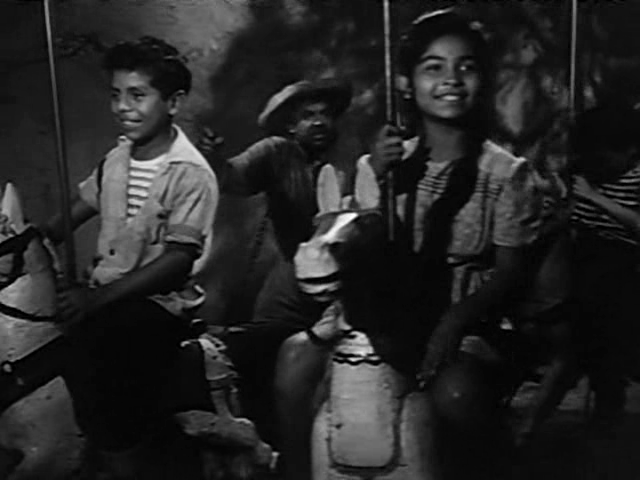
DVD Savant, however, highlights the film’s problematic approach towards Mexican-Americans, noting: “Pancho [Gomez] instantly reveals himself as an underclass ‘Gunga Din‘ sidekick type, willing to put his life on the line for a handsome caballero he knows absolutely zero about”, and adding, “The film isn’t racist because it shows Gagin [Montgomery] and Marjorie [King] ignoring Pila or condescending to her, but because it idealizes her as a non-white ‘princess’, who is magical but cannot end up with the hero.” Savant argues that Mexican-Americans are ultimately presented as “quaint, sentimentalized” and “do[ing] good things for no reward except to share in the suffering, and when all is done they go back to being quaint.” While this all seems accurate, I view the film as very much a vision of how Gagin sees the world around him, and these depictions ring true to his sensibility; he grows in his cultural understanding and empathy by spending time with people (Mexican-Americans) who are authentically trustworthy, and perhaps that’s a realistic enough shift. Redeeming Qualities and Moments:
Must See? Categories
Links: |