Andrei Rublev (1966)
“I’ve spent half my life in blindness.”
|
Synopsis: |
|
Genres, Themes, Actors, and Directors:
Review:
With that extensive caveat noted, the various episodes are as follows: in the “Prologue,” we see a random man (Nikolay Glazkov) floating up to the sky in a hot air balloon, looking down at the vista below him. (This brief sequence does nothing to inform us about what we’re about to watch, though it’s beautifully shot.)
In the first formal episode — entitled “The Jester (Summer 1400)” — we see our title character (Anatoliy Solonitsyn) and two other monks, Danil (Nikolay Grinko) and Kirill (Ivan Lapikov), wandering into a barn where a jester (Rolan Bykov) is performing. (The jester does not meet a happy fate.)
Next we see jealous Kirill encountering “Theophanes the Greek (Summer–Winter–Spring–Summer 1405–1406)” and hoping to apprentice with him — but much to Kirill’s displeasure, Theophanes is more interested in working with Rublev.
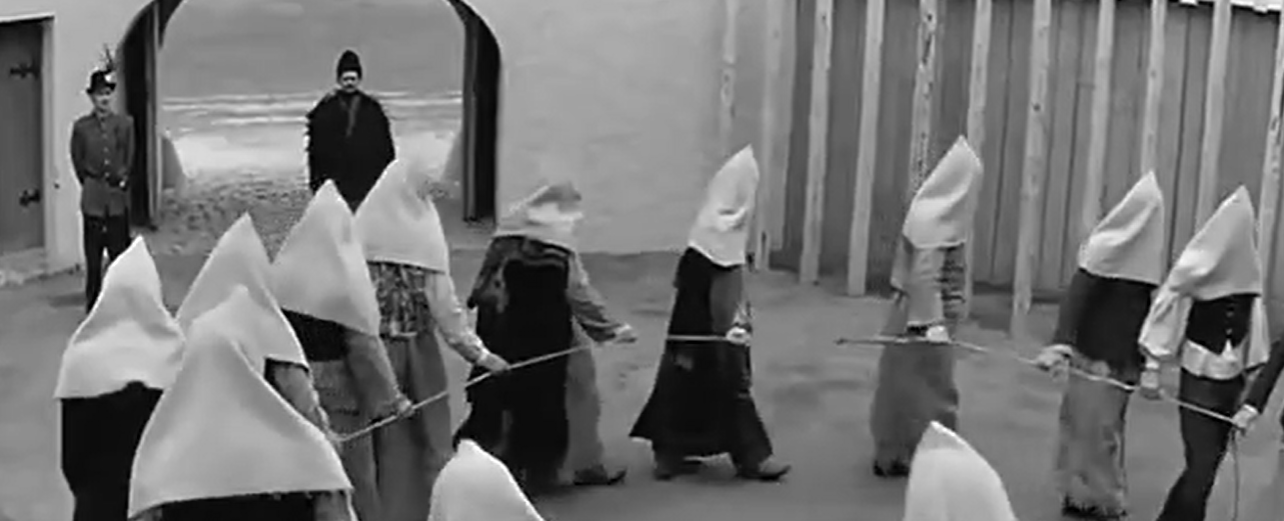
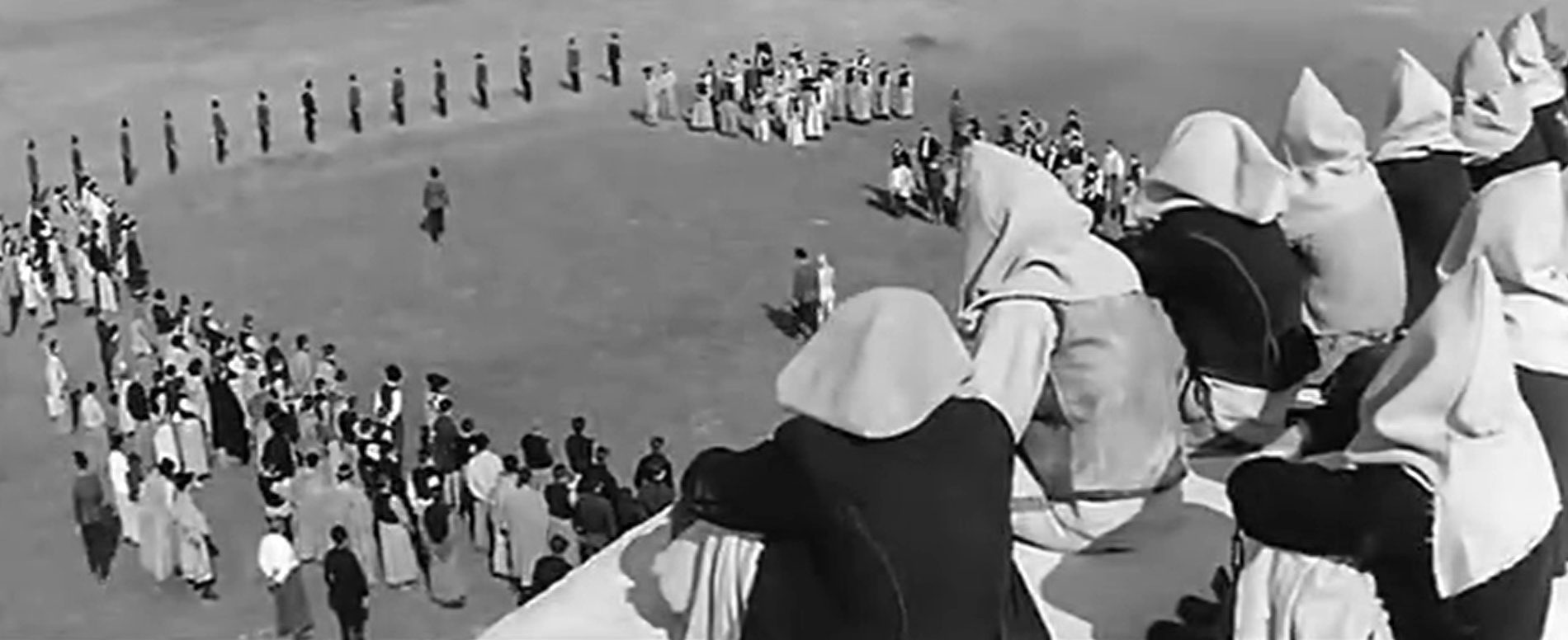
“The Passion (1406)” depicts a snowy, violent passion play:
… while “The Holiday (1408)” shifts gears to show Rublev encountering a party of reveling pagans.
“The Last Judgement (Summer 1408)” includes a hideous scene of vengeance in the forest, which Rublev responds to by angrily throwing paint onto the wall of a church he’s working in.
The next episode — “The Raid (Autumn 1408)” — is undoubtedly the most disturbing of them all, showing the ruthless invasion of a village by Tatars on horseback; only Rublev and a mute female “fool” (who we were introduced to in the last sequence) are left alive.
In “Silence (Winter 1412),” we see that Rublev is now in a monastery, having taken a vow of silence after killing someone during the raid. Kirill comes and begs for forgiveness, too.
The last episode — entitled “The Bell (Spring 1423-Spring 1424)” — is surprisingly gripping, though we’re suddenly following an entirely new character/artist: the son of a deceased bell-maker who is attempting the dangerous work of overseeing the casting of a giant bell (if it doesn’t work, he will be beheaded).
“The Epilogue” is finally in color, showing images of the real Rublev’s actual work.
If you don’t feel like you understand much about Rublev himself from this overview of the film, you’re not alone — however, it’s an engaging enough visual experience that it should be seen at least once. Notable Performances, Qualities, and Moments:
Must See? Categories
(Listed in 1001 Movies You Must See Before You Die) Links: |