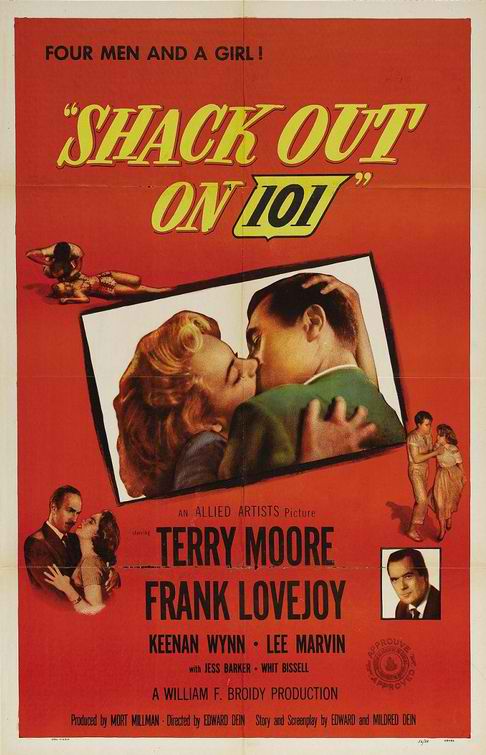
Shack Out on 101 (1955)

Shack Out on 101 (1955)

“The apes have taken over — while we were busy watching television and filling our freezers, they’ve come out of the jungle and moved in!”

Synopsis:
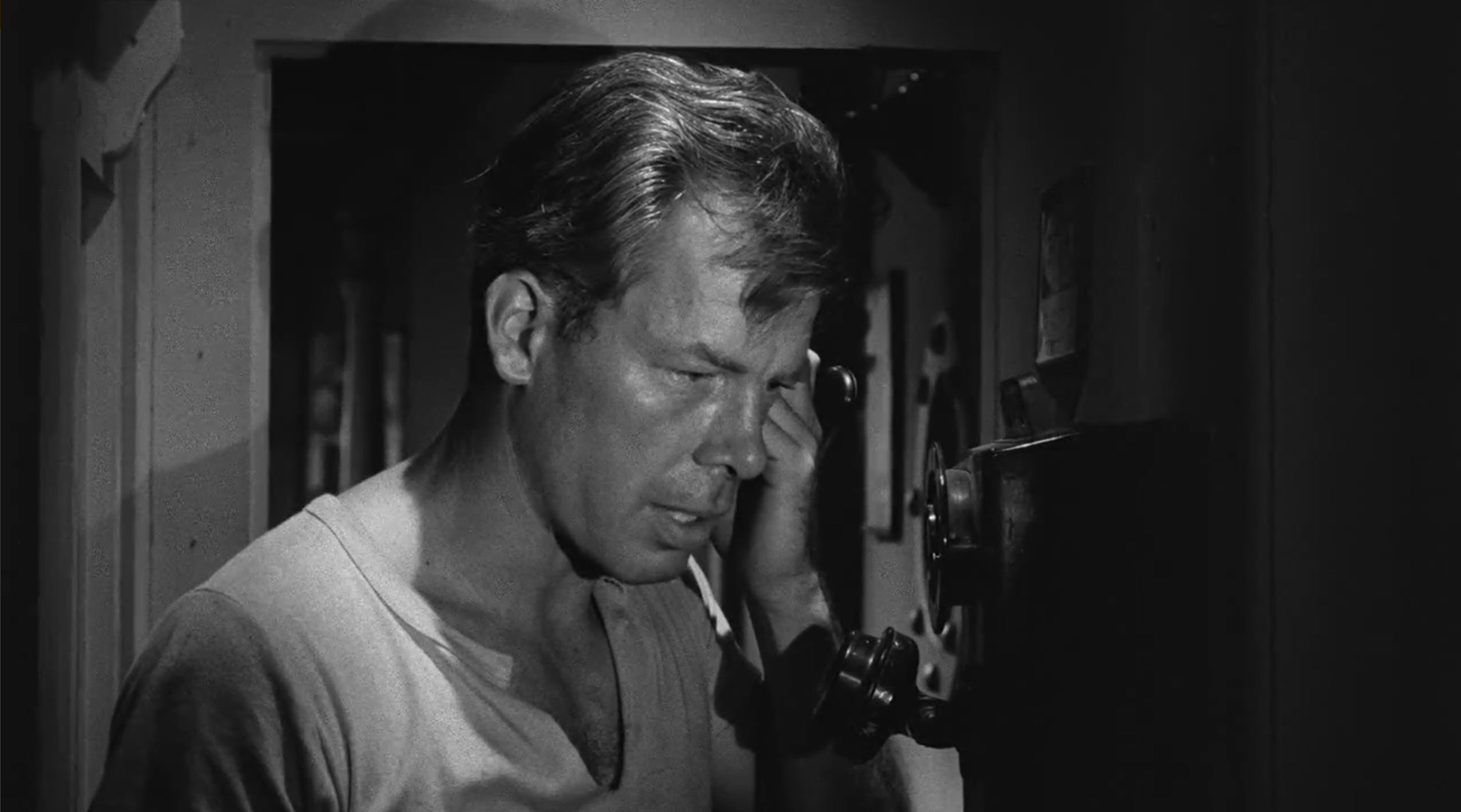
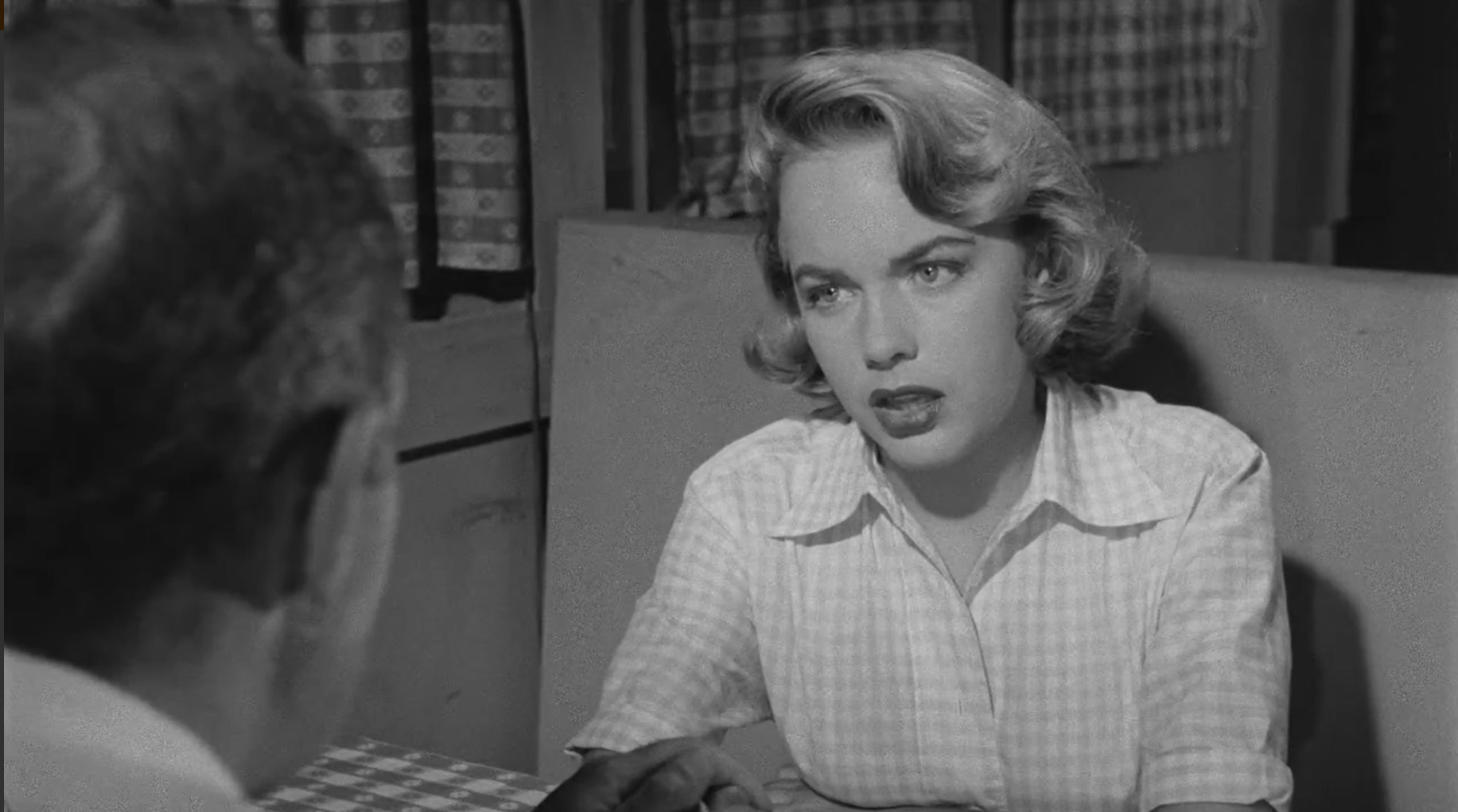
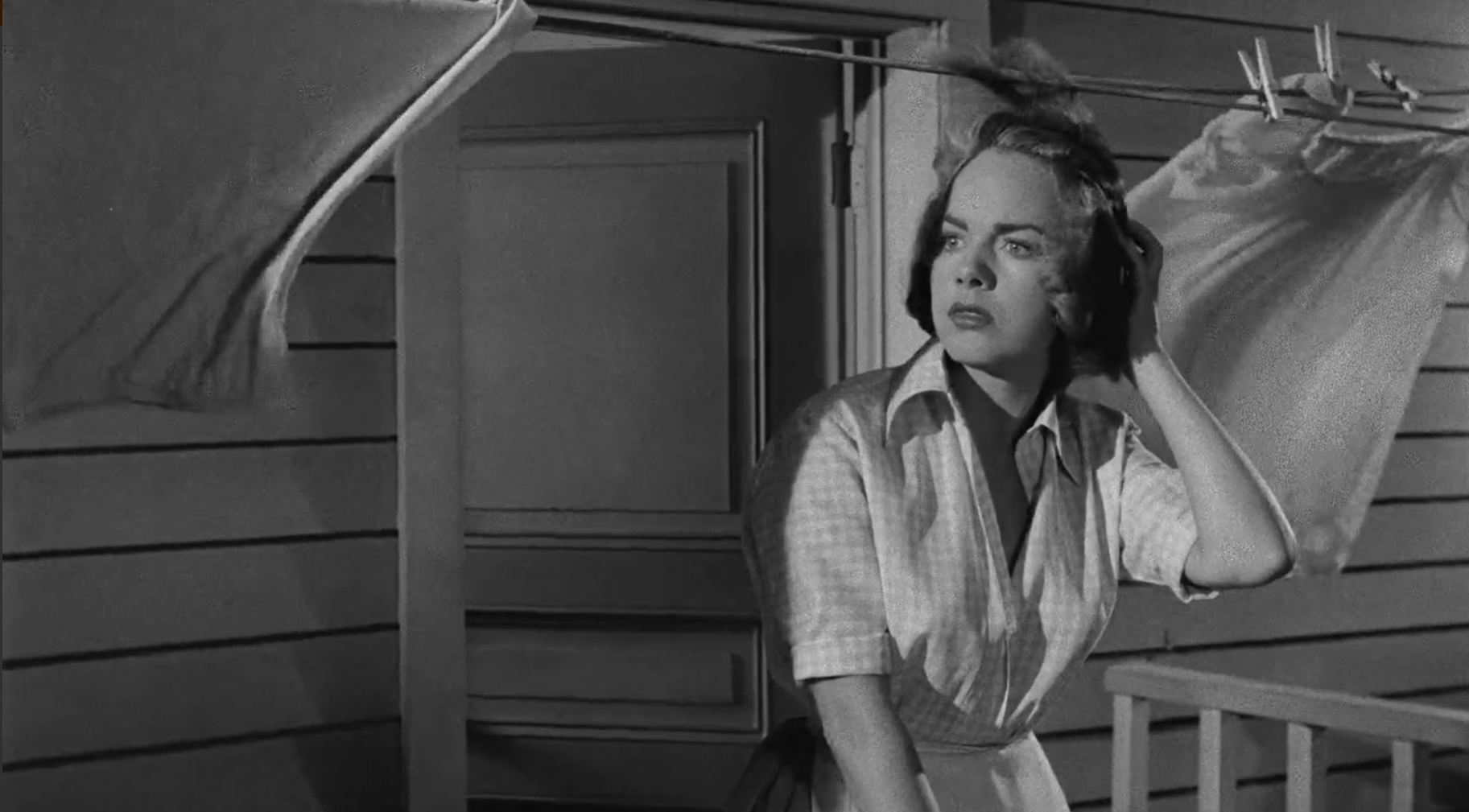
A waitress (Terry Moore) at an isolated seaside cafe discovers that her physicist boyfriend (Frank Lovejoy) and the cafe’s violent cook, “Slob” (Lee Marvin), are smuggling nuclear secrets out of the country.

Genres, Themes, Actors, and Directors:

  • Cold War
  • Keenan Wynn Films
  • Lee Marvin Films
  • Mistaken or Hidden Identities
  • Propaganda
  • Spies
  • Terry Moore Films

Review:
Despite its low budget and limited locales, this character-driven drama remains an effectively suspenseful thriller about Cold War paranoia and patriotism. The film possesses a fair amount of levity (especially in the scene where Wynn and Marvin are lifting weights), and plenty of reliably zingy dialogue:

“Slob’s got an eight-cylinder body and a two-cylinder mind!”

Plus, the acting by everyone involved is well above average for a B-movie, and there are enough plot twists to keep you on the edge of your seat.

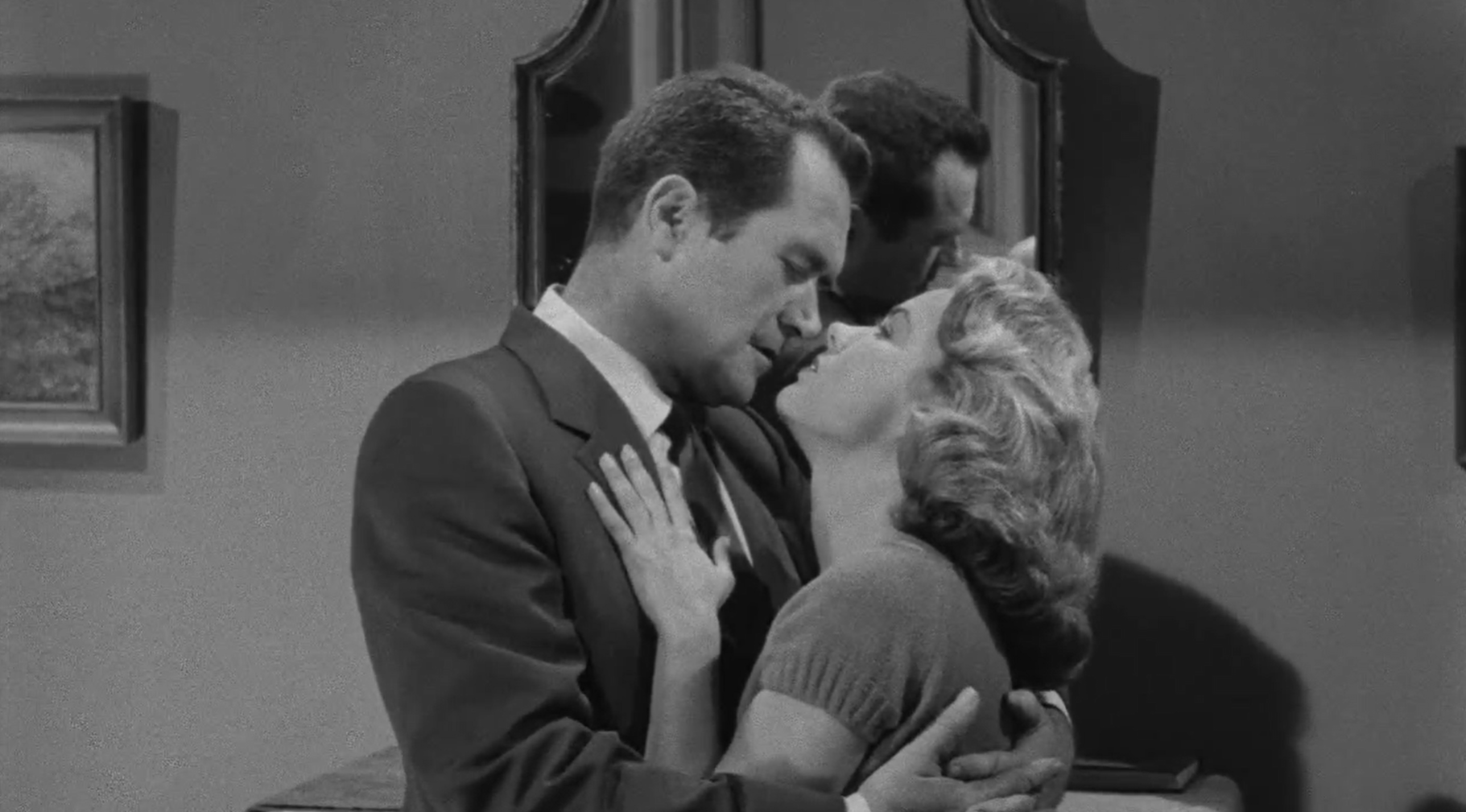
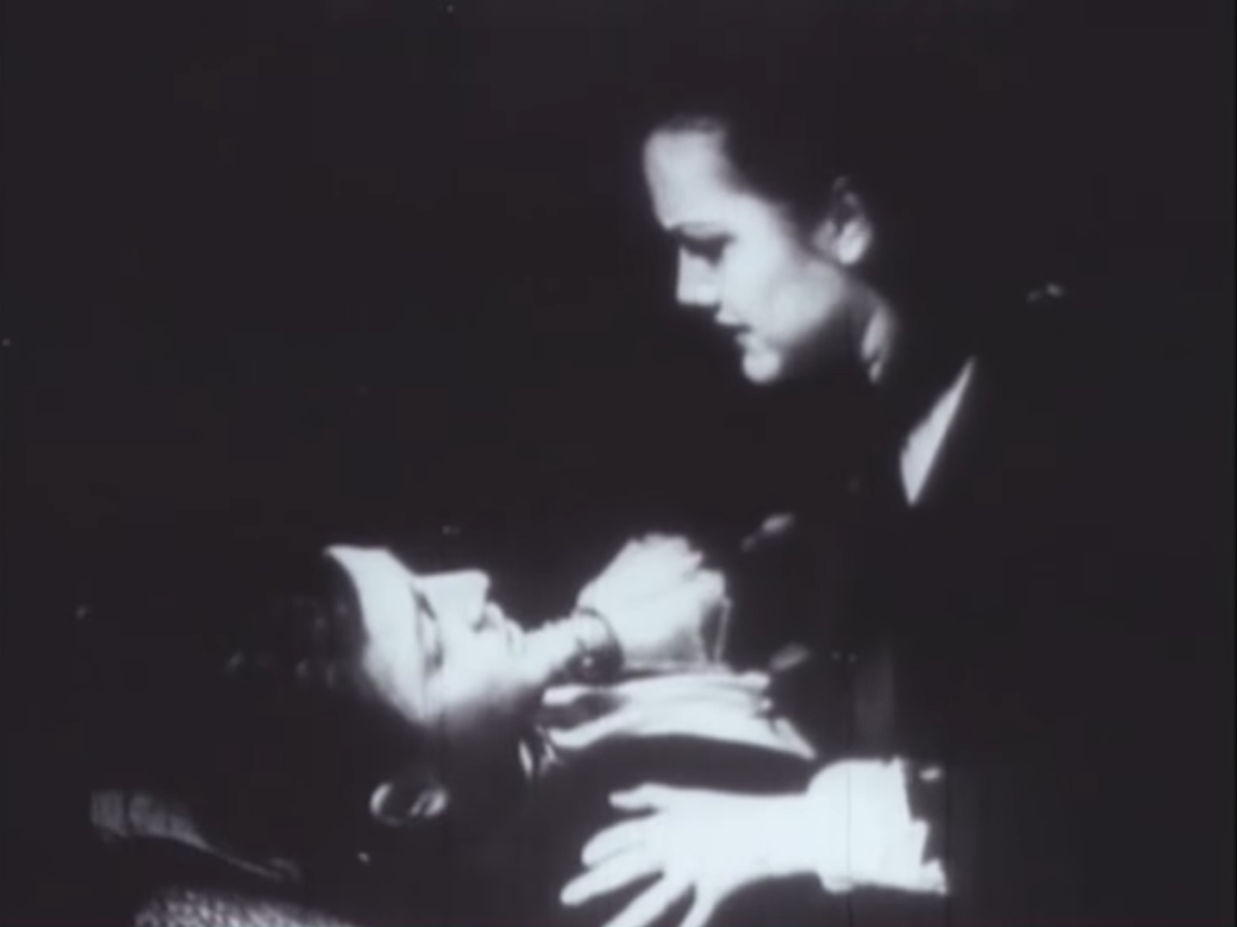
Favorite scene: Moore and Lovejoy interspersing kisses with questions about the U.S. Constitution:

Redeeming Qualities and Moments:

  • Lee Marvin in an early yet typically hard-hitting role
  • Keenan Wynn as the hard-working owner of the “shack”
  • Terry Moore as the sexy yet feisty waitress who refuses to stand by and let her beloved country be compromised
  • Fine cinematography and direction

  • Amusingly sincere pro-America dialogue:

    “What form of government is this?”
    “The best!”

Must See?
Yes. This cult film is well worth seeking out.

Categories

  • Cult Movie

Links:

Homicidal (1961)

Homicidal (1961)

“It’s only when hate is dammed up that it breaks out in murder!”

Synopsis:
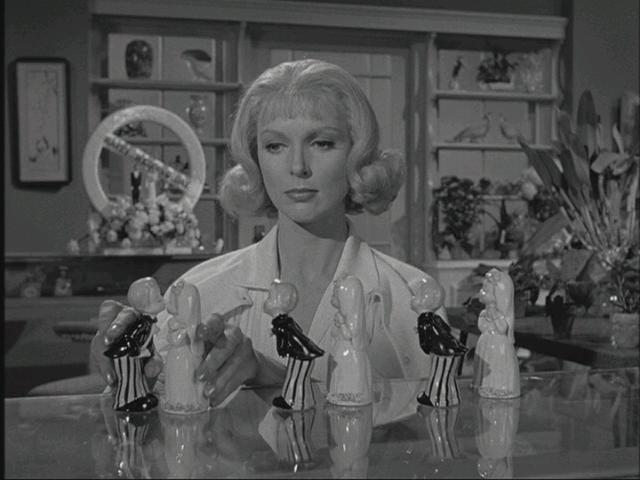
An attractive blonde (Jean Arless) with deadly motives murders a justice of the peace (James Westerfield) under an assumed name, then returns home to wreak additional havoc.

Genres, Themes, Actors, and Directors:

  • Jealousy
  • Psychopaths
  • Siblings
  • William Castle Films

Review:
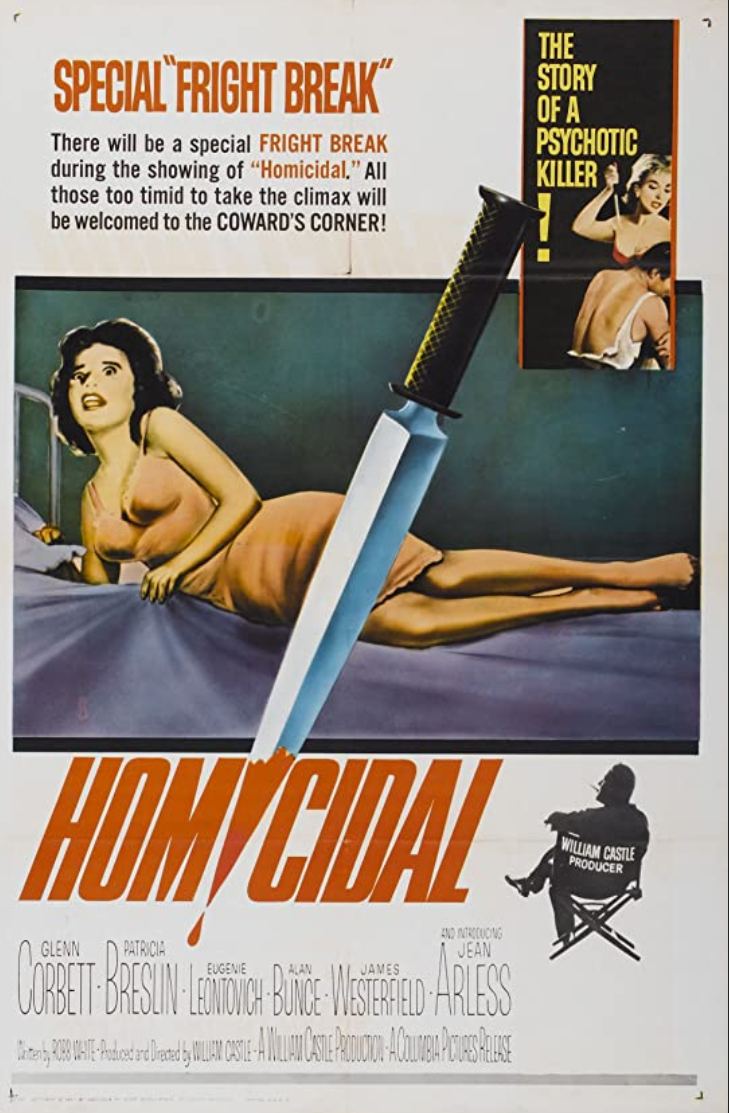
William Castle’s notoriously popular B-grade follow-up to Psycho (1960) comes across as laughably inferior today, with predictable plot twists, uneven acting, bad dubbing, and outrageously naive behavior by every character involved. The film’s primary plot twist is obvious from a mile away, and its storyline is too ridiculous to be genuinely frightening. Amazingly enough, audience members at the time reacted differently, with many kept in the dark about the true identity of one of the key characters, and some actually taking advantage of Castle’s highly publicized “Fright Break” gimmick, in which they could leave the film pre-denouement for a full refund by carrying a yellow “I am a bona fide coward” card and waiting in the corner of the lobby.

Despite its obvious flaws, however, Homicidal comes across today as a reasonably enjoyable cult film, primarily because all its ludicrous elements add up to such silly fun. Plus, though the primary plot twist is far too easy to guess, the hidden secret behind this twist comes as a genuine surprise. If you forget that Homicidal was ever meant as a serious rival to Hitchcock’s masterpiece, you’ll probably get a kick out of its enjoyably campy approach to sibling rivalry, gender, loyalty, and murder.

Redeeming Qualities and Moments:

  • A deliciously campy sensibility
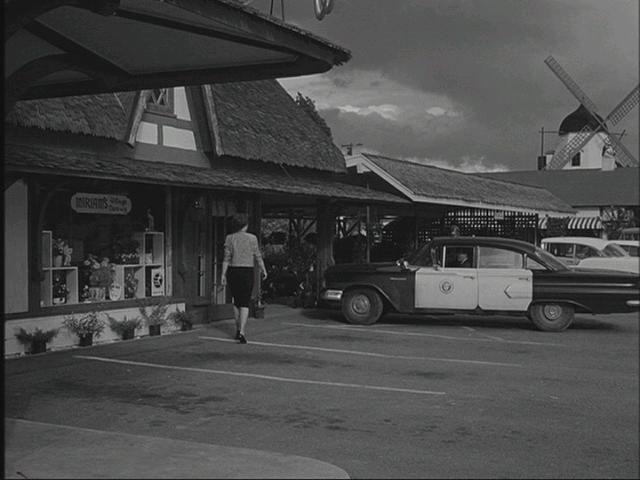
  • Good use of Solvang, California as a small-town locale
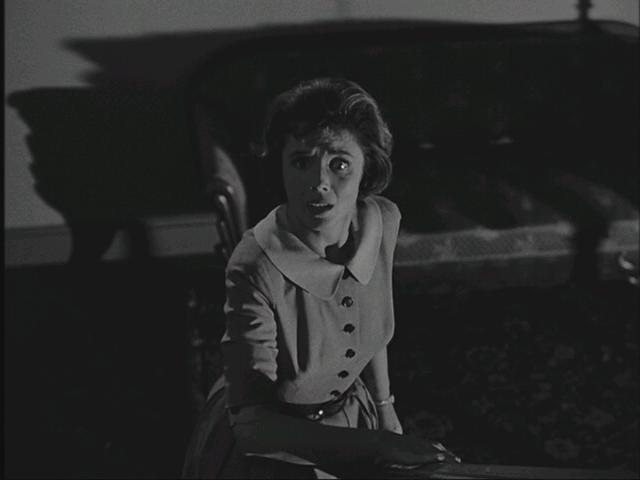
  • Effectively eerie use of lighting and shadows
  • An interesting second plot twist (but you’ll guess the first one immediately!)

Must See?
Yes, simply for its notoriety as a follow-up to Psycho.

Categories

  • Cult Movie
  • Historically Relevant

Links:

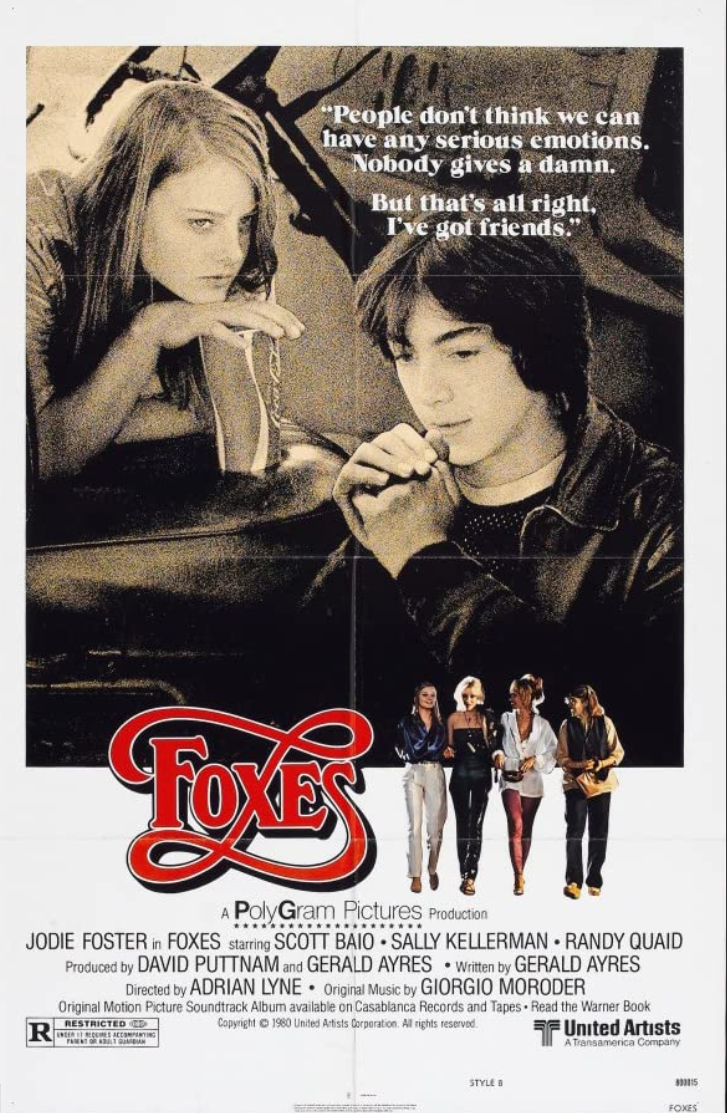
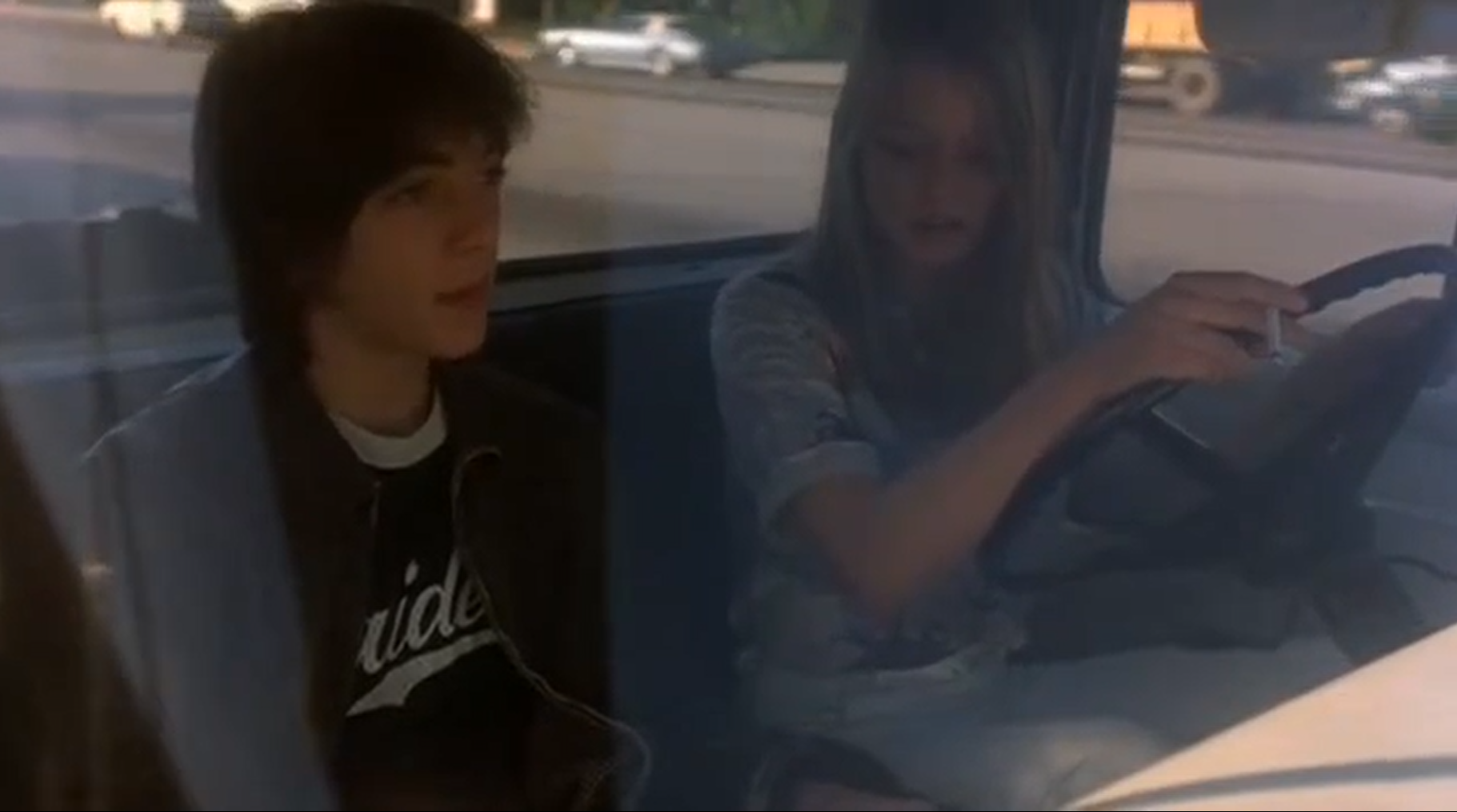
Foxes (1980)

Foxes (1980)

“Ya never know what ya don’t know — y’know?”

Synopsis:
A group of teenage friends (Jodie Foster, Cherie Currie, Marilyn Kagan, and Kandice Stroh) support each other during difficult times.

Genres, Themes, Actors, and Directors:

  • Coming of Age
  • Family Problems
  • Friendship
  • Jodie Foster Films
  • Laura Dern Films
  • Lois Smith Films
  • Randy Quaid Films
  • Sally Kellerman Films
  • Teenagers

Response to Peary’s Review:
This surprisingly disappointing coming-of-age flick showcases all the classic tropes of teenage angst — drug abuse, losing one’s virginity, negative body image, strained relationships with one’s parents, etc. — but fails to fully deliver on any of them. As in Joel Schumacher’s St. Elmo’s Fire (1985), too many characters spoil this movie’s narrative cohesion; Foxes would have been a much better film had it focused exclusively on Foster’s maternal concern for Annie (Currie), whose genuinely disturbing issues are given far too little screen time. Fortunately, despite the limitations of the film’s screenplay, Foster’s performance is as dependable as always; as Peary notes, she’s “terrific, even when her lines aren’t.”

Redeeming Qualities and Moments:

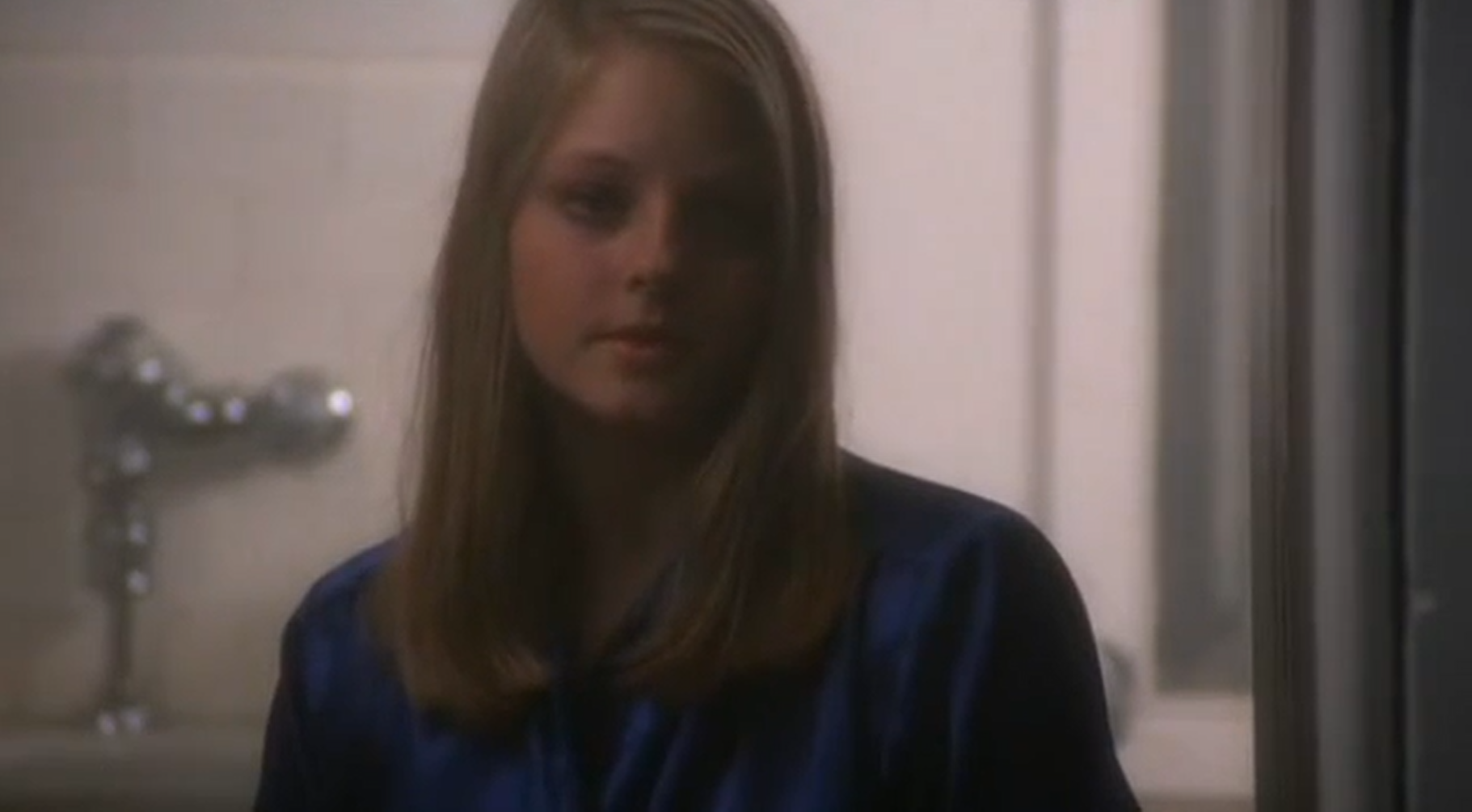
  • Jodie Foster in yet another mature, well-acted early role
  • Scott Baio as the girls’ skateboarding male friend
  • Cherie Currie (lead singer of the all-girl band “The Runaways”) as the deeply troubled Annie

Must See?
No. While it’s considered a minor cult classic, it’s ultimately not must-see viewing.

Links:

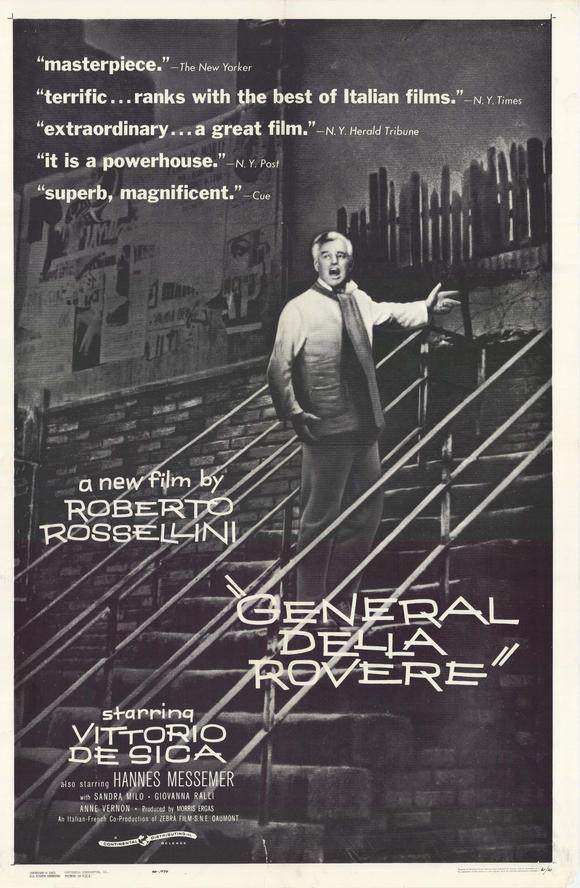
General Della Rovere (1960)

General Della Rovere (1960)

“I don’t trust priests; they’re all spies.”

Synopsis
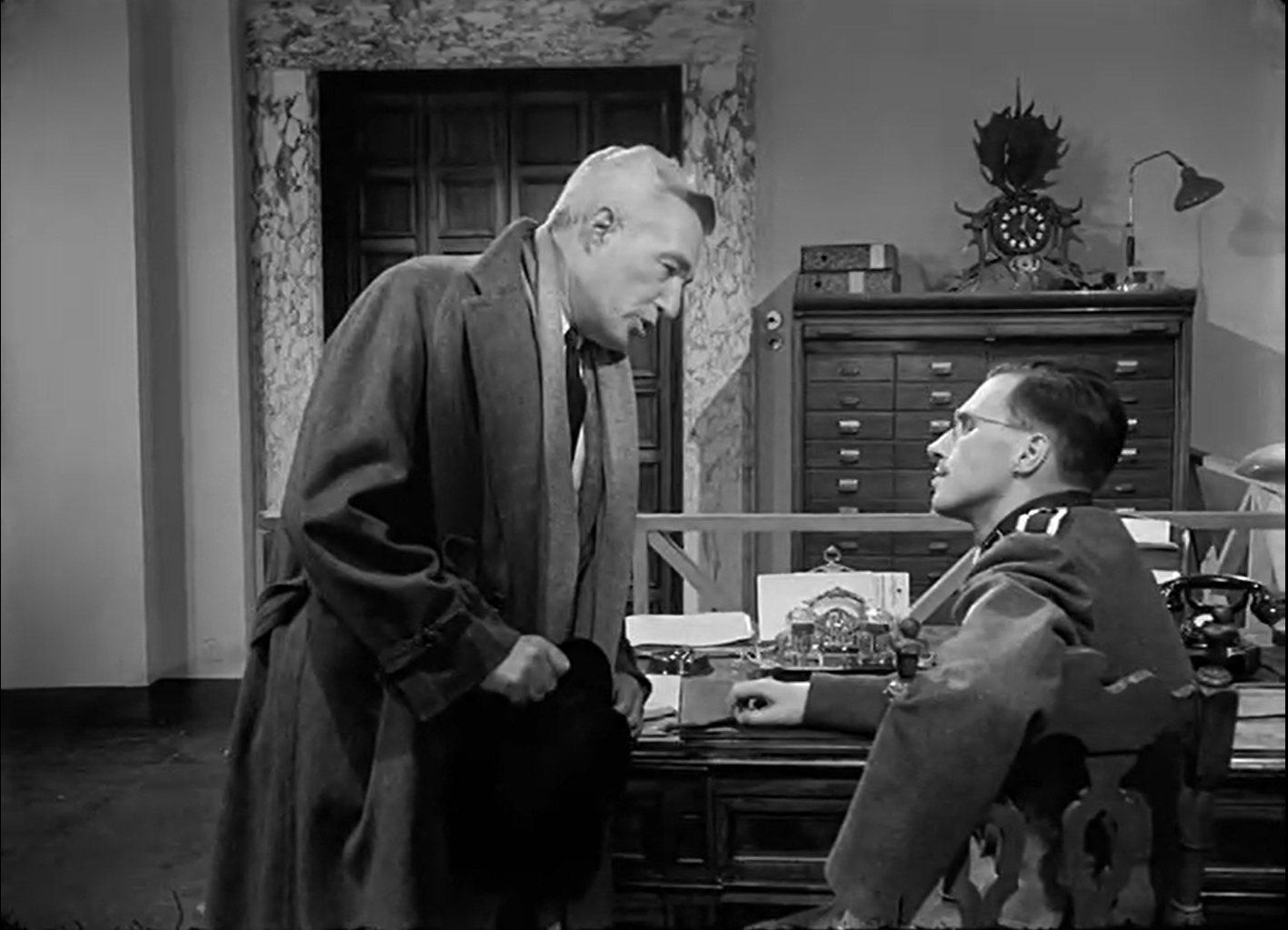
An apolitical con-artist (Vittorio De Sica) impersonates a recently killed Resistance leader (“General Della Rovere”) in order to save his own life.

Genres, Themes, Actors, and Directors:

  • Character Arc
  • Con-Artists
  • Folk Heroes
  • Italian Films
  • Mistaken or Hidden Identities
  • Political Awakening
  • Resistance Fighters
  • Roberto Rossellini Films
  • World War II

Response to Peary’s Review:
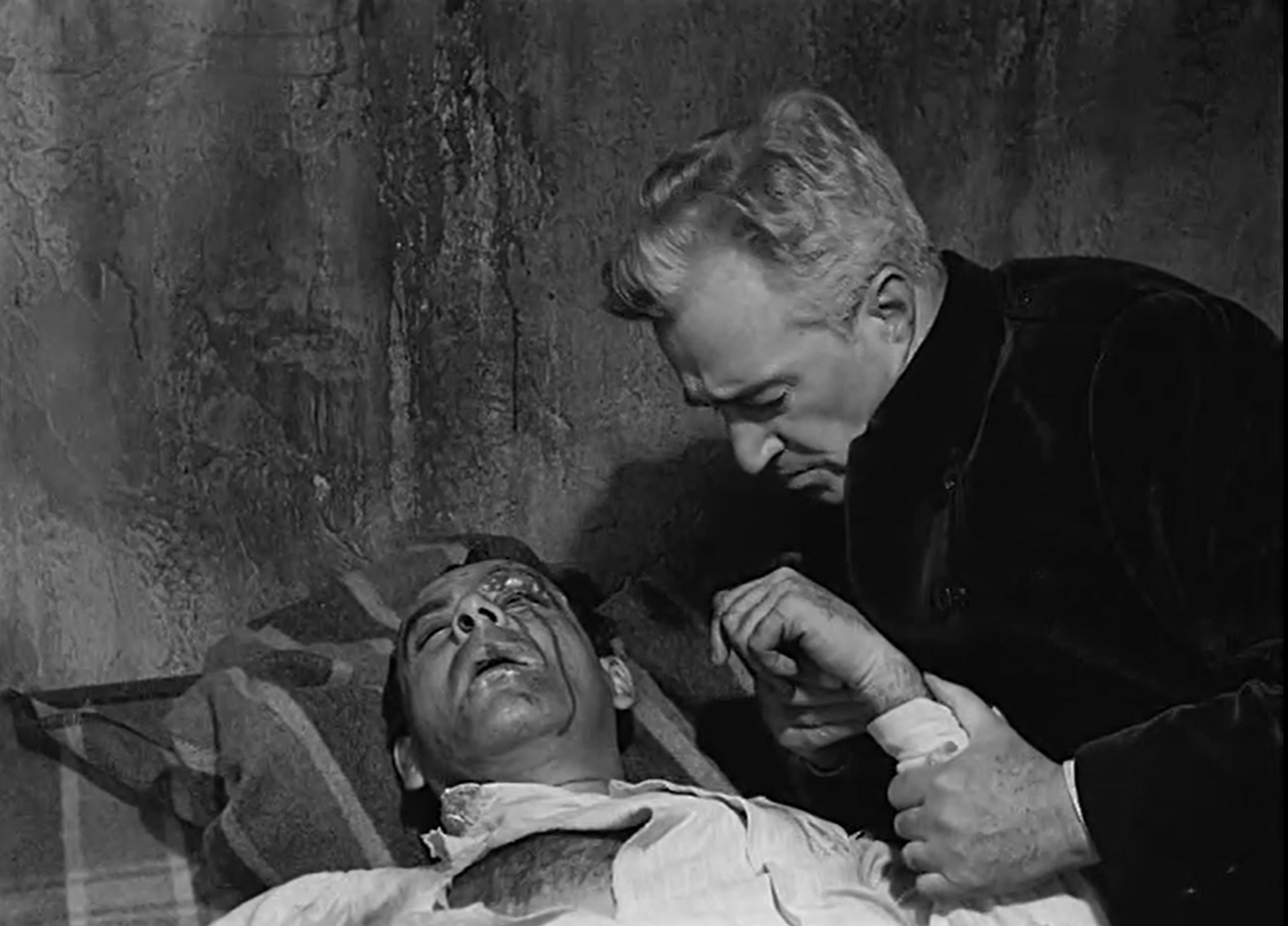
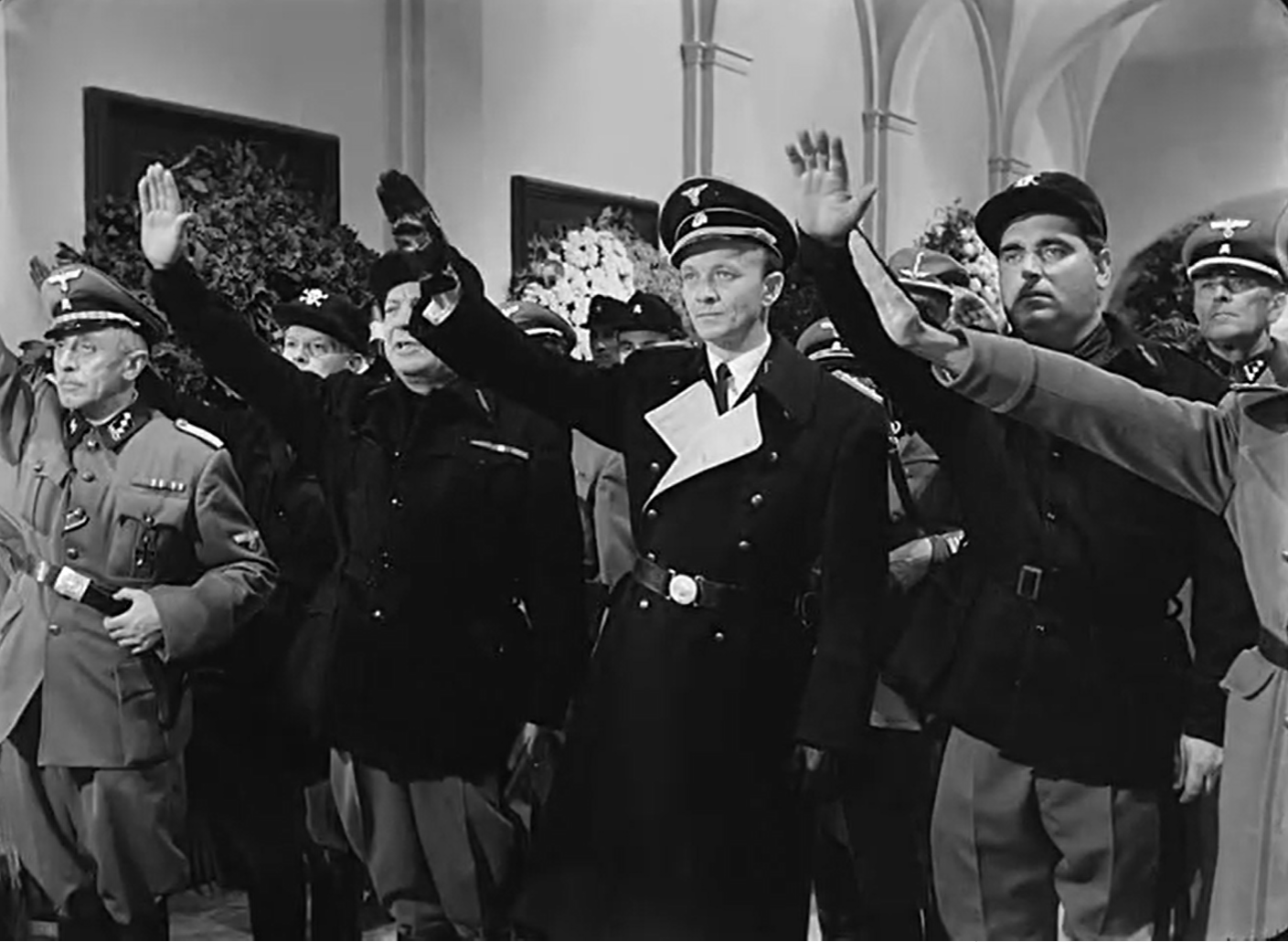
As Peary notes, this historical drama may be overlong and disjointed at times, but is nonetheless a powerful depiction of director Roberto Rossellini’s conviction that “every Italian has the responsibility to share his countrymen’s misery.” Indeed, because Rossellini spends the entire first hour of the movie showing us Grimaldi (De Sica) as he sells out his fellow Italians to the Gestapo — brusquely trading their lives for cash — it’s especially gratifying to witness his change of heart once he’s in prison. Although Grimaldi has nothing to gain by helping the Resistance movement, he comes to recognize the true importance of solidarity in the face of evil. By the end of the film, you’ll feel nothing but compassion and pride for this reformed swindler, who “becomes worthy of the man whose name he has stolen.”

Redeeming Qualities and Moments:

  • Vittorio De Sica’s strong performance as both the cynical swindler and the noble General

  • Many powerful, tense moments, both before and after De Sica enters prison

  • A fascinating portrait of newly won political consciousness

Must See?
Yes. Though it’s long, unevenly paced, and considered by many to be one of Rossellini’s lesser efforts, this film remains a stirring wartime drama.

Categories

  • Important Director

Links:

Rise of Louis XIV, The (1966)

Rise of Louis XIV, The (1966)

“Even my seemingly loyal subjects are as much to be feared as the most rebellious.”

Synopsis:
Young Louis XIV (Jean-Marie Patte) ensures dominance over France during the first twenty years of his reign.

Genres, Themes, Actors, and Directors:

  • Historical Drama
  • French Films
  • Roberto Rossellini Films
  • Royalty and Nobility

Response to Peary’s Review:
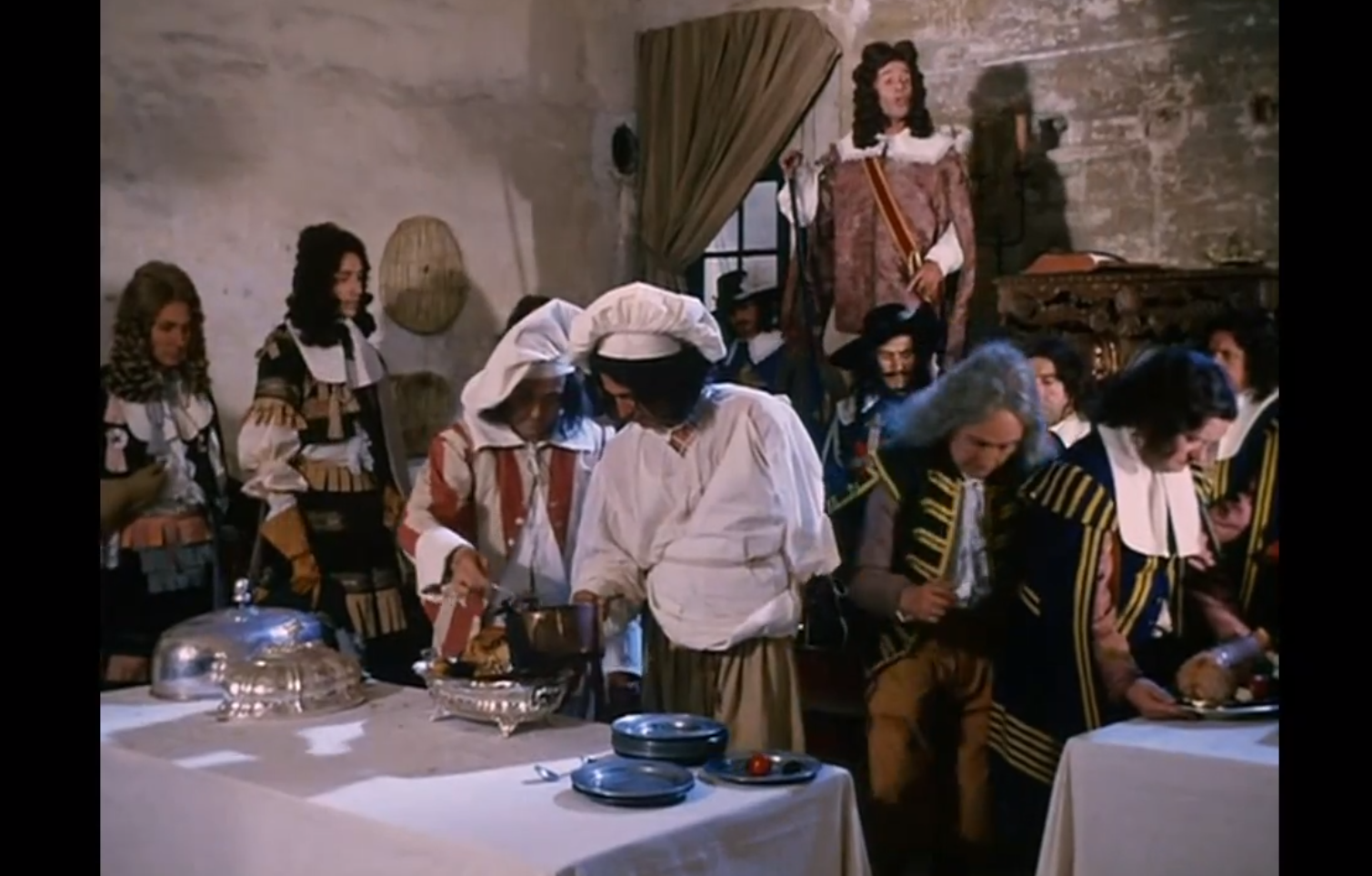
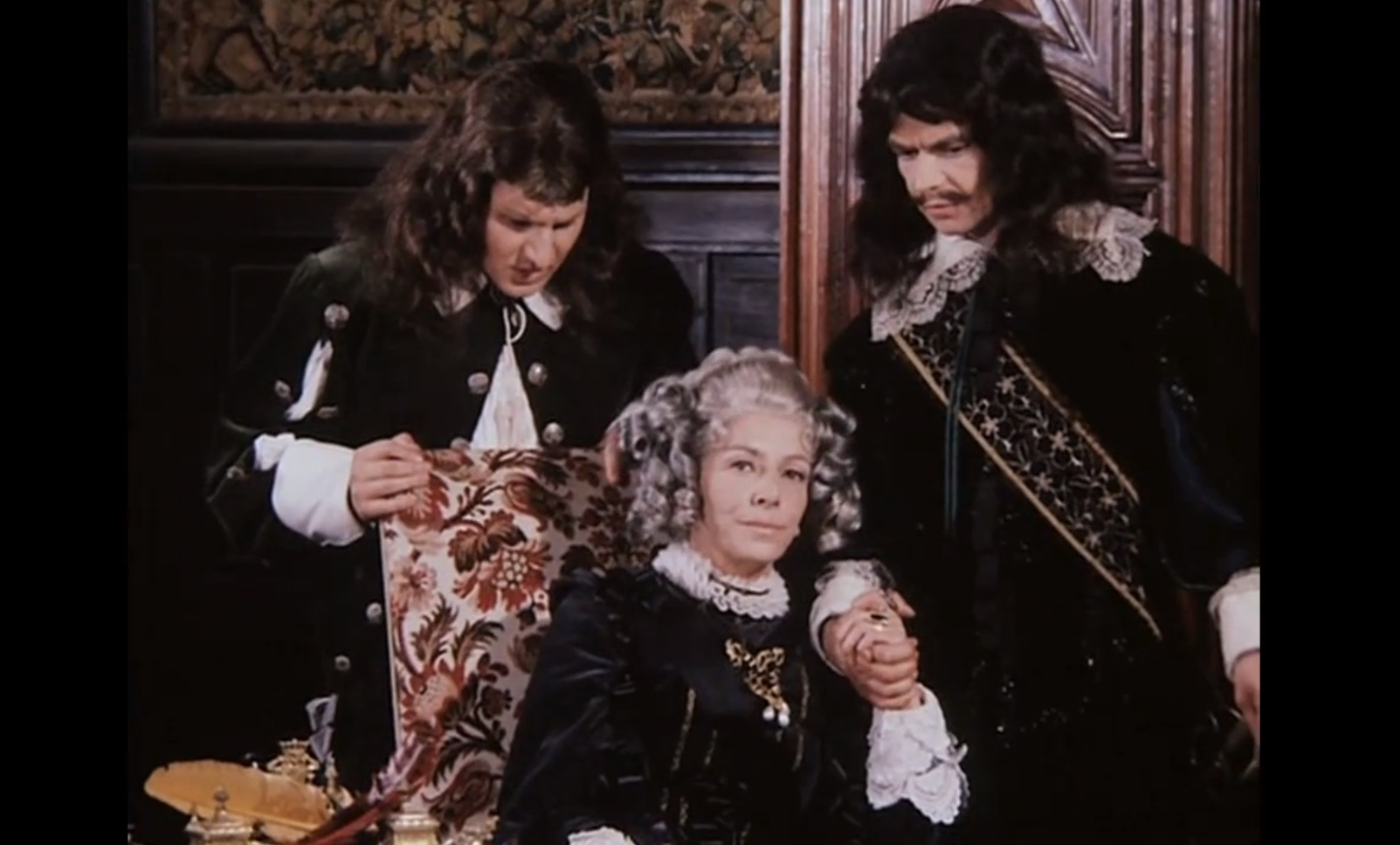
Originally made for Italian T.V. (then released cinematically), Roberto Rossellini’s neo-realist costume drama is, as Peary notes, “slow-paced”, but provides “unusual viewing pleasure” for those with enough patience to sit through it. Rossellini boldly forgoes pomp and spectacle in favor of intimacy and realistic banter; the result is a quietly absorbing look at daily life and power machinations in Louis’ court. While dramatic encounters and bold musical scores are the stock-in-trade of most historical dramas, Rossellini’s approach shows us what such elements deny us — the chance to eavesdrop on historical figures as they go about their everyday, minute-to-minute lives.

Redeeming Qualities and Moments:

  • A meticulous, historically accurate evocation of 18th century France
  • Colorful costumes and sets
  • An intriguing and revealing depiction of Louis’ gradual rise-to-power

Must See?
Yes. Widely regarded as Rossellini’s last true masterpiece, this film merits a look by all film fanatics.

Categories

  • Important Director

Links:

Cocaine Fiends, The (1935)

Cocaine Fiends, The (1935)

“It’s too late for me; girls can’t come back.”

Synopsis:
A small-town girl (Lois January) who has become hooked on cocaine tries to prevent her brother (Dean Benton) from following in her path.

Genres, Themes, Actors, and Directors:

  • Alcoholism and Drug Addiction
  • Siblings

Response to Peary’s Review:
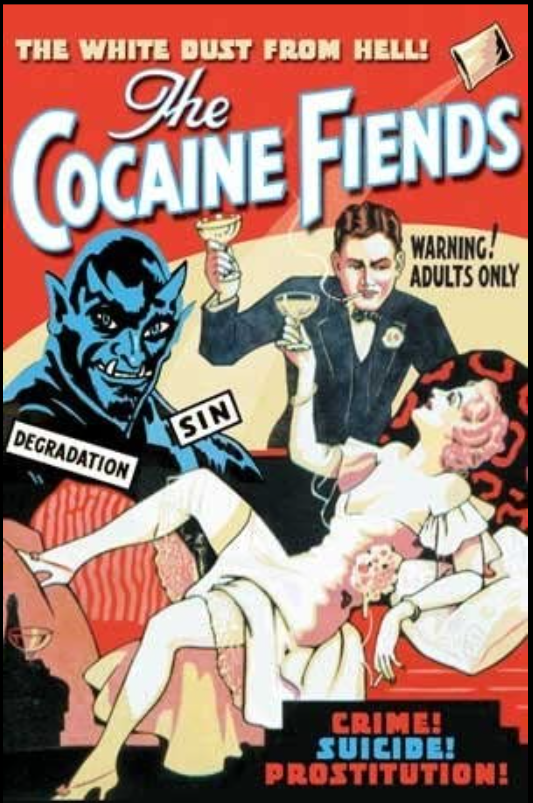
Best known as a companion piece to the infamously campy Reefer Madness (1936), this film (as Peary notes) isn’t nearly “as blatantly exploitative or as foolish in its depiction of drug usage and addiction.” Indeed, the highly realistic possibility of naive young people becoming addicted to cocaine (unlike the histrionics over marijuana “addiction” flouted in Reefer) is scary enough to add some genuine tension to the proceedings. As Peary points out, however, Cocaine Fiends is primarily of interest for its “sad view of females in trouble in a cold-hearted, male-dominated world” — indeed, you’ll feel frustrated and dismayed by January’s utter lack of hope for a second chance.

Redeeming Qualities and Moments:

  • A gritty, relatively realistic view of drug abuse and squalor in the 1930s

Must See?
No; though it’s “better” than its infamous counterpart, this one is not must see viewing.

Links:

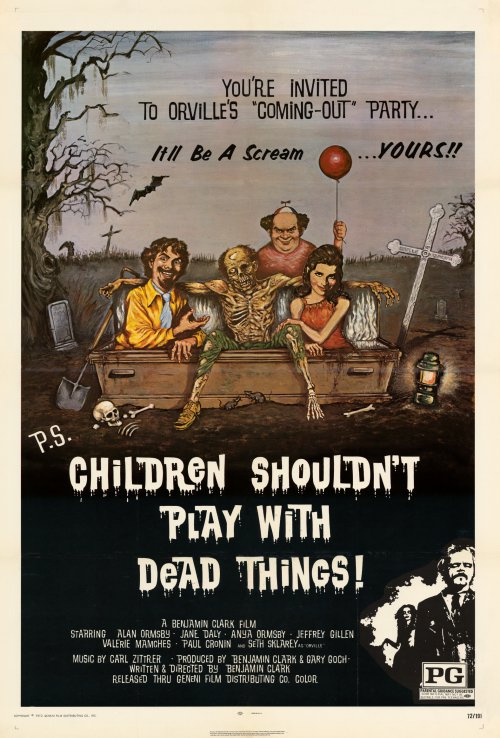
Children Shouldn’t Play With Dead Things (1972)

Children Shouldn’t Play With Dead Things (1972)

“Get out of the grave, Alan. Get out of the grave and let an artist show you how to call a curse down on Satan!”

Synopsis:
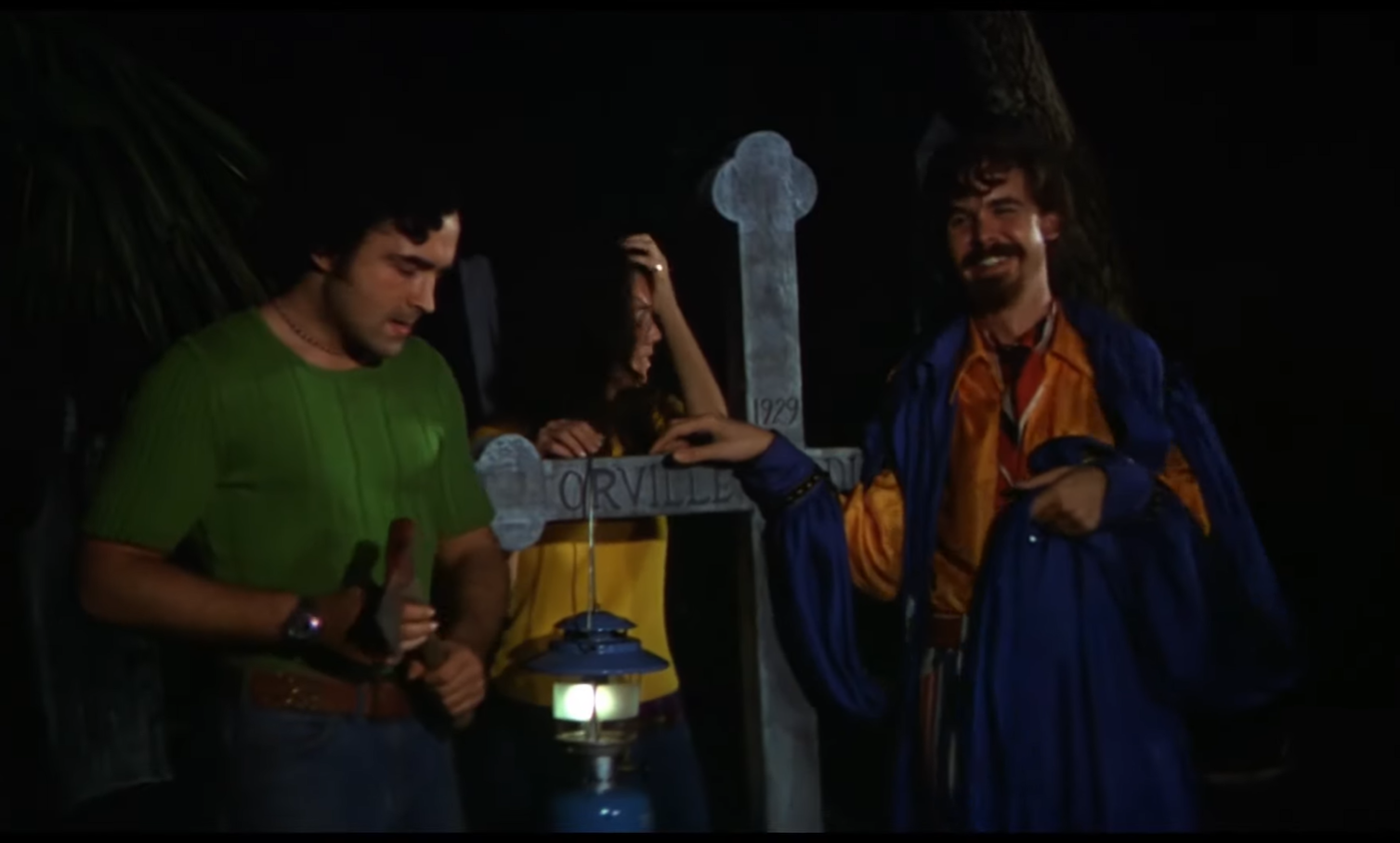
A theater director (Alan Ormsby) brings his actors to a remote island to participate in a mock necromancy ritual — but the group soon finds itself in mortal danger as zombies rise from their graves.

Genres, Themes, Actors, and Directors:

  • Actors and Actresses
  • Horror
  • Zombies

Response to Peary’s Review:
In his inimitable, no-holds-barred style, Peary perfectly describes this cult film by writer/director Bob Clark as a “cheap, ugly, non-frightening, non-funny horror comedy with odious characters,” made by “amateurs who think any completed horror film will make money.” I agree. It’s beyond amazing to me that the director of one of my all-time favorite comedies — A Christmas Story (1983) — also helmed this “excuse for a film,” full of unappealing protagonists, bad acting, laughable make-up, and a painfully unfunny premise.

Redeeming Qualities and Moments:
None.

Must See?
No. While it’s apparently somewhat of a cult favorite, it’s too awful to recommend.

Links:

Charly (1968)

Charly (1968)

“My name is Charly Gordon, and I live in a room, and I got no sister and no dog, and I am stupid!”

Synopsis:
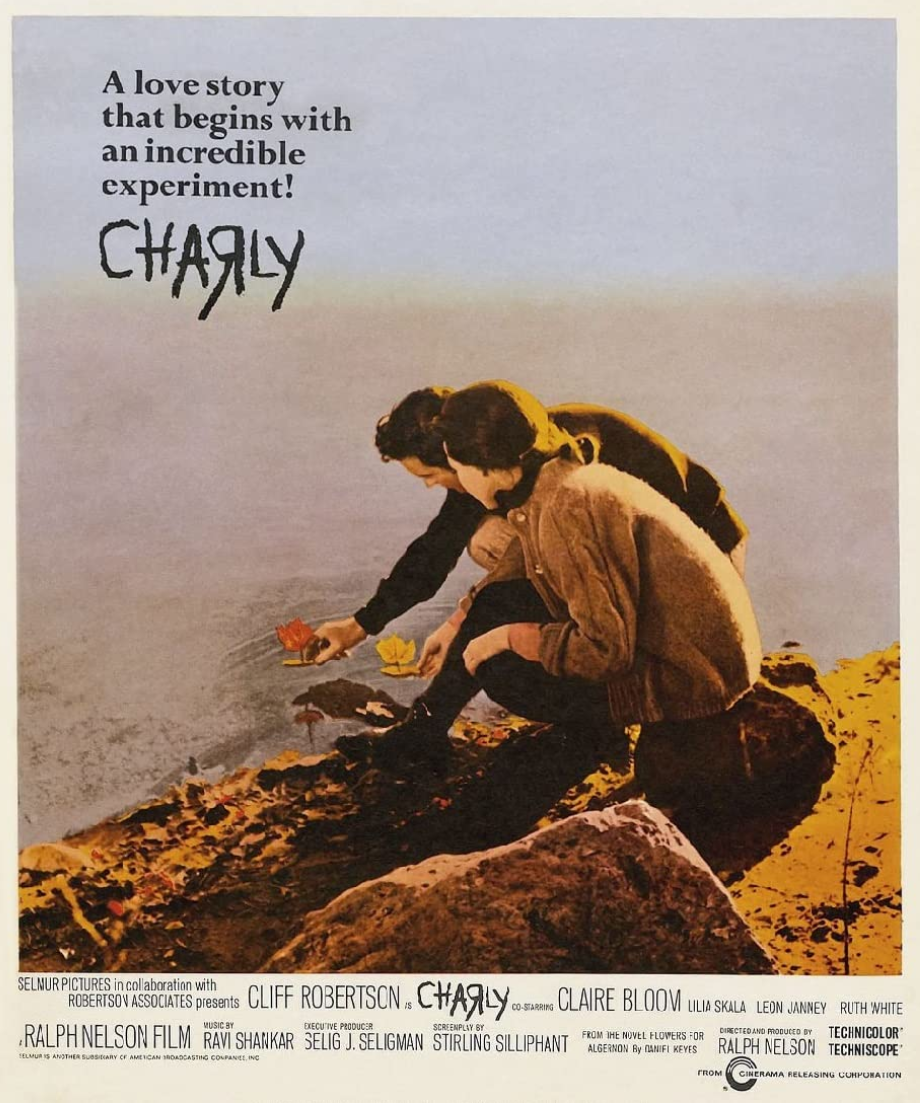
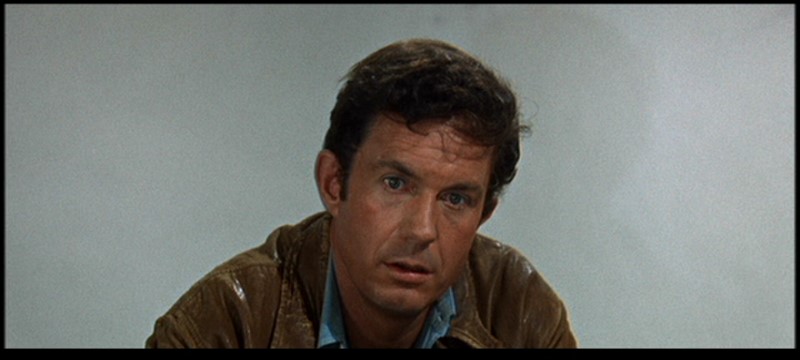
Charly (Cliff Robertson), a mentally retarded bakery worker, undergoes an experiment in “intelligence enhancement”, and quickly becomes a genius — but the results are temporary–

Genres, Themes, Actors, and Directors:

  • Character Arc
  • Claire Bloom Films
  • Cliff Robertson Films
  • Mentally Retarded
  • Romance
  • Science Fiction
  • Scientists

Response to Peary’s Review:
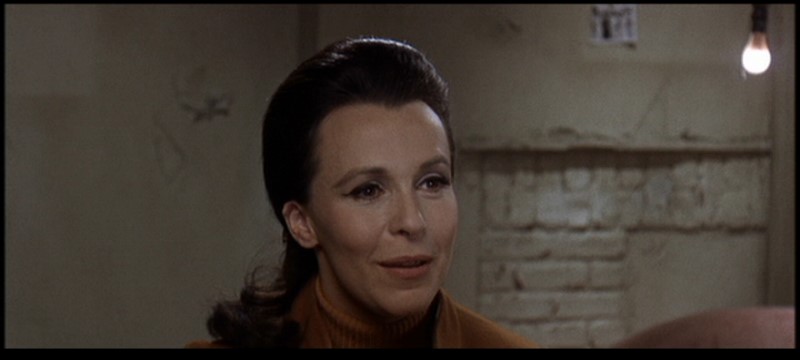
This “sometimes touching, sometimes soppy” sleeper doesn’t quite live up to the power of its source material — Daniel Keyes’ Hugo Award winning novella, Flowers for Algernon — yet remains a fascinating and provocative cautionary tale on the ethics of scientific experimentation. As Peary notes, Robertson does an excellent job in a difficult role, showing “that Charly is more lovable when retarded than when he is a genius,” yet making us realize the tragedy of Charly’s eventual regression. Claire Bloom as Charly’s case worker is lovely as always, and their brief romance is both touching and sad. You’re guaranteed to feel a lump in your throat by the end of this inevitably disastrous and heartbreaking story.

Redeeming Qualities and Moments:

  • Cliff Robertson’s sensitive, multi-faceted portrayal as Charly
  • Claire Bloom as Charly’s case worker and love interest

Must See?
Yes. While opinions vary on the ultimate success of this screen adaptation (see links below), it remains must-see viewing due to Robertson’s heartfelt, Oscar-winning performance.

Categories

  • Noteworthy Performance(s)
  • Oscar Winner or Nominee

Links:

David Holzman’s Diary (1968)

David Holzman’s Diary (1968)

“The noted French wit Jean-Luc Godard said, ‘What is film? Film is truth 24 times a second.'”

Synopsis:
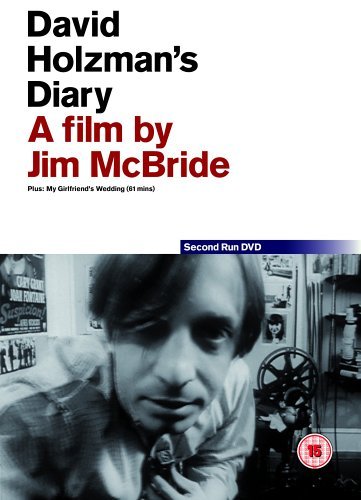
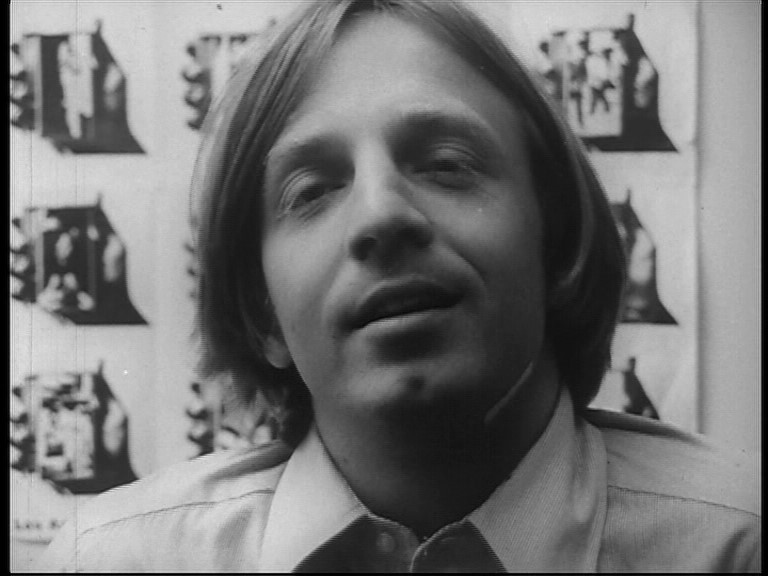
A young filmmaker named David Holzman (L.M. Kit Carson) decides to “figure out his life” by creating a documentary of his everyday actions.

Genres, Themes, Actors, and Directors:

  • Documentary
  • Satires and Spoofs

Review:
The inherent irony of this early mockumentary — a prescient forerunner of “reality TV”, YouTube, blogs, and all other forms of self-promotion through digital media — is that, in his attempt to lampoon the banality of everyday life, director Jim McBride ultimately creates a movie which is, in a word, boring. While there are some clever cinematic techniques and a few moments of levity (David being hit on by his lusty neighbor; David obsessing over the mysterious girl who lives across the street), ultimately it’s annoying to watch this narcissistic young man try to capture every moment of his humdrum existence on film — and when he films his naked sleeping girlfriend (Eileen Dietz) against her wishes, you’ll want to throttle him! Even at 74 minutes, this innovative yet uninteresting film — more effective in theory than in practice — is too long.

Redeeming Qualities and Moments:

  • A creative lampoon of “cinema verite”
  • An effective depiction of filmmakers as narcissistic voyeurs
  • Louise Levine as Holzman’s hilariously lusty, deep-voiced neighbor, “Sandra”
  • Some clever cinematic techniques (such as the long, long traveling shot of elderly people sitting on benches in a park)

Must See?
Yes, but only for its place in cinematic history.

Categories

  • Cult Movie
  • Historically Relevant

(Listed in 1001 Movies You Must See Before You Die)

Links:

Wavelength (1967)

Wavelength (1967)

“Nothing is real… and nothing to get hung about.”

Synopsis:
A camera slowly zooms in on empty room while people come and go, ultimately ending on a photograph of waves.

Genres, Themes, Actors, and Directors:

  • Experimental Films

Review:
In this notorious minimalist film, director Michael Snow utilizes jump cuts, flashbacks, repeated shots, different film stock, filters, and other cinematic devices to create a technically innovative yet ultimately tedious piece of underground cinema. While watching what appears to be (but isn’t) a 45-minute single zoom shot, we are subjected to the sound of a single sine-wave, ranging from its lowest note (50 cycles per second) to its annoyingly shrill highest note (12,000 cycles per second). The film ends with a cloying play on words, as the camera focuses on a photograph of ocean waves. In honor of Peary’s no-holds-barred, highly personal approach to film criticism — and at the true risk of appearing gauche — I’ll admit I wish that Snow had bothered to incorporate a bit more interest into the narrative of this ground-breaking yet “difficult” film. Given the extreme amount of cinematic manipulation he uses, Snow can’t (or shouldn’t) legitimately argue that he was aiming for any kind of narrative purity. I dare you to watch this film — best seen as an experiment in form rather than a cohesive narrative — at home without touching the fast forward button on your remote control; but I won’t blame you if you do.

Note: To watch the entire film in 2.5 minutes, click here. It’ll be the fastest viewing of a GFTFF title you’ve ever experienced!

Redeeming Qualities and Moments:

  • An original, if boring, piece of avant-garde film making.

Must See?
Yes, once, simply for its historical importance.

Categories

  • Historically Relevant

(Listed in 1001 Movies You Must See Before You Die)

Links: