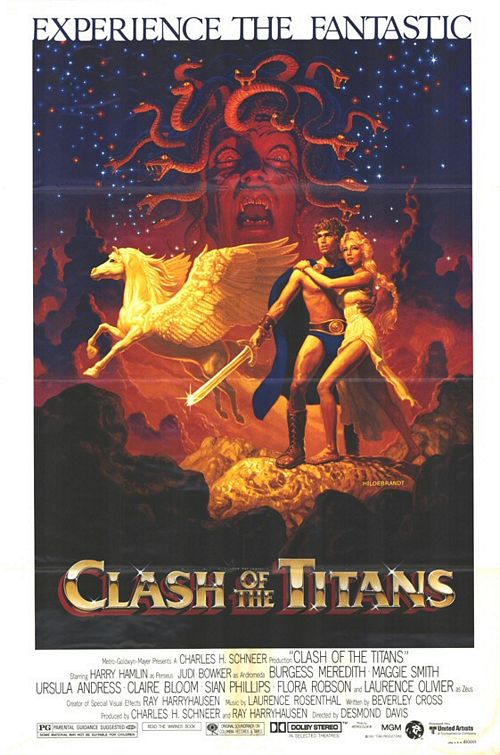
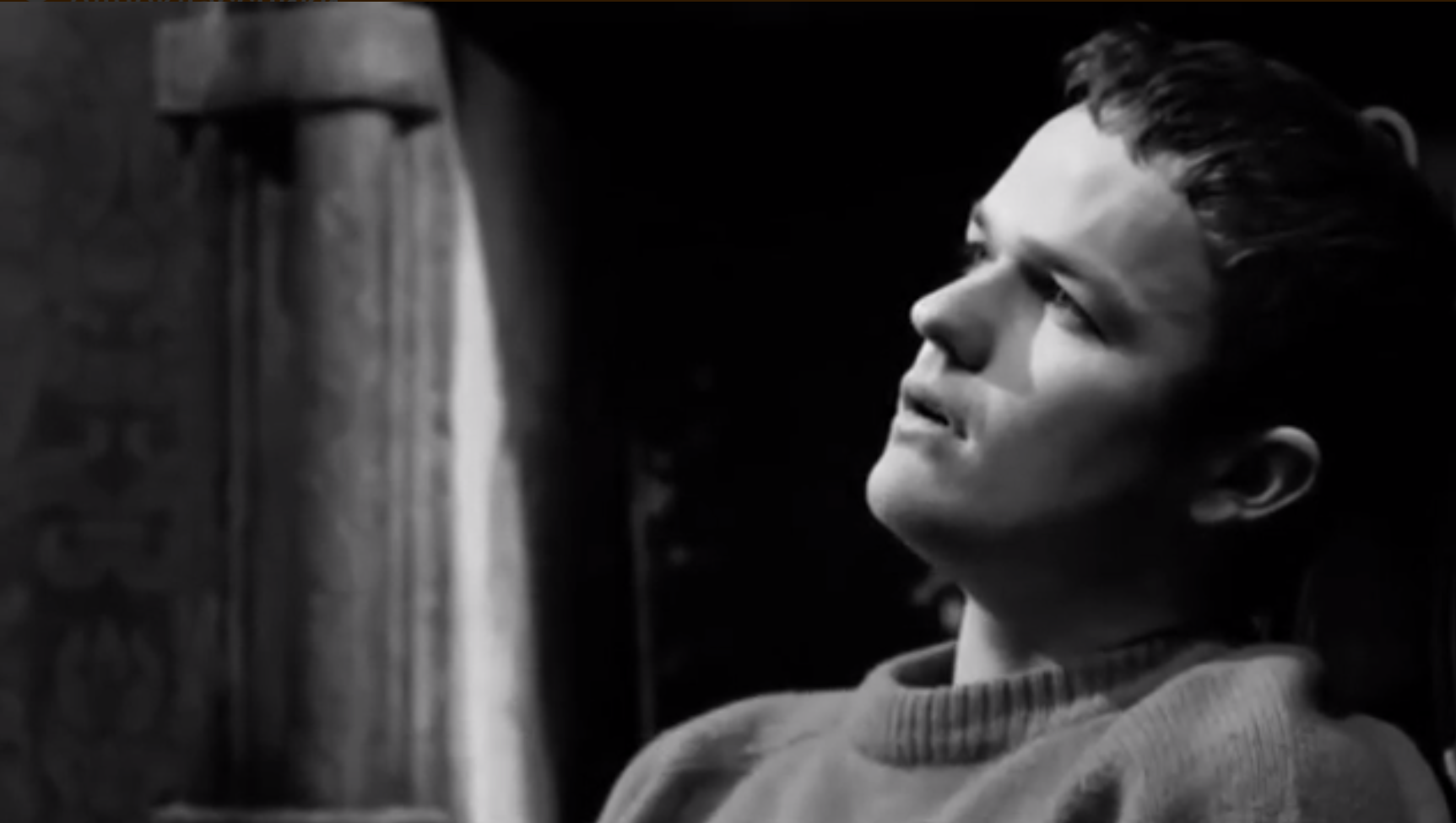
Clash of the Titans (1981)

Clash of the Titans (1981)

“Ah, dear — the young. Why do they never listen? When will they ever learn?”

Synopsis:
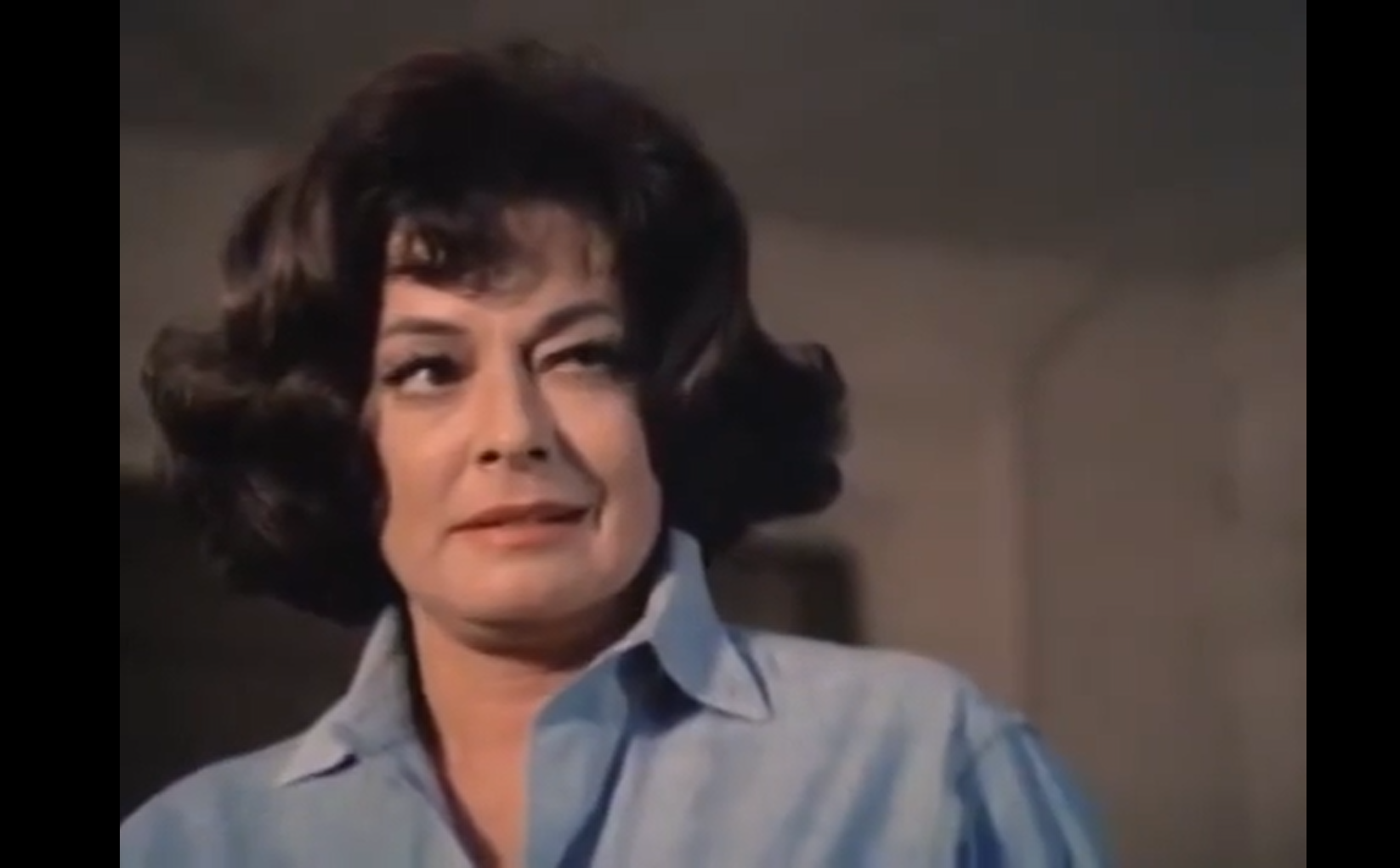
Zeus (Laurence Olivier) tries to help his mortal son Perseus (Harry Hamlin) save Princess Andromeda (Judi Bowker) from the wrath of jealous Thetis (Maggie Smith).

Genres, Themes, Actors, and Directors:

  • Burgess Meredith Films
  • Fantasy
  • Folk Tales, Fairy Tales, and Mythology
  • Greece
  • Laurence Olivier Films
  • Maggie Smith Films
  • Ray Harryhausen Films
  • Supernatural Powers
  • Ursula Andress Films

Response to Peary’s Review:
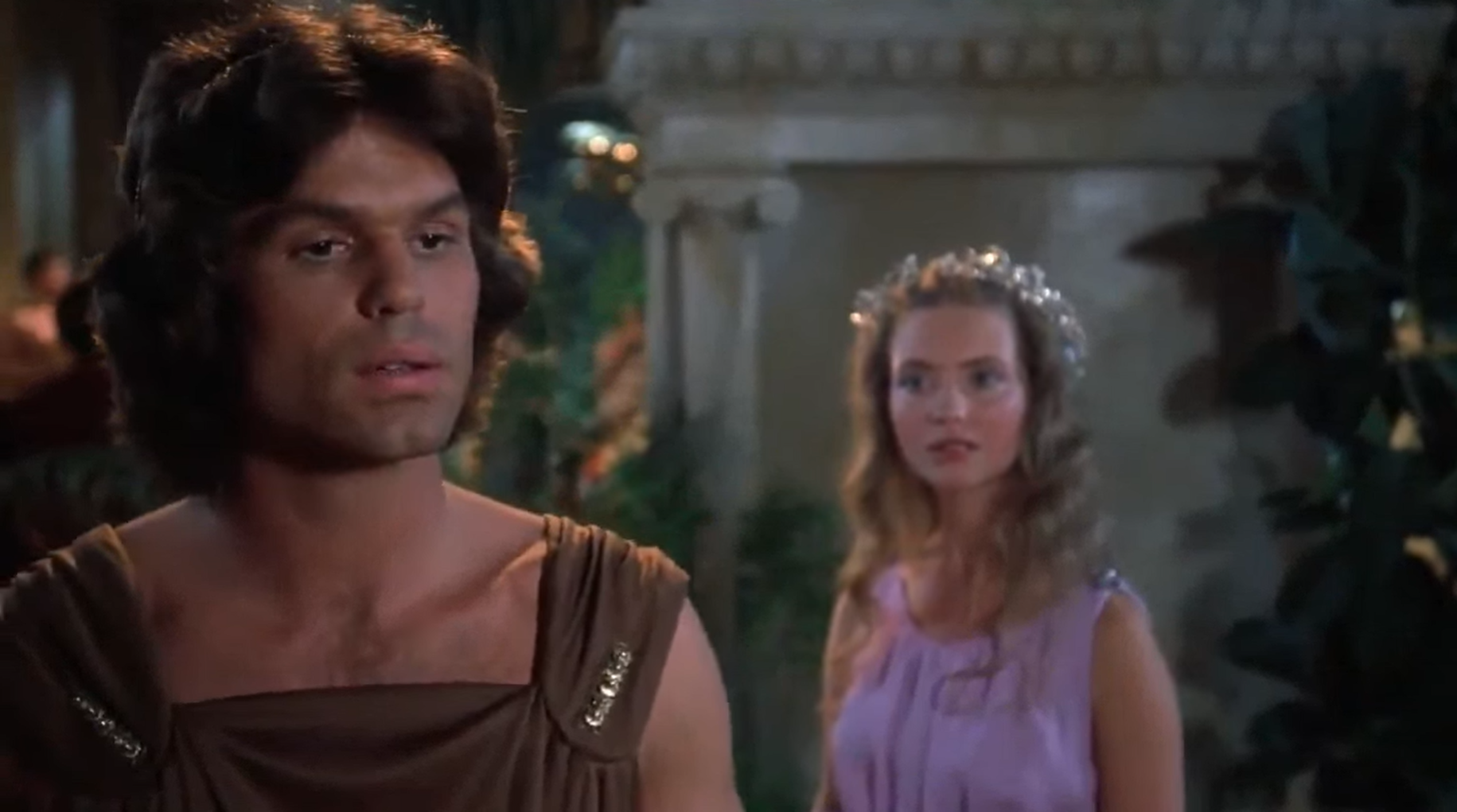
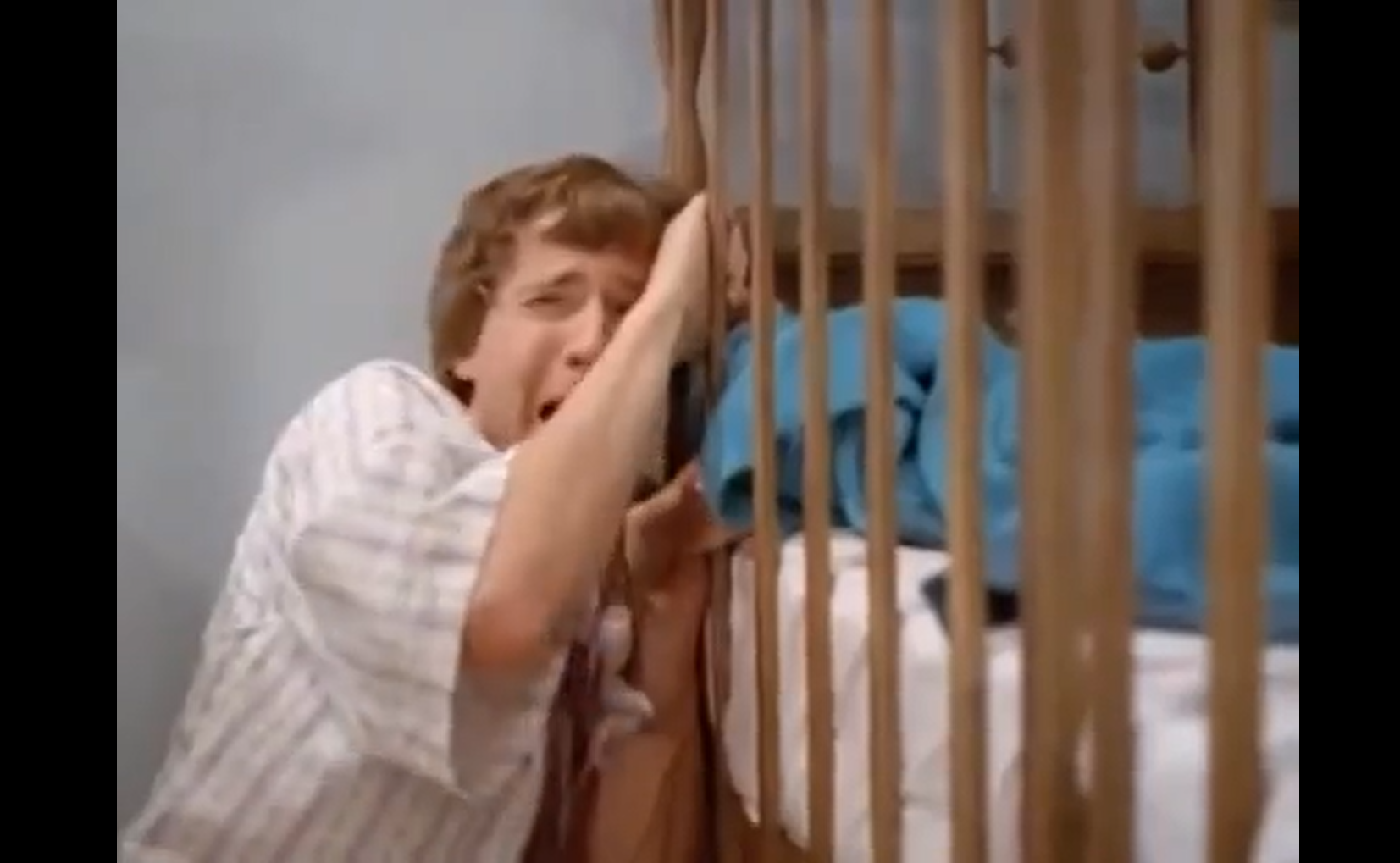
This overblown fantasy epic — mixing “Shakespeare [with] Greek and Norse mythology” — is, as Peary notes, both too long and ultimately disappointing. The dialogue is uniformly trite and cliched (“So little time together — so little time!” Andromeda laments to Perseus); the acting by the two young lovers (especially Hamlin) is simply awful:

… Bubo the brass owl (an “embarrassing creation”) is a blatant rip-off of R2D2:

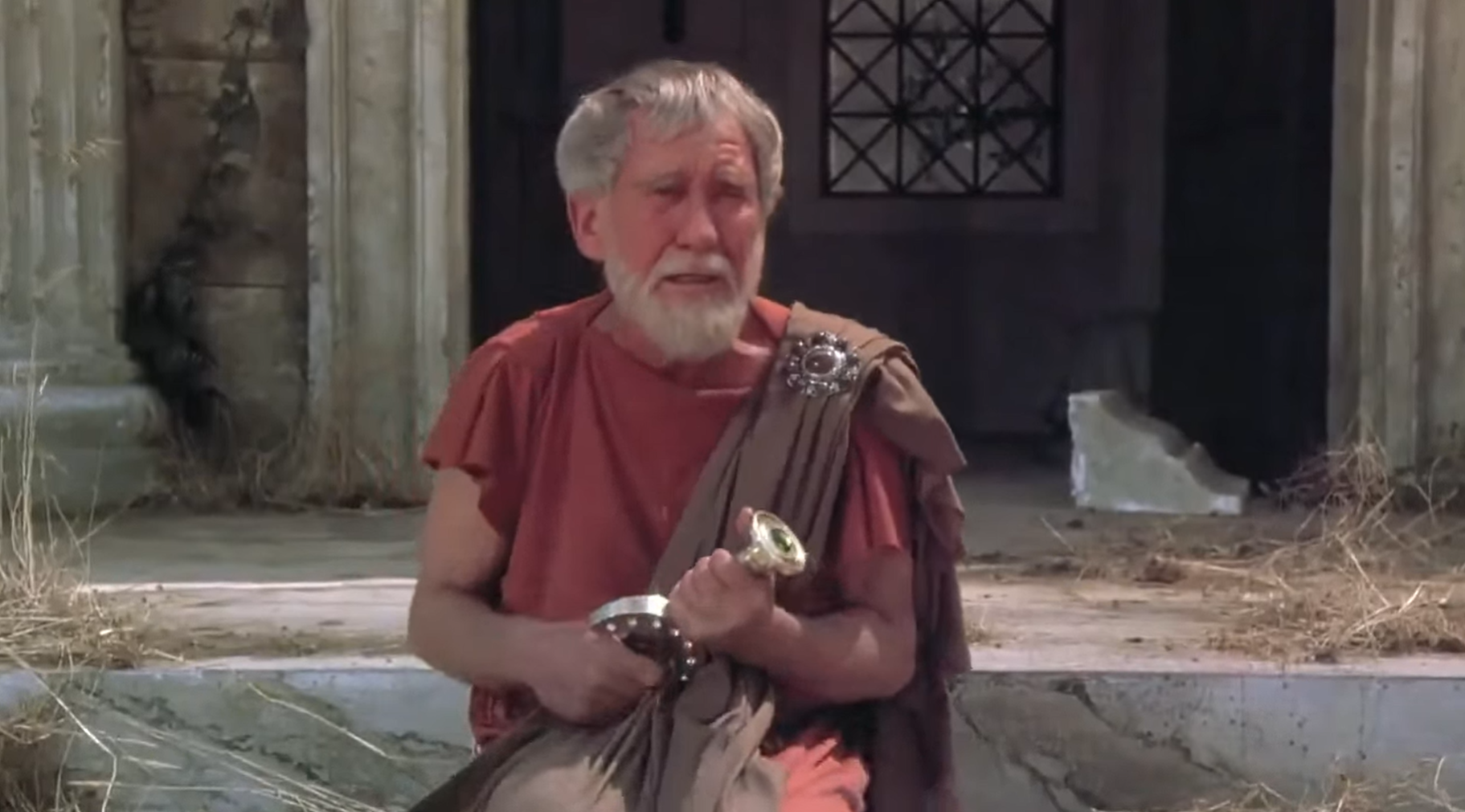
… and Burgess Meredith — playing Perseus’ earthly mentor, Ammon — is annoying rather than wise.

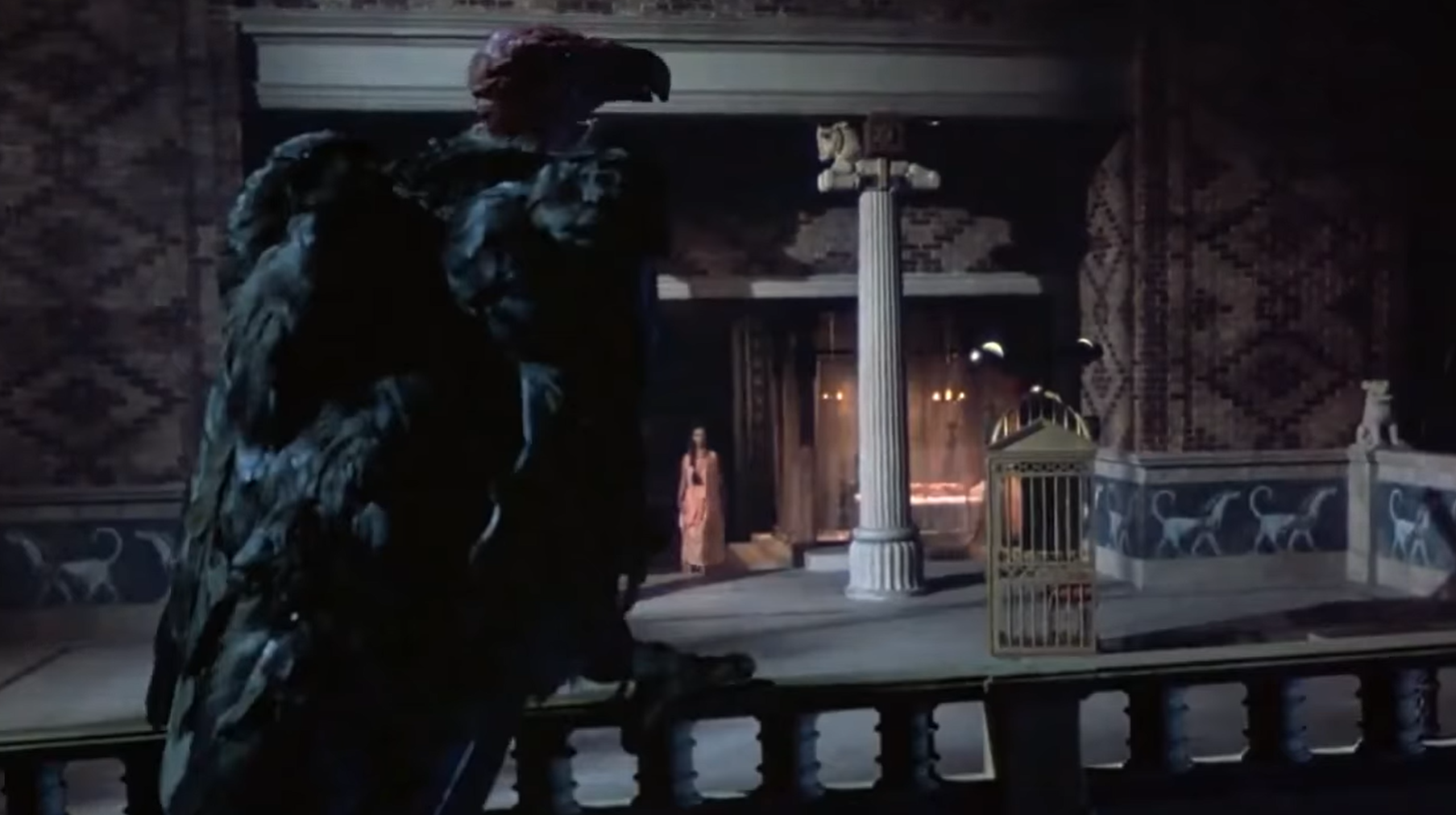
With that said, however, one watches Clash of the Titans either out of a sense of childhood nostalgia (which I’m lacking — I never saw it), or for the reliably stunning stop-motion effects by Ray Harryhausen. Particularly notable are both the enormous Kraken:

and the battling scorpions:

(But as impressive as Harryhausen’s snake-haired Medusa is:

my vote still goes out to Tony Randall in The 7 Faces of Dr. Lao as the best movie incarnation of this hideous creature!)

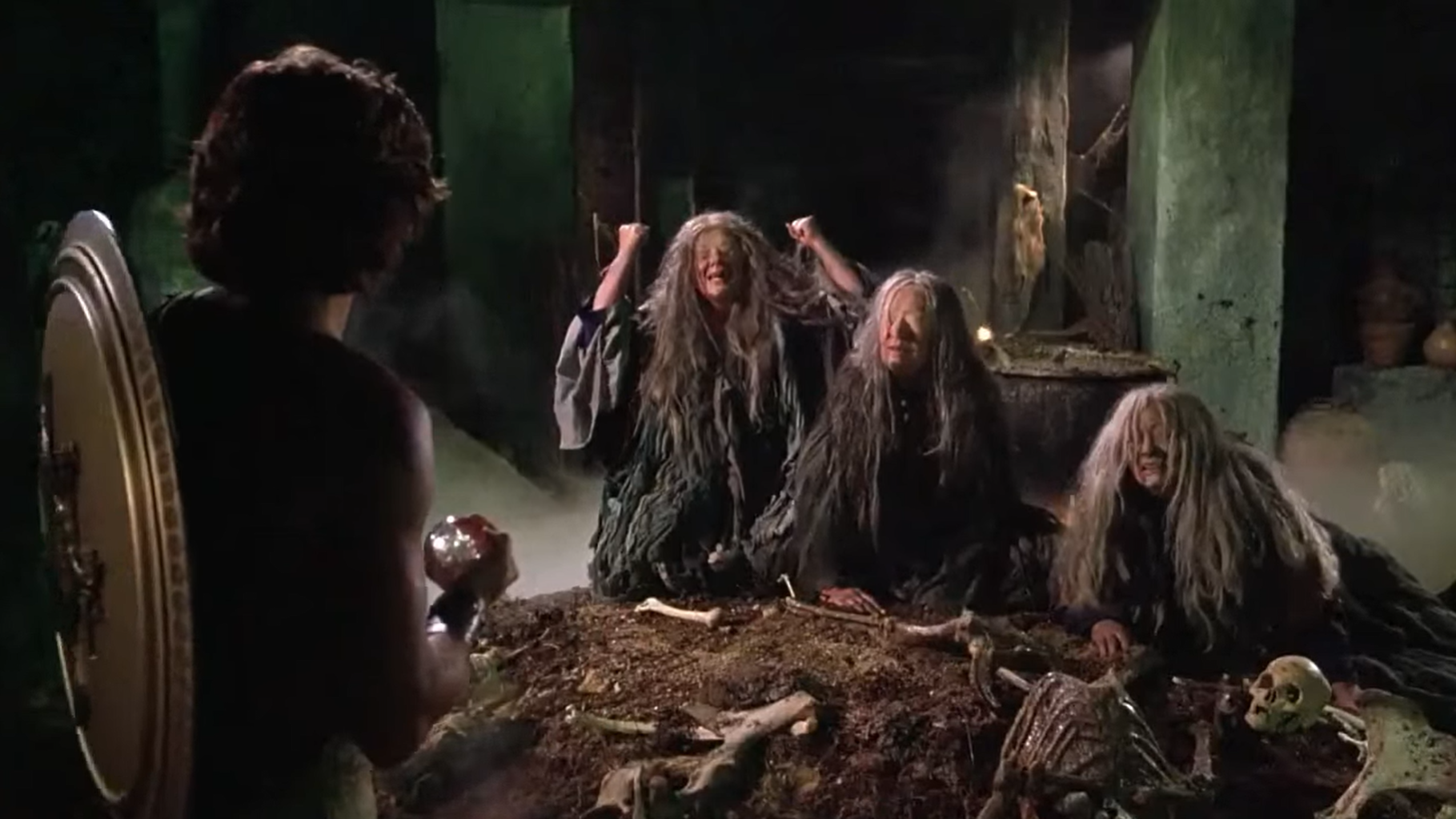
Equally noteworthy are the make-up and costumes, particularly those of the three blind Stygian Witches, whose empty eye sockets are truly creepy to behold.

Overall, however, this big-budget film is still a major disappointment for those who remember the magic and wonder of Harryhausen’s earlier efforts.

Redeeming Qualities and Moments:

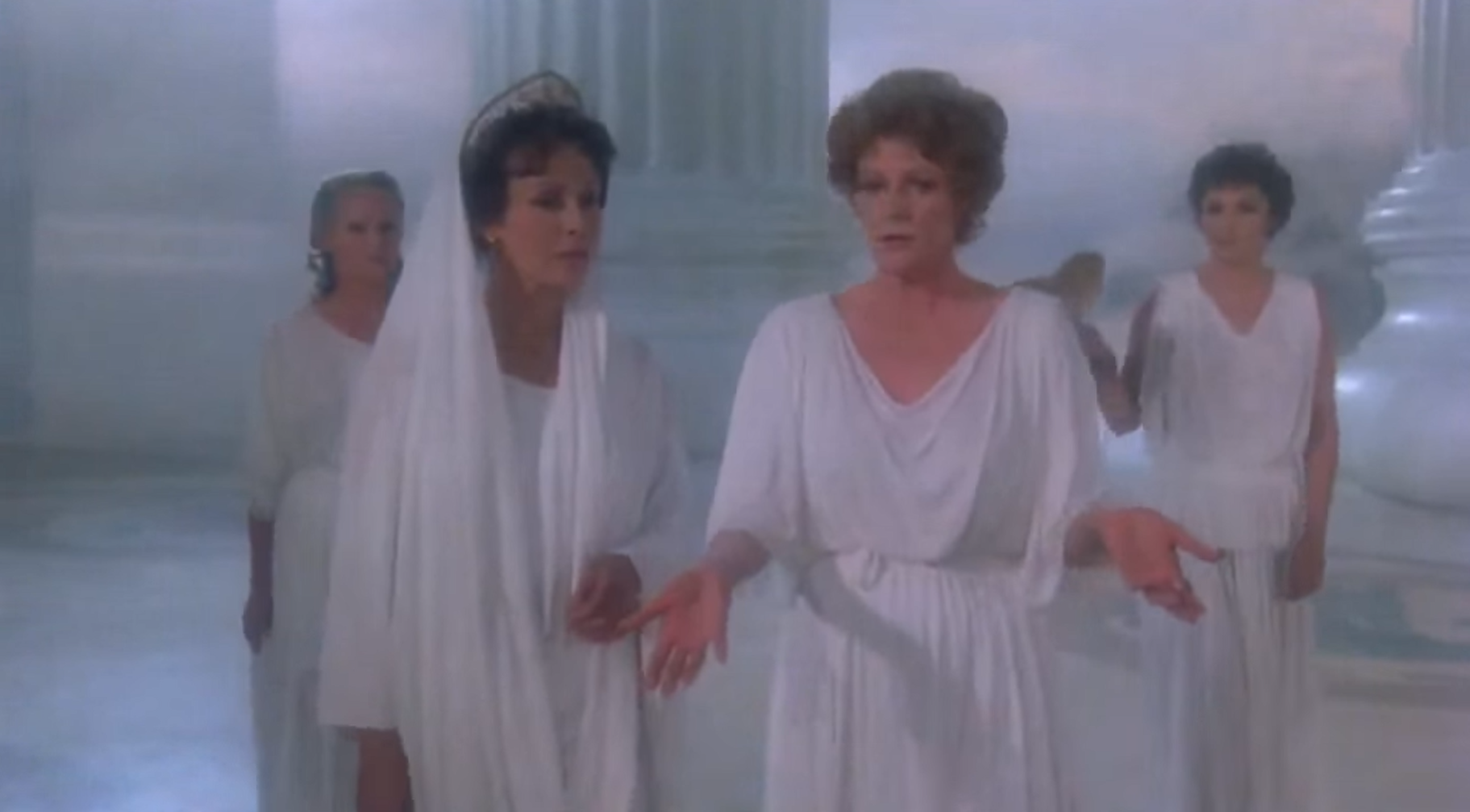
  • An all-star cast of gods and goddesses (including Olivier, Smith, and Clare Bloom), who occasionally rise above the material they are given

  • Some fun special effects (naturally) by Harryhausen

Must See?
No. While it holds some historical interest as a former blockbuster hit, it’s no longer must-see viewing.

Links:

Robin and Marian (1976)

Robin and Marian (1976)

“Have you ever tried to fight a legend?”

Synopsis:
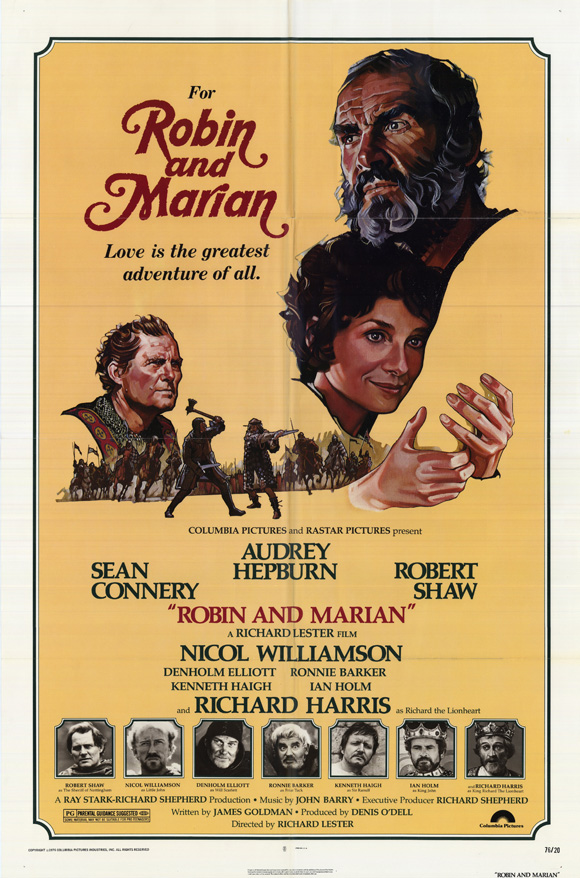
Robin Hood (Sean Connery) returns from twenty years of fighting in the Crusades to find that his one true love, Maid Marian (Audrey Hepburn), has become a nun.

Genres, Themes, Actors, and Directors:

  • Audrey Hepburn Films
  • Denholm Elliott Films
  • Do-Gooders
  • Folk Heroes
  • Historical Drama
  • Ian Holm Films
  • Nuns
  • Richard Harris Films
  • Richard Lester Films
  • Robert Shaw Films
  • Romance
  • Sean Connery Films

Review:
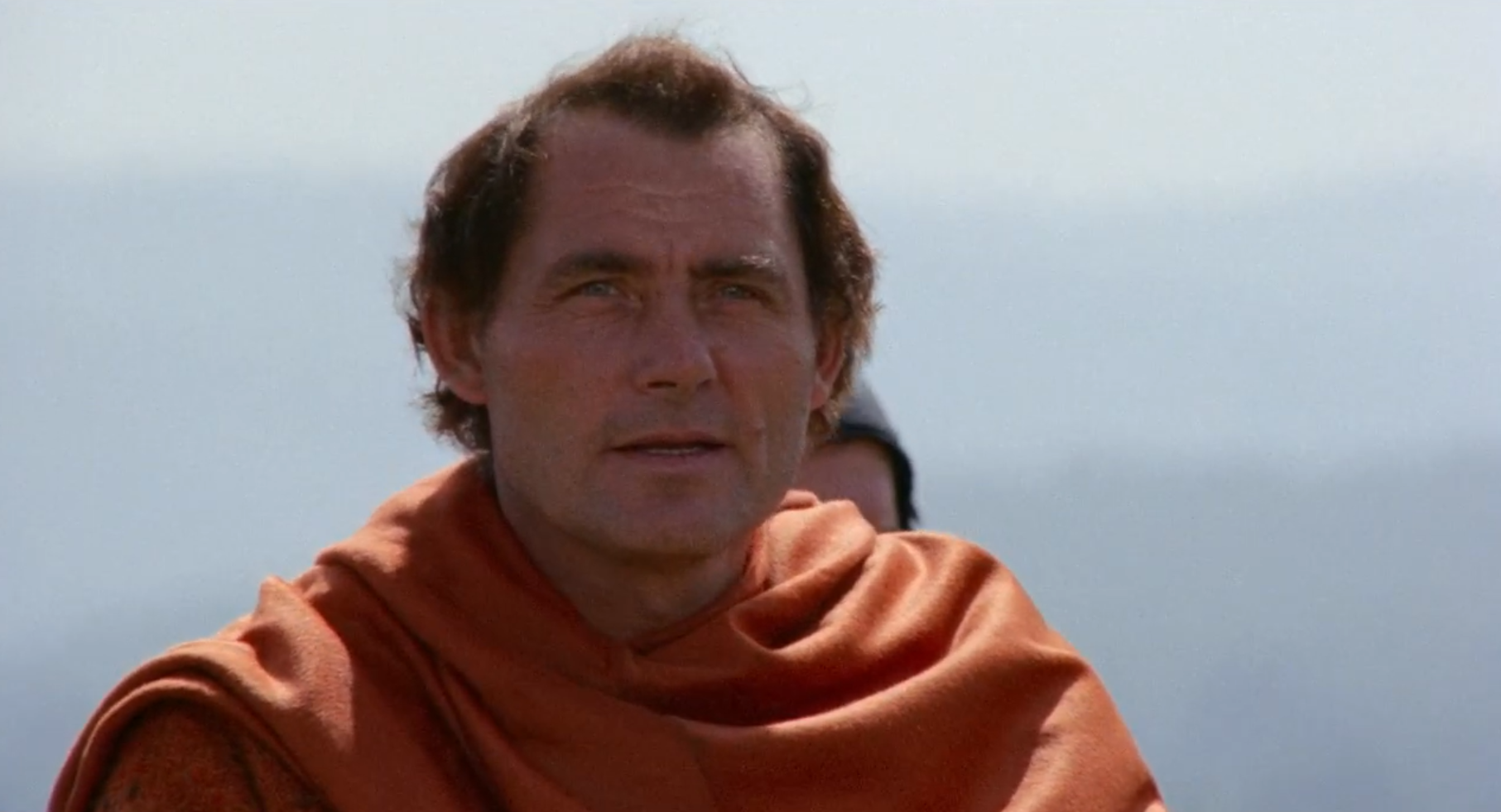
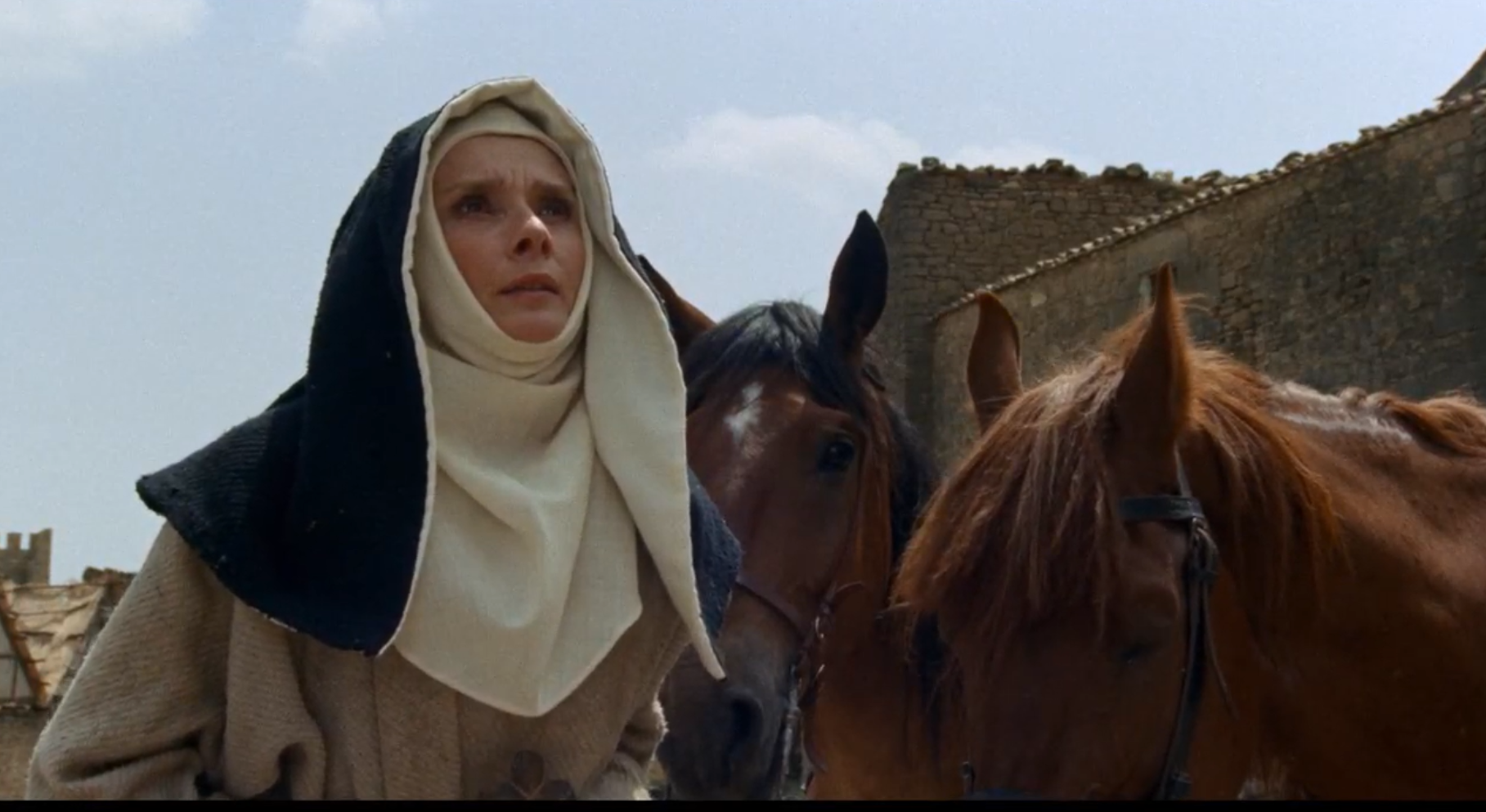
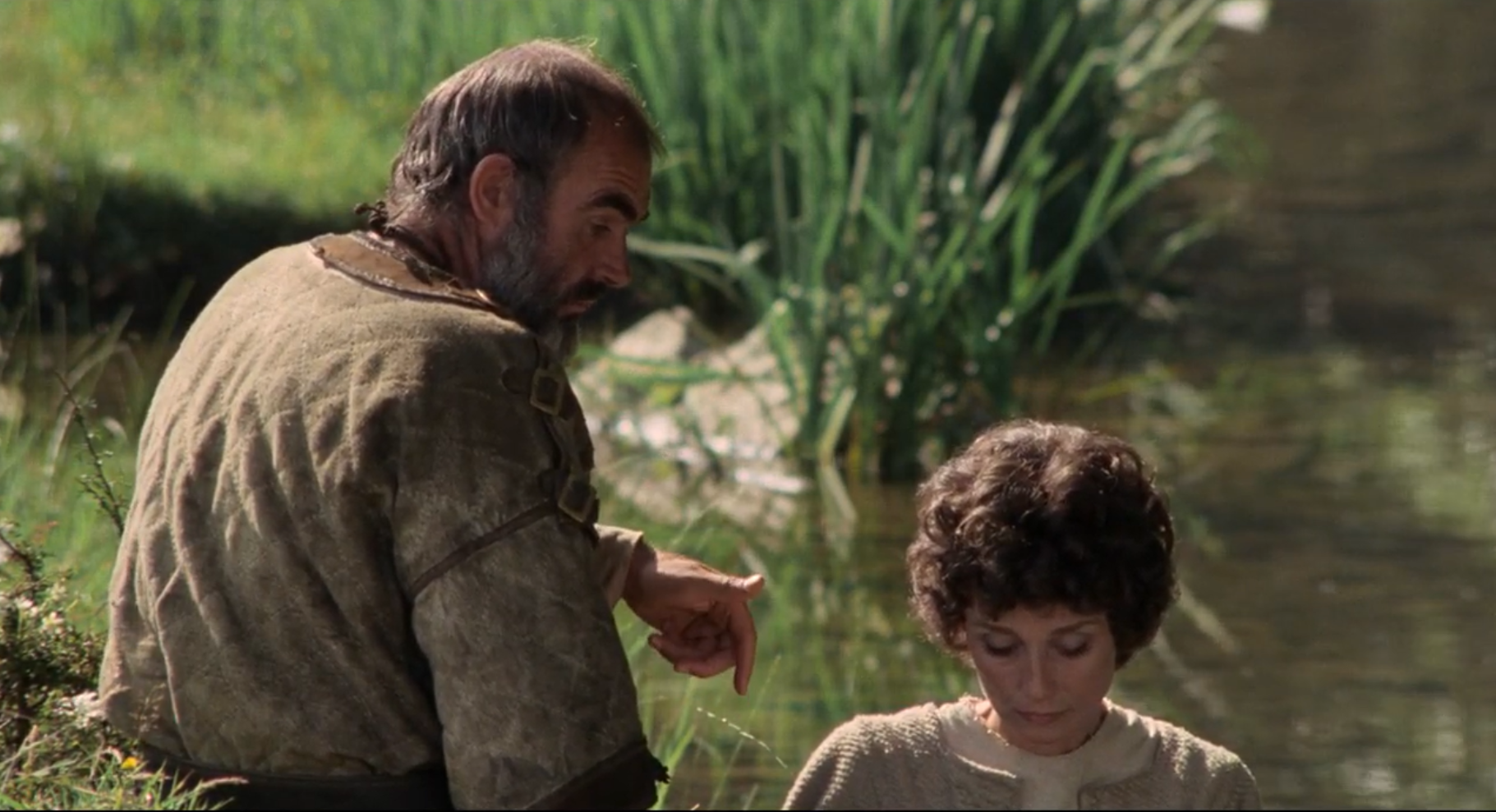
I’ve struggled for a while now to figure out why Richard Lester’s seriocomic historical drama (listed as a Sleeper and Personal Recommendation in the back of Peary’s book) doesn’t quite work, and I’ve finally realized that the problem is one of casting: while Sean Connery and Audrey Hepburn are wonderful here as an older Robin Hood and Maid Marian, the fact remains that they never played their younger counterparts — and thus we have little emotional investment in seeing them get back together. While it’s fun to imagine a youthful Connery and Hepburn in an earlier incarnation, an entire story revolving around their reunion seems, at best, speculative.Robin and Marian also suffers from a schizophrenic attitude towards genre: while Lester periodically attempts doses of humor (reminding one at times of Monty Python and the Holy Grail), this tone isn’t carried consistently throughout, and the film’s emotionally charged ending doesn’t resonate with what’s come before. In addition, Robin Hood’s renewed feud with the Sheriff of Nottingham (well played by Robert Shaw):

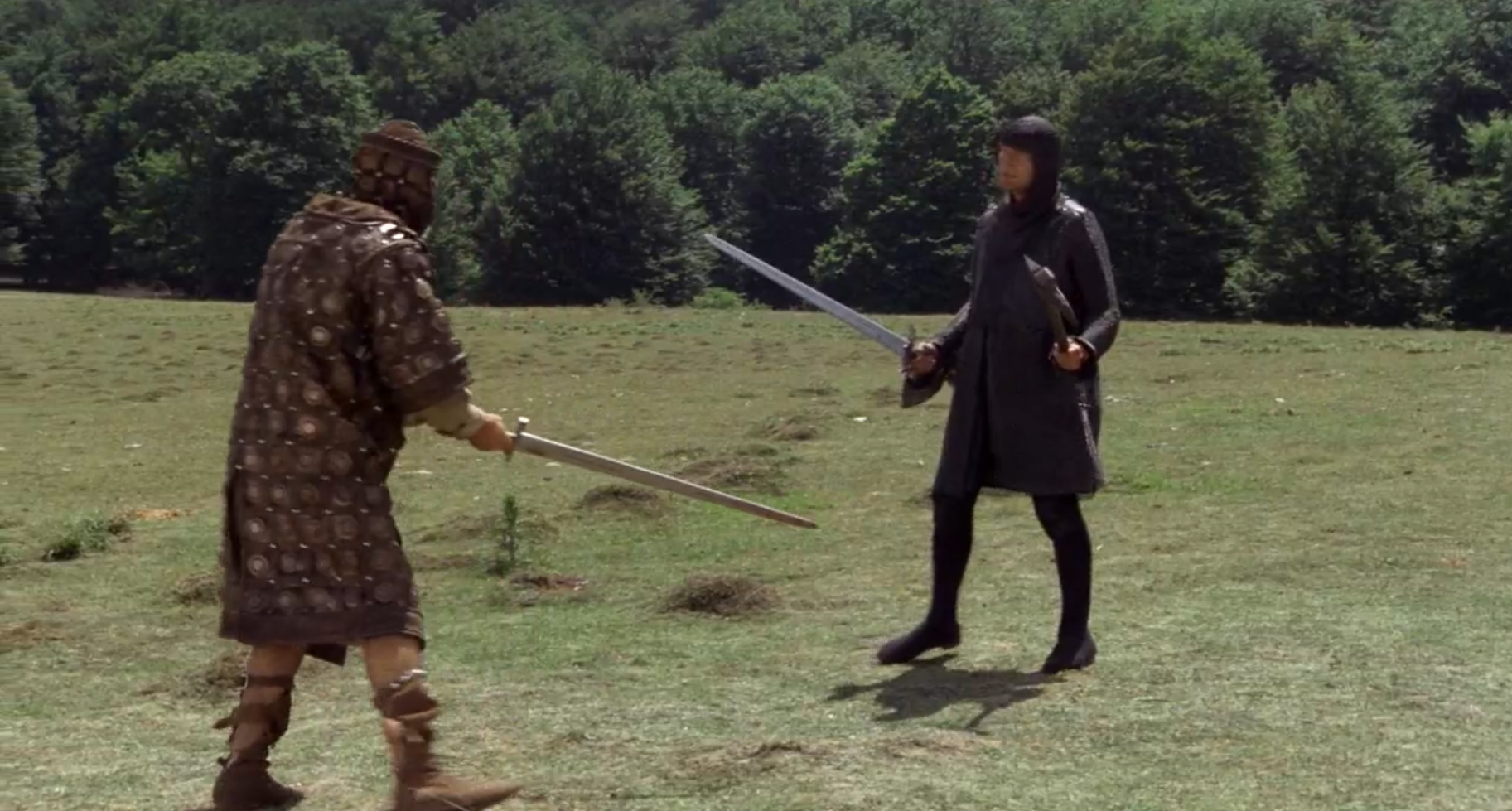
feels contrived, and their climactic one-on-one swordfight doesn’t hold much interest (again, the blame lies with a lack of prior investment in the characters).

The film’s most powerful element — and its true saving grace — is the genuine screen chemistry between Connery and Hepburn, who ultimately deserve a much better vehicle for their talents.

Redeeming Qualities and Moments:

  • Audrey Hepburn in a welcome comeback performance
  • A touching romance between the older, wiser Robin and Marian
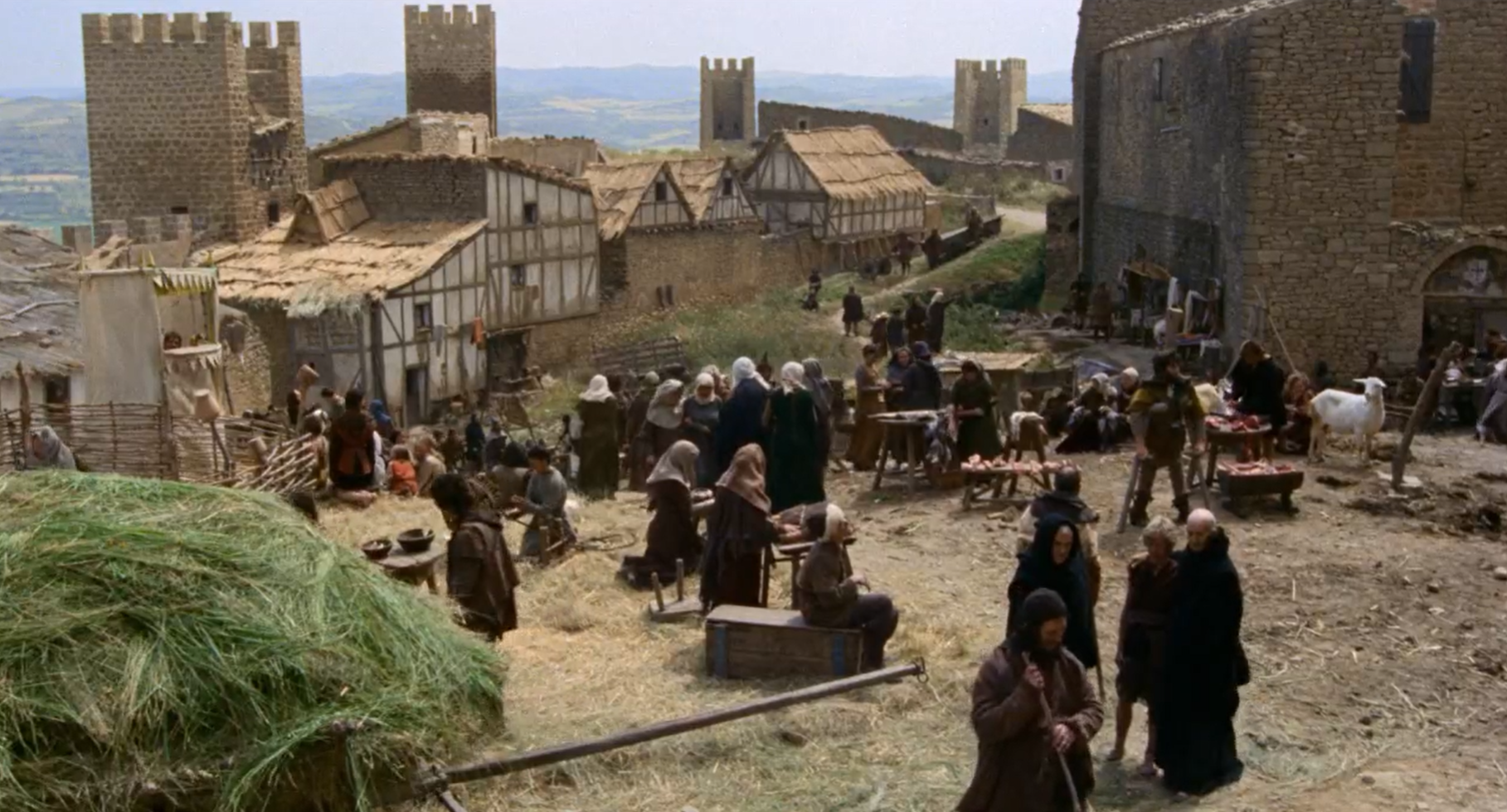
  • Fine historical sets

Must See?
No. While it holds some historical interest as the film that brought Hepburn out of her self-imposed retirement from acting, it’s ultimately no longer must-see viewing.

Links:

Freaks (1932)

Freaks (1932)

“We accept you, one of us! Gobble, gobble!”

Synopsis:
A group of carnival sideshow performers plot gruesome revenge when midget Hans (Harry Earles) is cuckolded by his manipulative new wife (Olga Baclanova).

Genres, Themes, Actors, and Directors:

  • Carnivals and Circuses
  • Cuckolds
  • Disabilities
  • Horror
  • Revenge
  • Tod Browning Films
  • Underdogs

Response to Peary’s Review:
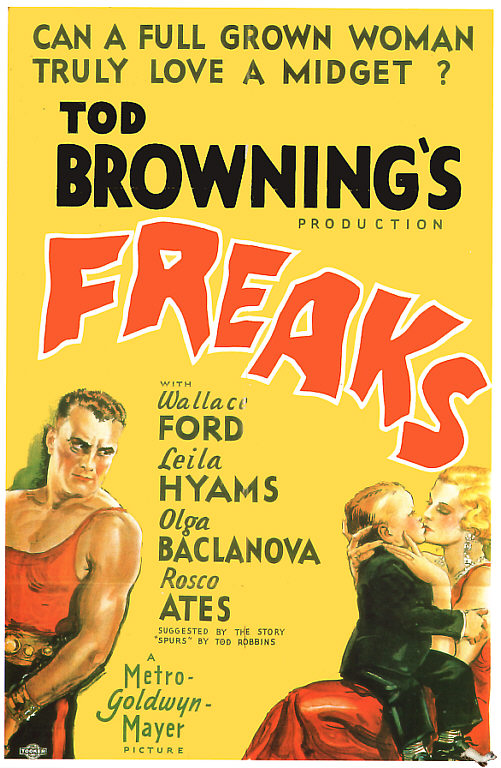
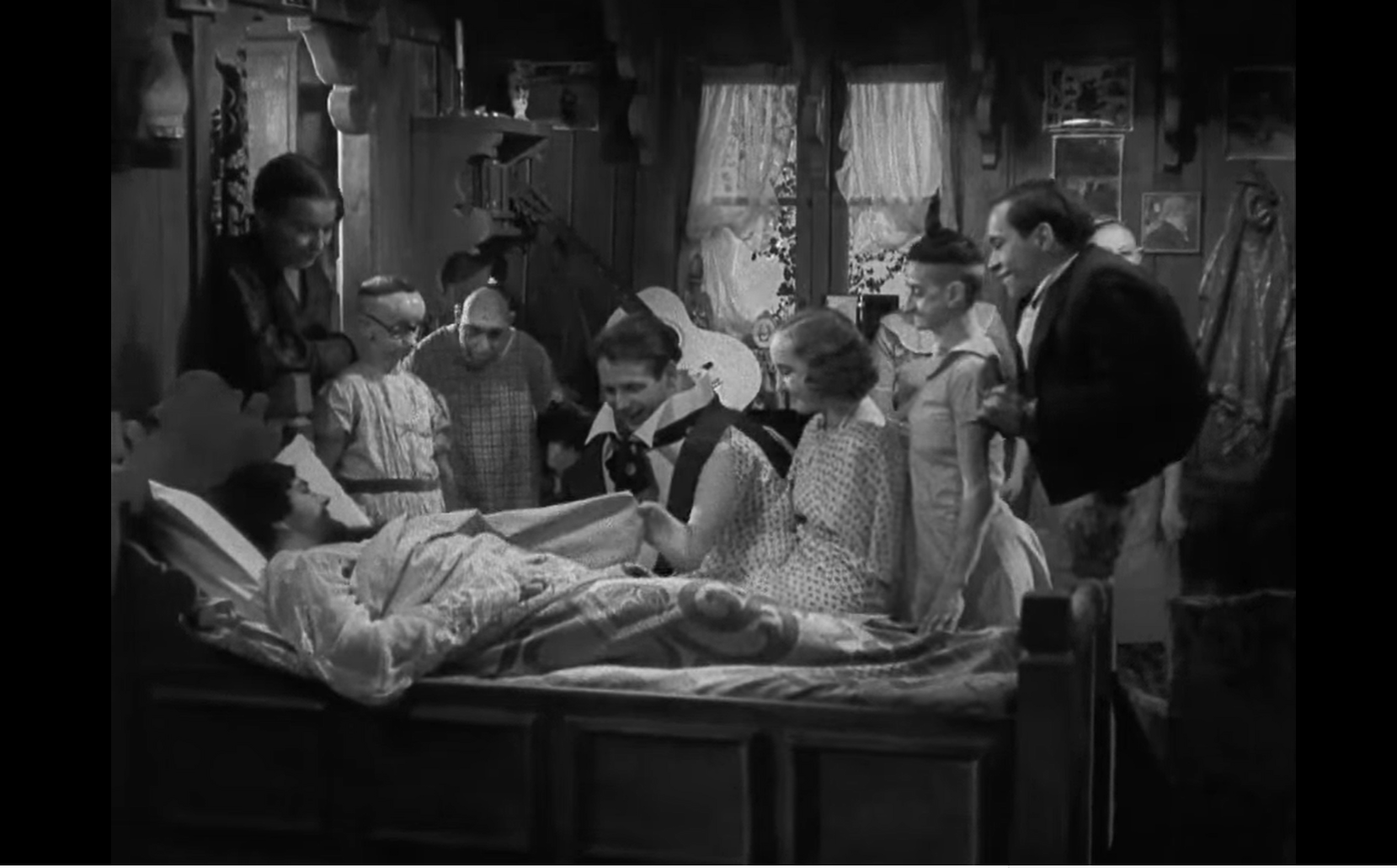
One of early cinema’s unique gems, Tod Browning’s Freaks continues to delight, horrify, and astonish more than 70 years after its creation. At just 64 minutes long, the movie zips along at an economic clip, showcasing the backstage lives and loves of carnival folks:
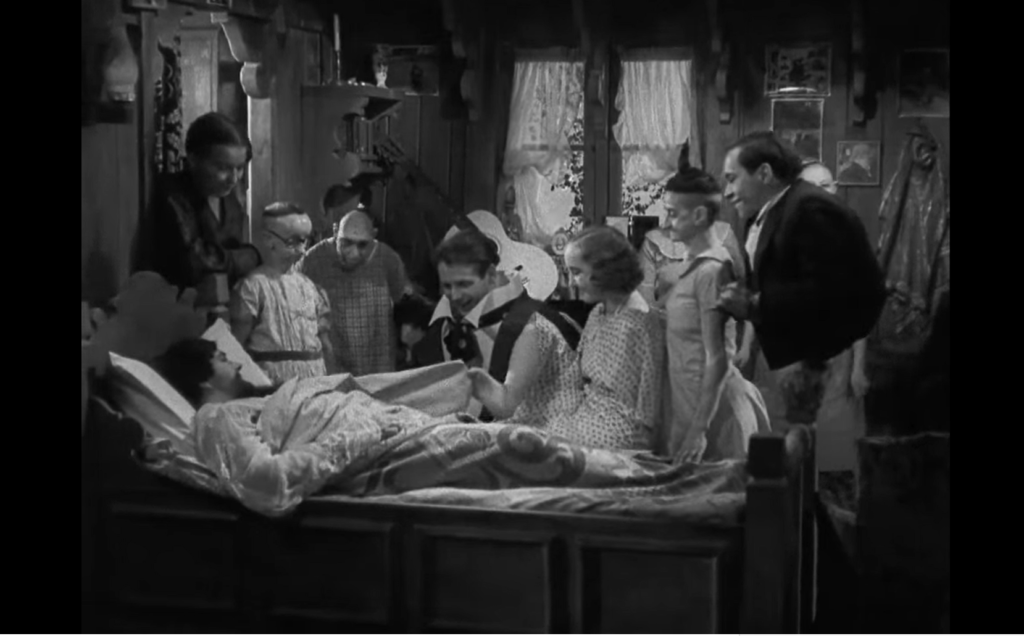
… while simultaneously relating a classic tale of marital betrayal and collective revenge. Anyone who’s ever been teased or suffered discrimination for being different is bound to feel an affinity for this cult film — which, according to J. Hoberman and Jonathan Rosenbaum in their Midnight Movies (1983/91), holds the distinction (along with Bunuel and Dali’s surrealist short “Un Chien Andalou”) of being “possibly the oldest of all midnight attractions.”

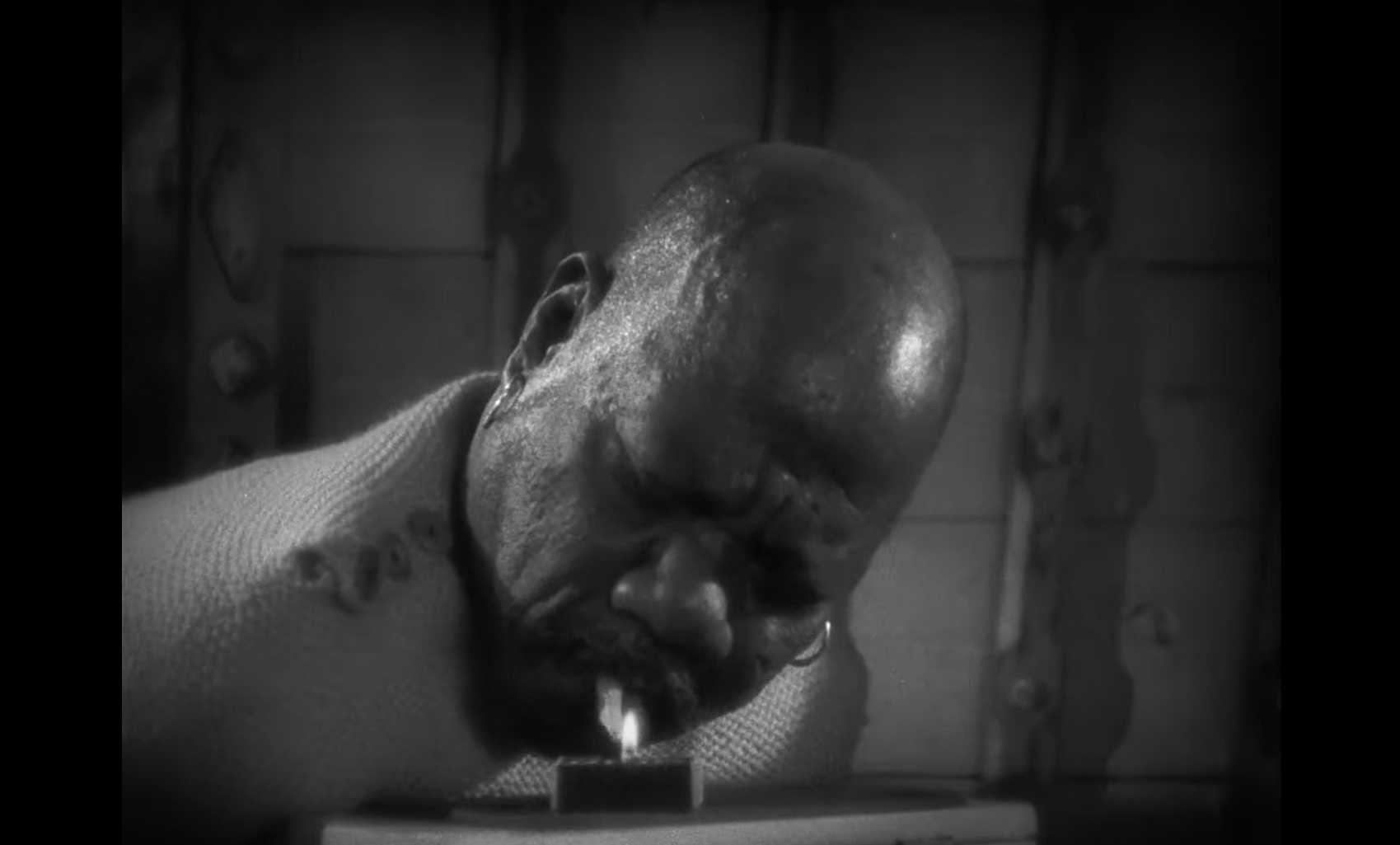
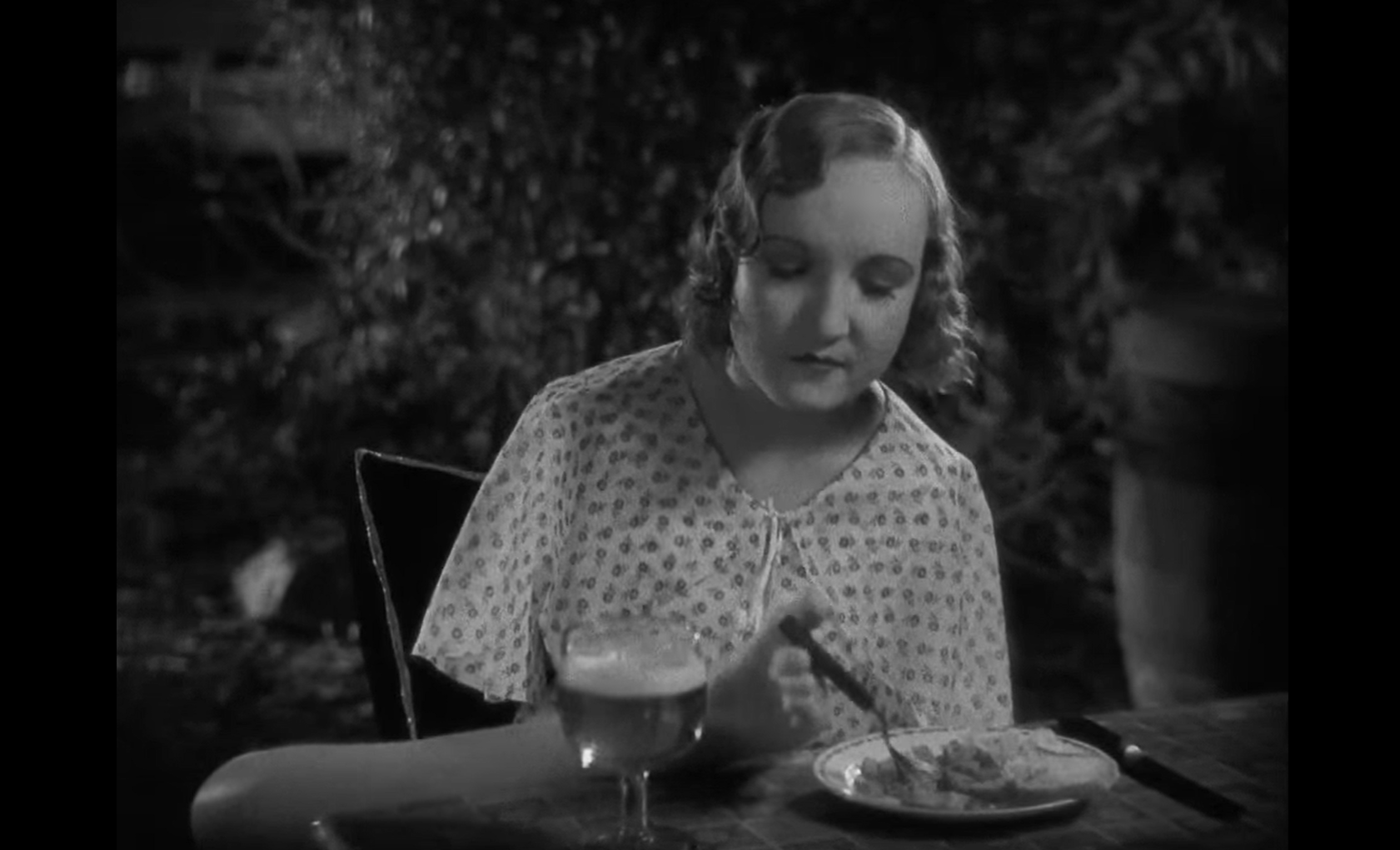
The group of unusual performers Browning collected for his cast includes limbless men and women (Prince Randian, Martha Morris, Frances O’Connor, and Johnny Eck):
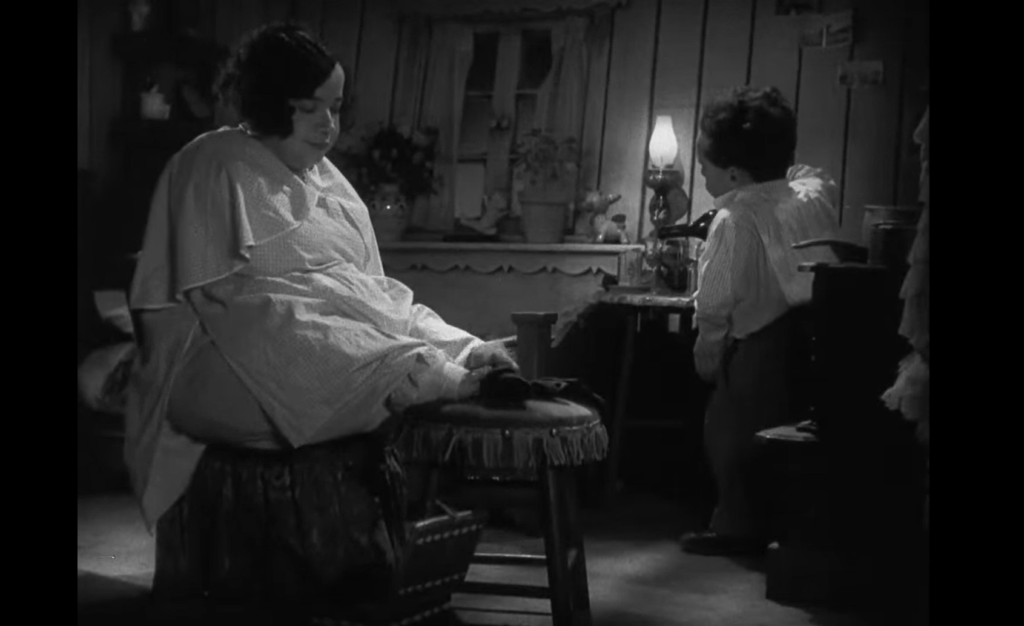
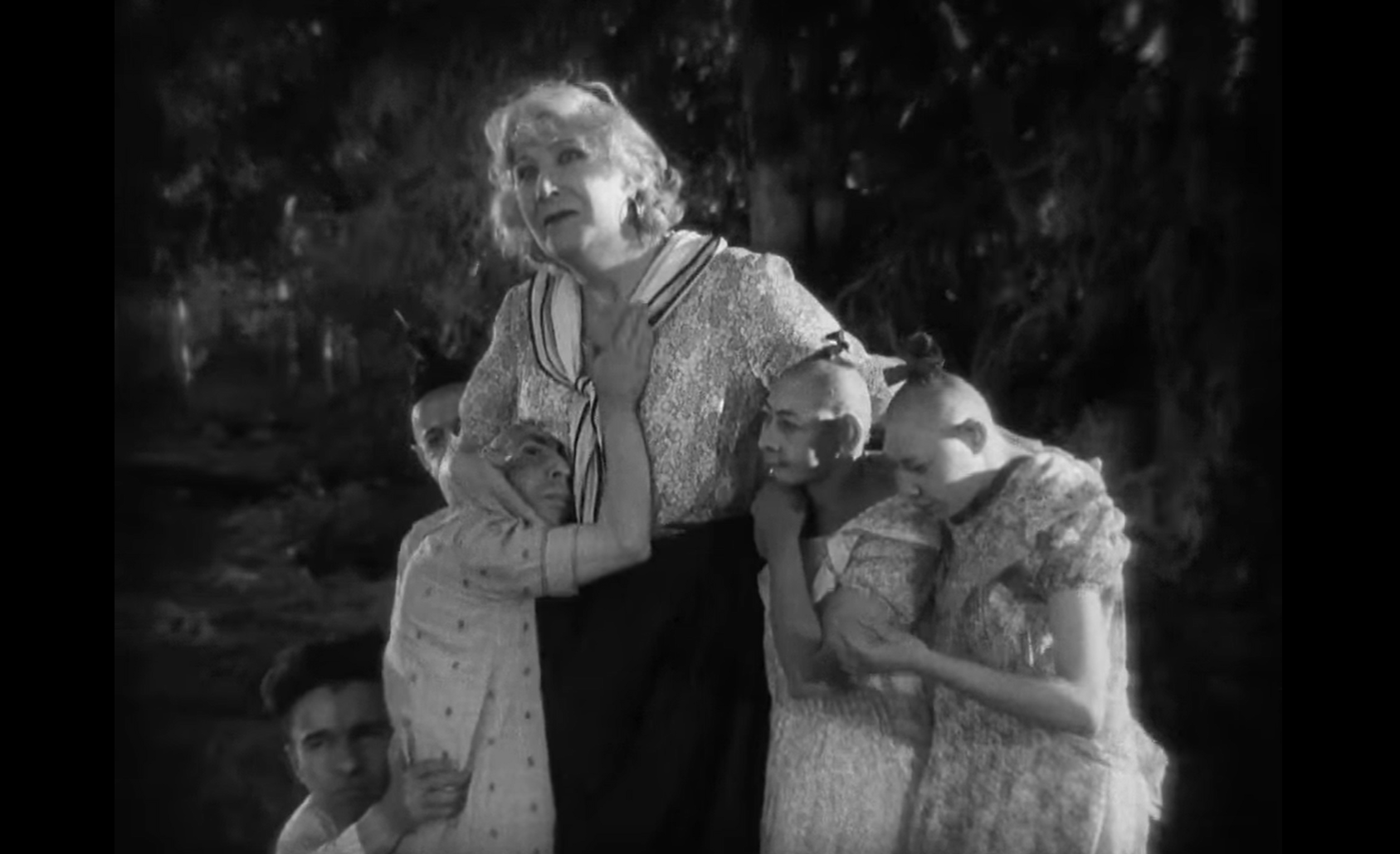
“pinheads” (Elvira and Jenny Lee Snow):
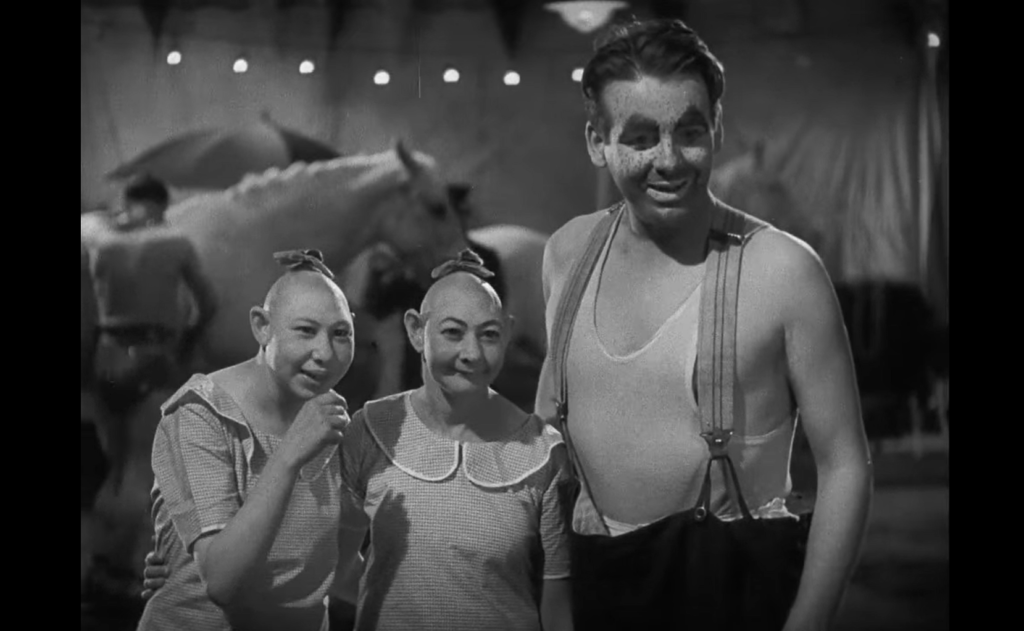
a hermaphrodite (Josephine Joseph):
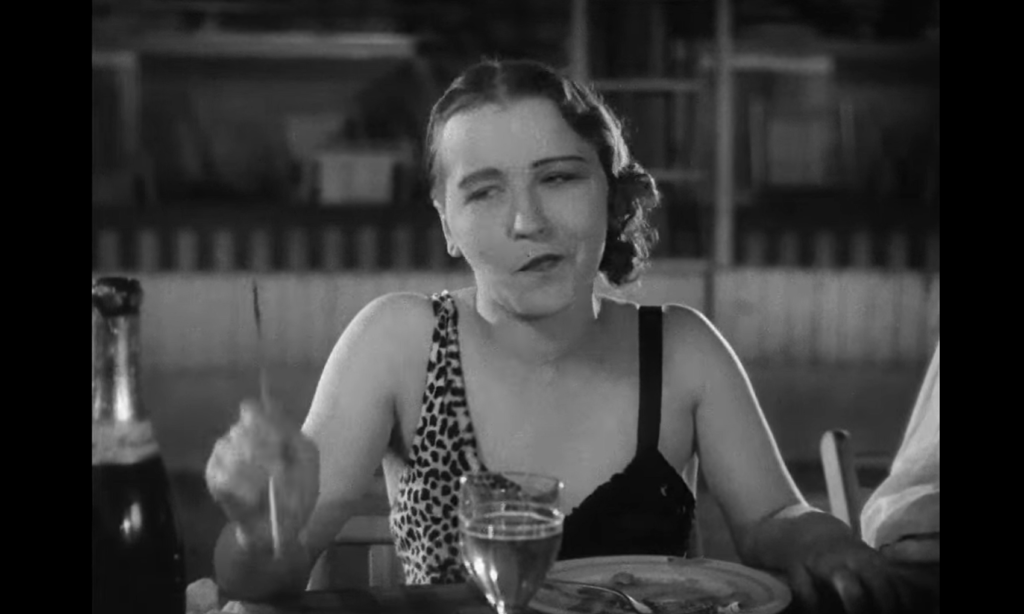
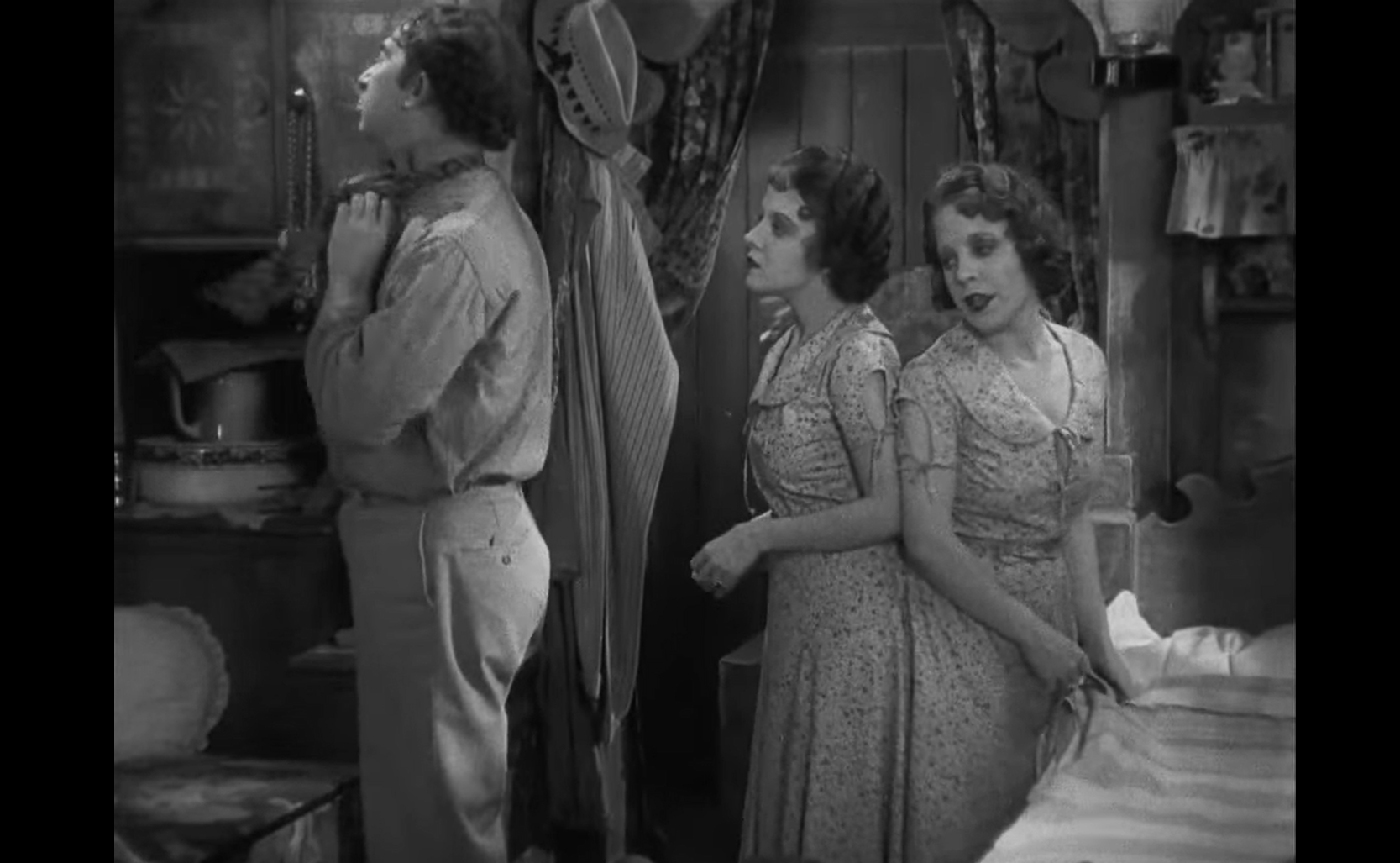
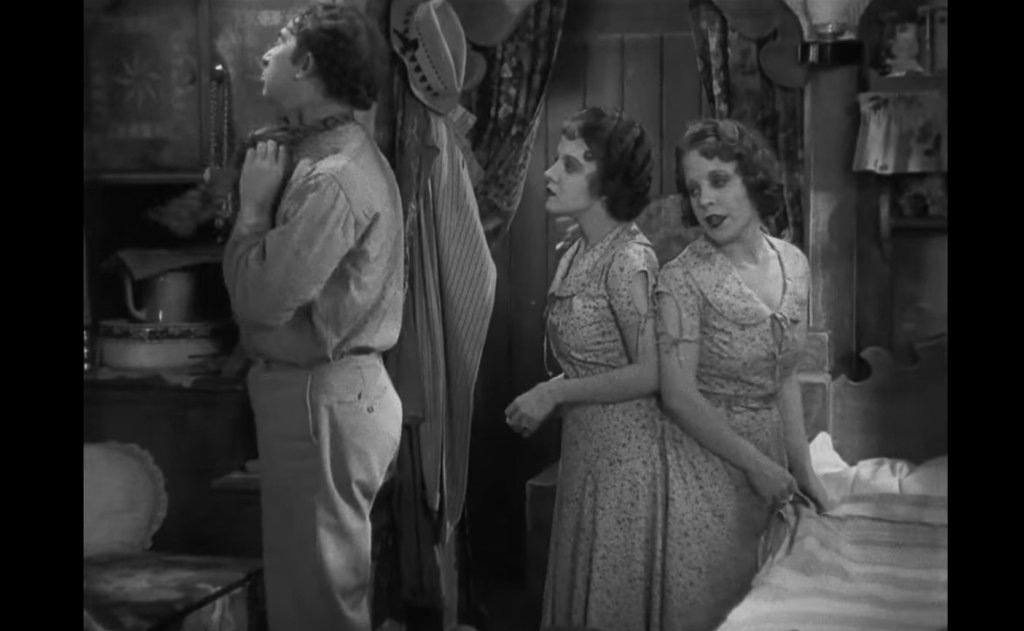
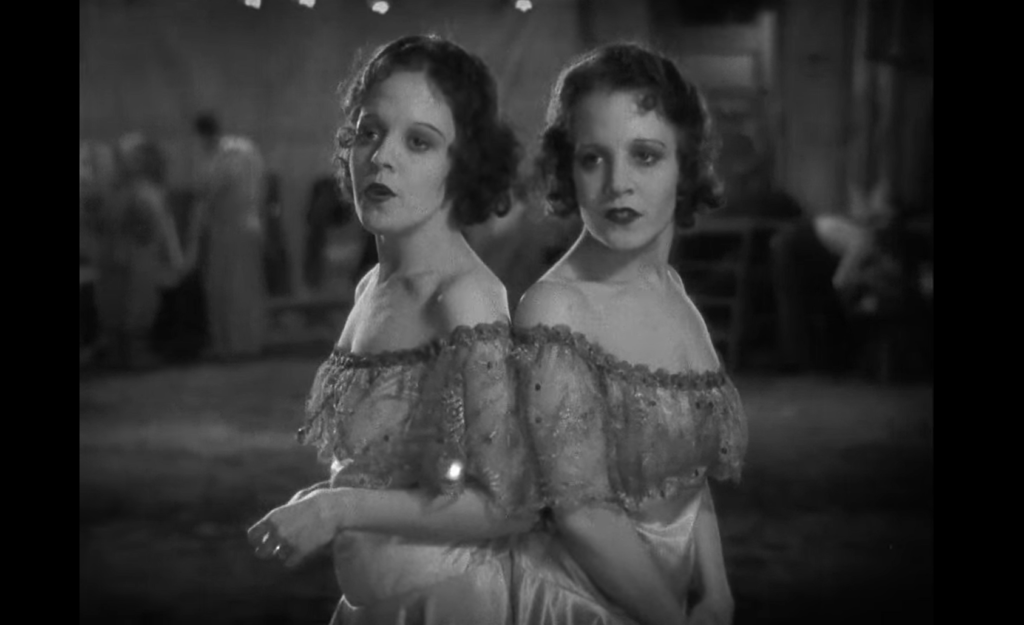
conjoined twins (Daisy and Violet Hilton):
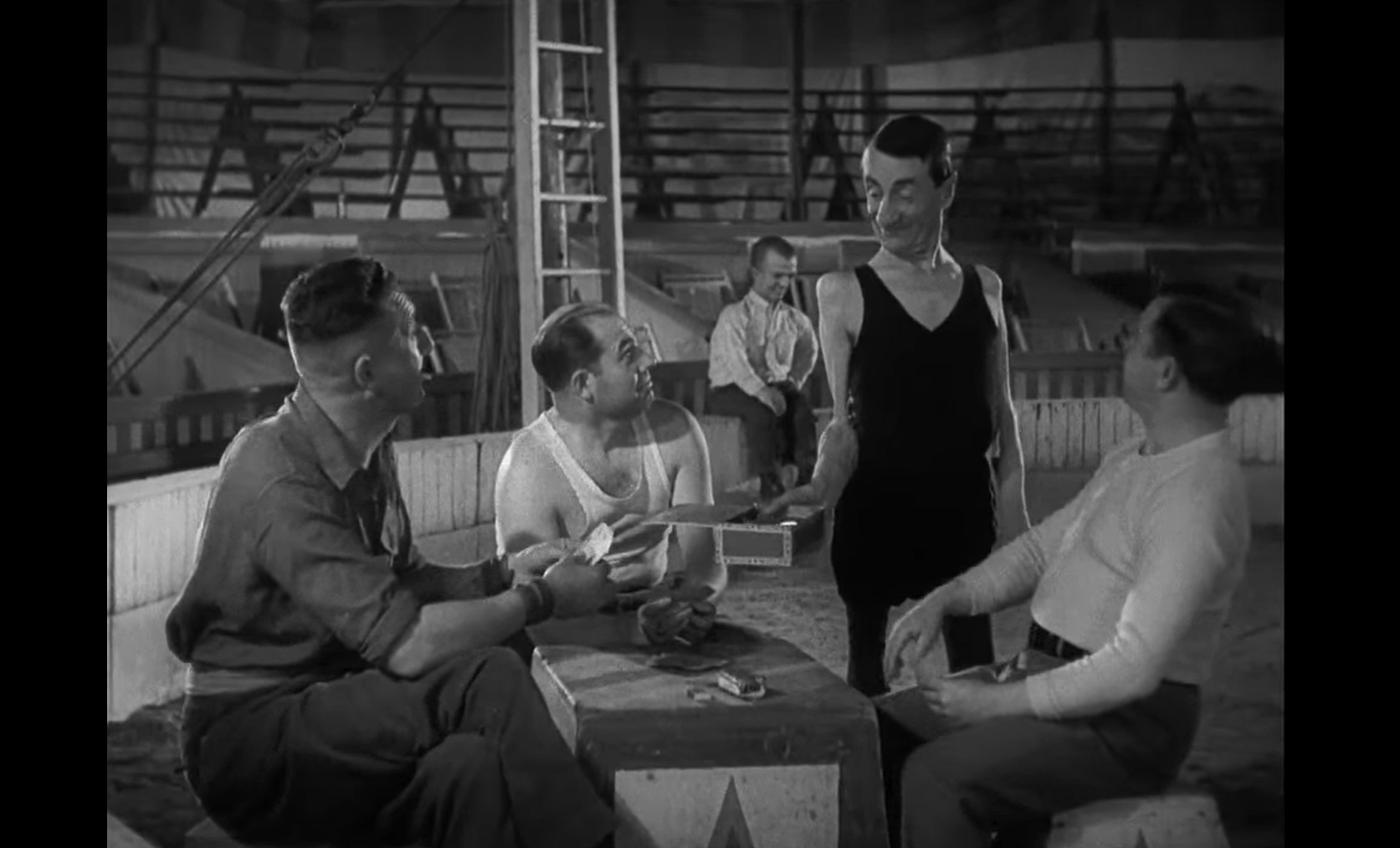
a “human skeleton” (Peter Robinson):

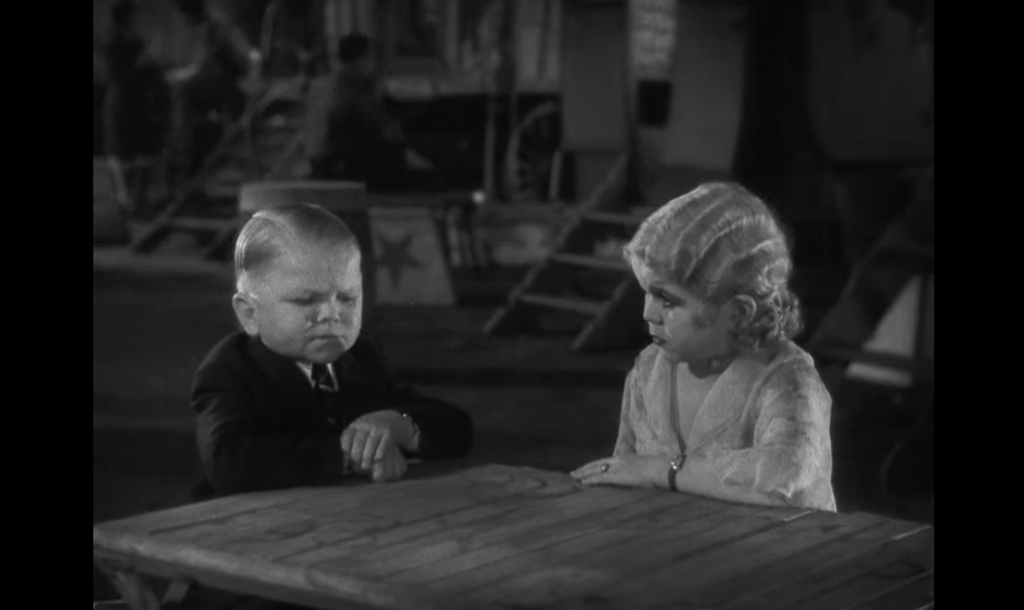
midgets (Harry and Daisy Earles):
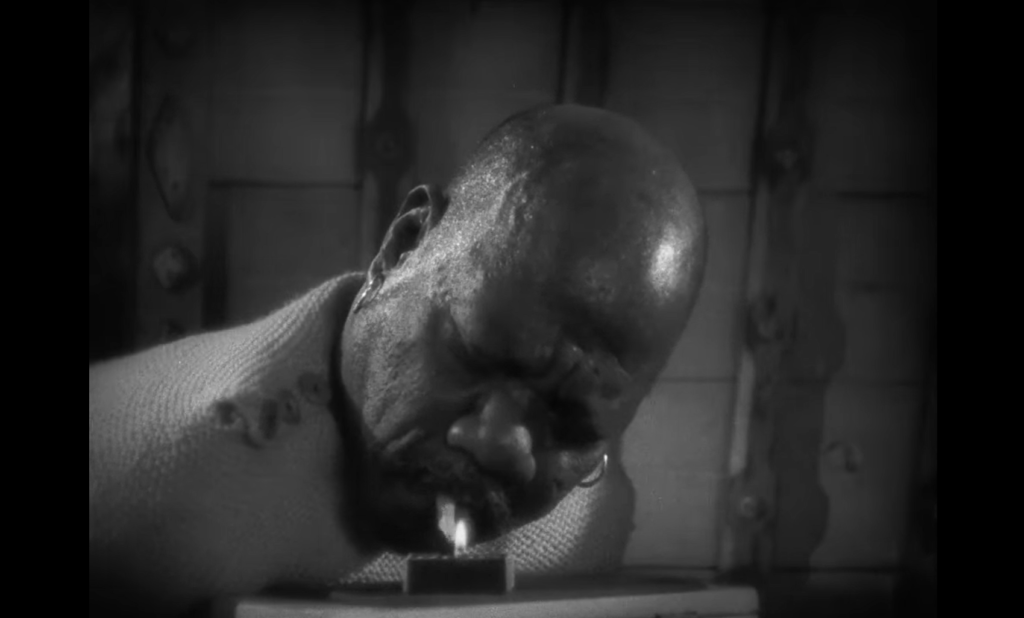
… and more. These characters are all genuinely disabled — not just made up to look that way — and thus it’s literally impossible not to stare at them. Yet as Peary notes, “viewers will feel not only fear, curiosity, and pity but also warmth, respect, and amazement” when watching Randian light his own cigarette:
… or O’Connor blithely eating dinner with her feet:
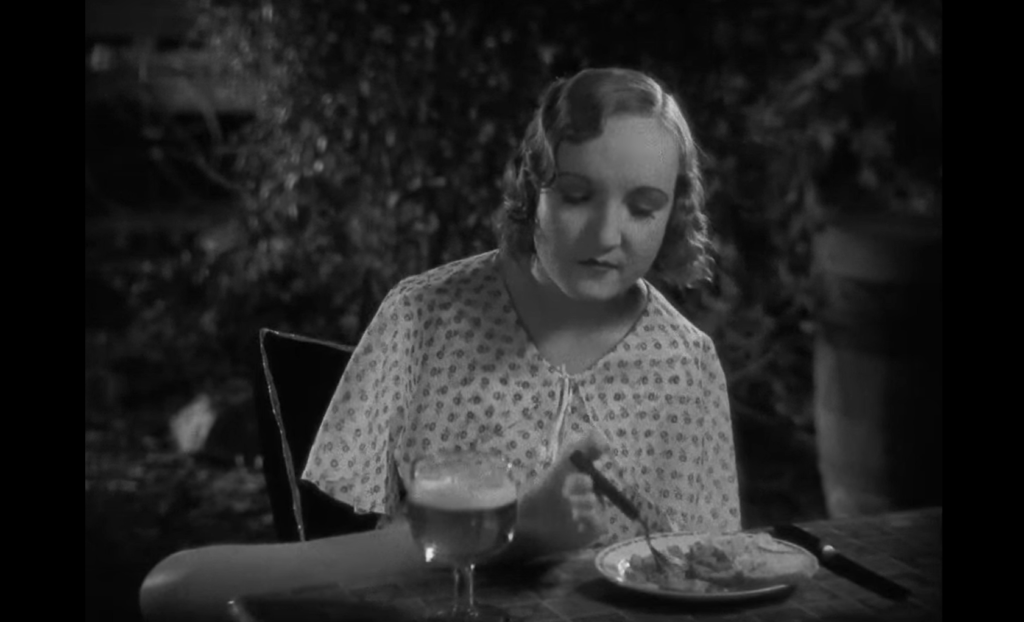
— and we “soon feel comfortable in their presence.”

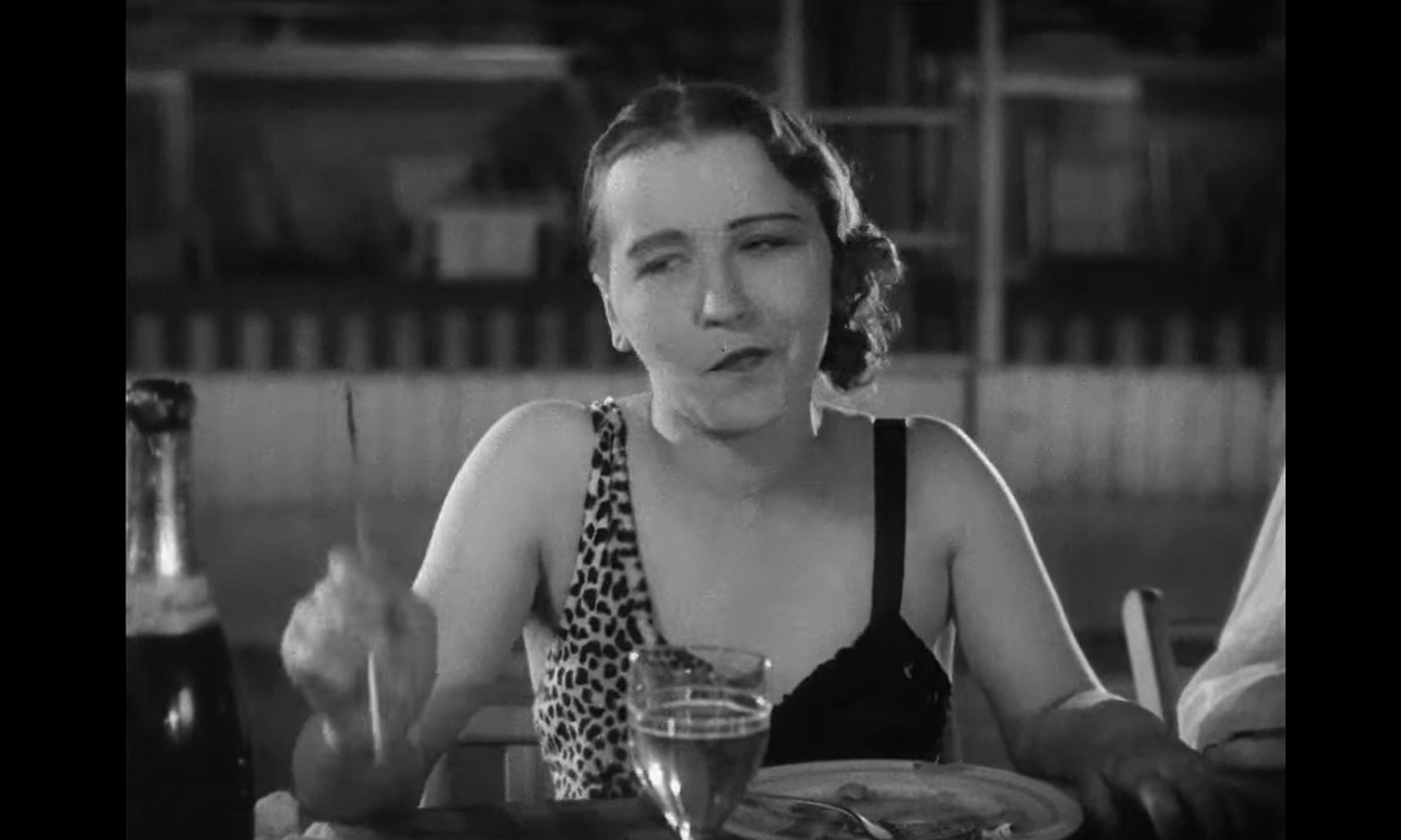
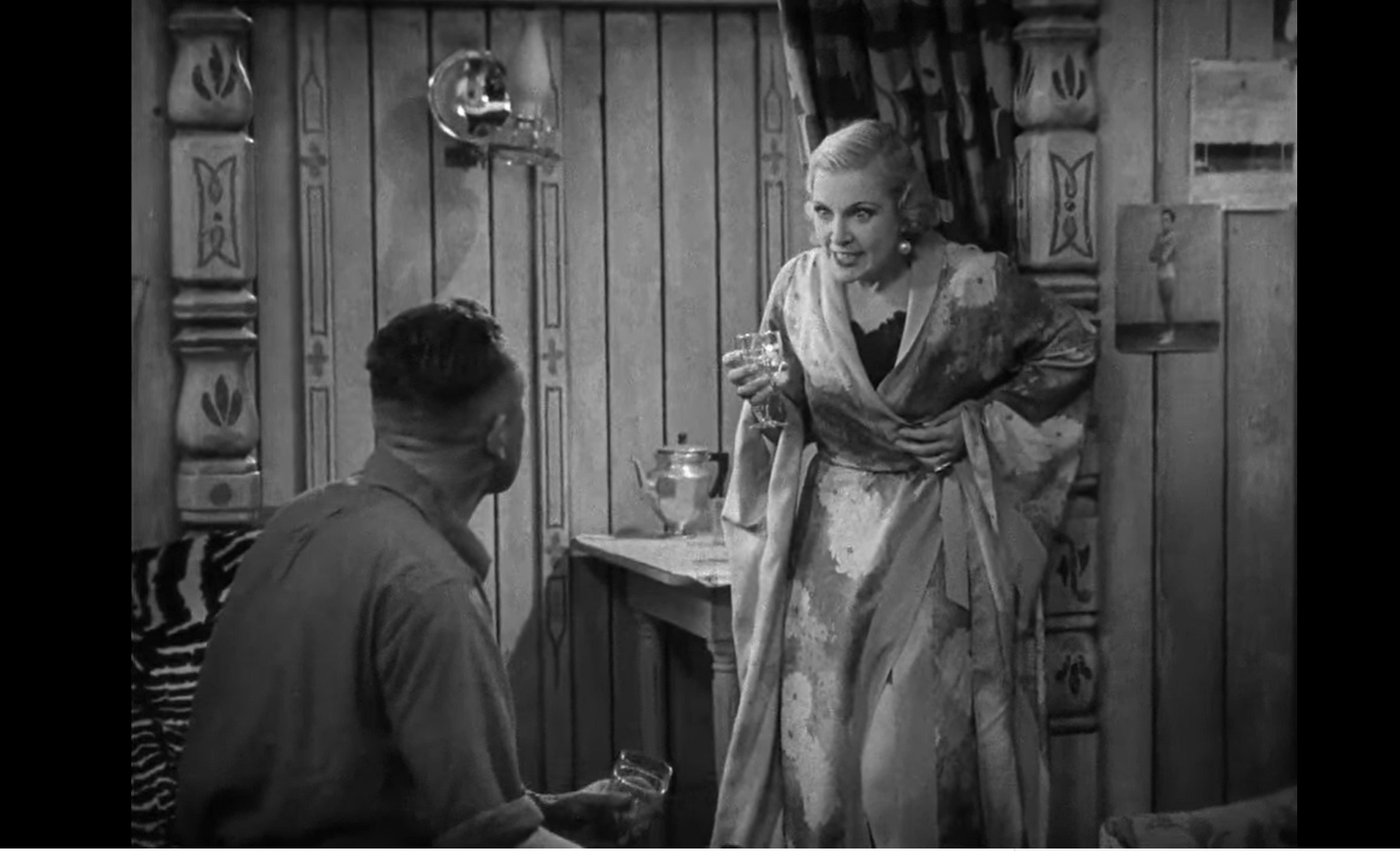
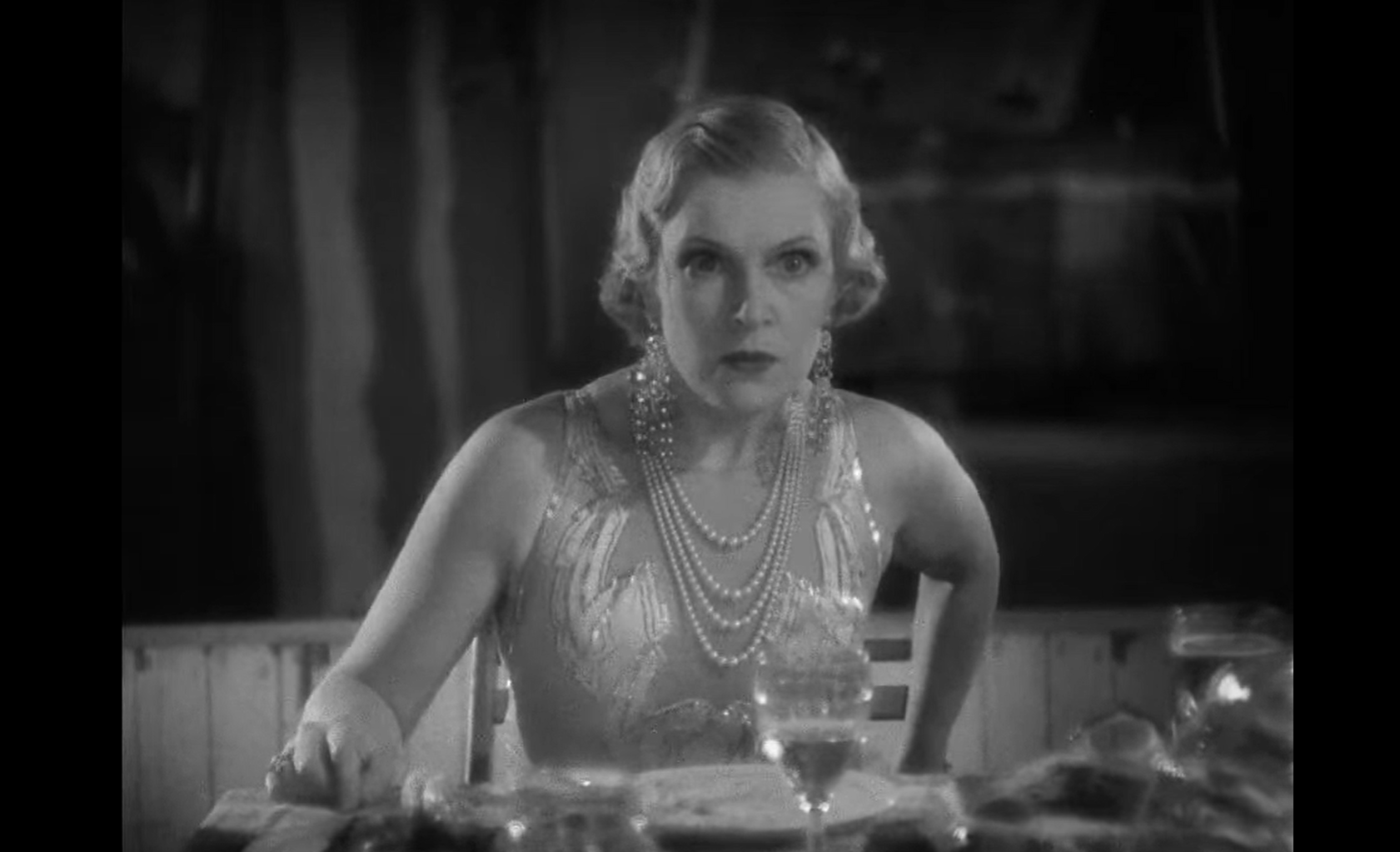
Although the lead female role (Cleopatra) in Freaks was originally slated for Myrna Loy (who refused in protest of the script), Russian stage actress Olga Baclanova was an inspired second choice to play the film’s vampy villainess. Her smarmy come-ons to Earles — as well as her blatant mockery of anyone smaller or weaker than herself — help turn Cleopatra into a completely unsympathetic character, someone it’s easy to hate.
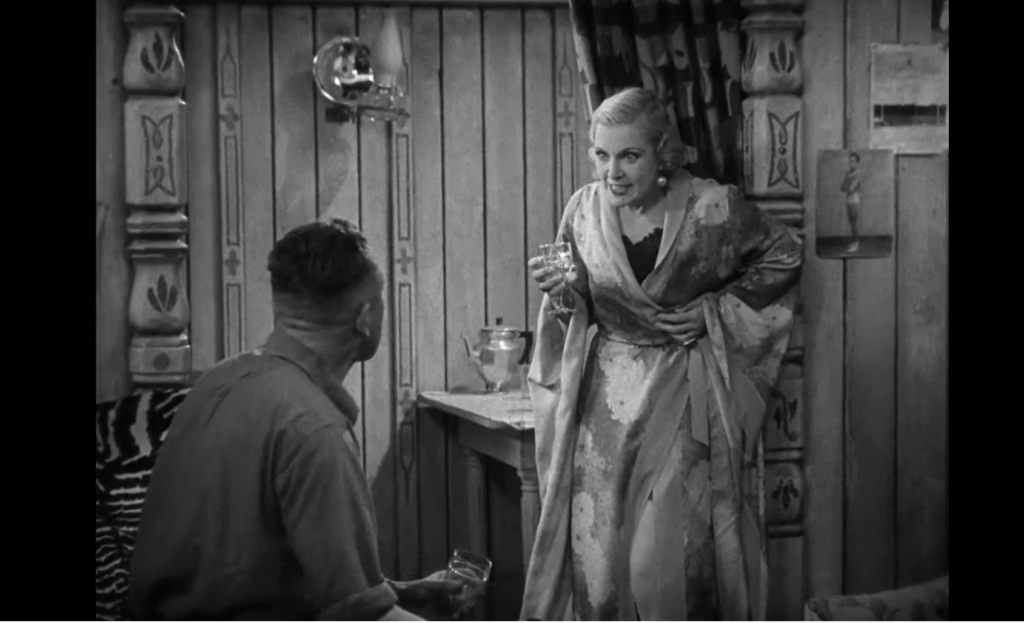
Actually, I suspect that part of the film’s appeal is its utter lack of big-name stars — rather than showcasing personalities, it thus relies solely on the power of its narrative, characters, and atmosphere to evoke a unique cultural world. While some may be offended by Browning’s blatant use of physically abnormal persons for cinematic interest, he treats them respectfully: this is their world — the only one to which they undeniably belong — and their deformities unite them together rather than setting them shamefully apart. What a vicarious treat to see these true underdogs of the world proving that collective will can trump bullying behavior any day.

Redeeming Qualities and Moments:

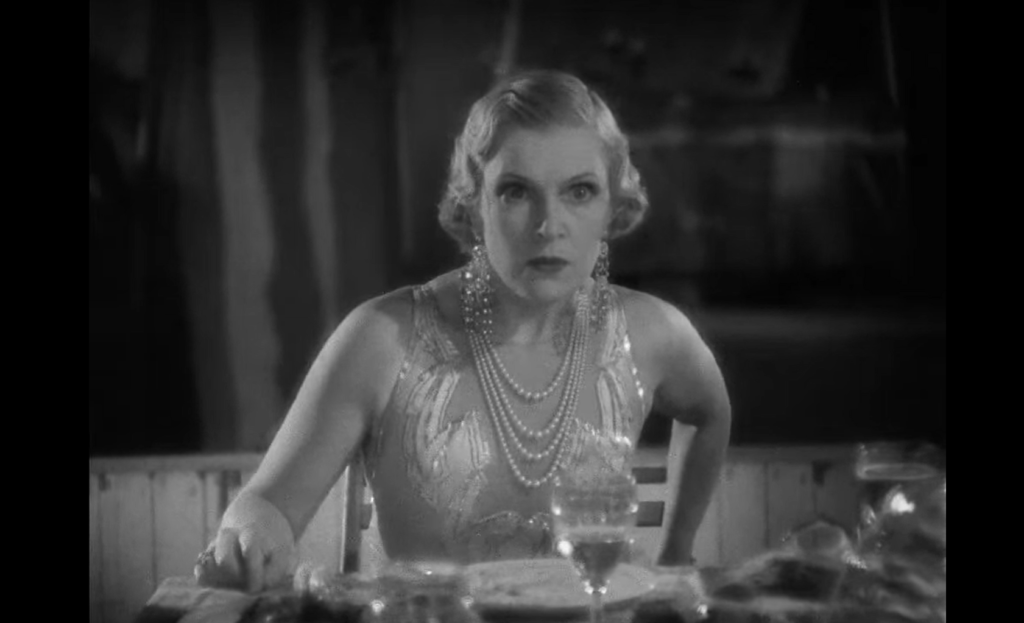
  • Olga Baclanova as Cleopatra — one of cinema’s truly evil villainesses
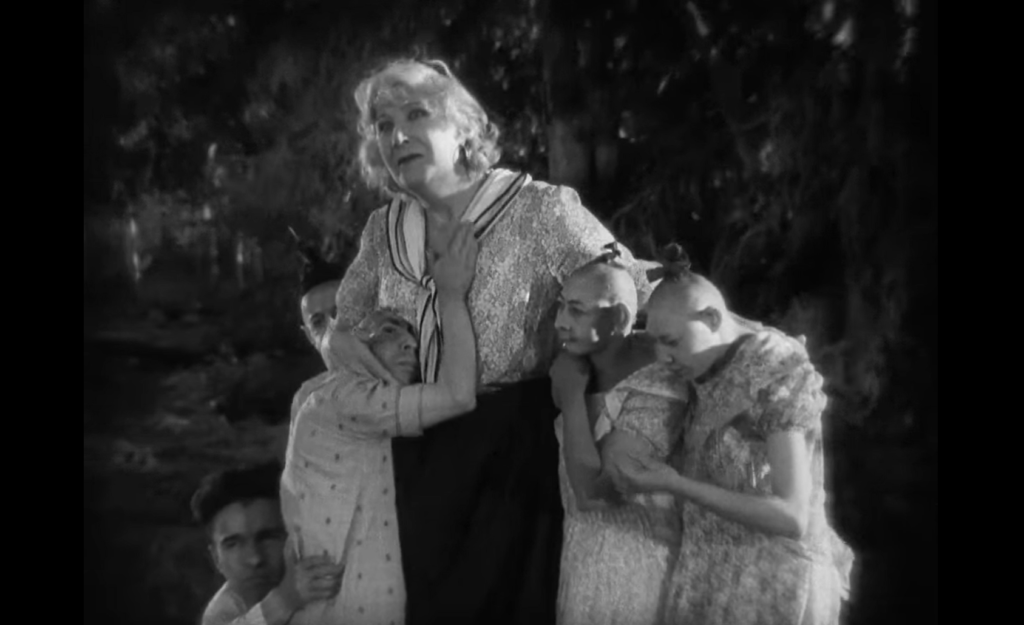
  • The pinheads being comforted by their caretaker, Madame Tetrallini (Rose Dione)
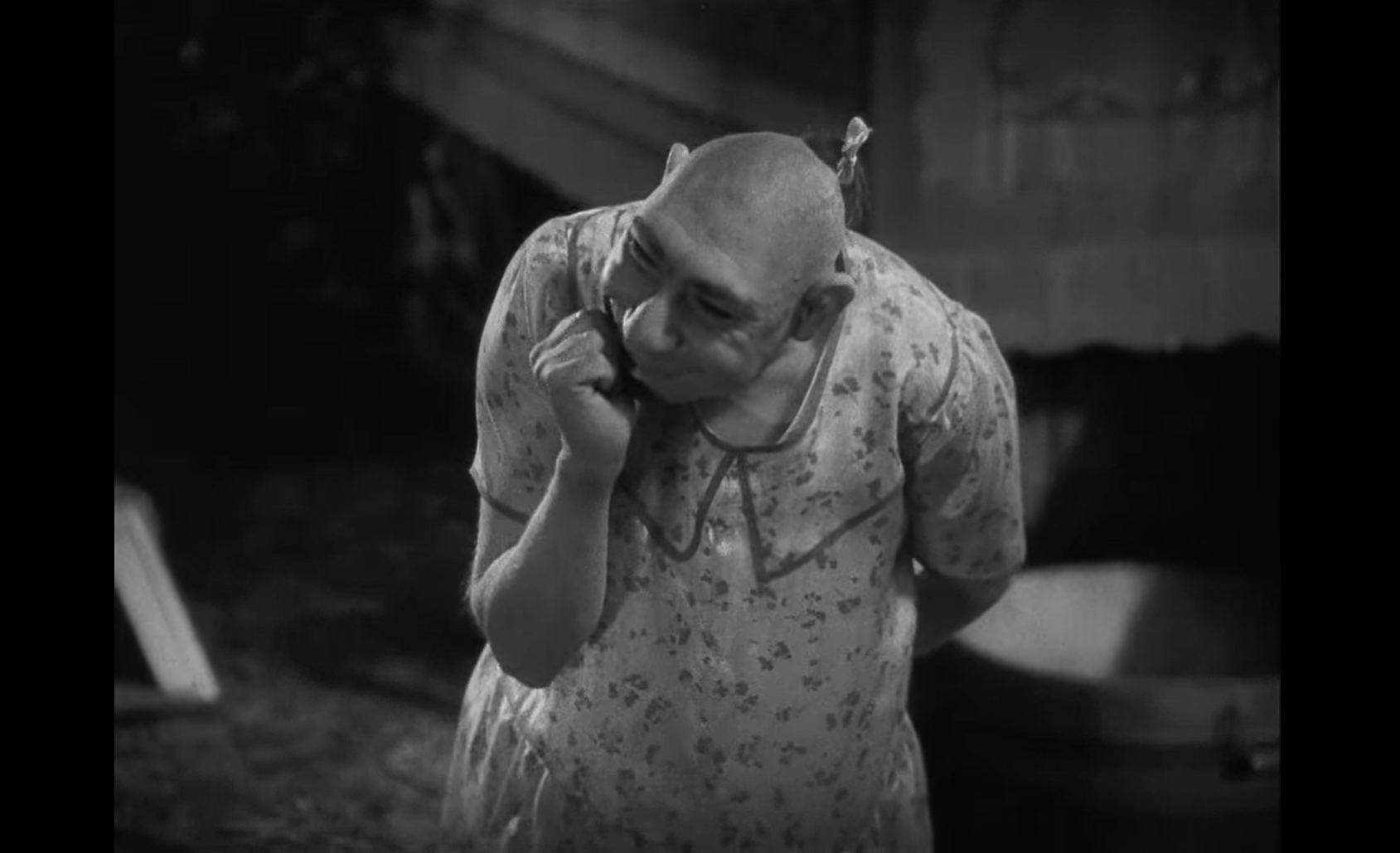
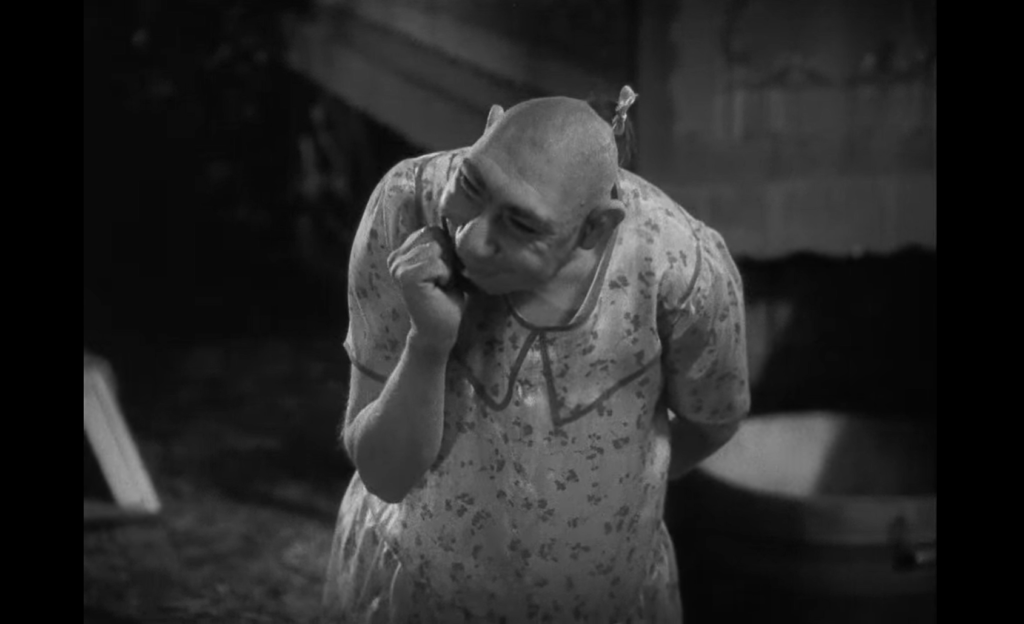
  • Grinning Schlitze (a retarded male dressed as a female), always in a good mood
  • The Hilton sisters in their screen debut
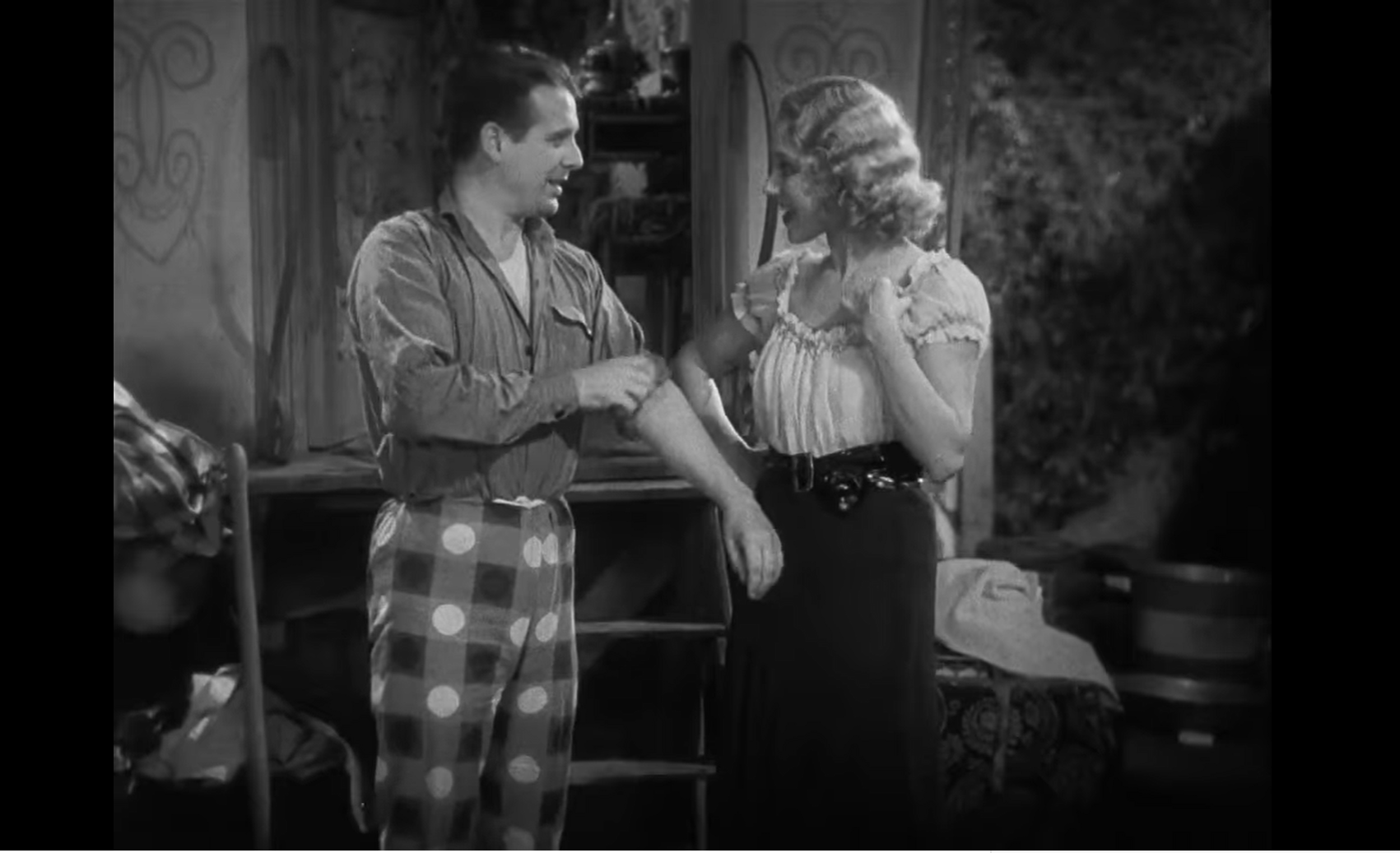
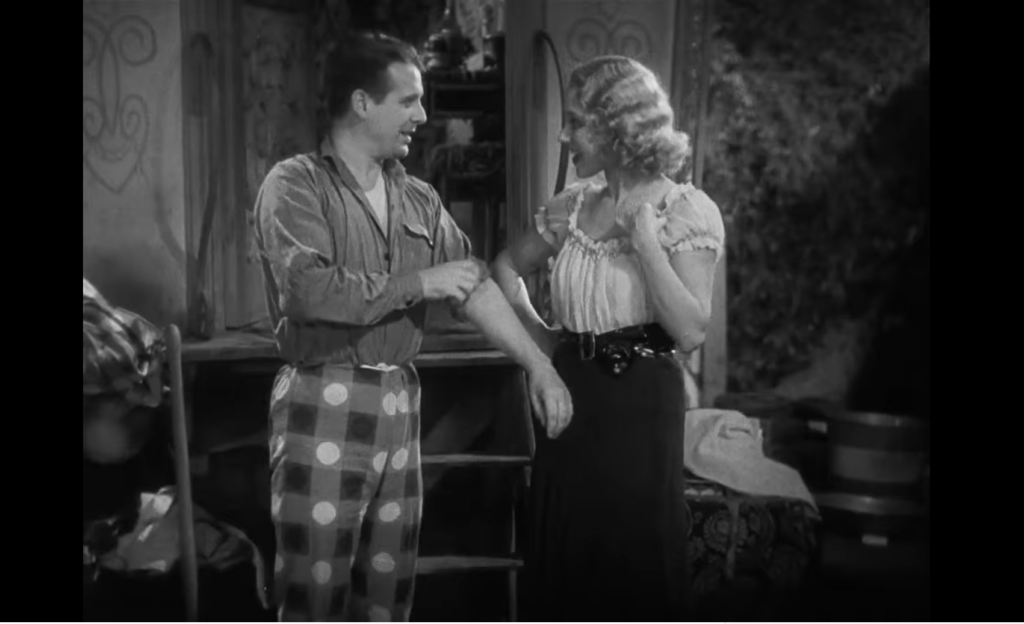
  • The sweet, humorous romance between sympathetic Venus (Leila Hyams) and Phroso (Wallace Ford)
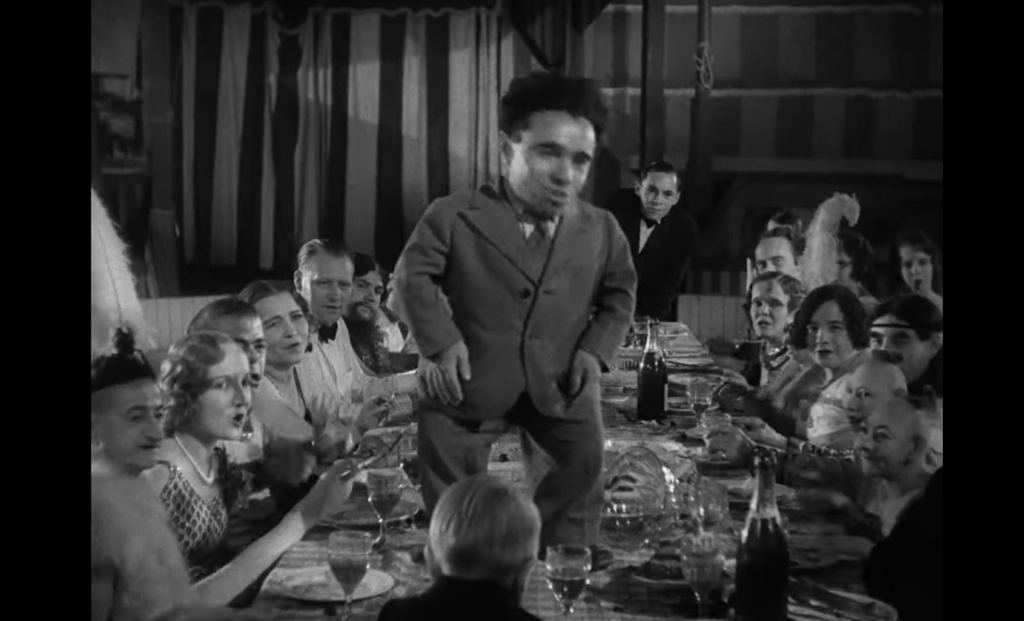
  • The celebratory freaks chanting, “We accept you, one of us! Gooble gobble!” to a horrified Cleopatra during the wedding feast
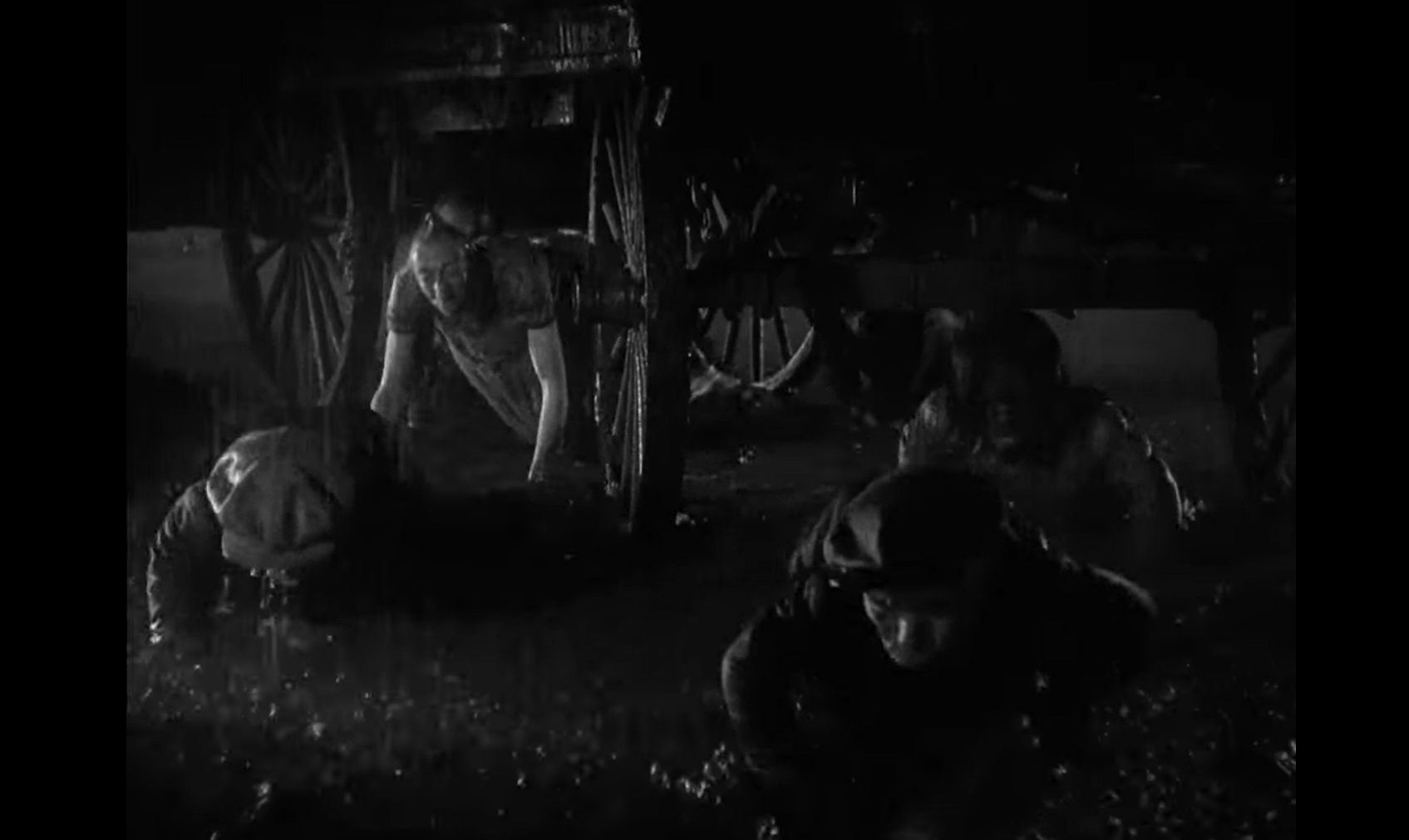
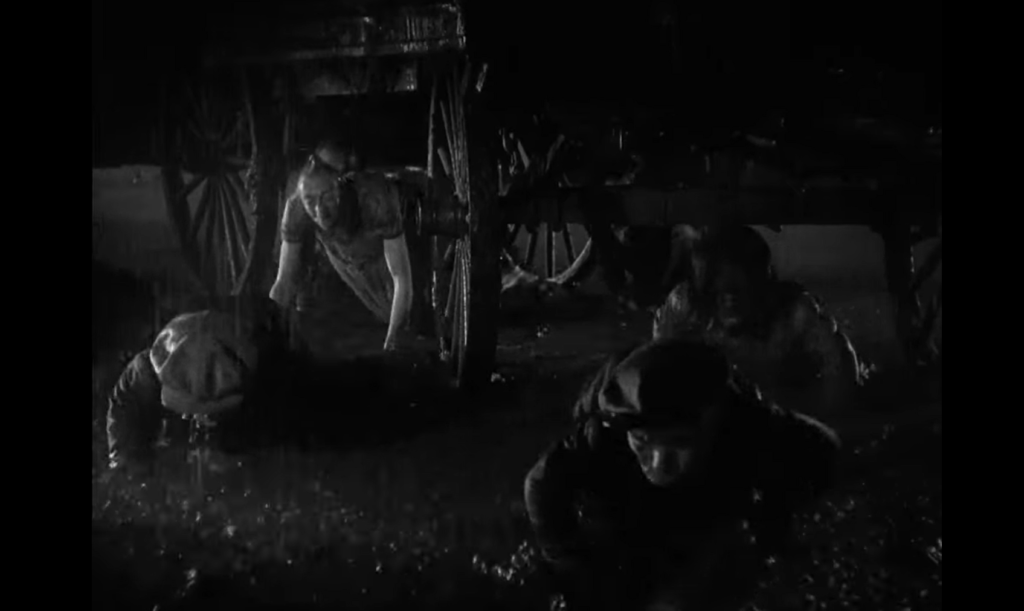
  • The freaks crawling after Cleopatra and Hercules on a dark and stormy night
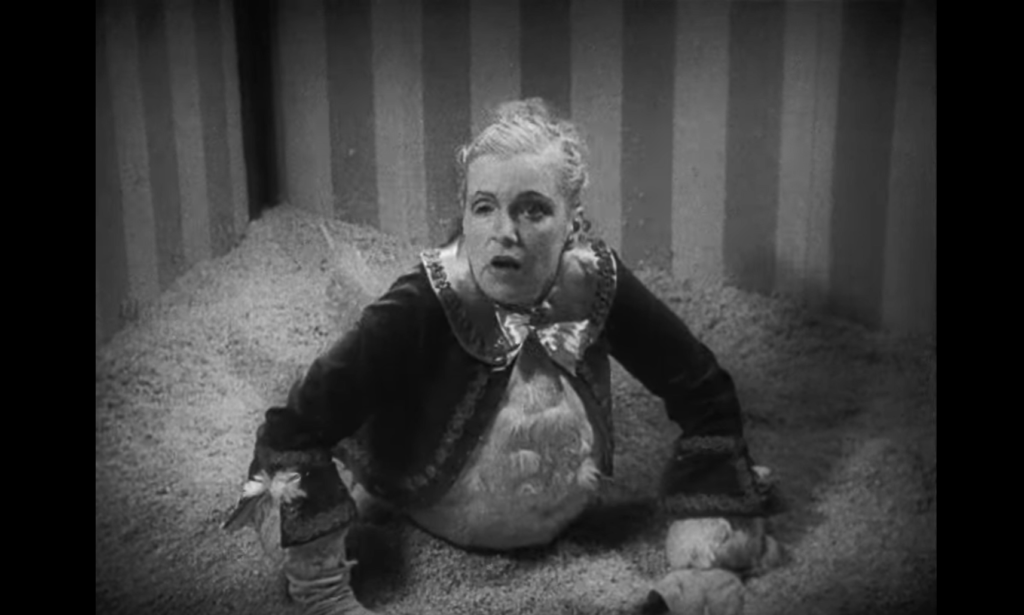
  • The horrifying (yet well-deserved) revenge wreaked upon Cleopatra
Must See?
Yes. This controversial cult classic merits multiple viewings. Discussed at length in Peary’s Cult Movies (1981).

Categories

  • Controversial Film
  • Cult Movie

(Listed in 1001 Movies You Must See Before You Die)

Links:

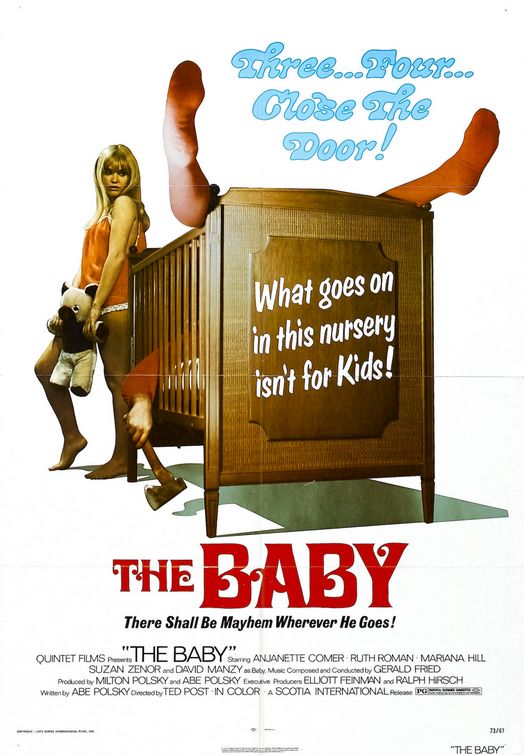
Baby, The (1973)

Baby, The (1973)

“Mrs. Gentry, just what do you think you’re doing?”

Synopsis:
A recently widowed social worker (Anjanette Comer) investigates a strange case of “child abuse” at the Wadsworth home, where she discovers that a grown man (David Manzy) has been kept in a state of infantile subjugation for 21 years.

Genres, Themes, Actors, and Directors:

  • Child Abuse
  • Do-Gooders
  • Ruth Roman Films

Review:
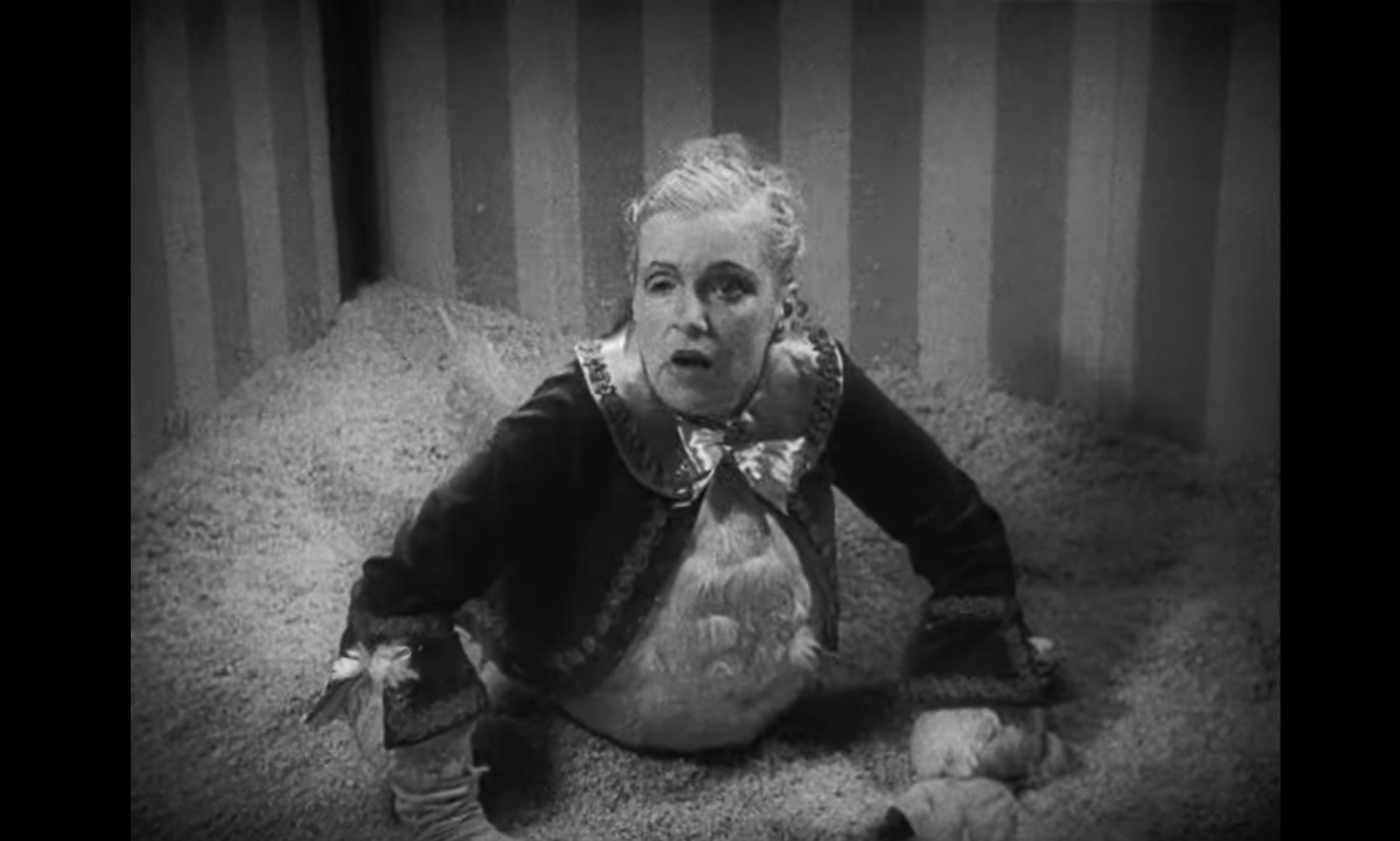
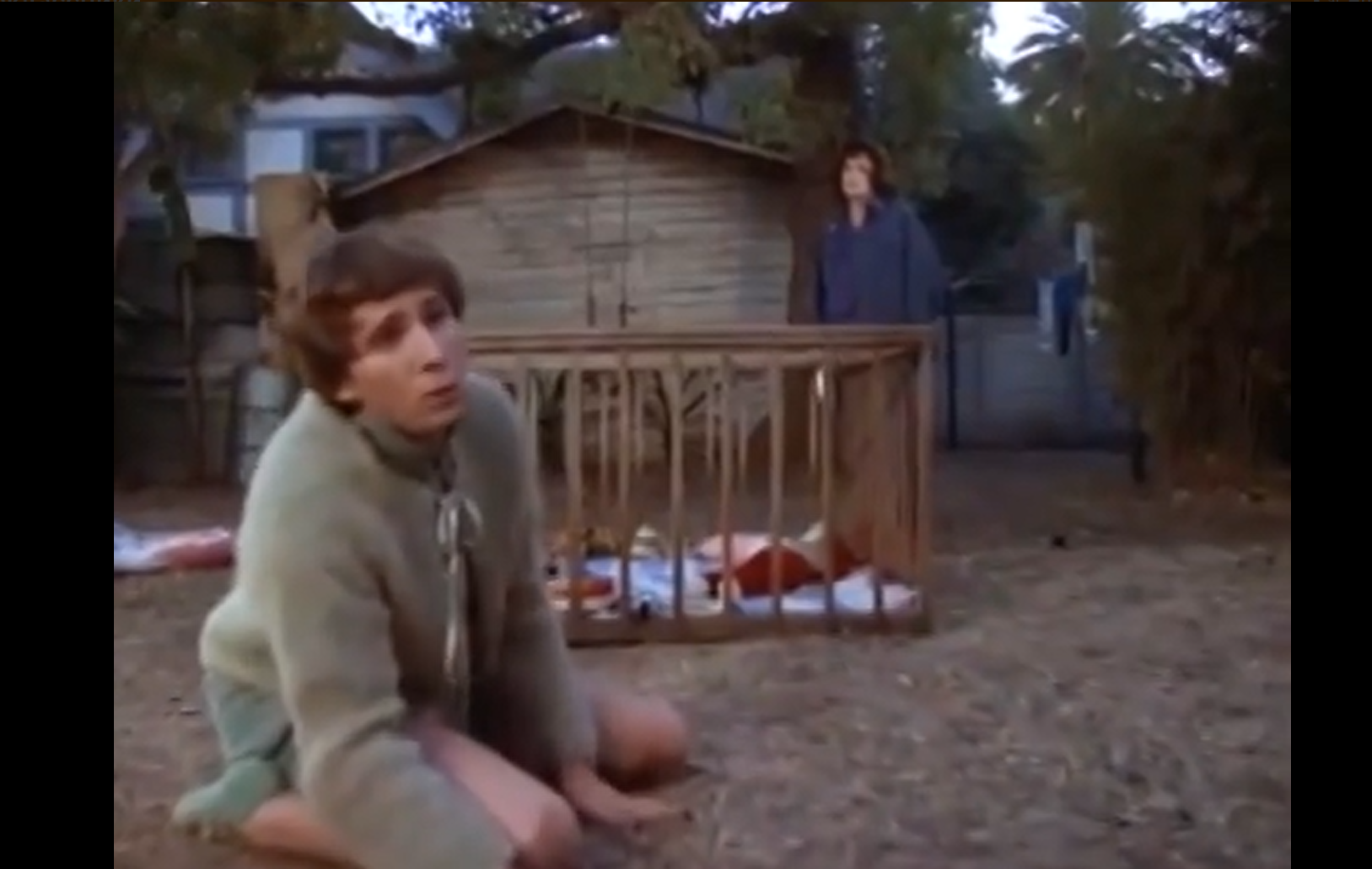
Bizarre, disturbing, and patently illogical, Ted Post’s The Baby is surely one of the most unusual camp classics ever made. Viewers must suspend all disbelief while watching an adult man who still whimpers in baby squalls (clearly dubbed), and who is unable to walk despite possessing fully developed limbs:

… but once you accept this bit of illogic as part of the story’s necessary premise, it’s impossible not to be horrified — and fascinated — by what you see unfolding.

Part of what makes this cult film so utterly disturbing is watching a manipulative, psychotically abusive mother maintaining control over her object of torture for longer than just the span of childhood. (At least in Dave Pelzer’s autobiographical A Child Called “It”, the author finally escapes his nightmare existence once he’s a teenager.) For The Baby, however, there is seemingly no end to a lifetime of misery, and little that society (represented by Comer’s well-meaning social worker) can do to change things, other than taking radical, illegal action.

Reflecting back on The Baby, one immediately visualizes Ruth Roman’s hideous matriarch (Mrs. Wadsworth) strutting around in her red boots and denim or flowing caftans.

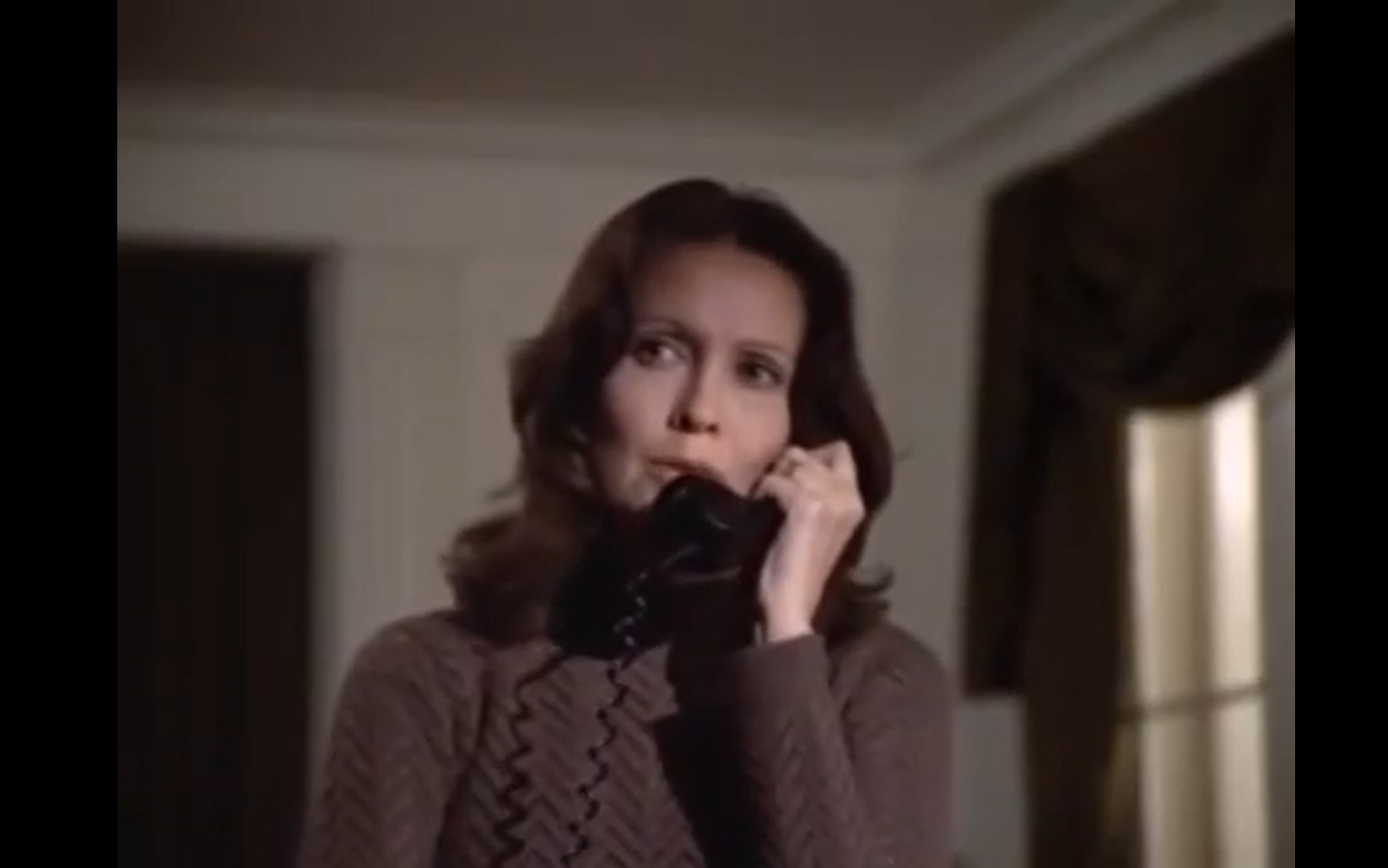
She is the embodiment of deceptive maternal concern, and Roman perfectly captures the nuances of her character’s psyche. Equally impressive are the film’s other players, including Comer as The Baby’s persistently frustrated case worker:

… Suzanne Zenor as The Baby’s bitchy blonde sister:

and David Manzy in an undeniably tricky role, but one which he nonetheless manages to pull off admirably.

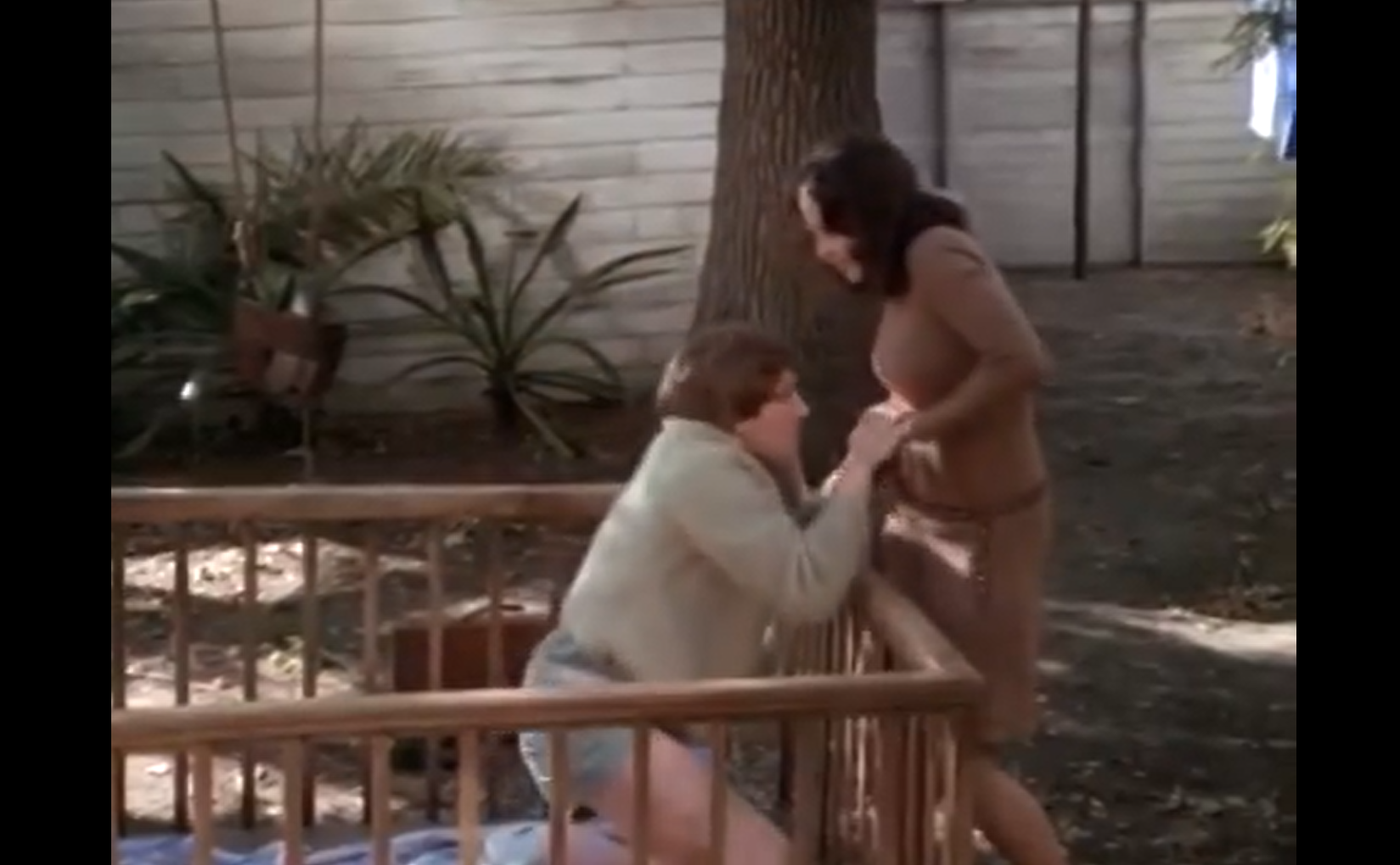
Perhaps the film’s greatest feat, however, is its unexpected ending, which places the rest of the movie in a completely different light, and suggests a new universe of subjugation (albeit well-meaning) for Manzy. While The Baby is certainly not for all tastes — and even the most seasoned movie-goers will inevitably cringe while watching Manzy suckling at his babysitter’s breast:

… or Manzy’s sisters punishing him with a cattle prod — it’s definitely worth sitting through at least once.

Redeeming Qualities and Moments:

  • Anjanette Comer as the do-gooding social worker, who holds secrets of her own
  • Ruth Roman’s campy yet genuinely scary performance as Mrs. Wadsworth
  • David Manzy’s impressively daring turn as an adult baby
  • A freaky (if utterly illogical) glimpse at long-term child abuse
  • A truly surprising twist ending

Must See?
Yes. This camp classic must be seen to be believed, and merits viewing by all film fanatics at least once.

Categories

  • Cult Movie

Links:

13 Ghosts (1960)

13 Ghosts (1960)

“This house is not a gift, really — it’s a burden. Perhaps a curse!”

Synopsis:
The financially-strapped Zorba family — Cyrus (Donald Woods), Hilda (Rosemary DeCamp), Medea (Jo Morrow), and Buck (Martin Milner) — inherit a furnished mansion (and twelve restless ghosts) from an eccentric uncle.

Genres, Themes, Actors, and Directors:

  • Ghosts
  • Horror
  • Inheritance
  • William Castle Films

Review:
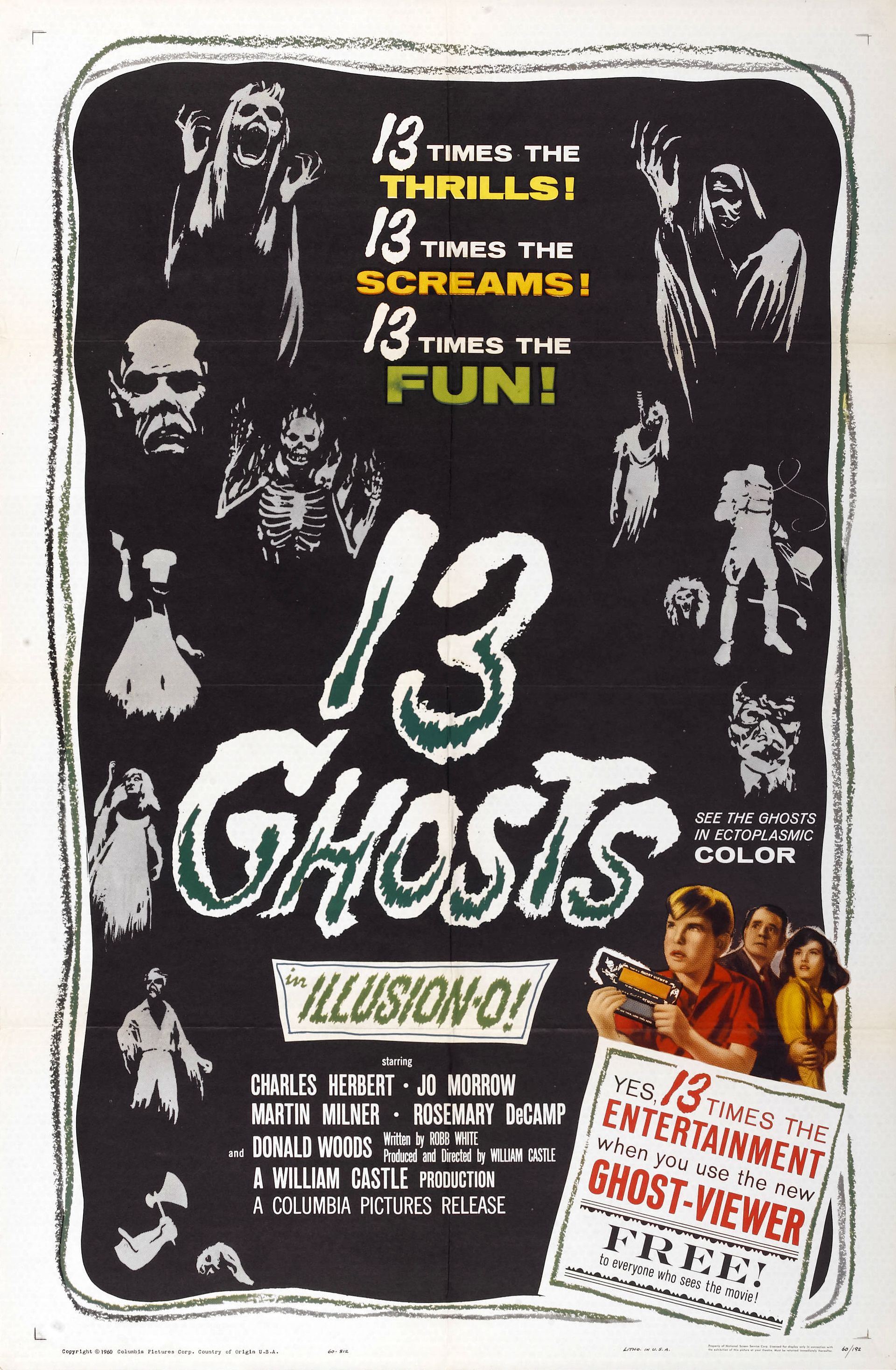
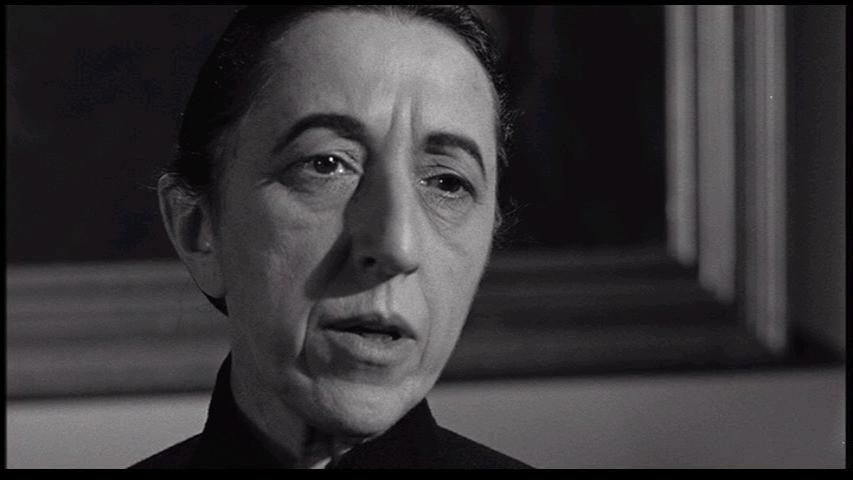
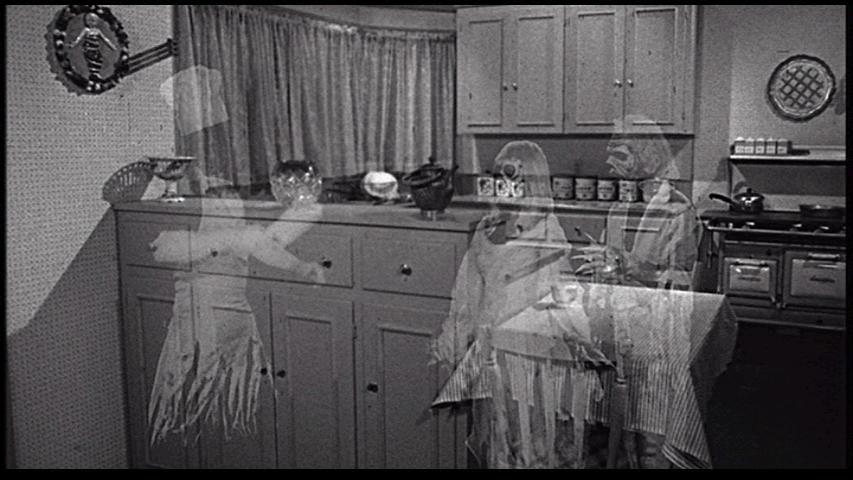
Following his success with The Tingler (1959), William Castle produced and directed this innocuous horror flick featuring a brand new gimmick: “Illusion-O”. Audience members were given a special “Ghost Viewer” to use at opportune times during the movie, and those brave enough to face the ghosts were instructed to look through the red frame, while sissies were told that looking through the blue screen would erase the ghosts from view. Cheesy gimmick aside, 13 Ghosts (remade in 2001) remains a quaintly unscary haunted house thriller, made slightly more tense by the possibility of hidden treasure and a double-crossing acquaintance. The ghosts in the film appear courtesy of double-exposure and hidden-wires — silly, yet perhaps appealing to the ten-year-old in all of us. Fortunately, the good-natured Zorbas (why the fancy Greek names?) make us root for their ultimate success regardless of the film’s half-baked production values.

Redeeming Qualities and Moments:

  • Margaret Hamilton reprising her role as a “witch”
  • A few creepy ghost scenes

Must See?
No. This one is for fans of Castle’s notorious “gimmick movies” only.

Links:

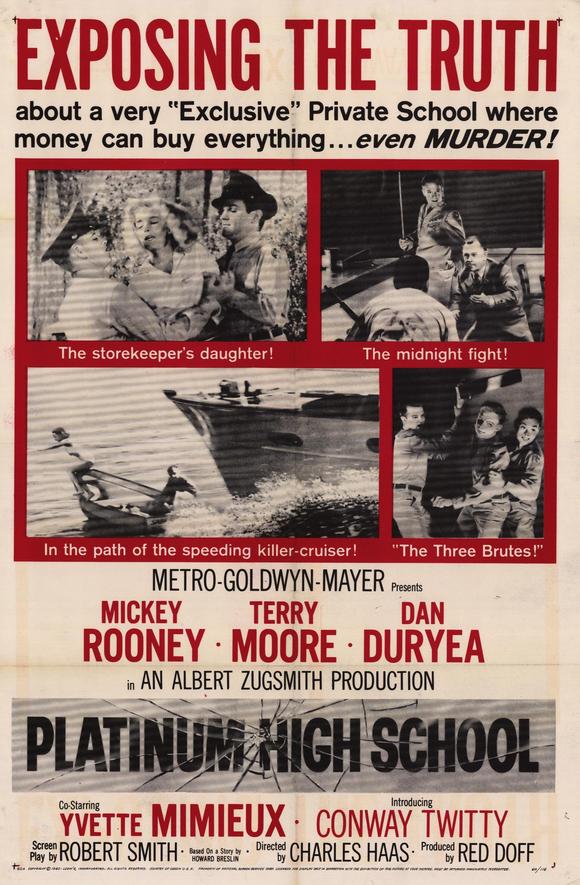
Platinum High School (1960)

Platinum High School (1960)

“It’s a school for solid platinum rats. It’s a rich kids’ penitentiary!”

Synopsis:
An estranged father (Mickey Rooney) goes to an exclusive military academy on Sabre Island to learn more about his son’s mysterious death.

Genres, Themes, Actors, and Directors:

  • Amateur Sleuths
  • Boarding School
  • Corruption
  • Dan Duryea Films
  • Elisha Cook Jr. Films
  • Mickey Rooney Films
  • Richard Jaeckel Films
  • Terry Moore Films
  • Yvette Mimieux Films

Review:
This surprisingly entertaining B-thriller possesses one of the least suitable titles I’ve come across in a while. Given that it was produced by schlockmeister Alfred Zugsmith, I rented it expecting to see platinum blondes (a la Mamie Doren and Jan Sterling from Zugsmith’s High School Confidential) prouncing around a traditional American high school campus, getting themselves into all sorts of trouble — but I was pleasantly surprised to find that this film deals with a much more serious plot, and that the “high school” in question is actually a military academy for wealthy (“platinum”) hoods who are two steps away from prison, but whose parents (or guardians, or lawyers) can afford to pay to keep them out.

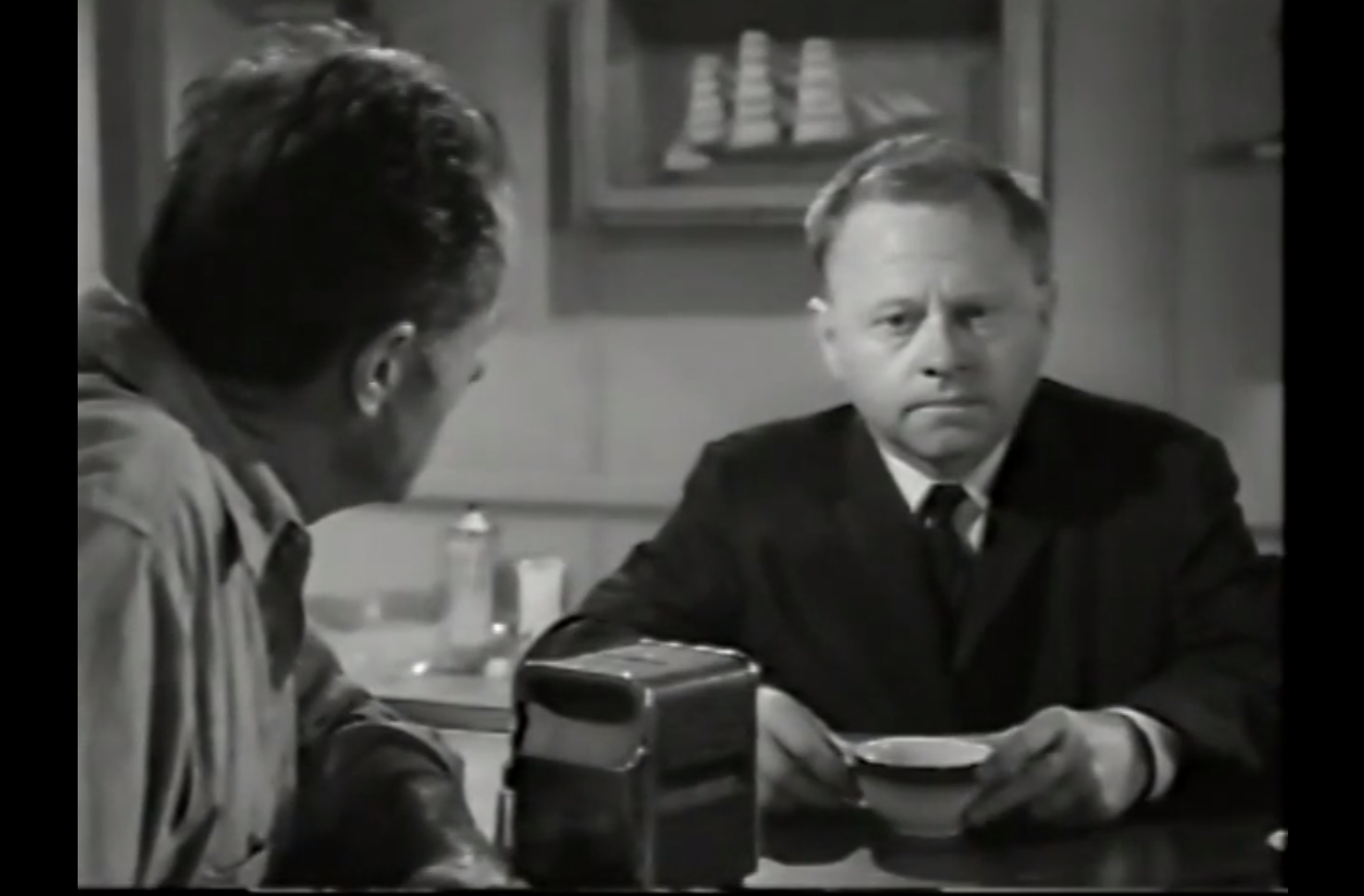
Mickey Rooney turns in an excellent performance in a non-comedic role (proving once again that he was capable of much more than just comedies and musicals), and is surrounded by a very capable cast (including Dan Duryea, Elisha Cook, Jr., Yvette Mimieux, and Terry Moore), all of whom lift the material a notch higher than usual. As entertaining as Platinum High School is, however, I don’t consider it to be “must see” viewing, nor do I necessarily think it’s a “camp classic” as dubbed by Peary in the back of his book. Nonetheless, it remains a slick little thriller, and is certainly required viewing for any fans of Mickey Rooney: you’ll feel genuine concern for his sympathetic character, as he attempts to cut through the dangerous layer of corruption at the Academy, and battles Duryea (playing the nefarious head of the school, Major Kelly) for his life.

Redeeming Qualities and Moments:

  • Mickey Rooney as a tenaciously truth-seeking father
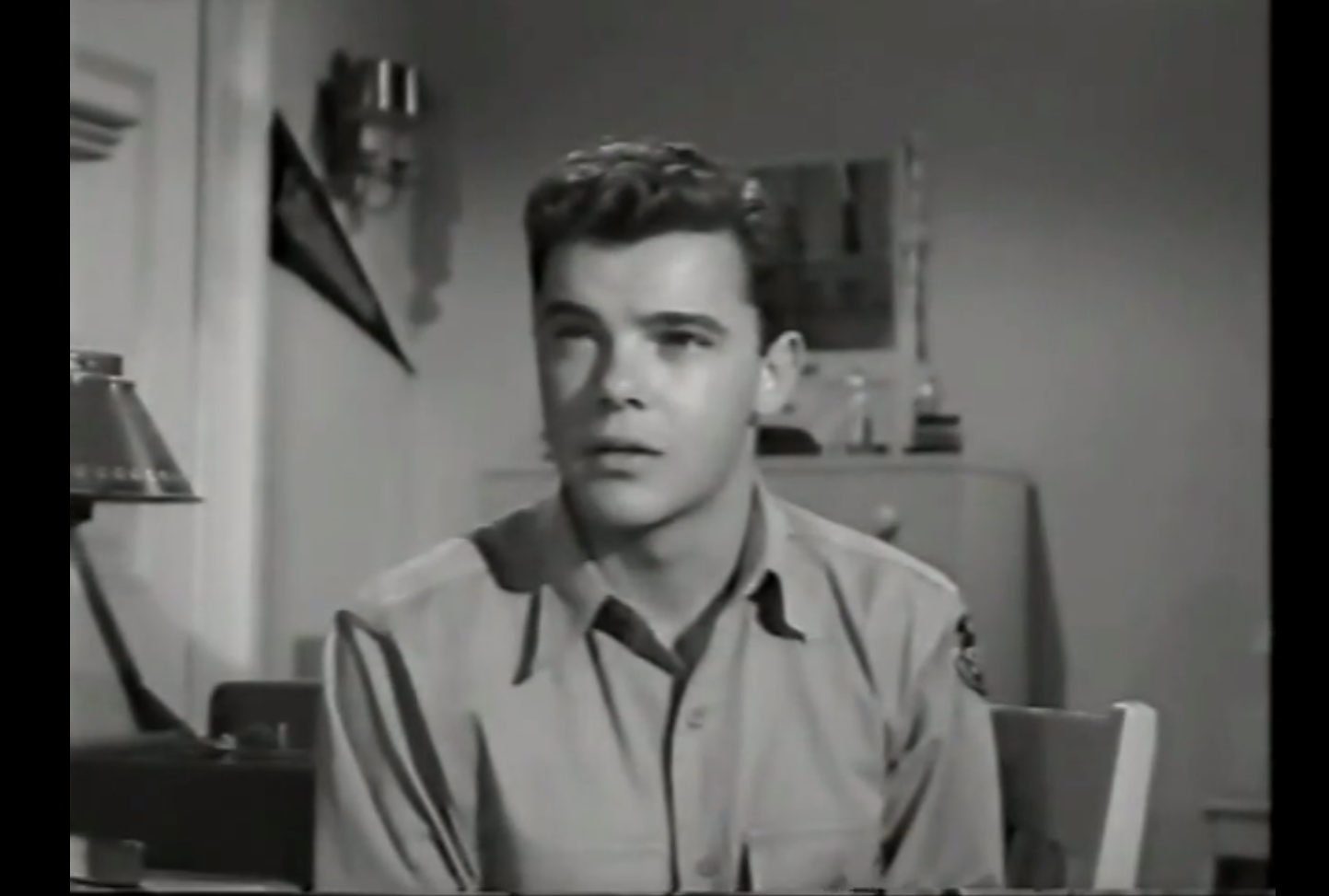
  • Warren Berlinger’s sensitive portrayal as a cadet who witnessed the death of Rooney’s son but is afraid to tell the truth

Must See?
No, but it’s definitely much better than its title warrants.

Links:

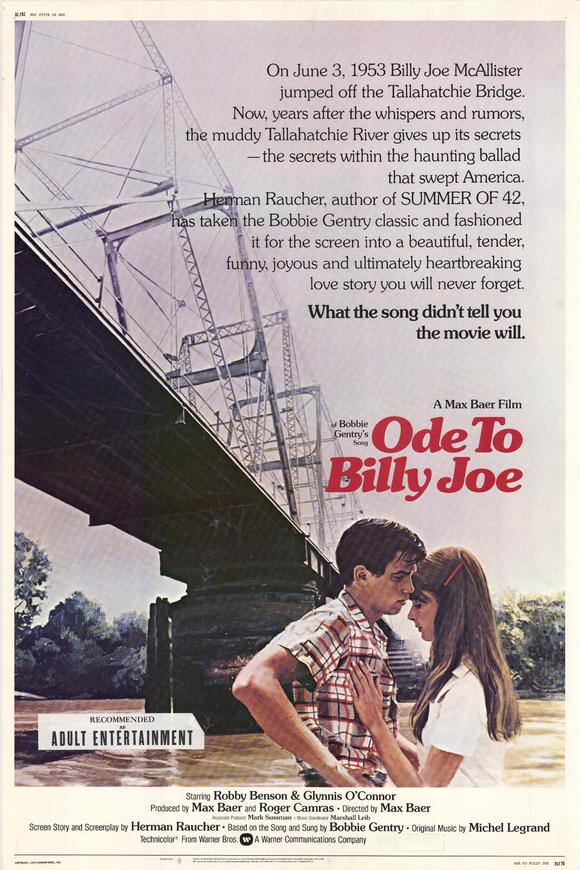
Ode to Billy Joe (1976)

Ode to Billy Joe (1976)

“It don’t seem like no good ever come to nobody on this bridge.”

Synopsis:
Billy Joe (Robby Benson) pursues his local sweetheart, Bobbie Lee (Glynnis O’Connor), while harboring secret fears that he may be homosexual.

Genres, Themes, Actors, and Directors:

  • Coming of Age
  • Deep South
  • First Love
  • Glynnis O’Connor Films
  • Robby Benson Films
  • Sexuality
  • Small Town America

Review:
In her popular country ballad “Ode to Billy Joe”, Bobbie Gentry infamously sang about how “Billy Joe MacAllister’s jumped off the Tallahatchie Bridge”, yet left the reason for this drastic action a frustrating mystery. This film (starring real-life teen lovers Glynnis O’Connor and Robby Benson) is a cinematic attempt to fill in the song’s gaps, yet ultimately isn’t quite successful — primarily because Billy Joe’s “sudden” discovery of his homosexual yearnings doesn’t jive with the intensity of his passion for Bobbie Lee. While his melodramatic reaction to a disturbing liaison at the county fair can easily be excused, Billy Joe (at least as played by Benson) is ultimately too vibrant and hopeful to wantonly throw his life away over this. Despite its narrative flaws, however, Ode to Billy Joe remains compelling viewing in many ways, primarily because of the star power of Benson and O’Connor, who have fine chemistry together.

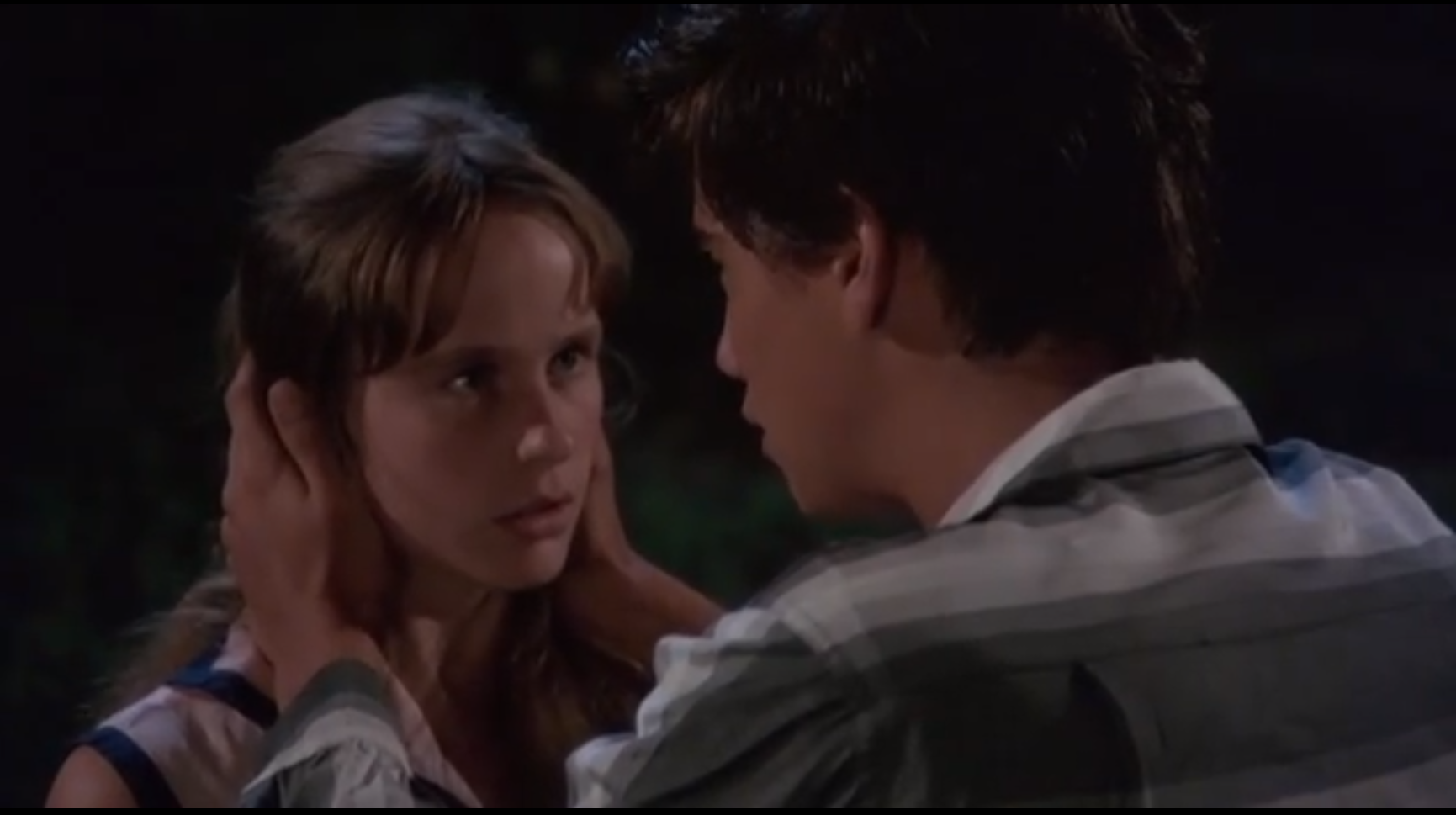
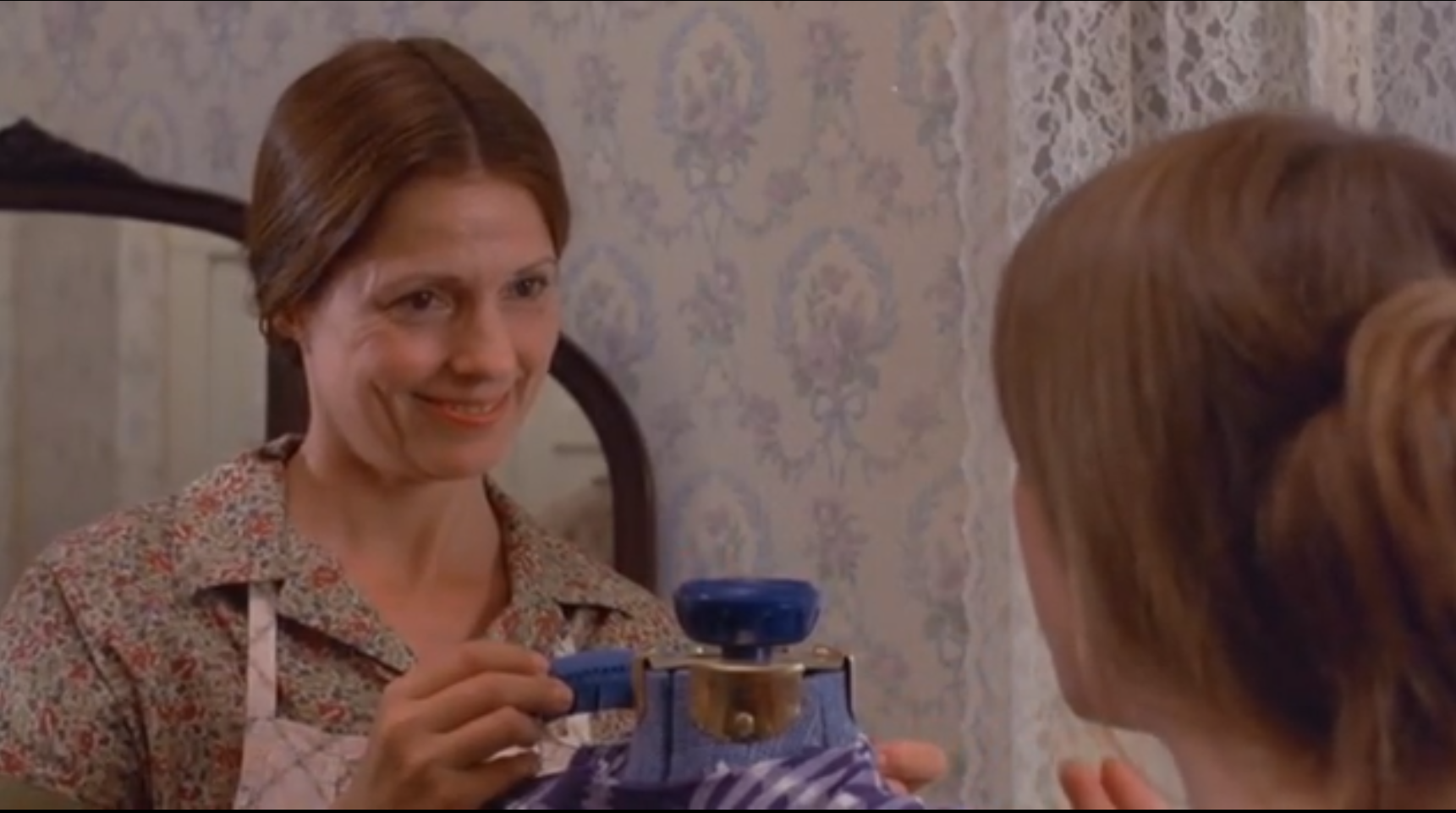
O’Connor’s Bobbie Lee — caught in the throes of adolescent individuation — is an especially fascinating and complex character; she speaks in risky double entendres (“The plumbing’s in — and you’re next!” she says slyly to Benson), and isn’t afraid to share her frustrations openly with her parents:

“There I am, all primed up to be a woman, only I’m not allowed to be anything but a child!”

As always, O’Connor creates a character who you’d like to know in real life, and who you’re sorry to say goodbye to once the film is over.

Redeeming Qualities and Moments:

  • Glynnis O’Connor in yet another sparkling early role
  • O’Connor’s interactions with her stern yet loving parents (wonderfully played by Joan Hotchkis and Sandy McPeak)
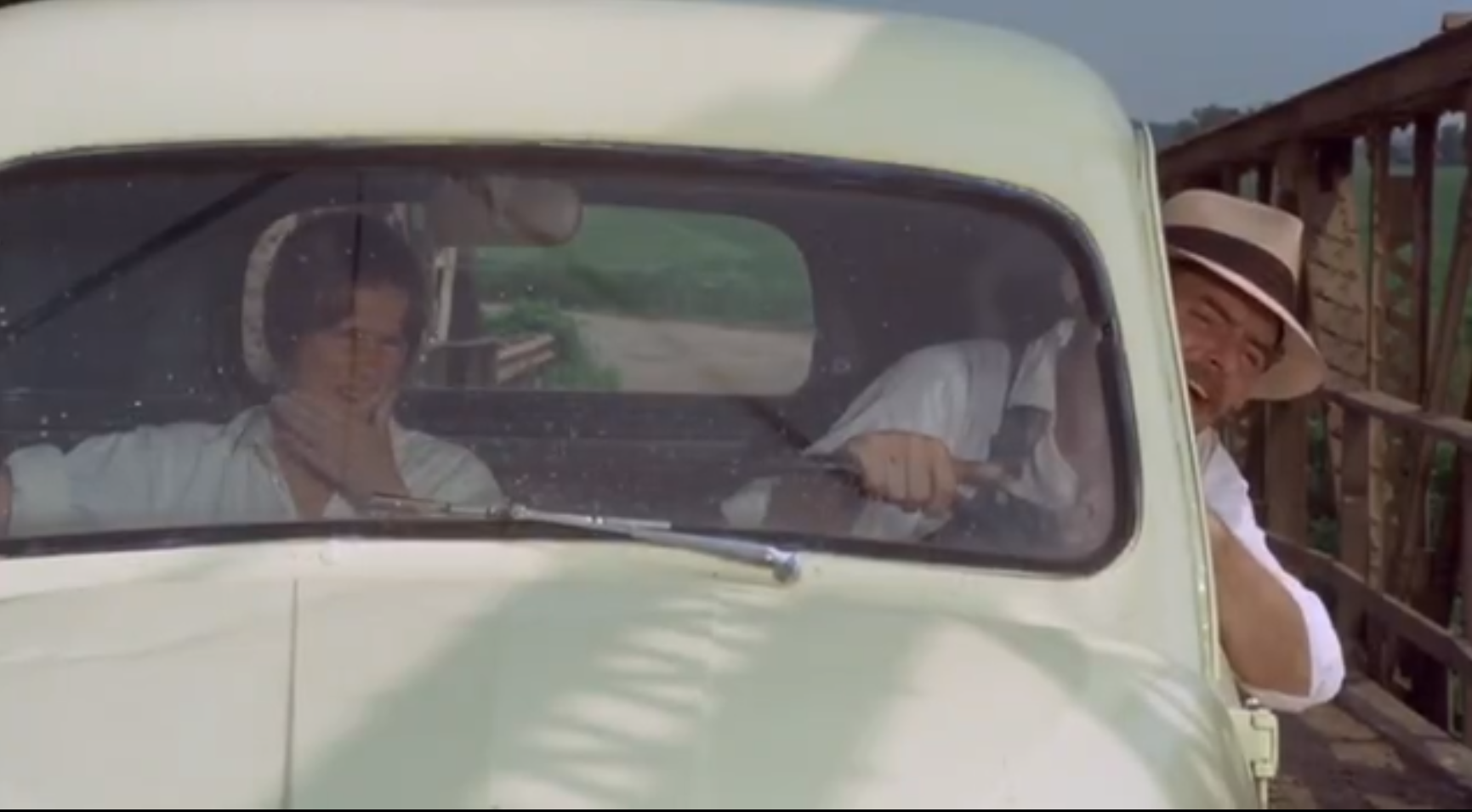
  • A genuinely tense scene of foreshadowing on the Tallahatchie Bridge, as O’Connor’s proud father refuses to be bullied backwards

Must See?
No, but it’s worth watching.

Links:

Day in the Country, A / Partie de Campagne (1936)

Day in the Country, A / Partie de Campagne (1936)

“You men are all the same.”

Synopsis:
While spending the day in the countryside, an engaged young Parisian woman (Sylvia Bataille) and her mother (Jane Marken) are wooed by a pair of local workers (Georges D’Arnoux and Jacques Borel).

Genres, Themes, Actors, and Directors:

  • Cross-Class Romance
  • French Films
  • Jean Renoir Films
  • Star-Crossed Lovers

Review:
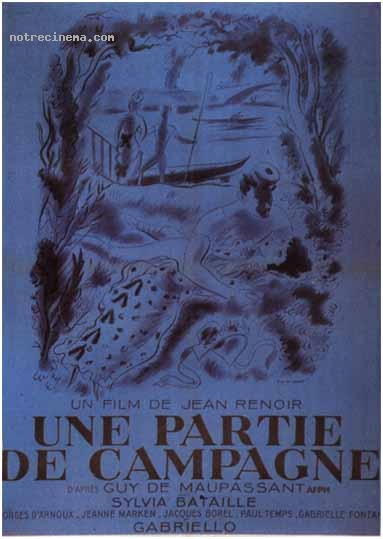
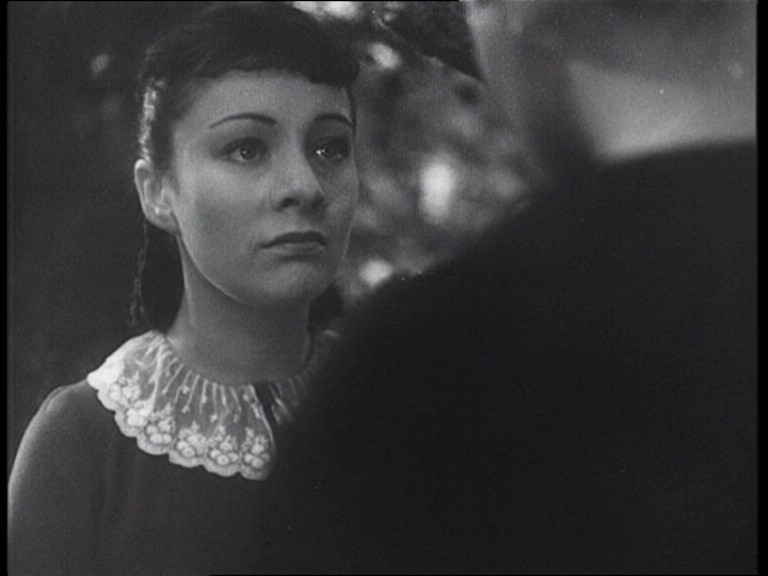
Jean Renoir’s cinematic gem (based on a short story by Guy de Maupassant) effectively conveys a world of innocence and loss within a span of only forty minutes. While not much happens within the narrative — a family goes to the country for the day; a young woman engaged to an insipid clerk (Paul Temps) develops a powerful yet hopeless crush on a man from a different social class — Renoir manages to use these simple elements to show how prescribed our lives are, and how escaping from our normal existence for even a day can show us what we may be missing, but ultimately can’t have.

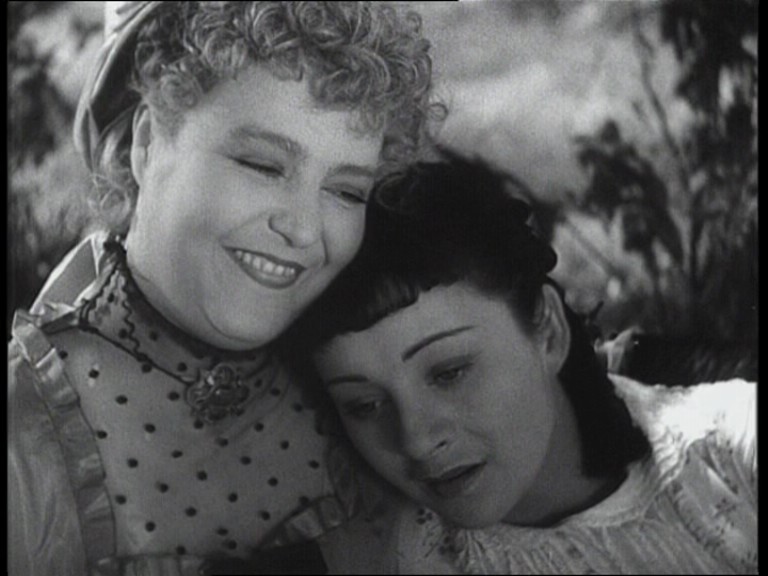
Because Henriette’s mother is also (happily) wooed on this fateful day, Renoir is able to skillfully present a lifetime conflated into one afternoon: while Henriette is young, emotional, and naive, the older Juliette sees her “fling” as a welcome (if temporary) break from her bourgeois existence; indeed, she considers it a game to try to cuckold her boring husband for the afternoon, keeping him busy with the faux-machismo of fishing while she pursues headier activities with a “real” man. In the end, however, life goes on as it inevitably will: the family returns to Paris; Henriette marries her clerk; and Rodolphe (D’Arnoux) is left behind as a mere memory of an alternate (yet ultimately impossible) existence.

Redeeming Qualities and Moments:

  • Sylvia Bataille as Henriette
  • The touching interactions between Henriette and her older, wiser mother
  • Jacques Borel as the scheming womanizer who convinces his friend to join him in the seduction
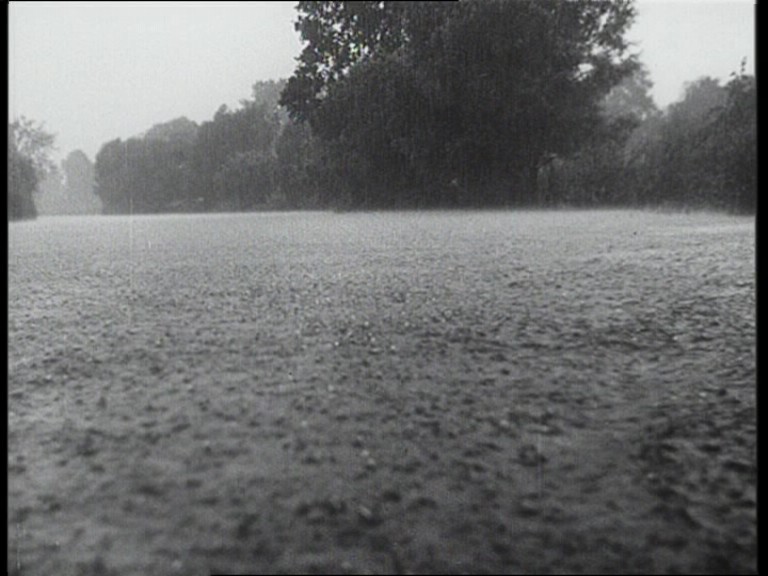
  • Effective metaphorical use of a calm, then teeming, river
  • Beautiful cinematography, showcasing pastoral existence in the countryside

Must See?
Yes. This cinematic morsel is sure to be of interest to film fanatics.

Categories

  • Important Director

(Listed in 1001 Movies You Must See Before You Die)

Links:

Fists in the Pocket / Pugni in tasca, I (1965)

Fists in the Pocket / Pugni in tasca, I (1965)

“This little brain of mine — that you didn’t trust an inch! — planned the whole thing.”

Synopsis:
An epilectic (Lou Castel) decides to relieve his older brother (Marino Mase) of their dysfunctional family by gradually killing everyone — including himself — off.

Genres, Themes, Actors, and Directors:

  • Character Studies
  • Incest and Incestuous Undertones
  • Italian Films
  • Marco Bellocchio Films
  • Plot to Murder
  • Siblings

Review:
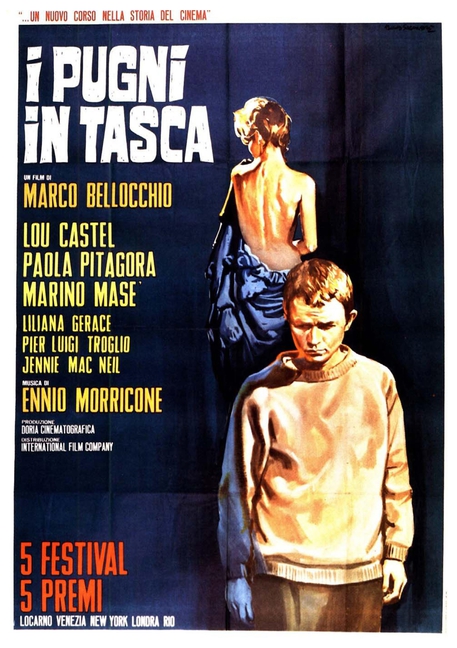
This astonishing feature debut by 26-year-old Italian director Marco Bellochio merits multiple viewings in order to begin to grasp its bizarrely twisted mentality. We watch the movie — part black comedy, part character study, part horror film — as we would a train wreck in slow motion, fascinated yet unable to look away. Indeed, it’s impossible to predict what will happen next, since none of the characters behave as you would expect them to: Mase barely bats an eyelid when reading about Castel’s intent to drive their family off a cliff; Castel’s sister (Paola Pitagora) treats her disturbed brother more like a lover than a sibling; and nobody in the community questions the sudden mysterious deaths of two of the family’s members.

Like it or not, we end up most fascinated by the dynamically deranged Sandro (Castel), whose powerhouse performance (watch the way he swings his hands and arms around) evokes memories of a young Brando. Rather than having Sandro consumed with vengeful jealousy over his older brother’s success in business and love (a much more conventional narrative choice), Bellocchio shows Sandro teetering between depression, grandiosity, and mental instability, all while ostensibly aiming to provide his “normal” older brother (does he wish to be him? or is he simply trying to “prove” himself to him?) with a chance at happiness. Sandro’s fate is sealed in the final baroque moments of the film, but (as to be expected) it’s unclear what kind of a future lies ahead for the remains of this highly dysfunctional family.

Redeeming Qualities and Moments:

  • Lou Castel’s charged performance as the deranged yet ultimately “well-meaning” middle brother
  • Paola Pitagora as Castel’s inscrutable sister
  • Gorgeous black-and-white cinematography
  • Ennio Morricone’s intermittent score — if only there were more!

Must See?
Yes. This powerful, provocative debut by Bellocchio merits viewing by all film fanatics.

Categories

  • Important Director

Links:

Jeanne Dielman, 23 Quai du Commerce, 1080 Bruxelles (1976)

Jeanne Dielman, 23 Quai du Commerce, 1080 Bruxelles (1976)

“See you next week, then.”

Synopsis:
A single mother (Delphine Seyrig) supports her teenage son (Jan Decorte) by working part-time as a prostitute.

Genres, Themes, Actors, and Directors:

  • Character Studies
  • Delphine Seyrig Films
  • Experimental Films
  • Feminism
  • Prostitutes

Review:
I’ve heard it said that it’s impossible to make a film about war — no matter how gruesome, violent, pointed, or macabre — without simultaneously glorifying it; I would argue that the same is true for prostitution. With only a few notable exceptions (Lizzie Borden’s Working Girls comes to mind), prostitution inevitably comes across in films as a somewhat glamorous — if undeniably dangerous and demeaning — profession.

In Jeanne Dielman, however, director Chantal Akerman strips prostitution completely bare: there are no fancy outfits or make-up here; no cat calls; no dangerous street positioning; no pimps; no underlying psychological reasons for having entered into this profession. What we’re left with instead is a middle-aged homemaker and mother who happens to have sex for money with men on a regular basis. It’s never stated explicitly in the film, but it’s implied that neither Jeanne’s son nor any of her neighbors have any idea what she does to bring in money. Indeed, until the final moments of the film, not even the audience sees Jeanne servicing her Johns — all we are allowed to witness are scenes of Jeanne inviting a man into her bedroom; exiting a few seconds later (in a convenient time lapse); coldly accepting cash from him; and stating almost robotically, “See you next week, then,” before seeing the man out the door.

Akerman’s three-hour long character study is ultimately concerned with chronicling the predictable minutiae of Jeanne’s daily life, as she takes care of her home, cooks for her son, answers letters from her sister, watches her neighbor’s baby, and runs various errands around town. None of this is inherently compelling, yet it’s strangely hypnotic to watch Jeanne pursuing her mundane rituals, day after day. Indeed, because so much time is spent showing the way Jeanne carefully maintains control over her life — and the frustration she feels when things don’t go just right — the shocking final moments of the movie seem almost like an inevitable outgrowth of her routine. It’s difficult not to impose one’s own interpretation onto a film like Jeanne Dielman, which leaves so much room for deliberation and conjecture. The unusual power of this marathon exercise in minimalism is the way in which we both accept Jeanne’s “final” action as natural, and find ourselves questioning everything that has come before.

Redeeming Qualities and Moments:

  • A subtly powerful portrait of tedium and despair
  • A daring — if undeniably arduous — “real time” approach to fiction filmmaking

Must See?
Yes. This demanding film remains a landmark of experimental European cinema.

Categories

  • Historically Relevant
  • Important Director

(Listed in 1001 Movies You Must See Before You Die)

Links: