Browsed by
Category: Original Reviews

Responses to Peary’s “must see” movie reviews, as well as my own “must see” movie reviews up to and after 1986 (when Peary’s book was published).

Herostratus (1967)

Herostratus (1967)

“If I’m born, I’ll have a few laughs — and then I’ll kick out.”

Synopsis:
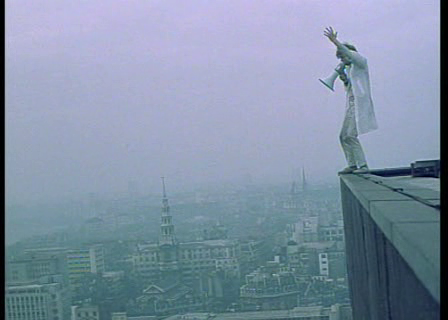
A nihiliastic young man (Michael Gothard) pushes his way past the secretary (Gabriella Licudi) of a big-wig advertiser (Peter Stephens) to convince Farson (Stephens) that he wants to commit suicide amidst media fanfare — but will he change his mind before the pivotal moment arrives?

Genres, Themes, Actors, and Directors:

  • Experimental Films
  • Media Spectacle
  • Suicide

Review:
Australian-born writer-director Don Levy was inspired by the legend of Herostratus when making this experimental art film early in his career. According to Wikipedia:

Herostratus (Ancient Greek: Ἡρόστρατος) was a 4th-century BC Greek, accused of seeking notoriety as an arsonist by destroying the second Temple of Artemis in Ephesus (on the outskirts of present-day Selçuk), one of the Seven Wonders of the Ancient World. The act prompted his execution and the creation of a damnatio memoriae law forbidding anyone to mention his name, orally or in writing. The law was ultimately ineffective, as evidenced by surviving accounts of his crime. Thus, Herostratus has become an eponym for someone who commits a criminal act in order to become famous.

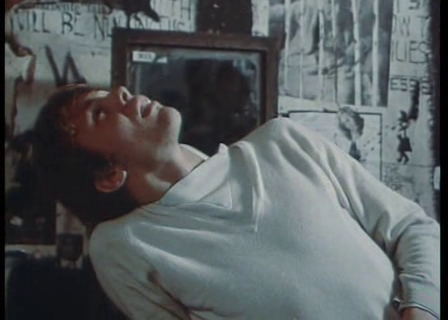
Why this was intriguing to him is unclear. The film itself is widely viewed as a critique of manipulative advertising, though that’s not quite accurate — rather, we see a tale of a thoroughly unlikable, self-obsessed protagonist we can barely stand to be around during the first hour of the film:

… who gradually becomes tolerably sympathetic as he makes romantic connections with a beautiful secretary (Licudi):

… and comes to realize that Farson is an even greater cynic and coercive asshole than he is.

If none of this sounds particularly appealing, that’s because — it’s not. Making things even more challenging is Levy’s relentless use of artsy experimental techniques, including intercutting fairly obvious symbology (i.e., meat being cut), utilizing occasional rapid-fire (subliminal) editing, and incorporating freeze-frames.

Sadly, both Levy and star Gothard (who is well cast) committed suicide themselves at the ages of 54 and 52 respectively, showing that the film’s topic wasn’t too far off the mark in relevance for those involved.

Note: Watch for Helen Mirren in her screen debut as a sexy commercial actress modeling orange rubber gloves.

Notable Performances, Qualities, and Moments:

  • Keith Allans’ cinematography

Must See?
No, unless you’re curious. Listed as a Cult Movie in the back of Peary’s book, which it may at one point have been.

Links:

In the Heat of the Night (1967)

In the Heat of the Night (1967)

“They call me Mister Tibbs!”

Synopsis:
After a businessman is murdered in the Deep South, a visiting black homicide detective (Sidney Poitier) is recruited by the town’s bigoted white police chief (Rod Steiger) to help solve the case.

Genres, Themes, Actors, and Directors:

  • Deep South
  • Detectives and Private Eyes
  • Lee Grant Films
  • Murder Mystery
  • Norman Jewison Films
  • Police
  • Race Relations and Racism
  • Rod Steiger Films
  • Sidney Poitier Films
  • Warren Oates Films

Review:
Norman Jewison’s Oscar-winning race-relations drama — based on John Ball’s 1965 novel of the same name — isn’t reviewed in Peary’s GFTFF, but he discusses it briefly in Alternate Oscars, where he notes that “the Academy felt proud and in tune with changing America when it gave its Best Picture award to” this film, a movie “in which Sidney Poitier’s character works with a white man instead of one in which his character marries a white woman” (as was the case in the same year’s Guess Who’s Coming to Dinner).
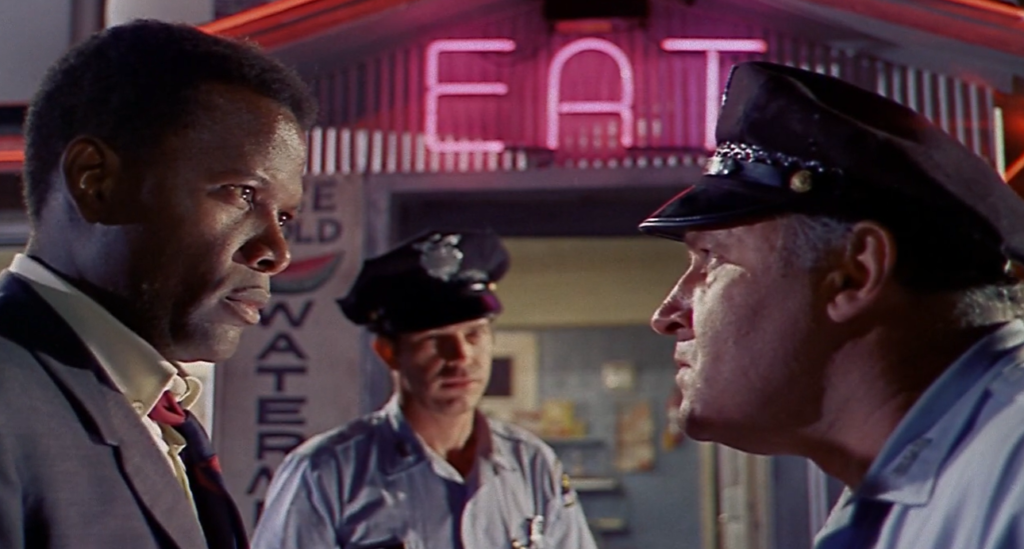
He refers to In the Heat of the Night as a “muddled” mystery (I disagree), noting that while both Poitier films “were noncontroversial ‘controversial’ films,” “at least Jewison’s film had some bite to it, provided by Poitier as a surly cop from Philadelphia and Rod Steiger as the redneck sheriff with whom he forms an uneasy alliance” — though he ultimately doesn’t think it stands up against other formidable films released that year, such as Bonnie and Clyde, which he names Best Picture of the Year instead.

Regarding Steiger’s Oscar-winning performance, Peary writes: “It’s hard to fathom today, but for a brief time in the mid-sixties, beginning with an uncharacteristically restrained performance in The Pawnbroker, Rod Steiger was considered by many to be America’s foremost movie actor.” He adds, “The egotistical actor himself believed this, and, taking charge of his career, promptly drove it into the ground, giving himself a heart attack in the process.”

Touché, Peary! In trying to research this claim, the only “evidence” I could find was this quote by Steiger on IMDb.

“It sounds pompous but it’s the nearest thing I can do to being God. I’m trying to create human beings and so does He.”

At any rate, Peary argues that while “Steiger was well cast and forceful as usual,” many “at the time failed to notice” that “he used a combination of (undeniable) talent and bluster to cover up a lazy, shallow portrayal of a potentially fascinating character,” and laments what could have been “if he’d only stopped shouting and calmed down for a moment.” I respectfully disagree with Peary’s take on Steiger’s performance, which to me seems spot-on — after all, his character IS lazy and shallow, and probably not all that fascinating. Chief Gillespie is part and parcel of a small, deeply racist town where within ten minutes of the film, Poitier’s character is arrested for being black:
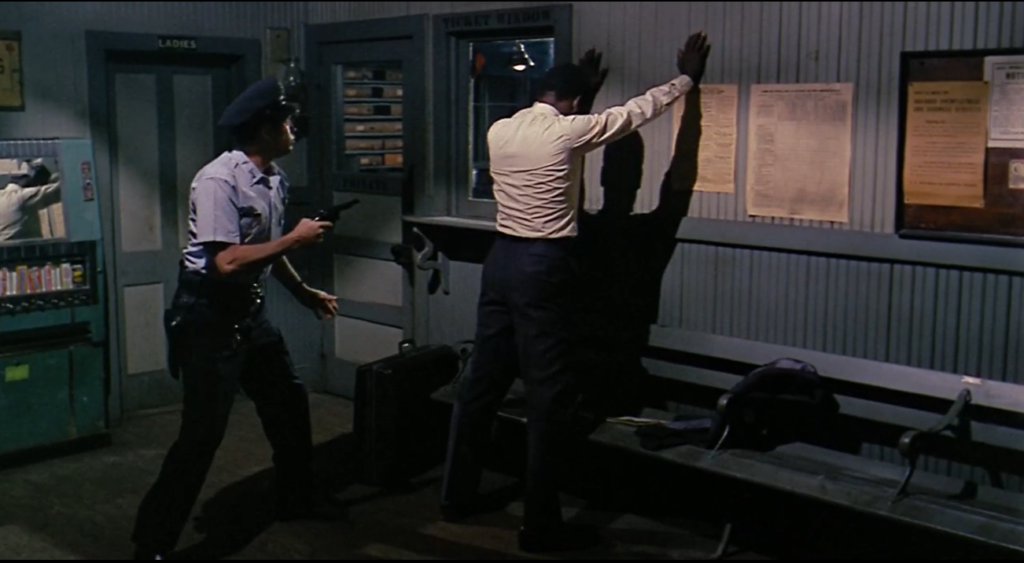
… and drawn against his will into a murder mystery being handled with spectacular incompetence by Steiger and his accomplice, Warren Oates’ Officer Sam Wood.

Their incompetence doesn’t abate, and it’s crystal clear that they need Poitier in order to do their job.

In the Heat of the Night remains a challenging film to watch precisely because of how many truths it lays out for us to witness: there is simply no denying the role played by race and racism in every move made throughout the screenplay. In the film’s most satisfying sequence — indeed, it ranks among the top moments in cinematic history — Poitier delivers an unhesitant slap to a white cotton plantation owner (Larry Gates) who he believes to be a prime suspect.
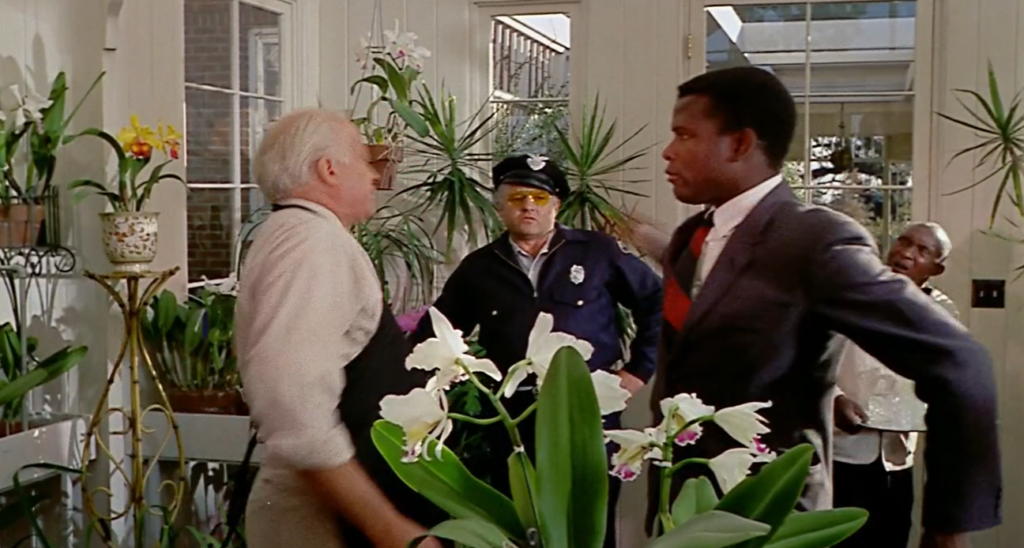
This sustains us for a while, though we worry even more for Poitier as he instantly becomes the target of lethal mobs:
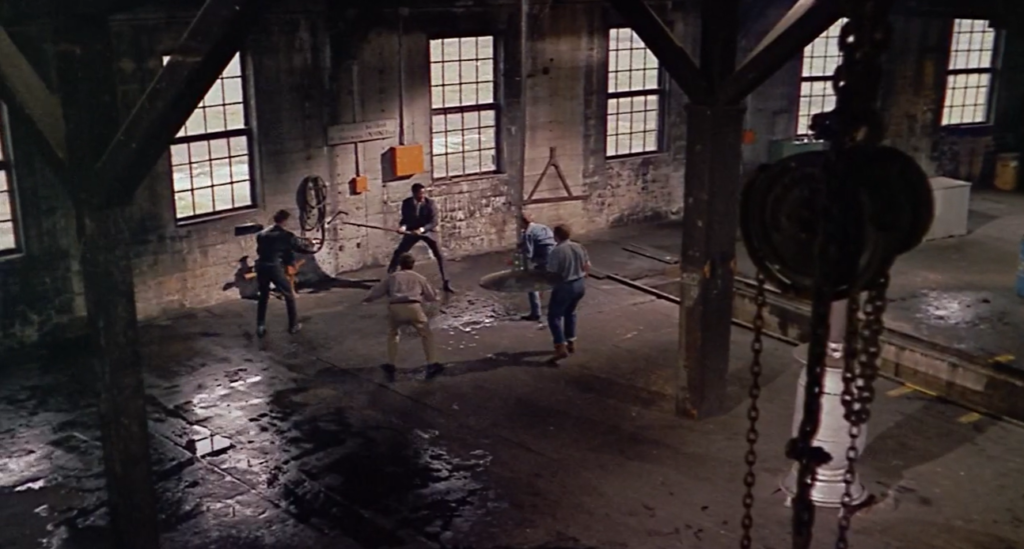
… and sticks around simply to see justice of one kind or another playing out. Film fanatics will definitely want to check this one out — though whether you can stomach watching it more than once will be up to you. (I saved re-watching it until near the end of this film review project, precisely because I accurately remembered how rough it was.)

Notable Performances, Qualities, and Moments:

  • Sidney Poitier as Virgil Tibbs
  • Rod Steiger as Chief Bill Gillespie
  • Fine supporting performances
  • Haskell Wexler’s cinematography
  • Good use of location shooting

  • Quincy Jones’s score

Must See?
Yes, as a still-powerful race-related drama. Listed as a film with Historical Importance in the back of Peary’s book.

Categories

  • Oscar Winner or Nominee

(Listed in 1001 Movies You Must See Before You Die)

Links:

Will Penny (1967)

Will Penny (1967)

“Nobody stops on Flat Iron Range.”

Synopsis:
An aging cowhand (Charlton Heston) shot by a vengeful, deranged preacher (Donald Pleasence) becomes romantically involved with a woman (Joan Hackett) who is living illegally with her son (Jon Francis) in a lineman’s shack.

Genres, Themes, Actors, and Directors:

  • Ben Johnson Films
  • Bruce Dern Films
  • Charlton Heston Films
  • Donald Pleasence Films
  • Joan Hackett Films
  • Westerns

Review:
Writer/director Tom Gries’ “one hit wonder” was this fine western which Heston referred to as his personal favorite among his own roles — and his performance is indeed among his best. Gries nicely establishes a gritty western milieu where work must be found and negotiated on a day to day basis:

… and tussling over the body of an elk could very well turn into a life-or-death situation, especially when dealing with unhinged individuals on the range, such as Pleasence and his daughter and three sons (Bruce Dern, Gene Rutherford, and Matt Clark).

Heston’s illiterate, hardworking Will Penny is a pragmatic and overall decent guy, as evidenced by his fair and humane treatment of Hackett and her son when he finds them camping out unlawfully on property he’s supposed to be safeguarding. The relationship he develops with them — and how this changes him (or not) — serves as the heart of the film:

… with plenty of tension and drama interspersed along the way. This film remains worthy one-time viewing.

Notable Performances, Qualities, and Moments:

  • Charlton Heston as Will Penny
  • Joan Hackett as Catherine Allen
  • Donald Pleasence as Preacher Quint
  • Lucien Ballard’s cinematography

Must See?
Yes, as a fine western, and for Heston’s performance.

Categories

  • Good Show
  • Noteworthy Performance(s)

Links:

Billion Dollar Brain (1967)

Billion Dollar Brain (1967)

“Some games are more dangerous than others.”

Synopsis:
Special agent Harry Palmer (Michael Caine) is pulled by his boss (Guy Doleman) into another case, this one involving an old friend (Karl Malden) and his mistress (Françoise Dorléac) in Finland, and an eager Texas tycoon (Ed Begley) working to eradicate Communism across the globe.

Genres, Themes, Actors, and Directors:

  • Cold War
  • Ed Begley Sr. Films
  • Karl Malden Films
  • Ken Russell Films
  • Michael Caine Films
  • Spies

Review:
Ken Russell’s follow-up to his (non-GFTFF-listed) debut film French Dressing (1964) was this big-budget entry in Harry Saltzman’s Harry Palmer trilogy, based once again on a novel by Len Deighton. While Russell struggled and felt constrained under Saltzman’s leadership, the resulting film nonetheless shows his unique directorial style at play, to compelling effect.

The Cold War storyline is typically wild, sending Palmer to the coldest reaches of Finland, over to Texas, and back again to Latvia through cinematic feats of magic.

There are double crossings, seductions, and an encounter with a beloved character from Funeral in Berlin, Oskar Homolka’s Colonel Stok.

Malden is an appropriately slimy shyster, well-paired with beautiful but deceptive Dorléac.

It’s a good thing Palmer keeps his wits about him at all times.

Notable Performances, Qualities, and Moments:

  • Michael Caine as Harry Palmer
  • Françoise Dorléac as Anya
  • Karl Malden as Leo Newbegin
  • Ed Begley as General Midwinter
  • Billy Williams’ cinematography

  • Fine production design

  • Creative opening credits
  • Richard Rodney Bennett’s score

Must See?
Yes. While its value is debated, I consider this a fine and worthy entry in the Harry Palmer trilogy – and an auspicious post-debut for Russell.

Categories

  • Good Show
  • Important Director

Links:

Beach Red (1967)

Beach Red (1967)

“Some of us put up a better front than others, but underneath, all of us were god-awful scared.”

Synopsis:
During an invasion of a Japanese-held island during World War II, a Marine captain (Cornel Wilde) oversees his group of men — including death-hungry Gunnery Sergeant Honeywell (Rip Torn) and a pair of friendly young soldiers (Burr DeBenning and Patrick Wolfe) — while they and their Japanese counterparts reflect on their lives back home.

Genres, Themes, Actors, and Directors:

  • Cornel Wilde Films
  • Rip Torn Films
  • Soldiers
  • World War Ii Films

Review:
Director/producer/writer/star Cornel Wilde followed up The Naked Prey (1966) with this differently unique adventure film, an adaptation of a 1945 novella by Peter Bowman set during World War II. The artistic opening credits –depicting paintings and a voice-over song by Wilde’s real-life wife, Jean Wallace — shift directly into action on a boat (here’s cigar-chomping Rip Torn):

… as scared Marines are preparing to land on and invade an unnamed Japanese-held Pacific island. Well over the first half-hour of the film shows us the non-stop living nightmare of invasion, comparable to that shown in Saving Private Ryan (1998) (note also that we see the first cinematic depiction of live filming during battle here):

… complete with limbs being shot off:

… and no easy decisions, ever.

Meanwhile, we are made privy to thoughts and memories of various characters throughout the film — not just Wilde but random men, both American and Japanese, with no subtitles provided for the latter (though we can easily see what’s on their hearts and minds, thus very effectively humanizing them in the midst of sheer bloody hell).


We’re shown a refreshingly unvarnished vision of the impact of war on men, including vomiting, the runs, fear, humor, paralysis, insecurity, anger, disgust, and shame. Comic “relief” of a sort comes primarily from DeBenning, who happily eats can after can of nasty rationed food:

… and reminisces about various drunken sexual escapades he enjoyed before the war.

We also see Jaime Sanchez’s Colombo thinking about various ways to win a medal and/or get sent home safely.

While critical opinions on this film seem mixed, I’m impressed by Wilde’s creative moxie; as he said in a 1970 interview with “Films and Filming”:

I think that a cut from one scene to another should have an impact, should carry you from a certain degree of involvement and excitement to something else without letting you down . . . I really think that a good deal of happenstance editing still goes on, and part of my style is that I like to feel there is a reason and impact to every frame of film. Nothing should be wasted.

This is exactly what we see playing out. While Beach Red isn’t a movie I would necessarily choose to revisit, it’s well worth one-time viewing.

Notable Performances, Qualities, and Moments:

  • The artistic opening credits
  • The terrifying early invasion sequence
  • Creative direction, editing, and inclusion of memory-flashbacks
  • Refreshing humanization of the Japanese

Must See?
Yes, as a uniquely told wartime flick.

Categories

  • Good Show

Links:

Mouchette (1967)

Mouchette (1967)

“I love the dead; I understand them.”

Synopsis:
A teenager (Nadine Nortier) in rural France endures a life of abuse, ridicule, and death all around her.

Genres, Themes, Actors, and Directors:

  • Coming of Age
  • French Films
  • Living Nightmare
  • Robert Bresson Films

Review:
Robert Bresson’s eight feature-length film — following (among other titles) the GFTFF-listed Les Dames du Bois de Boulogne (1945), Diary of a Country Priest (1951), Pickpocket (1959), and Au Hasard, Balthazar (1966) — was this adaptation of Georges Bernanos’ 1937 novel of the same name. As indicated in my synopsis above, with just one notable, brief exception during a bumper car ride at a fair:

… there is nothing but pure misery on display here, made worse — for me, anyway — through Bresson’s intentionally stylized method of having his non-actors simply move through their scenes like automatons. Nortier (who never made another movie) does still manage to tug at our heartstrings, making it all the more distressing to watch her suffering nearly endless indignities and abuses, such as having her head shoved into a piano at school when she doesn’t get a chorus note just right:

… being teased and taunted by her classmates:

… caretaking for her infant brother while tending to her mortally ill mother:

… and being coerced into lying on behalf of (then being assaulted by) an alcoholic, epileptic poacher.

While this remains among Bresson’s most acclaimed films, and is beloved by many — including Ingmar Bergman and Andrei Tarkovsky — I’m not among this crowd of admirers.

Notable Performances, Qualities, and Moments:

  • Stark cinematography

Must See?
No. Listed as a film with Historical Importance and a Personal Recommendation in the back of Peary’s book.

Links:

China is Near (1967)

China is Near (1967)

“The things you believe in — which I also believe in — will never become true.”

Synopsis:
In an upper class Italian family, middle-aged Countess Elena (Elda Tattoli) has an affair with a lower-class man named Carlo (Paolo Graziosi), while Vittorio (Glauco Mauri) — in love with his young secretary Giovanna (Daniela Surina) — seeks a shift from teaching to a political career despite having no such skills, and young Camillo (Pierluigi Aprà) takes a hard-line approach to Socialist politics and sex.

Genres, Themes, Actors, and Directors:

  • Black Comedy
  • Class Relations
  • Cross-Class Romance
  • Italian Films
  • Marco Bellocchio Films
  • Political Corruption
  • Siblings

Review:
After wowing the cinematic world with his debut film Fists in the Pocket (1965), Italian director Marco Bellocchio followed up with this political satire also focusing on grown siblings, but with much more intentional digs at structures, class, religion, and corruption.

Because I wasn’t particularly taken with this film, I browsed around on IMDb to see what others thoughts, and saw this informative review by someone with a different opinion.

This playfully weird, dark satire of, well, everything from over-serious young Marxists, to the Church, to class climbing, to family, to marriage, to abortion to political ambition, to wimpy socialists who don’t really believe in anything except ‘success’ entertained me in a way Bellocchio’s much better known and more highly praised Fist In His Pocket never quite did.

As with that earlier film, this is a very dark comedy, where everyone’s morals, beliefs and ethics are paper thin and no one is worthy of much admiration. The young Bellocchio had quite a bleak view of human nature, and the shallow, manipulative way we use each other, our sexuality and our emotions. But here, like a Paddy Chayefsky film on acid, we laugh at the darkness at the same time we shudder.

I appreciated this assessment of what one might get out of it (and why) — though I honestly found it challenging to remain focused on the (intentionally chaotic) storyline; and given that we really don’t like or admire anyone, there is very little to hold onto.

Notable Performances, Qualities, and Moments:

  • Tonino Delli Colli’s cinematography

Must See?
No, though of course Bellocchio fans will definitely want to check it out.

Links:

Born Losers, The (1967)

Born Losers, The (1967)

“If we allowed citizens to take the law into their own hands, our streets would become jungles — armed jungles.”

Synopsis:
A Green Beret veteran (Tom Laughlin) joins forces with a young rider (Elizabeth James) in fighting against a vicious motorcycle gang.

Genres, Themes, Actors, and Directors:

  • Gangs
  • Jane Russell Films
  • Motorcyclists
  • Tom Laughlin Films
  • Veterans
  • Vigilantes

Review:
Shot over a period of three weeks, this mostly self-financed film was Tom Laughlin’s cinematic debut for the character of Billy Jack, who he would resurrect in four more films: Billy Jack (1971), The Trial of Billy Jack (1974), Billy Jack Goes to Washington (1977) and The Return of Billy Jack (1986) (not listed in GFTFF). The screenplay — “based on a real incident in 1964 when members of the Hell’s Angels motorcycle gang were arrested for raping five girls in Monterey, California” — was written by co-star Elizabeth James, and made specifically to capitalize on the motorcycle gang movie trend.

However, the film also very much wants to be a western of sorts, as evidenced by a variety of iconic settings (open landscapes, bars, town centers); villains versus Laughlin’s good-guy (a “sheriff”); Laughlin’s cowboy hat and laconic nature (until he’s pushed to action); and motorcycles serving in place of horses. (I got specific vibes of Peckinpah’s Ride the High Country [1962] due to James’s pixie haircut a la Mariette Hartley.)

But the most direct cinematic reference is the strategic poster of rebellious James Dean, which provides the backdrop for later exploitative confrontation scenes.

James is super cute and sexy in her white bikini, glasses, boots, and head scarf — though the female rider in me (when I rode, I wore a full-on armored suit) was screaming at her internally for not wearing more protective gear of all kinds on the open road…

There’s not much else to say about this film other than to be fully prepared for vile characters committing gross acts of violence and intimidation, repeatedly.

However, with Billy Jack on the horizon, rest assured justice of some kind will be served. Watch for Jane Russell in a cameo role as the mother of an impacted girl; apparently she got upset enough at Laughlin that she channeled this into her scene of anger at authority figures, and it shows.

Notable Performances, Qualities, and Moments:

  • Fine location shooting across California

Must See?
No, though you’ll likely enjoy it if this is your cup of tea.

Links:

Who’s That Knocking At My Door (1967)

Who’s That Knocking At My Door (1967)

“You know: there are girls, and then there are broads!”

Synopsis:
When an Italian-American named J.R. (Harvey Keitel) learns that his new girlfriend (Zina Bethune) was violently assaulted by a former boyfriend, he is unsure how to respond.

Genres, Themes, Actors, and Directors:

  • Feminism and Women’s Issues
  • Harvey Keitel Films
  • Martin Scorsese Films

Review:
Martin Scorsese’s debut film has a bit of a complicated origin story, which bears mentioning right away. According to IMDb trivia:

Originally, the movie was conceived as a short film about J.R. and his friends, titled “Bring on the Dancing Girls”, and filmed in 1965. In 1967, the romance plot with the Girl was filmed, and added to the earlier short film with the title “I Call First”. This version was the one premiered at the Chicago Film Festival, in November 1967. In 1968, exploitation distributor Joseph Brenner offered to buy and distribute the movie, with the condition to add a sex scene, which was shot by Martin Scorsese in Amsterdam. The film, with that new scene, was premiered in September 1968, with the title “Who’s That Knocking at My Door”, and is the version of the movie as we know it today.

Despite its cobbled together nature, every scene of the film was storyboarded, thus showcasing Scorsese’s nascent cinematic voice: he uses techniques such as double-exposure, extreme close-ups, unusual angles, flashbacks, slow motion, an eclectic soundtrack, and freeze frames.


Indeed, Scorsese’s clear love (obsession) for film shows through in some portions of the semi-awkward screenplay, including when Keitel and Bethune “meet cute” over a French magazine and he grills her on whether she’s seen The Searchers or not.

Other instances are less direct, but will still be obvious to cinema fans — such as the rooftop scene when the couple discusses pigeons (hearkening, of course, to On the Waterfront, which similarly features a tentative romance between an Italian-American New Yorker and a lithe blonde).

Scorsese’s trademark machismo and violence are in full evidence — such as during a scene when J.R.’s friend forces him out of the car (then lets him back him), and a slo-mo sequence involving a gun being waved around at a party.

Although she’s not given much dimensionality, we like Bethune’s character enough that it’s distressing to see how she’s treated after sharing her dark story; but to Scorsese’s credit, he doesn’t shy away from depicting exactly how such a scenario may have gone down in such a deeply (toxically) Catholic culture. While this film isn’t pleasant — and its amateur status is clear — it will probably be of interest to Scorsese fans.

Notable Performances, Qualities, and Moments:

  • Harvey Keitel as J.R.
  • Zita Bethune as the Girl
  • Effective cinéma vérité cinematography, location shooting, and editing

Must See?
No, though of course diehard Scorsese fans will for sure want to check it out. Listed as a Cult Movie in the back of Peary’s book.

Links:

Andrei Rublev (1966)

Andrei Rublev (1966)

“I’ve spent half my life in blindness.”

Synopsis:
In 15th century Russia, iconographer Andrei Rublev (Anatoliy Solonitsyn) attempts to carry out his work in the midst of societal upheaval and raids.

Genres, Themes, Actors, and Directors:

  • Artists
  • Christianity
  • Historical Dramas
  • Medieval Times
  • Russian Films

Review:
Andrei Tarkovsky’s second feature film — made after Ivan’s Childhood (1962) (not listed in GFTFF) — was this lengthy historical drama very loosely “based” on the life of a Russian iconographer, about whom we know very little. Andrei Rublev is well described by Steve Rose in his review for The Guardian, where he writes that it’s:

“… a film that people often feel they don’t, or won’t get. It is 205 minutes long (in its fullest version), in Russian, and in black and white. Few characters are clearly identified, little actually happens, and what does happen isn’t necessarily in chronological order. Its subject is a 15th-century icon painter and national hero, yet we never see him paint, nor does he do anything heroic. In many of the film’s episodes, he is not present at all, and in the latter stages, he takes a vow of silence. But in a sense, there is nothing to ‘get’ about Andrei Rublev. It is not a film that needs to be processed or even understood, only experienced and wondered at.”

With that extensive caveat noted, the various episodes are as follows: in the “Prologue,” we see a random man (Nikolay Glazkov) floating up to the sky in a hot air balloon, looking down at the vista below him. (This brief sequence does nothing to inform us about what we’re about to watch, though it’s beautifully shot.)


In the first formal episode — entitled “The Jester (Summer 1400)” — we see our title character (Anatoliy Solonitsyn) and two other monks, Danil (Nikolay Grinko) and Kirill (Ivan Lapikov), wandering into a barn where a jester (Rolan Bykov) is performing. (The jester does not meet a happy fate.)

Next we see jealous Kirill encountering “Theophanes the Greek (Summer–Winter–Spring–Summer 1405–1406)” and hoping to apprentice with him — but much to Kirill’s displeasure, Theophanes is more interested in working with Rublev.

“The Passion (1406)” depicts a snowy, violent passion play:

… while “The Holiday (1408)” shifts gears to show Rublev encountering a party of reveling pagans.


“The Last Judgement (Summer 1408)” includes a hideous scene of vengeance in the forest, which Rublev responds to by angrily throwing paint onto the wall of a church he’s working in.

The next episode — “The Raid (Autumn 1408)” — is undoubtedly the most disturbing of them all, showing the ruthless invasion of a village by Tatars on horseback; only Rublev and a mute female “fool” (who we were introduced to in the last sequence) are left alive.

In “Silence (Winter 1412),” we see that Rublev is now in a monastery, having taken a vow of silence after killing someone during the raid. Kirill comes and begs for forgiveness, too.

The last episode — entitled “The Bell (Spring 1423-Spring 1424)” — is surprisingly gripping, though we’re suddenly following an entirely new character/artist: the son of a deceased bell-maker who is attempting the dangerous work of overseeing the casting of a giant bell (if it doesn’t work, he will be beheaded).

“The Epilogue” is finally in color, showing images of the real Rublev’s actual work.

If you don’t feel like you understand much about Rublev himself from this overview of the film, you’re not alone — however, it’s an engaging enough visual experience that it should be seen at least once.

Notable Performances, Qualities, and Moments:

  • Truly impressive sets and historical recreations of medieval Russia
  • Vadim Yusov’s cinematography

Must See?
Yes, for its historical relevance as Tarkovsky’s first significant film, and as the most elaborate Soviet-era epic since Eisenstein’s work. Listed as a film with Historical Relevance and a Cult Movie in the back of Peary’s book.

Categories

  • Historically Relevant
  • Important Director

(Listed in 1001 Movies You Must See Before You Die)

Links: