Even Dwarfs Started Small (1969)

Even Dwarfs Started Small (1969)

“Whether we’re good or bad, the treatment is all the same.”

Synopsis:
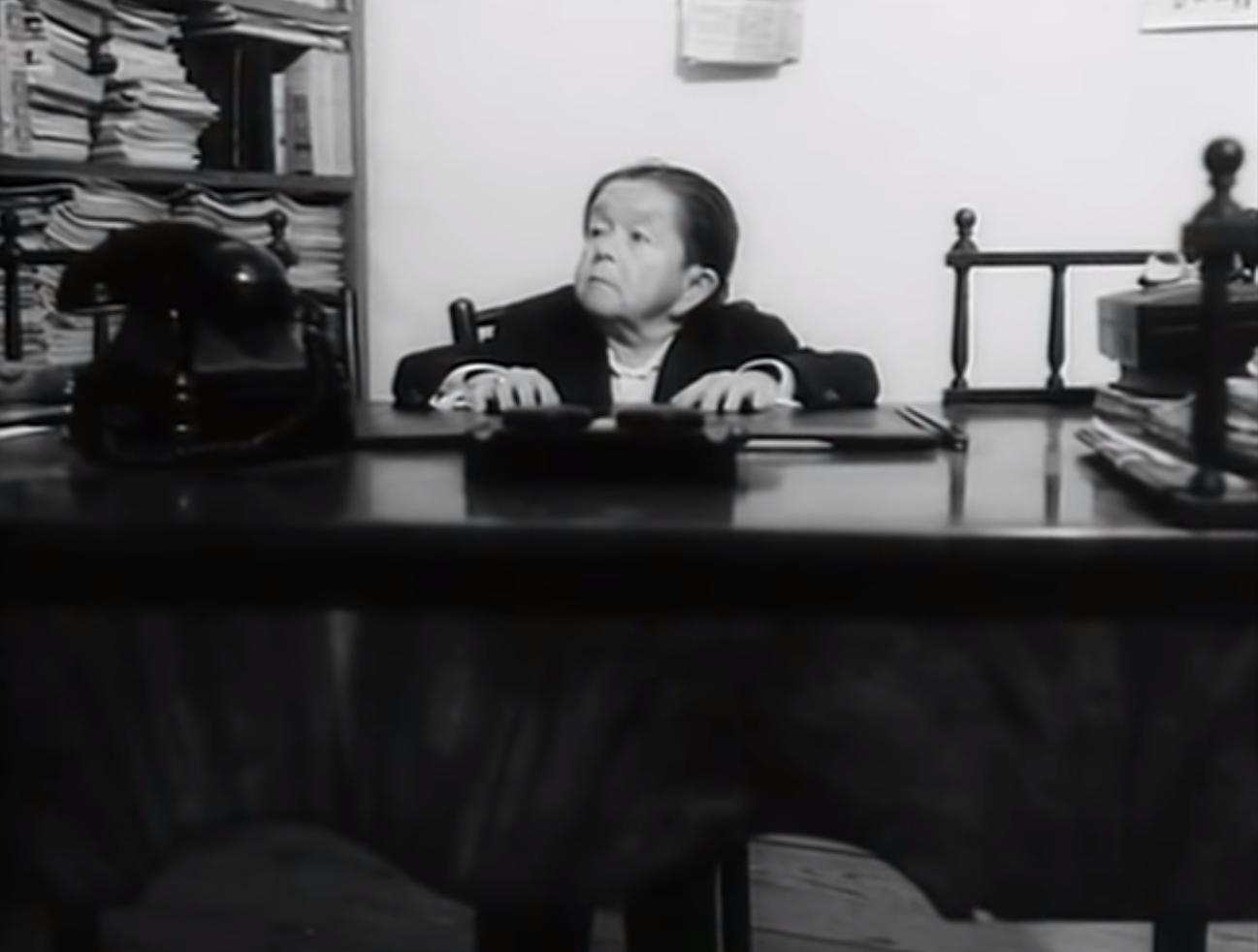
In a world inhabited solely by dwarfs, inmates at a mysterious asylum run by The President (Pepi Hermine) stage an anarchistic rebellion.

Genres, Themes, Actors, and Directors:

  • Dwarfs and Little People
  • German Films
  • Living Nightmare
  • Rebellion
  • Werner Herzog Films

Review:
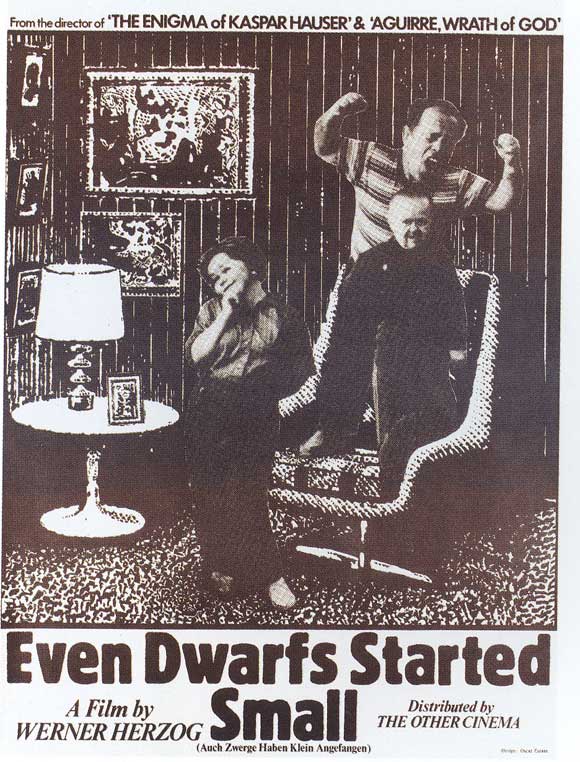
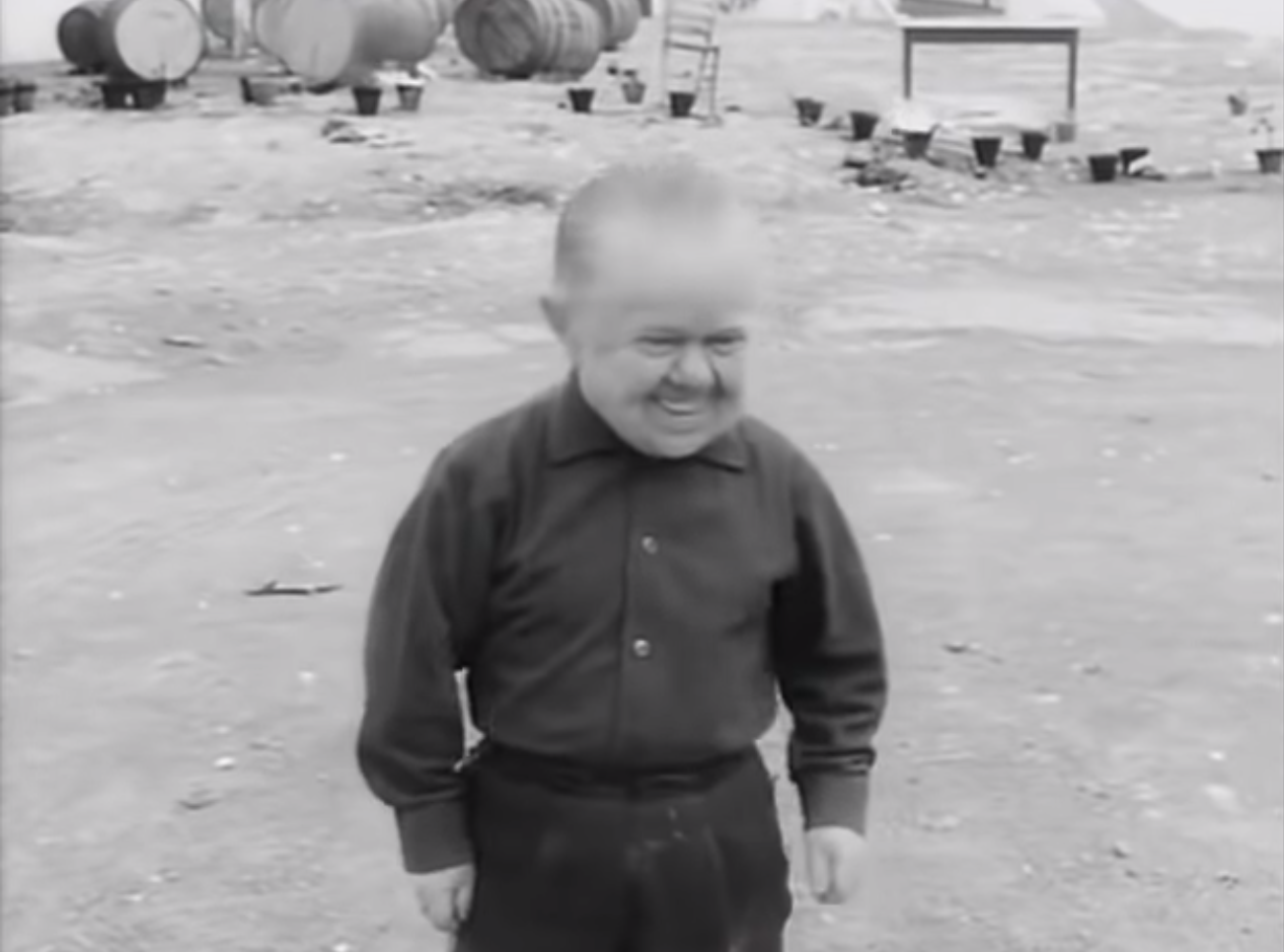
More a surreal nightmare than a cohesive narrative, Werner Herzog’s Even Dwarfs Started Small tells the cryptic “story” of a group of German dwarfs who devolve into gleeful chaos once they escape from the clutches of their caretaker (Hermine). It’s never made clear exactly what kind of institution they’re rebelling against — some viewers call it a prison, others an insane asylum, still others a school — but Herzog’s point seems to be that it doesn’t quite matter. On a metaphorical level, the dwarfs represent all humans who are living in a meaningless world which is literally beyond their grasp, and who, once given the chance to do things their own way, are ultimately incapable of anything other than destructive and harmful actions.

Although the imagery in Dwarfs is consistently bizarre and surreal, Herzog tends to indulge certain scenes — such as the car going round and round on a dirt circle — until they run far longer than necessary; eventually, they become repetitive rather than novel. In addition, the footage of animals being harmed (yet another metaphorical layer) are — while ostensibly “authentic” rather than contrived for the film — too disturbing for comfort. Finally, though I admire Herzog’s boldly unique vision, I would prefer for his script to be at least a bit more comprehensible; there’s potential here for even sharper satire.

Note: It’s been suggested that a more appropriate translation of Herzog’s original title would be Even Dwarfs Had to Start Somewhere, which makes more sense within the film’s context of rebellion.

Redeeming Qualities and Moments:

  • Surreal use of an all-dwarf cast

  • Many genuinely disturbing images

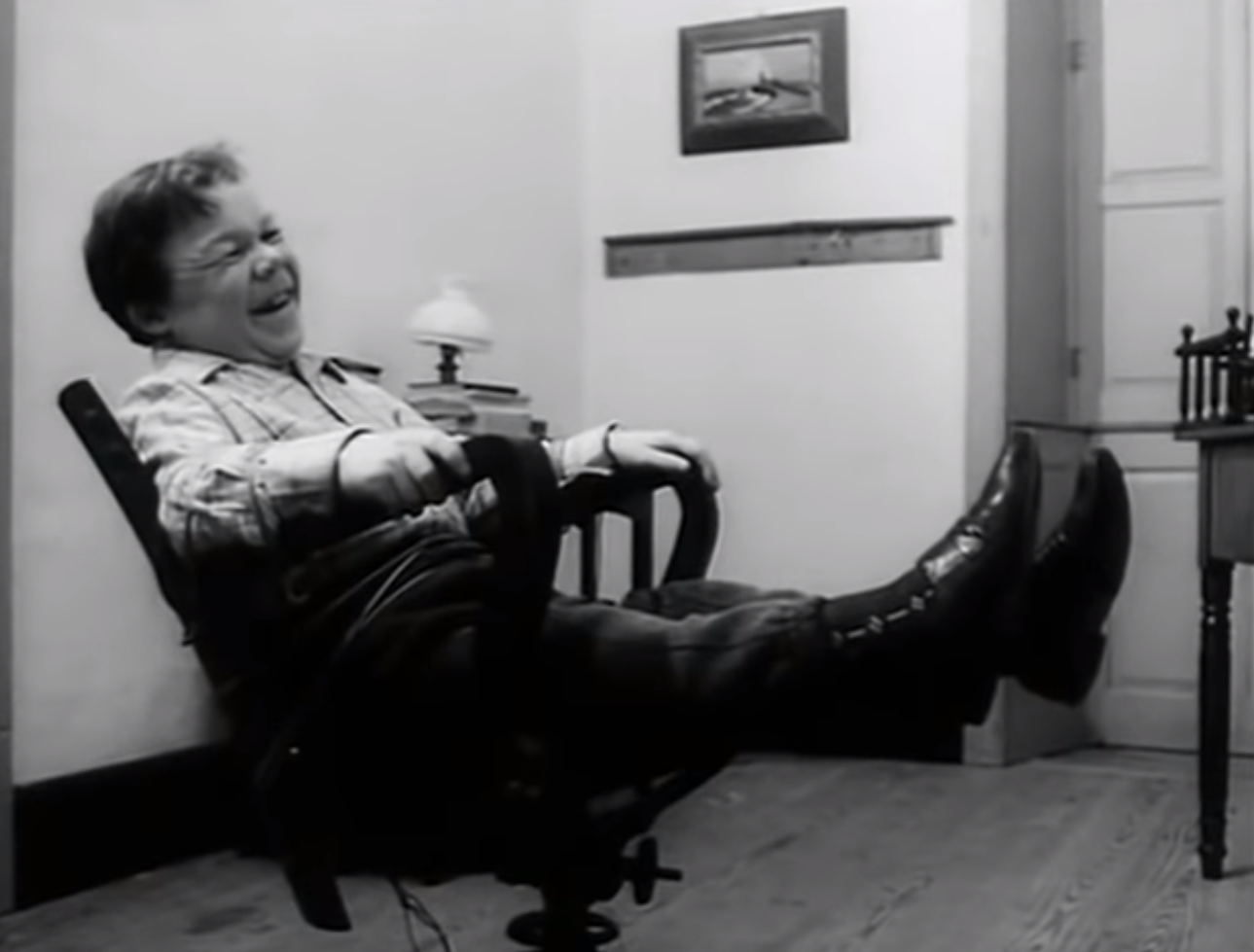
  • Helmut Doring as Hombre, whose cackling laugh permeates the film
  • The haunting tribal soundtrack

Must See?
No, though it’s worth a look as a one-of-a-kind cult favorite. Listed as a movie with Historical Importance and a Personal Recommendation in the back of Peary’s book.

Links:

Ghost Breakers, The (1940)

Ghost Breakers, The (1940)

“Death waits for you on Black Island!”

Synopsis:
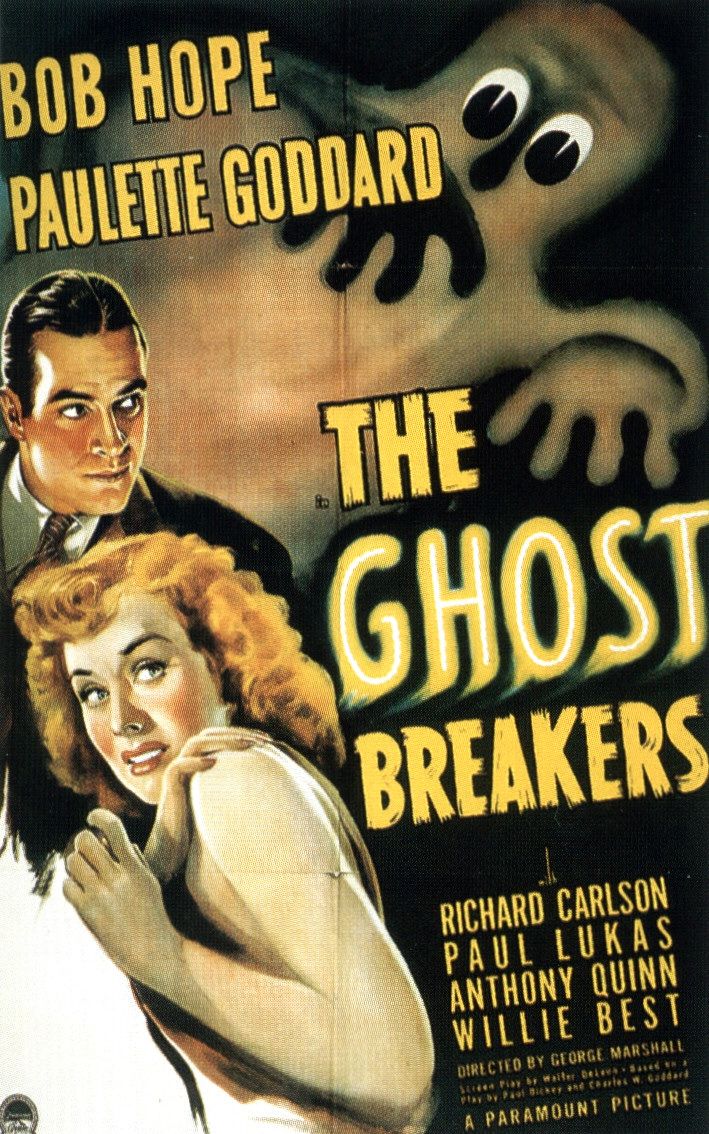
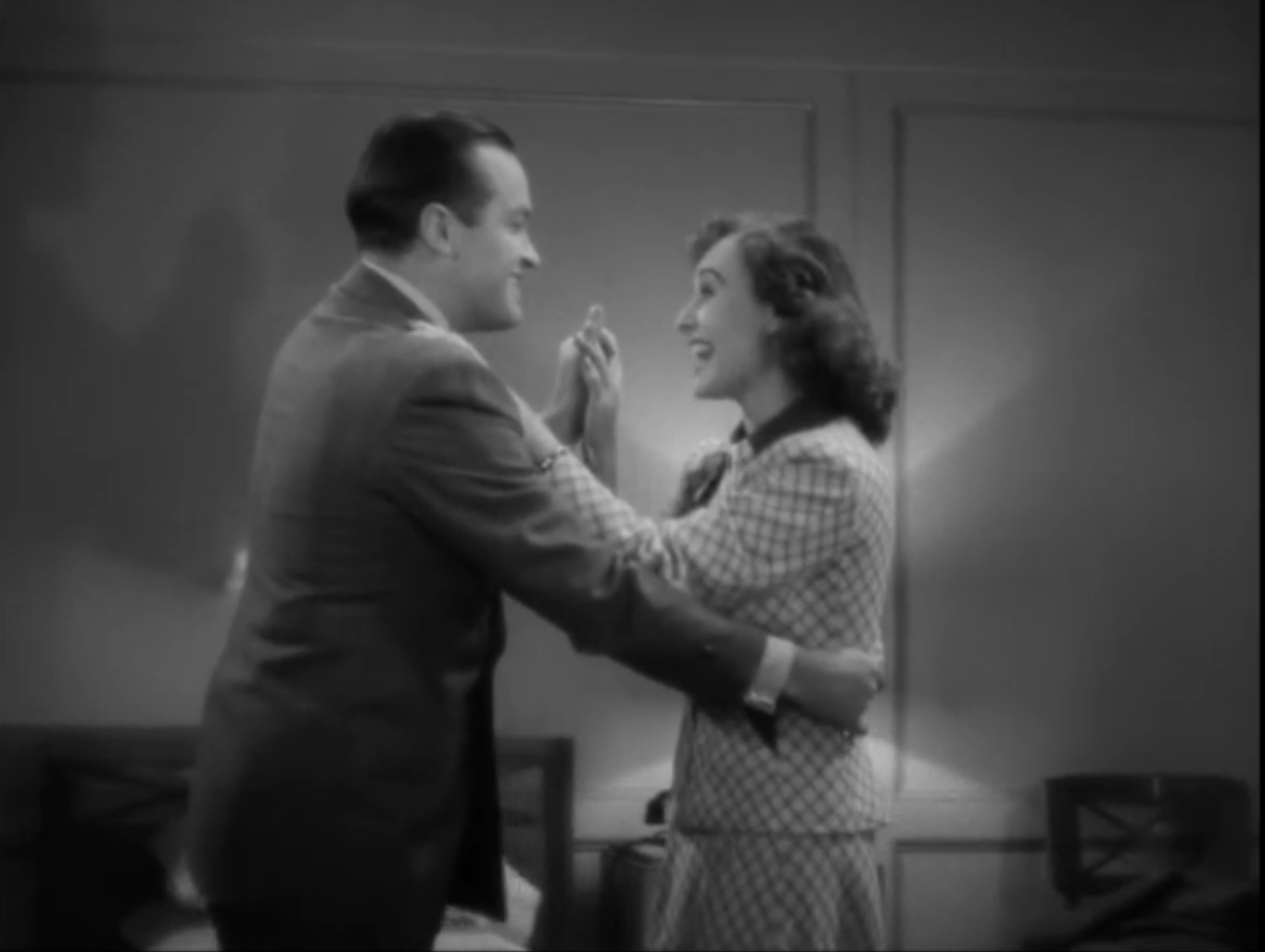
A radio host (Bob Hope) and his loyal valet (Willie Best) accompany a young woman (Paulette Goddard) to Cuba, where she has just inherited a haunted castle known as Castillo Maldito. Together, they try to find out who is behind the mysterious presence of ghosts and zombies.

Genres, Themes, Actors, and Directors:

  • Amateur Sleuths
  • Anthony Quinn Films
  • Bob Hope Films
  • Comedy
  • George Marshall Films
  • Ghosts
  • Horror
  • Inheritance
  • Paul Lukas Films
  • Paulette Goddard Films
  • Zombies

Review:
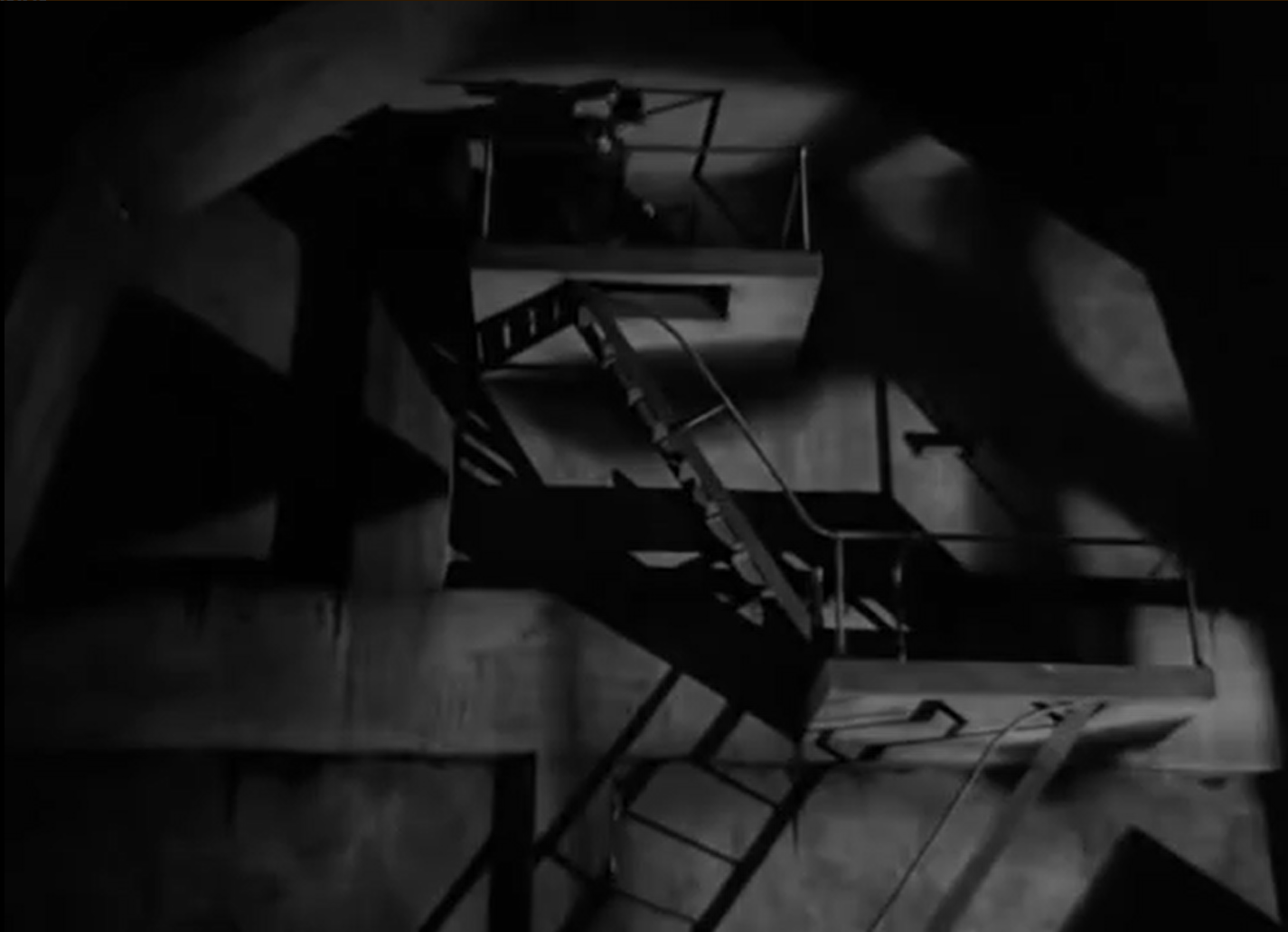
The Ghost Breakers — remade with Jerry Lewis and Dean Martin as Scared Stiff (1953) — is primarily notable as the successful follow-up to Hope and Goddard’s hit comedy-horror flick of the previous year, The Cat and the Canary. Despite its erstwhile popularity, however, The Ghost Breakers hasn’t aged all that well: while Hope, Goddard, and Best all give appealing performances, the script is only intermittently amusing, and often confusing. Fortunately, the atmospheric production values at least partially redeem the film’s clunky script, providing a few genuine chills and thrills.

Redeeming Qualities and Moments:

  • Hope and Goddard, appealing as the amateur sleuths falling in love
  • Willie Best as Hope’s loyal valet
  • Atmospheric cinematography and set designs
  • Some clever, if hokey, one-liners by Hope:

    “I’m shaking so hard the water on my knee just splashed!”

Must See?
No. Although it holds some historical interest as a popular early vehicle for Bob Hope, I don’t think it’s must-see viewing for all film fanatics.

Links:

Black Friday (1940)

Black Friday (1940)

“I never know when the murderous brain of Red Cannon may take possession of Kingsley, but I will not stop my experiments. I must find where Cannon’s money is hidden!”

Synopsis:
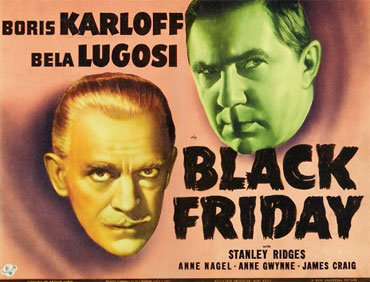
An ambitious surgeon (Boris Karloff) saves the life of his injured friend, Professor Kingsley (Stangley Ridges), by giving him the brain of a dying gangster named Red Cannon. When Dr. Sovac (Karloff) learns that Cannon knew about the existence of $500,000, he hypnotizes his friend in order to bring Cannon’s personality to the surface.

Genres, Themes, Actors, and Directors:

  • Bela Lugosi Films
  • Boris Karloff Films
  • Flashback Film
  • Gangsters
  • Mad Doctors and Scientists
  • Mind Control and Hypnosis
  • Multiple Personalities
  • Revenge

Review:
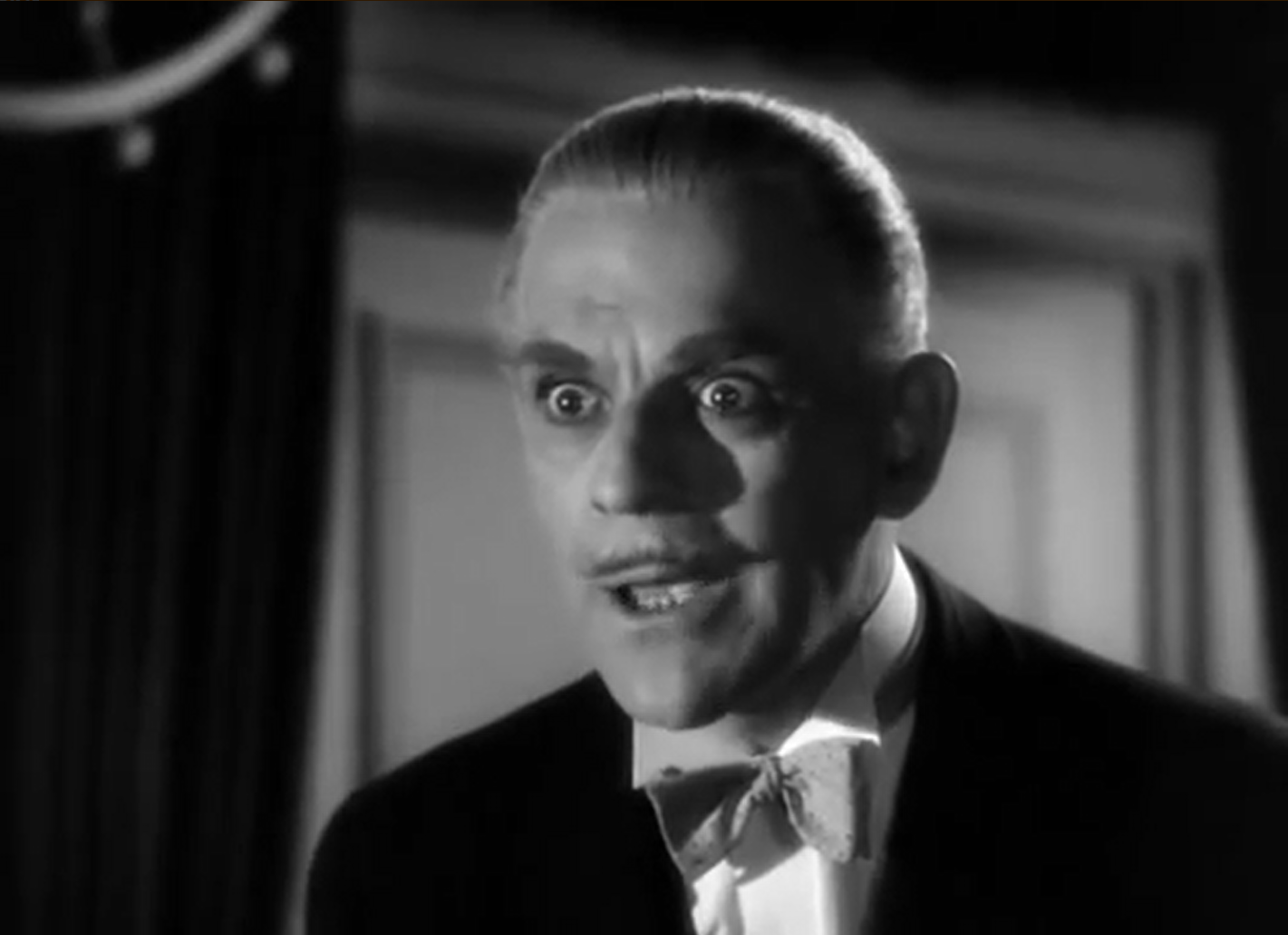
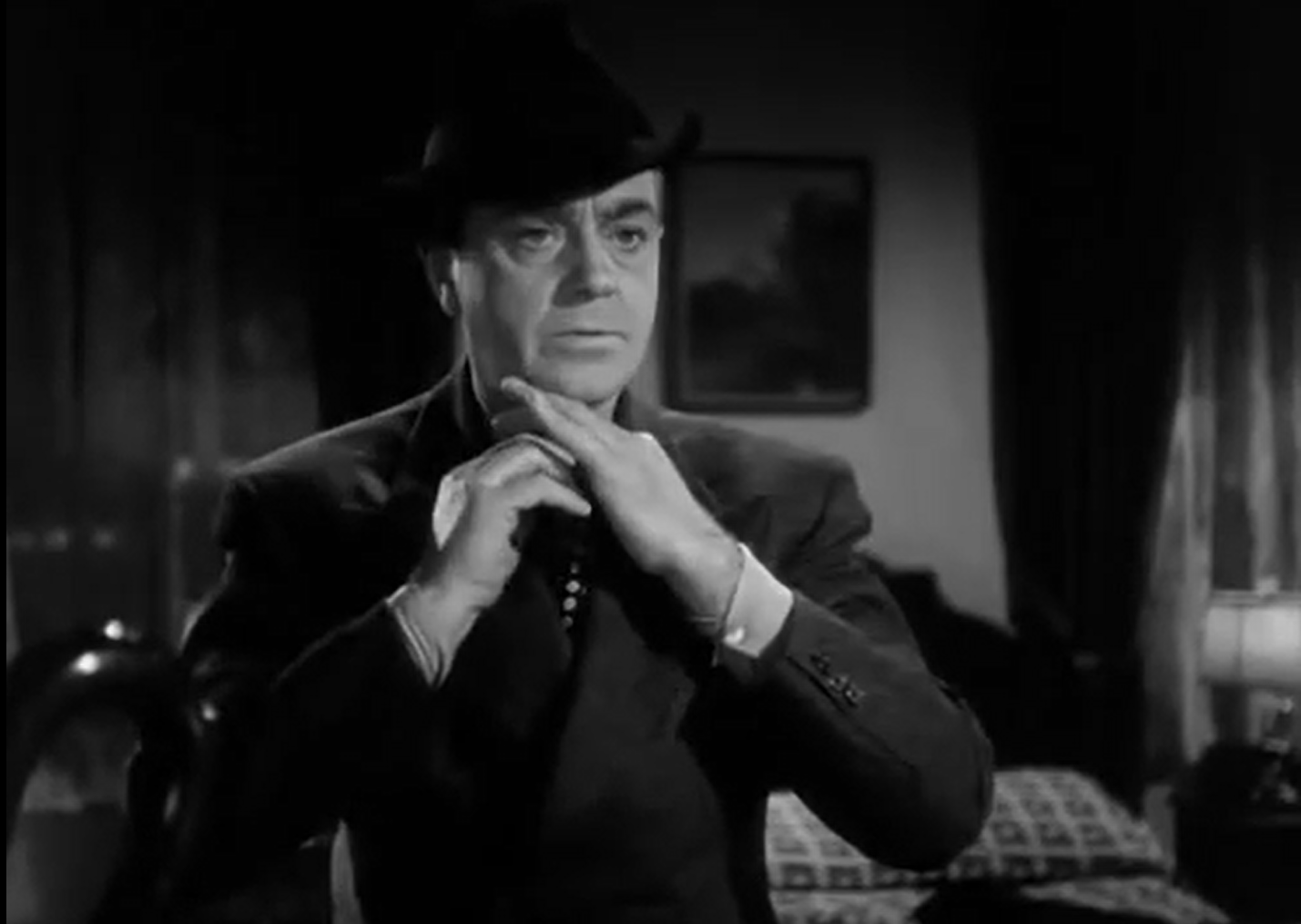
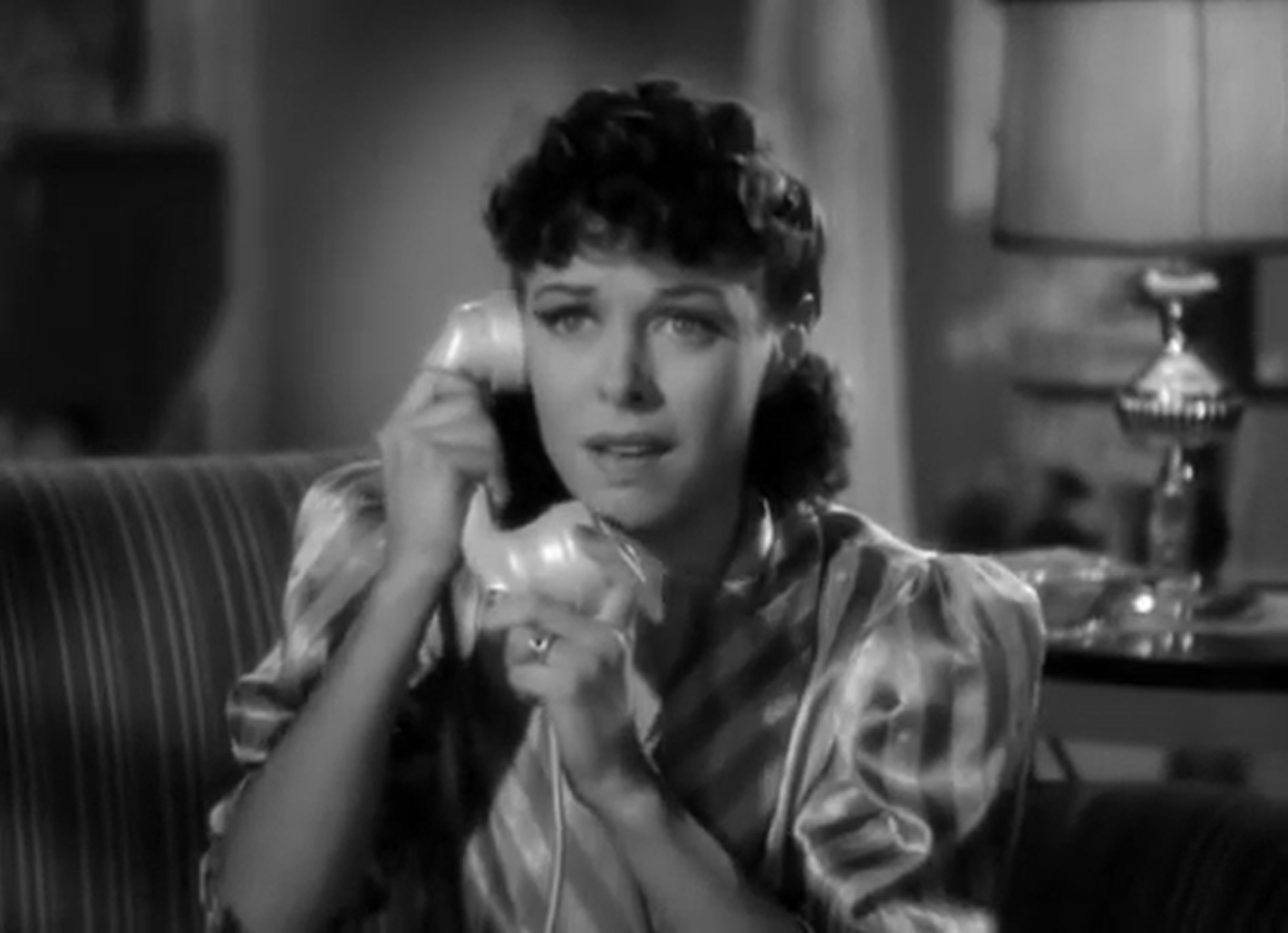
This Universal Studios horror flick suffers from two unforgivable gaps in logic: why does Cannon’s brain retain any traces of the professor’s personality at all? And why does Professor Kingsley’s appearance shift (his hair is darkened and he no longer wears glasses) whenever Cannon’s personality takes over? Given that these blatant illogicalities are never explained, I was too distracted to enjoy the remainder of the film, even once it shifted into a rather standard gangland revenge flick. On the positive side, Karloff is appropriately cast as the greedy yet well-meaning Dr. Sovac:

… and Ridges does an admirable job shuffling between the personalities of professor and gangster. Lovely Anne Nagel is also excellent in a throwaway role as Cannon’s old girlfriend.

Unfortunately, however, the fine performances aren’t enough to save this B-thriller from its frustratingly illogical script.

Redeeming Qualities and Moments:

  • Stanley Ridges as Professor Kingsley/Red Cannon

  • Anne Nagel as Red’s singer-girlfriend, Sunny
  • Atmospheric cinematography

Must See?
No. It’s not clear why Peary lists this modest B-thriller — an unwieldy hybrid of Dr. Jekyll and Mr. Hyde and Frankenstein — in the back of his book.

Links:

Monkey Business (1931)

Monkey Business (1931)

“This is the only way to travel, boys — the only way!”

Synopsis:
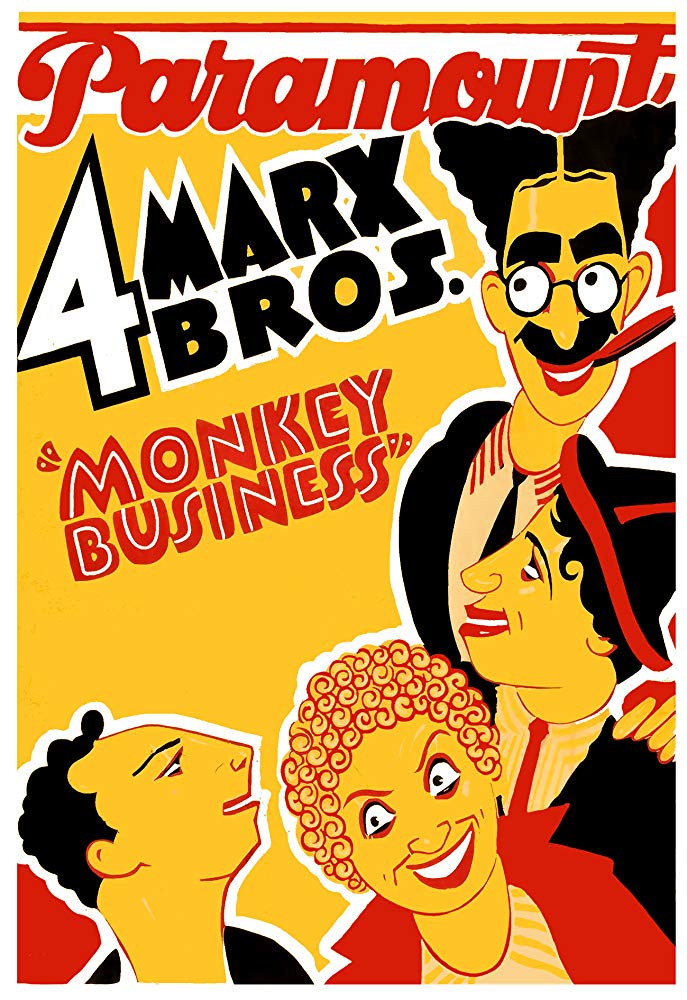
The Marx Brothers stow away on an ocean liner, and soon find themselves working as bodyguards for rival gangsters.

Genres, Themes, Actors, and Directors:

  • At Sea
  • Comedy
  • Fugitives
  • Gangsters
  • Marx Brothers Films

Response to Peary’s Review:
As Peary notes, it’s likely “that the Marx Brothers were never more energetic” than in Monkey Business, their first film written directly for the screen. It’s pure, zany comedy the entire way through, with amusing wordplay coming a mile a minute, and endless gags easily overwhelming the unimportant storyline. With that said, I’ll admit I don’t enjoy Monkey Business as much as the Brothers’ more narratively-polished films (such as A Night at the Opera); I also miss the inimitable presence of the “fifth Marx Brother”, Margaret Dumont. Nonetheless, it remains essential viewing for anyone seriously interested in the history of comedic cinema.

Redeeming Qualities and Moments:

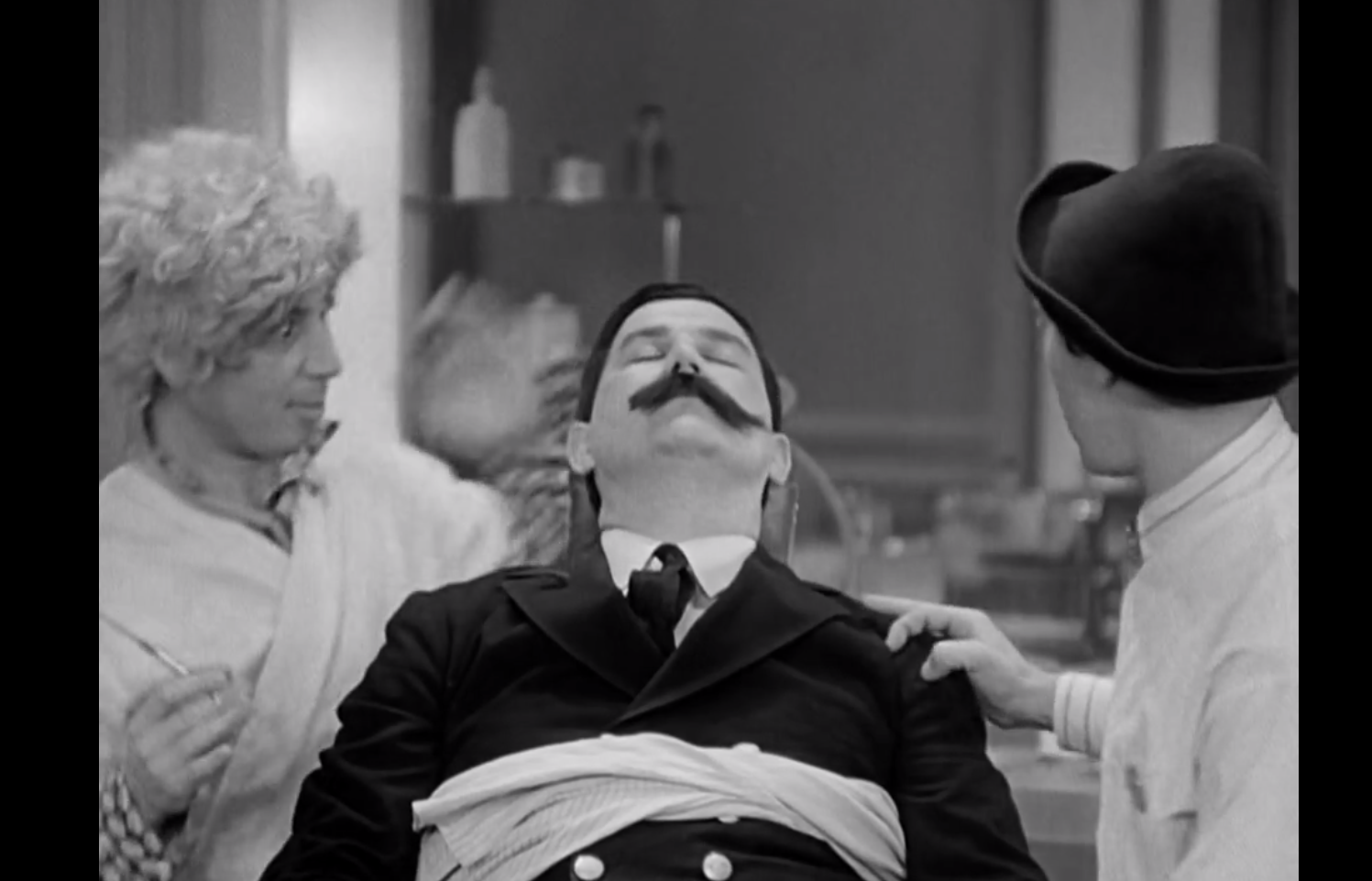
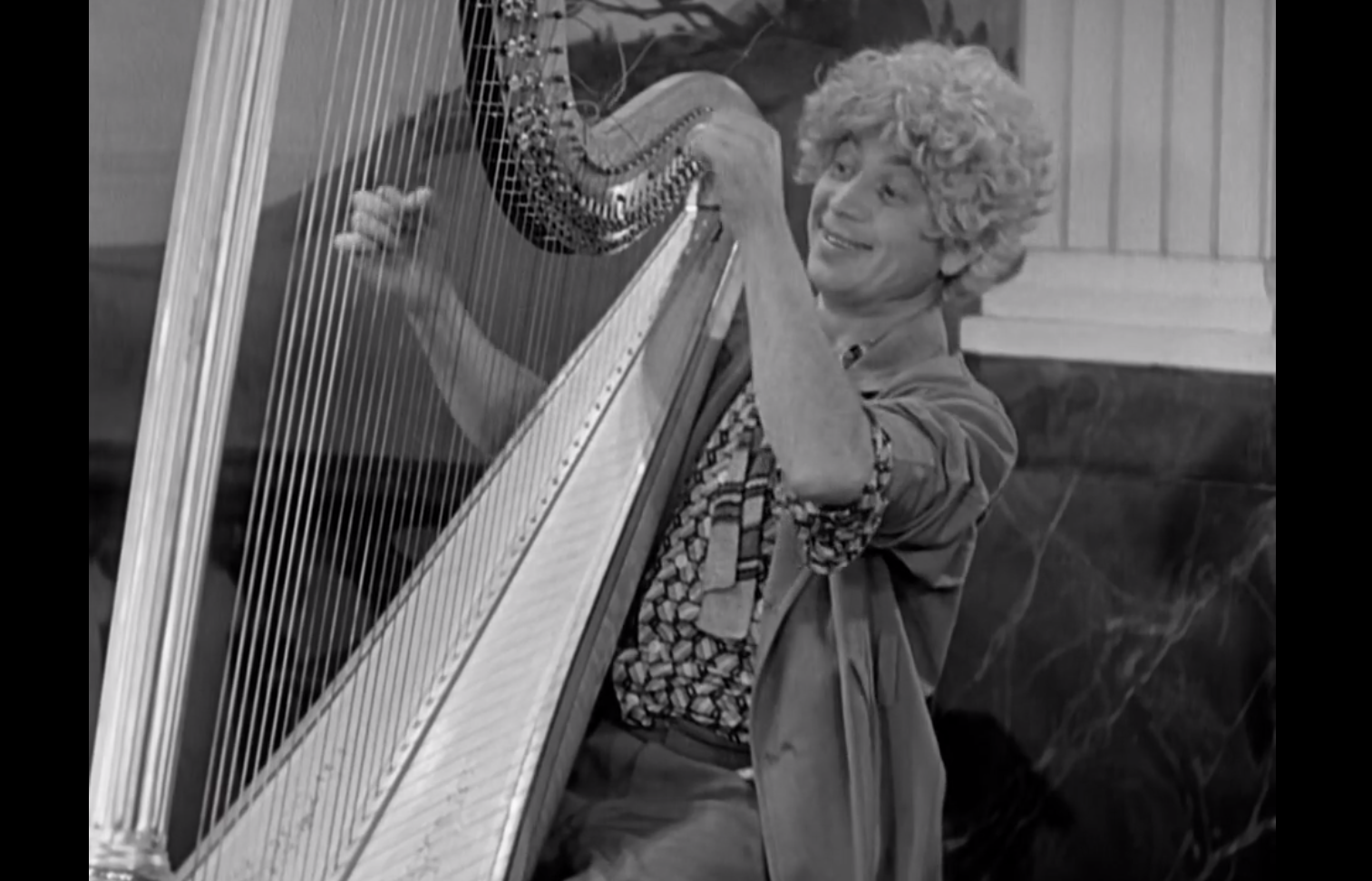
  • Plenty of zany sequences — as when the well-meaning Chico and Harpo gradually “trim” off a man’s entire mustache
  • Harpo accompanying a soprano while she sings “O Sole Mio”, then performing his own piece (my favorite moment in the entire film)
  • Countless hilarious puns (most by Chico) and one-liners (most by Groucho):

    “You’re just wasting your breath — and that’s no great loss, either.”

Must See?
Yes. While it’s not quite on a level with either A Night at the Opera (1935) or Duck Soup (1933), Monkey Business should be seen by all film fanatics.

Categories

  • Genuine Classic

Links:

Andy Warhol’s Frankenstein / Flesh for Frankstein (1973)

Andy Warhol’s Frankenstein / Flesh for Frankstein (1973)

“We have to find the right head for this torso. It has to be of a man who strongly craves women — whose overriding urges are sensual.”

Synopsis:
Baron Frankenstein (Udo Kier) and his loyal assistant Otto (Arno Juerging) attempt to create a new race of humans by mating the reconstructed bodies of a handsome man (Srdjan Zelenovic) and a beautiful woman (Dalia di Lazzaro). Meanwhile, Frankenstein’s sex-crazed wife (Monique Van Vooren) seduces her studly field worker (Joe Dallesandro), who was friends with the ill-fated Zelenovic.

Genres, Themes, Actors, and Directors:

  • Frankenstein
  • Horror
  • Incest and Incestuous Undertones
  • Mad Doctors and Scientists
  • Paul Morrissey Films
  • Satires and Spoofs
  • Zombies

Response to Peary’s Review:
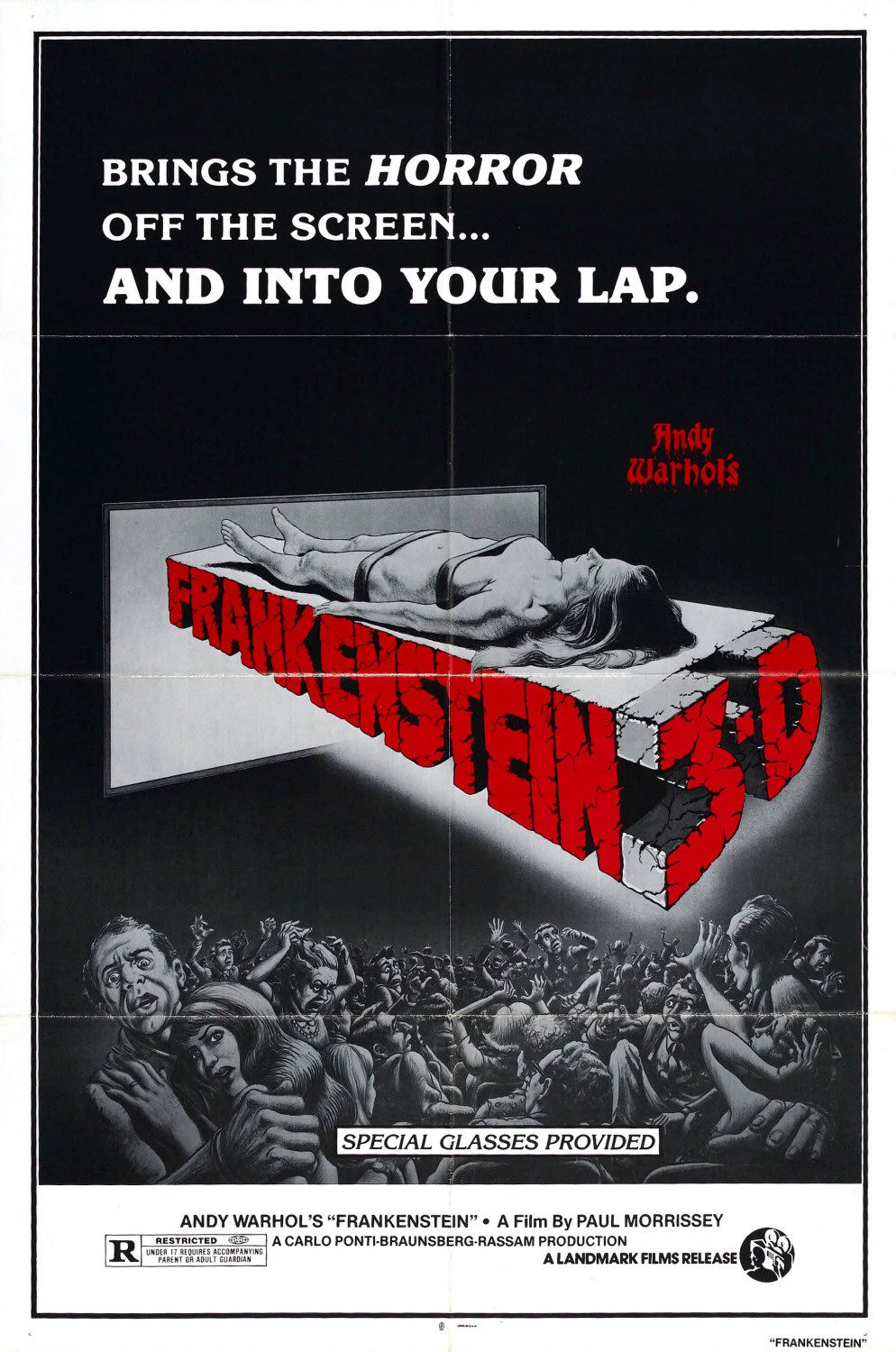
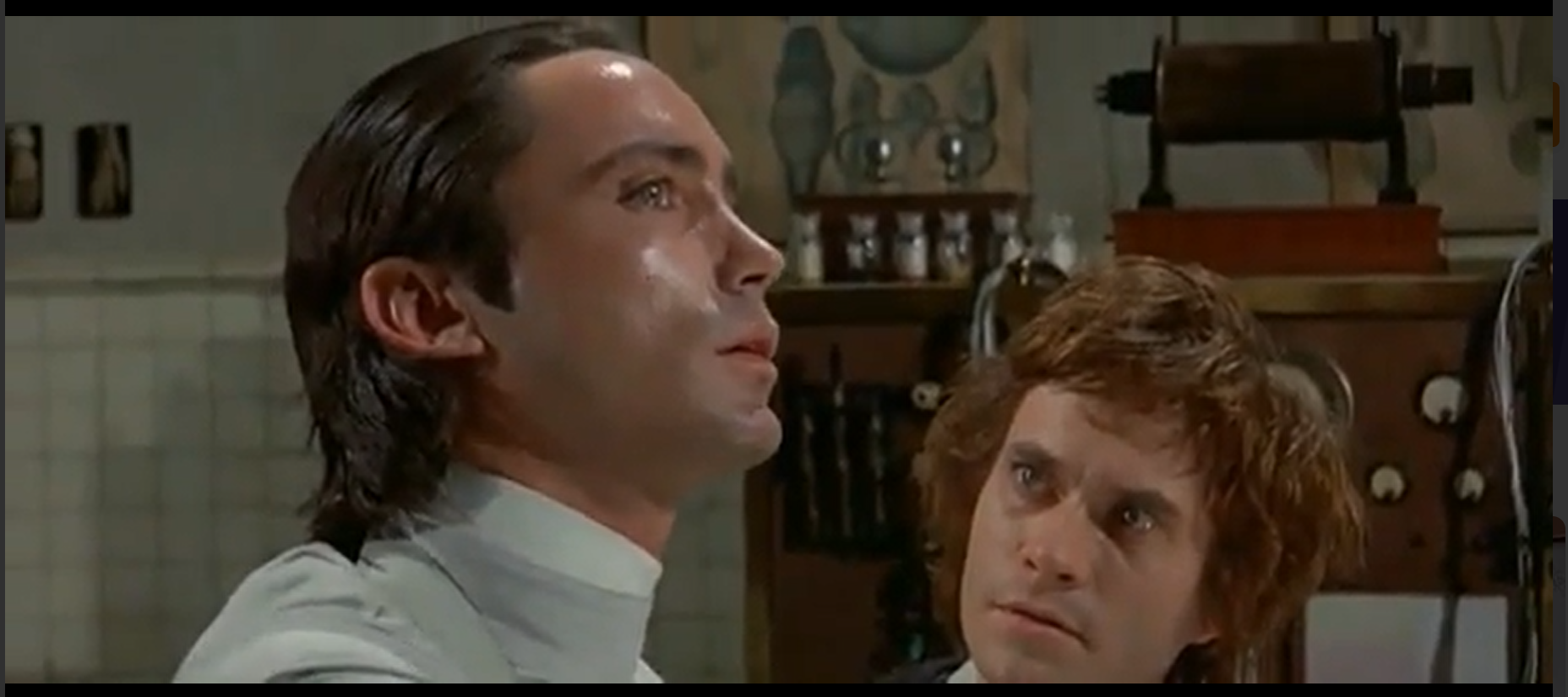
Peary is subtle in his criticism of this satirical horror flick by director Paul Morrissey, noting that “the explicit violence in [the] film overwhelms the subtle humor and sex”, and that “the repetitive images and dialogue make [the] film tiresome.” What he neglects to mention is how hideously — indeed, distractingly — bad the acting is; while Morrissey apparently instructed his cast not to act “realistically”, the actors (with the possible exception of Kier) aren’t capable of achieving campy delivery (which might have been fun). Equally awful are the special effects — at a certain point, when Frankenstein is delving orgasmically into the innards of his “ideal woman”, he looks for all the world like he’s smearing red paint on her skin (which he probably was). Even the most diehard fans of Flesh for Frankenstein have noted that it isn’t for all tastes, and I guess I fall into this category; I greatly prefer its tongue-in-cheek companion piece, Blood for Dracula (released just a few months later); as Peary notes, the latter was “not as popular… but a much better film.”

Redeeming Qualities and Moments:

  • Some amusingly campy moments

Must See?
Yes, simply due to its cult following.

Categories

  • Cult Movie

Links:

Bucket of Blood, A (1959)

Bucket of Blood, A (1959)

“The artist is; all others are not.”

Synopsis:
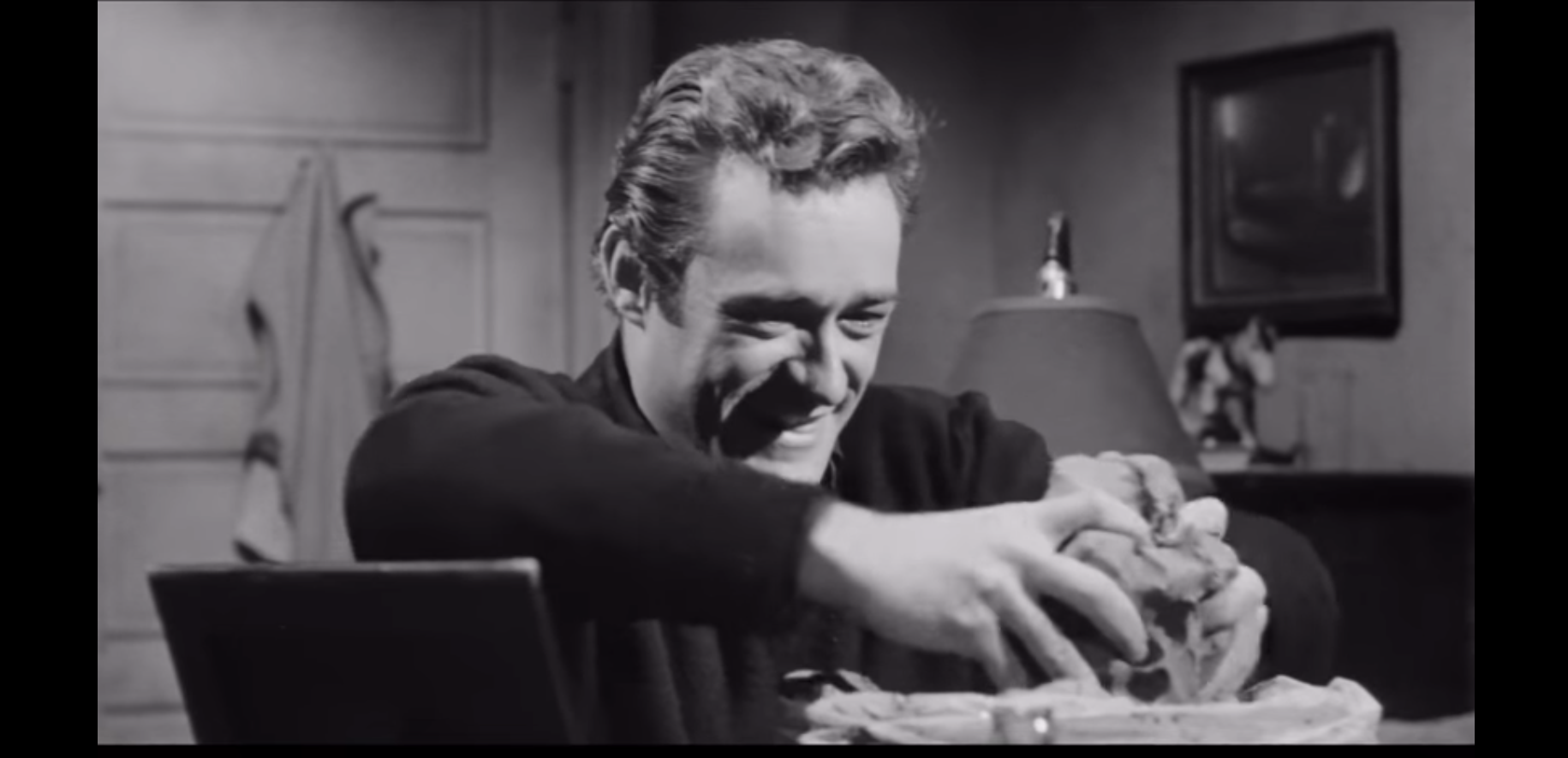
During the Beatnik era, a nebbishy busboy (Dick Miller) longs to become a great artist. When he accidentally kills his landlady’s cat, he is inspired to cover it in clay and call it art — and when his “Dead Cat” is well-received, he soon moves on to killing and “sculpting” human subjects.

Genres, Themes, Actors, and Directors:

  • Artists
  • Aspiring Stars
  • Black Comedy
  • Dick Miller Films
  • Horror
  • Roger Corman Films
  • Serial Killers

Review:
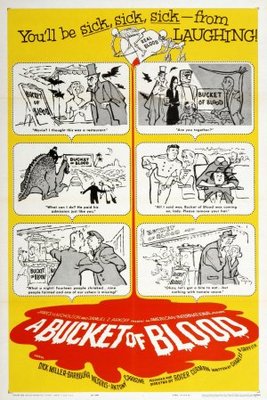
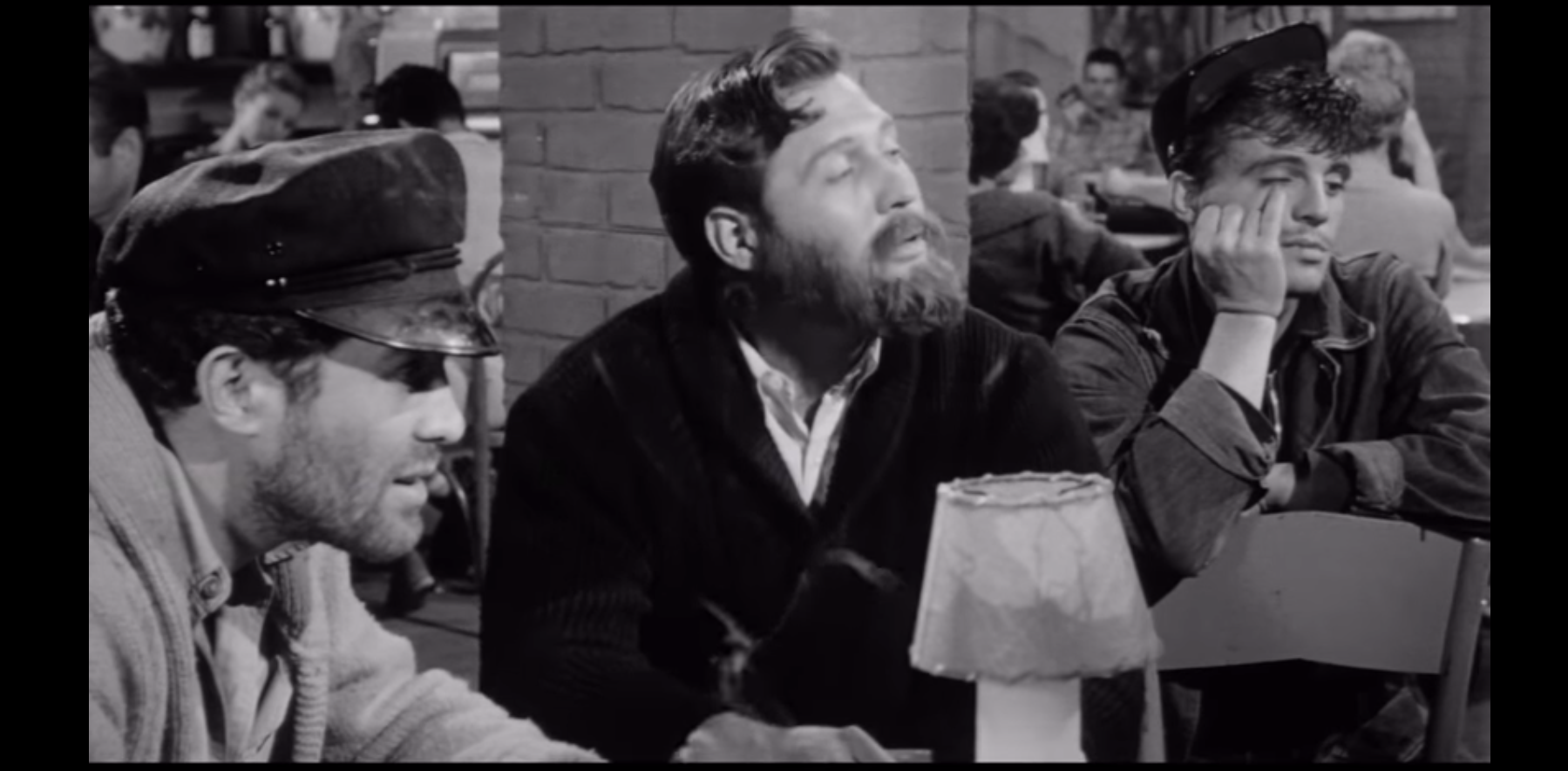
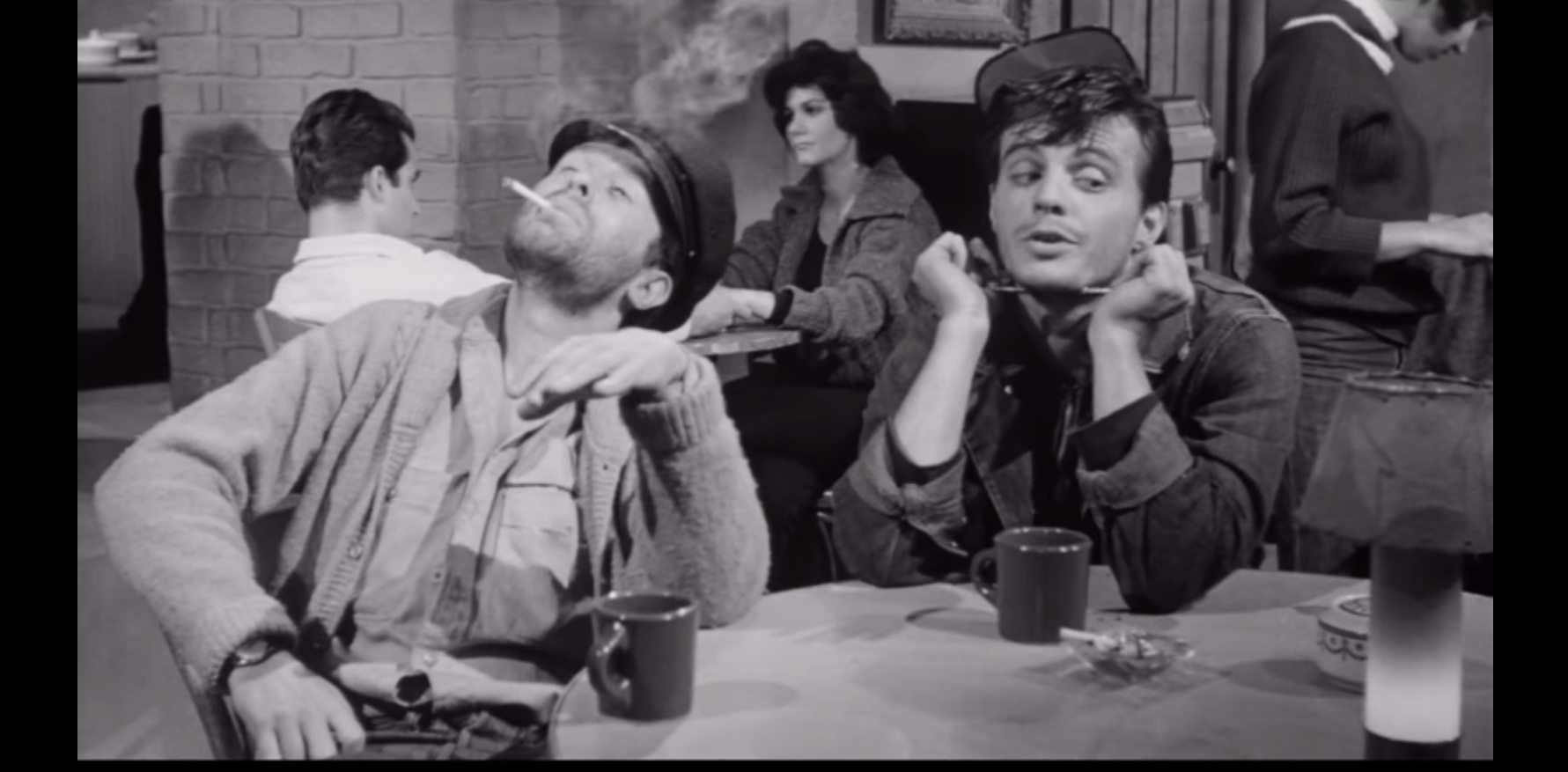
This surprisingly effective low-budget thriller — directed by Roger Corman and scripted by Charles B. Griffith — is, along with Little Shop of Horrors (1960), proof of Corman’s ability to churn out entertaining movies with bare-bones budgets and minimal shooting schedules. While some of the production values in A Bucket of Blood are laughably bad (the newly-killed cat Miller pulls out of his wall is as stiff as a board), others — such as the atmospherically-shot climactic chase scene — are impressive. Perhaps most memorable, however, is the way in which Corman and Griffith deliciously satirize both Beatniks and artists, who are portrayed as pretentious, exclusionary, and not-just-a-little nutty. No wonder there are murders going on!

Redeeming Qualities and Moments:

  • Dick Miller as the desperate wannabe artist
  • Julian Burton as a Ginsberg-esque Beatnik poet, who spouts countless pompous lines:

    “Mark well this lad: his is the silent voice of creation. Within the dark, rich soil of humility, he blossoms as the hope of our nearly sterile century!”

  • A hilarious, spot-on satire of both Beatnik culture and pretentious artists
  • Atmospheric cinematography
  • Charles Griffith’s cleverly morbid script

Must See?
Yes. This cult film is a surprisingly enjoyable low-budget thriller. It’s listed as both a Camp Classic and a Cult Movie in the back of Peary’s book.

Categories

  • Cult Movie
  • Important Director

Links:

Strange Brew (1983)

Strange Brew (1983)

“Take off, ya hoser!”

Synopsis:
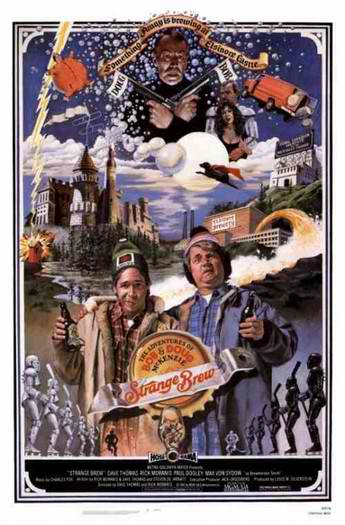
The beer-loving Mackenzie brothers (Dave Thomas and Rick Moranis) get jobs at the Elsinore Brewery, where they soon discover the nefarious plan of Brewmeister Smith (Max von Sydow) to take over the world.

Genres, Themes, Actors, and Directors:

  • Canadian Films
  • Comedy
  • Max von Sydow Films
  • Mental Illness
  • Siblings
  • World Domination

Response to Peary’s Review:
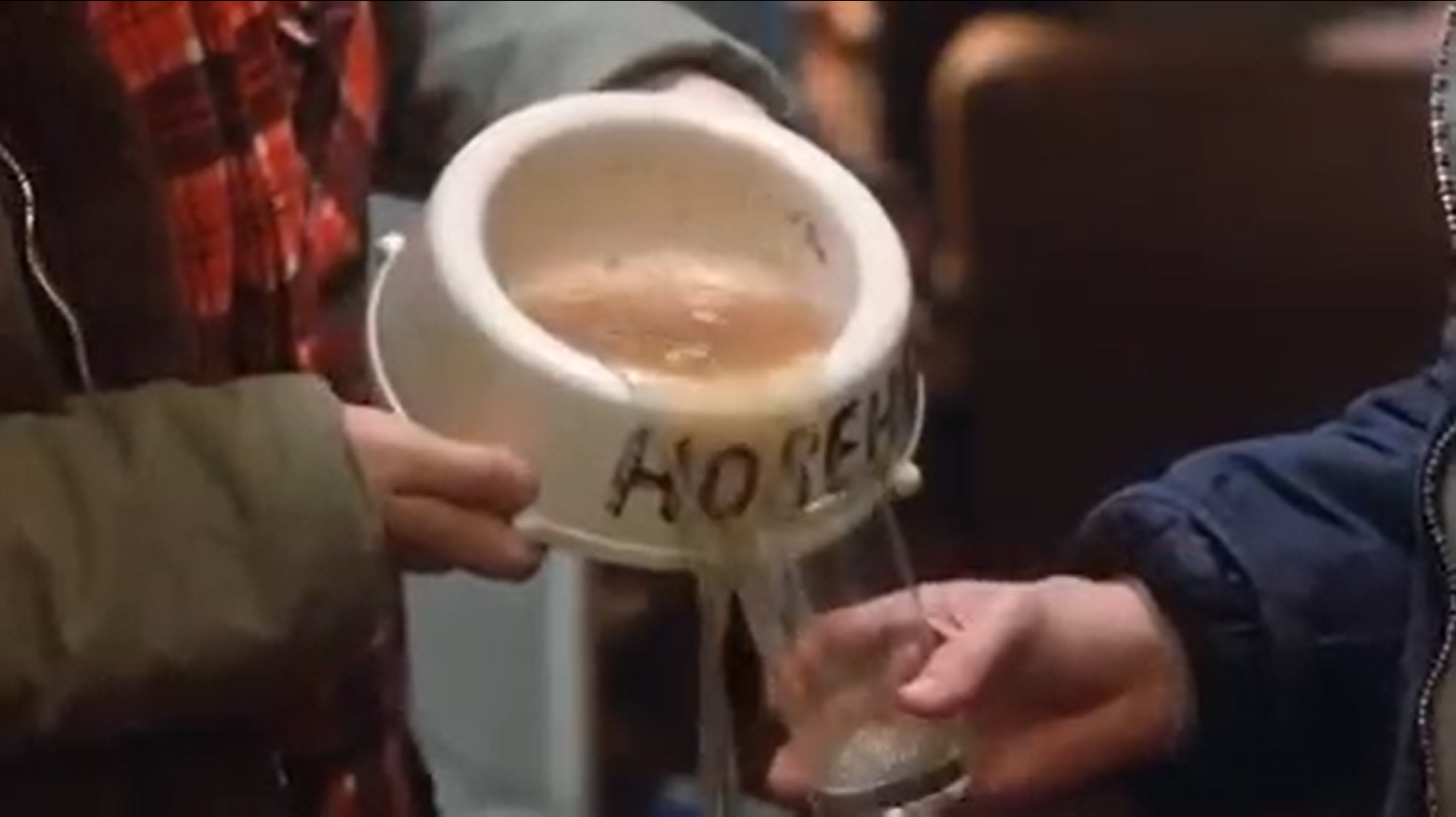
As Peary notes, this “foolish comedy” (a cult favorite for many) “drags on forever”, with only “a few snickers along the way”. Its primary worth seems to lie in its good-natured yet merciless portrayal of Canadian stereotypes and sayings — every other phrase out of these brothers’ mouths is either “take off!”, “eh?”, “ya knob!” or “ya hoser!” The plot (more complicated than synopsized above) is convoluted, and relies overly heavily on both slapstick (which, as Peary notes, “seems out of place”) and shameless references to other hit films of the year (including Return of the Jedi and Superman III). Strange Brew is notable as the precursor to later “dumb buddies” flicks — such as Bill and Ted’s Excellent Adventure (1989), Wayne’s World (1992), and Dumb and Dumber (1994) — but is this necessarily a worthy achievement?

Redeeming Qualities and Moments:

  • A mildly entertaining satire of Canadianisms — eh, hoser?
  • A few amusing moments of juvenile humor

Must See?
No. While it’s a guilty cult pleasure for many, it’s ultimately not must-see viewing.

Links:

Our Daily Bread (1934)

Our Daily Bread (1934)

“There’s nothing for people to worry about — not when they’ve got the earth!”

Synopsis:
During the Great Depression, a destitute city couple named Mary (Karen Morley) and John (Tom Keene) take over Mary’s uncle’s farm. Soon they’ve invited other out-of-work families to join them on their land, and a thriving collective emerges.

Genres, Themes, Actors, and Directors:

  • Collective Activism
  • Depression Era
  • Farming
  • Femmes Fatales
  • John Qualen Films
  • Karen Morley Films
  • King Vidor Films

Response to Peary’s Review:
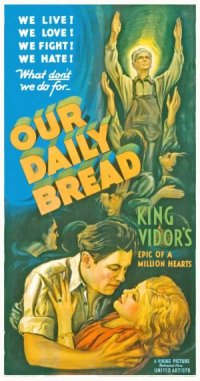
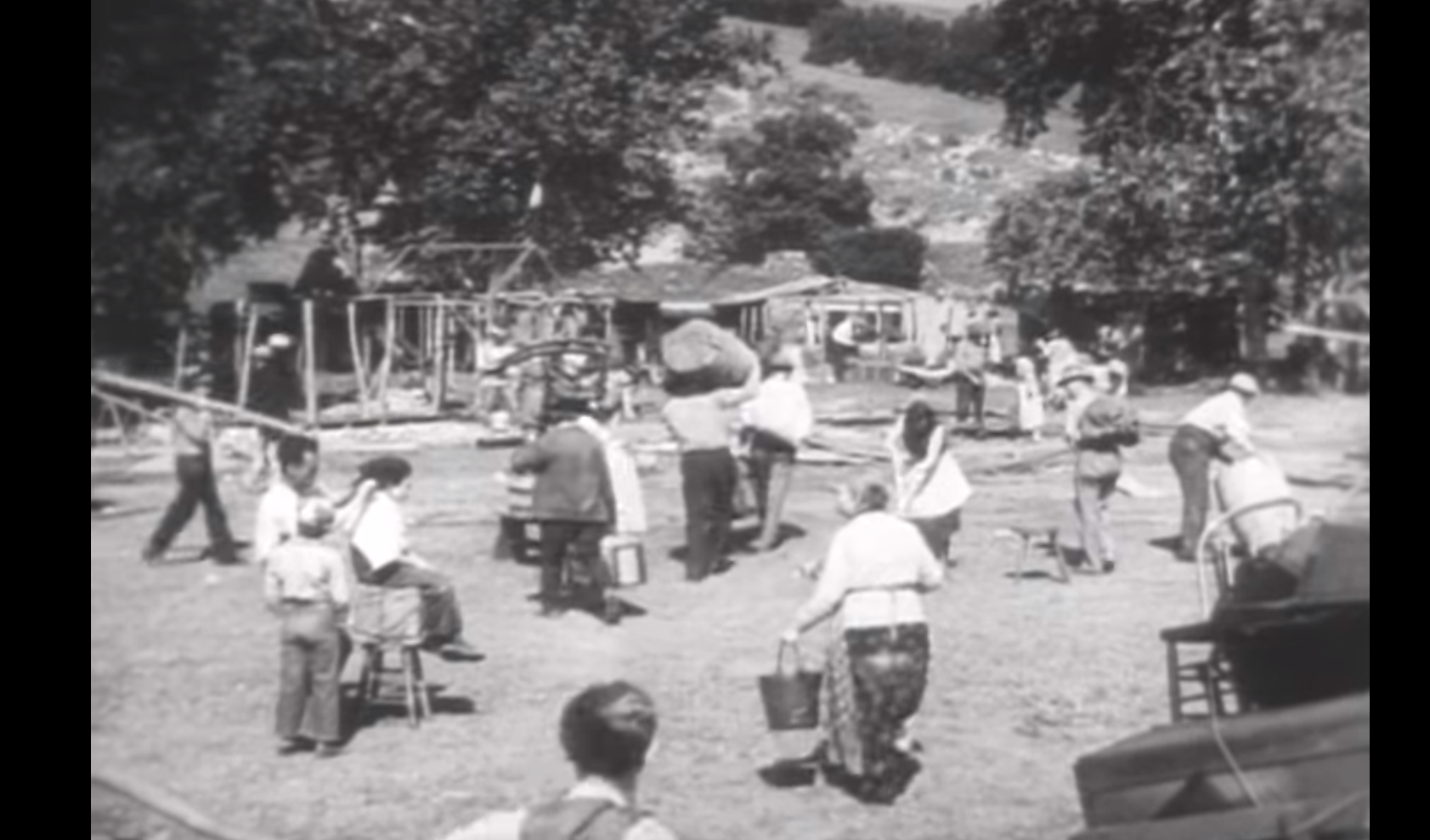
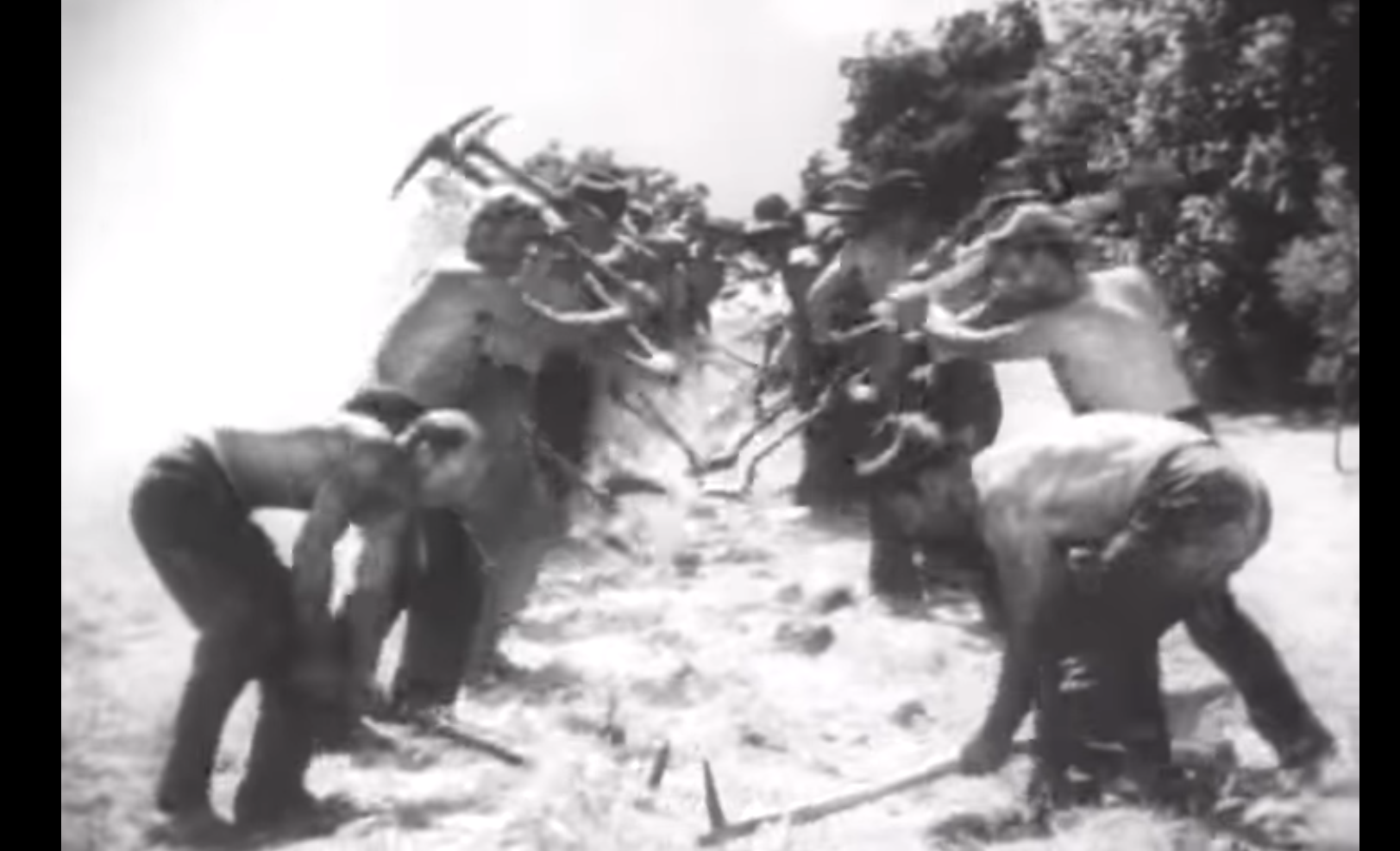
As Peary notes, this “unique, politically subversive Depression film by King Vidor” — a sequel to Vidor’s “1928 silent masterpiece The Crowd” (but with different lead actors) — suffers from overly simplistic characters, a naively Hollywood air of “Hey-let’s-get-together-and-form-a-cooperative”, and a contrived conflict involving a femme fatale (Barbara Pepper). (According to TCM’s article, “director Vidor admitted that the floozy with the Jean Harlow platinum hair was brought in purely for box office.”) It’s frustrating to watch a film based on such an intriguing and original premise devolving into platitudes and easy fixes — there’s potential here for something much greater. With that said, I agree with Peary that “Vidor’s film works on many levels: its sincerity is to be commended, [and] its vision of an alternate lifestyle is tantalizing.” The final lengthy sequence (in which the collective members work together to dig a ditch which will bring water to their drought-ridden crops) shows evidence of Vidor’s cinematic genius — as well as heavy influence of Soviet-era films.

Redeeming Qualities and Moments:

  • A stirring — if hopelessly naive — vision of collectivism in action
  • The “famous impressionistic finale” — which, as Peary notes, “is great cinema”

Must See?
Yes, simply for its historical importance.

Categories

  • Historically Relevant

Links:

Lili (1953)

Lili (1953)

“A song of love is a sad song.”

Synopsis:
A sweet, simple orphan named Lili (Leslie Caron) falls in love with a womanizing magician (Jean-Pierre Aumont), and joins his carnival troupe to be near him. Meanwhile, a disabled dancer-turned-puppeteer (Mel Ferrer) is enamored with Lili, but afraid to show her his true feelings, and speaks to her through his puppets instead.

Genres, Themes, Actors, and Directors:

  • Carnivals and Circuses
  • Coming of Age
  • Leslie Caron Films
  • Love Triangle
  • Mel Ferrer Films
  • Musicals
  • Orphans
  • Puppets and Ventriloquism
  • Romance

Response to Peary’s Review:
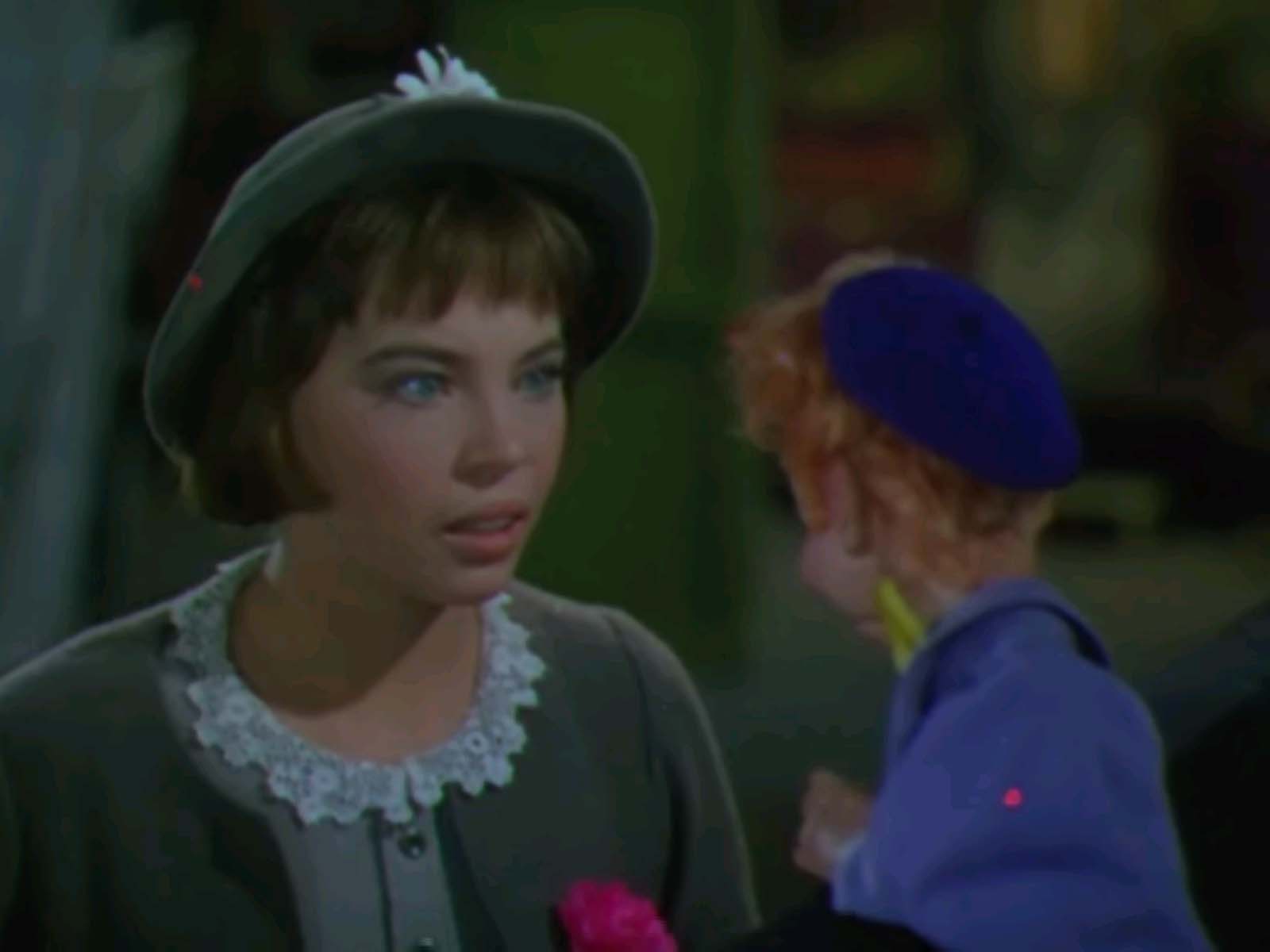
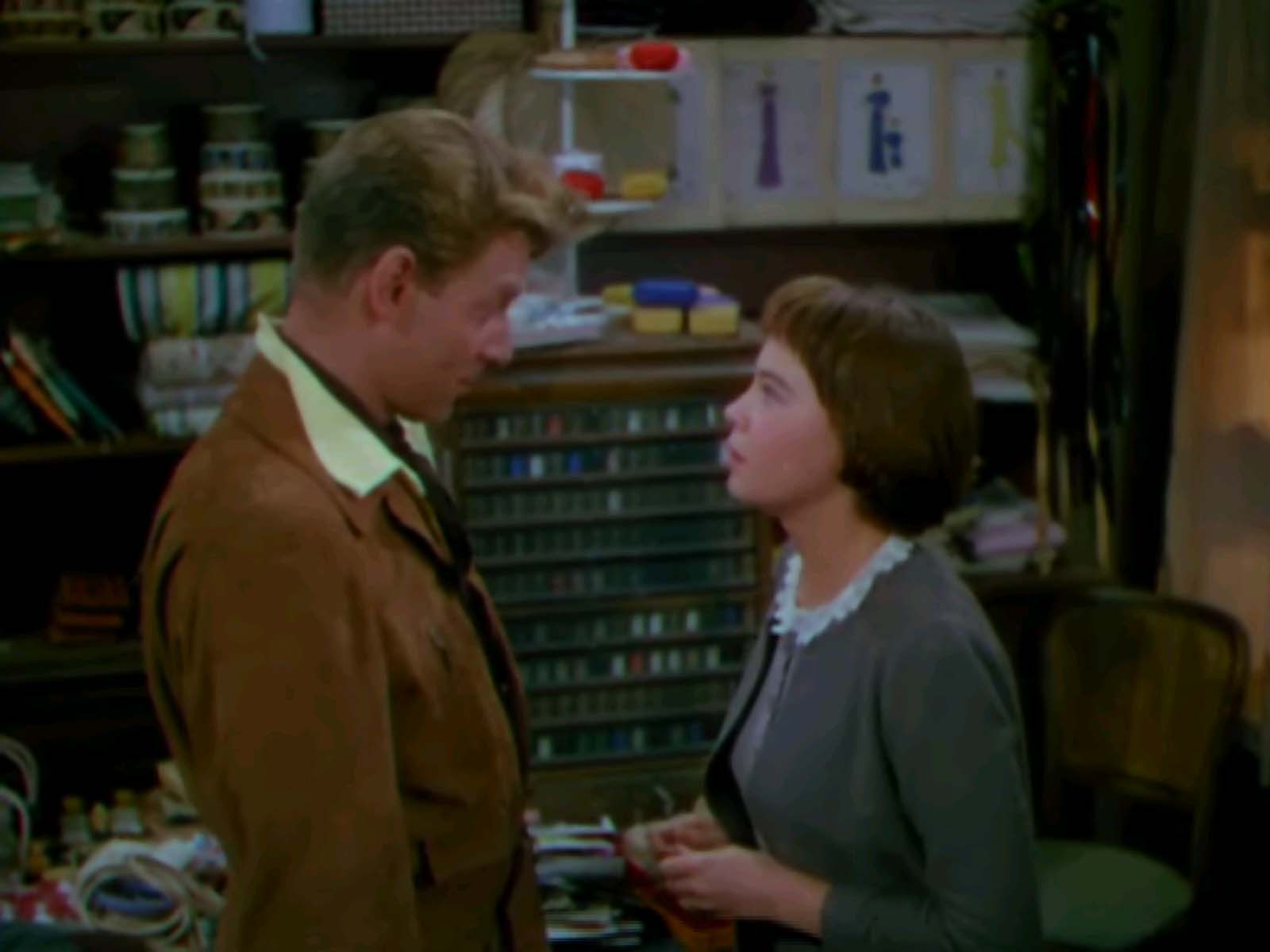
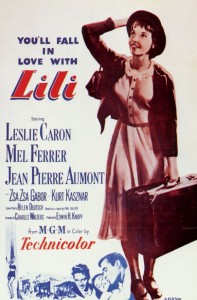
As Peary notes, Leslie Caron is “truly captivating” in this “charming one-song musical” which was nominated for six Academy Awards. Indeed, as many reviewers have pointed out, Lili would not work without Caron’s magical performance; she literally lights up the screen, and we immediately care about her. But while Peary argues that the “sentimental story is skimpy and dated”, I disagree: I see Lili as a fable-like romance, in which two misfits eventually come to terms with both their naive dreams (Caron follows Marc around like an eager puppy, not recognizing him for who he really is) and their lost hopes (Ferrer is bitter about his dashed career as a dancer).

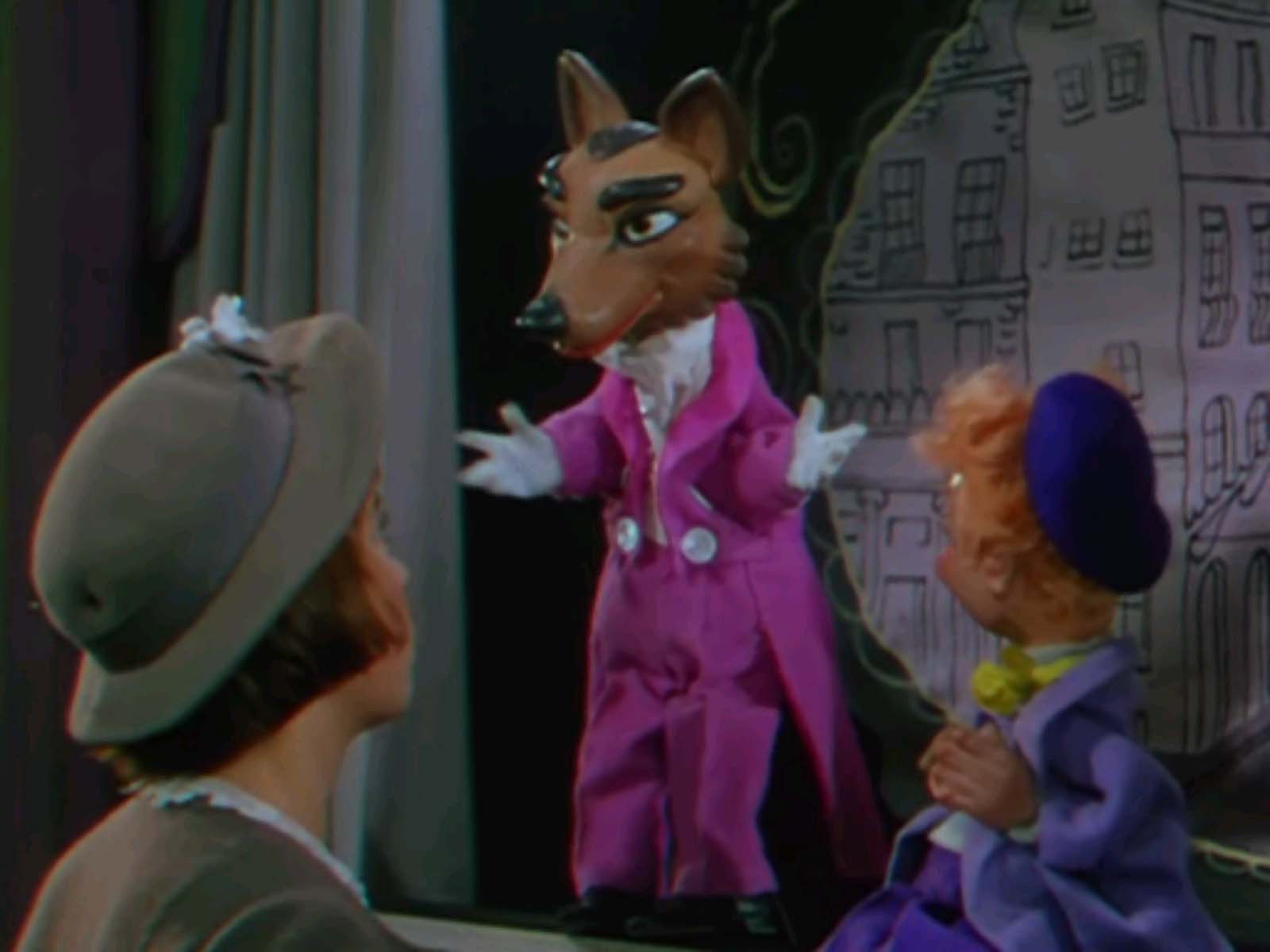
I also disagree with Peary that Caron is surrounded by “supporting players [who] aren’t particularly exciting”. Aumont is perfectly cast (and drolly amusing) as a womanizer who lusts after Lili, but recognizes that she’s still a child — I especially love the line when he tells her, “Lili, you mustn’t throw yourself at a man! It isn’t nice! Well, it’s nice, but you shouldn’t do it!” And Ferrer is appropriately moody as the brusque puppeteer; one of my favorite shots in the film shows his face behind the puppet booth after he’s first interacted with Lili — we can literally see his hard shell melting. Lili may be a simple story, but it’s finely told, and guaranteed to tug at your heartstrings if you let it. At the very least, you’ll be humming “Hi Lili, Hi Lo” for days afterwards.

Redeeming Qualities and Moments:

  • Leslie Caron as Lili
  • Jean-Pierre Aumont as Marc
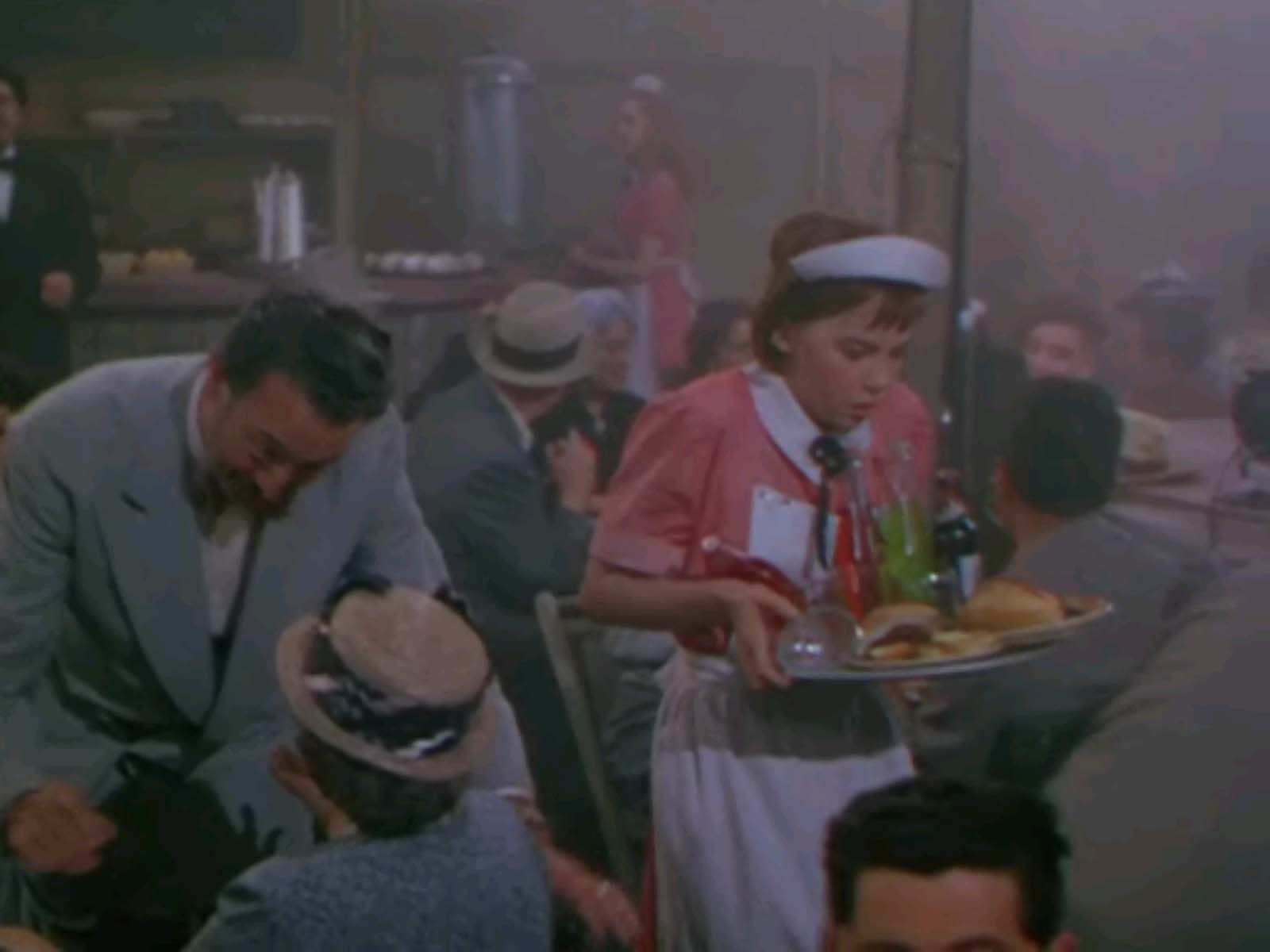
  • Lili failing miserably in her first attempt at waitressing
  • Lili interacting with the puppets
  • Lili’s dream dance, in which she competes with Zsa-Zsa Gabor for Aumont’s attentions
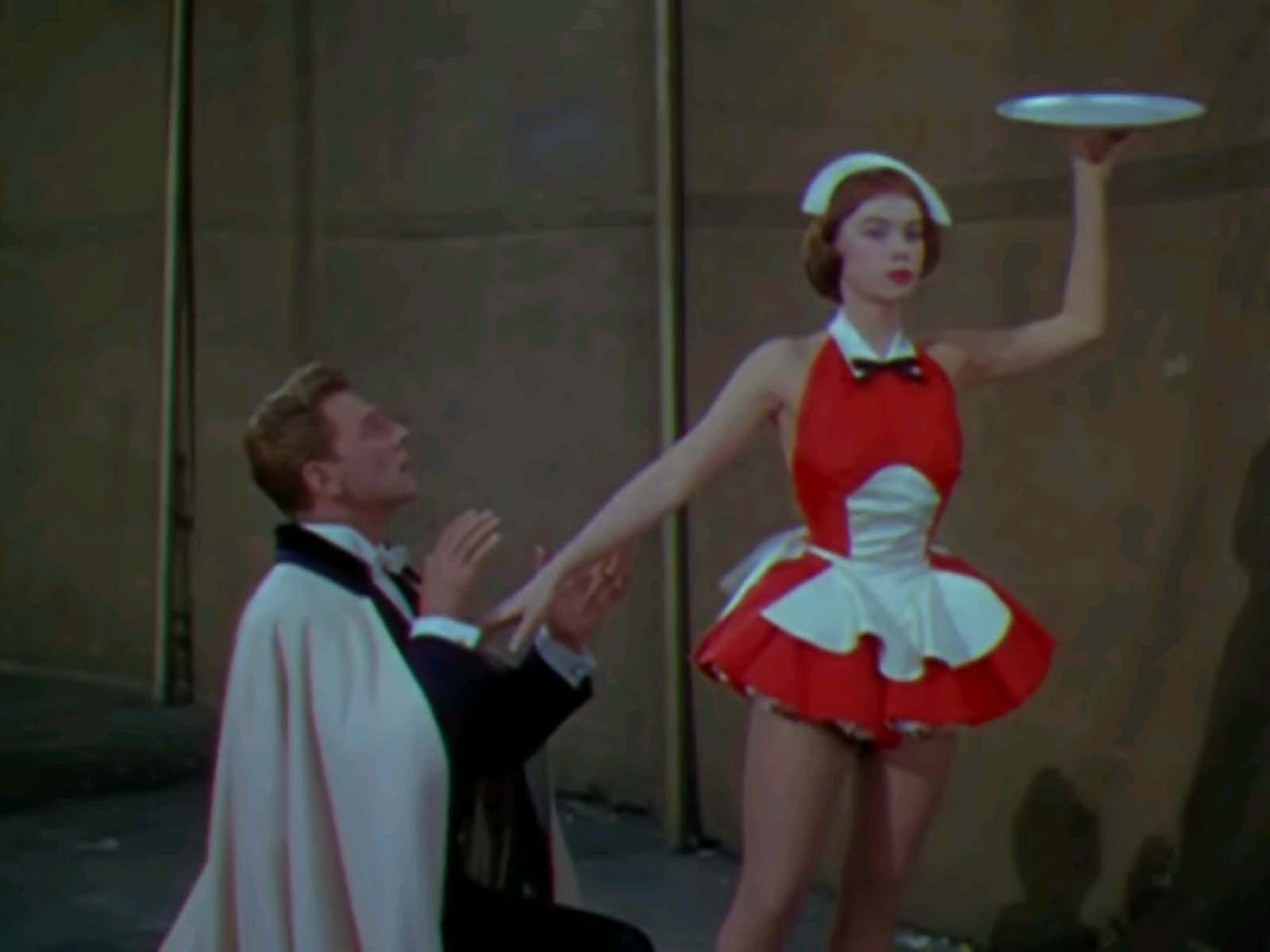
  • The touching final dance sequence
  • A clever, magical screenplay

Must See?
Yes. This Oscar-nominated musical is worth seeing for Caron’s performance alone.

Categories

  • Noteworthy Performance(s)
  • Oscar Winner or Nominee

Links:

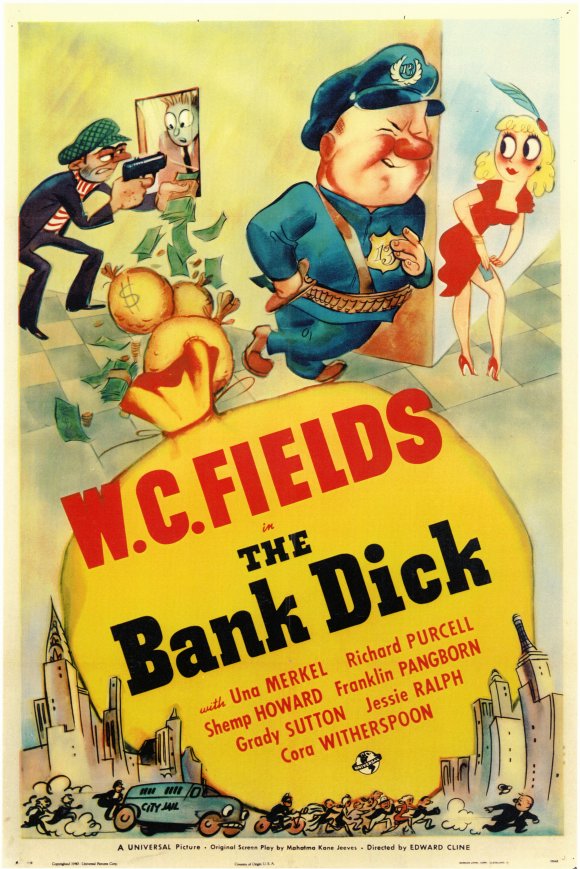
Bank Dick, The (1940)

Bank Dick, The (1940)

“You’d like to have a nose like that full of nickels, wouldn’t you?”

Synopsis:
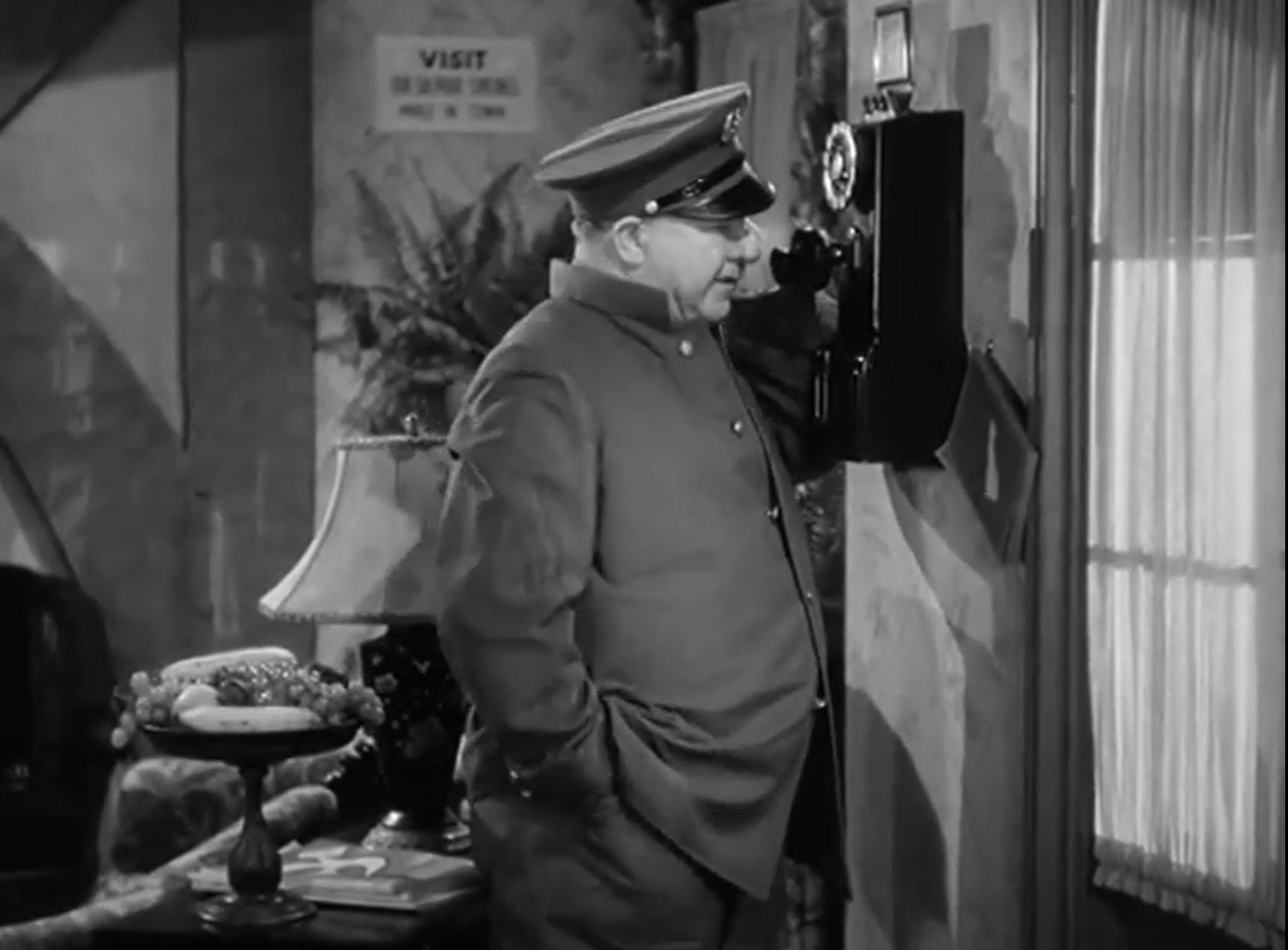
When henpecked Egbert Souse (W.C. Fields) inadvertently captures a bank robber, he’s offered a job as a “bank dick” by the bank’s grateful president (Pierre Watkin). Meanwhile, he naively convinces his future son-in-law (Grady Sutton) to borrow money from the bank in order to buy phony mining stock from a con-artist (Russell Hicks). When bank examiner J. Pinkerton Snoopington (Franklin Pangborn) arrives in town, Souse must do what he can to postpone the audit.

Genres, Themes, Actors, and Directors:

  • Comedy
  • Con-Artists
  • Folk Heroes
  • Henpecked Husbands
  • W.C. Fields Films

Response to Peary’s Review:
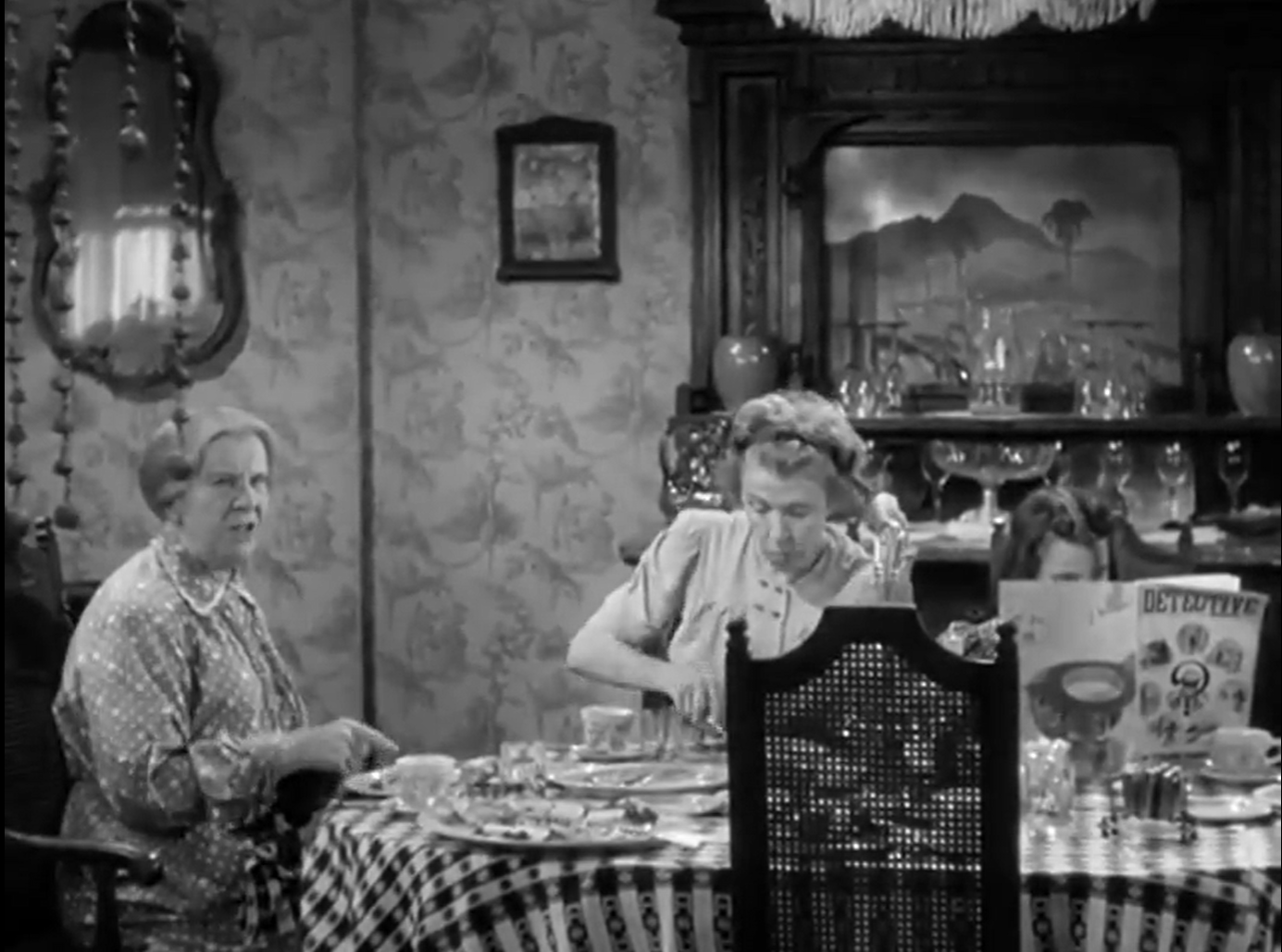
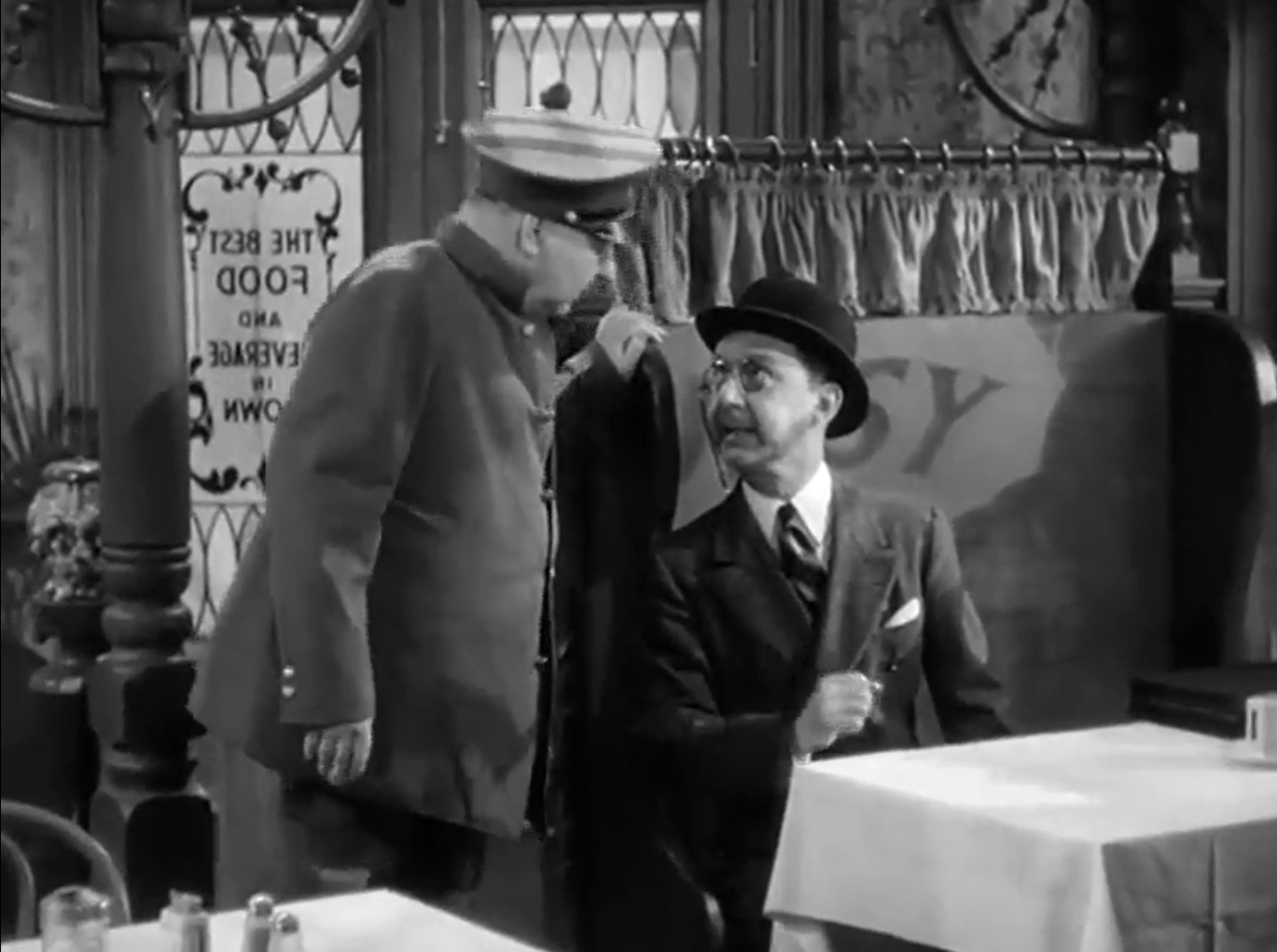
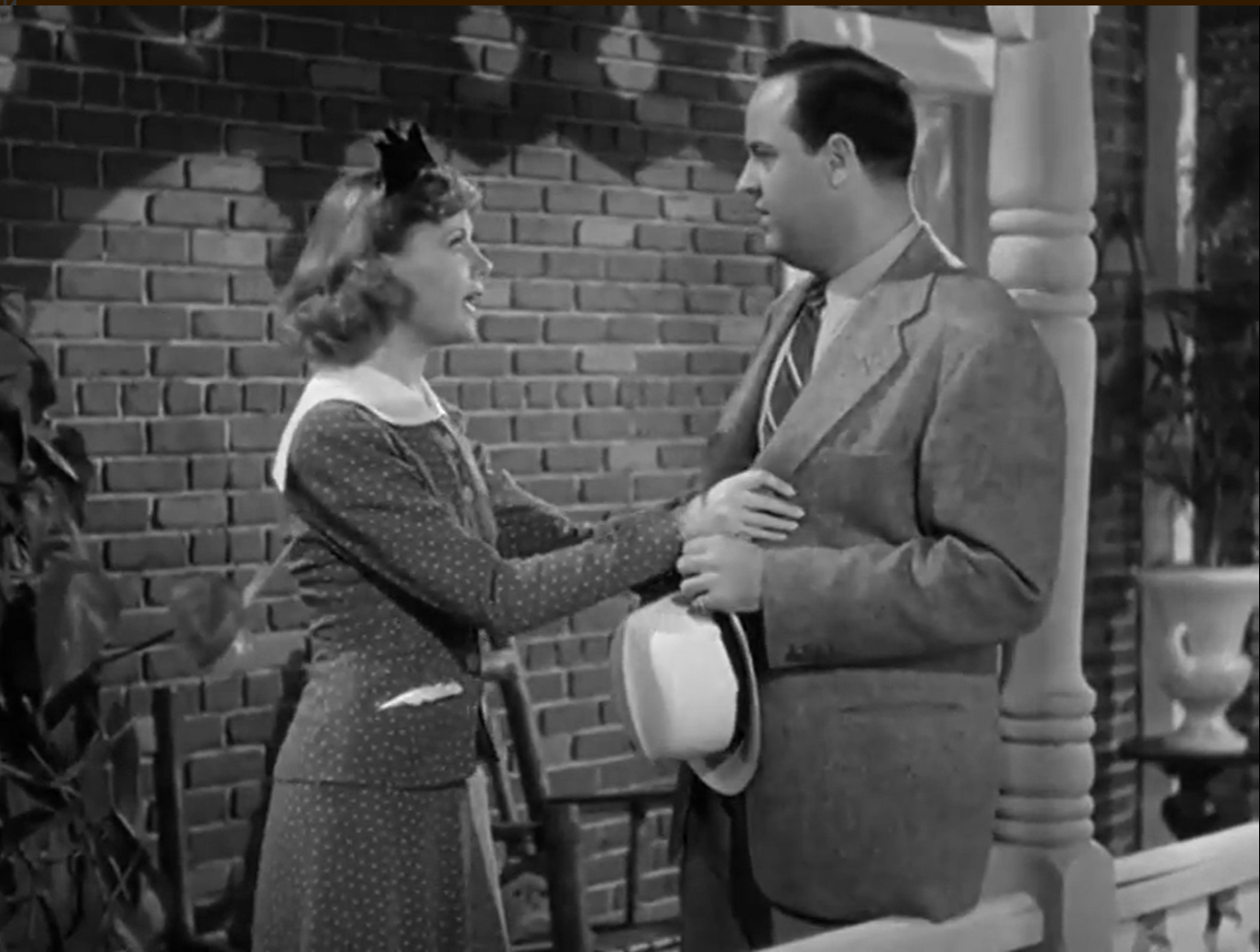
Often cited as W.C. Field’s finest film, The Bank Dick offers a heady distillation of the comedian at his iconic best. He waltzes through his own meandering script (credited to “Mahatma Kane Jeeves”) with an eye constantly turned towards the local drinking hole, the Black Pussy Cat Cafe — and, though he wants nothing more than to escape from his obnoxious family of henpecking females (wife, mother-in-law, and daughters all despise him):

he nonetheless finds himself haplessly caught up in one adventure after the other.

Unfortunately, though Fields is as enjoyable as ever, much of the humor in The Bank Dick is either dated (there’s far too much physical slapstick), blatantly offensive (note the awful scene with the wild-eyed black customer at the bank), or simply a retread of themes from his earlier films. With that said, The Bank Dick possesses wonderful performances by its cast of supporting actors (particularly Franklin Pangborn and Grady Sutton), and remains essential viewing for all film fanatics.

Redeeming Qualities and Moments:

  • W.C. Fields in yet another iconic role; Peary (an inveterate Fields fan) nominates him for an Alternate Oscar as best actor of the year
  • Franklin Pangborn as bank examiner Snoopington
  • Grady Sutton as Souse’s would-be son-in-law
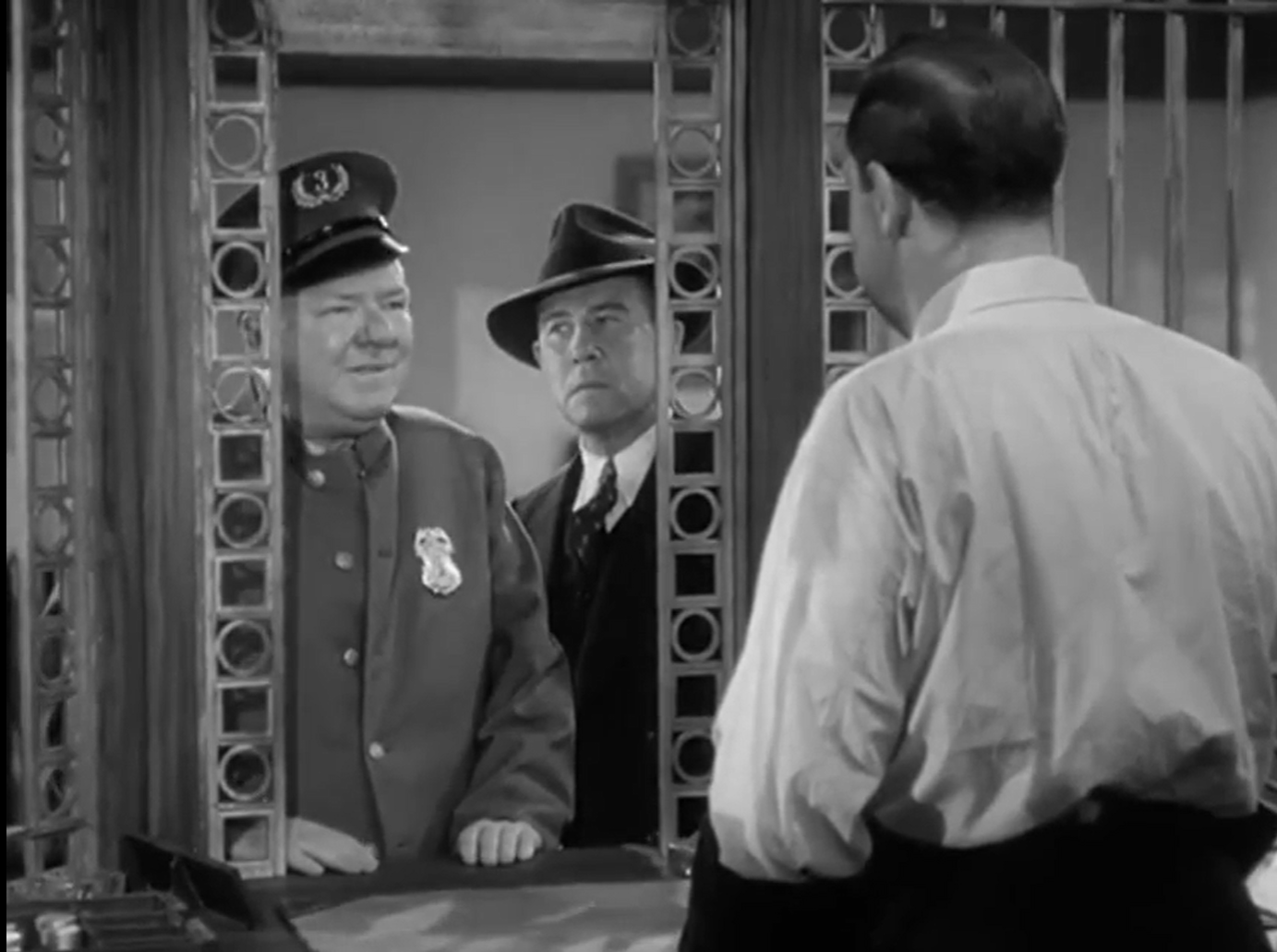
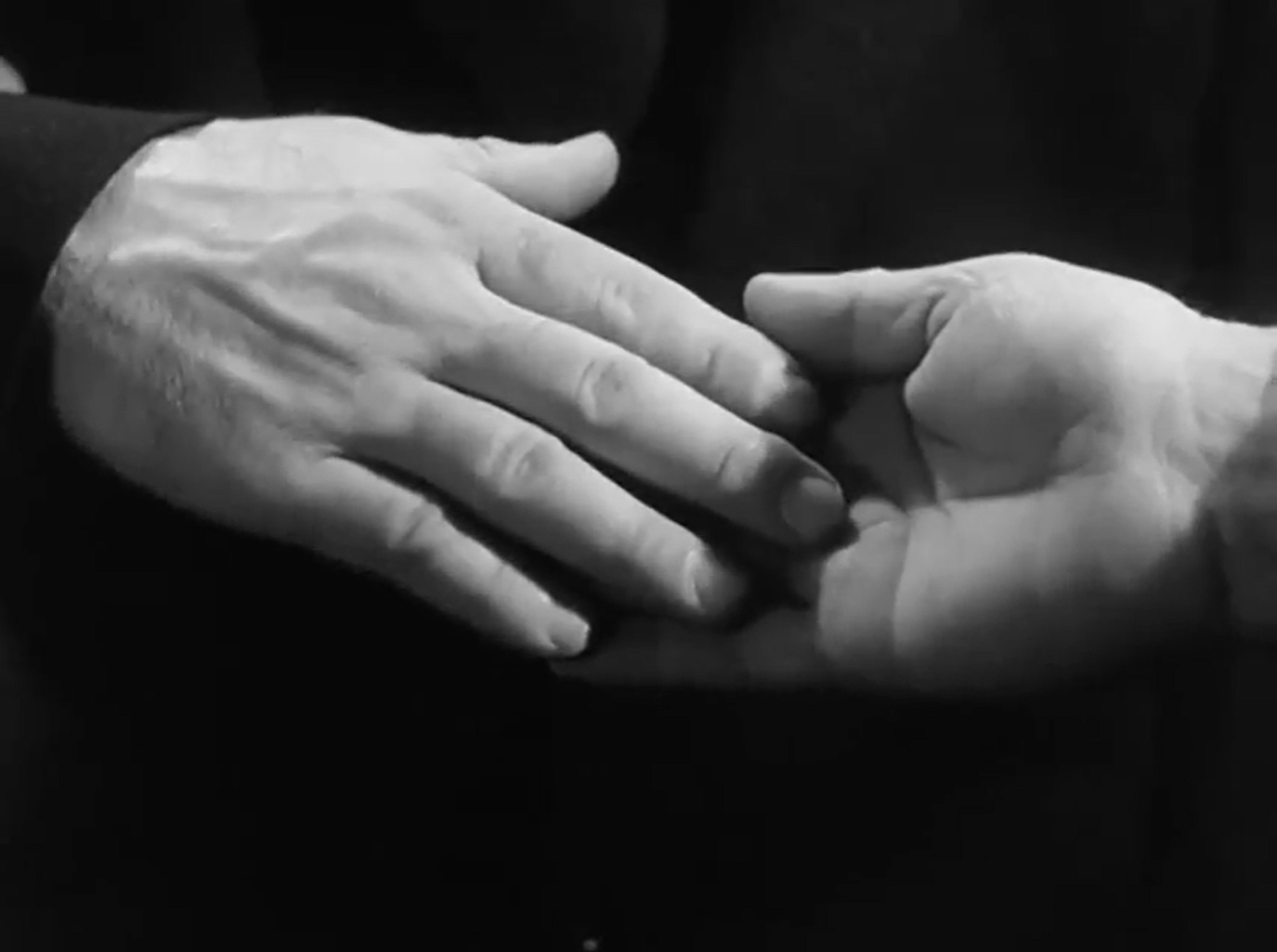
  • Mr. Skinner giving Souse a “hearty handclasp” (this shot gets me every time!)

Must See?
Yes. Though it’s not my favorite W.C. Fields film, it’s widely regarded as among his best, and should be seen by all film fanatics.

Categories

  • Genuine Classic

(Listed in 1001 Movies You Must See Before You Die)

Links: