|
Genres, Themes, Actors, and Directors:
- At Sea
- German Films
- Submarines
- Survival
- World War Two
Response to Peary’s Review:
Peary writes that this “award-winning, epic WWII film by director Wolfgang Petersen, whose script was adapted from a popular autobiographical novel by former war correspondent Lothar-Günther Buchheim,” is a “well-made picture show[ing] a different, harrowing side of war: that experienced by Germany’s 40,000 U-boat men, of whom more than half were killed.”
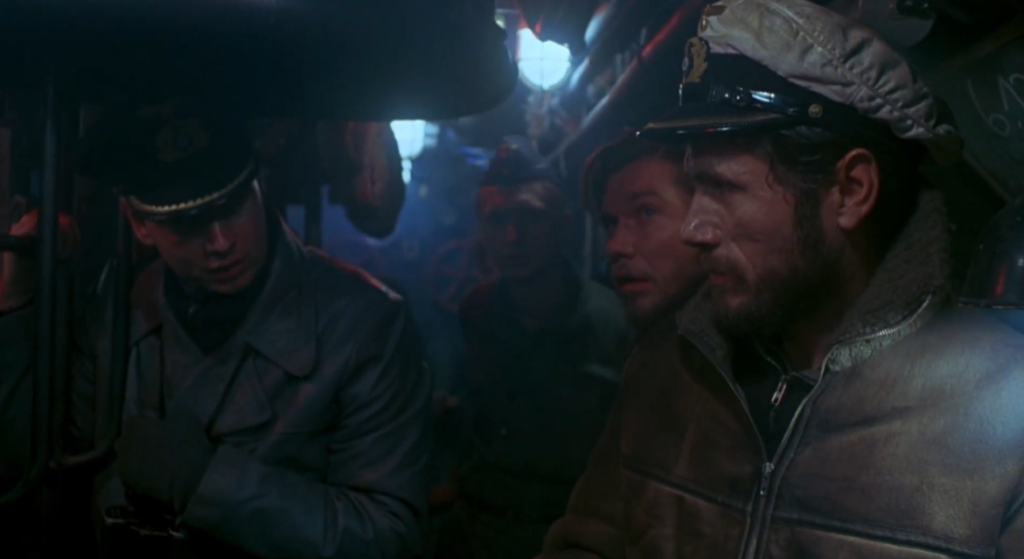
He points out that “we are made to feel their discomfort and claustrophobia while inside their cramped, muggy, smelly, underwater vessel [and] their monotony, constant fear, and panic when enemy ships hover above.” He argues that “the picture is frightening because Petersen uses horror-movie techniques: the giant enemy ships emerging from the mist and lurching through the water are like great sea serpents”:
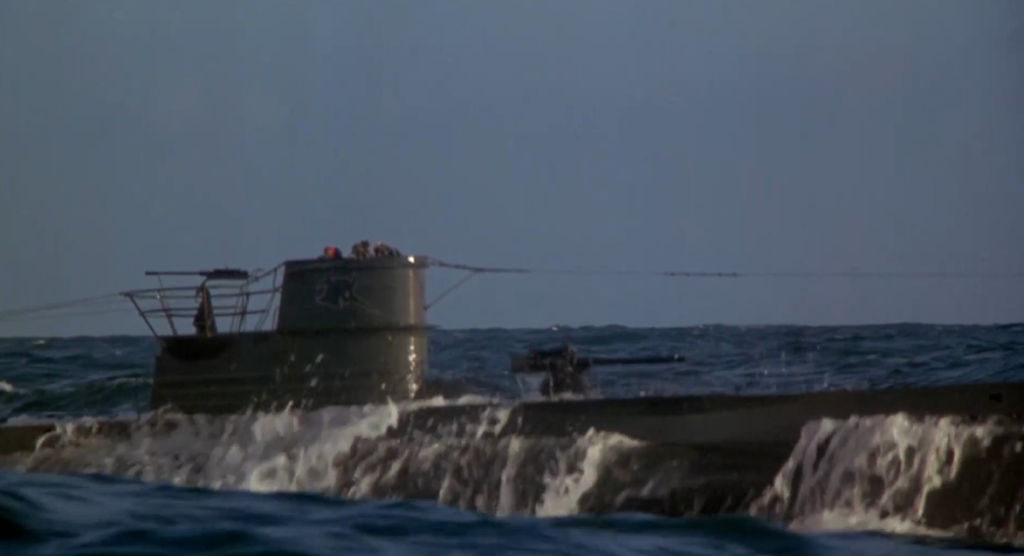
… [and] “the sweating, shouting, terrified men rushing about the ship in search of danger points (where water leaks in) could very well be characters in Alien.” Meanwhile, “the U-96 itself is like a room in a haunted house, where trapped men nervously listen to the spooky noises (i.e., death knells) on the outside. These men are in hell.”

Indeed, they are — a version of it, anyway. Peary points out that “Peterson’s goal was to show that all men in war are victims, certainly not a controversial theme” — though the picture was “criticized by those who thought Peterson — who chose not to deal with the soldiers’ politics — was apologizing for the Nazi soldiers.” Peary adds that “the film should be praised for debunking a myth that was held forth in Germany for 40 years — that German submarine warfare was a heroic, glorious adventure.”
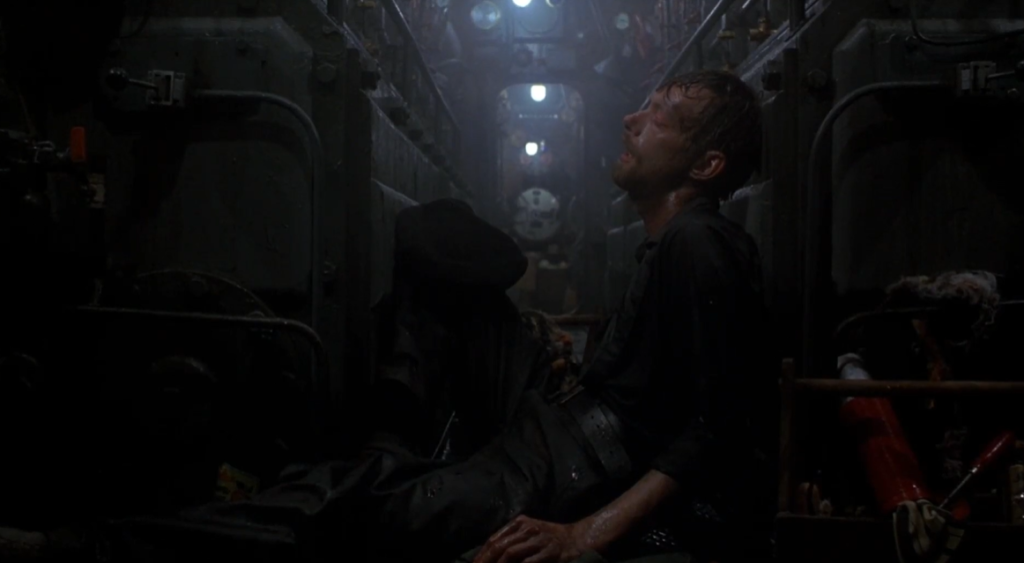
In his review, Peary touches briefly on the fact that this “story became a five-hour German TV movie;” indeed, in the time since Peary’s GFTFF was published, several different home video versions have been released, including a 209-minute 1997 director’s cut version (which is what I watched for this review).
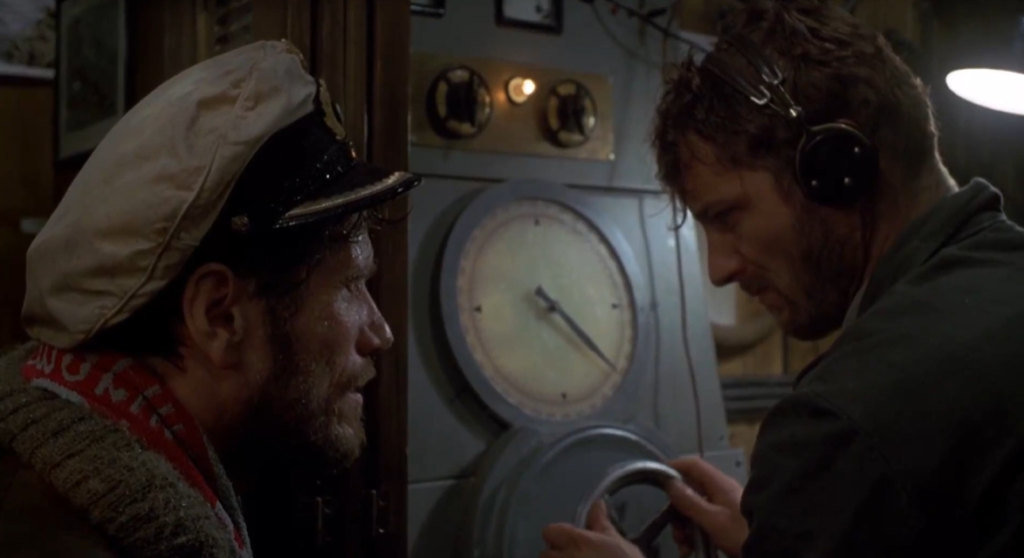
Peary also highlights the performance by Prochnow, who “makes a strong impression as the U-boat’s commander, who hates his superiors and war.”

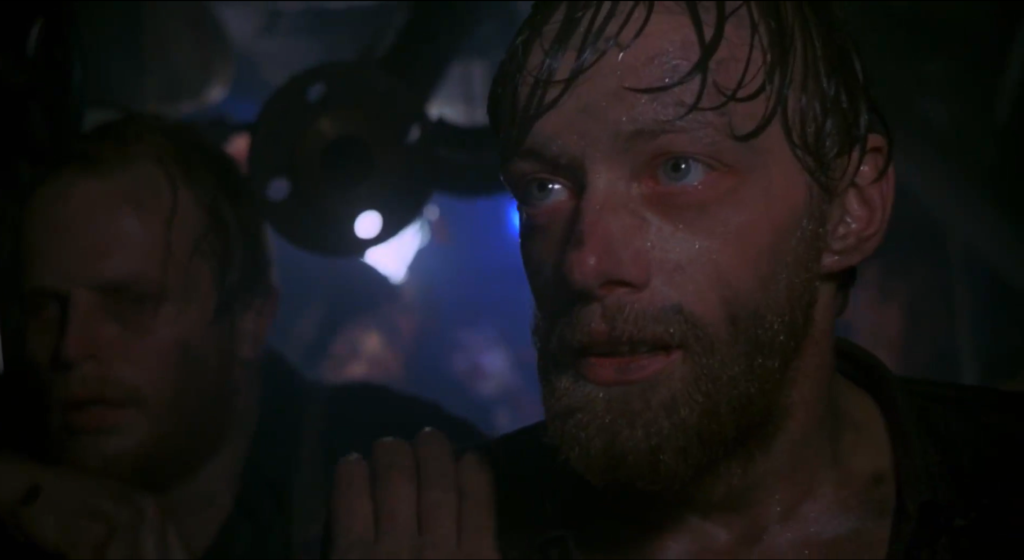
Indeed, Prochnow is riveting (and perfectly cast, despite being older than the original commander) — and he’s surrounded by a cast of excellent performers, many of them inexperienced actors; the casting directors travelled around Germany to find men to represent various geographical areas.
Just a few more interesting facts about this film, which has become a solid modern classic and a bit of a cult favorite:
- This was the most expensive German movie ever made at the time.
- This is a rare foreign film to be regularly referred to by its native title rather than a translation (which would be “The Boat”).
- American directors John Sturges and Don Siegel were originally considered to helm this film.
- This was the most successful foreign film to date at the time of its release in the U.S.
- Das Boot received six Oscar nominations (but not one for Best Picture).
- Cinematographer Jost Vacano used mostly a hand-held camera for interior shots, and limited himself to shooting within the real confined space limits of a submarine.
- All actors were bilingual in German and English, and did their own voiceovers for the dubbed English version.
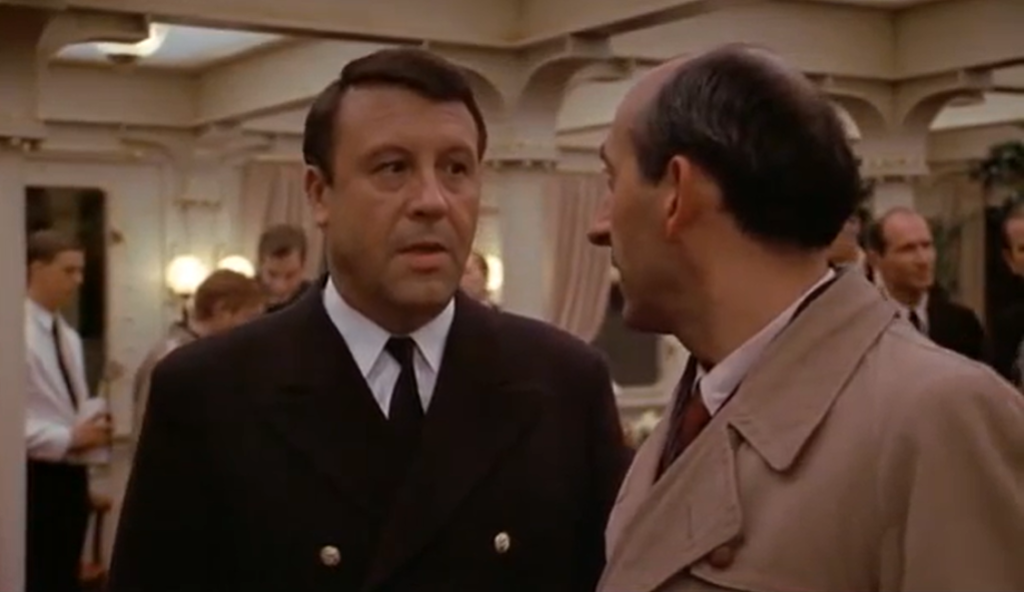
Note: Film fanatics will likely notice Günter Lamprecht — star of Berlin Alexanderplatz (1980) — in a small role as Captain of the Weser.
Notable Performances, Qualities, and Moments:
- Jürgen Prochnow as Capt. Lehmann-Willenbrock
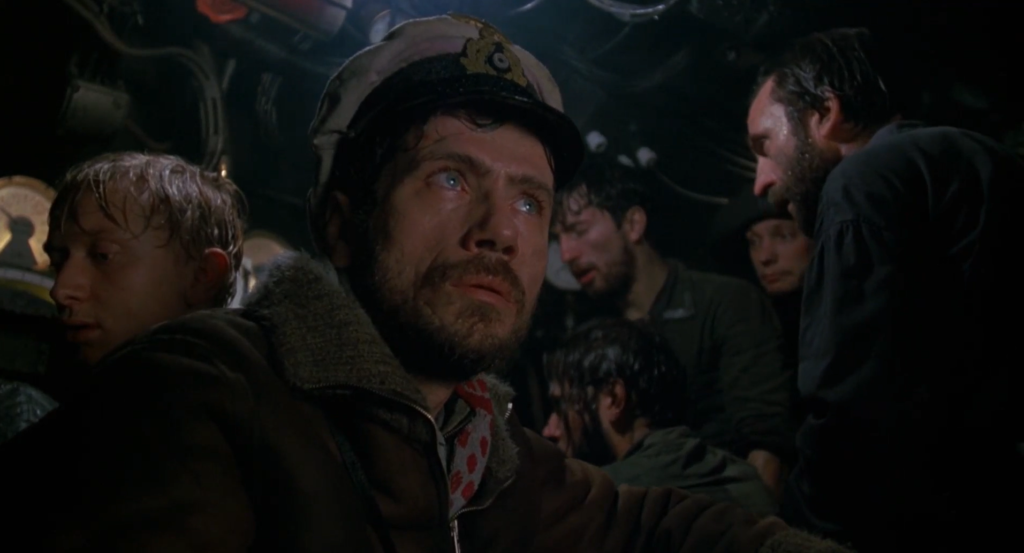
- Fine supporting performances by the (largely unknown) cast
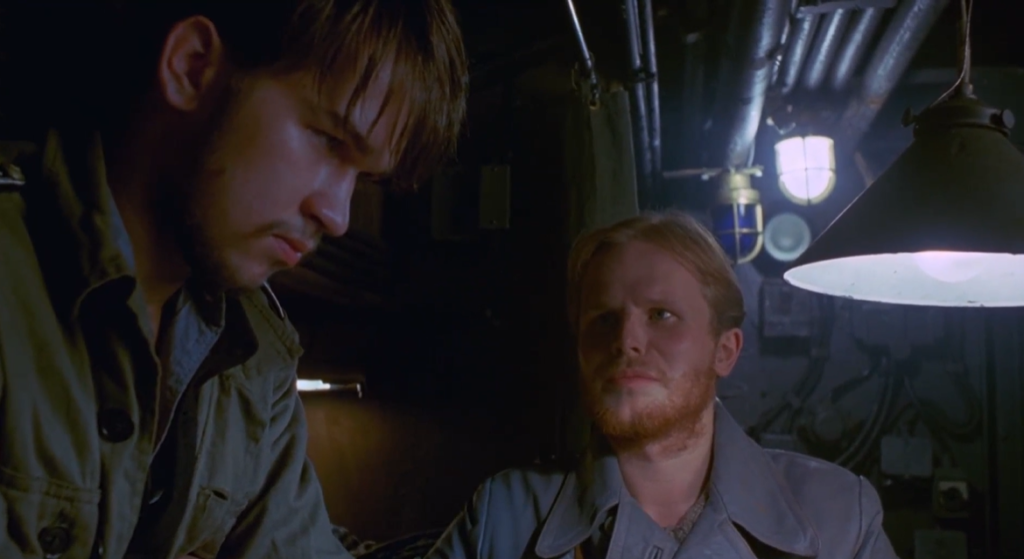
- Jost Vacano’s cinematography
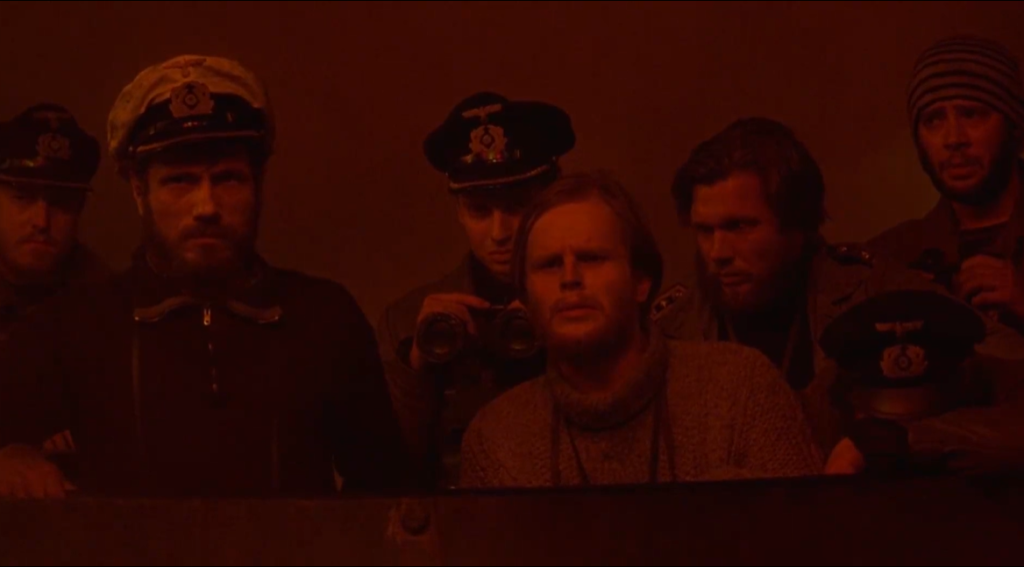
- Highly effective sets, special effects, sound production, and editing
Must See?
Yes, as a powerful foreign classic.
Categories
- Foreign Gem
- Oscar Winner or Nominee
(Listed in 1001 Movies You Must See Before You Die)
Links:
|