Ikiru (1952)

Ikiru (1952)

“What have I been living for all these years?”

Synopsis:
When a widowed bureaucrat (Takashi Shimura) learns he has stomach cancer and will die within six months, he begins to reassess his life — including his relationship with his son (Nobuo Kaneko) and daughter-in-law (Kyôko Seki). He heads out on the town, where he encounters a drink-loving writer (Yûnosuke Itô) and hangs out repeatedly with a young colleague (Miki Odagiri) who has just quit. Will Shimura be able to find purpose and meaning in his final months?

Genres, Themes, Actors, and Directors:

  • Akira Kurosawa Films
  • Character Arc
  • Death and Dying
  • Do-Gooders
  • Flashback Films
  • Japanese Films
  • Widows and Widowers

Response to Peary’s Review:
As Peary writes, this “precious film” — loosely inspired by Tolstoy’s The Death of Ivan Ilyich (1886) — may be Akira Kurosawa’s masterwork.” He notes that the storyline begins by showing us a “pathetic, self-pitying, insignificant person” (Shimura) who is “ignored by his grown son” at home and “part of the do-nothing Japanese bureaucracy, a minor government worker who has spent 25 years rubber-stamping the papers that pile on his desk.”

When Shimura “is told he is dying of cancer,” he wants to live (this is what the film’s title translates into), and thus “withdraws his money and goes out on the town for a night of pleasure” — but “when drinking and carousing don’t please him, he “decides to find happiness through another person” (Odagiri), only to find that “still he is unsatisfied.”

The film pivots in its second half to “five months in the future [at] Shimura’s wake, where family and fellow employees praise (but not too much) what he accomplished before he died.” We are shown through a series of flashbacks how Shimura goes “on a one-man crusade to build a park for children where a dangerous cesspool stands” and “becomes indomitable as he goes through bureaucratic red tape, taking insults right and left, ignoring negative responses, circumventing runarounds.”

Peary notes that this picture — a “beautiful film in every way” — is a “strong indictment of Japanese bureaucracy, a wonderful character story, [and] a heartfelt meditation on the meaning of living and doing one’s part.” He adds that “Shimura’s performance is exquisite,” with “many great moments,” but perhaps the “most memorable has Shimura… sitting on a swing and, while snow falls gently on him, singing softly about the shortness of life.”

In addition to focusing on one of life’s enduring challenges — finding meaning in one’s existence — we see incontrovertible evidence of the need to value human well-being over bureaucracy. Indeed, in this case, without deliberate disruption of dysfunctional norms, children will be harmed and society overall will be much worse off. This lesson remains as important as ever these days, making Ikiru truly a timeless classic.

Notable Performances, Qualities, and Moments:

  • Takashi Shimura as Watanabe
  • Asakazu Nakai’s cinematography

Must See?
Yes, as a foreign gem.

Categories

  • Foreign Gem
  • Genuine Classic
  • Important Director
  • Noteworthy Performance(s)

(Listed in 1001 Movies You Must See Before You Die)

Links:

White Sheik, The (1952)

White Sheik, The (1952)

“I’m always dreaming.”

Synopsis:
A starstruck newlywed (Brunella Bovo) obsessed with fotoromanzi leaves her bewildered husband (Leopoldo Trieste) at their hotel in Rome to go meet her crush — a fictional character known as The White Sheik (Albert Soldi) — and soon finds herself much more deeply involved in his creative world than she anticipated.

Genres, Themes, Actors, and Directors:

  • Federico Fellini Films
  • Italian Films
  • Living Nightmare
  • Newlyweds
  • Obsessive Fans

Review:
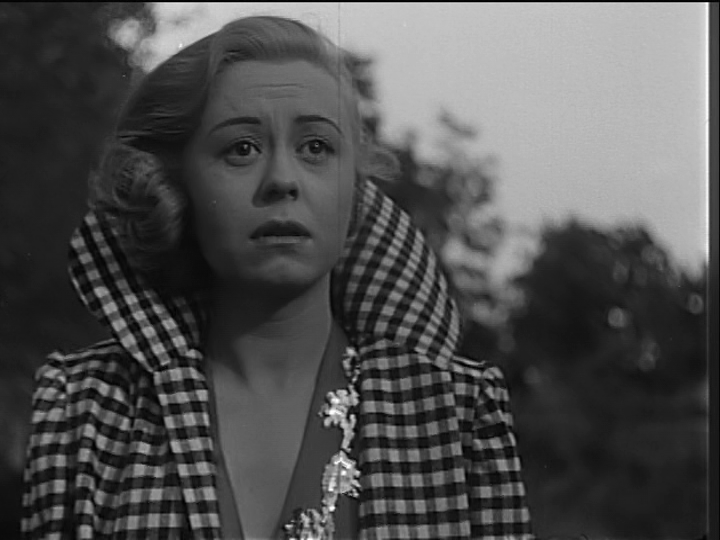
Federico Fellini’s second directorial feature after Variety Lights (1950) — and his first solo film at the helm — was this bittersweet homage to both the seduction of make-believe, and the inevitable tensions that emerge when a couple is making a new life together. From the moment we first see wide-eyed young Bovo, we can tell that she is either terrified:

… and/or living in some kind of escapist fantasy reality, as evidenced by her decision to deceive her husband and set out for the recording studios where her beloved fictional universe is created.

To that end, we’re never quite sure exactly how “sane” Bovo is (and in a Fellini film, perhaps that’s irrelevant). Meanwhile, Trieste becomes more and more panicked as time progresses and he realizes his best laid plans for a methodical honeymoon in Rome — including introducing his new wife to his “respectable” family, and visiting the Pope — will not go anything like he planned.

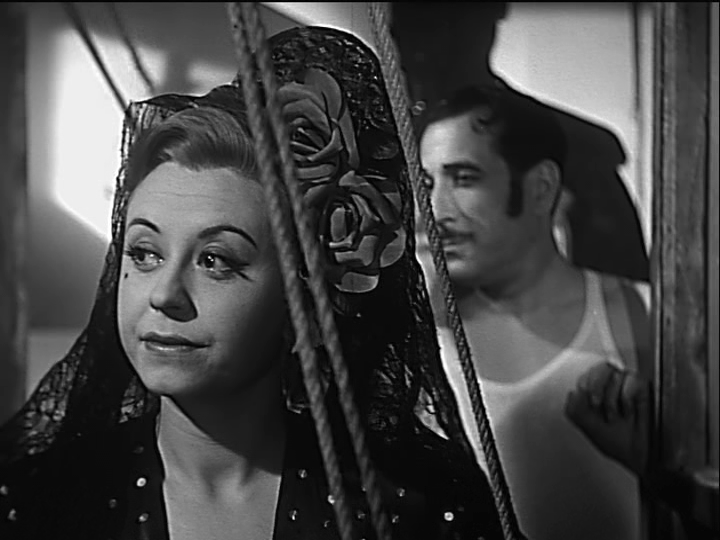
Along the way, both protagonists are subjected to numerous humorous travails, with highlights including Bovo and Soldi’s trip on a “pirate ship”:

… Soldi and Bovo’s on-set interactions with Soldi’s furious wife (Gina Mascetti):

… and Trieste’s late-night encounter with two prostitutes (including Giuliana Masina as “Cabiria”):

Thankfully, the ending leaves us with some hope for these young newlyweds despite everything they’ve been through.

Notable Performances, Qualities, and Moments:

  • Fine performances by the leads

  • The fotoromanzi shooting sequence
  • Otello Martelli’s cinematography
  • Nino Rota’s score

Must See?
Yes, for its historical significance as Fellini’s first solo film. Listed as a film with Historical Importance in the back of Peary’s book.

Categories

  • Historically Relevant
  • Important Director

Links:

Variety Lights (1950)

Variety Lights (1950)

“I’m an artist. So are you!”

Synopsis:
When the director (Peppino De Filippo) of a vagabond vaudeville troupe falls for an ambitious and beautiful dancer (Carla Del Poggio) who insists on joining their show, he breaks the heart of his loyal girlfriend (Giulietta Masina), and the couple part ways — but will De Filippo and Del Poggio succeed in their dreams of fame and fortune?

Genres, Themes, Actors, and Directors:

  • Actors and Actresses
  • Aspiring Stars
  • Federico Fellini Films
  • Italian Films
  • Love Triangle

Review:
Federico Fellini’s debut film as a director (albeit one co-produced and co-directed with Alberto Lattuada) was this light-hearted look at the vagaries of small-time show business. Much like All About Eve (1950) from the same year, this tale focuses on a beautiful young woman (Del Poggio) eager to do whatever it takes to secure her spot on stage, even if this means hurting the kind older woman (Masina) who is at first friendly and charitable to her. Masina (Fellini’s real-life wife) steals the show as “Melina Amour,” a self-confident performer who can’t fathom that De Filippo would betray her — and then must deal with the unfathomable.

However, Del Poggio (who reminds me of Rita Hayworth) holds her own as a young woman who is more single-mindedly ambitious than evil or unfeeling:

… and De Filippo strikes the right tone as a man both deeply committed to his career, and naively eager to “protect” Del Poggio’s virtue.

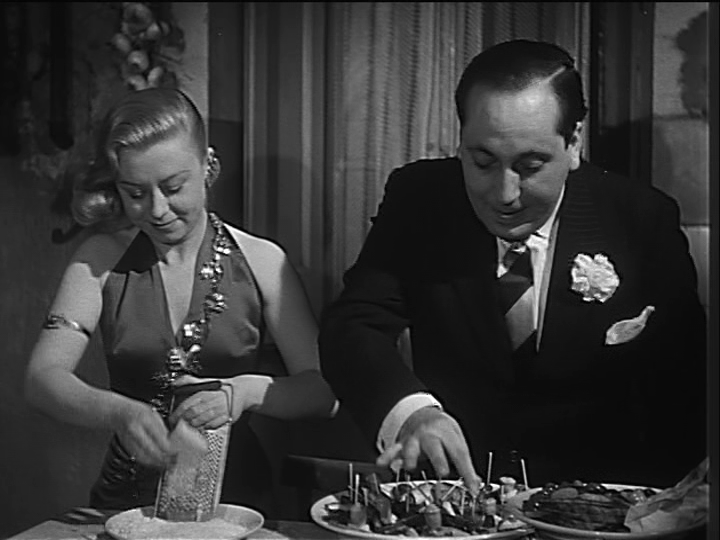
Variety Lights shows nascent evidence of Fellini’s trademark wit and surreality, most notably when the troupe is invited to a mansion to fix dinner and dance:

However, the bulk of the story focuses on foiled ambitions, broken hearts, and the ongoing challenges of making it in show business — and to that end, Del Poggio’s ultimate decision (and where it lands her) is a telling reveal.

Notable Performances, Qualities, and Moments:

  • Giulietta Masina as Melina Amour

Must See?
No, but it’s worth a look for its historical importance as Fellini’s first film. Listed as a film with Historical Importance in the back of Peary’s book.

Links:

We Are All Murderers (1952)

We Are All Murderers (1952)

“While offenders are murderers, they are also human.”

Synopsis:
A French resistance fighter (Marcel Mouloudji) remains indiscriminately violent after WWII has ended, leading to his arrest and placement on Death Row. Will his idealistic young lawyer (Claude Laydu) be able to convince the French justice system to give him another chance?

Genres, Themes, Actors, and Directors:

  • French Films
  • Prisoners
  • Resistance Fighters
  • World War II

Review:
There doesn’t seem to be much written about this unique French docudrama — winner of the Special Jury Prize at the Cannes Film Festival — on the internet, though a Mini Biography at the IMDb helps us to better understand its co-writer and director:

André Cayatte was a lawyer turned novelist and journalist, then screenwriter in 1938, after which he became a film director in 1942. He was known in France from the 1940s to the 1970s for uncompromising films examining the complex ethical and political dimensions of crime and justice in the French judicial system. He saw film as a stimulus for reform, advocating social concerns, and in this way was much a seminal forerunner to Costa-Gavras.

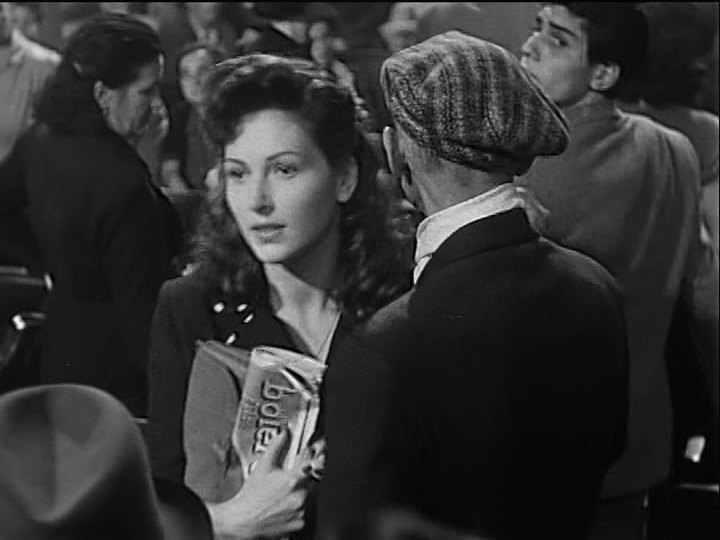
Indeed, We Are All Murderers is most definitely a “message film” — and the message is complex enough to warrant the creative treatment it’s given here. As the film opens, we see a harsh life of poverty being endured by Mouloudji and his brother (Georges Poujouly), and understand this is meant to show how Mouloudji has eventually developed such sociopathic indifference towards fellow humans:

While Mouloudji seems too far gone to help, we wonder and worry about his younger brother, who disappears from the action for quite a while, but shows up again (crucially) later on:

Will Poujouly meet the same fate as Mouloudji — or will society intervene to prevent the cycle of poverty, illiteracy, and violence from occurring once again? Meanwhile, the bulk of the storyline is taken up with showing us life inside Death Row, which is punctuated by boredom, temporary camaraderie, and the constant anxiety of not knowing when your time will be up.

To that end, we briefly “meet” a few other prisoners throughout the span of the film, learning a little bit about what led each of them to this final point. A Corsican (Raymond Pellegrin), for instance, says, “I killed a person who transgressed. It was for honor.”:

… while another man (Julien Verdier) is duly haunted from having killed his own baby.

Another significant theme is how Mouloudji’s upper-class lawyer (Claude Laydu) has such incredible support on the home front, and was clearly “destined” for good things in life (in the same way Mouloudji never had a chance):

Finally, we see plenty of compassion on the part of priests and prison guards, who (mostly) seem to carry out their jobs with resolve and dignity:

While We Are All Murderers is at times a bit didactic, this can easily be forgiven in light of its unique approach and subject matter; it remains well worth a look.

Notable Performances, Qualities, and Moments:

  • A provocative storyline with no easy answers

Must See?
Yes, as a unique foreign film. Listed as a film with Historical Importance in the back of Peary’s book.

Categories

  • Historically Relevant

Links:

Casque D’Or (1952)

Casque D’Or (1952)

“I always think about you.”

Synopsis:
In turn-of-the-century France, when the moll (Simone Signoret) of a gangster (Claude Dauphin) leaves her current boyfriend Roland (William Sabatier) for an ex-con named Manda (Serge Reggiani), Roland and Manda duel for her hand — but even once this is settled with finality, Dauphin has further plans up his sleeve.

Genres, Themes, Actors, and Directors:

  • Ex-Cons
  • French Films
  • Gangsters
  • Historical Drama
  • Love Triangle
  • Simone Signoret Films
  • Star-Crossed Lovers

Review:
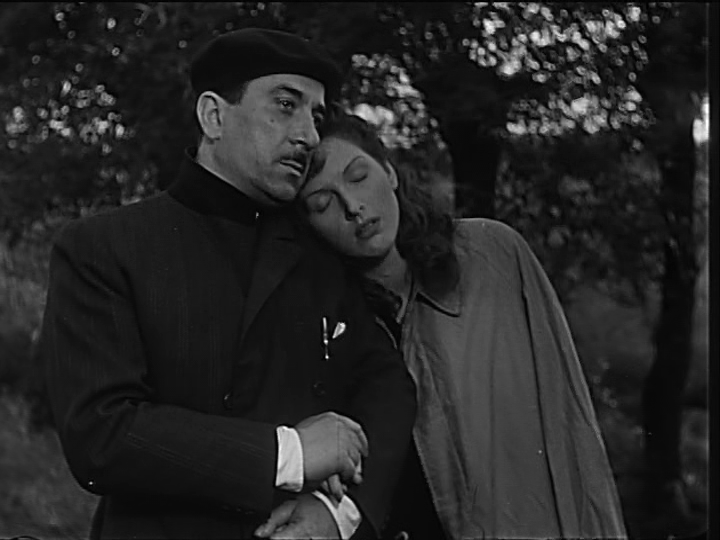
French director Jacques Becker is best known for three of the thirteen feature-length films he made between 1942 and 1960: Le Trou (1960), Touchez Pas Au Grisbi (1954), and this film, Casque D’Or — the only one of these titles listed in Peary’s GFTFF. While it wasn’t particularly well received in France upon its release, French New Wave directors embraced Casque D’Or, and Signoret won a BFA award for her performance. The movie tells a simple but atmospherically filmed tale of doomed lovers who fall for one another at first sight (with Signoret the most insistent and brazen), ultimately meeting a tragic end — but not without a sweet interlude of erotic bliss in the countryside thrown in:

The two scenes of explicit violence are handled efficiently and effectively:

… providing a good sense of what’s at stake for these lovers caught up in a world of gang-fueled dominance and retribution. Signoret gives a heartfelt performance:

… and Reggiani is appropriately stoic as a man hoping to simply live his life, but unwilling to back down from bullies.

Note: The film’s title translates into “helmet of gold,” and is meant to represent Signoret’s beautiful blonde “helmet” of hair.

Notable Performances, Qualities, and Moments:

Must See?
Yes, once, simply for its relevance as Becker’s acknowledged masterpiece, and for Signoret’s performance. Listed as a film with Historical Importance in the back of Peary’s book.

Categories

  • Historically Relevant
  • Important Director

Links:

Spirit of St. Louis, The (1957)

Spirit of St. Louis, The (1957)

“I believe in an instrument panel, a pressure gauge, a compass — things I can see and touch. I can’t touch God.”

Synopsis:
While preparing for and then living through his 36-hour flight from New York to Paris, Charles Lindbergh (Jimmy Stewart) reflects back on his past as a barnstormer and mail carrier.

Genres, Themes, Actors, and Directors:

  • Airplanes and Pilots
  • Billy Wilder Films
  • Jimmy Stewart Films

Review:
Billy Wilder directed this adaptation of Charles Lindbergh’s Pulitzer Prize-winning memoir about his 1927 trans-Atlantic flight, which (much to Lindbergh’s consternation) starred 47-year-old Stewart as the 25-year-old aviator. Nothing is mentioned at all about Lindbergh’s infamously toxic political beliefs, leaving us instead with simply a tale of a determined young man who won’t give up on his dreams — which, as we know, he achieved. The film’s intrinsic excitement comes first from seeing Lindbergh’s attempts to secure financing for a custom-built plane:

… and then ample footage of his harrowing flight, which included falling asleep numerous times, accidentally allowing ice to build on the wings, and losing navigational abilities, among many other challenges:

Along the way, we see Lindbergh chatting with a rogue fly stuck in the cockpit:

… and watch some of flashbacks that filled his mind during the long hours of the flight — including reflecting back on his friendship with a fellow pilot (Murray Hamilton):

… making a living as a barnstormer:

… and teaching an incompetent yet perennially cheerful priest (Marc Connelly) how to fly.

While this well-crafted aviation flick isn’t must-see viewing, it’s worth a look.

Notable Performances, Qualities, and Moments:

  • Jimmy Stewart as Charles Lindbergh
  • Good attention to period detail
  • Fine cinematography by Robert Burks and J. Peverell Marley

Must See?
No, though it’s recommended for one-time viewing.

Links:

True Story of Jesse James, The (1957)

True Story of Jesse James, The (1957)

“You really like killing, don’t you?”

Synopsis:
Shorty after legendary outlaw Jesse James (Robert Wagner) and his brother Frank (Jeffrey Hunter) carry out an infamous bank raid in Northfield, Minnesota, their dying mother (Agnes Moorehead) reflects back on her son’s progression from a put-upon Confederate war veteran to one of the most wanted men in America.

Genres, Themes, Actors, and Directors:

  • Agnes Moorehead Films
  • Biopics
  • Flashback Films
  • Hope Lange Films
  • John Carradine Films
  • Nicholas Ray Films
  • Outlaws
  • Robert Wagner Films
  • Westerns

Review:
Nicholas Ray directed this remake of Henry King’s Jesse James (1939), which similarly posited that the notorious outlaw had a reasonable rationale for turning to a life of crime — though in this film, it’s even more clearly emphasized how Jesse used and abused his initial motivations to continue his intimidating and felonious behavior.

The production was a challenging one for Ray, who was gradually forced to make a film unlike the one he’d envisioned (see CineSavant’s review for many more details). The result is a somewhat confusing flashback film in which we follow the general gist (especially after having seen the original 1939 film) but don’t understand the “logic” behind the order of the vignettes. With Lange such a sympathetic character, and Moorehead pleading for compassion on behalf of her son:

… it’s difficult to know how to manage our distaste for Jesse’s actions and choices. Coming across best are Hunter as Jesse’s brother Frank:

… and Alan Hale as gang member Cole Younger:

.. and the visuals are compelling throughout.

Notable Performances, Qualities, and Moments:

  • Fine cinematography by Joseph MacDonald


Must See?
No, though Nicholas Ray fans will likely be curious to check it out.

Links:

Diary of Anne Frank, The (1959)

Diary of Anne Frank, The (1959)

“I want to go on living, even after my death.”

Synopsis:
Holocaust survivor Otto Frank (Joseph Schildkraut) reflects back on the two years he and his wife (Gusti Huber) and two daughters, Margot (Diane Baker) and Anne (Millie Perkins), spent hiding in the attic of a business owned by Harry (Douglas Spencer) and Miep (Dodie Heath) Kraler, along with Mr. (Lou Jacoby) and Mrs. Van Daan (Shelly Winters) and their teenage son Peter (Richard Beymer) and a dentist (Ed Wynn).

Genres, Themes, Actors, and Directors:

  • Coming of Age
  • George Stevens Films
  • Jews
  • Millie Perkins Films
  • Play Adaptations
  • Shelley Winters Films
  • Survival
  • World War II

Review:
Millie Perkins made her screen debut as the title figure in this adaptation of Frances Goodrich and Albert Hackett’s play based on Anne Frank‘s diary. Director George Stevens and DP William C. Mellor deftly handle the challenges of filming a story taking place almost entirely within the confines of a crowded attic:

… with the theme of survival under extraordinary circumstances helping keep us in suspense despite knowing the tragic outcome of the story.

We are intrigued by the inevitable interpersonal tensions that emerge amongst this motley crew of refugees:

… and can only imagine trying to endure something like this ourselves. Winters won a Best Supporting Actress award for her portrayal of a quibbling housewife most interested in holding onto her fur coat and (later) ensuring her husband (not her son!) has enough to eat:

Meanwhile, Schildkraut, reprising his Broadway role, is perfectly cast as a noble and patient father doing his best to keep the group peaceful and alive, and Douglas Spencer and Dodie Heath are appropriately subtle as the couple who risked their own lives to save others:

Less successful is the ongoing subplot about Anne’s (mutual) crush on Peter, which is belabored to the point of distraction:

While we know that romance and other adolescent concerns were top of mind for Anne during her time in hiding, the presence of these two good-looking actors ultimately feels too much like simply a cinematic excuse to portray young love. Perkins is soulful and pretty as big-eyed Anne:

… but I couldn’t help wondering how the original stage star (Susan Strasberg) would have fared in this complex role. While this movie isn’t must-see, it’s a worthy adaptation and recommended for one-time viewing.

Notable Performances, Qualities, and Moments:

  • Joseph Schildkraut as Mr. Frank
  • Shelley Winters as Mrs. Van Daan
  • Fine cinematography

Must See?
No, but it’s certainly worth a look. Listed as a film with Historical Importance in the back of Peary’s book.

Links:

Idiot, The (1951)

Idiot, The (1951)

“I’m really a sick man. My brain is rotten.”

Synopsis:
A traumatized and epilectic (“idiotic”) but deeply sympathetic veteran (Masayuki Mori) befriends a man (Toshiro Mifune) who is obsessively in love with the beautiful mistress (Setsuko Hara) of a wealthy man (Eijirô Yanagi), Hara is about to be married off to a man (Minoru Chiaki) eager for a dowry being brokered by Mori’s only remaining relative (Takashi Shimura) — but when Hara falls in love with Mori, this complicates his burgeoning romantic relationship with Shimura’s daughter (Yoshiko Kuga).

Genres, Themes, Actors, and Directors:

  • Akira Kurosawa Films
  • Japanese Films
  • Love Triangle
  • Obsessive Love
  • Toshiro Mifune Films
  • Veterans

Review:
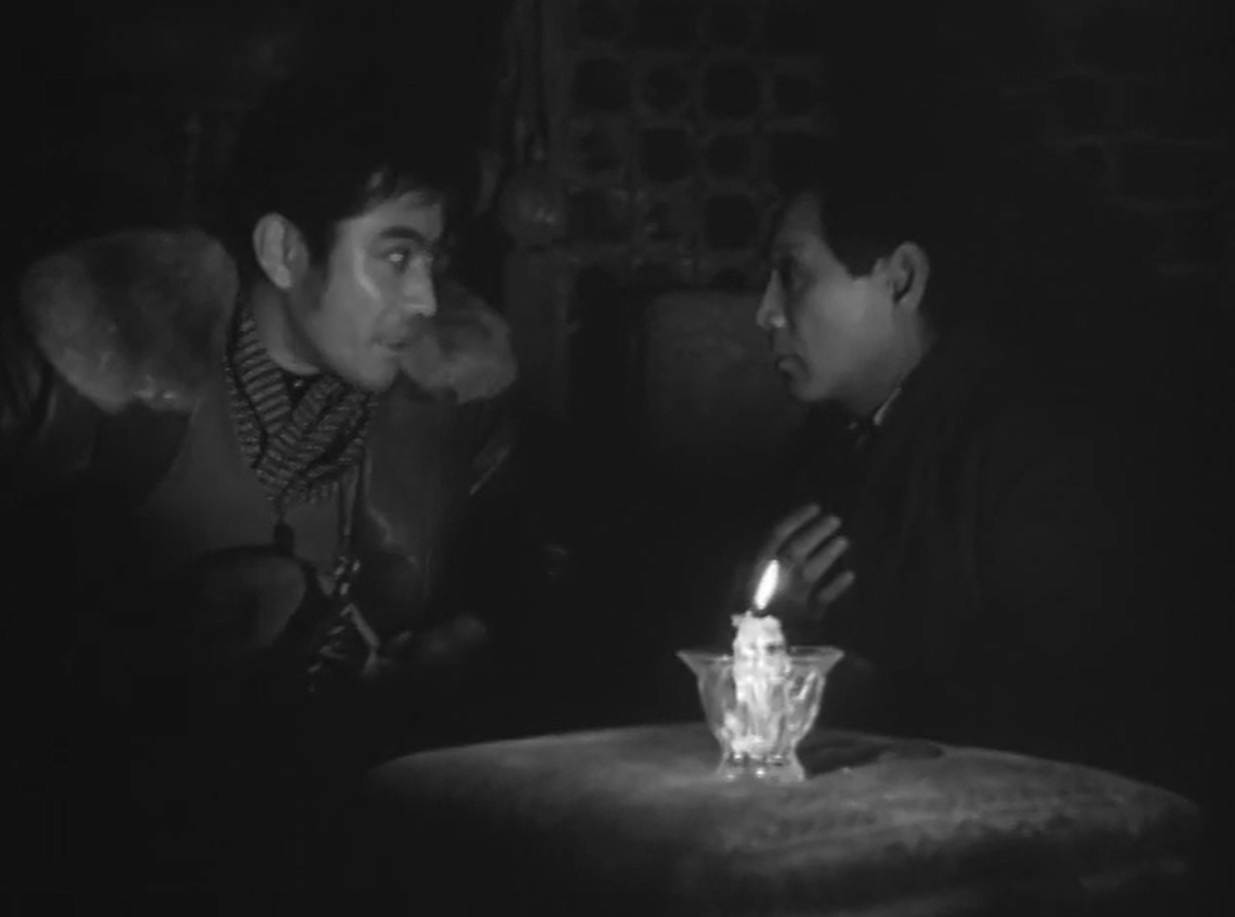
Akira Kurosawa’s follow-up film after the breakthrough success of Rashomon (1950) was this personal passion project — a faithful adaptation of a novel of the same name by Fyodor Dostoevsky. Kurosawa’s original version ran 265 minutes, but the abandoned footage has never been found, leaving us with a 166-minute iteration that honestly still feels pretty lengthy. While The Idiot was a personal favorite of Kurosawa’s, it hasn’t held up well as a particularly accessible movie, instead coming across as more of a literary adaptation that will be of most interest to those familiar with the novel. It’s enjoyable to see familiar and beloved faces from classic Japanese cinema:

… but we never really feel connected to their characters. The cinematography is appropriately stark:

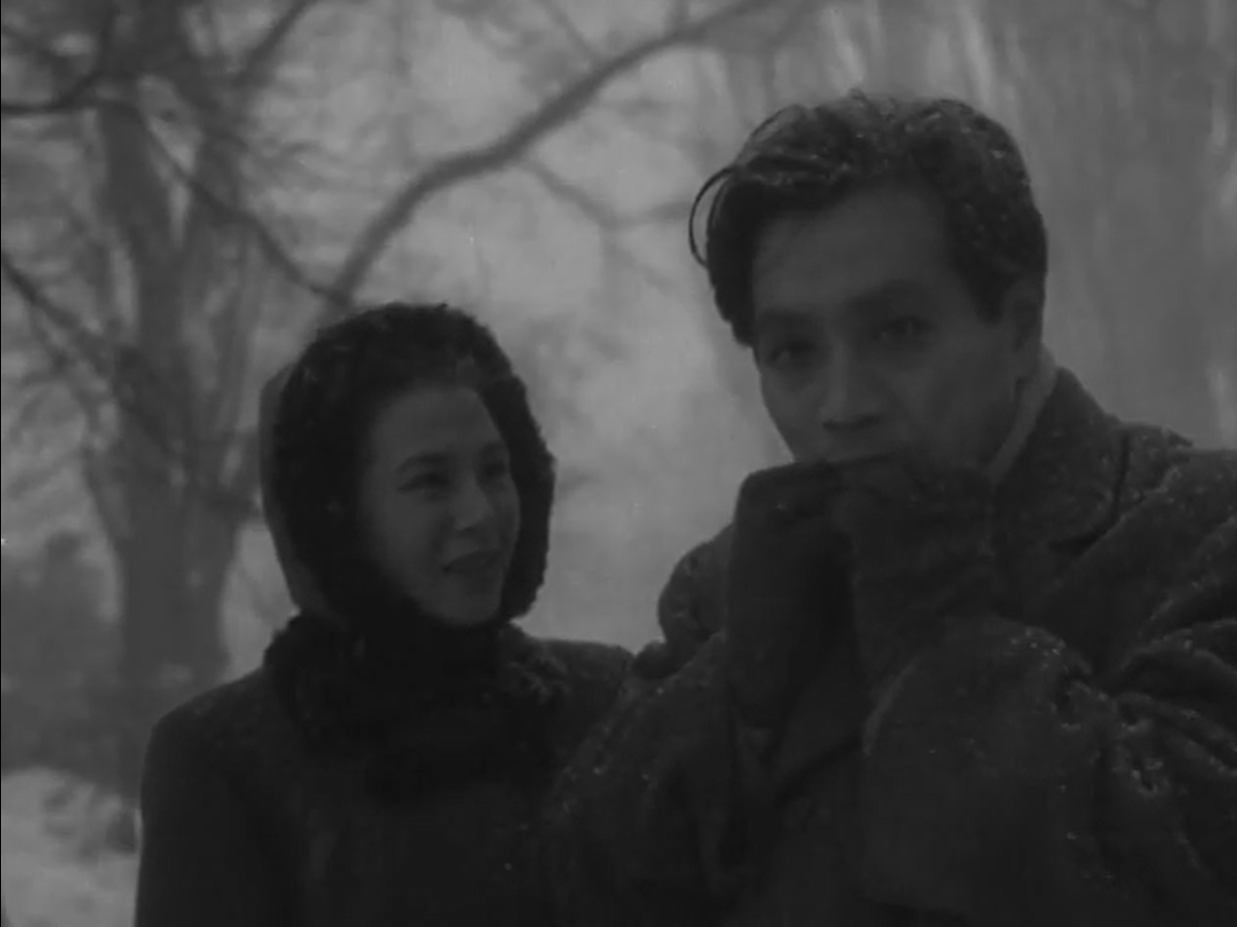
… and the storyline’s setting in snowy, Russian-influenced Hokkaido is an effective choice:

… but I’ll wager that most viewers will find it a struggle to remain authentically engaged in the narrative.

Notable Performances, Qualities, and Moments:

  • Fine cinematography

Must See?
No, unless you’re a Kurosawa fan.

Links:

Battle Hymn (1957)

Battle Hymn (1957)

“There’s nothing so terrible as war.”

Synopsis:
After accidentally bombing an orphanage while flying a plane in WWII, a minister (Rock Hudson) suffering from tremendous guilt leaves his profession to fight in the Korean War.

Genres, Themes, Actors, and Directors:

  • Airplanes and Pilots
  • Biopics
  • Dan Duryea Films
  • Douglas Sirk Films
  • Korean War
  • Orphans
  • Rock Hudson Films

Review:
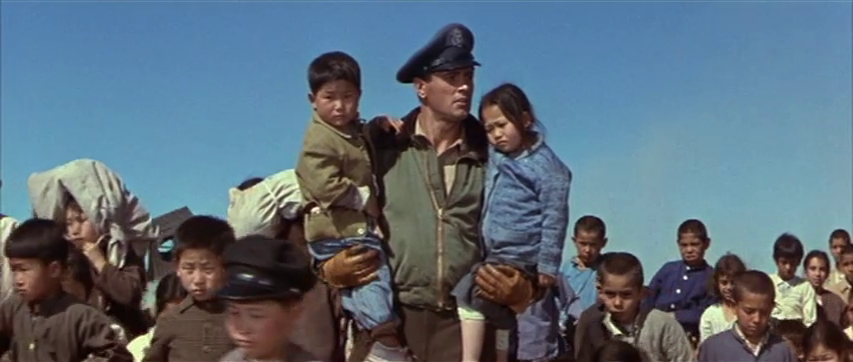
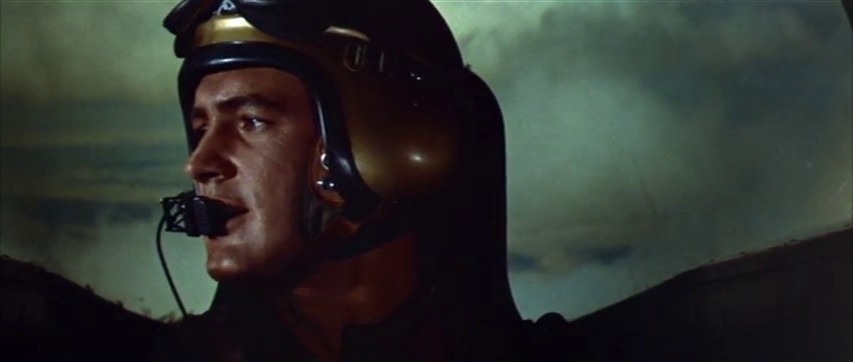
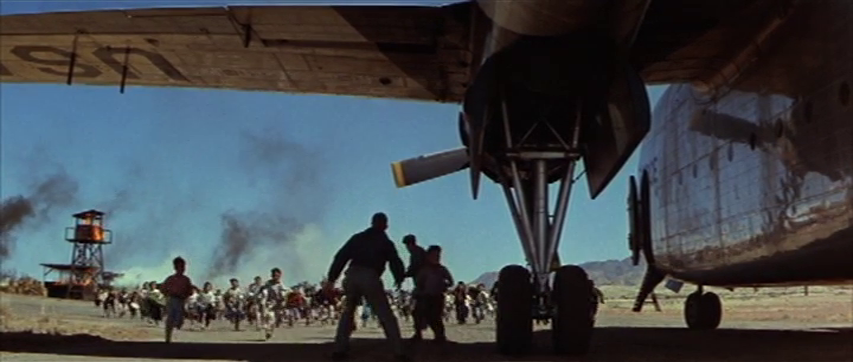
The same year he released his film The Tarnished Angels (1957) — about a boozy reporter (Rock Hudson) who falls for the wife (Dorothy Malone) of a stunt pilot (Robert Stack) — Douglas Sirk made this adaptation (also starring Hudson) of a memoir by Dean Elmer Hess, known for his leadership in the “Kiddy Car Airlift” of hundreds of orphans from war-torn Korea. Given the current plight of Ukrainian refugees and the chaotic withdrawal of American troops from Afghanistan last summer, it’s especially harrowing watching dramatized footage of this operation:

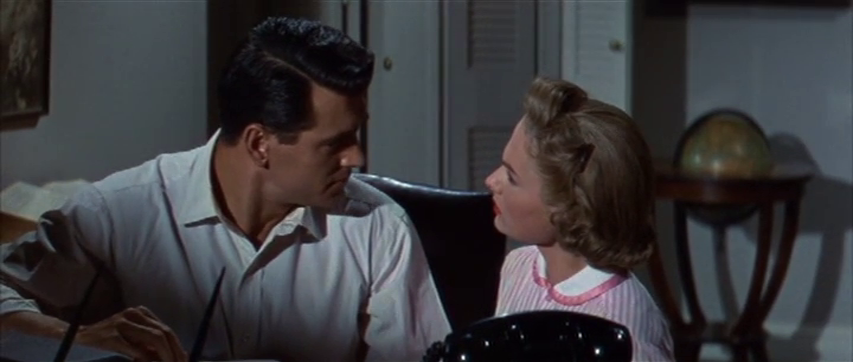
… though it’s questionable how much of a role Hess himself actually played in the evacuation, given that (much to Sirk’s consternation) he was overly involved in the making of the film and the crafting of his image. The screenplay itself is pure Americana hokum of the 1950s, showing Hudson leaving behind a beautiful housewife (Martha Hyer):

… while also sparking (unintentional) romantic flames with an ethereally beautiful Korean-Indian woman (Anna Kashfi) who ends up caring for the orphans Hudson finds running around his base:

Perhaps most cringe-worthy is the inclusion of a bearded elderly Christian Korean (Philip Ahn) who dispenses pearls of wisdom to Hudson at just the right moments (“In order to save, at times we must destroy”):

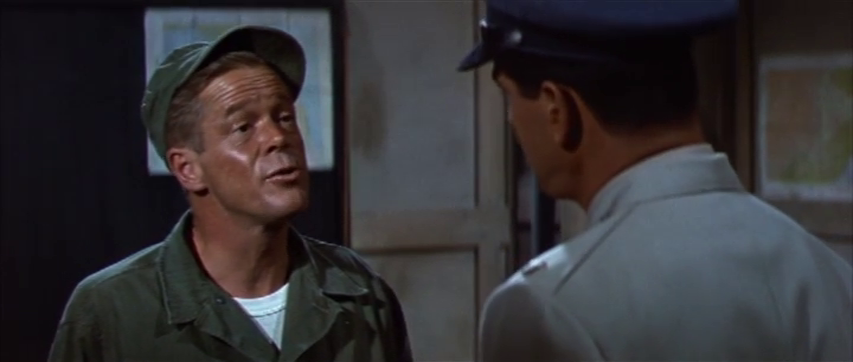
At least Dan Duryea has a fun comedic role as a sergeant who gets to cleverly steal candy and gum from the Navy (!):

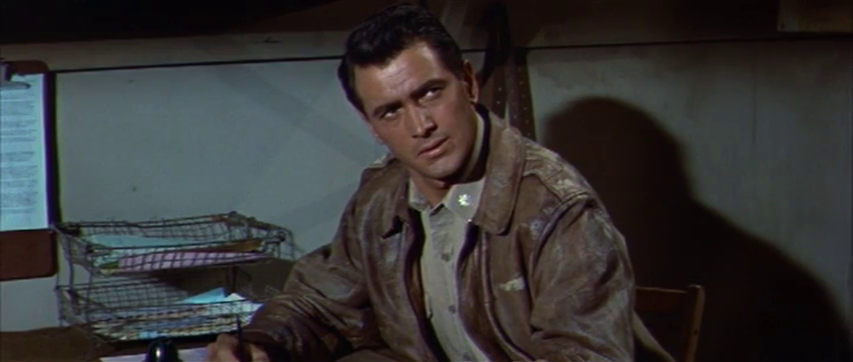
… and Hudson acquits himself nobly as the handsome pilot who “redeems” himself.

Notable Performances, Qualities, and Moments:

  • Rock Hudson as Col. Dean Hess
  • Fine Technicolor cinematography

Must See?
No, though Sirk fans will likely want to check it out.

Links: