Murder by Contract (1958)

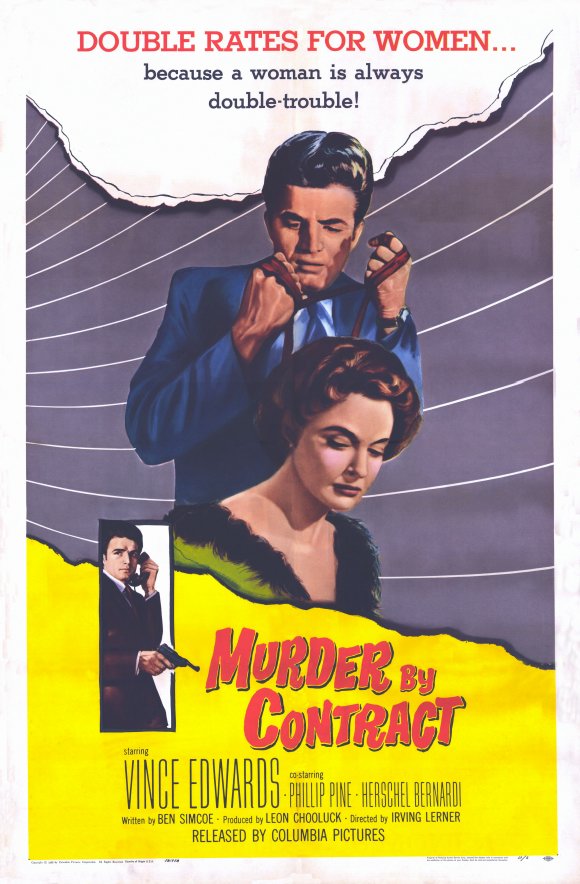
Murder by Contract (1958)

“The only type of killing that’s safe is when a stranger kills a stranger — no motive, nothing to link the victim to the execution.”

Synopsis:
A ruthless contract killer (Vince Edwards) finds his resolve shaken when he learns his next victim (Caprice Toriel) is a woman.

Genres, Themes, Actors, and Directors:

  • Assassination
  • Character Studies
  • Hit Men

Review:
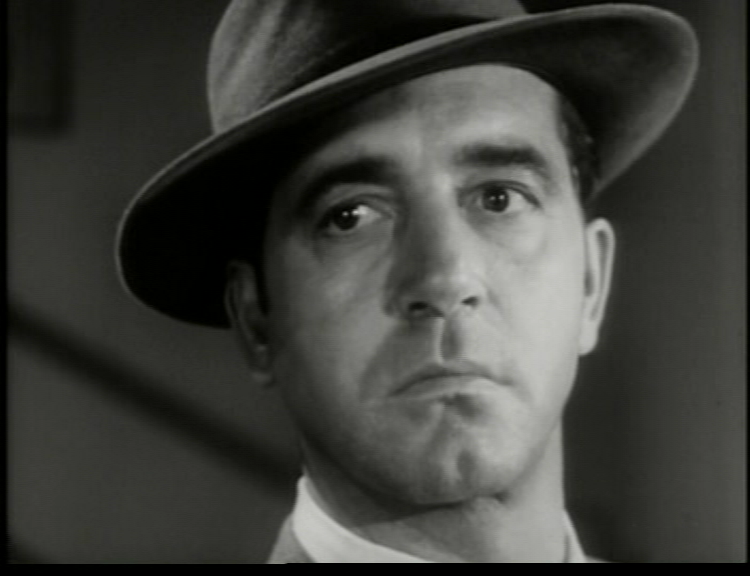
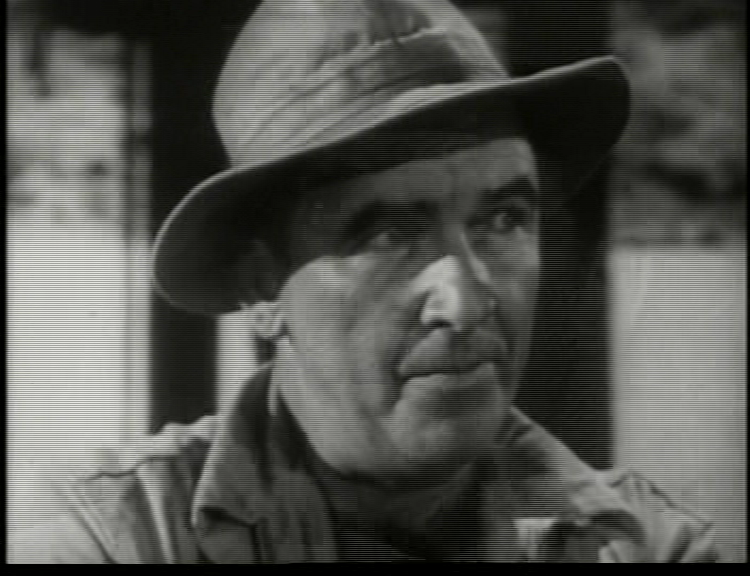
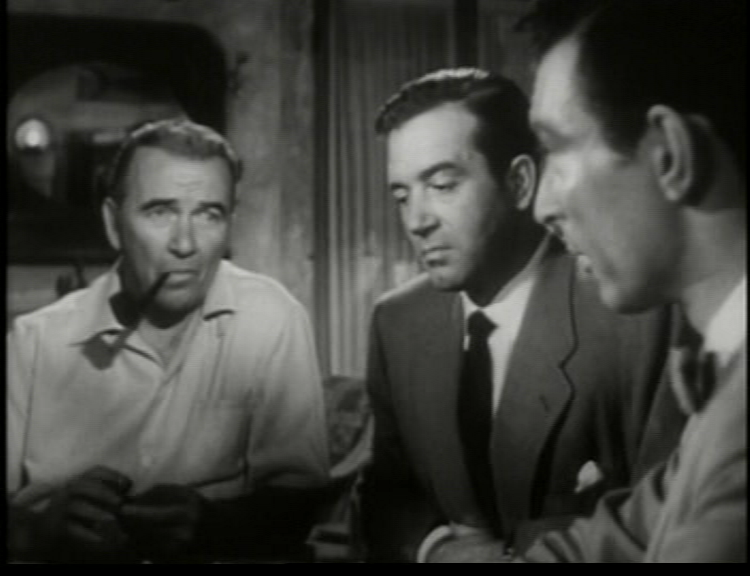
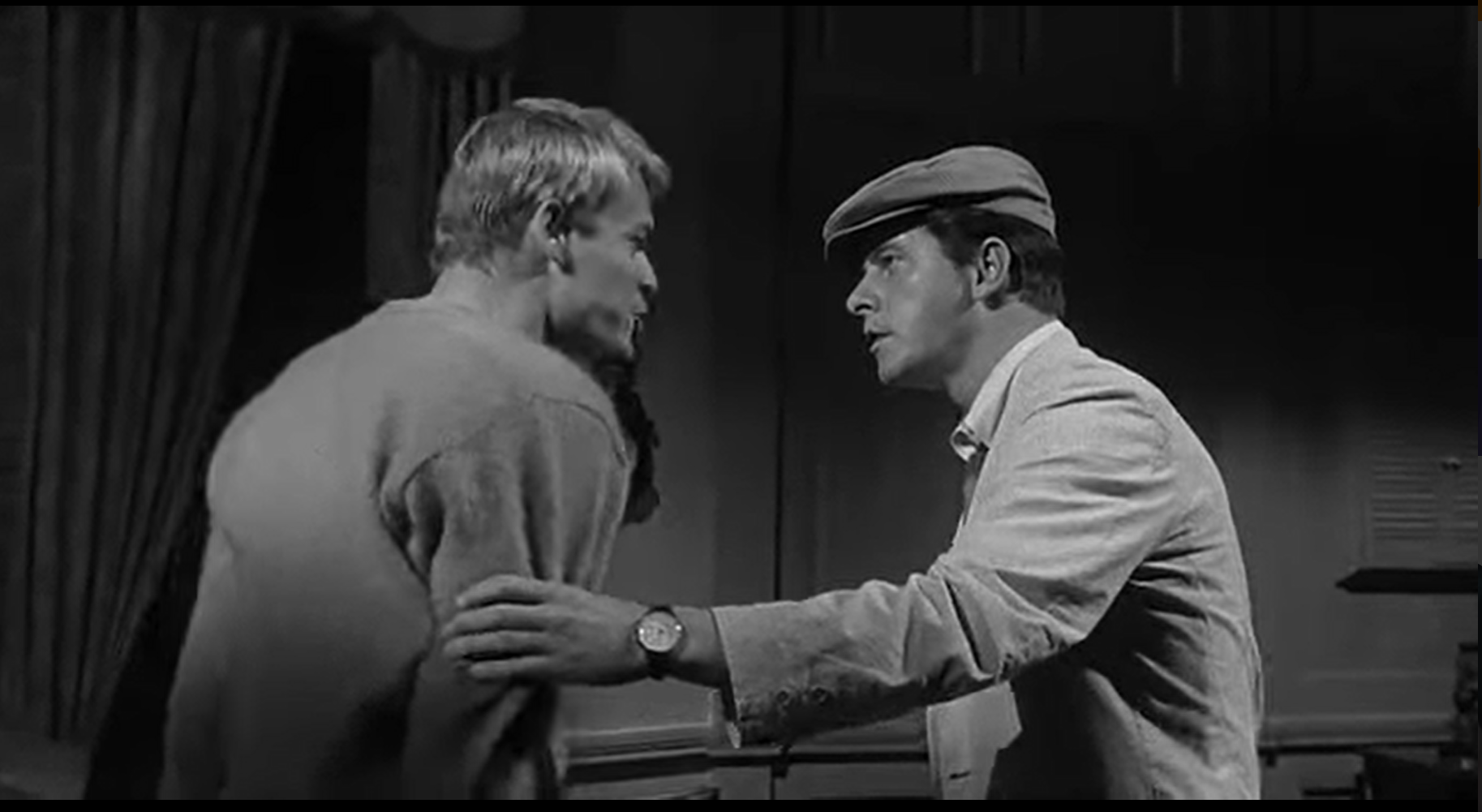
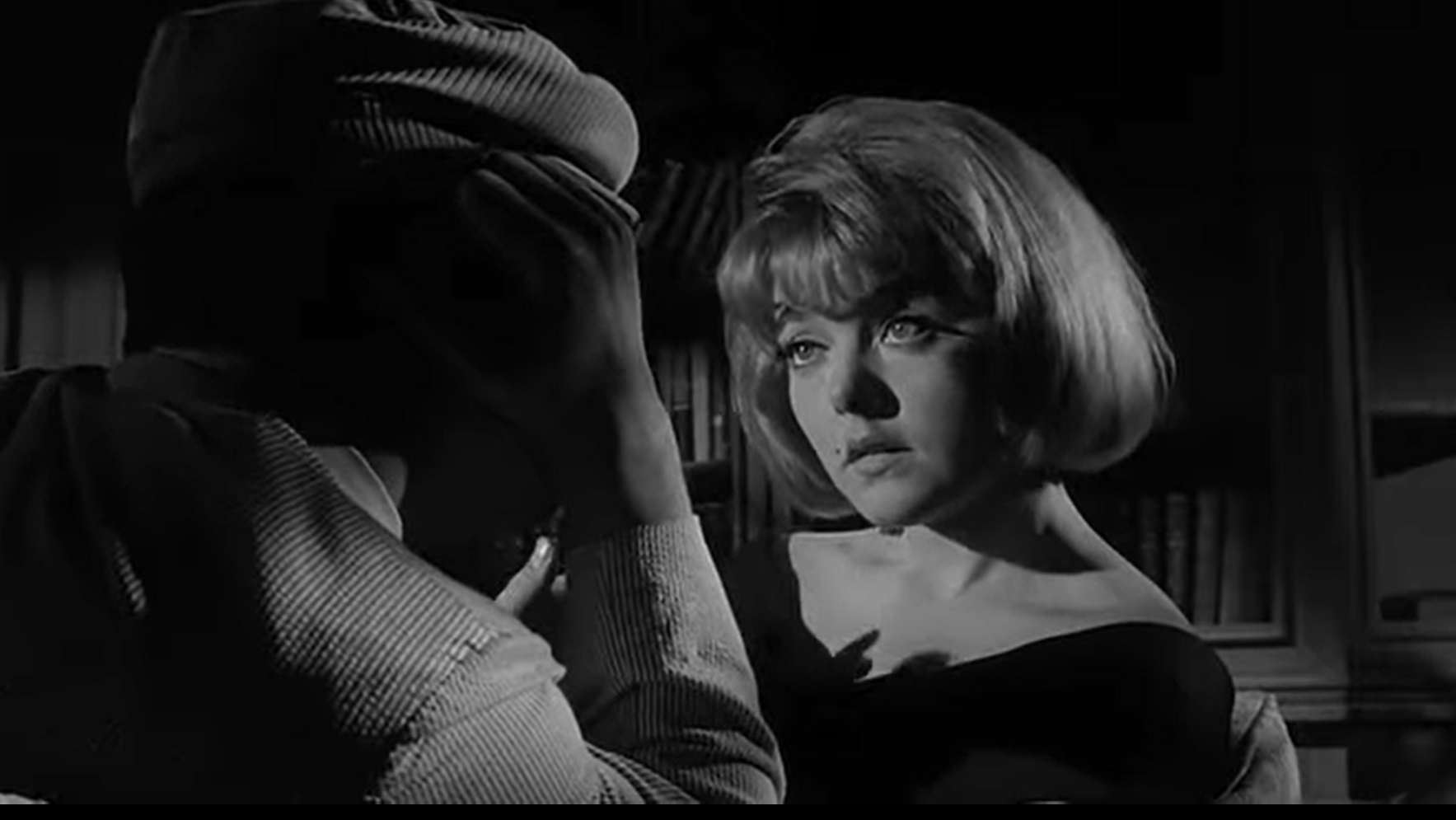
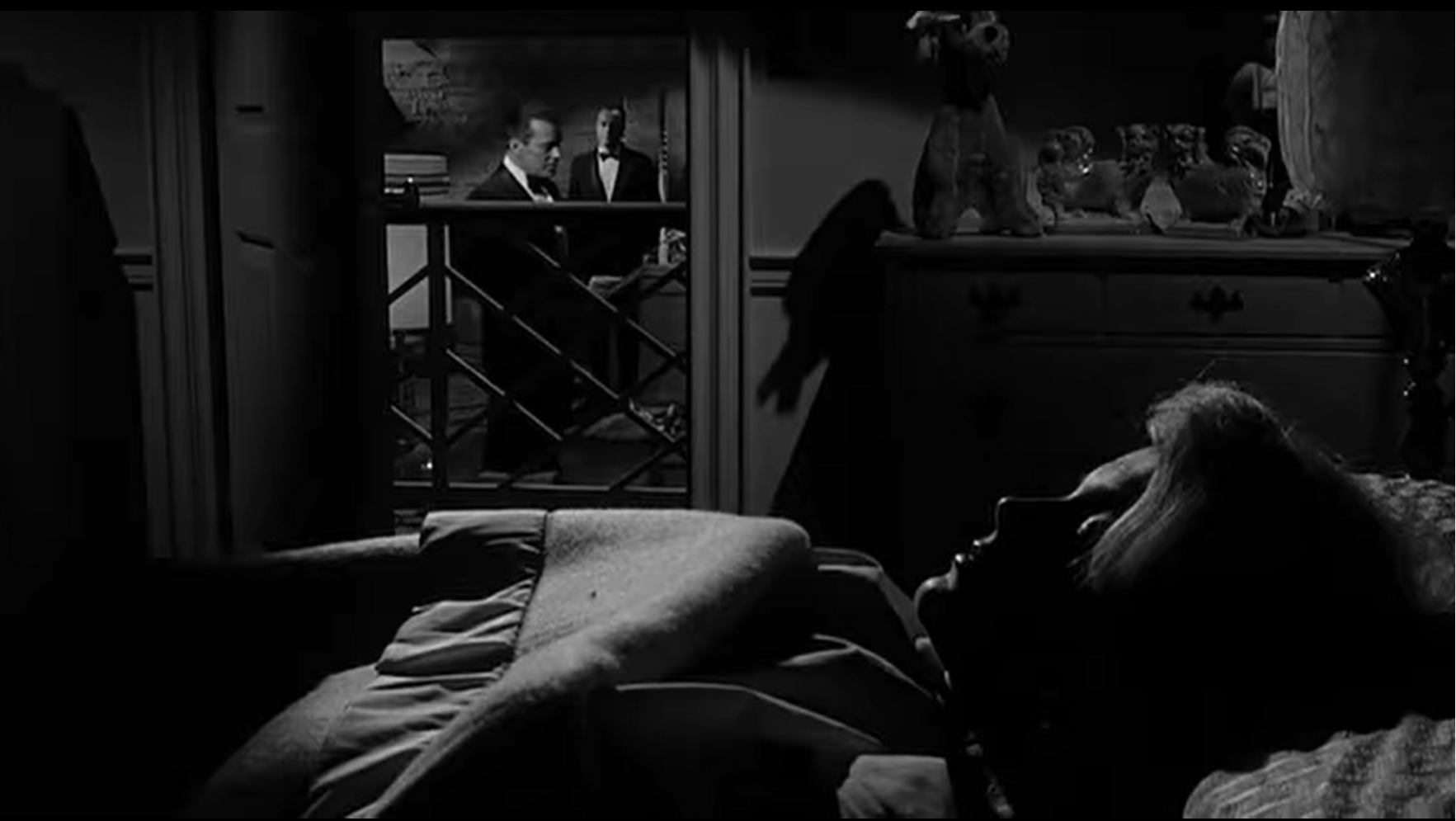
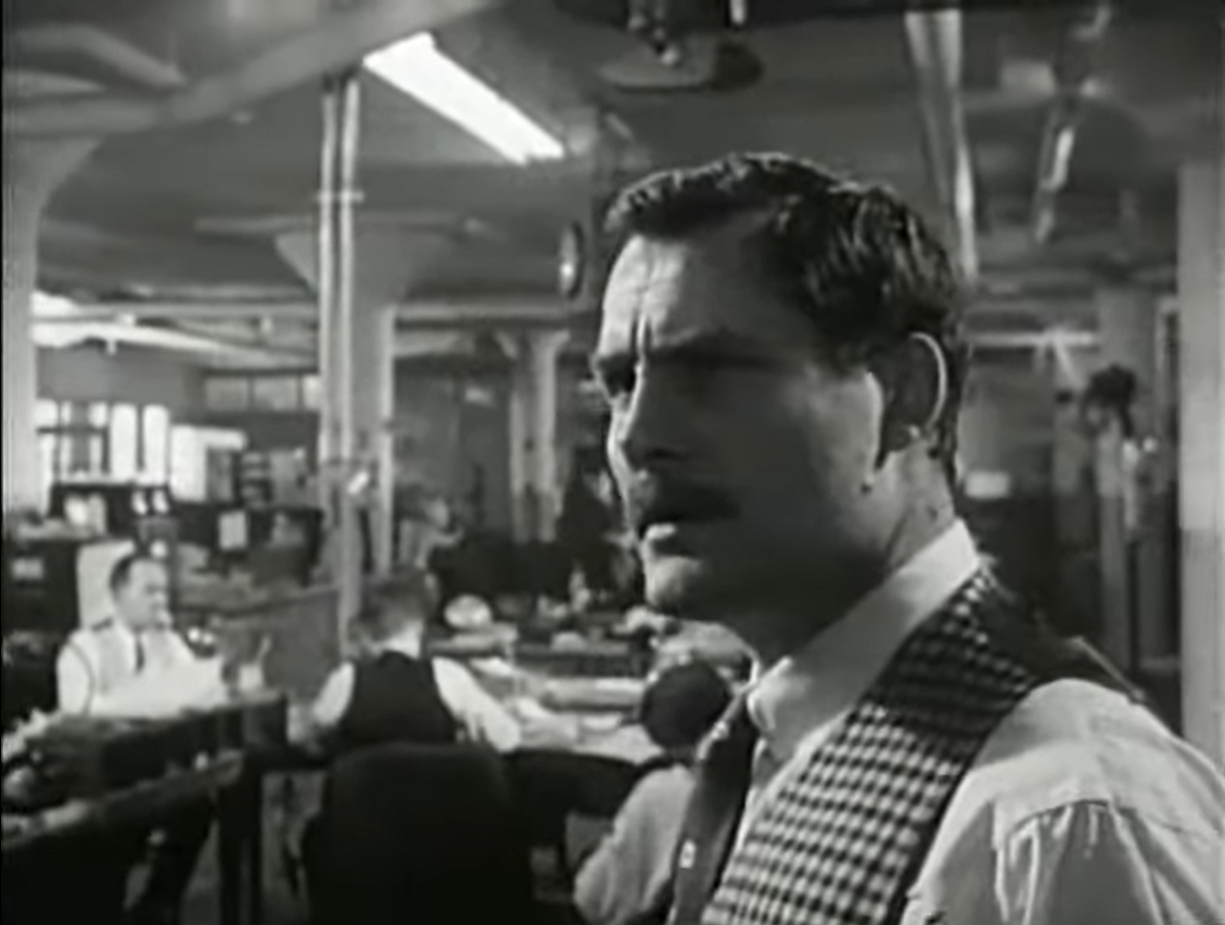
This little-seen B-thriller — reportedly one of Martin Scorsese’s personal favorites — tells the simple yet remarkably effective tale of an uber-rational hit man who becomes completely unhinged by the thought of killing a woman. Director Irving Lerner keeps the story moving at an economical clip, introducing us immediately to our determined protagonist, providing several vignettes of his calculated killing style, then transplanting us to Los Angeles, where comic relief suddenly appears in the form of the two atypical thugs (Phillip Pine and Herschel Bernardi) tasked with ensuring that Edwards carries out his job in a timely fashion. From this point on, we’re no longer sure what to expect, and are kept in genuine suspense throughout the remainder of the film. Although we never learn exactly why Edwards is so freaked out by the thought of killing a woman (he limits his explanation to a mere, “They’re unpredictable”), Murder by Contract remains ripe for a more probing analysis of gender relations. Lucien Ballard’s cinema verite camera work and Perry Botkin’s memorable, guitar-heavy score add to the overall enjoyment of this compact little thriller, which is well worth seeking out.

Redeeming Qualities and Moments:

  • Vince Edwards as Claude
  • Phillip Pine and Herschel Bernardi as the “comic relief” duo tasked with ensuring that Claude completes his duties in Los Angeles
  • Many effectively shot and edited sequences
  • Lucien Ballard’s cinematography
  • Perry Botkin’s guitar-drenched soundtrack

Must See?
Yes, as an all-around good show which deserves wider release.

Categories

  • Good Show

Links:

Kansas City Confidential (1952)

Kansas City Confidential (1952)

“I know a sure cure for a nosebleed: a cold knife in the middle of the back.”

Synopsis:
An ex-con (John Payne) becomes the unwitting patsy in a heist engineered by a masked man (Preston Foster), and carried out by three criminals (Jack Elam, Neville Brand, and Lee Van Cleef) who don’t know each others’ identities.

Genres, Themes, Actors, and Directors:

  • Coleen Gray Films
  • Ex-Cons
  • Framed
  • Heist
  • John Payne Films
  • Lee Van Cleef Films
  • Neville Brand Films
  • Phil Karlson Films
  • Preston Foster Films
  • Revenge
  • Thieves and Criminals

Review:
This compact, gritty thriller by director Phil Karlson takes viewers on a fast-paced journey from Kansas City to Mexico, as its protagonist (John Payne) doggedly tracks and pursues the cons who’ve framed him. Payne — a down-on-his-luck veteran who can’t seem to catch a break — actually doesn’t emerge as the film’s central character until after the initial heist sequence has taken place; from this point on, events unfold in a series of tense, often violent encounters, as both Payne and the criminals express bitter determination to secure their fair share of the loot. An added layer of complexity emerges once we learn the true identity of Foster’s “Masked Man”, and begin to understand the motivations behind his organization of the secretive heist. Unfortunately, lovely Coleen Gray is wasted in a supporting role as Foster’s beautiful daughter (who falls for Payne, thus complicating matters even further) — but the male performances throughout are uniformly excellent, and the punchy script offers them plenty of memorable exchanges (“You been givin’ me the fisheye all night…”).

Redeeming Qualities and Moments:

  • John Payne as Joe Rolfe
  • Preston Foster as The Boss
  • Jack Elam as cockeyed Pete Harris
  • Neville Brand and Lee Van Cleef as Boyd Kane and Tony Romano
  • A taut, exciting tale of corruption and revenge

Must See?
Yes, as a highly enjoyable noir caper flick.

Categories

  • Good Show

Links:

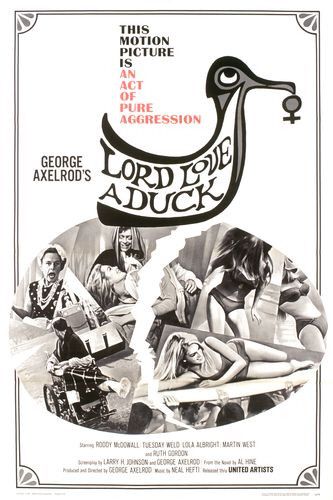
Lord Love a Duck (1966)

Lord Love a Duck (1966)

“You just tell Mollymauk what you want, Mollymauk will get it for you — we have a deal, remember?”

Synopsis:
A gifted teenager (Roddy McDowall) with strange powers befriends a beautiful senior (Tuesday Weld) and helps her achieve her dreams of popularity and fame.

Genres, Themes, Actors, and Directors:

  • Aspiring Stars
  • Black Comedy
  • Flashback Films
  • Roddy McDowall Films
  • Ruth Gordon Films
  • Satires and Spoofs
  • Teenagers
  • Tuesday Weld Films

Response to Peary’s Review:
Peary seems decidedly turned off by this “strange, strange cult comedy”, which he labels both “smutty” and “as vulgar as it is mean.” He acknowledges that “there are many imaginative, hilarious sequences”, yet argues that they ultimately “make the viewer uncomfortable”, and claims that writer/director George Axelrod inexplicably “exhibits pure hatred” rather than satire. While I agree with Peary that the film eventually “falls apart”, I find the rest of his assessment unduly harsh — indeed, up until its rather dreary final half hour, Lord Love a Duck is unique enough to keep any film fanatic on his or her toes. We’re never quite sure exactly who McDowall is (is he the devil?), where he comes from, what powers he possesses, or why he latches onto Barbara Ann with such selfless devotion, but we remain oddly fascinated.

Tuesday Weld (with her perennially child-like face) turns in one of her best performances here as Barbara Ann, a greedy yet oddly sympathetic high school beauty who’s surprised to find herself suddenly achieving her goals, one by one; the hilarious scene in which she practically seduces her estranged father (Max Showalter) into buying her 13 cashmere sweaters in various luscious colors — including “Grape Yum Yum,” “Periwinkle Pussycat”, and “Papaya Surprise” — is reason enough to recommend the film. The supporting performances are uniformly fine as well; my favorites include Harvey Korman (pre-Carol Burnett) as Barbara Ann’s easily distracted high school principal, and Ruth Gordon as Barbara Ann’s arrogant new mother-in-law (“In our family, we don’t divorce our men, we bury them!”). Unfortunately, the story begins to lose momentum once Barbara Ann marries a boring marriage counselor (Martin West) and instantly regrets doing so — McDowall’s failed attempts to “get rid of” West are out of character with his otherwise infallible powers. Equally disappointing is the denouement, in which McDowall “confesses” unconvincingly to the “true” motivations behind his actions. Nevertheless, there’s enough of interest in Lord Love a Duck to recommend it as must-see viewing for all film fanatics at least once.

Redeeming Qualities and Moments:

  • Tuesday Weld as Barbara Ann
  • The discomfiting “sweater seduction scene”
  • Ruth Gordon as Bob’s controlling mother
  • Harvey Korman as Weldom Emmett

Must See?
Yes, for its status as a most unusual cult comedy.

Categories

  • Cult Movie

Links:

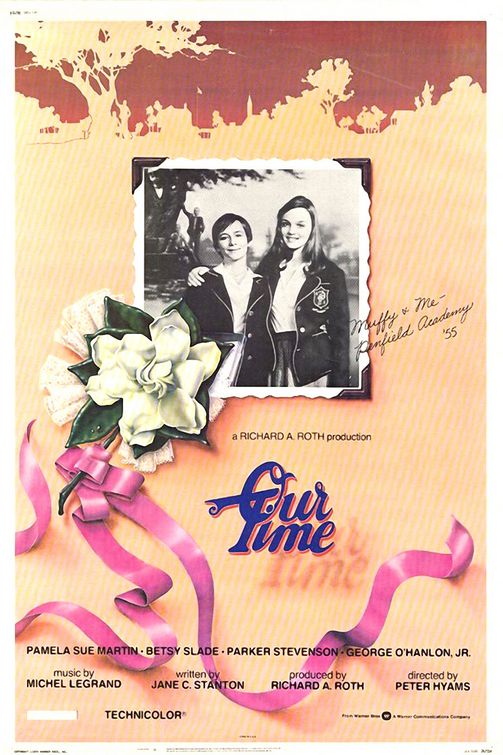
Our Time / Death of Her Innocence (1974)

Our Time / Death of Her Innocence (1974)

“Boy, I sure don’t see what all the fuss is about.”

Synopsis:
At a boarding school in the 1950s, two friends — Abby (Pamela Sue Martin) and Muffy (Betsy Slade) — lose their virginity, with unexpected consequences.

Genres, Themes, Actors, and Directors:

  • Boarding School
  • Coming of Age
  • Sexuality
  • Virginity

Review:
While it doesn’t exactly cover new territory, Peter Hyams’ Our Time (which aired on television under the more lurid title Death of Her Innocence) offers a reasonably authentic look at teenage sexuality and its occasionally devastating consequences. The screenplay begins by following the travails of Abby (Martin), who’s genuinely in love with her boyfriend (Parker Stevenson) and trying to decide whether it’s okay to have sex with him before marriage; meanwhile, her friend Muffy (Slade) longs for a relationship with handsome “Buzzy” Knight (Michael Gray) while failing to see the appeal of her loyal longtime admirer, Malcolm (George O’Hanlon, Jr.). Soon the story shifts to Muffy’s life-changing dilemma as she makes an unwise decision during a moment of emotional pain, and ends up paying dearly for it. While her story is compelling, however, Hyams is unable to elicit truly natural performances from his cast of likable actors — even Slade (Brian De Palma’s first choice to play the lead role in Carrie) fails to make the most of her sympathetic character. Ultimately, Our Time will be of most interest to fans of coming-of-age stories, but isn’t must-see viewing for all-purpose film fanatics.

Redeeming Qualities and Moments:

  • A sensitive look at teenage sexuality and its consequences

Must See?
No, but it will likely be of interest to coming-of-age fans.

Links:

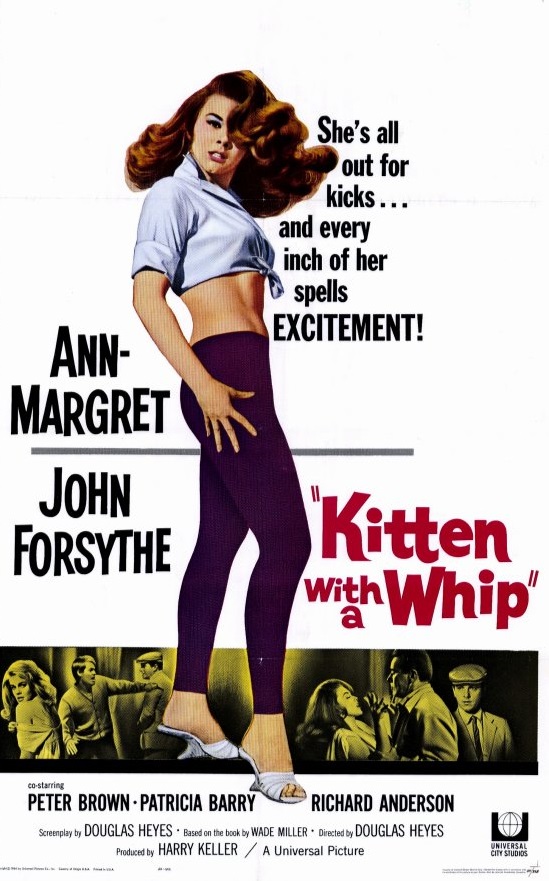
Kitten With a Whip (1964)

Kitten With a Whip (1964)

“You’re going to think I have an awful dirty mind, David — I change it so often.”

Synopsis:
A juvenile delinquent (Ann-Margret) escapes from reform school and takes refuge in the home of aspiring politician David Stratton (John Forsythe). While Stratton wants nothing to do with her, Jody (Ann-Margret) threatens to reveal his involvement in harboring a fugitive, and soon he finds himself battling Jody’s manipulative pals (Peter Brown and James Ward) down in Tijuana.

Genres, Themes, Actors, and Directors:

  • Femmes Fatales
  • Fugitives
  • Hostages
  • Juvenile Delinquents

Review:
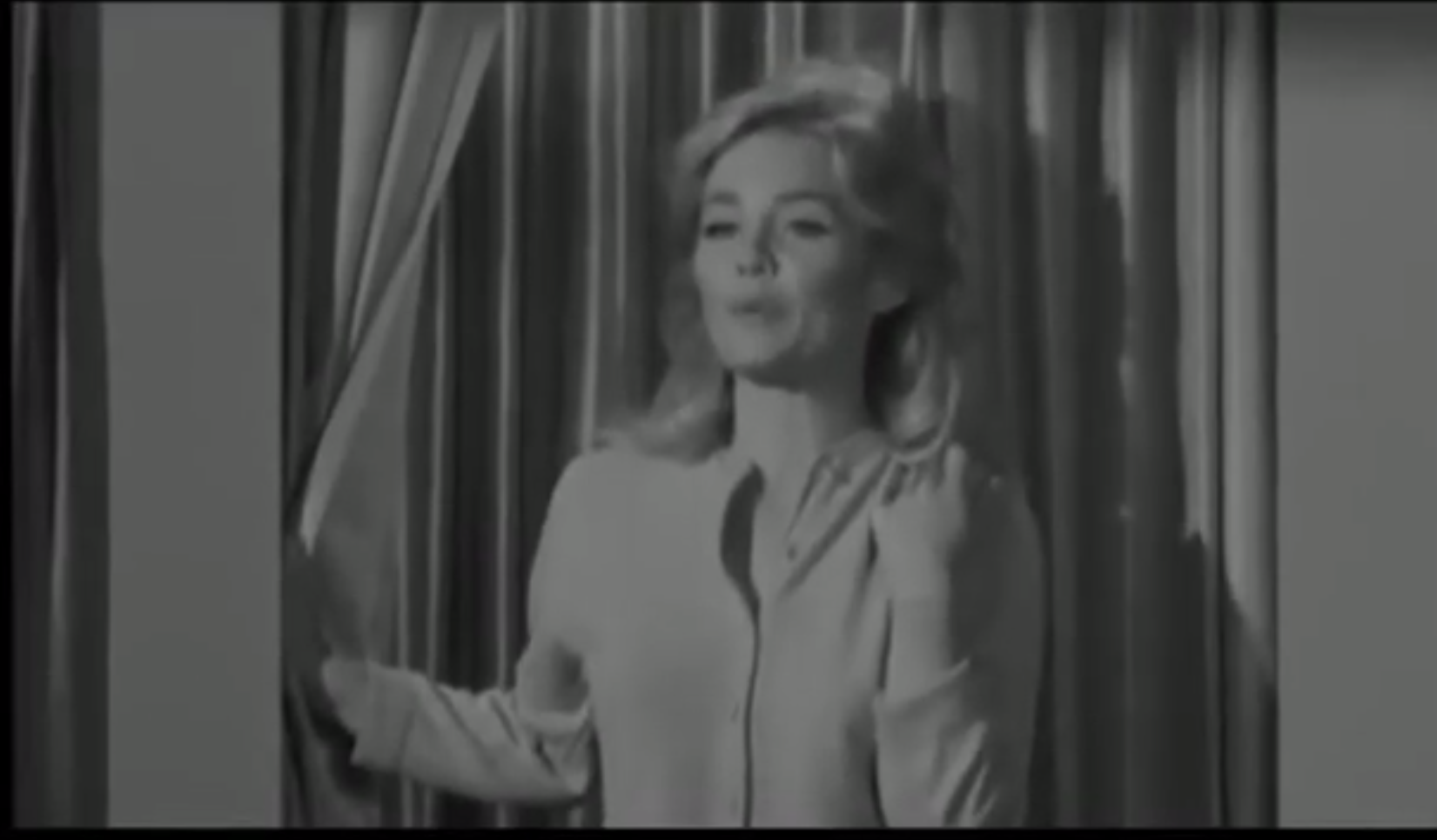
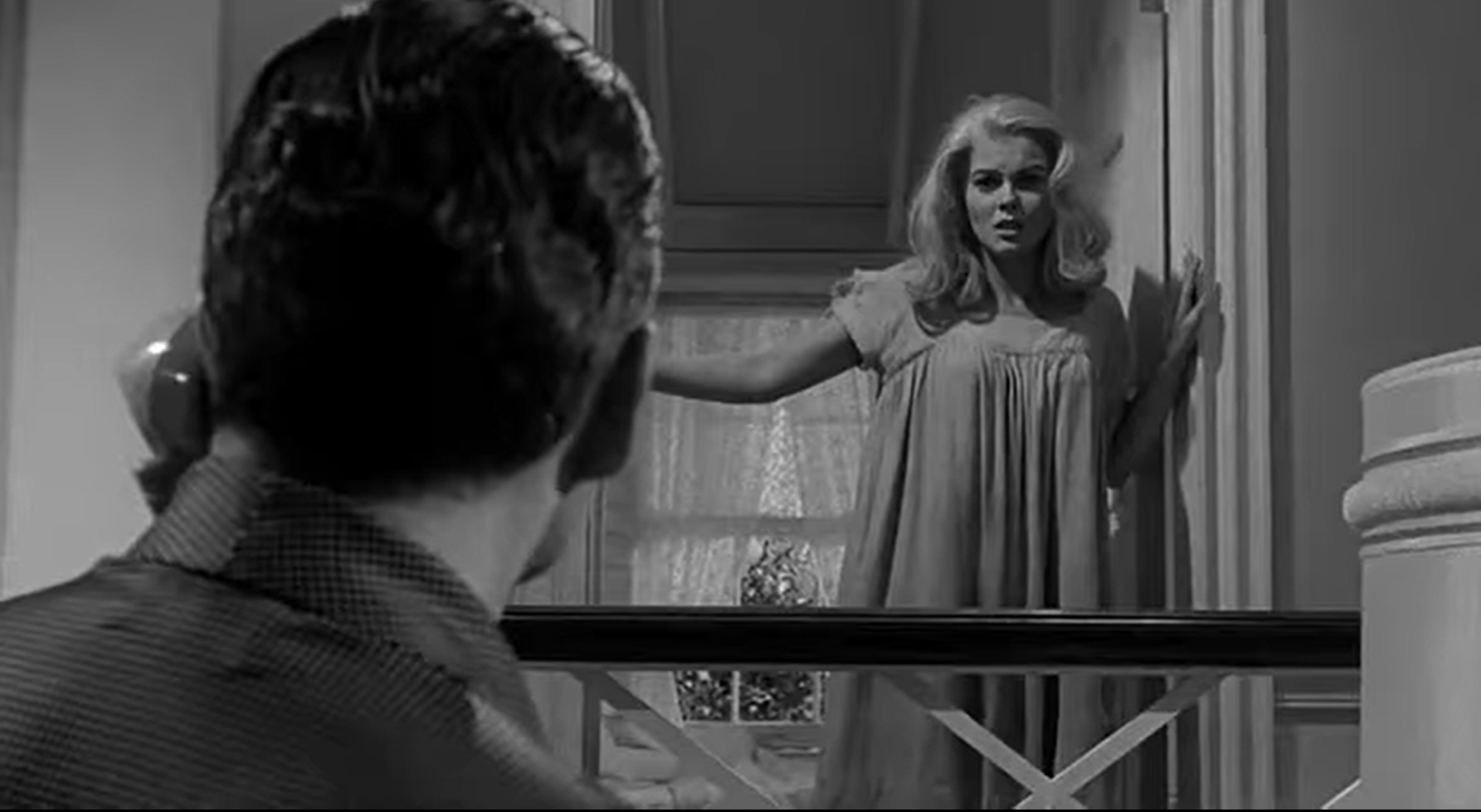
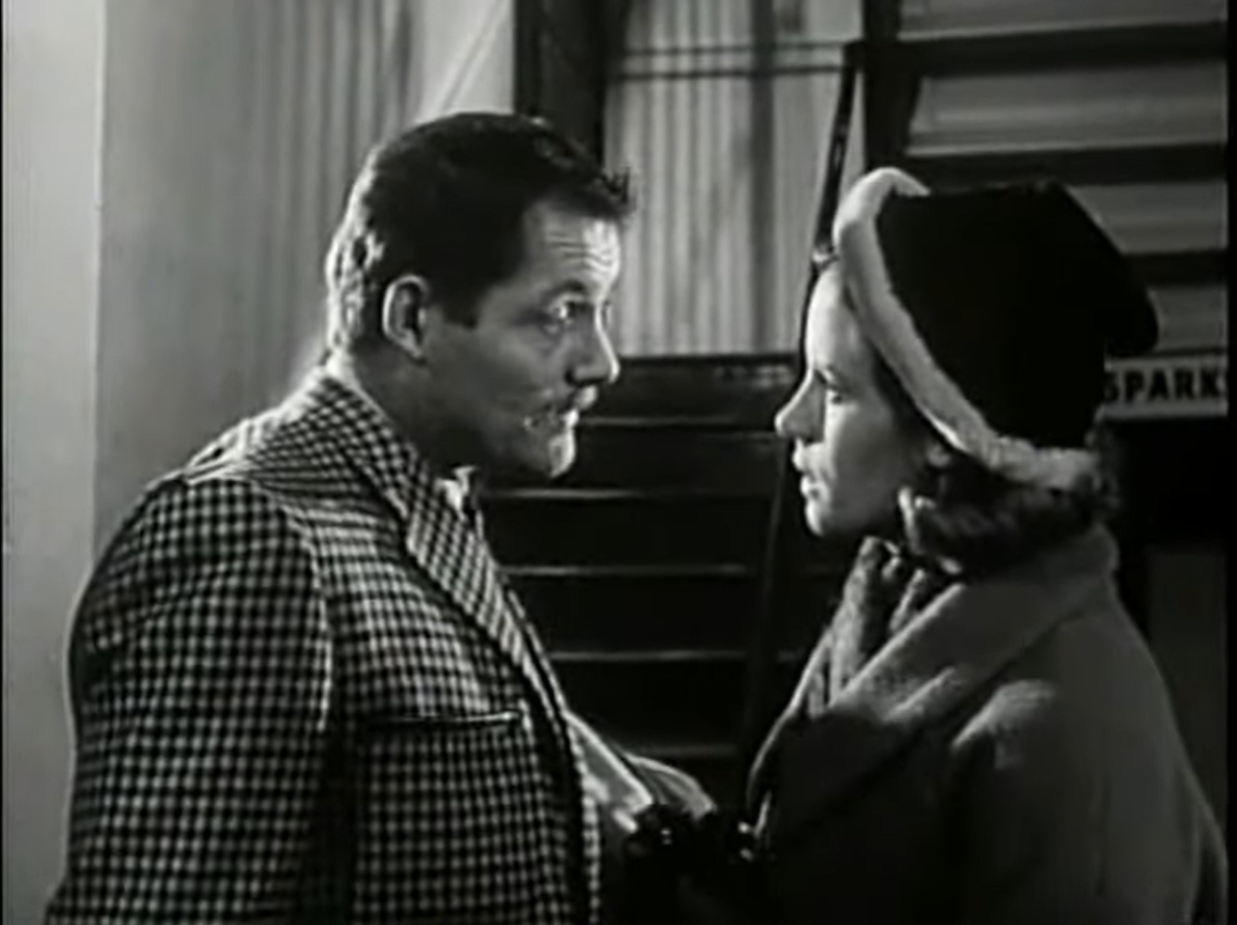
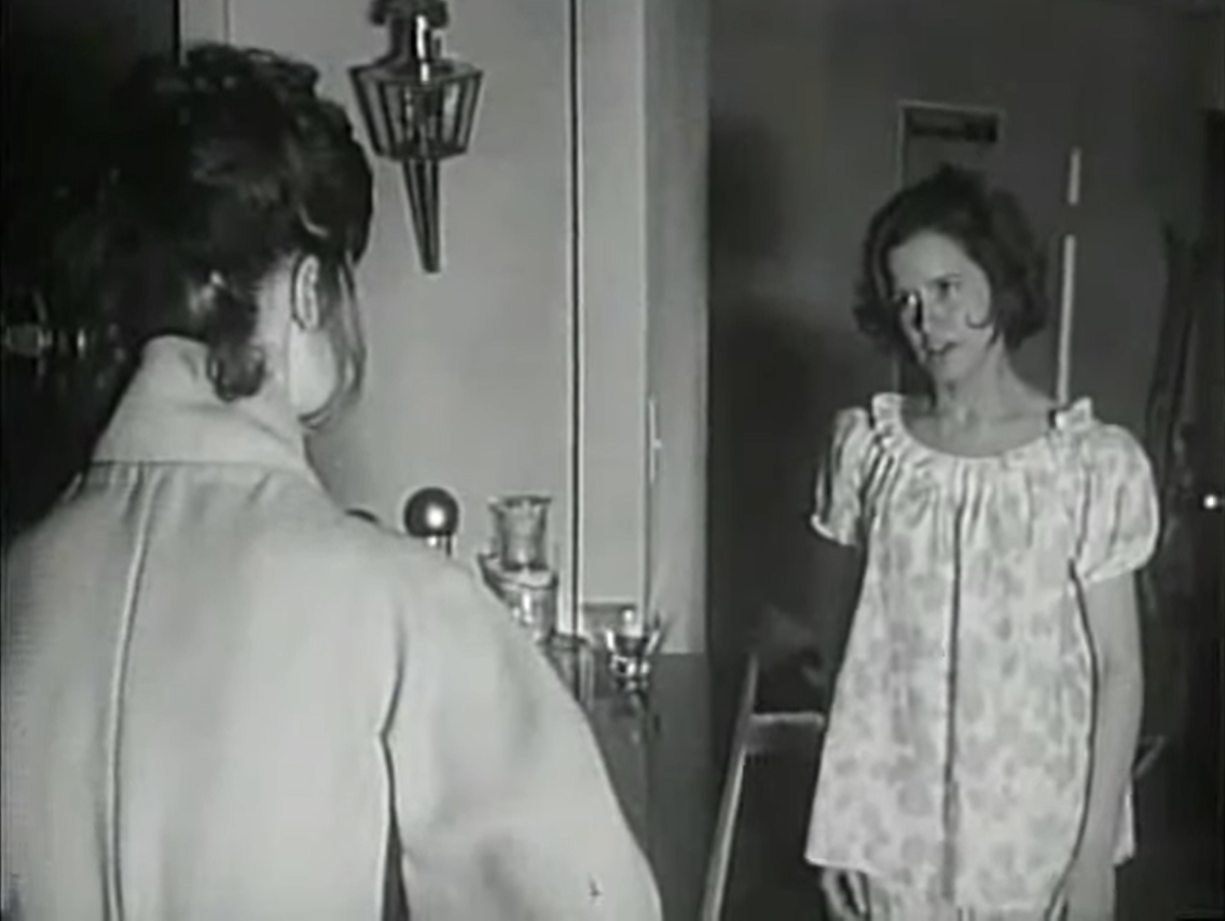
This unfairly maligned B-flick — referred to by the TV Guide as a “thoroughly hideous and unpleasant movie” — is actually an enjoyably kitschy drama which offers plenty of lurid, sassy entertainment. From the opening shot of sexy Ann-Margret (Jody) running down the street in a baby doll nightgown:

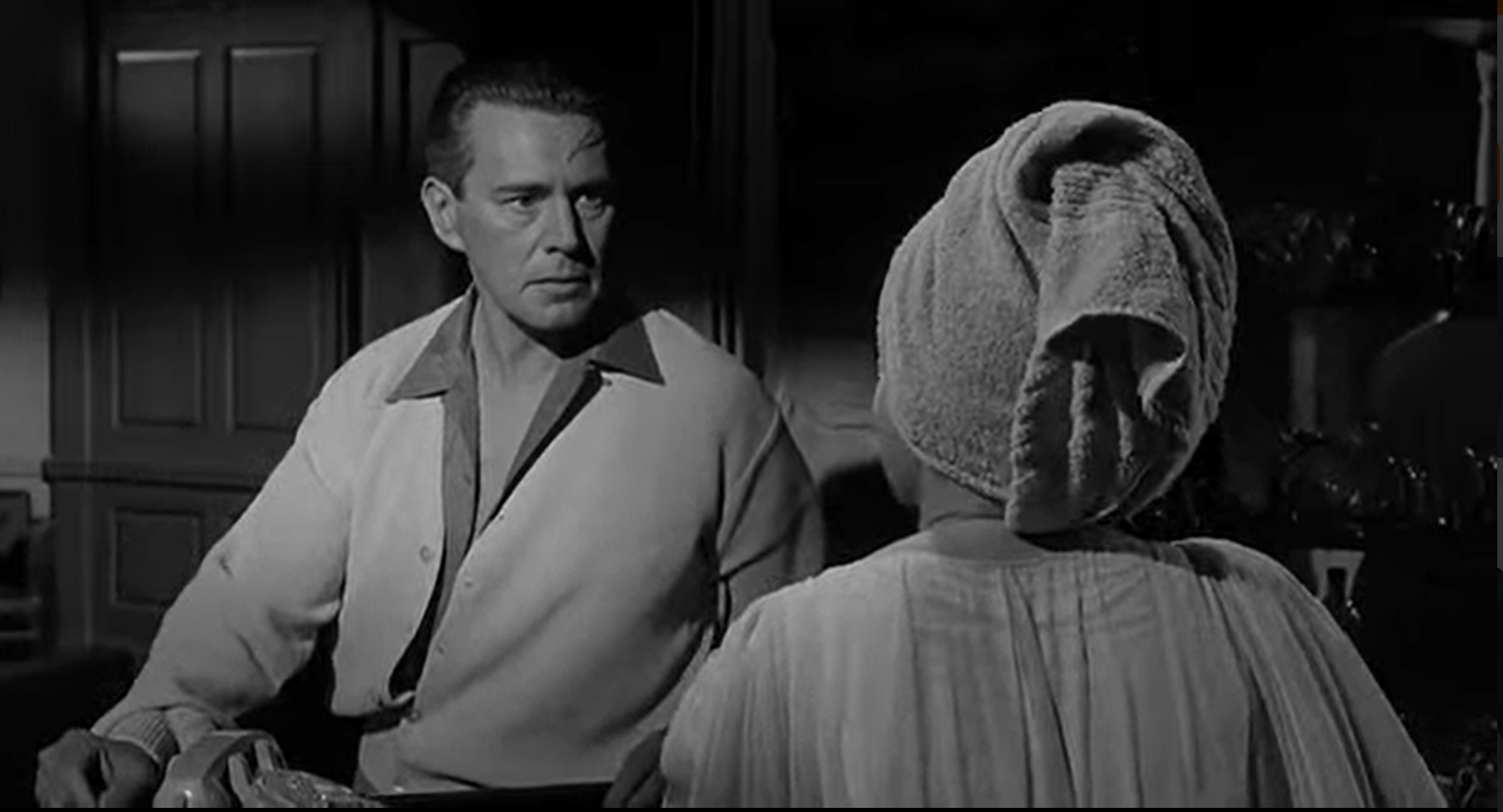
… we’re taken along for a fast-paced ride as Jody-cum-Goldilocks “accidentally” sleeps in a publicity-conscious senator’s house:

… takes advantage of his compassion, then quickly reveals her true nature as a deeply manipulative — and deeply troubled — juvenile delinquent. Ann-Margret is perfectly cast (and appropriately over-the-top) as Jody, a wild-card teen with vicious claws; and while many have ridiculed John Forsythe’s performance as Jody’s “square” counterpart, he does a believable job reacting the way a compassionate yet publicity-paranoid politician most likely would.

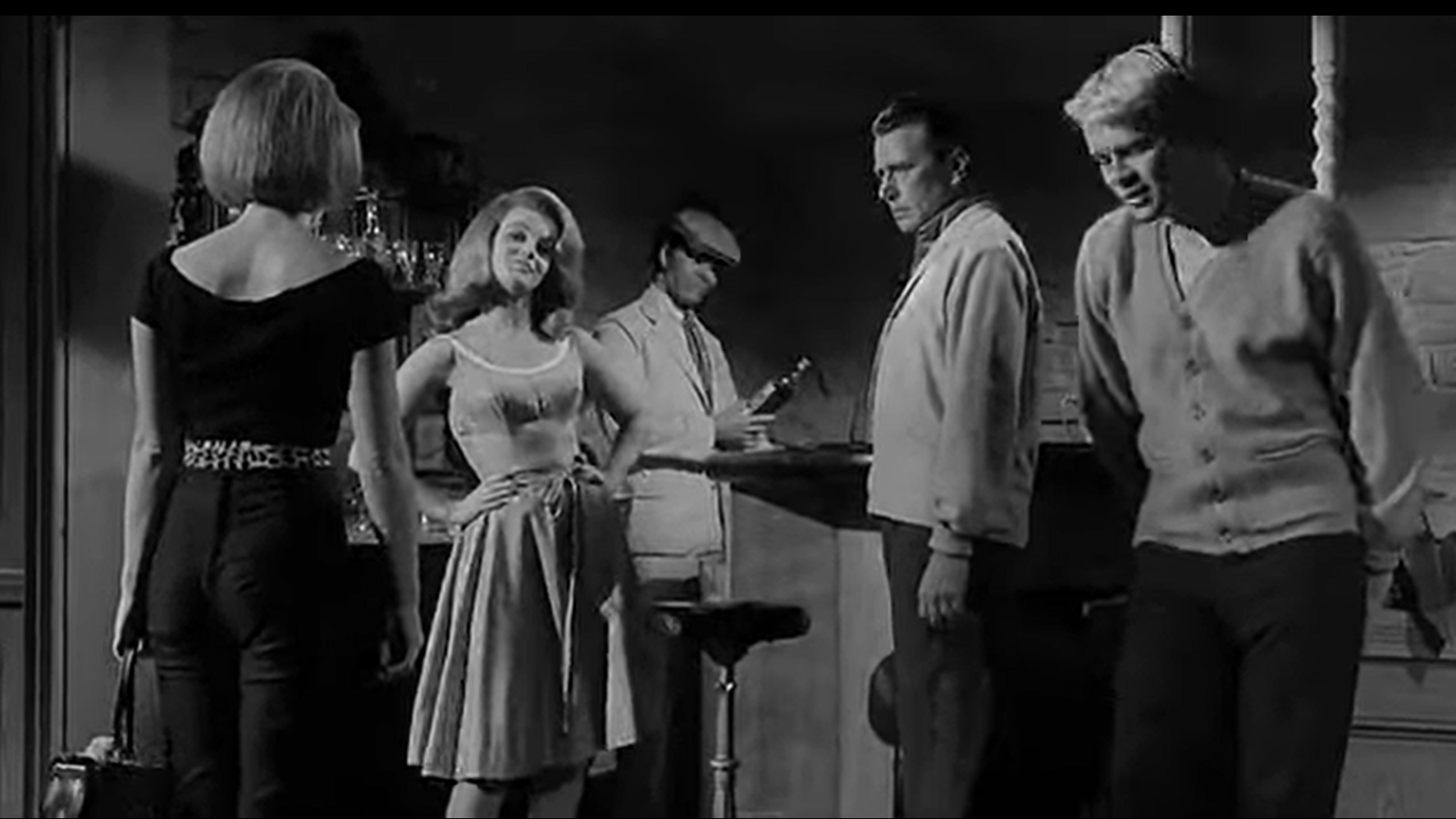
Just when we think the heated story is going to remain centered on Jody’s manipulation of David (will this red-blooded male — separated from his wife, no less — give in to Jody’s tempting sexual advances?), several new characters are introduced:

Peter Brown and James Ward are appropriately creepy and cocky as the hoodlum pals who show up on David’s doorstep, and Diane Sayer (equally good in The Strangler, released the same year) adds just the right touch of guilelessness to her role as “Midge”, a female hanger-on given to saying “Guy!” instead of “God!” By the time the story takes us to Tijuana (ever-reliable as a border-town location of crisis and chaos), we’re anxiously awaiting David’s opportunity to finally break free from the clutches of his juvenile hostage-takers; fortunately, the film’s ending — while improbable — is perhaps the most satisfying of all possible outcomes.

Note: Kitten With a Whip was spoofed by the MST3K crew (and can be viewed in 10-minute installments on You Tube), but remains a rare entry in that series which bears watching on its own as well, without commentary.

Redeeming Qualities and Moments:

  • Ann-Margret as Jody
  • John Forsythe as David
  • Peter Brown and James Ward as Jody’s hoodlum friends
  • Diane Sayer as naive Midge
  • A luridly enjoyable tale of manipulation
  • Atmospheric cinematography
  • Plenty of hilariously sassy lingo (“I feel creamy!”)

Must See?
Yes, for its status as a cult favorite. Listed as a Sleeper in the back of Peary’s book.

Categories

  • Cult Movie

Links:

First Comes Courage (1943)

First Comes Courage (1943)

“You know what I am to you? An international complication.”

Synopsis:
A WWII resistance fighter (Merle Oberon) has an affair with an unsuspecting German major (Carl Esmond), and is able to pass on vital information to the Norwegian underground. When Esmond’s superior becomes suspicious, however, a British agent (Brian Aherne) — formerly Oberon’s lover — is sent to assassinate Esmond.

Genres, Themes, Actors, and Directors:

  • Brian Aherne Films
  • Dorothy Arzner Films
  • Merle Oberon Films
  • Nazis
  • Resistance Fighters
  • Spies
  • World War II

Review:
This rather pedestrian wartime melodrama is primarily notable as director Dorothy Arzner’s final feature film, yet it offers little that’s new or different to the genre; as noted so succinctly in the New York Times‘ original review, “Although the film does maintain a measure of suspense quite steadily, its authors and director have failed to stamp it with any distinction or depth of conviction to lift it above the level of a dozen similar mediocre war films.” Oberon is generally fine — and appropriately beautiful (if unconvincing as a Norwegian) — in the leading role (though she doesn’t know how to mime piano-playing for the life of her!):

Faring slightly better is Brian Aherne as her British lover, who at least brings some welcome energy to the proceedings.

While one knows that all will (or should) work out in the end, there are at least a few tension-filled moments along the way — ultimately, however, First Comes Courage remains resolutely “ordinary”, and will only be of real interest to die-hard Arzner fans.

Redeeming Qualities and Moments:

  • Brian Aherne as Captain Lowell
  • Fine cinematography

Must See?
No; I suspect the only reason this film is listed in Peary’s book is because it was directed by Arzner.

Links:

NeverEnding Story, The (1984)

NeverEnding Story, The (1984)

“Don’t you know anything about Fantasia? It’s the world of human fantasy. Every part, every creature of it, is a piece of the dreams and hopes of mankind.”

Synopsis:
When a lonely boy (Barrett Oliver) discovers a fantasy book called The NeverEnding Story, he’s transported to the world of Fantasia, where a young warrior named Atreyu (Noah Hathaway) has been sent on a mission to save the kingdom’s dying empress (Tami Stronach). Soon Bastian (Oliver) learns that his participation as a reader will play an essential part in the story’s outcome, and that he must have faith in the power of his wishes.

Genres, Themes, Actors, and Directors:

  • Fantasy

Response to Peary’s Review:
As Peary notes, this “flawed” adaptation of Michael Ende’s popular young adult novel — which received mixed reviews upon its release — is both “imaginative” and “visually spectacular”, and contains a positive message for kids about the importance of hopes and dreams. Barrett Oliver is sympathetic and believable as a young boy devastated by the recent loss of his mother and bullied mercilessly by his classmates, who finds refuge in books and fantasy; less remarkable is Noah Hathaway as Oliver’s doppelganger warrior, who comes across as appropriately handsome and plucky yet ultimately two-dimensional. More important than the performances, however, are the film’s stunning special effects, which effectively transport viewers into a new and exciting universe: while I’m less than thrilled by the rather insipid, puppet-like dragon Atreyu rides through the skies of Fantasia, other creatures — particularly the massive Rock Biter — are truly breathtaking. The dramatic ending (clearly paving the way for a sequel) is both exciting and heartwarming.

Note: Because the film contains a number of “difficult” scenes — including Atreyu’s beloved horse dying in a Swamp of Sadness, and Atreyu being persistently pursued by a vicious werewolf — The NeverEnding Story seems most appropriate for adolescents and adults rather than young, impressionable children.

Redeeming Qualities and Moments:

  • Barrett Oliver as Bastian
  • Impressive animation — particularly the gigantic “Rock Biter”
  • Many exciting sequences
  • The heartwarming ending

Must See?
No, but it’s recommended.

Links:

Luck of Ginger Coffey, The (1964)

Luck of Ginger Coffey, The (1964)

“Oh Ginger, face facts… When have you ever lasted in any job? What have you ever done in any job but dream about what you’d do with the next one?”

Synopsis:
An Irish immigrant (Robert Shaw) in Montreal remains hopeful that a “job with possibilities” lies just around the corner — meanwhile, his disillusioned wife (Mary Ure) grows tired of her husband’s lies and instability, and threatens to break up their marriage.

Genres, Themes, Actors, and Directors:

  • Canadian Films
  • Character Studies
  • Immigrants and Immigration
  • Marital Problems
  • Robert Shaw Films
  • Unemployment

Review:
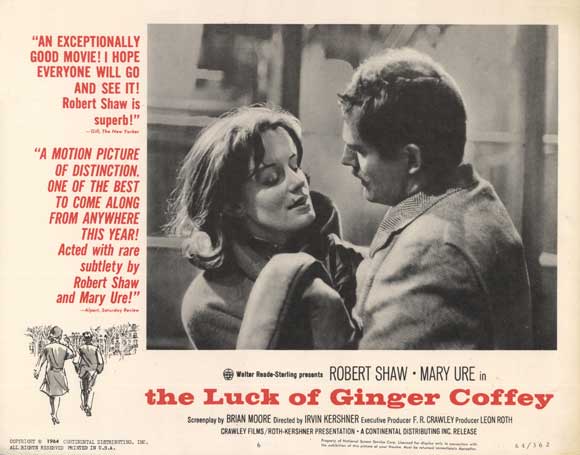
Robert Shaw shines as the title character in this tale of Irish immigrants hoping to create a new life for themselves in Montreal, Canada. While “Ginger” is undeniably self-deluded, unrealistic, and dishonest, the strength of Shaw’s performance lies in the fact that we literally can’t help sympathizing with Ginger from the moment he appears on-screen: his face is full of such genuine good cheer (his eyes are piercingly bright) that one immediately understands why he gets so far on charisma and charm alone. Unfortunately, despite the deceptively cheery soundtrack, circumstances quickly go downhill, as Ginger makes one bad decision after another, and his wife (played with nuance and depth by Shaw’s real-life wife, Mary Ure) suddenly realizes she can no longer count on Ginger as a reliable partner. Given its depressing trajectory, The Luck of Ginger Coffey won’t be for all tastes — but it’s certainly worth a look if you can locate a copy.

Note: Director Irvin Kershner makes excellent use of Montreal locales, seamlessly incorporating several vignettes which reveal the language tensions inherent in mid-century Canadian politics.

Redeeming Qualities and Moments:

  • Robert Shaw as Ginger Coffey
  • Mary Ure as Ginger’s put-upon wife, Vera
  • Libby McClintock as Ginger and Vera’s teenage daughter, Paulie
  • Fine on-location footage in Montreal

Must See?
No, but it’s absolutely worth a look simply for Shaw’s noteworthy performance.

Links:

Greeks Had a Word For Them, The / Three Broadway Girls (1932)

Greeks Had a Word For Them, The / Three Broadway Girls (1932)

“I’m sure I’ve met you before — I never forget a face, and you are good looking, you know!”

Synopsis:
Three former showgirls — Schatzi (Joan Blondell), Polaire (Madge Evans), and Jean (Ina Claire) — hoping to land sugar daddies find their friendship compromised when Jean repeatedly butts in on the other girls’ conquests.

Genres, Themes, Actors, and Directors:

  • Gold Diggers
  • Joan Blondell Films
  • Play Adaptation
  • Rivalry
  • Romantic Comedy

Review:
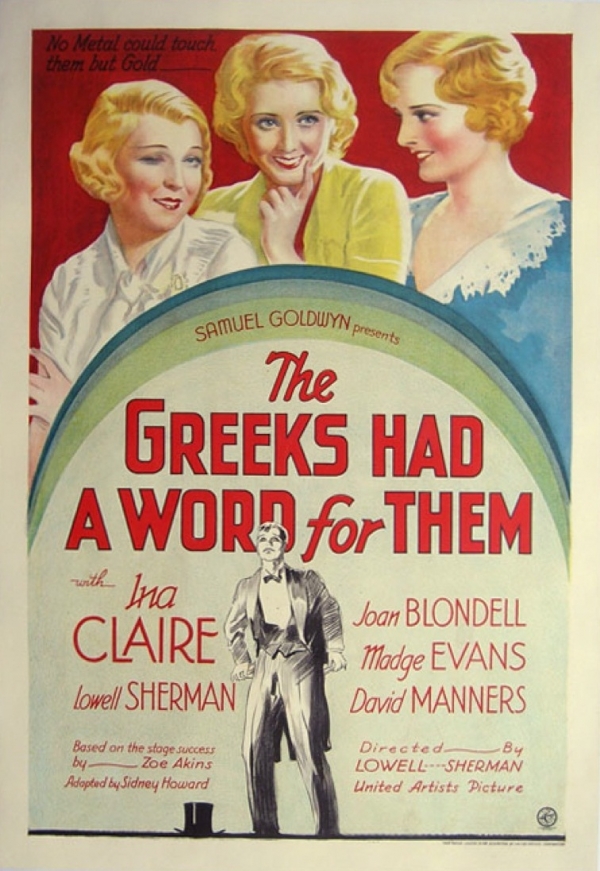
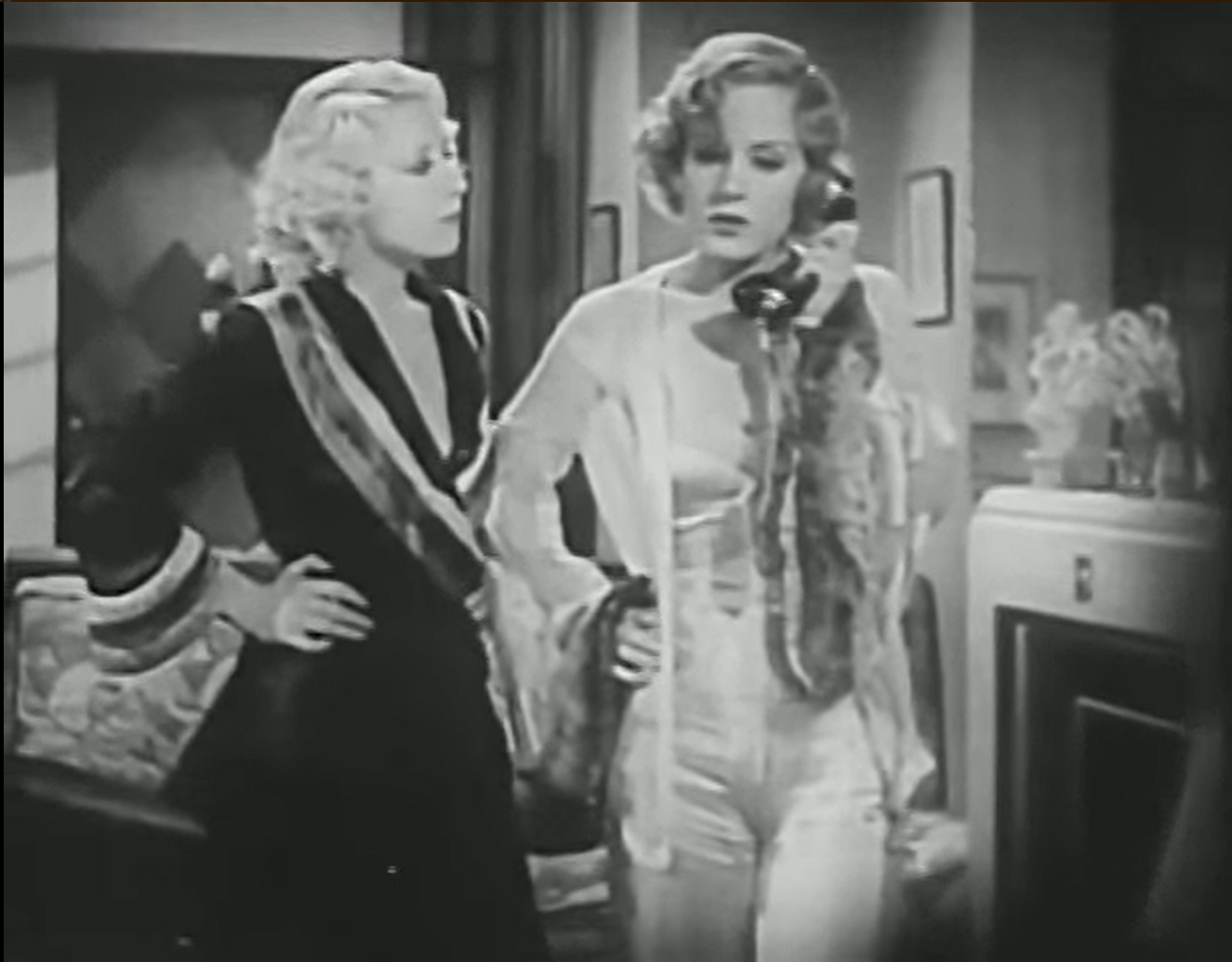
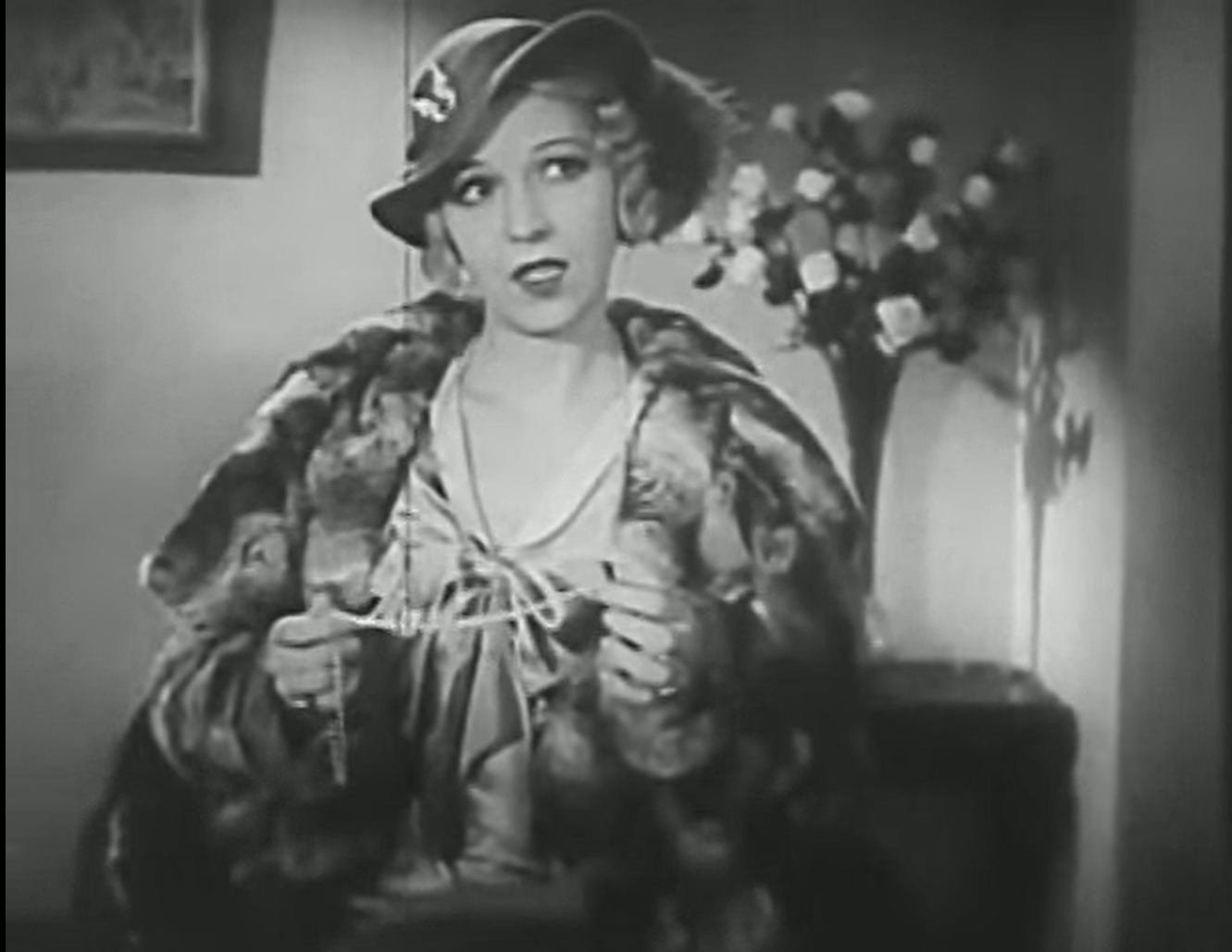
This early cinematic adaptation of Zoe Akins’ Broadway play — later remade (and substantially rewritten) as How to Marry a Millionaire (1953) — is a disappointment. The primary problem lies in the way the character of Jean is written: while Ina Claire gives a marvelously over-the-top performance:

… it defies belief that Schatze and Polaire would continue their friendship with her given her history of rampant double-crossing.

Indeed, it’s deeply unpleasant to watch Jean ruthlessly edging in on one relationship after the other while her friends stand by helplessly — by the end of the film, she’s becomes somewhat of a villainess, a development out of keeping for a story presumably about female solidarity. Ultimately, it’s just not very enjoyable to watch these three unlikely friends pursuing their (uninteresting and instantly forgettable) male catches.

Redeeming Qualities and Moments:

  • Ina Claire as Jean

Must See?
No; the remake is infinitely better.

Links:

Roommates (1981)

Roommates (1981)

Synopsis:
Three single women (Samantha Fox, Kelly Nichols, and Veronica Hart) share an apartment in New York while exploring careers, romance, and sex.

Genres, Themes, Actors, and Directors:

  • Adult Films
  • New York City
  • Sexual Liberation

Response to Peary’s Review:
As Peary notes, this reasonably well-made “adult” film is an “almost successful attempt by [director] Chuck Vincent… to make an XXX-rated film that the general audience would find palatable.” (After two weeks playing in X-rated venues, the film was re-cut and released with an “R” rating). As a female non-fan of such films, I was delighted to find myself actually enjoying this story of three gutsy women attempting to “make it”, both professionally and romantically, in New York. The very natural-looking Veronica Hart — playing a budding actress who is trying to move beyond an unfulfilling affair with a married man — is especially credible. Fans of adult film stars Jamie Gillis and Ron Jeremy will be happy to note that each makes an appearance here (though be forewarned that Gillis plays a surprisingly unappealing, smarmy character.)

Redeeming Qualities and Moments:

  • Decent acting by the three female leads
  • Well-integrated (if “surprisingly raunchy”) sex scenes

Must See?
No — though as one of the few successful “crossover” adult films, it merits a look.

Links: