Three Caballeros, The (1944)

Three Caballeros, The (1944)

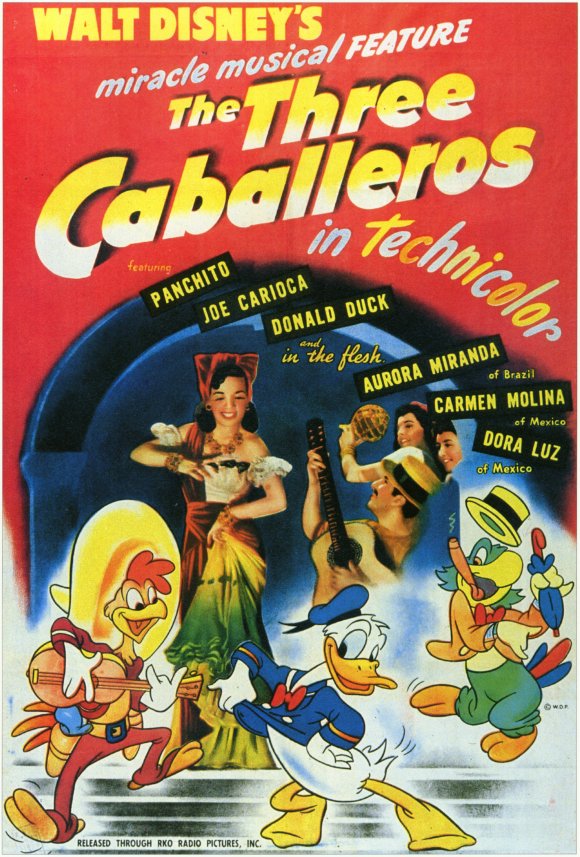
“We’re three caballeros, three gay caballeros — they say we are birds of a feather.”

Synopsis:
Donald Duck and his two avian friends — parrot Panchito and rooster Jose Carioca — present musical information on South America and Mexico.

Genres, Themes, Actors, and Directors:

  • Animated Feature
  • Musicals
  • South and Central America

Review:
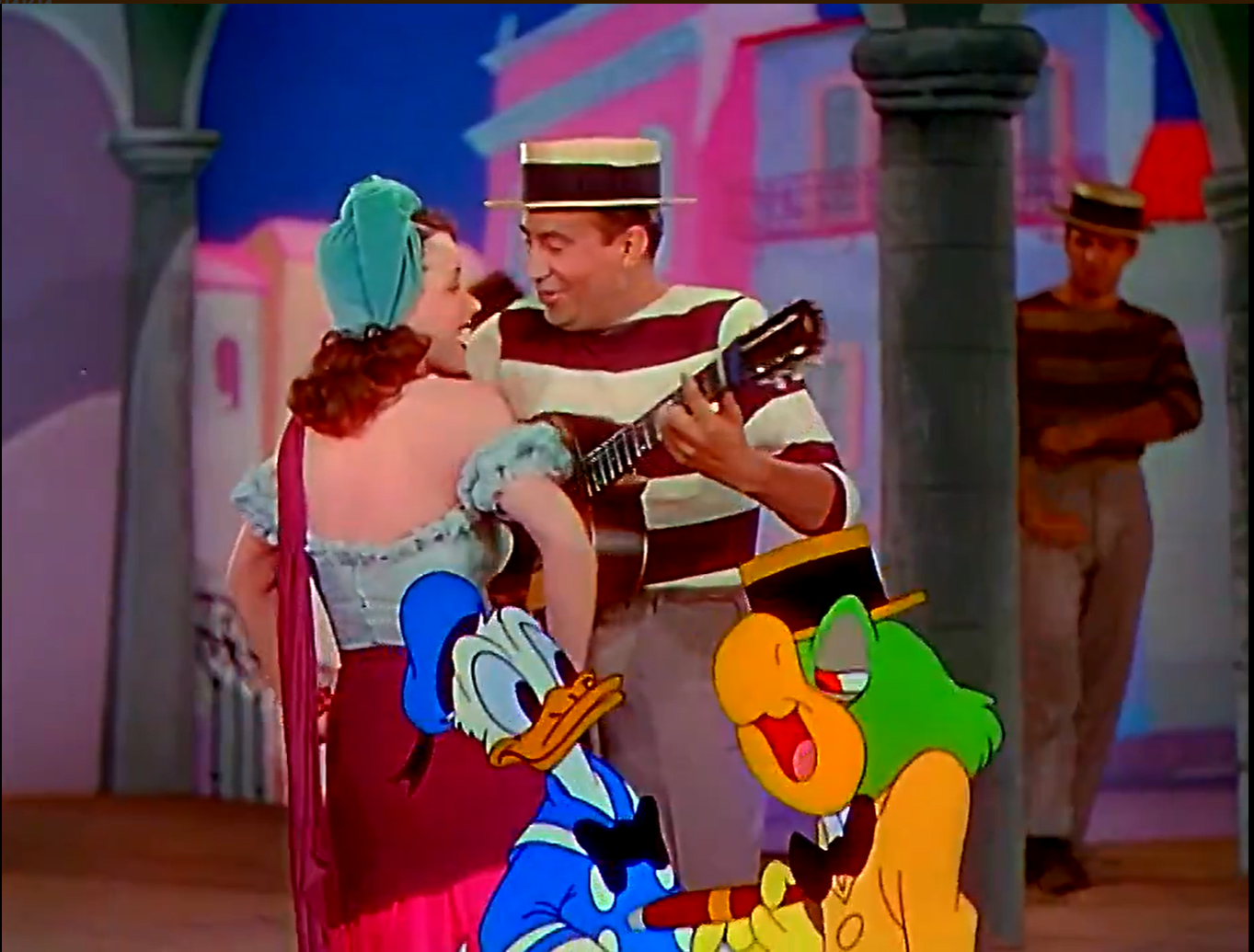
Commissioned as part of the State Department’s “Good Neighbor Policy” with South America, Disney’s seventh feature-length film is a follow-up to its similarly themed predecessor, Saludos Amigos (1942). Like Saludos, it’s more a series of vignettes than a cohesive narrative, and should be viewed primarily as a historical curio. With that said, some of the animation is pretty far-out (especially in the latter-half of the film), and several of the vignettes — including the first one, an amusing tale about a cold-blooded penguin who emigrates to a tropical island — make the movie worth sitting through at least once.

Redeeming Qualities and Moments:

  • Impressive early experimentation with simultaneous live action/cartoon
  • Some truly psychedelic animation

Must See?
No, though most film fanatics will likely be curious to check it out.

Links:

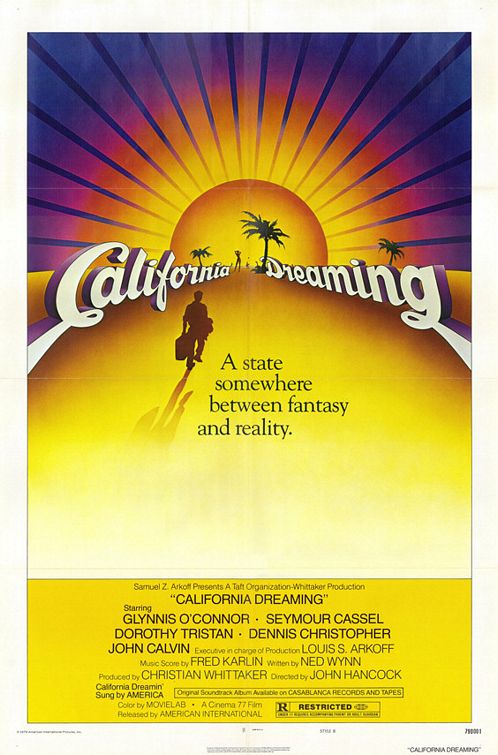
California Dreaming (1979)

California Dreaming (1979)

“I came in to dig the sounds and check out the local scene.”

Synopsis:
A nebbish (Dennis Christopher) from Chicago comes to California in search of sun and surf.

Genres, Themes, Actors, and Directors:

  • Comedy
  • Dennis Christopher Films
  • Glynnis O’Connor Films
  • Misfits
  • Seymour Cassel Films
  • Surfers

Review:
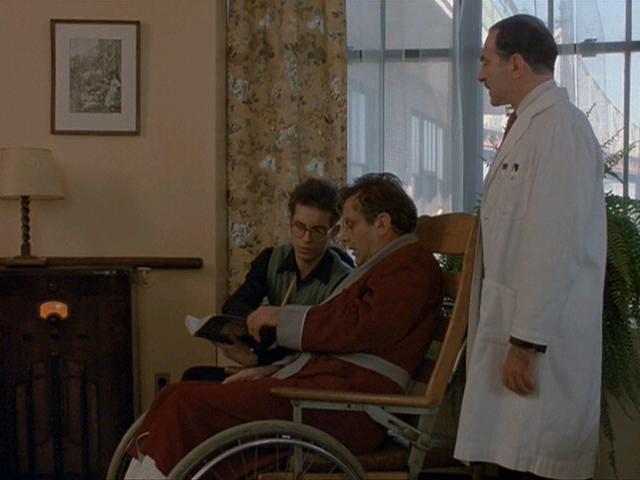
From beginning to end, this wannabe comedy contains unappealing characters, awful dialogue, unrealistic scenarios, and an instantly forgettable ensemble plot. I was astonished to find myself turned off by the eminently likeable Dennis Christopher:

and saddened to see one of my favorite young actresses — Glynnis O’Connor — reduced to playing a vapid surfer Betty named Corky.

In fact, I can’t even recommend this film to O’Connor fans, because it’s utterly depressing to see her trading in her previously smart, unusual roles for this one. While California Dreaming has a few diehard fans — check out some of the posts on IMDb, for instance — I suspect this is primarily because of its t&a factor more than anything else.

Redeeming Qualities and Moments:

  • Good use of location shooting in Southern California

Must See?
No. While listed as a Sleeper in the back of Peary’s book, I recommend sleeping through this one instead.

Links:

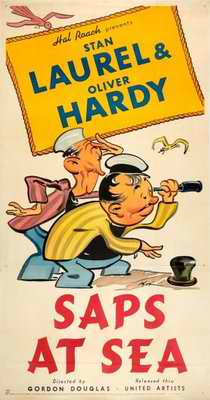
Saps at Sea (1940)

Saps at Sea (1940)

“You’re allergic to horns — in fact, you’re on the verge of hornomania!”

Synopsis:
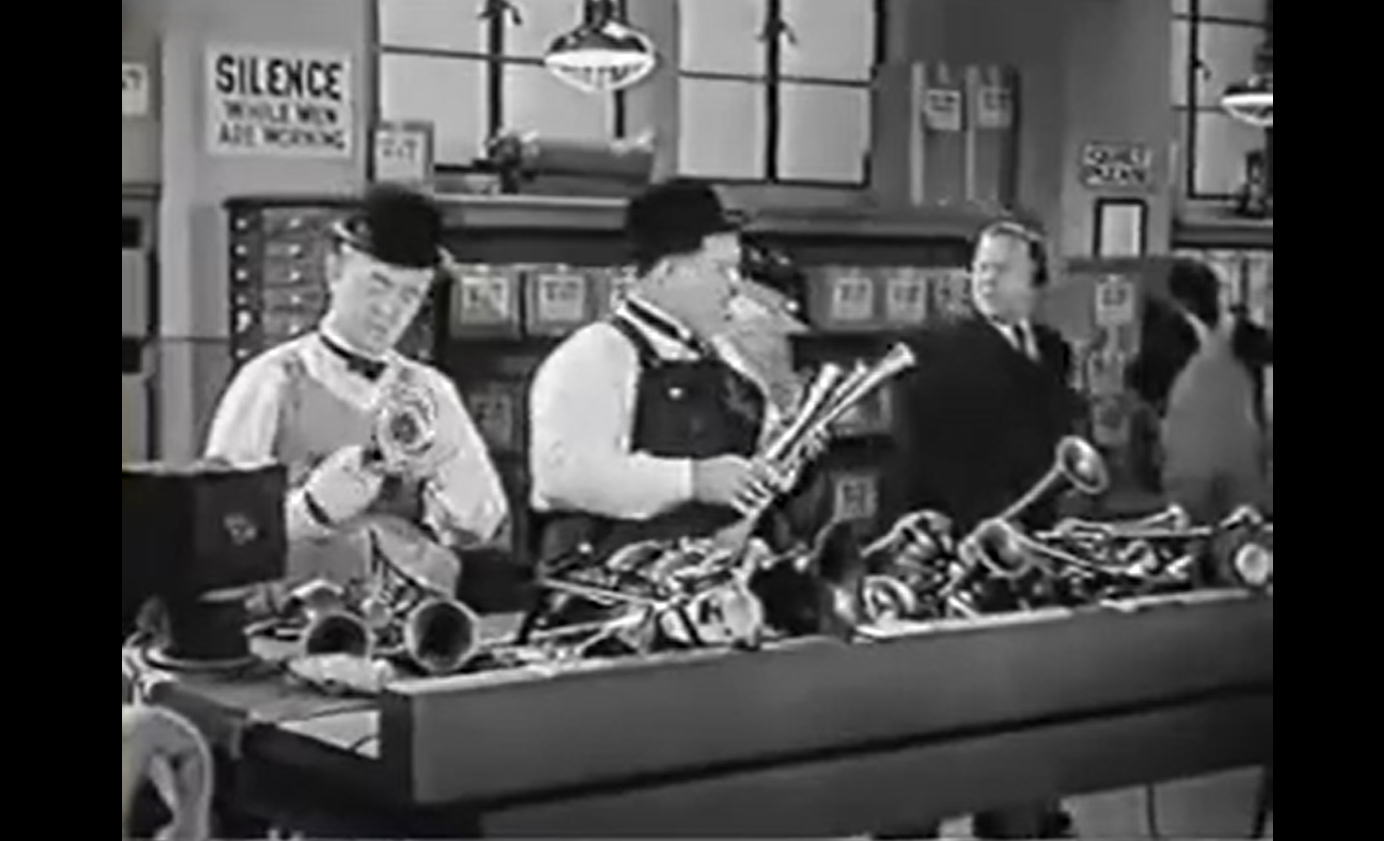
After Ollie (Oliver Hardy) has a nervous breakdown, he and Stan (Stanley Laurel) quit their jobs at a horn-testing factory, rent a boat for relaxation, and find themselves out to sea with an escaped convict.

Genres, Themes, Actors, and Directors:

  • At Sea
  • Comedy
  • Fugitives
  • Laurel & Hardy Films

Review:
While diehard Laurel and Hardy fans won’t be disappointed, this film is ultimately more a series of comedic skits (Stan and Ollie in a horn-testing factory; Ollie trying in vain to recuperate; Stan and Ollie dealing with a fugitive convict) than a full-length narrative. The material is mostly unoriginal, and the scene where Stan and Ollie are forced to eat an inedible meal on their ship is downright derivative of Chaplin’s shoelace-eating sequence in The Gold Rush (1925).

Film fanatics will be better off watching one of L&H’s earlier masterpieces, such as Sons of the Desert (1933), Way Out West (1937), or Blockheads (1938).

Redeeming Qualities and Moments:

  • The opening scenes at the horn-testing factory
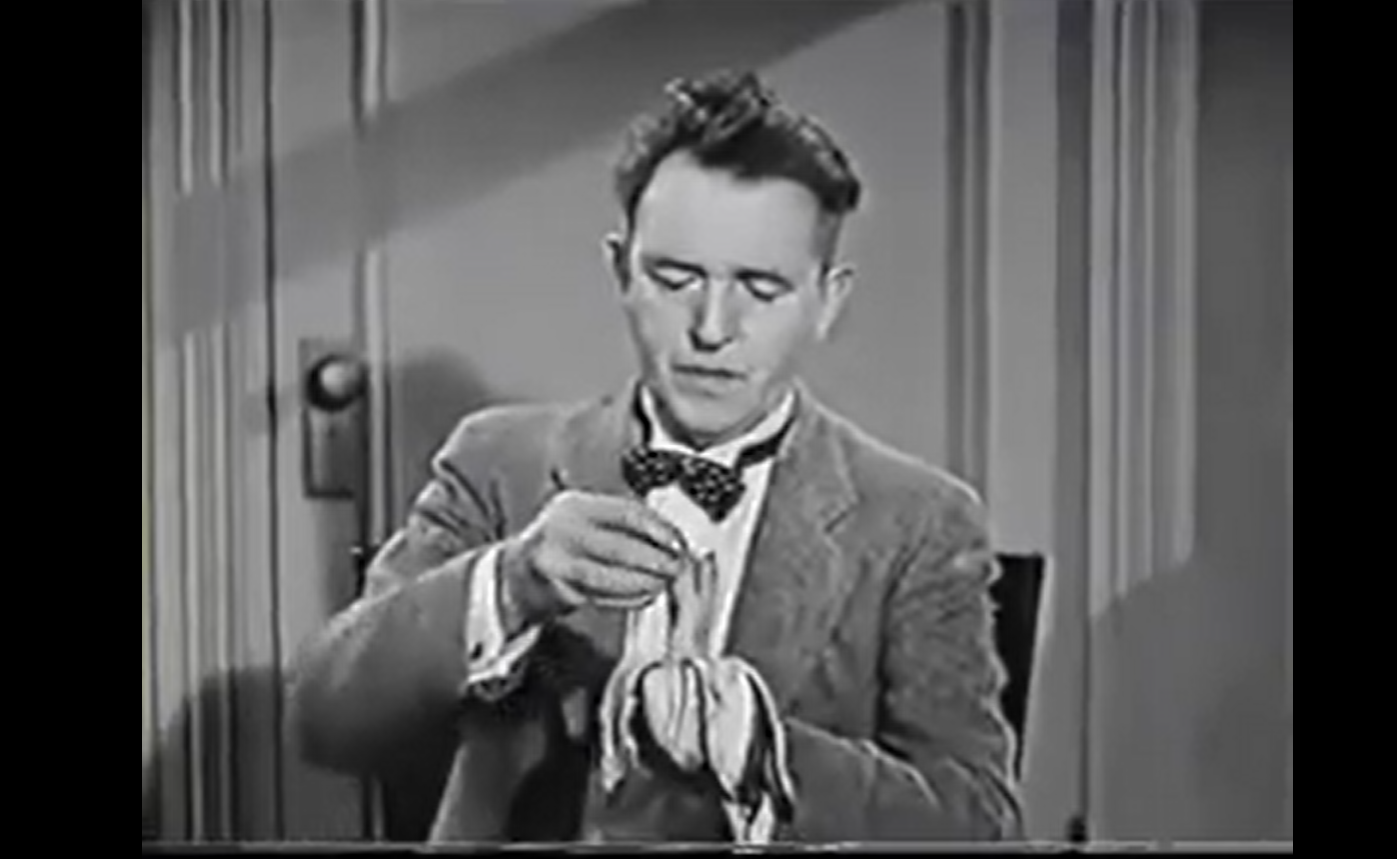
  • A surrealistic moment as Stan peels a banana without any fruit inside

Must See?
No. I’m not sure why this film is listed in the back of Peary’s book, other than its status as one of Laurel and Hardy’s later full-length works.

Links:

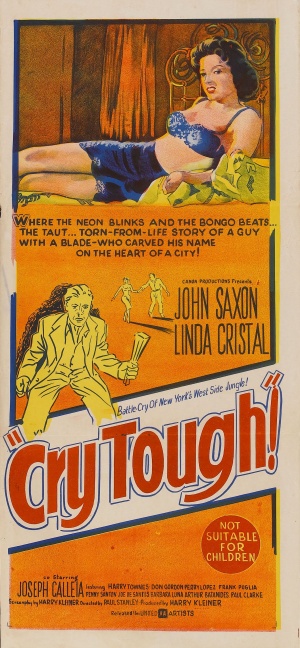
Cry Tough (1959)

Cry Tough (1959)

“We Puerto Ricans have only two choices: to make it the smooth, hard way like our immigrant fathers, or to break out fast to the point of a gun.”

Synopsis:
After spending a year in the slammer, second-generation Puerto Rican Miguel Estrada (John Saxon) tries to go straight, but finds himself pulled back into a life of crime in New York.

Genres, Themes, Actors, and Directors:

  • Ex-Cons
  • Gangsters
  • John Saxon Films
  • New York City
  • Puerto Ricans

Review:
This screen adaptation of Irving Shulman’s 1949 novel fails to deliver on its most basic premise: authentically portraying Puerto Rican culture in New York. While the film starts out strong, the plot quickly takes one predictable turn after the other, with Saxon ultimately being destroyed by his primary vice (women). Saxon is hunky eye candy (a la young Brando), but otherwise utterly unconvincing as a Puerto Rican; his female co-star (Linda Cristal) fares much better as the Cuban femme fatale for whom he throws away his tenuous freedom.

Redeeming Qualities and Moments:

  • One of the first cinematic depictions of Puerto Ricans in New York

Must See?
No. While it starts out strong, this film ultimately devolves into a predictable crime drama, and is not must-see viewing.

Links:

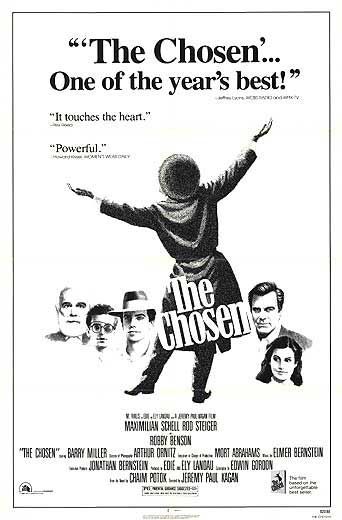
Chosen, The (1981)

Chosen, The (1981)

“Righteousness, mercy, strength to suffer and carry pain; that I want from my son, not a mind without a soul!”

Synopsis:
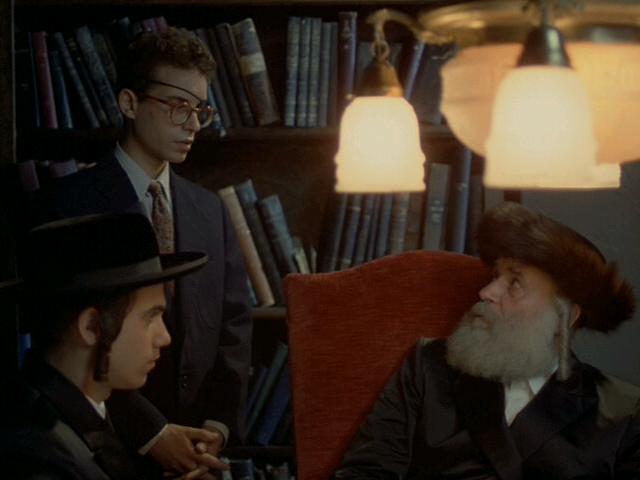
In 1940s New York, a Hasidic Jew (Robby Benson) and a Modern Orthodox Jew (Barry Miller) find their friendship threatened when their fathers (Rod Steiger and Maximilian Schell) disagree on the impending State of Israel.

Genres, Themes, Actors, and Directors:

  • Coming-of-Age
  • Father and Child
  • Friendship
  • Jews
  • Maximilian Schell Films
  • Robby Benson Films
  • Rod Steiger Films

Review:
I read Chaim Potok’s The Chosen (1967) for the first time as a teenager, and remember being utterly fascinated by the unfamiliar world of academic Judaism it evokes in such detail. Even more importantly, however, I could relate to Potok’s carefully rendered story about the throes of adolescent individuation, and a teenage friendship formed at least partly out of mutual fascination and curiosity — after all, who among us hasn’t cultivated a companion out of a desire to co-opt a bit of his or her life?

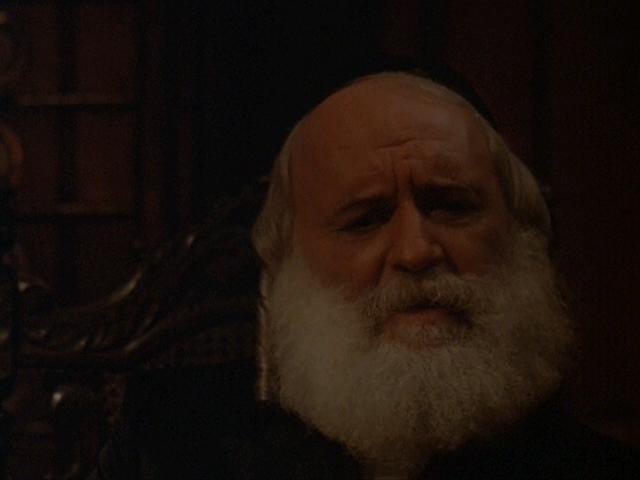
Fortunately, I was pleasantly surprised when finally watching this cinematic version of Potok’s novel, which does an excellent job distilling the essence of the book into a Hollywood drama. Robby Benson is admirably restrained here as an ultra-Orthodox Jew, and Barry Miller is equally convincing as his more liberal friend (who narrates the story). Most impressive, however, is director Jeremy Kagan’s presentation of sons and fathers whose loyalties and interests intersect in unexpected ways. While the film is marred by an overly sentimental final scene between Benson and Steiger, it nonetheless remains a fascinating glimpse at friendship and filial devotion during a very specific cultural era.

Redeeming Qualities and Moments:

  • Robby Benson’s sensitive portrayal as a proud Jewish teenager torn between tradition and personal interests
  • Barry Miller’s grounded performance as Benson’s friend
  • Rod Steiger as Benson’s ultra-Orthodox rabbi father
  • Maximilian Schell as Miller’s Zionist father
  • A powerful portrait of filial loyalty
  • A unique historical glimpse at mid-century Jews’ debate over the creation of Israel

Must See?
No, but it’s definitely worth renting at least once.

Links:

Rich Kids (1979)

Rich Kids (1979)

“They can do anything they want to do, can’t they? We haven’t got one single lousy human right!”

Synopsis:
Jamie (Jeremy Levy) helps his new friend Franny (Trini Alvarado) adjust to the fact that her parents (John Lithgow and Kathryn Walker) are on the brink of divorce.

Genres, Themes, Actors, and Directors:

  • Comedy
  • Coming-of-Age
  • Divorce
  • First Love
  • Friendship
  • John Lithgow Films
  • New York

Review:
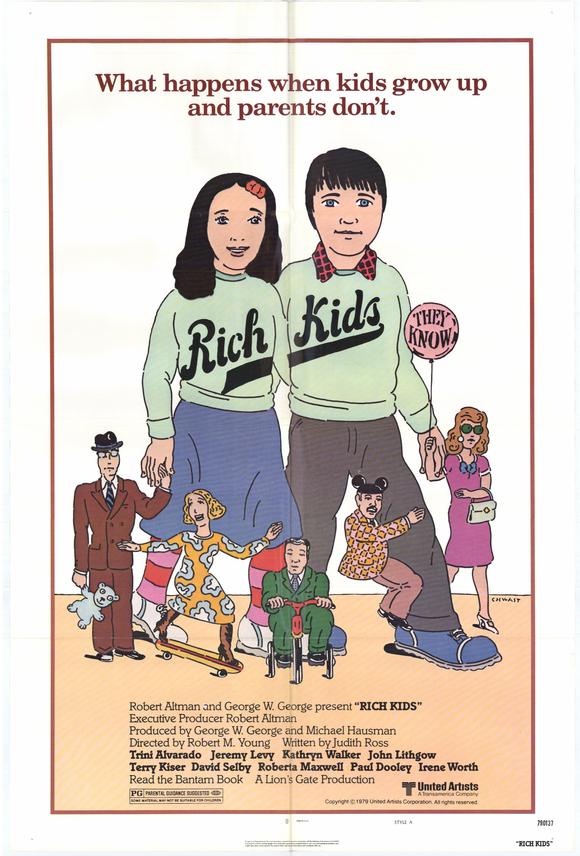
I’m a sucker for well-made films about worldly children who are ultimately better suited for survival than their clueless parents — and fortunately, Robert M. Young’s delightful Rich Kids is just such a film. These plucky adolescents (who are, as one character puts it, “too old to play doctor and too young to do anything else”) must rely on their wits, the limited information around them, and each other to figure out the reasons behind their parents’ inexplicable behavior, as well as an outlet for their budding desires. The dialogue and acting in Rich Kids — a somewhat disingenuous title, given that these scenarios could happen in families of any class — is both natural and intelligent, and the plot builds to a hilariously credible denouement. While this isn’t “must see” viewing, it’s certainly a delight, and worth watching at least once.

Redeeming Qualities and Moments:

  • Fine performances by Trini Alvarado and Jeremy Levy
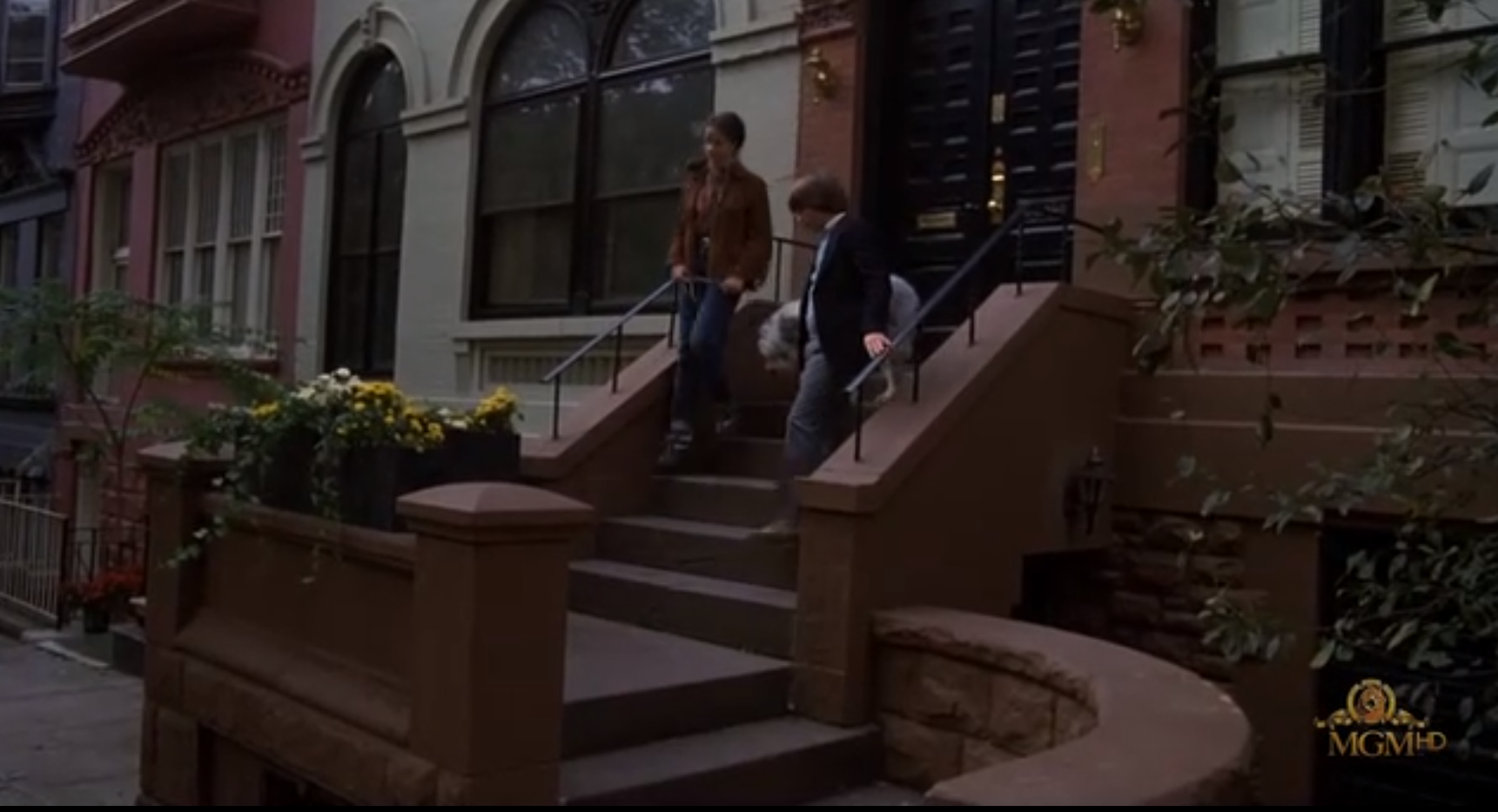
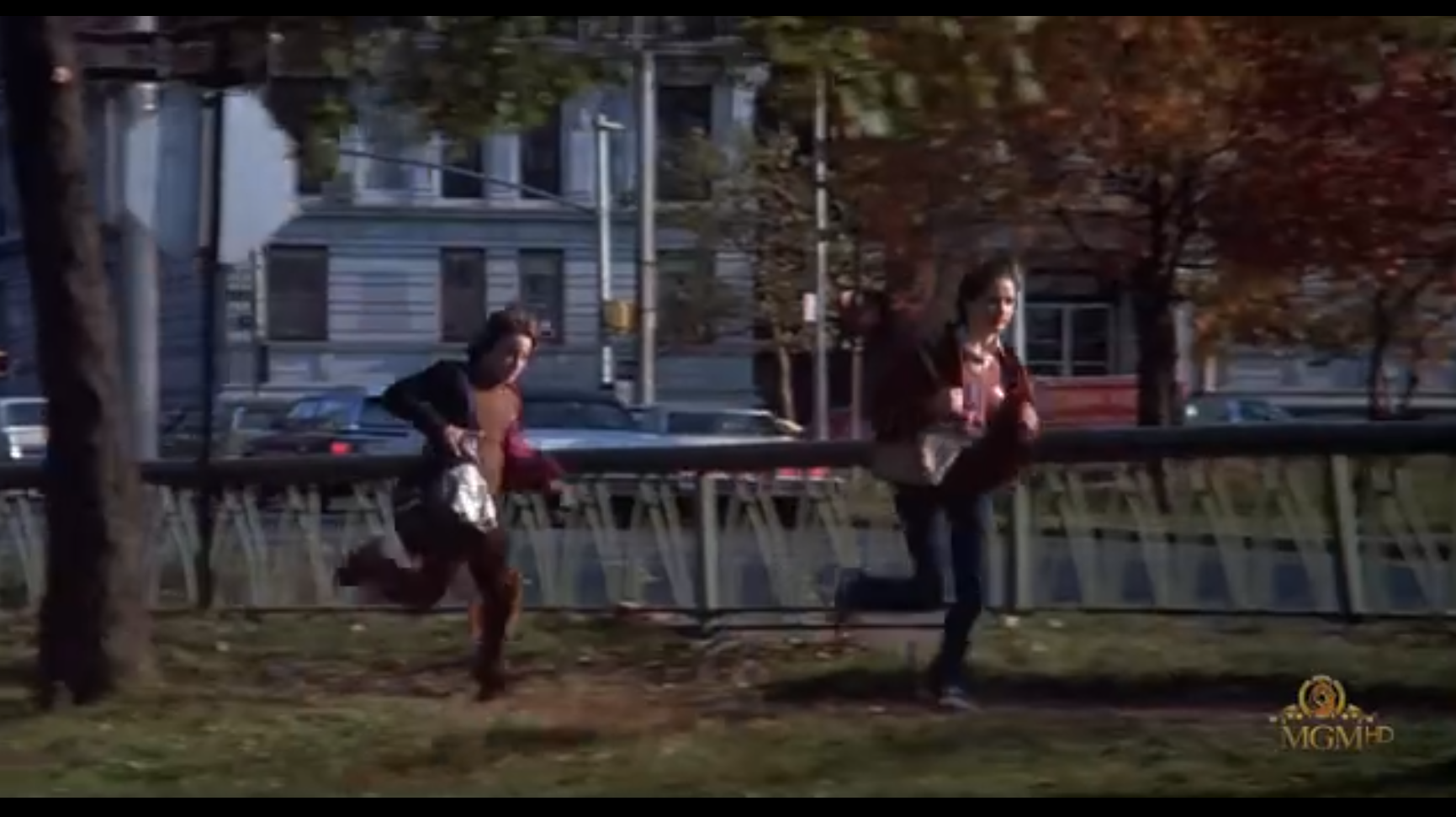
  • Excellent on-location footage in New York

Must See?
No, but it’s a good little sleeper.

Links:

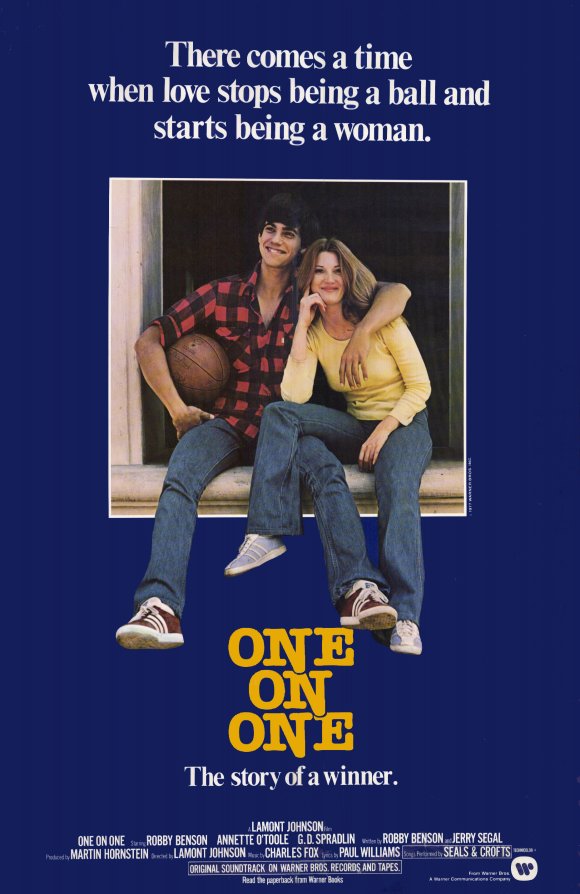
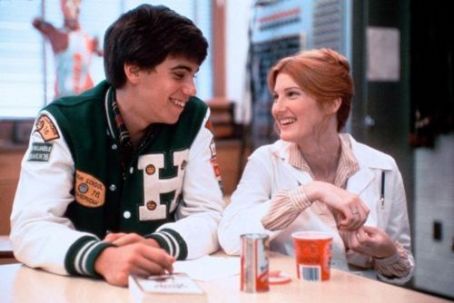
One on One (1977)

One on One (1977)

“They’re trying to take my athletics scholarship away from me — the bastards!”

Synopsis:
After winning a full scholarship to a university in Los Angeles, high school basketball star Henry Steele (Robby Benson) finds himself struggling to succeed.

Genres, Themes, Actors, and Directors:

  • Basketball
  • College
  • Corruption
  • Coming-of-Age
  • Robby Benson Films
  • Underdogs

Review:
Listed as a Sleeper in the back of Peary’s book, this Robby Benson vehicle (he also co-wrote the script) offers all the standard cliches of every sports flick you’ve ever seen: an underdog who desperately wants to make it big struggles valiantly to succeed before scoring major points in the final “big game” (whoops! I gave it away). Yet it’s also a bravely cynical look at the corruption so rampant in the world of college sports: Henry is offered an all-expenses-paid scholarship (despite his limited academic abilities), a car, a tutor to help him pass his classes, a well-paying sinecure, and two free passes to each home game (which he’s able to sell for a whopping $300 each). Yet as soon as the tables turn — and the powers-that-be decide he’s no longer worthy star material — he finds himself fighting against the very forces which once buoyed his success. There are no surprises in One on One (again, my apologies for giving the ending away!), but getting to the final triumphant scene of this movie seems to be the whole point of its narrative journey.

Redeeming Qualities and Moments:

  • Robby Benson’s sincere performance as Henry
  • A scathing glimpse at corruption in the NCAA
  • Melanie Griffith in a small role as the duplicitous hitchhiker Benson picks up in L.A.

Must See?
No. While this is an enjoyable little sleeper, it’s only must-see viewing for hardcore Robby Benson fans.

Links:

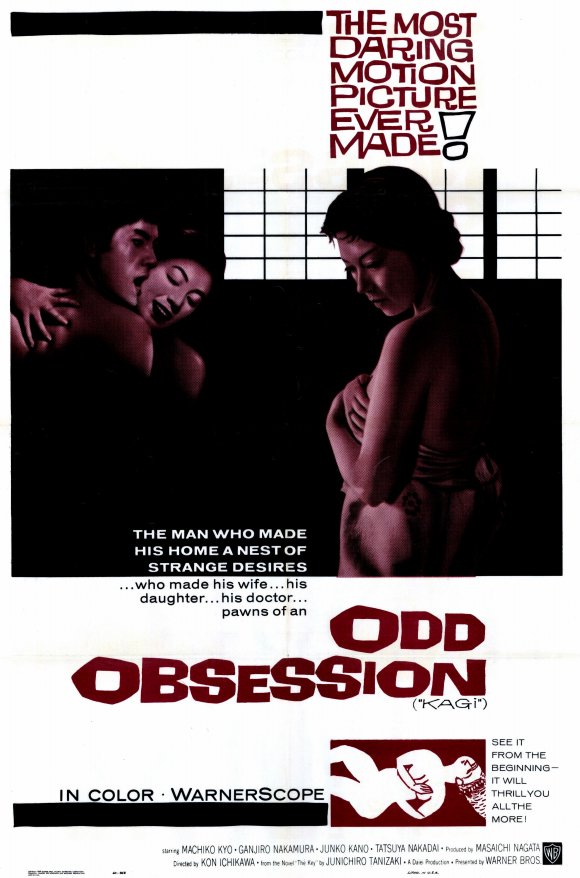
Kagi / The Key / Odd Obsession (1959)

Kagi / The Key / Odd Obsession (1959)

“Man’s senility is believed to begin at the age of 10.”

Synopsis:
An elderly, ailing husband (Ganjiro Nakamura) tries to resurrect his waning virility by presenting his beautiful younger wife (Machiko Kyo) to his daughter’s fiance (Tatsuya Nakadai).

Genres, Themes, Actors, and Directors:

  • Black Comedy
  • Japanese Films
  • Jealousy
  • Kon Ichikawa Films
  • Sexuality

Review:
Kon Ichikawa’s provocative black comedy — based on a novel by famed Japanese author Junichiro Tanizaki — makes for fascinating yet challenging viewing. Since characters’ motivations aren’t always clear, we never know what to expect from them, and thus we’re kept in suspense from beginning to end. Kyo’s wifely character is particularly inscrutable — how much does she know about her husband’s plans? — and Ichikawa’s choice not to let us know what’s running through her mind differs radically from the novel (which consists of alternating diary entries written by both husband and wife).

As highly charged as the eroticism is in Kagi, it’s implied rather than flaunted: the characters never explicitly state what’s going on, and instead we must rely on their facial reactions to guess the content of racy photographs, or to understand that a particular character has no clothing on. Symbolism also prevails: in one unusually provocative shot, the aging husband’s dark-rimmed glasses fall onto his wife’s pale chest, hinting at the distance that exists between his lustful gaze and her sensuous availability. While not all of Ichikawa’s stylistic choices work — his freeze frames near the beginning of the film seem like mere affect, for instance — his unique sensibility ultimately adds just the right flavor of absurdity to this darkly comic tale.

Redeeming Qualities and Moments:

  • An intriguingly perverse, erotically charged saga of familial dysfunction

Must See?
Yes, simply as an essential entry in Kon Ichikawa’s impressive oeuvre.

Categories

  • Important Director

Links:

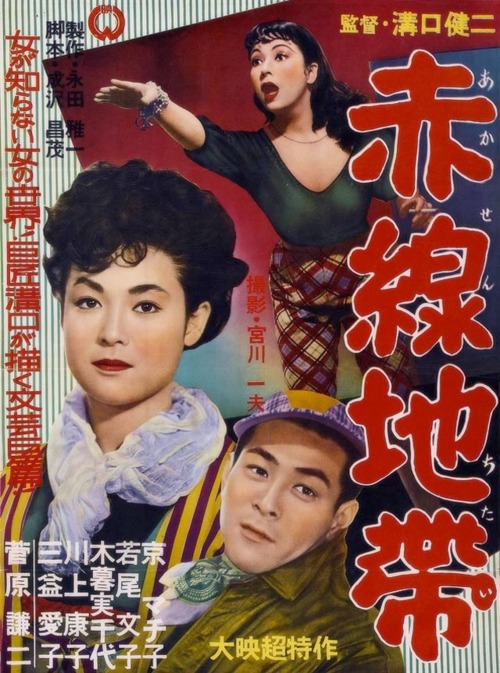
Street of Shame (1956)

Street of Shame (1956)

“You can wipe off your rouge, but not the makeup of your trade.”

Synopsis:
Prostitutes in a Japanese brothel work to support their children, husbands, and fathers.

Genres, Themes, Actors, and Directors:

  • Feminism and Women’s Issues
  • Japanese Films
  • Kenzi Mizoguchi Films
  • Prostitutes

Review:
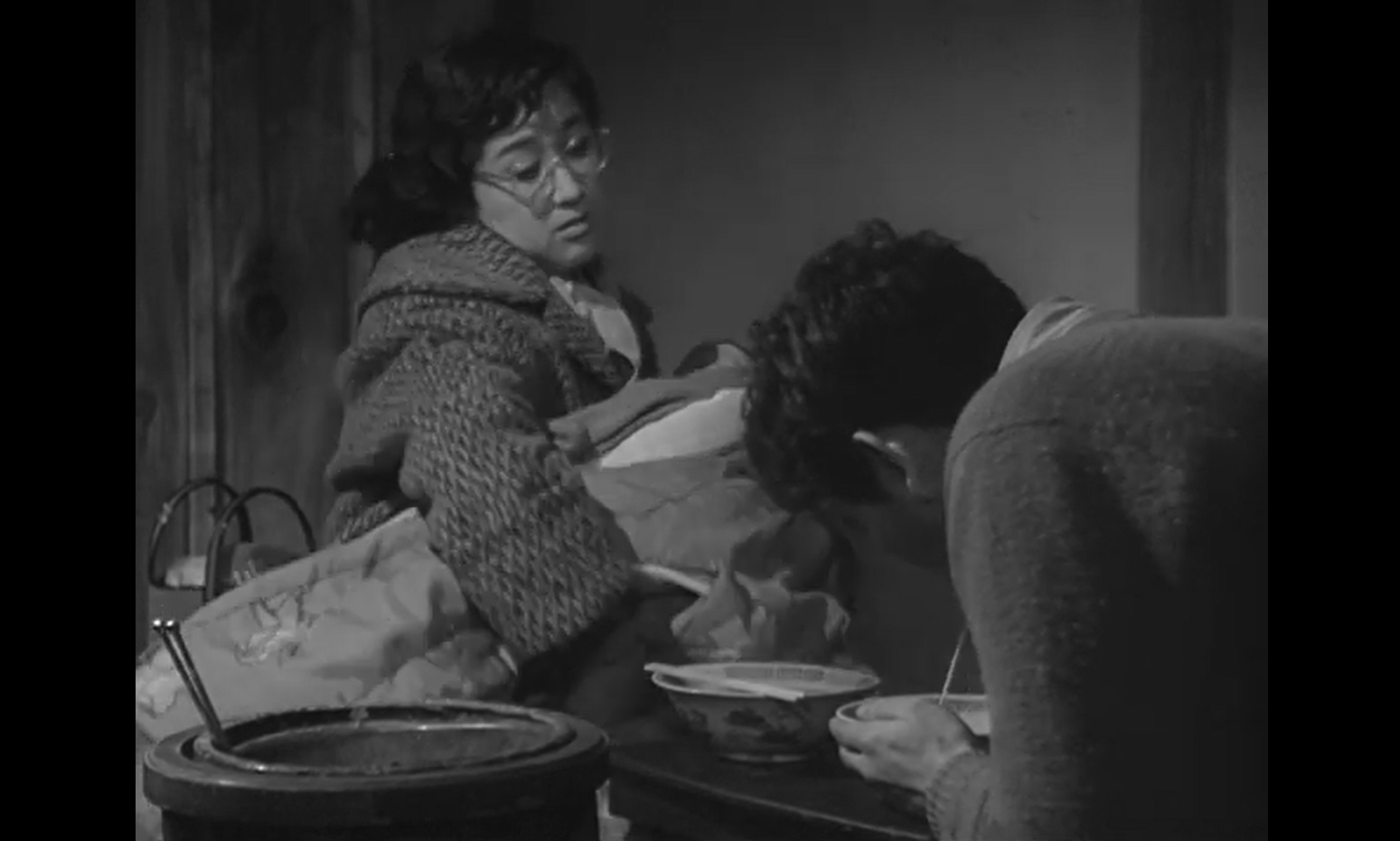
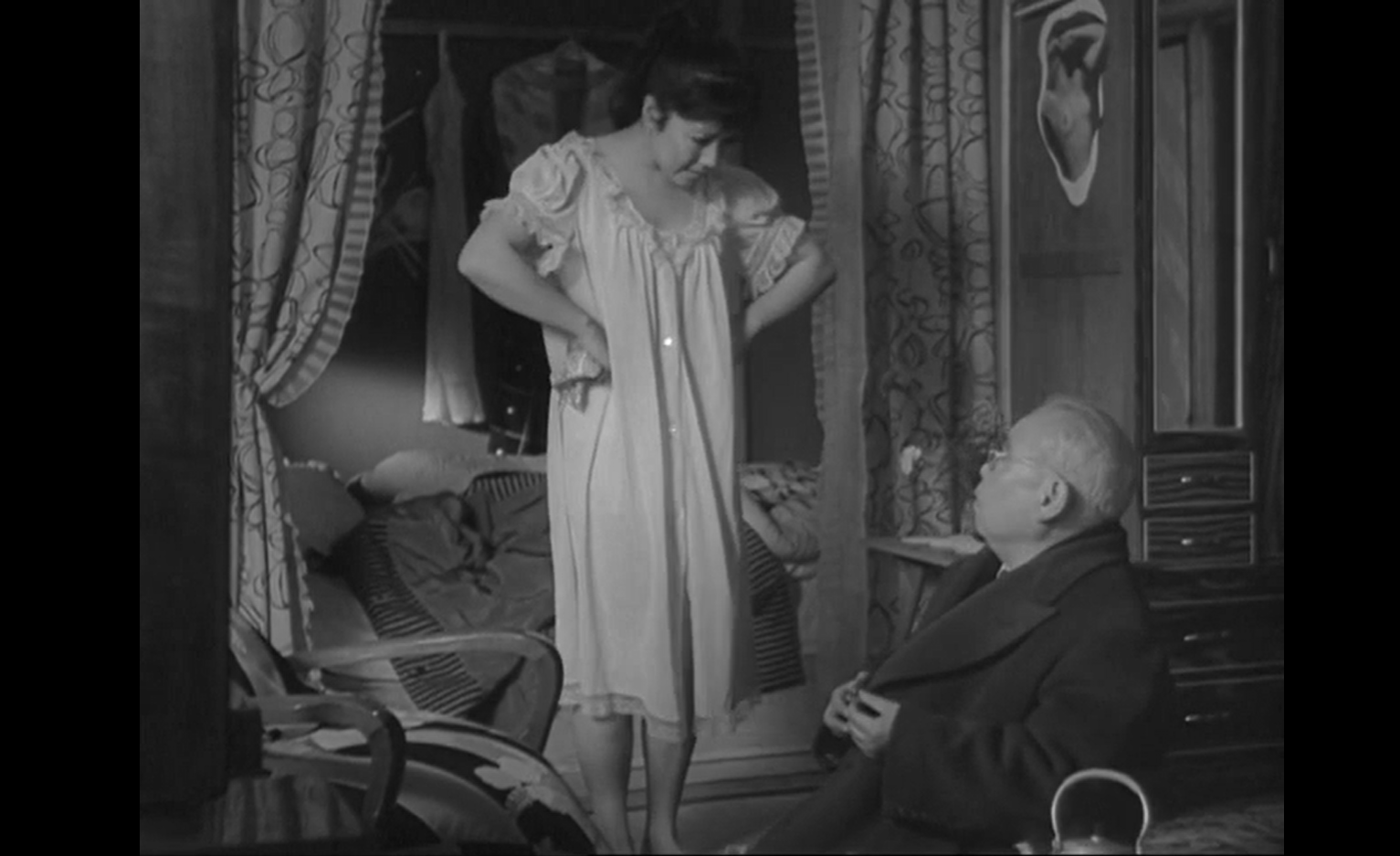
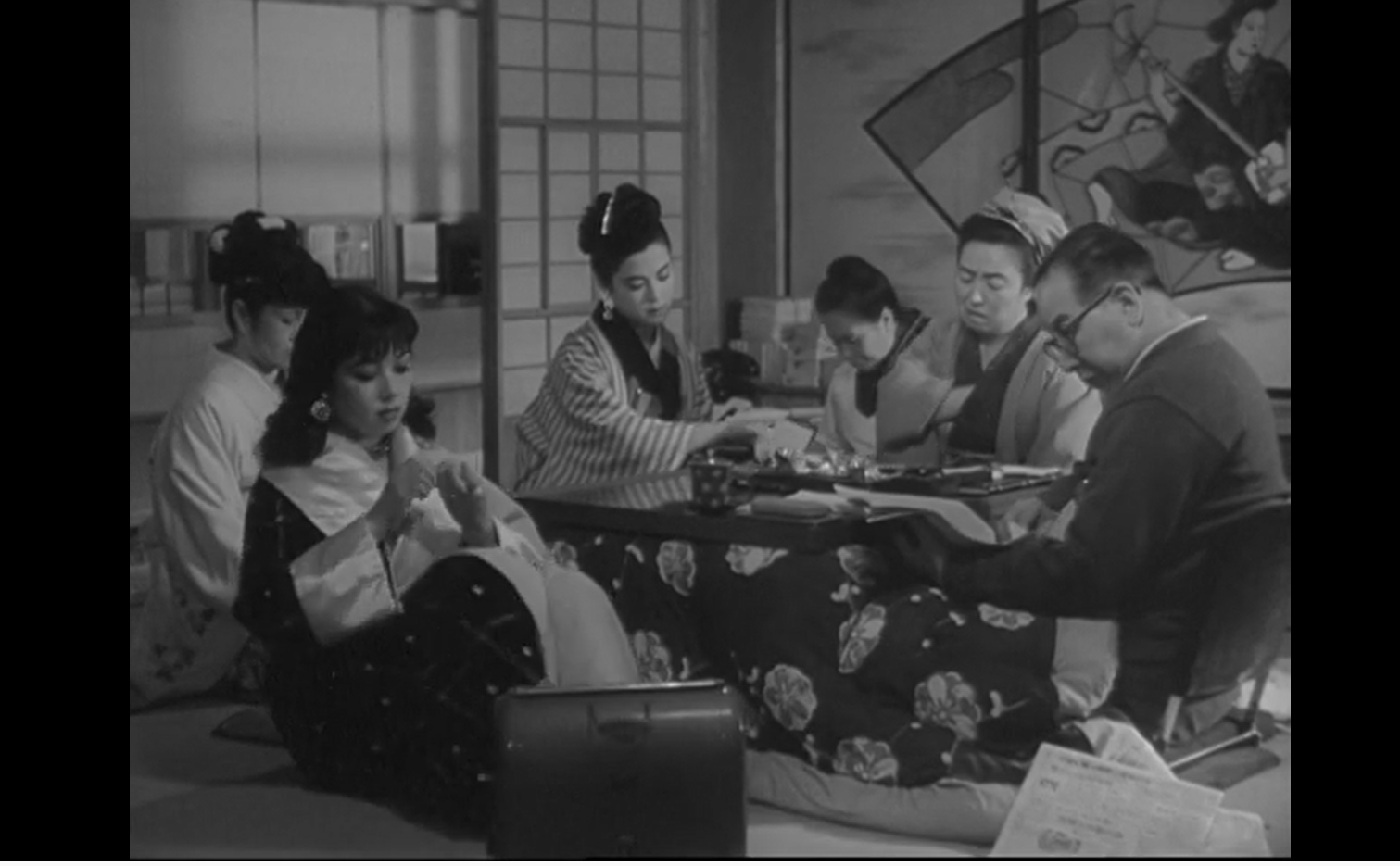
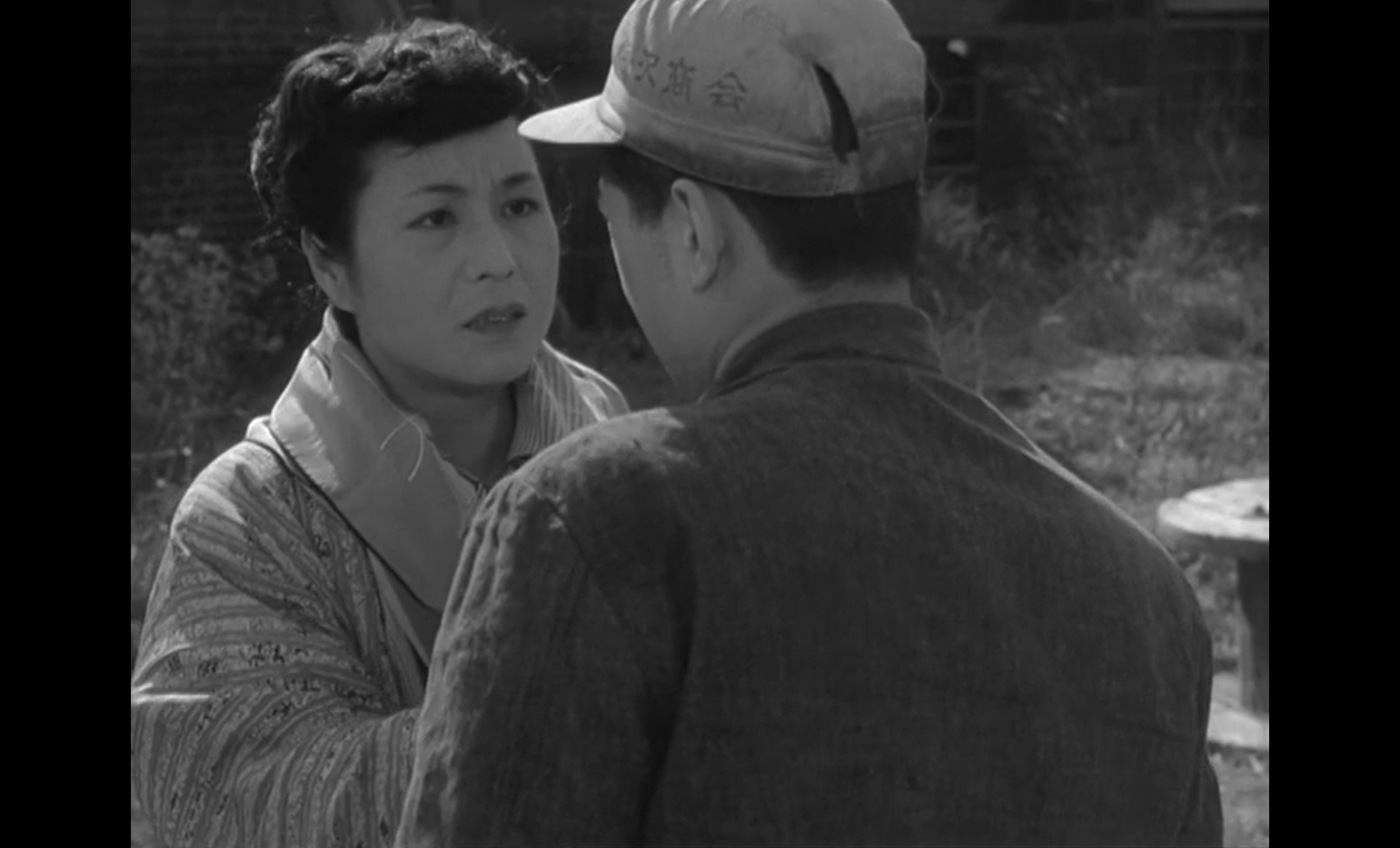
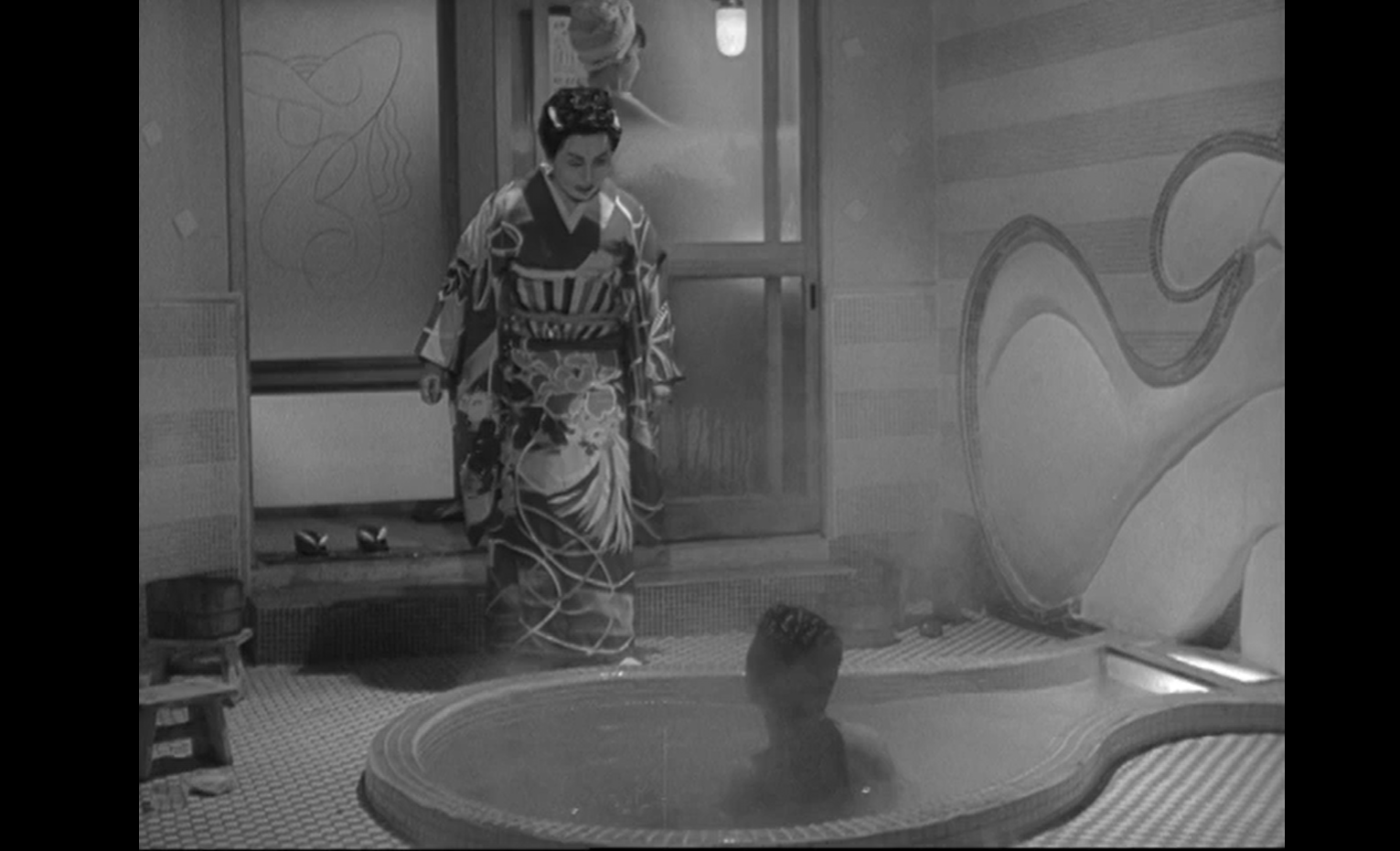
In his final film, Kenji Mizoguchi once again shows enormous sympathy for the plight of women in patriarchal Japanese society. Like its virtual companion piece, A Geisha / Gion Bayashi (1953) — but unlike most of Mizoguchi’s better-known films — Street of Shame takes place in the present, and showcases the difficulties Japanese women continue to face in terms of survival and self-support. A simple ensemble tale of five prostitutes is punctuated by ongoing news of a governmental initiative to delegitimize their profession; yet Mizoguchi wisely refrains from passing judgment on this sticky societal dilemma. While prostitution is clearly shown to debase these women — and is viewed by one (bespectacled wife and mother Michiyo Kagure) as an option only marginally better than suicide:

— it is nonetheless the only way they can earn enough money to pay off their debts, which range from a father’s bail bond, to medication for a TB-ridden husband, to a simple desire for fancy clothes and jewelry.

There are many powerful moments in this at-times didactic, yet still consistently moving, film. My favorite has the mercenary Yasumi (Ayako Wakao) running into one of her regular Johns at a cafe while he is eating with his family, being introduced as his secretary, and giving him a sly wink when leaving.

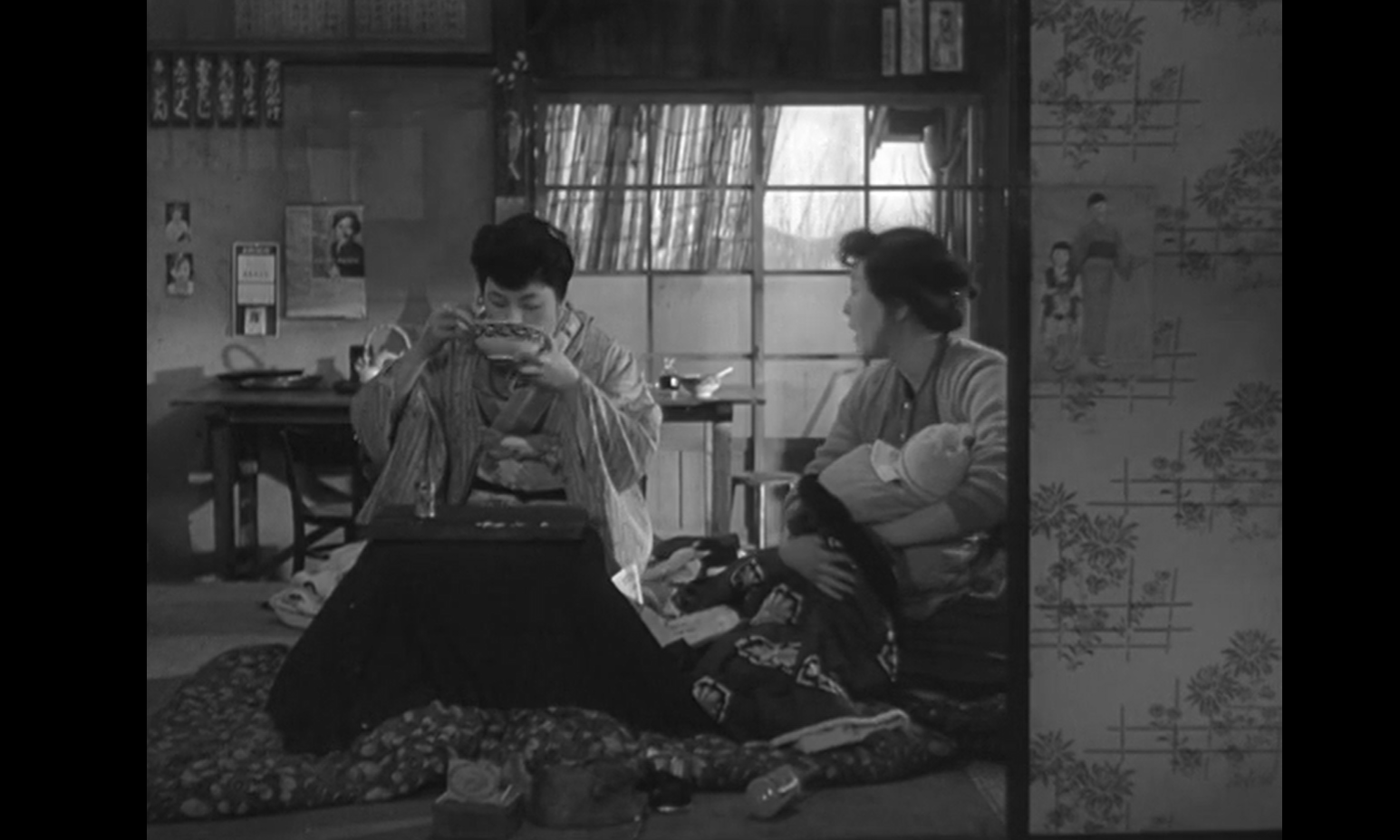
A particularly painful scene shows aging widow Yumeko (Aiki Mimasu) stopping to eat some noodles on her way to visiting her son, making herself presentable in the mirror, and being told snidely by the restaurant’s nursing proprietor, “You can wipe off your rouge, but not the makeup of your trade.”

Perhaps the most startling scene shows tough, sexy young Mickey (Machiko Kyo) — who never stops eating, dancing, or shopping — propositioning her own father in angry defiance of his request that she come home and stop debasing their family name.

While Mickey — a hip and sassy girl in her American pedal-pushers — appears to be eagerly embracing prostitution as a way of life, she, too, has skeletons in her closet which have led her down this tenuous, socially-caustic career path.

Redeeming Qualities and Moments:

  • Nuanced performances by each of the five lead actresses
  • Many powerful, heartbreaking moments
  • Fine cinematography and sets

Must See?
Yes. Mizoguchi’s final film — listed as a Personal Recommendation and a movie with historical importance in the back of Peary’s book — should be seen by all film fanatics.

Categories

  • Foreign Gem
  • Important Director

Links:

Twonky, The (1953)

Twonky, The (1953)

“That television set isn’t a hallucination; that’s a twonky. I had twonkies when I was a child. A twonky is something you do not know what it is.”

Synopsis:
When his wife (Janet Warren) leaves town for a few days, a professor (Hans Conried) finds his new television set acting very strangely.

Genres, Themes, Actors, and Directors:

  • Aliens
  • Arch Oboler Films
  • Hans Conried Films
  • Robots
  • Satires and Spoofs
  • Science Fiction
  • Television
  • Time Travel

Review:
This quaint sci-fi curio by Arch Oboler — a former radio scriptwriter who directed the first post-apocalyptic cautionary film, Five (1951) — is badly dated in many ways, but its premise — a mobile television set is inhabited by a time-travelling alien which fiercely protects its “owner” (Conried) at any cost — remains intriguing. As with Five, Oboler is once again remarkably prescient: at a time when television sets were still a brand-new fixture in Americans’ homes, he effectively lampoons their tendency to literally “take over” one’s life, utilizing the metaphor of TV-as-alien-entity to show just how powerful the agency of this seemingly innocuous “entertainment box” can be.

While the satire in Twonky is never fully developed — it devolves into unfortunate slapstick by the final scenes, and the Twonky’s ultimate nefarious purpose on Earth isn’t revealed — I’ll admit I was impressed by Oboler’s attempt to skewer the mind-numbing qualities of television long before it became commonplace to do so. Indeed, when the Twonky hypnotizes everyone around it into drawling, “I have no complaints,” one can’t help admiring this time-travelling creature for so accurately “predicting” its future role…

Redeeming Qualities and Moments:

  • A clever satirical premise
  • Hans Conried’s unintentionally campy performance as the put-upon Professor West
  • Billy Lynn as West’s well-meaning football-coach friend

Must See?
Yes, simply for its status as a cult curiosity.

Categories

  • Cult Movie

Links: