Browsed by
Category: Response Reviews

My comments on Peary’s reviews in Guide for the Film Fanatic (Simon & Schuster, 1986).

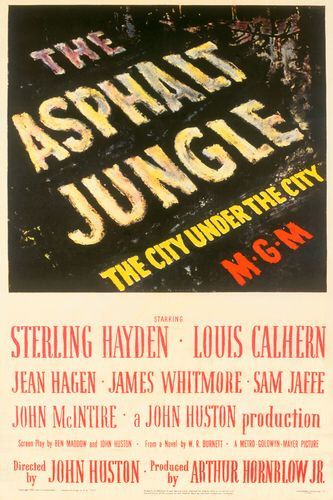
Asphalt Jungle, The (1950)

Asphalt Jungle, The (1950)

“If you want fresh air, don’t look for it in this town!”

Synopsis:
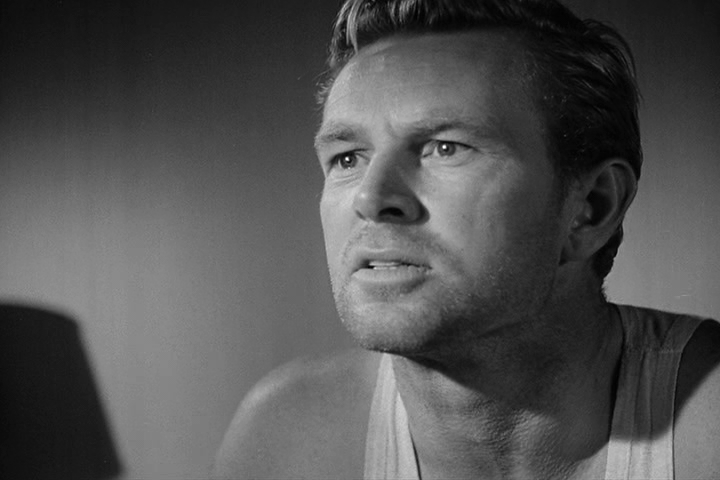
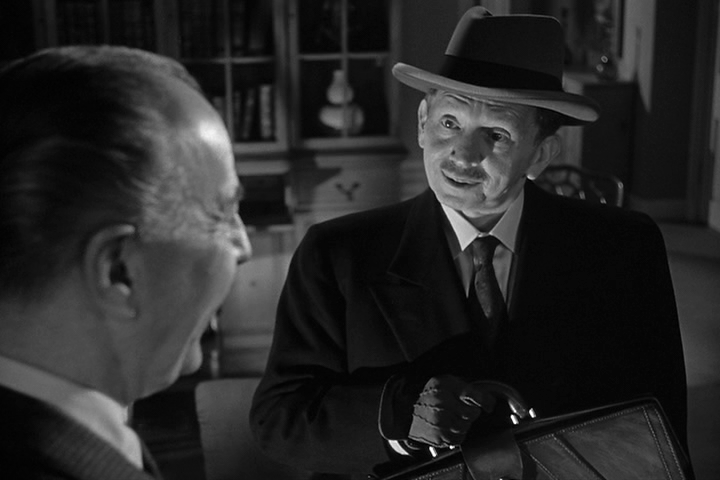
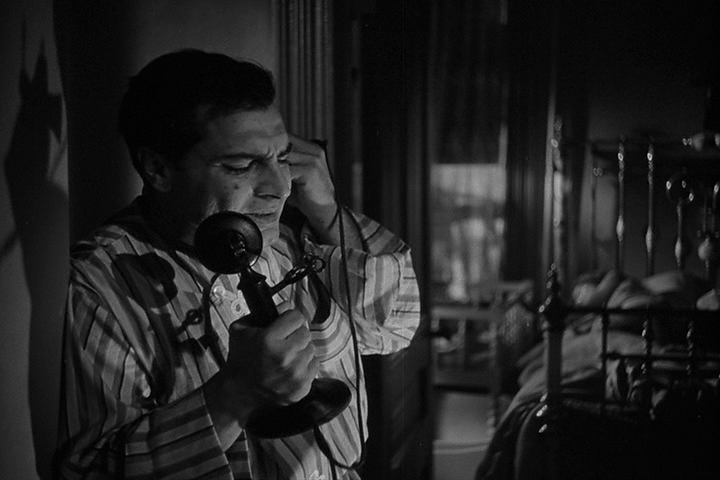
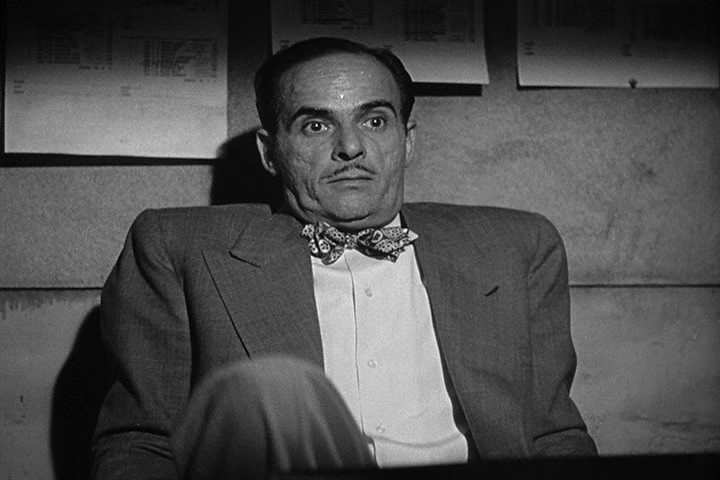
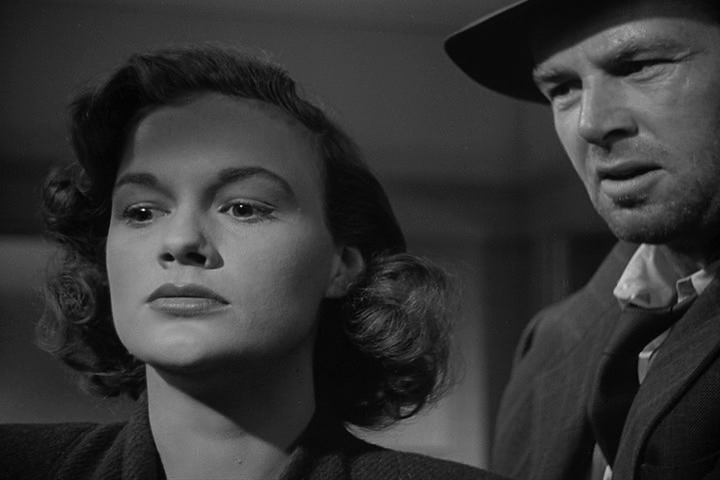
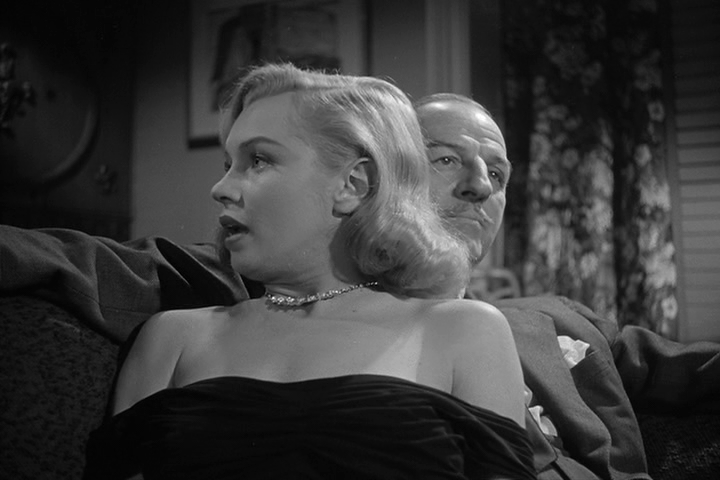
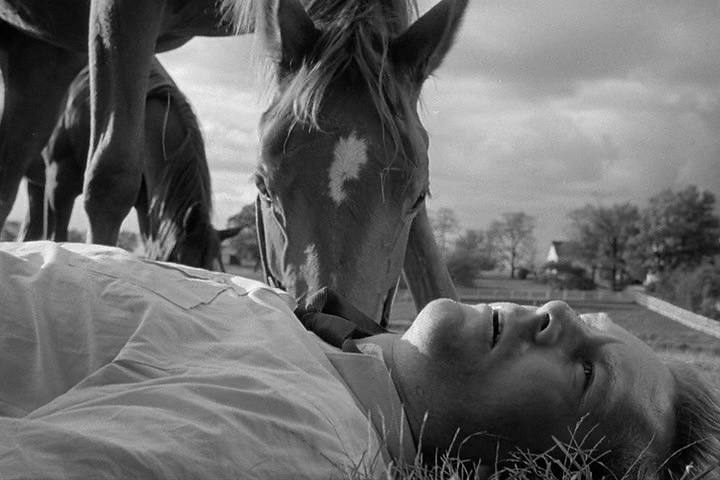
A criminal mastermind (Sam Jaffe) enlists the help of a bookie (Marc Lawrence) in pulling together a crew for a major heist, including a no-nonsense driver (James Whitmore); a safecracker (Louis Ciavelli) with a wife (Teresa Celli) and baby; a “hooligan” (Sterling Hayden) whose would-be girlfriend (Jean Hagen) longs for more commitment; and a supposedly-wealthy financier (Louis Hayward) with a bed-ridden wife (Dorothy Tree), a sexy young mistress (Marilyn Monroe), and an ambitious private investigator (Brad Dexter). But things quickly go wrong during the heist, as loyalties shift, a crooked cop (Barry Kelley) is put under pressure, and the team must decide how to escape detection.

Genres, Themes, Actors, and Directors:

  • Corruption
  • Heists
  • James Whitmore Films
  • Jean Hagen Films
  • John Huston Films
  • John McIntire Films
  • Living Nightmare
  • Louis Calhern Films
  • Marilyn Monroe Films
  • Sam Jaffe Films
  • Sterling Hayden Films

Response to Peary’s Review:
Peary is surprisingly unenthusiastic about this “seminal heist film” by writer-director John Huston, co-scripted by Ben Maddow and based on a pulp novel by W.R. Burnett. He argues that the film’s “reputation… has diminished somewhat”, and that “because Huston strove for realism, he deglamorized the characters” to the point where “we find [them] and their story interesting but don’t feel empathy for any of them”. He writes (I disagree) that “the success of the heist is of paramount importance only to the most respectable participant, Calhern, the piece’s villain — so we don’t particularly care if the heist fails as we do in a film like The Killing, where all the thieves (whom we have sympathy for) desperately need money to have a chance for a happy life”. Peary writes that “we care only for the women who suffer because of their men’s foolish endeavors”, but I once again disagree and actually feel the opposite. Finally, he notes that while the “picture builds a convincing case for there being pervasive corruption on every level of society, including the police”, this is spoiled when, “in the worst scene, police chief John McIntire lectures the press about how 99% of cops are honest”. Peary does at least concede that the acting in the film is “uniformly excellent”.

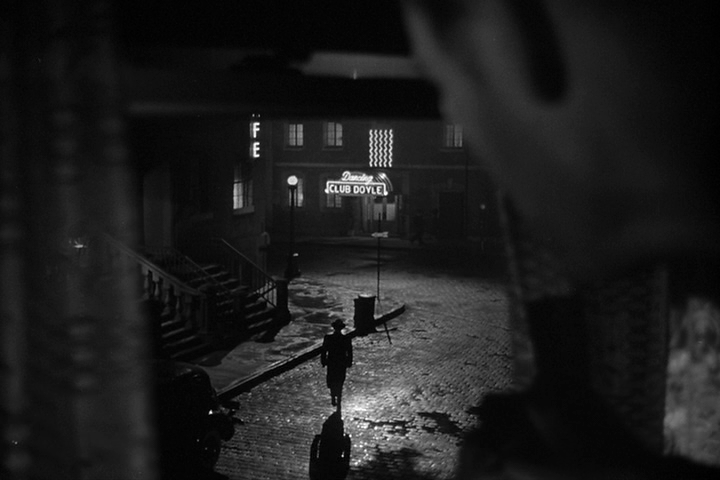
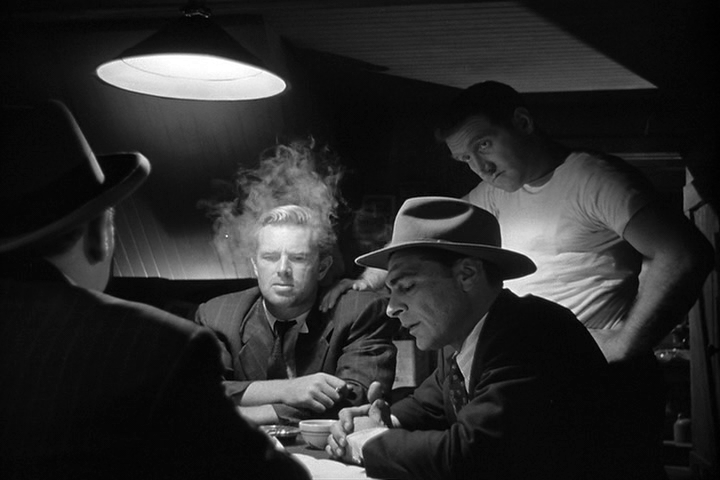
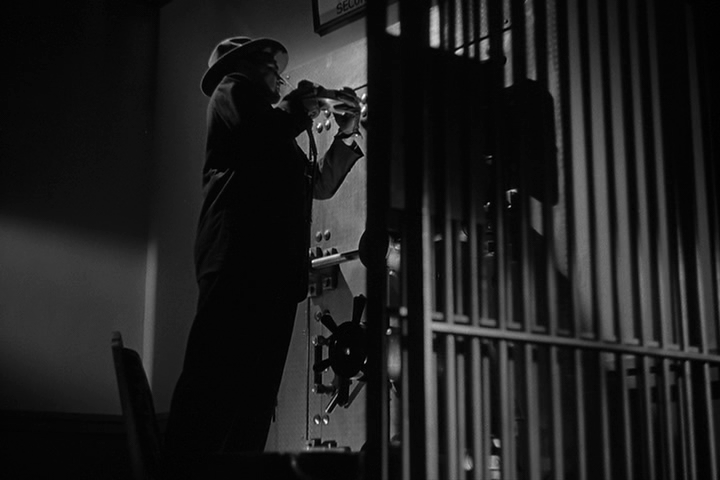
While Stanley Kubrick’s The Killing (1956) is certainly a masterpiece in its own right, The Asphalt Jungle remains a different brand of classic. The male characters in …Jungle represent a nuanced gamut of archetypes, all striving to assert or maintain their masculinity through various means: efficiency at work while providing for one’s family (Ciavelli); unwavering loyalty (Whitmore); raw ambition (Dexter); faux machismo (Lawrence); desire for an idyllic return to the country (Hayden); calm, cool business savvy along with prurient if shielded lust (Jaffe); sociopathic corruption (Kelley); and virility, financial prowess, and public esteem (Hayward). All these characters, naturally, find themselves challenged in unique ways, as their ability to prove themselves and/or achieve their goals steadily dwindles. Crime most certainly doesn’t pay for anyone in this crew. Nobody but the women (and a few “good” men) are left standing by the end of this bleakest of heist flicks, which remains a consistently gripping, atmospheric, well-acted, tightly scripted noir. It’s definitely must-see viewing.

Redeeming Qualities and Moments:

  • A truly fine ensemble cast


  • Huston’s direction

  • Harold Rossen’s cinematography


  • The exciting heist sequence
  • Ben Maddow and Huston’s script:

    “Crime is simply a left-handed form of human endeavor.”

Must See?
Yes, as a genuine noir classic by a master director.

Categories

  • Genuine Classic
  • Important Director

(Listed in 1001 Movies You Must See Before You Die)

Links:

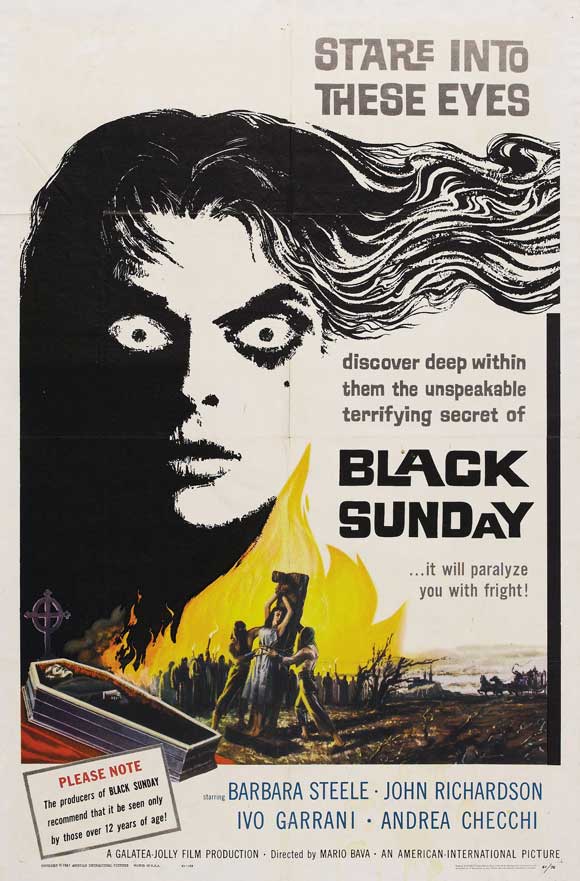
Black Sunday (1960)

Black Sunday (1960)

“In her you will live again, speak again — smile as she does!”

Synopsis:
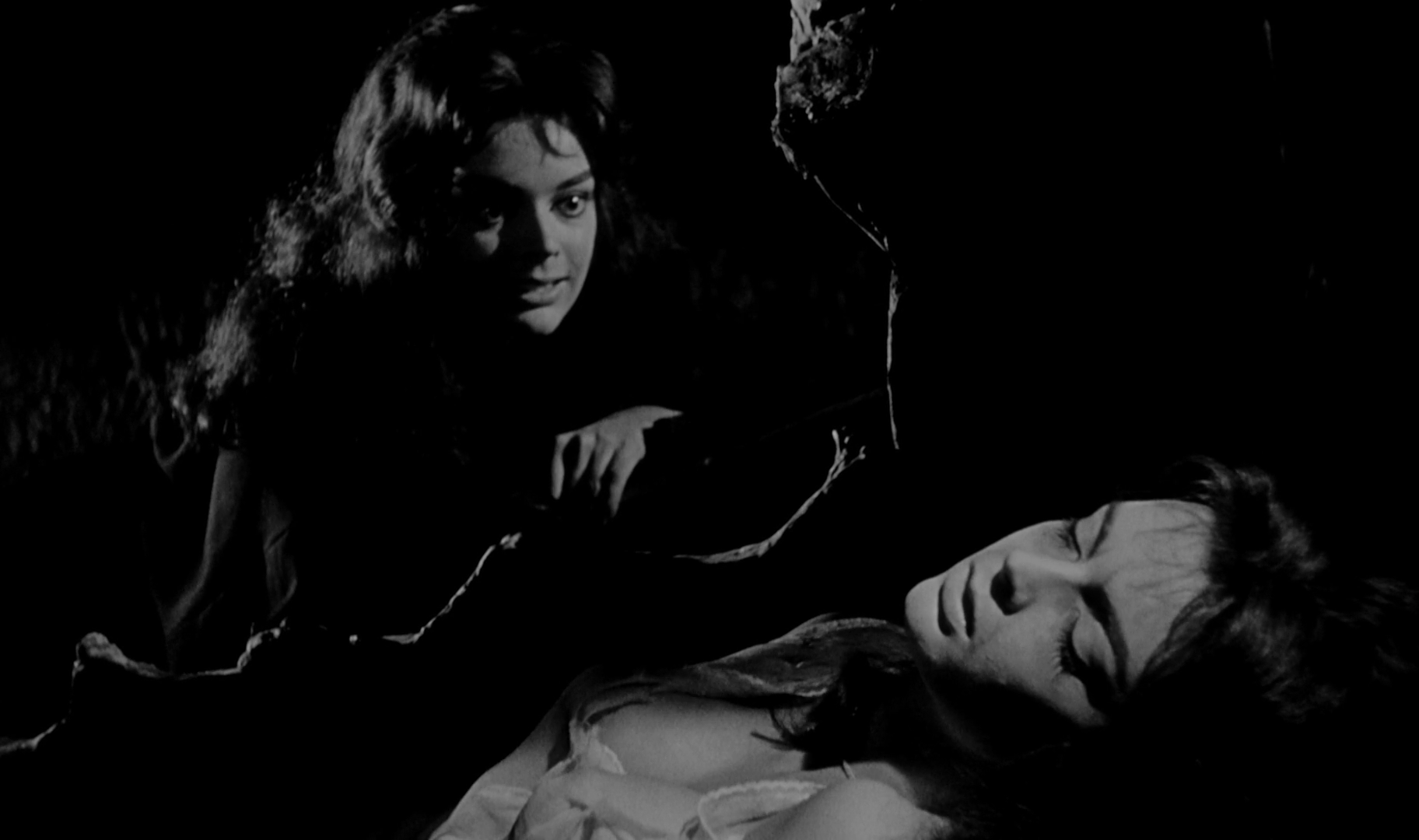
A vampire-witch named Asa (Barbara Steele) and her lover Javuto (Arturo Dominici) are burned at the stake in 1630 Moldavia, but return to life when a visiting doctor (Andrea Checchi) accidentally spills some blood on Asa’s corpse. Checchi and his assistant (John Richardson) meet a young princess named Katia (Steele) who looks remarkably like Asa, and are soon involved in a quest to prevent Asa from inhabiting Katia’s body.

Genres, Themes, Actors, and Directors:

  • Barbara Steele Films
  • Horror
  • Mario Bava Films
  • Vampires
  • Witches and Wizards

Response to Peary’s Review:
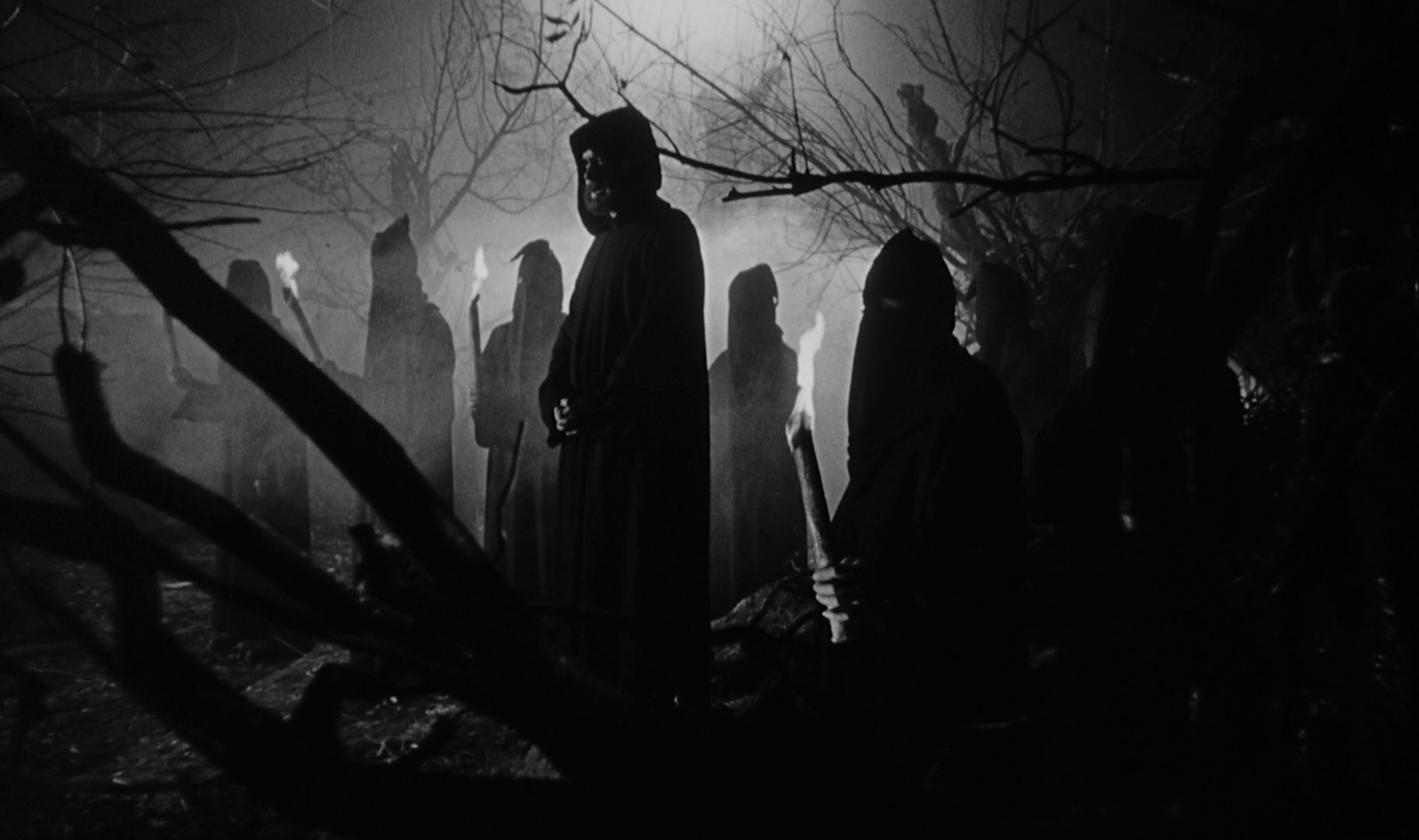
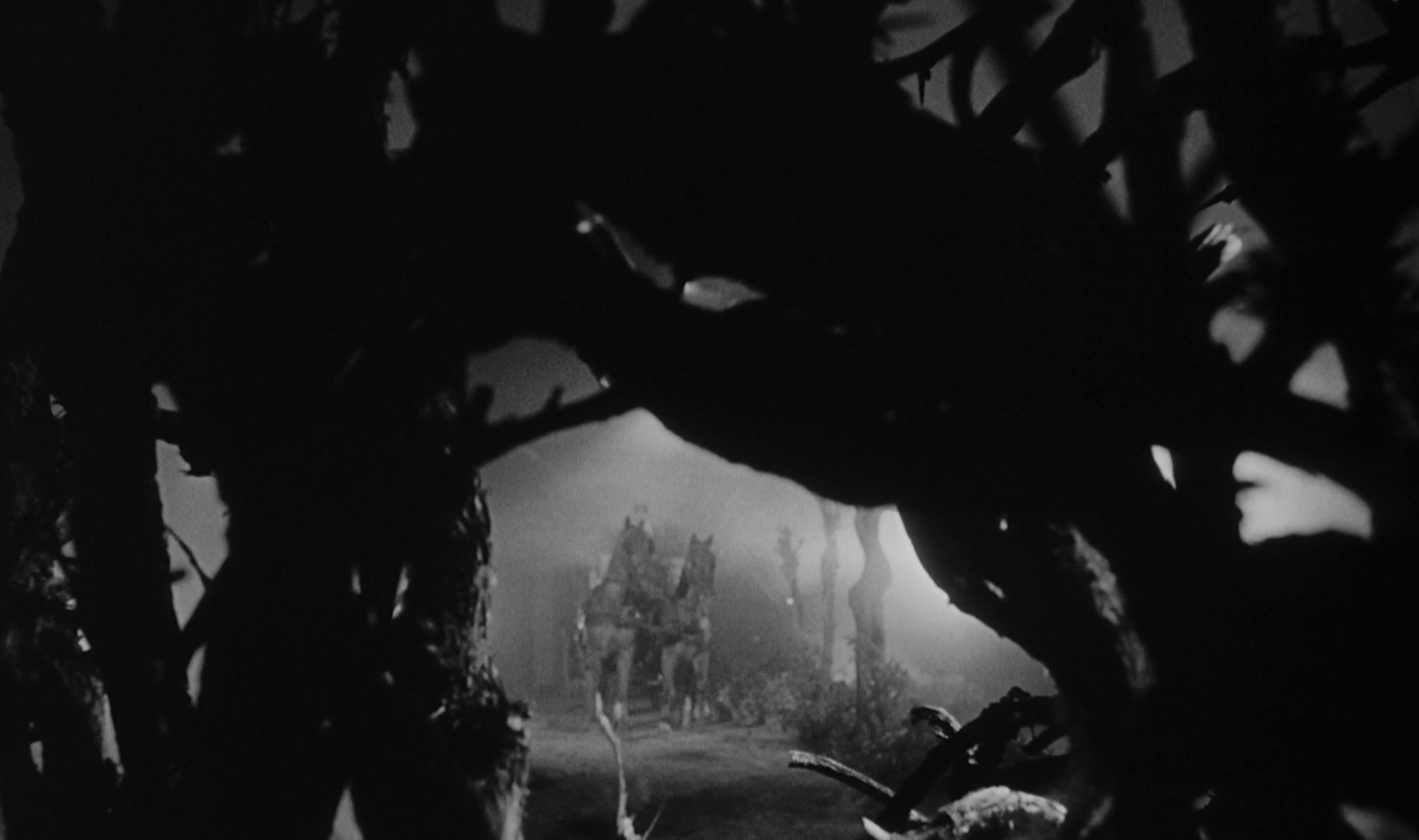
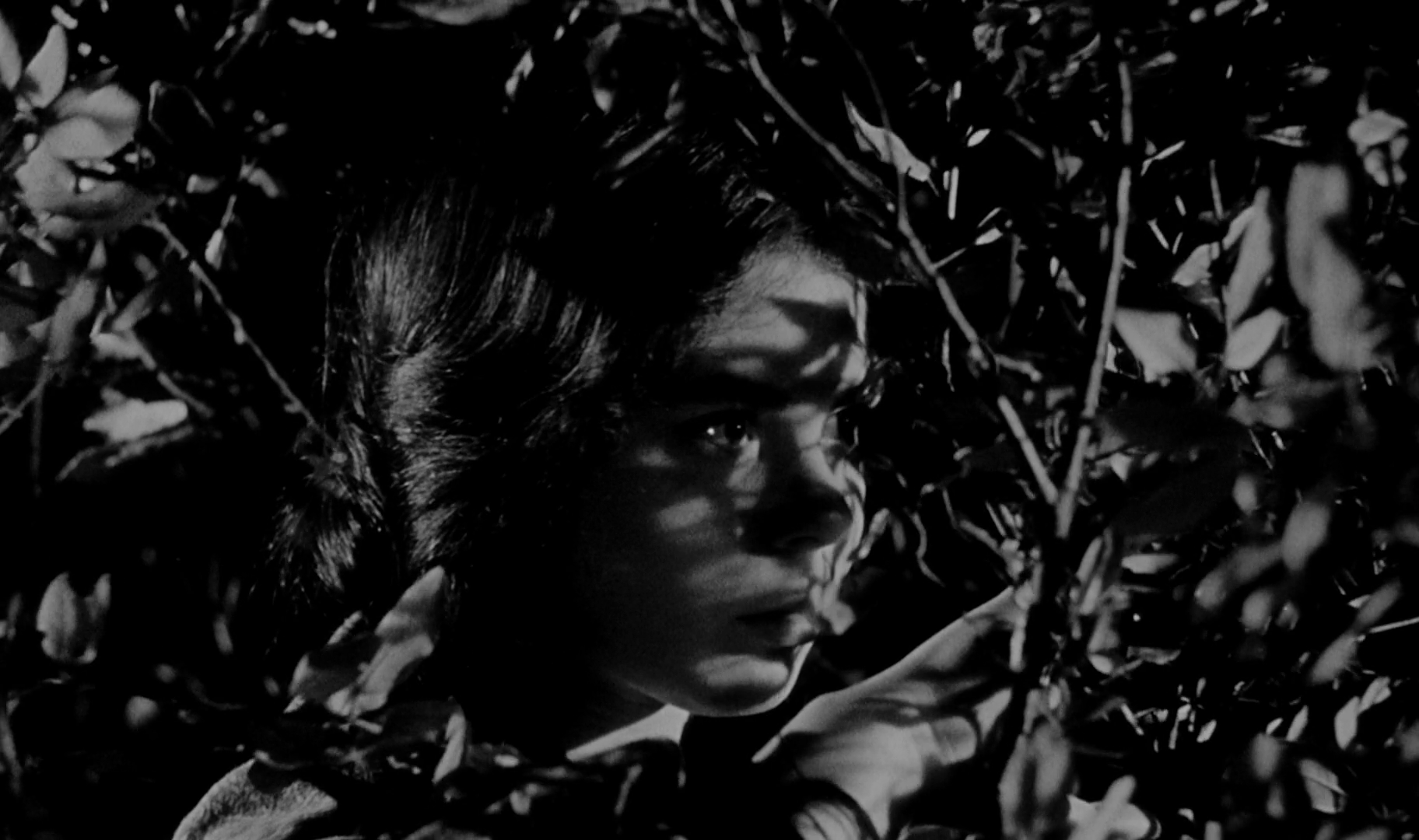
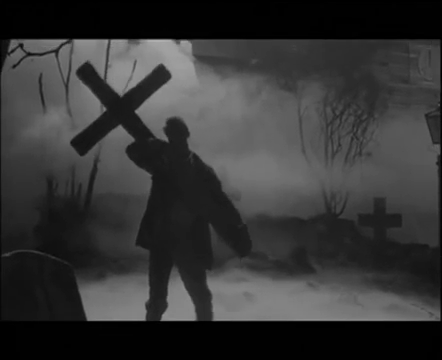
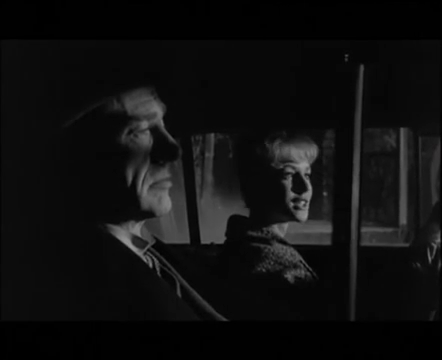
Peary writes that this “extremely effective film… remains the best Italian horror film” and “among the most atmospheric of [all] horror films because former cameraman [Mario] Bava conveys everything visually (which makes us forget dubbing”. In an eloquent, lengthy description (modified from his Cult Movies essay), Peary notes that:

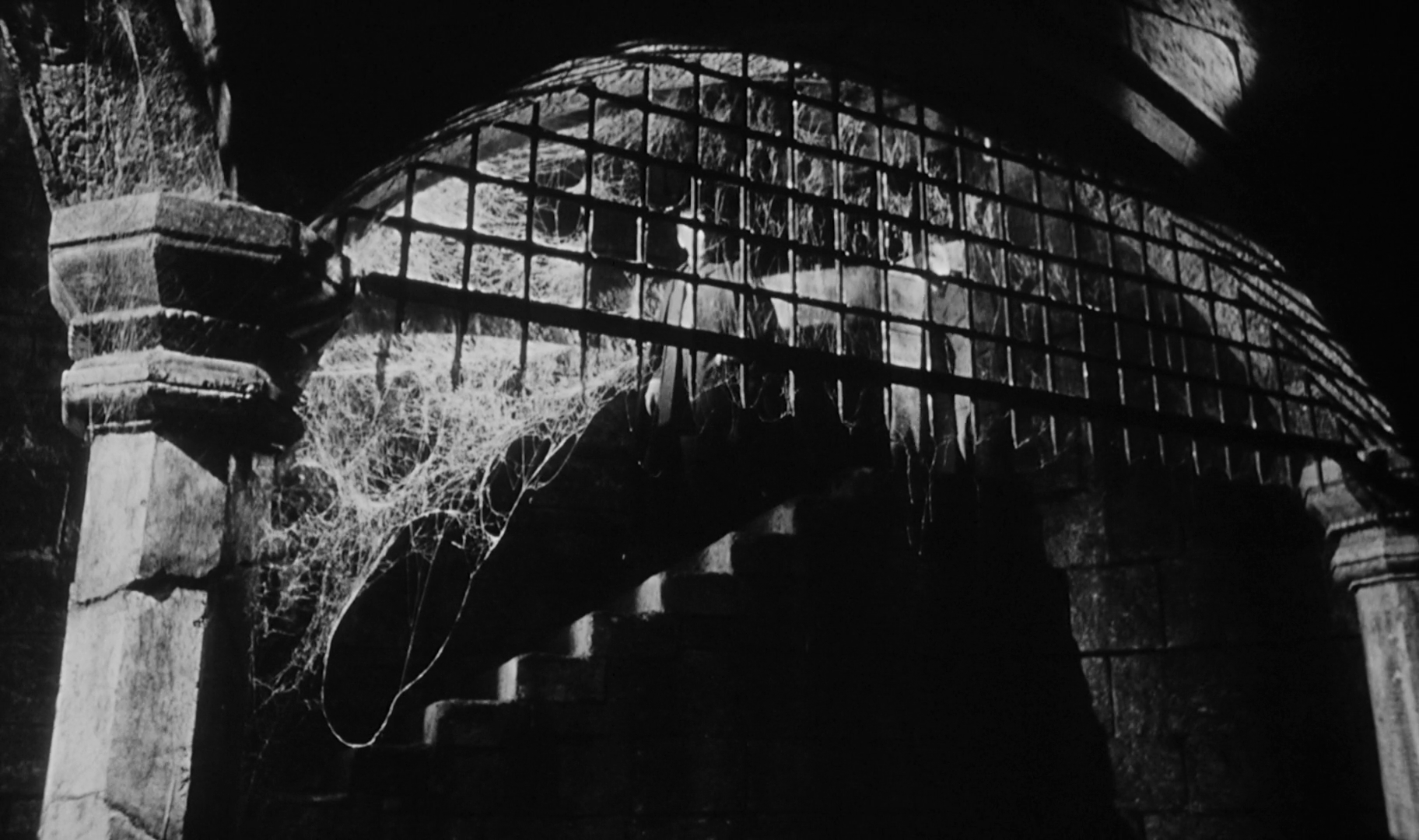
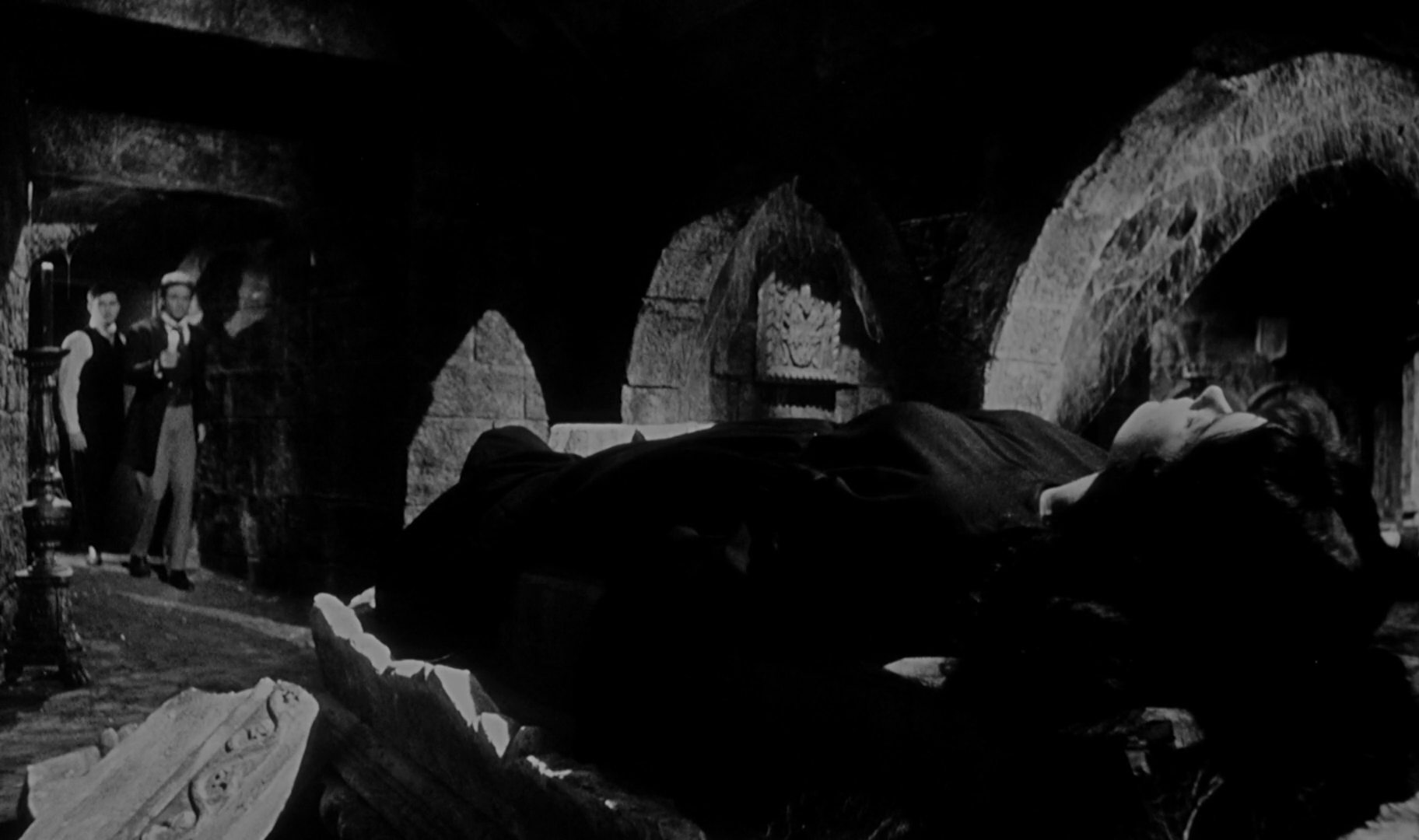
“Bava’s malefic world consists of dark mountains set against a gray sky; mist-shrouded forests where tree limbs seem to reach out to grab those passing through; two-hundred-year-old graveyards where the soil is too cursed for anything to grow; ancient crypts where bats fly about in the darkness, spiders spin their webs, and decaying walls crumble; and shadowy, ice-cold castles full of creepy passageways and enormous hidden chambers. It’s a world where light fights a losing battle against oppressive darkness and even the pure (virgins, priests) wear black. With art director Giorgio Giovannini, Bava creates an atmosphere where the living and dead co-exist, unharmoniously.”

Peary further notes that Steele — whose “beauty is mysterious and unique” — was “the ideal choice” for the dual role as evil Asa and sweet Katia. In Cult Movies, Peary refers to Steele as “the most fascinating actress ever to appear in horror films with regularity”, and writes that “it is because of Steele, probably even more than Bava, that Black Sunday, in which her screen persona was established, remains a cult favorite”. Regardless, all film fanatics should certainly watch and enjoy this ultra-atmospheric classic horror film, which was banned in England for eight years (but likely won’t shock modern audiences who are used to much more gruesome imagery).

Redeeming Qualities and Moments:

  • Barbara Steel(e) as Asa and Katia
  • Truly atmospheric cinematography, sets, and direction


Must See?
Yes, as a justifiable cult favorite.

Categories

  • Cult Movie

(Listed in 1001 Movies You Must See Before You Die)

Links:

Stuff, The (1985)

Stuff, The (1985)

“It’s gonna kill you… It’s gonna kill you all!”

Synopsis:
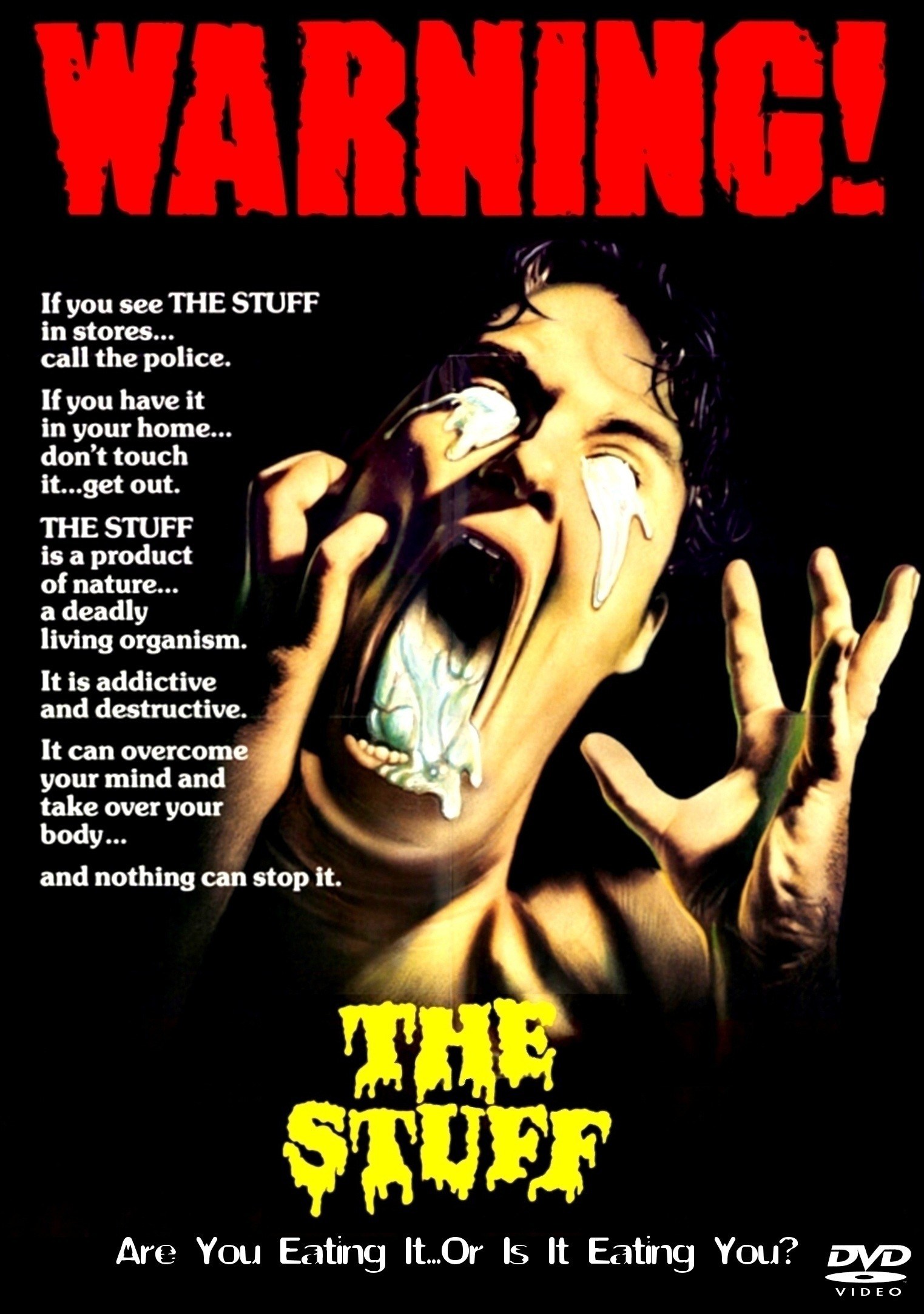
An industrial spy (Michael Moriarty) joins forces with an advertising executive (Andrea Marcovicci) and a skeptical young boy (Scott Bloom) to investigate the proliferation of a mysterious new dessert called The Stuff that is taking over people’s diets and bodies.

Genres, Themes, Actors, and Directors:

  • Horror
  • Larry Cohen Films
  • Naïve Public
  • Patrick O’Neal Films
  • Satires and Spoofs

Response to Peary’s Review:
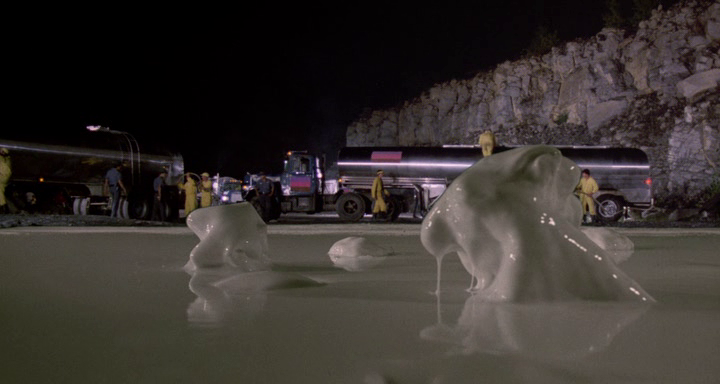
Peary notes that “writer-director Larry Cohen’s horror spoof satirizes (among many, many things) how Americans automatically become hooked on all trendy… products”, and points out that this “odd film has interesting non-hero types as heroes, good offbeat performances, some genuinely funny scenes, and a premise that works”. However, he argues that it would “be so much stronger if the production values were better”, given that it “looks sloppy and choppy… and after a while it’s hard to tell what’s going on”. I disagree with his final point (the narrative seems continuously clear to me), but agree that this film’s low-budget is ultimately either its undoing or its saving grace as a laughingly “bad movie”. While the “offbeat performances” (particularly by droll Moriarty) are certainly unusual, they occasionally come across as first takes, as though the entire film was made in a hurry. Meanwhile, the Stuff itself is impressively gushy and foamy, but many of the special effects often show clear green-screening and/or obvious animation.

Redeeming Qualities and Moments:

  • Silly special effects

Must See?
No, though it’s worth a look for its cult status.

Links:

Captain Kronos: Vampire Hunter (1974)

Captain Kronos: Vampire Hunter (1974)

“Age frightens me.”

Synopsis:
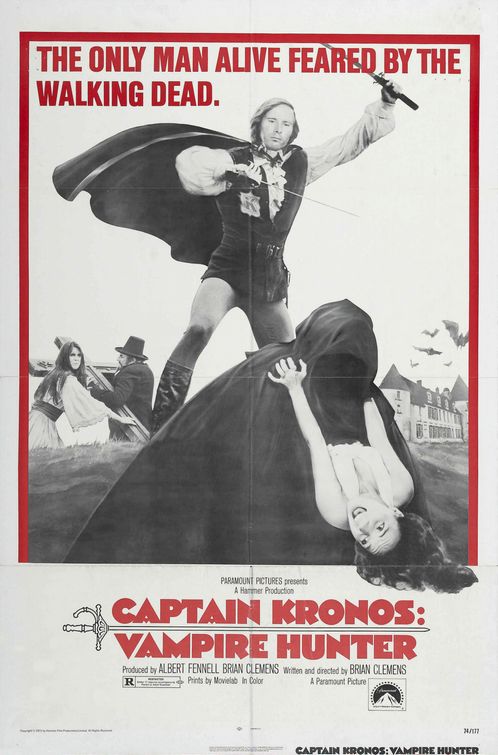
As young women’s youth is sucked from their bodies by a black-hooded vampire, a vigilante swordfighter (Horst Janson) and his hunch-backed assistant (John Cater) are summoned by their doctor-friend (John Carson) to solve the mystery, which seems to involve a local nobleman (Shane Briant), his sister (Lois Dane), and their aged mother (Wanda Ventham).

Genres, Themes, Actors, and Directors:

  • Horror
  • Vampires
  • Vigilantes

Response to Peary’s Review:
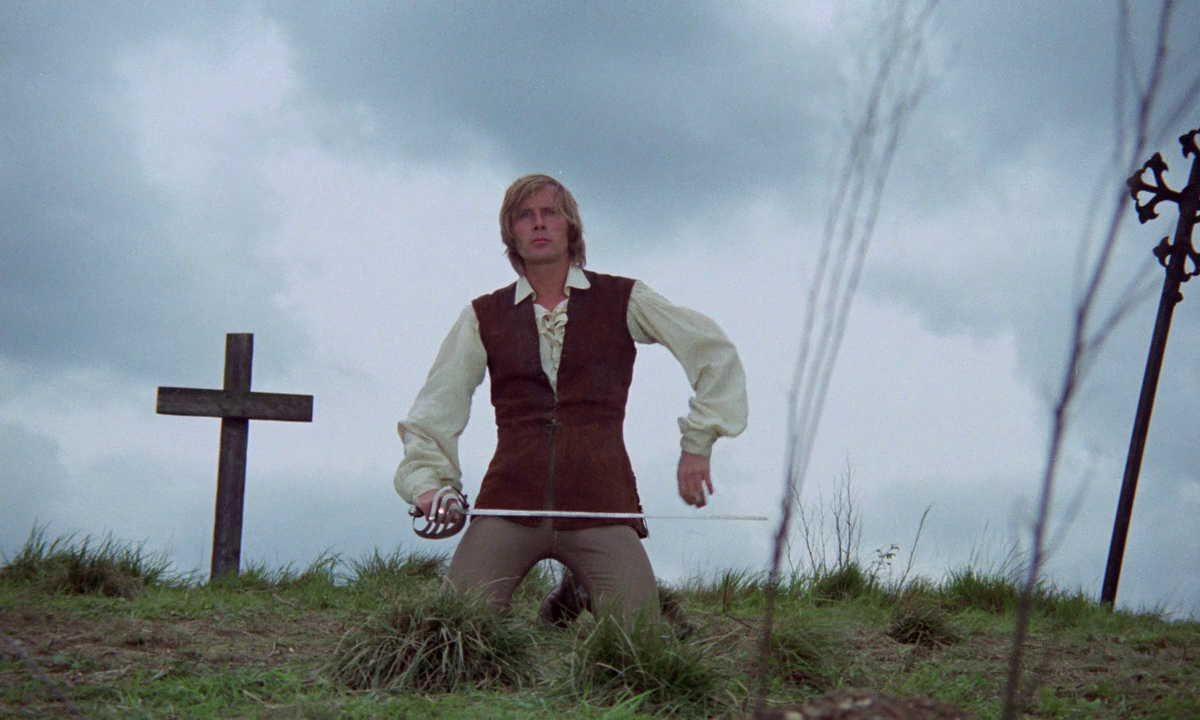
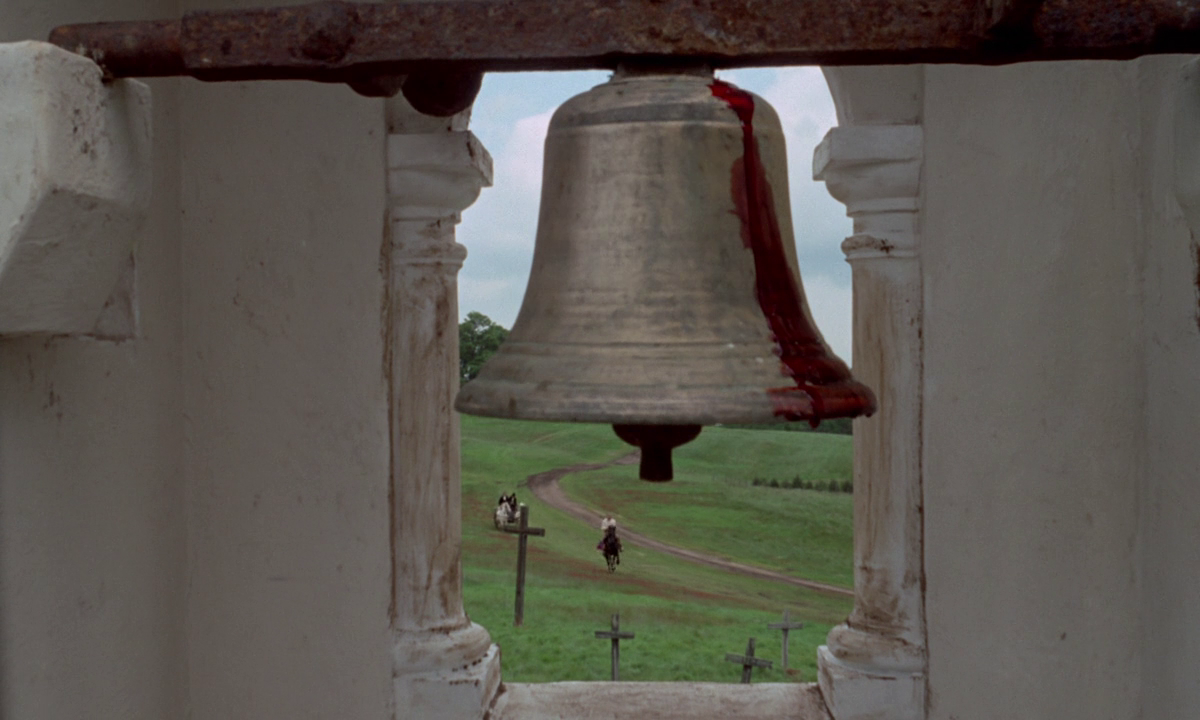
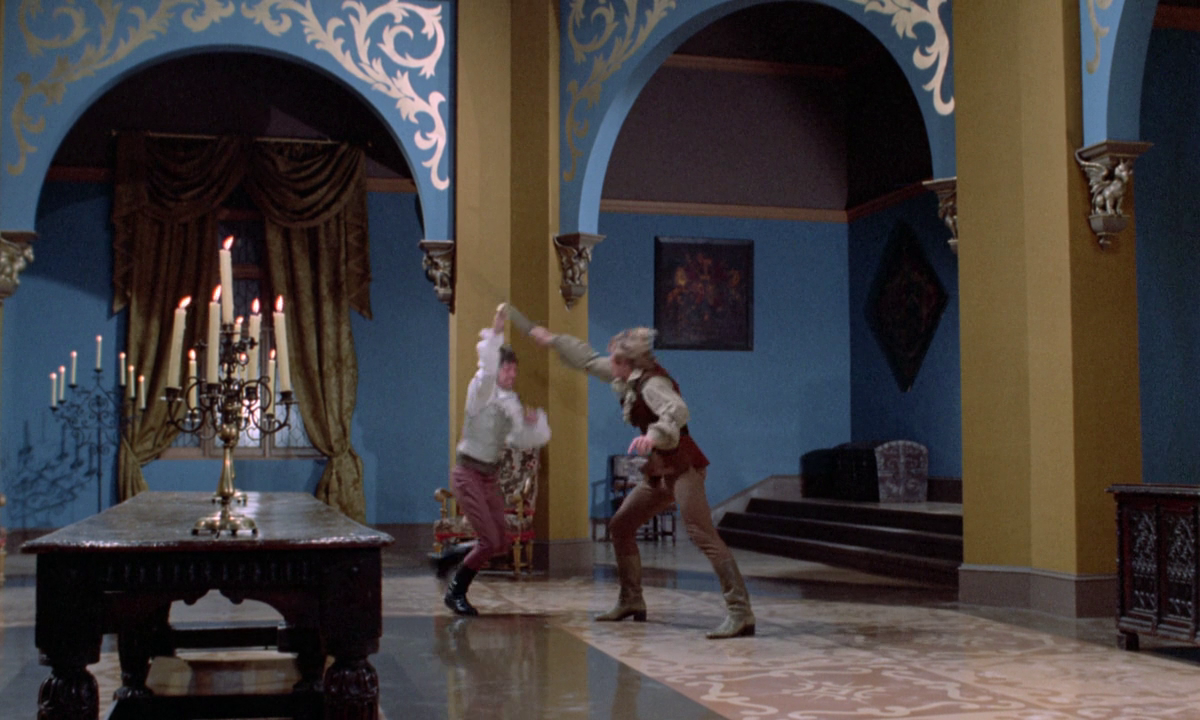
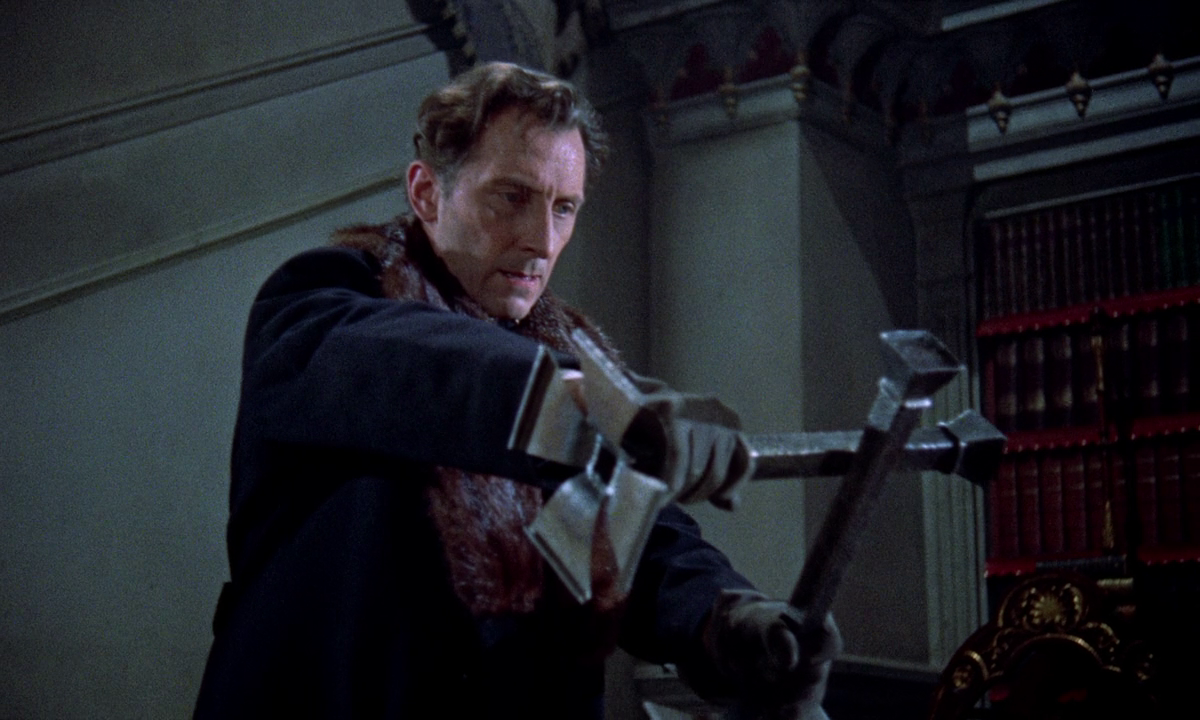
Peary argues that this “cult film” — written and directed by Brian Clemens, the “driving force behind television’s The Avengers” — has an “interesting assortment of characters, some spooky vampire-attack scenes, and splendid atmosphere”, but “never quite reaches its potential”. He notes that “Kronos is a strange warrior”, “capable of slicing up three bullies before they can draw their swords (in a Sergio Leone-type scene), but he mostly bides his time” as he “makes love to a peasant girl” (Caroline Munro), “covers his body with leeches to drain his blood, and patiently plans his course of action”. Actually, Kronos himself — at least as played by Janson — is the film’s primary problem: he cuts a dashing figure but is ultimately not very charismatic; nearly all the supporting players have more juice and nuance to them. It may have been a deliberate choice to frame Kronos as stoic and mysterious — but a film focused on an unusual superhero should (arguably) make that character intrinsically compelling. With that said, the final swordfight is creatively filmed, and I’ll admit I was kept in suspense about the identity of the killer-vampire.

Note: Modern film fanatics will likely sense a Tarantino-esque air to the movie; I was particularly reminded of Django Unchained (2012).

Redeeming Qualities and Moments:

  • Fine cinematography and direction

  • Creative, colorful sets

Must See?
No, but I think most film fanatics would be curious to see it given its cult status.

Links:

Count Yorga, Vampire (1970)

Count Yorga, Vampire (1970)

“Vampires have minds far superior to those of mortals.”

Synopsis:
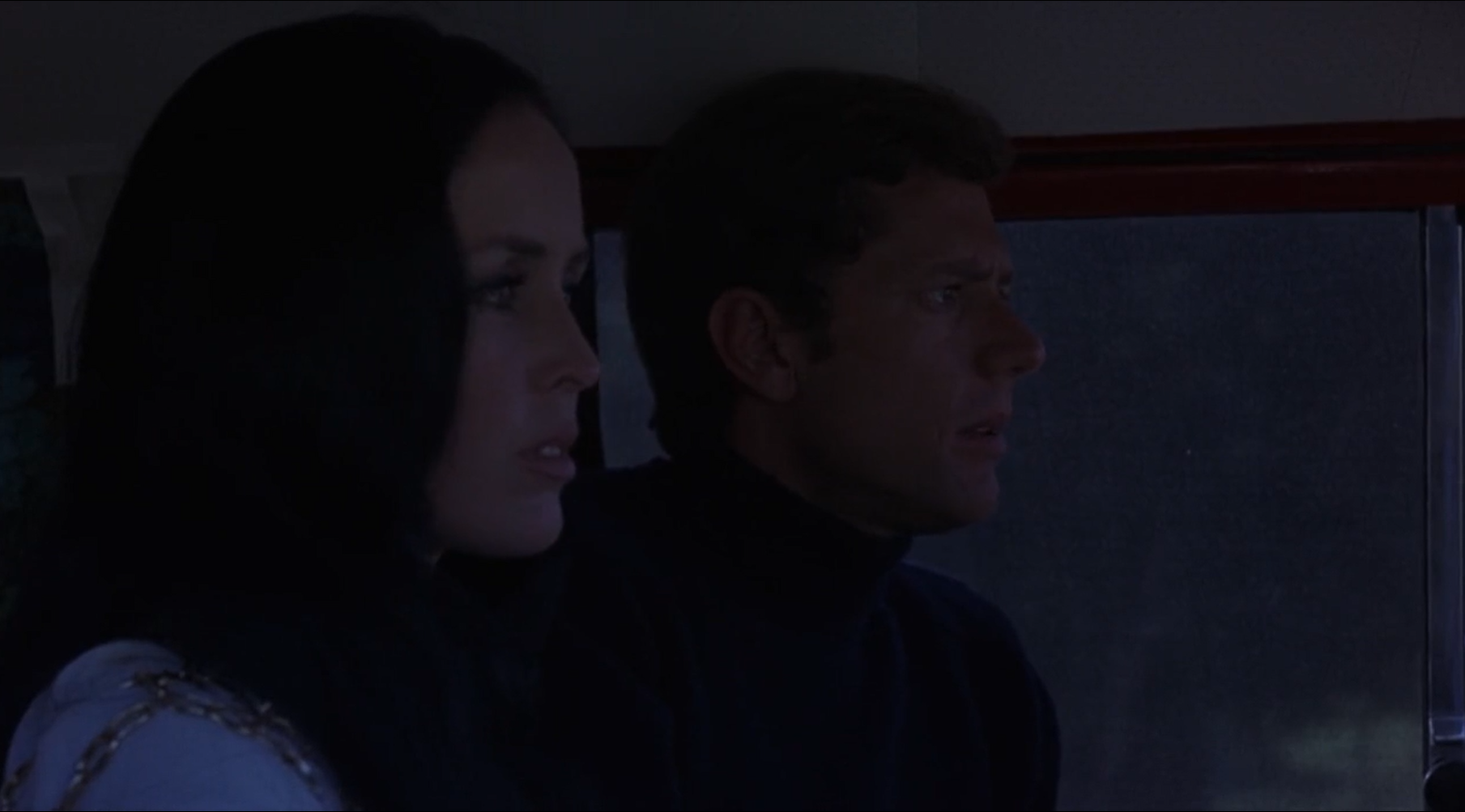
A woman (Donna Anders) grieving the recent loss of her mother (Marsha Jordan) from “pernicious anemia” enlists the help of her mother’s boyfriend, Count Yorga (Robert Quarry), in contacting her mother’s spirit during a seance. When two friends (Judy Lang and Michael Murphy) drop Quarry off at his house, they find themselves ensnared in his den of vampire brides; meanwhile, Anders’ husband (Michael Macready) receives help from a doctor-friend (Roger Perry) in investigating the pair’s disappearance.

Genres, Themes, Actors, and Directors:

  • Horror Films
  • Michael Murphy Films
  • Vampires

Response to Peary’s Review:
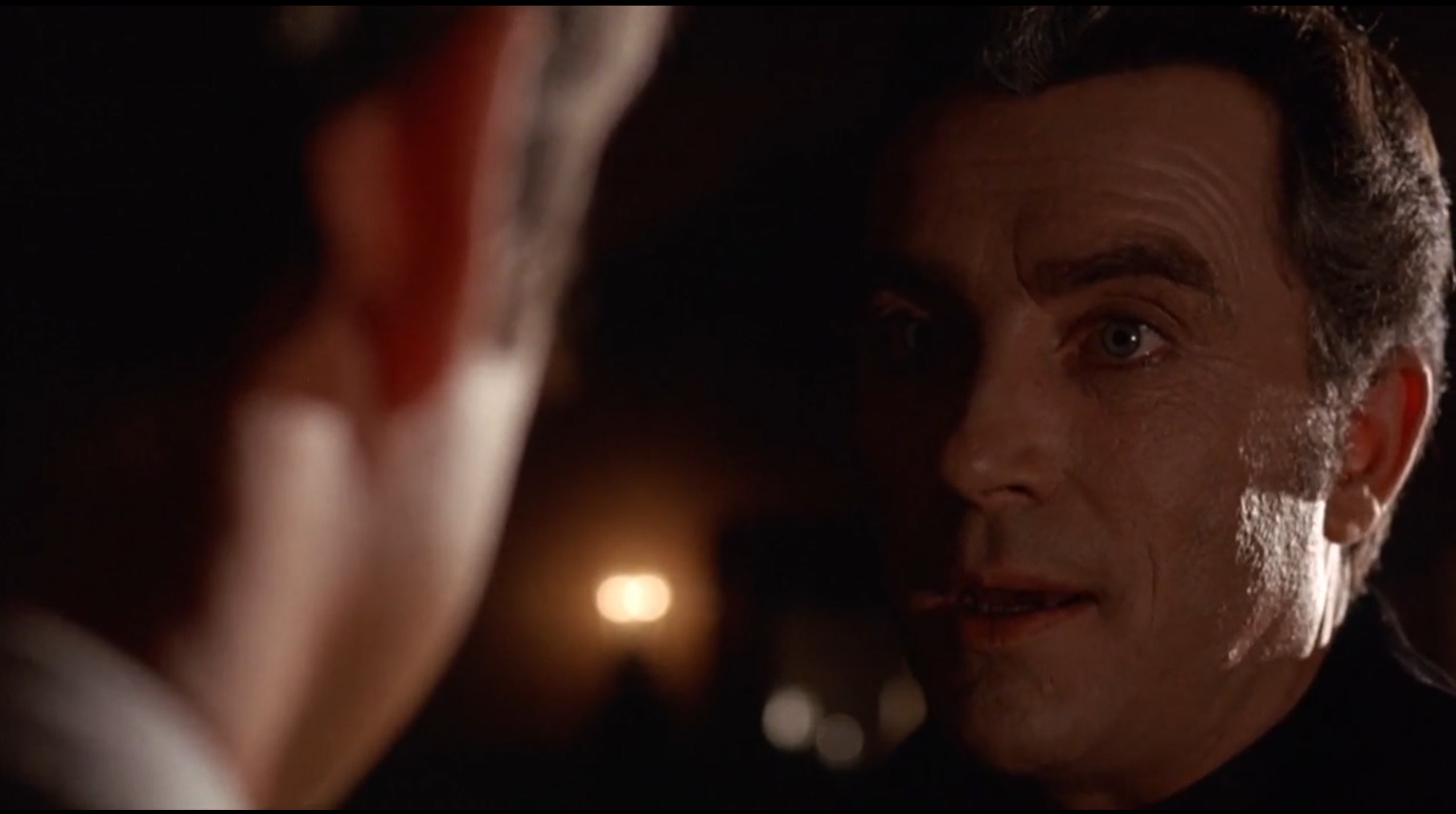
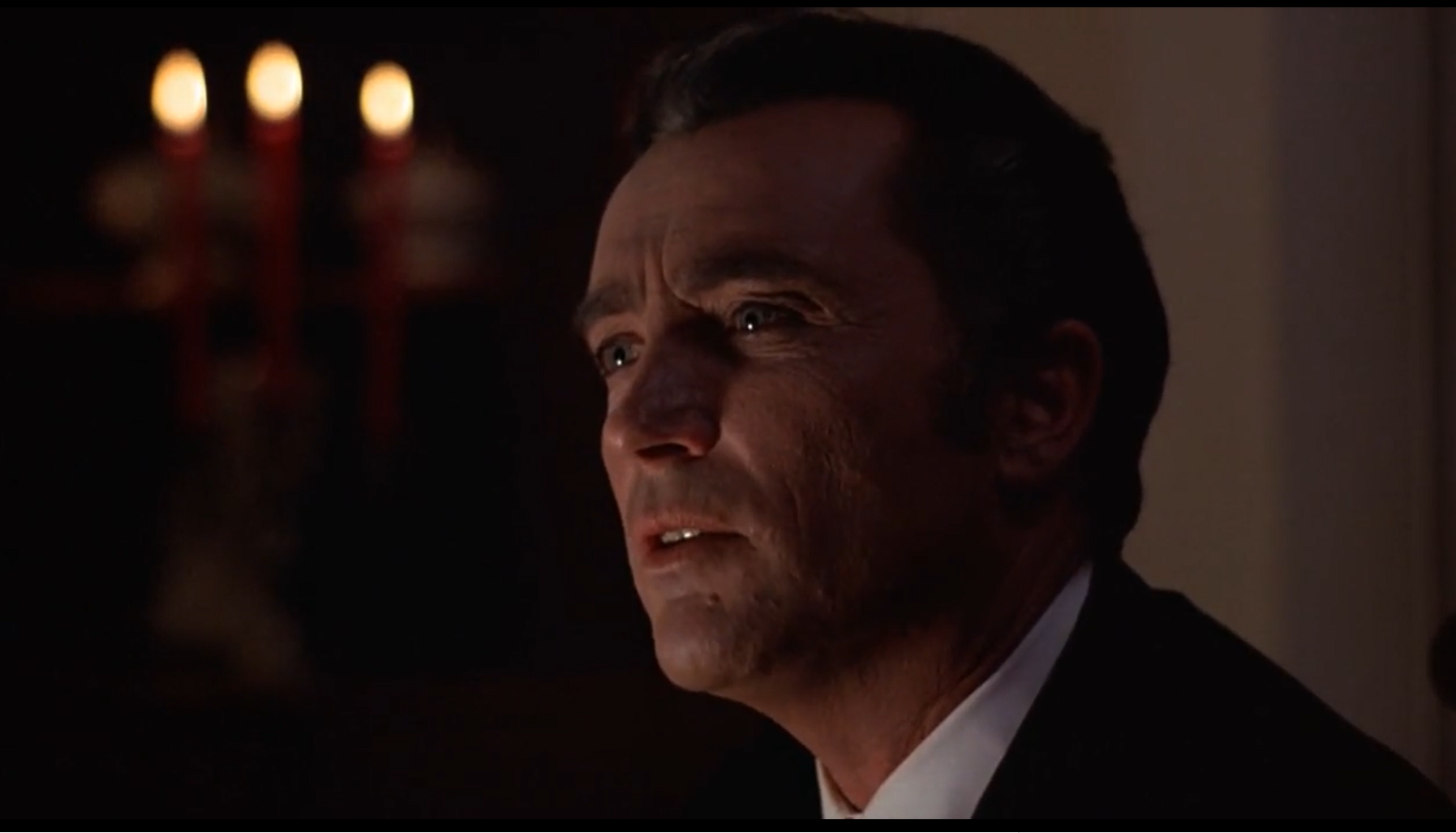
Peary posits that this “low-budget horror film” set in “modern-day L.A.” was “quite popular because genre fans were starved for a new vampire”. He writes that “Quarry is effectively evil as Yorga” (I agree), but that he wishes “there were more nuances to his character”:

… and that he finds the “lengthy, terribly directed, bloody finale in the Count’s castle” “amusing”.

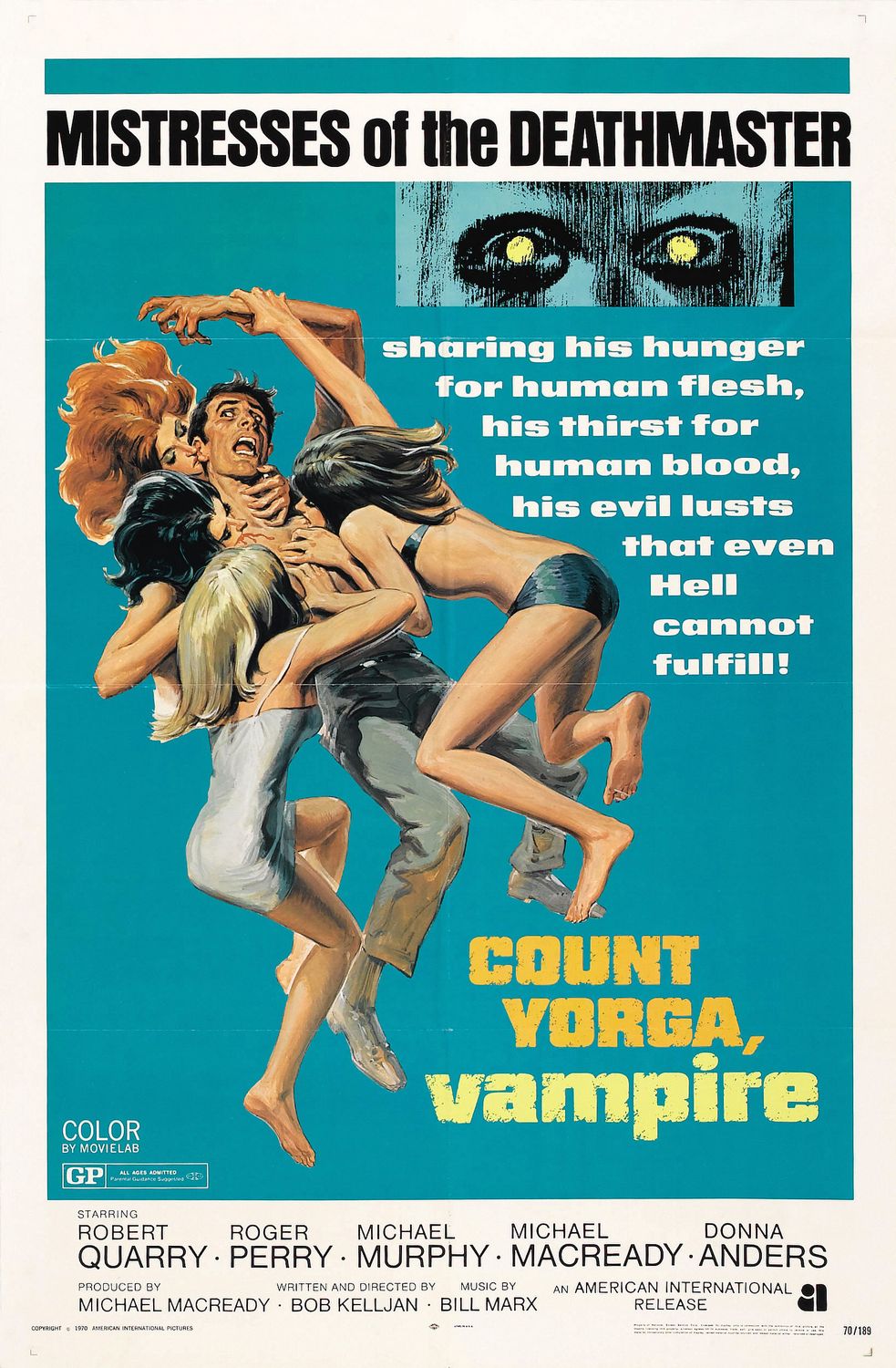
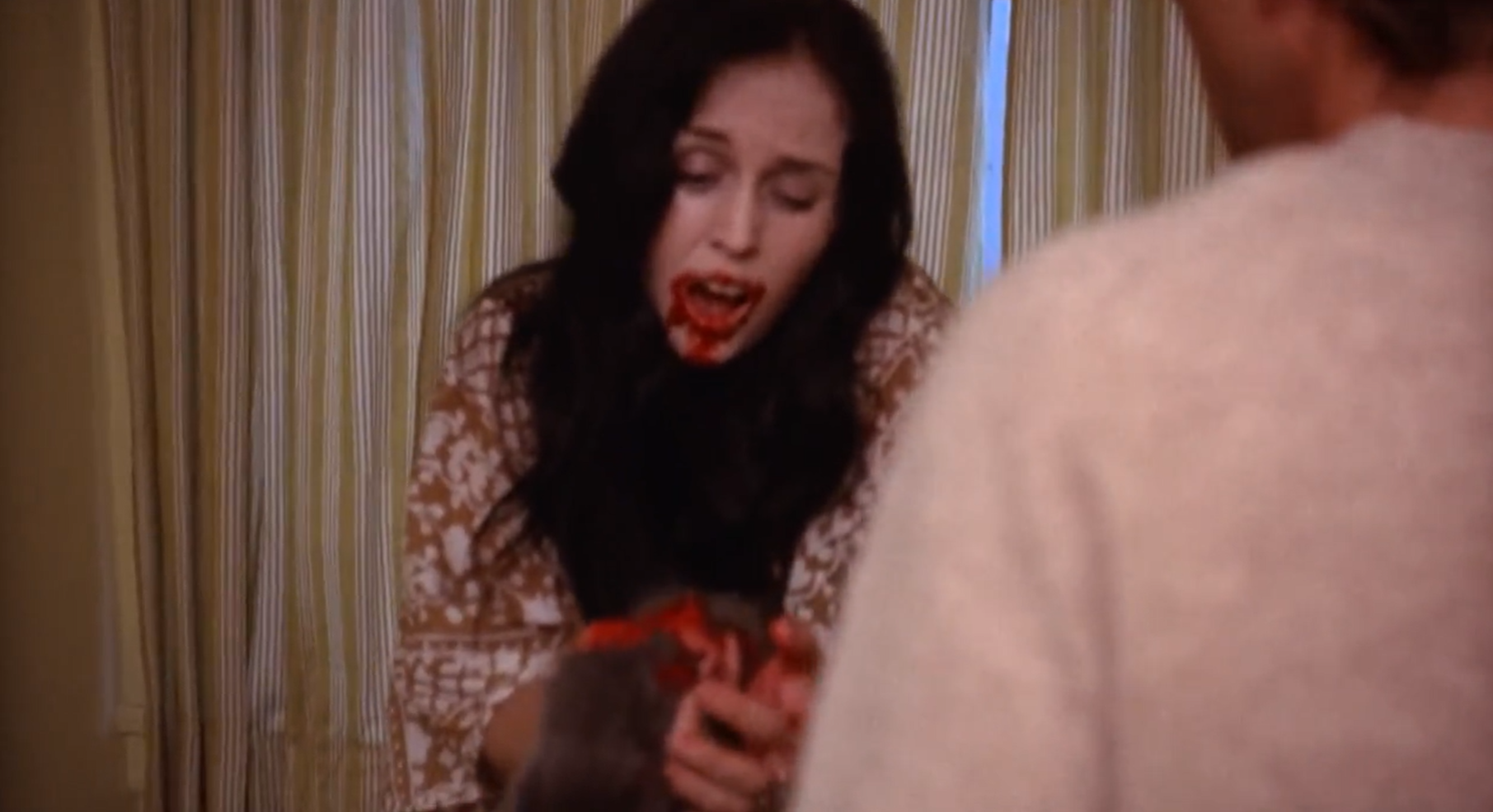
I don’t think the ending is particularly bad or amusing, but agree with Peary that this cult item is more a curio of its time than a classic. Its narrative “appeal” seems to be that young women of any era and setting — not just 19th century Transylvania — are at risk of being lured by seductive, deceptive vampires. But poor Lang is stuck between two terrible choices: becoming Quarry’s blood-sucking bride (at which point she’s reduced to gnawing on a kitten):

or staying with her obnoxious boyfriend (Murphy); I’m not sure which is a better fate (!).

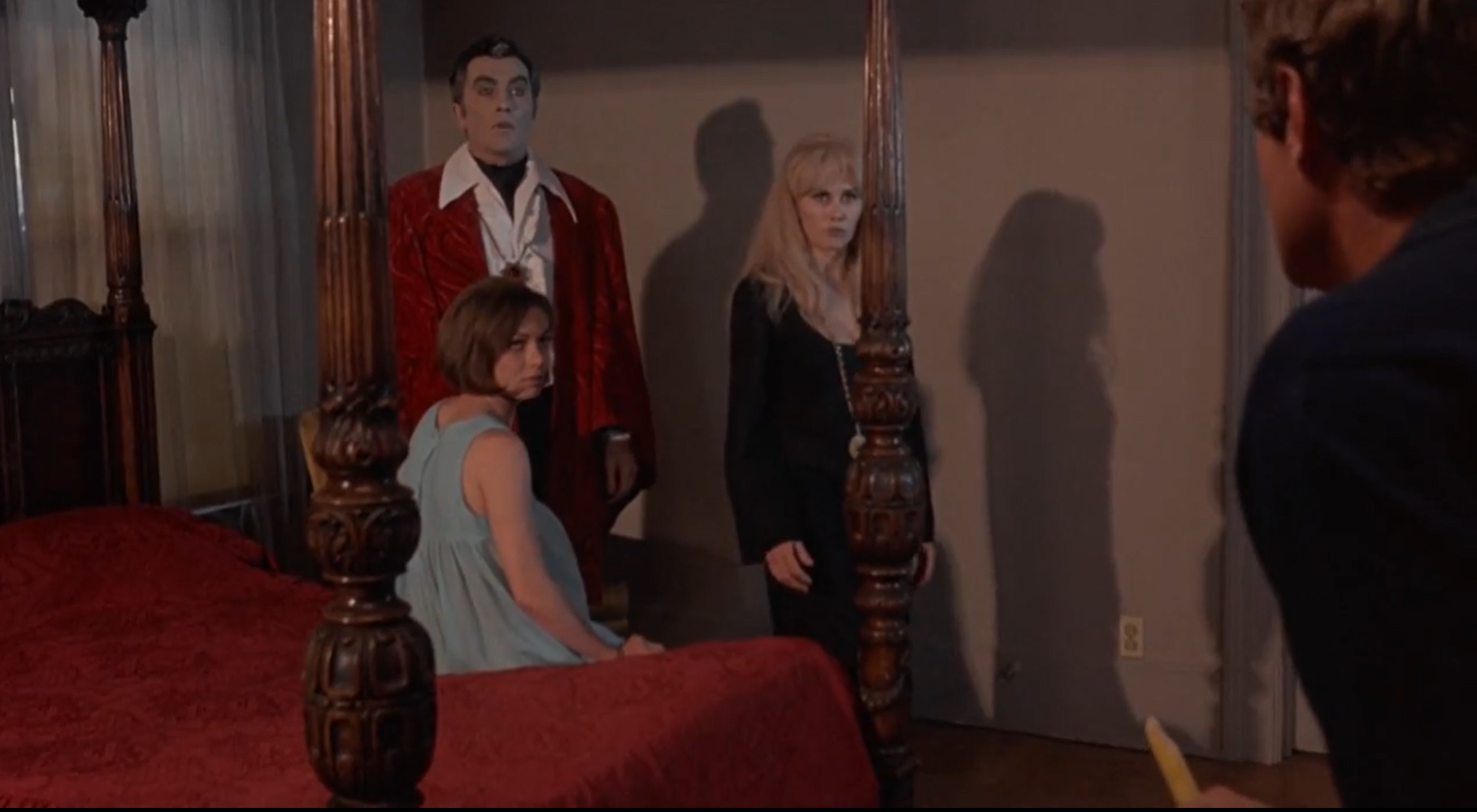
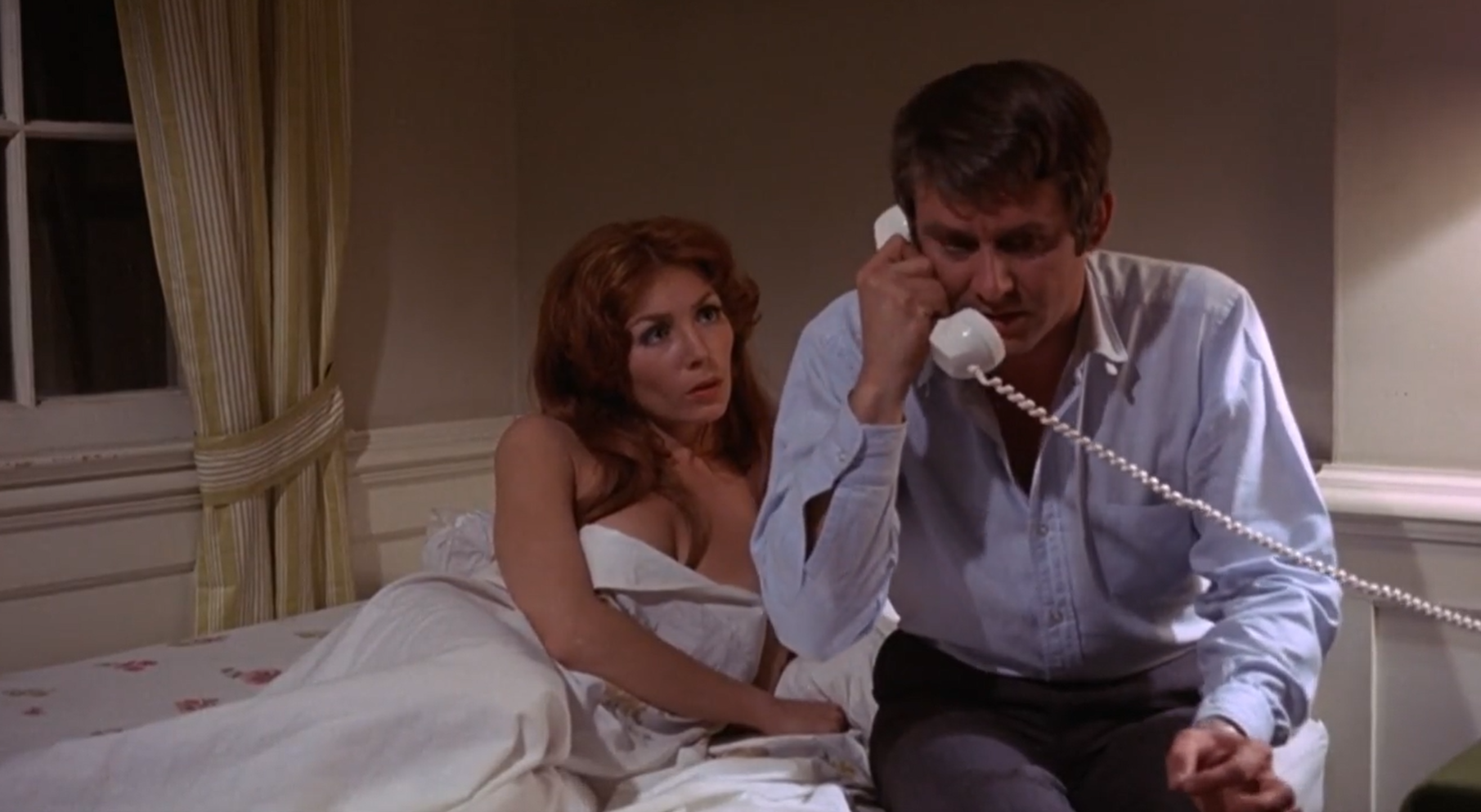
I do wish this film had even a little bit more of a feminist “bite”; Perry’s girlfriend (Julie Conners), shown naked in bed, is portrayed in an especially offensive manner.

I wasn’t surprised to hear this was originally planned as a soft-core adult flick.

Redeeming Qualities and Moments:

  • Robert Quarry as Count Yorga

Must See?
No, though it’s worth a one-time look for its cult status.

Links:

Curse of Frankenstein, The (1957)

Curse of Frankenstein, The (1957)

“Don’t you see? You’ve created a monster!”

Synopsis:
An arrogant baron (Peter Cushing) enlists the help of his mentor (Robert Urquhart) in carrying out a series of increasingly questionable scientific experiments. When he decides to bring a creature (Christopher Lee) composed of various body parts to life — resorting to murdering a professor (Paul Hardtmuth) for his brain — Urquhart becomes alarmed, and tries to warn Cushing’s naive fiancee (Hazel Court).

Genres, Themes, Actors, and Directors:

  • Christopher Lee Films
  • Flashback Films
  • Frankenstein
  • Horror
  • Mad Doctors and Scientists
  • Peter Cushing Films

Response to Peary’s Review:
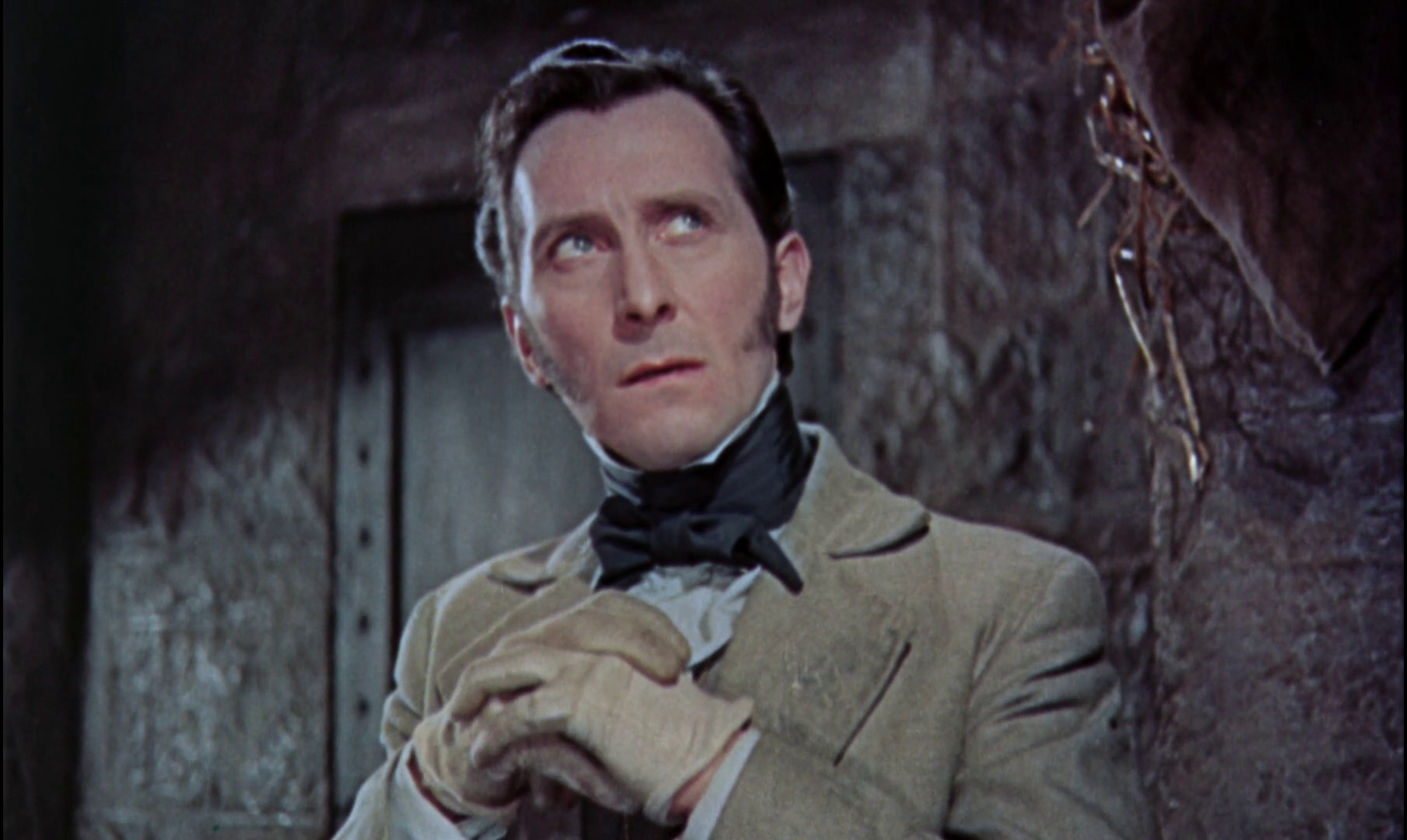
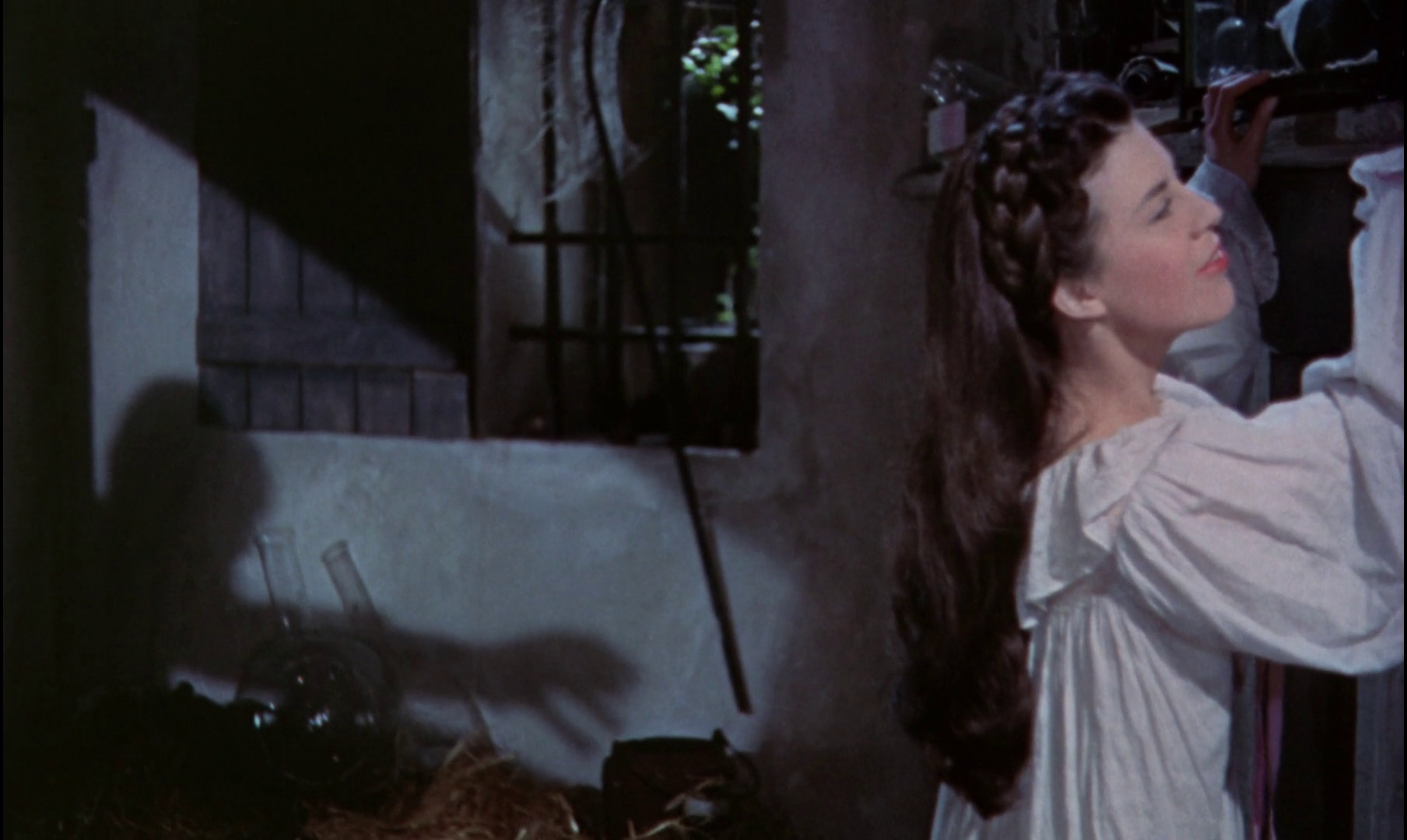
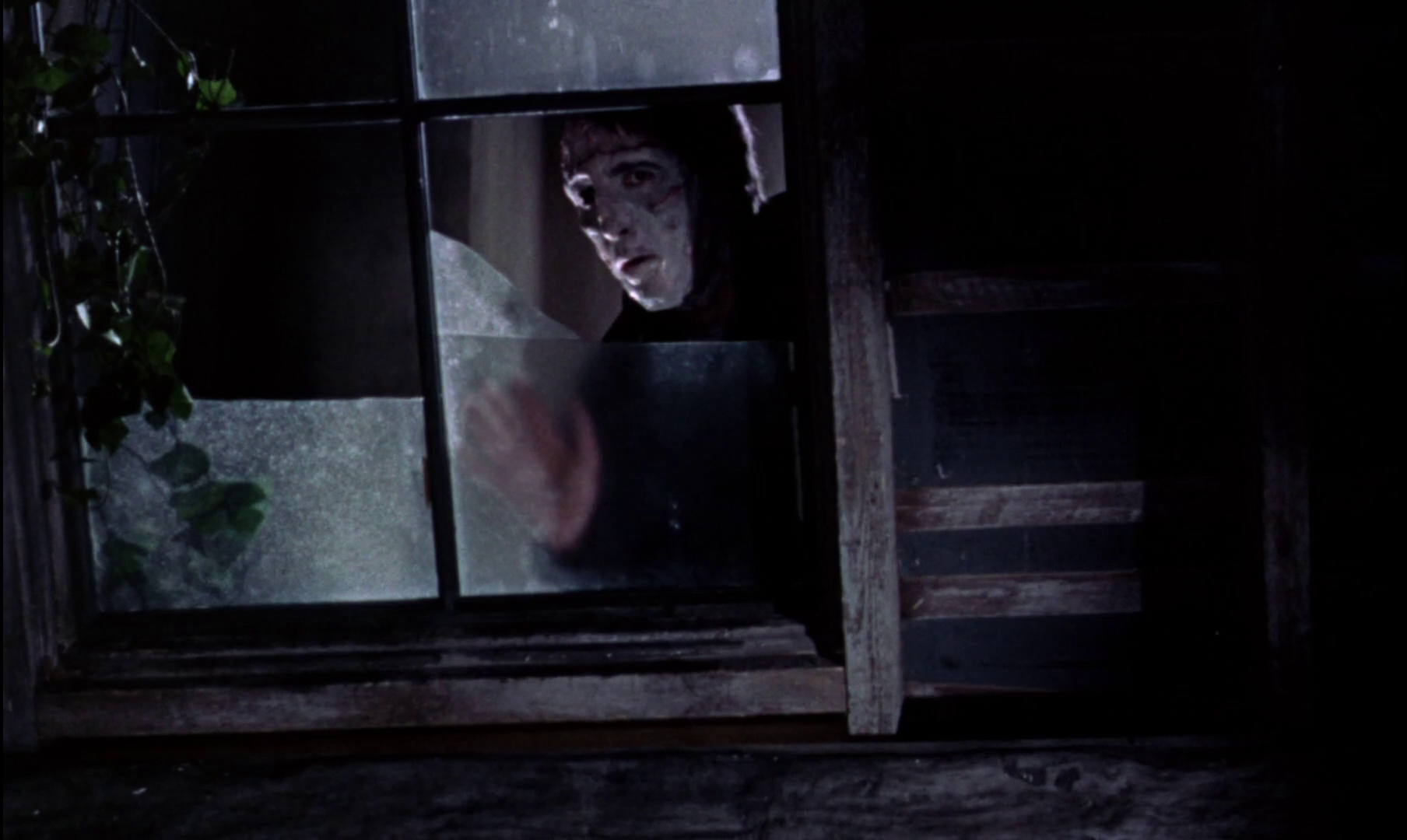
Peary writes that this “first of Hammer Studios’ horror films” has “few of the fascinating themes or the philosophizing found in the [original] novel or the 1931 film by James Whale.” He further complains that the picture “lacks the wit and melodrama of the Whale film”, noting that “Lee is neither as imposing a monster as Boris Karloff nor as sympathetic”, and pointing out the “jolting… depiction of Victor Frankenstein as a diabolical villain” who is not only a grandiose sociopath but an extreme cad. I’m essentially in agreement with Peary’s assessment. While the “production values are quite good”, and Cushing’s performance is excellent (it’s fun to see him playing “against type”, given his iconic connection to the heroic Van Helsing), this remake simply pales in comparison in every way but for the “distinct, superbright color”. It’s primarily of note for its historical relevance as the beginning of a new era of horror: according to Richard Scheib of Moria Reviews, “Aside from the flurry of atomic monster movies in the 1950s, there were almost no horror films made anywhere in the world between 1947 and the genre’s revival in 1957”.

Redeeming Qualities and Moments:

  • Peter Cushing as Baron Frankenstein
  • Atmospheric cinematography and period sets

Must See?
No, though it’s worth viewing for its historical relevance.

Links:

Horror of Dracula (1958)

Horror of Dracula (1958)

“It only remains for me now to await the daylight hours, where I will with God’s help forever end this man’s reign of terror!”

Synopsis:
A vampire hunter (John Van Eyssen) posing as a librarian arrives at the castle of Count Dracula (Christopher Lee), where he puts one of Dracula’s victims (Valerie Gaunt) out of her misery, but is bitten himself before he can kill Dracula. When Dracula invades the household of Van Eyssen’s girlfriend Lucy (Carol Marsh) and Lucy’s brother (Michael Gough) and sister-in-law (Melissa Stribling), Dr. Van Helsing (Peter Cushing) arrives to help.

Genres, Themes, Actors, and Directors:

  • Christopher Lee Films
  • Horror
  • Peter Cushing Films
  • Vampires

Response to Peary’s Review:
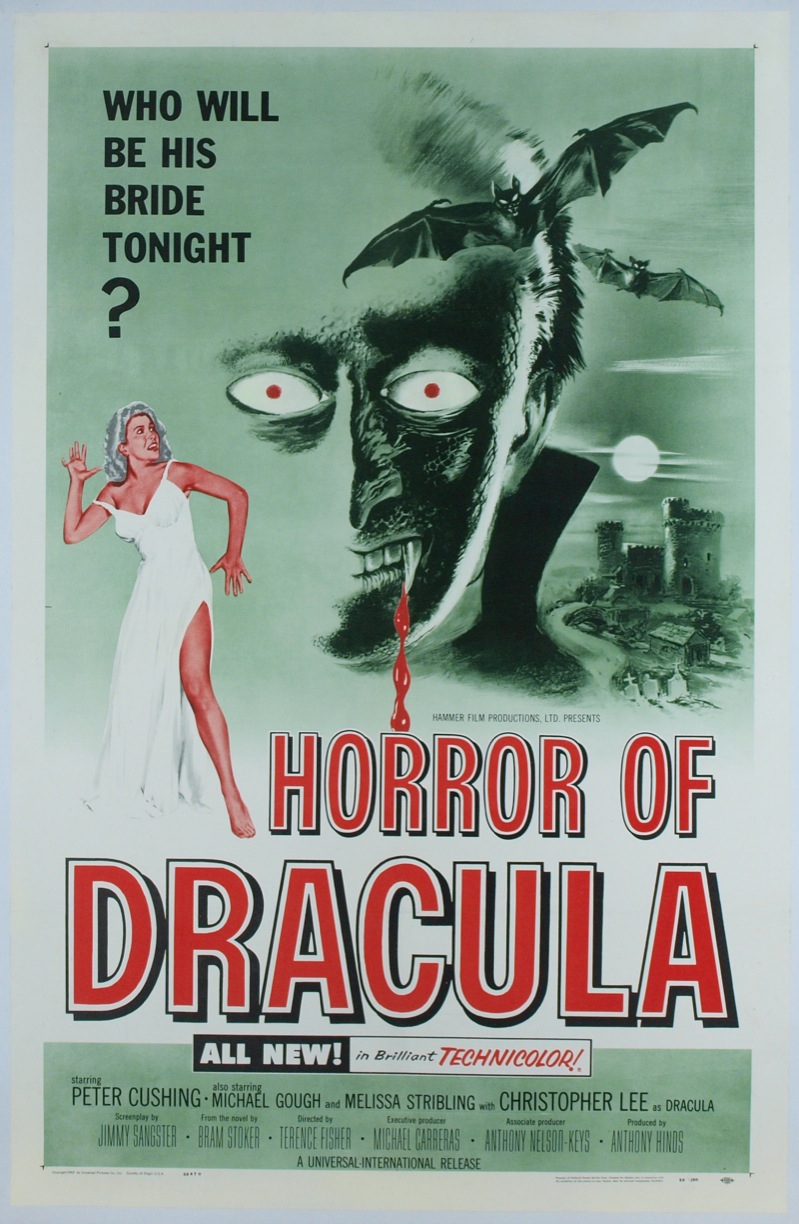
Peary writes that while “Hammer Studios’ follow-up to The Curse of Frankenstein is a much better and more influential horror film”, it “isn’t the definitive adaptation of Bram Stoker’s novel or much more than an introduction to the bloody-red and sexually oriented style of future Hammer vampire films”. He complains the “film is so rushed that we have a hard time realizing that major parts of Stoker’s story are being either distorted or eliminated“, that “all the performances” (other than the two leads) “are forgettable”, and that Cushing is “a little too humorless, as if his blood had already been drained”.

In favor of the film, Peary writes that the “graphic violence… fits the subject rather than being exploitative”, that the production in general is “well-mounted”, and that “Lee’s madly inspired vampire is terrific: cruel, energetic, intelligent, tall and imposing”.

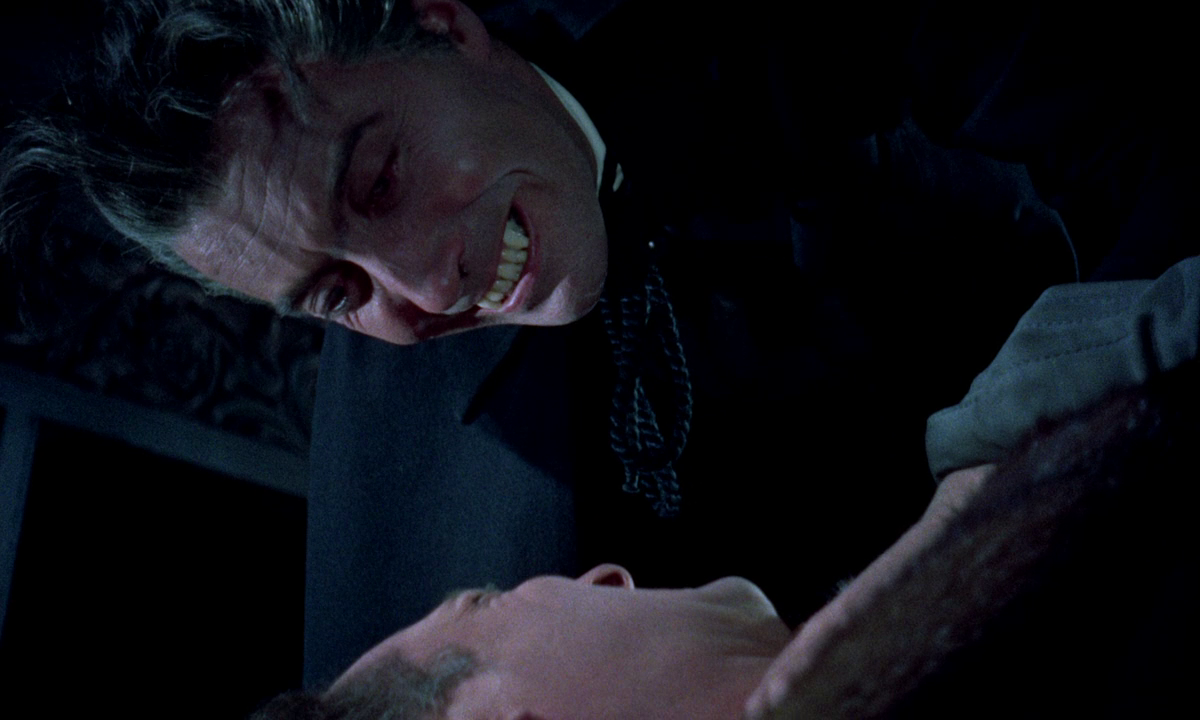
Peary also points out how the film differs from “Universal’s 1931 Dracula chiefly in that it conveys the sexual nature of vampirism: not only does the vampire become excited when he bites into a victim’s jugular but his victims also relish the experience”. Indeed, according to DVD Savant, this film “made much more explicit the seduction-rape fantasy that underlies vampire mythology.” Savant is much more a diehard fan of this film, referring to it as “the Singin’ in the Rain of horror films — a show that transcends its genre and sums up what’s great about screen terror.” His praise feels hyperbolic to me, but provides evidence of the film’s cult following. Personally, my opinion lies closer to Peary’s: this remains a reasonably enjoyable, historically significant genre flick, but not must-see viewing.

Redeeming Qualities and Moments:

  • Christopher Lee as Dracula — only on the screen for 7 minutes, but a menacing presence
  • Jack Asher’s atmospheric cinematography

Must See?
No, though it’s certainly worth a look for its historical importance.

(Listed in 1001 Movies You Must See Before You Die)

Links:

Horror Hotel / City of the Dead (1960)

Horror Hotel / City of the Dead (1960)

“Burn the witch!”

Synopsis:
Influenced by her professor (Christopher Lee), a college student (Venetia Stevenson) travels to the New England town of Whitehead to research its history of witchcraft, against the wishes of her boyfriend (Tom Naylor) and brother (Dennis Lotis). Once there, she stays at an inn run by a woman (Patricia Jessel) who looks suspiciously like a witch burned at the stake centuries earlier; meanwhile, she is warned by both a mute maid (Ann Beach) and a blind local preacher (Norman Macowan) to get away, but she ignores this advice at her own peril.

Genres, Themes, Actors, and Directors:

  • Christopher Lee Films
  • Horror
  • Witches and Wizards

Response to Peary’s Review:
In his short review of this British horror film — a distinct precursor to Mario Bava’s Black Sunday (1960), released in Italy later that year — Peary writes that while it’s “no classic”, the film possesses “creepy atmosphere plus a few good shocks”. He points out that the “early death of [the] lead actress in [an] inn makes one think quickly of [the] same year’s Psycho,” and that it “contains many plot elements — as well as symbols — that would be used in [the] 1973 British film The Wicker Man.” In sum, Horror Hotel seems to be primarily remembered in comparison with other similarly themed or plotted films of the era. As Richard Scheib writes in his review for Moria, it was:

… the first film to patent the theme of reincarnated witches, Satanic covens and sinister New England towns where the inhabitants mutter portents and run before nightfall … [and it] … sets up much of what would later become the cliches of the genre – the reincarnated witch, the Satanists hiding behind the guise of respectable townspeople, the occult tomes that provide information about the situation… [all] images [that] would become the staple of the Italian Gothic movement…

So, is Horror Hotel worth watching on its own merits? Scriptwise, no: as DVD Savant writes, “we know we’re in one of those horror movies where certain things have to be taken for granted”; indeed, you’ll roll your eyes at the characters’ denseness. But atmospherically speaking, it’s a winner, and a visual treat all the way. Fans of the genre probably won’t be too disappointed.

Redeeming Qualities and Moments:

  • Patricia Jessel as Elizabeth Selwyn/Mrs. Newless
  • Highly effective sets and cinematography

Must See?
No, but it’s certainly worth a one-time look.

Links:

Horror Express / Panic on the Trans-Siberian Express (1972)

Horror Express / Panic on the Trans-Siberian Express (1972)

“It’s alive — it must be!”

Synopsis:
In 1906 China, a British anthropologist (Christopher Lee) finds a frozen prehistoric body and arranges to ship it on the Transsiberian Express — but soon he and fellow passenger Dr. Wells (Peter Cushing) realize the ancient creature is a living alien, capable of destroying people’s brains and able to transfer itself into a human body. As they work with an inspector (Julio Pena) to determine where the alien is residing, more and more passengers are brutally murdered.

Genres, Themes, Actors, and Directors:

  • Aliens
  • Christopher Lee Films
  • Horror
  • Mind Control and Hypnosis
  • Murder Mystery
  • Peter Cushing Films
  • Telly Savalas Films
  • Trains and Subways

Response to Peary’s Review:
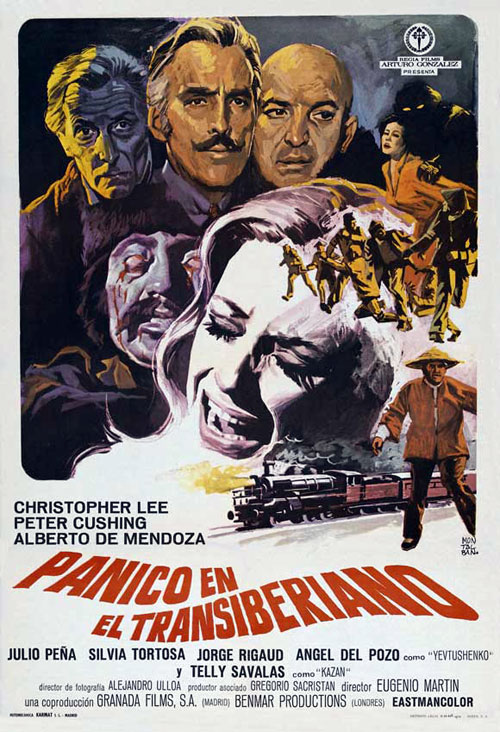
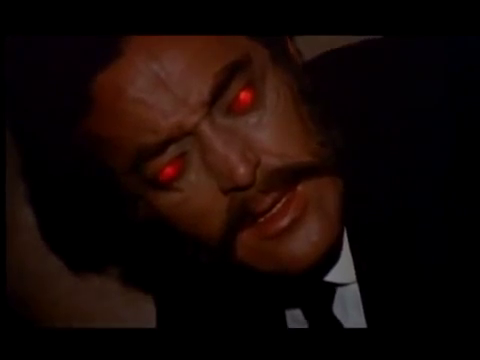
Peary refers to this low-budget, Spanish-made sci-fi flick as a “horror gem that devotees of late-night television have kept to themselves” (though its recent release on Blu-Ray and DVD makes this a somewhat dated point). He argues that the “picture is exciting and surprisingly provocative”, and praises the direction (by Eugenio Martin), the “interesting characters”, and the “solid acting”. He notes that “like 2001 and Five Million Years to Earth, it challenges both fundamentalist religion and theories on evolution” — a point I can’t quite agree with, given that it’s much stronger in thrills, chills, and occasional levity than meaty exploration of such topics. While I can understand this film’s cult appeal as a gruesome mash-up of numerous cinematic genres and tropes — a death-filled train ride a la Murder on the Orient Express (1974); a resuscitated frozen alien a la The Thing (1951); brain-dead victims-turned-perpetrators a la Night of the Living Dead (1968) — its true calling card is the fortunate pairing of Christopher Lee and Peter Cushing, who have great fun working together against dark forces. Watch for Telly Savalas in a cameo role as a Cossack commander who naively believes he and his men can tame the alien.

Redeeming Qualities and Moments:

  • Effective use of a claustrophobic train setting
  • Lurid special effects
  • Atmospheric cinematography

Must See?
Yes, once, simply as a cult favorite.

Categories

Links:

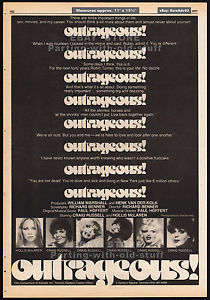
Outrageous! (1977)

Outrageous! (1977)

“You’ll never be normal — but you’re special. And you can have a hell of a good time!”

Synopsis:
A talented aspiring drag queen (Craig Russell) shares an apartment with his best friend, a schizophrenic young woman (Hollis McLaren) hoping to keep her “bonecrusher” away by becoming pregnant and feeling alive inside.

Genres, Themes, Actors, and Directors:

  • Aspiring Stars
  • Friendship
  • Gender Bending
  • Homosexuality
  • Mental Illness
  • Misfits
  • Pregnancy

Response to Peary’s Review:
Peary writes that perhaps the popularity of this “funny, touching film” — based on a short story by Margaret Gibson — is “due to the fact that both [main characters] succeed in achieving their modest goals”. He notes that “at times it’s a sloppy film, poorly lit and edited in a manner that causes you to lose all track of time; but the characters are so likable and believably played” and “the direction and script… are so spirited and tender that you are willing to forgive it for not being as polished as a Hollywood production”. He lauds the film’s emphasis on eschewing conformity, and notes that the “picture shows that those who struggle to retain their ‘healthy brand of craziness’ in our dehumanized world can have a lot of fun”.

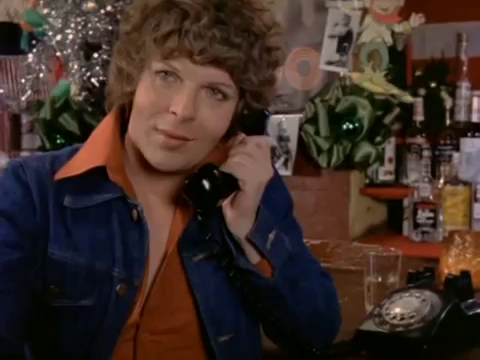
Peary specifically calls out Craig Russell’s “award-winning performance as Robin Turner, a character with great range” who is “kind-hearted, angry, witty, philosophical, moody, vulnerable to criticism, strong when he has to be, even heroic, extremely sarcastic, and harmlessly bitchy” — not to mention “dazzling” when he “does impersonations of Streisand, Channing, Garland, Bankhead, Davis, West, etc.” Indeed, the film is chock-a-block full of truly entertaining footage showing Russell doing what he does so well: we can easily understand why he expresses disdain and dismay early in the film when watching an amateur performer on stage, giving a bad name to his craft. Writer/director Richard Benner’s script heads in unusual directions, keeping us on our toes about what will happen next, and occasionally surprising us — but Russell’s friendship with McLaren trumps all, and provides the film with heartwarming continuity.

Note: This film is profiled at length in Peary’s original Cult Movies book.

Redeeming Qualities and Moments:

  • Craig Russell as Robin Turner (nominated by Peary as one of the Best Actors of the Year in his Alternate Oscars)

  • Hollis McLaren as Liza Connors
  • A refreshingly humane and compassionate view of mental illness: “You and me are here to love and look after each other.”
  • An authentically feel-good script: “I’ve never known anyone worth knowing who wasn’t a positive fruitcake.”

Must See?
Yes, as an enjoyable cult favorite.

Categories

  • Cult Movie

Links: