Browsed by
Category: Original Reviews

Responses to Peary’s “must see” movie reviews, as well as my own “must see” movie reviews up to and after 1986 (when Peary’s book was published).

Good Guys Wear Black (1978)

Good Guys Wear Black (1978)

“I’m saying we’ve been set up.”

Synopsis:
A former elite CIA assassin (Chuck Norris) collaborates with a fellow vet (Lloyd Haynes) in uncovering a plot by a corrupt politician (James Franciscus) to have all survivors of a certain raid in Vietnam assassinated.

Genres, Themes, Actors, and Directors:

  • Assassination
  • Chuck Norris Films
  • Political Conspiracy
  • Veterans
  • Vietnam War

Review:
Chuck Norris’s first notable role was in this post-Watergate political conspiracy thriller, starting with an action-packed raid in Vietnam which goes terribly wrong.

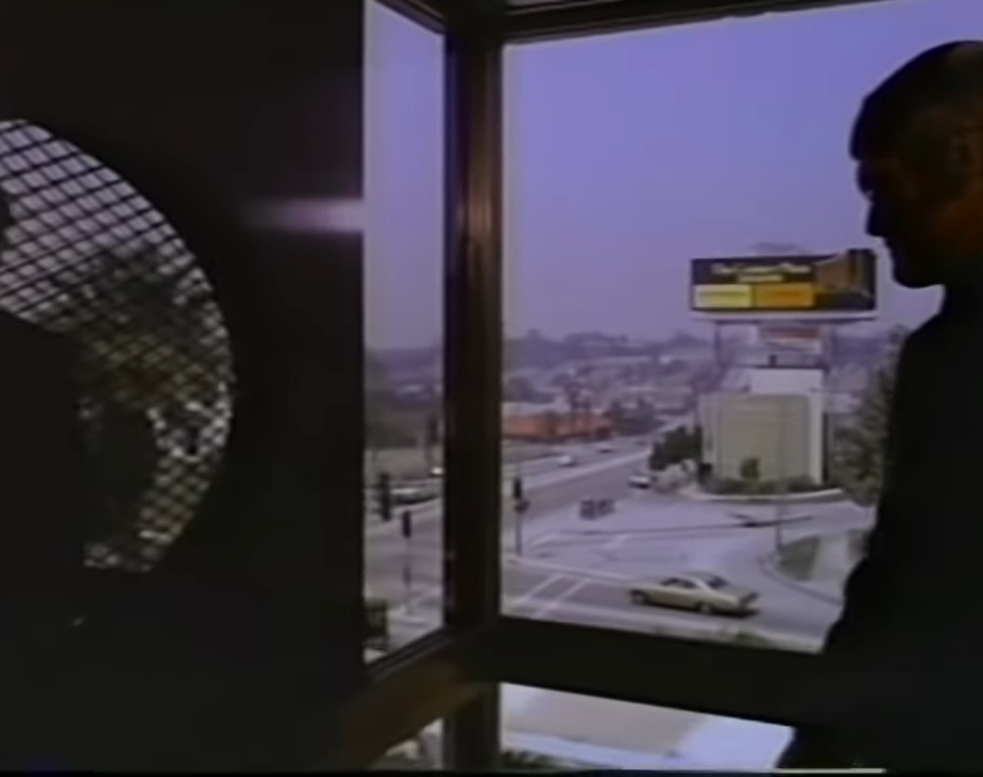
Flashing forward, we see that Norris is now a graduate student in political science at UCLA, who enjoys racing cars on the side:

… and has no trouble being pursued by numerous beautiful women — including a mysterious reporter (Anne Archer) who he quickly becomes involved with.

Meanwhile, we see Haynes getting increasingly suspicious about a spate of strategic murders taking place across the nation — all involving men who were part of their elite team.

The film takes us across various scenic locales, including a ski resort at Lake Tahoe:

… with bloody sniper kills interspersed at regular intervals. What role does aging alcoholic politician Edgar Harolds (Dana Andrews) play in all of this?

That’s not revealed until much later on; but one thing is guaranteed: we will get to see Norris fighting at least once.

Note: Watch for Jim Backus in a cameo role as a doorman.

Notable Performances, Qualities, and Moments:

  • Dana Andrews as Edgar Harolds
  • Creative sets

Must See?
No; this one is only must-see for Norris fans. Listed as a Cult Movie in the back of Peary’s book.

Links:

Cockfighter / Born to Kill (1974)

Cockfighter / Born to Kill (1974)

“I’m gonna keep my mouth shut until I’ve won that medal.”

Synopsis:
A down-on-his-luck cockfighter (Warren Oates) takes a vow of silence until he’s able to win back his fame, fortune, and girlfriend (Patricia Pearcy).

Genres, Themes, Actors, and Directors:

  • Ed Begley Jr. Films
  • Gambling
  • Harry Dean Stanton Films
  • Millie Perkins Films
  • Monte Hellman Films
  • Troy Donahue Films
  • Warren Oates Films

Review:
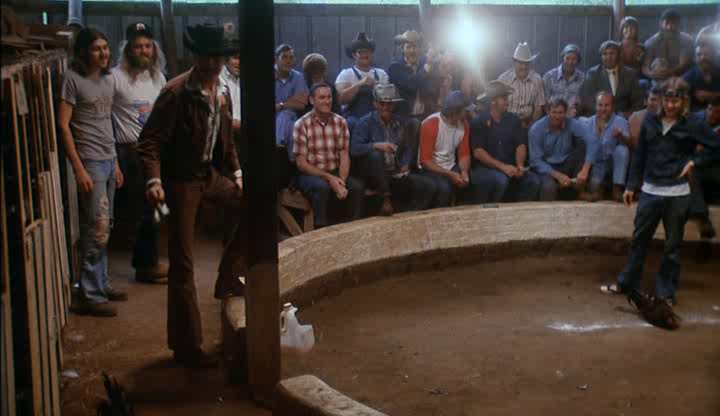
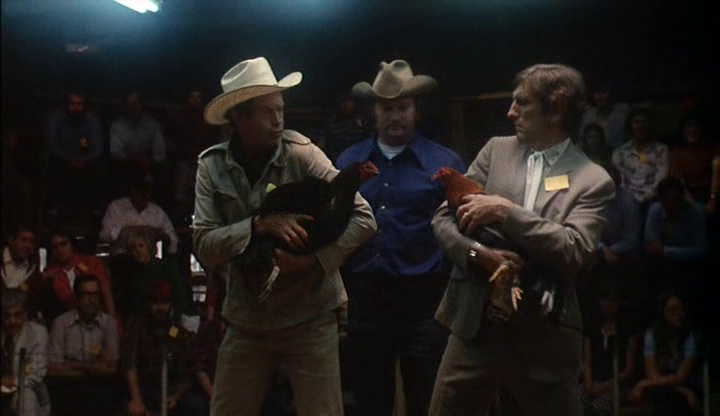
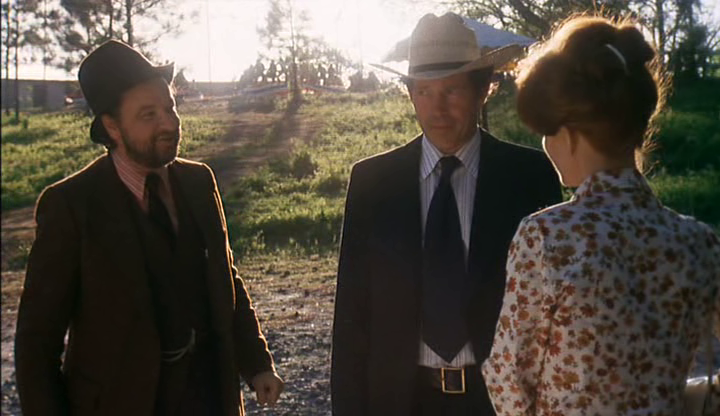
Notable as the only film which lost money for producer Roger Corman, this Monte Hellman-directed movie — based on a novel by screenwriter Charles Willeford — was re-released under various other names (including Born to Kill) but ultimately remains what its title implies: an 83-minute film about cockfighting, a sport which is now illegal across all 50 of the United States (though not in Puerto Rico, where it remains a thriving industry). Your appreciation of this offering will depend on a few factors: 1) how much you enjoy watching Oates turn in an impressive performance despite being limited to just a few lines of speech (in a flashback); 2) how curious you are to see this bloody sport in action (though you could alternatively just watch a short documentary about it on YouTube):

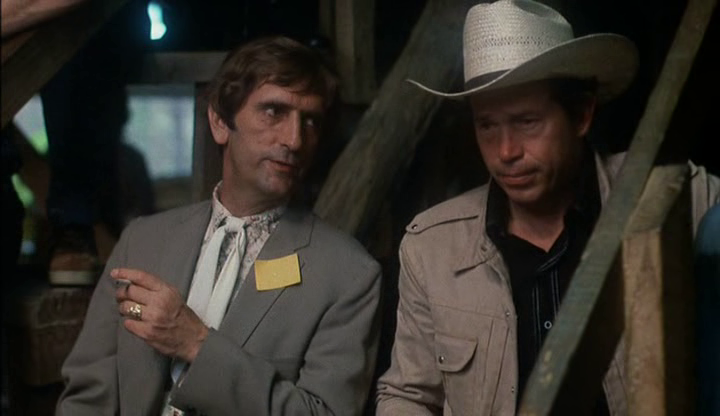
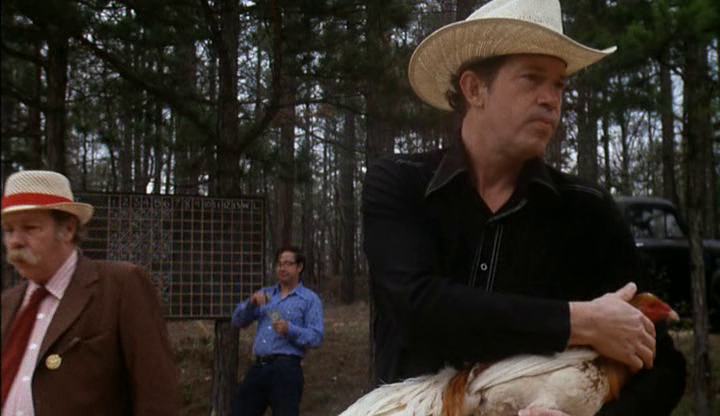
… and/or 3) how much of a Monte Hellman completist you are. Watch for numerous big-name actors in small roles, including Harry Dean Stanton as fellow cockfighter Jack Burke:

… Troy Donahue as Oates’ brother Randy:

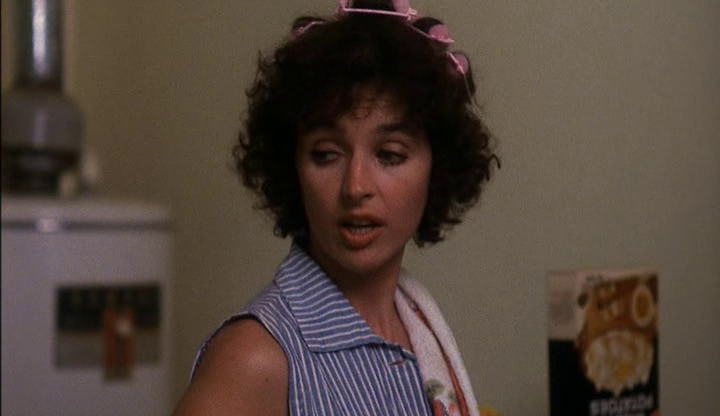
… Millie Perkins as Randy’s curler-clad wife:

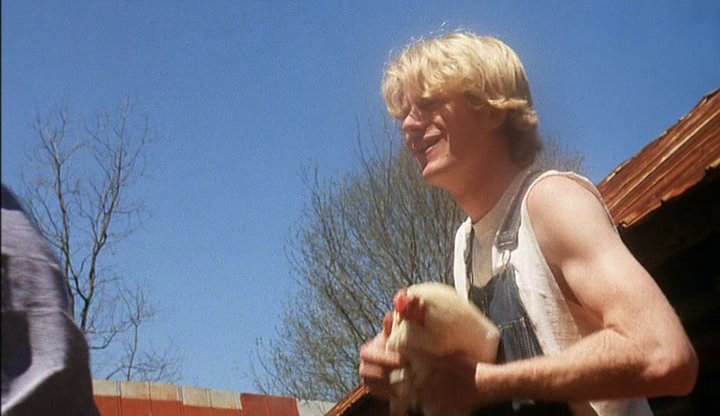
… and Ed Begley Jr. as a lanky local fighter.

Notable Performances, Qualities, and Moments:

  • Warren Oates as Frank Mansfield
  • Nestor Almendros’ cinematography

Must See?
No, unless you’re curious or a Hellman fan. Listed as a Cult Movie in the back of Peary’s book.

Links:

Zulu (1964)

Zulu (1964)

“The sentries report Zulus to the southwest — thousands of them.”

Synopsis:
In 1879, Lieutenant John Chard (Stanley Baker) — with support from Lieutenant Bromhead (Michael Caine) — assumes command of a missionary station at Rorke’s Drift in Natal, South Africa, where they prepare for advancement of 4,000 Zulu warriors.

Genres, Themes, Actors, and Directors:

  • Africa
  • Historical Drama
  • Jack Hawkins Films
  • Michael Caine Films
  • Military

Review:
Stanley Baker produced — and formerly blacklisted director Cy Endfield helmed — this colorful historical epic, based on a real-life battle and featuring a cast of 700+ Zulu extras (most of whom were descendants of the warriors). Although the subject matter is inherently problematic — we are asked to watch and sympathize with White settlers defending land they recently stole — the film itself does a masterful job showing events in a reasonably respectful way; while the Zulu warriors are primarily an indistinguishable mass (we never get to know any of them as humanistic individuals), they are at least portrayed as worthy, skilled, reasonable, and insanely brave combatants.

With that enormous caveat aside, the movie is exciting and almost impossibly tension-filled, as we wonder how in the world a tiny group of men will manage to hold off forces 26 times their size, circling in from all directions.

The script — by Endfield and John Prebble, whose original story the screenplay is based on — does a nice job setting us up to understand the complexity of the colonists’ situation. As the film opens, we see missionary Otto Witt (Jack Hawkins) and his daughter (Ulla Jacobsson) observing a mass Zulu marriage ceremony.

From there, after hearing about the crushing defeat of British soldiers at Isandlwana, they are taken to the hospital at their mission station, where we’re quickly introduced to a group of men who are either hurt, malingering, doctoring (Patrick Magee), or keeping camp — and none of whom have any idea what they’re about to be in for.

Hawkins (secretly alcoholic) and Jacobsson are firmly against asking the hospital’s inhabitants to stay and fight — and eventually they’re taken away to safely; but violence for those staying is inevitable, and the majority of the film shows how the entire company (well and sick) manages to hold out (though of course not without plenty of death on both sides).

Note:Jacobsson is the only listed female in the cast of this film, which most definitely does not pass the Bechdel Test.

Notable Performances, Qualities, and Moments:

  • Michael Caine (in his breakthrough role) as Lt. Bromhead
  • Fine supporting performances


  • Truly impressive battle sequences
  • Stephen Dade’s cinematography

Must See?
Yes, once, but with caution (as noted above).

Categories

  • Historically Relevant

Links:

Edvard Munch (1974)

Edvard Munch (1974)

“How can a young man who looks so nice create things like this?”

Synopsis:
Norwegian Expressionist artist Edvard Munch (Geir Westby) creates paintings and other works of art inspired by his traumatic childhood and various romances, including a formative one with married Fru Heiberg (Gro Fraas).

Genres, Themes, Actors, and Directors:

  • Artists
  • Biopics
  • Peter Watkins Films
  • Scandinavian Films

Review:
Peary only lists three of iconoclastic writer-director Peter Watkins’ films in GFTFF — The War Game (1965), Privilege (1967), and this — but they’re each must-see in their own way. This unusual biopic was made in collaboration with the Norwegian (NRK) and Swedish (SVT) state television networks, and was originally aired on TV in addition to being screened at Cannes — though for unknown reasons, it remained challenging to see for many years, and Watkins was unable to pursue similar projects on other artists.

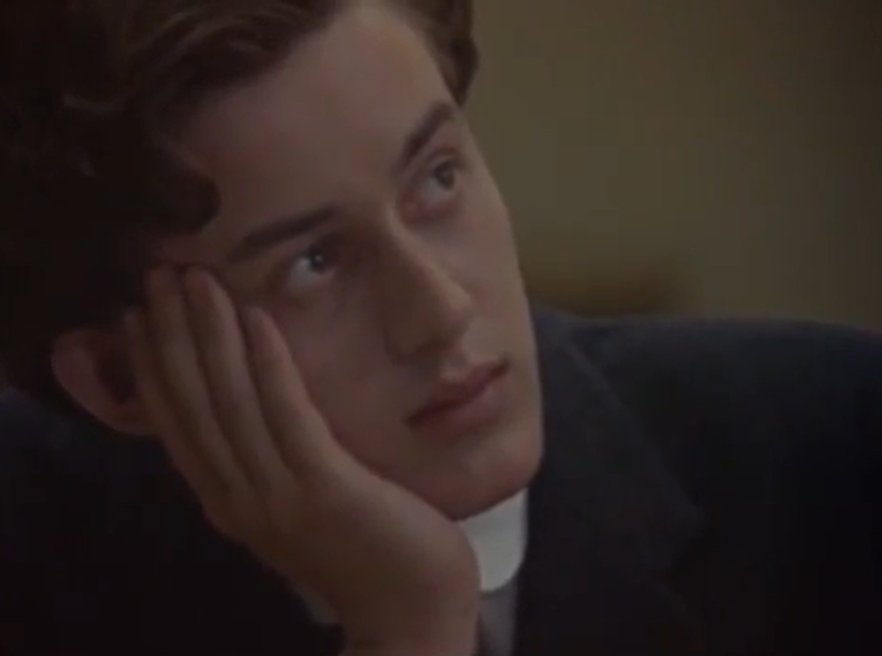
Utilizing a unique docudrama approach (including Watkins himself in voiceover), the film features primarily non-professional Norwegians in its cast — including Westby (who looks eerily like him; this is his only credit) as grown Munch.
I’ll cite next from DVD Savant’s review, which emphasizes the ingenuity of the film’s style:

“This biography of the great painter is assembled in a consistently brilliant free-association style that resembles a cinematic version of what the late 19th century painters were doing — tearing down conventions and exploring new ways of looking at the world. Edvard Munch is a long film but a fascinating one, an honest work of conceptual art that follows no rules but its own. There was nothing like it in 1974.”

Savant, an editor himself, adds that “Edvard Munch cuts all over the temporal map and communicates its intentions with pinpoint accuracy. A dozen formative memories and traumatic incidents are ever present in Munch’s work, and they recur time and again.” Indeed, it’s easy to see how (understandably) influential it was to Munch to live a childhood of illness and death (his mother and favorite sister both died):


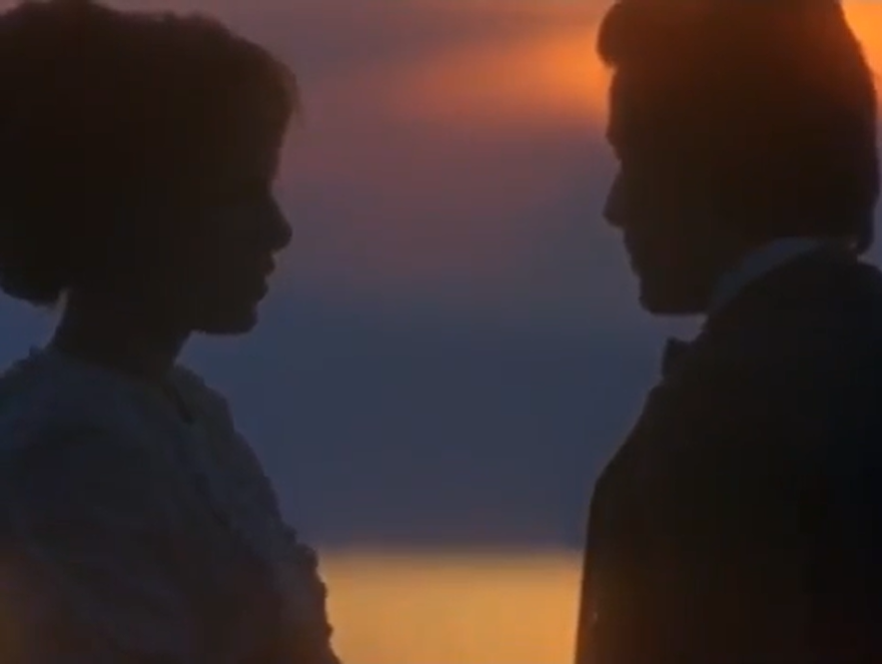
… and to wonder if or when heritable mental illness would land upon him. (It did, eventually, though we don’t really see that depicted here.) We do see the strong influence of living amongst free-loving, philosophizing bohemians:
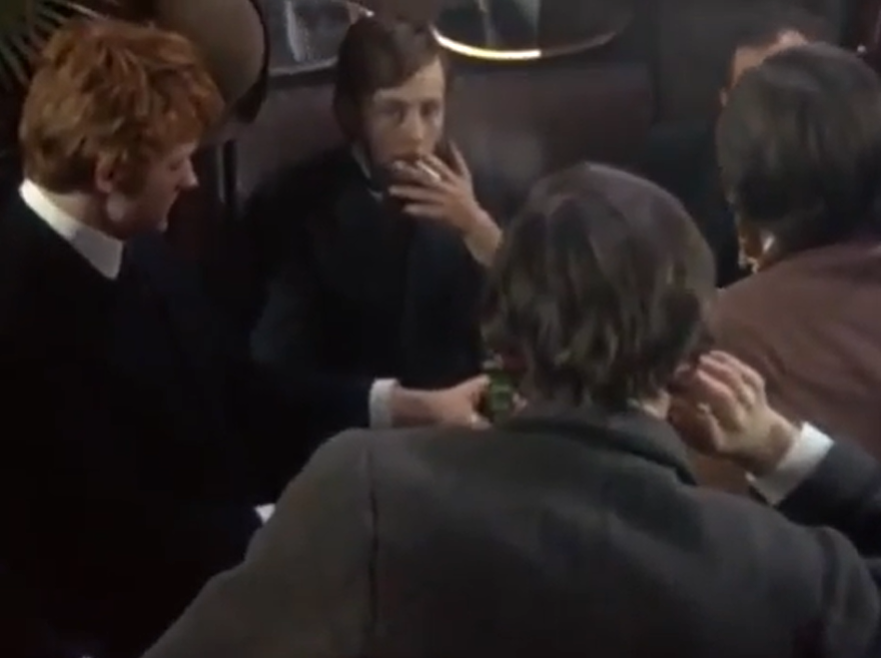
… in particular nihilist Hans Jæger, who apparently enjoined him to “paint what he felt” — eventually leading to his unique style of “soul painting,” which we learn was rejected by many if not most critics around him.

I was intrigued to learn a little more about one of his most famous paintings, “Madonna,” which more likely was meant to depict a partner’s view of a woman during love-making.

His model and lover, Dagny Juel (Iselin von Hanno Bast), is shown in the film (she had a horrific ending in her real life).
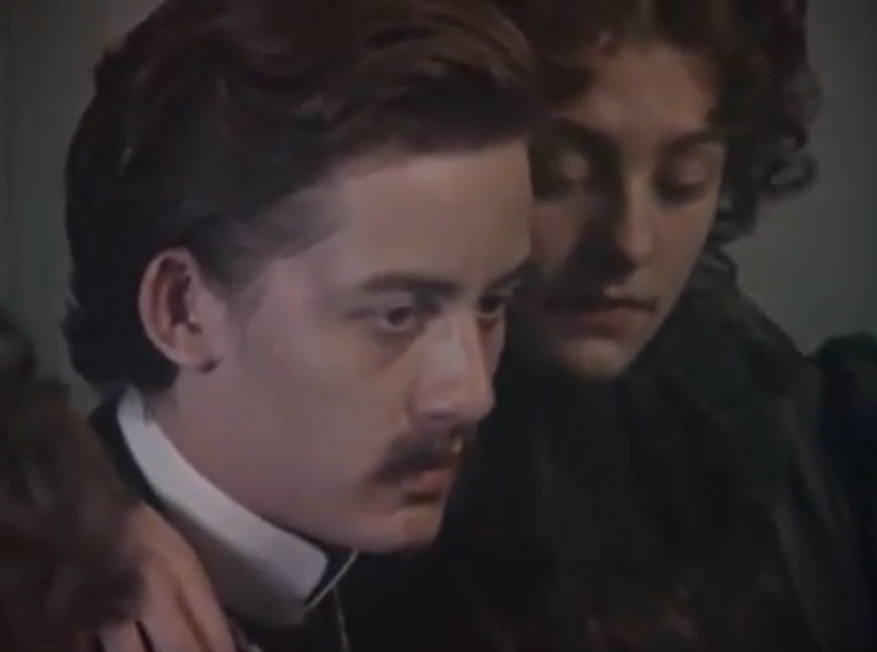
Munch’s existence was an undeniably challenging one — though it’s fortunate he managed to live his later years in relative peace (other than Nazis occupying Norway and calling his work degenerate; oh well). Neither Munch nor any of his siblings ever had kids — which I mention because I happen to be related to him (though obviously not directly). My maternal grandmother, Nanna née Munch, was his second-cousin once removed: she was the child of two Munchs (Jens Lauritz Munch and Nanna Munch), both of whom were children of Munchs as well (Jonah Storm Munch and Peter Christian Munch, respectively). (A little inbreeding, anybody?) Jonah and Peter’s grandfather, Peder Munch, was father to an older Edvard Munch, who gave birth to Kristian Munch, father of “the Edvard” of painterly fame.

All to say, I grew up knowing about my Munch heritage, seeing copies or cheap prints of his paintings all over the house, and visiting the same Edvard Munch Museum in Oslo that inspired Watkins to make this film. I can attest to their vibrancy, and also the strong theme of expressionist angst that literally pervades his work; it’s fortunate that he left all his estate to the city of Oslo, so viewers can continue to appreciate and learn from them.

Note: Munch was featured on a 1,000 kroner banknote (removed from circulation in 2019), which leads me to share one more personal tidbit: from my father’s side of the family, Norwegian scientist Kristian Birkeland was on the 200 Kroner note until 2017, when he was replaced by an image of cod. Birkeland, like Munch, was consumed by his work (he was nominated for a Nobel Prize 7 times), never had kids, and died a very mysterious death in a hotel in Tokyo; he’s related to my paternal great-grandmother Birkeland. Norway is a small country. And no, I don’t think I’m related to either Edvard Grieg or Henrik Ibsen, darn it.

Notable Performances, Qualities, and Moments:

  • Odd Geir Saether’s cinematography
  • Fine period sets
  • A fascinating glimpse into the artistic process (both creation and recreation)
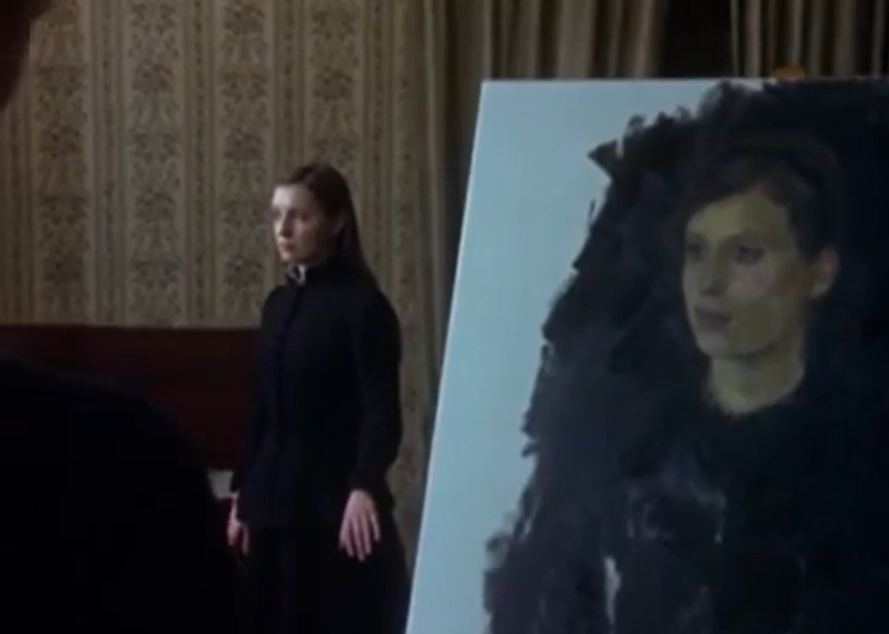
  • Truly impressive editing

Must See?
Yes, as a powerful and unusual biopic. Listed as a Cult Movie in the back of Peary’s book.

Categories

  • Good Show

Links:

Mad Dog Morgan (1976)

Mad Dog Morgan (1976)

“I want his spleen on my desk by sundown.”

Synopsis:
In mid-19th-century Australia, bushranger Daniel Morgan (Dennis Hopper) partners with an Aboriginal man (David Gulpilil) while attempting to evade capture by Superintendent Cobham (Frank Thring), Detective Manwaring (Jack Thompson), and Sgt. Smith (Bill Hunter).

Genres, Themes, Actors, and Directors:

  • Australian Films
  • Biopics
  • Dennis Hopper Films
  • Folk Heroes
  • Historical Drama
  • Outlaws

Review:
Dennis Hopper played one of Australia’s best-known “bushrangers” (i.e., outlaws) in this semi-fictionalized biopic of Irish-Australian Daniel Morgan, referred to here as “Mad Dog”. Writer-director Philippe Mora — working from a book by Margaret Carnegie — effectively tells the arc of Morgan’s life, from an opium-loving gold-seeker hanging out with Chinese workers:

… to a prisoner enduring inhumane treatment:

… to life on the run from various lawmen who are determined to capture him at any cost. Along the way, his life is saved by Aboriginal Billy (Gulpilil), who teaches him how to make roasted snake:

… and he decides to “go Lincoln” in his appearance after seeing a picture of the American president.

Hopper’s performance is appropriately unhinged, showing precisely how a man like this — originally peaceful, pushed into crime by trauma — could survive for as long as he did while developing somewhat of a folk-hero following. Working with production designer/art director Bob Hilditch, Mora presents a credible view of mid-1800s Australia, in which survival is harsh and class/racial differences are stark. This so-called “Ozploitation” film remains worth a look.

Notable Performances, Qualities, and Moments:

  • Dennis Hopper as “Mad Dog” Morgan
  • Strong supporting performances across the cast

  • Fine cinematography

Must See?
Yes, for Hopper’s performance and as a powerful early Australian flick.

Categories

  • Good Show
  • Noteworthy Performance(s)

Links:

Mad Bomber, The (1973)

Mad Bomber, The (1973)

“I want to catch this son-of-a-bitch before he blows up Los Angeles!”

Synopsis:
A police detective (Vince Edwards) in Los Angeles attempts to find a serial rapist (Neville Brand) who may know the identity of an insane bomber (Chuck Connors).

Genres, Themes, Actors, and Directors:

  • Detectives and Private Eyes
  • Los Angeles
  • Neville Brand Films
  • Terrorists

Review:
Writer-director Bert I. Gordon (working from a story by Marc Behm) helmed this low-budget vigilante-psycho thriller set across the diverse streets of Los Angeles, featuring the potential of harm at literally every corner.

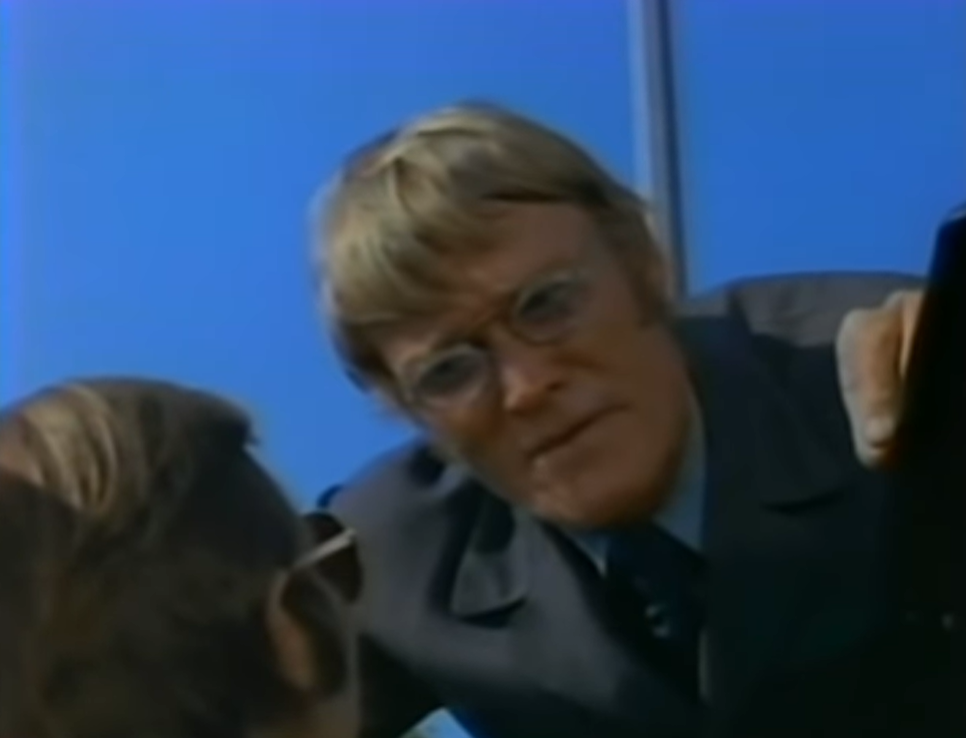
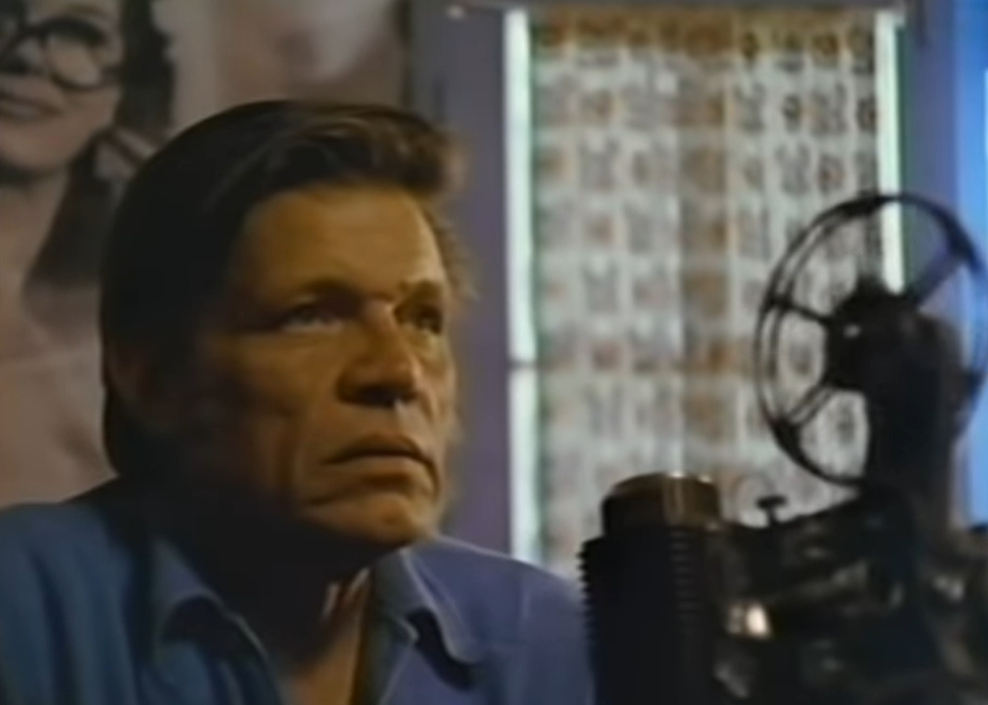
Bespectacled Connors is about as unhinged as you can imagine — but he’s in good company with sicko Brand, whose wife (Ilona Wilson) is at least somewhat in league with his perversions.

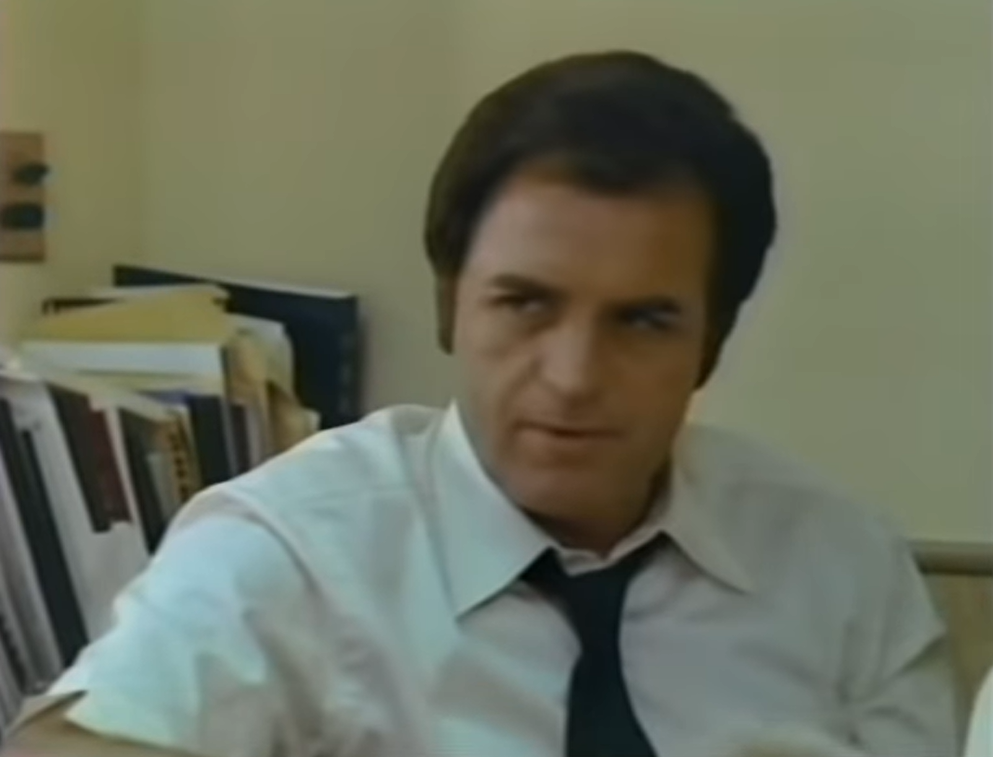
Given that obsessed Lieutenant Geronimo Minneli (Edwards) is on their tails:

… we’re guaranteed an action-packed and violence-filled adventure (which we get). Numerous sequences fall squarely within exploitation realm — be forewarned about several highly disturbing scenes — but to Gordon’s credit, one stays curious throughout about how things will eventually resolve.

Of special note: Edwards uses fancy facial “recognition” technology to craft an impressively effective visage of his suspect.

Notable Performances, Qualities, and Moments:

  • Good use of location shooting throughout Los Angeles

Must See?
No, though it’s worth a one-time look.

Links:

Playtime (1967)

Playtime (1967)

“Can’t a guy have a little fun?”

Synopsis:
As a group of American tourists descend upon Paris, Mr. Hulot (Jacques Tati) makes his way through the increasingly modernized and mechanized city.

Genres, Themes, Actors, and Directors:

  • Comedy
  • Jacques Tati Films

Review:
Jacques Tati’s fourth feature-length film — after Jour de Fete (1949), Mr. Hulot’s Holiday (1953), and Mon Oncle (1958) — was this enormously budgeted spectacle (the most expensive made in France to that date) which lost money and bankrupted Tati, yet remains a personal favorite for many. Because I’m not a Tati fan, I’ll cite extensively from DVD Savant, who in his review seems similarly attempting to make sense of a film which perhaps he appreciates more than enjoys. He notes:

“Playtime is as subversive and important as anything in the French New Wave. It’s a completely uncompromised, lavishly filmed vision as personal as anything by David Lean or Stanley Kubrick. Since it’s so clearly aimed at its own inspiration and not the box office, Tati grows in the mind as one of the most pure cinema artists that ever was. It’s indescribable, baffling, and definitely not a mass-audience movie, yet it was shot in 70mm!”

In terms of plot — what plot? Who needs one? Writing in his essay for Criterion, David Cairns refers to this film’s plot as “slender to the point of deniability.”

Meanwhile, DVD Savant explains:

“The shots are always very wide and open to the possibilities of action and development from any direction. Hulot is the ostensible main subject, but he’s as randomly observed as anyone else in the show.”

“Droll humor is the most we get: very often there’s nothing funny about what’s going on and Savant is sure that many a 1967 audience felt they were the victims of a colossal private joke. Movies that are private jokes, almost always become known by their other name, failures, and whether or not Playtime succeeds will depend on your inclination toward humor that is more conceptual than overt, and droller than droll. There are mistaken-identity gags, frustration gags, the works, but it all exists within this ‘you have to find it for yourself’ world that will either delight the viewer or bore him silly.”

He adds, “In Playtime Tati shows us our world in transition, without making it into a dysfunctional nightmare, as in Godard’s Science Fiction comic book of a movie [Alphaville (1965)]. People adapt, every place that has happiness is magical, and the film ends with another crowded airport. This one transforms into a giant mechanized whimsical carousel.”

For an enjoyable primer on visual gags in Tati’s films, click here.

Notable Performances, Qualities, and Moments:

  • Truly impressive sets

Must See?
No, though most film fanatics will naturally be very curious to check it out — and probably should, once. Listed as a film with Historical Relevance and a Cult Movie in the back of Peary’s book.

(Listed in 1001 Movies You Must See Before You Die)

Links:

Heat (1972)

Heat (1972)

“I didn’t complain when you said you wanted to be a lesbian, did I?”

Synopsis:
An aging actress (Sylvia Miles) with a dysfunctional daughter (Andrea Feldman) becomes smitten with a young former-child-star (Joe Dallesandro) living in her daughter’s apartment complex — but can she get him work in Hollywood?

Genres, Themes, Actors, and Directors:

  • Actors and Actresses
  • Aspiring Stars
  • Hollywood
  • May-December Romance
  • Paul Morrissey Films
  • Sylvia Miles Films

Review:
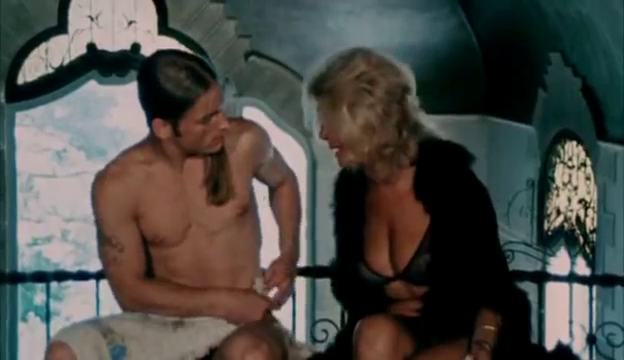
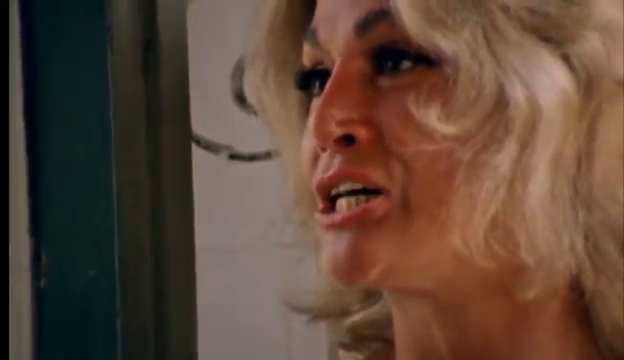
The third film in Paul Morrissey’s Andy-Warhol “trilogy” — after Flesh (1968) and Trash (1970) — was this low-grade send-up of Sunset Boulevard (1950), complete with an ending shot on a pool and a gun. Miles — Oscar-nominated for her supporting performance in Midnight Cowboy (1969) — is perfectly cast here as an aging diva with attachment issues:

… and Dallesandro once again plays — well, himself, as handsome, casual, and pan-sexually appealing as ever.

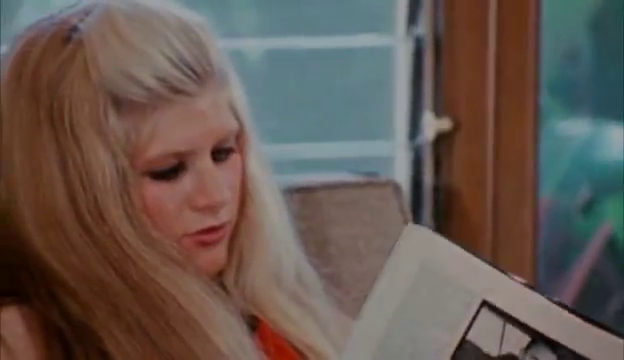
Andrea Farnsworth — memorable in Trash (1970) as “the rich girl” with the funny voice (her voice is equally strange here) — plays one of the most obnoxious grown-daughters in cinematic history:

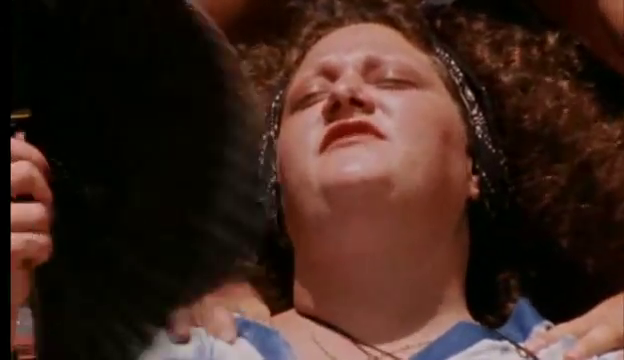
— a whiny ingrate who would come close to winning the worst-mother-in-the-world award (she carries her baby around in a bag and gives him sedatives so she can head out). (Sadly, Farnsworth committed suicide just before this film premiered.) Perhaps having the most fun with their performance is Pat Ast as Lydia the landlady, who isn’t afraid to show her roaring appetite for Dallesandro.

Unfortunately, the semi-improvised screenplay isn’t very engaging or clever, leaving us simply waiting for any reasonably juicy zingers (“Is that a way to bring up a boy? He’ll be a lesbian!”). At least the final shot has a surprise in it.

Notable Performances, Qualities, and Moments:

  • Sylvia Miles as Sally
  • John Cale’s jaunty score

Must See?
No, though it’s worth viewing for Miles’s performance.

Links:

Day of the Dolphin, The (1973)

Day of the Dolphin, The (1973)

“Do you think they’re going to get sentimental about a dolphin?”

Synopsis:
When a dolphin-training marine biologist (George C. Scott) and his wife (Trish Van Devere) are visited at their research center by a nosy journalist (Paul Sorvino), they soon learn about a nefarious plan involving their beloved animals.

Genres, Themes, Actors, and Directors:

  • George C. Scott Films
  • Kidnapping
  • Mike Nichols Films
  • Science Fiction
  • Scientists
  • Talking Animals

Review:
Director Mike Nichols and screenwriter Buck Henry teamed up for a third time — after The Graduate (1967) and Catch-22 (1970) — for this sci-fi-thriller adaptation of a 1967 novel by French author Robert Merle. Unfortunately, it’s a much less successful collaboration, ultimately coming across like a weird missed opportunity — a movie which surely would have been quite different in the hands of Roman Polanski (the originally intended director). Obviously, one must suspend disbelief right away in order to go with the film’s premise that dolphins have learned to understand and speak English:

… which at first seems reasonably plausible, but as the movie progresses and the dolphins are shown to possess even greater comprehension, I simply couldn’t buy it. To their credit, the cast seems fully committed:

… and there are a couple of character switcheroos that one doesn’t see coming. While it has its fans (see DVD Savant’s review, for instance), I’m more in agreement with Vincent Canby’s review for the NY Times in which he refers to this as “a Flipper film for adults, a Day of the Jackal for kids and a Lassie film for scuba divers of all ages.”

Notable Performances, Qualities, and Moments:

  • George C. Scott as Dr. Terrell
  • William A. Fraker’s cinematography

Must See?
Nope; you can skip this one unless you’re curious.

Links:

Revolutionary, The (1970)

Revolutionary, The (1970)

“I’m not cute; I’m not even nice!”

Synopsis:
A college radical (Jon Voight) frustrated with the slow pace of his campus group parts ways with his girlfriend (Collin Wilcox Paxton) and flirts with a wealthy young woman (Jennifer Salt) while working for an activist boss (Robert Duvall), and eventually aligning with a revolutionary bomber (Seymour Cassel).

Genres, Themes, Actors, and Directors:

  • College
  • Jon Voight Films
  • Revolutionaries
  • Robert Duvall Films
  • Seymour Cassel Films

Review:
After debuting with Out of It (1969) and before helming Dealing: Or the Berkeley-to-Boston Forty-Brick Lost-Bag-Blues (1970), Paul Williams directed this adaptation of screenwriter Hans Koning‘s novel of the same name, about a discontented college student who is drawn towards increasing action and violence. Unfortunately, the protagonist here — named simply “A” — is as bland as can be; as played by Voight — on a roll after performances in Midnight Cowboy (1969), Out of It (1969), and Catch-22 (1970), and before starring in Deliverance (1972) — he’s simply dull and opaque.

We don’t learn much about where “A” comes from, why he became radicalized, or why he’s so instantly drawn towards a young woman-of-privilege (Jennifer Salt) he catches sight of. Other characterizations are similarly lacking in detail: Robert Duvall’s “Despard”, for instance, is unknowable:

… and all we understand about Cassel’s Leonard II (though perhaps it’s plenty) is that he’s able and willing to carry out immense violence.

Perhaps the most intriguing character is chain-smoking Ann (played by Paxton — best-known for her supporting role in To Kill a Mockingbird), though she’s not treated well by clueless Voight, and once again, we don’t really learn enough about her.

Note: Watch for Jeffrey Jones — Dean Rooney from Ferris Bueller’s Day Off (1986) — in his film debut here as a student activist.

Notable Performances, Qualities, and Moments:

  • A seemingly realistic glimpse into a particular era and context

Must See?
No; this one isn’t must-see.

Links: