Browsed by
Category: Original Reviews

Responses to Peary’s “must see” movie reviews, as well as my own “must see” movie reviews up to and after 1986 (when Peary’s book was published).

Little Women (1933)

Little Women (1933)

“Christopher Columbus!”

Synopsis:
While their father (Samuel S. Hinds) is away at war, an aspiring writer (Katharine Hepburn) and her three sisters — beautiful Meg (Frances Dee), kind-hearted Beth (Jean Parker), and young Amy (Joan Bennett) — are raised by their hard-working mother (Spring Byington) while living next door to a wealthy old man (Henry Stephenson) and his handsome grandson (Douglass Montgomery).

Genres, Themes, Actors, and Directors:

  • Coming of Age
  • Feminism and Women’s Issues
  • Frances Dee Films
  • George Cukor Films
  • Historical Drama
  • Jean Parker Films
  • Katharine Hepburn Films
  • Paul Lukas Films
  • Siblings
  • Strong Females
  • Writers

Review:
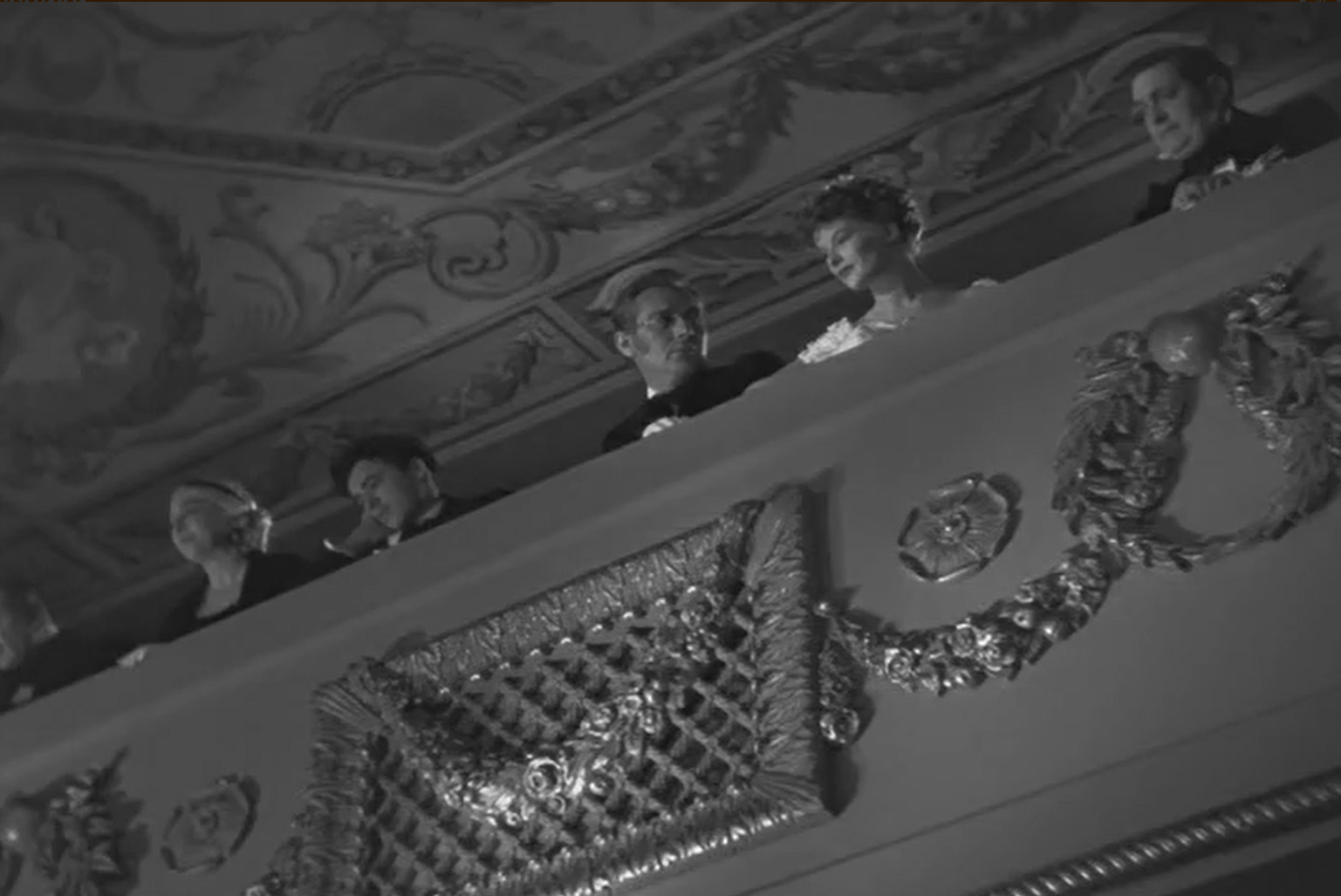
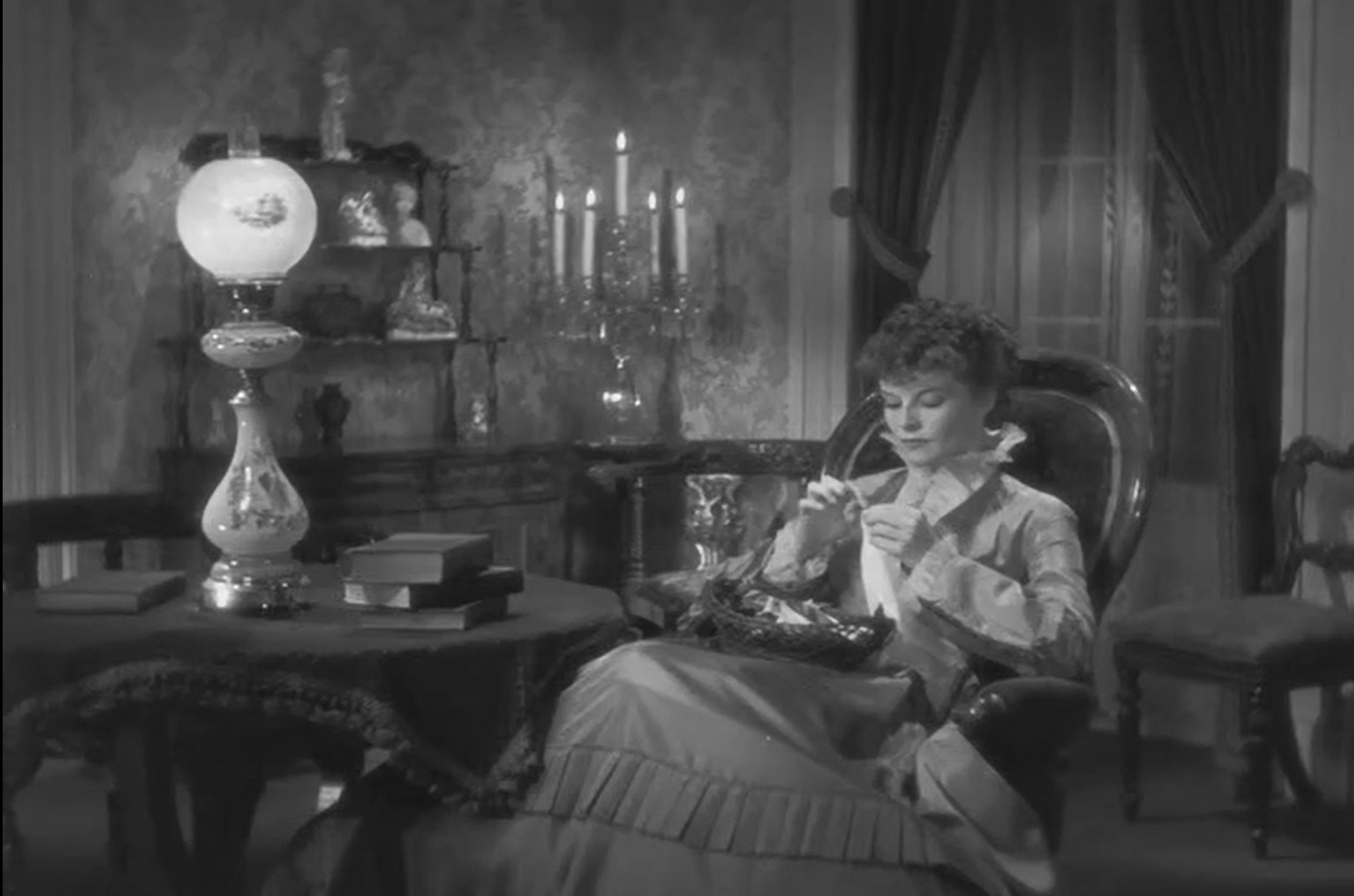
George Cukor’s adaptation of Louisa May Alcott’s enduringly popular Civil War-era novel is often cited as the definitive — and/or the most beloved — of numerous cinematic iterations. Katharine Hepburn is perfectly cast as tomboy-ish Jo, though I’ll admit I find her deep-voiced performance a bit forced during the first half of the film:

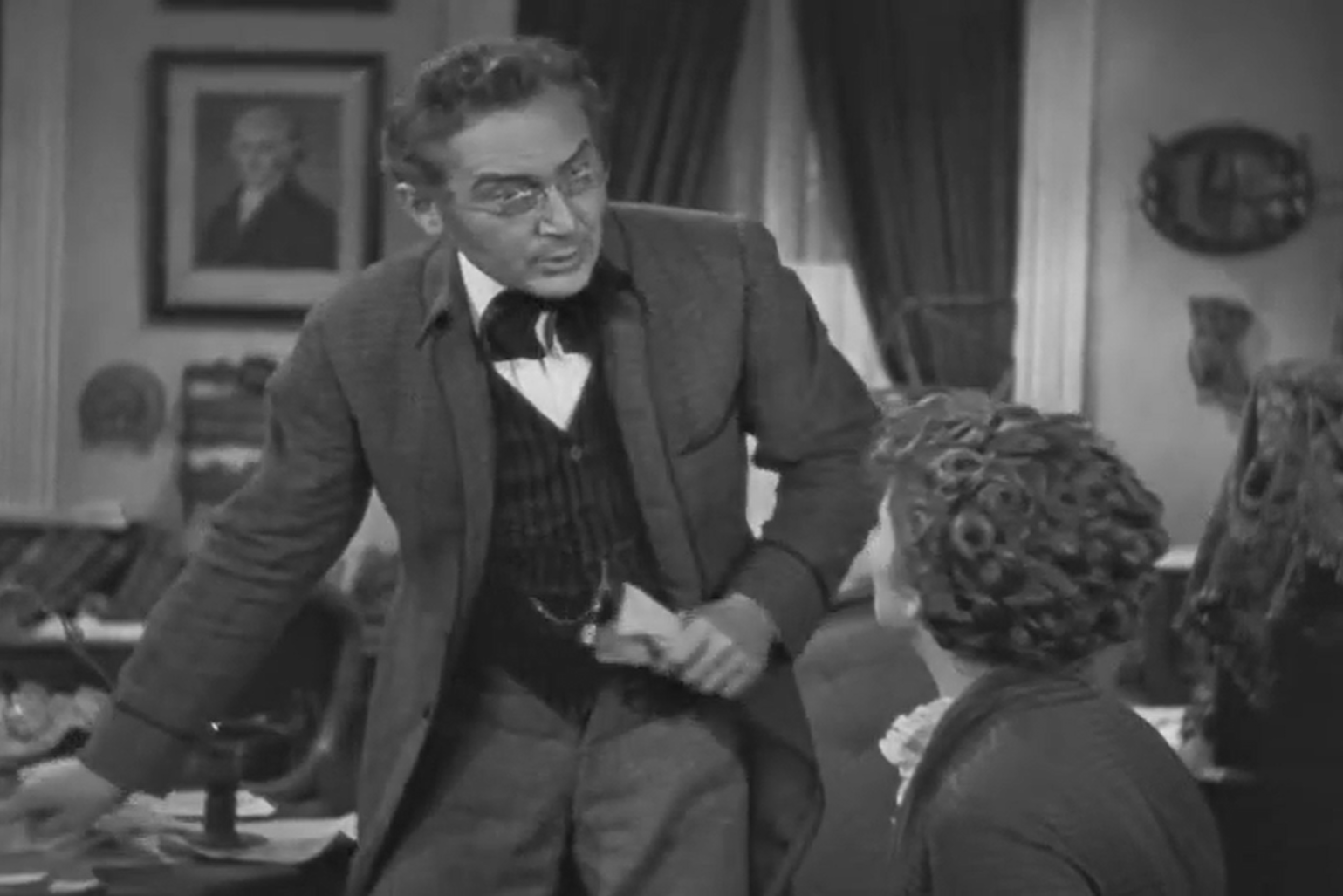
Only once her character matures and moves to New York does Hepburn seem to relax into the role. Other key parts in the ensemble cast are nicely filled as well, with Paul Lukas particularly sympathetic as Jo’s older suitor (it’s easy to see why she would fall for him, despite the age difference):

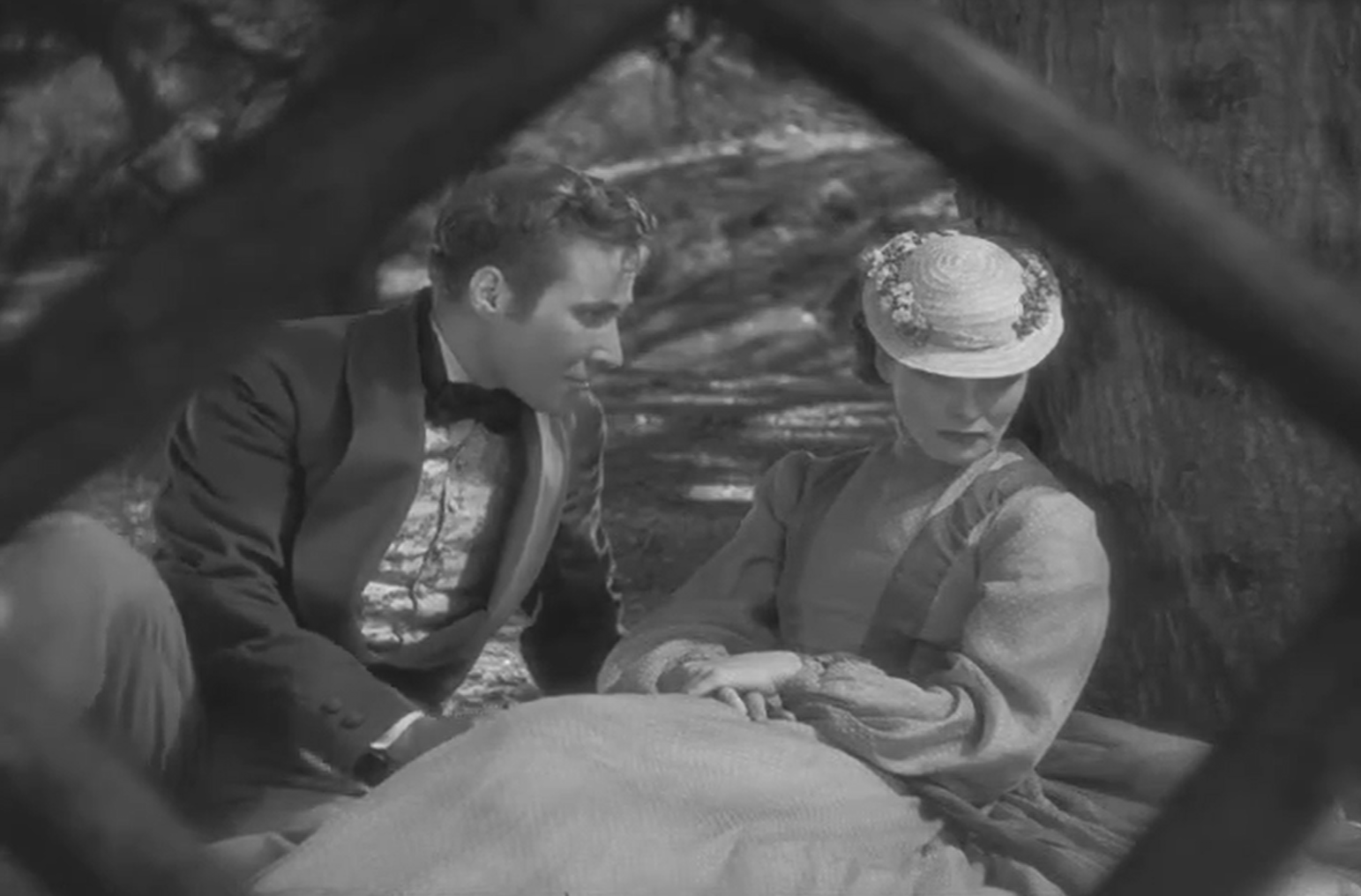
and Douglass Montgomery a charming, easygoing “Laurie”. (It’s a shame Montgomery’s career never really took off.)

The deliberately episodic, relatively faithful Oscar-winning screenplay follows the cadences of Alcott’s coming-of-age novel nicely, while historically authentic sets and costumes help bring the story to life; fans of the book likely won’t be disappointed.

Redeeming Qualities and Moments:

  • Paul Lukas as Professor Bhaer
  • Nicely authentic sets and costumes
  • A fine, Oscar-winning screenplay (by Victor Heerman and Sarah Y. Mason)

Must See?
Yes, as an enduring literary adaptation. Listed as a film with Historical Importance and a Personal Recommendation in the back of Peary’s book.

Categories

  • Genuine Classic

Links:

Such Good Friends (1971)

Such Good Friends (1971)

“Now that the damage has been done, your husband’s care will be of the finest.”

Synopsis:
When her husband (Laurence Luckinbill) becomes increasingly ill after entering the hospital for minor surgery, a woman (Dyan Cannon) soon learns some disturbing secrets about their marriage.

Genres, Themes, Actors, and Directors:

  • Death and Dying
  • Dyan Cannon Films
  • Marital Problems
  • Otto Preminger Films

Review:
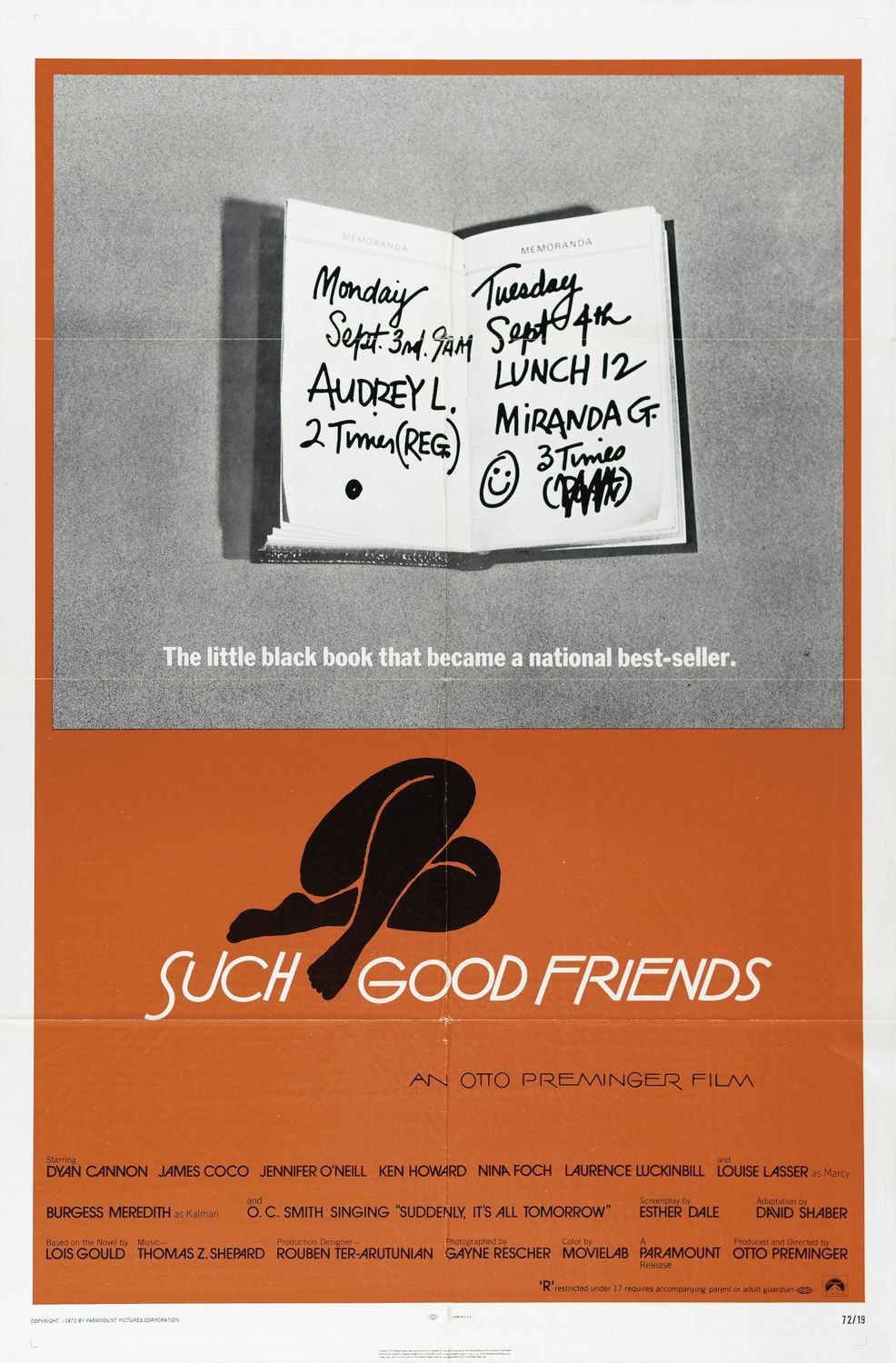
Otto Preminger’s directorial career went into serious decline during the last years of his life, as he helmed a series of surreal and/or puzzling oddities — the most notorious of which was the all-star musical flop Skidoo (1968). Unfortunately, Such Good Friends — based on a bestselling novel by Lois Gould — is yet another disappointment in his otherwise estimable oeuvre. With a screenplay by Elaine May (writing under the pseudonym Esther Dale), one has high hopes for the premise — but Preminger manages to botch the entire affair so badly that it’s impossible to tell what might have been done with the story in different hands. The tone is wildly uneven: clearly this was meant to be some sort of black comedy, but Preminger flits between failed attempts to mine the comedic premise — Luckinbill goes in to have a benign mole removed, and ends up in a coma, with his doctors increasingly defensive — and filming the material like a weighty drama about illness and infidelity. The result is that we never know whether the characters are supposed to be reacting to each other realistically or comically.

Making matters worse, we don’t like any of these characters — not even the protagonist (Cannon), whose plight we should presumably empathize with. Our distaste for Cannon’s spoiled housewife is cemented from her very first scenes, as she mutters, “Why did they abolish slavery?!” in frustration when her black maid can’t hear her petulant request to answer the doorbell. When events quickly turn more serious, she thankfully drops her characteristically ditzy screen persona and invests her character with gravitas and nuance, turning in what’s probably one of the best performances of her career. However, she’s at sea in the midst of a messy cinematic train wreck, one even her emotional investment simply can’t salvage.

Note: My opinion of this film diverges considerably from most other critics: Roger Ebert gives it four stars out of four, Stuart Galbraith IV of DVD Talk refers to it as “just about as good” as Annie Hall (!!!), and others point out the wittiness and elegance of the dialogue. It’s likely that my overall distaste for how Preminger handles the material is shadowing my ability to appreciate much else about it — but regardless, I consider this one to be a true clunker.

Redeeming Qualities and Moments:

  • Dyan Cannon as Julie

Must See?
No; definitely feel free to skip this one.

Links:

Kid Millions (1934)

Kid Millions (1934)

“Go away! I can’t talk to an idiot!”

Synopsis:
When a nebbish (Eddie Cantor) discovers he’s heir to a fortune, he quickly becomes prey to a con-woman (Ethel Merman) and her partner (Warren Hymer); meanwhile, when traveling to Egypt to collect his inheritance, the daughter (Eve Sully) of an Egyptian sheik (Paul Harvey) becomes smitten with Cantor and attempts to snag him as her husband.

Genres, Themes, Actors, and Directors:

  • Ann Sothern Films
  • Comedy
  • Con-Artists
  • Eddie Cantor Films
  • Egypt and Egyptology
  • Inheritance
  • Musicals
  • Roy Del Ruth Films

Review:
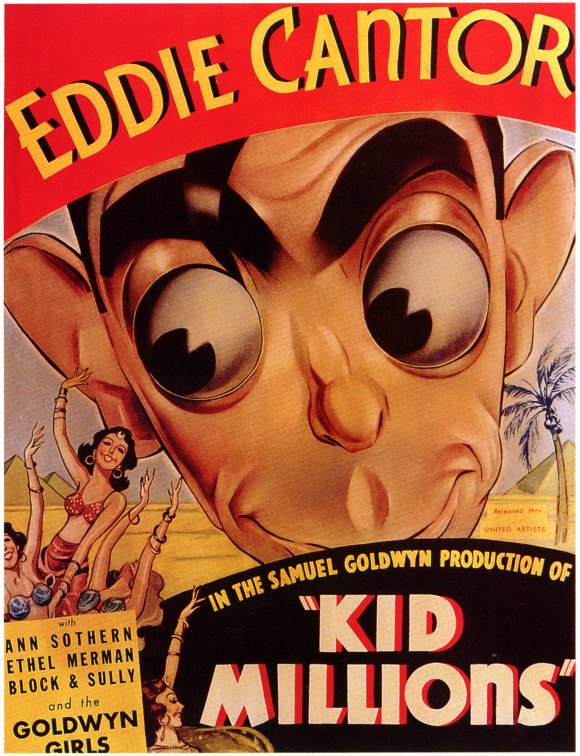
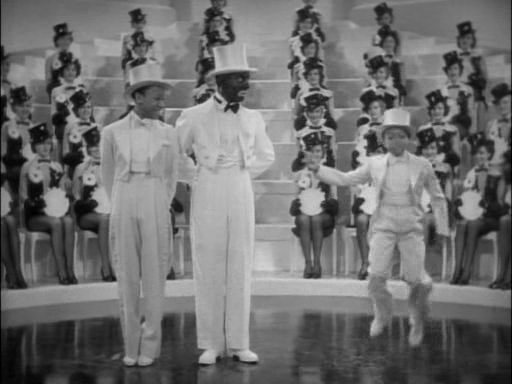
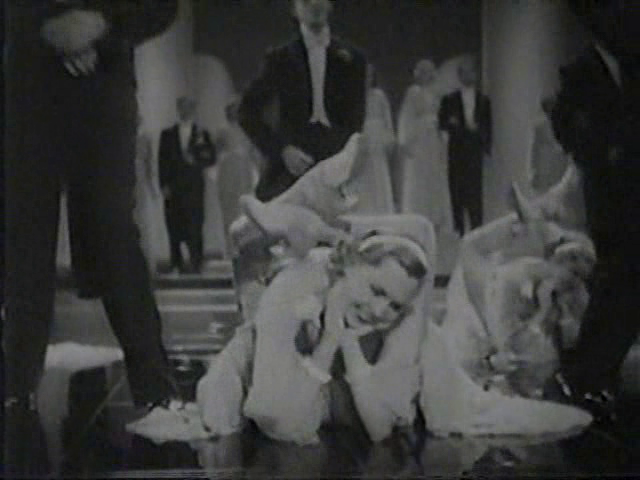
Roy Del Ruth directed this inconsequential Eddie Cantor musical-comedy, based on a fantastical “kitchen sink” storyline that’s essentially a series of excuses for comedic banter and absurd situations to emerge. Naturally, musical sequences are scattered throughout (the best starring the Nicholas Brothers), and there’s also a gratuitous romantic subplot between George Murphy and Ann Sothern (whose characters have little to do with the rest of the story, as far as I can tell). The film’s primary selling point is its truly surreal Technicolor finale (see still below), which — like everything else about the film — feels randomly tacked onto the storyline.

Note: Peary lists all but one of Cantor’s six Samuel Goldwyn titles in his GFTFF; now that I’ve finished watching the five titles he recommends, I’ve decided that two — Whoopee (1930) and Roman Scandals (1934) — are “must-see”, while the rest are strictly for fans.

Redeeming Qualities and Moments:

  • A fun dance sequence by the Nicholas Brothers
  • The fantastical Technicolor ice cream factory finale

Must See?
No; this one is only must-see for Cantor fans.

Links:

Strike Me Pink (1936)

Strike Me Pink (1936)

“When confronted with danger, be prompt — be rash — be bold; dominate the situation!”

Synopsis:
A meek tailor (Eddie Cantor) gains newfound confidence from a correspondence course, and is hired to manage an amusement park threatened by gangsters, who want to infuse it with crooked slot machines.

Genres, Themes, Actors, and Directors:

  • Character Arc
  • Comedy
  • Eddie Cantor Films
  • Gangsters
  • Musicals

Review:
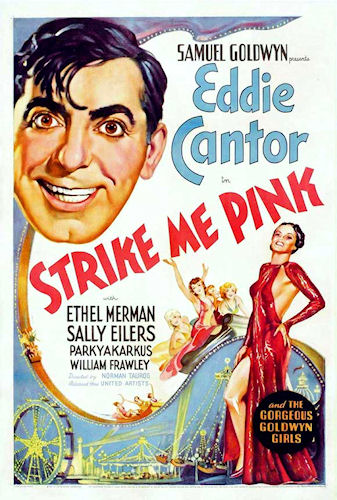
This final entry in Eddie Cantor’s career at Samuel Goldwyn studios (where he made one big-budget musical per year, from 1930 to 1936) is reminiscent of Harold Lloyd’s comedies — so it’s not surprising to learn that Goldwyn originally wanted Lloyd for the lead role (indeed, the script was written with him in mind). The storyline is slight as can be (crooked slot machines?!), but film fanatics may be curious to check this one out simply to see Broadway chanteuse Ethel Merman in one of her relatively few early onscreen roles — here playing the shady nightclub singer Cantor is hopelessly in love with. Also of interest are some — er — interestingly choreographed dances (see still below).

Redeeming Qualities and Moments:

  • An opportunity to see and hear Ethel Merman in her prime
  • Some surreal dance sequences

Must See?
No; this one is only must-see for Cantor fans.

Links:

Desk Set (1957)

Desk Set (1957)

“They can’t build a machine to do our job.”

Synopsis:
A team of reference librarians (Katharine Hepburn, Joan Blondell, Dina Merrill, and Sue Randall) at the Federal Broadcasting Company worry that their jobs are at stake when an efficiency expert (Spencer Tracy) arrives with a fancy new computer.

Genres, Themes, Actors, and Directors:

  • Gig Young Films
  • Joan Blondell Films
  • Katharine Hepburn Films
  • Play Adaptation
  • Romantic Comedy
  • Spencer Tracy Films

Review:
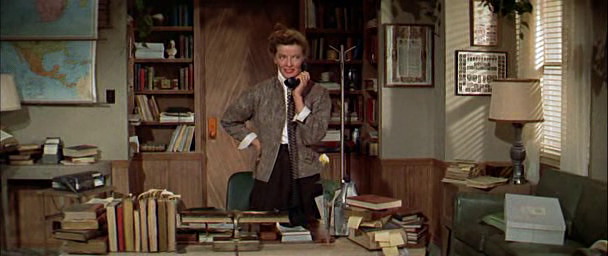
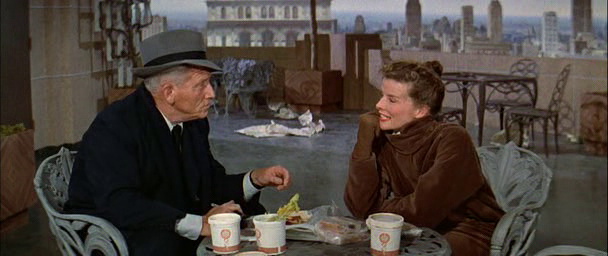
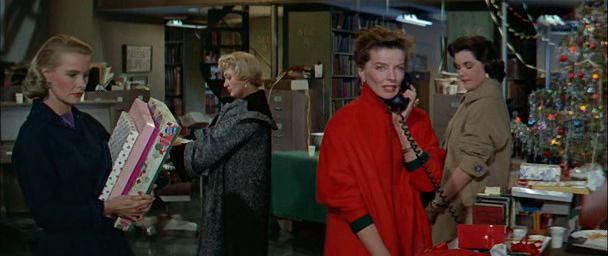
Katharine Hepburn and Spencer Tracy’s second-to-last film together was this dry adaptation (directed by Walter Lang) of a Broadway play by William Marchant. Although the issue of human obsolescence in the face of an increasingly powerful electronic universe remains just as relevant today as ever, the subject matter as presented here comes across as hopelessly dated and simplistic, with the ultimate moral of the film — that computers can’t ever fully replace human ingenuity — a boring no-brainer for modern audiences. Meanwhile, the screenplay is badly paced and overly stagy, flitting here and there between various subplots and ultimately falling flat. With that said, Hepburn is as fully invested in her role as ever, and her solid rapport with Tracy remains a comforting treat. However, this one is ultimately only must-see for Hepburn/Tracy completists.

Redeeming Qualities and Moments:

  • Katharine Hepburn as Bunny
  • Typically fine rapport between Tracy and Hepburn
  • Nice use of Cinemascope

Must See?
No, though of course Tracy/Hepburn fans won’t want to miss it.

Links:

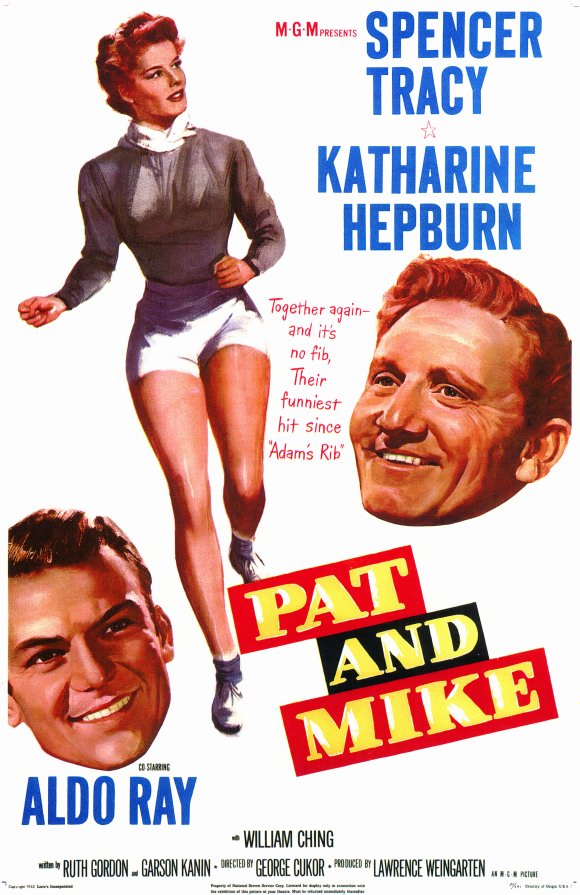
Pat and Mike (1952)

Pat and Mike (1952)

“I don’t think you’ve ever been properly handled.”

Synopsis:
A shady sports promoter (Spencer Tracy) offers to help manage the professional career of a gifted female athlete (Katharine Hepburn) who finds herself strangely flummoxed whenever her professor-fiance (William Ching) watches her compete.

Genres, Themes, Actors, and Directors:

  • Aldo Ray Films
  • George Cukor Films
  • Katharine Hepburn Films
  • Romantic Comedy
  • Spencer Tracy Films
  • Sports

Review:
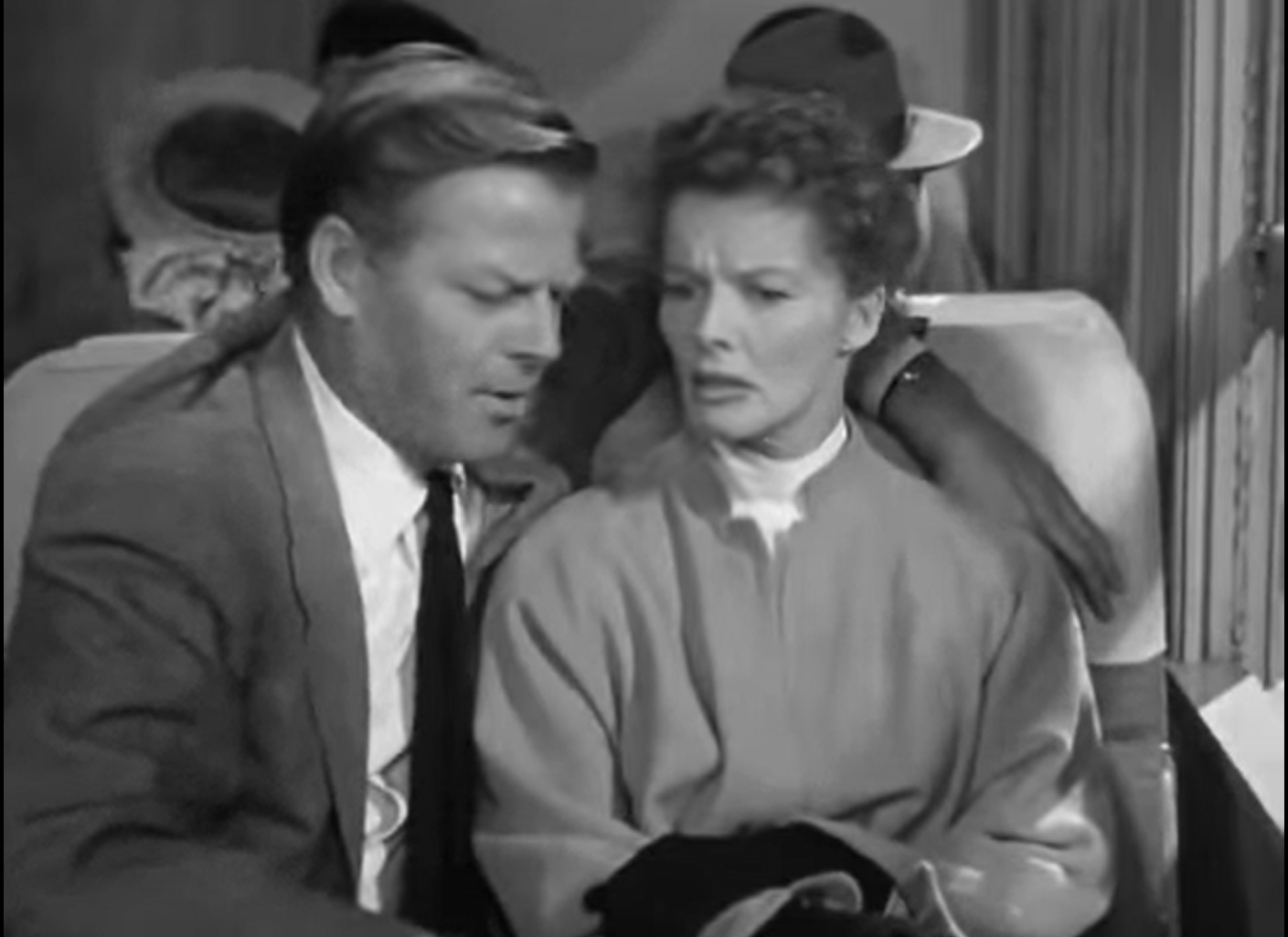
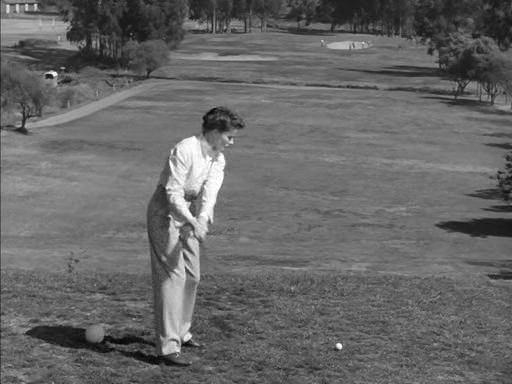
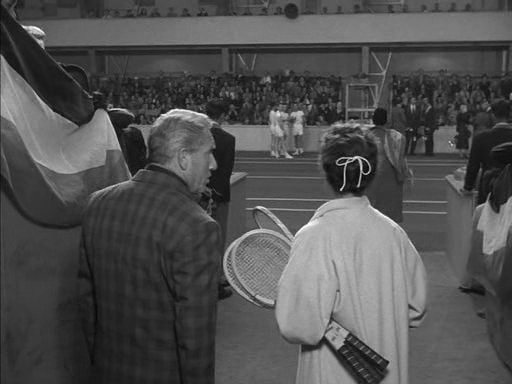
Katharine Hepburn and Spencer Tracy’s seventh joint film was this jaunty romantic comedy situated within the cinematically unique world of women’s sports. The film’s unusual setting serves as its calling card, as we’re provided with a refreshingly ethnographic look at this milieu, with a handful of real-life female athletic stars (such as Babe Didrikson Zaharias and Alice Marble) appearing onscreen in “competition” with Hepburn. Hepburn was a gifted athlete in her own right, and is 100% believable in her role here; indeed, screenwriters Garson Kanin and Ruth Gordon — friends of Hepburn and Tracy — wrote the script with her talents in mind. Meanwhile, her rapport with Tracy (having fun playing a somewhat morally dubious character) is as predictably solid as always, and William Ching is fine in a humorous role as her jinxing beau.

The storyline itself, while slight, is drolly witty, and nicely handled by director George Cukor; I’m especially fond of scenes involving Tracy’s hoodish “colleagues”, who are disappointed by his decision to go straight with Hepburn — watch how Hepburn defends “her man” against them…

Note: Hepburn reportedly named this as her favorite film made with Tracy.

Redeeming Qualities and Moments:

  • Katharine Hepburn as Pat
  • Spencer Tracy as Mike
  • A fascinating glimpse at ’50s “women’s” sports

  • Garson Kanin and Ruth Gordon’s Oscar-nominated script

Must See?
Yes, as a most enjoyable Tracy/Hepburn flick.

Categories

  • Good Show

Links:

Incredible Shrinking Woman, The (1981)

Incredible Shrinking Woman, The (1981)

“To my family, I’d become a doll — and to our dog, a chew-stick.”

Synopsis:
After exposure to a multitude of household chemicals, a housewife (Lily Tomlin) begins shrinking, much to the horror of her husband (Charles Grodin) and two kids (Shelby Balik and Justin Dana). Meanwhile, her husband’s boss (Ned Beatty) conspires with her doctors (Henry Gibson and Elizabeth Wilson) and the leaders (Tom Keller, Jim McMullan, and Pamela Bellwood) of a secret organization to capture Tomlin and use her blood as part of a plan for world domination.

Genres, Themes, Actors, and Directors:

  • Comedy
  • Fantasy
  • Lily Tomlin Films
  • Living Nightmare
  • Ned Beatty Films
  • Science Fiction
  • World Domination

Review:
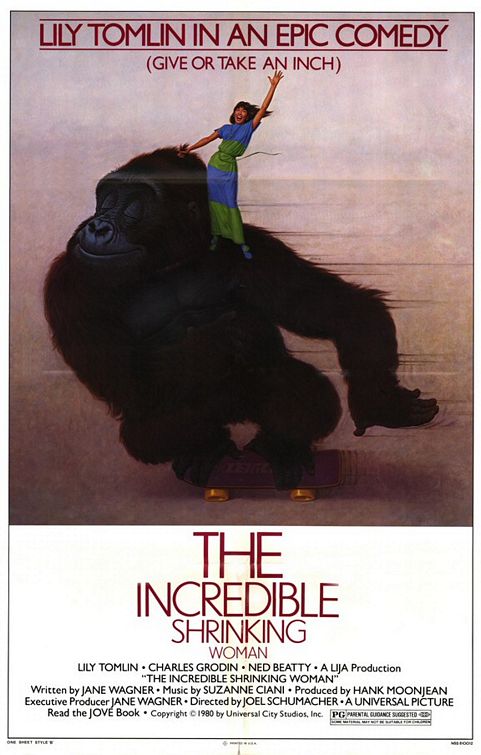
Joel Schumacher made his directorial debut helming this reasonably entertaining — though clearly inferior — comedic follow-up to the 1957 sci-fi classic The Incredible Shrinking Man (1957) (based on Richard Matheson’s novel The Shrinking Man). In this modernized version of Matheson’s story (scripted by Tomlin’s long-time collaborator and parter, Jane Wagner), the protagonist is a woman instead of a man, and the proposed culprit for her situation — a deluge of household chemicals:

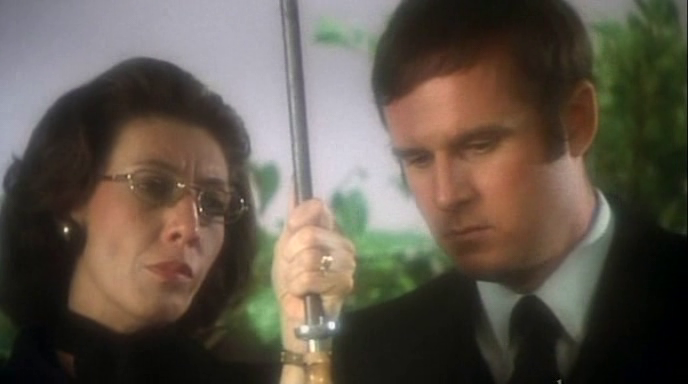
— plays upon newfound societal fears about environmental contaminants. Unfortunately, Tomlin is a bit too bland in the title role as a happily married housewife faced with the ultimate nightmare:

(though she has fun in a secondary role playing a helpful neighbor named Judith Beasley), and the screenplay misses out on ripe opportunities for more incisive social commentary — either about the contested role of housewives in a male-dominated society, or the escalating presence of unknown chemicals in our everyday lives. Sadly, the film eventually devolves into a silly world-domination subplot involving — sigh — a captive humanoid gorilla (famed makeup artist Rick Baker in a suit), rather than allowing Tomlin’s character to sink ever further into the horrors of increasing diminution (as is handled so effectively in the original film). However, while The Incredible Shrinking Woman is certainly no classic, the special effects are nicely handled, and it’s enjoyably loopy enough to merit a look by curious film fanatics.

Redeeming Qualities and Moments:

  • Lily Tomlin as Judith Beasley
  • Impressive special effects and sets

Must See?
No, though film fanatics may be curious to check it out given its connection to Jack Arnold’s 1957 classic (and Matheson’s novel).

Links:

Windy City (1984)

Windy City (1984)

“I have nothing to say. I am not a writer.”

Synopsis:
An aspiring writer (John Shea) enlists the help of his childhood buddies in supporting their dying friend (Josh Mostel); meanwhile, he reminisces about a former girlfriend (Kate Capshaw) who has since become engaged to another man.

Genres, Themes, Actors, and Directors:

  • Friendship
  • Winning Him/Her Back

Review:
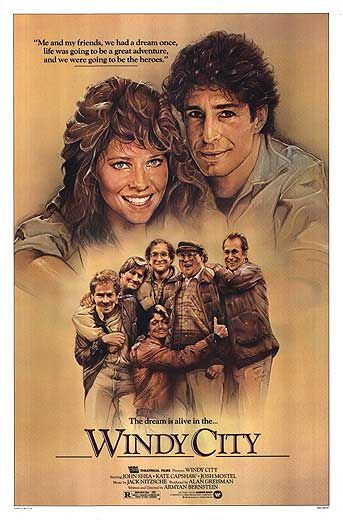
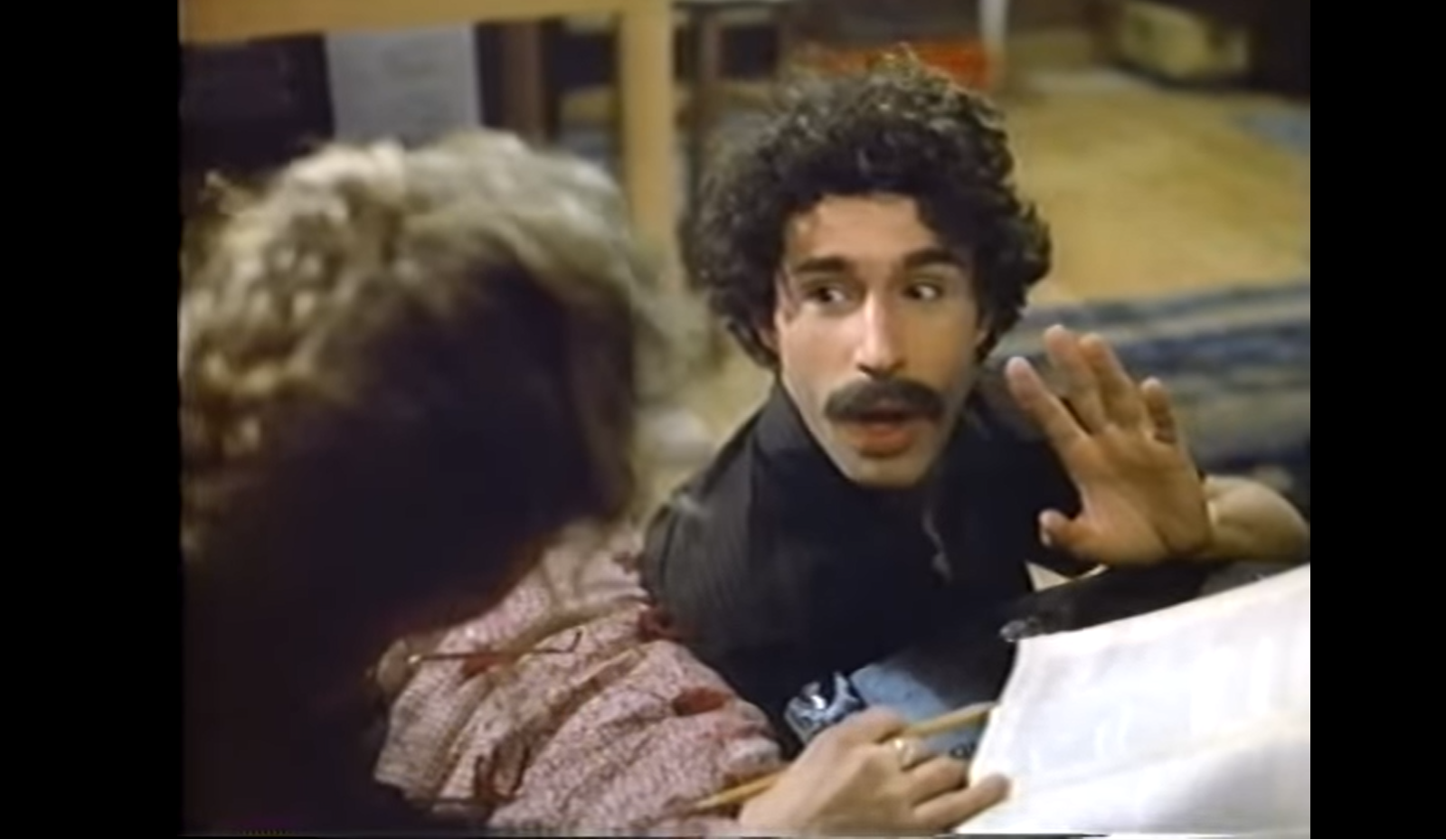
Two years after penning the uninspired screenplay for Francis Ford Coppola’s otherwise impressive One From the Heart (1982), Armyan Bernstein wrote and directed this dull ensemble piece about a group of lifelong friends growing up in Chicago and facing a variety of concerns. The film is eminently forgettable on every count, given that we don’t care about any of the poorly developed characters, who spout trite dialogue (“I guess some people aren’t replaceable”) and generally act like overgrown adolescents. There’s potential for something heartfelt in a subplot about a dying friend in the gang, played with pathos by Mostel (the one live spark in the bunch):

— but this is swallowed up by the shallow central narrative about Shea’s longing for his now-engaged former girlfriend (Capshaw).

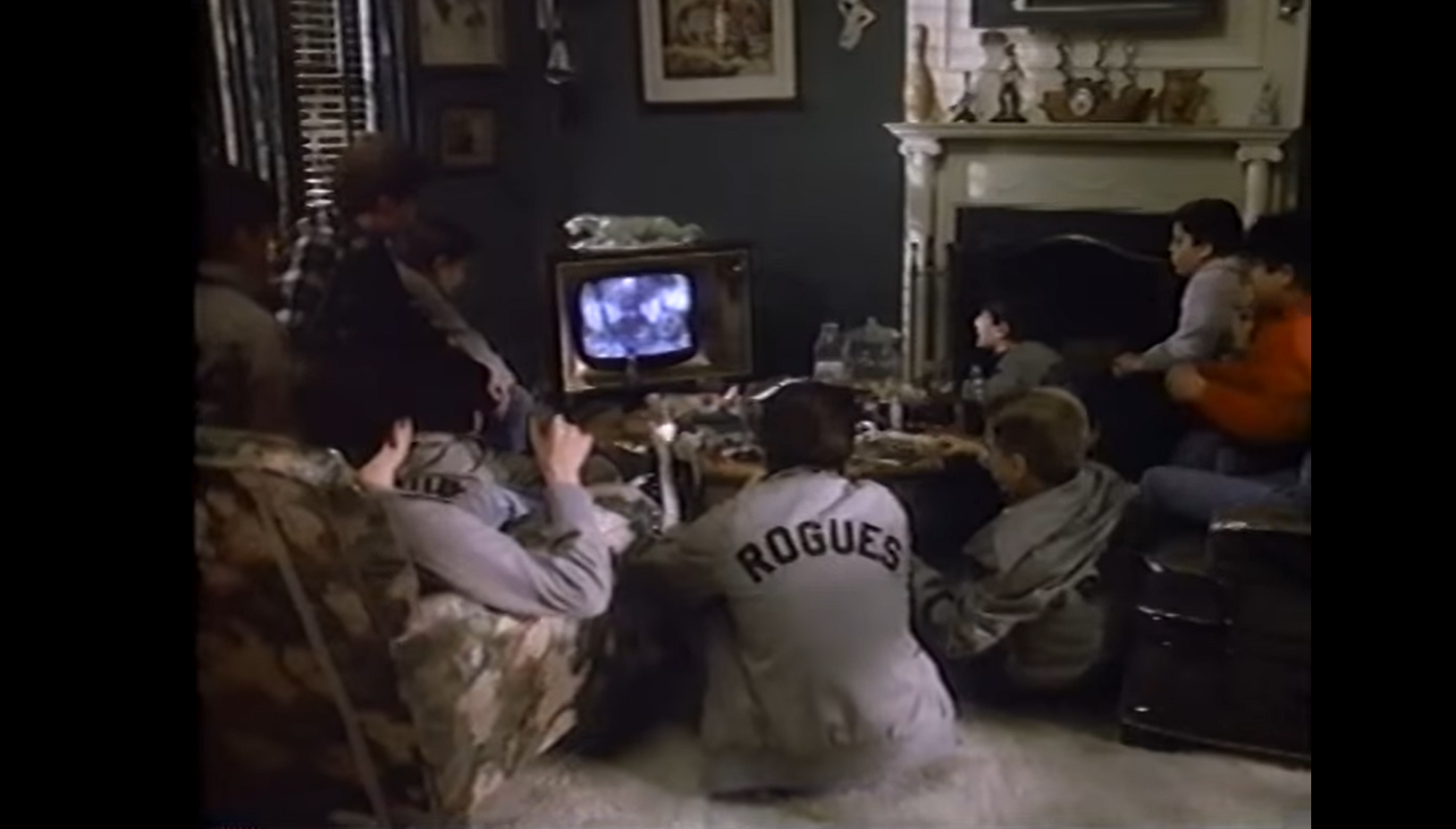
Bernstein is clearly a film buff, given how many cinematic allusions he incorporates throughout his movie — i.e., the film opens on a scene of the boyhood friends watching an Errol Flynn swashbuckler on television:

and at one point the camera pans strategically past a revival theater marquee advertising A Guy Named Joe. However, these allusions simply highlight how shallow Bernstein’s own picture is. Ironically, Shea’s character (an aspiring writer, ostensibly based on Bernstein himself) breaks up with his girlfriend after they argue about his failure to work on his craft; she insists that he “has stories to tell”, while he yells back, “I have nothing to say” — a point we (sadly) can’t help immediately agreeing with.

Redeeming Qualities and Moments:
Not much.

Must See?
No; definitely feel free to skip this one.

Links:

Blonde Bombshell / Bombshell (1933)

Blonde Bombshell / Bombshell (1933)

“Deep down in every girl’s heart there’s the desire for the rite of real womanhood.”

Synopsis:
Fed up with her mooching brother (Ted Healy), tippling father (Frank Morgan), overbearing publicist (Lee Tracy), and demanding director (Pat O’Brien), a sexy movie star (Jean Harlow) makes various attempts to escape from her hectic Hollywood lifestyle.

Genres, Themes, Actors, and Directors:

  • Actors and Actresses
  • Adoption
  • Comedy
  • Hollywood
  • Jean Harlow Films
  • Pat O’Brien Films

Review:
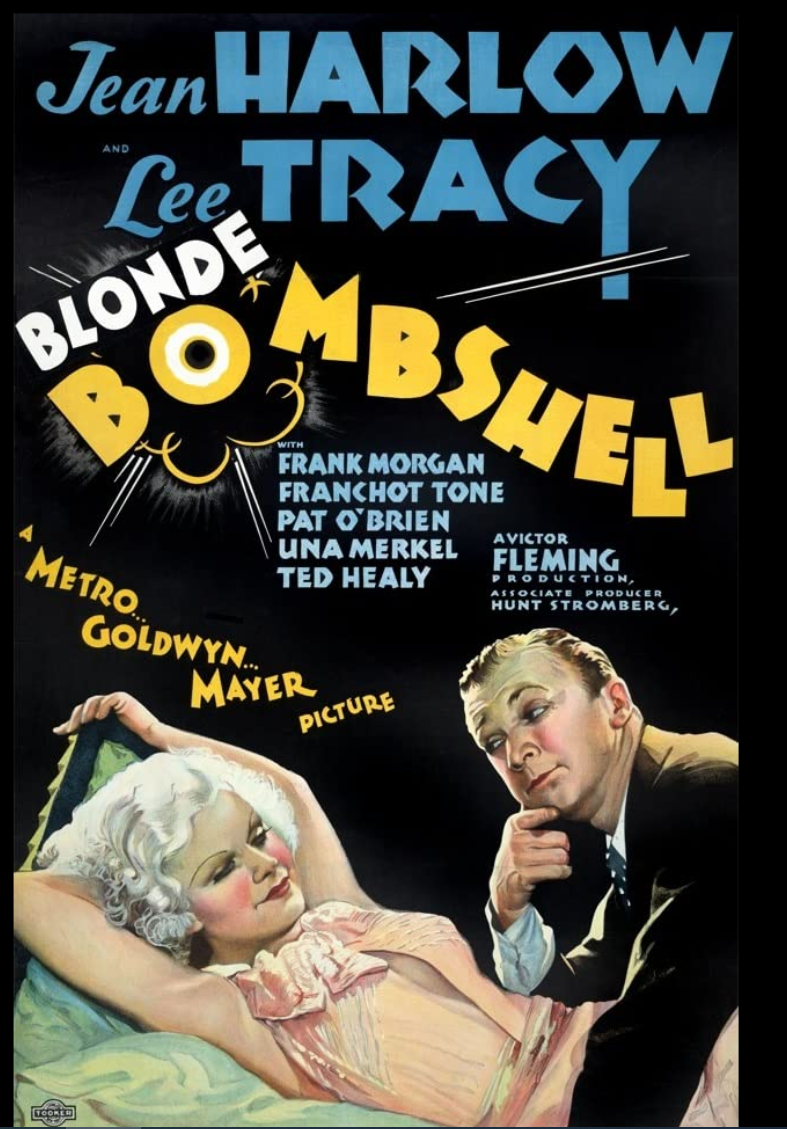
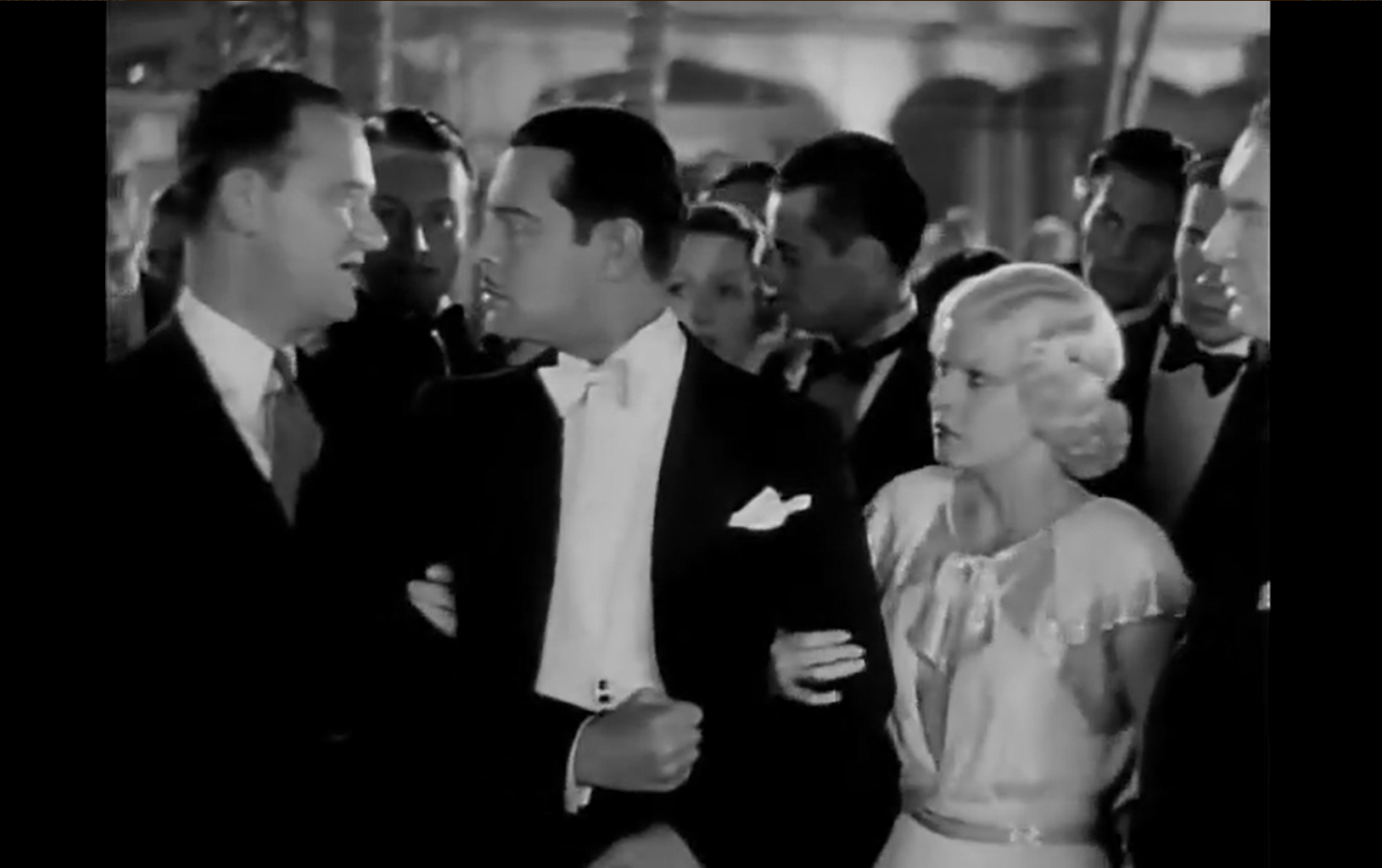
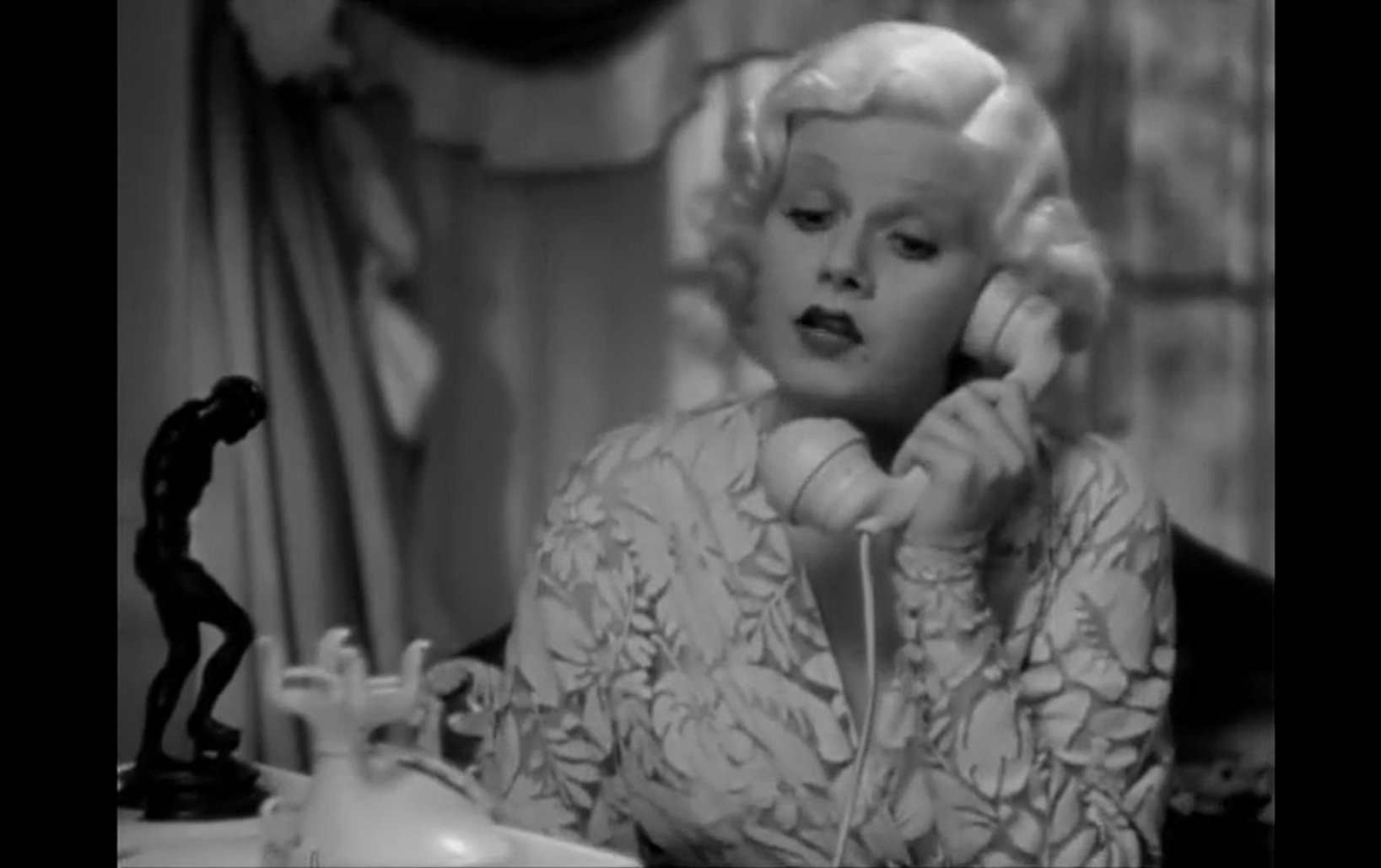
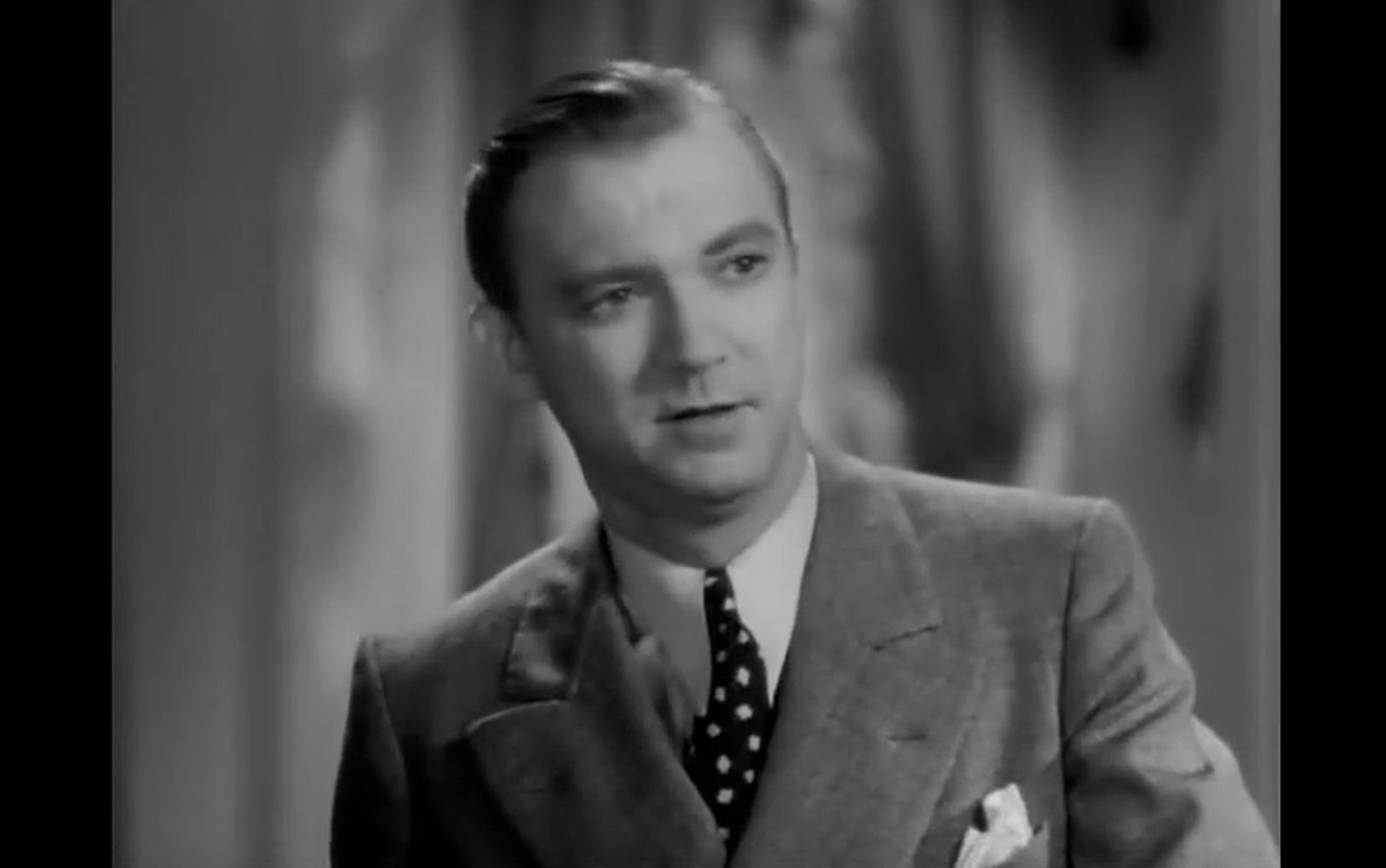
Victor Fleming directed this relentlessly-paced, incisive pre-Code satire, starring Jean Harlow in a role purportedly based on Clara Bow. The clever storyline — adapted from a 1928 stage play by Caroline Francke and Mack Crane — shadows Harlow’s numerous failed attempts to seek some semblance of privacy and autonomy in Hollywood, first by nearly marrying a questionable marquis (Ivan Lebedeff):

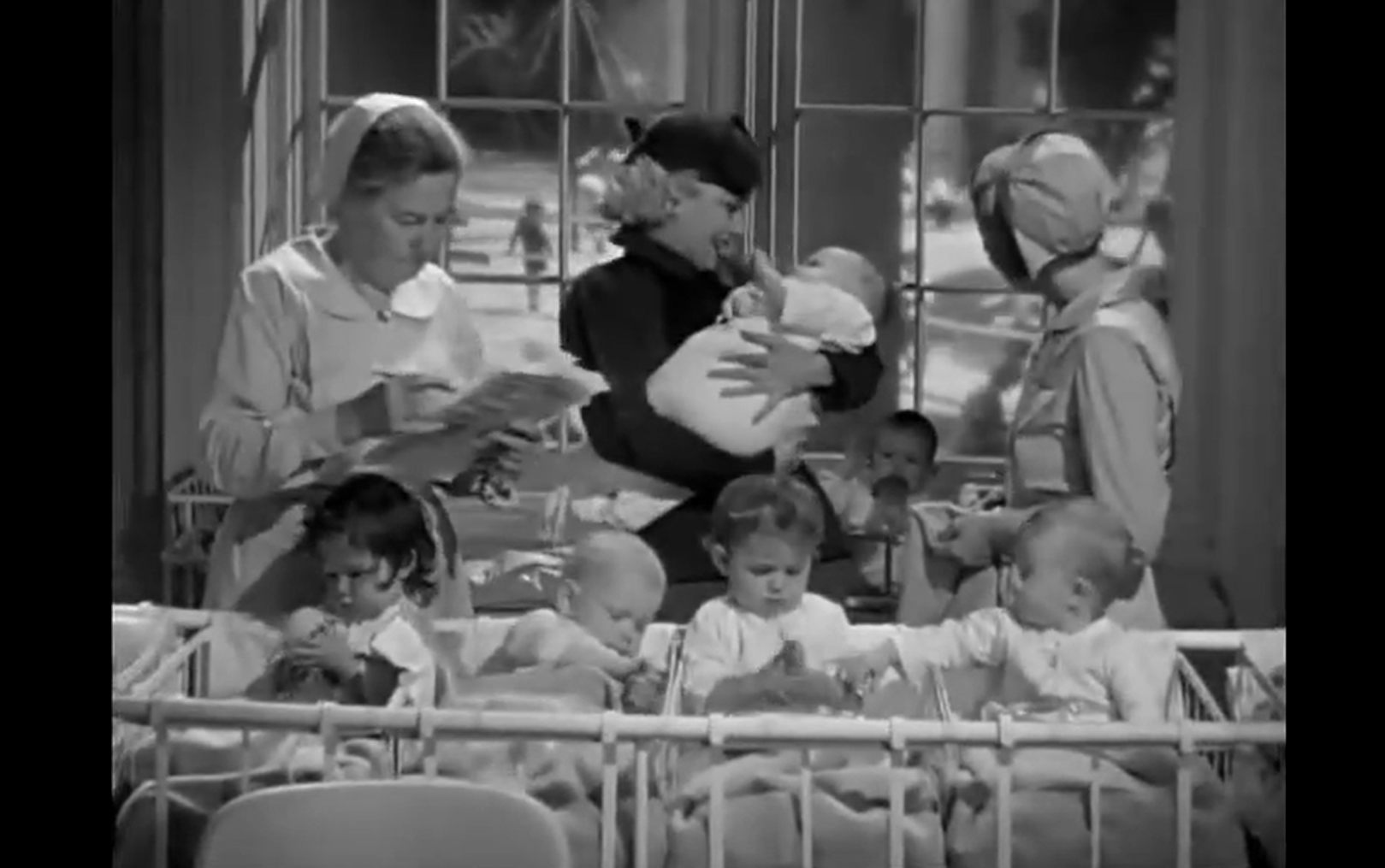
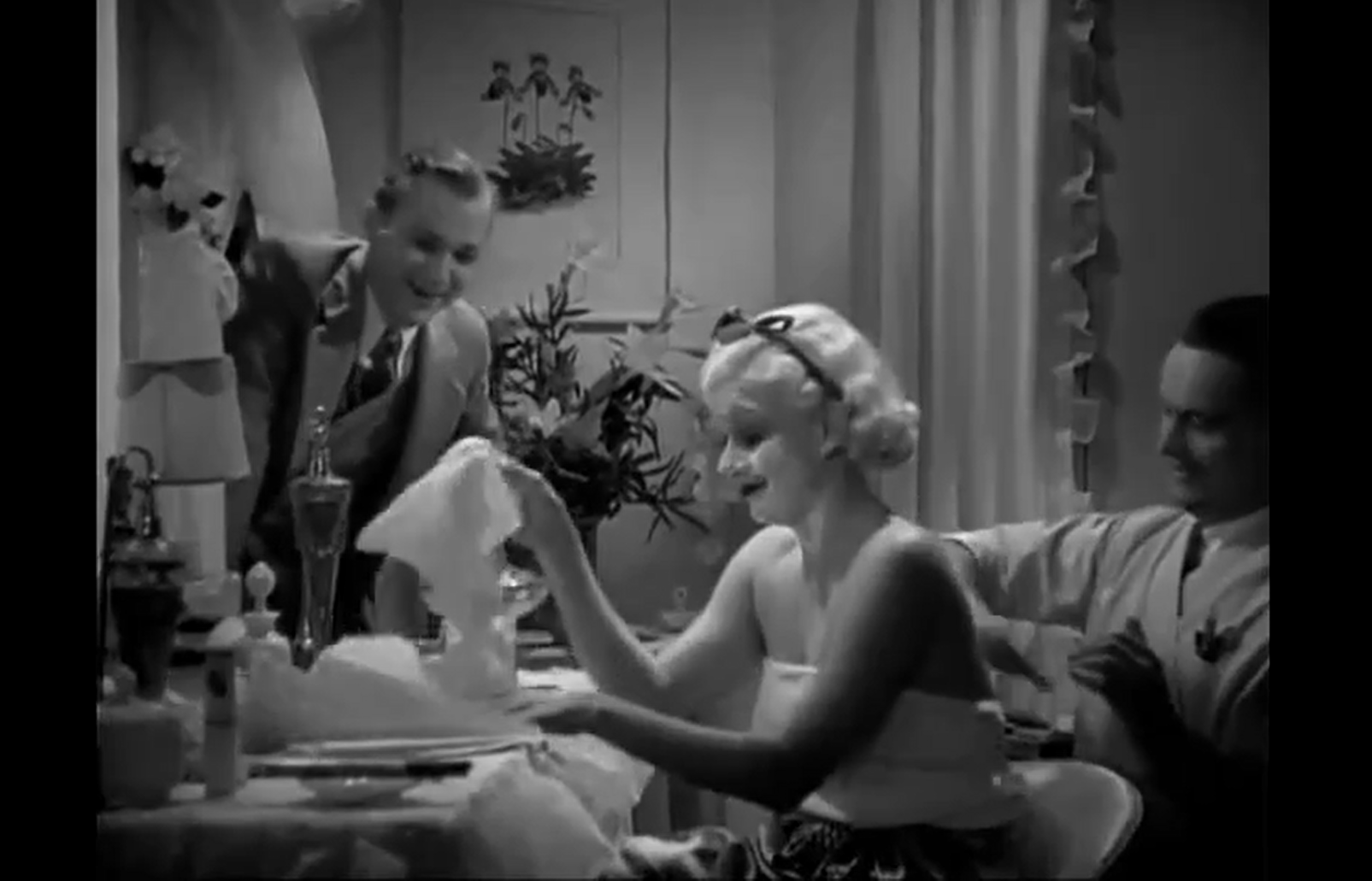
then by trying to adopt a baby:

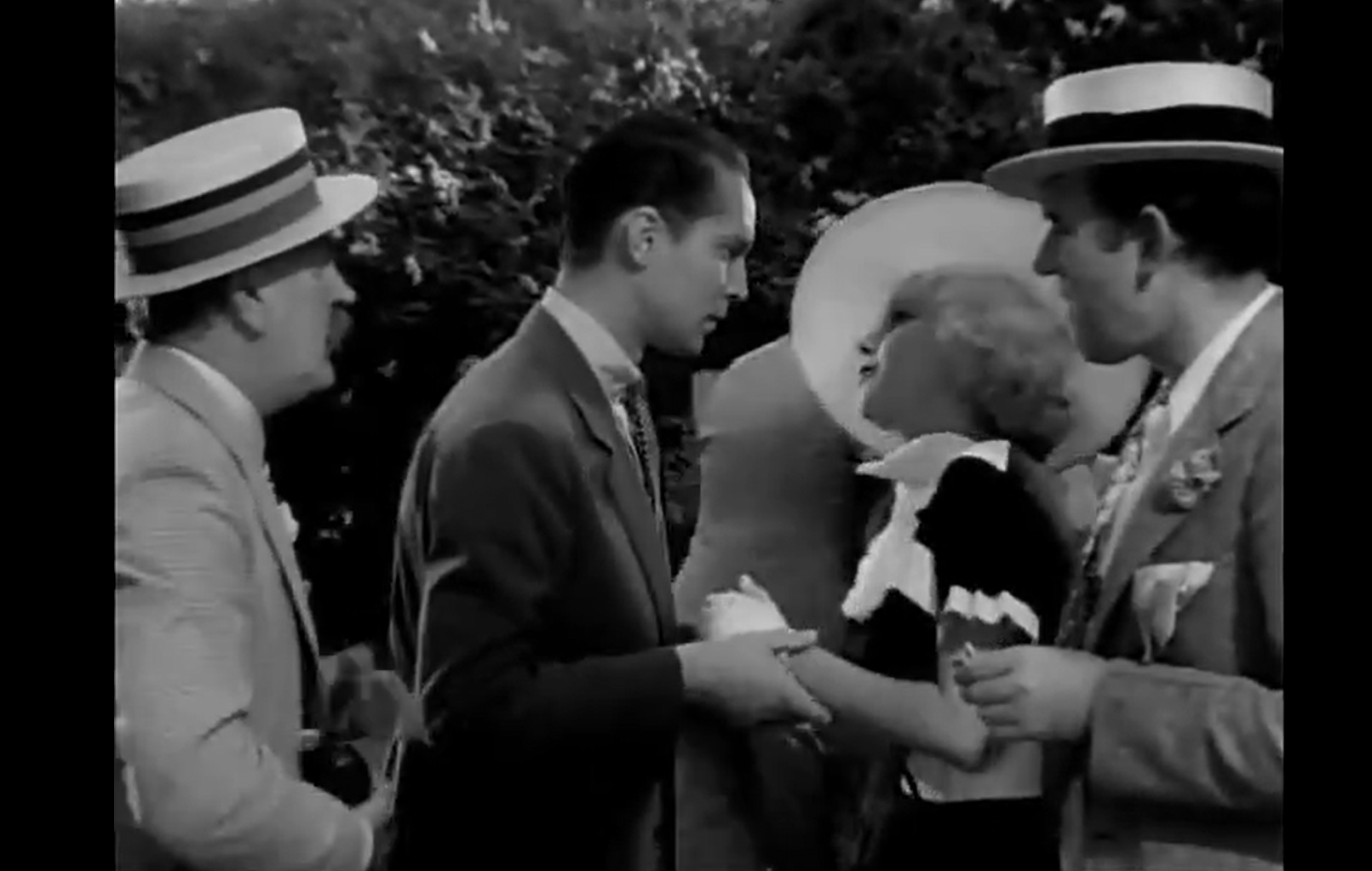
and finally by becoming engaged to a wealthy American (Franchot Tone) whose snooty parents (C. Aubrey Smith and Mary Forbes) are distinctly wary of their son’s new love interest.

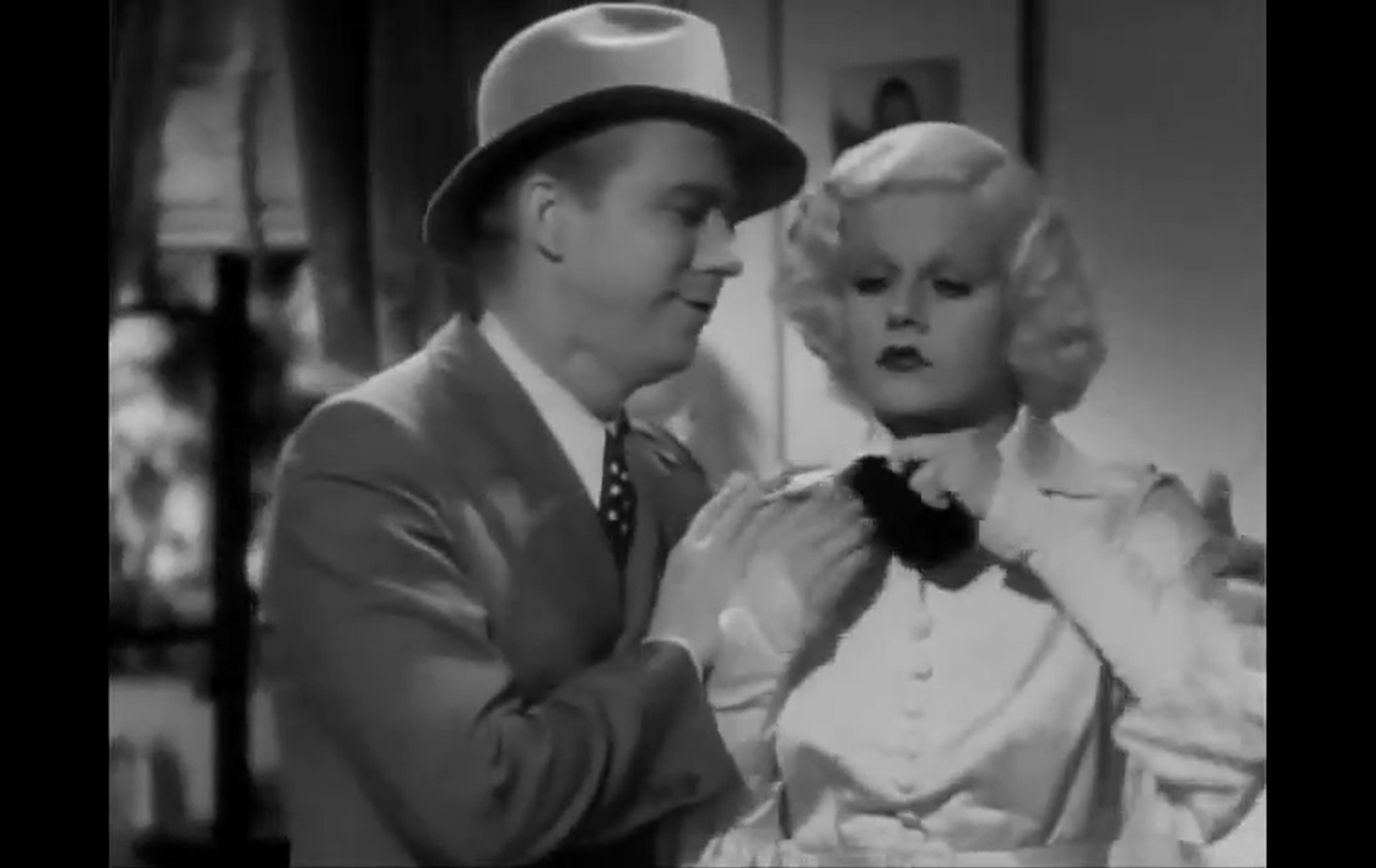
Meanwhile, her meddling publicist — played by heavy-drinking pre-Code actor Lee Tracy, probably best known for his role the same year in Dinner at Eight (1933) — tries to earn Harlow’s romantic affections while strategically foiling each of her ventures.

There’s plenty here for fans of pre-Code comedies to enjoy, from racy dialogue to impressively frantic pacing to Harlow’s spot-on screechy performance; it’s definitely worth a look.

Redeeming Qualities and Moments:

  • Jean Harlow as Lola
  • Lee Tracy as Space
  • An enjoyably loopy screenplay
  • Clever pre-Code dialogue:

    “Your day off is sure brutal on your negligee.”
    “Where I kick her, the camera’ll never pick up the scar.”

Must See?
Yes, as a fine vehicle for Harlow. Listed as a Personal Recommendation in the back of Peary’s book.

Categories

  • Good Show

Links:

Woman Rebels, A (1936)

Woman Rebels, A (1936)

“Even though I’m a woman, I have brains — I intend to use them.”

Synopsis:
A defiant young woman (Katharine Hepburn) in Victorian England rebels against her autocratic father (Donald Crisp) by having an affair with a man (Van Heflin) she soon learns is already married. When her newly married sister (Elizabeth Allan) dies shortly before giving birth, the secretly pregnant Hepburn decides to raise her child as her niece while forging a career for herself as a groundbreaking journalist; meanwhile, she refuses to marry a kind diplomat (Herbert Marshall) out of fear that her secret will be revealed and cause a scandal.

Genres, Themes, Actors, and Directors:

  • Donald Crisp Films
  • Feminism and Women’s Issues
  • Herbert Marshall Films
  • Historical Drama
  • Katharine Hepburn Films
  • Morality Police
  • Van Heflin Films

Review:
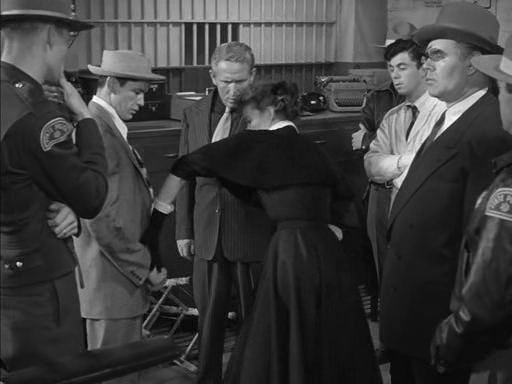
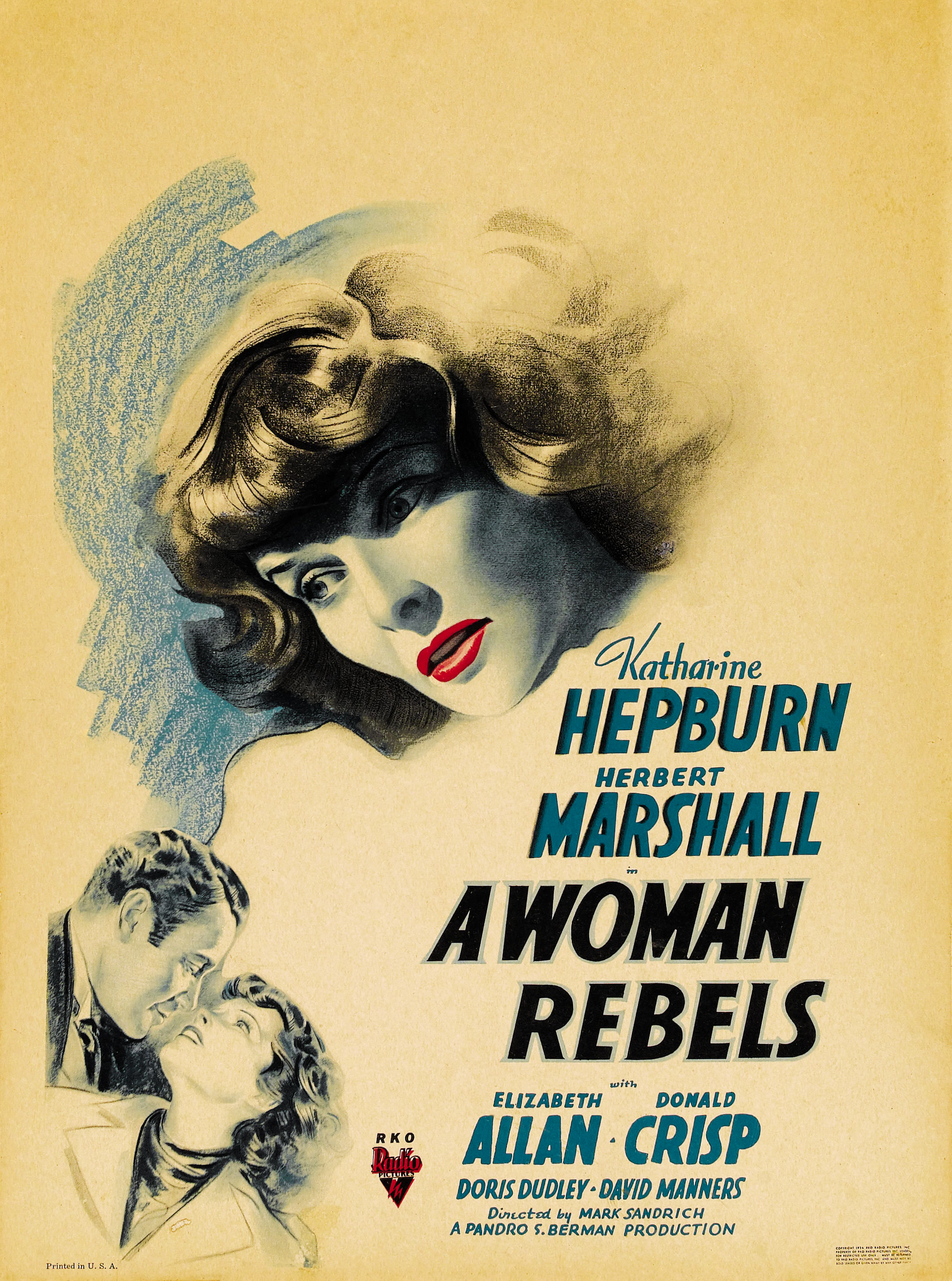
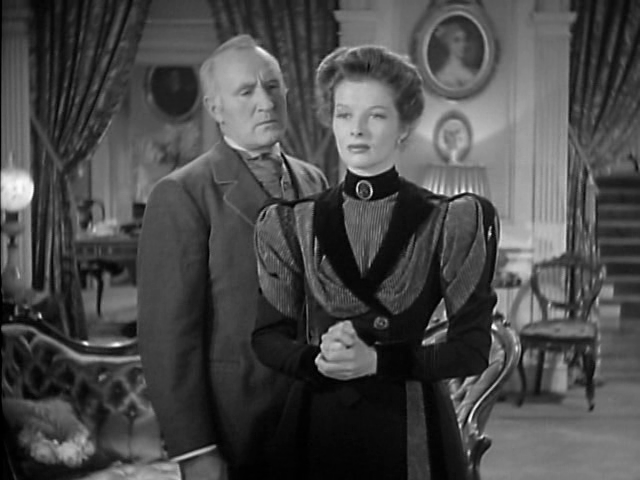
This little-seen Katharine Hepburn vehicle (based on Netta Syrett‘s 1930 novel Portrait of a Rebel) is primarily remembered as Hepburn’s third box office flop in a row for RKO studios — and unfortunately, it’s easy to see why the film failed to catch on with audiences. It’s ultimately a missed opportunity, relying far too heavily on melodramatic conventions rather than capitalizing on its more interesting feminist premise. Although Hepburn’s “Pam Thistlewaite” defiantly declares that she “has brains and intends to use them”, we see only snippets of her brave attempts to penetrate the glass ceiling in Victorian England — as epitomized in the following reactions to her attempts to seek employment in “men’s work”:

“A girl as a secretary! Why, bless my soul… I’d be the laughing stock of London.”
“Sorry, can’t be done — a salesgirl in a shop? Unthinkable. My customers wouldn’t tolerate it.”

Her character does eventually find success as an agitating feminist journalist, but unfortunately, little to no time is spent dwelling on this aspect of her life. Instead, the bulk of the narrative focuses on issues of dubious morality, as Hepburn’s “sins” of the past come back to haunt both her and her grown daughter.

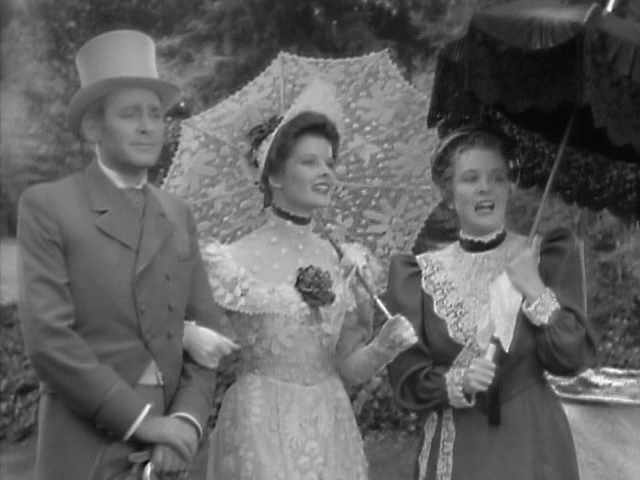
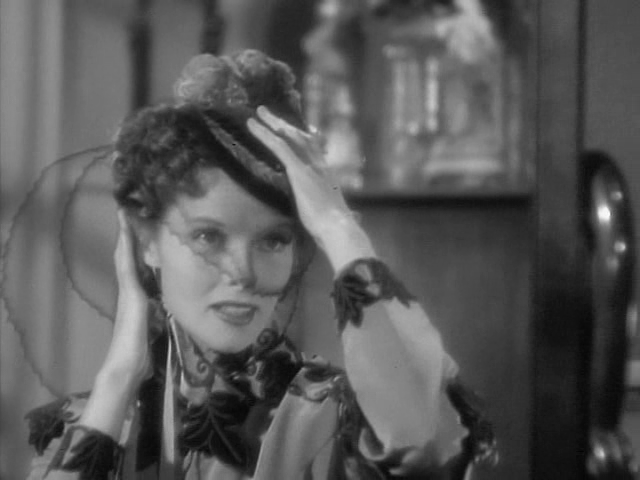
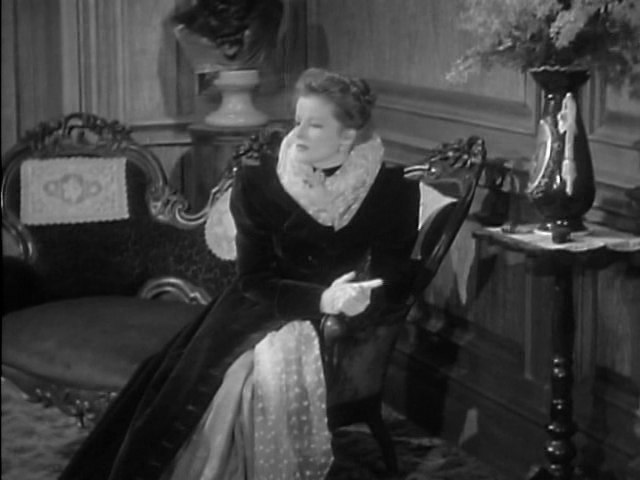
With that said, Hepburn is as luminous and charismatic as always, fully embodying a role tailor-made for her sensibilities; and the Oscar-nominated period costumes she wears over the decades are a delight.

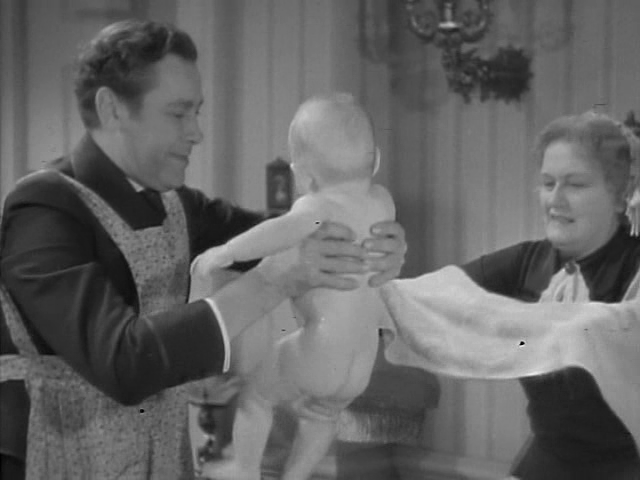
However, this one remains must-see only for Hepburn enthusiasts (and those curious to see Herbert Marshall bathing a baby while wearing an apron!).

Redeeming Qualities and Moments:

  • Katharine Hepburn as Pamela
  • Fine period costumes

  • Robert De Grasse’s cinematography

Must See?
No, though Hepburn fans will want to check it out.

Links: