Cujo (1983)
“There’s no such thing as real monsters; only in stories.”
|
Synopsis: |
|
Genres, Themes, Actors, and Directors:
Response to Peary’s Review: Redeeming Qualities and Moments:
Must See? Categories
Links: |
“Don’t worry about us, mademoiselle – we shall only be gone a little while.”
|
Synopsis: |
|
Genres, Themes, Actors, and Directors:
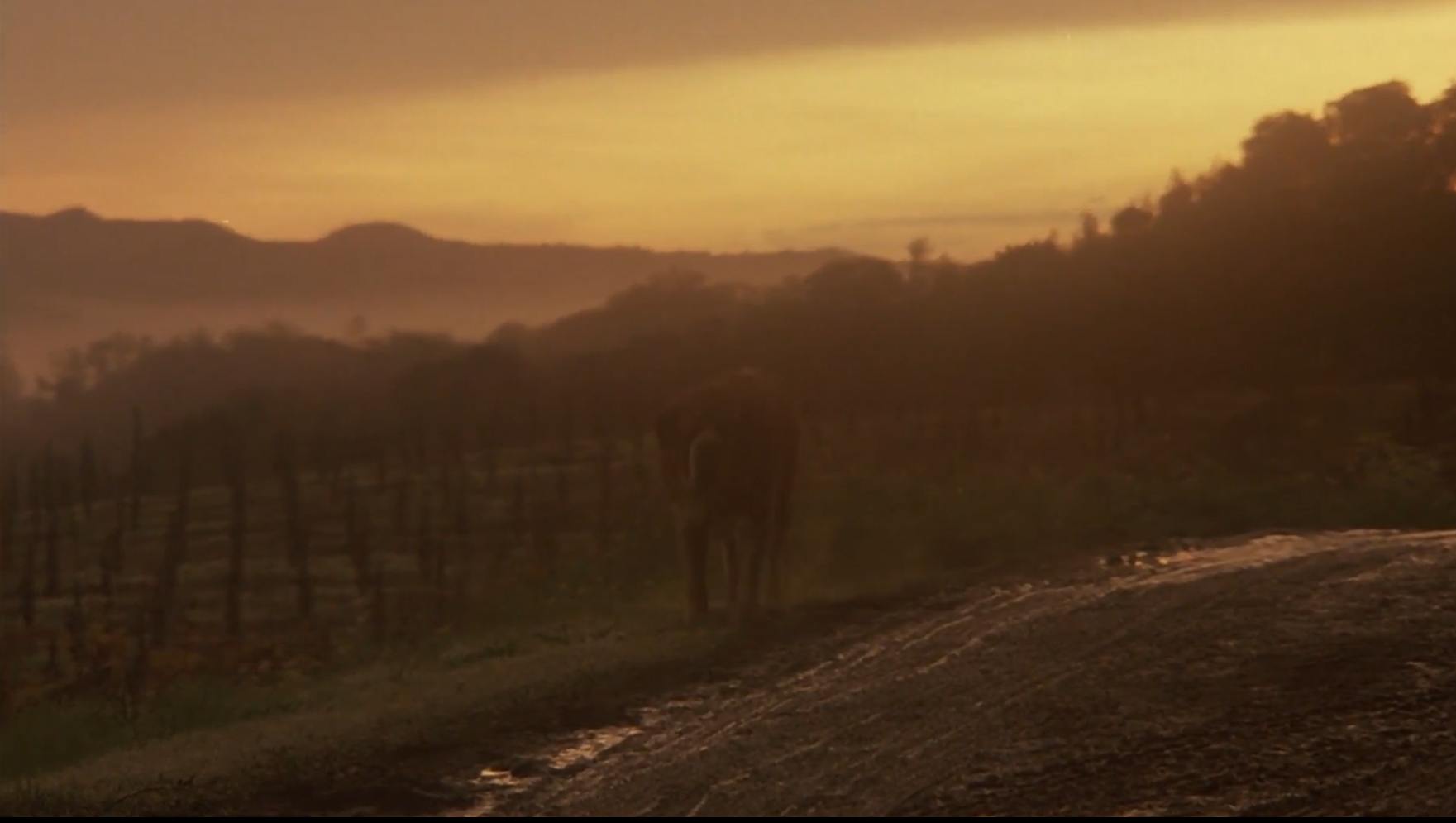
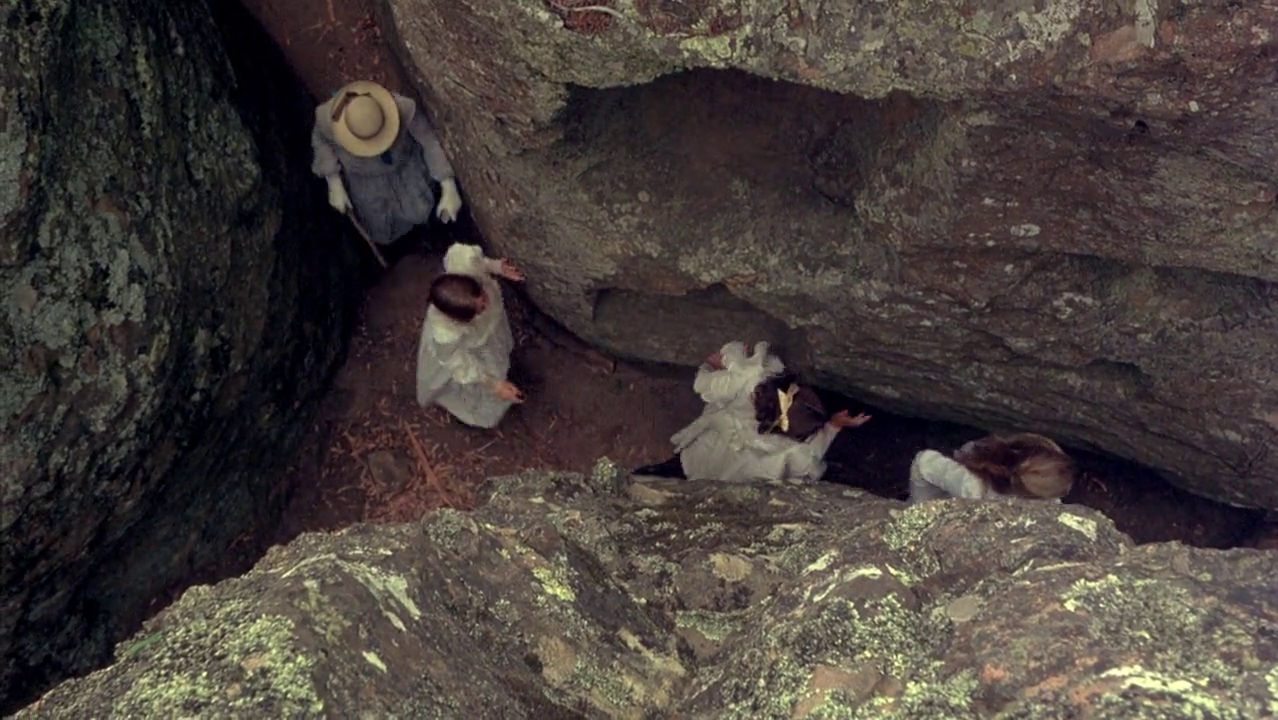
Response to Peary’s Review: Peary’s GFTFF review is excerpted directly from his much longer Cult Movies 2 article, where he goes into extensive detail about his thoughts on this unusual story’s translation from novel to film. First, he firmly reminds us that Lindsay’s tale was NOT based on any kind of an actual historical event, thus leaving interpretation of “what happened” up to a much wider array of possibilities (including primeval and/or super-natural ones) — though he ultimately argues that “no theory… totally works.” Next he offers his thoughts on the many ways in which he finds the film less satisfying than the novel (including how a late-in-the-film death is handled). Finally, he offers his own take on what the various events and characters represent — most specifically Miranda, who he refers to as “not of this world” and “not a human being”. He writes:
Indeed, it’s impossible not to pick up on strong hints that “it was Miranda’s mission to deliver sexually repressed girls, and even virginal Greta McGraw [Gray], into a world of sexual freedom, far away from adults like Mrs. Appleyard and the uncaring parents who would entrust them to such a witch.” Regardless of what “really happened,” one’s enjoyment of this film will depend on how much you’re willing to accepts its puzzle-like nature, and be swept up in its mood rather than searching for literal answers to its many mysteries. Redeeming Qualities and Moments:
Must See? Categories
(Listed in 1001 Movies You Must See Before You Die) Links: |
“What’s happening to you?”
|
Synopsis: |
|
Genres, Themes, Actors, and Directors:
Response to Peary’s Review: Redeeming Qualities and Moments:
Must See? Links: |
“Life every now and then behaves as if it has seen too many bad movies.”
|
Synopsis: |
|
Genres, Themes, Actors, and Directors:
Review:
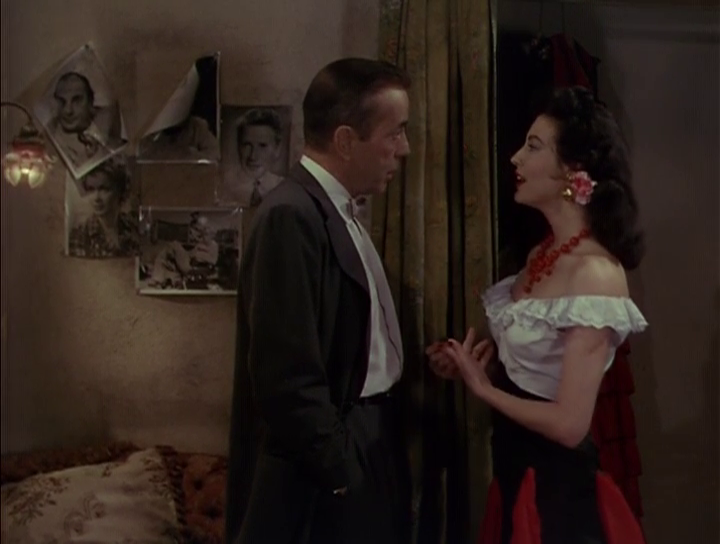
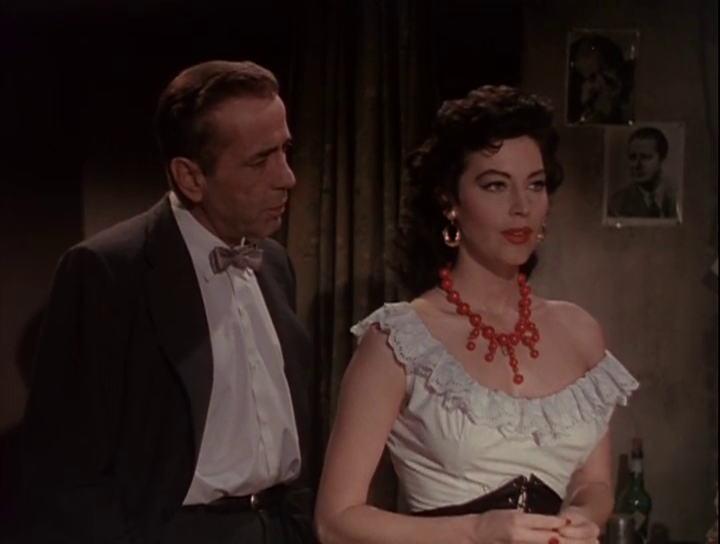
Gardner — who struggles to maintain a semblance of a Spanish accent — is a woman who easily resists the lure of money and fame, as presented in the opening sequence by a caddish first-time producer (Warren Stevens) who wrongly assumes Gardner will accept his offer to become Hollywood’s next great discovery:
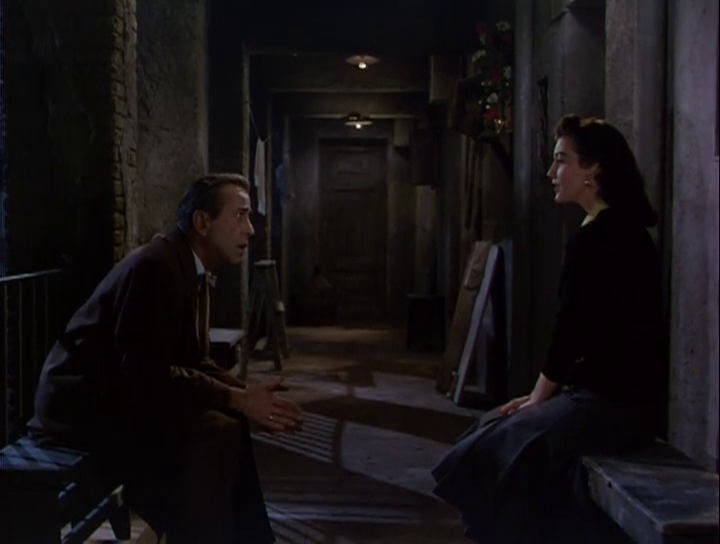
Instead, Gardner is drawn to the honest friendship of Bogart (whose voiceover perspective opens the film), a jaded but happily married director who is willing to mentor Gardner and help her learn to act.
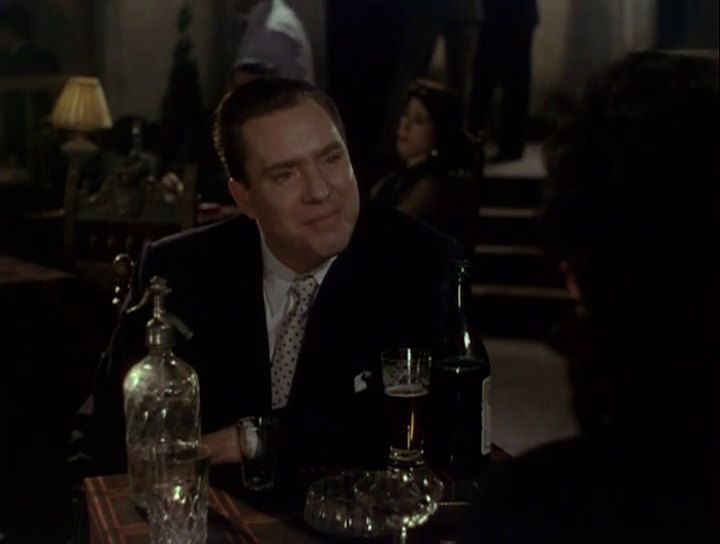
Edmond O’Brien won an Oscar for his brief work as an enthusiastic promoter:
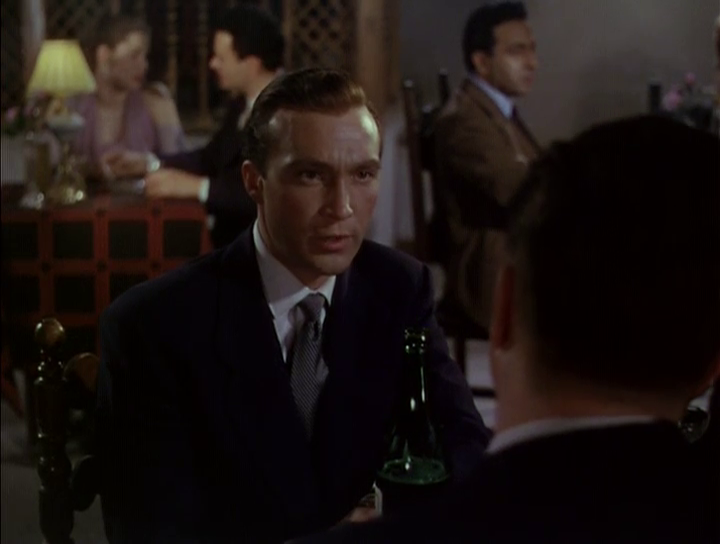
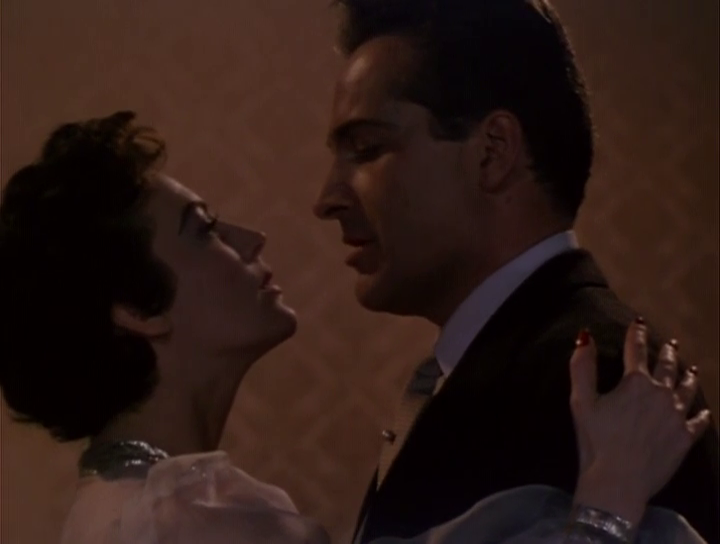
but his role is minimal, despite taking on voiceover duties for awhile in the middle of the flashback-filled screenplay. Finally, Gardner’s widowed husband (Brazi) tells his perspective as the first man Gardner falls for and is willing to marry, not knowing he holds dark secrets that will doom her to unhappiness yet again. During this portion of the episodic film, Valentina Cortese — so effective in Jules Dassin’s Thieves Highway (1949) — plays a thankless, underwritten role as Brazi’s concerned sister.
Since we know from the get-go how this tragic tale ends, there’s ultimately little to do but enjoy Jack Cardiff’s predictably beautiful cinematography. Redeeming Qualities and Moments:
Must See? (Listed in 1001 Movies You Must See Before You Die) Links: |
“Are you bad, Johnny? Have you been bad with girls?”
|
Synopsis: |
|
Genres, Themes, Actors, and Directors:
Response to Peary’s Review:
and Ford is deliciously diabolical.”
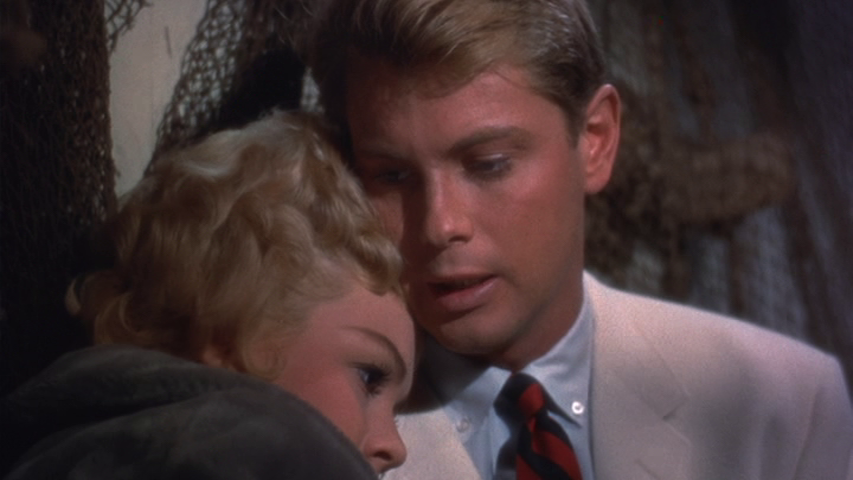
Indeed, there is so much overwrought melodrama and laughable dialogue in this soaper it’s hard to know where to begin in a critique. For instance, abusive Ford subjects Dee to a full physical examination after she’s been shipwrecked for a night with Donahue, despite Dee crying out in agony:
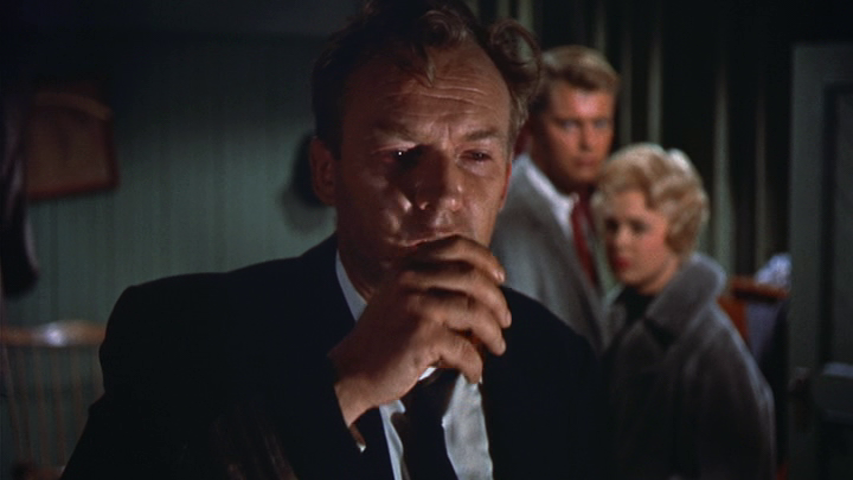
Eventually, of course, Donahue and Dee’s love for one another transcends their parents’ fruitless attempts to keep them apart and they land in the Ultimate Trouble. Meanwhile, Kennedy’s alcoholism continues to worsen:
while McGuire and Egan live out their newly validated romance in a Frank Lloyd Wright house by the shore.
How will everything work out for the young lovers? You’ll have to watch to see — but be forewarned that Max Steiner’s recognizable score will remain stuck in your head indefinitely. Redeeming Qualities and Moments:
Must See? Categories
Links: |
“Do you really think these boys don’t know the difference between right and wrong?”
|
Synopsis: |
|
Genres, Themes, Actors, and Directors:
Review: Redeeming Qualities and Moments:
Must See? Categories
Links: |
“Remember, my boy: it’s easier to die than to live!”
|
Synopsis: |
|
Genres, Themes, Actors, and Directors:
Review:
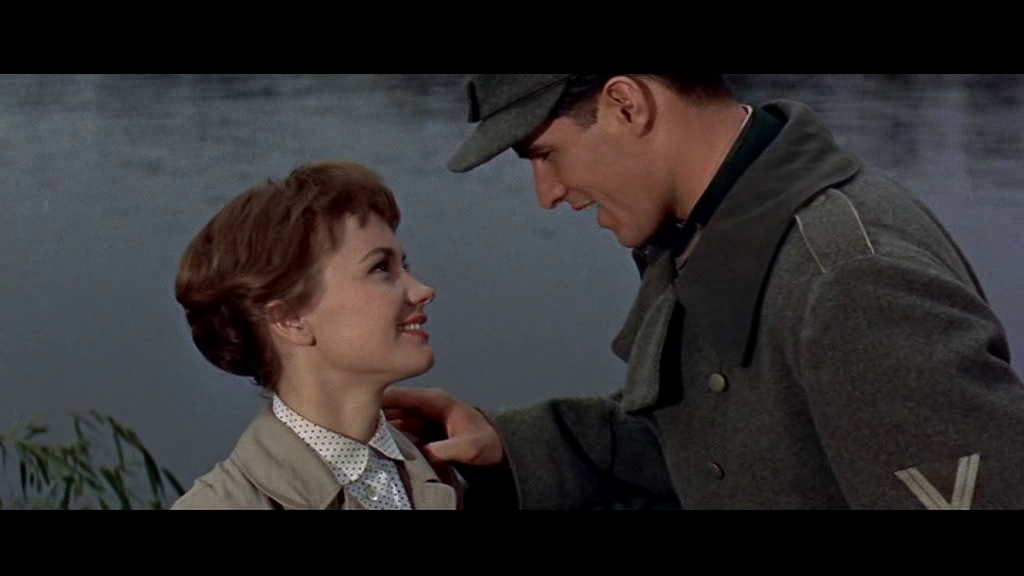
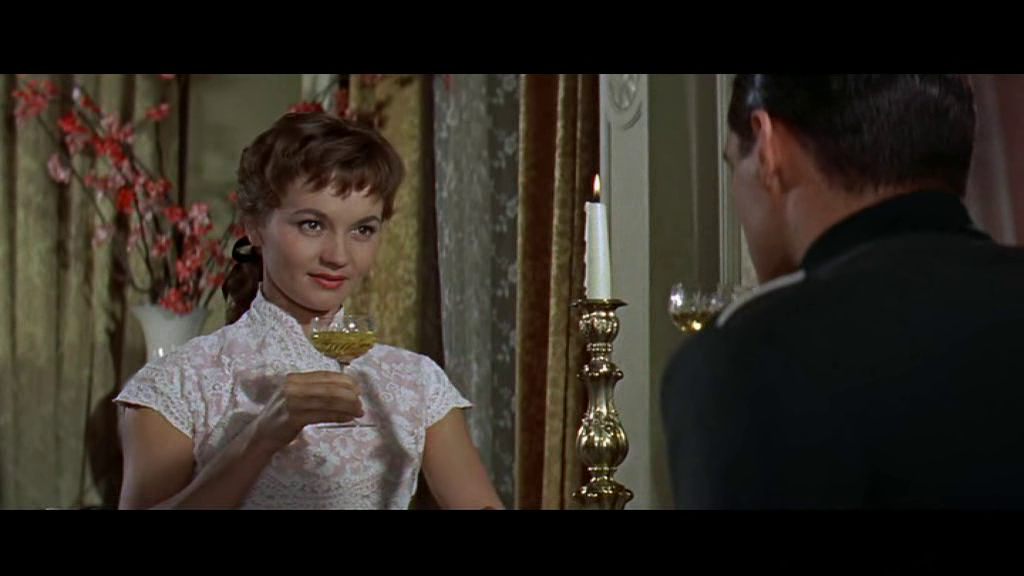
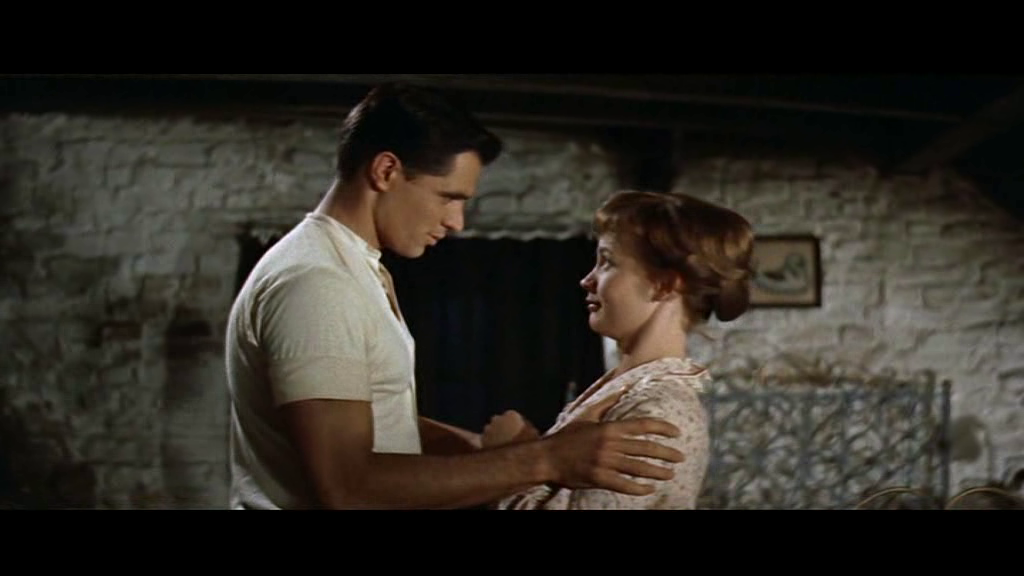
A Time to Love and a Time to Die (the title is succinct and direct) is essentially a wartime romance:
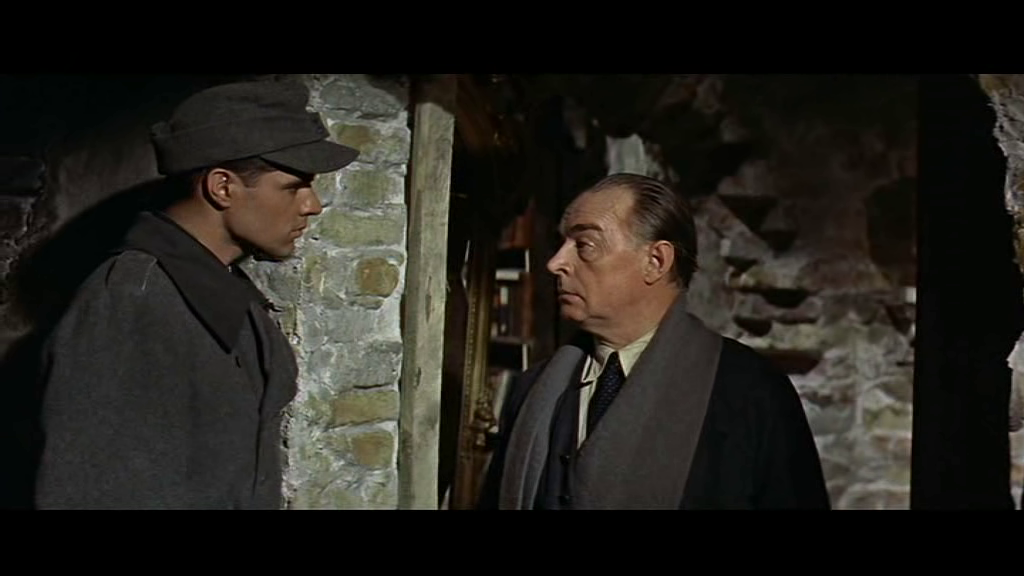
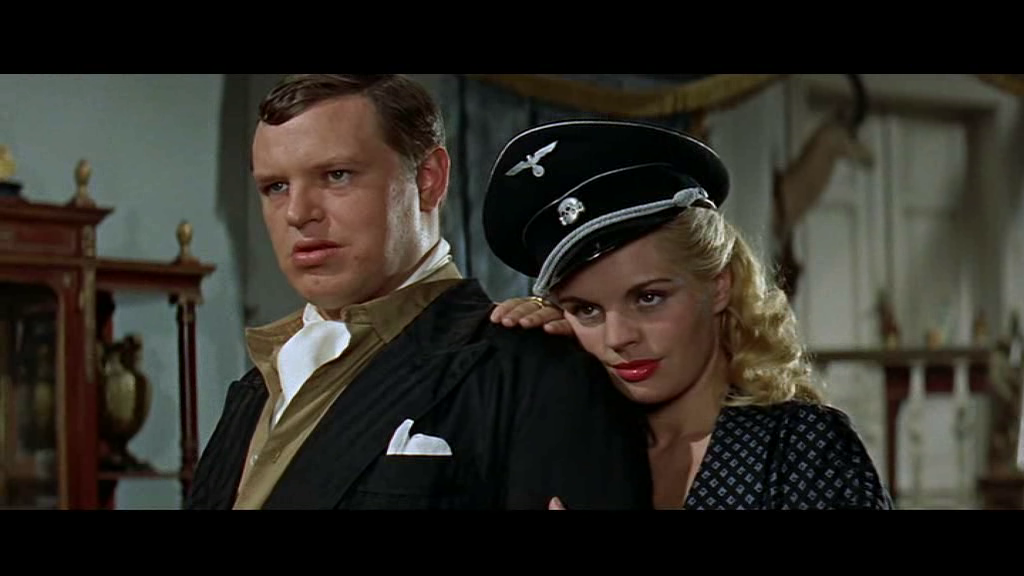
… taking place within Germany’s deadly final days during World War II, when soldiers felt defeated by the inevitability of their country’s loss, and unsure what moves to make next — other than simply continuing to follow instructions and seek joy where they could find it. Upon arriving in his hometown, Gavin accepts an invitation from a former classmate (Thayer David) — now a high-level Nazi — to refresh himself in David’s palatial home:
Despite his discomfort, he realizes that maintaining appearances and not rocking the boat too much will ultimately help him in his quest to locate both his own missing parents, and Pulver’s father — who’s been sent to a concentration camp. Meanwhile, he uses connections and a spiffy suit from a high-class lieutenant (Keenan Wynn):
… to gain entrance to a secret nightclub, where he’s able to offer Pulver a glorious night on the town:
— at least until the club is directly bombed and they must flee for their lives.
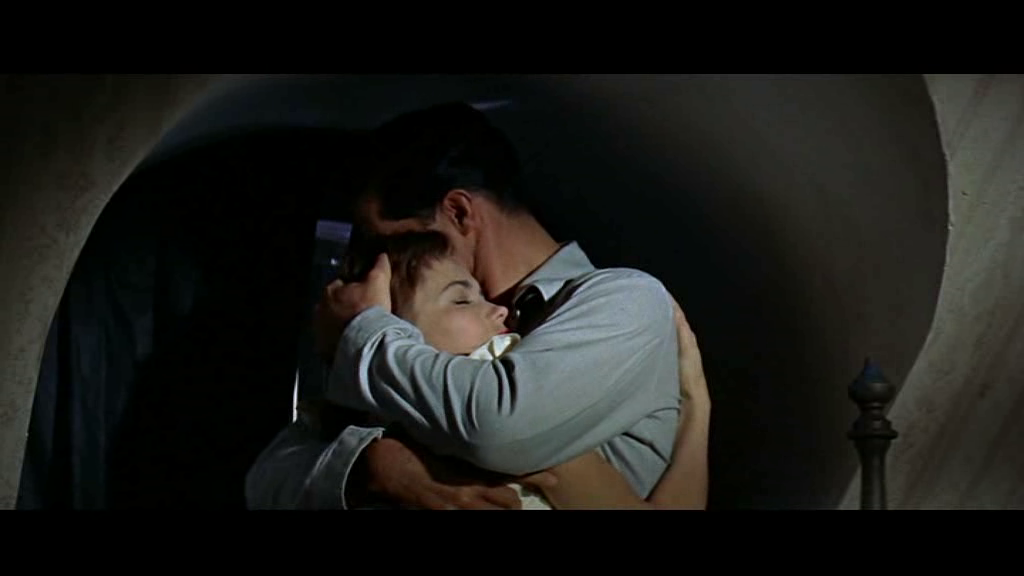
Other than Gavin and Pulver taking a chance on love and happiness in the midst of chaos and uncertainty:
… the storyline centers on Gavin’s gradually shifting sense of moral responsibility; to his credit, Sirk doesn’t overplay this theme, instead allowing it to unfold somewhat naturally (with a surprise ending). While this isn’t must-see viewing for all film fanatics, Sirk fans will surely want to check it out. Redeeming Qualities and Moments:
Must See? Links: |
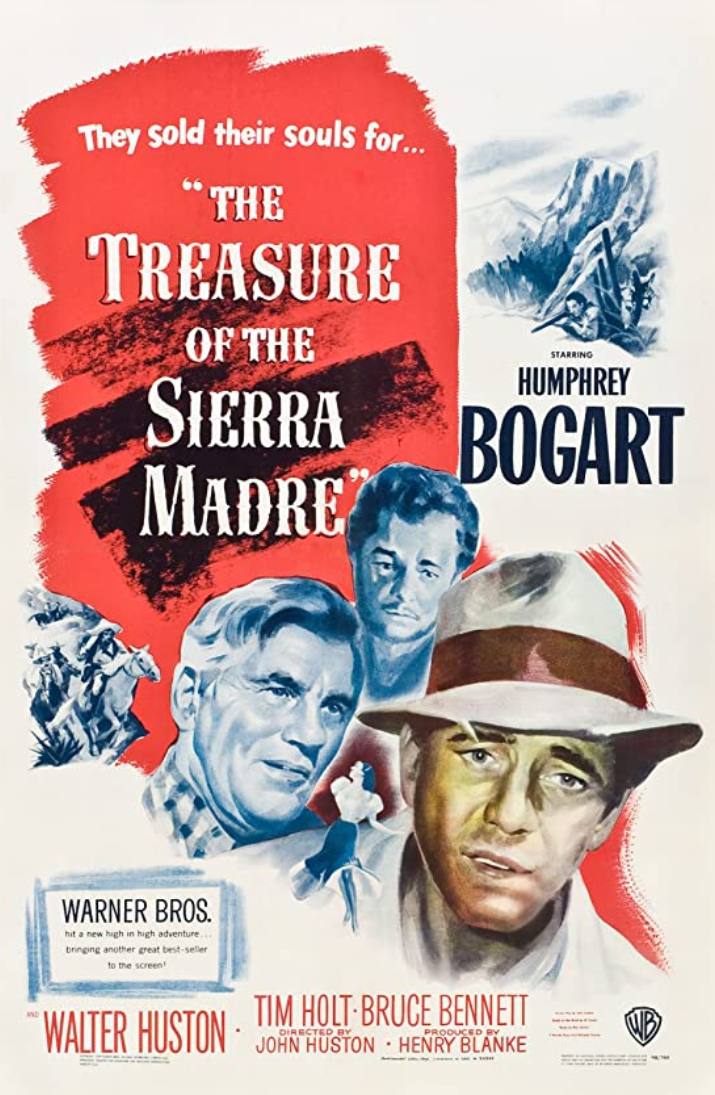
“The way I see it, gold can be as much of a blessing as a curse.”
|
Synopsis: |
|
Genres, Themes, Actors, and Directors:
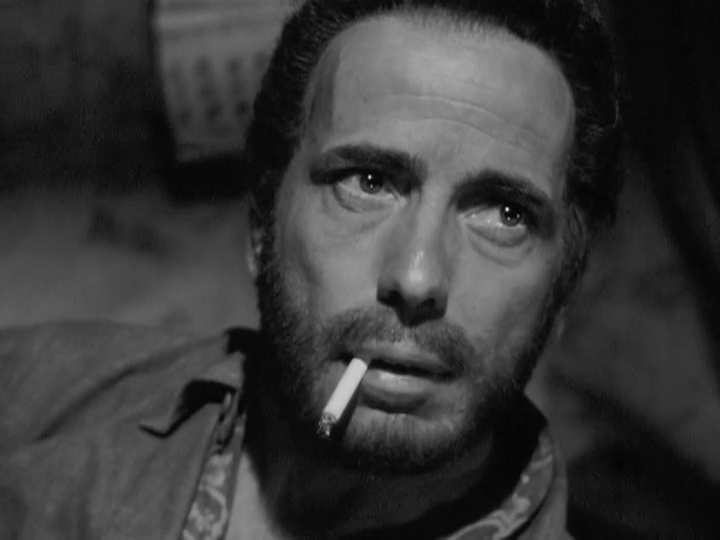
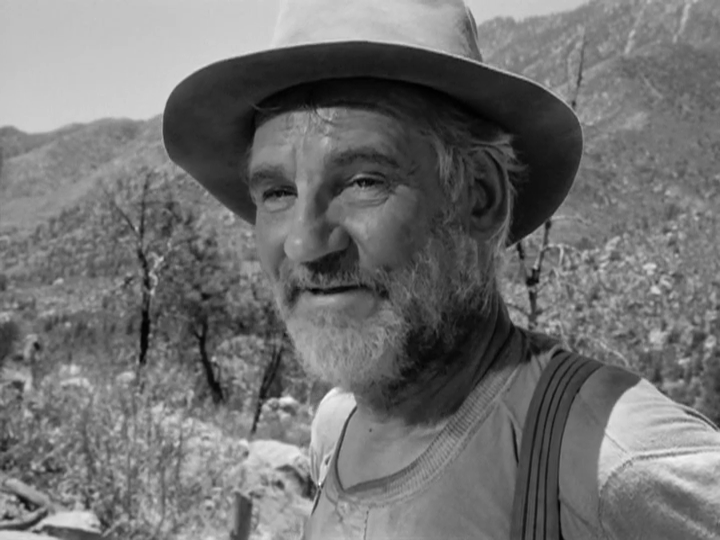
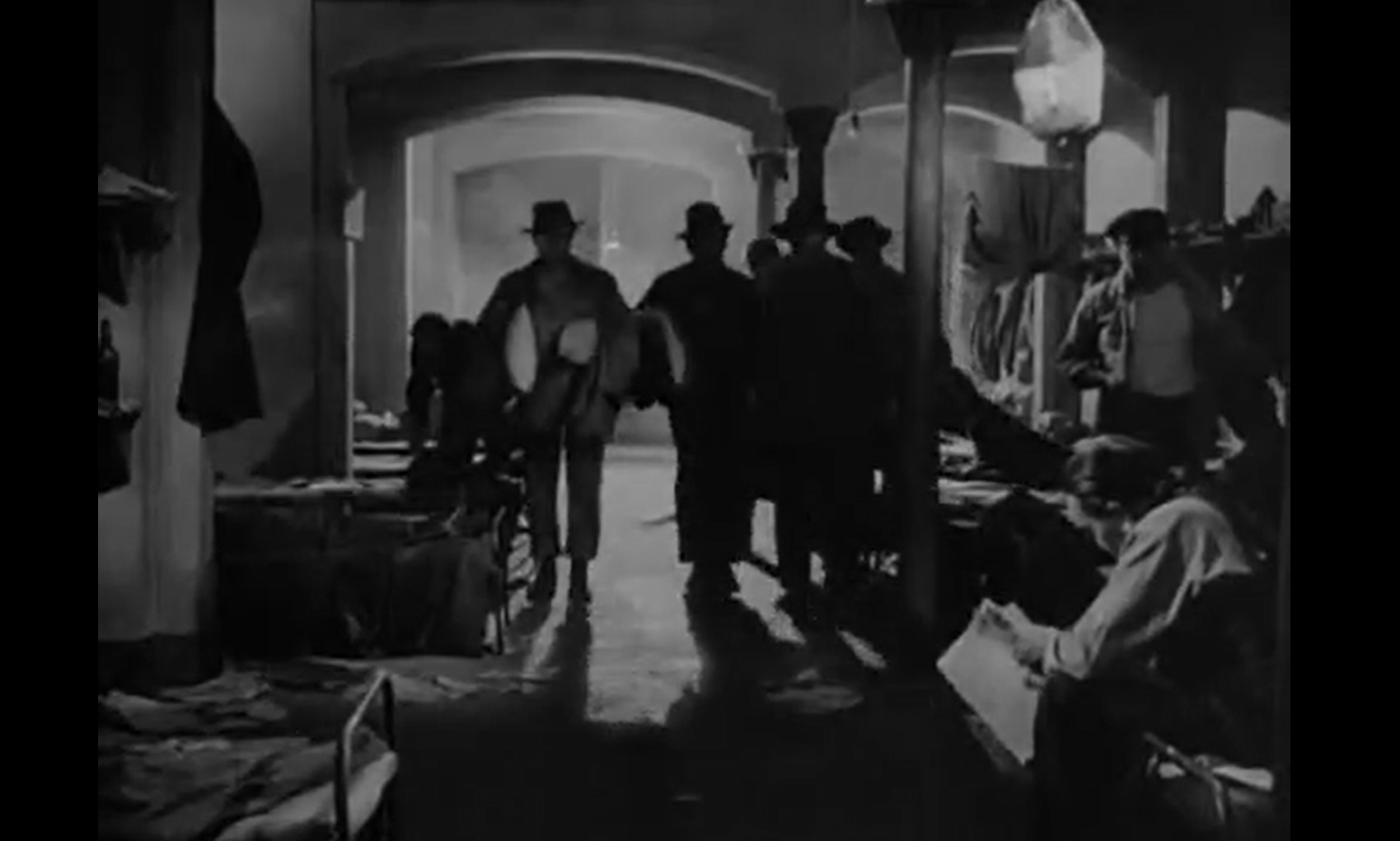
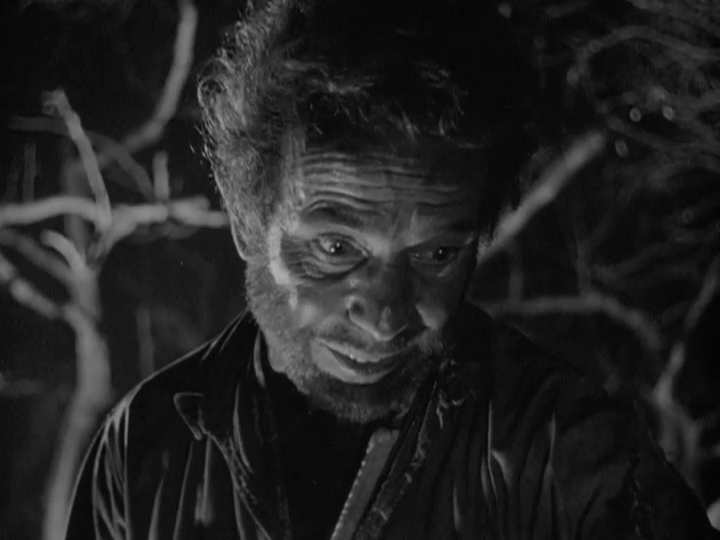
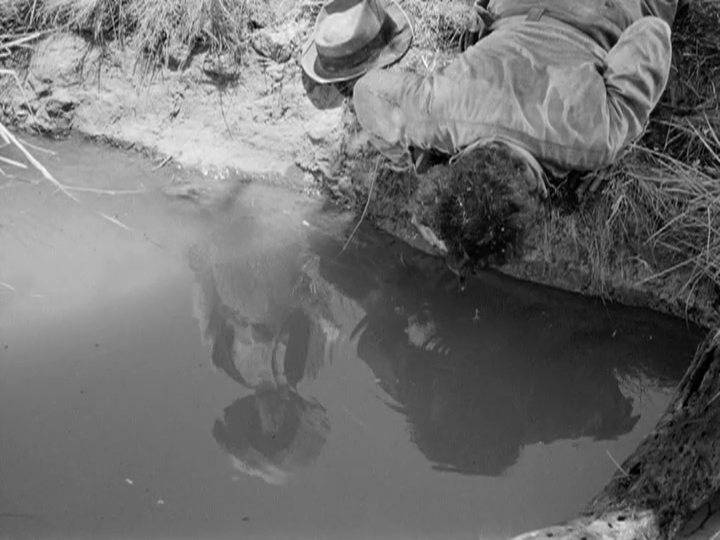
Response to Peary’s Review: In Alternate Oscars, Peary names this the Best Movie of the Year (over Laurence Olivier’s Hamlet), and elaborates on what makes it such a fine picture. He writes that in order to “achieve authenticity, as well as a dirty, gritty, dangerous feel to his picture, Huston insisted on shooting on location in Mexico” — making it “the first narrative American movie filmed entirely out of the States” — and “hired Mexican character actors and amateurs,” wisely chancing on “including long bits of dialogue that were delivered in Spanish and had no subtitles.” However, Peary argues that “Huston’s major contribution to the film was making Gold Hat” (a bandito played by Alfonso Bedoya) “a continuing character”: he’s a “vile, smiling, almost comical” bandit who “could have been conceived by Luis Bunuel” and “is one of the screen’s great punk-bully villains”, with his “great moment” coming when “he tries to pass himself and his men off as federales, and Dobbs (Bogart) asks to see their badges:
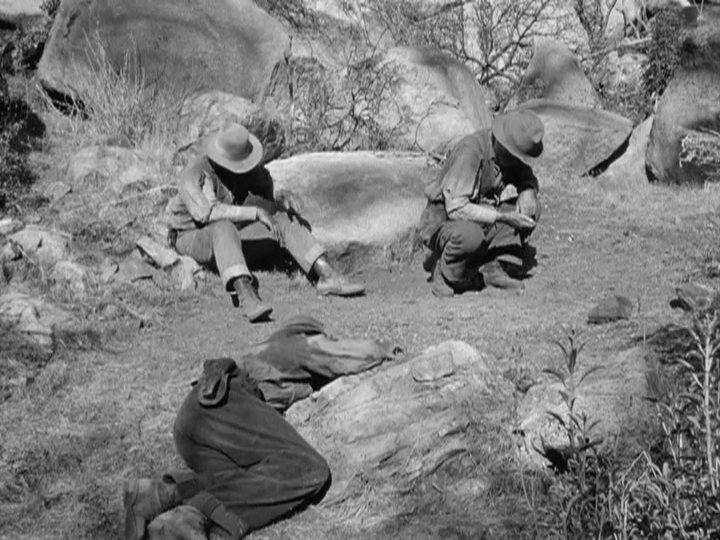
Peary notes that while “at first glance The Treasure of the Sierra Madre seems to be an action-adventure film geared for young boys, with its treasure hunt in unknown territory, gunplay, fisticuffs (the scene in which Dobbs and Curtin fight with their boss… in a bar is a classic), tension and squabbling among partners, brutal villains, [and] no women”, it’s “also a complex character study about what the discovery of gold can do to individuals.” Peary further points out how “most of the tension in the picture is caused by intrusion: the lure of gold intruding on [the] minds of and relationships among the three men, and different characters intruding on space ‘belonging’ to others.” Suffice it to say there’s much rich material here to be explored, and Huston does a marvelous job presenting a story with numerous surprises — both brutal and heartwarming — but one that never pulls any punches. Redeeming Qualities and Moments:
Must See? Categories
(Listed in 1001 Movies You Must See Before You Die) Links: |
“No woman like her: one minute fighting, scratching, the next minute she’s as sweet and soft as any woman alive.”
|
Synopsis: |
|
Genres, Themes, Actors, and Directors:
Review: Redeeming Qualities and Moments:
Must See? Links: |
“What you don’t know would fill a book — but you’ve got guts!”
|
Synopsis: |
|
Genres, Themes, Actors, and Directors:
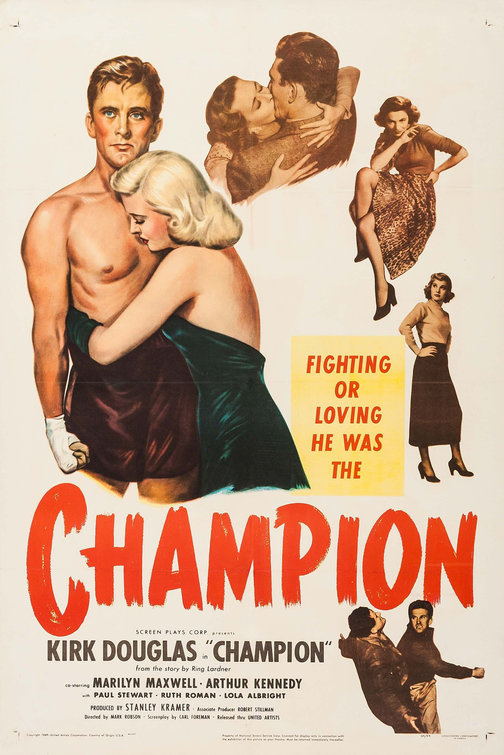
Response to Peary’s Review:
… Ruth Roman as a young woman who falls for Douglas’s charms before he makes a name for himself:
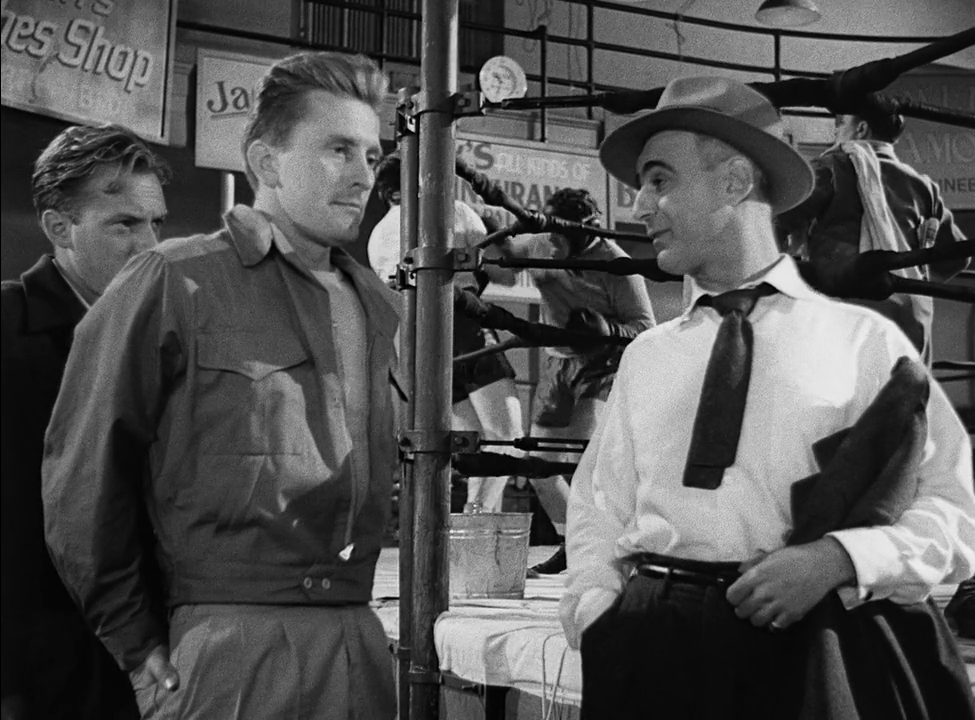
… Paul Stewart as a self-proclaimed “boxing addict” who agrees to help Douglas out.
… and Lola Albright as a sculptress who’s shocked to find that Douglas’s ambitions really do trump all else.
Note: To see Roman, Stewart, and Kennedy co-starring the same year in very different roles, be sure to check out The Window (1949). Redeeming Qualities and Moments:
Must See? Categories
Links: |