It Came From Outer Space (1953)
“Facts, John — facts!”
|
Synopsis: |
|
Genres, Themes, Actors, and Directors:
Review: Redeeming Qualities and Moments:
Must See? Categories
Links: |
“You’re driving me right into the hot girdle business!”
|
Synopsis: |
|
Genres, Themes, Actors, and Directors:
Review:
Indeed, Benny’s character is such a genuinely good-hearted fellow — his name is a variation on Nathanael, which means “gift from God” — that we can’t help cheering him on despite his sincere intention to blow up the Earth; instead, we’re simply grateful he has such a loyal and stoically plucky girlfriend literally waiting in the wings to help him out. Note: This film was primarily infamous as the flop Benny loved to self-flagellate over; too bad, as it doesn’t deserve that reputation. Redeeming Qualities and Moments:
Must See? Categories
Links: |
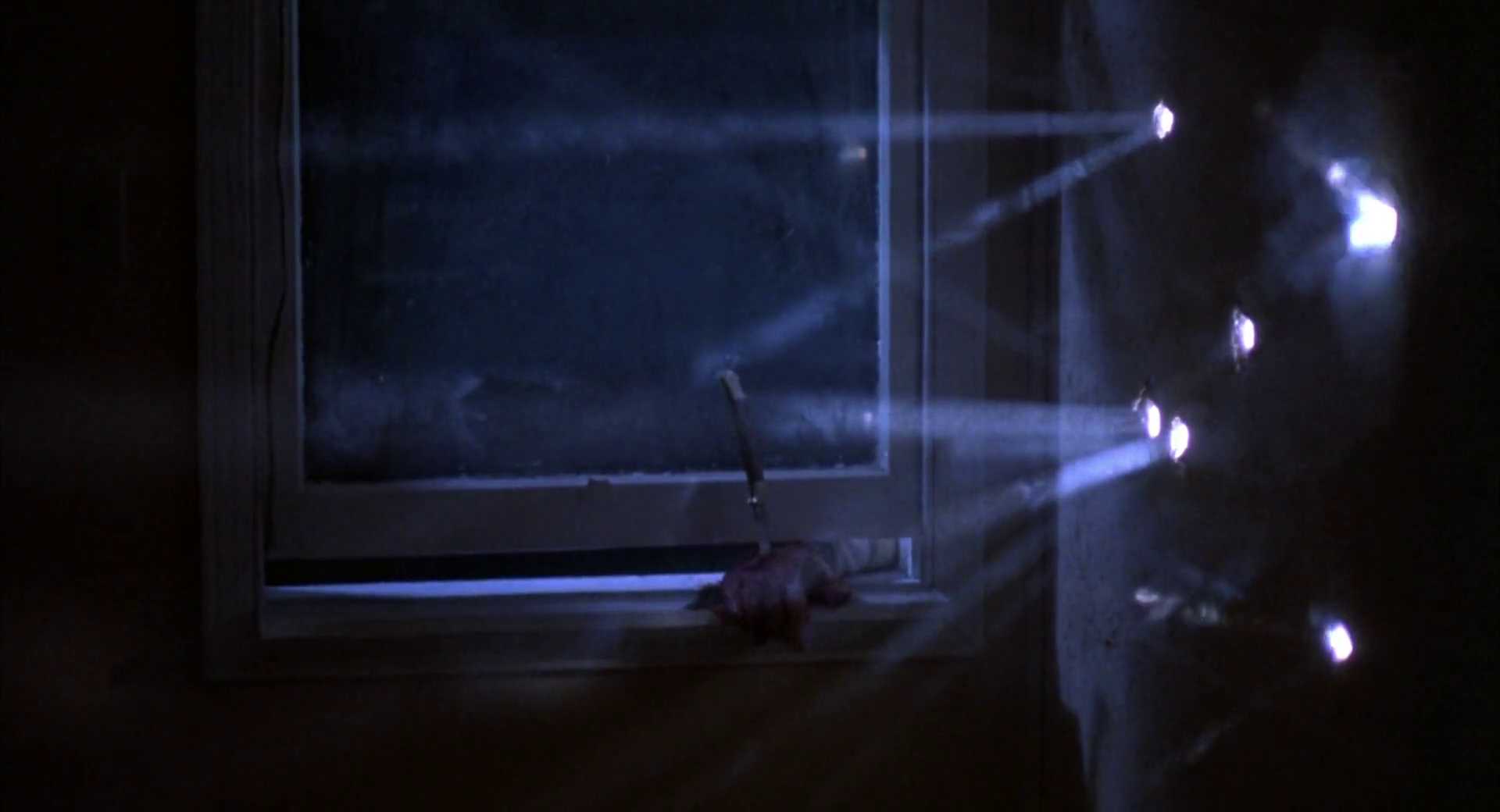
“Never point a gun at anyone, unless you mean to shoot him. And if you shoot him, you better make sure he’s dead.”
|
Synopsis: |
|
Genres, Themes, Actors, and Directors:
Response to Peary’s Review: Note: Blood Simple is an interesting entry in Peary’s book given that, along with Raising Arizona (1987), it represents the beginning of a long string of cult hits by the directing/producing team which would surely be listed in an up-to-date and revised GFTFF, including at least the following: Miller’s Crossing (1990), Barton Fink (1991), Fargo (1996), The Big Lebowski (1998), O Brother, Where Art Thou? (2000), and No Country for Old Men (2007). Redeeming Qualities and Moments:
Must See? Categories
Links: |
“Those experiments — they just mean more to him than I do.”
|
Synopsis: |
|
Genres, Themes, Actors, and Directors:
Review:
Bad-movie fans may get some enjoyment out of hearing Dern mouthing lines such as, “Johnny, this is an axe. It is used for chopping wood, and nothing else.” Also, be on the look-out for the sheer height and double-toned hues of Kasem’s hair-piece; it’s a marvel on its own. Redeeming Qualities and Moments:
Must See? Links: |
“I’m callin’ for a rumble with the Chaplains to protect our honor!”
|
Synopsis: |
|
Genres, Themes, Actors, and Directors:
Review:
Redeeming Qualities and Moments: Must See? Links: |
“Isn’t the orgasm what we’re all looking for?”
|
Synopsis: |
|
Genres, Themes, Actors, and Directors:
Review: Note: I didn’t know about Abel before catching this film, and was intrigued to learn more about his infamous Society for Indecency to Naked Animals (SINA) movement, as well as writing his own obituary for his faked death. Redeeming Qualities and Moments:
Must See? Links: |
 Hello, CMBA members! I’m happy to be participating in the Classic Movie Blog Association’s Fall “Outlaws” blogathon. If you’re new to my site, please click here to read more. Welcome!
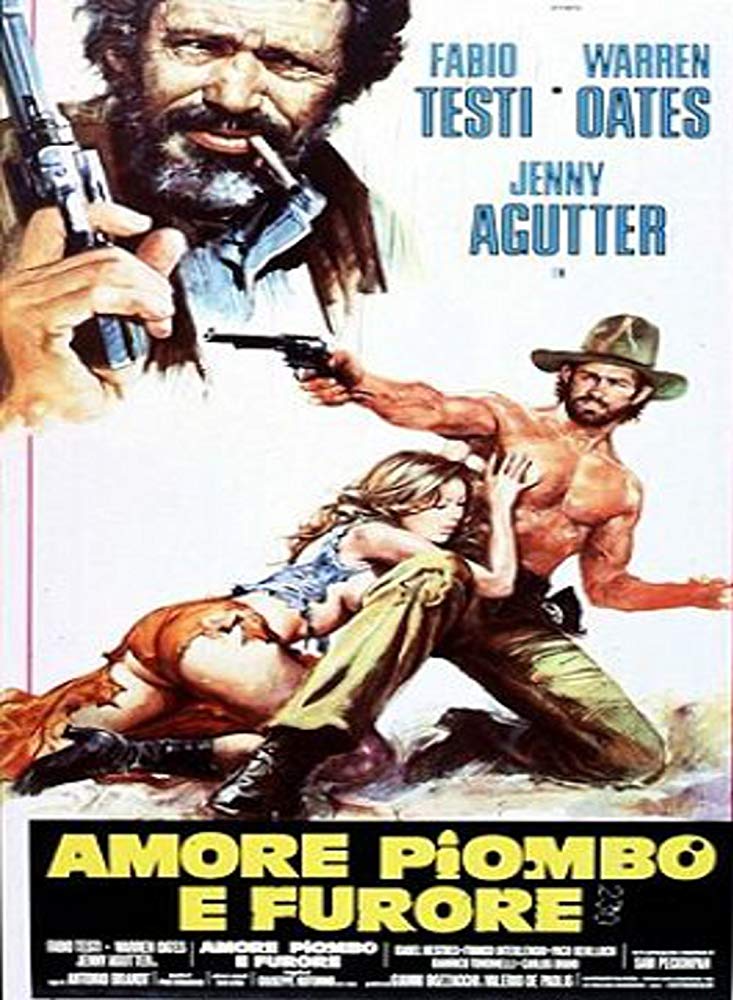
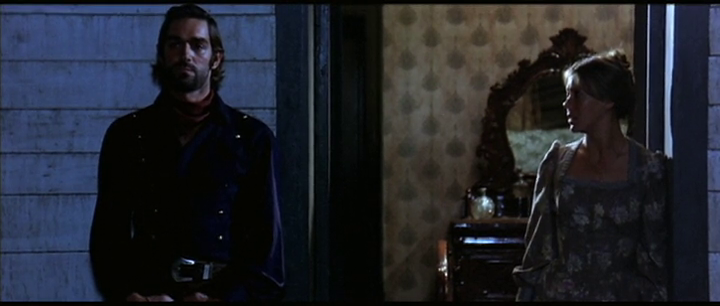
“I am a gunfighter; you are a woman between husbands.”
|
Synopsis: |
|
Genres, Themes, Actors, and Directors:
Response to Peary’s Review: I selected this western for inclusion in CMBA’s Fall Outlaws Blogathon because of the unusual shifting of who, exactly, the “outlaws” are as the film progresses. While hired-man Testi is the obvious first candidate, the railroad company requesting Oates’s murder is implicated as well: “outlaws” in this western landscape are clearly operating within a powerful web of industrial corruption. [SPOILERS ALERT] Once Oates discover’s Agutter’s affair with Testi and turns violent, Agutter believes she’s killed him in self-defense, and becomes an outlaw alongside her lover. However, when one of Oates’s brothers (Paco Benlloch) runs into the pair and learns what happened to Oates, he is naturally perturbed, and becomes involved in a prolonged kerfuffle that results in his death. When his corpse is delivered to the recovering Oates’s homestead, the plot has thickened considerably: Oates is now out to avenge not only his wife’s infidelity but the killing of his brother. With Agutter clearly penitent (one scene shows her mourning in a church), and honorable Testi returning the money he’s been given for killing Oates — he believes Oates’s “murder” was actually committed by Agutter — it becomes even more difficult to sort out who the “outlaws” actually are here. Meanwhile, another of Oates’s brothers (Gianrico Tondinelli) attempts to rape Agutter, but is stopped by Oates himself, who nonetheless says, “Go ahead, boy; that’s what whores are for”. Soon the original baddies — men representing the railroad company — set out to kill both Testi (who has not lived up to his agreement) and Oates (who they still want murdered). Testi’s life is saved by a prostitute-with-a-heart-of-gold (and a convenient penchant for sharpshooting), and he’s ultimately able to protect Oates from the killers who have amassed on his property and are waiting to ambush him. Testi’s final showdown with Oates — and the evolving relationship between Oates and Agutter, who appear to be trying to better understand one another and start afresh — is testament to the film’s refusal to categorize individuals (or “outlaws”) as either good or bad; humanity is far more complex than that. Redeeming Qualities and Moments:
Must See? Links: |
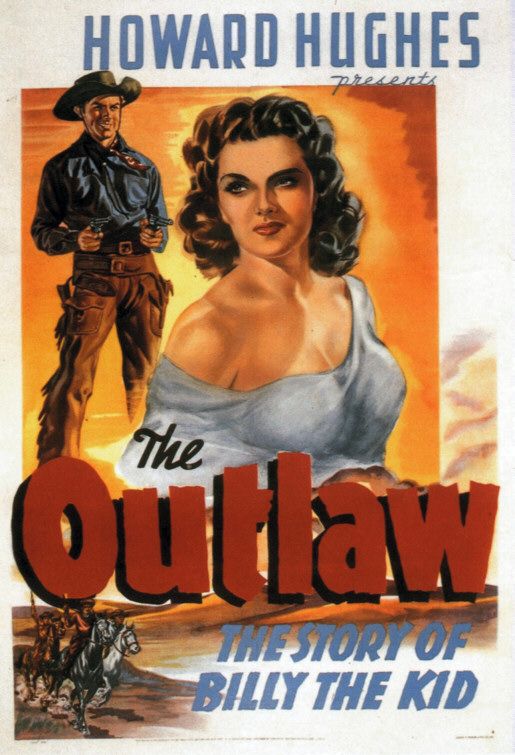
“Ever since you met him, you’ve treated me like a dog!”
|
Synopsis: |
|
Genres, Themes, Actors, and Directors:
Response to Peary’s Review:
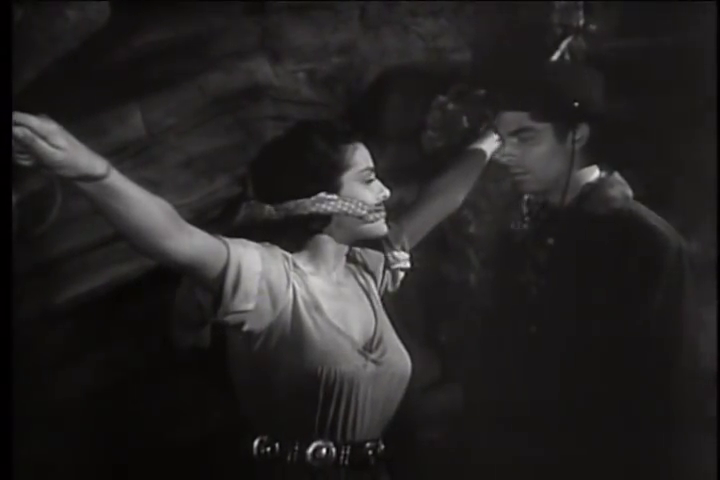
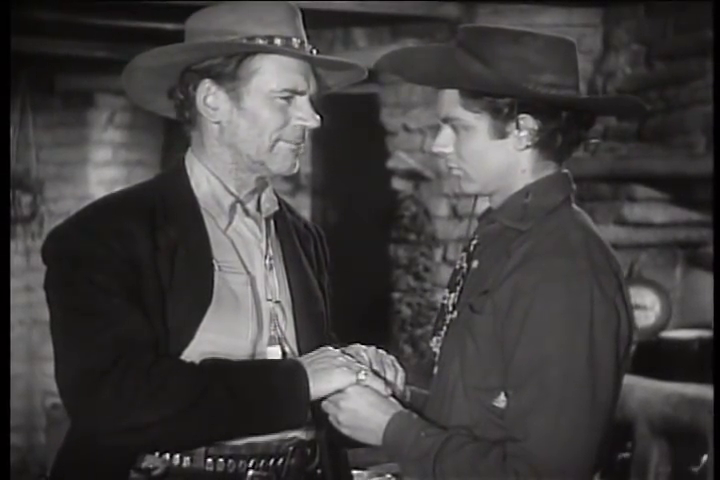
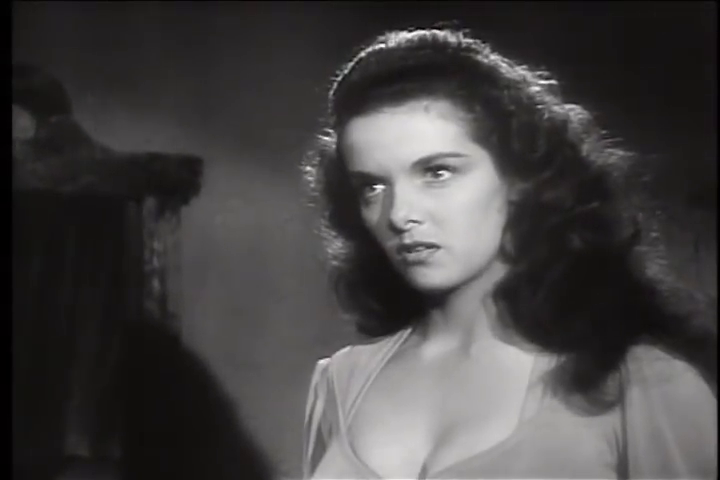
Ironically, while the film does place ample emphasis on Russell’s photogenic bosom, the film is less focused on sexual dynamics between Russell and her two lovers than on, as Robert Lang notes in his book Masculine Interests: Homoerotics in Hollywood Films:
Regardless of whether one reads the relationship between Huston and Beutel as sexual or not, it’s undeniable that the real “love triangle” here is between these men (who take an instant liking to one another, for no discernable reason) and Mitchell. In his review, however, Peary simply points out that “after a while there’s too much male talk and not enough about Russell”, adding that it’s “hard to believe” the “very pretty, buxom, teenage girl in the tight, revealing dresses” is “the same actress who’d confidently sing, dance, and be funny with Marilyn Monroe ten years later in Gentlemen Prefer Blondes (1953).” The film itself, unfortunately, is a tonally inconsistent chore to sit through. Peary writes that the “comedy and music are intrusive”, but this is an understatement: Victor Young’s score is atrociously inappropriate for the melodramatic material, which doesn’t work as a comedy. Meanwhile, the film is at least half an hour too long, and Hughes didn’t know how to elicit strong performance from his leads. While the reasons for Beutel’s limited career are contested, it seems clear to me that he was more of a pretty face than a talented actor; as noted previously, it’s challenging to understand why Huston feels such loyalty for him. Redeeming Qualities and Moments:
Must See? Links: |
“He’s young and he loves life, but he may die — any day, any hour.”
|
Synopsis: |
|
Genres, Themes, Actors, and Directors:
Response to Peary’s Review:
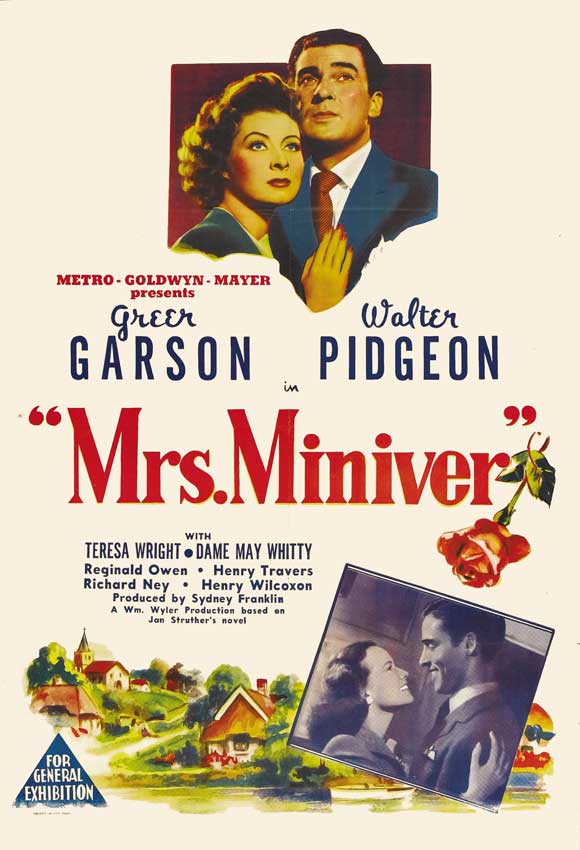
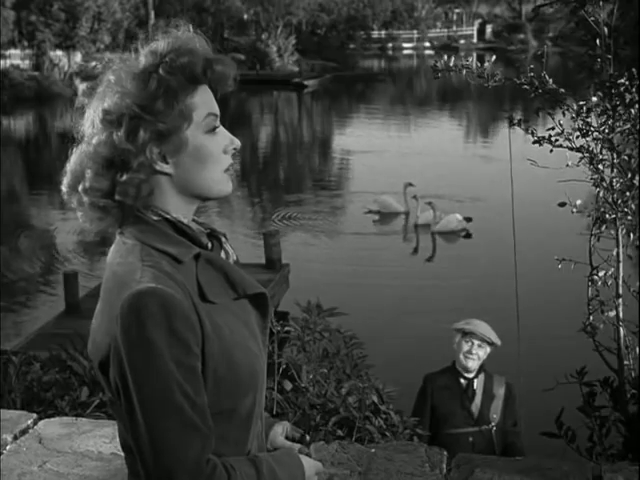
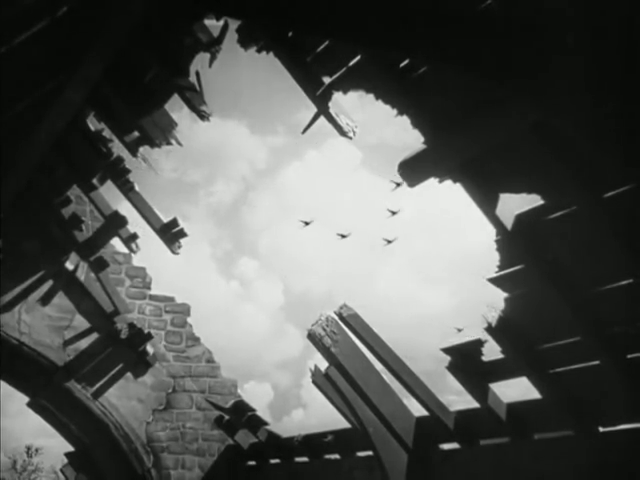
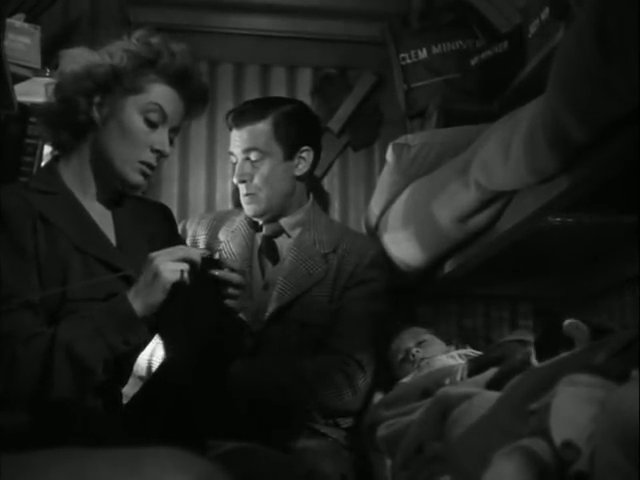
He adds that “this was important because the purpose of MGM’s propaganda piece, which was filmed on the studio lot, was to motivate Americans to come to the aid of the British… and it is known to have succeeded to an astonishing degree.” With that said, as Peary notes, the “picture is self-conscious to an annoying degree”. He further admits that he has “always had mixed feelings about Greer Garson (and other actresses I can’t picture in blue jeans), but she deserves her Oscar if only because she agreed to be mother to an adult” (!!!).
[In Alternate Oscars, he snubs Garson altogether and splits the Best Actress Oscar between Carole Lombard in To Be or Not to Be and Ginger Rogers in The Major and the Minor.] Greer’s performance is earnest and consistent, but she only seems to depict a few primary expressions, and never really surprises us with any noteworthy acting moves.
Wyler would ultimately have much more success and authenticity with The Best Years of Our Lives (1946) — a film which has endured as a true wartime classic. Note: This film was added to the National Film Registry in 2009 for being “culturally, historically, or aesthetically” significant. Redeeming Qualities and Moments:
Must See? Links: |
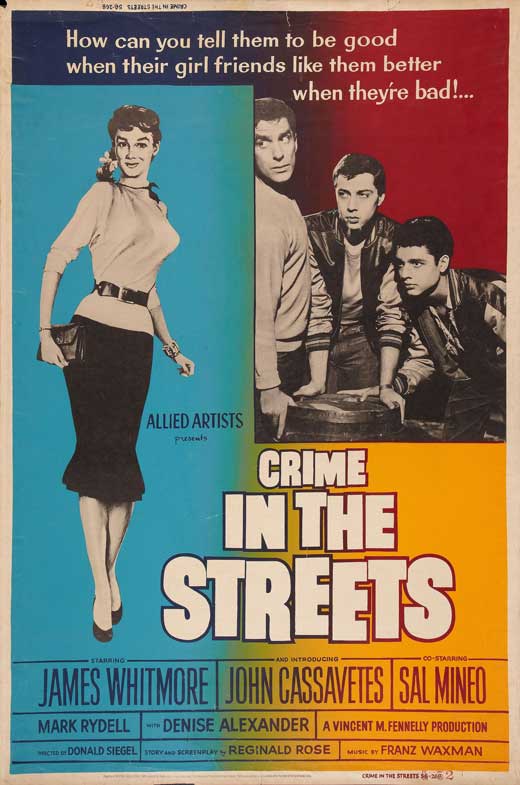
“We’re not talking about wild animals — we’re talking about tough, angry kids.”
|
Synopsis: |
|
Genres, Themes, Actors, and Directors:
Review: Redeeming Qualities and Moments:
Must See? Links: |