Magician, The (1958)

Magician, The (1958)

“You represent what I detest most of all: the unexplainable.”

Synopsis:
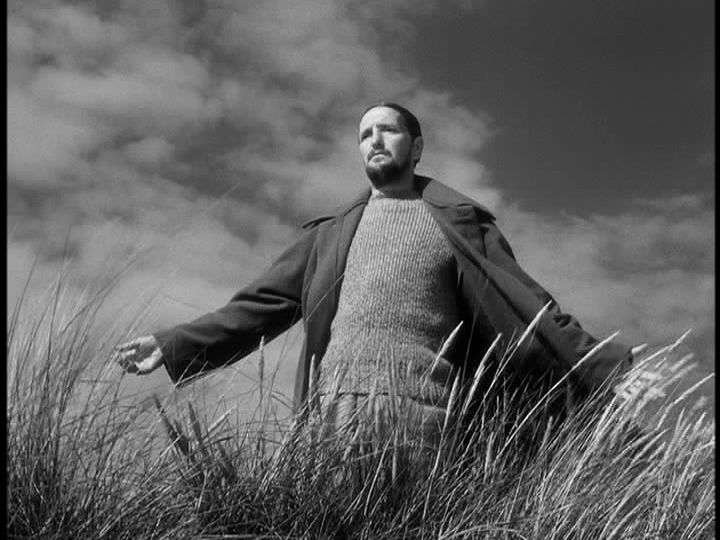
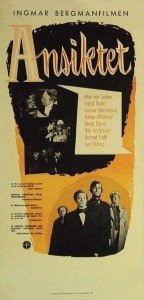
In 1840s Sweden, a mute magician (Max von Sydow) and his troupe arrive in a small town, where the police commissioner (Toivo Powlo), a doctor (Gunnar Bjornstrand), and a civil servant (Erland Josephson) all attempt to determine whether von Sydow’s powers are real or illusionary.

Genres, Themes, Actors, and Directors:

  • Ingmar Bergman Films
  • Magicians
  • Max von Sydow Films
  • Morality Police
  • Scandinavian Films

Review:
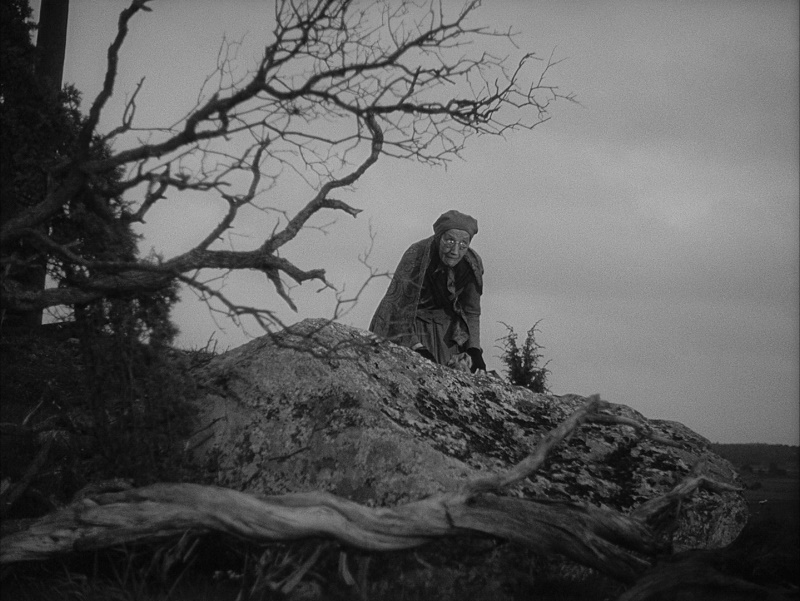
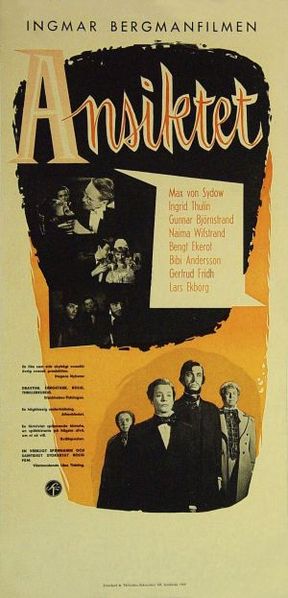
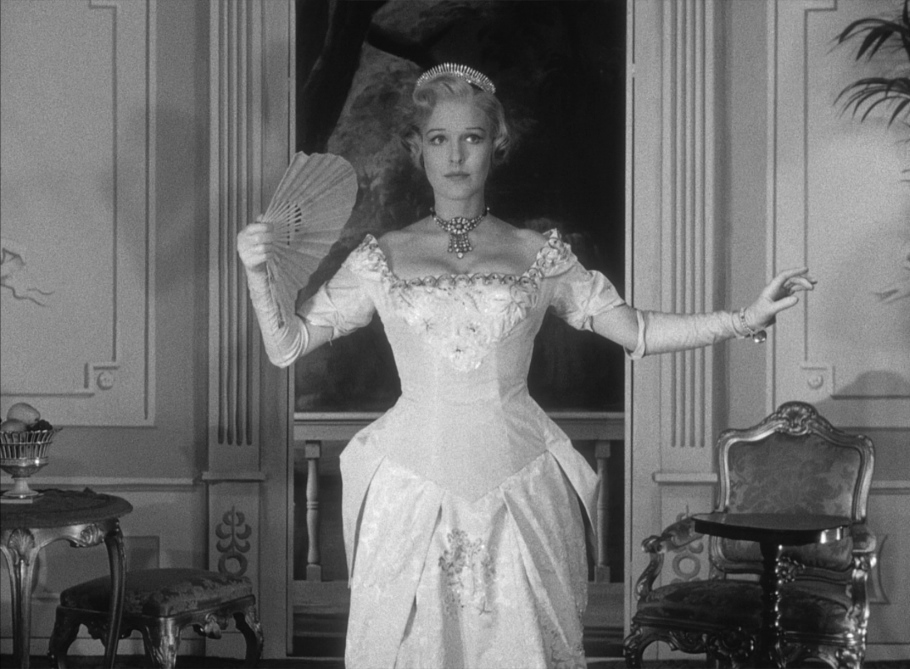
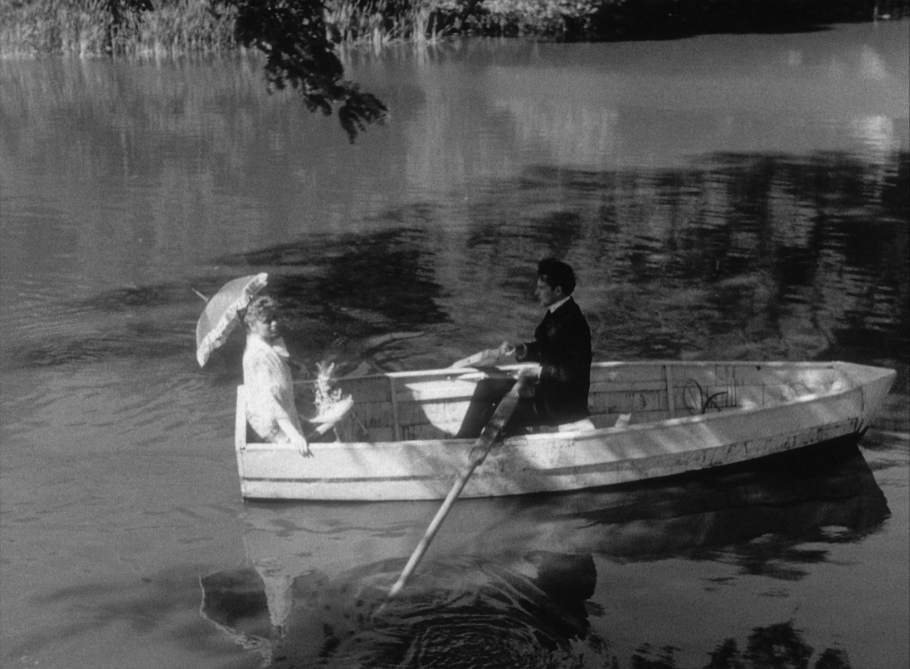
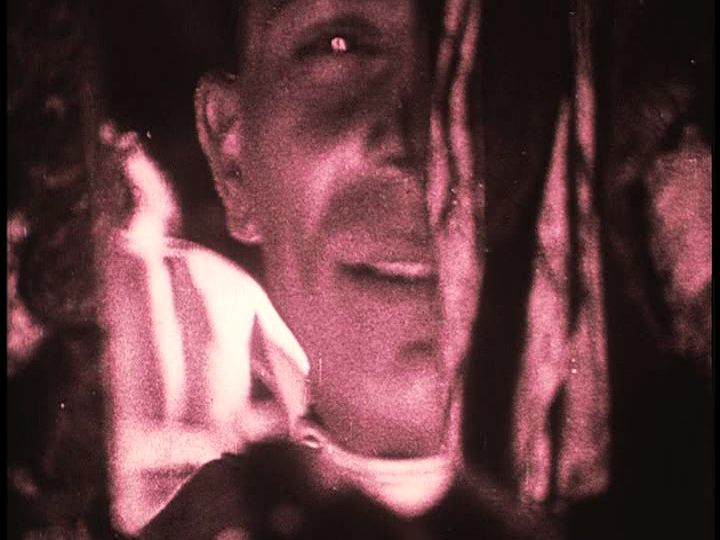
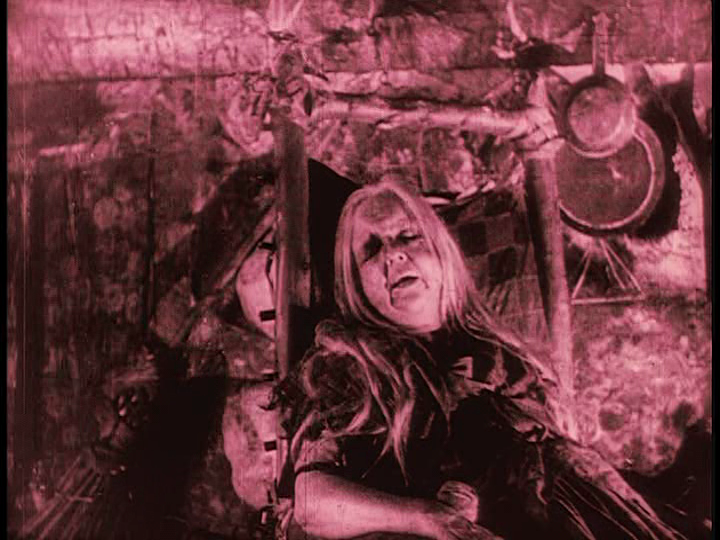
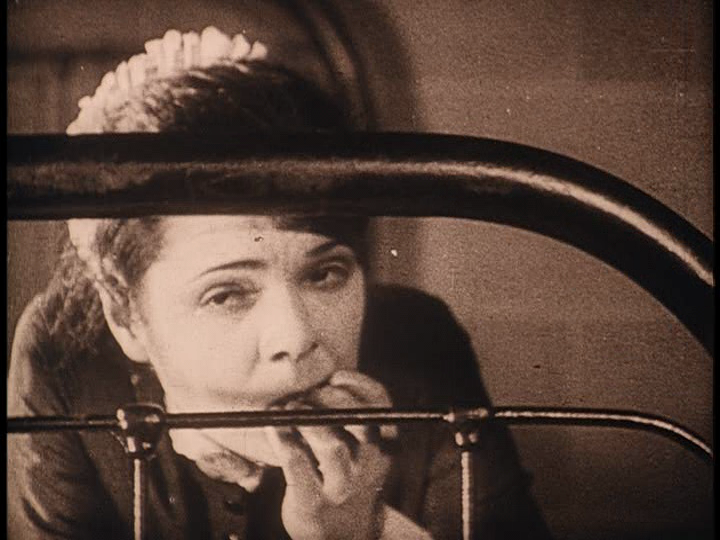
According to IMDb, Ingmar Bergman directed no less than 67 films (including some made-for-TV titles and some shorts) over the course of his lengthy career; of these, Peary lists 18 in his GFTFF. The Magician (also known as Ansiktet, or The Face) is chronologically the fifth “entry” in his book, following The Naked Night / Sawdust and Tinsel (1953), Smiles of a Summer Night (1955), Wild Strawberries (1957), and The Seventh Seal (1957); of these, it bears most resemblance to The Naked Night in its focus on travelling performers, who represent a disruptive presence to staid Scandinavian morality. In both films, Bergman compassionately yet ruthlessly reveals the hidden vulnerabilities of those whose calling is to provide respite and/or entertainment to the masses — and in The Magician, Bergman simultaneously exposes “magic” (a proxy for cinema?) as a necessary deception, a tool we use to allow ourselves the enjoyment and satisfaction we crave. In one particularly humorous and bawdy vignette, for instance, a cook lets herself be sweet-talked by a salesman in the troupe, revealing shortly thereafter that she’s aware his “love potion” is a sham but doesn’t mind, since her real goal is to bed him. (Ah, these refreshingly frank Scandinavian films! How 1950s American audiences must have eaten them up!)

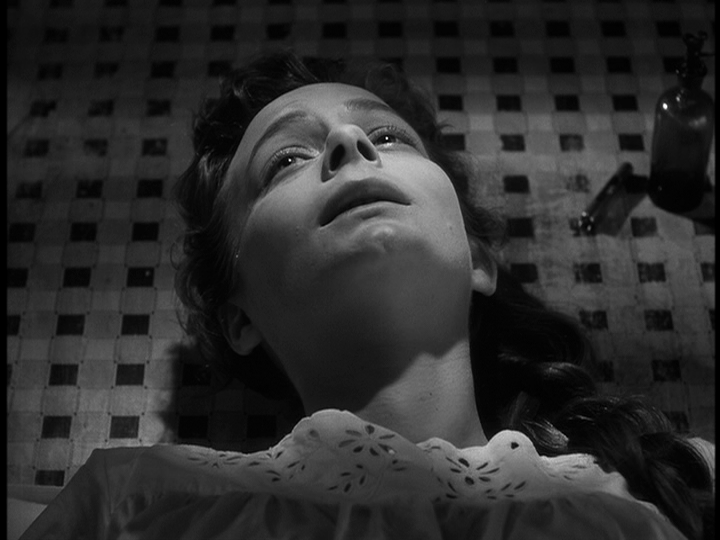
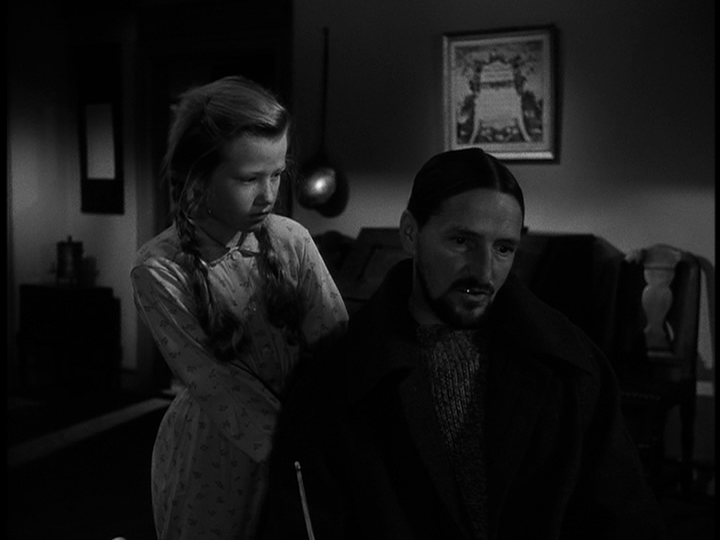
This being a Bergman film, however, other vignettes are much less light-hearted. The central storyline — regarding von Sydow’s mute magician and his wife (Ingrid Thulin), dressed to look like his young male accomplice as part of their collective disguise — involves scandal, shame, and infidelity; and a subplot involving a suicidal traveler (Bengt Ekerot – “Death” in The Seventh Seal, though you may not recognize him) is decidedly grim. It’s to Bergman’s credit that he manages to mix sensibilities so fluidly throughout his episodic narrative, shifting easily from comedy to tragedy as various characters’ stories come together to tell a broader thematic tale. Bergman seems to be arguing that we all want to be “seduced” (visually, romantically, metaphorically) in one way or another, yet we simultaneously crave rational control over ourselves and our environment; the question is, can these conflicting goals co-exist? Unfortunately, The Magician‘s narrative gets a bit muddled towards the end, making it less satisfying as a whole than it could be; however, it remains worthy viewing at least once by all film fanatics.

Redeeming Qualities and Moments:

  • Gunnar Fischer’s cinematography
  • Fine performances by the entire cast
  • Bergman’s slyly satirical screenplay

Must See?
Yes, as yet another provocative early Bergman film. Listed as a film with Historical Importance and a Personal Recommendation in the back of Peary’s book.

Categories

  • Foreign Gem
  • Important Director

Links:

Ordet / Word, The (1955)

Ordet / Word, The (1955)

“And the rest of us, all the rest of us, we go straight down to hell to eternal torments, don’t we?”

Synopsis:
The youngest son (Cay Kristiansen) of a cynical Danish farmer (Henrik Malberg) wishes to marry the daughter (Sylvia Eckhausen) of a religiously fundamentalist tailor (Ejner Federspiel), though both fathers disapprove; meanwhile, Malberg’s son Johannes (Preben Lerdorf Rye) believes he’s Jesus Christ, while the gentle wife (Birgite Federspiel) of his son Mikkel prepares to give birth to her third child.

Genres, Themes, Actors, and Directors:

  • Carl Theodor Dreyer Films
  • Death and Dying
  • Mental Illness
  • Play Adaptations
  • Religious Faith
  • Scandinavian Films

Response to Peary’s Review:
Peary posits that the theme of Carl Theodore Dreyer’s adaptation of a “play by [Danish hero] Kaj Munk” — about “a proud, elderly Christian farmer whose faith has all but disappeared because of the lack of miracles in modern times” — “is that people, even priests, shouldn’t let faith in God diminish”, and that “those who are regarded as insane are actually closest to God”. To that end, one’s appreciation for this critically lauded parable will depend upon one’s willingness to accept it as something other than a traditional cinematic tale; Dreyer’s intention is not to entertain, but to provoke. However, as Peary notes, while the “beginning of the film is charming due to the simplicity of the sets and the characters” (he jokingly writes that “it wouldn’t be jarring if June Lockhart, Tommy Rettig, and Lassie dropped in for a visit”), it “becomes drawn out and silly”; he argues that while “it might work as a story told in church”, “as a film it is far-fetched”.

I’ll admit I’m essentially in agreement with Peary’s take on this one. Unlike most other reviewers (whose praise is unreserved), I find it overly slow and a tad pretentious, not to mention terribly depressing — in sum, everything Scandinavian films from this era are stereotyped as being (but see Bergman’s Smiles of a Summer Night [1955] for a refreshing counter-example). With that said, there’s no denying either the power of Dreyer’s imagery, or the integrity of his intentions; film fanatics will want to check this one out at least once, and make up their own minds about its ultimate place in the world’s cinematic canon.

Note: I was fascinated to learn (from a citation on Wikipedia) that this film was not only a critical success but a financial success as well; my, how audience tastes have changed…

Redeeming Qualities and Moments:

  • Committed performances by the entire cast

  • Dreyer’s typically stunning visual sensibility

Must See?
Yes, simply as one of Ordet’s most celebrated works — though your enjoyment will be highly variable.

Categories

  • Important Director

(Listed in 1001 Movies You Must See Before You Die)

Links:

Smiles of a Summer Night (1955)

Smiles of a Summer Night (1955)

“Men never know what’s best for them; we have to put them on the right track.”

Synopsis:
When a middle-aged lawyer (Gunnar Bjornstrand) married to a virginal teen (Ulla Jacobssen) pays a visit to his long-time mistress (Eva Dahlbeck), he encounters her most recent lover (Jarl Kulle), who jealously proposes a duel; meanwhile, Bjornstrand’s grown son (Bjorn Bjelvenstam) harbors a secret crush on Jacobssen, while Kulle’s neglected wife (Margit Carlquist) is determined to win her husband back.

Genres, Themes, Actors, and Directors:

  • Historical Drama
  • Ingmar Bergman Films
  • Love Triangle
  • Romantic Comedy
  • Scandinavian Films

Response to Peary’s Review:
Peary writes that he views this “sophisticated bedroom farce” — “one of Ingmar Bergman’s most popular films” — “as a tribute… to those women who are clever and brave enough to shape their own worlds despite husbands and lovers who make up the rules.” He notes that while the “film has been compared to Lubitsch’s comedies of manners and Renoir’s Rules of the Game,” he is “more reminded of the works of Max Ophuls, whose men are ruled by pride and whose women are so guided by their hearts that they become obsessed with winning men who they realize aren’t worthy of them”. Indeed, the male characters in SOASN are so clearly “no prizes” that one can easily see why Scandinavian countries eventually became world leaders in feminist equality (!); the women here are, without exception, the ones with firm heads on their shoulders. Peary points out that while the “film is wise and cynical”, you’ll “also think it hilarious if you… pay attention to the indignities Bjornstrand suffers”, such as “fall[ing] headlong into a puddle”; being forced (by Dahlbeck) to “wear a ridiculous nightshirt, cap, and gown”; being unable to “get Dahlbeck to admit that her son, who has his first name, is his child”; etc. The film’s “excellent acting, [fine] photography (by Gunnar Fischer), [and] set design (by P.A. Lundgren)” all contribute towards the enjoyment of this early Bergman masterpiece.

Redeeming Qualities and Moments:

  • Fine performances by the entire cast
  • Gunnar Fischer’s cinematography
  • Bergman’s clever, deceptively lighthearted screenplay

Must See?
Yes, as a classic of Scandinavian cinema.

Categories

  • Genuine Classic
  • Important Director

(Listed in 1001 Movies You Must See Before You Die)

Links:

Odd Couple, The (1968)

Odd Couple, The (1968)

“You don’t understand — I’m nothing without my wife and kids!”

Synopsis:
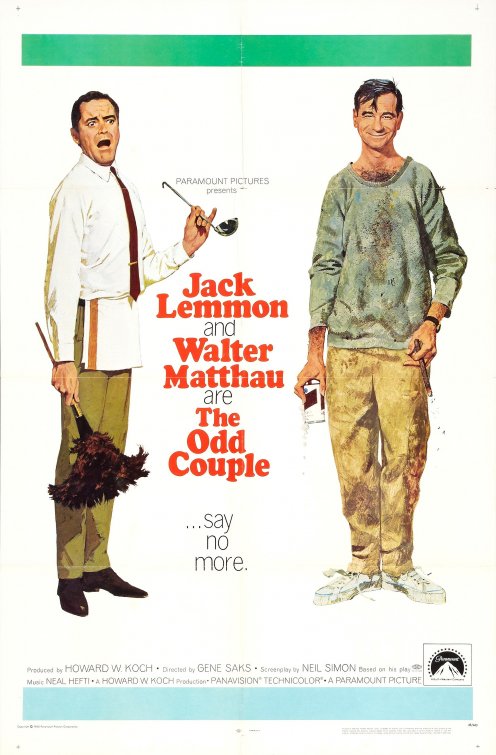
When compulsive neat freak Felix Ungar (Jack Lemmon) is thrown out of his house by his wife, he goes to live with his good friend Oscar Madison (Walter Matthau), who is quickly driven batty by Felix’s incessant housekeeping.

Genres, Themes, Actors, and Directors:

  • Divorce
  • Friendship
  • Jack Lemmon Films
  • Play Adaptation
  • Walter Matthau Films

Review:
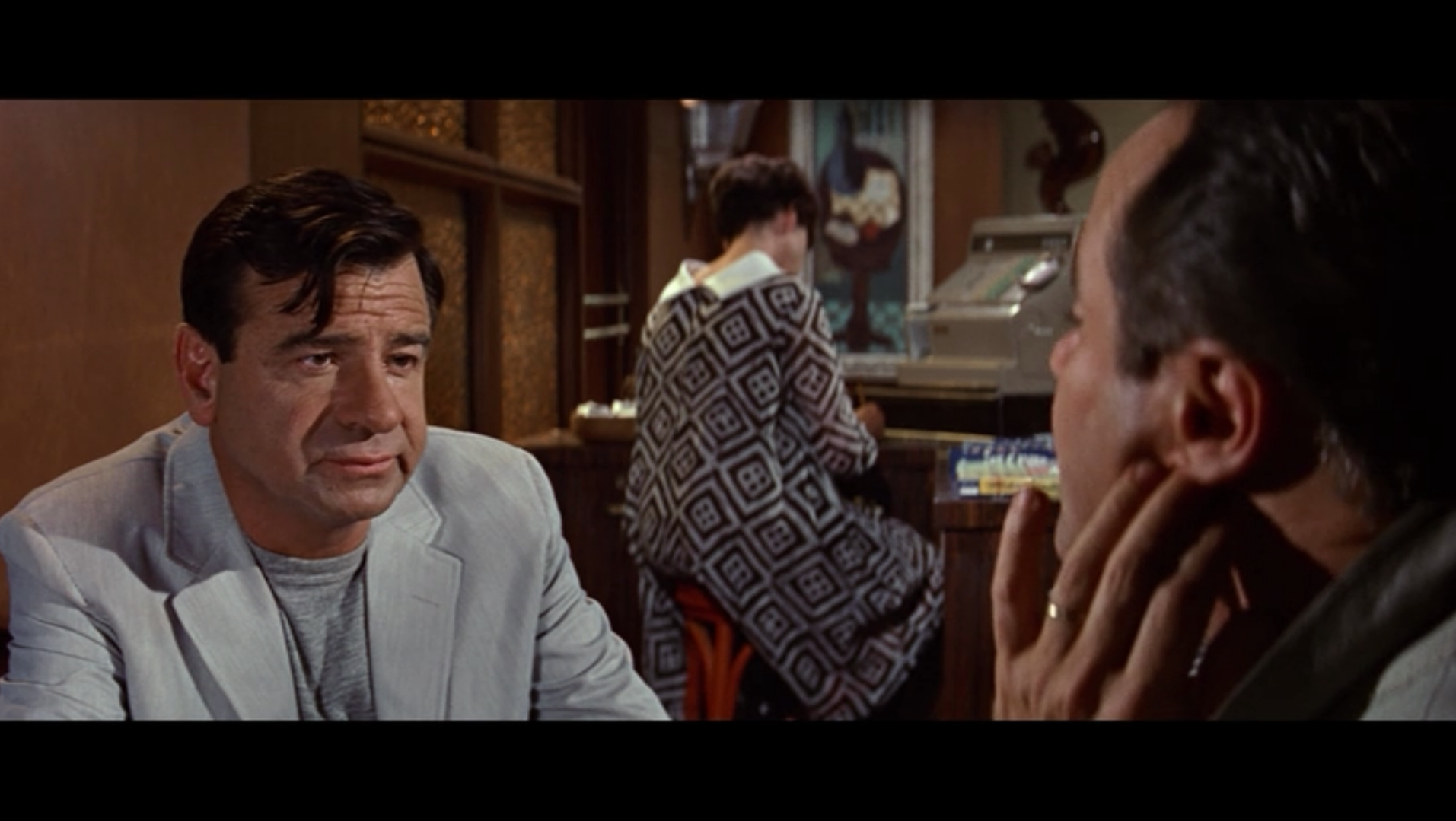
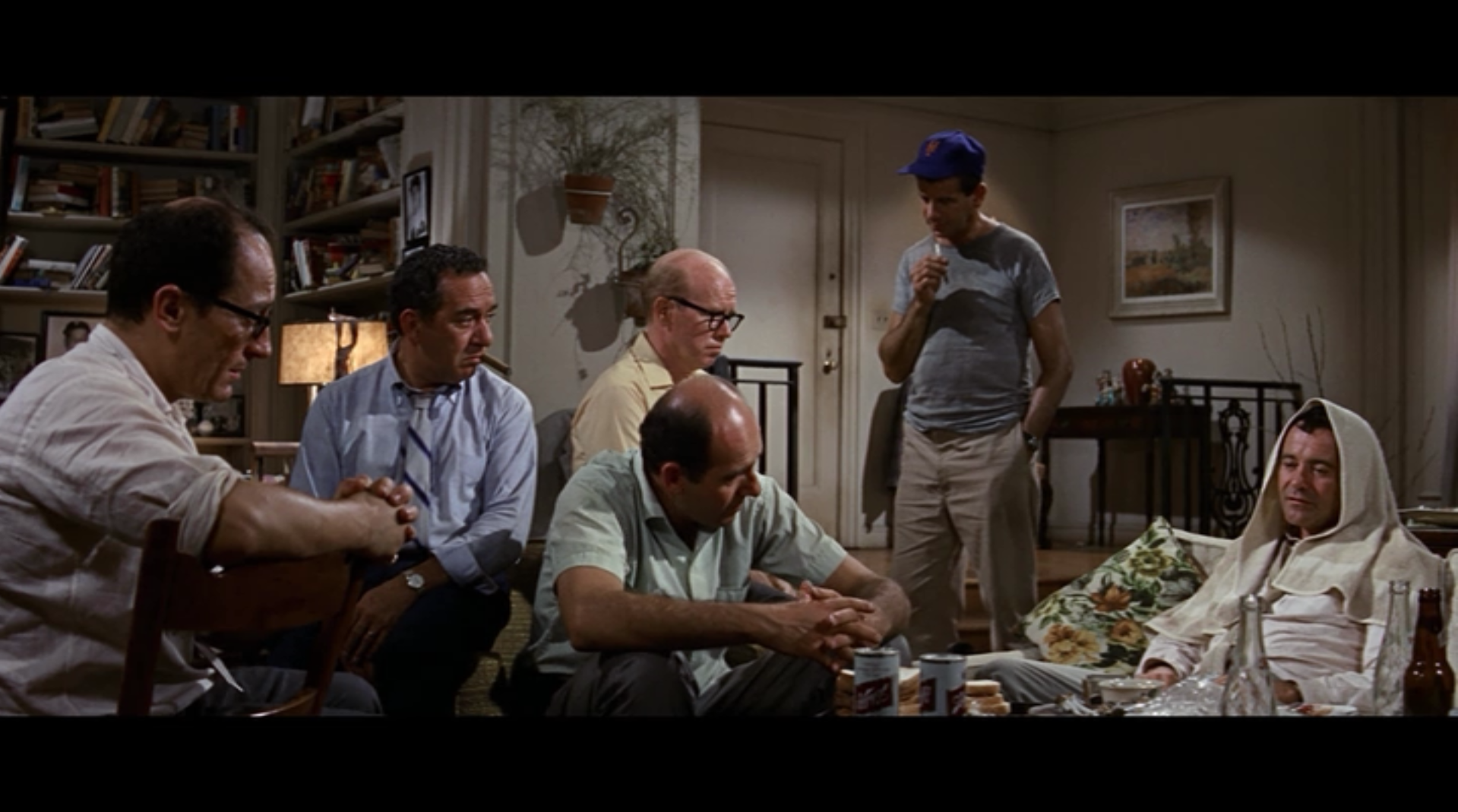
The characters of (neatnik) Felix Ungar and (slob) Oscar Madison have become so culturally iconic that it’s easy to forget just how clever their original big-screen incarnation was. Neil Simon’s screenplay (based upon his own play) plunges us immediately into surprisingly challenging territory, as we witness Felix wandering despondently through the streets of New York, hoping to die; his depression is palpable, and we feel for his situation. From there, we’re shown the true concern expressed by his circle of friends (nicely acted by John Fiedler, Herb Edelman, David Sheiner, and Larry Haines); while their attempts to prevent Felix from committing suicide are played for laughs, they’re consistently bolstered by a refreshing undercurrent of genuine love and concern. The increasingly tense situation that emerges once Felix and Oscar attempt to live with one another is likewise both hilarious and poignant: we can relate to Oscar’s sense that he’s slowly going crazy, yet we simultaneously feel compassion for what is clearly Felix’s (undiagnosed) obsessive-compulsive disorder (or some variation thereof) — and we certainly understand why his wife could no longer live with him!

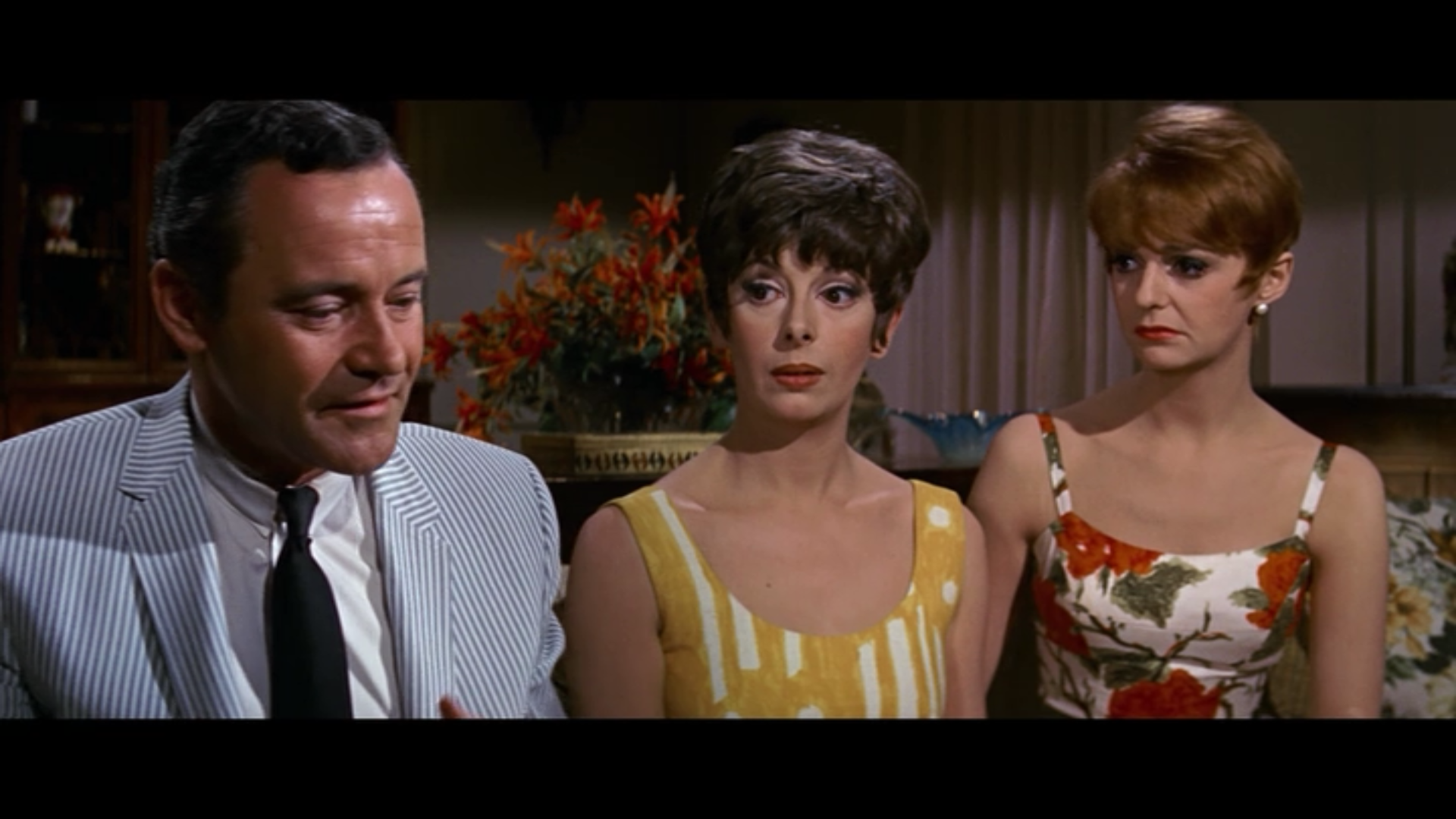
Lemmon and Matthau are perfectly cast as the title “couple”; their comedic timing and rapport is impeccable. Interestingly, Matthau originally thought he would be better suited as Felix — either given that he was a neatnik in real life (according to a quote in TCM’s article) or because he felt he was too much like Oscar and the role wasn’t enough of a stretch (according to a piece of IMDb trivia); do any readers know the true reason? At any rate, while both performances are excellent, I find Lemmon particularly impressive, given how fearlessly and emphatically he embraces his character’s “feminine” tendencies without devolving into stereotypes of any kind (naturally, one can’t help thinking of his memorably gender-fluid performance in Some Like it Hot). Also of note are Monica Evans and Carole Shelley (who reprised their characters in the long-running T.V. series) in hilarious supporting roles as the sexy British sisters Walter’s hoping to have a good time with, but who are instead distracted by Felix’s sob story.

Redeeming Qualities and Moments:

  • Jack Lemmon as Felix Unger
  • Walter Matthau as Oscar Madison
  • Monica Evans and Carole Shelley as Cecily and Gwendolyn Pigeon
  • A clever tale of friendship put to the ultimate test
  • Neal Hefti’s memorable score

Must See?
Yes, as a finely written and acted comedy. This one is a “good show” you’ll look forward to revisiting!

Categories

  • Good Show

Links:

Underworld (1927)

Underworld (1927)

“Nobody helps me! I help other people.”

Synopsis:
An inebriated man (Clive Brook) is picked up by a notorious gangster (George Bancroft), who takes pity on him and gives him a place to stay — but when Brook and Bancroft’s girlfriend “Feathers” (Evelyn Brent) fall for each other, and Bancroft’s chief rival (Fred Kohler) continues to make aggressive passes at Feathers as well, tensions quickly get heated.

Genres, Themes, Actors, and Directors:

  • Clive Brook Films
  • Gangsters
  • George Bancroft Films
  • Josef von Sternberg Films
  • Love Triangle
  • Silent Films

Review:
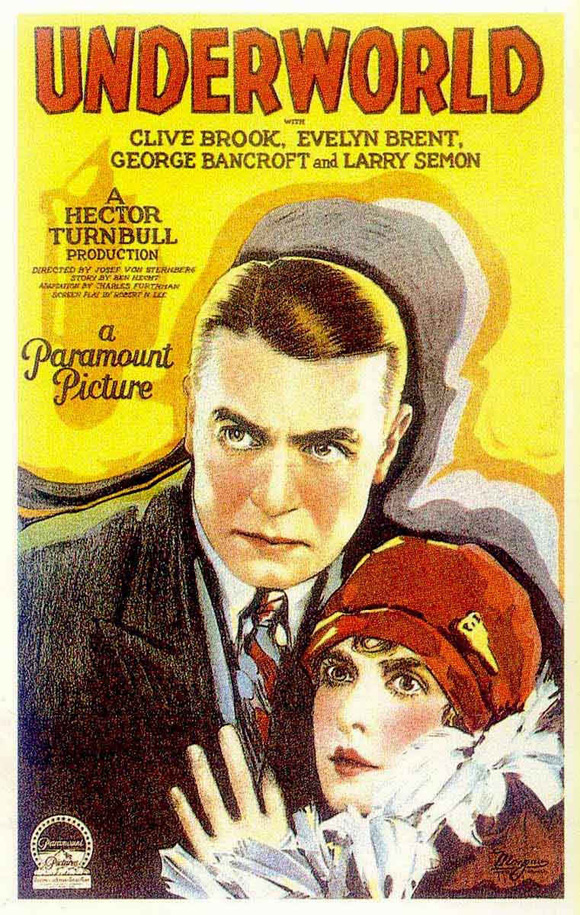
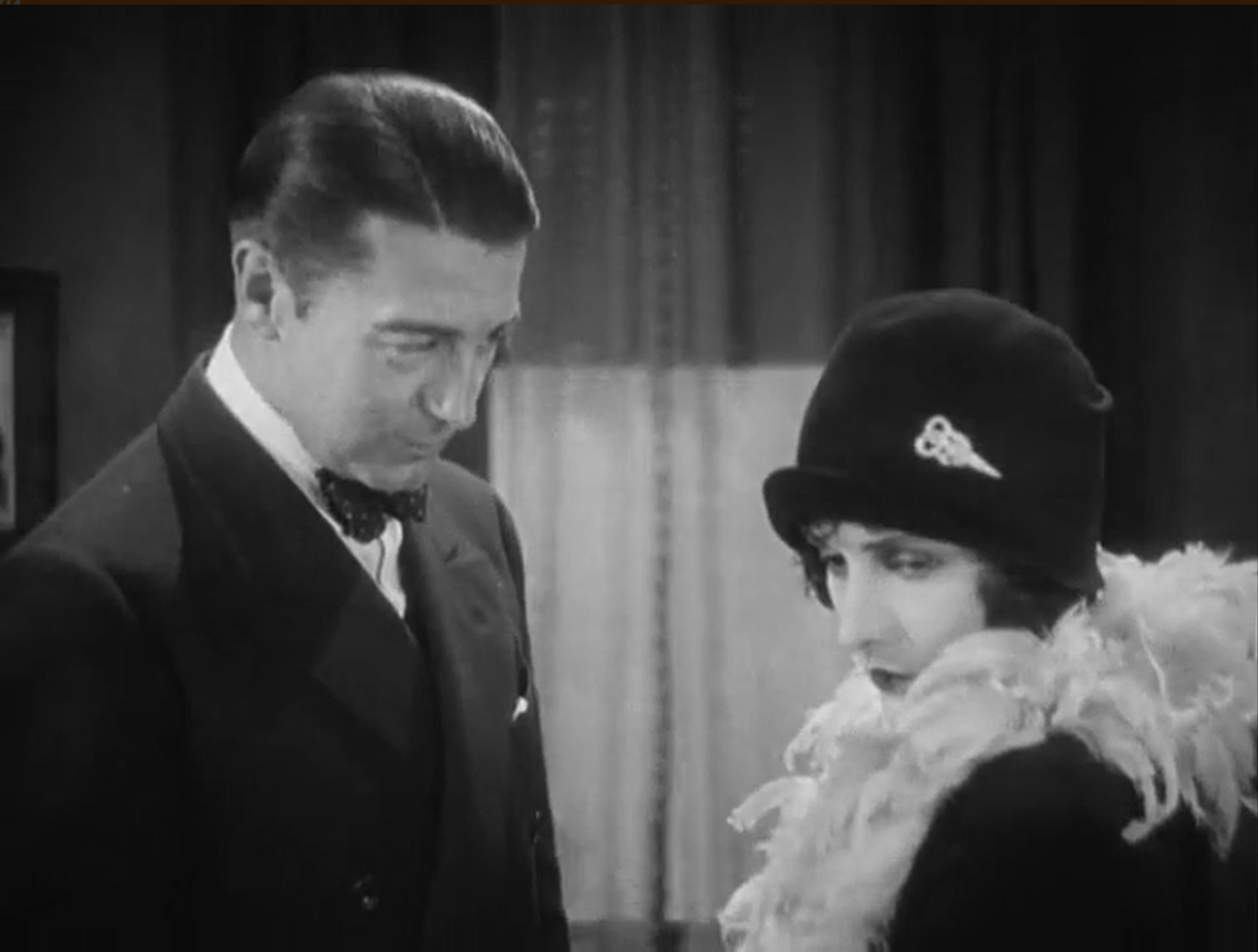
Peary lists three of Josef von Sternberg’s final silent films in his GFTFF: The Last Command (1927), The Docks of New York (1928), and this title, often cited as the thematic forerunner of several classic 1930s gangster flicks. Ben Hecht wrote the Oscar-winning screenplay, basing it upon real-life scenarios and people in Chicago’s gangland — but ultimately the film’s focus is less on the broader world of gangsters (Bancroft doesn’t seem to belong to a larger organization, for instance) than on the emotional conflicts faced by the key players. Indeed, the narrative is primarily concerned with exploring how Brook and Brent will deal with their love/lust for one another, given their sense of moral obligation to big-galoot Bancroft:

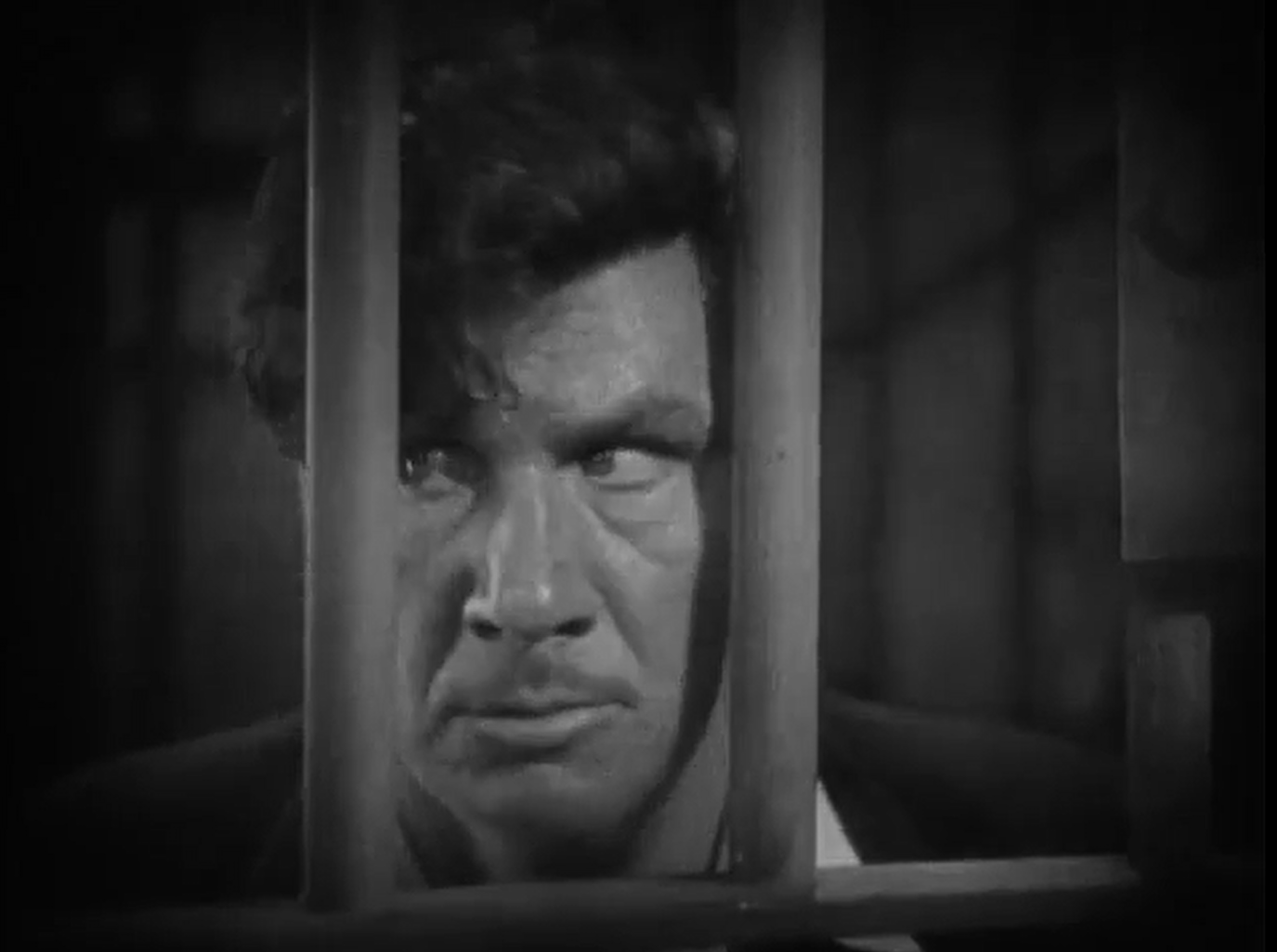
… and how Bancroft will handle their perceived disloyalty when his rivalry with Kohler turns fatal and he’s sent to jail.

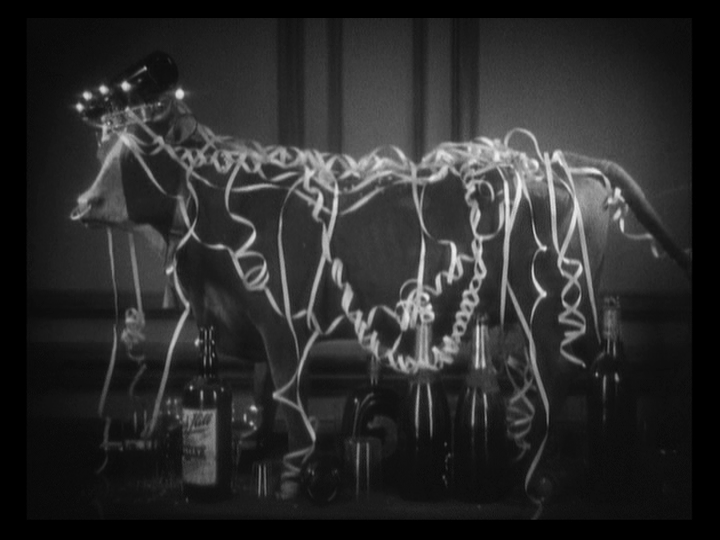
Unfortunately, none of the characters are fleshed out enough for this rather simplistic scenario to become engaging on anything other than a surface level; we’d love to know more about stoic Brook, for instance, and how he ended up on the streets, or how and why “Feathers” feels such undying loyalty for Bancroft. With that said, von Sternberg’s directorial talents are in clear view — especially during the creatively filmed mid-way party sequence. While this one can’t quite be elevated to must-see status, it’s far more accomplished than most other films of its era, making it worth a one-time look.

Redeeming Qualities and Moments:

  • The creatively filmed party sequence

Must See?
No, though it remains of interest for its clear influence on future classics of the genre.

Links:

My Brilliant Career (1979)

My Brilliant Career (1979)

“Why does it always have to come down to marriage?”

Synopsis:
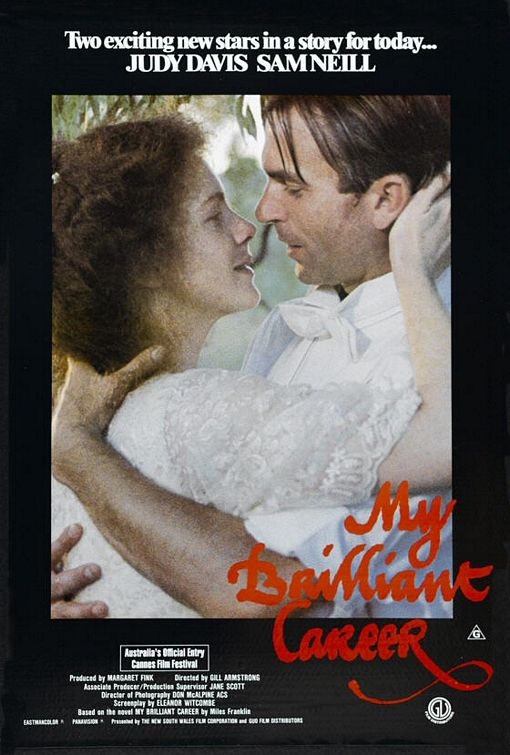
In 1890s Australia, a strong-willed young woman (Judy Davis) is determined to transcend her family’s hard-scrabble life and pursue a career in the arts — but when she becomes close friends with a handsome, wealthy acquaintance (Sam Neill), romantic tensions begin to complicate her goals.

Genres, Themes, Actors, and Directors:

  • Australian Films
  • Career-versus-Marriage<
  • Feminism and Women’s Issues
  • Historical Drama
  • Romance
  • Strong Females
  • Writers

Response to Peary’s Review:
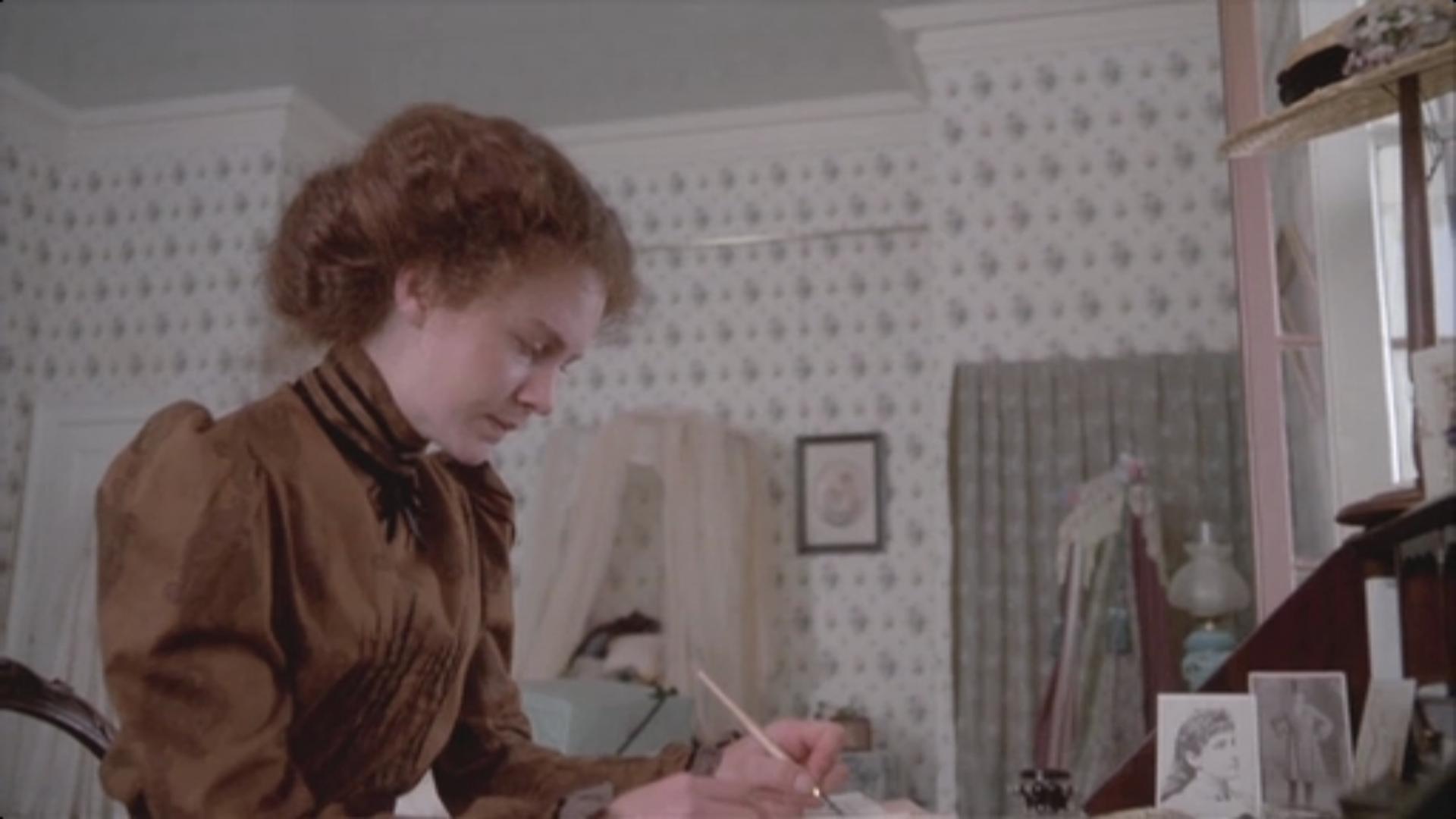
Peary writes that “Judy Davis is perfectly cast” in director Gillian Armstrong’s “popular adaptation of [an] autobiographical novel” by (Stella) Miles Franklin, about “an aspiring writer and avowed bachelorette” in early 20th century Australia who “sees how repressed married women in all classes of society [are], and realizes that in order to write, she must remain single” — which means “turning down a kind, handsome, understanding, playful man (Sam Neill), although they love each other”. Peary argues that “while praised for its feminism, [the] picture has rightly been criticized for ignoring the fact that [the central character, Sybylla Melvyn] was a lesbian”. Regardless, “what is positive is that Davis truly enjoys the company of women (and they benefit from her friendship)”; however, while these women “don’t realize their potential because they married”, they nonetheless “expect free-spirited Davis” — who “knows better” — to “follow their lead”.

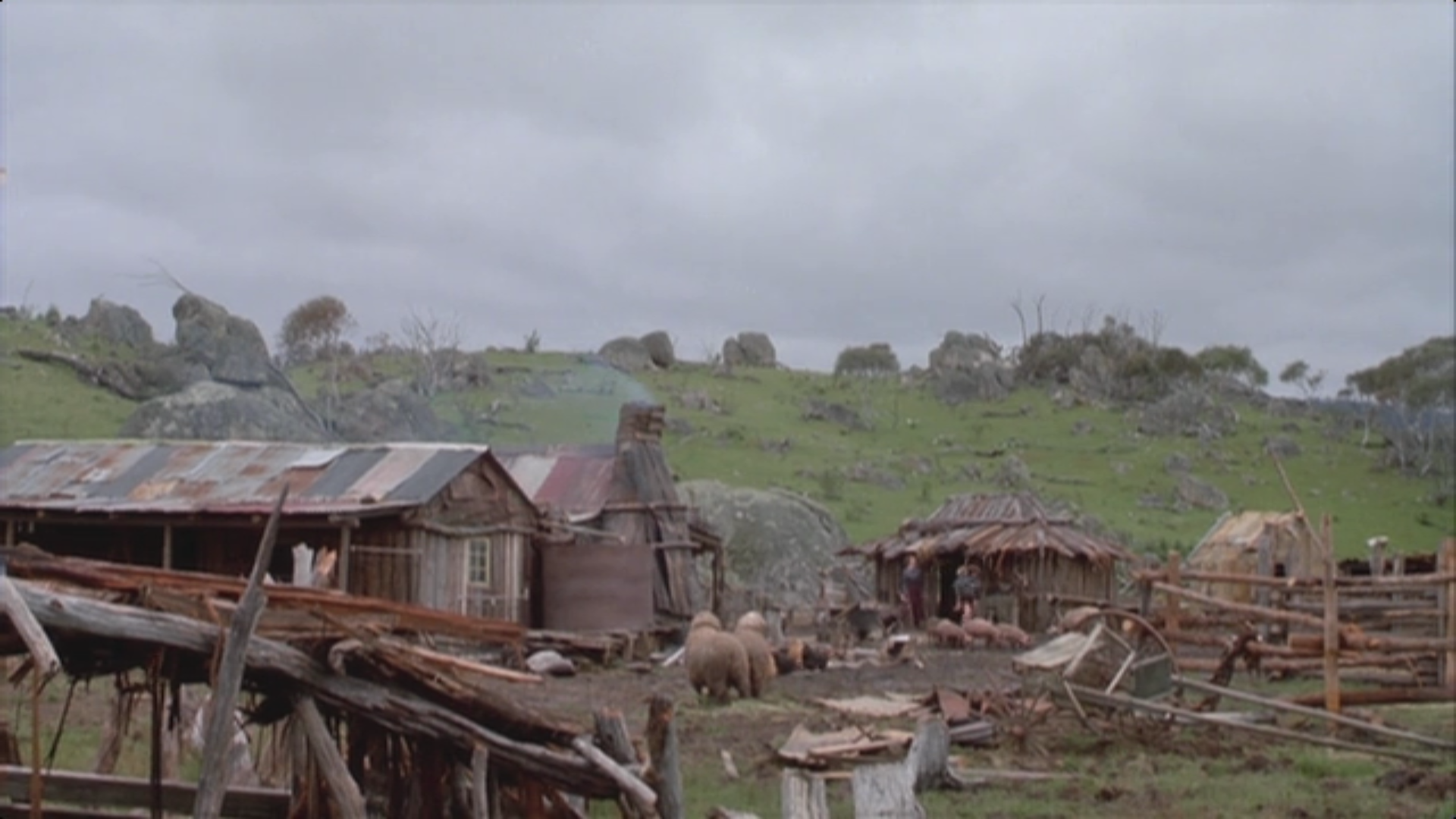
Just as we can’t help questioning Jill Clayburgh’s ultimate romantic decisions in the final scenes of An Unmarried Woman (1978) (released the previous year), it remains somewhat challenging to watch Davis respectfully rebuffing Neill’s initial marriage proposal. (He’s so wealthy! So handsome! So playful! So PERFECT for her!) Indeed, the romantic purist in us desperately wants these two kindred spirits to be united. Yet it’s to Armstrong’s and screenwriter Eleanor Whitcombe’s credit that they maintain their film’s focus on its feminist “agenda”: evoking a particular historical era (the period sets are stellar) when to be married was truly much more of a “life sentence” for women than we can conceive of today. From our modern perspective, we wish youthful Davis would be truly radical and reconsider the terms of marriage altogether, thus having her cake and eating it, too. But her decisions are made within a very specific milieu: having seen so many females around her suffering — most notably her once-beautiful mother [Julia Blake], now burdened with too much work, a good-for-nothing husband, and far too many kids; and her quietly heart-broken aunt (Wendy Hughes), whose husband abandoned her — we ultimately admire her strength of will.

Redeeming Qualities and Moments:

  • Judy Davis as Sybylla Melvyn (nominated by Peary as one of the Best Actresses of the Year in his Alternate Oscars)
  • Fine cinematography
  • Remarkably authentic period sets

Must See?
Yes, for Davis’s stand-out performance, and as a fine feature debut by a talented female director.

Categories

  • Important Director
  • Noteworthy Performance(s)

(Listed in 1001 Movies You Must See Before You Die)

Links:

Foolish Wives (1922)

Foolish Wives (1922)

“It is a dangerous place for strangers — so many hungry sharks lying in wait to get hold of one’s money.”

Synopsis:
A con-artist (Erich von Stroheim) posing as a count in Monte Carlo attempts to seduce the wealthy, neglected wife (Miss DuPont) of an American envoy (Rudolph Christians) while continuing a duplicitous affair with his jealous housemaid (Dale Fuller), and trying to bed the “half-witted” daughter (Malvina Polo) of a counterfeiter (Cesare Gravina).

Genres, Themes, Actors, and Directors:

  • Con-Artists
  • Erich von Stroheim Films
  • Mistaken Identities
  • Silent Films

Review:
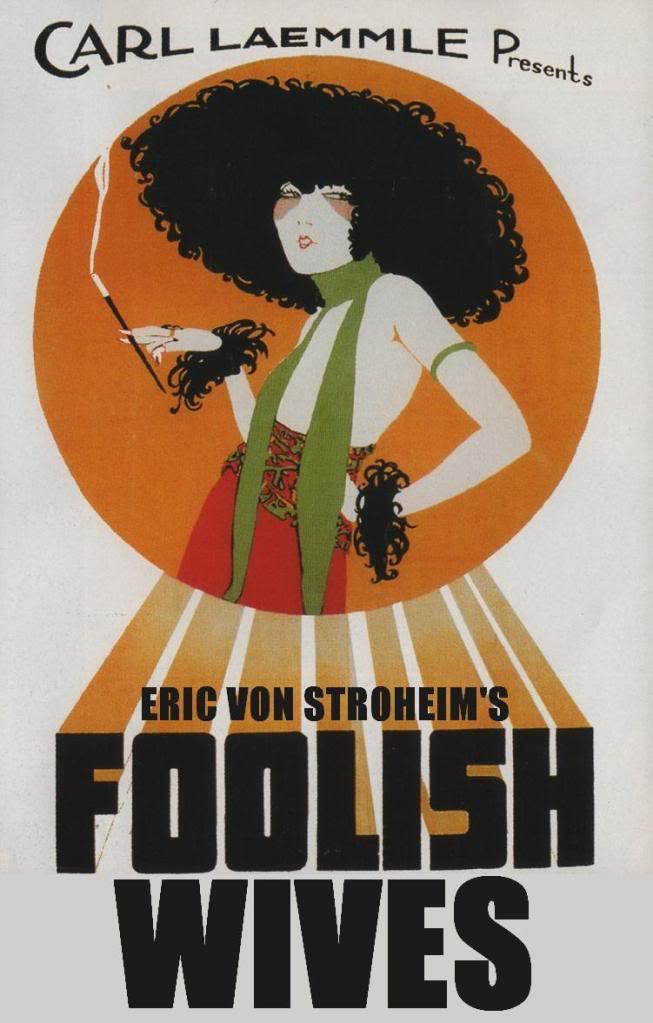
The production history of this extravagantly produced long-con flick by writer/director Erich von Stroheim — whose original budget of $250K skyrocketed to over $1 million, and whose initial cut ran for no less than 6 hours — is legendary, though it was merely the first in a series of several creatively thwarted films (followed by Greed, The Wedding March, and Queen Kelly) that led to von Stroheim’s downfall as a director. As viewed in its recently restored version (running approximately 2 1/2 hours long), it’s obvious that narrative strands are missing and/or truncated; however, most of it coheres quite well, thanks to a relatively straightforward storyline featuring an unambiguously evil central character, played with perverse glee by von Stroheim himself (known by audiences at the time as “The Man You Love to Hate”). Indeed, von Stroheim’s Count Karamzin remains one of cinema’s most dastardly protagonists — a psychopathic conman and sexual predator who lies and cheats with astonishing agility.

In the film’s most disturbing sequence, he’s interrupted just as he’s about to rape the unconscious DuPont; for an agonizingly long stretch, we watch him sitting in a chair nearby DuPont, visibly irritated as the cabin’s recently-arrived caretakers prevent him from carrying out his plan. Later in the film, a von Stroheim-favorite — the expressively distinctive Dale Fuller, playing his love-struck, deceived mistress — becomes a key player in the story, helping to move the film towards its relatively satisfying (though terribly truncated) ending. Despite its sorry-looking physical state — much of the recent restoration remains patchy-looking at best, unfortunately — Foolish Wives should be seen by all film fanatics as prime evidence of von Stroheim at his most unrepentantly reprehensible (as a character) and extravagant (as a director).

Redeeming Qualities and Moments:

  • Fine direction by von Stroheim


  • Dale Fuller as Maruschka

Must See?
Yes, as one of von Stroheim’s earliest successes — and as a prime example of the iconoclastic director at his vilest (character-wise, that is). Listed as a Personal Recommendation in the back of Peary’s book.

Categories

  • Historically Relevant
  • Important Director

(Listed in 1001 Movies You Must See Before You Die)

Links:

Man You Loved to Hate, The (1979)

Man You Loved to Hate, The (1979)

[Note: The following review is of a non-Peary title; click here to read more.]

“Never before had a studio so ruthlessly exercised its power over a major director.”

Synopsis:
Austrian emigre Erich von Stroheim becomes one of silent-era Hollywood’s most talented directors, but perfectionism and extravagance bring a halt to his promising career.

Genres, Themes, Actors, and Directors:

  • Documentary
  • Movie Directors
  • Rise and Fall

Review:
Years before cable network channels such as AMC and TCM began airing biographies of famous directors and movie stars, Patrick Montgomery helmed this revealing documentary about the troubled life of Austrian emigre Erich von Stroheim, whose notorious extravagance, perfectionism, and rigidity quickly led to the demise of his directorial career. It’s both surprising and impressive to learn that von Stroheim — born simply Erich Oswald Stroheim, the son of a Jewish hatmaker — was an entirely self-made man, someone who gambled on his own talents and won (for at least a brief while). The fact that nearly all of his full-length films were butchered by studio heads and/or producers speaks to his inability to conform to the studio system, or to tailor his vision in light of pragmatic concerns; we learn, for instance, that he insisted on utilizing real caviar in an opening breakfast scene from Foolish Wives (1922), claiming that he (the character eating the caviar) would know the difference (!).

Unfortunately, while the film does an admirable job demonstrating why and how von Stroheim’s career took such a rapid nosedive, certain elements of his personal life remain frustratingly opaque. For instance, we’re told that he had a lover during many of his later years, yet he remained married until his death, and this wife — who’s interviewed for the film — doesn’t seem particularly upset; in addition, we can’t help wishing interview clips with von Stroheim himself were included (are there any? there must be). Regardless, this engaging documentary remains must-see viewing for all film fanatics, and it’s a puzzling omission from Peary’s GFTFF. Fortunately, it’s easily available for viewing these days on a Kino DVD release of Foolish Wives, as a full-length second feature.

Note: The film’s title refers to the nickname von Stroheim earned during his early years as a character actor, playing a villain — a trend he continued even as he gave himself starring roles in his own films (viz. his vile Count Karamzin in Foolish Wives, to name the most obvious example).

Redeeming Qualities and Moments:

  • A revealing look at one of Hollywood’s most notorious directors

Must See?
Yes, as an informative overview of von Stroheim’s troubled but patchily brilliant career.

Categories

  • Important Director

Links:

Passion de Jeanne D’Arc, Le/Passion of Joan of Arc, The (1928)

Passion de Jeanne D’Arc, Le/Passion of Joan of Arc, The (1928)

“Listen, Joan — we know that your visions come not from God but from Satan!”

Synopsis:
Joan of Arc (Maria Falconetti) faces intense interrogation before being sentenced to burn at the stake.

Genres, Themes, Actors, and Directors:

  • Carl Theodore Dreyer Films
  • Christianity
  • Courtroom Drama
  • Falsely Accused
  • Religious Faith
  • Silent Films

Response to Peary’s Review:
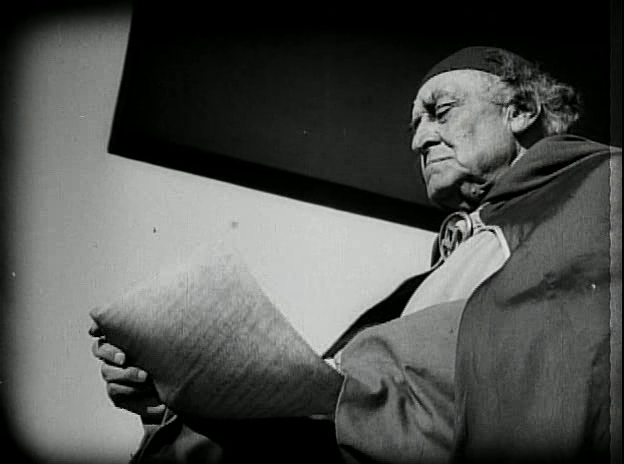
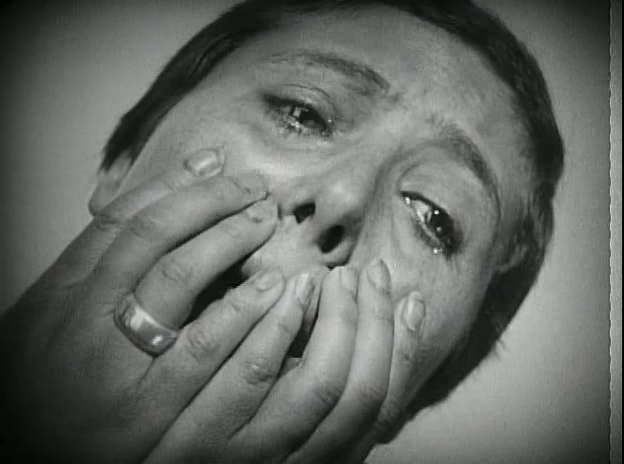
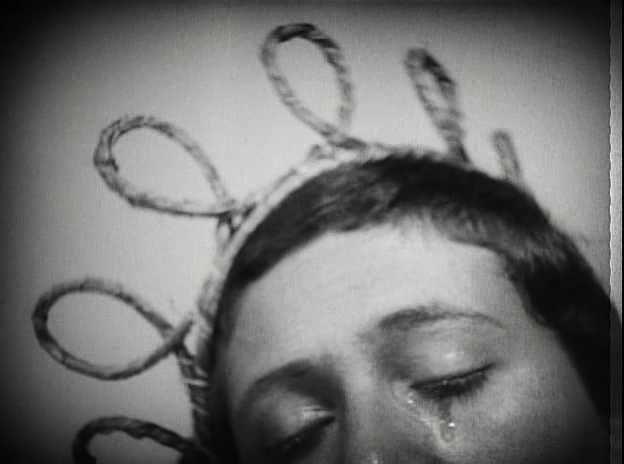
Peary refers to this iconic silent classic — written and directed by Carl Theodore Dreyer, who based his story “on Pierre Champion’s transcript of the actual trial of Jeanne d’Arc” — as “one of the greatest, most intense films ever made”. He writes that Dreyer “creates a sense of feverishness and horror at the trial through repeated camera pans across the line of intimidating inquisitors, eerie zooms into their ugly faces as they menacingly move forward toward Jeanne, and sharp camera angles which make the inquisitors especially domineering”. But he notes that “we are constantly surprised to feel waves of tranquility come over us each time Jeanne looks to the heavens and, judging from her smile and the calm look in her eyes, is obviously in a state of grace”, with “only the tears on her cheeks remind[ing] us of the terrible things that have happened and will continue to happen to her during the course of this farcical trial”. He points out that “the actors got so much into their roles that bystanders heard them condemning Jeanne d’Arc off screen as well as on”, and that “it’s probable Falconetti” (who was discovered “doing boulevard comedy”) “really got to feel she was Jeanne, so strongly and believably does she convey the young martyr’s feelings”.

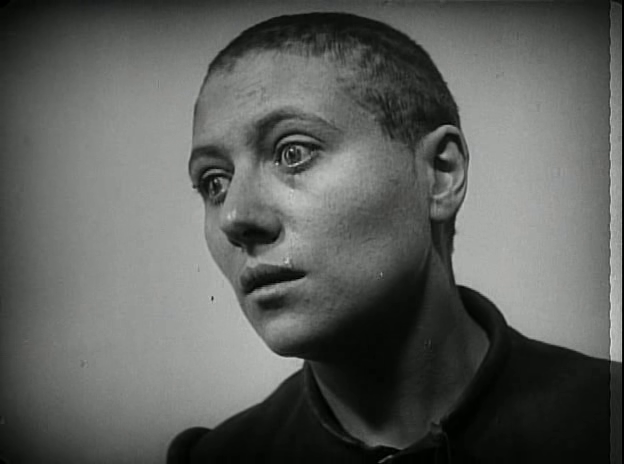
I agree with the essence of Peary’s review: there’s no denying the audacious visual power of Dreyer’s work, which stands apart from its same-era peers as a daringly minimalist cinematic presentation of this much-studied historical event. And Falconetti’s performance — shown almost entirely in extreme close-ups — is indeed marvelous; the fact that she was an unknown actress merely adds to the veracity of the tale. Yet I disagree with Peary’s claim that this is “one of the greatest, most intense films ever made”, simply given its narrative limitations. As a silent film, it remains a masterful tone poem — a gorgeously evoked elegy to a tragic young martyr, allowing one to palpably feel the “feverishness and horror” of this infamous trial and its gruesome outcome. But given that it covers such a limited portion of Jeanne D’Arc’s storied existence, it ultimately lacks narrative depth, and begins to feel repetitive. The first few times Dreyer’s camera masterfully pans across the leering faces of Jeanne’s inquisitors, one shivers at how perfectly Dreyer has captured the essence of their menace; the fourth time, one begins to question exactly where else the material can go.

With that caveat stated, I’ll reiterate that Le Passion de Jeanne D’Arc nonetheless remain essential viewing for all film fanatics, at least once — and it’s thankfully now available in a gorgeously restored version, with a lovely soundtrack by composer Richard Einhorn (sung by the Anonymous Four).

Redeeming Qualities and Moments:

  • Maria Falconetti as Joan
  • Stunning direction and cinematography


Must See?
Yes, of course, as a genuine silent classic.

Categories

  • Genuine Classic

(Listed in 1001 Movies You Must See Before You Die)

Links:

Dead Men Don’t Wear Plaid (1982)

Dead Men Don’t Wear Plaid (1982)

“My plan was to kiss her with every lip on my face.”

Synopsis:
A private detective (Steve Martin) interacts with a host of iconic Hollywood characters while helping a sexy female client (Rachel Ward) investigate the mysterious disappearance of her father.

Genres, Themes, Actors, and Directors:

  • Carl Reiner Films
  • Detectives and Private Eyes
  • Satires and Spoofs
  • Steve Martin Films

Response to Peary’s Review:
Peary argues that this “ridiculous noir parody” — about a “forties detective” who “says a lot of… stupid things, shaves his tongue, strangles anybody who says ‘cleaning lady’, makes java with about 1000 beans per cup, and dresses like a lot of women” — is, when “taken a scene at a time”, “quite amusing (and often hilarious) and genuinely clever”; but he posits that “without breaks… the novel concept becomes tiresome.” Time Out’s reviewer similarly argues that while “some amusement is derived from watching a film that so obviously had to be worked out backwards”, it occasionally feels like merely a “fairly amusing, clever exercise in editing”. However, I believe the film deserves a bit more credit than this. Given that it was made at a time when splicing “vintage footage from forties melodramas” with “newly shot black-and-white footage” was a purely mechanical (rather than digital) feat, one can’t help marveling at how masterfully this is done, with nearly every scene carefully plotted and blocked; film fanatics will be in trivia heaven as they attempt to determine which classic movie each clip is taken from, and how director Carl Reiner will manage to integrate pre-existing dialogue into the new (connective) storyline.

Meanwhile, Edith Head (in her final cinematic credit) does marvelous work crafting and matching outfits across films, and Miklos Rozsa was an inspired choice to write the appropriately atmospheric score. My main complaint is that the humor occasionally feels a bit forced and/or juvenile. For instance, the cited scene involving Martin’s inept attempt to make coffee goes on for about three times too long, and Martin’s obsession with “readjusting” Ward’s breasts simply makes one sigh. But for every groaner, there’s a clever line or interaction up ahead — and both Martin and Ward (“surprisingly funny and a good sport as Martin’s comic foil”) remain appropriately invested in their roles, never letting on that they’re actually in a parody. This one is definitely worth a look by all film fanatics.

Redeeming Qualities and Moments:

  • Remarkably seamless screenwriting and editing

  • Michael Chapman’s b&w cinematography
  • Edith Head’s impressive “costume-matching” work
  • Miklos Rozsa’s classically “generic” score

Must See?
Yes, for its obvious film fanatic appeal.

Categories

  • Cult Movie

Links: