Broken Blossoms (The Yellow Man and the White Girl) (1919)

Broken Blossoms (The Yellow Man and the White Girl) (1919)

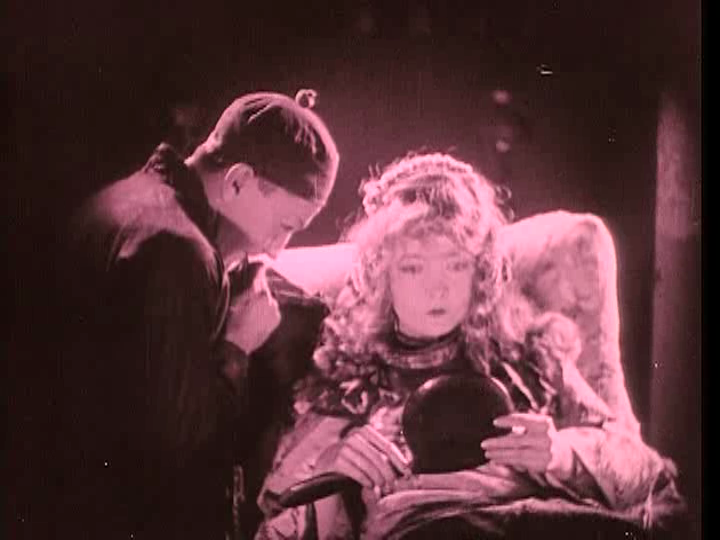
“The Yellow Man watched Lucy often. The beauty which all Limehouse missed smote him to his heart.”

Synopsis:
A teenage waif (Lillian Gish) abused by her adoptive father (Donald Crisp) finds refuge in the home of a kind Chinese shopkeeper (Richard Barthelmess).

Genres, Themes, Actors, and Directors:

  • Asian-Americans
  • Child Abuse
  • Cross-Cultural Romance
  • Donald Crisp Films
  • D.W. Griffith Films
  • Lillian Gish Films
  • Racism and Race Relations
  • Silent Films

Response to Peary’s Review:
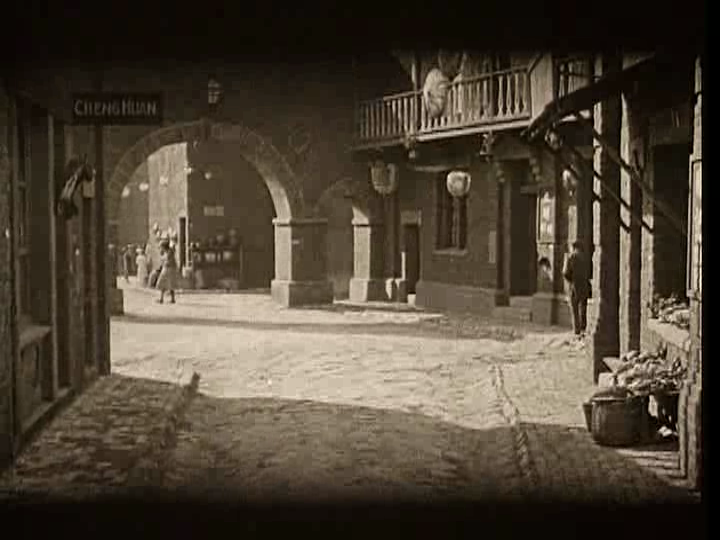
Peary refers to this “D.W. Griffith classic” — an unflinching early look at child abuse and racial prejudice — as “perhaps the cinema’s first outright tragedy”, yet points out that the use of various tints and the strategic employment of a “special soft-focus lens” gives the film “an almost poetic feel that tempers the harshness of the story”. He notes that the “overly sentimental” storyline (based on a short story by Thomas Burke) “surely appealed to Griffith because it again let him lash out at the evil city, again deal with miscegenation and suicide, and again — and this is the disturbing element — sacrifice an innocent girl to our cruel, immoral world.” Indeed, the three central characters are so elemental in their attributes — “snarling Crisp”, “stoical Barthelmess”, and timid Gish — that the wafer-thin story (not really suitable for a feature length film) comes across as more of a fable or a fairy tale than any kind of realistic narrative. This is especially true given that the age and developmental maturity of Gish’s character (Lucy) is left so vague: the 26-year-old Gish* could literally be either 10 or 15 or 20; she’s so petite and huddled over from fear at all times that we can’t really tell — and when Barthelmess hands her a doll to play with (!), we get seriously confused. (In the original short story, the character was 12 — which I suppose lends some credence to this scene.)

The film’s terribly antiquated, casually racist subtitle will likely turn many modern film fanatics off; but once they make tentative peace with both this and the (then standard) casting of white men in both central Asian roles, they’ll likely be pleasantly surprised to find that Griffith — the infamous director of America’s most egregiously racist classic film, Birth of a Nation (1915) — seems to at least be trying to portray the film’s Chinese-American protagonist (Cheng) in a reasonably respectful light. Indeed, it’s gratifying to know that Griffith “considered the main theme of his film to be that Americans wrongly consider themselves superior to foreigners, including the Chinese, who have a noble, peace-loving philosophy”. Cheng is shown at the beginning of the film to be a noble-minded Buddhist missionary hoping to convert European heathens to more peaceful ways — and thus his quick descent into opium addiction after arriving on the sordid shores of London is given a bit of context and justification, rather than simply perpetuating the trope of drug-addled Asians. (Actually, as I think about it, this piece of the narrative could easily have been expanded upon: I’d love to have seen more of Cheng’s travails upon arrival in London.)

At any rate, Cheng’s poetically romantic yearnings towards Lucy could be (and are) explained away as merely a platonic desire to love and assist that which is most pure and good in the world — though, again, it would have been much more fulfilling to see this most unusual cinematic couple actually moving towards something “real” together. This would have required a more substantial storyline in general, but at least would have given a shred of credence to the fantastical poster (shown above). In terms of the lead performances, Peary accurately argues that “Crisp overacts”, “Barthelmess under-acts (as if he believed one change of expression would let us know that he isn’t really Oriental after all)” — but Gish “acts up an exciting storm”. He notes that “from her timid talking, stooped, crooked posture, and terrified eyes, Gish immediately gets us to understand that her beatings are a daily thing for her”, and she is “totally convincing” in the role. Her character’s ability to “smile only if she lifts the sides of her mouth her fingers” was apparently thought up by Gish herself, and remains one of the film’s most indelible (recurring) images.

* TCM’s article lists Gish as 23-years-old when the film was made, but this doesn’t make mathematical sense, given that IMDb cites 1893 as her birth year.

Redeeming Qualities and Moments:

  • Lillian Gish as Lucy, “the waif”
  • A (relatively) bold exploration of both child abuse and cross-cultural companionship
  • Billy Bitzer’s cinematography

Must See?
Yes; despite being “a bit disappointing”, it’s nonetheless considered a silent classic, and “is essential to any study of Griffith”. Selected to the National Film Registry, Library of Congress, in 1996. Available for free viewing at www.archive.org.

Categories

  • Genuine Classic
  • Historically Relevant
  • Important Director

(Listed in 1001 Movies You Must See Before You Die)

Links:

Animal Farm (1954)

Animal Farm (1954)

“No animal shall kill another animal. All animals are equal.”

Synopsis:
A group of farm animals rebel against their cruel owner and take over the farm themselves. But soon two head pigs (Napoleon and Snowball) are vying for leadership, and the animals find themselves back in dire straits.

Genres, Themes, Actors, and Directors:

  • Animated Features
  • Revolutionaries
  • Rivalry
  • Talking Animals

Review:
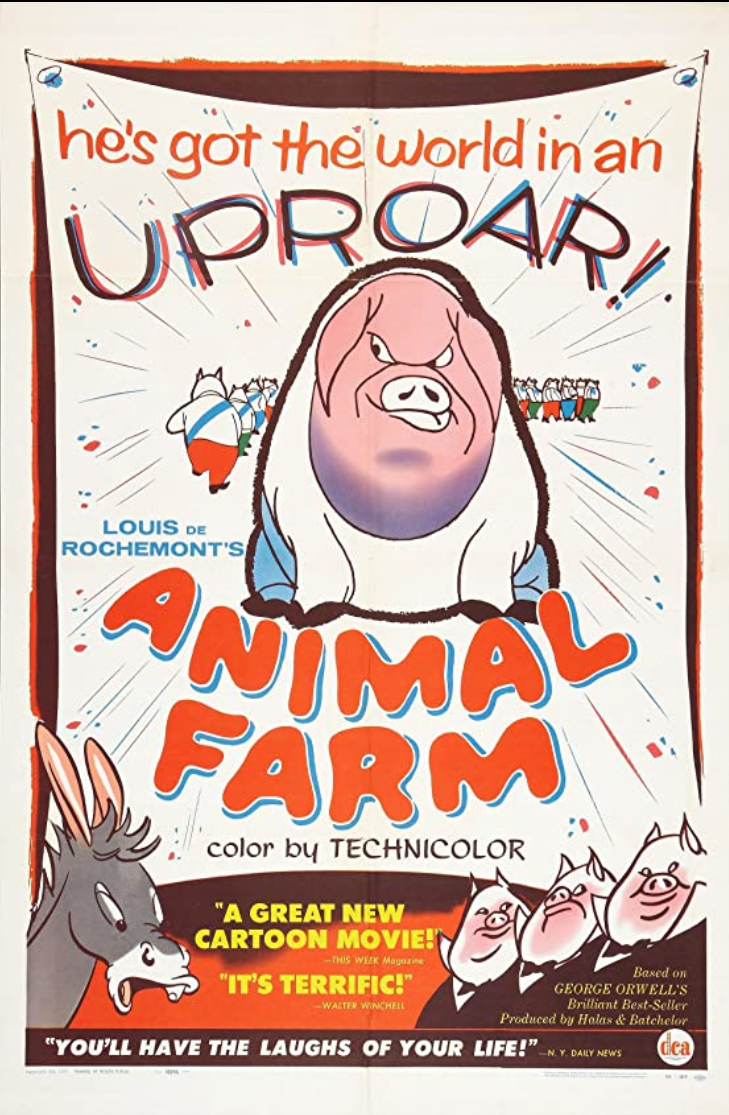
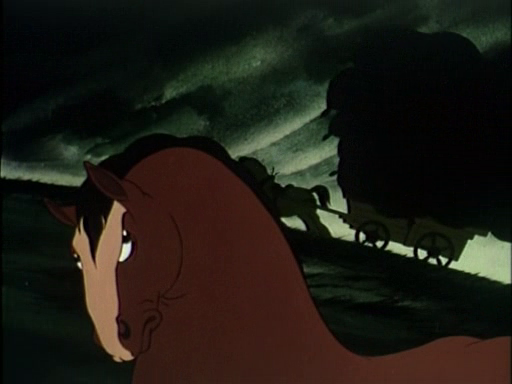
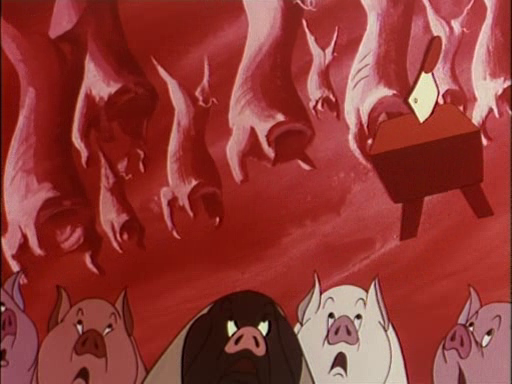
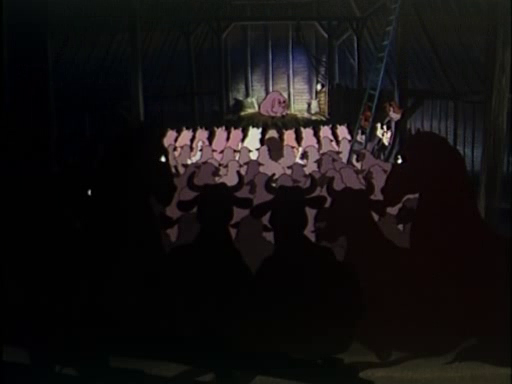
Most definitely NOT for little ones, this animated version of George Orwell’s classic anti-Communist allegory has been criticized as merely a serviceable adaptation of the novel (minus its downbeat ending), and viewed as most suitable for teens required to read the book in school. While there’s some truth to this (the translation is quite literal, and will likely be of most interest to those who’ve read the novel), this assessment isn’t quite fair, given that the high-quality animation throughout is consistently impressive, and the animators effectively utilize the medium to tell a tale it would undoubtedly be challenging to relate in any other format. (I haven’t seen the 1999 live version, so I can’t comment on this, but I’ve heard it’s even more disappointing.) Ultimately, as other critics have pointed out, the use of animation to tell this “fairy tale” (the novel’s subtitle) is actually appropriate — as long as viewers are prepared for a truly dark and disturbing narrative journey.

Redeeming Qualities and Moments:

  • Creative animation

  • An appropriately dark adaptation of Orwell’s classic

Must See?
Yes, simply for its historical relevance as the first British feature animated (entertainment) film. Listed as a Personal Recommendation in the back of Peary’s book.

Categories

(Listed in 1001 Movies You Must See Before You Die)

Links:

Million Dollar Legs (1932)

Million Dollar Legs (1932)

“What the country needs is money, and it’s up to you to get it for me!”

Synopsis:
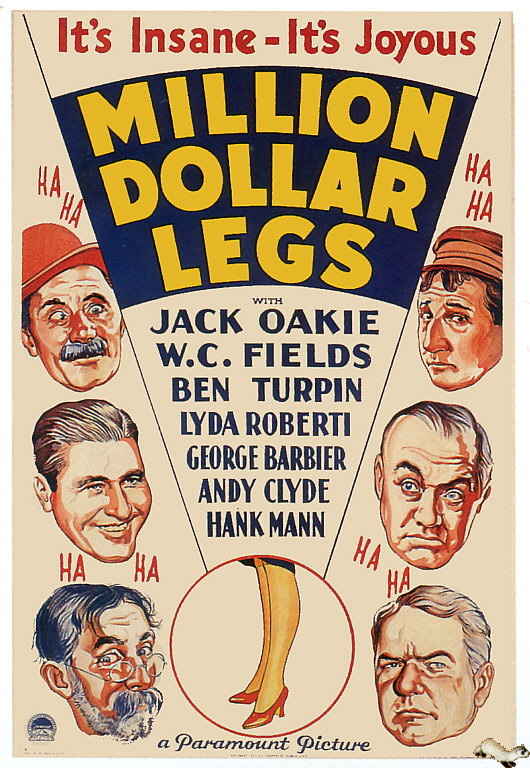
The president (W.C. Fields) of Klopstokia tasks the suitor (Jackie Oakie) of his daughter (Anne Fleming) with raising money for his bankrupt country. When Oakie realizes how athletic all of Klopstokia’s citizens are, he decides to enter them in the 1932 Olympics — but Fields’ detractors are anxious to ruin him, and enlist the help of seductress Mata Machree (Lydi Roberti) in distracting the athletes.

Genres, Themes, Actors, and Directors:

  • Comedy
  • Joseph L. Mankiewicz Films
  • Olympics
  • Ruthless Leaders
  • W.C. Fields Films

Review:
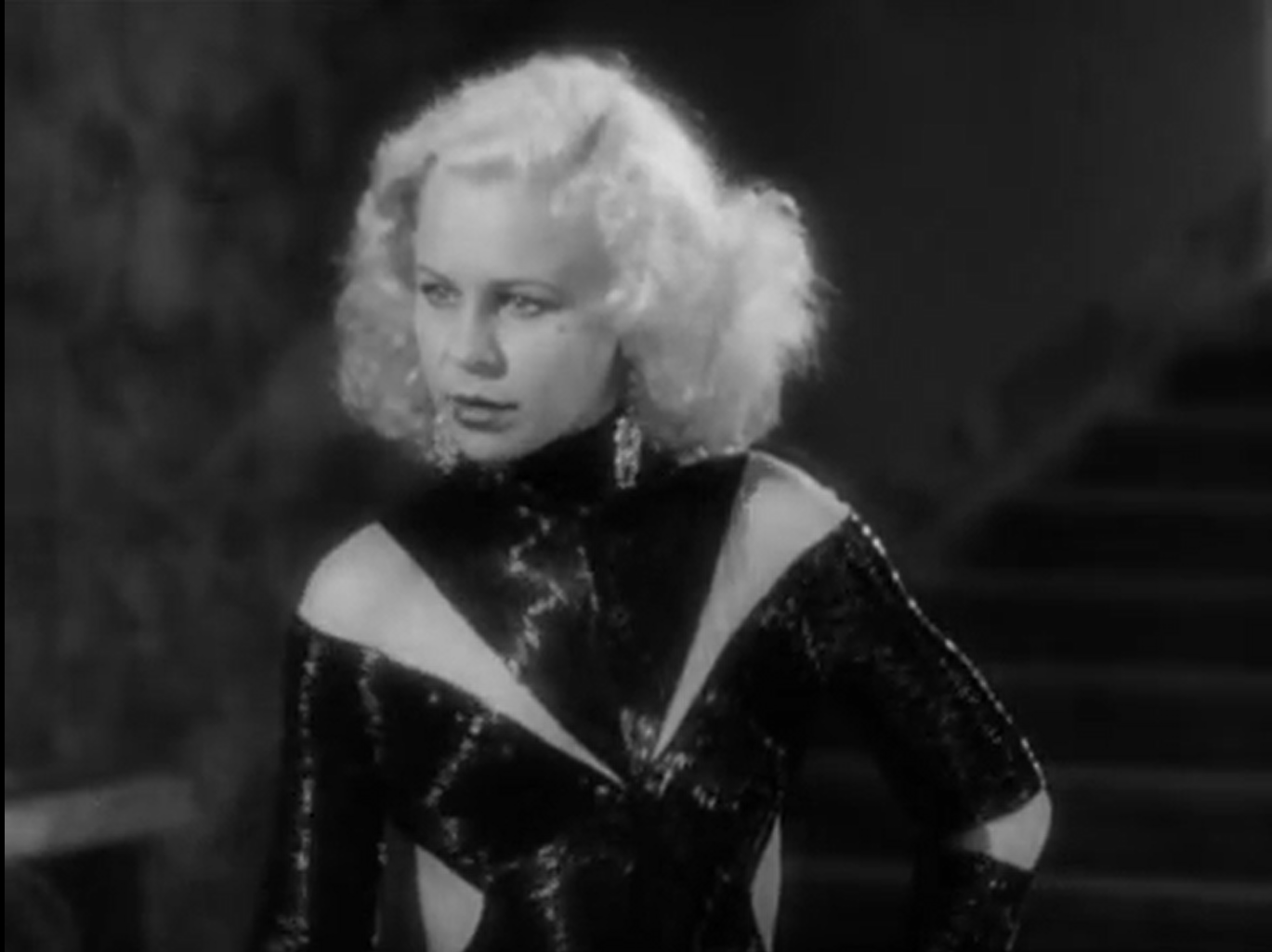
Film fanatics might be forgiven for assuming that the film in GFTFF called Million Dollar Legs would either be about Betty Grable (nope, that’s the 1939 film of the same title) or Esther Williams (nope, that’s the 1952 film Million Dollar Mermaid, which isn’t included in Peary’s book — speaking of which, NONE of Williams’ films are listed in GFTFF, which seems like an oversight…). At any rate, this early W.C. Fields feature (his first for Paramount Studios) is a surprisingly zany outing, similar in many ways to the following year’s Duck Soup (1933), and also to Fields’ final starring-role film, Never Give a Sucker an Even Break (1941) (complete with goat milk jokes and a fictional European-esque destination). In his article for The New Yorker, David Denby refers to Million Dollar Legs as “about as close as Hollywood… ever came to the spirit of Dada”, and this is an accurate description. While it’s not entirely successful, there are enough wacky surprises, off-the-wall interactions, and random elements (all the girls in Klopstokia are named Angela, and all the boys are named George; when asked why, Fleming simply replies, “Why not?”) to keep viewers at the very least interested in what happens next. Watch for a weird performance by blonde bombshell Lyda Roberti (who died at the age of 31 from a heart attack), in her best known role.

Note: The film’s title most likely refers to the insanely fast running speed of Klopstokia’s Major Domo (Andy Clyde), but is still rather a strange choice.

Redeeming Qualities and Moments:

  • An enjoyably zany screenplay (by Joseph Mankiewicz and others)

Must See?
No, but it’s strongly recommended. Listed as a Cult Movie and a Personal Recommendation in the back of Peary’s book.

Links:

Never Give a Sucker an Even Break (1941)

Never Give a Sucker an Even Break (1941)

“He didn’t get that nose from playing ping-pong.”

Synopsis:
W.C. Fields (as himself) tries to convince movie producer Franklin Pangborn (as himself) to make a surreal movie starring Fields and his singing niece, Gloria Jean.

Genres, Themes, Actors, and Directors:

  • Comedy
  • Hollywood
  • W.C. Fields Films

Response to Peary’s Review:
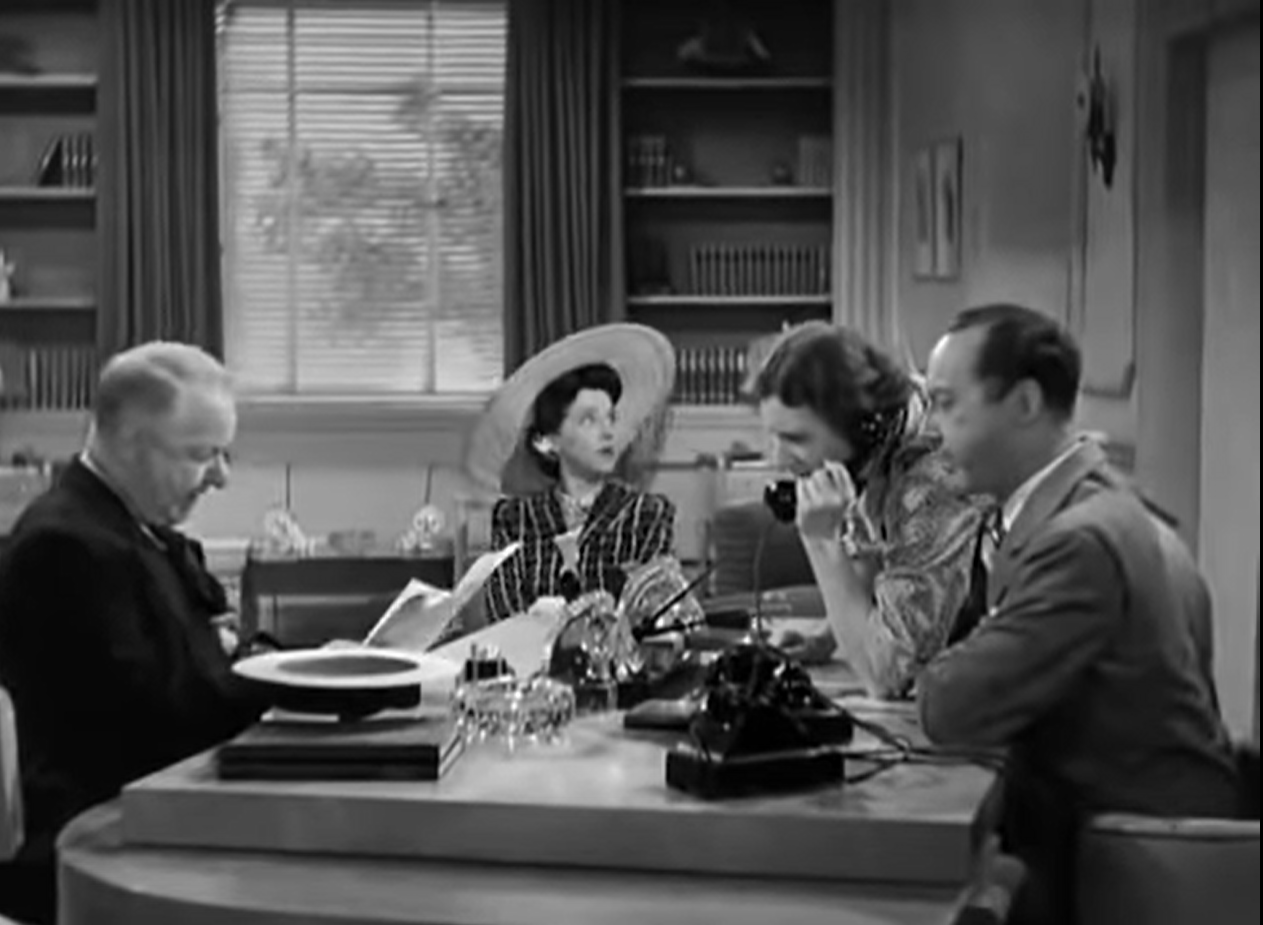
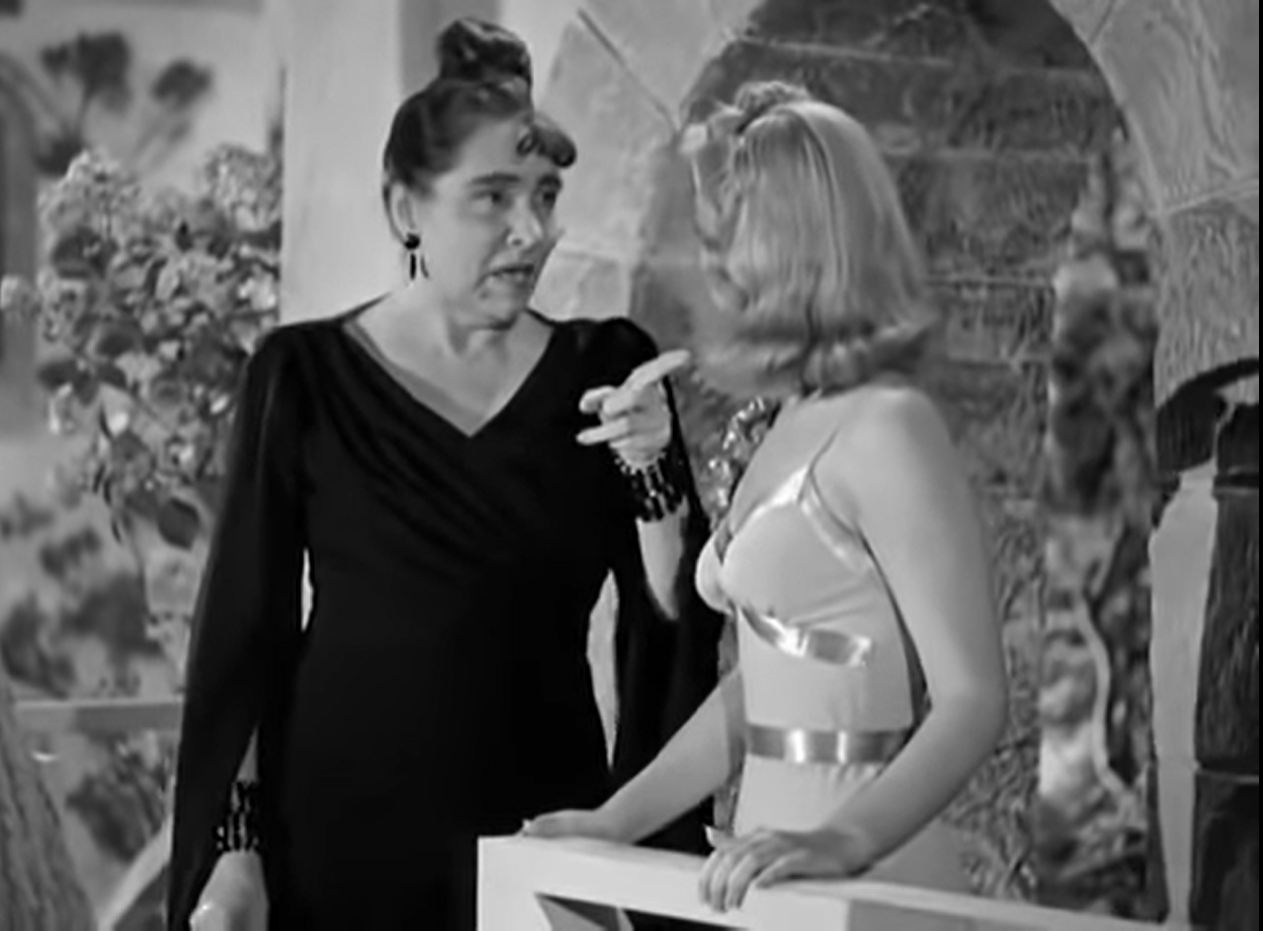
Peary argues that this “last starring role” for W.C. Fields isn’t “top-grade Fields because he isn’t on-screen enough…, he isn’t bombastic or aggravating enough, and he isn’t being constantly harassed by the nincompoops that usually populate his films” — but I have to say I disagree. While Fields might not be on-screen continuously, his presence as screenwriter (writing under the typically creative pseudonym of Otis Criblecoblis) is fully felt throughout, to joyfully surreal effect. Indeed, Peary does acknowledge that this is “the film where the surrealistic nature of Fields’s comedy is most evident”, given that the film-within-the-film (pitched by Fields to an exasperated Franklin Pangborn; what brilliant casting!:

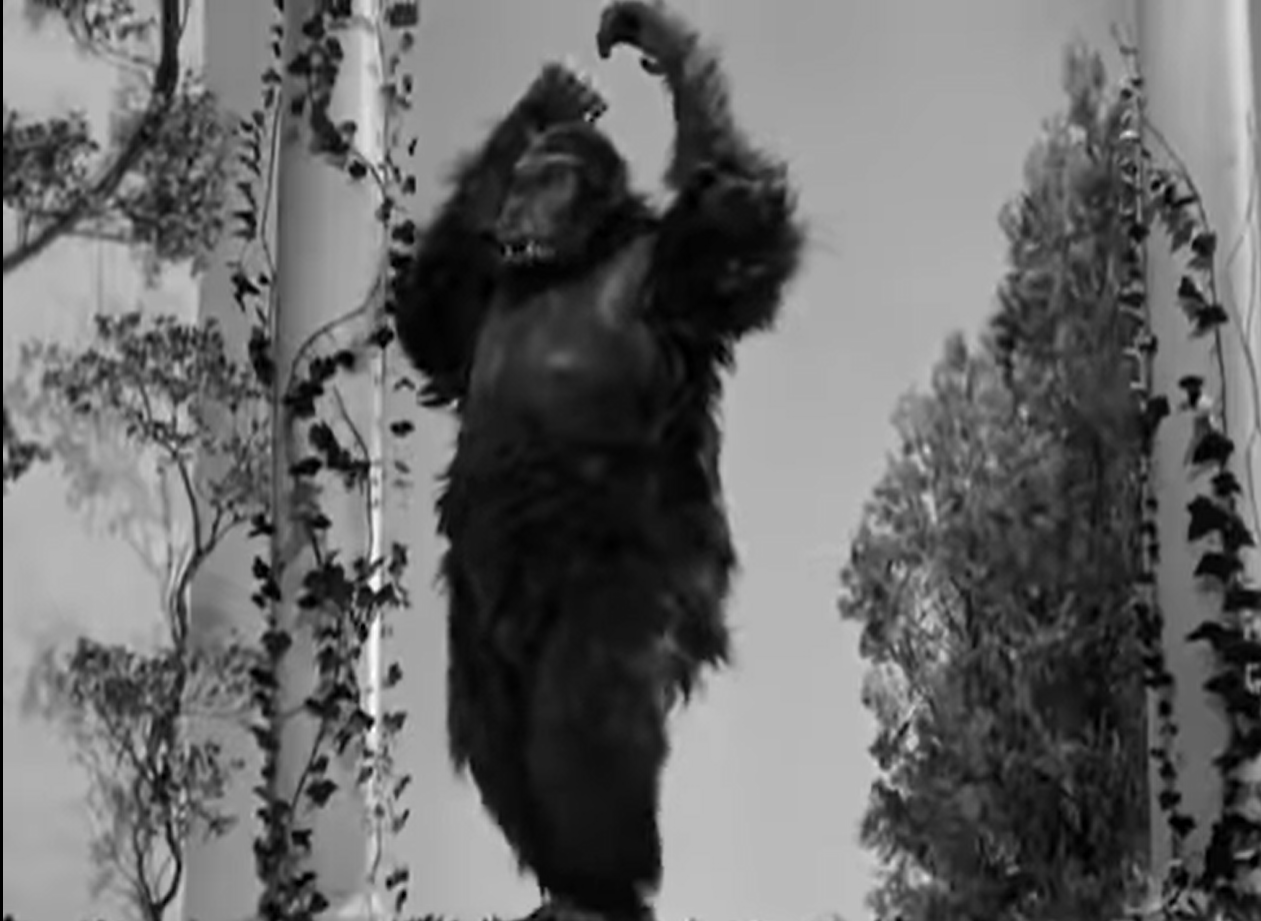
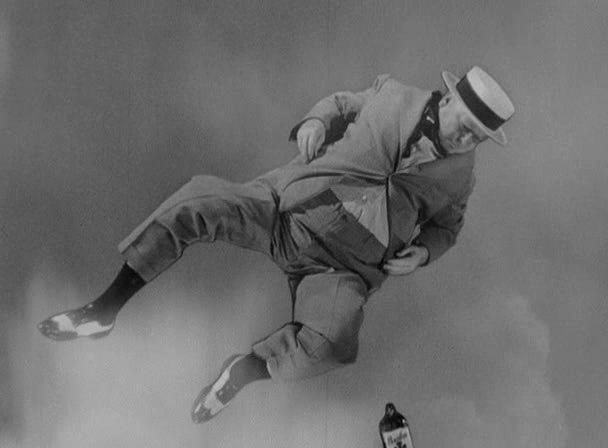
transpires in a fantastical alter-universe: Fields is traveling with his niece, Gloria Jean, on an airplane, when suddenly he “leaps… to retrieve his whiskey bottle and falls thousands of feet before landing safely on Margaret Dumont’s mountaintop estate, where she lives with her pretty young daughter:

… a gorilla:

… and [a] Great Dane with fangs”:

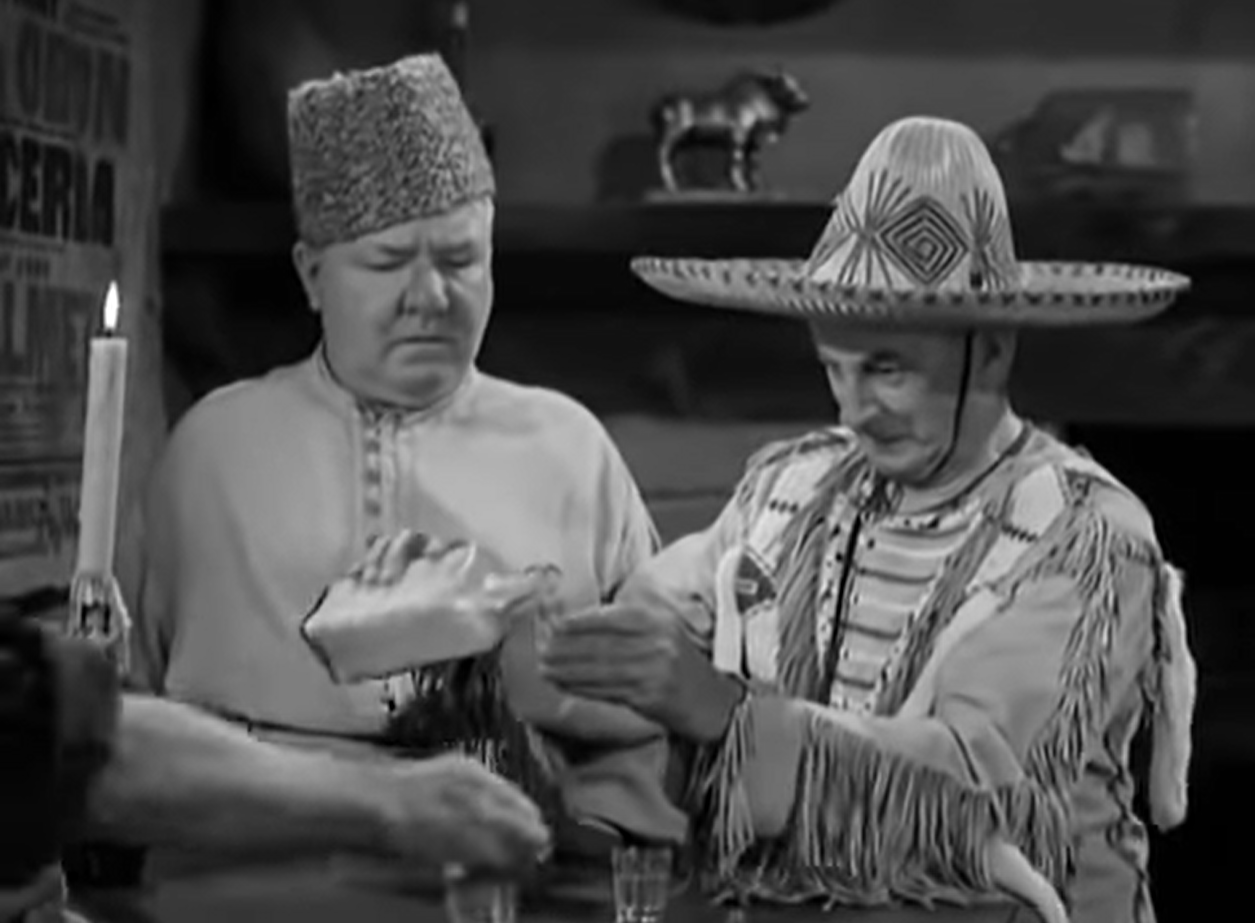
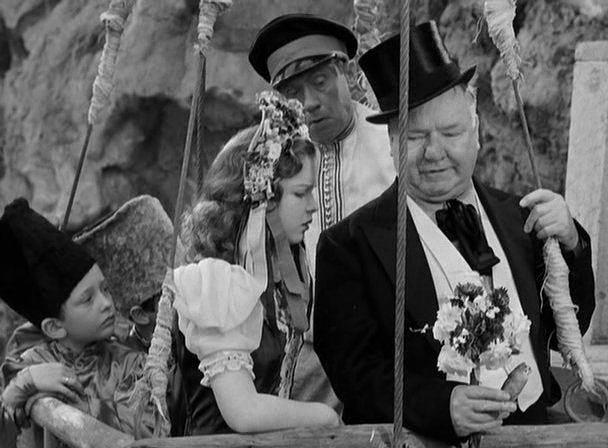
… and later arrives at a Russian village in Mexico (!).

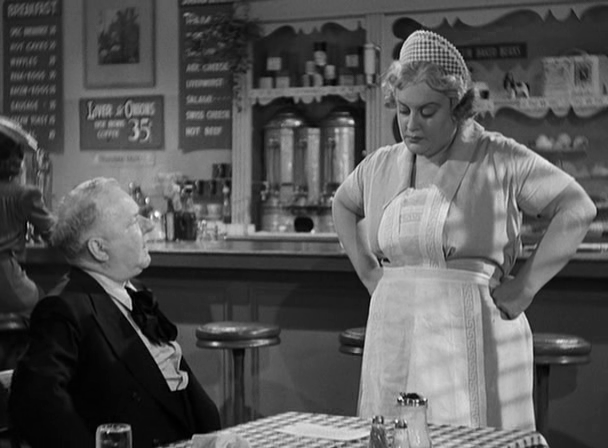
Truly, the preposterous scenario proposed by Fields — which Pangborn, naturally, rejects as “impossible, incomprehensible, inconceivable; and besides that, it’s no good” — seems to be the loopy product of both Fields’s accumulated years of experience on wackily hybrid studio sets (viz. the film’s opening sequences), and his constant inebriation, which is referenced continually throughout both the meta-narrative and the fantasy film. In one classic scene, for instance, Fields enters “an ice-cream parlor, where, before blowing the head off his ice-cream soda, he turns to us to reveal that censors wouldn’t let him stage the scene in a saloon”. Within the fantasy film, numerous laughs are milked (sorry) when Fields shares a stiff drink of goat’s milk (!) with an engineer (Emmett Vogan):

Fields would find intoxicating substances under a rock if necessary, it seems.

At any rate, your enjoyment of this film will ultimately depend upon how much you’re willing to forgo straightforward narrative in favor of something much more — dare I say, post-modern? Rewatching it again last night, after viewing and posting on numerous “pure” Fields films, I find myself enjoying it perhaps most of all, simply for its perversely illogical and “messy” status. Knowing in hindsight that this was to be Fields’s final starring role, it could be viewed as an especially apt “sayonara” — i.e., Fields’s attempt to throw everything plus the kitchen sink into his grand finale. At the same time, as Dave Kehr notes, the film “has an appealingly inward, mournful quality, as if it were a swan song that only its singer could hear. Unconcerned with reaching the audience, Fields seems to be muttering to himself through much of the movie, his barely audible remarks often achieving a strange poetry: ‘The chickens lay eggs in Kansas. The chickens have pretty legs in Kansas.'”

Note: My single favorite moment (over in an instant): Franklin Pangborn, agitatedly trying to help Gloria Jean rehearse, is momentarily caught up in a male chorus line dancing through the studio.

Redeeming Qualities and Moments:

  • W.C. Fields as himself
  • Franklin Pangborn as himself
  • Fields’s early interactions with a surly waitress (Jody Gilbert)
  • Fields’ enjoyably surreal screenplay
  • Plenty of characteristically zingy one-liners:

    “She drove me to drink, the one thing I’m indebted to her for.”

Must See?
Yes, as a truly surreal comedic effort — and for its historical relevance as Fields’ last film.

Categories

  • Good Show
  • Historically Relevant

Links:

Sally of the Sawdust (1925)

Sally of the Sawdust (1925)

“I don’t believe that talk, Henry. I believe she is a good girl, no matter what anyone says.”

Synopsis:
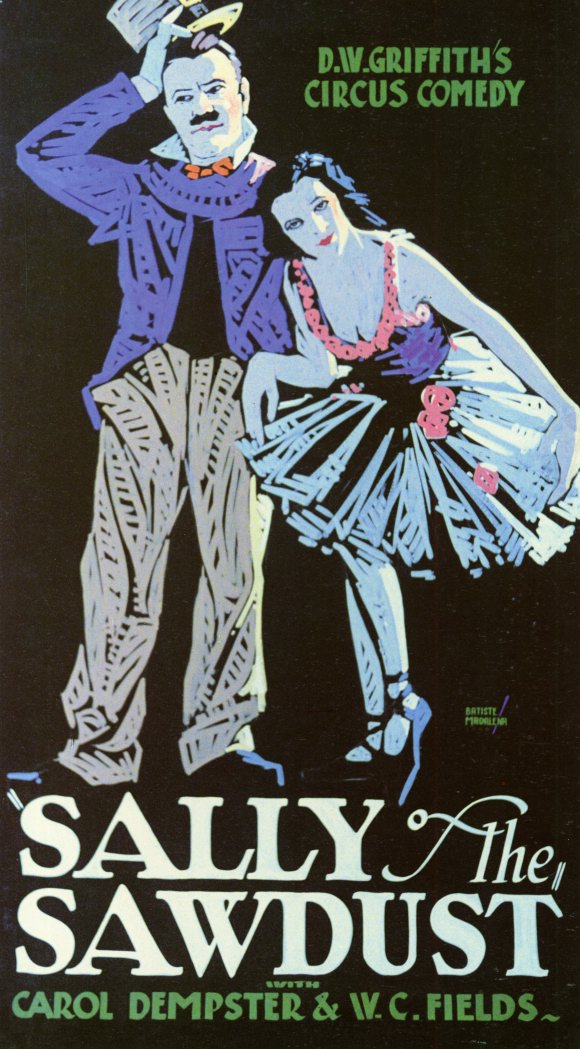
Carnival cardsharp Eustace McGargle (W.C. Fields) adopts the daughter (Carol Dempster) of a society woman who ran away from her disapproving parents (Erville Alderson and Effie Shannon) after marrying a circus man. When Sally (Dempster) grows up, McGargle decides it may be time to introduce her to her real family, and takes her to her hometown of Green Meadows, where Sally falls in love with a wealthy young man (Alfred Lunt).

Genres, Themes, Actors, and Directors:

  • Carnivals and Circuses
  • Comedy
  • D.W. Griffith Films
  • Orphans
  • Play Adaptation
  • Silent Films
  • W.C. Fields Films

Review:
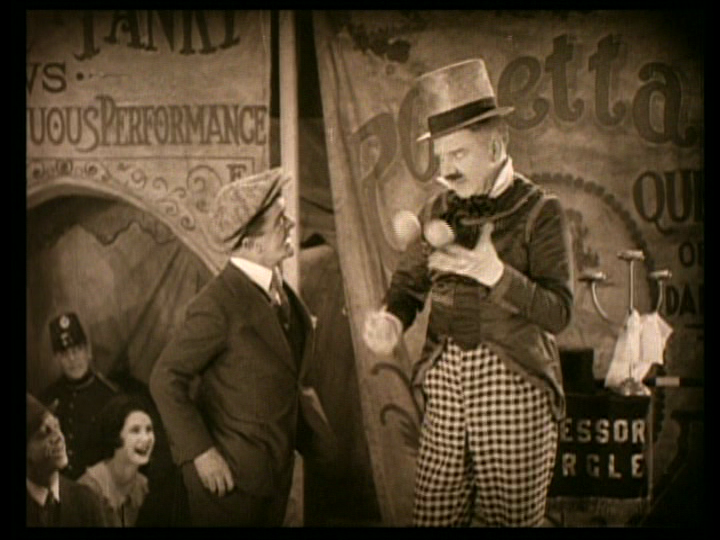
Critics have noted that this relatively late-career outing by D.W. Griffith (which unfortunately displays none of his distinctive directorial genius) would have remained merely a historical curiosity if it hadn’t offered W.C. Fields his first leading role in a film. Based on a 1923 musical play, the film’s storyline — as in the 1936 remake, Poppy — is strictly pedestrian melodrama, complete with an unrealistically happy ending and far too much slapstick humor. What makes it worth at least a cursory look are two primary elements: the opportunity to see a slightly slimmer Fields in a non-speaking role, performing some of his most famous carnival routines without the benefit of his characteristically nasal twang; and the remarkably “modern” central performance by Griffith’s real-life mistress, Dempster, a leggy, athletic, unconventional beauty reminiscent of Australian actress Rachel Griffiths.

Note: Apparently Dempster’s best role was in Isn’t Life Wonderful? (1924), a highly regarded Griffith film which isn’t listed in Peary’s book, and which I haven’t seen.

Redeeming Qualities and Moments:

  • An interesting glimpse at Fields in a non-speaking role
  • Carol Dempster as Sally

Must See?
No; this one is only must-see for diehard W.C. Fields fans.

Links:

Blackmail (1929)

Blackmail (1929)

“Detectives in glass houses shouldn’t wave clues.”

Synopsis:
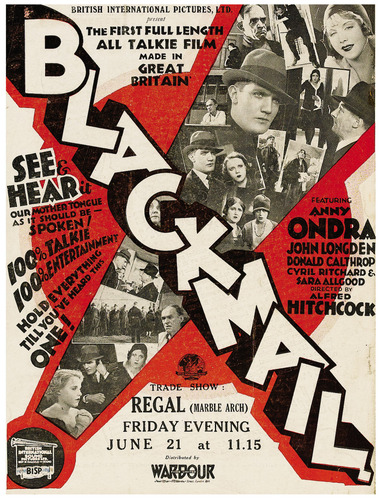
The flirtatious girlfriend (Anny Ondra) of a Scotland Yard detective (John Longden) accompanies an artist (Cyril Ritchard) to his apartment one night and ends up killing him with a knife when he tries to rape her. A loiterer (Donald Calthrop) sees Longden leaving the scene of the crime with a crucial piece of evidence, and decides to blackmail Ondra — but a snoopy landlady (Hannah Jones) has seen Calthrop entering Ritchard’s apartment, and soon he’s wanted by the police himself.

Genres, Themes, Actors, and Directors:

  • Blackmail
  • Detectives and Private Eyes
  • Hitchcock Films
  • Play Adaptations

Review:
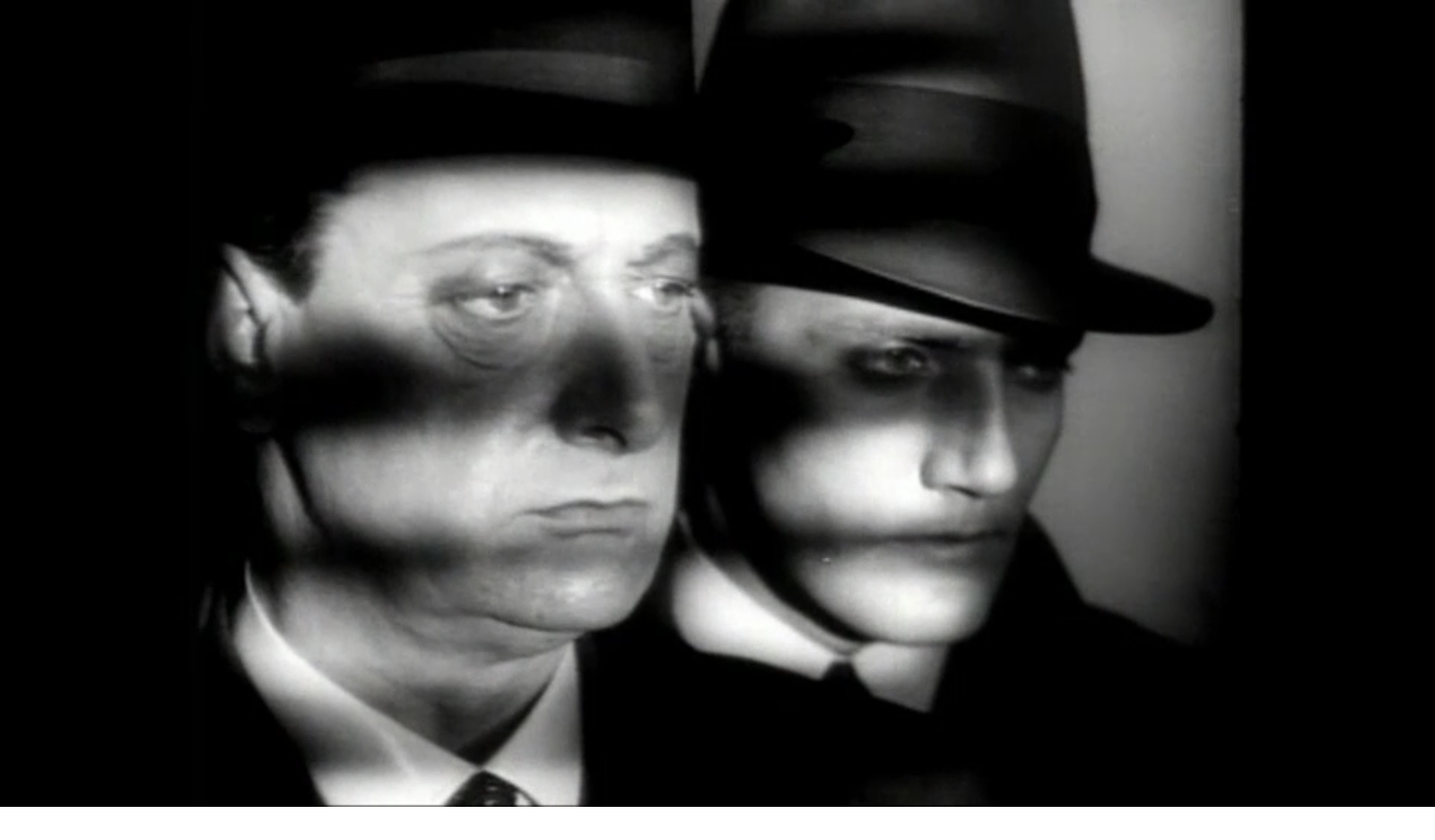
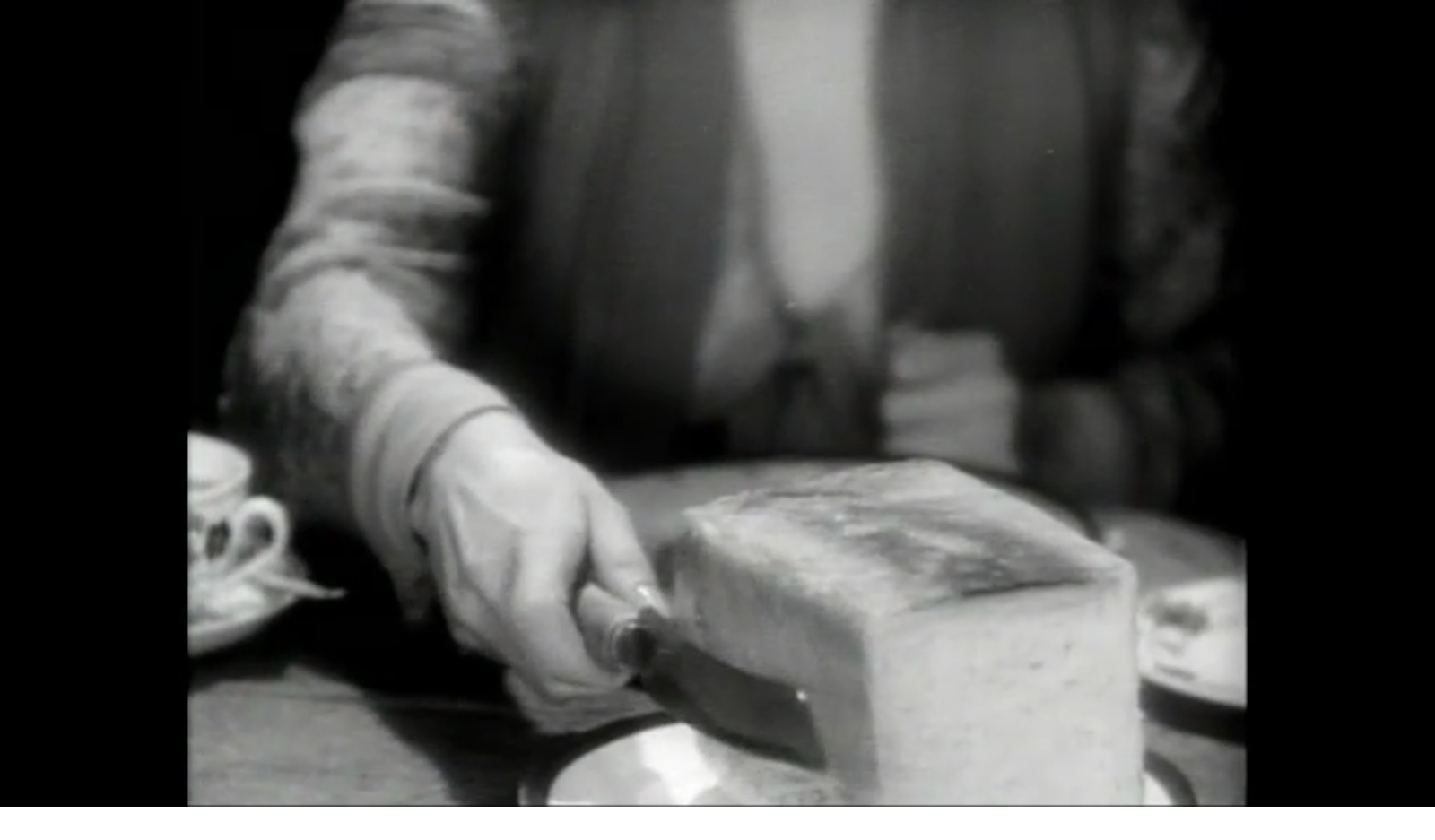
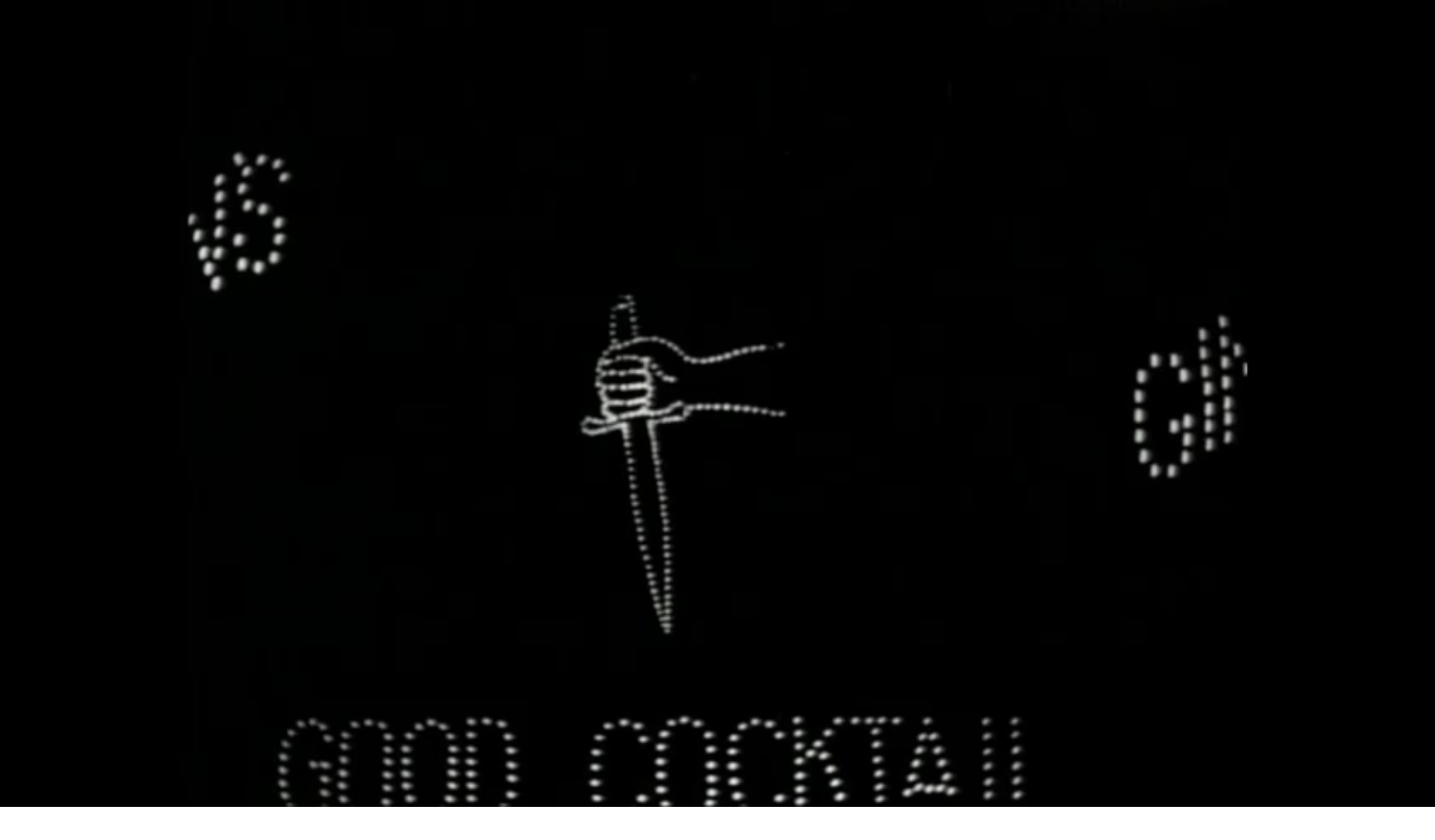
I was pleasantly surprised to finally check out this early Hitchcock thriller, which is famous for being his first “talkie” but remains remarkably enjoyable in its own right. All of the trademark qualities of Hitchcock’s best films are present here, starting with a tension-inducing screenplay in which our heroine — who is far from sympathetic, at least at first — is caught up in a nightmare of her own accidental making, existing in guilt-ridden angst and fear throughout the remainder of the film. Meanwhile, Hitch effectively employs both visual and aural cues via strategic editing for heightened suspense and impact — as when Ondry continually hears the word “knife” being used in punctuated bursts during a conversation following the homicide, or when she looks up at a flashing neon sign for a cocktail which has transformed into a plunging knife. While Hitchcock’s use of real-time off-camera dubbing for Ondry’s voice (she had a heavy German accent) has been called out as somewhat obvious, I must admit I was never bothered by it. Atmospheric cinematography (by Jack Cox), a smarmy turn by Calthrop as Ondry’s would-be blackmailer, and an exciting (if too brief) climactic chase scene through a famous location add to this film’s overall enjoyment — it’s certainly worth a look.

Note: Hitchcock filmed a silent version of this movie as well, which is available on the DVD release. Even the “talkie” edition, however, starts off (for the first 8 minutes) mostly like a silent film, with just a few noise effects added — so be patient. (I mention this because I wondered for a while whether I was watching the “right” version.)

Redeeming Qualities and Moments:

  • Anny Ondra as Alice
  • Nice use of the British Museum for the climactic final chase — though the scene is over far too quickly
  • Atmospheric cinematography
  • Creative use of sound for heightened effect (as in the “KNIFE” scene)
  • A clever sense of visual play

Must See?
Yes, for its historical relevance — and also as an enjoyably tense thriller. Listed as a film with historical importance and a Personal Recommendation in the back of Peary’s book.

Categories

  • Historically Relevant
  • Important Director

(Listed in 1001 Movies You Must See Before You Die)

Links:

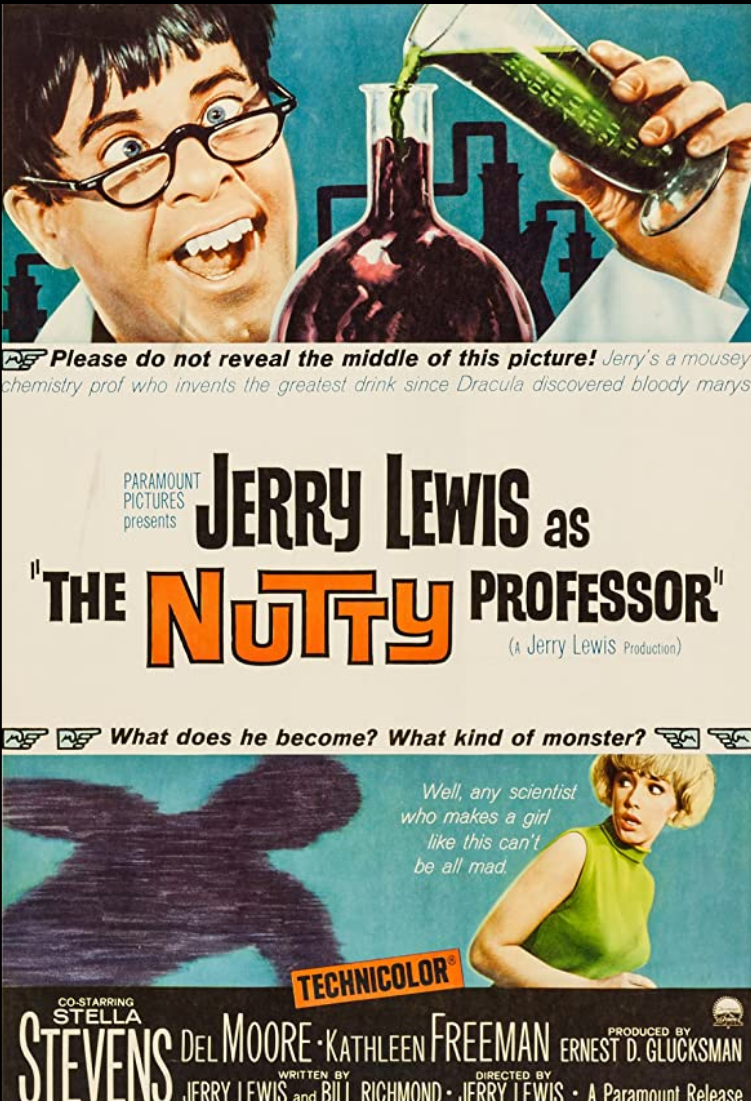
Nutty Professor, The (1963)

Nutty Professor, The (1963)

“Professor Kelp’s just the kind of guy who might fool you.”

Synopsis:
Julius Kelp (Jerry Lewis) — a nerdy chemistry professor with a crush on a beautiful student (Stella Stevens) — develops a potion which turns him into a narcissistic, womanizing singer named Buddy Love.

Genres, Themes, Actors, and Directors:

  • Comedy
  • Jerry Lewis Films
  • Mad Doctors and Scientists
  • Multiple Personalities
  • Professors
  • Stella Stevens Films

Response to Peary’s Review:
Peary has written quite a bit about this most famous of Jerry Lewis films, not only discussing it in the front section of his Guide for the Film Fanatic, but analyzing its cult appeal in his first Cult Movies book, and outlining the brilliance of Lewis’s dual performances in his Alternate Oscars book (where he casts a controversial vote for Lewis as Best Actor of the Year).

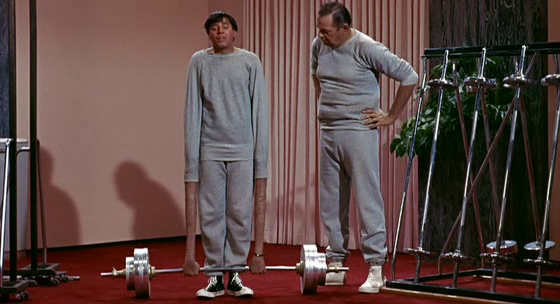
He refers to the film in general as “wildly inventive”, calling out Lewis’s “innovative direction and… witty screenplay” (co-written with Bill Richmond), which is full of countless hilarious moments — including inventive sight gags (such as the surreal consequence of Kelp trying to lift weights in a gym):

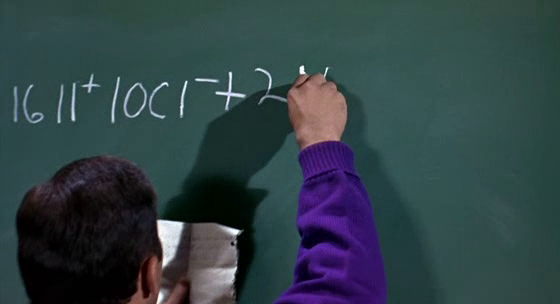
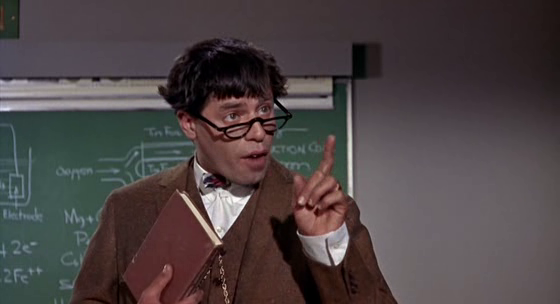
… remarkably effective use of sound effects for humor (as when Kelp enters his class with a raging hangover, and over-reacts to every noise made by his students):

… and plenty of darkly humorous sequences with Buddy Love (which indicate that this film could in some ways be more accurately described as a “black comedy” than a straight “comedy”).

Indeed, Peary writes that “If The Nutty Professor is Lewis’s best film, and I believe it is, it is not so much because it is his funniest as because it is his most daring… in the sense that Lewis, who begs for love in all his other films, knew he was making a picture to which his greatest fans, children, would probably react negatively.” Love is a truly provocative character — someone so outrageously, obnoxiously arrogant (and cruel!) that one hesitates to laugh at him. (An exception is during the one Love scene played strictly for laughs: the truly chuckle-worthy sequence in which Love “gets into the… good graces of the dean [an excellent Del Moore] by complimenting him on his suit and flattering his acting ability, coaxing him into reciting Hamlet’s soliloquy while standing on top of a table and wearing the weird attire that Buddy hands him every time he tries to begin.”)

The rest of the time, however, one simply squirms uncomfortably at the notion that a half-rate, oily slickster like Love could genuinely charm an entire population of college students, and Stella Stevens in particular.

With that said, Stevens’ attraction to Love is decidedly complex: while Stevens (Peary argues this is her “best role in a comedy”) spends a bit too much time simply staring at Love or Kelp with either puzzled sympathy or annoyance, it’s clear that she’s genuinely trying to tease out the nature of her attraction to both men. She’s turned on by Kelp’s intelligence, but simultaneously drawn in — as if by hypnotic spell — to the web of Love’s allure, despite clearly recognizing the folly of her conflicted desire. Love himself has traditionally (and most facilely) been viewed as representing “Lewis’s ex-partner, the cocky, romantic-singing, and boozing Dean Martin” — but Peary (and others) note that Buddy is perhaps more accurately the “alter-ego of Jerry Lewis, the Lewis we see each year on the telethon: that conceited, sanctimonious, singing, angry older fellow who tries unsuccessfully at times to keep the funny-voiced ‘Kid’ bottled up inside him”. Check out Lewis’s 1969 interview with Dick Cavett (available on YouTube) for a classic representation of just this dynamic.

Redeeming Qualities and Moments:

  • Jerry Lewis as Julius/Buddy (selected by Peary as Best Actor of the Year in his Alternate Oscars)
  • Del Moore as Dr. Warfield
  • Stella Stevens as Stella Purdy
  • Hal Pareira’s memorable set designs
  • The humorously frightening initial “transformation” scene

Must See?
Yes, as Lewis’s acknowledged cult classic — and a rare Lewis film guaranteed to appeal to most viewers, regardless of their tolerance for Lewis.

Categories

  • Cult Movie
  • Important Director
  • Noteworthy Performance(s)

(Listed in 1001 Movies You Must See Before You Die)

Links:

Patsy, The (1964)

Patsy, The (1964)

“Now listen, and listen carefully — this kid can and will be whatever we want him to be.”

Synopsis:
When a famous comedian dies in a plane crash, his creative entourage (Everett Sloan, Ina Balin, John Carradine, Keenan Wynn, Phil Harris, and Peter Lorre) decides to turn a bumbling bellboy named Stanley (Jerry Lewis) into their next big star.

Genres, Themes, Actors, and Directors:

  • Aspiring Stars
  • Comedians
  • Comedy
  • Hans Conried Films
  • Jerry Lewis Films
  • John Carradine Films
  • Keenen Wynn Films
  • Peter Lorre Films

Review:
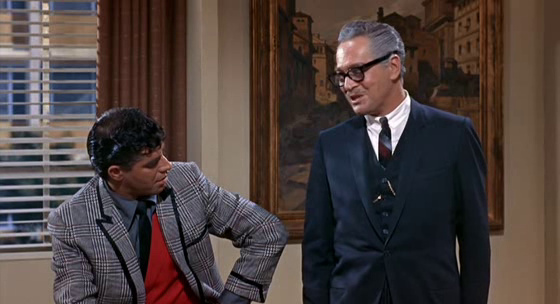
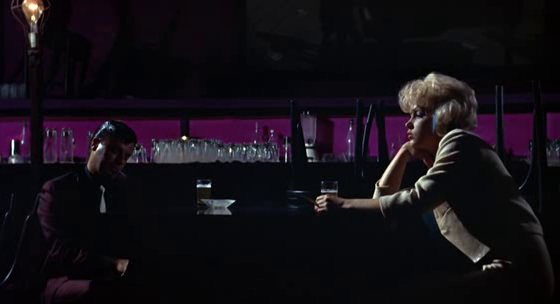
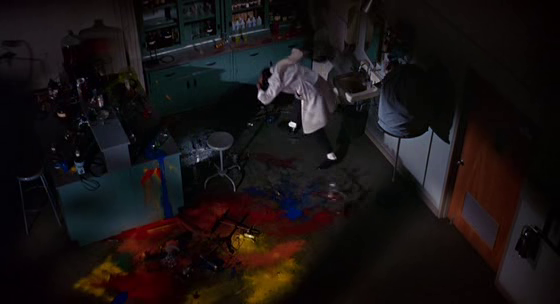
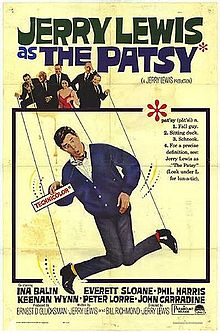
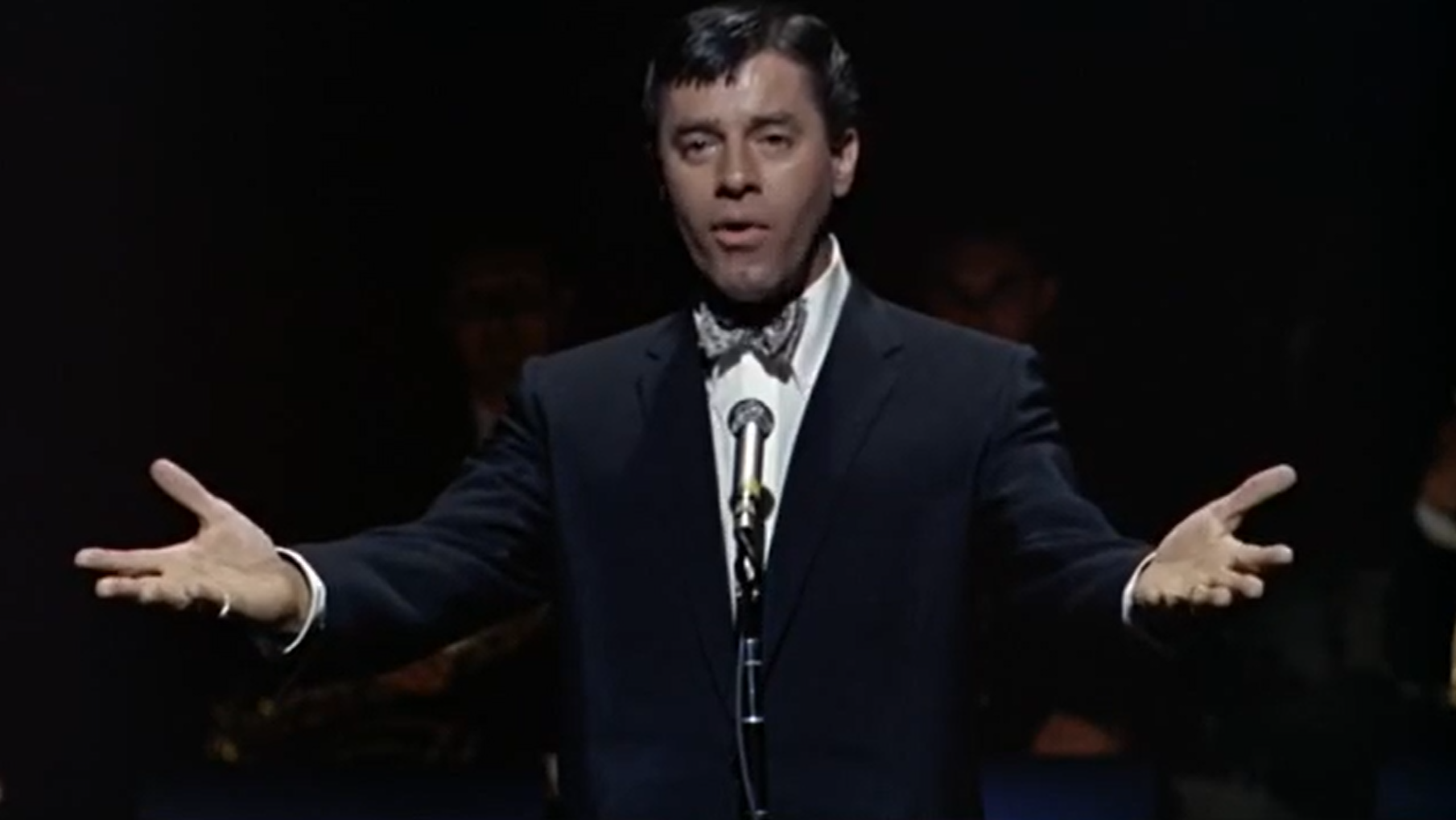
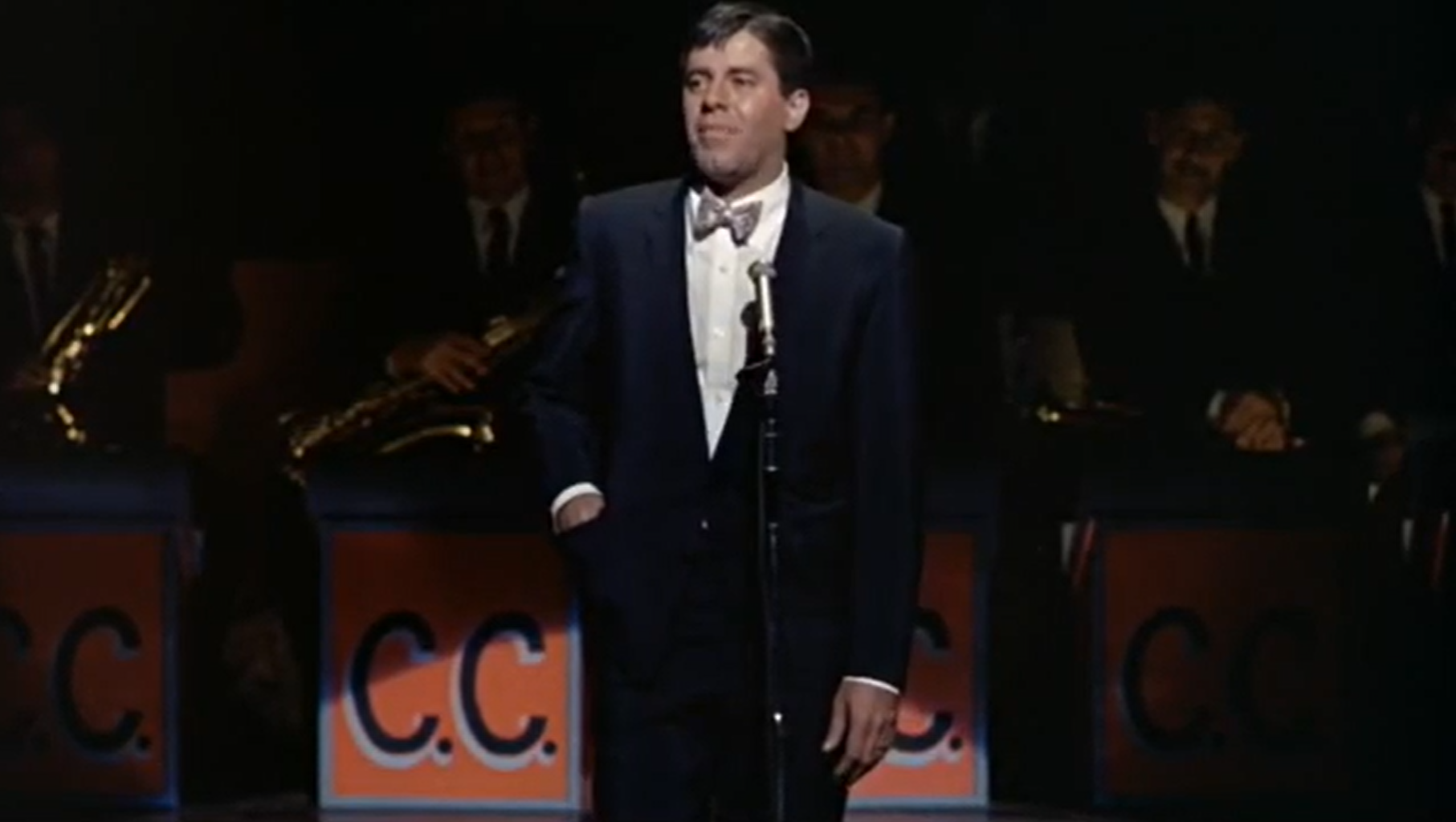
The intention of Jerry Lewis’s self-directed variation on Frank Tashlin’s The Girl Can’t Help It (1956) is somewhat murky: while he seems to be making a clear case that a talent like his is NOT random (that is, you can’t simply pluck any old Joe off the street and turn him into a star of “Jerry Lewis caliber”), the film’s head-scratching denouement — an extension to the similarly self-congratulatory finale of The Errand Boy (1961) — effectively neutralizes this sentiment. With that said, The Patsy remains of interest given how close it comes (at times) to the tone of Scorsese’s King of Comedy (1982): Stanley’s failed nightclub debut is seriously discomfiting, bringing the film’s invisible laughtrack to a dead halt.

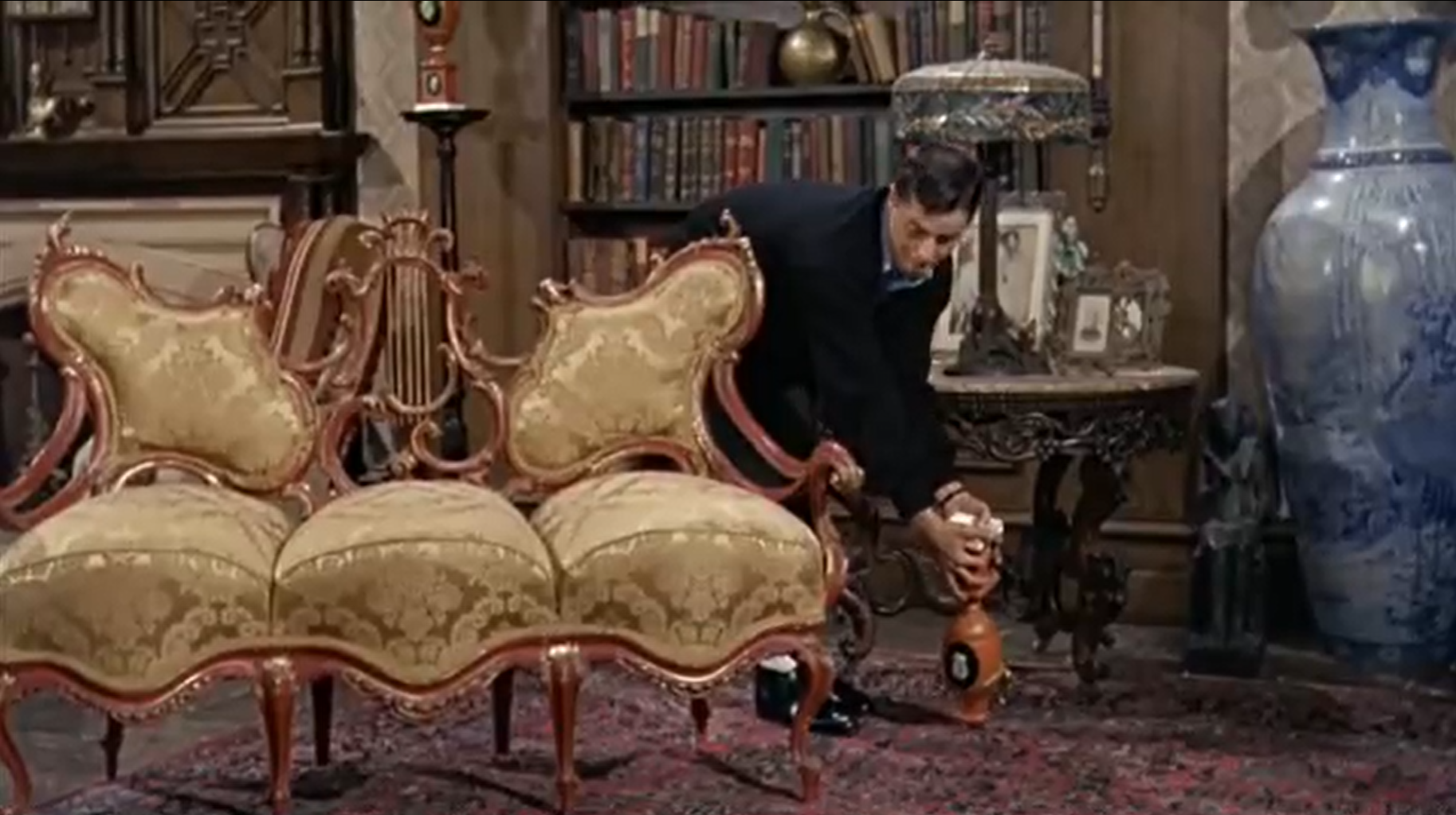
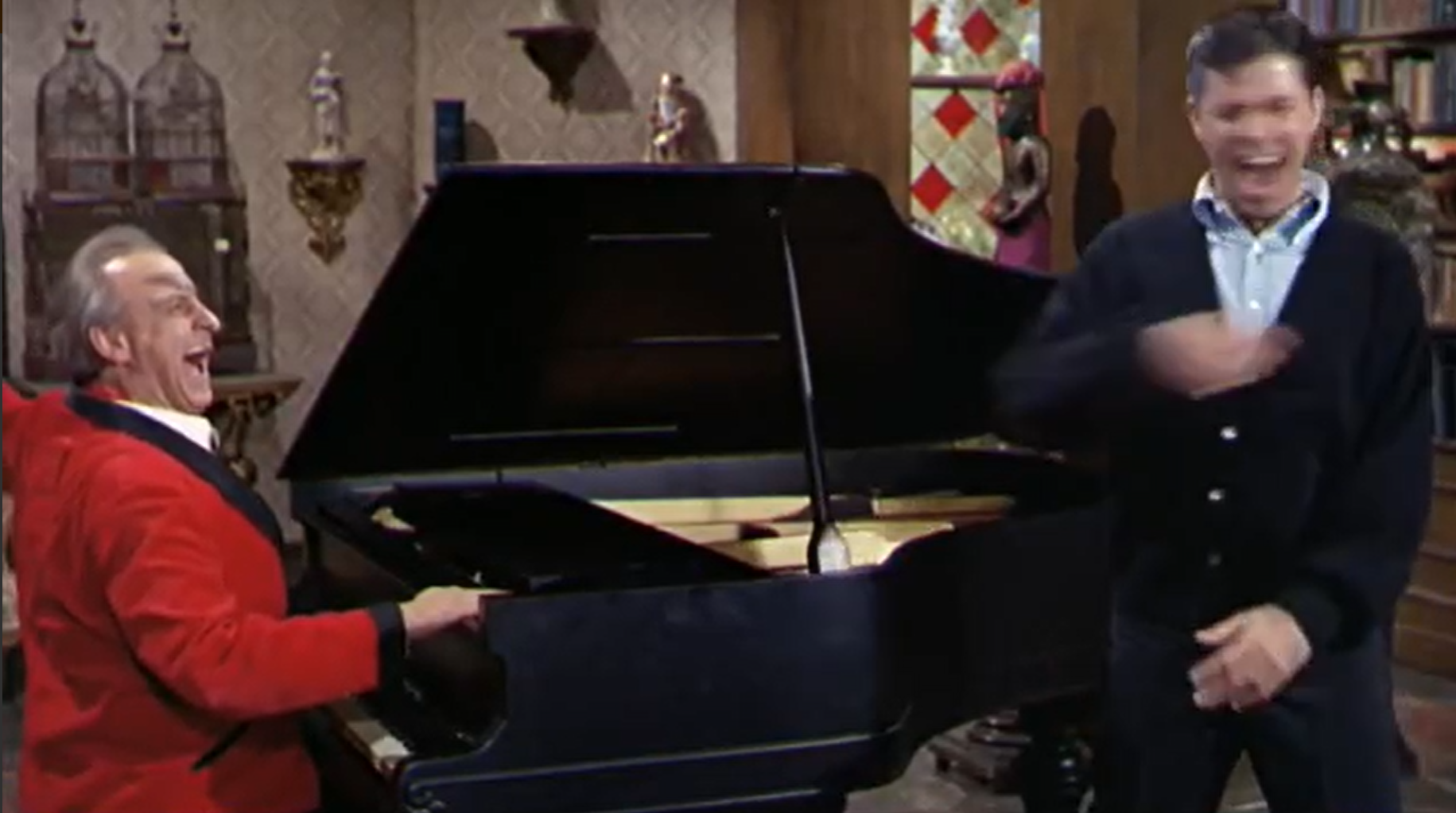
The rest of the movie remains a mixed bag of random chuckles (Lewis is in classic klutzy form when visiting Hans Conried’s antiques-riddled home for a music lesson):

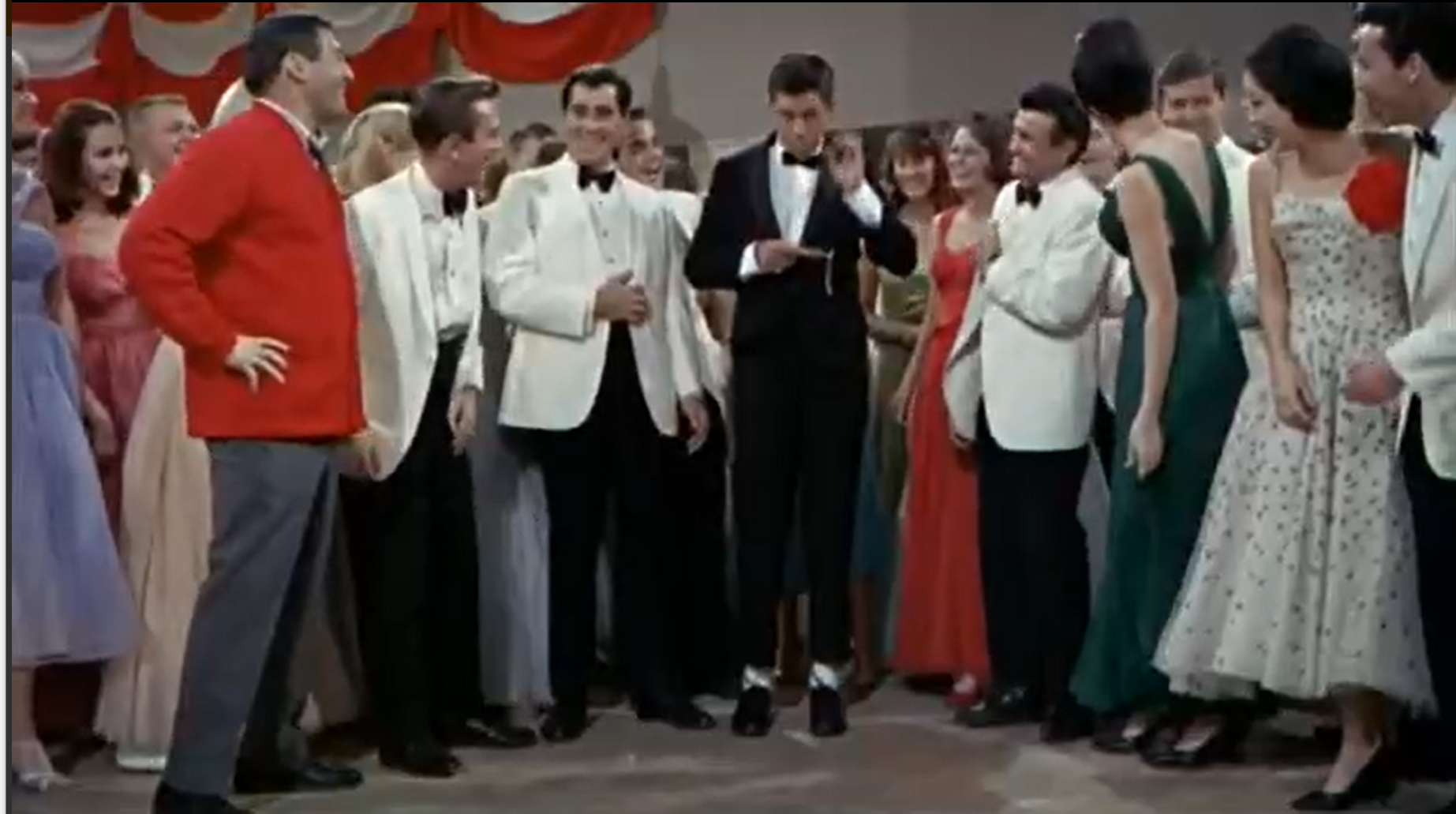
… occasional pathos (as during the oddly charming high school dance flashback sequence):

and rehashed cliches from earlier films — including obligatory romantic tension between nerdy Stanley and an impossibly sympathetic goddess (in this case, Ina Balin), who seems merely pleasantly bemused by his actions at all times.

Be forewarned about the irritatingly dated “final” comment made by Stanley, which is similar to Lewis’s own stated view of female comedians:

[2000] I don’t like any female comedians. Seeing a woman in comedy sets me back a bit… I think of her as a producing machine that brings babies into the world.

Note: This shouldn’t technically be considered a “Peter Lorre film” given that his role here (his last) is not only incredibly tiny, but Lorre seems utterly disinterested and bored the entire time. “We got the wrong guy”, his character mutters in one of his very few lines, and one can’t help sensing he’s referring to himself.

Redeeming Qualities and Moments:

  • Stanley’s disastrous visit with Hans Conried’s antiques-collecting music teacher
  • The cringingly honest nightclub scene

Must See?
No — though it’s one of the more intriguing Lewis entries included in Peary’s book, and worth a look.

Links:

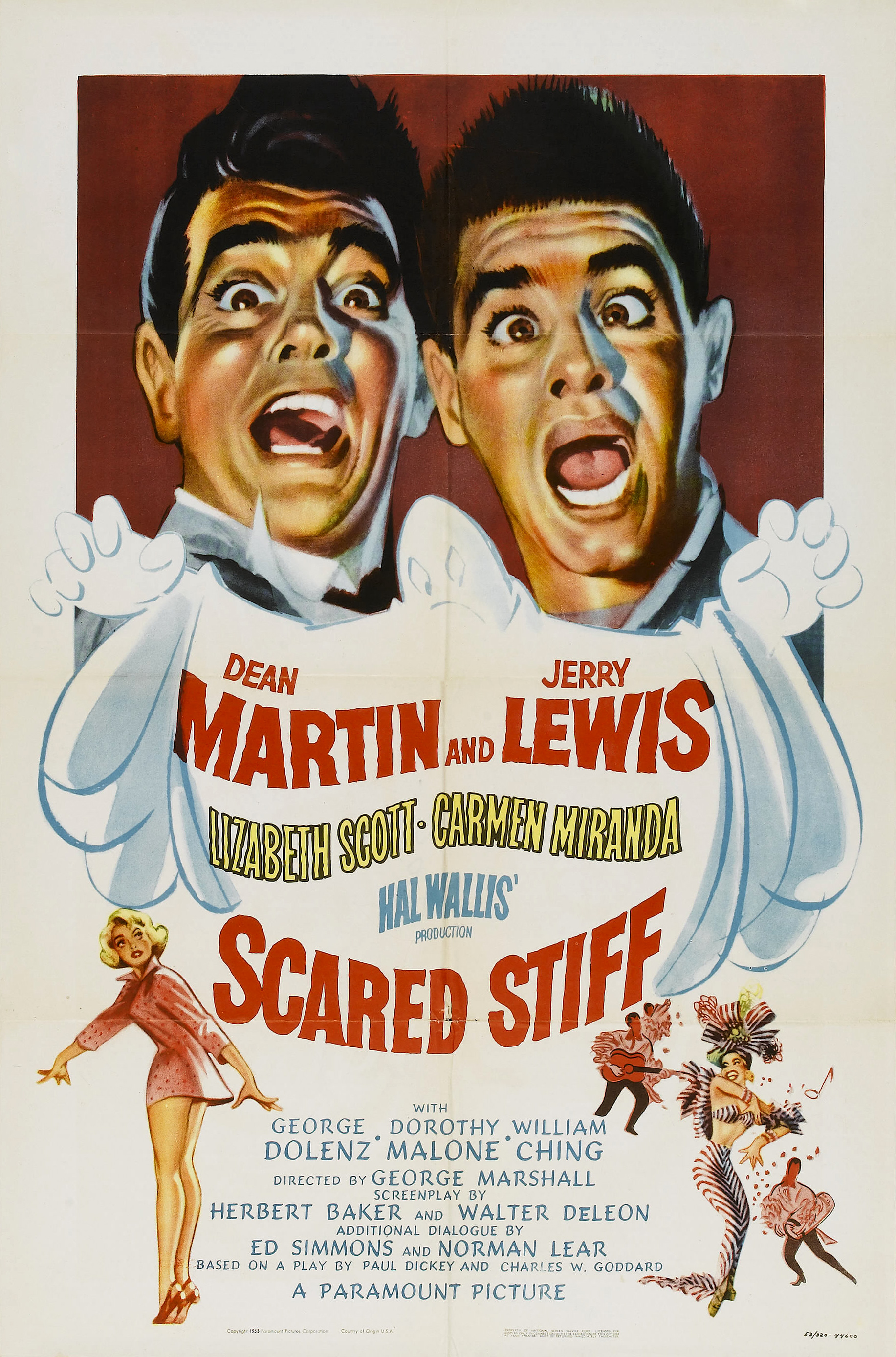
Scared Stiff (1953)

Scared Stiff (1953)

“You may joke, my dear, but unfortunately, the legends about the castle are not to be taken lightly.”

Synopsis:
A dimwitted busboy (Jerry Lewis) and his buddy — a nightclub singer (Dean Martin) who wrongly believes he’s murdered a gangster — stow away on a cruise ship to Havana, and befriend a woman (Lizabeth Scott) who has inherited a supposedly haunted castle on an island.

Genres, Themes, Actors, and Directors:

  • Carmen Miranda Films
  • Comedy
  • Dean Martin Films
  • Dorothy Malone Films
  • Fugitives
  • Jerry Lewis Films
  • Lizabeth Scott Films
  • Musicals
  • Old Dark House

Review:
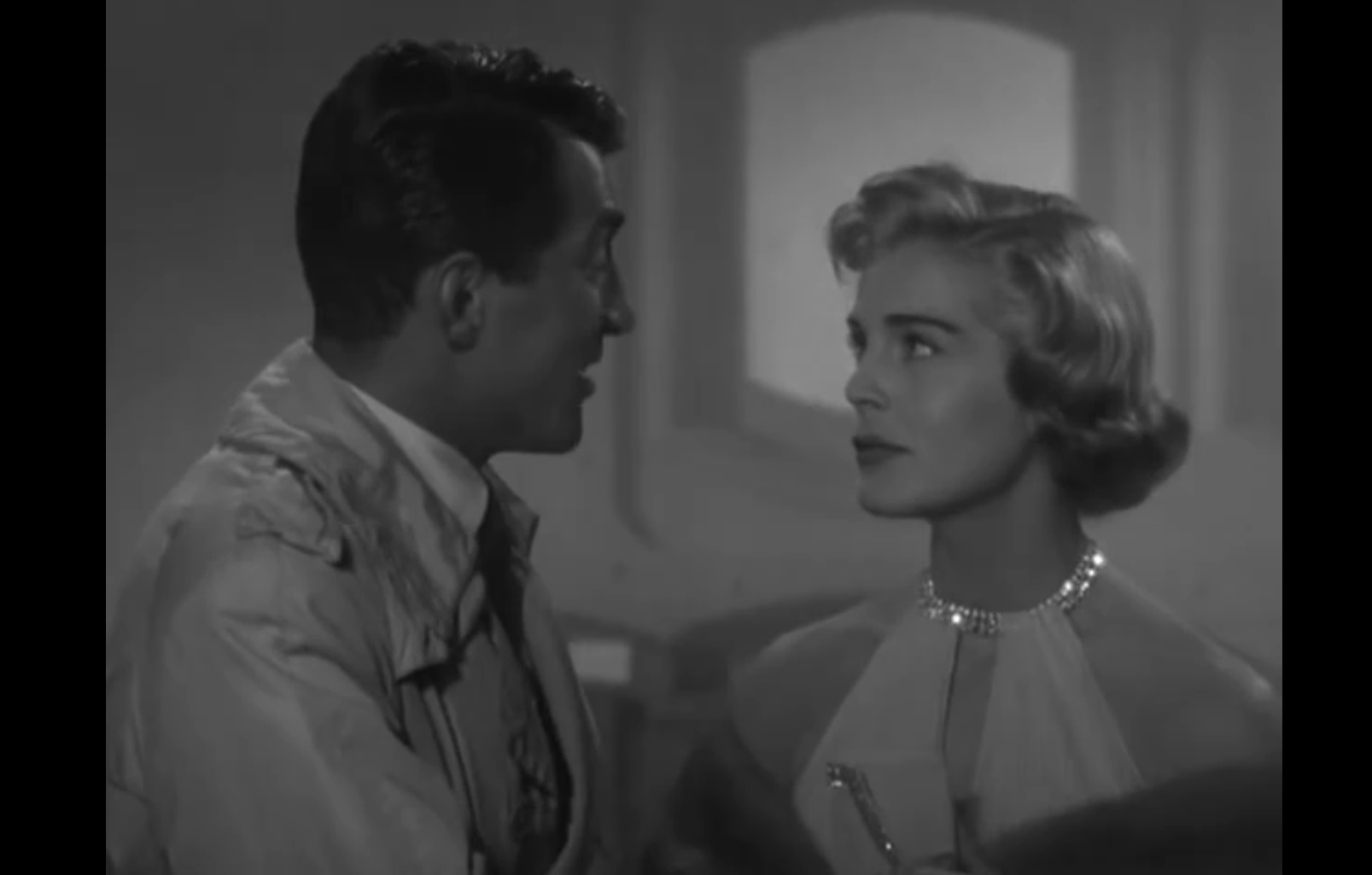
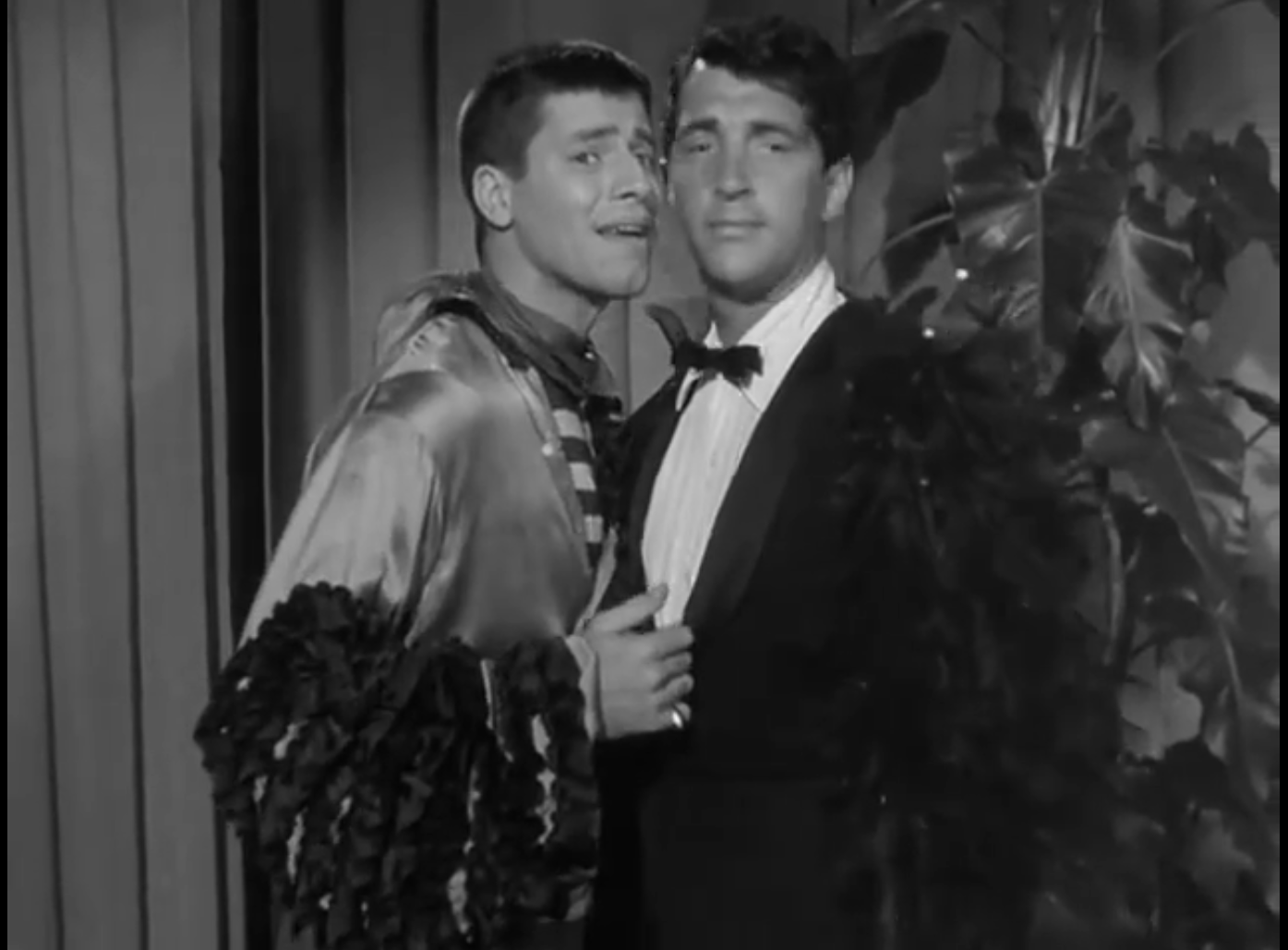
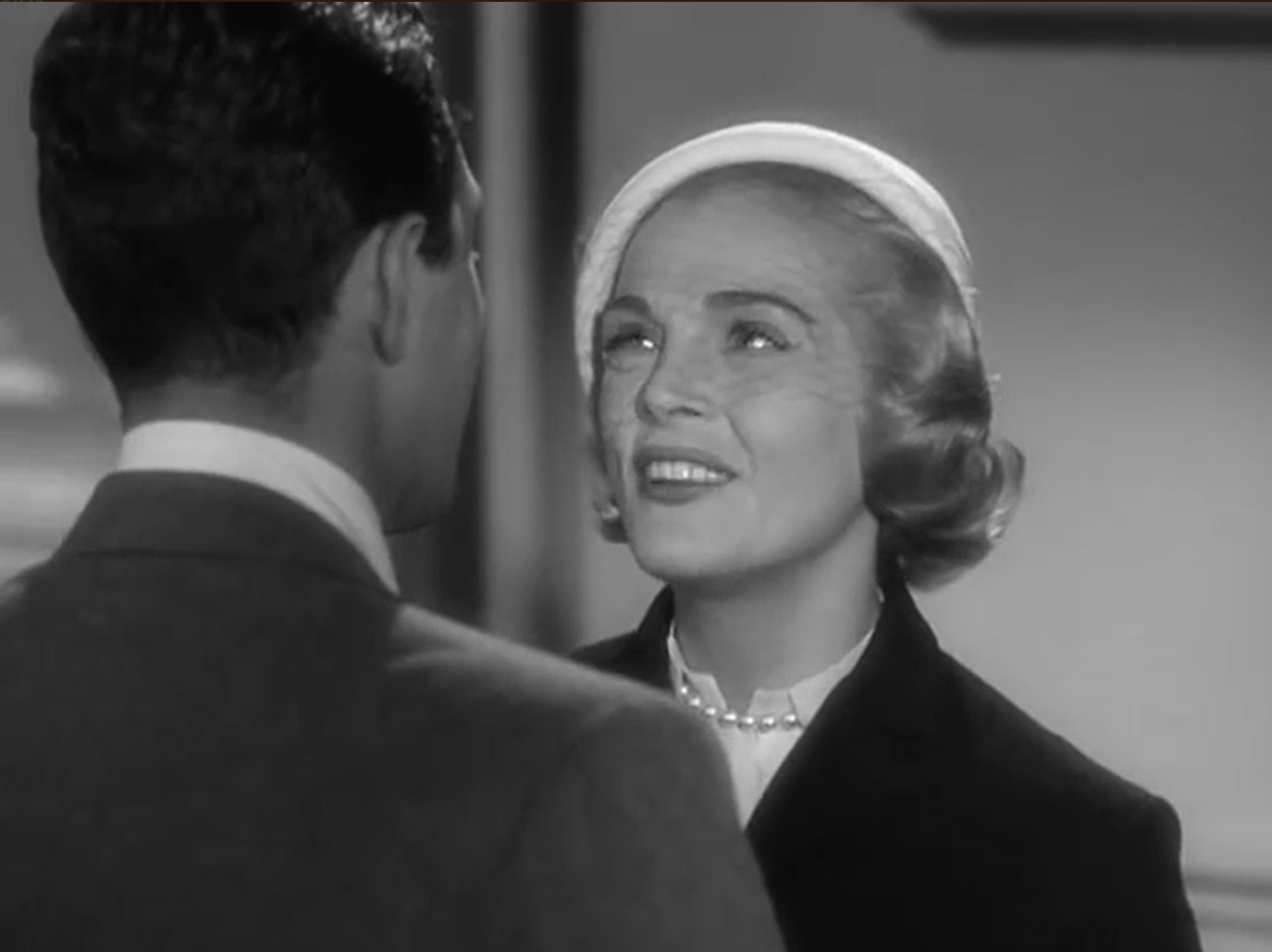
George Marshall remade his own 1940 comedic-horror hit Ghost Breakers (1940) (starring Bob Hope and Paulette Goddard) into this tepid Martin & Lewis vehicle, which will likely only really appeal to their fans. Both the original film and this later iteration essentially function as vehicles for their stars, and suffer from rather lame, unnecessarily complex screenplays — but Scared Stiff, unfortunately, is even more awkwardly paced than its predecessor, taking 80 long minutes to finally bring the protagonists to their spooky destination (and even at that point, there are precious few ghosts or zombies peppering the screen). On the plus side: Lizabeth Scott is a perky, likeable romantic heroine, and she and Martin come across as genuinely attracted to one another:

On the negative side, Lewis is even more neurotically annoying and clingy than usual.

Of primary interest is an early nightclub scene in which we get a glimpse of Lewis and Martin’s live “charisma” together (with assistance from Dorothy Malone as Martin’s girlfriend); it feels like an honest approximation of their esteemed on-stage career together.

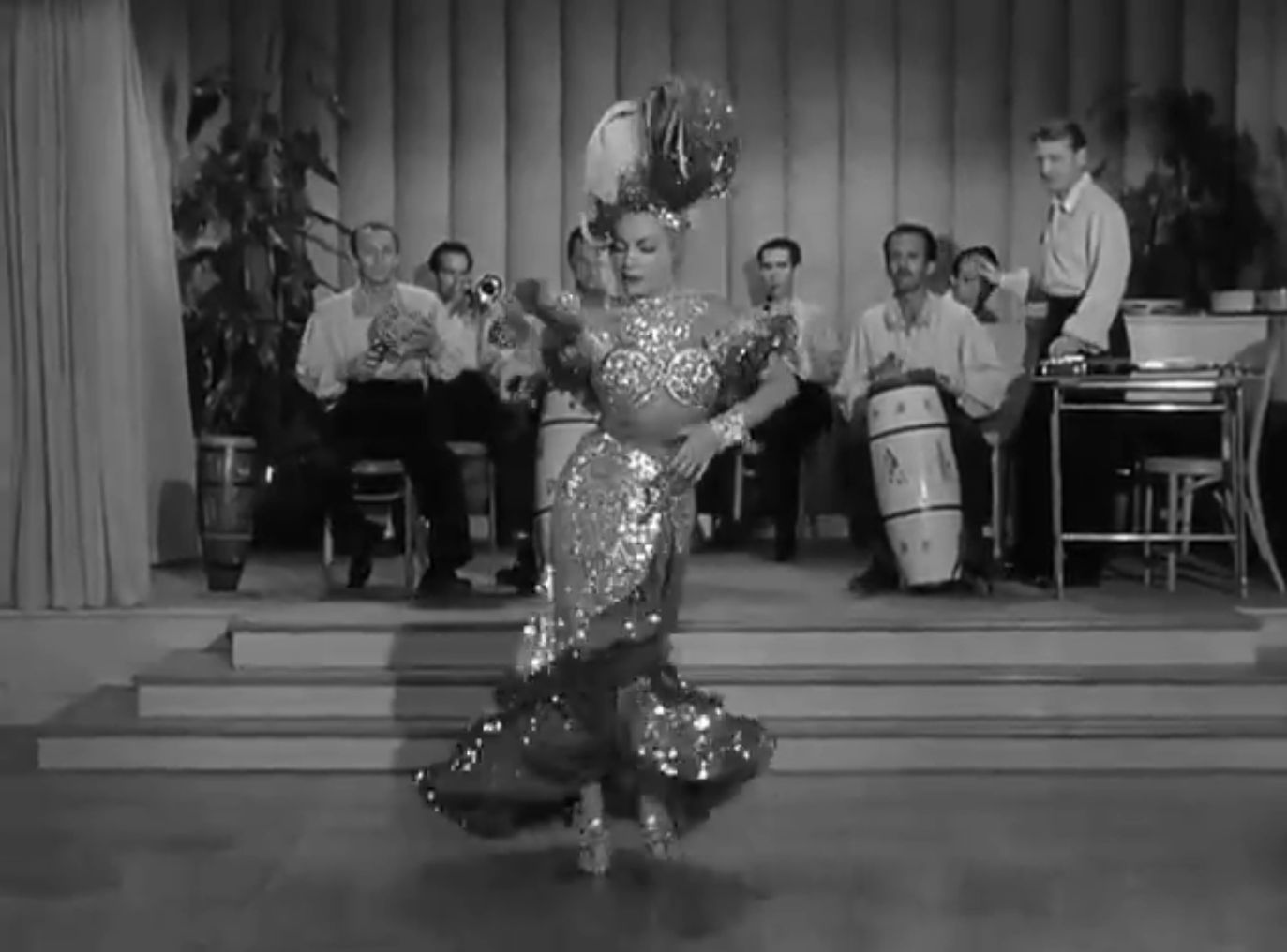
Note: This was Carmen Miranda’s final film (she died two years later); however, while her energetic performances are always welcome:

Lewis’s imitation of her (the ostensible reason for her presence here) is… depressingly unfunny.

Redeeming Qualities and Moments:

  • The early nightclub comedy routine
  • Lizabeth Scott as Mary

Must See?
No — this one is definitely only must-see for Martin & Lewis fans.

Links:

Errand Boy, The (1961)

Errand Boy, The (1961)

“From the first day I got here, I’ve caused everybody nothing but trouble.”

Synopsis:
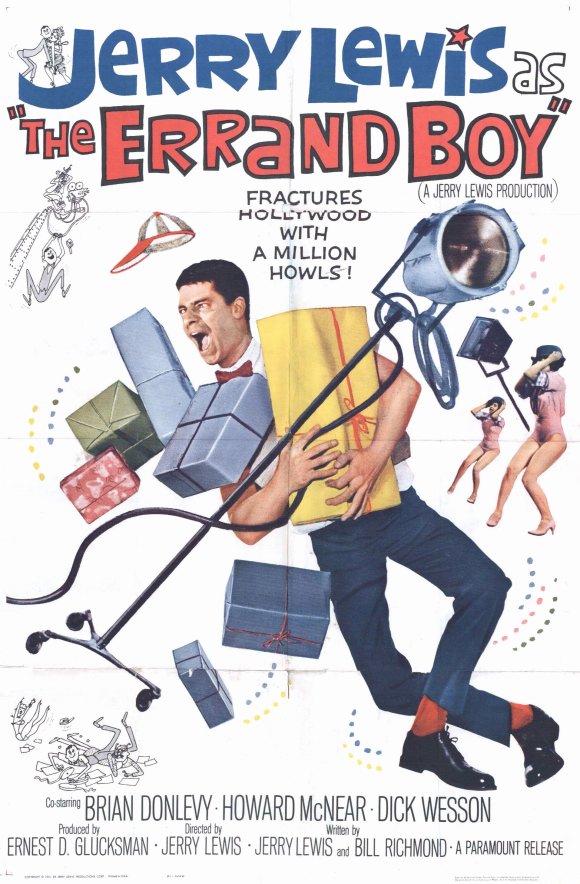
A clumsy errand boy (Jerry Lewis) on the Paramutual Pictures lot is tasked by its studio head (Brian Donlevy) with spying on all its employees, to determine where money is being wasted — but instead, all Morty (Lewis) seems capable of doing is causing havoc wherever he goes.

Genres, Themes, Actors, and Directors:

  • Brian Donlevy Films
  • Comedy
  • Hollywood
  • Jerry Lewis Films
  • Spies

Review:
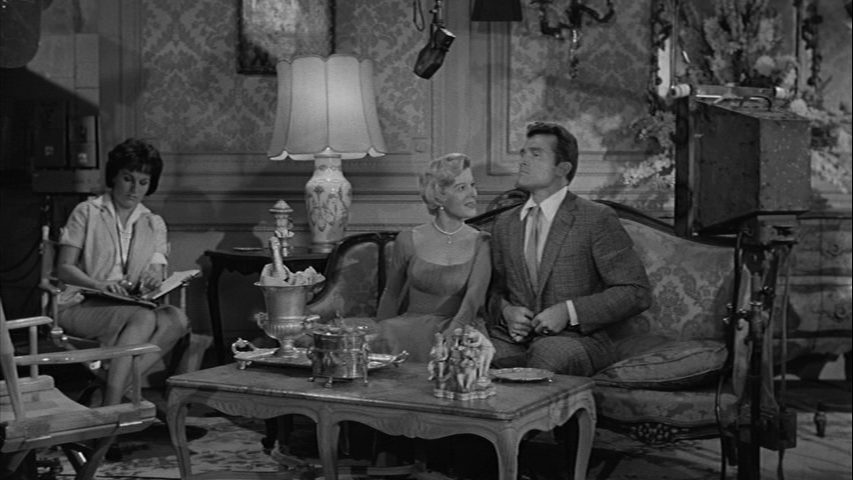
The premise of Jerry Lewis’s third film as writer/director/star is likely to appeal to most film fanatics, given that we’re promised an insider’s look at Hollywood movie-making on the Paramount (er, Paramutual) Studios lot — and, for the first portion of the film, it’s easy enough to stay engaged, as Lewis’s Morty Tashman humorously flubs the various names of the (mostly Jewish) executives he’s introduced to:

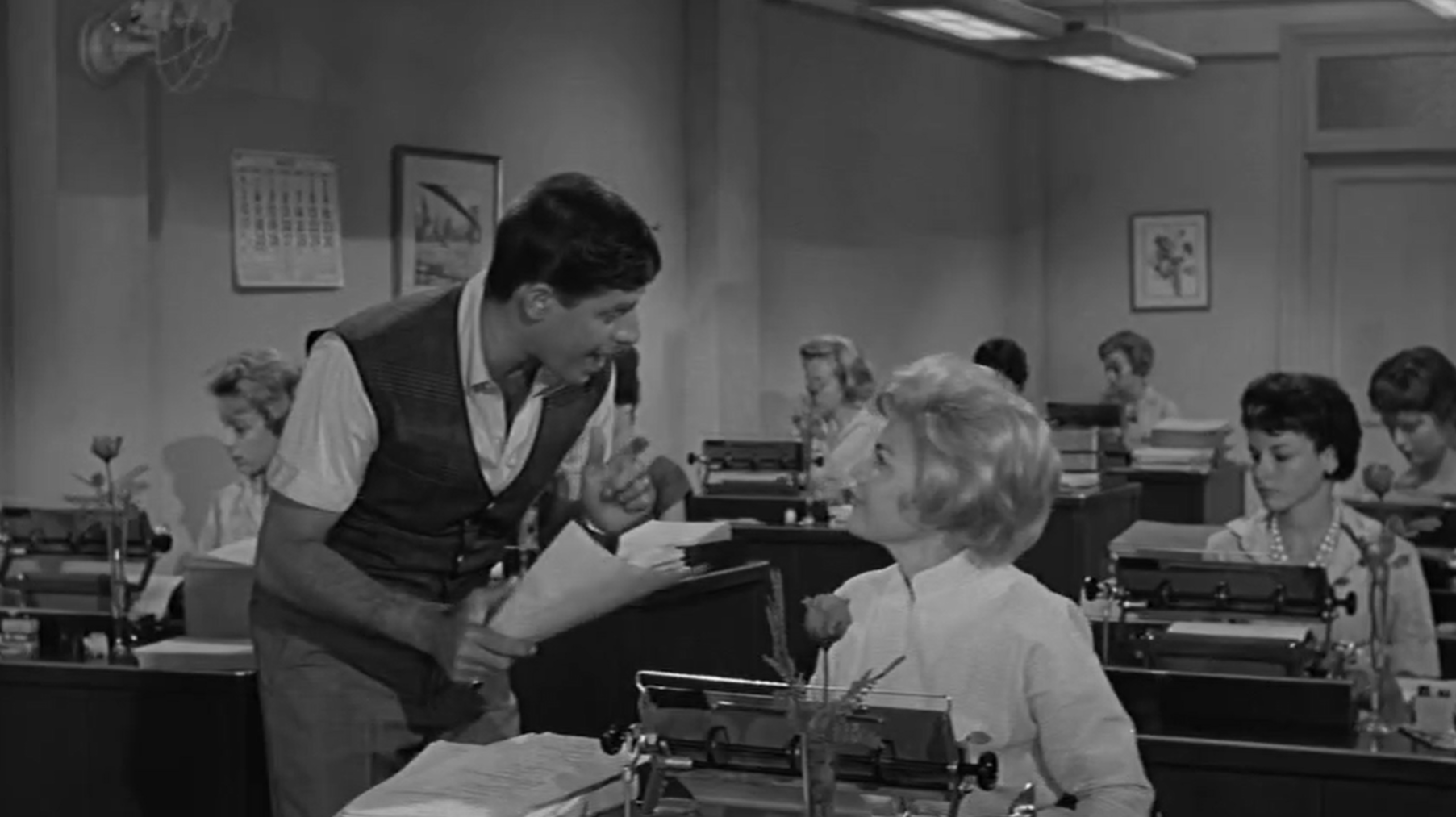
… fails at the seemingly simple task of bringing a few updated script pages to a room full of secretaries:

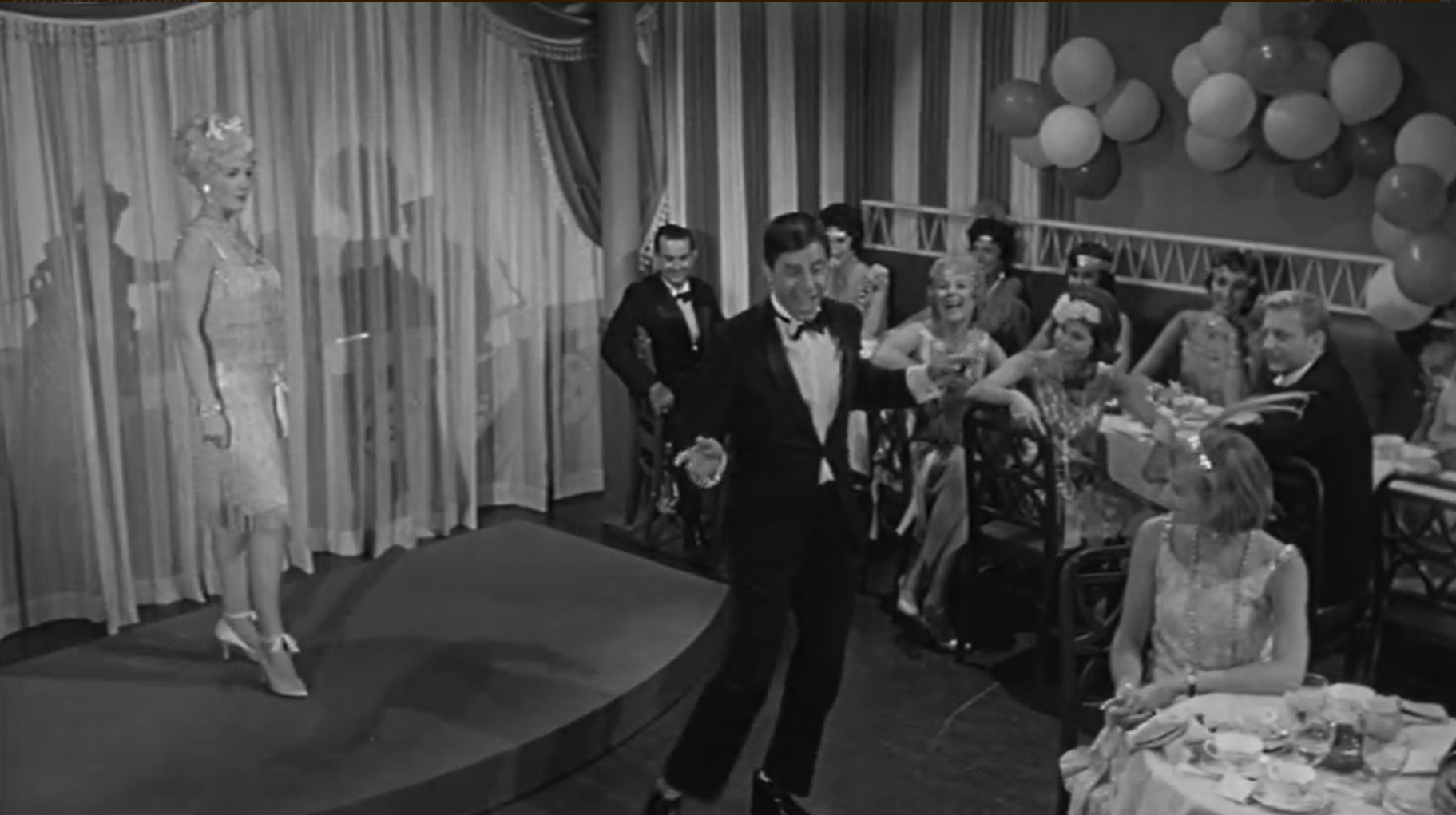
… and, when mistaken for an extra, completely ruins the scene he’s in by bursting into song.

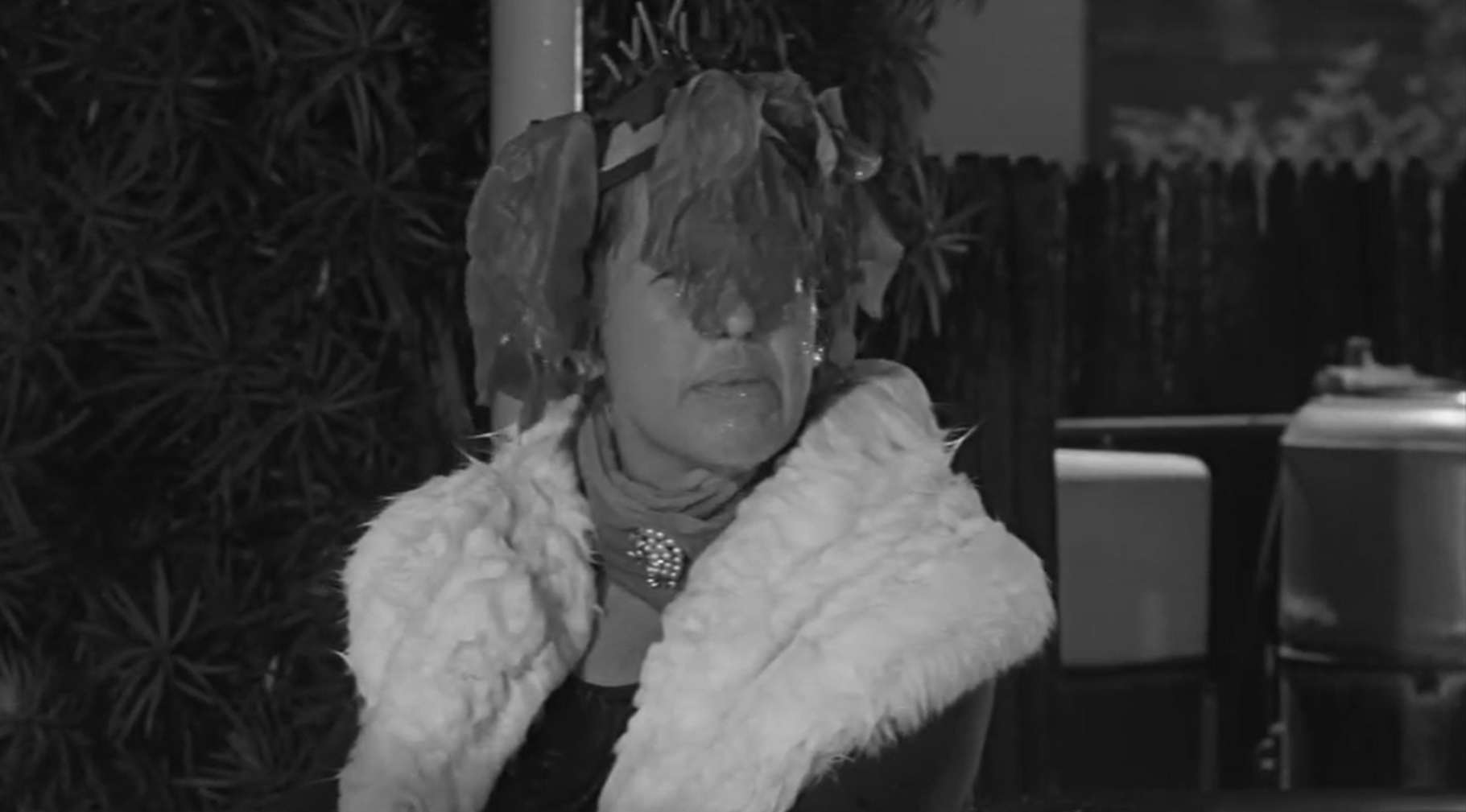
From there, however, Morty’s travails become increasingly repetitive and/or pointless, with several (i.e., Morty’s botched trip to the car wash with his boss’s laryngitis-ridden wife) simply defying all intelligence.

Much like in Lewis’s directorial debut, The Bellboy, the point here seems to be simply to watch Lewis’s nebbishy alter-ego meandering through a series of mishaps within a defined space — but while The Bellboy‘s blessedly mute Stanley is just one among many pawns in an enjoyably wacky universe, Morty (as usual for most of Lewis’s protagonists) quickly becomes simply a tiresome nuisance. Worst of all, the film’s nominal plot device — Morty being sent out to spy on his fellow employees — is simply never attended to in the screenplay, until a final mawkish sequence (loved by many, but not me) in which Lewis confesses his frustrations to a puppet.

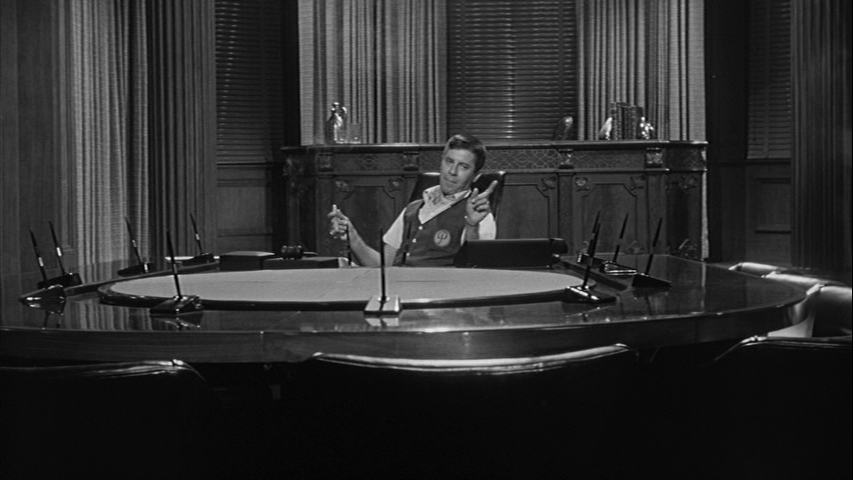
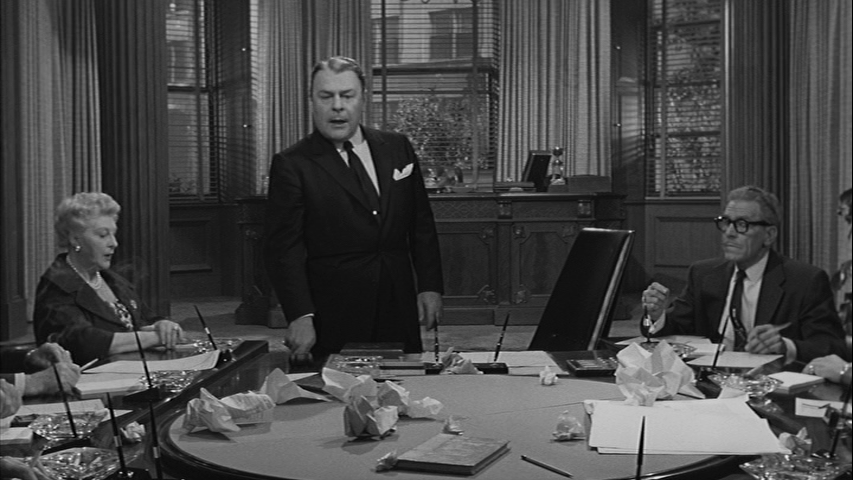
Worst of all is the incredibly self-serving denouement, which highlights Lewis’s arrogance as a performer more clearly than I’ve ever seen before. Yet there are at least a few sequences in The Errand Boy which make it worth your time to check out — most notably the justifiably lauded “board room” pantomime scene (available to view on YouTube). This scene alone shows evidence of Lewis’s intermittent genius.

Redeeming Qualities and Moments:

  • The truly impressive “board room orchestra” pantomime scene
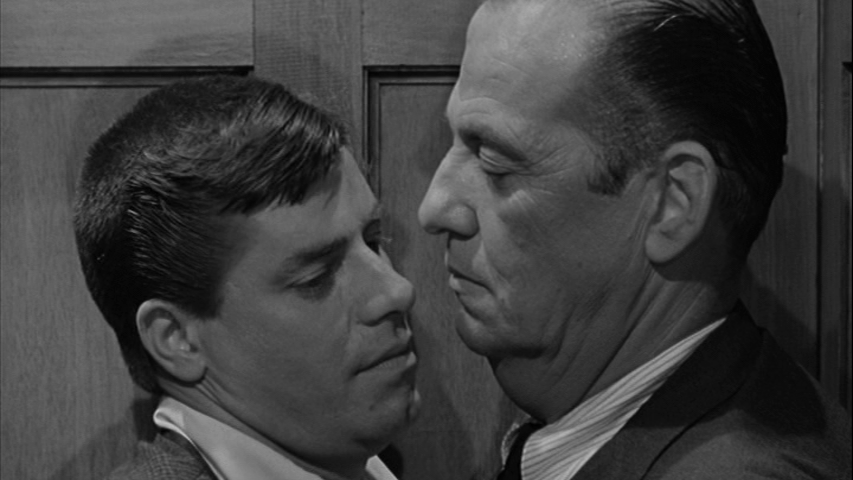
  • The elevator scene (worth a few chuckles)
  • The clever opening sequence (in which various genres are exposed for the fiction they really are)
  • Brian Donlevy as the head of Paramutual Pictures
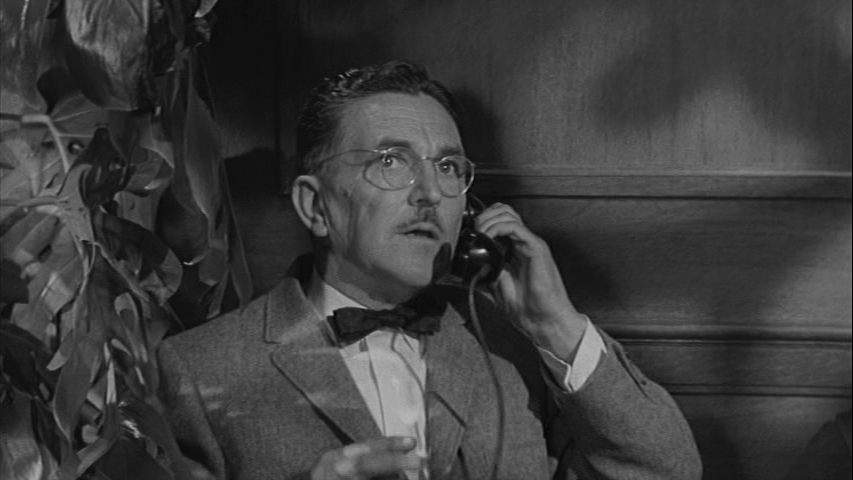
  • Howard McNear as a relentless sycophant

Must See?
No — though a few sequences make it worth a look. Listed as a Cult Movie and a Personal Recommendation in the back of Peary’s book.

Links: