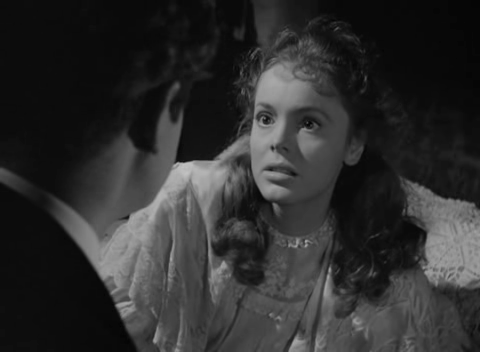
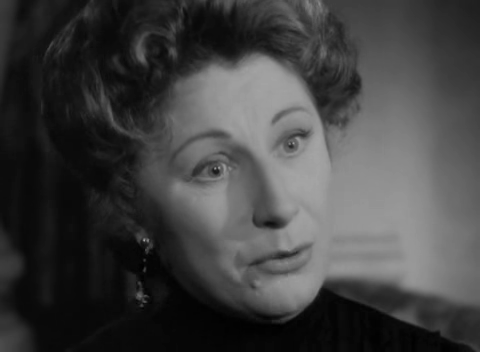
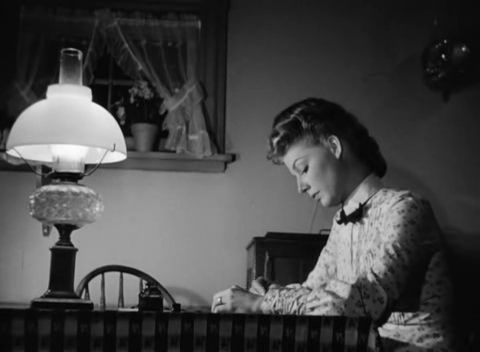
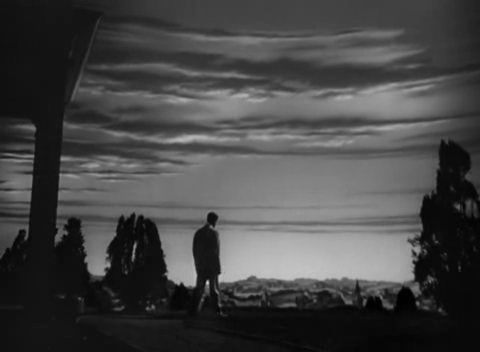
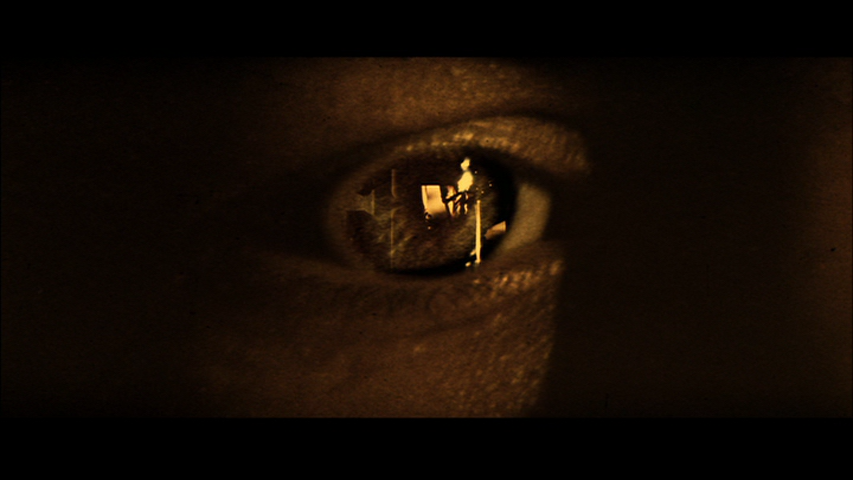
Shock Corridor (1963)

Shock Corridor (1963)

“Tell me about her braids.”

Synopsis:
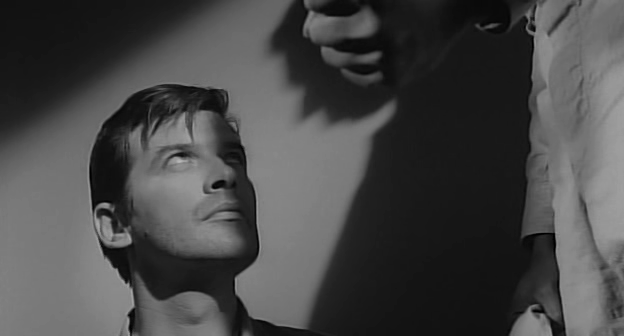
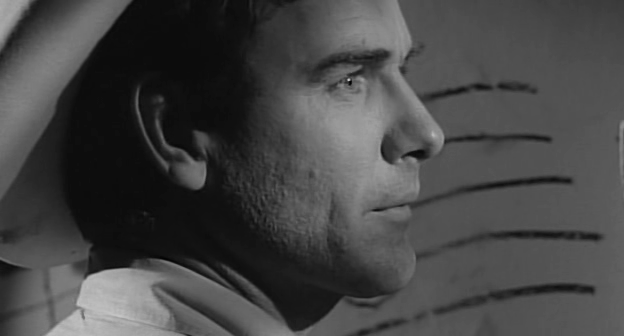
An ambitious journalist (Peter Breck) persuades his reluctant girlfriend (Constance Towers) to pose as his sister in order to convince a mental hospital that he’s acting in an incestuous manner and needs to be committed. Once there, he’s determined to uncover the truth behind a recent murder by interrogating the three inmates (James Best, Hari Rhodes, and Gene Evans) who witnessed it. But can he maintain his own sanity in such a challenging environment?

Genres, Themes, Actors, and Directors:

  • Journalists
  • Mental Breakdown
  • Mental Illness
  • Mistaken or Hidden Identities
  • Sam Fuller Films

Response to Peary’s Review:
Peary notes that “more than any other film, Sam Fuller’s cult favorite” — about an “immature, dishonest, self-serving crime reporter… who attempts to win the Pulitzer Prize by solving a murder that occurred in an insane asylum” — “treads a fine line between art and trash”, given that despite the “stilted” dialogue, “every few minutes one of the characters says something more honest and brave and moving than we are used to in American cinema” of this era. He argues that the “film thrives on sensationalism”, with “all the sexual content… solely intended to make the picture lurid”, but “beneath the sleaze is a mature, sad-eyed view of America, where people are encouraged to strive beyond their capacities for accomplishment and to do their country proud even if they can’t accept responsibility or fame”.

Peary’s review nicely highlights the unexpectedly hard-hitting nature of Fuller’s screenplay, which is all the more surprising given its obvious B-movie context and production values. Many viewers will find themselves groaning during the heavy-handed opening sequence between Breck and Towers (his “stripper girlfriend”), as Towers laments Breck’s “self-serving” motives for feigning insanity, and shrills some humorously hysterical dialogue: “You’re on a hopped up, lunatic stage — get off it! Don’t be Moses leading your lunatics to the Pulitzer Prize!” However, once Breck actually enters the asylum and begins encountering his fellow inmates, the tone immediately becomes at once more serious and more bizarre.

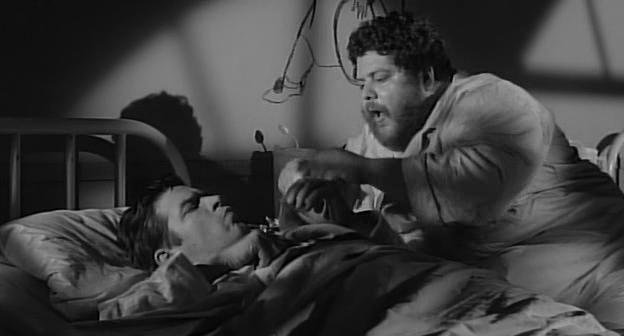
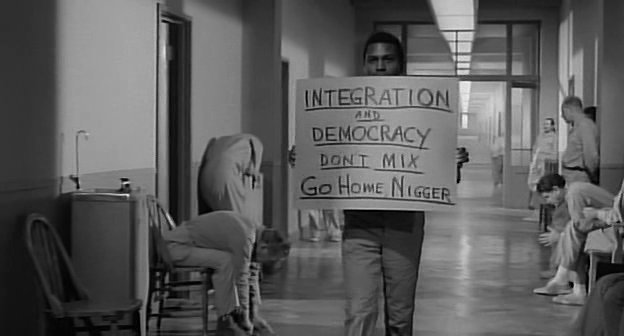
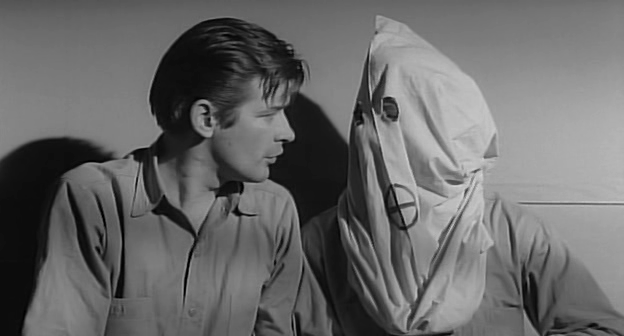
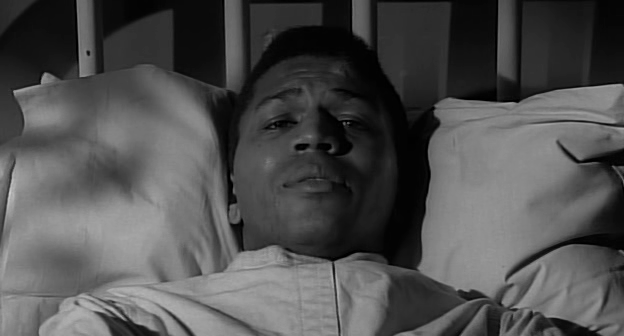
The three witnesses Breck is specifically interested in interrogating are all deeply damaged souls, indicative of all that’s most secretly corrupt about American society. The most memorable is undoubtedly the character played by Hari Rhodes — an African-American who, after a failed attempt to integrate into an all-white university, has internalized extremist racist attitudes to the point where he believes he’s white; he dons a Klan hood, harasses a fellow African-American who he claims is “after his daughter”, and carries around an inflammatory sign saying, “Go Home Nigger”. Best and Evans are also haunting in their portrayals as (respectively) a brainwashed Korean War vet and a guilt-ridden nuclear scientist, and Breck’s roommate — the overweight “Pagliacci” (Larry Towers) — adds yet another bizarrely damaged character to the milieu.

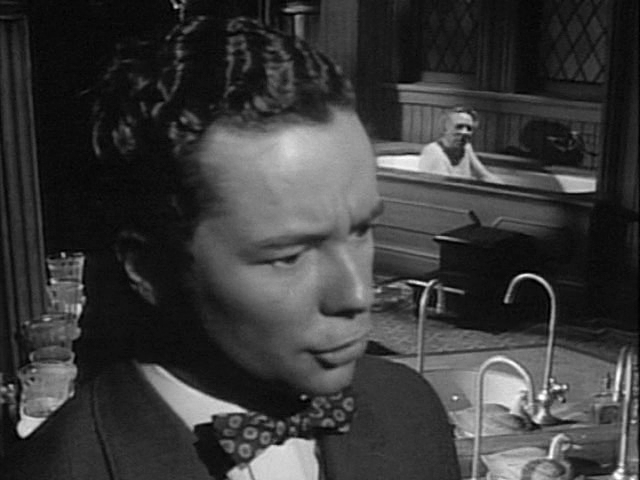
Further highlighting the surreal nature of Breck’s experience is Stanley Cortez’s “shadowy cinematography”, as well as the strategic use of special effects, including Towers appearing superimposed over Breck’s resting head (taunting him in her stripper outfit), and the photographing of “midgets at the end of the corridor set so that it would appear to be longer than it was”; close inspection quickly reveals that the same sequence of the midgets pacing back and forth was looped many, many times, but it’s still effective. This utterly unique cult favorite is one film fanatics won’t want to miss seeing at least once.

Redeeming Qualities and Moments:

  • Stanley Cortez’s cinematography

  • Fuller’s surprisingly hard-hitting screenplay

  • Fine supporting performances by Best, Rhodes, and others

Must See?
Yes, as a unique cult classic by an iconclastic director.

Categories

  • Cult Movie
  • Important Director

(Listed in 1001 Movies You Must See Before You Die)

Links:

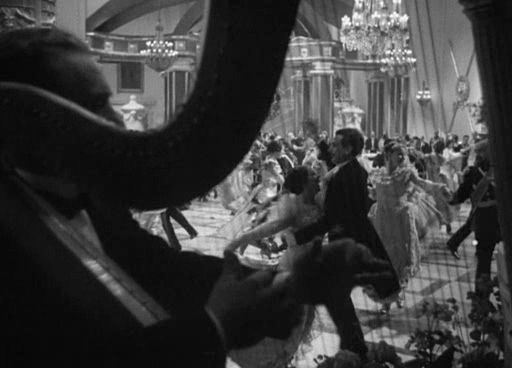
Magnificent Ambersons, The (1942)

Magnificent Ambersons, The (1942)

“There aren’t any old times. When times are gone, they’re not old, they’re dead.”

Synopsis:
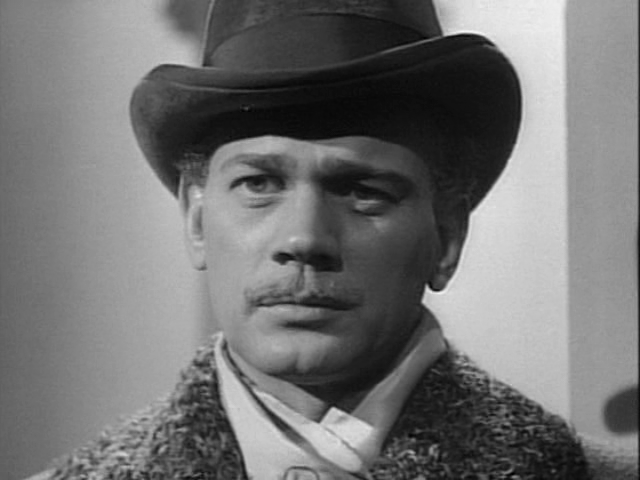
An up-and-coming industrialist (Joseph Cotten) loves the wealthy daughter (Dolores Costello) of a local millionaire (Richard Bennett), but they each end up marrying someone else. When Costello’s spoiled son (Tim Holt) grows up, he falls for Cotten’s daughter (Anne Baxter), and Cotten renews his interest in Costello — but Holt’s disdain for Cotten prevents romantic happiness for all involved.

Genres:

  • Agnes Moorehead Films
  • Anne Baxter Films
  • Historical Drama
  • Joseph Cotten Films
  • Orson Welles Films
  • Rise-and-Fall
  • Small Town America

Response to Peary’s Review:
In his review of Orson Welles’ adaptation of “Booth Tarkington’s [1918] Pulitzer Prize-winning novel,” Peary recounts just some of the film’s infamous production history, noting that “while Welles was out of the country, editor Robert Wise and his assistant, Mark Robson, were ordered by RKO to drastically cut the 131-minute picture that preview audiences didn’t like”. He argues that while many “critics now regard the mutilated version as being equal to Citizen Kane and other Welles classics”, he doesn’t “consider this to be one of his masterpieces”, and bluntly states that “the cutting hurts terribly”. However, he argues that “even if it were intact, it seems to be missing a lead character”, given that “Tim Holt’s George Minafer hasn’t enough stature to carry the latter part of the film”. Despite his complaints, however, he does concede that “Welles presents what may be the most effective look at late 19th-century small town life”, and notes that “the early montage, depicting changing styles… is memorable”. He feels that the “acting is uneven” but calls out Agnes Moorehead’s Oscar-nominated performance (playing Holt’s spinster “Aunt Fanny”) as “dynamic”, “especially when projecting near hysteria in her scenes with Holt”.

I don’t quite agree with Peary that the film is “missing a lead character”. As Peary himself notes, the “story, which is set between 1883 and 1912,” is more broadly about “the decline and fall of the Ambersons-Minafers, and the simultaneous modernization of their once-quaint small town — all due to the industrial revolution, which is emblemized by the advent of the automobile”. It’s this larger socio-economic theme which Welles is concerned with exploring, through the prism of Holt’s hopelessly spoiled and arrogant George Minafer, as well as through the star-crossed would-be romance between Costello and Cotten (who become Holt’s unwitting pawns). Ultimately, …Ambersons is more a film about clashing values in a life-changing era than any kind of straightforward melodrama with a recognizable central protagonist — which is perhaps what disappointed so many audience members at the time of its release.

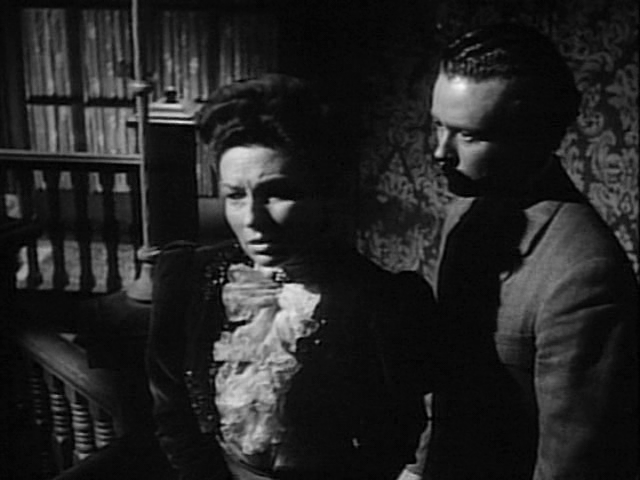
However, one tends to watch The Magnificent Ambersons even more for its undeniable artistic merits than for its storyline. As Peary notes, “Stanley Cortez’s creatively lighted deep-focus photography is extraordinary”, with “the scenes in the snow and the scenes in the Ambersons’ mansion… among the most visually striking in all of Welles’ [oeuvre].” Some have complained about Welles’ penchant for utilizing overly stylized camera angles at every opportunity, but a more pedestrian approach would surely have detracted from the film’s relentlessly intense emotional impact. Even in its “butchered” form, The Magnificent Ambersons remains a flawed but stylistically ambitious classic, one which is certainly worthy of any film fanatic’s attention.

Redeeming Qualities and Moments:

  • Joseph Cotten as Eugene Morgan (nominated by Peary as one of the Best Actors of the Year in his Alternate Oscars)
  • Agnes Moorehead as Aunt Fanny
  • Consistently creative direction by Welles

  • Stanley Cortez’s impressive deep-focus cinematography

  • Bernard Herrmann’s score

Must See?
Yes, as a unique — albeit flawed and disputed — American classic. Listed as one of the Best Pictures of the Year in Peary’s Alternate Oscars.

Categories

  • Important Director
  • Genuine Classic

(Listed in 1001 Movies You Must See Before You Die)

Links:

Kings Row (1942)

Kings Row (1942)

“Now, in this modern and complicated world, man breaks down under the strain and bewilderment, disappointment and disillusionment — gets lost, goes crazy, commits suicide.”

Synopsis:
In a small American town near the turn of the 20th century, an aspiring psychiatrist (Robert Cummings) loves the troubled daughter (Betty Field) of a renowned doctor (Claude Rains) who mentors him in his new career. Meanwhile, his happy-go-lucky childhood friend (Ronald Reagan) hopes in vain to marry the daughter (Nancy Coleman) of the town’s surgeon (Charles Coburn), but turns to another lifelong friend (Ann Sheridan) for companionship.

Genres, Themes, Actors, and Directors:

  • Ann Sheridan Films
  • Betty Field Films
  • Charles Coburn Films
  • Claude Rains Films
  • Friendship
  • Judith Anderson Films
  • Robert Cummings Films
  • Ronald Reagan Films
  • Sam Wood Films
  • Small Town America

Review:
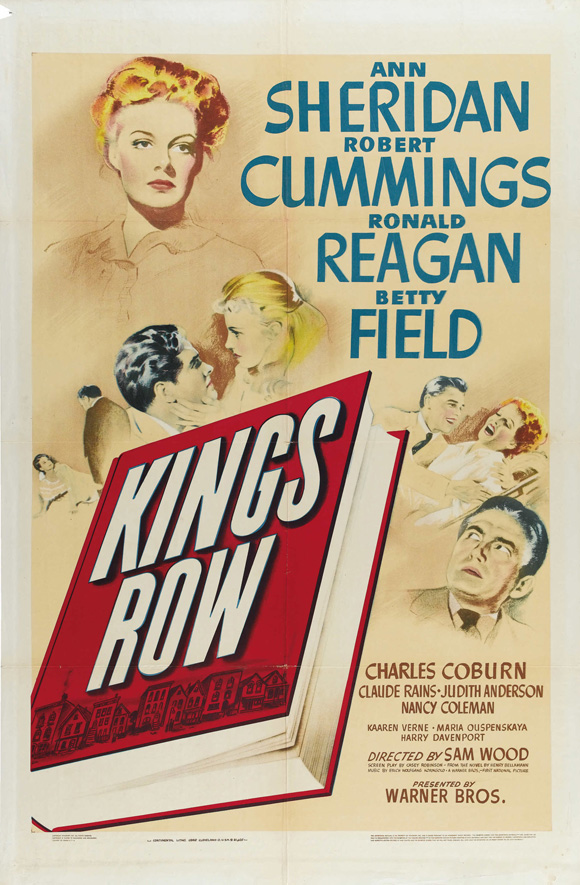
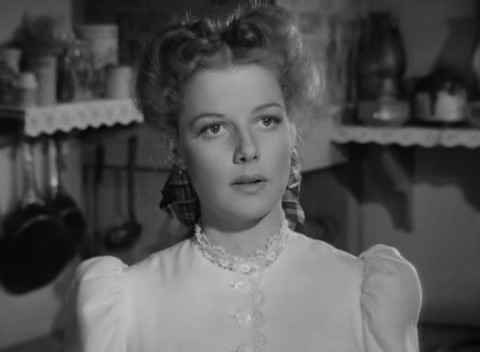
Based on the best-selling novel by Henry Bellamann, Kings Row is primarily known as the film where Ronald Reagan gave the best performance of his career — and though I haven’t seen all of Reagan’s movies, it would be hard to argue with that assertion. Indeed, while the movie’s nominal protagonist (“Parris Mitchell”) is played by Robert Cummings, Reagan’s “Drake McHugh” remains a much more fascinating individual to watch, as he shifts from a carefree existence as a trust-fund playboy to a young man with surprising levels of depth, loyalty, and honor; we can’t help but become inextricably involved in the arc of his troubled existence. Supporting performances by the large cast are fine as well — including Ann Sheridan as the girl from the “wrong side of the tracks” who falls for Drake, and Nancy Coleman as the daughter of a “mad” surgeon (Coburn) and his wife (Judith Anderson).

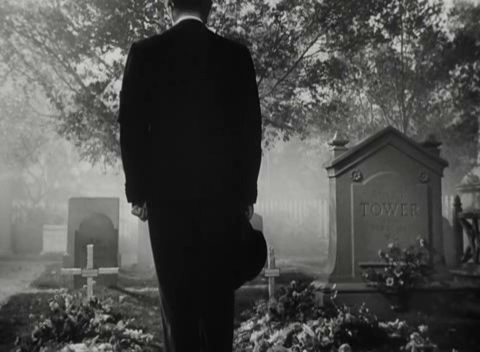
The multifaceted storyline — involving numerous romantic longings, family secrets, mental breakdowns, and other squalid details — was (not surprisingly) toned down quite a bit from the original novel, with a resulting screenplay that feels generally sordid yet a tad opaque at times. For instance, while we see how overly protective Dr. Tower (Rains) is of his sheltered daughter (played first by Mary Thomas, then Betty Field), the film doesn’t share with us the fact of their incestuous relationship (as revealed in the novel); instead, we’re left simply with countless “Don’t ask!” retorts by the increasingly disturbed Field, who is mysteriously forced by Rains to stay home from school at an early age. Indeed, Rains’ performance feels the most confusing in the film — he’s portrayed as a willing mentor to Cummings, yet clearly is ruining his daughter’s life, and thus can’t be seen as the type of life-altering “hero” Cummings builds him up to be.

Regardless, Kings Row remains an admirable counterpart to other cinematic depictions of small-town American life at the time, given that it concedes the need for psychiatric intervention at a time when “psychiatry” was an unknown term, and daringly portrays the presence of a “mad” surgeon whose nefarious practices are clearly far from Hippocratic. Meanwhile, both James Wong Howe’s atmospheric cinematography and William Cameron Menzies’ strategically designed sets contribute to the creation of a world which feels both familiar and spooky at the same time. Also of note is Erich Wolfgang Korngold’s soaring score, which was apparently a direct influence on John Williams’ work for Star Wars (1977) years later.

Redeeming Qualities and Moments:

  • Ronald Reagan as Drake
  • Fine supporting performances


  • James Wong Howe’s cinematography
  • William Cameron Menzies’ sets

Must See?
Yes, for Reagan’s tour-de-force performance, and as a fine melodrama in its own right. Listed as a film with Historical importance in the back of Peary’s book.

Categories

  • Good Show
  • Noteworthy Performance(s)

Links:

Return of Martin Guerre, The (1982)

Return of Martin Guerre, The (1982)

“Never was a husband so maligned!”

Synopsis:
In 16th century France, a young man named Martin Guerre (Stéphane Pean) leaves his wife (Sylvie Méda) and child to go off to war. Eight years later, a man (Gerard Depardieu) shows up in town and convinces his family and neighbors that he is Martin — but his uncle (Maurice Barrier) remains skeptical, especially when Martin insists on being paid the profits his land has made during his absence.

Genres, Themes, Actors, and Directors:

  • Courtroom Drama
  • French Films
  • Gerard Depardieu Films
  • Historical Drama

Review:
Based on an infamous real-life court case, The Return of Martin Guerre remains one of the most fascinating tales of contested identity in both cinematic and historical memory. Depardieu gives a fine, earthy performance as the man claiming to be Martin Guerre (who may or may not be telling the truth), while Nathalie Baye’s nuanced portrayal as his abandoned wife (Bertrande) allows us to feel every moment of both her confusion and her tentative joy. The nicely paced script spends just enough time on each facet of the compelling story, moving from Martin and Bertrande’s earliest years of unhappy marriage, to Martin’s surprise arrival in town years later, to the brief period of renewed contentment Martin and Bertrande experience before suspicions are raised and Martin is put on trial (first informally, then in court). If you’ve never seen the film before, or can’t quite recall how it resolves, you’re guaranteed to be kept in genuine suspense. Meanwhile, the attention paid to period detail is enough to recommend the film purely from an ethnographic perspective, as we witness the fascinating minutiae of daily life for this village of hardworking, mostly illiterate, but seemingly content peasants.

Redeeming Qualities and Moments:

  • Gerard Depardieu as Martin Guerre
  • Nathalie Baye as Bertrande
  • Fine attention to period detail


  • Lovely cinematography by Andre Neau
  • Michel Portal’s unusual score

Must See?
Yes, as a compelling foreign drama. Listed as a Personal Recommendation in the back of Peary’s book.

Categories

  • Foreign Gem

Links:

Tarzan and His Mate (1934)

Tarzan and His Mate (1934)

“It’s a bit fantastic, isn’t it? A well-bred English girl, living in the treetops with a glorified native apeman.”

Synopsis:
An Englishman (Neil Hamilton) and his friend (Paul Cavanagh) venture into the African jungle in search of an elephant burial ground, hoping to entice Jane (Maureen O’Sullivan) to leave her new life with Tarzan the Ape Man (Johnny Weissmuller) and return to “civilization”.

Genres, Themes, Actors, and Directors:

  • Africa
  • Cross-Cultural Romance
  • Jungles
  • Maureen O’Sullivan Films
  • Primates
  • Tarzan Films

Response to Peary’s Review:
Along with many other critics, Peary argues that this “second… of the Johnny Weissmuller-Maureen O’Sullivan Tarzan series” (a sequel to 1932’s Tarzan, the Ape Man) is the “best”. He notes that while “in future films, which were meant for family audiences, Tarzan becomes increasingly civilized and domesticated”, in “this adult film it is the lady, Jane, who reverts to her primitive nature and goes native”. He points out that while the movie “has a lot of action” (much of it quite exciting), the reason for its “cult status is that beautiful O’Sullivan wears one of the most revealing costumes in screen history: a tiny halter top and a loincloth that leave her thighs and hips exposed and little to the imagination”. Indeed, it’s rather stunning how much overt sensuality this pre-Code film manages to get away with, given that Jane (or her body double) “swims nude with Tarzan, is constantly pawed by him, sleeps in the nude, … [is] stranded in the jungle without clothes on … and is seen nude in silhouette when dressing in a well-lit tent”. Refreshingly, however, O’Sullivan’s character is not just sexy, but strong and independent — while Tarzan does rescue her time and again, in other ways she holds her own quite nicely, most notably in a climactic final scene involving fierce lions.

Note: In his review of this film for his Cult Movies book, Peary points out its similarities with Bird of Paradise (1932), starring Dolores del Rio (married to Cedric Gibbons, who directed at least part of Tarzan and His Mate).

Redeeming Qualities and Moments:

  • Maureen O’Sullivan as Jane
  • Plenty of astonishing pre-Code sensuality


Must See?
Yes, as the most infamous (and enjoyable) of the Tarzan/Jane films.

Categories

  • Historically Relevant

Links:

Ramrod (1947)

Ramrod (1947)

“If our plan works, you’ll be the foreman — the ramrod of the whole outfit.”

Synopsis:
A headstrong young woman (Veronica Lake) defies the wishes of her father (Charles Ruggles) by ignoring the romantic advances of a powerful local landowner (Preston Foster), instead deciding to run her own ranch with the help of a recovering alcoholic (Joel McCrea) and his friend (Don DeFore).

Genres, Themes, Actors, and Directors:

  • Joel McCrea Films
  • Lloyd Bridges Films
  • Preston Foster Films
  • Rivalry
  • Strong Females
  • Veronica Lake Films
  • Westerns

Review:
Hungarian-born director Andre De Toth is perhaps best known as the “one-eyed man who directed a 3-D movie” — The House of Wax (1953) with Vincent Price — but he possesses a small cult following for a handful of more obscure titles, including this noir-ish western (based on a story by western writer Luke Short) starring De Toth’s then-wife, Veronica Lake. Given the casting of Lake, viewers won’t be too surprised to find that her character quickly emerges as a femme fatale of sorts — a relentlessly calculating woman willing to use men for her own gain, and apply whatever romantic overtures she feels are necessary for any given cause. Interestingly, little effort is made at first to help contextualize the film’s milieu; we’re plunged immediately into a complex situation we only gradually come to understand. Once the pieces are in place, the narrative turns into a reasonably taut drama of rivalry and revenge, made more interesting given the presence of a strong, independent female as one of the two primary rivals.

Note: Diehard western fans will want to check out an extensive analysis of the film for Senses of Cinema, wherein critic Rick Thompson argues that it’s “a turning-point film — a skillful and moving summary of a long tradition… and a definitive break with that tradition, setting up a new area of possibilities which proceed to change the genre — in the direction of film noir.”

Redeeming Qualities and Moments:

  • Veronica Lake as a most unusual western femme fatale
  • Don DeFore as Bill Schell
  • Good use of Utah locales
  • Russell Harlan’s cinematography

Must See?
No, though it’s worth a look, and certainly must-see for anyone seriously interested in the genre. Listed as a Sleeper in the back of Peary’s book.

Links:

Anna Karenina (1935)

Anna Karenina (1935)

“I feel that we’re being watched eternally — watched and criticized, from all sides.”

Synopsis:
A married countess (Greta Garbo) falls in love with a handsome military man (Fredric March), but her socially conscientious husband (Basil Rathbone) refuses to provide her with a divorce, ultimately forcing her to choose between a life with her new lover and contact with her beloved son (Freddie Bartholomew).

Genres, Themes, Actors, and Directors:

  • Basil Rathbone Films
  • Clarence Brown Films
  • Freddie Bartholomew Films
  • Fredric March Films
  • Greta Garbo Films
  • Infidelity
  • Maureen O’Sullivan Films
  • Morality Police

Review:
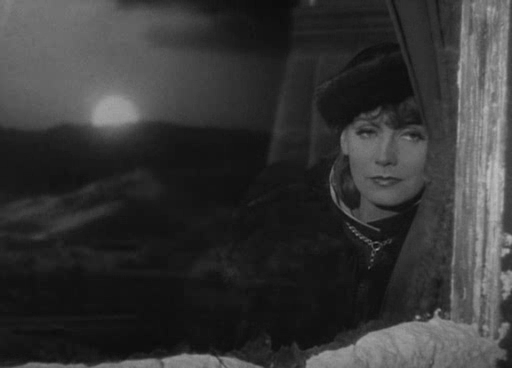
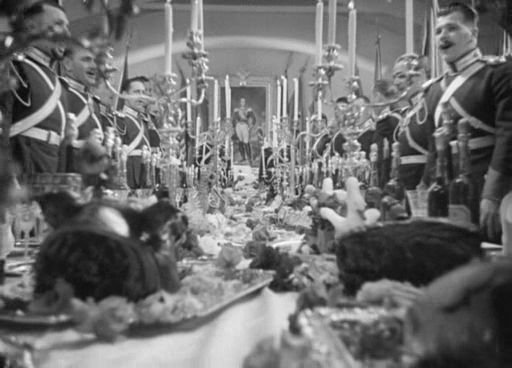
Tolstoy’s Anna Karenina has been adapted for the stage and screen numerous times, but this early version by director Clarence Brown remains perhaps the most famous and beloved. The screenwriters do a decent job compacting the meaty novel’s most critical plot points into a 90-minute storyline, though it lacks one essential element: a strong enough sense of why Anna would give up contact with her beloved son for a man like Count Vronsky. As played by March, his charm simply isn’t magnetic or overpowering enough to convince us he’s worthy of such a sacrifice by Anna, no matter how unhappy her marriage is to cold and rigid Karenin (Rathbone). The film opens rather creatively on a scene of Vronsky carousing with his military comrades, during which time we get a strong sense of this man as both “one of the boys” and apparently among the mightiest (given that he wins a lengthy drinking contest). Later, once he lays eyes on luminous Anna (Garbo) emerging in a shroud of mist from her train, we can see how and why he’d be smitten — but too little time is ultimately spent building a sufficient context for their life-changing romance.

However, Anna Karenina is really all about its titular character — and this film is Garbo’s all the way. She inhabited the role once before, in a silent adaptation by Edmund Goulding entitled Love (1927); ironically, that version — while too pared down narrative-wise to remain a must-see adaptation of the novel — demonstrates chemistry in spades, given the very-real romantic tensions between Garbo and her on-and-off-screen lover, John Gilbert. Nonetheless, those hoping for a more authentic, albeit radically condensed, look at Tolstoy’s famous novel would be best off checking out this version, which features lovely cinematography by William Daniels (who also served as DP on Love) and creative direction by Brown, who worked with Garbo in no less than seven of her films — including Flesh and the Devil (1927) and Anna Christie (1930). Watch for Maureen O’Sullivan in a truncated role as Kitty, who initially has eyes for Vronsky herself.

Redeeming Qualities and Moments:

  • Greta Garbo as Anna Karenina
  • William Daniels’ luminous cinematography

  • Often-inspired direction by Brown

Must See?
Yes, simply to see Garbo in one of her most iconic roles.

Categories

Links:

Behind the Green Door (1972)

Behind the Green Door (1972)

“You warm up my coffee, and I’ll tell you the story.”

Synopsis:
While stopping for coffee, two truck drivers are told a story about a socialite (Marilyn Chambers) who is kidnapped and forced to perform in a sex show-turned-orgy.

Genres, Themes, Actors, and Directors:

  • Adult Films
  • Kidnapping
  • Nightclubs

Response to Peary’s Review:
As Peary writes, this “p**** chic about a beautiful young woman (Marilyn Chambers) who is kidnapped, then forced to perform a series of sexual acts before members of an exclusive club — and eventually ends up enjoying the ‘sexually liberating’ experience” — is a “landmark adult film [that] appealed to those who preferred screen sex to be erotic rather than raunchy, as it is in Deep Throat and The Devil in Miss Jones, the other two triple-X-rated blockbusters of the early seventies.” He adds that while “it has a male-fantasy storyline — borrowed from a male-written pamphlet that soldiers passed around during WWII — it has proven popular with women, especially as a video,” which is likely “due to directors Jim and Art Mitchell’s choice to photograph it in a hypnotic, dreamlike fashion so that women might be drawn in and recognize their own… fantasies.”

The Mitchells may also have “hoped women would want to identify with Chambers, who, unlike earlier sex-film actresses, was good-looking, shapely, [and] healthy — a blonde All-American girl who once adorned boxes of Ivory Snow with a baby on her knee.” Indeed, Peary writes that “much of the film’s initial success was a result of people wanting to see the 99-44/100-percent pure ‘Ivory Snow girl,’ a minor celebrity whose face they knew well, participate in sex acts.”

He asserts that while the “picture is well made and [the] Mitchell Bros. strive for art,” he doesn’t “find it much livelier than an elaborate stag film,” with “even the most unusual sex acts shift[ing] from being erotic to embarrassing and boring.” In his first Cult Movies book, Peary contextualizes this film within the broader history of adult films, noting that “all across the country [in the late sixties], raincoated men were sneaking in and out of theaters showing skin flicks” — but “this would change in a hurry due to public acceptance of a number of soft-core sex films as ‘legitimate’ motion pictures.” For instance, “Russ Meyer’s Vixen (1968), Radley Metzger’s Therese and Isabelle (1968) and his subsequent Camille 2000 (1969) and The Lickerish Quartet (1970), the earlier Swedish-made, Metzger-imported I, a Woman (1966)” and others “were major breakthrough films.” He notes that “these made filmmakers aware that for a sex film to be commercially successful it must attract women as well as men, and that the best way to arouse female interest was to make films about women striving for sexual fulfillment.”

To that end, he adds that “the commercial success in America of the Swedish I Am Curious (Yellow) (released in the United States in 1969), a political film that contains a couple of moments of explicit sex, proved that women would come to hard-core sex films provided they played in first-run theaters.” He notes that “the first hard-core films to get bookings in suburban and neighborhood theaters were quasi-documentaries and ‘educational’ marriage-manual films” like “Bill Osco’s Mona (1970), about a girl who can’t get enough of [a certain type of sex],” and then “Paul Gerber’s School Girl (1970), a fairly good sex comedy about a girl who enters the sexual underground so she can gather information for a college term paper” — both of which “made inroads in attracting a mixed audience.” Finally, Peary notes his appreciation for the fact that Chambers (unlike Linda Lovelace in Deep Throat) “was given a salary plus residuals for participating in Green Door,” and thus “when the picture took off at the box office she justifiably made a great deal of money.”

Final note: The presence of ~38 adult films in Peary’s GFTFF (not including many more soft-core titles) is a contentious one among his fans, and I’ve gone back and forth myself in terms of whether or not to include them. With that said, I do think all cinema buffs will be curious to at least fast-forward through the three most formative titles, and this is one of them.

Notable Performances, Qualities, and Moments:

  • Reasonable production values and artistic sensibility

Must See?
Yes, once, simply for its pivotal role in adult film history.

Categories

  • Historically Relevant

Links:

Planet of the Vampires (1965)

Planet of the Vampires (1965)

“None of this — this madness that has touched some of us — none of this is coincidence; this was planned.”

Synopsis:
A team of astronauts land on a mysterious planet whose inhabitants seek to take over their bodies and minds.

Genres, Themes, Actors, and Directors:

  • Horror Films
  • Mario Bava Films
  • Mind Control and Hypnosis
  • Science Fiction
  • Space Exploration

Review:
Mario Bava directed this low-budget Gothic sci fi-horror flick, which bears more than a passing resemblance to Ridley Scott’s Alien (1979) (though both Scott and screenwriter Dan O’Bannon claim not to have seen this earlier film before making Alien). As DVD Savant points out in his review, Planet of the Vampires — just one of nine alternate titles considered for the film — “doesn’t have a well-written script or interesting characters”; instead, the action consists primarily of “a repetitive series of fights and disappearances among interchangeable spacemen” (and no, there aren’t any actual vampires). However, as Savant points out, the film’s “appeal lies in director Bava’s creation of an eerie and unsettling alien world that is its own reason for being” — and it’s the stunning visuals that keep one consistently engaged in the story. Indeed, for such a low-budget picture, it’s astonishing how much colorful atmosphere Bava and his creative team manage to pack into each frame of the movie; I couldn’t help myself from snapping still after still as evidence (see below). While it’s ultimately too uneven to be considered any kind of a classic of the genre, Bava fans will most certainly want to check this one out — and all film fanatics should take a one-time look simply due to its cult status.

Redeeming Qualities and Moments:

  • Wonderfully atmospheric low-budget sets and visual effects (though not necessarily of the spaceships…)


Must See?
Yes, as a creatively produced and influential cult favorite. Listed as a Cult Movie in the back of Peary’s book.

Categories

  • Cult Movie

Links:

Reflections in a Golden Eye (1967)

Reflections in a Golden Eye (1967)

“Any fulfillment obtained at the expense of normality is wrong, and should not be allowed to bring happiness.”

Synopsis:
A latently homosexual army major (Marlon Brando) enjoys ogling a handsome young private (Robert Forster) who is secretly spying on Brando’s wife (Elizabeth Taylor) at night. Meanwhile, Taylor carries on an affair with Brando’s best friend (Brian Keith), whose mentally ill wife (Julie Harris) is cared for by a devoted Filipino named Anacleto (Zorro David).

Genres, Themes, Actors, and Directors:

  • Brian Keith Films
  • Deep South
  • Elizabeth Taylor Films
  • John Huston Films
  • Julie Harris Films
  • Marital Problems
  • Marlon Brando Films
  • Sexual Repression

Review:
Critical opinions seem firmly divided on this unusual directorial outing by John Huston, based upon a 1941 novel by Carson McCullers about sexual repression on an army base in North Carolina. While some view it as simply a gothic mish-mosh in which outlandishly perverse characters converge in a hotbed of unrealistically melodramatic tensions, others recognize it as a uniquely compassionate perspective on the vagaries of sexual repression and expression, as seen through the collective visions of McCullers and Huston. My opinion ultimately lies somewhere in between both extremes: I value the film’s deeply penetrating gaze on humanity, as depicted through a group of individuals trying to find their place in a world which clearly doesn’t approve of their needs and desires; at the same time, there’s no denying the overtly melodramatic thrust of the entire situation.

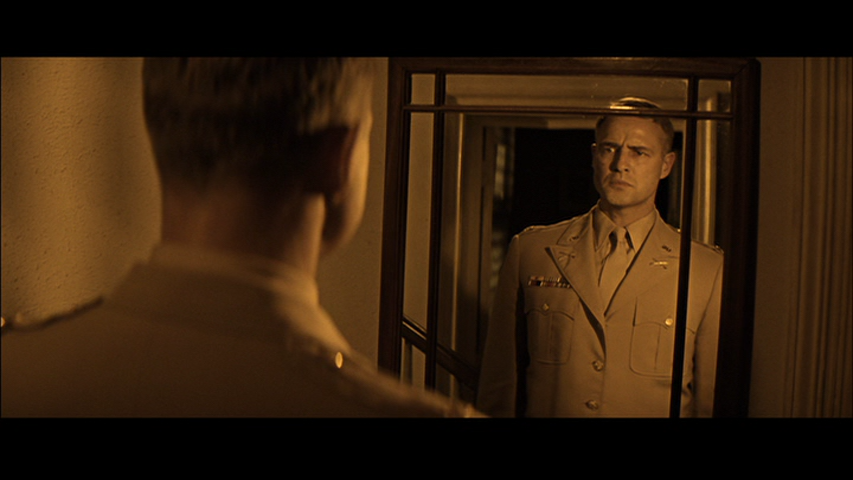
Underlying the entire film are two primary strengths: first is its unique look, as specifically envisioned by Huston, who (working with DP Aldo Tonti) had the color strategically desaturated from the film stock in an attempt to emulate the story’s titular perspective. While the film was only allowed to run in theaters for a week with this color scheme (before saturation was added back in to make it more palatable to mass audiences), the restored version is now available, and is quite a visual treat. Second, it features a truly heartbreaking and noteworthy performance by Brando, embodying a tragically repressed army major who has clearly maintained a facade of “normalcy” and rigor for far too long. Brando’s every expression reveals the depth of his character’s confusion, anger, and desire, and he’s consistently fascinating to watch.

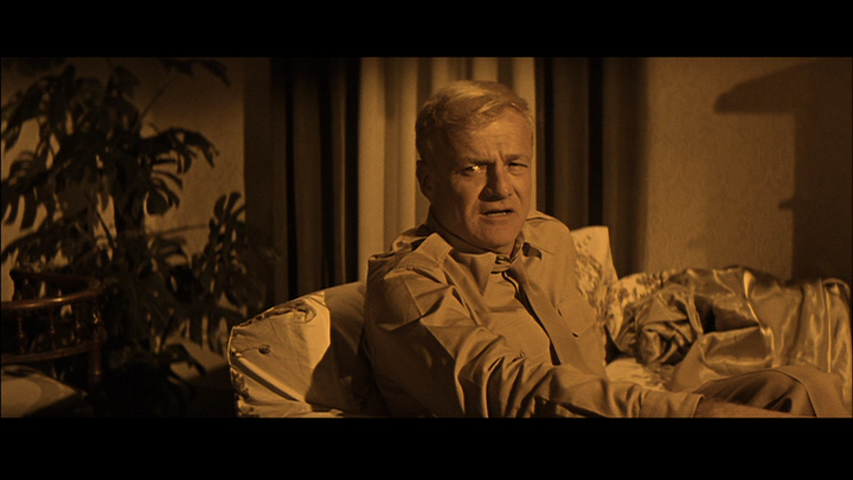
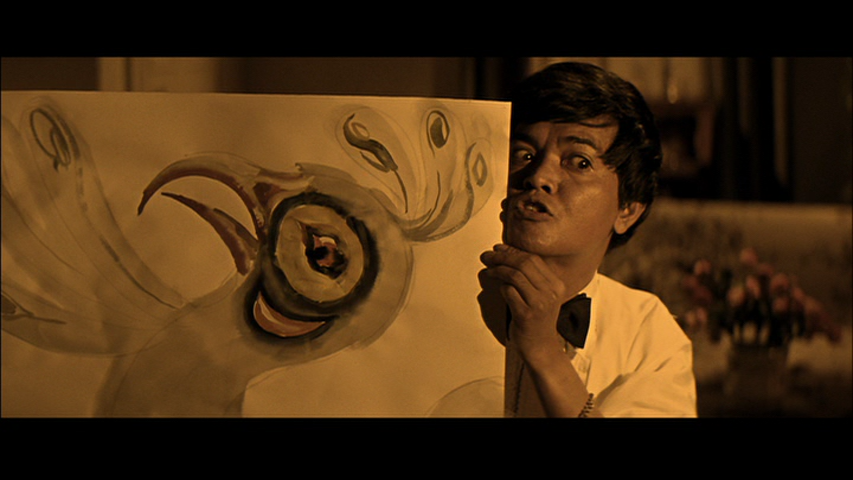
Meanwhile, the supporting actors all do fine work in their respective roles. Both Taylor and Harris are well-cast as Brando and Keith’s unhappily married wives, who find solace through radically different venues; Keith once again demonstrates his capability as the ultimate “everyman” with a surprising depth of heart; and unknown actor Zorro Davis makes an indelible mark as the flamboyantly “artistic” Filipino manservant Anacleto. In his screen debut, Forster isn’t called upon to do much more than brood, sniff lingerie, and ride naked on horseback, but he suits the role. Together, the ensemble presents a powerful if at times mind-boggling drama about (sexual) identity and one’s place in a world which would much rather not accommodate square pegs in round holes.

Note: There was once a rather active message board for this film on IMDb, where one poster offered this interesting perspective on the various characters and their sexual identities:

Penderton (Brando) = closeted gay
Anacleto (David) = frustrated gay
Williams (Forster) = closeted hetero
Langdon (Keith) = frustrated hetero

Alison (Harris) = inactive hetero female
Leonora (Taylor) = active hetero female

This breakdown, while perhaps overly simplistic, does give one additional food for thought.

Redeeming Qualities and Moments:

  • Marlon Brando as Major Weldon
  • Brian Keith as Lt. Col. Morris
  • Zorro David as Anacleto
  • Gorgeous cinematography

Must See?
Yes, as a unique cinematic experience by a master director.

Categories

  • Important Director

Links: