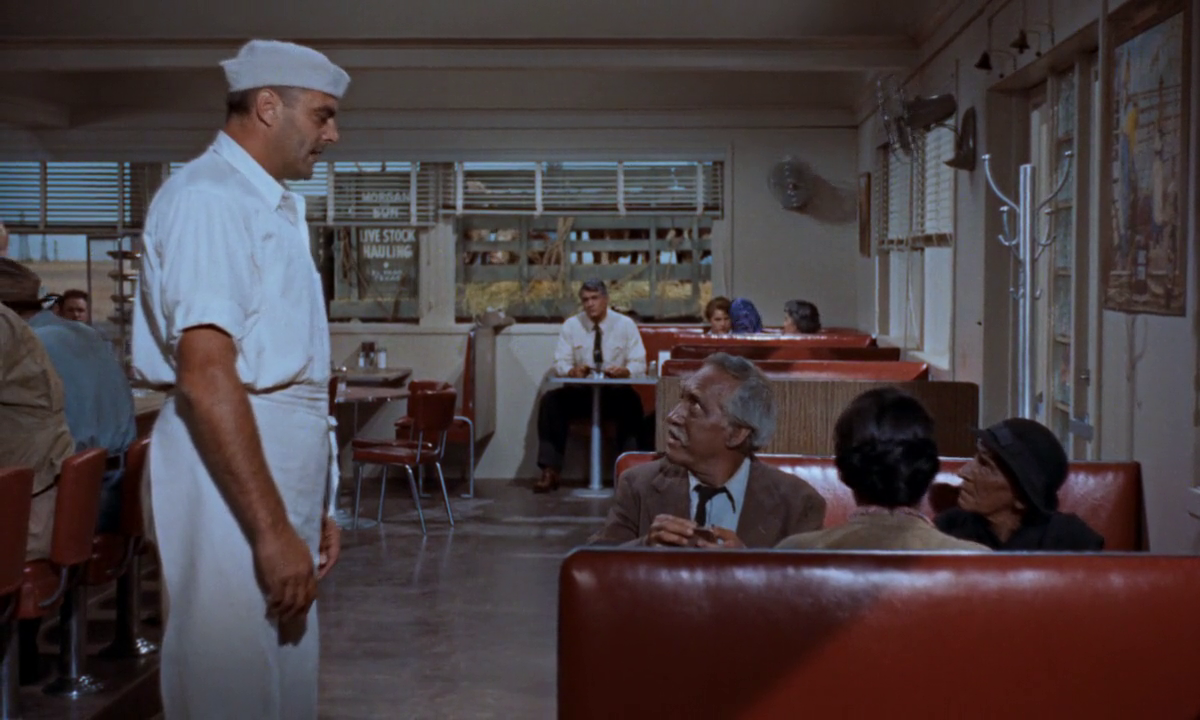
Elmer Gantry (1960)

Elmer Gantry (1960)

“You’re amusing — and you smell like a real man.”

Synopsis:
When smooth-talking salesman Elmer Gantry (Burt Lancaster) falls for a beautiful evangelist (Jean Simmons), he quickly finagles his way into a job with her revivalist group, which is being covered by a skeptical journalist (Arthur Kennedy) — but will Gantry’s past relationship with a prostitute (Shirley Jones) impede his chances at success with Sister Sharon (Simmons)?

Genres, Themes, Actors, and Directors:

  • Arthur Kennedy Films
  • Blackmail
  • Burt Lancaster Films
  • Dean Jagger Films
  • Hugh Marlowe Films
  • Jean Simmons Films
  • John McIntire Films
  • Journalists
  • Missionaries and Revivalists
  • Prostitutes and Gigolos
  • Richard Brooks Films
  • Shirley Jones Films

Review:
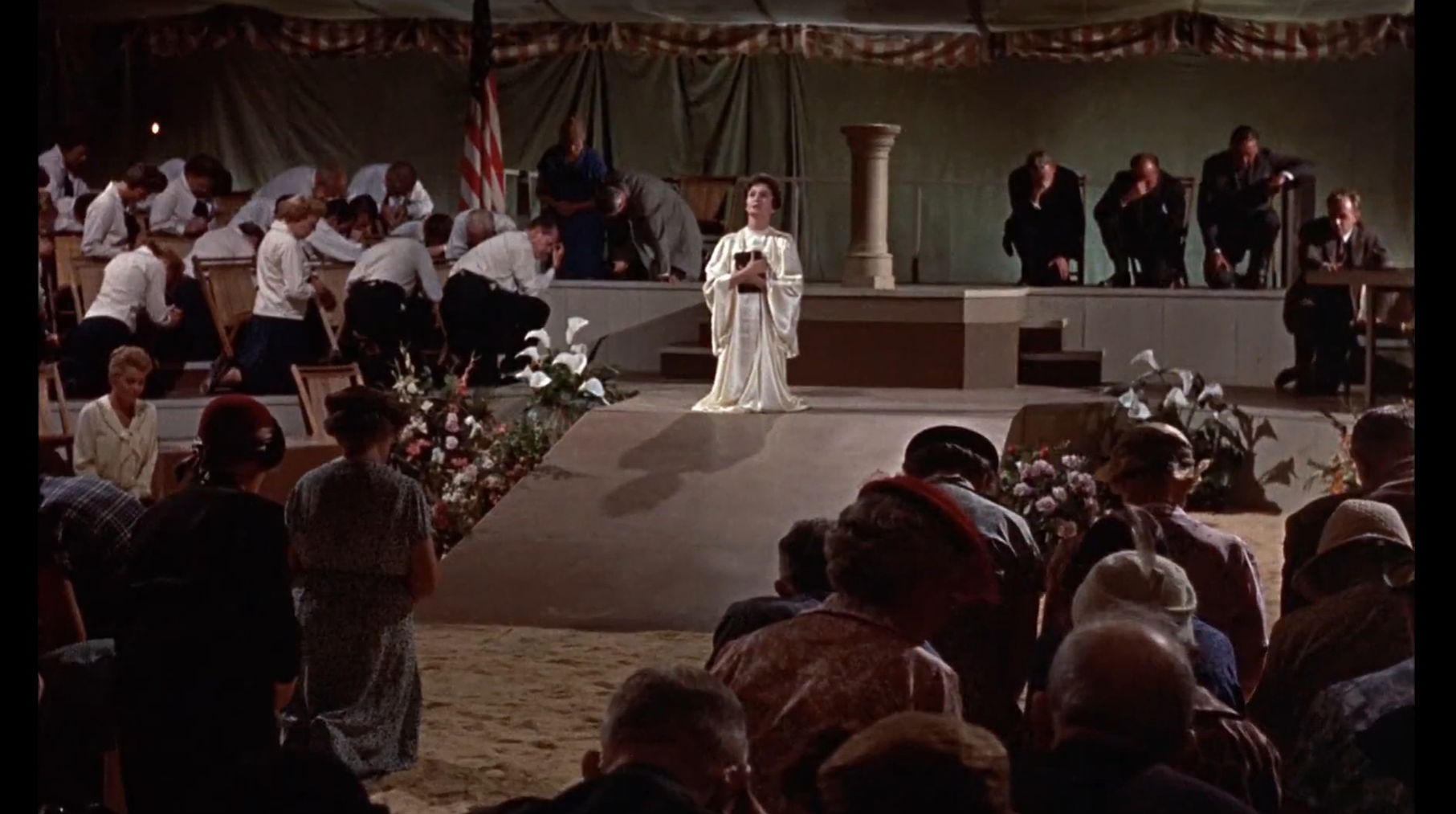
Peary doesn’t review this adaptation of Sinclair Lewis’s 1927 satirical novel in his GFTFF, but he discusses the lead performances in Alternate Oscars, where he names Simmons Best Actress of the Year. In describing Lancaster’s Oscar-winning title role, Peary notes that with his “booming voice, toothy grin, boundless energy, dauntless spirit, exaggerated gestures, two-fisted masculinity, the slickness of a snake-oil salesman, the showmanship of the Mighty Barnum…, and strong doses of tenderness and intelligence”, Lancaster “gave a bravura performance” worthy of acclaim (though Peary hands the actual Alternate Oscars award to Anthony Perkins in Psycho). Regarding Simmons, Peary laments her (relative) career-long lack of recognition by Hollywood in terms of awards, and notes that she’d “been impressive since the mid-forties” but “peaked in Elmer Gantry, giving her most self-assured performance in her most difficult role” as a character based on Aimee Semple McPherson.

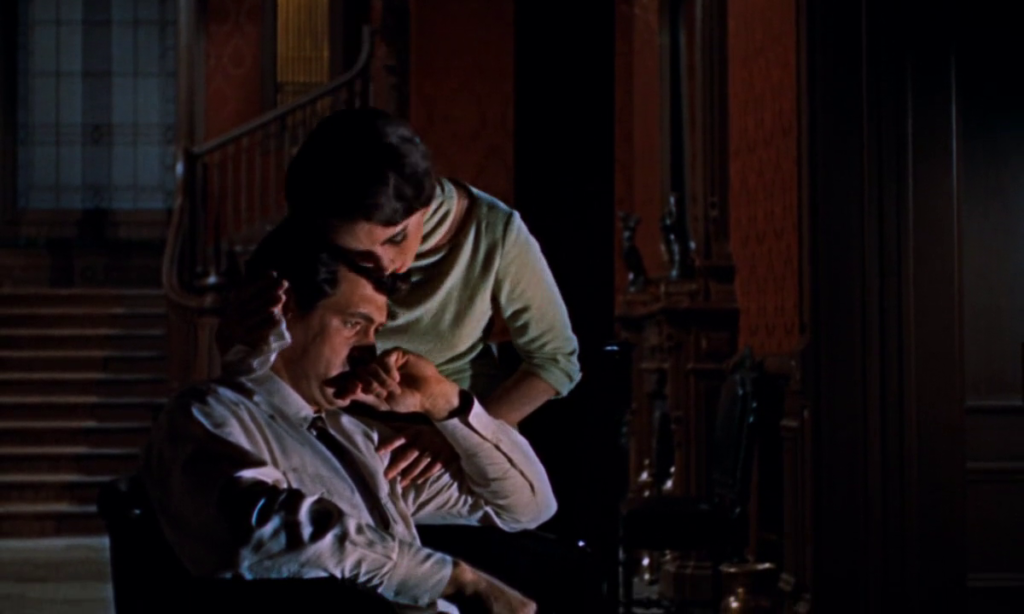
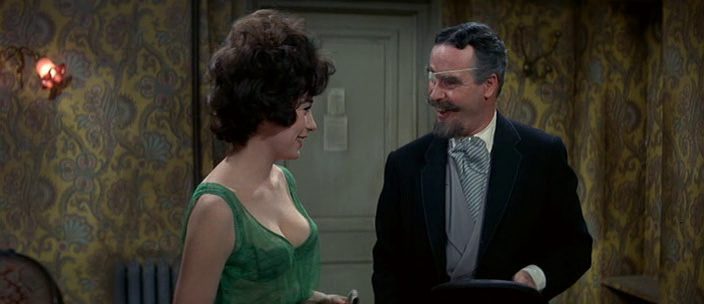
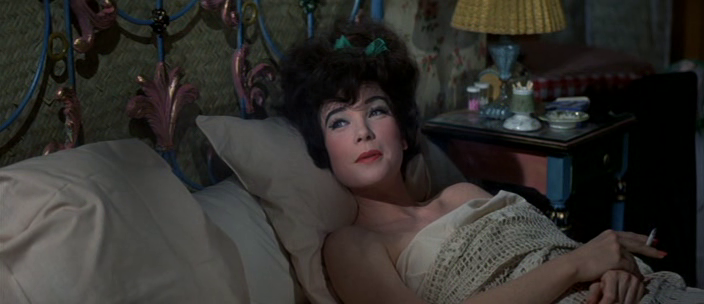
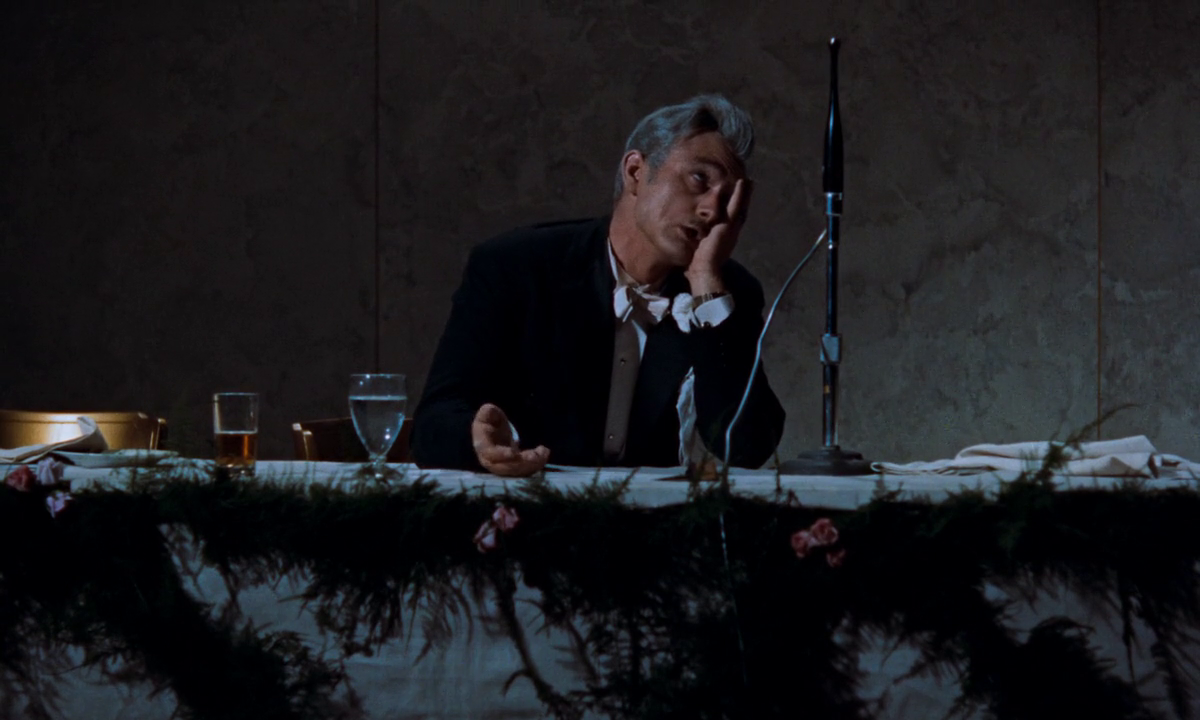
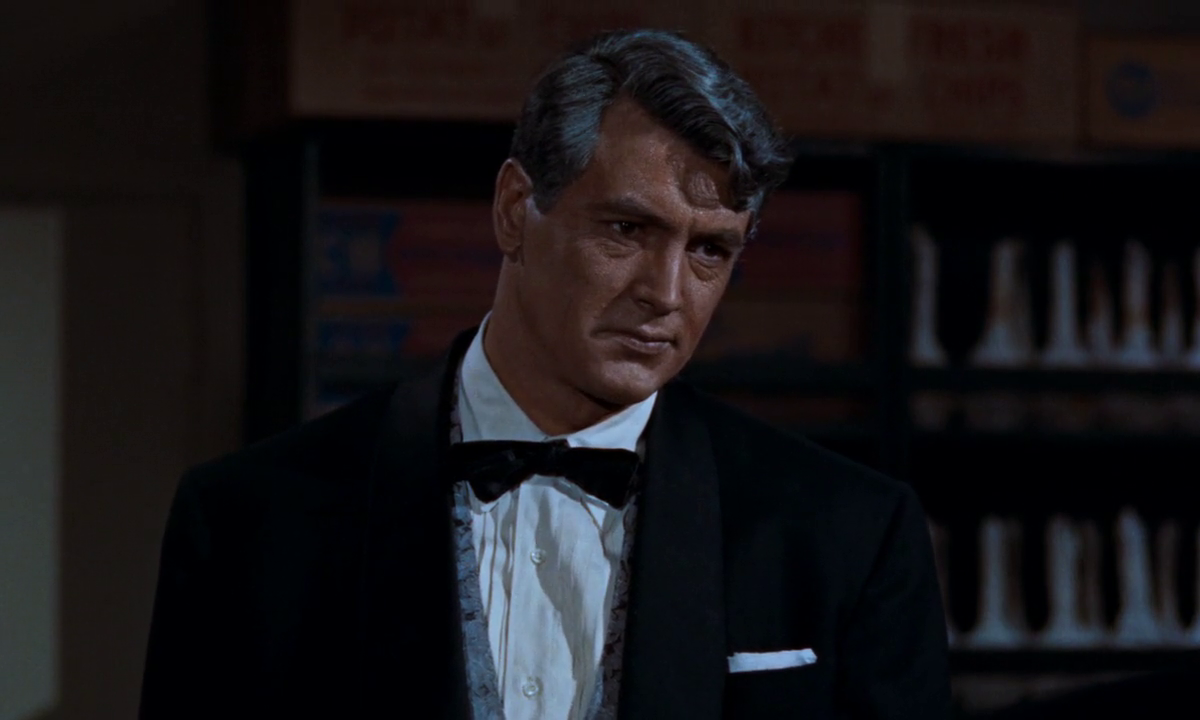
Peary writes that “it is the hard, naughty edge Simmons gives her character that makes her exciting”: while “Sharon’s a good person” (she’s a true believer, not a con-artist), “she’s no goody-goody, and no prude”; indeed, “she has as much fight in her as Gantry.” Simmons is indeed luminous and refreshingly tough — and is well-matched by finely cast Lancaster, who apparently stated, “Some parts you fall into like a glove. Elmer really wasn’t acting. It was me.” I’m less a fan of Shirley Jones’s Oscar-winning supporting performance as a blackmailing prostitute (Jones is trying a tad too hard to throw off her peaches-and-cream starring roles in Oklahoma! and Carousel):

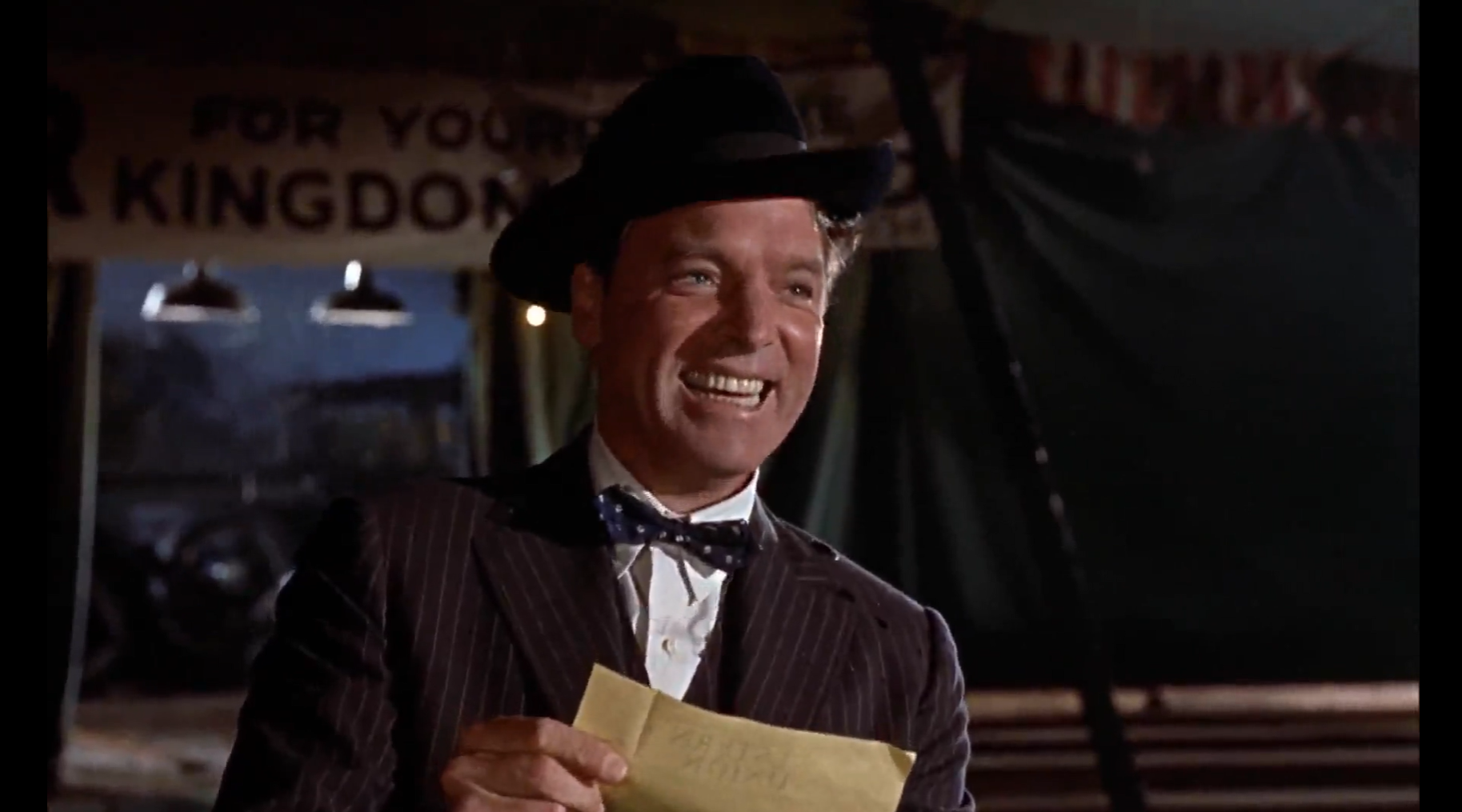
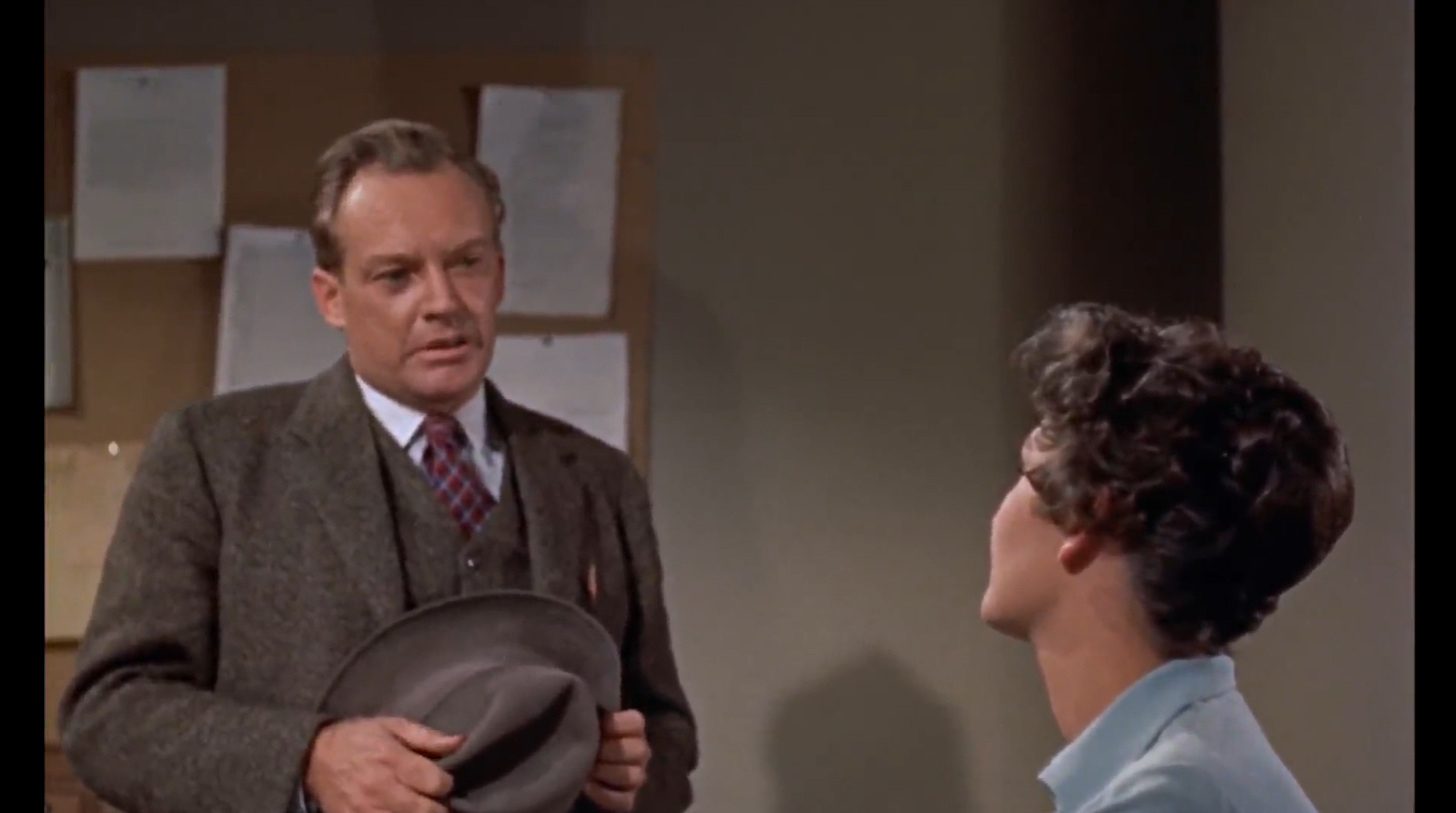
… but I appreciate Arthur Kennedy’s convincing portrayal as a journalist who finds himself more deeply involved in his story than he anticipated. Meanwhile, John Alton’s cinematography is beautiful, vividly bringing this specific era of American history to life.

Redeeming Qualities and Moments:

  • Burt Lancaster as Elmer Gantry
  • Jean Simmons as Sister Sharon
  • Arthur Kennedy as Jim Lefferts
  • John Alton’s cinematography

Must See?
Yes, once, for the lead performances. Nominated as one of the Best Pictures of the Year Alternate Oscars.

Categories

  • Noteworthy Performance(s)
  • Oscar Winner or Nominee

Links:

Oklahoma! (1955)

Oklahoma! (1955)

“You ain’t never gonna get rid of me — never.”

Synopsis:
A young woman (Shirley Jones) living with her aunt (Charlotte Greenwood) debates whether to go to the local dance with her cowboy-boyfriend (Gordon MacRae) or the sinister hired hand (Rod Steiger) who’s offered to drive her there; meanwhile, a local flirt (Gloria Grahame) is unsure whether her father (James Whitmore) will force her to settle down with a cowboy (Gene Nelson) or a travelling salesman (Eddie Albert).

Genres, Themes, Actors, and Directors:

  • Eddie Albert Films
  • Fred Zinneman Films
  • Gloria Grahame Films
  • James Whitmore Films
  • Musicals
  • Play Adaptation
  • Rivalry
  • Rod Steiger Films
  • Shirley Jones Films

Review:
This adaptation of Rodgers and Hammerstein’s enormously popular 1943 Broadway musical (their first collaboration) is notable for featuring Shirley Jones in her screen debut, for being filmed simultaneously in Todd-AO and CinemaScope, and for bringing the stage experience as directly as possible to the screen (i.e., all original songs were kept and no new ones added, though there were slight modifications to the timing and location of the songs). Speaking of the songs, all the musical numbers — including “Oh, What a Beautiful Mornin'”, “The Surrey With the Fringe On Top”, “Kansas City”, “The Farmer and the Cowman”, and “Oklahoma” — are beautifully staged and sung, with one exception: Grahame as Ado Annie squeaking out “I Cain’t Say No”. (Everything about Annie’s love triangle dilemma — including Eddie Albert’s demeaning portrayal of a Persian travelling salesman more interested in bedding than wedding women, and Gene Nelson’s impossibly stupid besotted cowboy — is simply silly.) Meanwhile, Rod Steiger’s performance as a dangerously sullen hired hand — as well as a nightmare dance sequence indicating that Jones is right to be wary of him — are completely out of place in this otherwise light-hearted musical; it’s painful watching MacRae singing a song to Steiger early on about how he’ll finally be remembered once he’s dead, so he might want to consider suicide (“Pore Jud is Daid”). This film remains worth a one-time look for the musical numbers, but otherwise hasn’t held up well.

Redeeming Qualities and Moments:

  • Highly memorable Rodgers and Hammerstein songs

  • Beautiful cinematography
  • Fine dance numbers
  • Charlotte Greenwood as Aunt Eller

Must See?
No, but it’s worth a look for historical purposes, and certainly a one-time must-see for musical fans.

Links:

Carousel (1956)

Carousel (1956)

“I just couldn’t get the hang of being married.”

Synopsis:
A man (Gordon MacRae) who has been dead for 15 years reflects back on his troubled marriage to a girl (Shirley Jones) he met while working as a carousel barker, then negotiates with a starkeeper (Gene Lockhart) to go back down for Earth for one day to make amends with his wife and teenage daughter (Susan Luckey).

Genres, Themes, Actors, and Directors:

  • Cameron Mitchell Films
  • Henry King Films
  • Life After Death
  • Marital Problems
  • Musicals
  • Play Adaptations
  • Shirley Jones Films

Review:
This adaptation of Rodgers and Hammerstein’s 1945 Broadway musical — directed by Henry King — tells the problematic tale of a handsome but unemployed loser named Billy (MacRae) who manages to marry one of the sweetest girls in town (Julie) and causes her little but heartbreak before leaving her pregnant and widowed. The culminating moral, believe it or not, is that Billy doesn’t really mean to hurt Julie (Jones) when he hits her — and gosh darn it, it’s just too bad he had to go and get killed while participating in a robbery with his no-good accomplice (Cameron Mitchell). The narrative counterpart to Julie and Billy’s marriage is Julie’s friend Carrie (Barbara Ruick), who marries a pompous but stable fisherman (Robert Rounseville) and eventually produces a prodigious brood — though it’s not exactly clear whether we’re supposed to wish Julie had made a similar choice (?). There is so little to this flimsily told tale — framed by MacRae being given an opportunity to go down to Earth for just one day, at which point he attempts to convince his daughter that she shouldn’t feel held back by what a louse her dad was — that one watches simply to enjoy the colorful cinematography and musical numbers, including the infectiously choreographed “June is Bustin’ Out All Over”. Feel free to skip this one unless you’re a diehard Rodgers and Hammerstein fan.

Redeeming Qualities and Moments:

  • Colorful cinematography
  • Some enjoyable musical numbers

Must See?
No; this one isn’t must see.

Links:

Irma la Douce (1963)

Irma la Douce (1963)

“This isn’t just a job — it’s a profession!”

Synopsis:
After beating up the john (Bruce Yarnell) of a popular Parisian prostitute (Shirley MacLaine), a strait-laced policeman (Jack Lemmon) falls in love with Irma (MacLaine) but soon finds himself increasingly jealous and intolerant of her work. With the assistance of a local bar owner (Lou Jacobi), Lemmon concocts an elaborate plan to pretend to be a wealthy British nobleman who will pay her simply to play solitaire — but how long can the ruse last?

Genres, Themes, Actors, and Directors:

  • Billy Wilder Films
  • Feminism and Women’s Issues
  • Jack Lemmon Films
  • Mistaken or Hidden Identities
  • Play Adaptation
  • Police
  • Prostitutes and Gigolos
  • Romantic Comedy
  • Shirley MacLaine Films
  • Strong Females

Review:
Three years after co-starring in Billy Wilder’s The Apartment (1961), Lemmon and MacLaine reunited as a romantic couple in this decidedly lighter fare, based on a 1956 French musical play. Unfortunately, the shift from musical to romantic comedy doesn’t do the awkward storyline any favors: we can tell from the get-go that challenges will arise if Lemmon allows himself to seriously fall for Irma (MacLaine), given her self-selected profession — and her sincere lack of desire to stop “working for her man”. The characters are so broadly drawn — and the scenes so farcically sketched — that we know we should laugh, but the situation simply isn’t funny. Irma is being duped on multiple levels — not just by Lemmon’s refusal to admit that he can’t stomach her career, but by his duplicitous enactment as Lord X (which, of course, implies that Irma is too clueless to recognize her own boyfriend-in-disguise for hours on end).

While the colorful cinematography and sets are pleasant to look at, you can feel free to skip this one; it’s not essential viewing.

Redeeming Qualities and Moments:

  • Shirley MacLaine as Irma
  • Jack Lemmon as Nestor
  • Joseph LaShelle’s cinematography

Must See?
No; you can skip this one.

Links:

Tarnished Angels, The (1957)

Tarnished Angels, The (1957)

“I need this plane — like an alcoholic needs his drink.”

Synopsis:
A boozy reporter (Rock Hudson) covering a carnival barnstorming event falls for the sexy wife (Dorothy Malone) of a daredevil pilot (Robert Stack), and quickly becomes enmeshed in their lives and marital drama — including rumors that their mechanic (Jack Carson) may be the father of their son (Christopher Olsen), and attempts by Stack to bribe an airplane owner (Robert Middleton) into letting him use his questionably functional plane.

Genres, Themes, Actors, and Directors:

  • Airplanes and Pilots
  • Carnivals and Circuses
  • Dorothy Malone Films
  • Douglas Sirk Films
  • Jack Carson Films
  • Journalists
  • Marital Problems
  • Robert Stack Films
  • Rock Hudson Films
  • Troy Donahue Films

Review:
Douglas Sirk’s adaptation of William Faulkner’s 1935 novel Pylon reunited the stars of his previous melodrama — Written on the Wind (1956) — for yet another potboiler about fiery-tempered individuals living life at the extremes. Sexy Malone serves as the emotional core of the story, sucking Hudson into her sad saga without necessarily meaning to, while Stack is presented as a flying addict whose need for aerial freedom trumps all else (including the sanctity of his marriage), and Carson simply waits in the wings to provide support in whatever way he can. While the cinematography is beautiful and the performances are fine, I can’t recommend this as must-see for anyone other than Sirk fans — who consider it among his best.

Redeeming Qualities and Moments:

  • Robert Stack and Dorothy Malone as the conflicted but loving stunt couple
  • Exciting aerial sequences

  • Fine cinematography

Must See?
No, though Sirk fans will of course want to check it out. Listed as a Cult Movie and a Personal Recommendation in the back of Peary’s book.

Links:

Giant (1956)

Giant (1956)

“We Texans like a little vinegar in our greens, honey — gives ’em flavor.”

Synopsis:
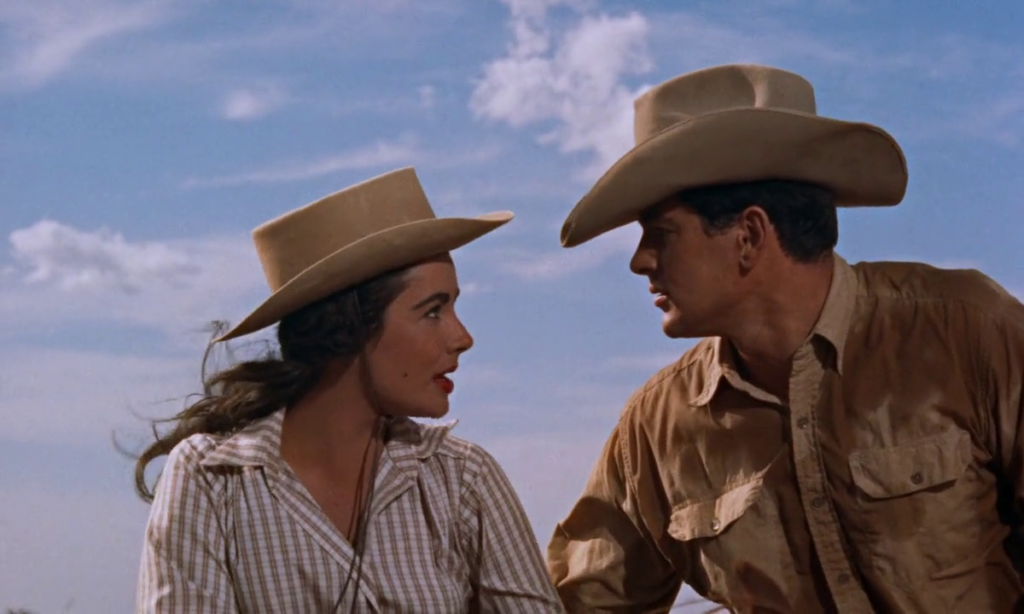
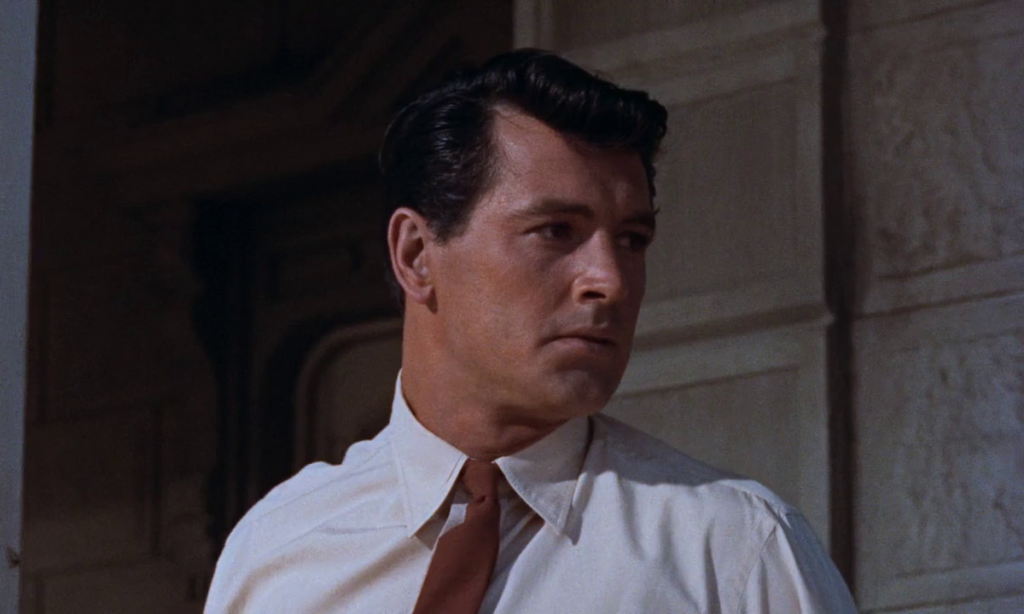
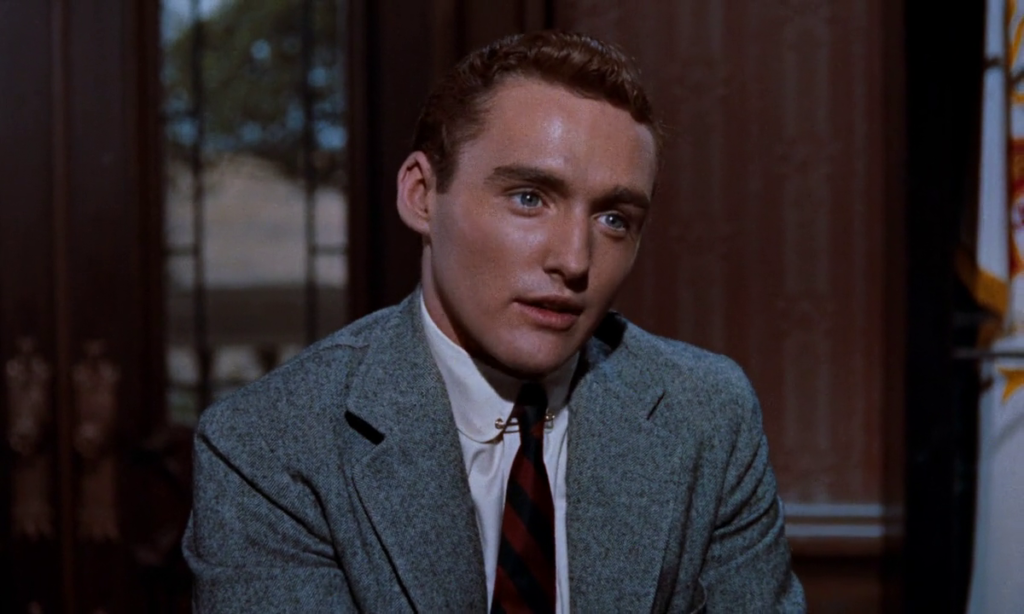
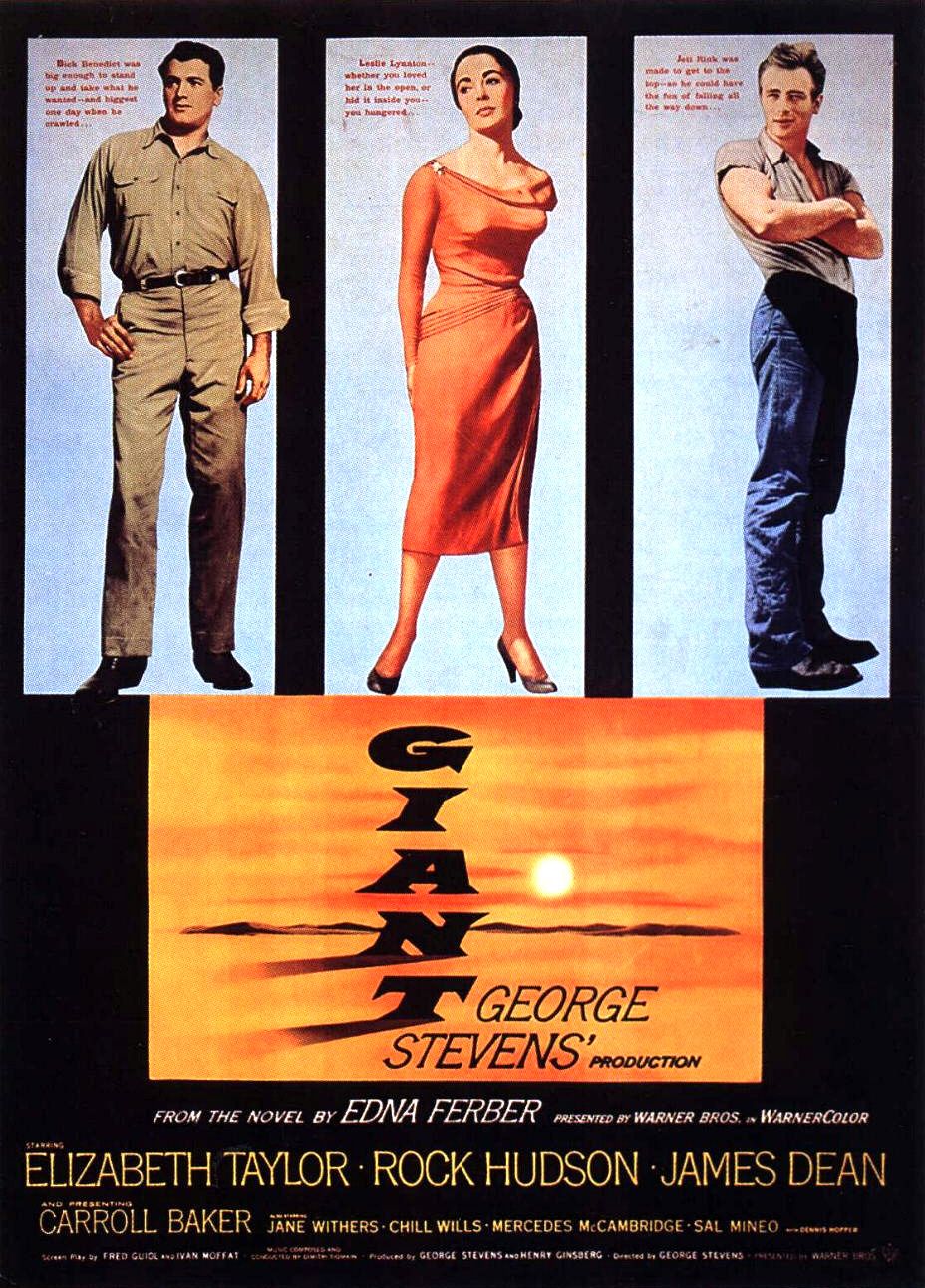
After a wealthy Texan rancher (Rock Hudson) marries the beautiful daughter (Elizabeth Taylor) of an East Coast doctor (Paul Fix) and socialite (Judith Evelyn) — with Taylor swiftly rejecting her would-be British fiance (Rod Taylor) — the couple settle into life on Reata Ranch, where Hudson’s sister (Mercedes McCambridge) is wary about her position as head-female being disrupted; a disgruntled cowhand (James Dean) becomes smitten with Taylor; and Taylor attempts to better the lives of marginalized locals. Dean eventually strikes oil on a small piece of land given to him by McCambridge, and years later, Hudson and Taylor’s grown kids — Jordan (Dennis Hopper), Luz (Carroll Baker), and Judy (Fran Bennett) — find their own way through life: Hopper faces the wrath of his father for not wanting to take over the family ranch, and racist backlash for falling in love with the daughter (Elsa Cardenas) of a Mexican-American doctor (Maurice Jara), while Baker develops a youthful crush on Dean, and Bennett wants to work on her own, smaller spread with her new husband.

Genres, Themes, Actors, and Directors:

  • Carroll Baker Films
  • Dennis Hopper Films
  • Elizabeth Taylor Films
  • George Stevens Films
  • James Dean Films
  • Marital Problems
  • Masculinity
  • Mercedes McCambridge Films
  • Oil Drilling
  • Race Relations and Racism
  • Ranchers
  • Rock Hudson Films
  • Rod Taylor Films
  • Sal Mineo Films
  • Strong Females
  • Westerns

Response to Peary’s Review:
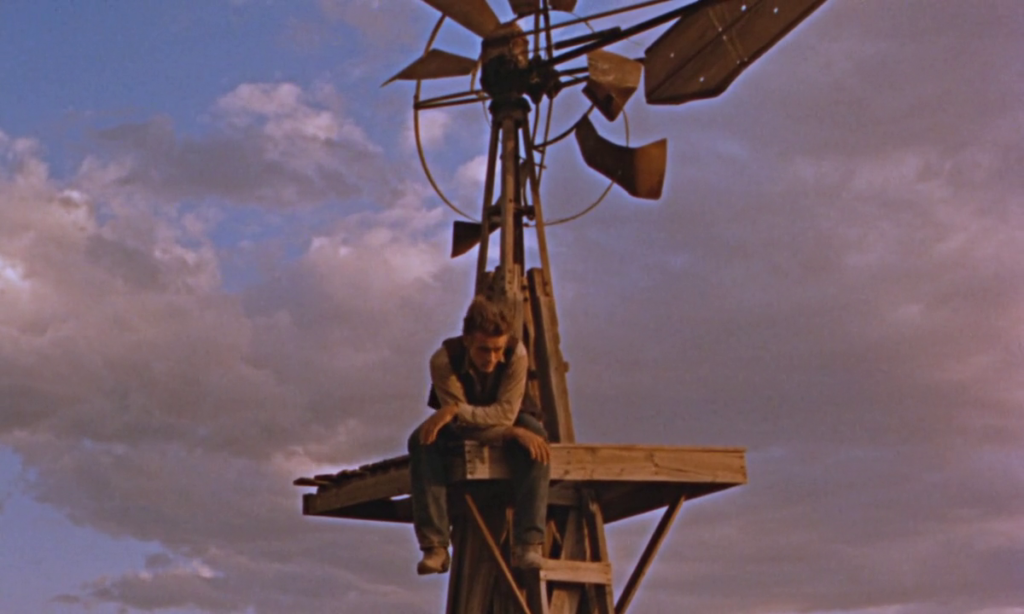
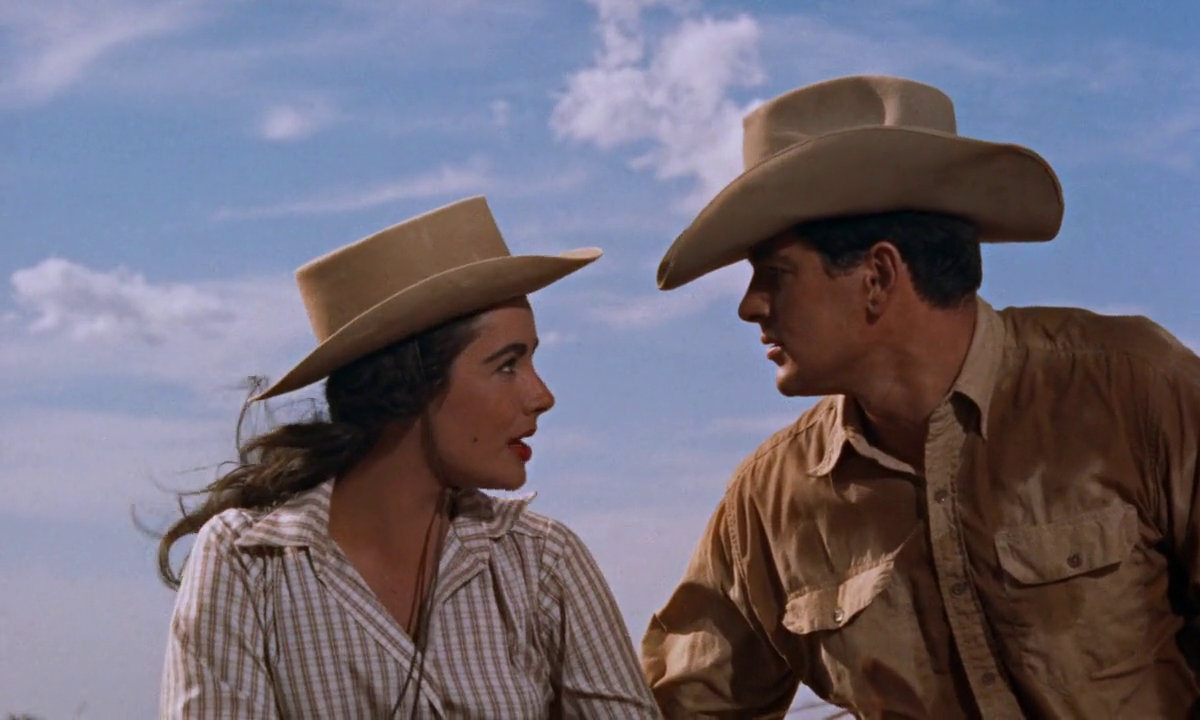
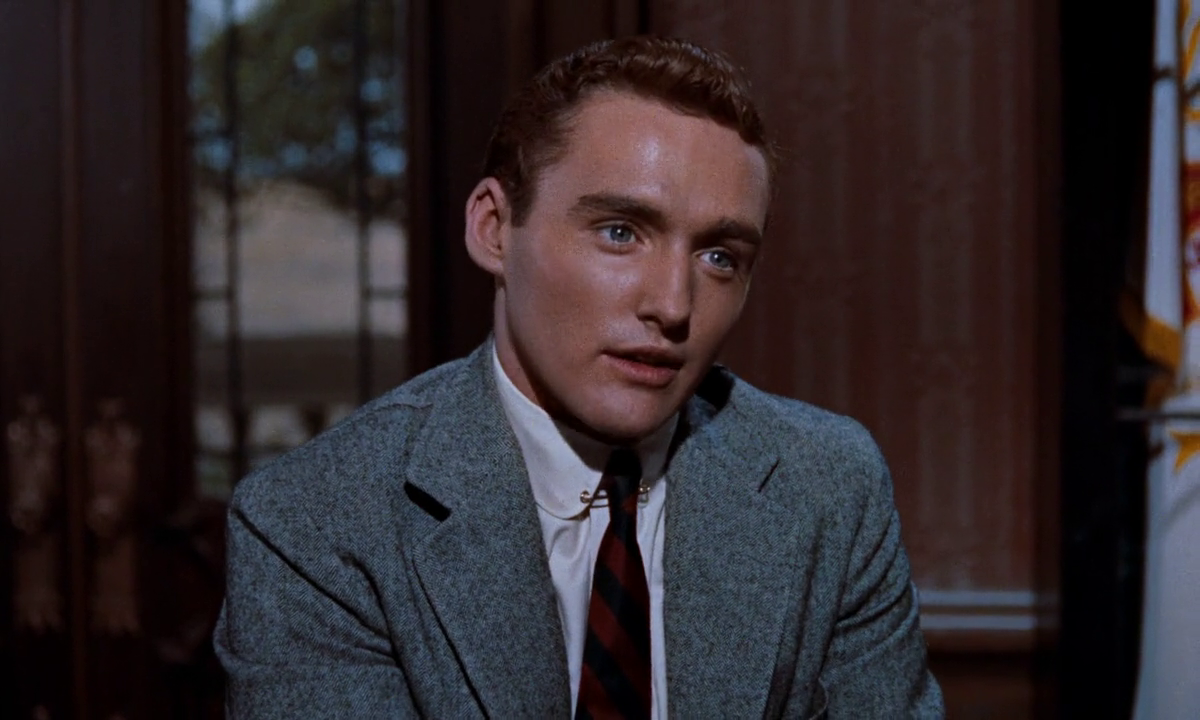
As Peary writes, “George Stevens directed this sprawling epic version of Edna Ferber’s supersoaper”, which centers on Hudson’s attempts to “keep Taylor in line” due to “family pride and masculine pride” — and Taylor sticking “to her guns despite the arguments” (which is “one of the reasons we appreciate her character”). While Peary argues that Dean “steals the film from Hudson and Taylor” as someone who “stands for the new Texas, the instant ‘white trash’ millionaires who haven’t the imagination of men like [Hudson]”, I patently disagree. Upon rewatching this third and final feature film starring Dean — made just before his fatal car crash at the age of 24, after his starring roles in Rebel Without a Cause (1955) and East of Eden (1955) — I’m much less impressed by his Oscar-nominated performance than I expected. His use of Method acting leads to mumbling incoherence at times, and as Peary writes, it’s hard to “get a handle on the character.”

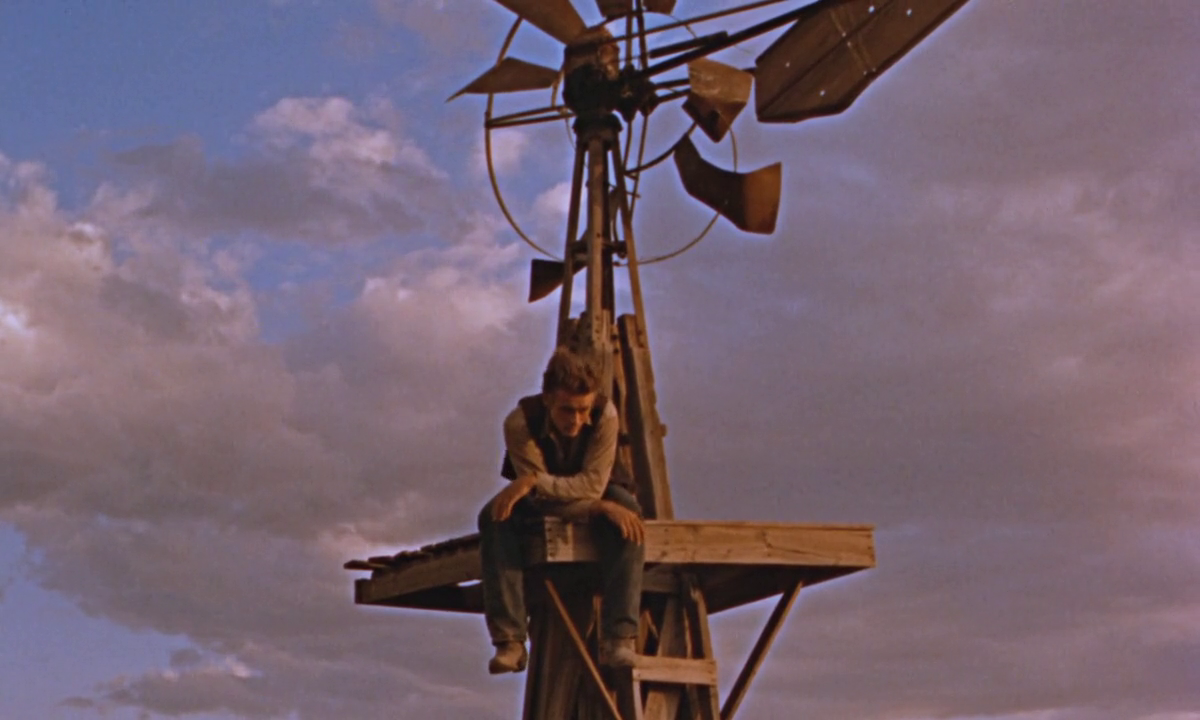
With that said, I agree with Peary that a “particularly memorable” scene is the one “where he strikes it rich and gets covered by oil”:
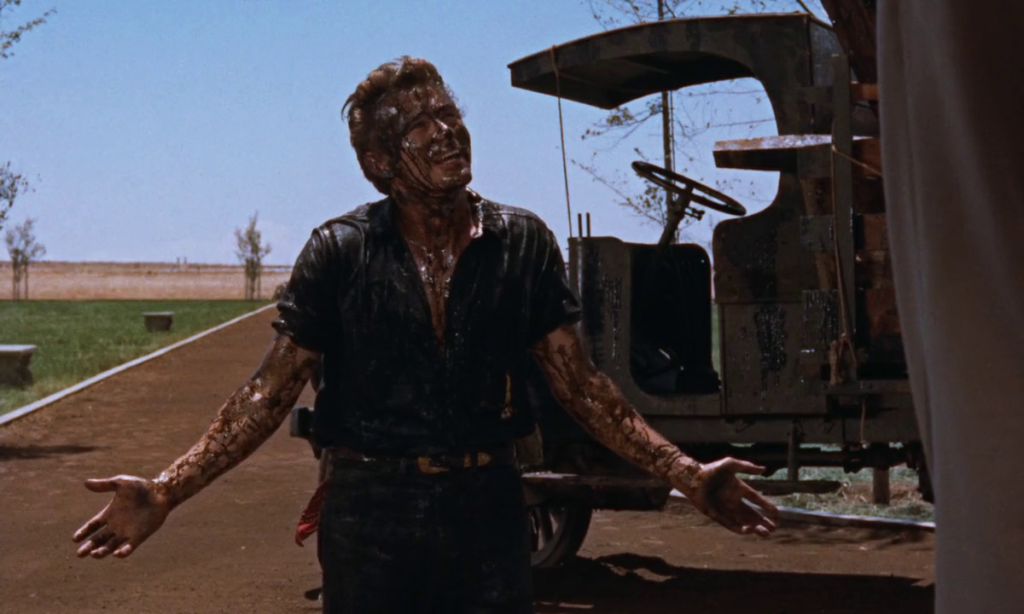
… though I’m less enamored by “the scene where [Dean] — now an older man — drunkenly recites a speech although his audience has long gone home.”
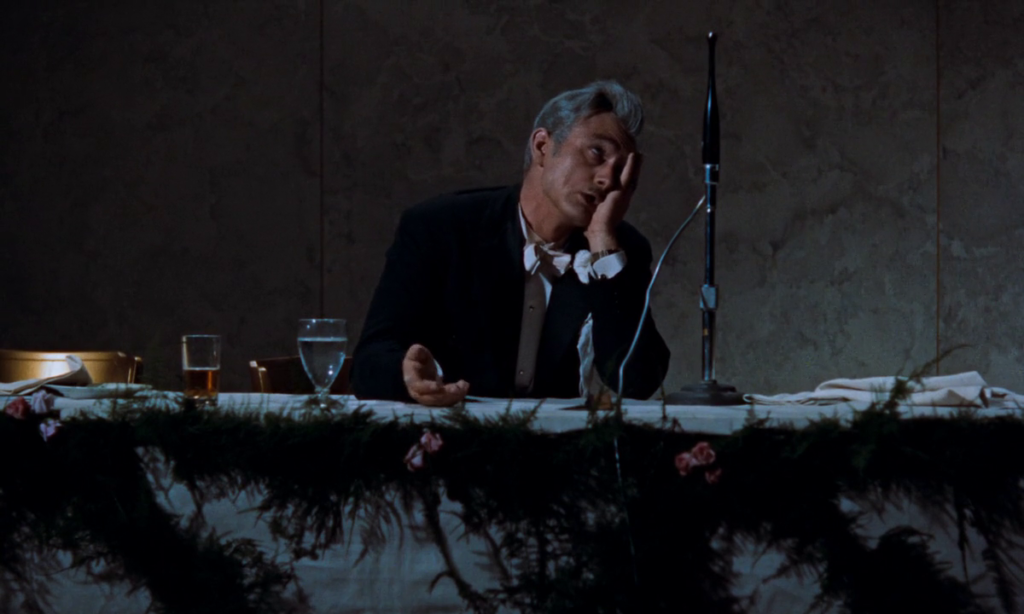
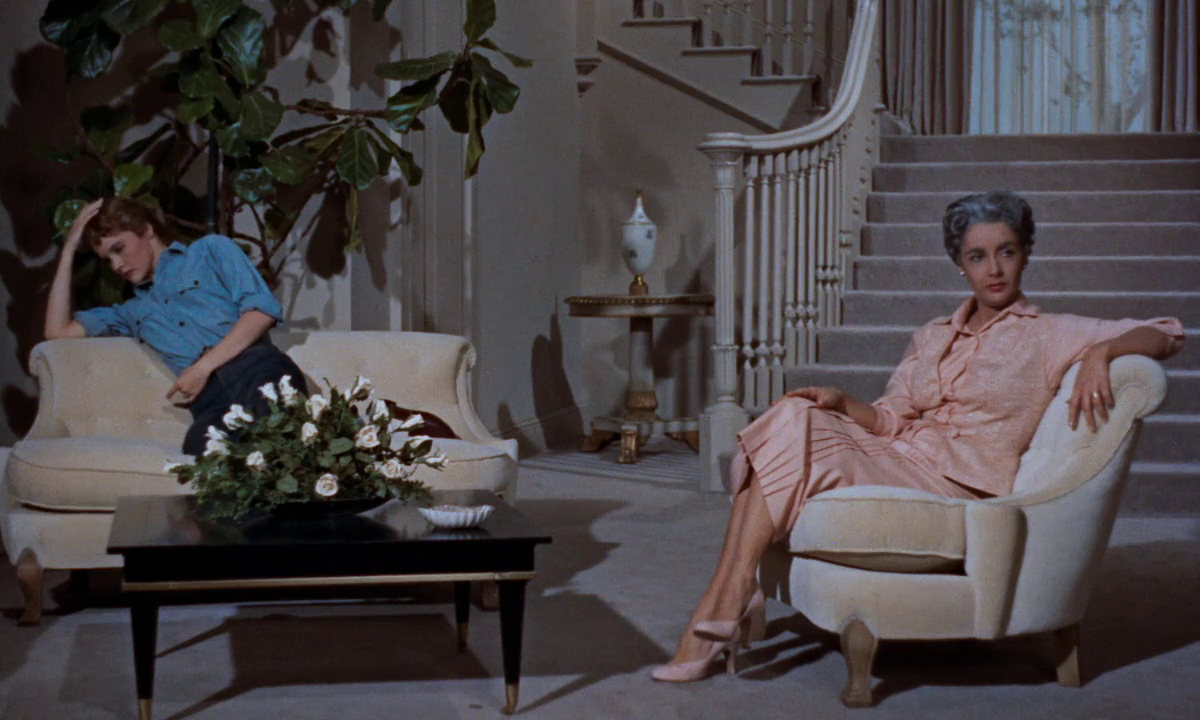
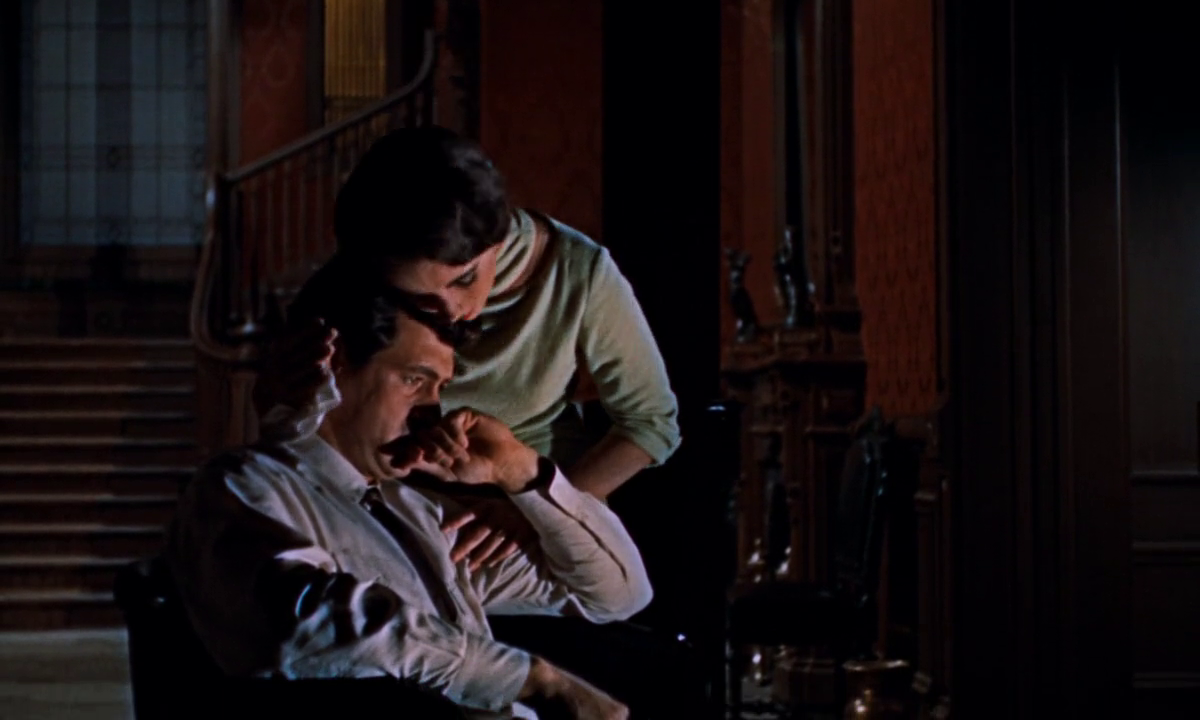
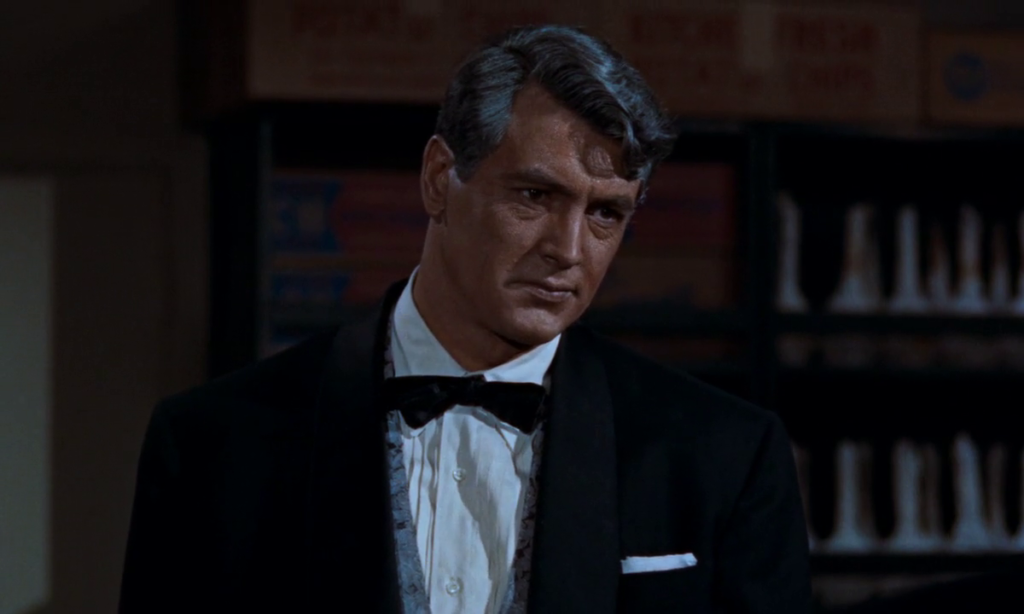
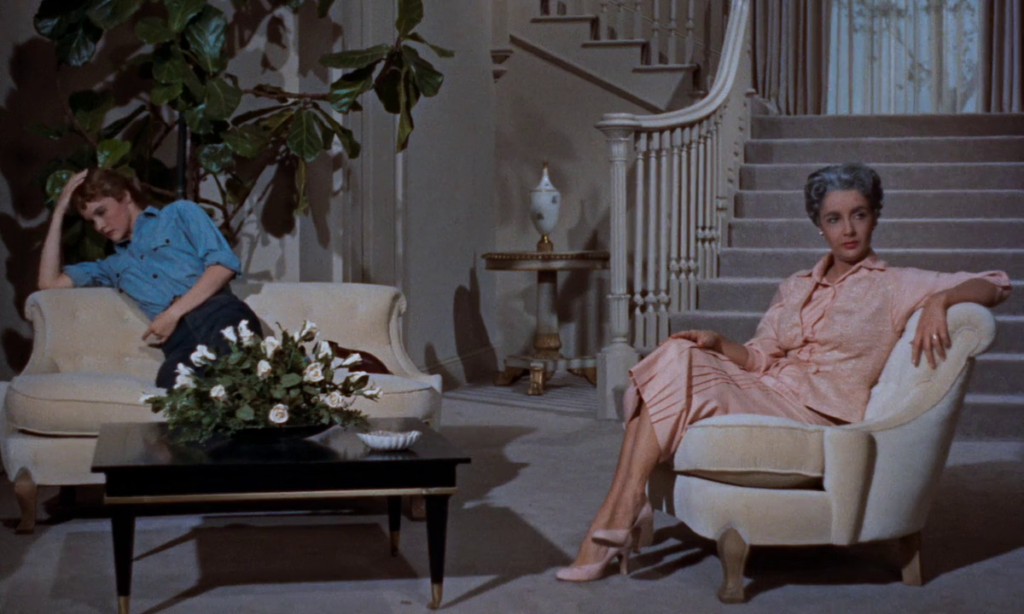
Apparently Dean resisted having much aging make-up applied — though to be fair, it looks pretty awkward on Hudson and Taylor:
Peary ultimately writes that “more interesting [than Dean] is Hudson’s character, who’s basically a nice guy but tries — without complete success — to cover up his gentle, soft qualities so he won’t seem weaker than his father”; however, since “it’s a new time in American history,” “men don’t have to strut their machismo to be giants.” Unmentioned in Peary’s review but of even more interest to me upon this re-viewing is Hopper’s character — a bold young man who knows what he wants (to be a doctor) and who he wants (Cardenas), and represents Taylor’s no-nonsense approach to equitable racial relations coming to full and personal fruition.

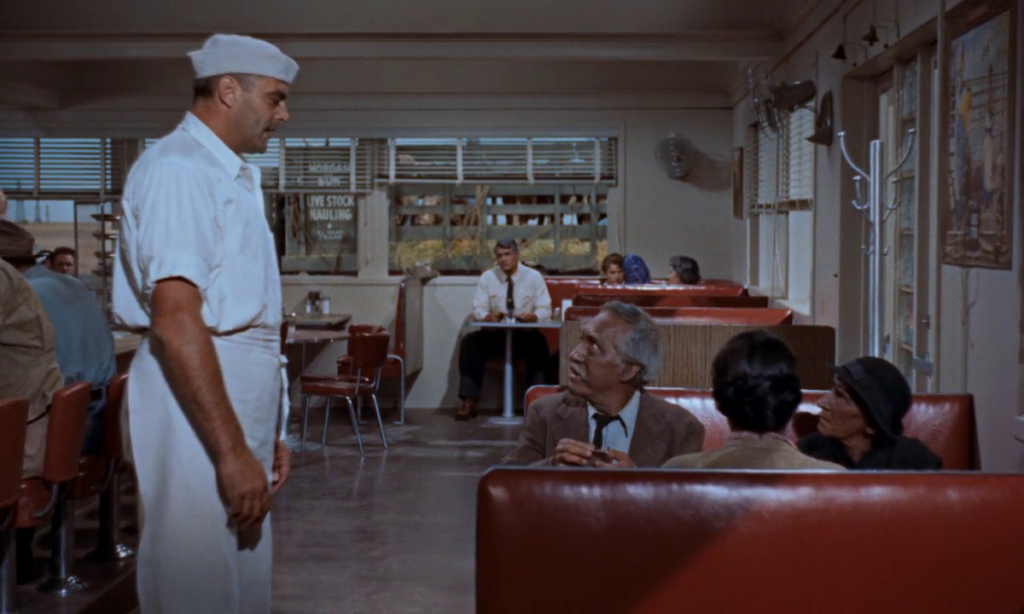
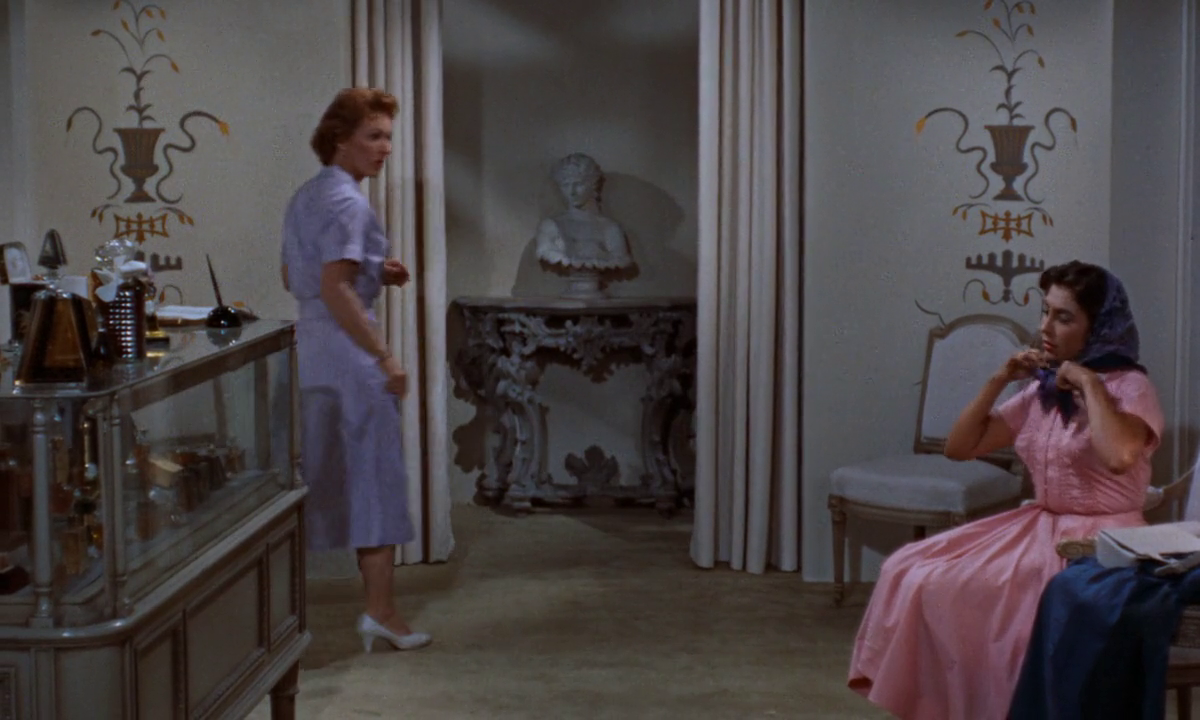
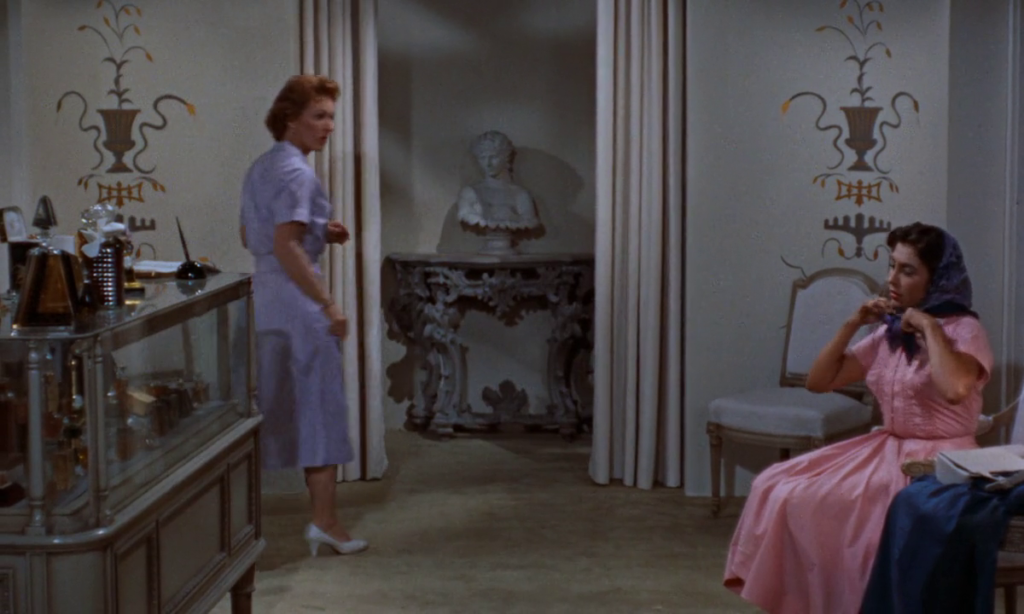
Speaking of racial relations, the film’s most notable theme is that of racial intolerance — and the filmmakers deserve acclaim for presenting this in such a straightforward fashion. While modern social justice language isn’t used, we can clearly see white supremacy on dominant display time and again — from Hudson’s huffy refusal to acknowledge the theft of Texan land from Mexicans (one of Taylor’s first comments to him the night they meet), to his annoyance at Taylor humanizing their Mexican-American employees by seeking to know and correctly pronounce their names, to Taylor’s insistence that a doctor go look at a sickly “wetback” Mexican baby. In later scenes, we see even more egregious acts of racist segregation in 1940s Texas: a beauty salon refuses to serve Cardenas once they see her skin color (per orders of Dean); and, in the film’s penultimate scene, Hudson ends up in a fist fight with a bigoted cafe owner (Mickey Simpson) who refuses to serve a Mexican family and treats Hudson’s daughter-in-law and grandson with racist contempt. As Peary notes, this is a “terrific scene” — and though the “wide-screen production is patriotic,” it “still acknowledges that bigotry is widespread.” Peary closes his review by noting that while the “film has slow and hackneyed scenes,” it’s “quite enjoyable.” Sadly, I can’t really agree: while it’s worth a look for its historical popularity, it’s not one I personally plan to revisit.

Redeeming Qualities and Moments:

  • Elizabeth Taylor as Leslie Benedict
  • Rock Hudson as Bick Benedict
  • Dennis Hopper as Jordan Jr.
  • Fine cinematography


  • A powerful (for its time) depiction of racism
Must See?
Yes, once, simply for its historical importance.

Categories

(Listed in 1001 Movies You Must See Before You Die)

Links:

Somebody Up There Likes Me (1956)

Somebody Up There Likes Me (1956)

“What’s better: stealing, starving, or fighting?”

Synopsis:
Shortly after a petty criminal (Paul Newman) is sent back to prison for deserting the army, he begins work as a part-time boxer for a promoter (Everett Sloane) and falls for a beautiful young woman (Pier Angeli) who helps him settle down — but can he escape his troubled past when a former associate (Robert Loggia) comes back to ask for a favor?

Genres, Themes, Actors, and Directors:

  • Biopics
  • Boxing
  • Ex-Cons
  • Paul Newman Films
  • Pier Angeli Films
  • Robert Wise Films
  • Sal Mineo Films

Review:
Seven years after helming The Set-Up (1949) with Robert Ryan, director Robert Wise made another boxing film — this one based on the story of real-life boxer Rocky Graziano. Paul Newman got a lucky break due to tragic circumstances when James Dean died before shooting began and he took over the lead, which proved to be his breakthrough role. Indeed, Newman is highly convincing as the troubled young man who stumbles into an accidental career in boxing, after learning to survive both his father’s abuse during childhood and a rough life on the streets. Less convincing is his marriage to Angeli, whose interest in Newman despite her abhorrence for fighting of any kind (?!) is insufficiently explored. The cinematography is atmospheric throughout, and the boxing sequences are well-done — but there ultimately isn’t enough to this rise-to-fame story to recommend it as must-see viewing other than for Newman or Angeli fans. Watch for Sal Mineo in a small role as Newman’s teenage buddy, who reappears later in the film.

Redeeming Qualities and Moments:

  • Paul Newman as Rocky
  • Atmospheric cinematography
  • Well-filmed boxing sequences

Must See?
No, but it’s worth a look for Newman’s breakthrough performance.

Links:

Marie Antoinette (1938)

Marie Antoinette (1938)

[Note: The following review is of a non-Peary title; click here to read more.]

“I once thought if I were queen I’d be so happy — to be applauded and adored and obeyed.”

Synopsis:
When Empress Maria Theresa of Austria (Alma Kruger) tells her daughter Marie Antoinette (Norma Shearer) that she will become the next queen of France, Marie is excited for the new adventure but is quickly demoralized when she realizes her husband-to-be (Robert Morley) is an overweight, shy man who would prefer to be left alone to make locks. Marie finds solace in socializing at court, befriending a power-hungry duke (Joseph Schildkraut) and falling for a Swedish count (Tyrone Power) while resisting taunts from mean-spirited Madame du Barry (Gladys George). After Morley’s father (John Barrymore) dies, Marie and Louis (Morley) eventually have two children — but the wrath of the people of France has been building, and the royal family soon find themselves caught in a deadly spiral.

Genres, Themes, Actors, and Directors:

  • French Revolution
  • Henry Daniell Films
  • Historical Dramas
  • John Barrymore Films
  • Norma Shearer Films
  • Robert Morley Films
  • Royalty and Nobility
  • Tyrone Power Films
  • W.S. Van Dyke Films

Review:
Norma Shearer’s crowning role as the “First Lady of MGM” was playing the title character in this big-budget biopic (directed by W.S. Van Dyke) about the infamous French queen who died at the guillotine (and apparently never actually said, “Let them eat cake.”). Perhaps unsurprisingly, the film paints Marie in an almost uniformly positive light: she’s shown offering tremendous empathy and compassion towards Morley even when he’s at his most unsympathetic, and the eventual companionship they develop through their marriage is a worthy portrait of how arranged marriages can evolve into trusting alliances. Meanwhile, Morley’s portrayal of King Louis XVI is notable for refusing to villainize him, instead showing simply that he was constitutionally unsuitable for his role. The sets and costumes are marvelous, and the story-line reasonably engaging (though Power’s character is only given a peripheral role at best; I suppose MGM wanted to keep Shearer’s character “pure” and free from the actual ongoing affair she had with him in real life). The most intriguing supporting character is played by Joseph Schildkraut, whose make-up as the Duke d’Orleans is highly effective — see stills below for a comparison of his character “putting on an act” versus revealing his inner (true) character.

Redeeming Qualities and Moments:

  • Norma Shearer as Marie Antoinette (named by Peary as one of the Best Actresses of the Year in his Alternate Oscars)
  • Robert Morley as King Louis XVI
  • Joseph Schildkraut as the Duke d’Orleans

  • A touching portrayal of a respectful and loving “working marriage”
  • Magnificent sets and costumes

  • Atmospheric cinematography

Must See?
No, though it’s worth a look for Shearer’s Oscar-nominated performance.

Links:

Davy Crockett: King of the Wild Frontier (1955)

Davy Crockett: King of the Wild Frontier (1955)

“Davy Crockett don’t lie.”

Synopsis:
After showing off his mettle by fighting a bear in the wild, frontiersman Davy Crockett (Fess Parker) and his pal George Russel (Buddy Ebsen) play pivotal roles in American history by helping General Andrew Jackson (Basil Ruysdael) battle and then sign a peace treaty with the Muscogee Indians; joining Congress to fight corruption and unfair seizure of Cherokee lands; and helping to defend the Texas Alamo against attacks from Mexican troops.

Genres, Themes, Actors, and Directors:

  • Fess Parker Films
  • Hans Conried Films
  • Native Americans
  • Westerns

Review:
This compilation of the first few installments of Disney’s five-part television serial about folk legend Davy Crockett offers a fairly seamless adventure tale which is nonetheless clearly divided into three distinct episodes from Crockett’s life: his involvement in the Creek War…

his controversial service as a congressman from Tennessee…

and his participation in the Battle of the Alamo.

Parker comes across as appropriately humble, stalwart and brave, and we appreciate his authentic respect for the Native Americans he interacts with.

However, this film likely won’t be of much interest to modern film fanatics given that it was clearly marketed at youth audiences of the day — who responded by kicking off an absolute mania for Davy Crockett paraphernalia, especially coonskin caps.

Fair warning: the title song is guaranteed to remain stuck in your head for hours or days after watching this film (I’m humming it to myself right now…).

Redeeming Qualities and Moments:

  • Fine Technicolor cinematography

Must See?
No; you can skip this one unless you’re curious or nostalgic.

Links:

Silver Chalice, The (1954)

Silver Chalice, The (1954)

“A good miracle is only a good trick — unless it is made part of a new religion.”

Synopsis:
A Greek artist (Paul Newman) sold into slavery as a young boy by his adopted uncle (Herbert Rudley) has an ongoing affair with the wife (Virginia Mayo) of a magician (Jack Palance), but grows fond of a young Christian (Pier Angeli) whose grandfather has commissioned him to craft a silver chalice to contain the Holy Grail. Will Newman eventually “see the light” of Christianity — and will Palance effectively convince Emperor Nero (Jacques Aubuchon) that he can fly?

Genres, Themes, Actors, and Directors:

  • Ancient Greece and Rome
  • Biblical Stories
  • Christianity
  • E.G. Marshall Films
  • Jack Palance Films
  • Natalie Wood Films
  • Paul Newman Films
  • Pier Angeli Films
  • Virginia Mayo Films

Review:
This notoriously lambasted Biblical epic was considered such a disgrace by emergent star Paul Newman that he purportedly took out ads in Hollywood trade papers proclaiming it the “worst film made in the 1950s”, and enjoining audiences not to watch it. It’s not really all that bad — though it’s easy to see why Newman might want to disown it, especially given that the show really belongs to Jack Palance in a memorably villainous role as a magician who gradually goes mad.

Mayo has received flak for being decked out with outrageously gaudy eye make-up:

and the artistically minimalist sets are criticized as… not realistic enough.


But once one accepts the stylized world on display here, it’s possible to get caught up in the melodrama, which involves Newman eventually meeting the Apostle Peter (Lorne Greene) to add his visage to the chalice.

Angeli is lovely as an innocent young Christian who falls for Newman:

and the scenes set in Nero’s Rome are appropriately surreal — particularly the one in which Nero and his wife are offered platter after platter of gold-plated delicacies with outrageous combinations of edibles.

When Nero (Aubuchon) reminds his wife, “We must not let our people go home in a grumbly mood… We must give them something to watch.”, one can’t help thinking how little has changed in 2000 years vis-a-vis the public’s desire for outrageous spectacles.

Note: Watch for blonde (!) Natalie Wood playing Mayo’s younger self.

Redeeming Qualities and Moments:

  • Jack Palance as Simon the Magician
  • Pier Angeli as Helena
  • Colorful cinematography and sets

Must See?
No, though it’s worth a look if you’re curious. Listed as a Camp Classic in the back of Peary’s book (which makes sense).

Links: