Finishing School (1934)

Finishing School (1934)

“The aim of our school — and we like to believe the achievement — is to prepare young ladies to meet graciously all social demands.”

Synopsis:
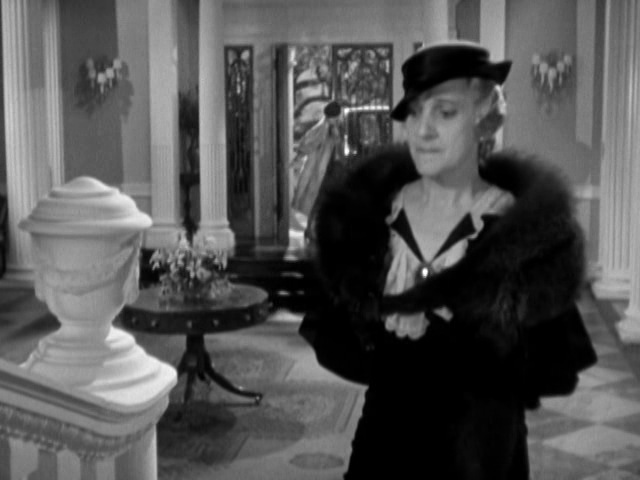
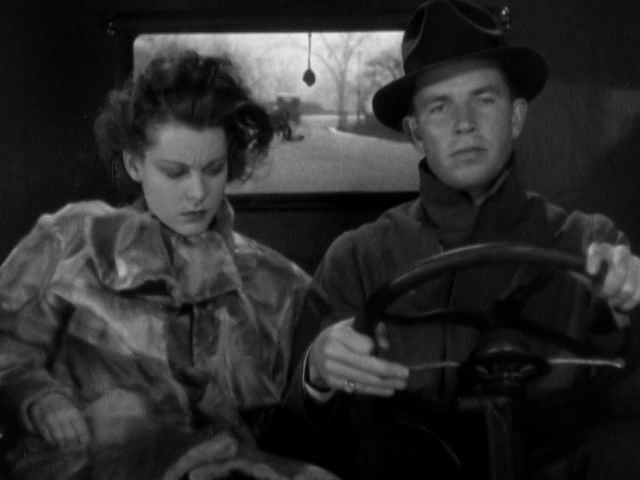
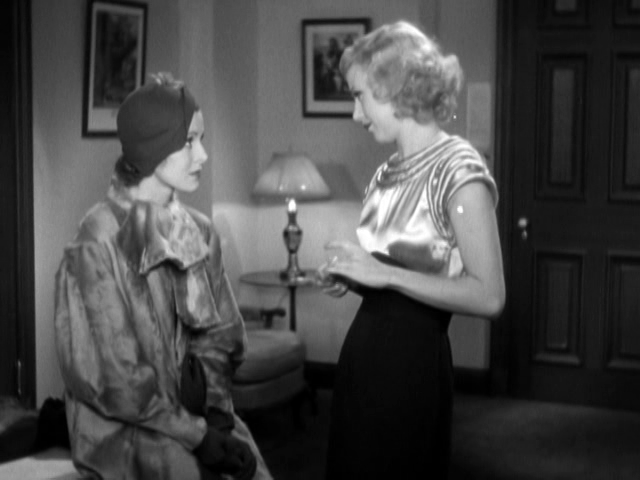
The daughter (Frances Dee) of a wealthy socialite (Billie Burke) is sent to a finishing school, where she rooms with an outspoken heiress (Ginger Rogers) who introduces her to the high life. Soon she meets a medical intern (Bruce Cabot) moonlighting as a waiter, and falls in love — much to the consternation of her disapproving headmistress (Beulah Bondi).

Genres, Themes, Actors, and Directors:

  • Beulah Bondi Films
  • Boarding School
  • Cross-Class Romance
  • Frances Dee Films
  • Ginger Rogers Films
  • Morality Police

Review:
Finishing School is perhaps best known for providing Ginger Rogers with her final supporting role before she achieved leading-lady fame with Fred Astaire in The Gay Divorcee (1934) — but it remains a noteworthy, historically interesting little film in its own right. Released just before the Hays Code became more strictly enforced, it dares to present the story of a young socialite who embarks upon a romance with an upstanding young doctor-in-training, and…

(sorry for mild spoilers)

… isn’t necessarily made to pay for her “sins”. What’s most fascinating about Finishing School is the way it daringly portrays the utter hypocrisy behind upper-class mores, which hold that as long as one isn’t “caught”, one can get away with just about anything; the goal is to avoid detection and public shame. One particularly well-handled scene shows Bondi glimpsing Dee arriving home after an outing with Mac, and hesitating as she clearly wishes she could pretend not to have seen what she just saw.

Dee’s sin isn’t carousing; it’s falling in love with a lower-class man and daring to present it openly.

Dee does a fine, sensitive job in the leading role:

… and Cabot stands out as refreshingly natural in what appears at first to be a nominal supporting role (he’s first glimpsed wandering around a hotel room picking up after the partying socialites), but turns into a major romantic lead; one can easily see why Dee would fall for someone like him.

Rogers, meanwhile, is perfectly cast as Dee’s wisecracking roomie, and other young starlets — including Anne Shirley — do a fine job portraying young heiresses of various stripes. Interestingly, Finishing School was co-directed by a woman (Wanda Tuchock) — something so unusual at the time that it most definitely stands out when watching the opening credits. (Unfortunately, it seems she only directed one other short film; the rest of her Hollywood career was spent on screenwriting.)

Redeeming Qualities and Moments:

  • Frances Dee as Virginia
  • Bruce Cabot as Mac
  • Ginger Rogers as Pony

Must See?
Yes, as a fine example of a pre-Code drama unhampered by moral restrictions.

Categories

  • Good Show

Links:

Ilsa, She Wolf of the SS (1975)

Ilsa, She Wolf of the SS (1975)

“Once a prisoner has slept with me, he will never sleep with a woman again. If he lives, he will remember only the pain of the knife.”

Synopsis:
A sadistic Nazi prison warden (Dyanne Thorne) gleefully tortures both male and female prisoners in her camp, not realizing that her latest sexual conquest — an American named Wolfe (Gregory Knoph) — is helping to plot her downfall.

Genres, Themes, Actors, and Directors:

  • Concentration Camps
  • Horror
  • Nazis
  • S&M
  • Strong Females

Response to Peary’s Review:
I’ll admit to avoiding this “indefensible” sexploitation flick (a “cult film for [the] sick set, with a plot suitable for S&M porno books”) for as long as possible before finally giving in to write a review for this site — which is not to say I haven’t been weirdly curious about it for years; with such a “notorious reputation” (and a morbidly intriguing title), it’s hard not to at least wonder what this film and its three similarly-titled sequels have to offer.

In his review of this first entry in the series, Peary notes that “at least the torture/violence is not as convincing as one might fear”, and points out that “the brutality looks staged”; yet the “poor acting, pedestrian direction, and a repelling overdose of bondage and violence” still “put the film at [the] bottom of the women-in-prison genre”. Indeed, it’s genuinely distressing to know that this film has a cult of diehard followers who find nothing wrong with what they refer to as its “campy” sex and violence; why in the world would people choose to sit through something this distasteful? (Clearly I’m not the target audience.) Unfortunately, I’ll eventually have to subject myself to a bit more, given that Peary lists one of the sequels — Ilsa, Harem Keeper for the Oil Sheiks (1976) — in the back of his book, despite openly referring to it as “worse”. Why, oh why, Peary?

Redeeming Qualities and Moments:
Nothing.

Must See?
No; despite its undeniable notoriety, film fanatics should only check this one out at their own peril.

Links:

Who Slew Auntie Roo? (1972)

Who Slew Auntie Roo? (1972)

“You children don’t want to leave here! You have a home here — forever!”

Synopsis:
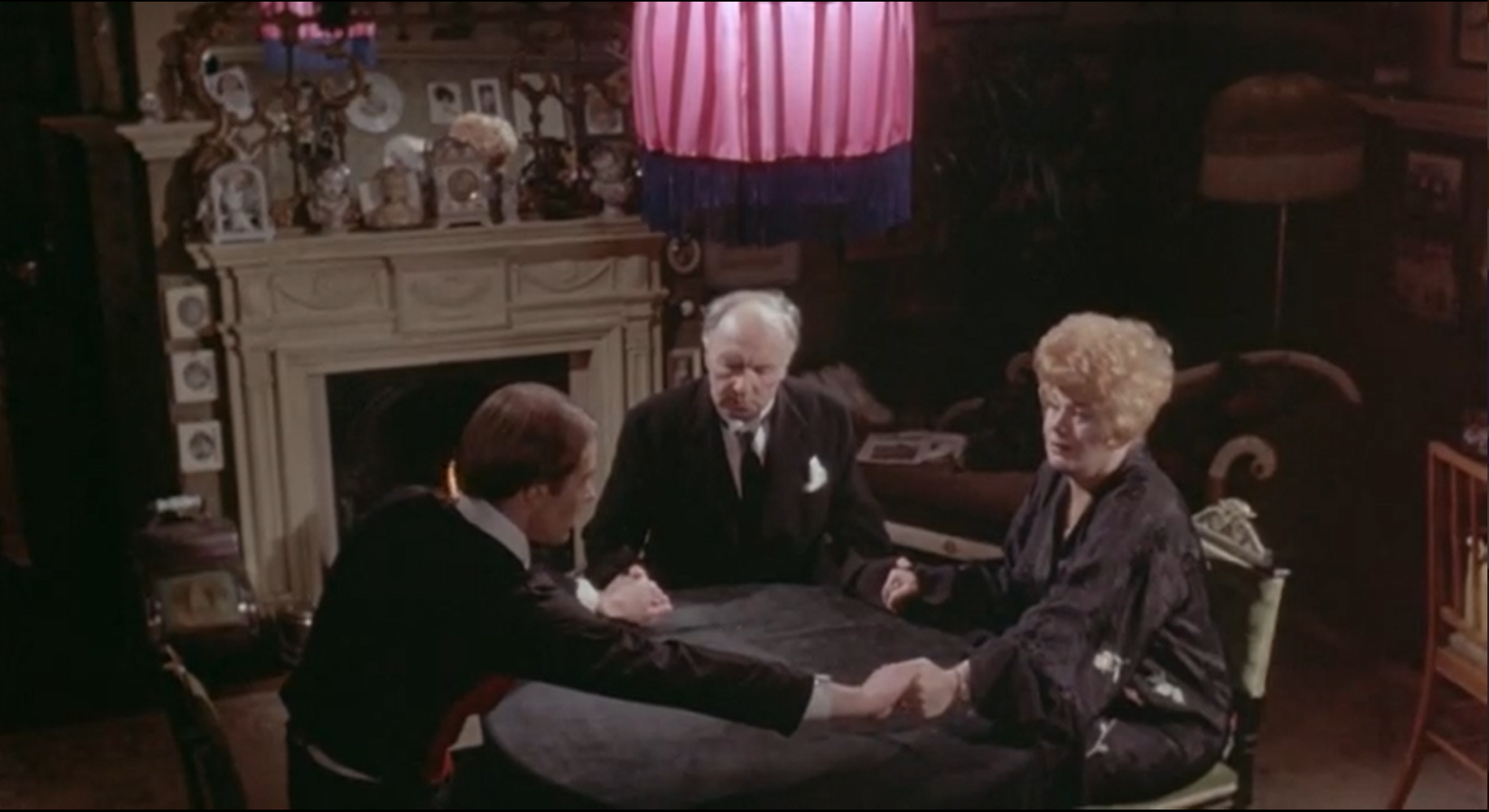
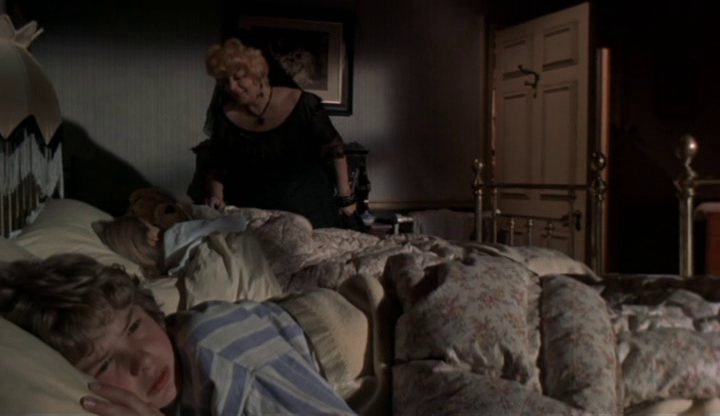
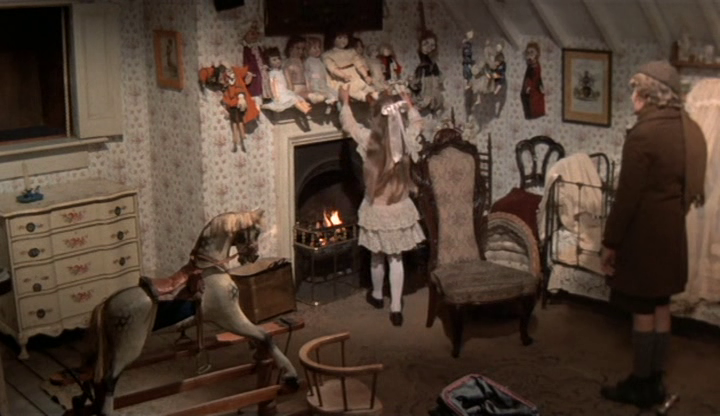
A demented widow (Shelly Winters) whose young daughter died in an accident many years earlier entices a young orphan (Chloe Franks) to come live with her in her mansion — but Franks’ brother (Mark Lester) believes Winters is a witch, and is determined to rescue Franks (and himself) from her clutches.

Genres, Themes, Actors, and Directors:

  • Horror
  • Hugh Griffith Films
  • Orphans
  • Ralph Richardson Films
  • Shelley Winters Films
  • Widows and Widowers

Review:
Following in the dubious footsteps of What’s the Matter With Helen? (1971), Who Slew Auntie Roo? inexplicably gives away a major spoiler in its very title — an inauspicious sign for what amounts to a disappointing entry in the Grande Dame Guignol (or “Psycho Biddy”) horror subgenre (kicked off by Robert Aldrich’s classic What Ever Happened to Baby Jane?). The primary problem with … Auntie Roo is that Winters’ deeply troubled character is pitiable rather than fearful, given that we see early on how her daughter died in a tragic incident (rather than, say, being murdered); we therefore never really believe the two orphans are in serious danger. Instead, Lester — who apparently is convinced he’s trapped in the story “Hansel and Gretel” — emerges as the unlikely villain of the piece, convincing his sister that “Auntie Roo” is going to stuff them and eat them for dinner.

Meanwhile, other plot elements — such as the presence of Winters’ manipulative butler (Michael Gothard) working in cahoots with a sham medium (Ralph Richardson) to convince Winters her daughter is communicating with her — are poorly resolved.

Winters tries hard with the material she’s given, but this one is only must-see for her diehard fans.

Redeeming Qualities and Moments:

  • Some campily creepy moments
  • Fine sets

Must See?
No; feel free to skip this one.

Links:

Testament (1983)

Testament (1983)

“Tell it to stop.”

Synopsis:
In the aftermath of a nuclear attack, a mother (Jane Alexander) whose traveling husband (William Devane) is presumed dead struggles to keep her three kids — Mary Liz (Roxana Zal), Brad (Rossie Harris), and Scottie (Lukas Haas) — and herself alive.

Genres, Themes, Actors, and Directors:

Response to Peary’s Review:
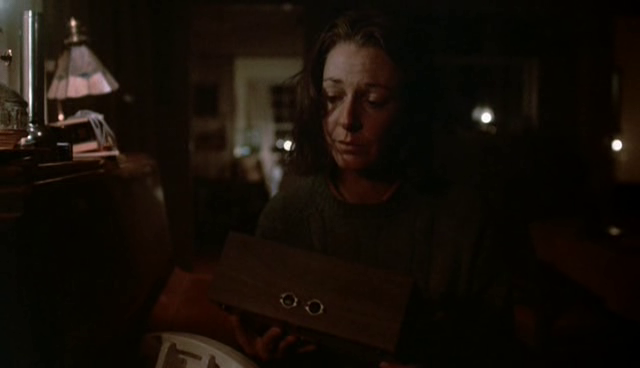
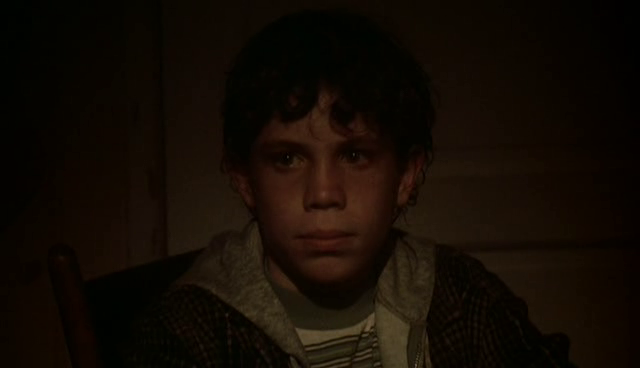
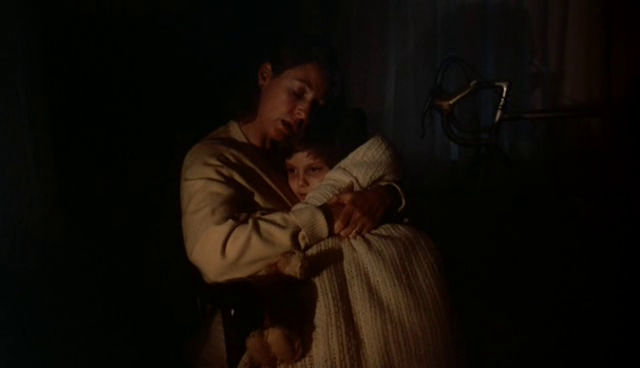
Peary accurately argues that this “meaningful, heartfelt film by Lynne Littman is the bleakest of all nuclear-holocaust pictures”; indeed, I believe it’s actually one of the most emotionally devastating films ever made (so be forewarned!). Peary notes that while “in most nuclear-holocaust films the survivors struggle but eventually figure out the way to start a new world”, in this film “there will be no future”, which makes it particularly touching to see how Alexander’s two eldest children (Zal and Harris) “reveal tremendous qualities” during their final weeks and months of remaining alive; both actors do an impressive job conveying their resignation and sorrow (and fans of Airplane! will be especially gratified to see that young Harris really should be remembered for more than just being asked about his knowledge of grown men and Turkish baths). Alexander, meanwhile, clearly deserved her Oscar nomination (seconded by Peary) as the children’s grieving yet resilient mother, who does what she can to provide for her family in the face of unspeakable devastation and loss.

What’s most impressive (and effective) about Testament is its quiet authenticity. As the film opens, rather than presenting an idyllic, pastoral representation of life in small-town America, we see a typically hectic morning in the Wetherly household, with Alexander frantically trying to get her kids ready to leave for school, and Harris feeling slightly put-upon by his over-eager dad, who insists on challenging him to a rigorous, semi-competitive bike ride early each morning; meanwhile, Alexander and Devane quibble (she pours dry cereal over his head in frustration when he refuses to take time for breakfast), but they make up with one another later that night in a way that demonstrates the ultimate solidity of their marriage. The time Littman takes to show us all of these seemingly mundane details results in an even more powerful sense of shock and loss when “there is a flash in the sky from [a] bomb” — a moment that “should give every viewer a sick feeling in the stomach”, given that “a nuclear explosion cannot be reversed”.

Community relations are quickly strained, and we see the effect on more than just Alexander’s family. Kevin Costner and Rebecca De Mornay, for instance, play a young couple whose newborn quickly becomes a casualty of the blast; meanwhile, a Japanese-American gas station owner (Mako) with a mentally retarded son (Gerry Murillo) suddenly finds himself in an unexpected position of power, given his access to valuable fuel. Other than a few such contextualizing scenes, however (including the casual arrival of a neighborhood boy whose parents have disappeared, and who comes to live with Alexander’s family), the story remains heavily focused on Alexander’s attempts to help her own family survive. To that end, viewers have debated the ultimate wisdom of her character’s choice to simply stay put in her house, waiting for what seems like the inevitable, painful death of herself and her loved ones; many wonder why she doesn’t attempt to flee with her family to a different, less exposed location (which is what Costner and De Mornay’s characters do). Yet I find her decision eminently logical and realistic; in the face of ultimate powerlessness, it makes sense to stay in a comfortable and “known” location, and the film is no less potent or revealing because of this pivotal narrative choice.

Redeeming Qualities and Moments:

  • Jane Alexander as Carol Wetherly
  • Ross Harris as Brad Wetherly
  • Roxana Zal as Mary Liz Wetherly
  • A truly chilling, haunting screenplay

Must See?
Yes, most definitely — but get ready to be devastated.

Categories

Links:

Living Desert, The (1953)

Living Desert, The (1953)

“In her desert drama, nature knows neither hero nor villain; she’s impartial, and plans for the survival of all.”

Synopsis:
A host of diverse animals and plants struggle to survive in the often-harsh desert climate of the U.S.

Genres, Themes, Actors, and Directors:

  • Deserts
  • Documentary
  • Survival

Review:
Disney’s first feature-length entry in its “True-Life Adventures” series won an Academy Award as Best Documentary of the Year, and was selected for preservation in the National Film Registry in 2000. It remains a reasonably compelling, carefully edited montage of desert footage (complete with soundtrack and authoritative voiceover), chronicling the harsh survival tactics of various savvy animals who understand each others’ strengths and weaknesses to a tee, in addition to knowing how to fully exploit their environment (a bobcat chased by wild pigs seeks refuge at the top of tall cacti; a kangaroo rat throws sand in the eyes of a vulnerable eyelid-less snake; two male tortoises wrestle each other onto their backs in pursuit of a female). Modern viewers may already be overly familiar with the type of “educational” footage presented here, which has been available for viewing in various forms for literally decades (on television, and now in snippets on YouTube) — but this shouldn’t diminish the historical relevance of the film, which was groundbreaking at the time of its release, and led to several other similarly-themed, award-winning documentaries.

Note: You may or many not enjoy one of the film’s most discussed segments, in which scorpions “square dance” with one another — helped by the clever cinematic technique of running the film reel backwards… It’s done for comedic effect, but does it sully the supposed veracity of the documentary?

Redeeming Qualities and Moments:

  • Plenty of fascinating footage of desert beauty…


  • … and desert survival

Must See?
No, though kids are likely to enjoy it. Listed as a film with Historical Importance in the back of Peary’s book.

Links:

Blood Bath (1966)

Blood Bath (1966)

“That’s the essence of what I’m after — bring death to the canvas.”

Synopsis:
A crazed artist (William Campbell) kills his models, painting death-themed canvases to immortalize them; meanwhile, a vampire roams the streets at night, attacking beautiful women. Could the two killers be related in some way?

Genres, Themes, Actors, and Directors:

  • Artists
  • Horror
  • Roger Corman Films
  • Stephanie Rothman Films
  • Vampires

Review:
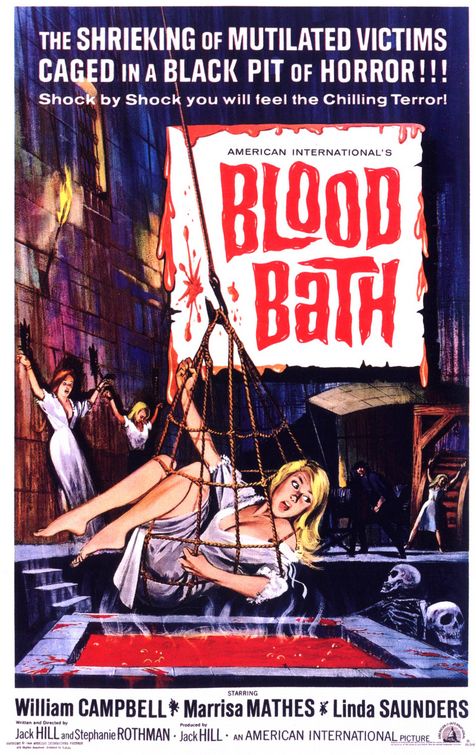
Produced by Roger Corman and co-directed by Jack Hill and Stephanie Rothman, Blood Bath (a.k.a. Track of the Vampire) is a notorious mess of a film, one which incorporates footage from an unfinished European vampire flick into an entirely different storyline about a psychopathic modern artist. (Click here to read about another such dubious “salvaged film” effort by the industrious, penny-pinching Corman.) Critics have noted Blood Bath‘s thematic parallels with Corman’s darkly humorous A Bucket of Blood (1959) — also about a crazed artist who kills for his art — but this comparison simply serves to remind one how much infinitely better the latter film is on every level. Scenes taking place in a Beatnik bar — as a cadre of wannabe artists listen intently to their mentor (Karl Schanzer) — are clearly an attempt to add some comedic relief, but ultimately fall flat. Working in Blood Bath‘s favor is its atmospheric b&w cinematography; and if one focuses exclusively on the modern-day tale of Campbell’s seduction and murder of beautiful young women, the storyline begins to makes some kind of sense (with Campbell’s visions of his ancestor seduced by a siren-like muse [Lori Saunders] simply a symptom of his deranged sensibility). Overall, however, this one remains a disappointing misfire.

Redeeming Qualities and Moments:

  • Atmospheric cinematography

Must See?
No; this one is only must-see for diehard Corman fans.

Links:

Bohemian Girl, The (1936)

Bohemian Girl, The (1936)

“I can gyp that gypsy any time.”

Synopsis:
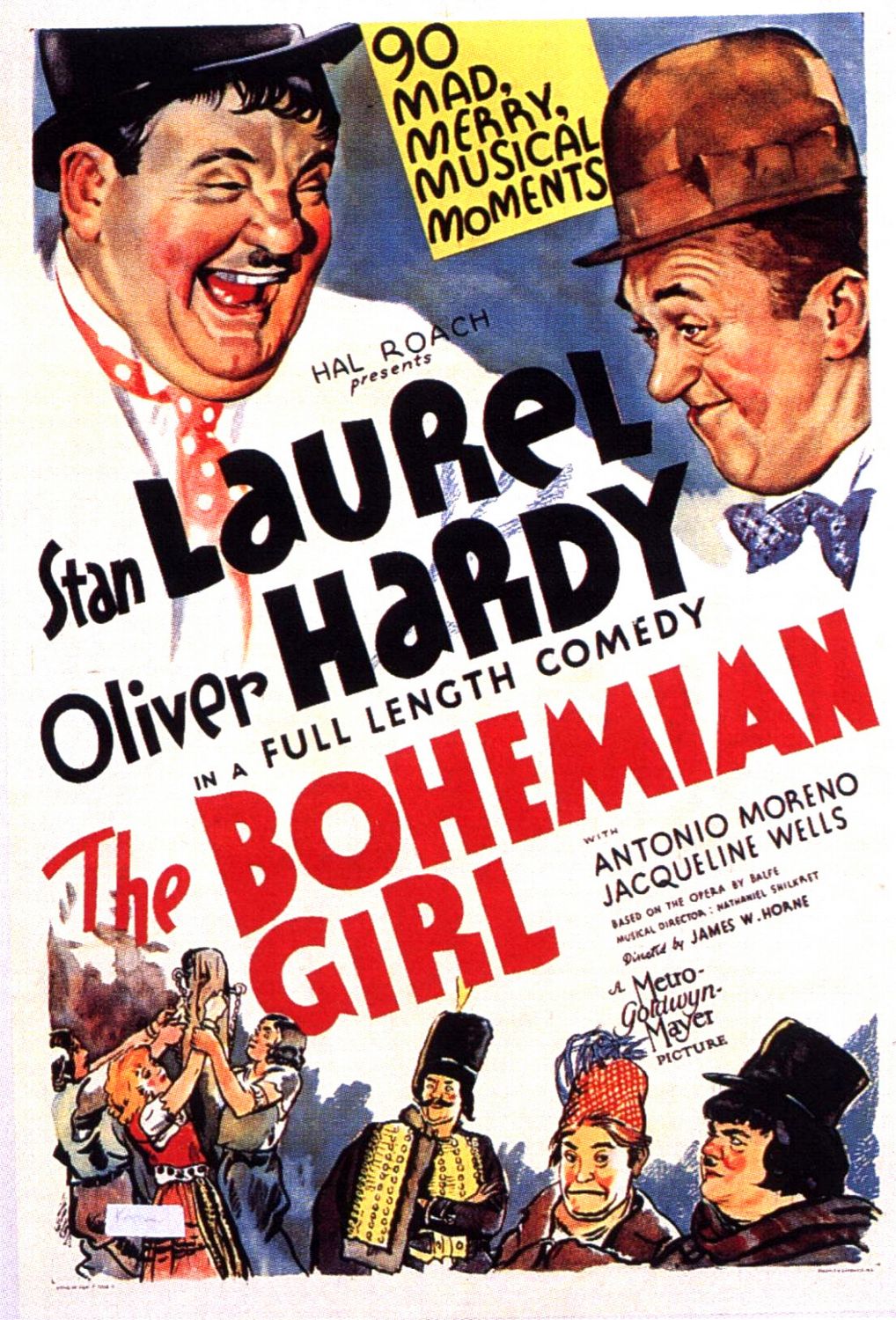
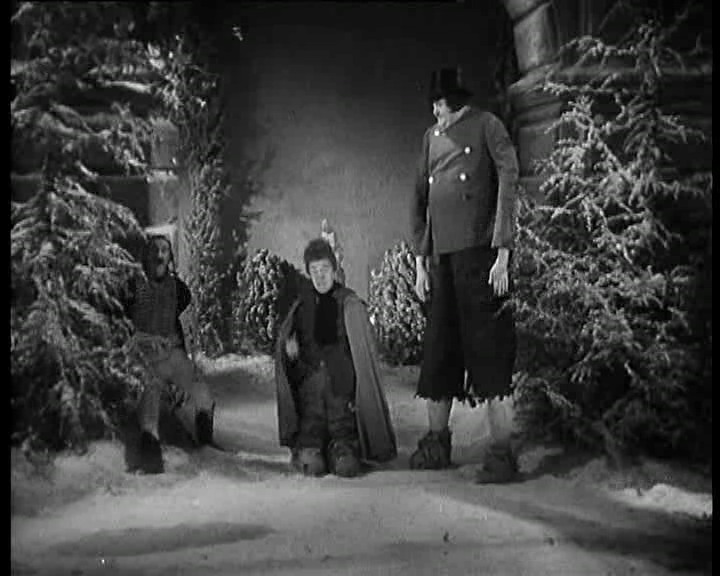
The two-timing wife (Mae Busch) of a gullible gypsy con-artist (Oliver Hardy) runs away with her lover (Antonio Moreno), leaving behind the kidnapped daughter (Darla Hood) of a local count (William P. Carleton). Arline (Hood) is raised by Hardy and his business partner (Stan Laurel), and even as a young woman (Julie Bishop) has no idea about her true identity.

Genres, Themes, Actors, and Directors:

  • Comedy
  • Con-Artists
  • Cuckolds
  • Gypsies
  • Kidnapping
  • Laurel and Hardy Films
  • Musicals
  • Royalty and Nobility

Review:
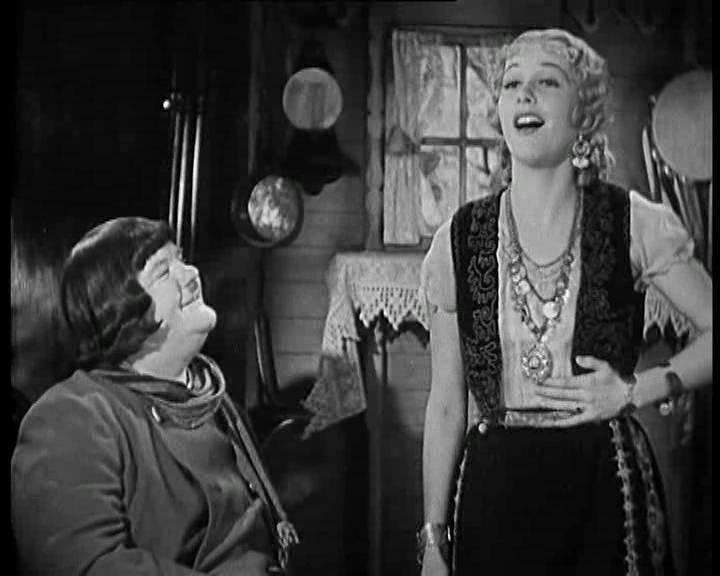
Laurel-and-Hardy fans are fond of defending this musical-comedy adaptation of Michael William Balfe’s 1843 opera, an innocuous melodrama which (not surprisingly) serves here as simply a narrative crutch for a series of semi-humorous L&H sketch pieces. The songs are primarily forgettable ditties warbled by a sound-stage full of would-be gypsies, though one — as Bishop croons the lovely aria “I Dreamt I Dwelt in Marble Halls” (more recently covered by Enya) — stands out as enjoyable enough to merit mention. Mae Busch (as Hardy’s wife) has fun with her role as perhaps the ultimate two-timing shrew, brazenly flirting with her lover in front of Hardy, but she’s not really given enough screen-time. Ultimately, this one will quickly fade from memory; diehard L&H fans will naturally want to check it out, but others can stay away.

Note: TBG is notorious as the final film of Thelma Todd, whose role was whittled away to hardly anything after her infamous “suicide” (considered by many to be murder).

Redeeming Qualities and Moments:

  • Bishop (dubbed) singing “I Dreamt I Dwelt in Marble Halls”
  • Creative visual effects at the very end

Must See?
No; this one is most definitely just for L&H fans.

Links:

I’m No Angel (1933)

I’m No Angel (1933)

“When I’m good, I’m very good. But when I’m bad… I’m better!”

Synopsis:
An upwardly mobile, flirtatious carnival dancer (Mae West) falls in love with a wealthy businessman (Cary Grant), but must defend her seemingly unsavory past.

Genres, Themes, Actors, and Directors:

  • Carnivals and Circuses
  • Cary Grant Films
  • Cross-Class Romance
  • Mae West Films
  • Social Climbers

Review:
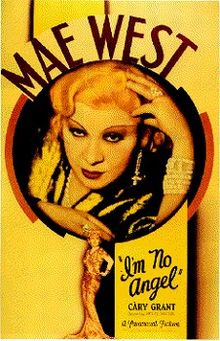
Along with She Done Him Wrong (1932), I’m No Angel is notorious as one of the films that finally put Hollywood’s self-appointed morality police over the edge, leading to much more stringent guidelines about what was permissible on screen. Indeed, with a script written by the inimitably salacious Mae West, one would expect nothing less than a series of barely-concealed sexual zingers — and that’s pretty much what you get here:

Grant: You were wonderful tonight.
West: I’m always wonderful at night.

West (to Grant, after refusing his money): You’ve got a lot of other things it takes to make a woman happy.

Unfortunately, as enjoyably giggle-worthy as these innuendos are, they aren’t enough to sustain the paper-thin plot, which is based on the wholly preposterous notion that West’s sexual allure is enough to turn nearly every able-bodied man she meets to mush (talk about giggle-worthy!). This one is purely a vehicle for West to demonstrate her exaggerated sense of narcissistic self-worth — but film fanatics curious to get a taste of West would be better off watching her in a more involving vehicle.

Note: I’m No Angel is also notable as the film in which West quips the infamous line “Beulah, peel me a grape” to her maid (Gertrude Howard).

Redeeming Qualities and Moments:

  • Some fun gowns
  • Plenty of typically zingy West-ian retorts and one-liners:

    Nigel de Brulier (as Rajah the Fortune Teller): I see a man in your life.
    West: What? Only one?

Must See?
No; despite its historical relevance, this isn’t among West’s best films, and is only must-see for her admirers. Listed as a film with Historical Importance in the back of Peary’s book.

Links:

Doctor in the House (1954)

Doctor in the House (1954)

“Don’t forget: to be a successful surgeon you need the eyes of a hawk, the heart of a lion, and the hands of a lady.”

Synopsis:
A naive doctor-in-training (Dirk Bogarde) and his classmates (Kenneth More, Donald Sinden, and Donald Houston) navigate through the challenges of medical school and dating.

Genres, Themes, Actors, and Directors:

  • College
  • Comedy
  • Dirk Bogarde Films
  • Doctors and Nurses

Review:
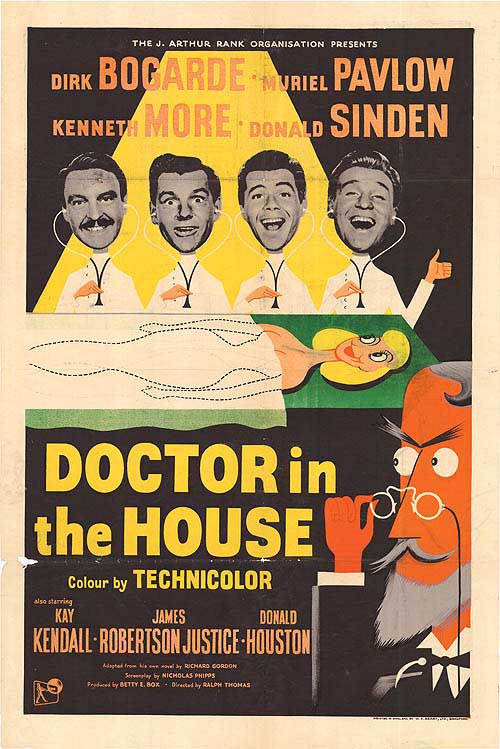
I’ll admit to having little patience for this enormously popular British comedy (based on a novel by former doctor Richard Gordon), which broke box-office records and spawned no less than six cinematic sequels and a television series. Unfortunately, it’s little more than an extended situation comedy involving a cadre of not-too-likeable young medical students who are much more interested in having fun than gaining a solid footing in their future profession; Bogarde is nominally the sympathetic protagonist, but he doesn’t come across as much better (or more interesting) than his friends.

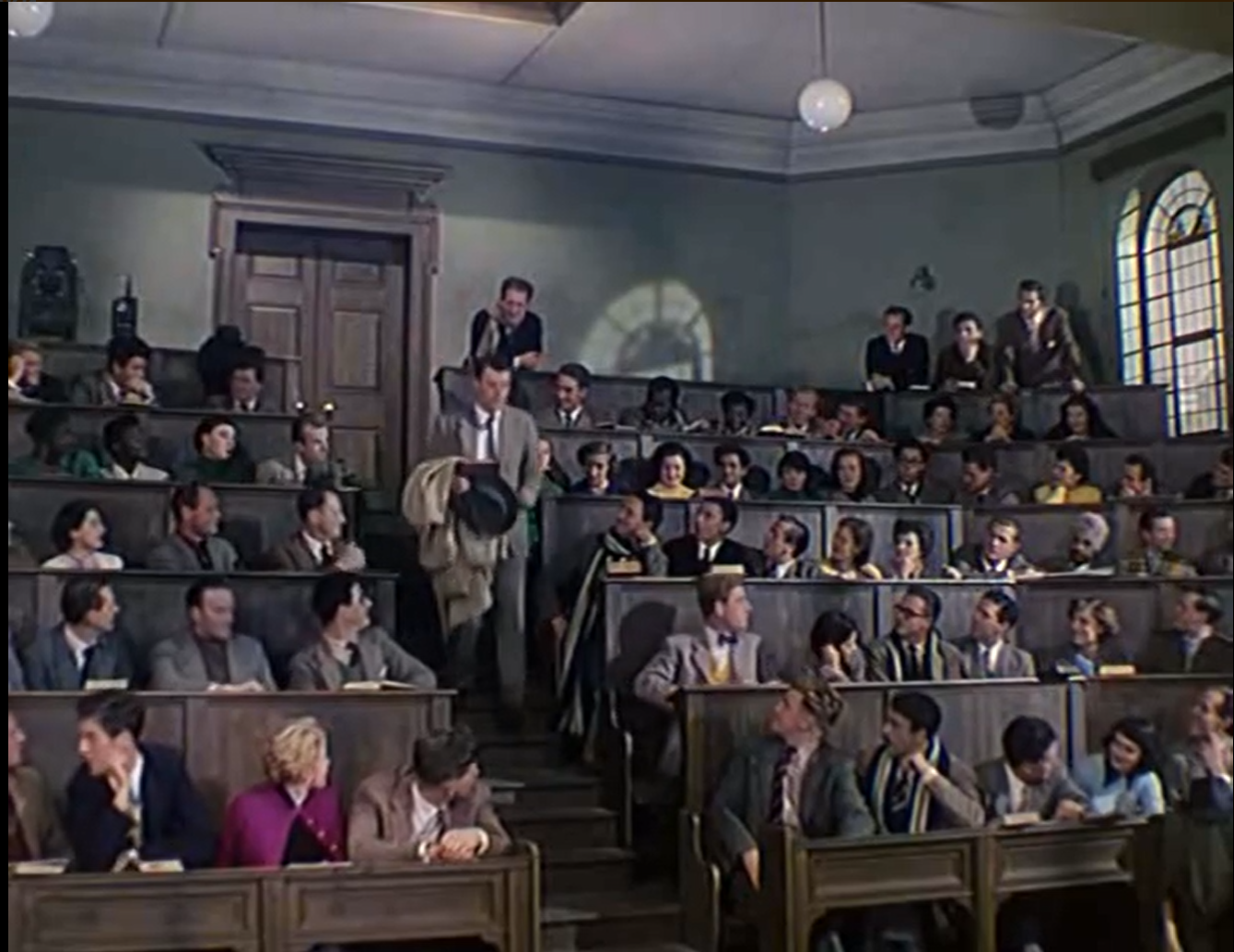
The humor is consistently lowbrow, and the episodic screenplay does little to hold our attention. The film’s only minor redeeming point is its willingness to show a diverse crowd of medical students on campus (including women and people of color):

Unfortunately, none of the latter are given substantial roles, and the former are reduced to either sex objects or shrews. Call me a grump, but this one’s simply icky; I couldn’t wait for it to be over.

Redeeming Qualities and Moments:
Not much at all.

Must See?
No; feel free to skip this clunker.

Links:

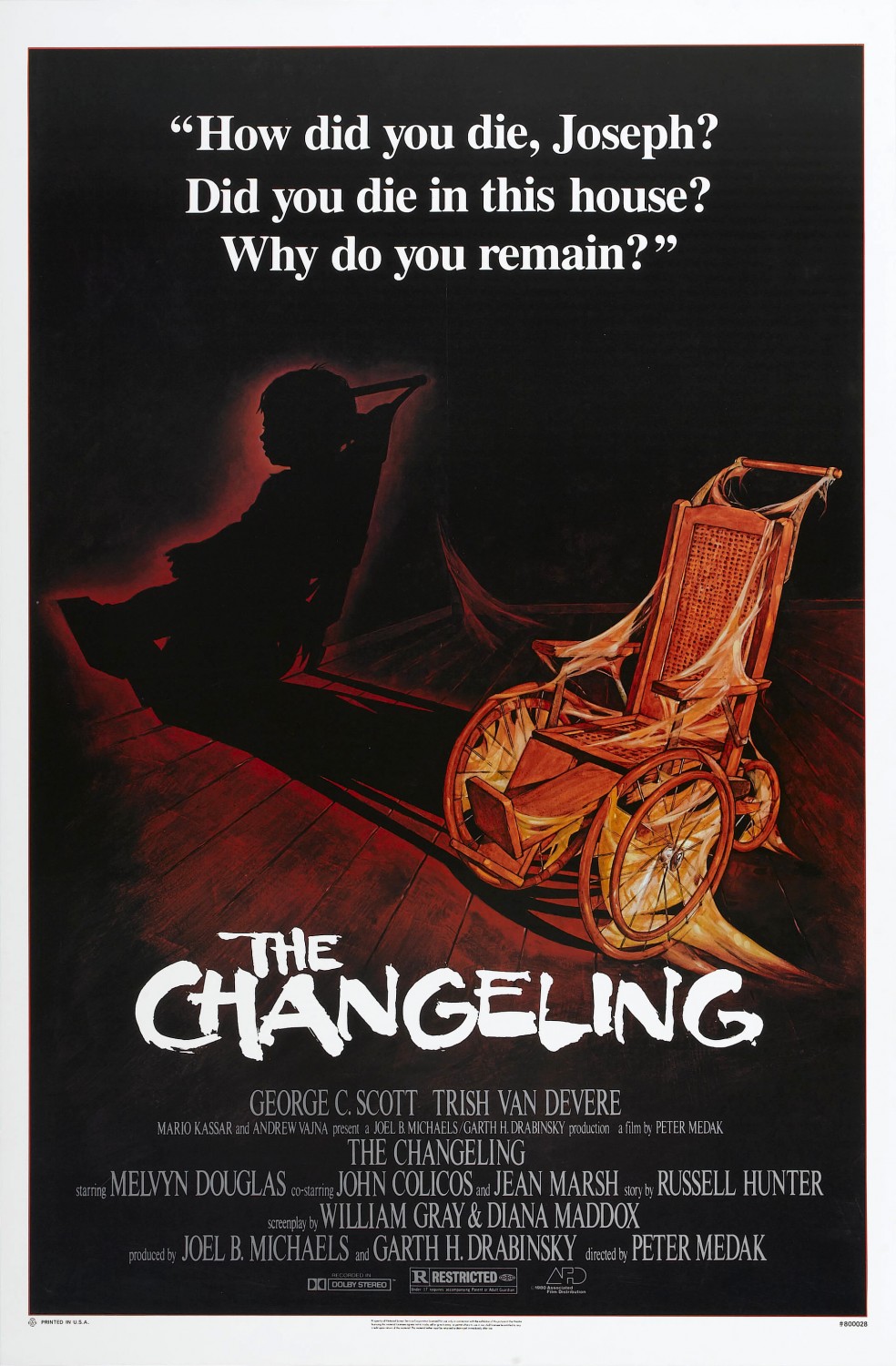
Changeling, The (1980)

Changeling, The (1980)

“That house is not fit to live in. No one’s been able to live in it. It doesn’t want people.”

Synopsis:
A recently widowed composer (George C. Scott) moves into a house haunted by the ghost of an unhappy child, whose tragic death is somehow linked to that of an aging senator (Melvyn Douglas).

Genres, Themes, Actors, and Directors:

  • George C. Scott
  • Ghosts
  • Horror
  • Melvyn Douglas Films
  • Old Dark House
  • Widows and Widowers

Review:
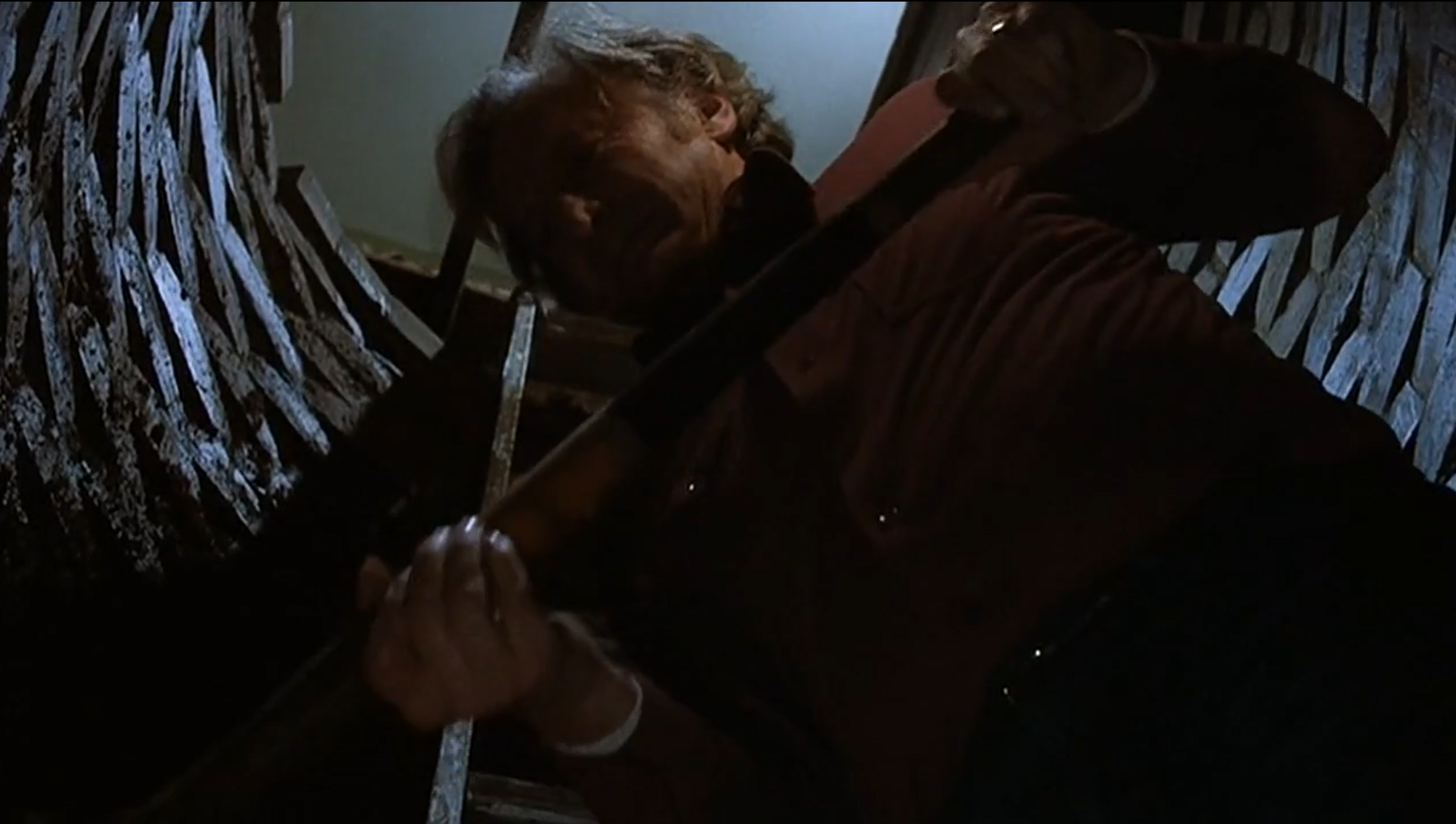
This atmospheric haunted house flick by director Peter Medak is based on a genuinely disturbing premise (don’t read too much about it online if you want to remain surprised), but is poorly paced and takes far too long to build momentum. In addition, Medak relies too heavily on both wide-angle and low-angle shots — the latter presumably to make us feel we’re consistently viewing the action from the perspective of a (buried?) child, but it quickly feels derivative and overly stylized.

Scott is typically fine (if perhaps a tad too stalwart) in the lead role:

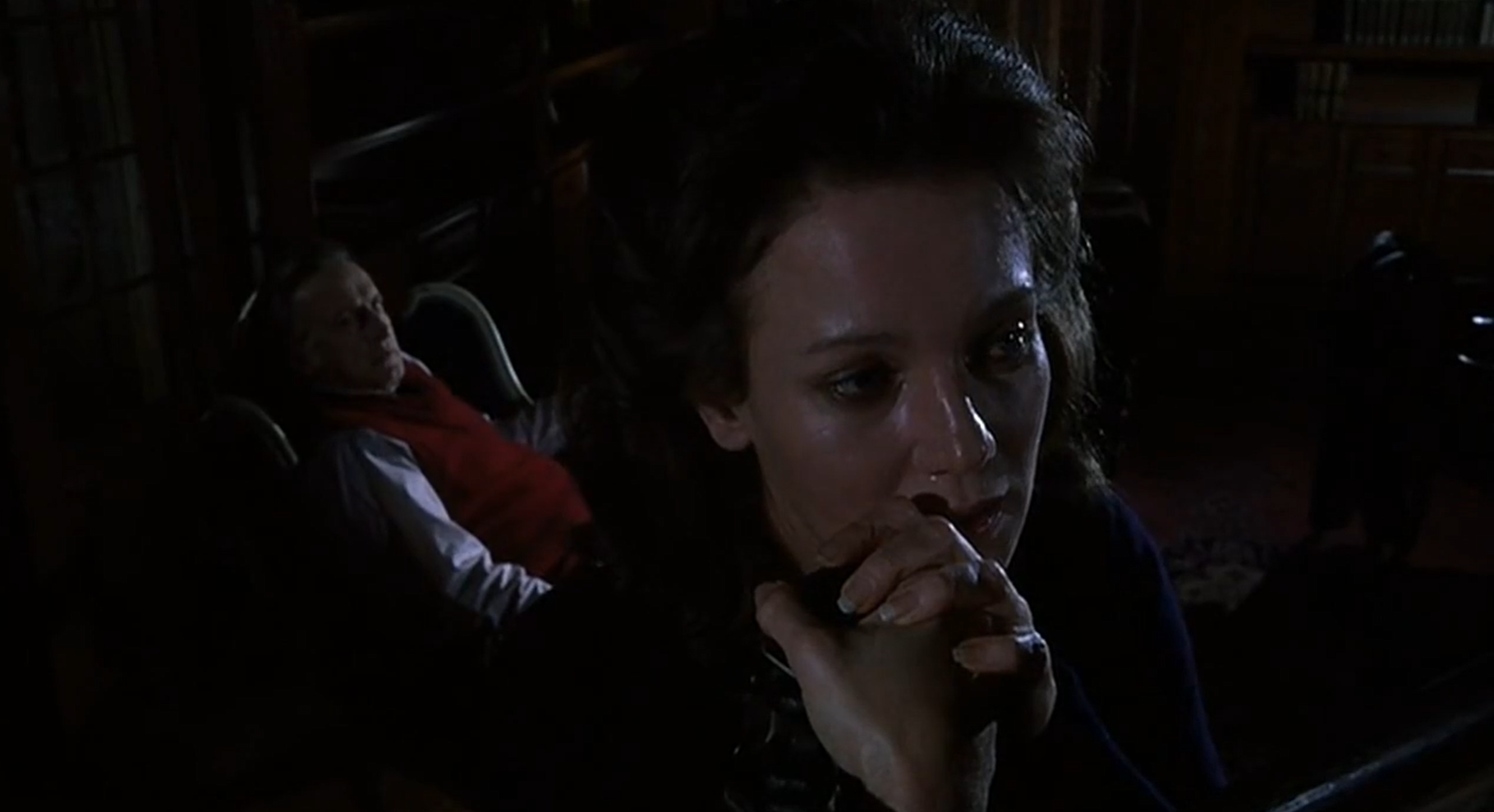
and his real-life wife (Trish Van Devere) registers an appropriate level of mounting trepidation as Scott’s realtor and amateur-sleuthing-partner (though their relationship remains frustratingly opaque).

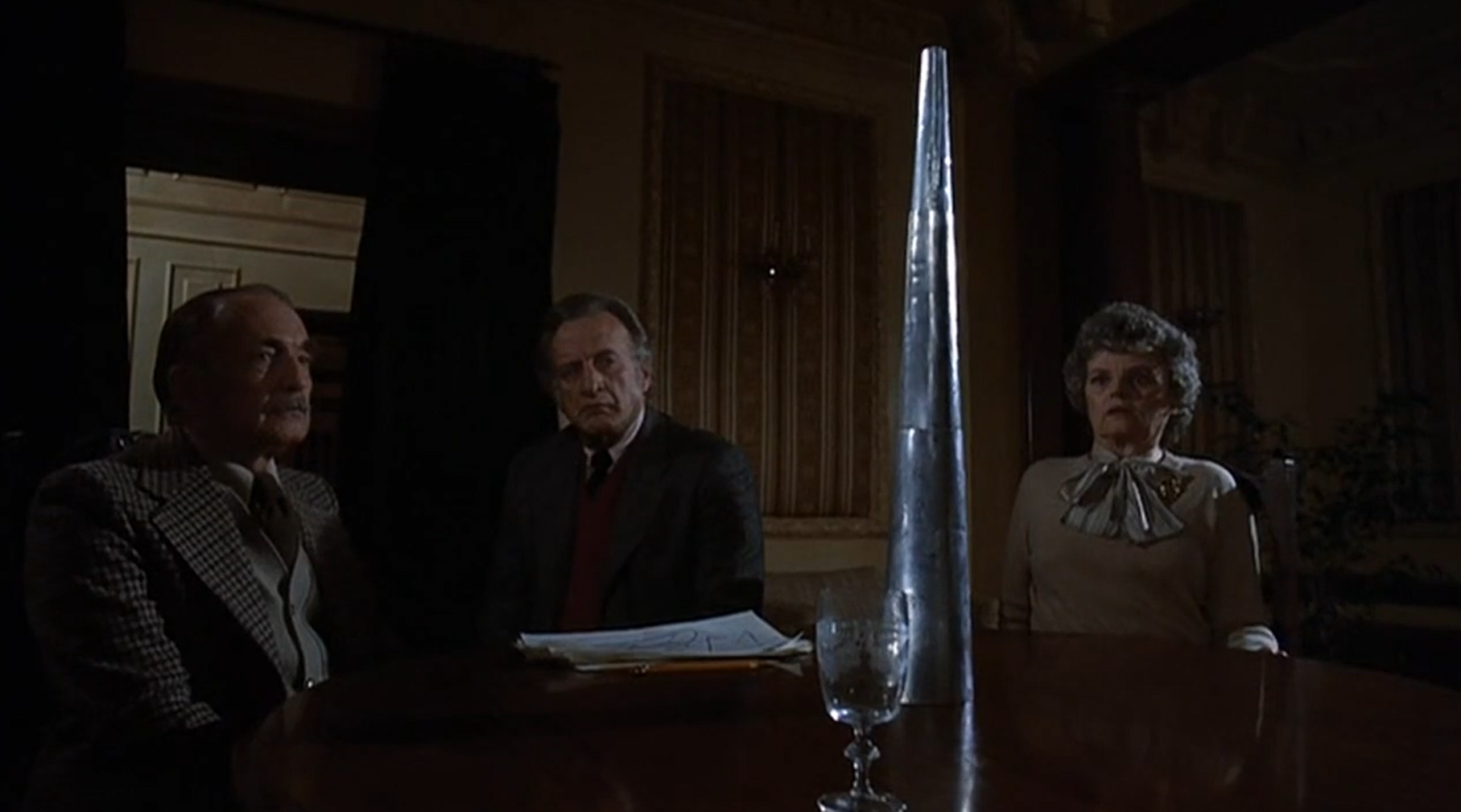
Ultimately, this one is really only must-see for fans of the genre, who will likely enjoy the intermittent chills and thrills it provides. Best scene: the genuinely freaky seance, which suddenly and effectively shifts the film into high gear.

Redeeming Qualities and Moments:

  • Some moments of genuinely creepy terror

Must See?
No; this one is only must-see for fans of the genre, though others may be curious to at least check it out. Listed as a Sleeper in the back of Peary’s book.

Links: