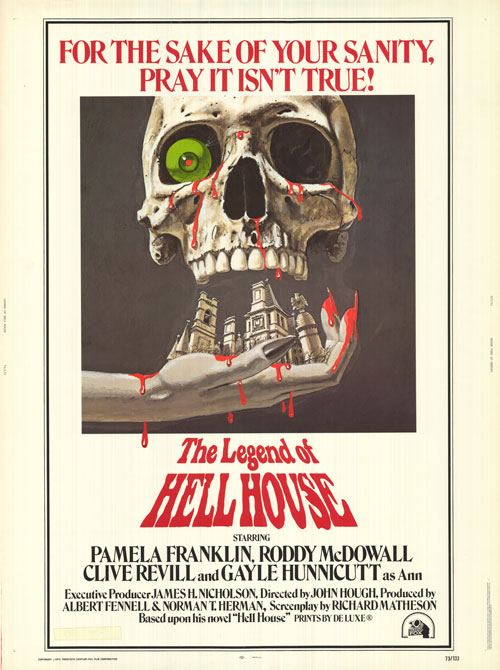
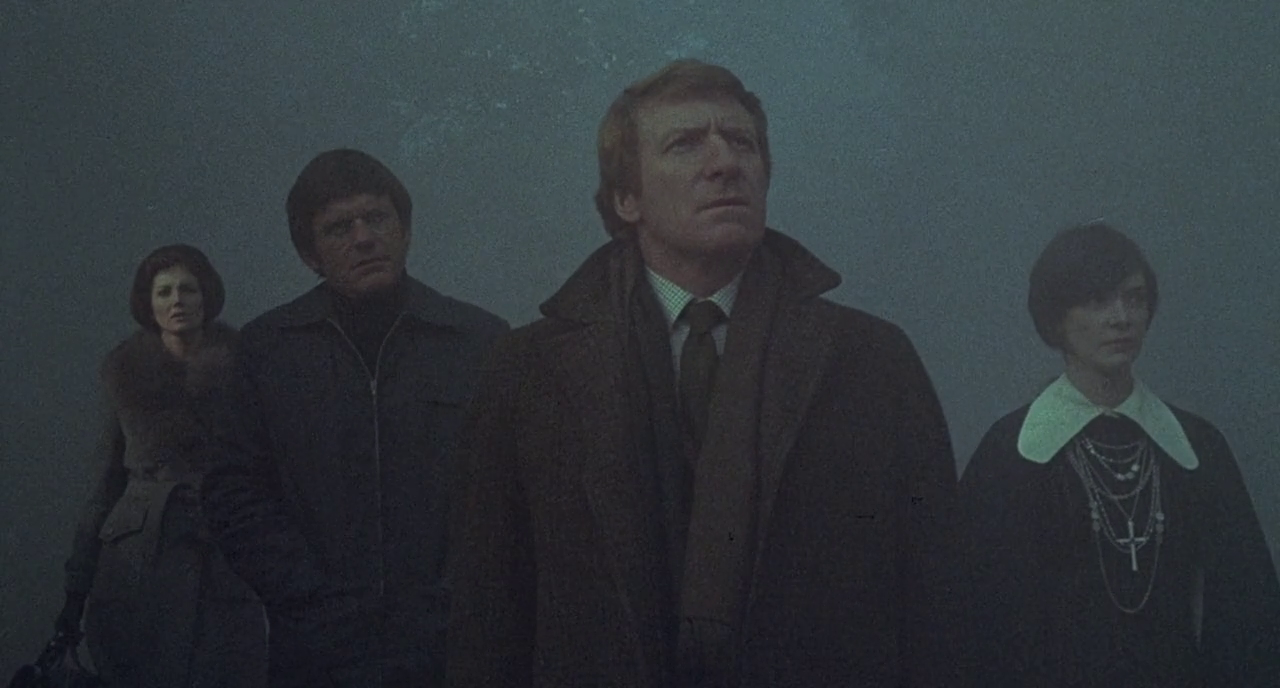
Legend of Hell House, The (1973)
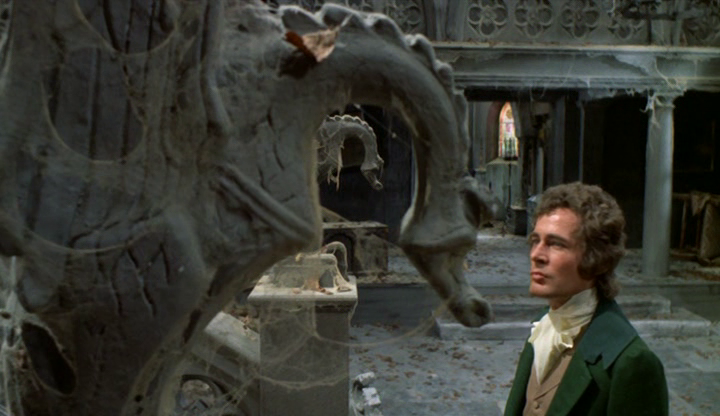
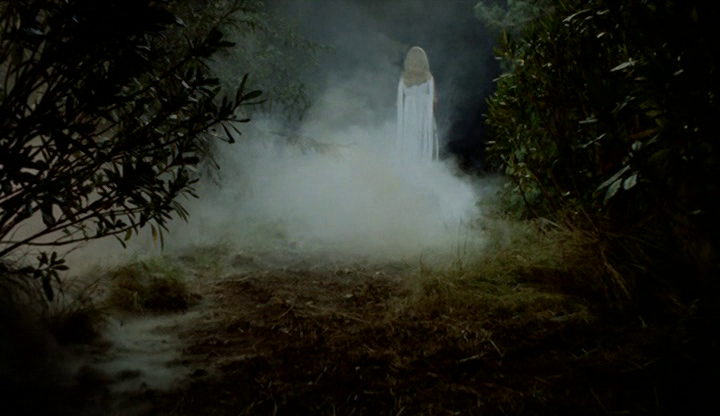
“This house… It knows we’re here.”
|
Synopsis: |
|
Genres, Themes, Actors, and Directors:
Review: Redeeming Qualities and Moments:
Must See? Categories
Links: |
“This house… It knows we’re here.”
|
Synopsis: |
|
Genres, Themes, Actors, and Directors:
Review: Redeeming Qualities and Moments:
Must See? Categories
Links: |
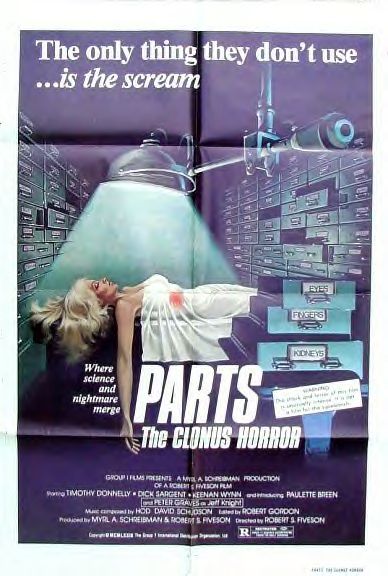
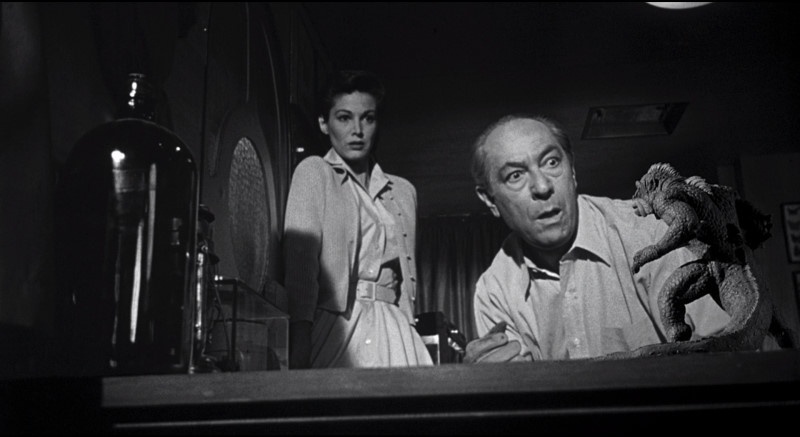
“This is your chance for immortality! You don’t need to worry, because there is a duplicate of you!”
|
Synopsis: |
|
Genres, Themes, Actors, and Directors:
Review: Redeeming Qualities and Moments:
Must See? Links: |
“I am a night bird; I am not much good in the daytime.”
|
Synopsis: |
|
Genres, Themes, Actors, and Directors:
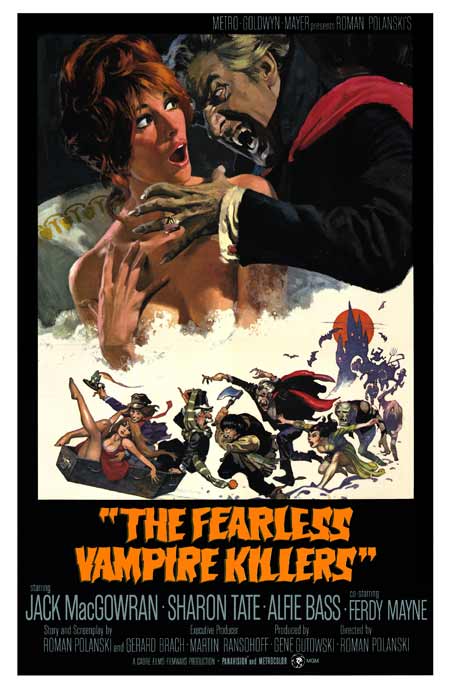
Review: With that said, I do appreciate Douglas Slocombe’s gorgeous cinematography — much shot in the snowy outdoors, which lends a unique atmosphere to the proceedings — and I also admire Polanski’s attempts at satirizing a beloved genre. The culminating vampire ball is quite a sight to behold, with the presence of decrepit and decaying aristocrats making one question the trope of vampires as invariably gorgeous young men and women. And Krystov Komeda’s score is mesmerizing. But none of this can make up for the inane slapstick and nincompoop leads. As a final thought, I will cite Time Out’s reviewer, who writes that “With all its faults, [it’s] an engaging oddity”; ultimately, all film fanatics should see it once to craft their own opinion. Redeeming Qualities and Moments:
Must See? Categories
Links: |
“Having lost Clyde, your brother, I must never lose you.”
|
Synopsis: |
|
Genres, Themes, Actors, and Directors:
Review:
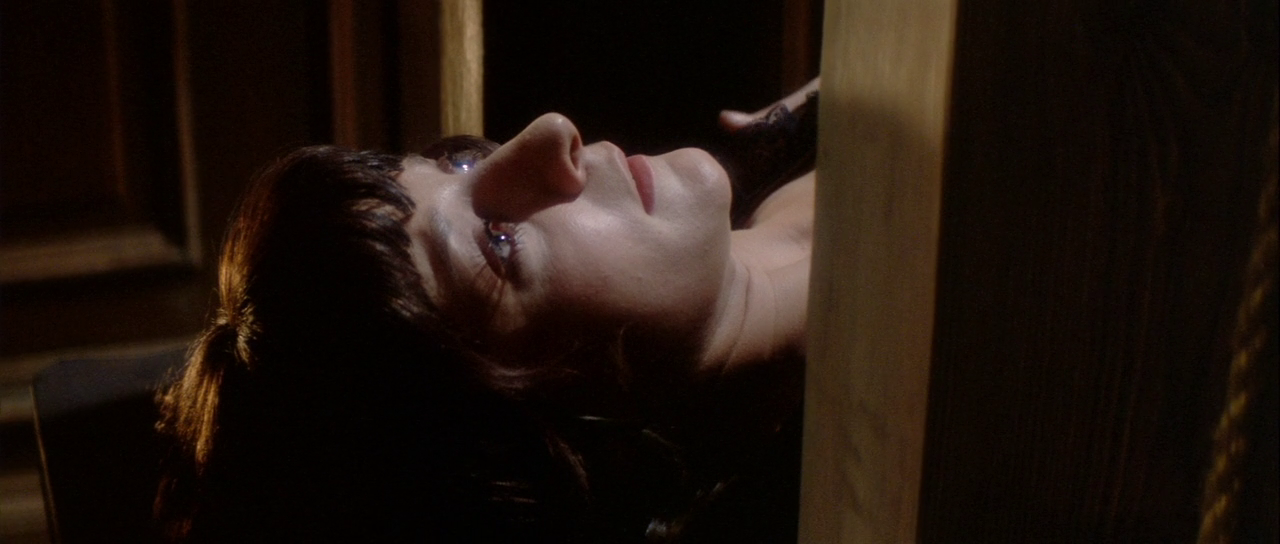
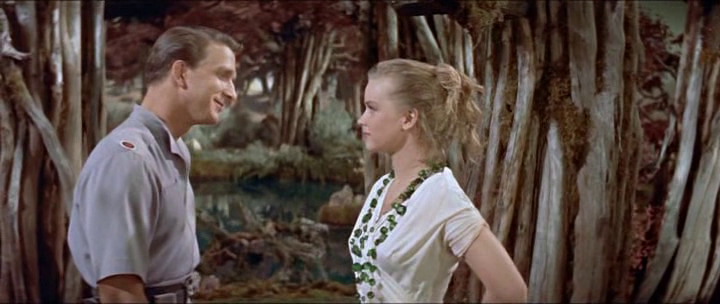
Speaking of risks, the presence of a guillotine at one point is explained away as allowing the (immensely likable) would-be victim to “feel fear” (!) — but couldn’t another, less vicious method have been secured for her near-death experience? In the film’s favor are lovely sets, vibrant Todd-AO cinematography, and some nifty special effects — but overall, this one is a disappointment. Redeeming Qualities and Moments:
Must See? Links: |
“They are all slaves to Count Karnstein — and he is their evil master!”
|
Synopsis: |
|
Genres, Themes, Actors, and Directors:
Review:
Meanwhile, Cushing has never been more sober or skeletal:
and Thomas is effectively sociopathic as a playboy count with truly sadistic tastes.
Given its atmospheric sets and fine cinematography, Twins of Evil will certainly appeal to fans of period horror flicks, though the script fails to elevate the material above predictable fare with plenty of gaps in logic. Watch the extended documentary The Flesh and the Fury: X-posing Twins of Evil (2012) for more background information than you ever thought possible about this cult flick (and its two predecessors). Redeeming Qualities and Moments:
Must See? Links: |
“Do you know who it was, Mircalla? The portrait of Carmilla Karnstein — it was you!”
|
Synopsis: |
|
Genres, Themes, Actors, and Directors:
Review:
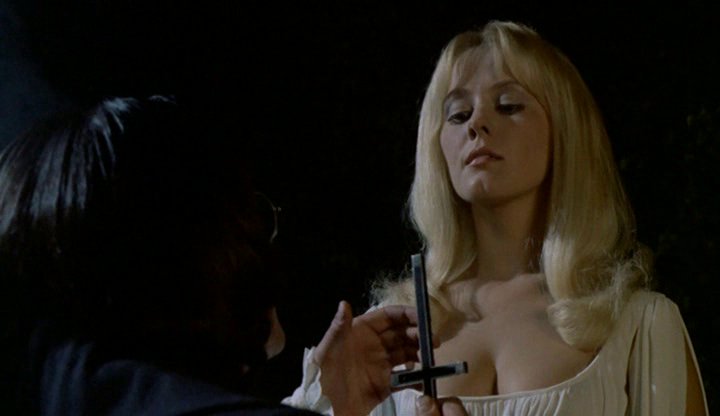
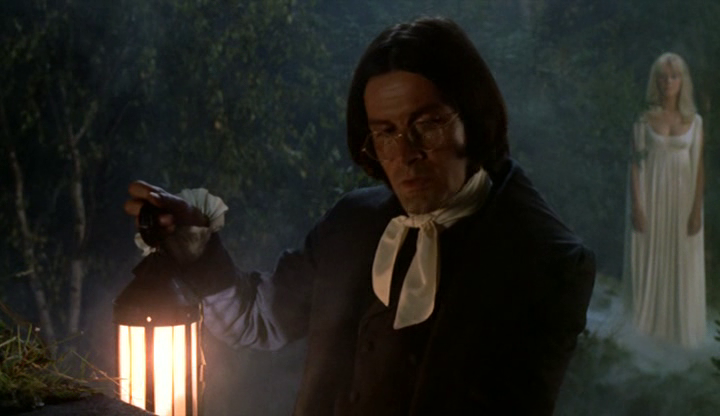
and her character pales in comparison to Ingrid Pitt’s more nuanced portrayal as Carmilla in The Vampire Lovers. Meanwhile, Bates — so compelling in the same year’s Dr. Jekyll and Sister Hyde (1971) — simply comes across as silly:
and the film’s obvious replacement for Christopher Lee (Mike Raven as Count Karnstein) merely lurks menacingly in the shadows.
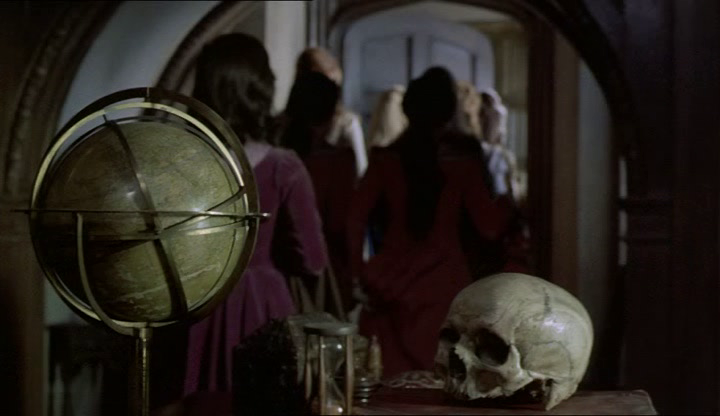
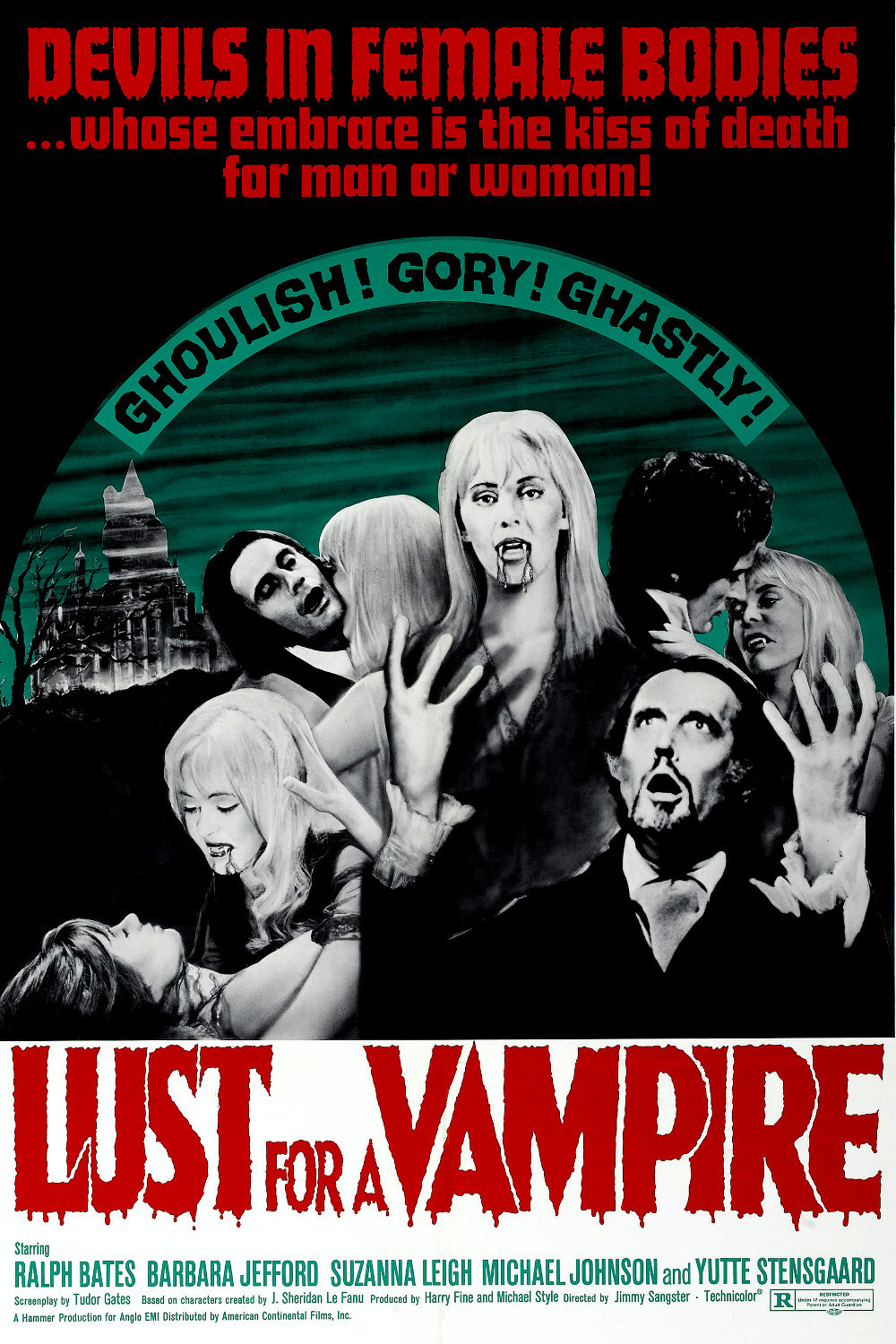
The entire film is essentially an extended excuse to show off nubile young women with heaving bosoms in various states of skimpy dress and undress. The most laughable moment by far: Johnson and Stensgaard get romantic (he cares not a whit about her inconvenient status as a vampire) while a ballad entitled “Strange Love” suddenly begins playing in the background. Redeeming Qualities and Moments:
Must See? Links: |
“Why is it always, always, so costly for man to move from the present to the future?”
|
Synopsis: |
|
Genres, Themes, Actors, and Directors:
Response to Peary’s Review: Redeeming Qualities and Moments:
Must See? Links: |
“He’s got a smile like concentrated vodka!”
|
Synopsis: |
|
Genres, Themes, Actors, and Directors:
Response to Peary’s Review:
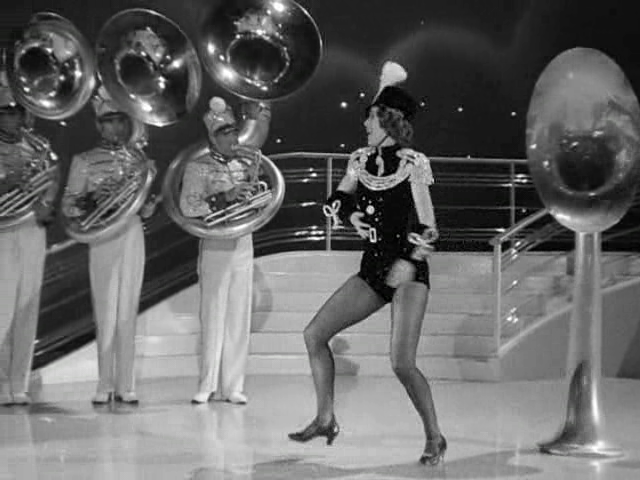
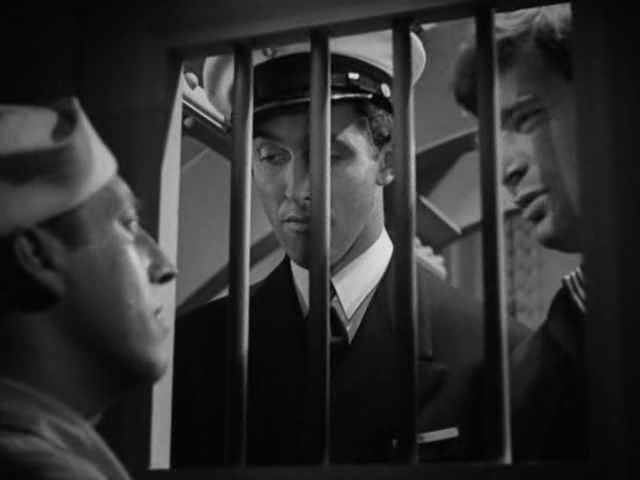
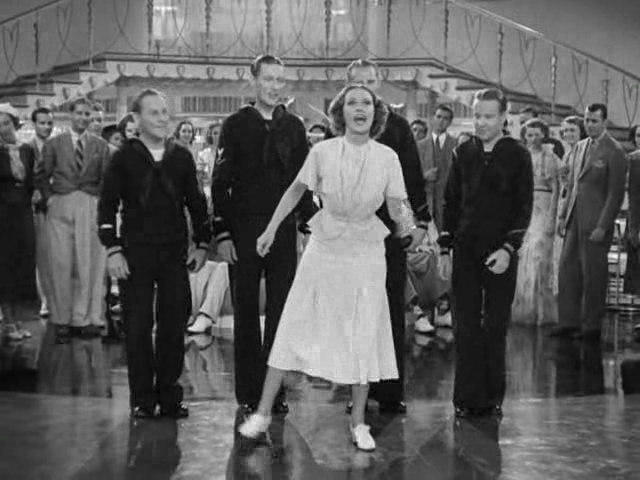
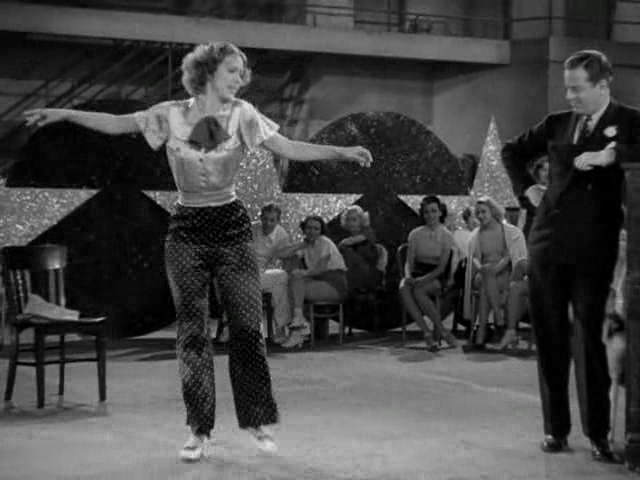
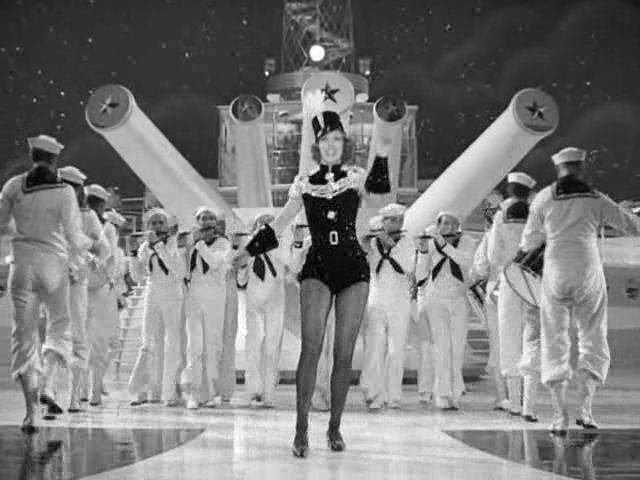
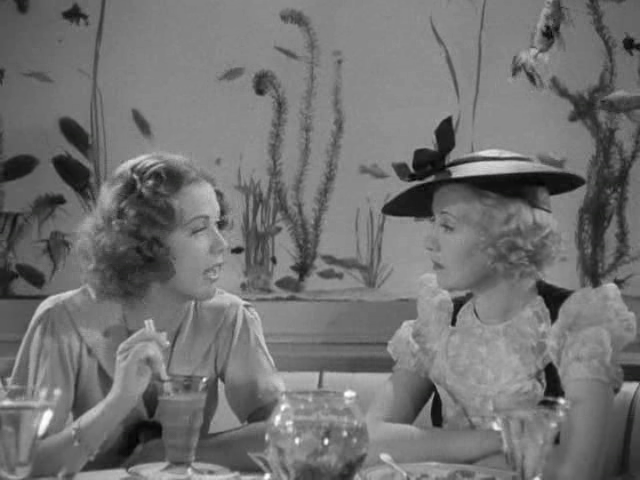
Unfortunately, while Powell is pretty and earnest, she isn’t the most nuanced of actors, and gravitates towards one facial expression (smiling, toothy mouth wide open) while dancing; Peary notes somewhat uncharitably that “when standing still” she “looks like she’d be a crummy Amateur Hour contestant”. But Stewart (apparently suggested for the part by Porter) is fine in one of his earliest roles:
and gets to warble “Easy to Love”. Note: Of interest is the brief but memorably loopy scene with a “switchboard operator” (Helen Troy) “who anticipated by thirty years Lily Tomlin’s Ernestine:”
Redeeming Qualities and Moments:
Must See? Links: |
“I am fearful when I see people substituting fear for reason.”
|
Synopsis: |
|
Genres, Themes, Actors, and Directors:
Response to Peary’s Review: I’m ultimately a bigger fan of this cult flick than Peary: I like its intelligence, its deliberate pacing, and the crispness of Leo Tover’s atmospheric black-and-white cinematography (which is especially gorgeous in Blu-Ray). Unlike Anne Francis’s Altaira in Forbidden Planet (1956), Neal is a refreshingly savvy and nuanced female protagonist:
and Rennie is perfectly cast as an ultra-rational yet compassionate alien attempting to understand humans’ “illogical” bent towards violence.
The storyline may be a bit heavy in moralizing — with Rennie’s “Mr. Carpenter” clearly meant to symbolize a Jesus-like savior — but truthfully, we deserve it, given that our current world situation is nearly as dire now as during the Cold War. Thankfully, the film’s numerous “inconsistencies” — i.e., the fact that “Gort, a ten-foot metal Golem, scorches his way out of a solid block of plastic, marches across a major city, burns down the wall of a jail and carries kaput Klaatu back to the Mall – and nobody sees him!” — “only become obvious after repeated viewings”; see DVD Savant’s review for this example and others. Note: This film was remade in 2008 with Keanu Reeves but I haven’t seen that version and probably won’t. Redeeming Qualities and Moments:
Must See? Categories
(Listed in 1001 Movies You Must See Before You Die) Links: |
“The fool, the meddling idiot! As though his ape’s brain could contain the secrets of the Krell!”
|
Synopsis: |
|
Genres, Themes, Actors, and Directors:
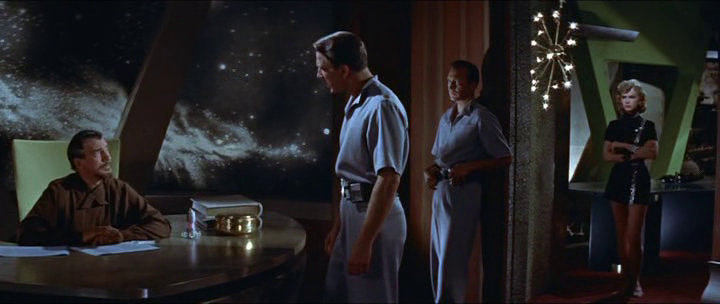
Response to Peary’s Review: While I’m annoyed by Robby — his interactions with a tippling cook (Earl Holliman) are especially groan-worthy — I actually believe the film’s worst error is its lack of (strong) female characters. Forbidden Planet immediately and unambiguously fails the Bechdel Test, given that there is only one female character (Francis) who is thus unable to talk to another female about anything, let alone a topic other than men. Indeed, nearly all of Francis’s dialogue centers ON men — from her growing understanding of what this “sexual attraction” thing is all about, to which man she will (inevitably) end up attached to, to how she can dress in a way that will make the men more comfortable, etc. She’s ultimately little more than skimpily dressed eye candy.
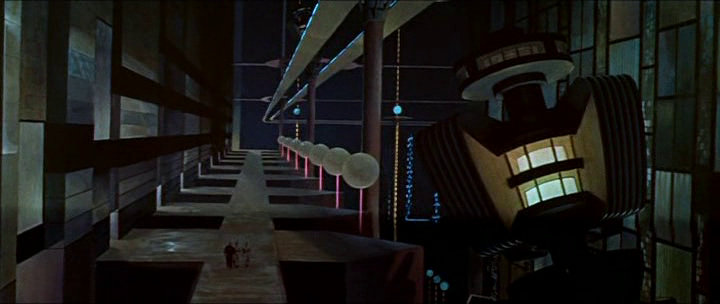
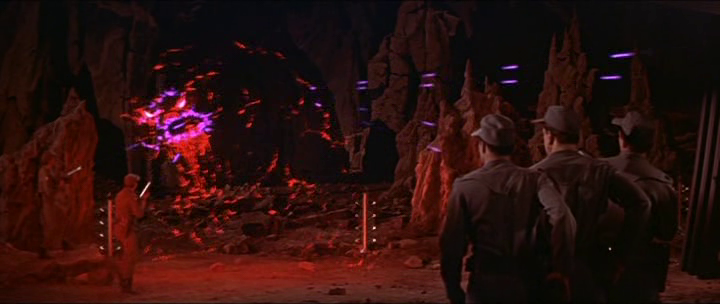
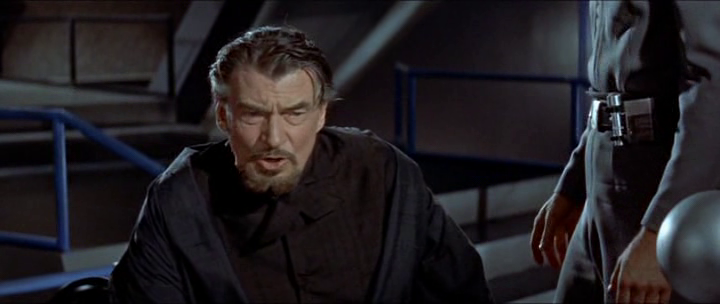
Of minor interest is the fact that Forbidden Planet‘s storyline is loosely based on Shakespeare’s The Tempest — though we never fully understand why Morbius is so protective of his daughter, given that the “Freudian-incestuous elements are toned down.” Once the narrative centers on Nielsen’s exploration of Altair-IV and his growing understanding of Pidgeon’s history on the planet, however, we immediately become drawn in — thanks in large part to the truly “marvelous design of Altair-IV and the Krell underground chambers”, as well as some nifty special effects. Also wonderfully innovative is the “electronic music by Louis and Bebe Barron”. Regardless of its flaws, film fanatics will likely want to check this one out at least once, given its popularity and historical importance. Redeeming Qualities and Moments:
Must See? Categories
(Listed in 1001 Movies You Must See Before You Die) Links: |