This Gun For Hire (1942)

This Gun For Hire (1942)

“I’m my own police.”

Synopsis:
When a hitman (Alan Ladd) is double-crossed by his employer (Laird Cregar), he vows revenge, and soon crosses paths with a beautiful singer (Veronica Lake) working as a spy to learn about shady wartime deals being brokered by Cregar’s crooked boss (Tully Marshall).

Genres, Themes, Actors, and Directors:

  • Alan Ladd Films
  • Falsely Accused
  • Hitmen
  • Laird Cregar Films
  • Revenge
  • Robert Preston Films
  • Spies
  • Veronica Lake Films

Response to Peary’s Review:
As Peary notes, “Alan Ladd became an instant star” in this “exciting, compact adaptation of Graham Greene’s popular pulp novel,” portraying “lethal hired killer Philip Raven”. Peary argues that “in a trench coat with its collar turned up, a hat pulled down to his eyes, a gun in his hand, and a deep voice, he is the coolest gunman to hit the scene since James Cagney in Public Enemy” — and certainly one of the most oddly sympathetic. Interestingly, as Peary notes, “we can’t help “root[ing] for Ladd on his mission of revenge”, in large part “because we realize that his past was so miserable that he never had a chance to be decent”, but also because “he was exploited by Cregar, because Lake sympathizes with him, and because we sense that he isn’t long for this world”.

However, it’s difficult to contemplate Ladd’s fine performance in isolation, given the importance of his relationship with “beautiful, buxom blonde Lake”, who in this film “found her ideal screen partner”. Peary notes that “with those dreamy eyes, a peek-a-boo hairstyle, and a husky voice to match Ladd’s”, they “are an electrifying screen couple” — a statement made all the more complex given that Lake is happily engaged to a policeman (Robert Preston) who’s on Raven’s trail. Naturally, loyalties quickly become conflicted, and it’s fascinating to watch as Lake and Ladd — who are clearly smitten with each other on some level — carefully negotiate their positions. Indeed, whenever they’re on-screen, we’re glued; the rest of the “taut” storyline, while competent and finely directed, feels mostly like icing.

Interestingly, in his review, Peary refers to This Gun For Hire as “one of the few forties crime dramas that weren’t really noir films” — yet it certainly possesses many noir elements (including atmospheric cinematography and a sense of deeply pervasive cynicism), and it’s generally considered by others to be part of this genre. Perhaps Peary’s opinion is due to the occasional shifts in tone throughout the film — most notably when Lake performs a couple of unusual musical ditties (by Jacques Press and Frank Loesser); meanwhile, Cregar’s performance as Raven’s most direct nemesis lacks a requisite sense of menace — he’s a bit too much of a blubbering coward to be fully convincing in the role. However, all told, I would most certainly classify this one stylistically as noir.

Two of my favorite moments: Lake unexpectedly pecks Ladd on the cheek; Lake leaves a steady trail of evidence behind her while being held hostage by Ladd.

Redeeming Qualities and Moments:

  • Alan Ladd as Raven
  • Veronica Lake as Ellen Graham
  • Fine chemistry between Ladd and Lake
  • Atmospheric cinematography

Must See?
Yes, for Ladd’s magnetic debut performance — and his palpable on-screen chemistry with Lake.

Categories

  • Noteworthy Performance(s)

Links:

Faust (1926)

Faust (1926)

“All things in heaven and earth are wonderful! But the greatest wonder is man’s freedom to choose between good and evil.”

Synopsis:
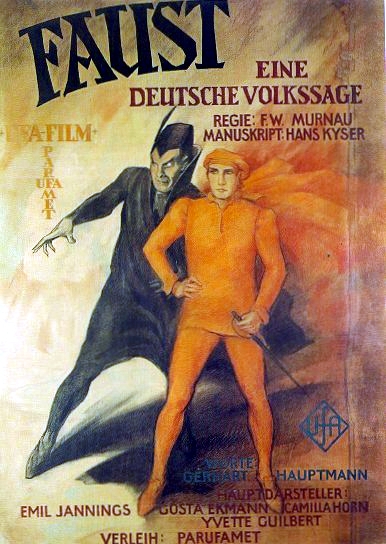
In medieval Germany, the demon Mephistopheles (Emil Jannings) bets an archangel (Weiner Fuetterer) that he can corrupt the soul of a well-meaning alchemist (Goesta Ekmann). After experiencing a trial day of omnipotence and youth, Faust (Ekmann) accepts Jannings’ pact in order to romance the “most beautiful woman in the world” (Hanna Ralph); when he eventually falls in love with a chaste young maiden (Camilla Horn), however, Mephistopheles plots their downfall.

Genres, Themes, Actors, and Directors:

  • F.W. Murnau Films
  • Pact with the Devil
  • Silent Film

Review:
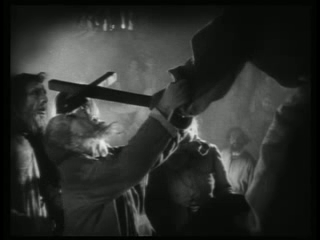
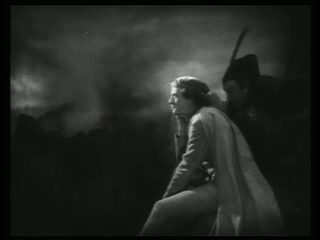
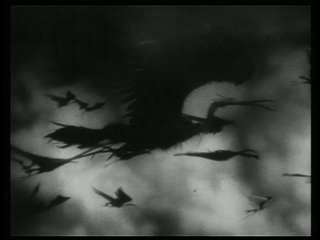
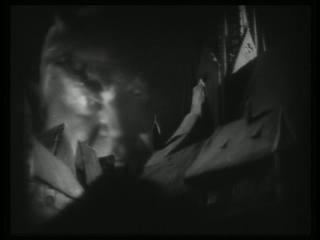
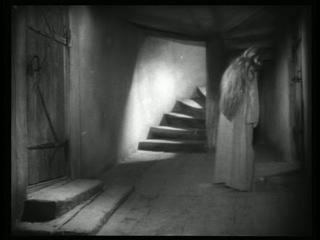
Loosely based upon the first part of Goethe’s play of the same name, F.W. Murnau’s Faust remains one of his most visually evocative films, with consistently atmospheric cinematography by DP Carl Hoffman, effectively stylized sets, and fine special effects. From its stunning opening sequences — wherein an archangel and Mephistopheles use Faust as a pawn in a wager against one another, and Mephistopheles unleashes a plague upon Faust’s village — we are immediately invested in Faust’s sticky existential dilemma. Dr. Faust (nicely played in both old age and youth by Goesta Ekmann) initially accepts Mephistopheles’ proposal in desperate hopes of finding a way to heal his plague-ridden neighbors — but the fearful townsfolk immediately discern that Faust is in league with the devil, and want nothing to do with his ill-gotten cures. From thence, Faust’s foolhardy decision to accept Mephistopheles’ offer of further omnipotence and youth is much less easy to swallow; at this point, we understand that, despite his originally noble intentions, Faust has squarely dug his own grave.

The film’s middle scenes — as Faust explores a life of hedonism, then becomes smitten by a fair maiden, while Mephistopheles himself flirts with the maiden’s mother (Frida Richard) — are often noted as its least compelling, perhaps in part because the imagery is no longer quite so consistently stunning; by the film’s final tragic act, however, the momentum and visual interest have picked up once again. Interestingly, it’s Mephistopheles himself (played with impish glee by Jannings) who emerges as the film’s most memorable character. We’re reminded time and again that Faust’s entire journey is predicated upon Mephistopheles’ whims: once Mephistopheles decides that Faust has made a mistake in falling for Gretchen (Horn), he quickly sets the wheels in motion to “help” Faust see the error of his ways. By the end of Faust’s bitterly tragic saga, we come to believe that any type of consort with the devil is truly a compromised bargain: there is no room for goodness or humility once one has crossed over to the Other Side.

Note: Interestingly, in his “Greatest Films” review, Roger Ebert points out that Faust is ranked by IMDb users as one of the top horror films of all time (even placing it above Murnau’s more widely recognized, Dracula-themed Nosferatu); however, I’m not quite sure I would label it within that genre myself, as it’s less a horror film than a morality/folk tale.

Redeeming Qualities and Moments:

  • Carl Hoffman’s stunning cinematography


  • Excellent early special effects
  • Countless memorable images

  • Fine expressionistic sets

Must See?
Yes, as an acknowledged silent classic by a master filmmaker. Listed as a film with Historical Importance in the back of Peary’s book.

Categories

Links:

Steamboat Bill, Jr. (1928)

Steamboat Bill, Jr. (1928)

“This floating palace should put an end to that thing Steamboat Bill is running.”

Synopsis:
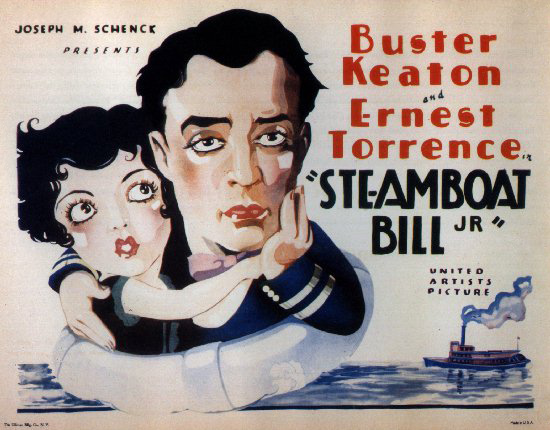
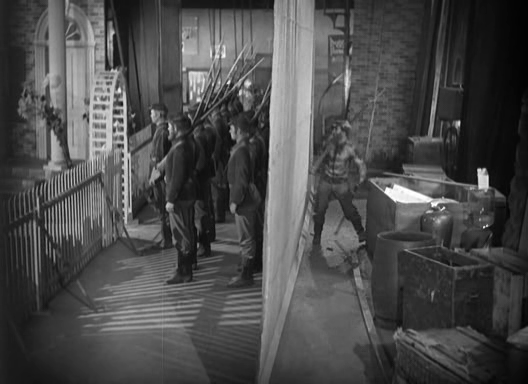
The long-lost son (Buster Keaton) of a steamboat operator (Ernest Torrence) attempts to bond with his father while illicitly romancing the daughter (Marion Byron) of Torrence’s competitor (Tom McGuire).

Genres, Themes, Actors, and Directors:

  • Buster Keaton Films
  • Comedy
  • Father and Child
  • Rivalry
  • Silent Films
  • Star-Crossed Lovers

Review:
Buster Keaton’s final film for United Artists is widely considered one of his best — in large part because of its truly stunning climax, in which a cyclone rips through town, affording not only Keaton’s character but Keaton himself multiple opportunities to narrowly escape death as buildings literally collapse just inches around him; as noted in Chris Dashiell’s CineScene Review, the entire cyclone sequence is “perhaps the high point of Keaton’s career as a designer of amazing stunts and visual effects.” However, I’ll admit that I don’t personally find this film to be one of Keaton’s most consistently amusing outings. Other than a clever early sequence in which Keaton’s disappointed father attempts to buy him a new, “manlier” hat, the film’s comedic energy (for me, at any rate) doesn’t really kick into gear until about halfway through, once Keaton is finally allowed to show his mettle by attempting to sneak his wrongly imprisoned father out of jail. From thence, he’s the typically inventive and daring Keaton we know and adore, battling storms, rescuing his loved ones from harm’s way, and performing death-defying physical stunts.

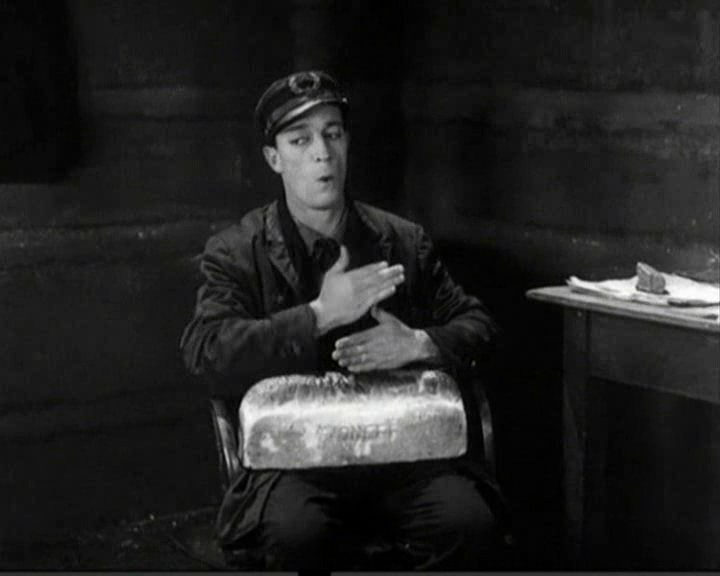
My favorite line (as a handful of smuggled tools fall out of a loaf of bread Keaton is trying to hand over to his father in jail):

“That must have happened when the dough fell in the tool chest.”

Note: In his Alternate Oscars, despite conceding that SBJ “isn’t a pivotal Keaton film”, Peary nonetheless names Keaton Best Actor of the Year for his performance here, noting that “one can see why many consider him the most lovable of the silent stars and every bit as sexy as the silent screen’s romantic athlete, Douglas Fairbanks”. Amen to that!

Redeeming Qualities and Moments:

  • Keaton’s attempt to sneak his father out of jail
  • The stunning cyclone sequence

Must See?
Yes, for its breathtaking technical bravado. Listed as a film with Historical Importance and a Personal Recommendation in the back of Peary’s book. Available for free viewing on www.archive.org.

(Listed in 1001 Movies You Must See Before You Die)

Links:

Three Ages (1923)

Three Ages (1923)

“If you let your mind wander back through History you will find that the only thing that has not changed since the World began is — LOVE.”

Synopsis:
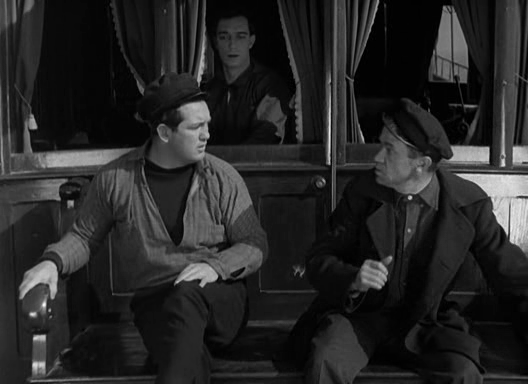
In three different historical eras (the Stone Age, Roman times, and 1920s New York), a young man (Buster Keaton) vies for the attentions of a beautiful girl (Margaret Leahy) against a bigger, stronger, and/or wealthier suitor (Wallace Beery).

Genres, Themes, Actors, and Directors:

  • Buster Keaton Films
  • Comedy
  • Historical Drama
  • Rivalry
  • Silent Films
  • Wallace Beery Films

Review:
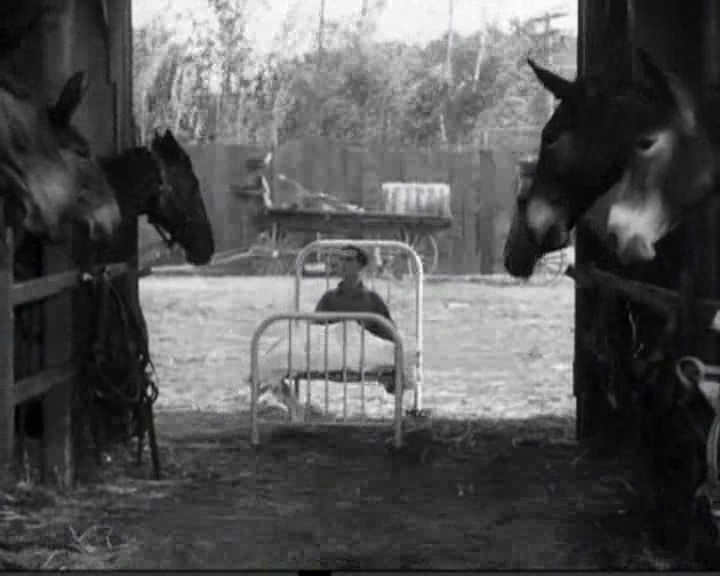
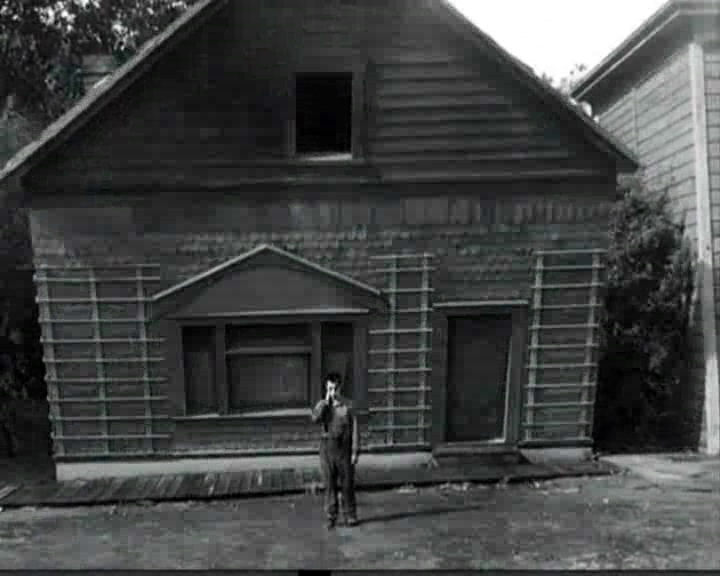
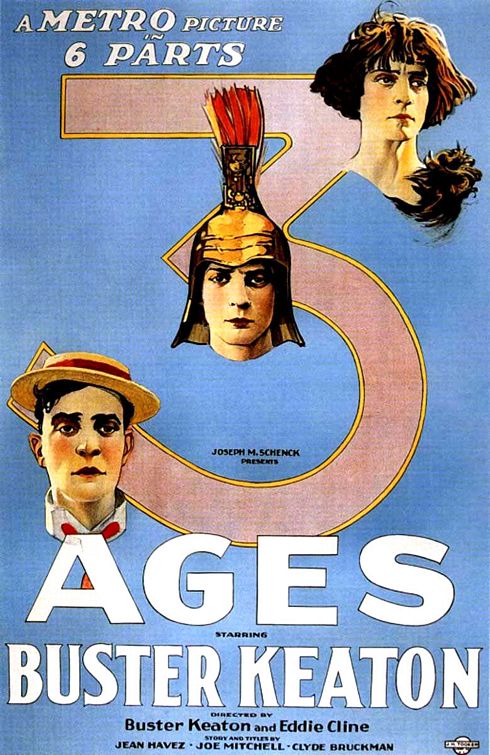
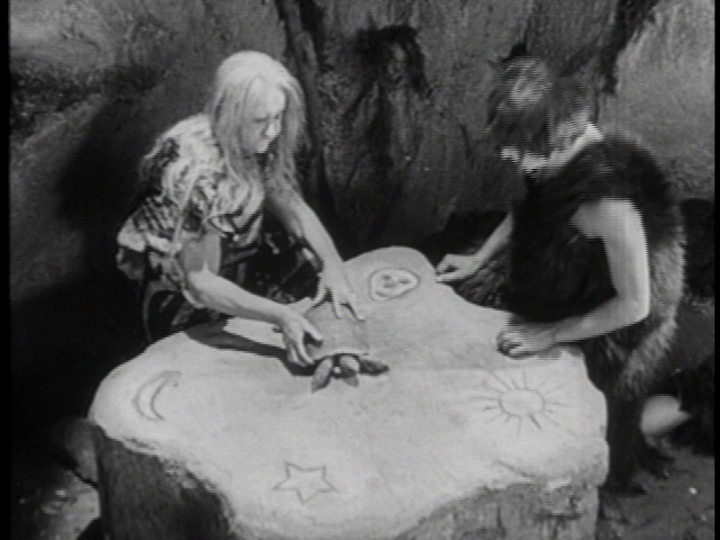
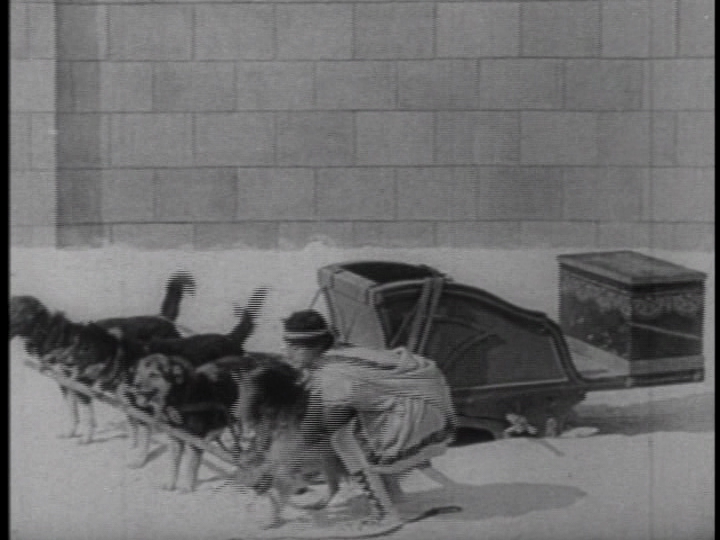
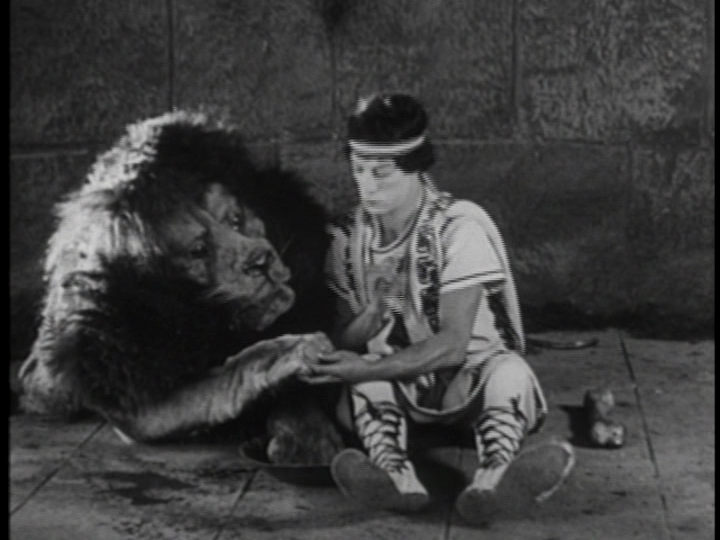
Buster Keaton’s first feature film (originally conceived as three separate two-reelers, in case it bombed as a full-length movie) is an enjoyable satire on D.W. Griffith’s Intolerance (1916), similarly presenting thematic links — here, on the challenges of romantic pursuit — between several historical eras. It’s amusing to witness Keaton’s hapless yet doggedly resilient persona facing such similar challenges in each of his iterations, and to see the immensely clever — if occasionally foolhardy — ways in which he attempts to foil his opponent. The film’s most surreal moment (just one among many): Keaton gives a lion a manicure. (!!)

Redeeming Qualities and Moments:

  • Plenty of humorous moments and classically Keatonian slapstick


Must See?
No, though it’s certainly of historical interest, and a must for diehard Keaton fans.

Links:

Palm Beach Story, The (1942)

Palm Beach Story, The (1942)

“You have no idea what a long-legged gal can do without doing anything.”

Synopsis:
A woman (Claudette Colbert) plans to divorce her financially unsuccessful husband (Joel McCrea) so she can seduce a millionaire and convince him to finance one of McCrea’s business inventions. On her way to Florida to obtain the divorce, she meets one of the wealthiest men in the world (Rudy Vallee), who falls in love with her — but will McCrea allow Colbert to follow through with her plans?

Genres, Themes, Actors, and Directors:

  • Claudette Colbert Films
  • Joel McCrea Films
  • Marital Problems
  • Mary Astor Films
  • Mistaken or Hidden Identities
  • Millionaires
  • Preston Sturges Films
  • Romantic Comedy

Response to Peary’s Review:
Peary notes that this “delightful screwball comedy by Preston Sturges” is “fast-paced and consistently funny”, and accurately points out that “McCrea and Colbert are an engaging screen couple” (though their relationship, naturally, is strained from the get-go). Indeed, as brilliant as I find this film — it remains a comedic treasure, and one of Sturges’ best — I’ll admit to feeling a vague sense of discomfort throughout (which is likely exactly what Sturges intended!). While Colbert’s plan may be “noble” at heart, it’s genuinely difficult to watch her romancing a likeable schmuck like Vallee and know that, in a romantic comedy like this — with an “engaging screen couple” like Colbert and McCrea waiting in the wings — there’s really only one outcome possible. (Though to his credit, Sturges soundly blasts that notion with an inspired — if dubitable — ending, about which I’ll say no more.)

Despite its decidedly discomfiting premise, however, the film remains consistently amusing and engaging, with “stars McCrea, Colbert, Vallee, and Mary Astor (as Vallee’s sister, who takes a liking to McCrea when he poses as Colbert’s brother) weaving their way through a crazy world of landlords, cops, cabbies, eccentrics, men named Toto, and the gun-toting, boozing, harmonizing Ale & Quail members” — yes, the storyline really is as wacky as that rundown indicates! I’m especially tickled by the performances given by Vallee and Astor, who prove beyond a doubt that the idle-rich are indeed — as Sturges himself believed — “funny” folk; and Robert Dudley is note-perfect as the deaf old coot who starts the narrative ball rolling. Meanwhile, Colbert is at her loveliest (it’s nice to see her with her hair down here — literally!), and handsome McCrea is well-cast as her perpetually affronted husband.

Redeeming Qualities and Moments:

  • Rudy Vallee as John D. Hackensacker
  • Mary Astor as Princess Centimillia
  • Robert Dudley as The Wienie King
  • Claudette Colbert as Gerry Jeffers
  • Plenty of clever and/or zany dialogue:

    “Chivalry is not only dead, it’s decomposed.”

Must See?
Yes, as a certified comedic classic. Nominated by Peary as one of the Best Movies of the Year in his Alternate Oscars.

Categories

  • Genuine Classic
  • Important Director

(Listed in 1001 Movies You Must See Before You Die)

Links:

Day the World Ended (1955)

Day the World Ended (1955)

“There are two forms of life fighting for survival in this valley, and only one of them can win; it’s got to be us.”

Synopsis:
After atomic warfare leaves most of the world dead, a rancher (Paul Birch), his grown daughter (Lori Nelson), a geologist (Richard Denning), a con (Mike Connors) and his moll (Adele Jurgens), a miner (Raymond Hatton) with a donkey, and an atomically scarred victim (Paul Dubov) struggle to survive while battling against unseen mutant forces.

Genres, Themes, Actors, and Directors:

  • Mutant Monsters
  • Nuclear Holocaust
  • Ranchers
  • Roger Corman Films
  • Science Fiction
  • Survival

Response to Peary’s Review:
Peary labels this post-apocalyptic survival tale “the first and best of Roger Corman’s fifties sci-fi films”, but I don’t quite agree with his second assertion; Corman’s Not of This Earth (1957) — about alien vampiric forces invading Southern California — holds my vote as his most creative and enjoyable outing in this genre. Nonetheless, Day the World Ended — which Peary posits is essentially “a combination of Key Largo and Five” — does have “a couple of scary scenes, good atmosphere, and a smart ending”. It’s especially interesting, as always, to see how Corman is able to make judicious use of his ultra-low budget: here, he effectively utilizes fog, shadows, and sound effects to forebode threatening forces, while pitting a conveniently motley crew of survivors against one another in claustrophobic quarters. Once the mutant monster (Paul Blaisdell) actually appears on-screen, the tone of the film suddenly turns undeniably silly:

but Corman’s cast of reliable B-actors continue to take the situation so seriously that we’re willing to suspend our giggles and our disbelief.

Note: You may recognize handsome good-guy lead Richard Denning from The Creature From the Black Lagoon (1954) — a more “reputable” B-level variation on a similar theme.

Redeeming Qualities and Moments:

  • An effectively told low-budget tale

Must See?
No, though fans of nuclear survival flicks (or Roger Corman’s films) will surely want to check it out.

Links:

Beautiful Blonde From Bashful Bend, The (1949)

Beautiful Blonde From Bashful Bend, The (1949)

“Never wait too long between shots, or your finger may change its mind.”

Synopsis:
A trigger-happy saloon singer (Betty Grable) accidentally hits a judge (Porter Hall) in his backside while intending to shoot her cheating lover (Cesar Romero). She flees to a small town with her Mexican friend (Olga San Juan), where the pair are mistaken for a schoolteacher and her Indian companion, and Grable makes a play for the mayor’s wealthy son (Rudy Vallee) while trying to avoid detection.

Genres, Themes, Actors, and Directors:

  • Betty Grable Films
  • Cesar Romero Films
  • Comedy
  • Fugitives
  • Mistaken Identities
  • Musicals
  • Preston Sturges Films
  • Strong Females
  • Westerns

Review:
Preston Sturges’ final American comedy was a notorious bust upon its release, but it’s not quite as bad as its reputation would indicate. Indeed, the first 45 minutes or so of this short comedy (just 77 minutes long) are reasonably clever, and full of exactly the type of zany, fast-paced dialogue you’d expect from Sturges; my favorite scenes are those involving Olga San Juan, playing a lower-keyed Carmen Miranda-type with fabulously droll comedic timing (many agree she should have been given more screen-time). Unfortunately, Sturges seems unable to sustain the momentum he’s built, allowing the film to devolve into an interminable slapstick shoot-out and an unrealistic courtroom finale. Other elements of the screenplay don’t quite sit well, either: if Grable’s character is posited (in a cute opening sequence) as a woman trained from birth to have remarkable aim a la Annie Oakley, how is it that she manages to miss her target so widely? Meanwhile, a pair of over-aged “schoolboys” (played by Sterling Holloway and Dan Jackson) are simply ill-conceived, and Grable’s interest in Vallee merely serves to turn our sympathies away from her, given that she’s supposedly in love with Romero, and thus is clearly just gold-digging with poor Vallee. Regardless, fans of Sturges will still be curious to check out his infamous final outing for Hollywood, before all but disappearing from the screen.

NB: Sturges’ last film, made in France (titled The French, They Are a Funny Race, or The Diary of Major Thompson), isn’t listed in Peary’s book.

Redeeming Qualities and Moments:

  • An amusingly scripted first 45 minutes
  • Olga San Juan as Conchita

Must See?
No, but I do think it’s worth a look during its first half — and Sturges completists will naturally want to have seen it.

Links:

Adventures of Sherlock Holmes, The (1939)

Adventures of Sherlock Holmes, The (1939)

“Moriarty’s as curious about my movements as I am about his.”

Synopsis:
The arch-enemy (George Zucco) of Sherlock Holmes (Basil Rathbone) plots to steal the Crown Jewels, hoping to distract Holmes and his assistant, Dr. Watson (Nigel Bruce), by enticing them with a case involving a distressed heiress (Ida Lupino).

Genres, Themes, Actors, and Directors:

  • Basil Rathbone Films
  • Detectives and Private Eyes
  • Historical Drama
  • Ida Lupino Films
  • Murder Mystery
  • Sherlock Holmes Films

Review:
The second of two Sherlock Holmes films made with Basil Rathbone and Nigel Bruce for Fox Studios (and the last to feature them in an “authentically” Victorian-era setting), this finely mounted whodunit was, like the 1932 film Sherlock Holmes, based (albeit loosely) on a stage play by William Gillette rather than an original story by Doyle. It’s an enjoyable, atmospheric outing:

… made all the more interesting by the introduction of Holmes’ sociopathic “arch-enemy”, Moriarty (Zucco):

… who — recognizing Holmes’ desire to alleviate boredom above all else — plays fast and furious with people’s lives by perpetuating a serial murder scheme simply to keep Holmes distracted. It’s a remarkably dastardly thematic element, and definitely adds an intriguing twist to the entire affair.

Note: If you’re at all a Holmes fan, be sure to compare this film with the sixth entry in the modern British mini-series Sherlock, which features a somewhat similar storyline about Moriarty and Holmes’ ongoing “rivalry”.

Redeeming Qualities and Moments:

  • Basil Rathbone as Sherlock Holmes
  • Atmospheric cinematography

Must See?
No, but it’s certainly recommended as a most enjoyable Sherlockian yarn.

Links:

Spite Marriage (1929)

Spite Marriage (1929)

“There are only two cures for love: marriage and suicide.”

Synopsis:
A dry cleaner (Buster Keaton) obsessively in love with a stage actress (Dorothy Sebastian) is distressed to learn she’s married him simply to spite her co-star (Edward Earle), who she’s still infatuated with.

Genres, Themes, Actors, and Directors:

  • Actors and Actresses
  • Comedy
  • Buster Keaton Films
  • Obsessive Fans
  • Silent Films

Review:
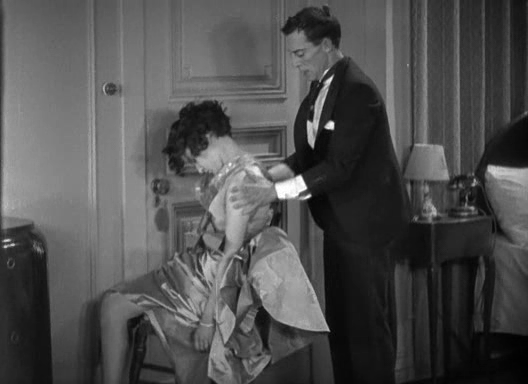
I’ll begin my review of Buster Keaton’s final silent film by noting that not a single one of his feature-length silent movies (all of which are either listed or reviewed in Peary’s book, btw) has been a disappointment — even his supposedly “lesser” titles, like this one. While it may not be quite on the same level as his most widely acknowledged classics, it’s consistently amusing, and full of exactly the kind of boldly humorous (and often audaciously physical) sight gags one comes to expect from Keaton. Here, he plays a variation on all the seemingly-milquetoast characters he embodied in previous features — a man pining for a beautiful woman who at first is out of his reach, but eventually (yes, there’s always a happy ending) comes to realize what a loyal and brave catch he is. The most memorable scenes in this particular flick are probably Keaton’s bungled attempt to stand-in for a missing actor in Sebastian’s play, and his attempt to get his soused new wife-in-name-only into bed — but plenty of others are chuckle-worthy as well. Keaton fans won’t be disappointed in the slightest.

Redeeming Qualities and Moments:

  • Plenty of amusing gags


Must See?
No, though it’s recommended, and (naturally) a must for Keaton completists.

Links:

Blood on Satan’s Claw, The (1971)

Blood on Satan’s Claw, The (1971)

“I must confess, sir: I fear there’s something very strange afoot.”

Synopsis:
When a plowman (Barry Andrews) in 17th century rural England uncovers a strange corpse in a field, a group of teens — led by beautiful temptress Angel Blake (Linda Hayden) — become obsessed by satanic forces, prompting the arrival of a judge (Patrick Wymark) well-versed in witchcraft.

Genres, Themes, Actors, and Directors:

  • Historical Drama
  • Horror
  • Satanism

Review:
This atmospheric British horror film (co-written and directed by Piers Haggard) is strongly evocative of both The Witchfinder General (1968) and The Wicker Man (1973) in its depiction of a rural village besieged by evil forces. Originally intended as a horror omnibus consisting of three separate stories, the narrative — while technically cohesive — feels patchy at times, with certain characters (such as a young couple whose romance dominates the storyline during the first 15 minutes) introduced and then never seen again, and a lack of any central protagonist to relate to. With that said, there’s definitely a palpable sense of sustained horror throughout: while we don’t quite understand why dark patches of fur are suddenly showing up on children’s body parts, the effect is undeniably chilling, given that it clearly causes them to turn mercilessly upon one another, in a form of demonically-driven, peer pressured bullying. Adding to the film’s overall atmospheric flavor are fine cinematography, a relentlessly creepy score, convincing performances, and excellent use of authentic countryside locales — all of which help to at least partially overcome the screenplay’s deficiencies. While it’s not entirely successful, it’s nonetheless easy to see this film’s cult appeal, thus making it worth a one-time look.

Redeeming Qualities and Moments:

  • Linda Hayden as Angel Blake
  • Michele Dotrice as Margaret
  • Fine use of authentic British countryside and period sets
  • Atmospheric cinematography
  • Marc Wilkinson’s score

Must See?
No, though it’s worth a look for its cult status. Listed as a Cult Movie in the back of Peary’s book.

Links: