Possession of Joel Delaney, The (1972)

Possession of Joel Delaney, The (1972)

“Possession? Insanity? Fragmented ego? Are you trying to tell me that my brother is so weak and so vulnerable that he can be invaded from the outside by a maniac who is dead? I refuse to believe it!”

Synopsis:
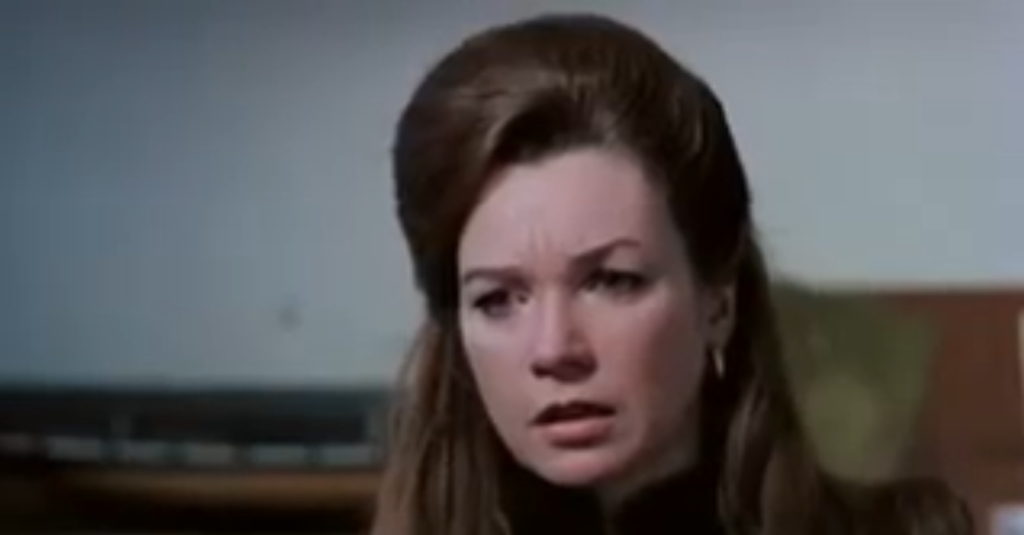
Spoiled socialite Norah Benson (Shirley MacLaine) is puzzled by the uncharacteristically cruel and erratic behavior of her brother Joel (Perry King). Eventually, Norah finds herself investigating the possible “possession” of Joel’s body by the soul of his deceased psychotic friend, and defending her children against Joel’s homicidal behavior.

Genres, Themes, Actors, and Directors:

  • Amateur Sleuths
  • Class Relations
  • New York
  • Possession
  • Psychological Horror
  • Serial Killers
  • Shirley MacLaine Films

Response to Peary’s Review:
As Peary notes, this “neglected film is one of the creepiest psychological thrillers” ever made. Shirley MacLaine turns in a nuanced performance as a wealthy socialite who must delve into the “underworld” of New York to investigate the mystery of her beloved brother’s freaky behavior.

More commonly known as a comedic actress, MacLaine shows true depth of characterization here — notice the tiny details of her performance, such as the distracted way she snatches the train tickets out of a station clerk’s hand as she rushes to take her children to safety. The final scene — much discussed in IMDb and elsewhere due to the explicit torture of children presented, as well as full-frontal nudity of a ten-year-old boy — remains disturbing, but in keeping with the general tone of the story.

Redeeming Qualities:

  • Shirley MacLaine as Norah Benson
  • Miriam Colon as MacLaine’s maid, Veronica
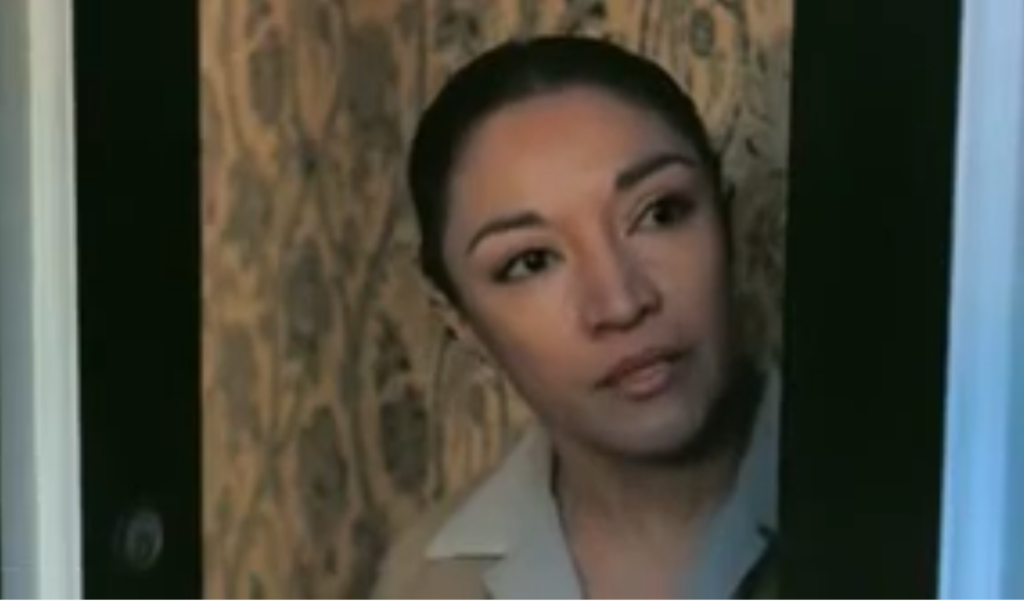
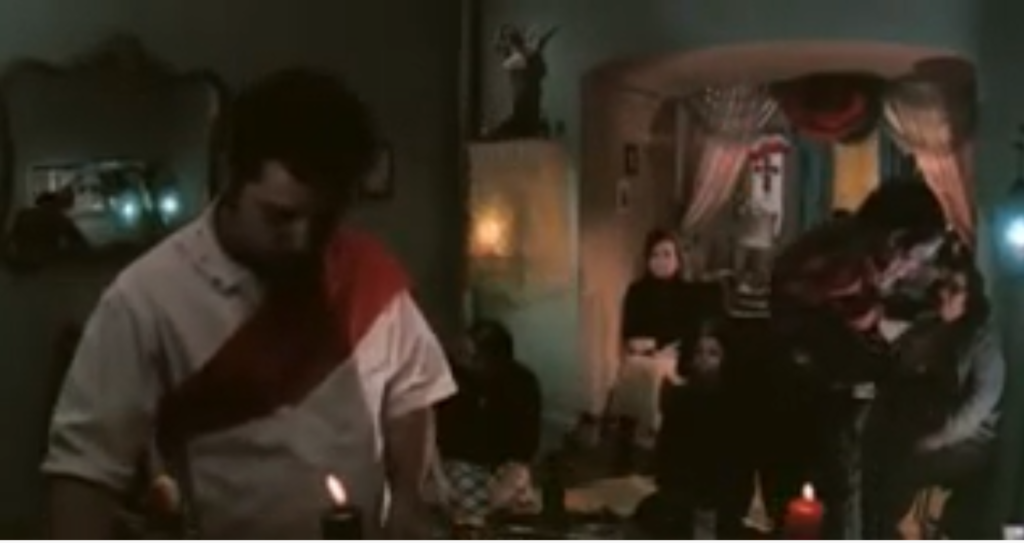
  • One of the better cinematic portrayals of “possession” — especially the intense spiritual seance held in the apartment of Puerto Rican New Yorkers
Must See?
Yes, for MacLaine’s excellent performance (which Peary nominates as one of the best of the year in his Alternate Oscars).

Categories

  • Noteworthy Performance(s)

Links:

Joanna (1968)

Joanna (1968)

“There’s no place for drags, baby… Stay cool!”

Synopsis:
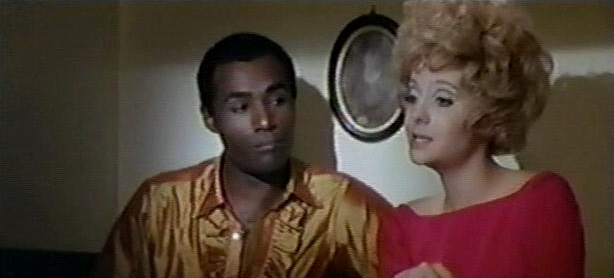
Free-spirited artist Joanna (Genevieve Waite) searches for love and happiness in 1960s London.

Genres, Themes, Actors, and Directors:

  • Counterculture
  • Cross-Cultural Romance
  • Death and Dying
  • Donald Sutherland Films
  • Nonconformists
  • Surrealism

Response to Peary’s Review:
As Peary points out immediately in his review, this dated film is “bad and self-indulgent”, but nonetheless has some redeeming qualities — namely its ability to capture the zaniness and existential yearnings of the 1960s, as well as addressing interracial romance and showing confident, successful Blacks at a time when this was still considered taboo by many.

Unfortunately, Waite’s grating baby-voice got on my nerves immediately, and her wiggish hair makes her look like Phyllis Diller; I’m not surprised she only made two more films after this.

Redeeming Qualities:

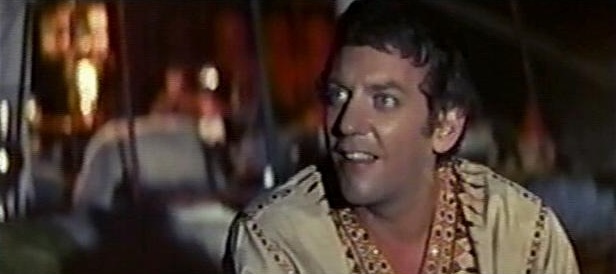
  • Donald Sutherland as the dying, kind-hearted aristocrat Joanna befriends
  • An eclectic mixture of surrealistic filming techniques

Must See?
No, but film fanatics will likely be curious to check it out.

Links:

Sansho, the Bailiff (1954)

Sansho, the Bailiff (1954)

“Without compassion, a man is no longer human.”

Synopsis:
When a kind governor in medieval Japan is sent into exile because of his compassion for the local peasants, his wife (Kinuyo Tanaka), son (Masahiko Kato), and daughter (Keiko Enami) set out to find him, but are kidnapped and sold into slavery and prostitution. Years later, his adult son (Yoshiaki Hanayagi) is determined to reunite his family.

Genres, Themes, Actors, and Directors:

  • Escape
  • Japanese Films
  • Kenzi Mizoguchi Films
  • Slavery

Response to Peary’s Review:
This “exquisitely photographed”, “sweeping epic” by Kenji Mizoguchi is a true masterpiece of mid-century Japanese cinema. As Peary notes, the film “brilliantly evokes brutal inhumanity” during the 11th century, “yet also is a beautiful character piece centering on mother and children.” Unfortunately, as with Rene Clement’s Forbidden Games (1952), Sansho may ultimately be too devastating to withstand repeated viewings — but it should definitely be seen once by all film fanatics.

Redeeming Qualities:

  • Lovely cinematography

  • The final, haunting reunion scene between mother and son

Must See?
Yes. This film is a classic of world cinema.

Categories

  • Foreign Gem
  • Important Director

(Listed in 1001 Movies You Must See Before You Die)

Links:

Joe (1970)

Joe (1970)

“Forty-two percent of all liberals are queer; that’s a fact.”

Synopsis:
Businessman Bill Compton (Dennis Patrick) kills his daughter’s drug-dealing boyfriend in a fit of rage, and befriends a working-class bigot (Peter Boyle) who admires what he’s done.

Genres, Themes, Actors, and Directors:

  • Class Relations
  • Counterculture
  • Generation Gap
  • Peter Boyle Films
  • Susan Sarandon Films
  • Vigilantes

Response to Peary’s Review:
Peary’s not a big fan of this scathing cross-generational commentary, arguing that the film supports the “contention of [the] era’s conservatives that all hippie girls were nymphomaniacs, that all long-haired young people took drugs and were untrustworthy, [and] that all members of the counterculture were vermin.” What he neglects to mention, however, is that all the characters in this over-the-top film are contemptible or pathetic in one way or another. As in Shoot (1976) and The Exterminator (1980), Peter Boyle’s Joe — a “loudmouth working-class stiff who has contempt for blacks, liberals, and hippies” — is portrayed as a gun-savvy veteran who’s itching to wreak damage on the “Others” in his community, just like he did back in Vietnam. After his chance encounter with Bill in a bar, Joe becomes a “Mephistopheles”-like figure, nurturing Bill’s “baser instincts” and encouraging their unlikely cross-class friendship. This eventually leads to the film’s tragic and violent denouement, which Peary refers to as “preposterous” and “hard-to-watch”, but which I see as a logical outcome of the tension that has been building since the very beginning of the film.

Redeeming Qualities:

  • Peter Boyle as Joe
  • Susan Sarandon in her first screen role (she already radiates a special kind of charm and beauty)
  • A powerful, if occasionally cliched, look at clashes between class, age, and culture in the 1960s

Must See?
No, but it’s recommended.

Links:

Vampire Lovers, The (1970)

Vampire Lovers, The (1970)

“You must die! Everybody must die!”

Synopsis:
Carmilla (Ingrid Pitt), a 200-year-old lesbian vampire, pursues the beautiful young Emma (Madeline Smith) while being hunted by vampire-killer Baron von Hartog (Douglas Wilmer).

Genres, Themes, Actors, and Directors:

  • Horror
  • Lesbianism
  • Peter Cushing Films
  • Roy Ward Baker Films
  • Vampires

Response to Peary’s Review:
As Peary suggests, the popularity of this gothic Hammer horror film — a relatively faithful adaptation of Sheridan Le Fanu’s novella — probably has more to do with the “surprising amount of female nudity” and overt lesbian interest than anything else.

Ingrid Pitt gives an alluring, “unabashedly physical performance” as Carmilla, with her “low-cut, transparent gowns” and insatiable lust for nubile female breasts. Carmilla’s emotional outburst upon “seeing a funeral procession and realizing all will die but her”:

… elevates her character a notch above all other vampiresses I’ve seen on film; her role may be campy, but Pitt imbues it with every possible ounce of human feeling.

Redeeming Qualities:

  • Ingrid Pitt’s sexy portrayal as Carmilla
  • A highly literate adaptation of Sheridan La Fanu’s novella

Must See?
Yes, simply as a prime example of lesbian vampirism on film. (See also Daughters of Darkness, 1971).

Categories

  • Representative Film

Links:

Doc Savage: The Man of Bronze (1975)

Doc Savage: The Man of Bronze (1975)

“Have no fear — Doc Savage is here!”

Synopsis:
Doc Savage (Ron Ely) and his associates, the Fabulous Five, travel to the South American country of Hidalgo to investigate the death of Doc’s father.

Genres:

  • Comics and Comic Strips
  • George Pal Films
  • Murder Mystery
  • Satires and Spoofs
  • Superheroes

Response to Peary’s Review:
This adventure film — George Pal’s last production, bringing “Kenneth Robson’s pulp hero to the screen for what was supposed to be the beginning of a series” — is clearly meant to be a spoof, but falls flat on all counts. While I’m occasionally in the mood for enjoying a truly “bad movie”, this one can’t seem to make up its mind if it wants to be camp or straight-action drama. Plus, as Peary points out, “square-jawed” Ron Ely has zero charisma:

… there are “few interesting story twists”, and it “has the static studio-look of a cheap, kiddle adventure TV show.” Other than a few diehard Doc Savage fans, most IMDb contributors seem to agree with Peary that this cult film is a “dull disappointment”.

Redeeming Qualities:

  • A bizarre image of a villain sleeping in an oversized crib and sucking his thumb

Must See?
No, unless you happen to be a Doc Savage fan.

Links:

Heart Like a Wheel (1983)

Heart Like a Wheel (1983)

“The only thing I do fast is drive.”

Synopsis:
Shirley “Cha Cha” Muldowney (Bonnie Bedelia) battles discrimination and personal heartache as she becomes the top female drag-racer of all time.

Genres:

  • Beau Bridges Films
  • Biopics
  • Bonnie Bedelia Films
  • Car Racing
  • Dick Miller Films
  • Feminism and Women’s Issues
  • Sports

Response to Peary’s Review:
As Peary notes, Bonnie Bedelia turns in an “Oscar-worthy performance as drag-race champion Shirley ‘Cha Cha’ Muldowney,” the first woman to break the gender barrier in drag-race competitions. Director Jonathan Kaplan wisely avoids trying to hit all the “key points” in Bonnie’s life; instead, he takes the time to develop a three-dimensional character with real-life goals and heartaches. Shirley is portrayed as a strong, independent, driven woman who “finds disappointment in her relationships with men” yet continues to strive “for triumphs in her profession.”

Redeeming Qualities:

  • Bonnie Bedelia’s excellent, natural performance as Shirley
  • Beau Bridges as Connie Kalitta, Bonnie’s “unfaithful lover”

Must See?
No, but it’s recommended.

Links:

Snuff (1976)

Snuff (1976)

“I will cut your heart from your body and feed it to the dogs!”

Synopsis:
A gang of drug-addicted serial killers pursue a beautiful actress and her household.

Genres, Themes, Actors, and Directors:

  • Serial Killers

Response to Peary’s Review:
This “wretched picture” — a muddled, incomprehensible pastiche of several awful movies — may possibly earn my vote as the worst movie ever made. As I noted in my review of Heaven’s Gate (1980), it’s a rare instance when I can’t get all the way through one of the titles listed in Peary’s book, but this was another exception. The final “snuff” scene is ridiculous (and obviously staged):

… but nonetheless sparked an urban legend which made scads of unsuspecting people want to go see this mess of a film.

Redeeming Qualities:

  • None. At all. Believe me.

Must See?
No; avoid this one at all costs.

Links:

Payday (1973)

Payday (1973)

“You didn’t earn it.”

Synopsis:
Country singer Maury Dann (Rip Torn) experiences a downward spiral as he and his band take a road trip across America.

Genres, Themes, Actors, and Directors:

  • Character Studies
  • Has-Beens
  • Musicians
  • Rip Torn Films
  • Road Trip

Response to Peary’s Review:
This “excruciatingly unpleasant” film — starring Rip Torn as an aging, has-been musician who “makes life miserable” for most of the people he’s around, much like “Robert Montgomery’s washed-up producer in The Saxon Charm (1948)” — is nonetheless oddly compelling and full of “offbeat well-played scenes.” Torn has never been better, playing someone so spectacularly self-absorbed and out of touch that he arrives “either four months early or eight months too late” for his child’s birthday. The supporting cast is excellent as well — particularly Elayne Heilveil as Maury’s dim-witted groupie.

Redeeming Qualities:

  • Rip Torn as Maury Dann
  • Maury’s joyfully wacky mom (Cara Dunn) throwing her laundry over the clothesline
  • Heilveil discussing frying pans with Maury’s driver

Must See?
No, but it’s recommended.

Links:

Bilitis (1977)

Bilitis (1977)

“Look at me — I’m all flat and skinny, like a boy.”

Synopsis:
A teenage schoolgirl (Patti D’Arbanville) spends the summer with a couple whose marriage is on the rocks, and develops a crush on the wife (Mona Kristensen). Meanwhile, she pursues a local teenage boy (Bernard Giraudeau), and tries to find a “suitable male lover” for Kristensen.

  • Coming-of-Age
  • Lesbianism
  • Sexuality

Response to Peary’s Review:
As Peary notes, Bilitis is basically soft-core porn packaged as a teenage “coming-of-age sexcapade”; indeed, it contains many porn-film tropes, such as gratuitous lesbian love scenes, a young virgin’s sexual awakening, and a sexually unsatisfied woman’s search for a “suitable” lover. The storyline is ridiculous and “boring,” but at least DP Bernard Daillencourt’s soft-focus cinematography is easy on the eyes. Ephebophiles will have a field day watching countless nubile young women prance about in various states of undress; the rest of us will be distractedly wondering if these girls are really all 18 or older…

Redeeming Qualities:

  • Lush soft-focus cinematography

Must See?
No.

Links: