|
Genres, Themes, Actors, and Directors:
- Alec Guinness Films
- Alexander Mackendrick Films
- Black Comedy
- Class Relations
- Corruption
- Inventors
- Joan Greenwood Films
- Play Adaptation
- Scientists
Response to Peary’s Review:
Peary rightfully argues that this “classic Ealing Studios satire” — highlighting the strategic value of “planned obsolescence” — is a “cynical film” which “shows disenchantment with selfish British workers, who are supposed to be the consumers’ watchdog — since they are consumers themselves — but are resistant to making better, cheaper products because of job insecurity”. Indeed, while we’ve (sadly) come to expect rampant corruption from higher-up executives — who are “portrayed [here] as devious men who couldn’t care less about the practical value of Guinness’s invention if it means their profits will go down” — it’s genuinely disheartening (and surprising) to witness Guinness turned into an all-purpose social pariah (with the exception, of course, of sexy Joan Greenwood, who remains his one true supporter throughout). Peary laments the fact that “because scientist Guinness … has nothing in common with common men — he’s pragmatic rather than being humanistic or idealist — that leaves no one (no worker, no humanist) to be the shafted consumer’s representative in industry”.
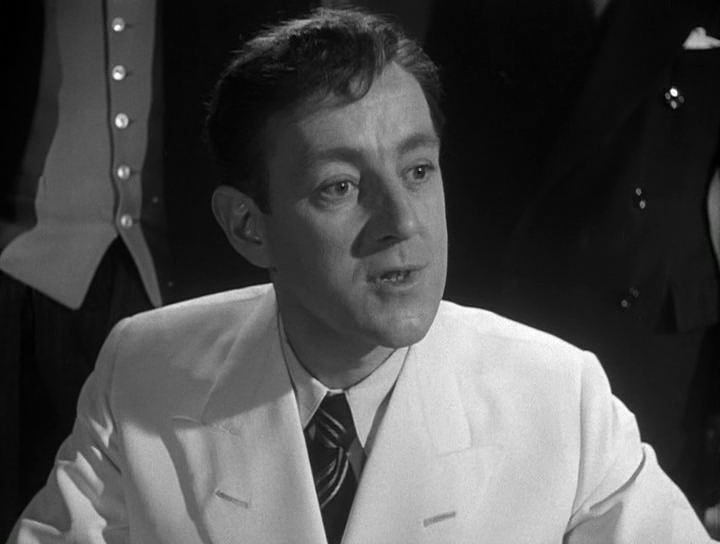
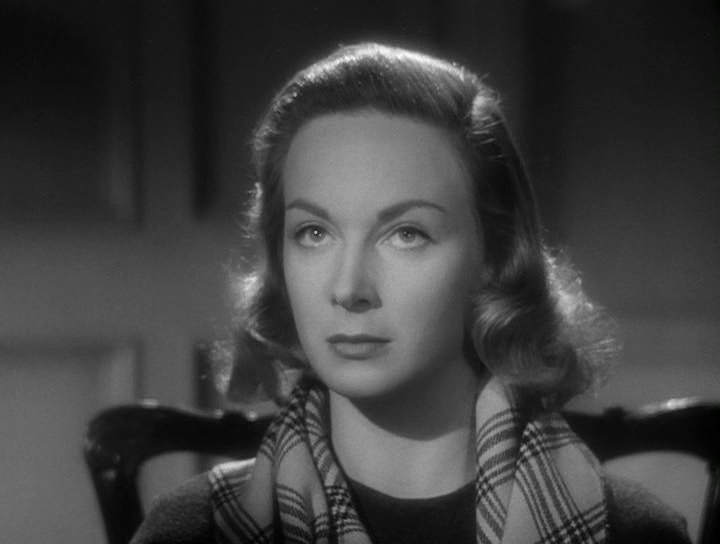
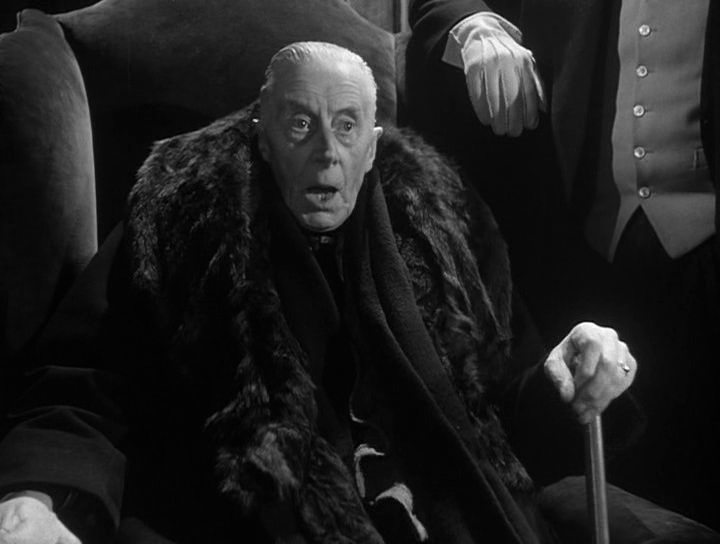
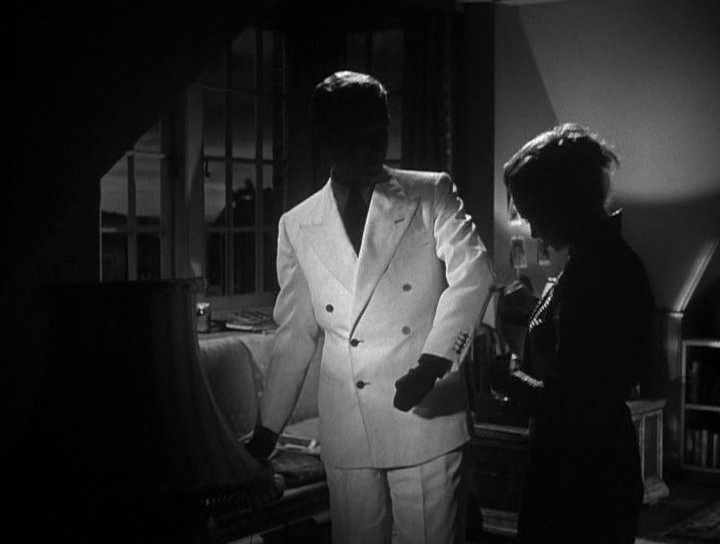
As indicated in the quotes above, Peary’s review focuses exclusively on the social message of The Man in the White Suit (based on a play by Scottish writer Roger MacDougall) — and a powerful, smartly scripted message it is, never dumbing down its content, and unafraid to take the outrageous scenario all the way to its bitter end. Yet there are other noteworthy elements in the film to call out as well — starting with Guinness’s portrayal as the iconoclastic genius, simply one of many outstanding performances he provided for Ealing Studios during this early period in his career. Meanwhile, film fanatics will surely be tickled by the irony of Ernest Thesiger (who portrayed one of cinema’s most iconic “mad scientists”, Dr. Pretorius, in James Whale’s The Bride of Frankenstein) being cast here as a character diametrically opposed to Guinness’s “semi-mad” initiatives. And Joan Greenwood is impressive in what could easily have been a thankless role, as the daughter and fiancee of industrialists who experiences a growing sense of social consciousness over the course of the film (indeed, in some ways, her character possesses more dimension than Guinness’s).
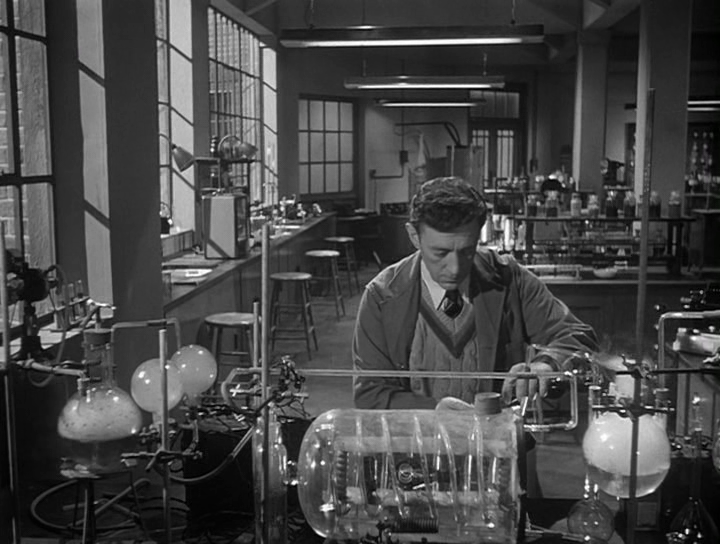
Also of note are the fine set designs (both inside the two laboratories, and out on the streets), and Douglas Slocombe’s consistently atmospheric cinematography. Finally, as director of the entire affair, Alexander Mackendrick clearly deserves kudos as well. He strikes a fine balance between dark humor and social gravitas, giving us one of the most uniquely subversive cinematic stories ever told.
Redeeming Qualities and Moments:
- Alec Guinness as Sidney Stratton
- Joan Greenwood as Daphne
- Ernest Thesiger’s fun cameo as Sir John Kierlaw
- Fine set designs
- Alexander Mackendrick’s confident direction

- Douglas Slocombe’s cinematography
- An incredibly smart script
Must See?
Yes, as one of Ealing Studios’ finest works.
Categories
Links:
|