Bitch, The (1979)
“After the pleasure, the pain, lover!”
|
Synopsis: |
|
Genres, Themes, Actors, and Directors:
Review: Redeeming Qualities and Moments:
Must See? Links: |
“After the pleasure, the pain, lover!”
|
Synopsis: |
|
Genres, Themes, Actors, and Directors:
Review: Redeeming Qualities and Moments:
Must See? Links: |
[Note: The following review is of a non-Peary title; click here to read more.]
“I’m the looking glass you created to see yourself in!”
|
Synopsis: |
|
Genres, Themes, Actors, and Directors:
Review: While I don’t quite agree with critic Jonathan Rosenbaum that it’s “truly dreadful”, the film — directed by Daniel Mann — never really redeems itself as anything other than a standard episodic biopic, marching steadily along a predictably chronological pathway. In addition, having recently read Roth’s memoir, I couldn’t help noticing how (inevitably) white-washed this Hollywoodized adaptation ultimately is; for instance, while Richard Conte is suitably malicious as the most abusive of her many husbands, the real-life loser he represents was at least 10 times worse. With that said, the movie may remain of minor interest to film fanatics due to Roth’s erstwhile status as a fleeting starlet (she’s probably best remembered for her memorable supporting work in Love Parade and Animal Crackers). However, for those truly interested in her sordid life history, you’re better off simply reading her much-harder-hitting memoir instead. Redeeming Qualities and Moments:
Must See? Links: |
[Note: The following review is of a non-Guide for the Film Fanatic title; click here to read more.]
“Looks like Calamity’s been holding out on us, carrying concealed weapons.”

Synopsis:
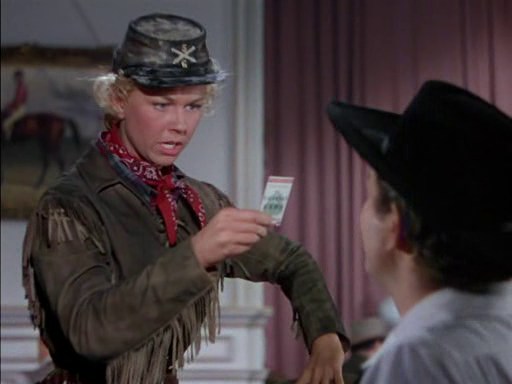
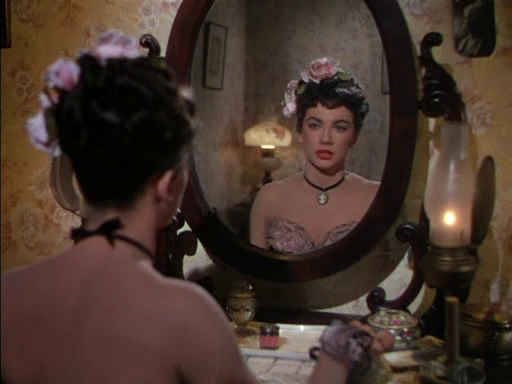
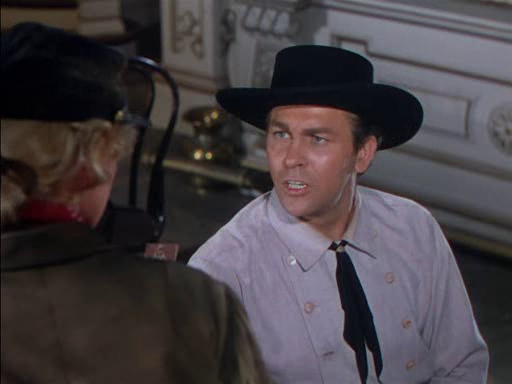
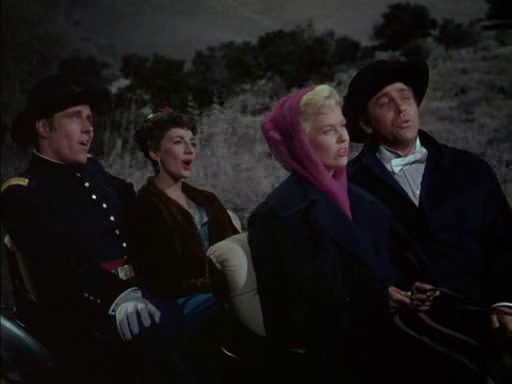
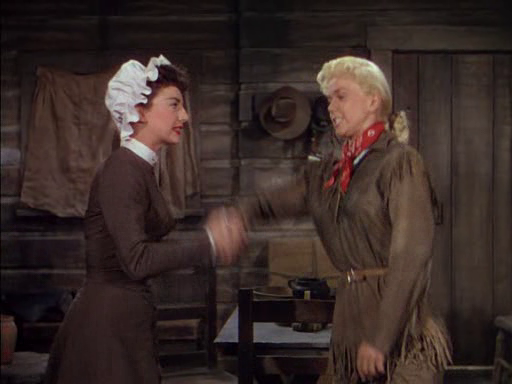
Sharpshooter Calamity Jane (Doris Day) bets Wild Bill Hickok (Howard Keel) that she can bring famed showgirl Adelaid Adams to the small town of Deadwood, but accidentally recruits Adams’ personal maid Katie (Allyn Ann McLerie) — an aspiring singer — instead. When Katie learns that Jane is secretly in love with Lieutenant Gilmartin (Philip Carey), she helps Jane present herself in a more feminine fashion; meanwhile, both Hickok and Gilmartin fall in love with Katie, causing romantic tension all around.
Genres, Themes, Actors, and Directors:
Review:
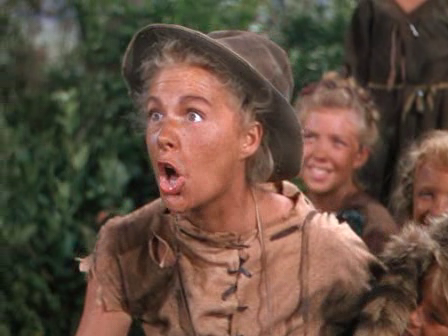
Like Annie Get Your Gun (1950), Calamity Jane is a popular ’50s-era musical which Peary fails to include in his GFTFF, but lists in his Alternate Oscars — in both cases, nominating the female lead as one of the Best Actresses of the Year. While I don’t believe AGYG is ultimately “must see”, I would argue that Calamity Jane is, simply for its status as a cult favorite. Indeed, the film remains memorable and provocative simply due to its surprisingly strong gay subtext: much like Preston Sturges was able to get away with an astonishing amount of sexual innuendo in his The Miracle of Morgan’s Creek (1944) by playing carefully within the bounds of the Production Code, the screenwriters here present a resolutely heterosexual storyline (Jane is shown right away as being smitten with a man) which nonetheless possesses a definite undercurrent of homosexual playfulness.
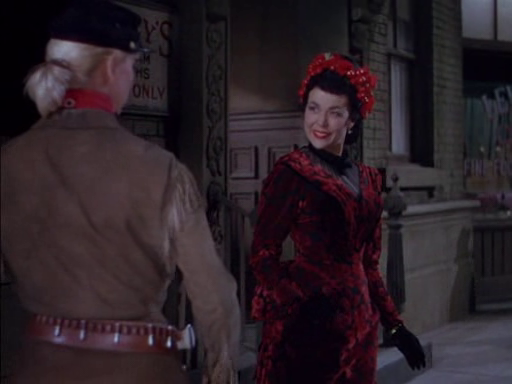
For instance, there’s a rather astonishingly bold moment when “Calam” has just arrived in “Chicagee”, and is wandering ogle-eyed down the street in her buckskins and a cap; suddenly a beautiful lady looks at her and winks — deliberately and flirtatiously. Calam, naturally, is simply befuddled — but what did that woman mean, precisely? Did she really believe Calam was a man? Meanwhile, when Calamity first sets eyes on McLerie, she calls out, “Goshamighty, you’re the prettiest thing I ever seen!” (And once again, McLerie mistakes her for a man.) Later, Day and McLerie set up house together… And so it goes.
Subtext aside, Day’s character remains refreshingly atypical simply for her unapologetically straightforward, no-b.s. approach to life — as indicated so clearly in the following verbal exchange:
Hickok (looking at a photo of Adelaid Adams): She’s charming, lovely figure… Everything that a woman oughta be!
Jane: Looks like a fat, frilled up, side of undressed beef to me!
Although Jane eventually buys into more traditional feminine ideals of beauty (simply to catch her man), she never loses a shred of her spunk or personality.
With that said, I’m actually not sure how I feel about Day’s performance overall; I prefer many of the other fine performances she gave throughout her career — including her portrayal as Ruth Etting in Love Me or Leave Me (1955), and her trio of comedic performances with Rock Hudson. However, for the reasons stated above (as well as a toe-tapping score of songs, and solid supporting performances by both Keel and McLerie), I do believe Calamity Jane is worth a look by all film fanatics.
Redeeming Qualities and Moments:
Must See?
Yes, for its cultural relevance as a strongly subtextual, toe-tapping musical.
Categories
Links:
“As long as unicorns rule the earth, evil can never come to the pure of heart.”
[Note: The following review is of a non-Peary title; click here to read more.]
|
Synopsis: |
|
Genres, Themes, Actors, and Directors:
Review:
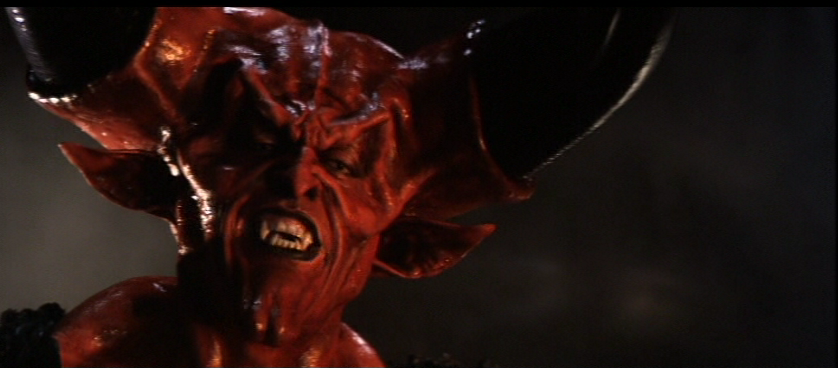
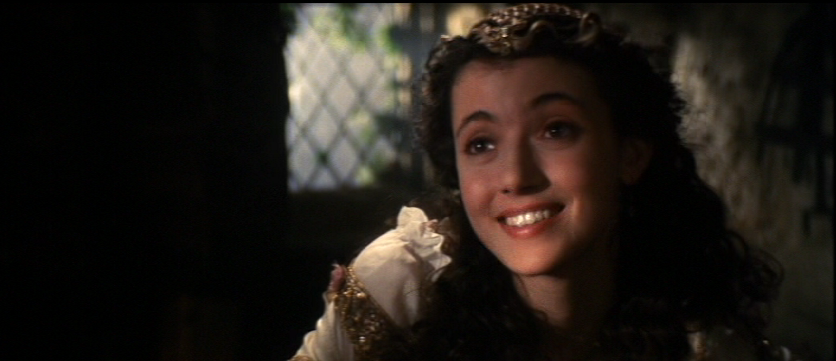
This film, however, is all about the magical universe it presents — and to that end, it’s hard not to be impressed. Twenty years before the emergence of Peter Jackson’s (clearly superior) Lord of the Rings trilogy, Scott and his team crafted a remarkably haunting mystical landscape which Richard Scheib of the Moria review site refers to as “sumptuously textural” and “achingly beautiful”; filled with eerily “realistic” creatures, including elves and fairies and Tim Curry’s horrifically gruesome Lord of Darkness (those horns!). Scheib, a clear fan of the film, calls the movie (which was lambasted by most mainstream critics) an “extraordinary synthesis of production design, cinematography, editing and effects” — and it’s actually hard to disagree with this specific assessment, given that he doesn’t try to make any claims about the narrative. Regarding the performances, Cruise isn’t all that memorable, but Sara is lovely and fine in her screen debut (she’s perhaps best known for playing Ferris Bueller’s girlfriend the following year), and Curry’s performance is a stand-out. Note: In 2002, Legend was released on DVD in two different versions: the original, shorter, American theatrical release (with a synthesized score by Tangerine Dream), and the longer director’s cut (with a score by Jerry Goldsmith). I watched the original — trying to remain faithful to the version Peary might/would have seen around the time he was writing GFTFF — and loved the score, but took a brief look at the other version and liked Goldsmith’s score just as well, in a different way. In my opinion, the “score” (ha) is ultimately even between the two. Redeeming Qualities and Moments:
Must See? Categories
Links: |
[Note: The following review is of a non-Peary title; click here to read more.]
“A man never trifles with gals who carry rifles — oh, you can’t get a man with a gun.”
|
Synopsis: |
|
Genres, Themes, Actors, and Directors:
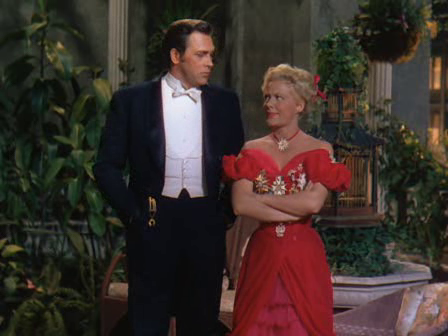
Review: This is not necessarily the fault of Hutton, who invests her character with as much energetic enthusiasm as she gave to just about every other role she played; I believe the fault lies primarily with the narrative, which portrays tomboyish Annie as instantly infatuated with Keel’s “Frank Butler” (presumably for comedic value). Her slack-jawed reaction upon viewing him (repeated several times) simply comes across as cartoonish. Meanwhile, the subplot involving Annie’s “adoption” as the honorary daughter of Chief Sitting Bull (J. Carrol Naish) is not only silly, but leads to a number of downright offensive scenes with Native Americans. (Yes, I know, it’s all part of how things were perceived during that era — but that doesn’t stop it from being utterly unappealing.) In sum, while Hutton’s performance is worth a look, and the film itself was one of the most popular musicals of its time, this one is simply recommended rather than Must See. Note: Check out Wikipedia’s article for more information about the film’s troubled production history; it originally starred Judy Garland, who became too ill to continue, and was ultimately fired by MGM. Redeeming Qualities and Moments:
Must See? Links: |
“Try to remember that nothing good ever ends.”
|
Synopsis: |
|
Genres, Themes, Actors, and Directors:
Response to Peary’s Review: I’m not quite as enamored with the film as Peary (who nominates it as one of the Best Pictures of the Year in his Alternate Oscars). My sentiments are much more aligned with those of DVD Savant, who writes that “the movie has all the faults of a wartime film tailored for morale purposes, and as such offers a strange mix of Saroyan’s poetry (too much of it, in fact) and overbearing MGM sentiment”, yet concedes that “despite its flaws the film is as touching now as it was then”. Like Savant, I feel the film “tries too hard” yet “is by no means an embarrassing hoot”, given that “most of its scenes are honest and quite a few have a wonderful, natural appeal”. Indeed, for every shamelessly hokey device (i.e., the presence of Rooney’s deceased father [Ray Collins] providing a voice-from-beyond-the-grave narration), there’s a scene that hits home in its quiet authenticity — i.e., Frank Morgan’s struggles to stay awake and sober while receiving news about heartbreaking tragedies on the front. The performances throughout are a mixed big, with some characters coming across as simply archetypes (i.e., Bainter as a harp-playing widow; Reed as Rooney’s quietly beautiful sister) — but often this seems due simply to the material they were given to work with (or not). Rooney was rightfully Oscar-nominated for his surprisingly heartfelt and selfless portrayal as Homer Macauley; Savant accurately points out that Rooney “flawlessly” performs a critical early scene — in which he delivers a telegram to a Mexican-American woman whose son has died in the war — by simply “shut[ting] up and giv[ing] the scene over to the other actor”. Jackie ‘Butch’ Jenkins, as Homer’s little brother Ulysses, also gives an admirably “natural” performance, coming across like a real kid, not an aspiring child actor; and Morgan is pitch-perfect in his small but memorable role. However, I’m not at all a fan of the romantic subplot between Craig and Hunt, which seems patently crafted to bolster Saroyan’s thesis that (as Peary puts it) “all Americans are equal”. Yeah, right. While it’s somewhat refreshing, I suppose, to learn that Hunt and her parents aren’t the haughty snobs one might believe them to be, we’re still never given a good reason to understand why Craig and Hunt are so in love. What attracted them to each other in the first place? To that end, Craig’s character is a frustrating cypher; he’s clearly a well-meaning, generous guy (as evidenced in a revealing early scene with a customer in his store), but nothing more is made of this tendency. Meanwhile, their “honeymoon” drive alongside a WEIRD multi-cultural festival — reminiscent of the “It’s a Small World” ride at Disneyland — is simply, as Savant puts it, “hilariously insulting”. Note: I recall being enamored with Saroyan’s novel as a teen, and was fascinated to read (in TCM’s article) that, based on the success of his play The Time of Your Life, he was solicited to write the story as a screenplay based on his own life growing up in a small California town. (The screenplay was eventually rewritten by someone else, but Saroyan turned the material into his novel.) Redeeming Qualities and Moments:
Must See? Categories
Links: |
“This is the biggest thing to happen to this state since we stole it from the Indians!”
|
Synopsis: |
|
Genres, Themes, Actors, and Directors:
Response to Peary’s Review: Hutton’s “hyperkinetic” energy is perfectly suited for her role here; she definitely shows off her comedic chops, and while we have a hard time liking or respecting her at first, she eventually grows on us. Meanwhile, William Demarest as her “highly excitable policeman father” and Diana Lynn as her “shrewd younger sister” (giving a “surprisingly amusing portrayal”, reminiscent of her similar role in 1942’s The Major and the Minor) represent one of the most refreshingly “authentic” father-daughter pairings in early Hollywood. Widowed Demarest never stops lamenting the challenges of raising two daughters on his own:
While Hutton is busy being “hyperkinetically” distracted by her seemingly hopeless predicament, Lynn remains remarkably unperturbed as her father snipes lines like the following at her: “Listen, Zipper-puss! Some day they’re just gonna find your hair ribbon and an axe someplace. Nothing else! The Mystery of Morgan’s Creek!” (Yeah right, Dad. Moving on the matter at hand…) Note: The “miracle” itself (devised by Sturges in the midst of production) is a cleverly outrageous one; don’t read anything at all about this film online if you wish to remain surprised. Redeeming Qualities and Moments:
Must See? Categories
Links: |
“If anyone’s going to develop the atom bomb, you want it to be us — not the Nazis.”
|
Synopsis: |
|
Genres: Review:
and a storyline which, at the very least, keeps one engaged while watching. Cooper acquits himself reasonably well (people have complained that he doesn’t look like a nuclear scientist; what, pray tell, does a “nuclear scientist” look like??):
but unfortunately his character’s transformation from bookish lab rat to gallant spy isn’t particularly convincing; however, if you accept this mild implausibility, it’s easy enough to get caught up in his adventures. The best scene, taking place in a hallway, is a wordless one, reminiscent of the infamously dialogue-free “oven murder” scene in Hitchcock’s Torn Curtain (1966); it shows clear evidence of Lang’s directorial vision. Note: Check out DVD Savant’s article to read more about “one of the most interesting post-production alterations ever done to an American film”. Redeeming Qualities and Moments:
Must See? Links: |
“Is it me you’re worried about, or the circus?”
|
Synopsis: |
|
Genres, Themes, Actors, and Directors:
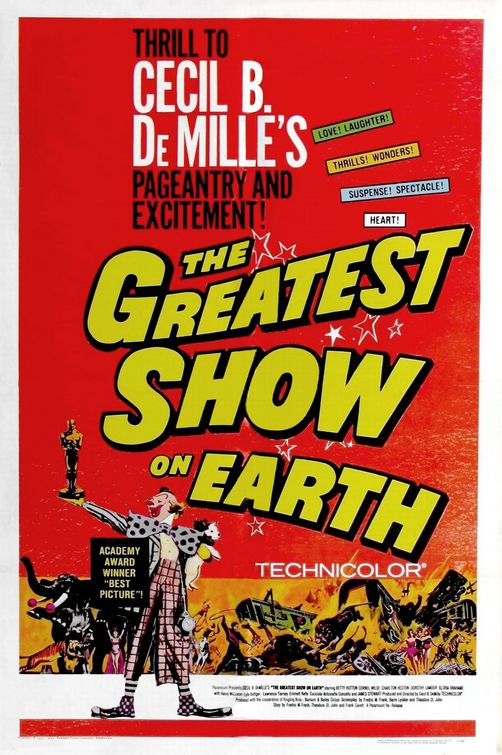
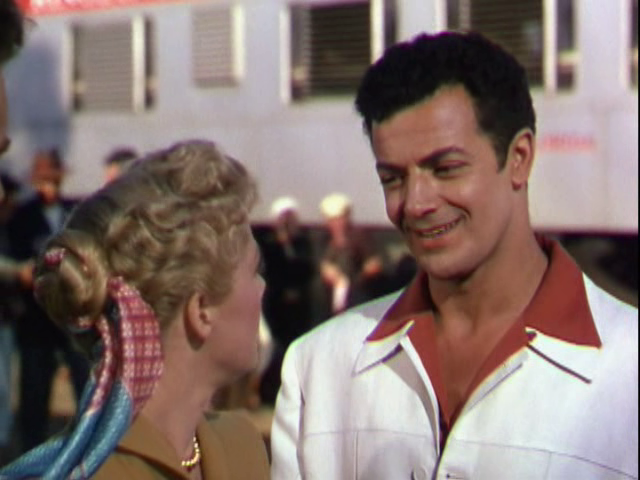
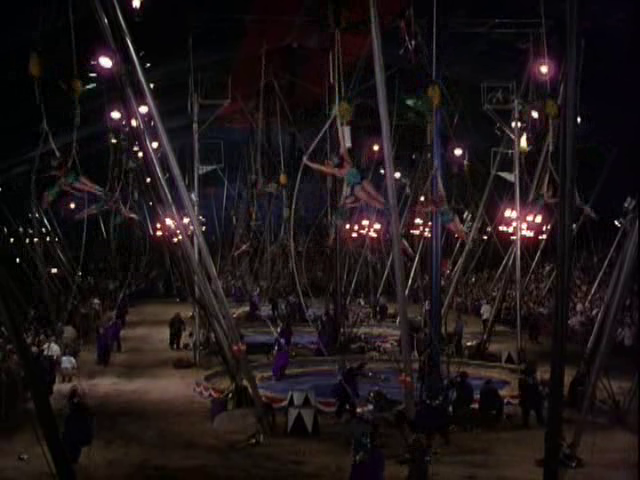
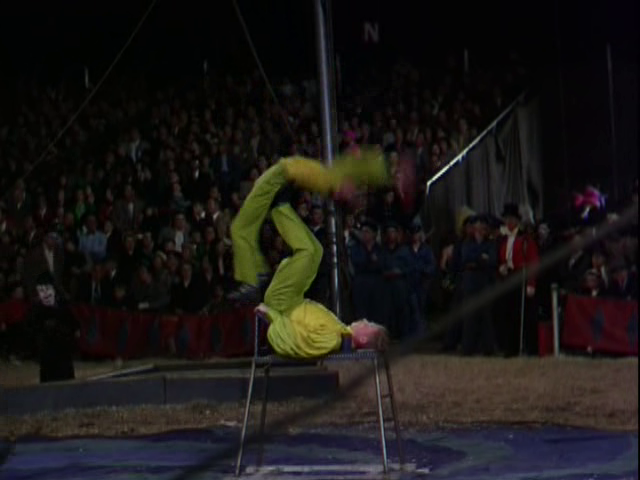
Review: At any rate, given its overall negative rap, I was surprised to find myself reasonably engaged as I revisited this over-the-top Technicolor spectacle (Cecil B. DeMille’s second-to-last directorial effort), which — as DVD Savant writes — “has too much color and too many varied circus acts to be boring.” I couldn’t seem to help getting caught up in the drama of it all — and darned if the central love quadrangle (between Heston, Hutton, Wilde, and Grahame) isn’t milked effectively until the very end, leaving you in “suspense” about who will end up with who. However, this faint praise is not meant to diminish the film’s more troublesome elements: it frequently (very frequently) devolves into campy melodrama; DeMille’s intrusive voice-over narration is often laughably grandiose; there’s some truly sloppy editing at times; the subplot involving Lawrence Tierney as a corrupt carny shyster is given too little screentime (we learn almost nothing about him — he simply appears, looking menacing); and there are far, far too many self-serving reaction shots of audience members gawking in wonder at the marvels of the circus (we get it already!). At least the lead actors all seem game with the material. Hutton has been raked over the coals for her hyper-kinetic performance here, but what else would one expect from her? I actually think she’s wonderfully convincing as an acrobat (clearly she worked out quite a bit in preparation — before such things were so commonplace in Hollywood), and, as someone aggressively pursuing fame in her own life as well, she seems to suit her role to a tee. Heston is likewise perfectly cast as a man with so much “sawdust in his blood” that he literally breathes “circus” in and out. Wilde is the pleasant surprise of the bunch — he has rollicking fun with his role as a womanizing egomaniac with an alluring foreign accent (and what a body he crafted for the part!). Grahame’s role is frustratingly underwritten during the first half of the film, but she’s allowed more of a welcome presence during the second half. Stewart — notoriously remaining in make-up throughout the entire film — is appropriately subdued and mysterious in his critical role, which is based on a provocative premise. Meanwhile, the spectacle surrounding their various intertwining melodramas provides an interesting glimpse at what passed for entertainment in mid-century America — much of it (i.e., the acrobatic acts) remains just as thrilling today, while the remainder (i.e., the various “albums” paraded through the rings) is simply laughably quaint. Note: Along with Tierney, poor Dorothy Lamour seems least-well-served here; her character is essentially a send-up of her previous glamour-girl roles (and watch for a silly cameo by her Road To… co-stars in the audience). Redeeming Qualities and Moments:
Must See? Categories
Links: |
“You and I were a couple of drunks on the sea of booze, and the boat sank.”
|
Synopsis: |
|
Genres, Themes, Actors, and Directors:
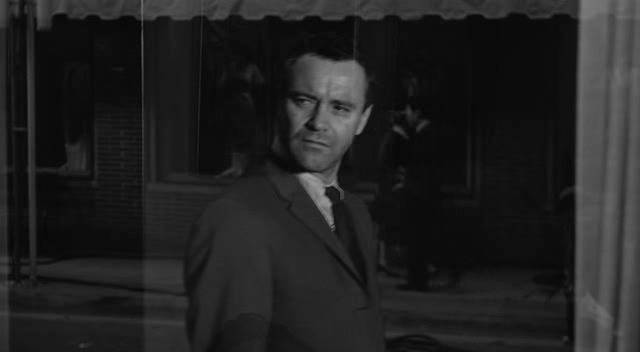
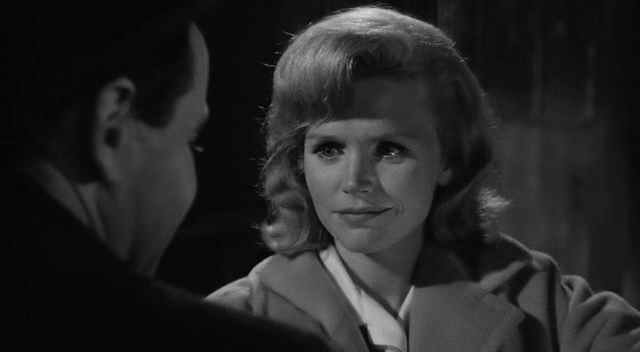
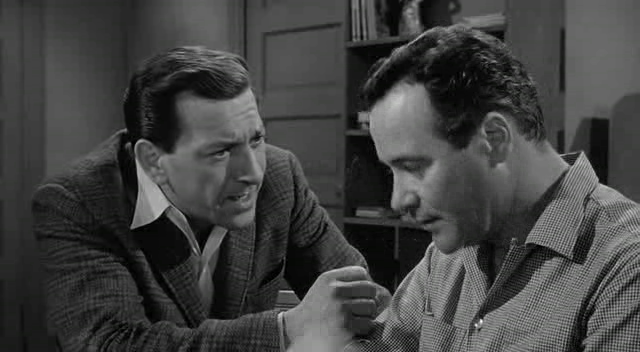
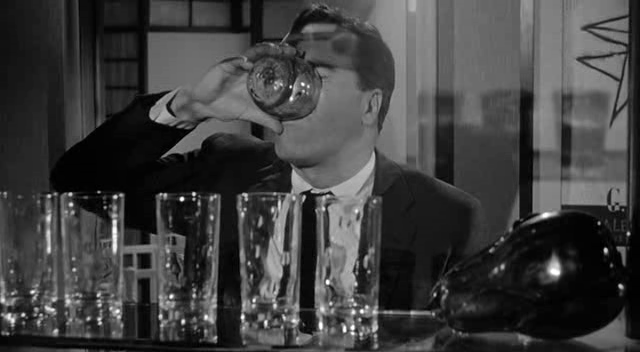
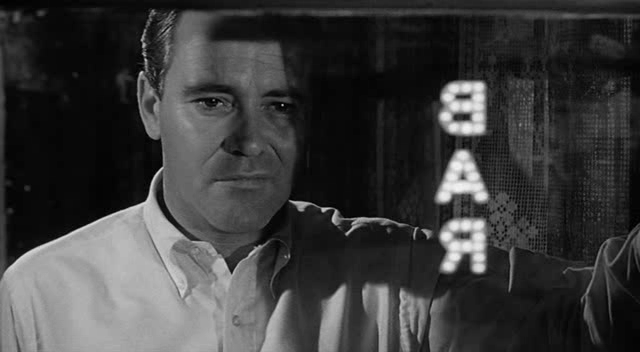
Review: Indeed, it’s Lemmon’s performance here which ultimately kept me vitally engaged in the story. While his character starts off like simply a variation on the fun-loving jokesters he so often portrayed, Lemmon quickly invests his “Joe Clay” with far more depth and pathos than one might expect. We fully sympathize with the frustrations he feels in his job, and understand how the social drinking he’s expected to engage in likely accelerated his addictive approach to alcohol. When he’s first introduced on-screen, he’s already so immersed in destructive drinking patterns (without realizing it) that we can’t help wondering why Remick doesn’t react with a bit more concern — except for the fact that she appears to love him unconditionally. Indeed, it’s to Miller’s credit that so much care is taken to fully establish Lemmon and Remick’s characters as romantic individuals who fall deeply in love with one another before communal drinking enters the scene; they are clearly soulmates, which helps to ground the film as a tragic love story, first and foremost. Lemmon’s inevitable next step is turning his beloved teetotalling wife on to boozing, in a much more disturbingly manipulative way than happens, for instance, between Al Pacino and Kitty Winn’s characters in 1971’s The Panic in Needle Park (wherein Winn is curious enough to try heroin herself, but is never pushed). Miller’s point, we learn, is that alcoholics will always try to push or guilt the ones they love into joining them — and that’s what perhaps remains most unique about this cinematic presentation of alcoholism: the way we witness its effects on a mutually drinking couple, not just an individual. To that end, Remick’s descent into alcoholism comes across as less authentic than Lemmon’s, perhaps due to the stage-bound nature of the screenplay, which skips across enormous periods of time. We see Remick tentatively joining her husband in a hard drink for the first time, and then suddenly alcohol has become so second-nature in their household that it’s causing irreparable damage. From what I’ve heard (and seen, in brief snippets), Piper Laurie — star of the original teleplay — was a bit more effective at portraying this undeniably complex character (though Remick remains sympathetic throughout, and certainly gives an impassioned performance). Speaking of the teleplay, kudos must be given for the decision to retain the story’s original bleak yet realistic ending. It’s a respectful finale to the hard-hitting ride we’ve engaged in, and one appreciates the honesty it offers in its assessment of the chances for recovery. To that end, along with I’ll Cry Tomorrow (1955), it provides one of the earliest on-screen depictions of Alcoholics Anonymous as a viable option for alcoholics with nowhere left to turn (and Jack Klugman turns in a fine, subtle, believable performance as Lemmon’s AA mentor, patiently counseling him through the worst of his challenging decisions). It’s refreshing to finally hear alcoholism acknowledged as the mysterious addiction it is; what a positive shift from the days when alcoholic characters such as Ray Milland’s Don Birnam in The Lost Weekend (1945), or Susan Hayward’s Angie Conway in Smash-Up: The Story of a Woman (1947), were — out of sheer ignorance — implicitly condemned for their behavior. Redeeming Qualities and Moments:
Must See? Categories
Links: |