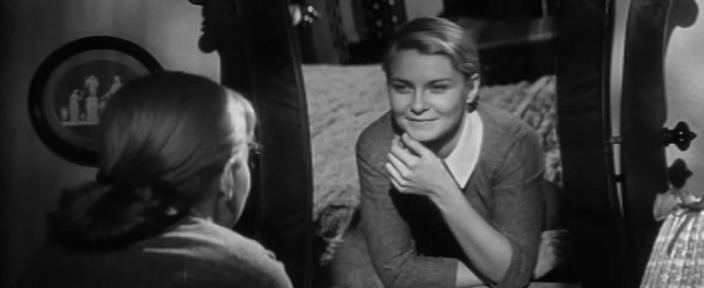
Caveman (1981)
“Atouk alounda Lana.”
|
Synopsis: |
|
Genres, Themes, Actors, and Directors:
Response to Peary’s Review: Redeeming Qualities and Moments:
Must See? Links: |
“Atouk alounda Lana.”
|
Synopsis: |
|
Genres, Themes, Actors, and Directors:
Response to Peary’s Review: Redeeming Qualities and Moments:
Must See? Links: |
“Even though he disgusts me, I did save his life.”
|
Synopsis: |
|
Genres, Themes, Actors, and Directors:
Response to Peary’s Review:
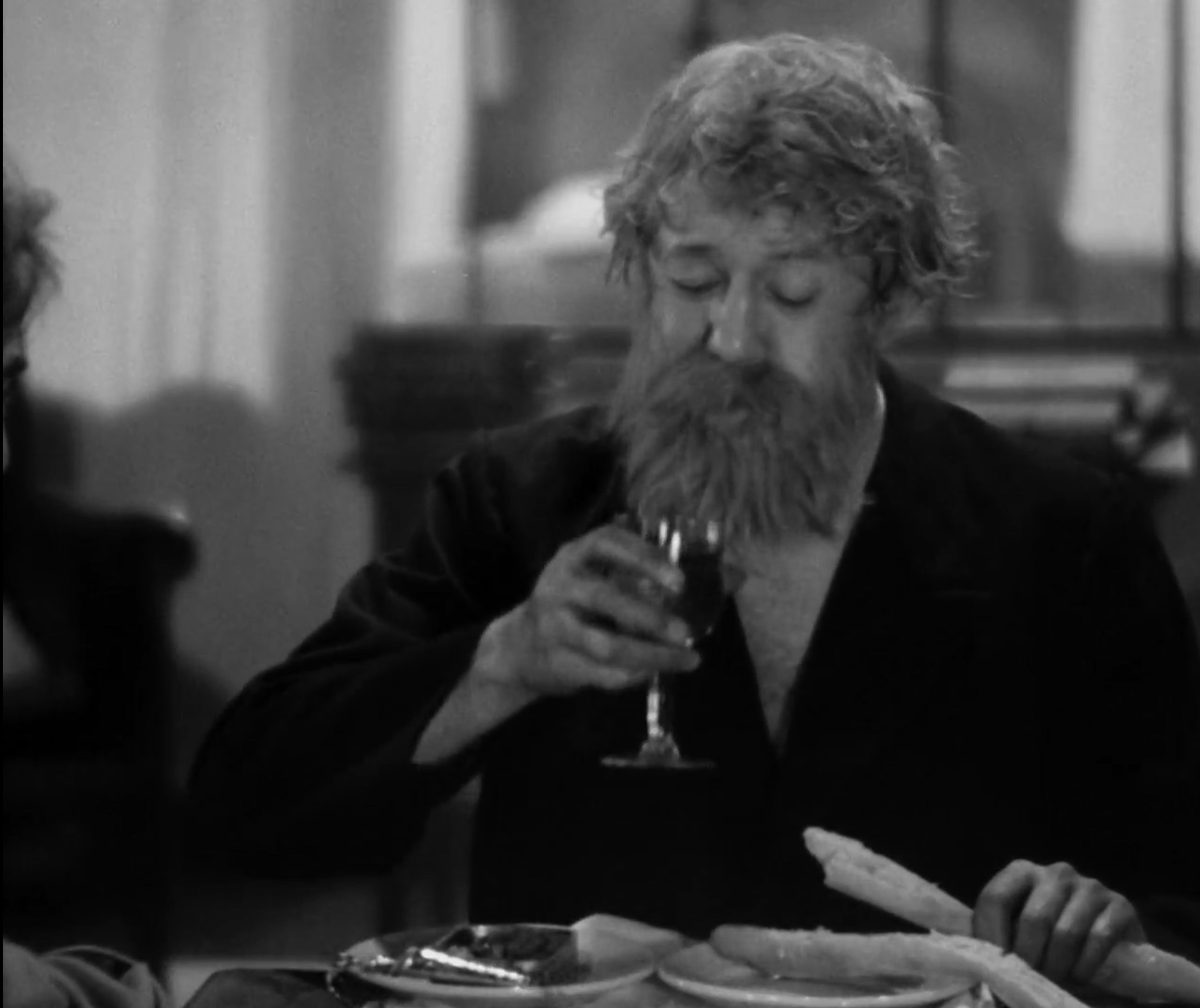
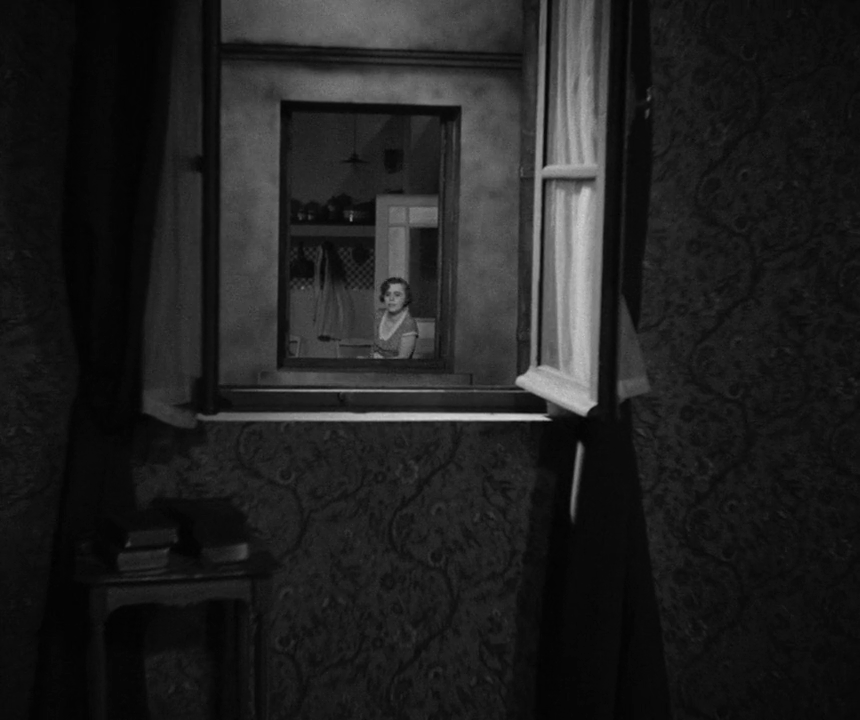
However, while modern critics delight in the way Boudu subverts expectations by anarchically refusing to express appreciation for what he’s given, he ultimately comes across as simply an annoying cipher. We learn nothing about his background, and — because he’s such a lout — we care little about him or his future. In fact, this is a rare instance where I prefer the remake — Paul Mazurky’s Down and Out in Beverly Hills (1986), starring Nick Nolte — to the original, given that both Nolte’s character (as scripted) and performance are more nuanced. While the cinematography in Boudu… is beautiful (see stills below), this one is only must-see viewing for Renoir fans. Redeeming Qualities and Moments:
Must See? (Listed in 1001 Movies You Must See Before You Die) Links: |
“When I let myself feel, all I feel is lousy.”
|
Synopsis: |
|
Genres, Themes, Actors, and Directors:
Response to Peary’s Review:
He writes that the “Oscar-winning script by Alvin Sargent is perceptive, powerful, emotionally resonant” and “also tender”, with “the scenes between McGovern and Hutton… particularly sweet”.
However, he asserts that while “Moore received much praise for her cinema debut as a woman who has repressed her emotions for so long that they no longer exist”, “it has turned out that she plays most of her movie characters with extreme restraint” — indicating that he’s not terribly impressed with her work here.
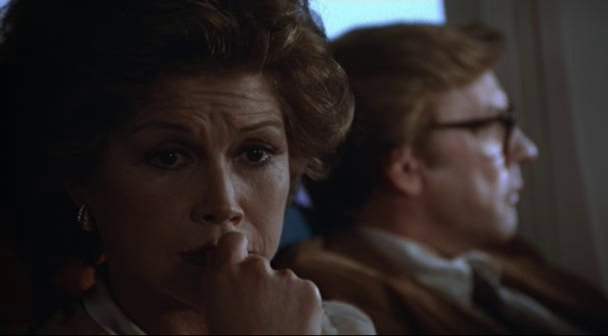
Interestingly, in his Alternate Oscars, Peary writes that he’s a bigger fan of “the now underrated Ordinary People” — which “received much praise from critics and moviegoers when it was released” — than the critical darling Raging Bull (which he nonetheless gives the Best Picture award to in his book). He notes that while Ordinary People‘s “reputation has… diminished, so that it’s now thought of as a mainstream family drama”, it actually deals “with difficult ‘mother-love’ themes not handled in other films”. I’m in full agreement with this latter assessment. Redford’s direction — despite Peary’s (incorrect) assertion that at times it’s too “precise and cold” — is simply masterful: he captures the dynamics of this deeply troubled family in such a way that we immediately sense the depth of their hurtful dysfunctions. Regardless of Moore’s future roles, her work here as a cold, narcissistic mother is spot-on; scene after scene between Moore and Hutton is heartbreaking in its bitter authenticity.
We’re left with no doubt that she openly preferred her older (deceased) son, that she resents her younger son for being the survivor, and that she is solely interested in maintaining a life of appearances and surface pleasures (with her husband, not her child) while repressing any trace of genuine emotion.
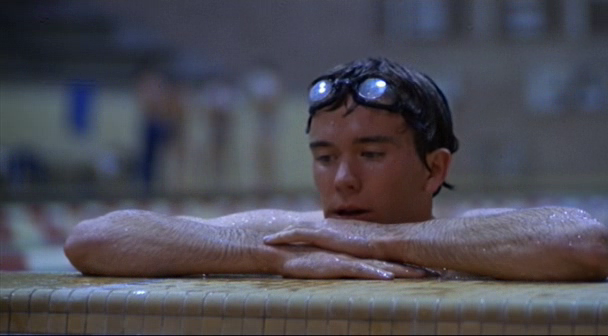
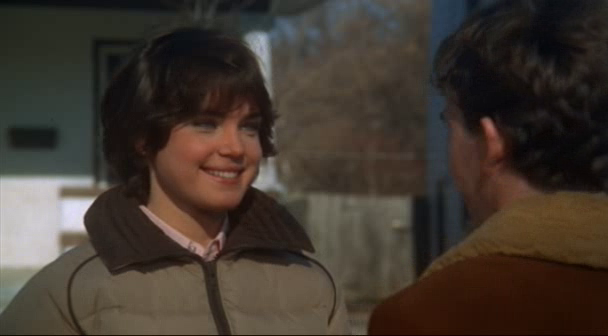
As Peary writes, Hutton does indeed offer a powerful, Oscar-worthy lead performance. He portrays a young man not only dealing with immense survivor guilt, but a lifelong legacy of being “second-best” in his mother’s eyes. Redford’s judicious use of brief flashback scenes — showing Hutton’s smiling, blonde, god-like brother (Scott Doebler) interacting with his adoring mother:
… as well as the tragic boating accident — help us to understand exactly why Hutton was damaged enough to attempt suicide (only to learn that his mother was primarily distressed about her bathroom rug being destroyed by his blood). This type of intense subject matter shouldn’t be easy to watch, yet Sargent’s masterful screenplay carefully balances heavier scenes with uplifting ones — such as Hutton beginning to date McGovern (wonderfully natural in her debut):
… and Hutton receiving loving, realistic support from his new therapist (convincingly played by Hirsch).
Sutherland also does impressive (if less front-and-center) work; as DVD Savant points out in his review, he makes “you forget all of his previous performances” in his portrayal as “a caring and sensitive father whose tolerant nature may not have been the best thing for his relationship with his wife”.
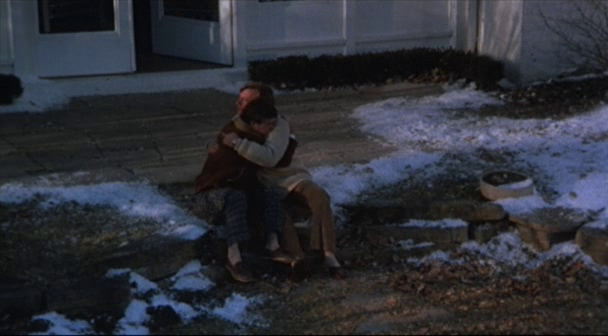
Savant’s review nicely summarizes many of the film’s overall strengths, so I’ll cite him some more. He notes that the film “has some good lessons to teach about divorces and messed-up families, which in real life come less from cruel betrayals or sinful transgressions, but simply grow from our basic natures.” He further writes that “psychological movies have tried to show the miracle of the psych cure, usually with dismal or laughable results” (see my recent review of The Three Faces of Eve for a case study of this cinematic tendency), “but through a lot of give and take, we do see something of a credible turning point occur for Timothy Hutton’s character”, who “recognizes truths he hadn’t before, and sees that though he’s not cured, things are not hopeless.” While the film ends on a somewhat downbeat note, the final scene serves as a valuable reminder that challenging family dynamics are not “a rationalization for chucking all relationships as worthlessly fragile”. Redeeming Qualities and Moments:
Must See? Categories
(Listed in 1001 Movies You Must See Before You Die) Links: |
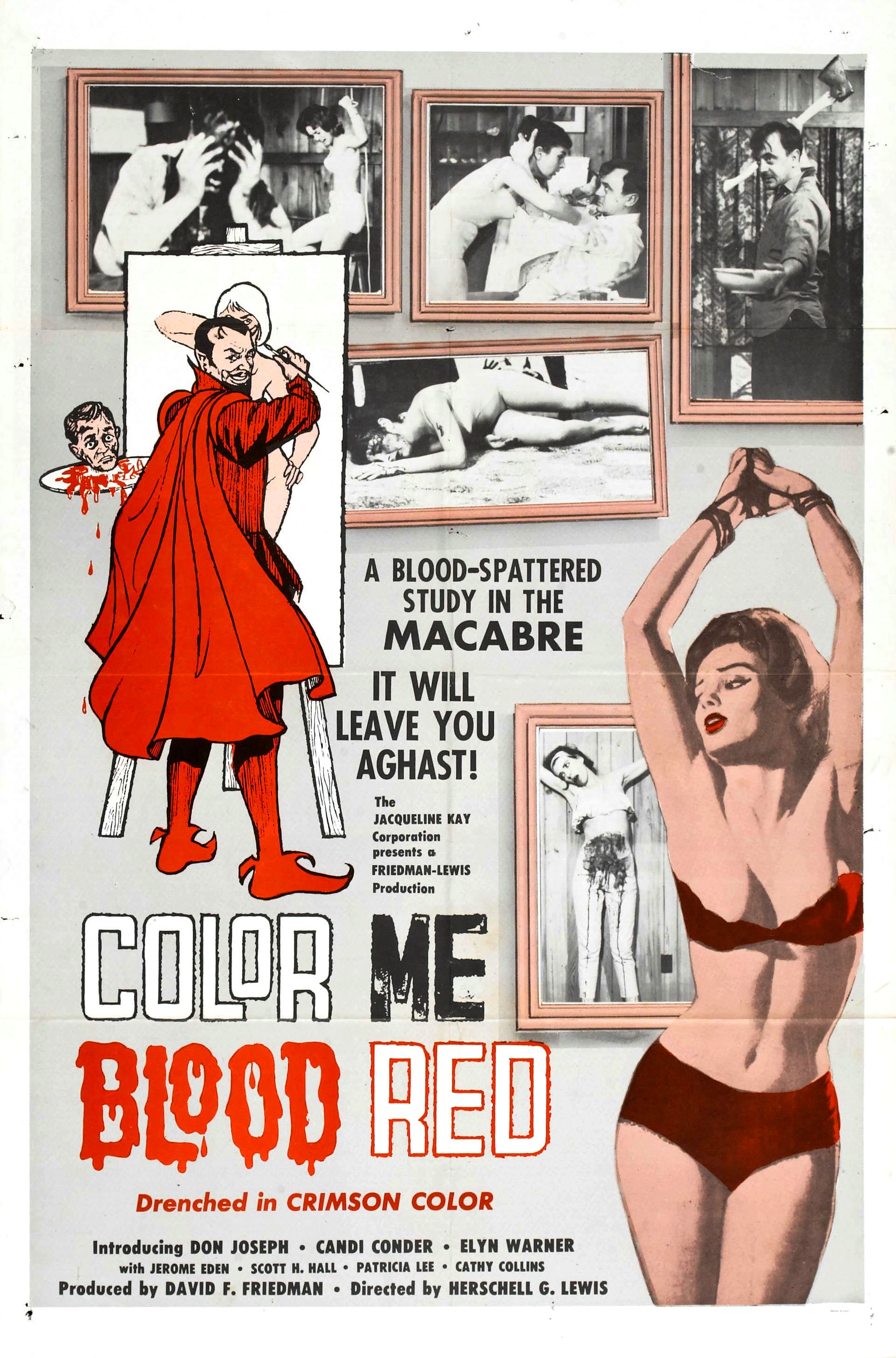
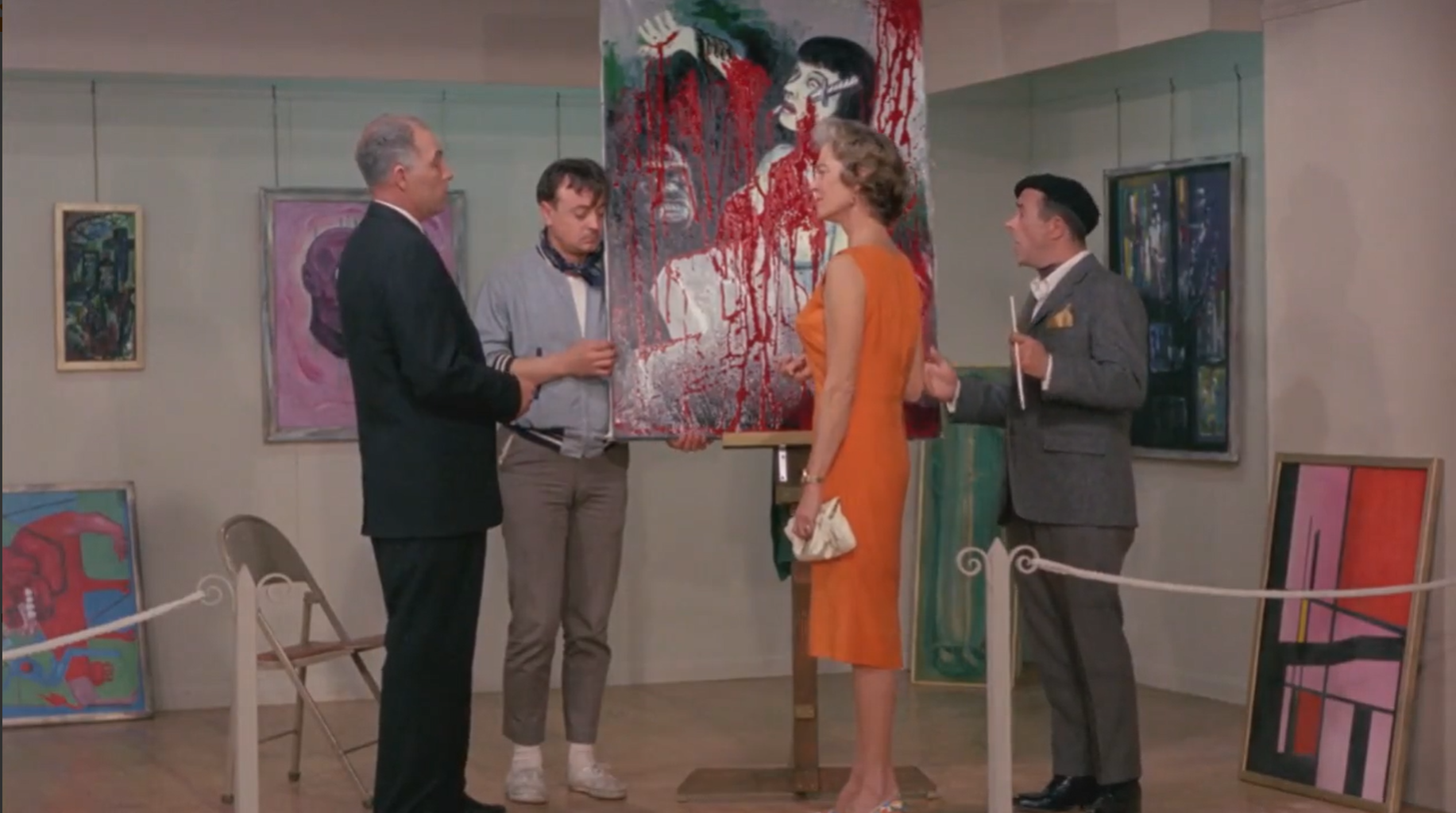
“What kind of a vampire are you, painting with blood? Are you a painter or a butcher?”
|
Synopsis: |
|
Genres, Themes, Actors, and Directors:
Review:
(For a humorous blow-by-blow analysis by a critic who refers to this as Lewis’s “worst film”, click here.) Be forewarned that whenever a tedious Beatnik duo (Patricia Lee and Jim Jaekel) show up on screen, presumably for comic relief, you’ll need to have your fast-forward button easily on hand.
Note: Of mild interest is the incorporation of Aqua Cycles into several sequences; this sporting activity is something you just don’t see anymore, in real life or the movies, probably for good reason. Redeeming Qualities and Moments:
Must See? Links: |
“Well, we’re just working with a homicidal maniac — that’s all.”
|
Synopsis: |
|
Genres, Themes, Actors, and Directors:
Response to Peary’s Review:
… and he argues that while the “picture has camp value, to be sure” he “wonders about Lewis cultists who thrill to no-holds-barred violence and disgusting images”.
He ends his review by noting that “if you detest horror films that show how many shocking ways a creative sadist can do away with young women, then Lewis is the man you’ll want to blame and this is the film you’ll want to burn”.
While Peary’s points are all valid, I believe this flick holds more camp value than he gives it credit for. Its ineptitude on multiple levels is so extreme that personally, I couldn’t help giggling throughout its short (60-minute-plus) running time; and while the graphic violence against women is reprehensible, it’s all so shoddily done that — unlike with more recent/modern fare — you simply won’t believe any of it for a second. Along those lines, I’m genuinely puzzled by Peary’s assertion that cultists “want to know exactly how Lewis accomplishes the famous effect” — considered to be “the picture’s highlight” — in which “Ramses rips a tongue out of a woman’s mouth”, given that we simply see Ramses (Arnold) putting his hand in a screaming woman’s red-paint-filled mouth, then a separate shot of Ramses holding up a (sheep’s) tongue covered with red paint. Where’s the mystery, exactly, in how this shoddy “effect” was achieved? Ultimately, this movie is on a par with what today’s 12-year-olds could easily achieve — and whether it should still be considered “must see” viewing is a point of debate. However, I’m leaning on the “yes” side simply due to its historical relevance for ushering in the era of “splatter films” (a dubious distinction to be sure, but a notable one). For much more information on the film’s Z-grade production history, be sure to listen to the director’s commentary on Something Weird’s DVD release. Redeeming Qualities and Moments:
Must See? Categories
Links: |
“Hey, kid — why don’t you take off your mask?”
|
Synopsis: |
|
Genres, Themes, Actors, and Directors:
Review:
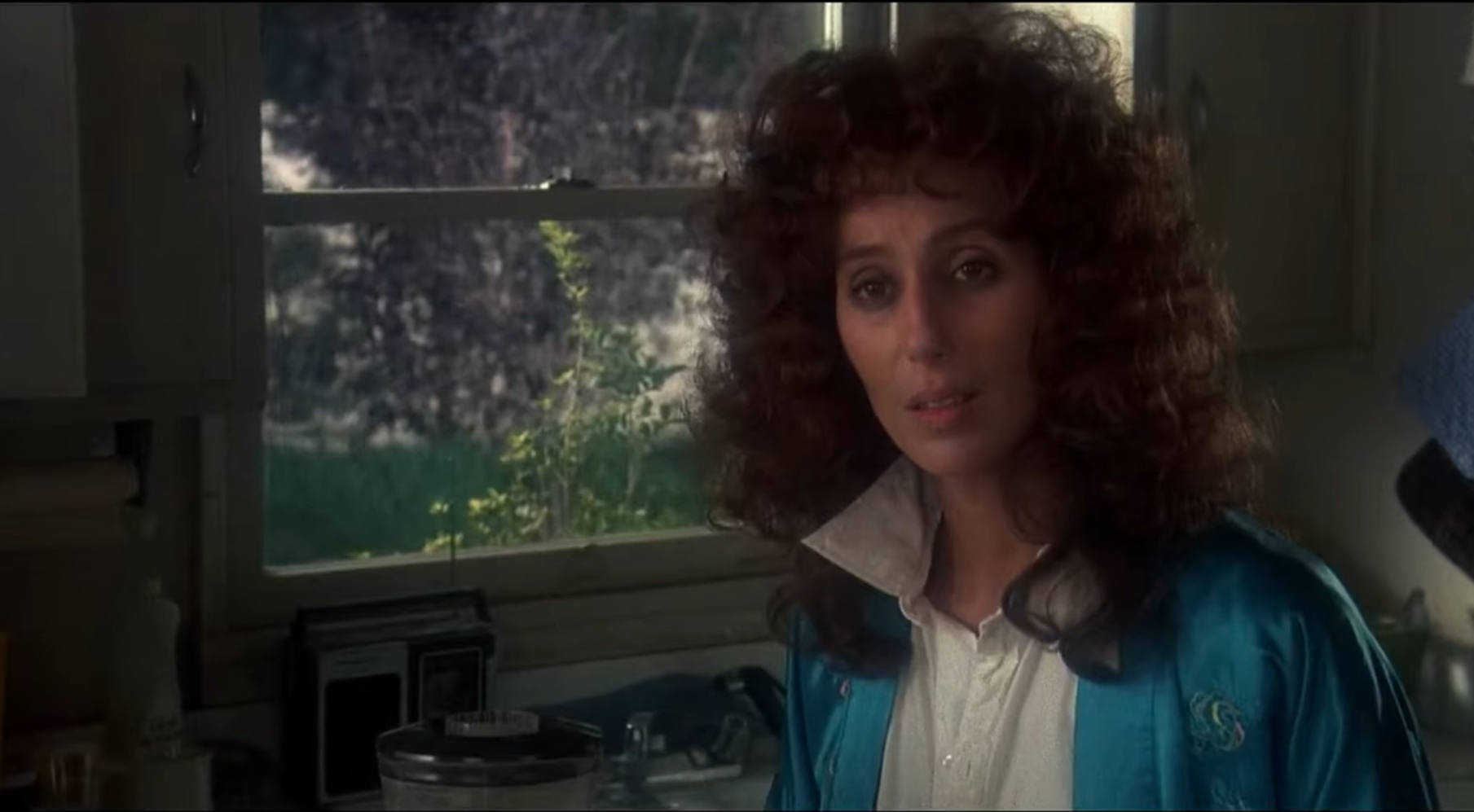
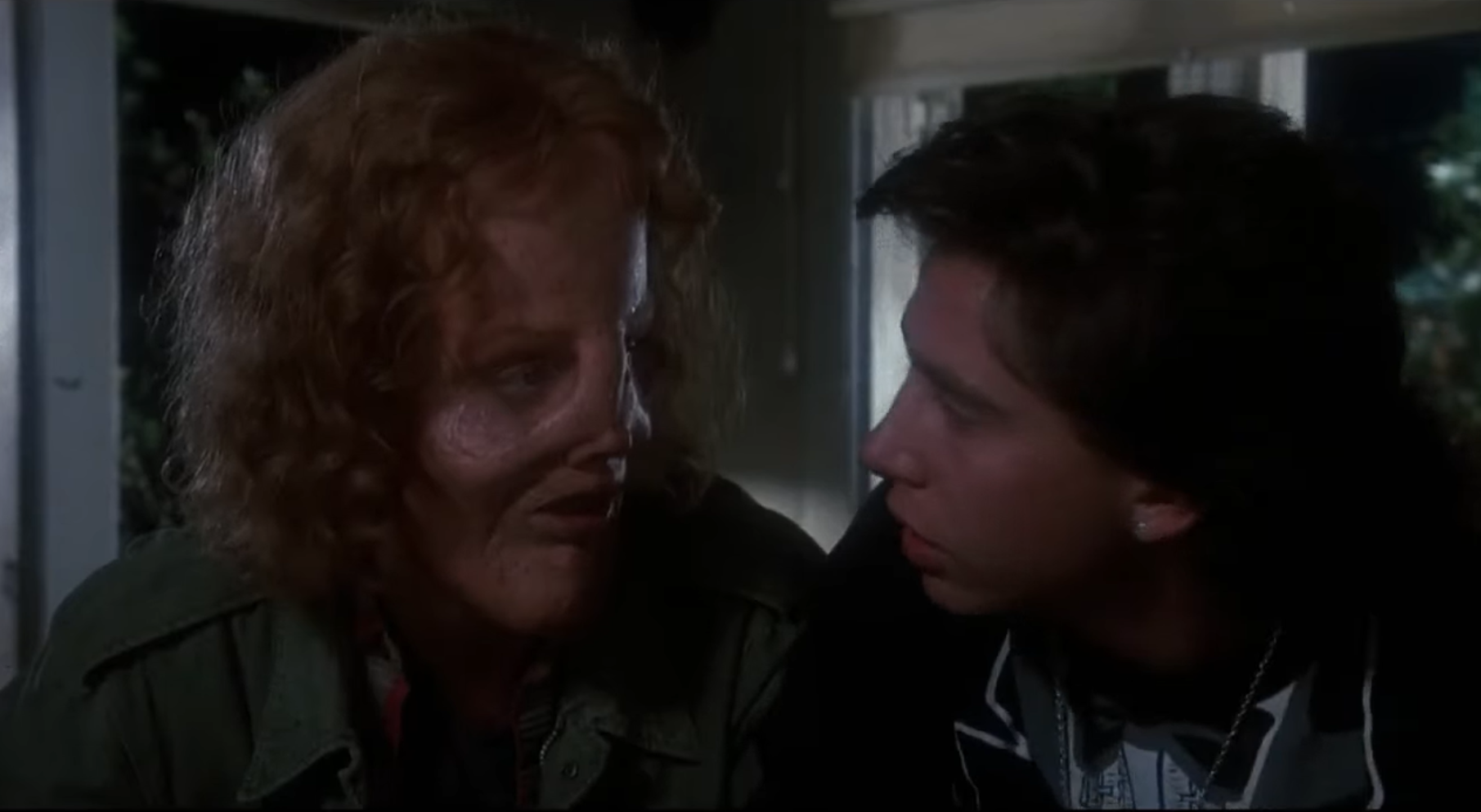
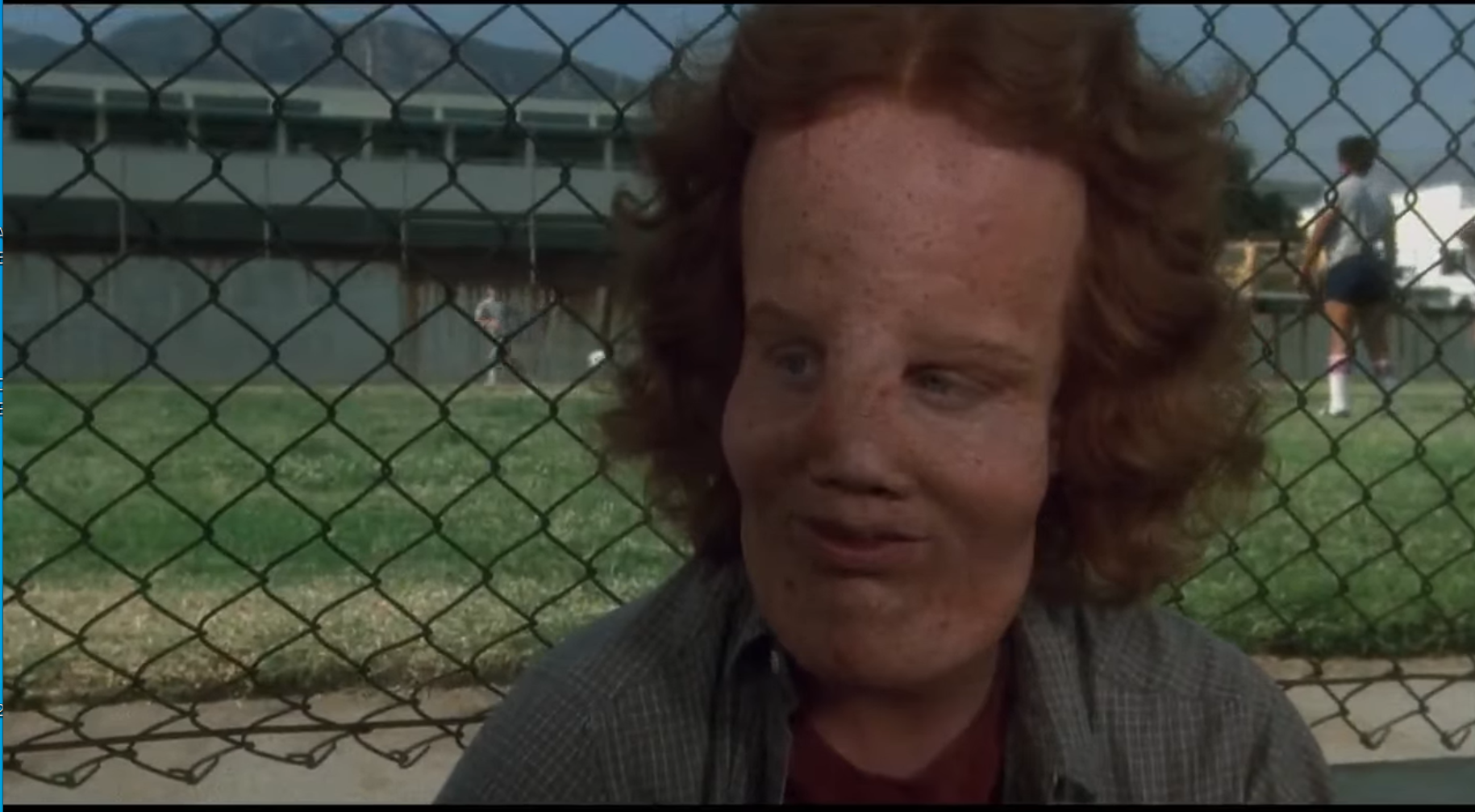
The script is primarily concerned with showing Rocky’s everyday life: he argues with his mom (a sad-eyed, feisty Cher) about her drug use:
… dreams of going on a motorcycle tour of Europe with his best friend (nicely played by Lawrence Monoson):
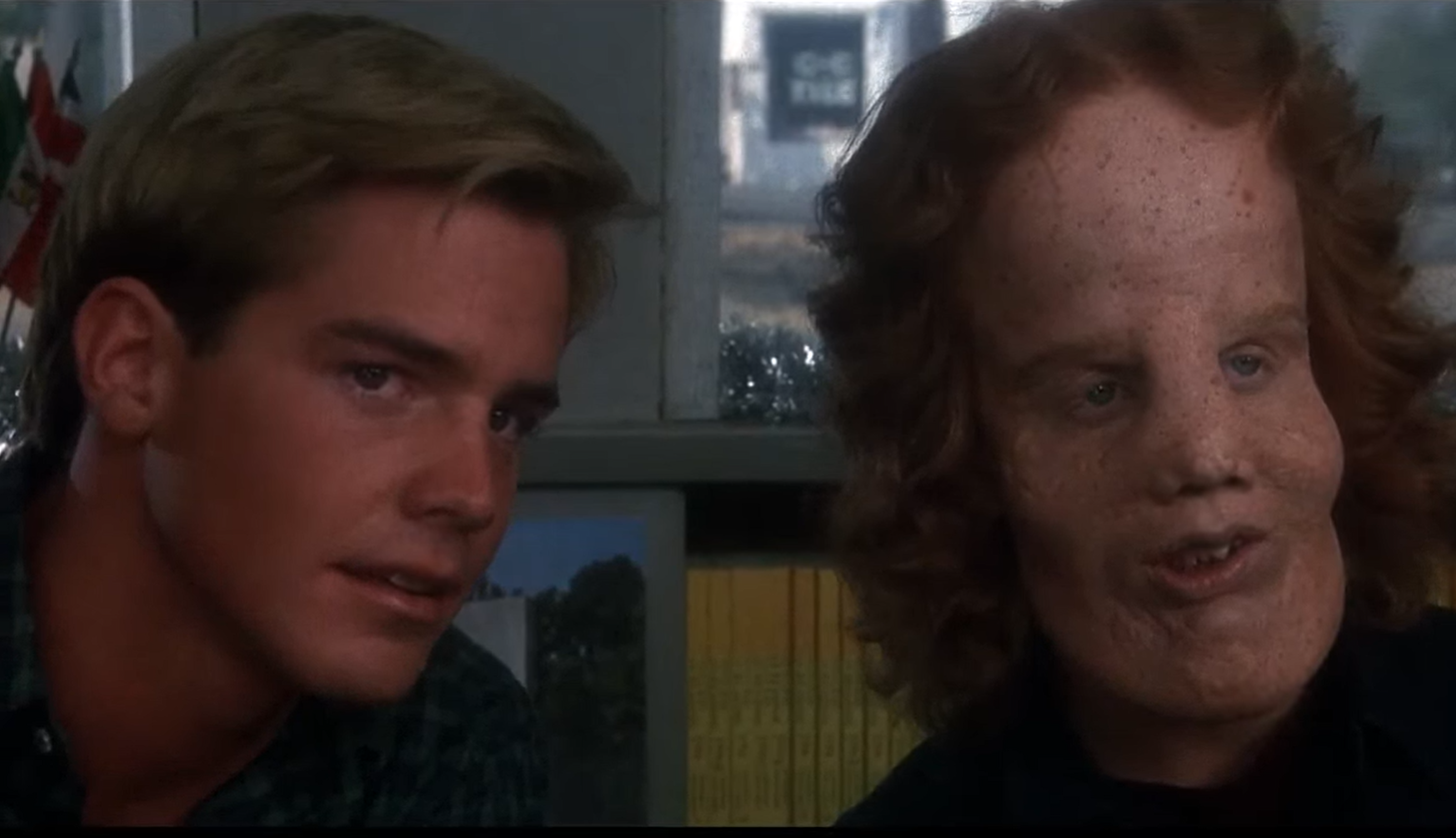
… bargains for tutoring money from his classmate:
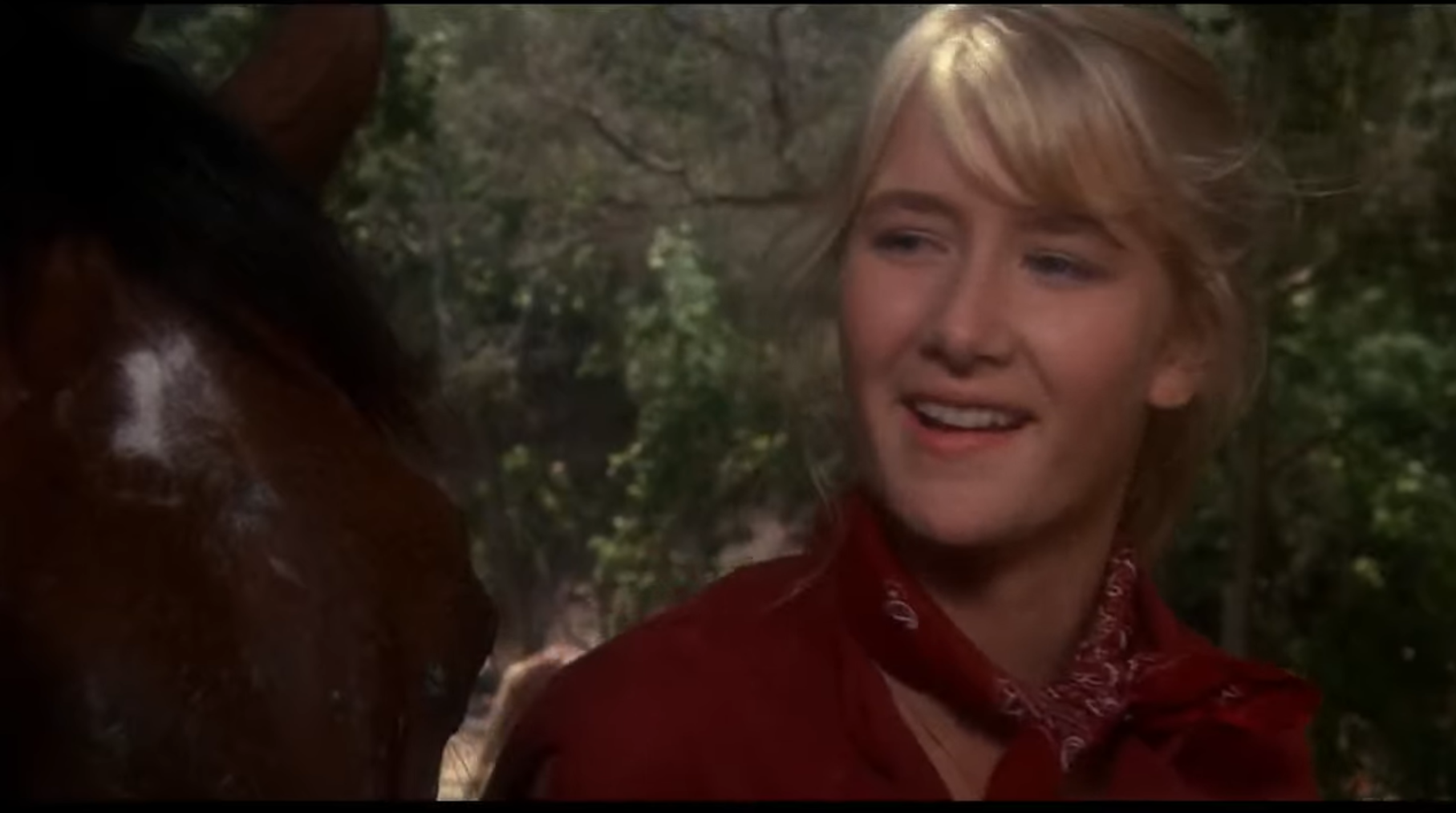
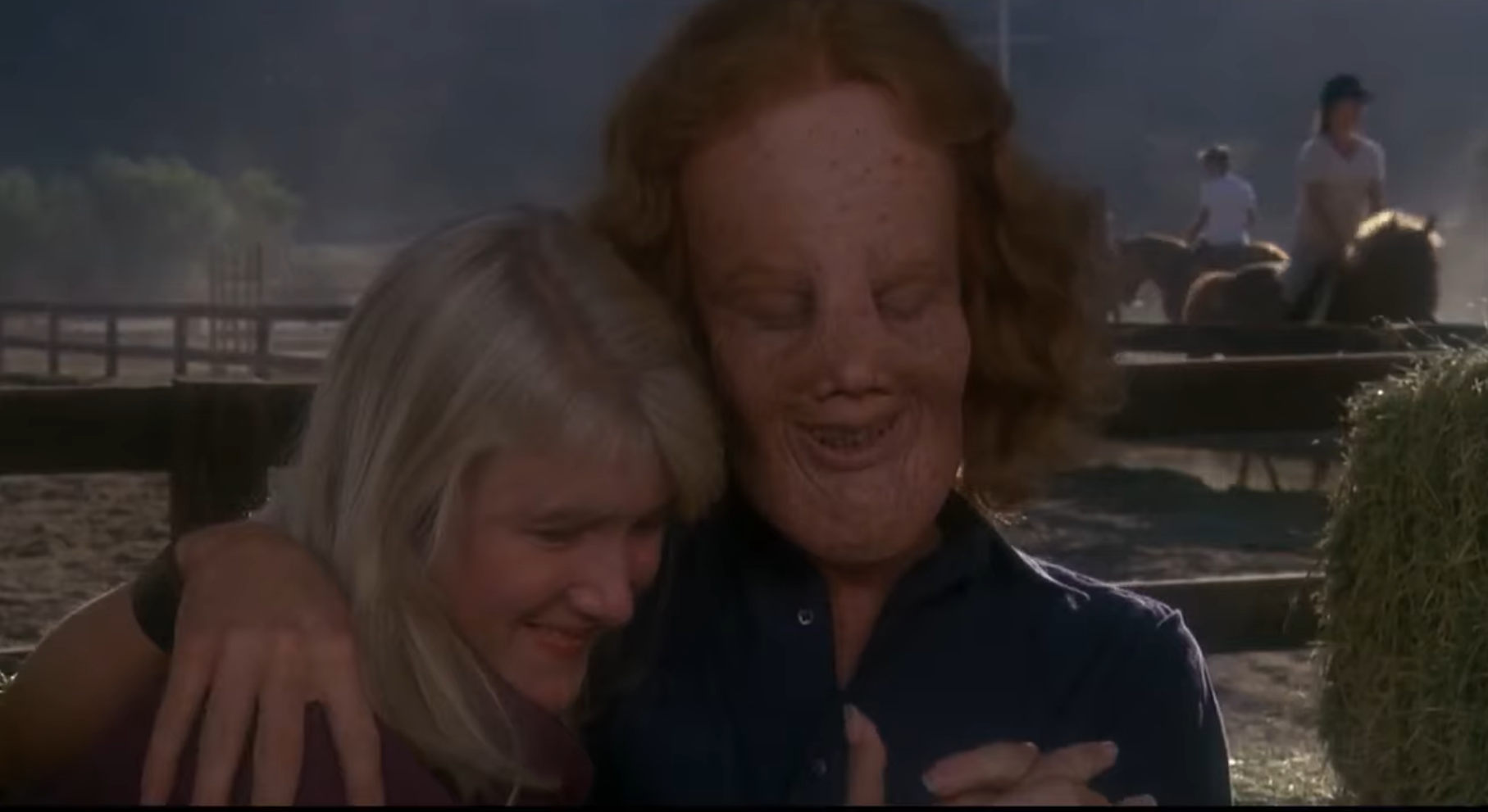
… and, in the movie’s most touching scenes, falls in love with a beautiful blind girl (Laura Dern) he meets at summer camp.
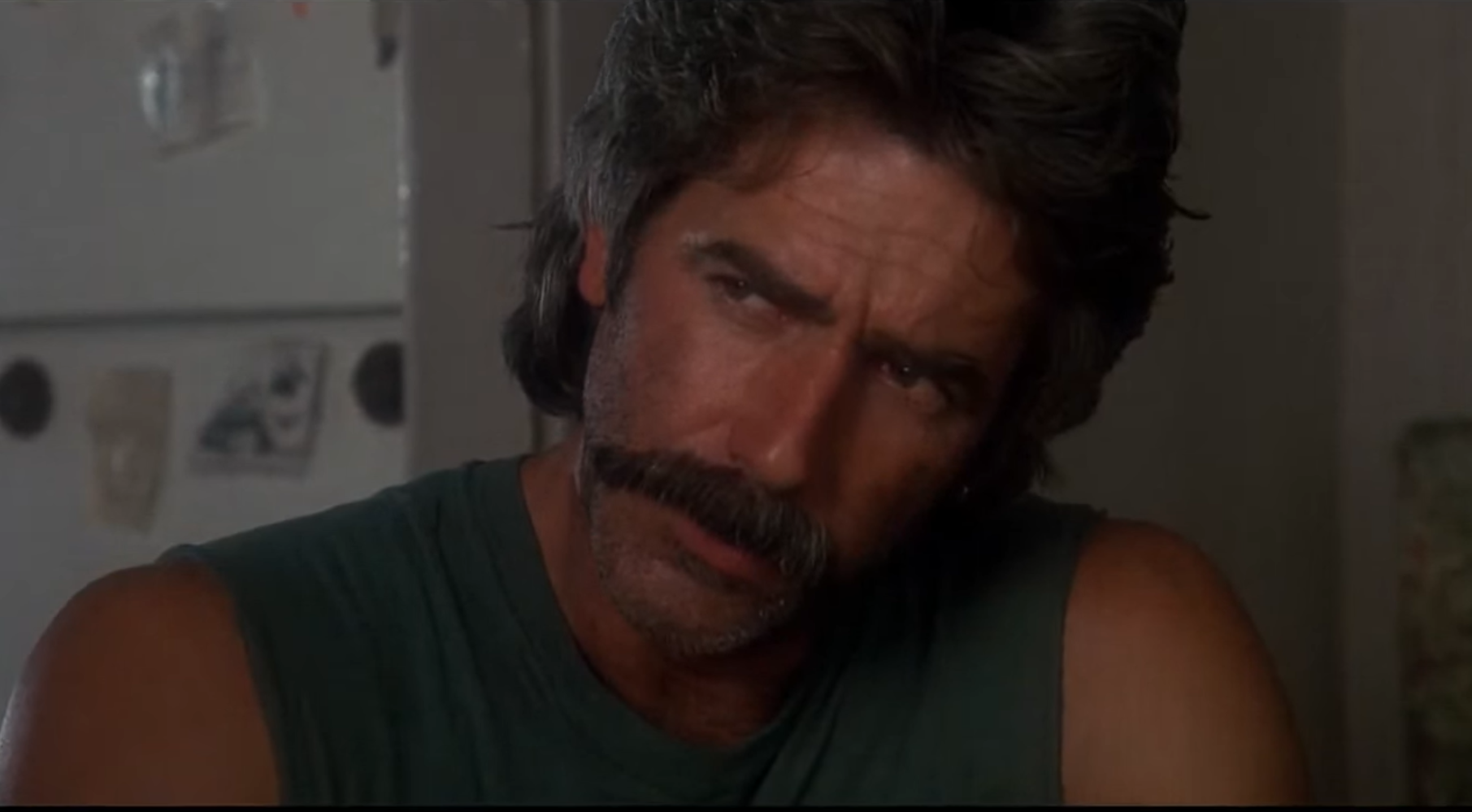
We watch him struggle with his appearance and his disability (which, he’s been told for years, means imminent death), but it’s remarkable how many of his daily concerns could easily be those of other teens in a slightly different context. Unfortunately, Bogdanovich — working from a script by Anna Hamilton Phelan — pads his storyline with extraneous material regarding Cher’s romance with a stoic biker named Gar (Sam Elliott, wasted in an undeveloped role):
— their presence ultimately eats up too much screentime. With that said, more scenes could easily have been prioritized for Stoltz’s touching romance with Dern, who does a fine job portraying a sweet girl deserving of Rocky’s affections. This one remains worth a one-time look for Stoltz’s performance, as well as the impressive, Oscar-winning make-up (which seems to emulate the real Rocky’s face quite accurately). Note: Click here to read an archived People magazine article about the film’s real-life inspirations. Also, be sure to check out TCM’s article for more insights into Bogdanovich’s struggles during the making of this film, particularly regarding his fight to include songs by Bruce Springsteen; they’ve been restored in the recent Director’s Cut, though they don’t really come across as integral to the storyline. Redeeming Qualities and Moments:
Must See? Categories
Links: |
“We can’t be direct, so we end up saying the weirdest things.”
|
Synopsis: |
|
Genres, Themes, Actors, and Directors:
Response to Peary’s Review: Redeeming Qualities and Moments:
Must See? Categories
Links: |
“East, West — just points of the compass, each as stupid as the other.”
|
Synopsis: |
|
Genres, Themes, Actors, and Directors:
Response to Peary’s Review:
The film itself — despite what Peary refers to as a “slow stretch in the middle” (I’m not sure I agree) — is great fun and “works marvelously”; it may be “material for an old-style serial” but never deteriorates to a “juvenile level”, and marvelous use is made of location settings in Jamaica.
With plenty of “sex, violence, wit, terrific action sequences, and colorful atmosphere”, one can’t help staying happily engaged throughout — especially since “Connery, bikini-clad Andress (who became a sex-symbol star), and Wiseman:
… all give memorable performances”. In his review, Peary accurately points out some of the film’s most notable highlights, which “include the ‘three blind mice’ opening:
… Bond having a tarantula crawl on him:
… Honeychile’s [Andress’s] first appearance:
… and “Dr. No’s demise”. Speaking of Honeychile, bodacious Andress in her skimpy white bikini is a true stunner — a cinematic goddess whose character may be a bit too calculatedly primitive, but is ultimately a fitting companion for Bond as he navigates his way through Dr. No’s lair. Though Bond beds two girls before her — brunette Sylvia Trench (Eunice Gayson):
… and alluring Eurasian “Miss Taro” (Zena Marshall):
— she wins full points as the first official “Bond girl”. Redeeming Qualities and Moments:
Must See? Categories
Links: |
“Sometimes I don’t know whether you’re crazy or think I am.”
|
Synopsis: |
|
Genres:
Response to Peary’s Review: In retrospect, TTFOE does come across as both quaint and somewhat silly, with a couple of scenes in particular straining credulity. Early in the film, Eve Black tries to strangle her daughter with a curtain pull (a truly freaky scene to witness, as we see the girl with the cord around her neck), but no consequences emerge other than Eve being taken to the doctor. Then, during her initial meeting with Dr. Luther (Cobb), Eve mentions having lost a second child four months earlier; Dr. Luther pauses for nary a second before launching into another topic, without even a cursory, “I’m so sorry for your loss”, let alone exploration of how this might be contributing to her current state of psychological affairs. Meanwhile, the film’s denouement — when we learn through flashback why Eve is so damaged — is simply laughable in its implausibility (and nowhere close to the truth of what actually happened to Sizemore). With all that said, TTFOE remains worthy viewing for Woodward’s impressive performance. In his Alternate Oscars, Peary agrees with the Academy that Woodward deserved her award as Best Actress of the Year, and writes that regardless of the foolish script, “Woodward is still compelling, whether she is quiet, hysterical, naughty, flirtatious, creepy, sweet, weak, or strong”. Apparently Woodward “wasn’t fond of her own performance because she felt she couldn’t devote enough time to any of Eve’s three personalities”, but the role was nonetheless “an ideal showcase for this versatile actress whose talents [at the time] were still a secret”. As Peary points out, “it’s significant that [Woodward] even makes us feel sorry for Eve Black when she starts to fade away”, given that “whatever her faults, [she] was essentially a real person, with fears and worries of her own” — a woman who, when she “wasn’t destroying Eve White’s life”, was “actually helping her” by rebelling against her “unhealthy marriage” and terrible husband (Wayne). Speaking of Wayne, I’ve never really been a fan of his work, but find his character here entirely plausible; it’s frighteningly easy to imagine a man reacting exactly as he does — with both hostility and confusion — to his wife’s breakdown. Note: It’s interesting and a bit odd that Peary doesn’t mention the other film about multiple personalities released that same year: Hugo Haas’s Lizzie, starring Eleanor Parker and based on a novel by Shirley Jackson. It’s a worthy, must-see film in its own right. Redeeming Qualities and Moments:
Must See? Categories
Links: |
“I ate garbage for dinner last night, Barbara — and I liked it!”
|
Synopsis: |
|
Genres, Themes, Actors, and Directors:
Response to Peary’s Review: I agree with Peary that the film’s humor is often overly broad (those dog shots certainly feel gratuitous and repetitive) — but overall I find this to be a rare example of a (mostly) successful updated remake. There are quite a few scenes that ring true and seem to respectfully highlight important nuances in class relations. In one scene, for instance, a cleaned-up Nolte is having lunch with Dreyfuss at a swanky Beverly Hills restaurant when he notices his homeless buddy Al (Felton Perry) walking by. Perry and Nolte are thrilled to see each other, and Perry comes inside to join them — but, to Dreyfuss’s astonishment, he politely refuses an offer of lunch (though he does steal bread rolls from various tables on his way out). Dignity of a sort is maintained, with Nolte openly acknowledging his humble origins (rather than maintaining a new facade of wealth), and Perry demonstrating self-sufficiency in the face of charity. Indeed, part of what makes Nolte’s character so oddly appealing is his refusal to “take advantage” of anything offered to him: he accepts Dreyfuss’s offer of food, clothing, and shelter, but it’s understood that he’ll leave whenever he pleases, and is unwilling to become the object of anyone’s pity or derision. He’s a refreshingly unique protagonist, and makes the film worth a one-time look. Redeeming Qualities and Moments:
Must See? Categories
Links: |