Poseidon Adventure, The (1972)
“We’re floating upside down; we’ve gotta climb up.”
|
Synopsis: |
|
Genres, Themes, Actors, and Directors:
Response to Peary’s Review:
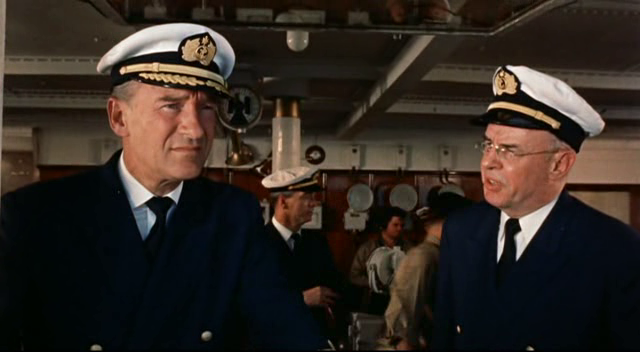
… but hard-core fans seem to enjoy owning these lines; and meanwhile, the rest of us can ignore these moments and appreciate the work that went into crafting this spectacle, knowing this was years before CGI and everything we’re seeing on-screen actually happened in some fashion (albeit with safety at the forefront of everyone’s minds). Having recently watched and posted on The Last Voyage (1960), it was especially refreshing seeing Leslie Nielsen (as Captain Harrison) taking charge as the polar-opposite of George Sanders’ Captain Adams. While Adams insisted, “I have never lost a ship and I’m not losing this one!”, Harrison says (thank God!), “I can’t afford to gamble with the lives of my passengers!”
Unfortunately, nothing Captain Harrison can do will prevent his ship from total annihilation in the face of a terrifying tidal wave:
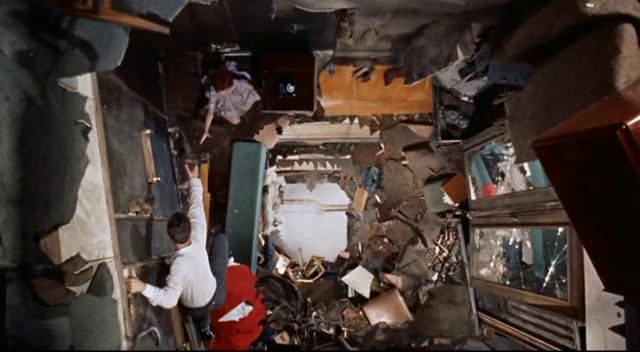
The next few minutes of panic — as the ship is turned upside down and passengers scramble for their lives — is truly harrowing.
From here, we quickly shift into an allegorical tale of whether to trust the “known” — as personified by the ship’s purser (Byron Webster), who insists that everyone should stay put and wait for help — or a “radical” preacher (Hackman) who believes they need to proactively save themselves. He wants to use an enormous Christmas tree as a bridge from the ceiling back to the floor, and sends fearless young Shea up as a “monkey” to try it out:
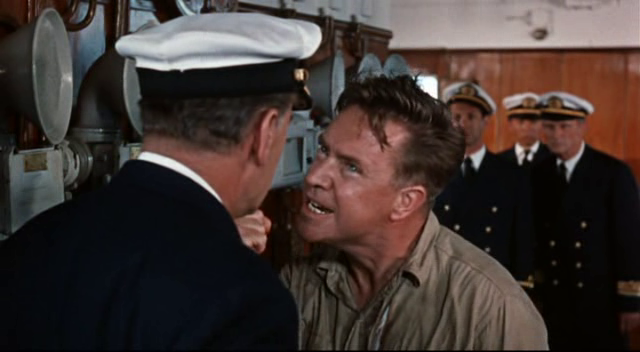
Once the group of intrepid climbers has assembled, they part ways with the remaining passengers below, some of whom try in vain to scramble up the tree once water starts flooding into the stateroom. From there, the primary human drama revolves around head-to-head banter between Hackman and Borgnine, who don’t necessarily see eye-to-eye:
— and we also get to learn more about the other survivors, most notably Winters’ former award-winning swimmer; her performance of her own stunt here remains truly remarkable:
In terms of Peary’s assertion that “all the likable characters died while only the obnoxious ones have made it,” this simply isn’t true — at all. Yes, we lose some beloved folks, but those who survive aren’t “obnoxious”. Regardless of what one thinks about the storyline, this film remains of historical importance for reasons described in TCM’s article:
Redeeming Qualities and Moments:
Must See? Categories
Links: |