Greatest Show on Earth, The (1952)
“Is it me you’re worried about, or the circus?”
“You and I were a couple of drunks on the sea of booze, and the boat sank.”
|
Synopsis: |
|
Genres, Themes, Actors, and Directors:
Review: Indeed, it’s Lemmon’s performance here which ultimately kept me vitally engaged in the story. While his character starts off like simply a variation on the fun-loving jokesters he so often portrayed, Lemmon quickly invests his “Joe Clay” with far more depth and pathos than one might expect. We fully sympathize with the frustrations he feels in his job, and understand how the social drinking he’s expected to engage in likely accelerated his addictive approach to alcohol. When he’s first introduced on-screen, he’s already so immersed in destructive drinking patterns (without realizing it) that we can’t help wondering why Remick doesn’t react with a bit more concern — except for the fact that she appears to love him unconditionally. Indeed, it’s to Miller’s credit that so much care is taken to fully establish Lemmon and Remick’s characters as romantic individuals who fall deeply in love with one another before communal drinking enters the scene; they are clearly soulmates, which helps to ground the film as a tragic love story, first and foremost. Lemmon’s inevitable next step is turning his beloved teetotalling wife on to boozing, in a much more disturbingly manipulative way than happens, for instance, between Al Pacino and Kitty Winn’s characters in 1971’s The Panic in Needle Park (wherein Winn is curious enough to try heroin herself, but is never pushed). Miller’s point, we learn, is that alcoholics will always try to push or guilt the ones they love into joining them — and that’s what perhaps remains most unique about this cinematic presentation of alcoholism: the way we witness its effects on a mutually drinking couple, not just an individual. To that end, Remick’s descent into alcoholism comes across as less authentic than Lemmon’s, perhaps due to the stage-bound nature of the screenplay, which skips across enormous periods of time. We see Remick tentatively joining her husband in a hard drink for the first time, and then suddenly alcohol has become so second-nature in their household that it’s causing irreparable damage. From what I’ve heard (and seen, in brief snippets), Piper Laurie — star of the original teleplay — was a bit more effective at portraying this undeniably complex character (though Remick remains sympathetic throughout, and certainly gives an impassioned performance). Speaking of the teleplay, kudos must be given for the decision to retain the story’s original bleak yet realistic ending. It’s a respectful finale to the hard-hitting ride we’ve engaged in, and one appreciates the honesty it offers in its assessment of the chances for recovery. To that end, along with I’ll Cry Tomorrow (1955), it provides one of the earliest on-screen depictions of Alcoholics Anonymous as a viable option for alcoholics with nowhere left to turn (and Jack Klugman turns in a fine, subtle, believable performance as Lemmon’s AA mentor, patiently counseling him through the worst of his challenging decisions). It’s refreshing to finally hear alcoholism acknowledged as the mysterious addiction it is; what a positive shift from the days when alcoholic characters such as Ray Milland’s Don Birnam in The Lost Weekend (1945), or Susan Hayward’s Angie Conway in Smash-Up: The Story of a Woman (1947), were — out of sheer ignorance — implicitly condemned for their behavior. Redeeming Qualities and Moments:
Must See? Categories
Links: |

“A type like that is an animal — so you’ve got to fight him like an animal.”
|
Synopsis: |
|
Genres, Themes, Actors, and Directors:
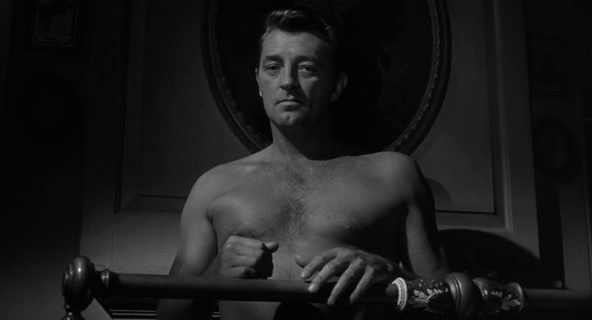
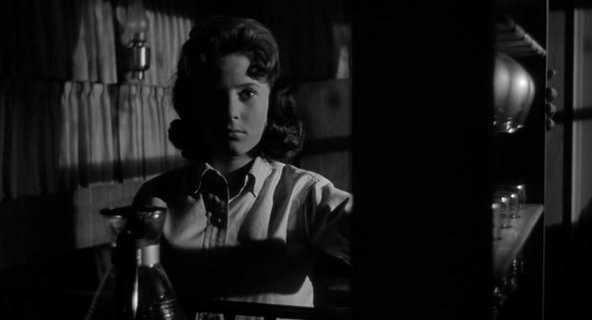
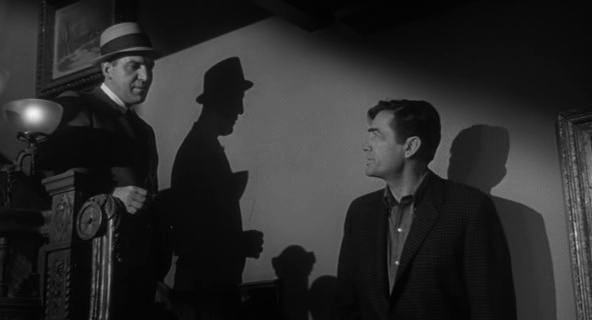
Response to Peary’s Review: We’re shown exactly what kind of a self-centered bastard Mitchum is during the opening sequence, as he jostles a woman carrying a stack of books, and walks right past her rather than stopping to help her pick them up. Later, an encounter between Mitchum and a “loose” woman (Barrie Chase) he picks up at a bar — then attacks so viciously she’s scared to say a word to the authorities — is used to excellent effect, indicating to us exactly the level of violence and sexual terror Mitchum is capable of inflicting; while the “attack” itself isn’t shown explicitly, the way in which director J. Lee Thompson shows both the terrifying moments beforehand, and Chase’s brutalized appearance after, are enough to convince us that Mitchum is someone of whom to be very, very scared. Meanwhile, Bernard Herrmann provides an effectively creepy film score, and accomplished DP Sam Leavitt’s b&w cinematography is consistently atmospheric. With all of this said, I personally find Cape Fear too disturbing a film to recommend as more than a “once-must” thriller. While the entire story is told remarkably effectively, who wants to subject themselves to this kind of vicarious torture more than once? I know there are horror fans who live for the opportunity to exist with their hearts perpetually in their throats; but the type of menace offered up here is simply too freaky for my blood. The basic premise of the screenplay is that the law won’t — or can’t — protect citizens from an uncommitted crime, no matter how obvious the threat. To that end, as noted by Richard Scheib, Cape Fear is notable as “the first of a subgenre of films that placed the nuclear family and the values of ordinary American decency up against a wall”, with “direct echoes… found in films like Straw Dogs (1971) [and] Dirty Harry (1971).” While it may be astonishing to see Peck — starring as a pacifist lawyer in the same year’s To Kill a Mockingbird — resort to violence to protect his own family, one seriously can’t blame him. Redeeming Qualities and Moments: Must See? Categories
Links: |
“Don’t make such a fuss; he’s probably doing this just to get attention.”
|
Synopsis: |
|
Genres, Themes, Actors, and Directors:
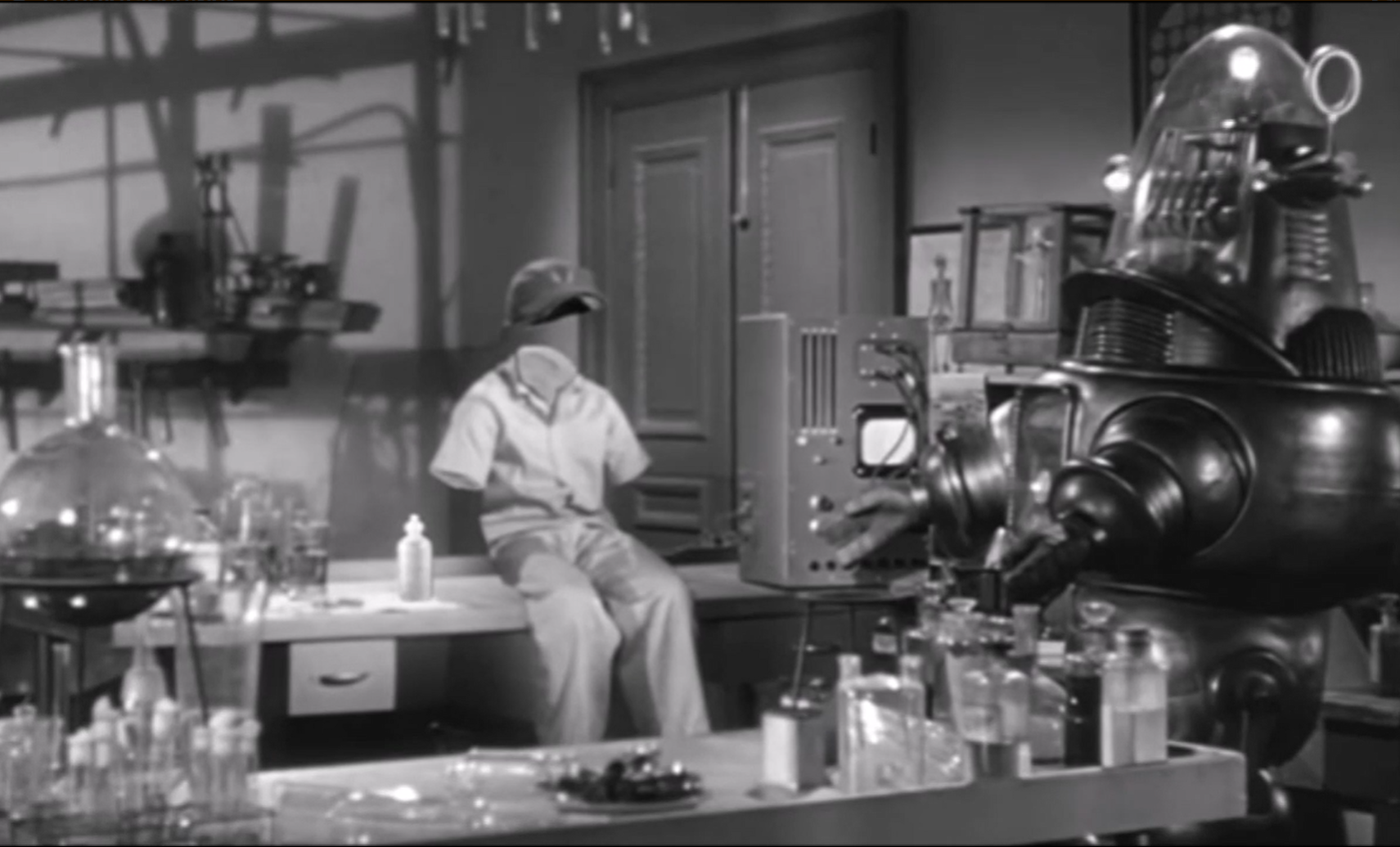
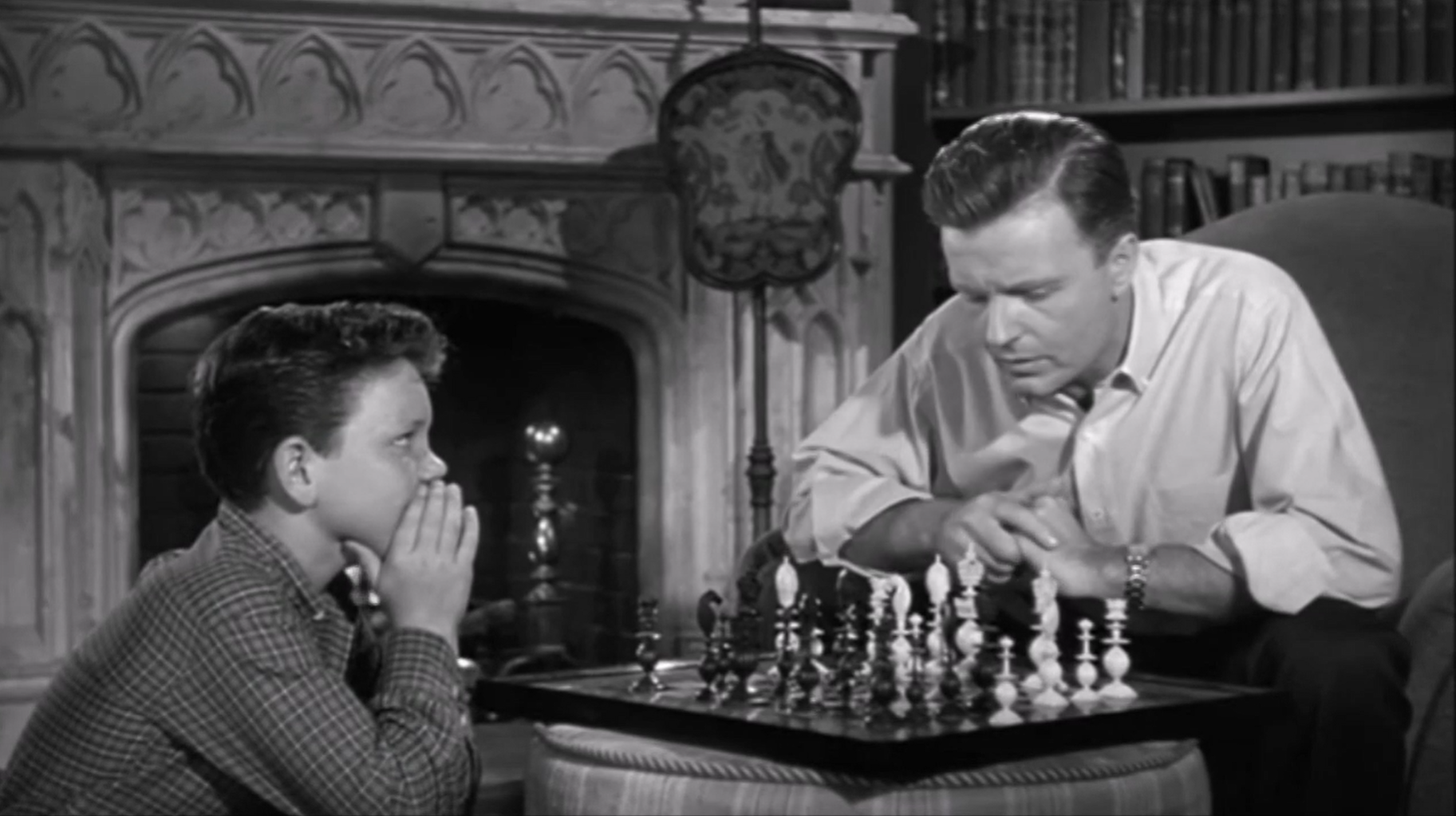
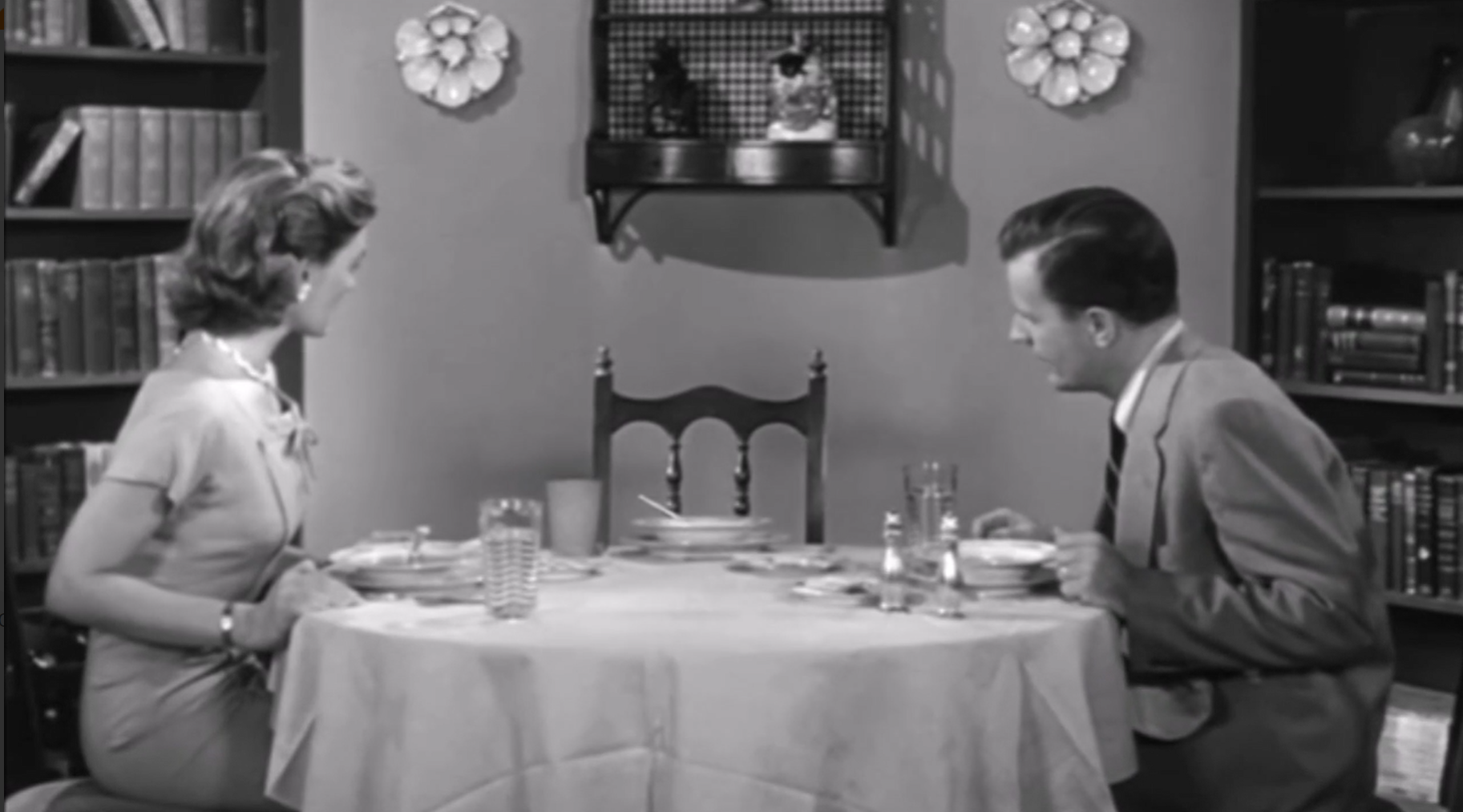
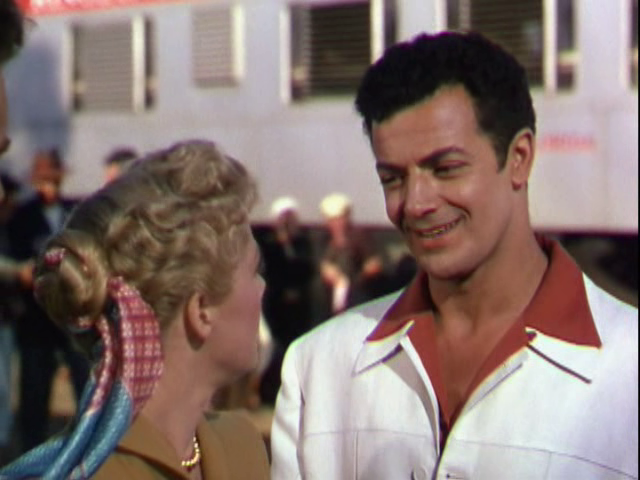
Review: And if Robby the Robot dictates that everything within Eyer’s nearby “electromagnetic field” becomes invisible, too, why doesn’t the spoon he uses to noisily slurp soup in front of his parents disappear? However, many other elements about the film’s preposterous and convoluted storyline — which at first glance make one nearly guffaw from hysterics — turn out to have a “deeper” meaning, if you’re looking for it. In essence, this entire film could be viewed as Eyer’s dream, given that he falls asleep not too far into the storyline: … and such is the convention that we’ve learned to expect in movies — except… (sorry for the spoiler; it’s relatively important to my argument here) … he never “wakes up” at the end, thus leaving the situation intentionally (?) vague. As argued by one user on IMDb, Timmie (Eyer) not only becomes literally invisible; he starts off as “invisible” to his overworking father, who — as clearly established during the film’s opening sequences — views his non-mathematically-minded son as a huge disappointment. Thus, everything that happens after Timmie falls asleep in front of the Super Computer (where his father has placed him for some extra tutoring) could be seen as simply a manifestation of Timmie’s fantasies. He’s finally able to beat his father at chess: … he manipulates a robot — his new best friend — into doing his bidding (sending him up in a kite), even when this goes against the robot’s prime directive to not place any human in harm’s way:
Indeed, everything about Timmie’s invisibility and the subsequent drama that ensues — involving a fairly serious amount of threat to Timmie’s very existence, not to mention the state of the Free World — occurs on a level that one soon realizes is not merely laughably implausible, but very much from a child’s perspective. I won’t say more here, since I’ve already spoiled enough, but suffice it to say that if you watch the film from this point of view, you may find yourself “appreciating” it on an entirely different level. In fact, it’s enough of a unique approach to the material that I found myself shifting my vote to “must see” for this reason alone; otherwise I would simply relegate it to a movie of minor historical interest for science fiction fans. Redeeming Qualities and Moments: Must See? Categories
Links: |

“I saw it today, Pat. Even without your badge, you were the lawman. You took over.”
|
Synopsis: |
|
Genres, Themes, Actors, and Directors:
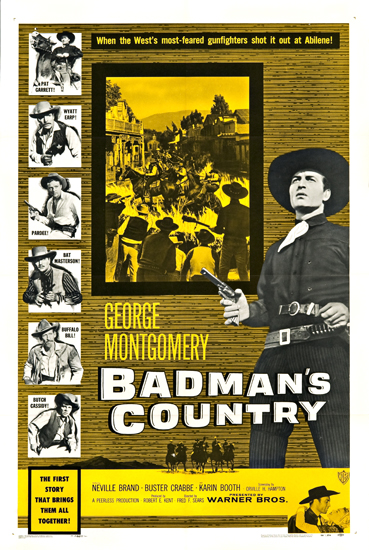
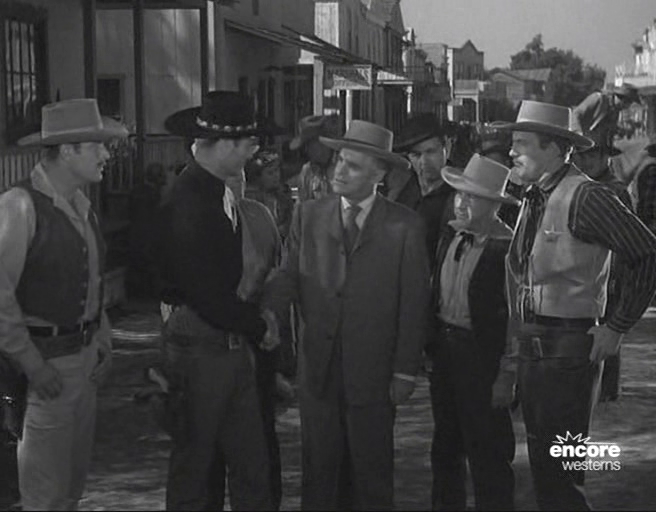
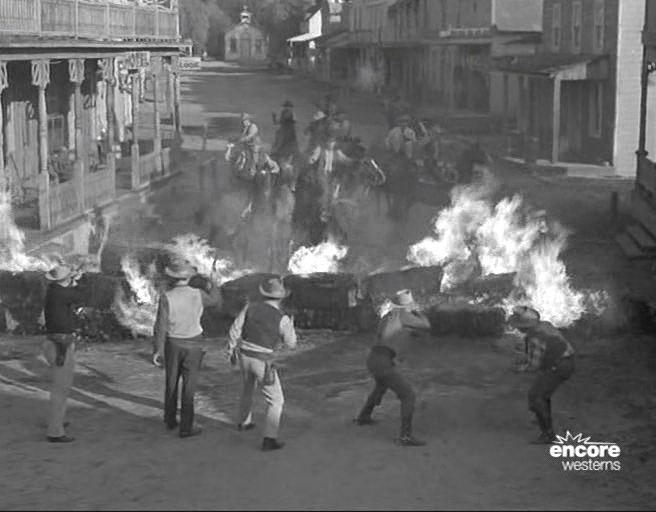
Review: Ultimately, Badman’s Country come across like a B-level variation on High Noon, with Garrett calling upon a reluctant band of citizens to help him fight the corruption encroaching on their town. In this case, however, he also happens to have the the handy assistance of two other big name allies — Bat Masterson (Gregory Walcott) and Wyatt Earp (Buster Crabbe) — as well as moral support from Buffalo Bill Cody (Malcolm Atterbury), who conveniently (ahem) happens to be in town. Naturally, it’s fairly predictable how everything will turn out, but director Sears generates a fair amount of tension throughout, and keeps things moving at a fast clip (the film is only 68 minutes long, and ends with a nicely handled shootout). My favorite line (spoken by Atterbury as Cody, during the final shootout): “I sure wish they were buffalo; can’t make a rug out of an outlaw!” Regarding the cast and crew, I feel guilty admitting that I found Karin Booth (a fairly unimpressive actress) a tad too old in appearance to be playing the female love interest for Montgomery (in real life, they were both 42; goes to show what years of unrealistic cinematic influence have done to me). Meanwhile, Ukranian-American former heavyweight boxer Montgomery is appropriately stalwart and handsome in the lead role (check out Trivia on IMDb for some fascinating tidbits about his life), and Neville Brand — who played Butch Cassidy in a different western, The Three Outlaws, just two years earlier — reprises that role here (though weirdly enough, he doesn’t make much of an impression; he only manages to squeeze in one of his characteristic sneers). Perhaps most jarring is seeing Russell Johnson — forever branded in audiences’ minds as The Professor from “Gilligan’s Island” — in an uncharacteristically baddie role as Sundance (!). Sadly, director Sears died young (at the age of 44), but helmed no less than 52 features in a variety of genres for Columbia Pictures; his best known picture was Earth vs. the Flying Saucers (1956). Redeeming Qualities and Moments: Must See? Links: |
“He might come and try to take our baby away; so I’d have to kill him.”
|
Synopsis: |
|
Genres, Themes, Actors, and Directors:
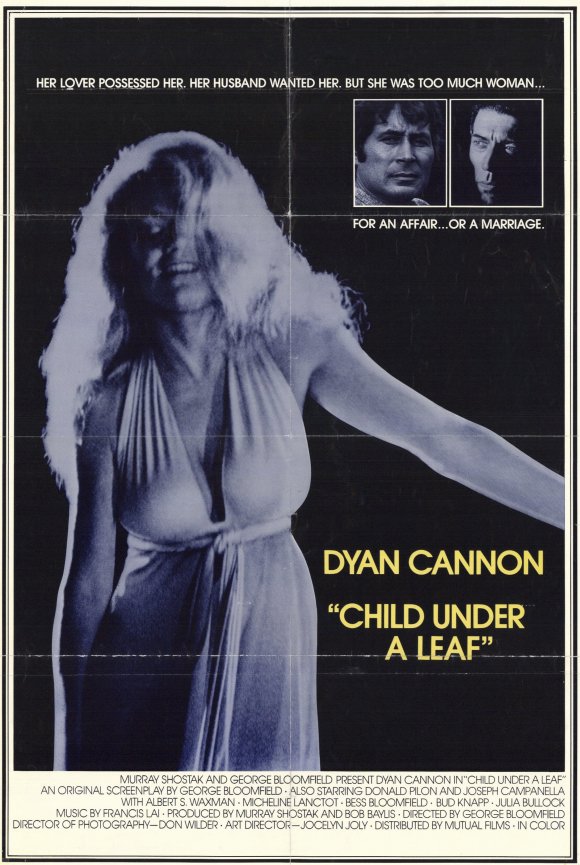
Review: To that end, there’s a seemingly endless scene in which Cannon and Pilon make gaga eyes at their baby, who lies prone on (I kid you not) piles of white fur. Later, Cannon exposes her milk-engorged breast to Pilon, as part of their foreplay — in fact, come to think of it, the entire film exists basically on the level of a porn flick, which may explain why Peary includes it in his book. Cannon does expose some bare flesh every now and then, after all, so maybe that was reason enough for him to be a fan. [Is it obvious yet how irritated I am at being “forced” to sit through this one? I’m especially annoyed that no explanatory code or review was provided to give us a sense of WHY it’s included in GFTFF.] At any rate, tension is clearly meant to build in the screenplay from both Pilon’s intermittent threats to kill Cannon’s husband (he buys a gun near the beginning) and Campanella’s sinister hints that he believes the baby in his household isn’t really his. But do these narrative threads lead anywhere logical? Not a chance. Instead, the inevitable tragedy that ultimately ensues makes little sense. Meanwhile, the egregious fetishization of an infant as an objet d’amour between the two illicit lovers may be my biggest overall complaint about the film (and that’s saying a lot); this baby clearly exists simply as a “clever” narrative device, physical “proof” of the narcissistic lovers’ illicit bond. Note: The tagline listed on IMDb — “A Motion Picture for Lovers Who Have Won or Lost…And Lovers Who Have Yet to Win or Lose!” — begins to hint at the campy humor one MIGHT find if stretching hard enough. Redeeming Qualities and Moments: Must See? Links: |
“I never even lived before. Not really lived before, inside.”
|
Synopsis: |
|
Genres, Themes, Actors, and Directors:
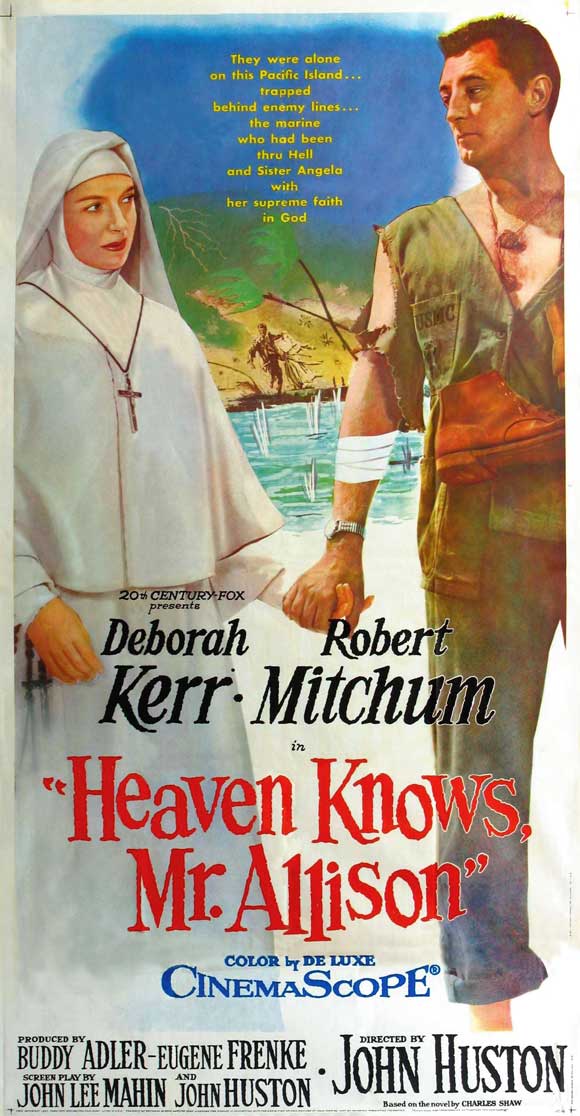
Review: Mitchum reportedly named this a personal favorite among the many roles he played, and his character here comes across as remarkably sympathetic. We ache for this rough-hewn man — an orphan who found a home with the Marines — as he opens up his heart for the first time to Kerr’s impossibly kind nun. Kerr’s character is a bit more enigmatic (I believe we’re meant to relate to Mitchum as the central protagonist, rather then Kerr), but she does a fine job exhibiting both her enduring spiritual resolve and her growing fondness for Mitchum. Much like in The Nun’s Story (1959) with Audrey Hepburn, we wonder what kind of a decision this beautiful, strong-willed young nun will ultimately make in the face of competing desires. Note: I’m not especially fond of this film’s title, which makes it sound like a comedy rather than the somewhat serious drama it really is. I understand its deeper meaning (“heaven”, or God, will know what transpires between the nun and Mitchum, even in their seeming isolation), but one can’t help immediately “reading” the title as a whimsical British turn of phrase instead. Redeeming Qualities and Moments:
Must See? Categories
Links: |
“The public is a monster with a very delicate palate. If it doesn’t like what you feed it — off comes the arm!”
|
Synopsis: |
|
Genres, Themes, Actors, and Directors:
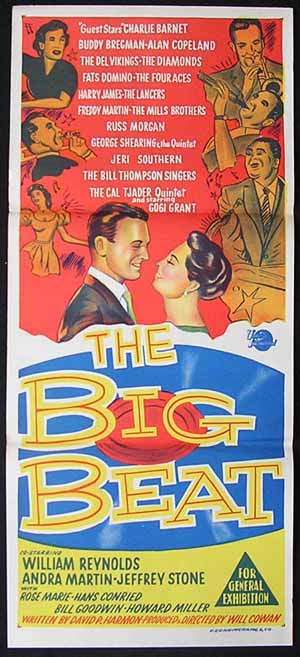
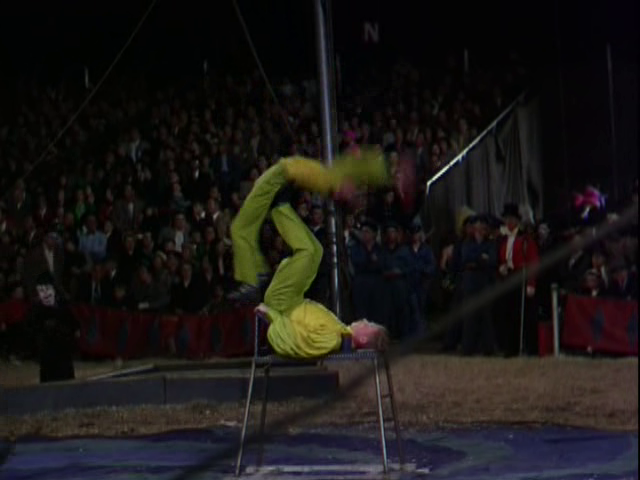
Review: Meanwhile, what may draw curious modern-day film fanatics in to this film is the VERY odd casting of Hans Conried and Rose Marie in supporting roles; they perform one number together during a party scene that really will have you scratching your head as you wonder how in the world it possibly fits into the rest of the proceedings. (Conried turns out to play a pivotal role in the film’s denouement, so I guess that justifies his presence at least…). Otherwise, it’s clearly the “legitimate” musical acts that were meant to draw audiences at the time into the theater — but there are pathetically few on display; the best (by Fats Domino and the Mills Brothers) are over within the first 15 minutes of the film. Chances are you’ll find yourself hard-pressed to care about much of anything that happens thereafter in this clunker. Redeeming Qualities and Moments:
Must See? Links: |
“It has a name; the name stands for the thing.”
|
Synopsis: |
|
Genres, Themes, Actors, and Directors:
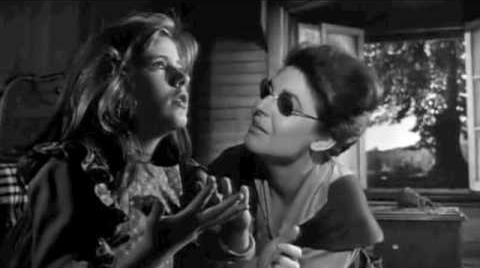
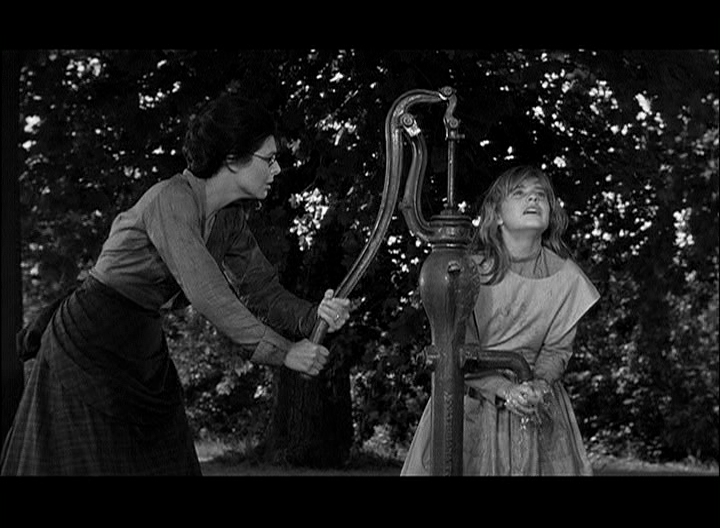
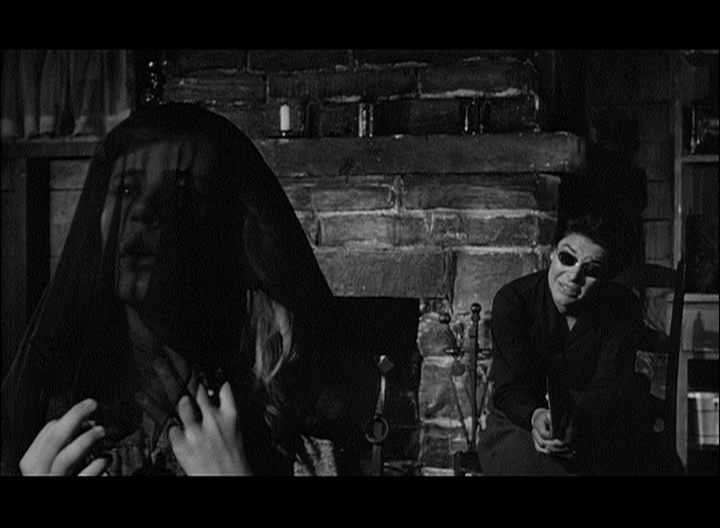
Response to Peary’s Review: Speaking of Oscars, Bancroft — reprising her role on Broadway — deservedly won one for her work here, and Peary acknowledges the wisdom of this choice in Alternate Oscars, where he similarly offers Bancroft the award. He confesses to liking “Bancroft’s slight smiles, [the] hints that [her] Annie knows she has a touch of madness”, which is “fine with her because, as she tells the Kellers, the madness is part of the strength she developed while growing up in an asylum”; indeed “only a slightly mad woman would speak to her employers as bluntly as she does” (and my, how refreshing this is to witness!). Just as exceptional as Bancroft’s performance, however, is that given by Patty Duke (also reprising her Broadway role), playing Helen Keller with “amazing intelligence and strength”. Duke and Bancroft are remarkably physical and impassioned in their interactions with one another; one feels exhausted simply watching them on-screen, let alone imagining the fortitude it took to execute their “long and complexly choreographed” “knock-about battles”. Peary accurately likens their work to the “skill of great silent comediennes doing wild, intricate slapstick” — though the mood in this case is usually anything but humorous. Redeeming Qualities and Moments:
Must See? Categories
Links: |
“He’s dead, I’m alive — we’re both out of luck.”
|
Synopsis: |
|
Genres, Themes, Actors, and Directors:
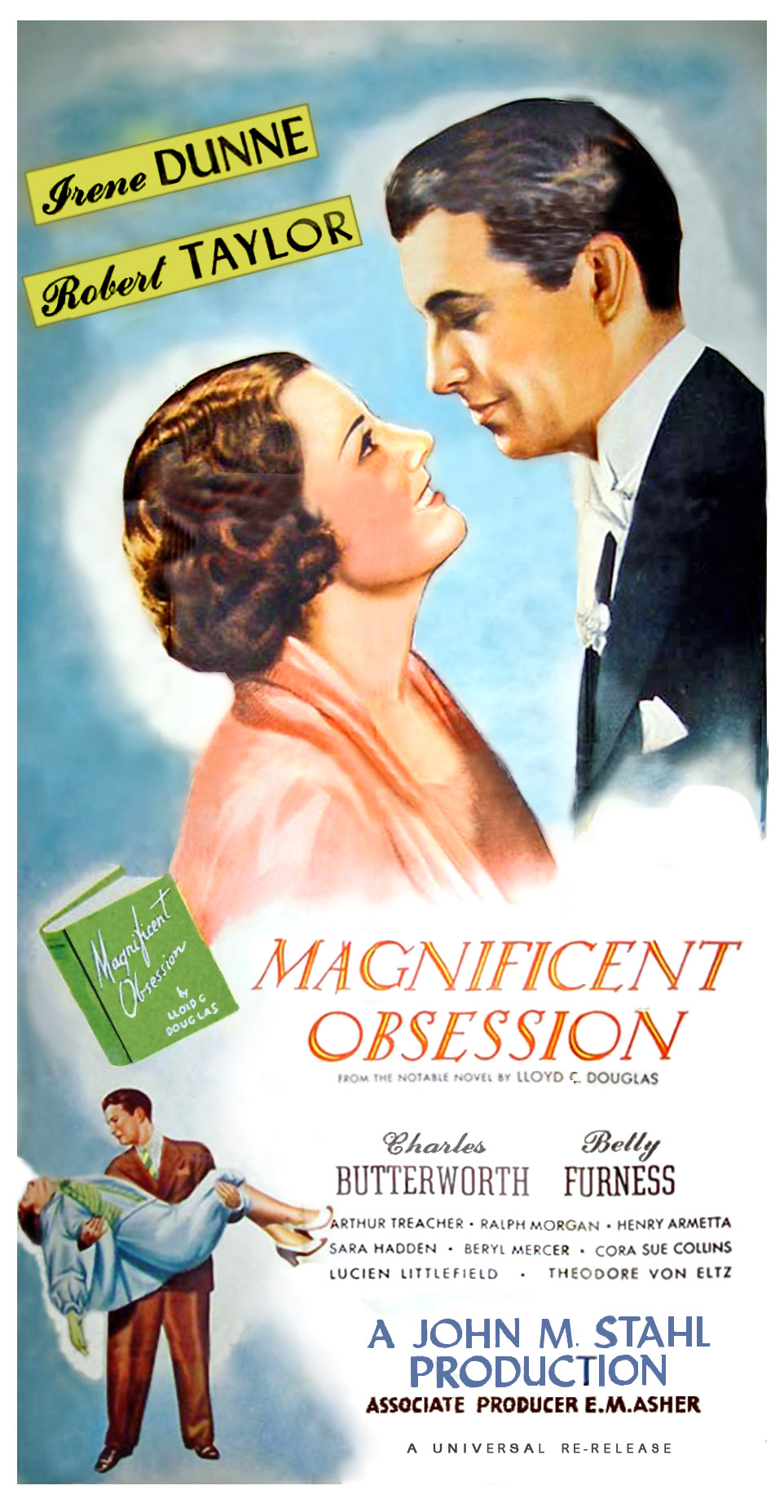
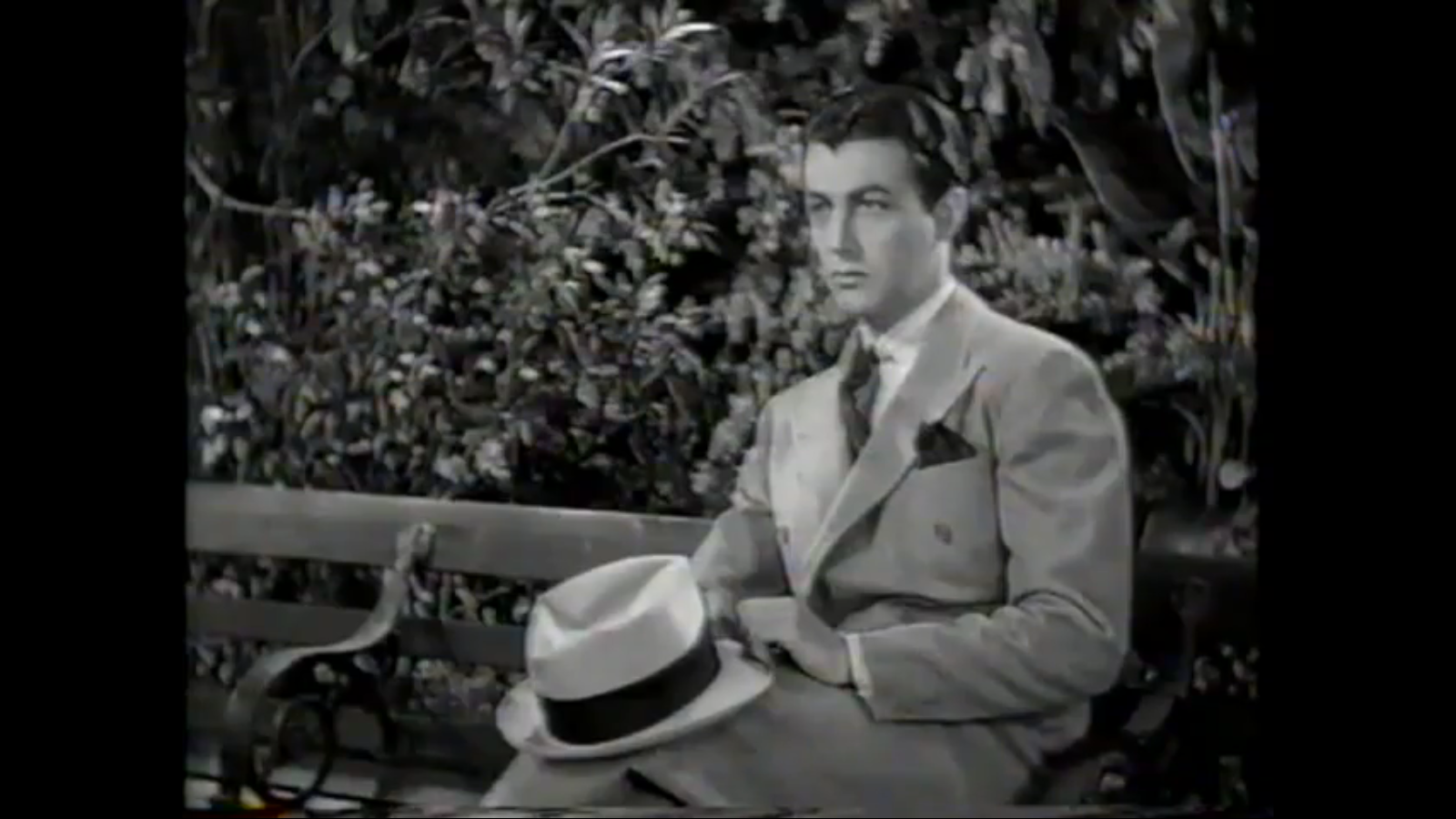
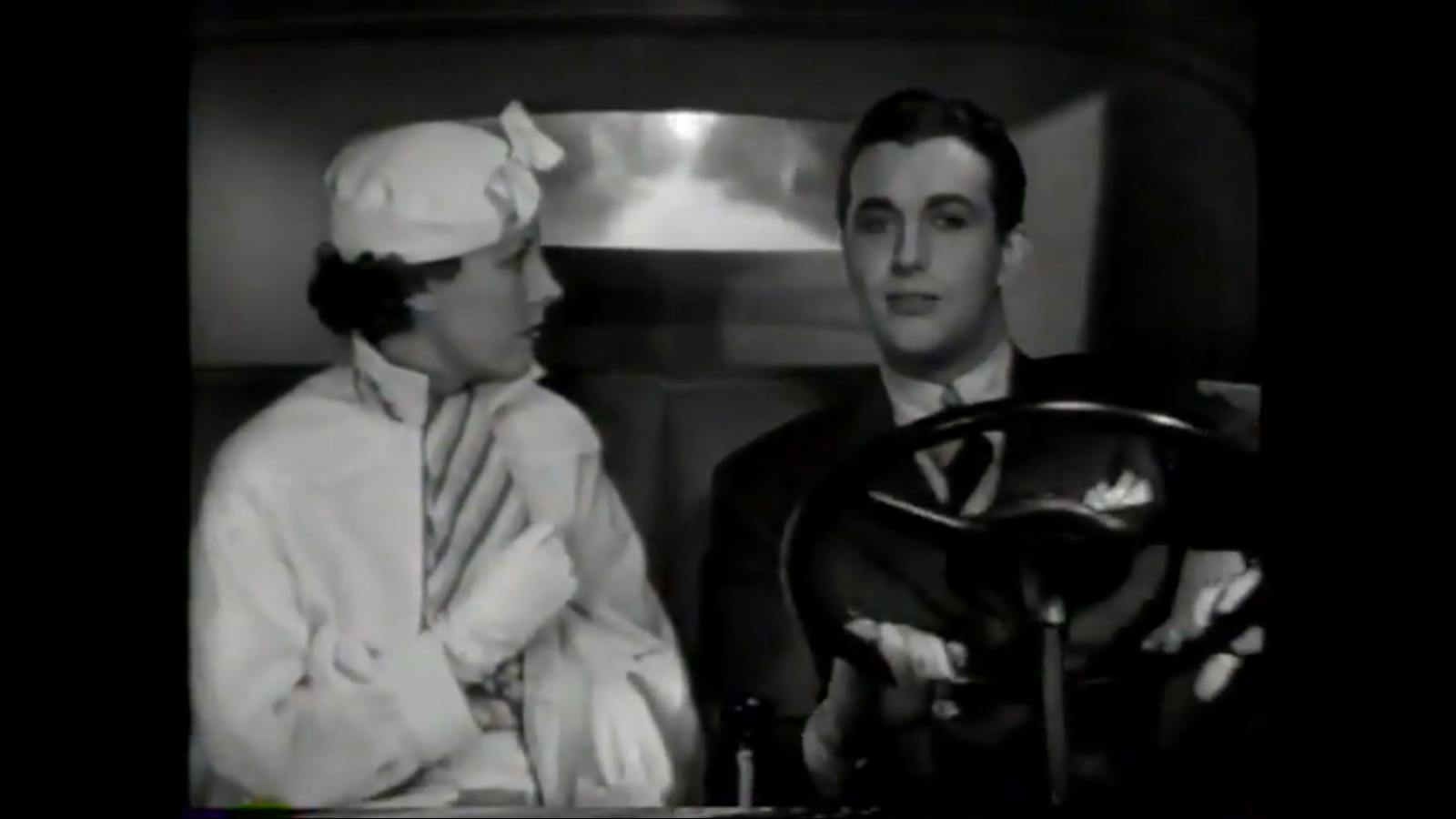
Review: The “spiritual” element of his transformation — made much more overt in Sirk’s version — is toned down here; indeed, director John Stahl exercises admirable restraint with the undeniably melodramatic material, doing his best to make the storyline feel relatively believable. (With that said, some will naturally prefer the direction in which Sirk took the material, which provides an entirely different cinematic experience altogether.) Dunne, interestingly, isn’t all that memorable here. Unlike Wyman’s counterpart in the 1954 film, she’s at least appropriately young and beautiful — but she really functions as Taylor’s foil; it’s his film all the way. Redeeming Qualities and Moments: Must See? Links: |