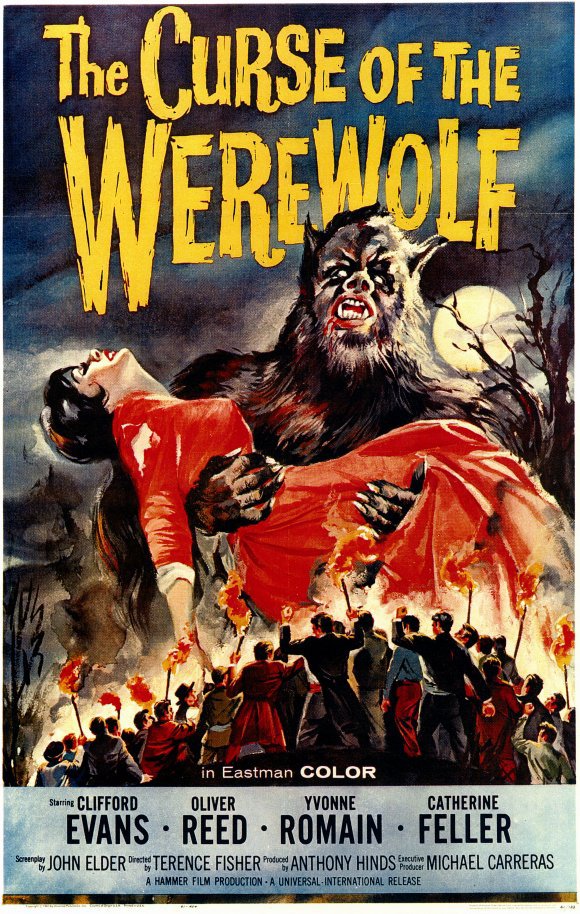
Curse of the Werewolf (1961)
“A werewolf is a body with a soul and a spirit that are constantly at war.”
|
Synopsis: |
|
Genres, Themes, Actors, and Directors:
Review: Redeeming Qualities and Moments:
Must See? Links: |
“A werewolf is a body with a soul and a spirit that are constantly at war.”
|
Synopsis: |
|
Genres, Themes, Actors, and Directors:
Review: Redeeming Qualities and Moments:
Must See? Links: |
“It only remains for me now to await the daylight hours, where I will with God’s help forever end this man’s reign of terror!”
|
Synopsis: |
|
Genres, Themes, Actors, and Directors:
Response to Peary’s Review:
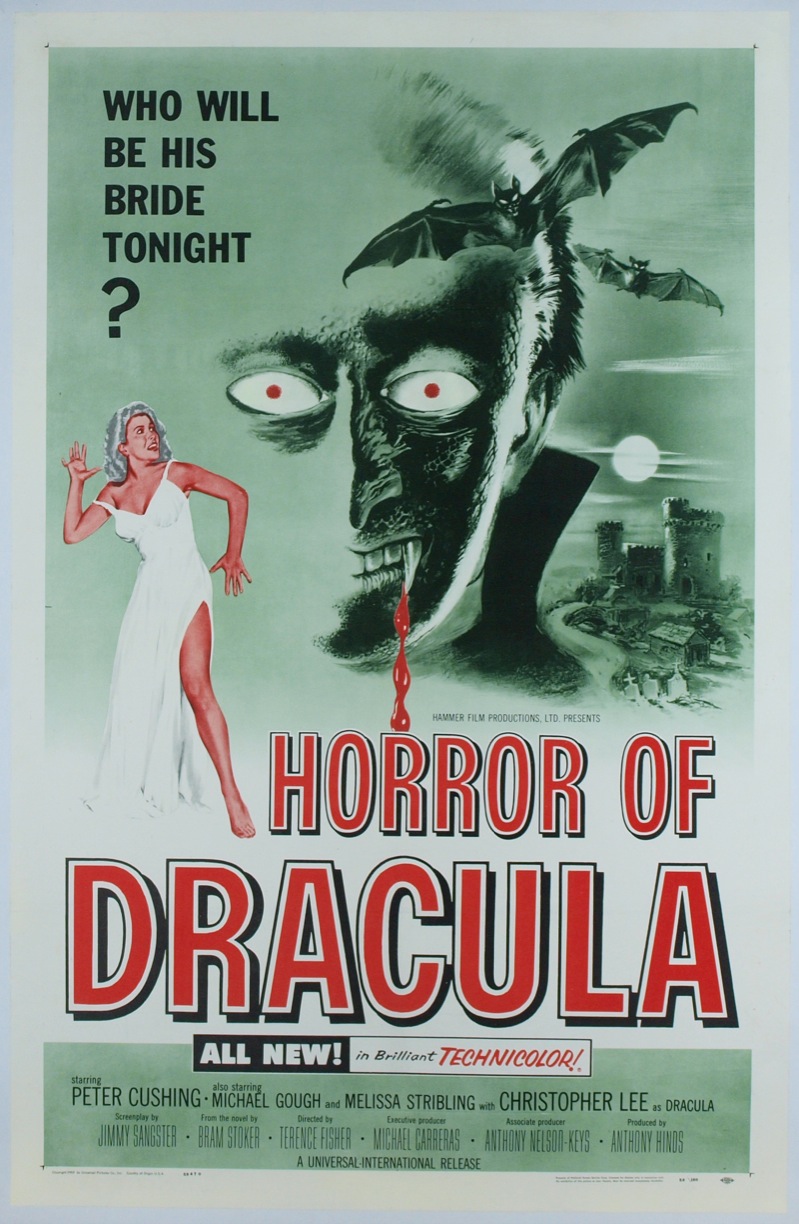
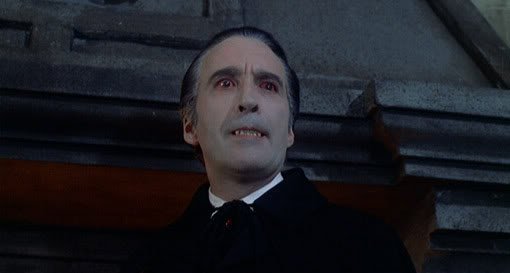
In favor of the film, Peary writes that the “graphic violence… fits the subject rather than being exploitative”, that the production in general is “well-mounted”, and that “Lee’s madly inspired vampire is terrific: cruel, energetic, intelligent, tall and imposing”.
Peary also points out how the film differs from “Universal’s 1931 Dracula chiefly in that it conveys the sexual nature of vampirism: not only does the vampire become excited when he bites into a victim’s jugular but his victims also relish the experience”. Indeed, according to DVD Savant, this film “made much more explicit the seduction-rape fantasy that underlies vampire mythology.” Savant is much more a diehard fan of this film, referring to it as “the Singin’ in the Rain of horror films — a show that transcends its genre and sums up what’s great about screen terror.” His praise feels hyperbolic to me, but provides evidence of the film’s cult following. Personally, my opinion lies closer to Peary’s: this remains a reasonably enjoyable, historically significant genre flick, but not must-see viewing. Redeeming Qualities and Moments:
Must See? (Listed in 1001 Movies You Must See Before You Die) Links: |
“He was my son. Now he is only — a beast of the night.”
|
Synopsis: |
|
Genres, Themes, Actors, and Directors:
Review:
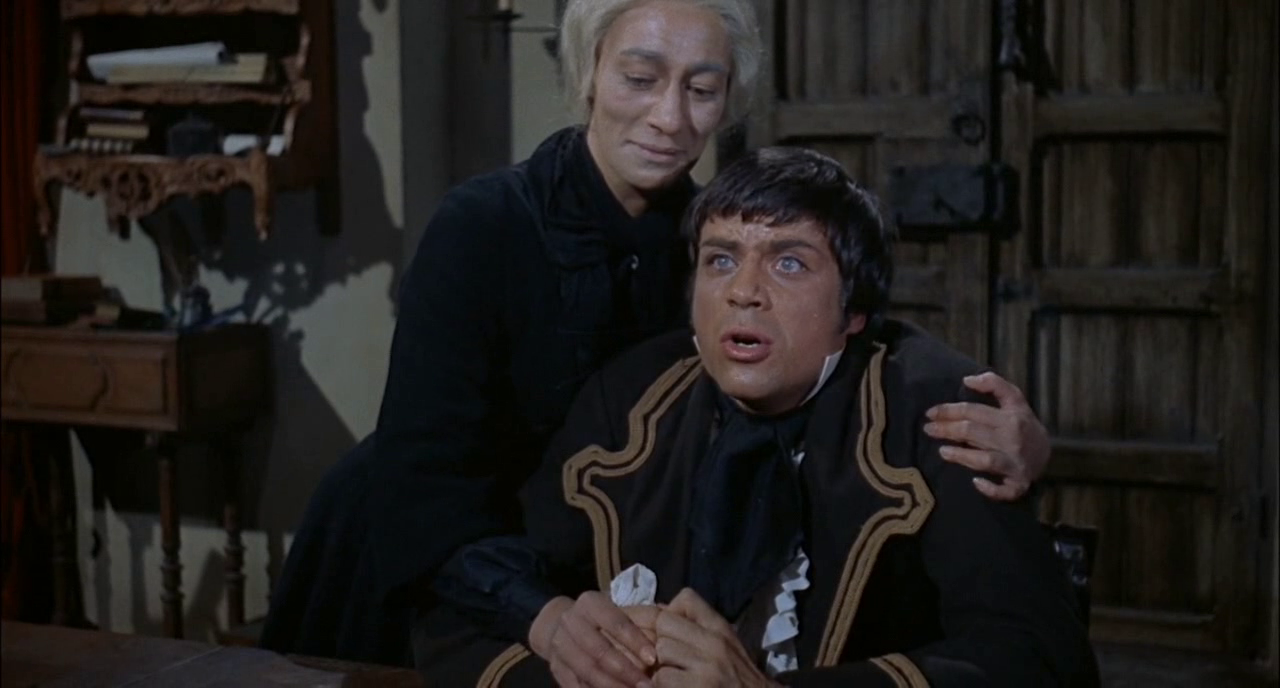
… though the true heart of the story lies in Peel’s relationship with his mother, played (appropriately enough) by Martita Hunt of Great Expectations (1946) fame.
The mystery of why Peel is being kept in chains — and the devastating consequences of his release by naive Monlaur — fuel the narrative, clearly echoing sentiments from the previous year’s Suddenly, Last Summer (1959). Hunt evokes much sympathy as a tormented mother whose existence is consumed by her son’s “lifestyle choices”, and Freda Jackson adds energetic color as a cackling servant who helps fill in details of Peel’s past.
Cushing is also in fine form as Monlaur’s noble rescuer.
This one is certainly worth a watch by fans of the series. Redeeming Qualities and Moments:
Must See? Links: |
“Napoleon, I’m afraid we have a problem!”
|
Synopsis: |
|
Genres, Themes, Actors, and Directors:
Review: Redeeming Qualities and Moments:
Must See? Links: |
“Hormones. Female hormones!”
|
Synopsis: |
|
Genres, Themes, Actors, and Directors:
Review: Note: As others have pointed out, it helps that Bates and Beswick both possess gender-fluid, similarly structured faces; it’s not hard to imagine them as flip sides of one person. Redeeming Qualities and Moments:
Must See? Categories Links: |
“This force may have us trapped — but it fascinates me; it’s part of me!”
|
Synopsis: |
|
Genres, Themes, Actors, and Directors:
Review:
… is truly the main draw of this silly but atmospherically staged Hammer Studios horror film, which was infamously plagued with production issues: Peter Cushing pulled out one day into filming when his wife was diagnosed with emphysema, then director Seth Holt died on-set five weeks into the six-week filming schedule. DVD Savant writes that this film has “sharply divided horror fans over the years, with most finding it confusing and dull, while a few passionate defenders have hailed it as an underappreciated gem.” He goes on to assert that it suffers from “a script that is both confusing and uninvolving” — a point I would agree with. He writes:
Indeed, if Leon herself weren’t so bewitching to look at, this film would be even more of a clunker (albeit an ambitious one). Redeeming Qualities and Moments:
Must See? Links: |
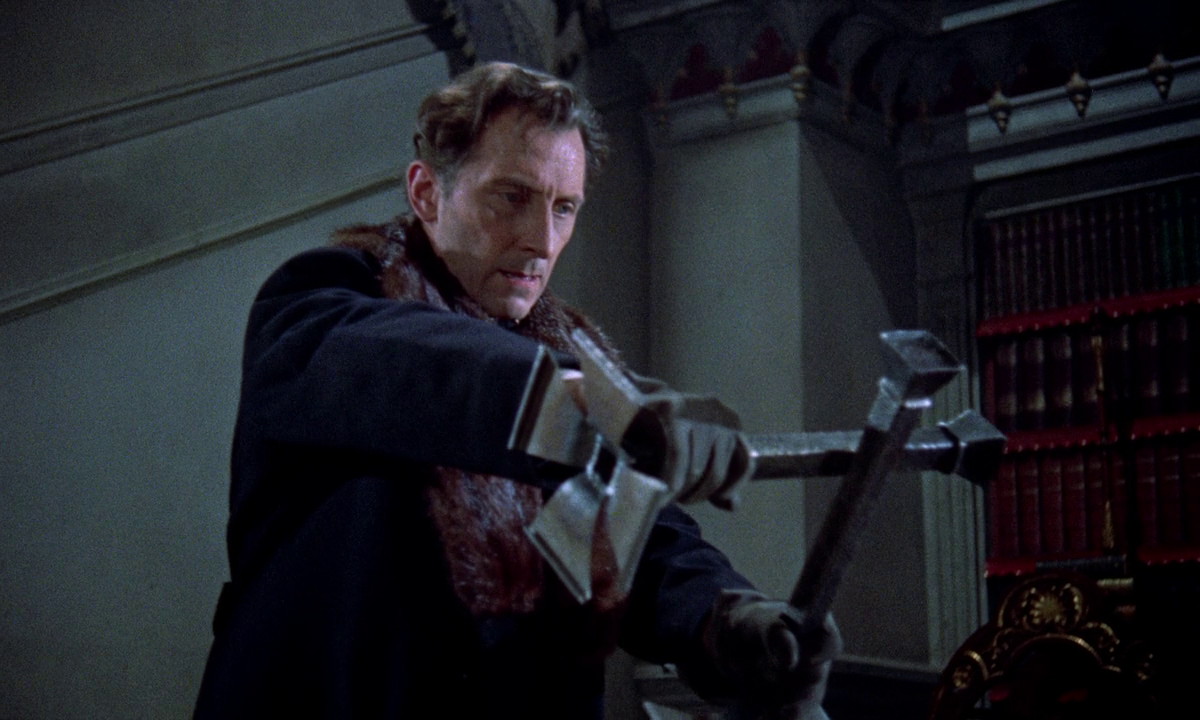
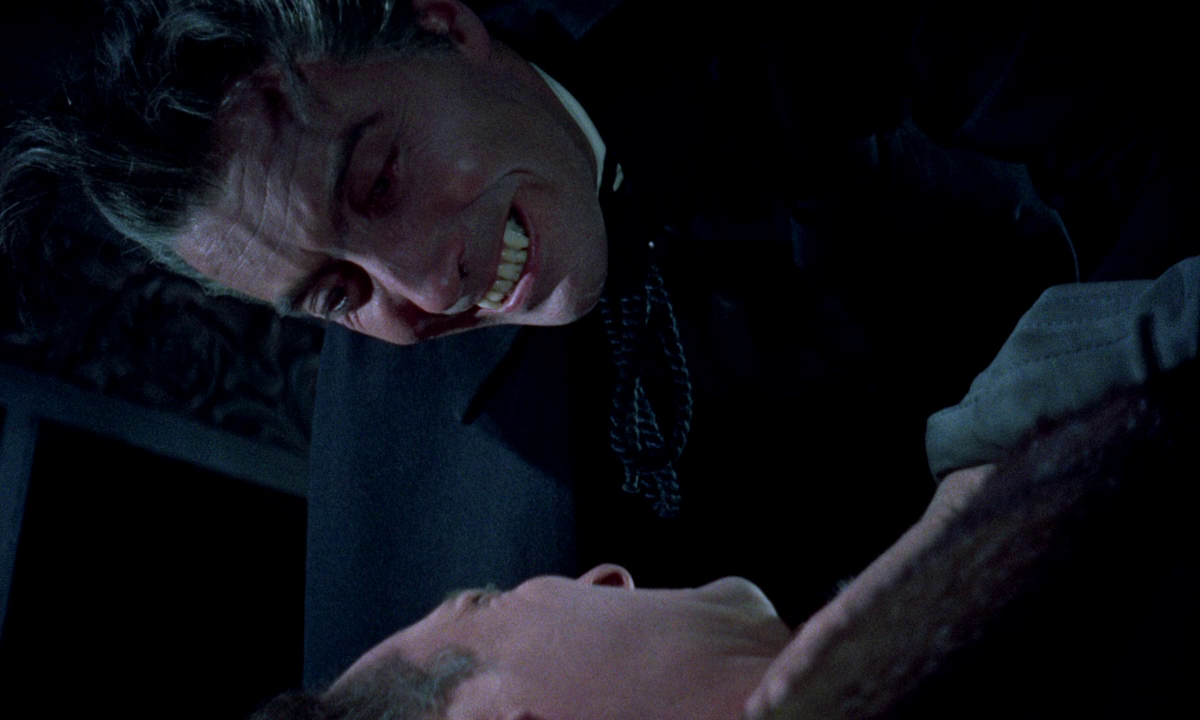
“He is the embodiment of all that is evil; he is the very Devil himself.”
|
Synopsis: |
|
Genres, Themes, Actors, and Directors:
Review: Note: The other Hammer Dracula titles included in GFTFF are The Horror of Dracula (1958) and The Brides of Dracula (1960). Redeeming Qualities and Moments:
Must See? Links:
|
“I believe in the existence of everything which the human brain is unable to disprove.”
|
Synopsis: |
|
Genres, Themes, Actors, and Directors:
Review:
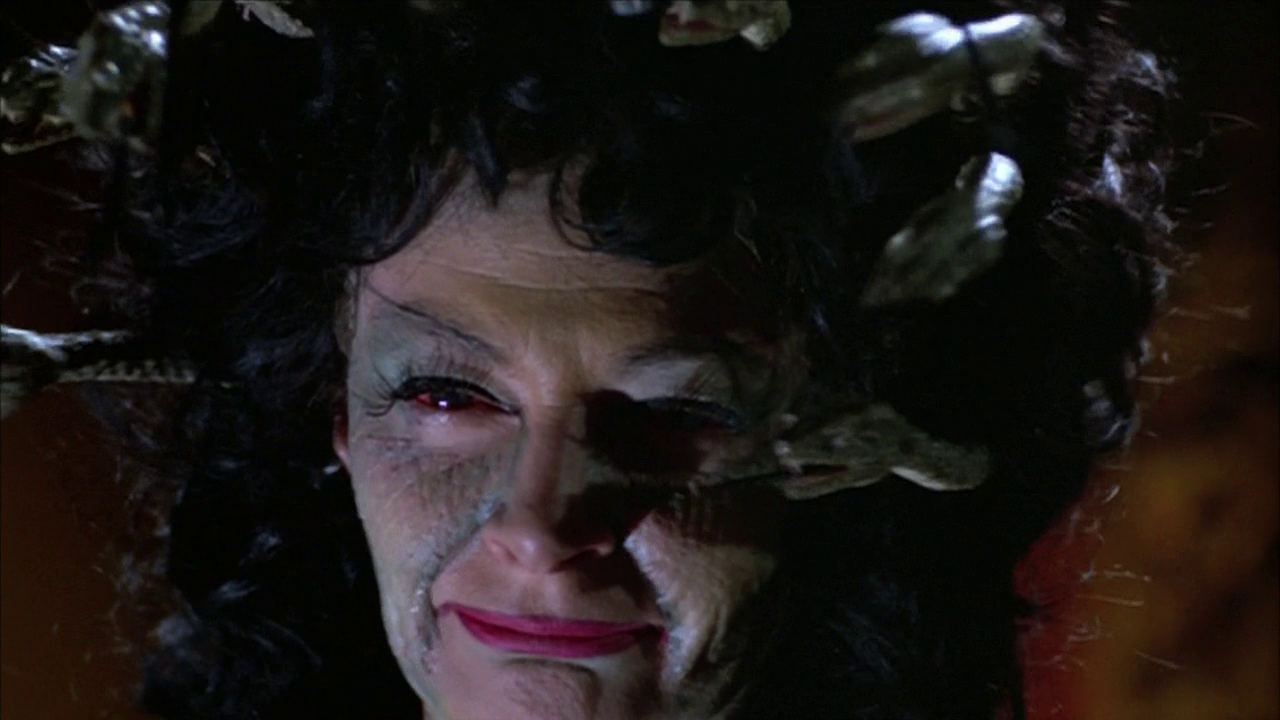
Meanwhile, Cushing’s motives remain unclear throughout, and the solution to the mystery of the gorgon is foreshadowed far too soon. Another problem is the ineffective make-up used for Megaera (the gorgon):
… which can’t hold a candle to the enjoyable special effects used for Medusa in the same year’s 7 Faces of Dr. Lao (1964). Redeeming Qualities and Moments:
Must See? Links: |
“As a trained espionage agent, I could tell that she was attracted to me.”
|
Synopsis: |
|
Genres, Themes, Actors, and Directors:
Review:
… Towne’s dense delusion that Jones-Moreland is desperately in love with him:
… Dickerson and Bean’s silly romances with local women:
… and more, rather than genuine thrills. Jones-Moreland’s focused performance as the crew’s sociopathic beauty is the film’s highlight:
… while its lowlight is undoubtedly the “creature” itself: hard as this is to imagine, it really does seem to win a prize as one of the least convincing, most ridiculous Z-grade cinematic monsters ever created.
Redeeming Qualities and Moments:
Must See? Links: |
“If a guy’s not a success, he’s got nobody to blame but himself.”
|
Synopsis: |
|
Genres, Themes, Actors, and Directors:
Review: Redeeming Qualities and Moments:
Must See? Categories
Links: |