Body Heat (1981)

Body Heat (1981)

“You’re not too smart, are you? I like that in a man.”

Synopsis:
An unhappily married woman (Kathleen Turner) begins a torrid affair with a lawyer (William Hurt) who quickly comes to believe that Turner’s husband (Richard Crenna) is in the way of their happiness.

Genres, Themes, Actors, and Directors:

  • Femmes Fatales
  • Infidelity
  • Kathleen Turner Films
  • Lawyers
  • Mickey Rourke Films
  • Plot to Murder
  • William Hurt Films

Response to Peary’s Review:
In Peary’s GFTFF review of this neo-noir thriller, he writes that “it’s almost as if director-writer Lawrence Kasdan lucked upon footage from a noir classic that, for some reason, was missing actors — so all he had to do was photograph actors of his own using a script that utilized the sets and look of that old film and then mix the new footage with the old.” He argues that the “film so closely resembles — visually and thematically — classic noir films such as Double Indemnity that many critics complained… Kasdan was playing the copycat,” but he’s “impressed by what [he] thinks is a film lover’s attempt to re-create the noir style so he could thoroughly explore the elements that made it so fascinating.”

He adds that the “picture has a sharply written, almost campily humorous script; exciting, sexually explicit scenes; [and] strong performances by Hurt, Turner…, Crenna, Ted Danson (as Hurt’s DA friend), and Mickey Rourke (who teaches Hurt how to use explosives).”

In Cult Movies 3, Peary expands upon his analysis, noting that the film developed an obsessive fan club, and sharing his thoughts on why the film does more than simply slavishly imitate older noir. He points out that while “Kasdan incorporates a fatalism that is prevalent in noir classics,” he “gives it a twist” since “both adulterers are not doomed the moment they seal their conspiracy with a kiss”; instead, Turner’s Matty “determines her own destiny.”

On the other hand, Hurt’s Ned “pretty much fits the profile for noir ‘heroes'” given “he drinks and smokes constantly, is cynical and bored, thinks any woman would fall for him and that he is better than the man she is with now, tries to impress the femme fatale by devising and carrying out an intricate crime… and assumes Fate is too strong for him” — however, he “differs from most in that he’s not particularly sympathetic” and “doesn’t have any good qualities.”

Meanwhile, “Kasdan also breaks convention with the third major character, Edmund Walker [Cranna]… In film noir, the husband whom the lovers try to kill typically is an absolute victim, unaware that there is a plot against him and too weak to put up a defense if he did know” — but “not so with Richard Crenna’s creepily played Walker,” who is “anything but an unaggressive patsy” and “has reached his position of wealth and power by stepping on weaklings and exhibiting a callous disrespect for the law.”

However, “the biggest difference between Body Heat and the forties’ classics is in the presentation of sex.” Peary writes that “like Bob Rafelson’s Jack Nicholson-Jessica Lange remake of The Postman Always Rings Twice (1981), it brings the forefront the sex in James M. Cain’s novels that was only hinted at in the forties’ film adaptations.” He adds that “whereas forties’ femmes fatales used their sex appeal to lure unsuspecting men into their webs and to keep them willing prisoners, Matty uses the sex act to keep Ned in line.”

Peary writes that while he doesn’t think Body Heat is “on the same level as the classics of the genre,” he finds it “a worthy, legitimate, most enjoyable entry to the genre,” and adds that he especially likes “the cinematography — the prowling camera, the interesting light patterns — of [DP] Richard Kline”:

… “and how adeptly John Barry’s bluesy score complements the visuals and helps establish the proper sense of nightmare.” He notes that “best of all is Kathleen Turner,” who “proudly displays her long legs and daringly does nudity”; she “is extremely sexy, not just because of the way she looks… and her uninhibited nature in bed, but equally because of her energy and eagerness…, her confidence, her strength, her ambition, her perseverance, and her intelligence” — to the point that “Ned comes to realize, it was kind of an honor to be duped by such a woman.”

Note: The use of wind chimes in this film is particularly effective.

Notable Performances, Qualities, and Moments:

  • Kathleen Turner as Matty Walker
  • William Hurt as Ned Racine
  • Richard H. Kline’s atmospheric cinematography
  • John Barry’s score

Must See?
Yes, as a most enjoyable neo-noir.

Categories

  • Genuine Classic
  • Good Show
  • Noteworthy Performance(s)

(Listed in 1001 Movies You Must See Before You Die)

Links:

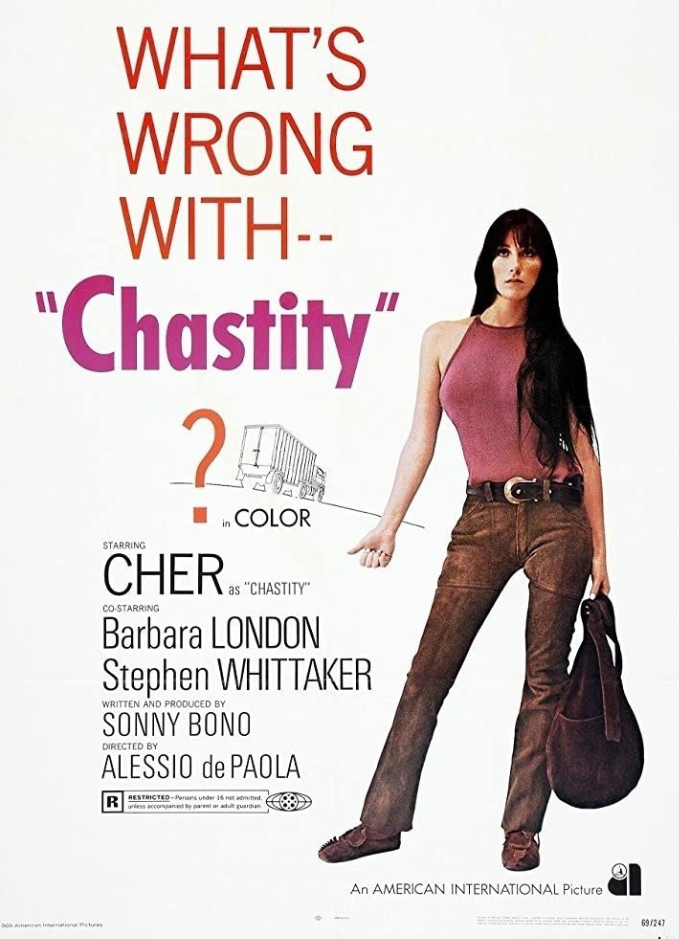
Chastity (1969)

Chastity (1969)

“Let’s do it my way; we’ll do it your way some other time.”

Synopsis:
As Chastity (Cher) hitchhikes her way across the country and into Mexico, she encounters a kind college student (Steve Whittaker), a naive young whorehouse visitor (Tom Nolan), and a predatory lesbian madam (Barbara London).

Genres, Themes, Actors, and Directors:

  • Cher Films
  • Road Trip
  • Strong Females

Review:
Sonny Bono and Cher’s follow-up to their debut feature, Good Times (1967), was this self-financed flop which put the couple in debt. They wanted to connect with younger audiences through Cher’s portrayal of a beautiful hippie living life on her own terms — and to her credit, Cher’s Chastity is remarkably self-sufficient.

However, everything else about this turkey — including the script (Chastity talks to herself, a lot) and the acting — simply stinks; the final scene is especially cringe-worthy. Be forewarned.

Note: As DVD Savant posits, the director “Alessio de Paola” was likely Bono himself.

Notable Performances, Qualities, and Moments:
Not much.

Must See?
No; you can most certainly skip this one unless you happen to be a Cher completist. Listed as a Sleeper in the back of Peary’s book.

Links:

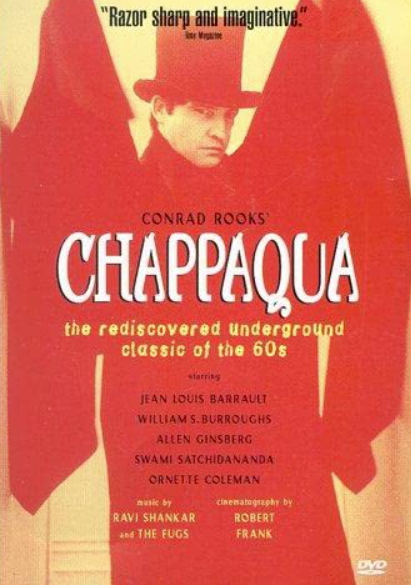
Chappaqua (1966)

Chappaqua (1966)

“I’m suffering from addiction to drugs!”

Synopsis:
A drug and alcohol-addicted young man (Conrad Rooks) experiencing flashbacks to hallucinogenic trips checks into a treatment center in France run by Opium Jones (William S. Burroughs), with care provided by Dr. Benoit (Jean-Louis Barrault).

Genres, Themes, Actors, and Directors:

  • Alcoholism and Drug Addiction
  • Counterculture
  • Living Nightmare

Review:
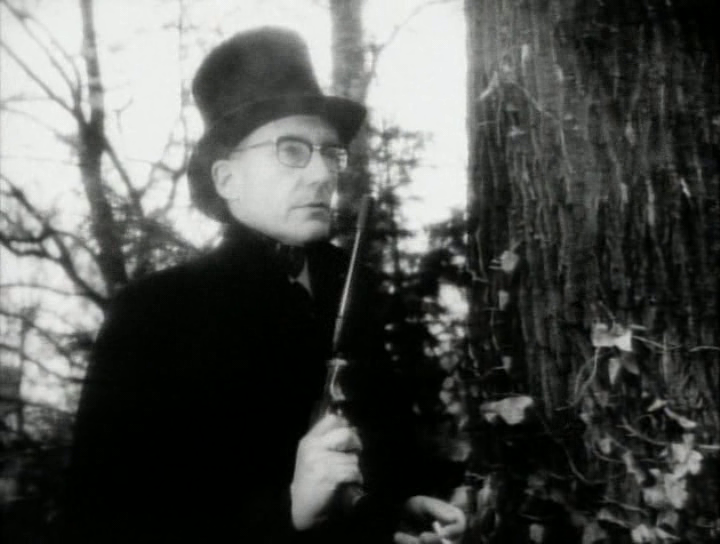
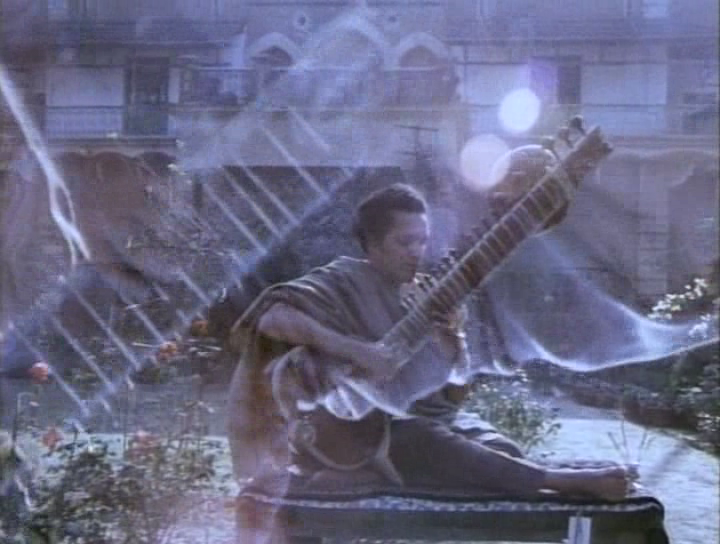
Writer-director Conrad Rooks’ semi-autobiographical film debut, about life under the influence and in recovery, features a pulsing soundtrack by Ravi Shankar and cameos by a handful of noted cultural icons, including Allen Ginsburg:

… William S. Burroughs:

… Hervé Villechaize:

… and Shankar himself.

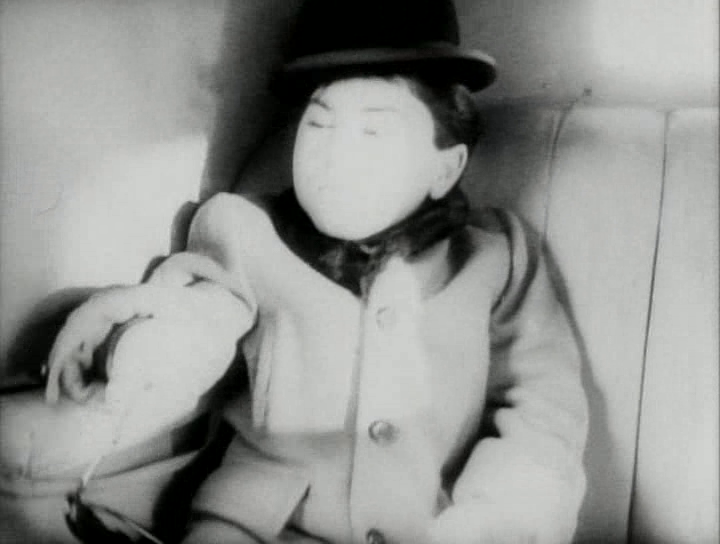
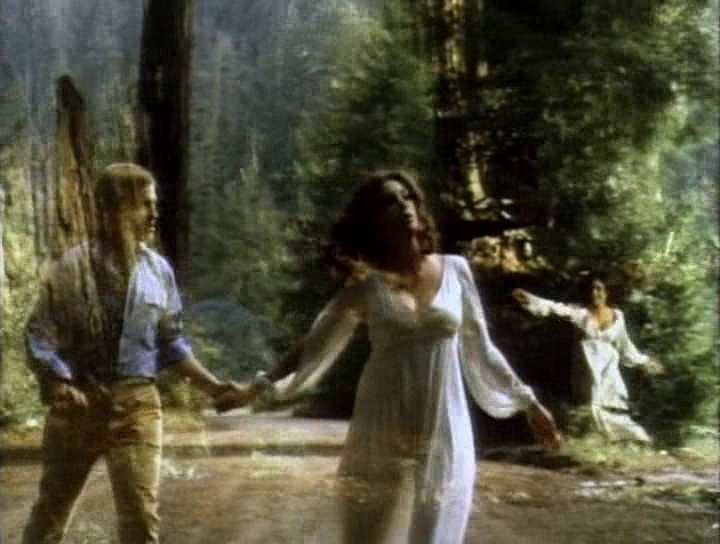
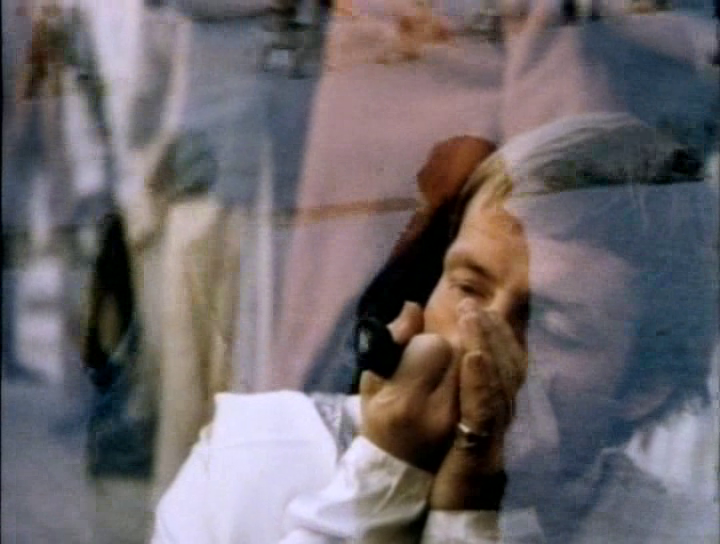
The “narrative” (such as it is) is decidedly non-linear — more lyrical than logical, designed to directly put us into the mind of someone lost in a series of visions and hallucinations that are both pleasant:

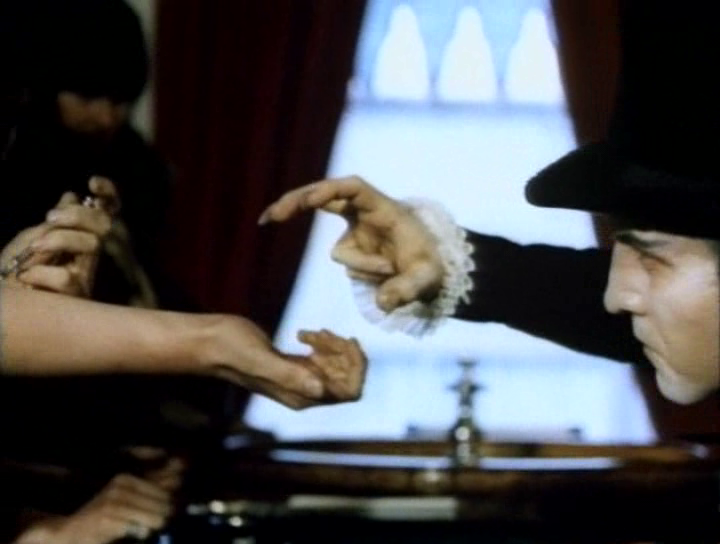
… and more menacing (as in a metaphorical sequence showing the literal gamble one takes when doing drugs).

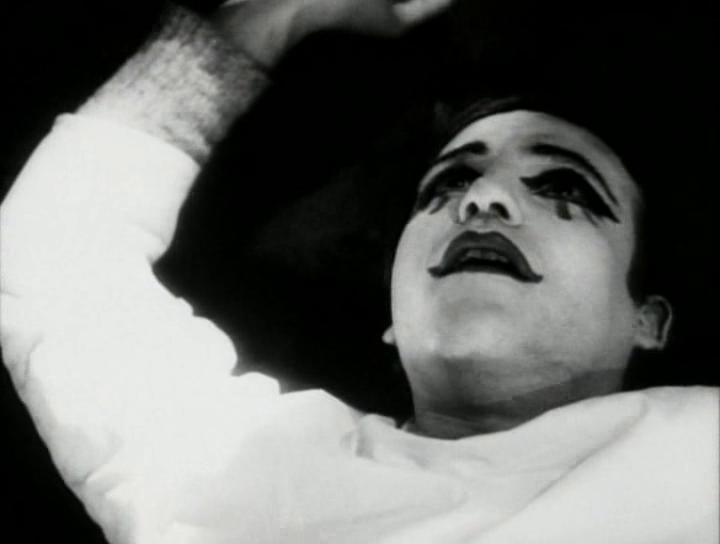
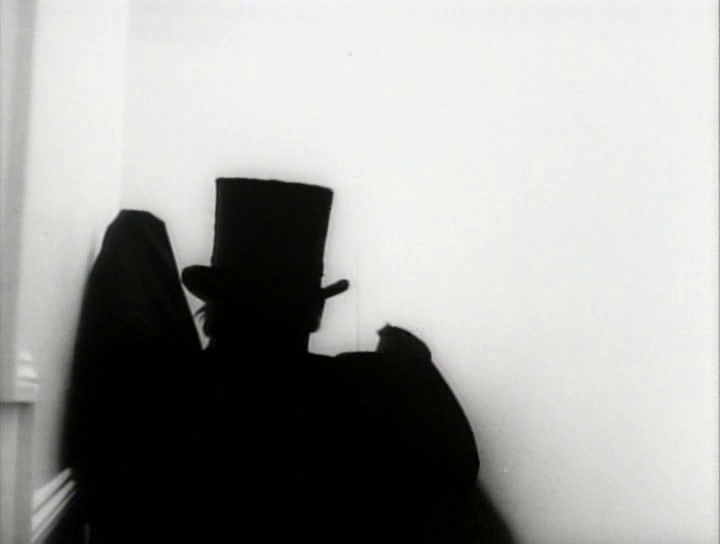
Rooks’ love of cinema is evident throughout, as in expressionist scenes evoking The Cabinet of Dr. Caligari (1920):

… as well as the strategic casting of Barrault as a doctor overseeing a patient (Rooks) who occasionally imagines himself in clown make-up much like Barrault’s character in Children of Paradise (1945).

Meanwhile, the frequent footage taking place in Asian countries brings to mind the ubiquity of white youth searching for enlightenment in the East during this era.

While this is all terribly self-indulgent, it’s unique enough to merit a one-time look by those curious to see what it’s all about.

Notable Performances, Qualities, and Moments:

  • Robert Frank’s cinematography

  • Ravi Shankar’s score

Must See?
No, unless you’re curious. Listed as a Cult Movie in the back of Peary’s book.

Links:

Women in Revolt (1971)

Women in Revolt (1971)

“Men – I hate men! You – I hate you!”

Synopsis:
Three New York women — a nymphomaniac (Holly Woodlawn), an aspiring-actress heiress (Candy Darling), and a man-hater (Jackie Curtis) — form an unhappy feminist group called the PIGs (Politically Involved Girls).

Genres, Themes, Actors, and Directors:

  • Feminism and Women’s Issues
  • Paul Morrissey Films
  • Satires and Spoofs
  • Strong Females

Review:
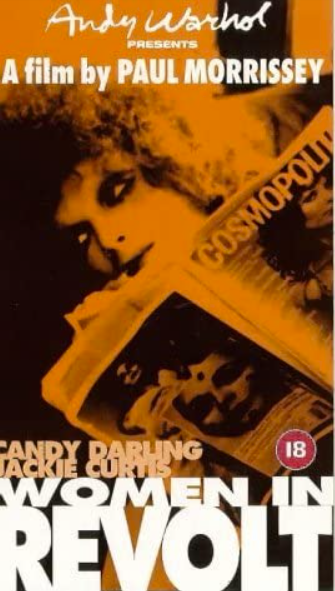
Andy Warhol and Paul Morrissey co-directed this tedious spoof about the women’s movement, starring three trans-females who are pretty unlikable: when allowed to improvise, they simply whine and act insufferably. Cult star Jackie Curtis, for instance, mercilessly abuses and ridicules her man-slave hippie:

… while Woodlawn mostly writhes around uncontrollably like an animal in heat, lashing out in lust at just about everyone around her.

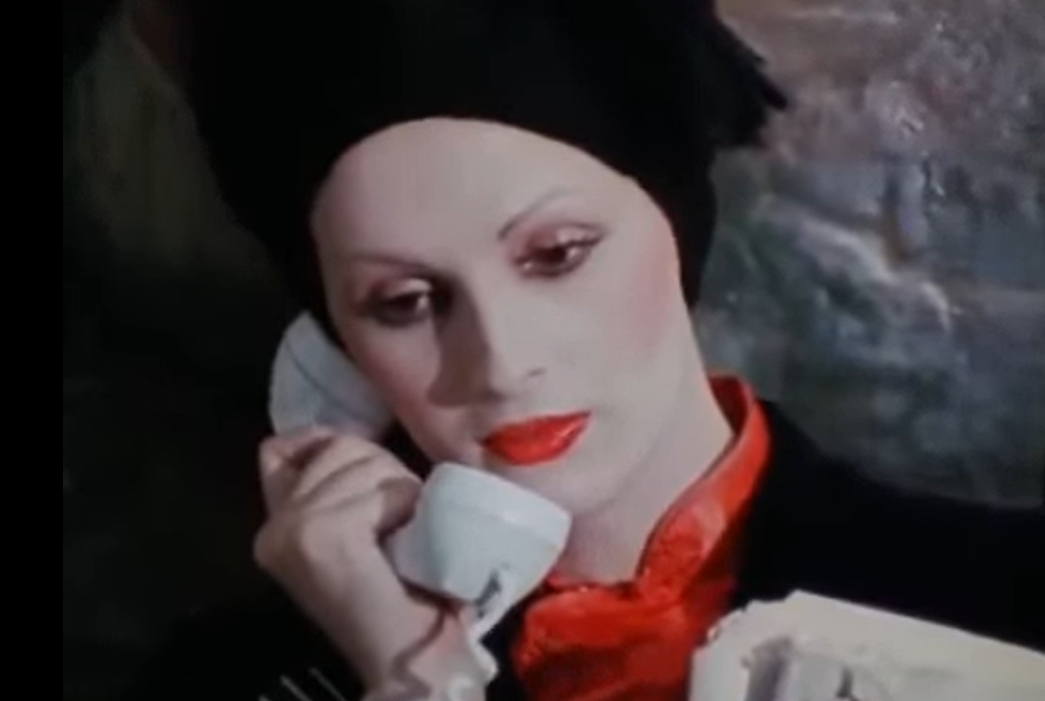
Candy Darling is the most relatively appealing and intriguing — though she’s ultimately not interested in much more than breaking through as an actor and impersonating Kim Novak (which she’s reasonably good at).

While I’ll admit to getting weirdly caught up in the shenanigans of the protagonists in Morrissey’s earlier Flesh (1968) and Trash (1970), the appeal of this one eludes me completely.

Notable Performances, Qualities, and Moments:

  • Candy Darling as Candy

Must See?
Nope; you can skip this one. Listed as a Cult Movie and a Personal Recommendation in the back of Peary’s book.

Links:

Siddhartha (1972)

Siddhartha (1972)

“There’s nothing wrong with the Buddha’s teachings; it’s just that I must go my own way.”

Synopsis:
A spiritually-seeking young Indian named Siddhartha (Shashi Kapoor) goes on a trip of self-discovery with his friend Govinda (Romesh Sharma), eventually falling in love with a beautiful courtesan (Simi Garewal) while learning that spiritual enlightenment can’t be taught.

Genres, Themes, Actors, and Directors:

  • Character Arc
  • India
  • Religious Faith

Review:
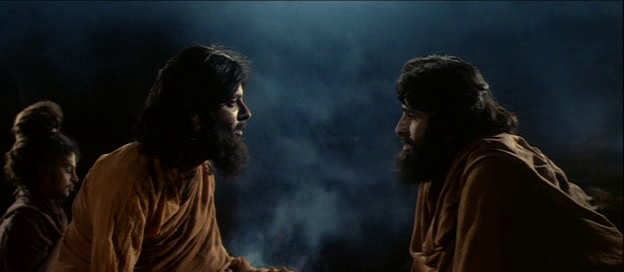
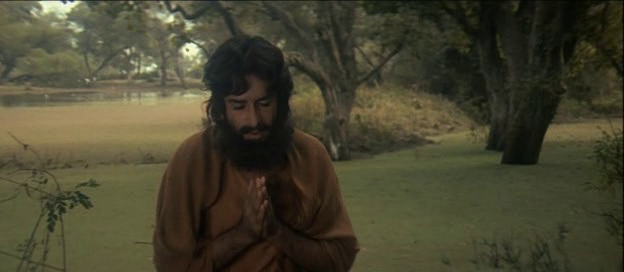
This adaptation of Herman Hesse’s 1922 novel of the same name was written and directed by Conrad Rooks, whose only other directorial effort is the GFTFF-listed Chappaqua (1966). Sven Nykvist’s cinematography is exquisite throughout:

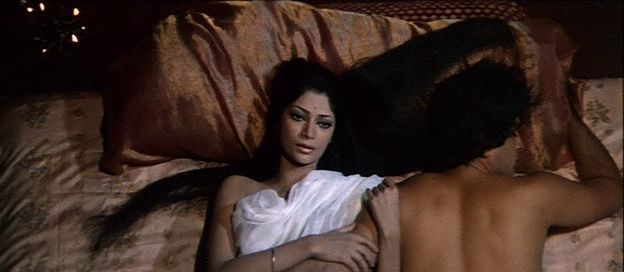
… but there’s not enough to this simple storyline to hold our interest. Siddhartha gives up his worldly comforts, follows the Buddha for awhile, tries a life of sensual pleasure:

… and eventually realizes that the only truth in life is what one experiences internally.

This was all very much of its time back in the early 1970s, when so many were on similar paths of spiritual seeking — but it will likely only be of interest to modern-day film fanatics who happen to be curious about how Hesse’s novel was translated to the screen.

Notable Performances, Qualities, and Moments:

  • Sven Nykvist’s cinematography

Must See?
No; you can skip this one unless you’re curious.

Links:

Man of Flowers (1983)

Man of Flowers (1983)

“Would God approve of someone who found flowers as sensually arousing, tender, loving beings?”

Synopsis:
An eccentric elderly man (Norman Kaye) with a fixation on flowers and his dead mother pays a young model (Alyson Best) to come to his house and undress for him, and soon finds himself caught up in Best’s troubled relationship with her drug-addicted artist-boyfriend (Chris Haywood).

Genres, Themes, Actors, and Directors:

  • Artists
  • Australian Films
  • Models
  • Nonconformists
  • Werner Herzog Films

Response to Peary’s Review:
Peary is a big fan of this “marvelous, richly-textured, award-winning film about a lovable, rich, middle-aged eccentric (Norman Kaye)” who is “haunted by his sad upbringing” and “spends his time battling the mediocrity that characterizes the modern world,” “seeking out and nurturing its rare forms of beauty.”

He describes Kaye as someone who “writes daily letters to his mother although she is long dead, has regular sessions with an incompetent therapist:

… and mails himself letters so he can engage in meaningful conversations with his mailman.” In addition, “He paints, plays the church organ, listens to classical music, collects art and sculpture, and once a week pays a beautiful artist’s model (Alyson Best) to strip to the love duet from Donizetti’s Lucia de Lammermoor” — though he never touches her “as his intentions are honorable.”

Peary argues that “director Paul Cox smoothly blends wicked, offbeat humor with sad, penetrating looks at nice people who have really been clobbered (in more ways than one) in life.” He asserts that Kaye — “who was terrific in Cox’s Lonely Hearts, is even better here, playing a triumphant character instead of an insecure loser” — a “wonderful, original film character whose unique perspective on life has helped him overcome every roadblock to happiness” and who “is the ideal protector of the much younger Best” given that they “each can provide the other what they need most at this particular time in their lives.”

However, I don’t really agree. While Kaye certainly shows unique agency in the final portion of the film, he is far from a “triumphant character,” but rather a sad, haunted man whose flashbacks to his past (including Werner Herzog playing his disciplinarian father):

… show how deeply wounded he was and remains. Sure, he gets by (he’s inherited plenty of money), but he’s deluded, lonely, misunderstood, and in some cases blatantly taken advantage of. His noble desire to help Best is laudable — though Peary weirdly ignores the fact that Best actually takes up a new lesbian lover (Sarah Walker) who seems equally interested in rescuing (and seducing) her.

Peary does point out that “since this film is about a lover of beauty, it’s only fitting that Cox’s film is beautiful to look at and has a sumptuous classical score to listen to,” and I agree with this; the sets, cinematography, and score are noteworthy.

On a personal note, I recall watching this film years ago in an evening class on Australian Cinema. Our instructor insisted on replaying the final, slow-moving, enigmatic shot — of Kaye on the beach, surrounded by other figures and birds — for a second time:

… and I remember feeling like this was cruel and unusual punishment at the end of a long day.

Notable Performances, Qualities, and Moments:

  • Atmospheric sets and cinematography

Must See?
No, though anyone interested in Australian cinema will certainly want to give it a watch.

Links:

Last Detail, The (1973)

Last Detail, The (1973)

“This ain’t no farewell party and he ain’t retiring, understand? He’s a prisoner, and we’re takin’ him to the jailhouse.”

Synopsis:
When two lifelong Navy men — Buddusky (Jack Nicholson) and Mulhall (Otis Young) — are asked to accompany a young sailor (Randy Quaid) to a naval prison in Maine, they find themselves trying to give him a few memorable experiences along the way.

Genres, Themes, Actors, and Directors:

  • Carol Kane Films
  • Coming-of-Age
  • Hal Ashby Films
  • Jack Nicholson Films
  • Michael Moriarty Films
  • Military
  • Nancy Allen Films
  • Prisoners
  • Randy Quaid Films
  • Road Trip
  • Sailors

Response to Peary’s Review:
As Peary writes, this tale about “career sailors” who see that Quaid (a kleptomaniac) is “a nice guy” — and “decide to give him his first sample of life before he’s put away” — represents the “sad, naïve young sailor’s rite of passage” and “results in the return of humanity to the two cynical sailors.”

He notes that “during the entire film you can sense that as the three men learn about life, an explosion is building” — and you definitely find yourself wondering what (if anything) will happen during the final tense moments. Peary points out that this “film is known for its rhythmic, realistic, salty, wryly written dialogue by Robert Towne” and “a great, swaggering, angry, rebel-without-a-cause performance by Nicholson (as ‘Badass’ Buddusky).”

Indeed, Nicholson’s Oscar-nominated performance is among his best. Meanwhile, Peary notes that “Quaid is quite touching”:

… and points out there are “small parts” by Michael Moriarty:

… Carol Kane (“memorable as a prostitute”):

… Nancy Allen:

… and Gilda Radner.

Towne’s Oscar-nominated script — based on a 1970 novel of the same name by Darryl Ponicsan — is leisurely yet incisive, offering us seemingly realistic glimpses into what such an unconventional road trip might look and feel like. We watch young Quaid as “he drinks, visits a prostitute, is in a brawl, [and] has adventures”:

… and we are confident that his life has been changed for the better by spending time with Nicholson and Young, despite the bleak trajectory of his next few years.

Notable Performances, Qualities, and Moments:

  • Jack Nicholson as Buddusky
  • Randy Quaid as Meadows
  • Michael Chapman’s cinematography
  • Robert Towne’s screenplay

Must See?
Yes, for Nicholson’s performance.

Categories

  • Noteworthy Performance(s)

Links:

48 Hrs. (1982)

48 Hrs. (1982)

“We ain’t brothers, we ain’t partners, and we ain’t friends.”

Synopsis:
A white cop (Nick Nolte) joins forces with a black prisoner (Eddie Murphy) on a 48-hour pass to help hunt down a sadistic criminal (James Remar) who has escaped from a chain gang.

Genres, Themes, Actors, and Directors:

  • Detectives and Private Eyes
  • Eddie Murphy Films
  • Ex-Cons
  • Nick Nolte Films
  • Race Relations and Racism
  • Search
  • Walter Hill Films

Response to Peary’s Review:
Peary writes that this film about a “racist San Francisco detective [who] springs black thief-conman Eddie Murphy” (in “his debut”) “from prison for 48 hours to help track down Murphy’s former partner” is almost as if Rod Steiger and Sidney Poitier from In the Heat of the Night became partners without resolving their differences or hiding their hatred for one another.” He points out that “their ‘hip’ verbal battles are continuous (and eventually annoying) and they even come to blows” — but “of course, since they are both misfits with singular talents, they come to respect one another.”

He notes that while “brawny Nolte and skinny Murphy work well together,” “Roger Spottiswoode’s dialogue is too calculated for audience response [and] laughter.” He argues that the film’s “best sequences are those with violence and action.”

This “mismatched buddy cop” flick is notable as one of the first of its kind (or at least the title that seriously sparked the subgenre), and it’s held up reasonably well despite its flaws. Hill’s direction is confident as always, and good use is made of location shooting in San Francisco (and Los Angeles).

While it’s not must-see viewing, this remains worth a look for its historical significance as Murphy’s breakthrough cinematic role.

Notable Performances, Qualities, and Moments:

  • Eddie Murphy as Reggie Hammond
  • Nick Nolte as Jack Cates
  • James Remar as Albert Ganz
  • Ric Waite’s cinematography
  • James Horner’s score

Must See?
No, but it’s recommended for its status as an ’80s buddy-cop classic.

Links:

I Wanna Hold Your Hand (1978)

I Wanna Hold Your Hand (1978)

“If I’m gonna get caught, I want to be as close to the Beatles as I can!”

Synopsis:
A die-hard Beatles fan (Wendie Jo Sperber) hoping to see the band drives to New York City with a boy (Mark McClure) who has access to his father’s hearse, an aspiring-photographer friend (Theresa Saldana), a young woman (Nancy Allen) about to be married, a folk music snob (Susan Kendall Newman), and an obnoxious Beatles-hater (Bobby Di Cicco).

Genres, Themes, Actors, and Directors:

  • Dick Miller Films
  • Historical Drama
  • Media Spectacle
  • Nancy Allen Films
  • New York City
  • Obsessive Fans
  • Rock ‘n Roll
  • Teenagers

Response to Peary’s Review:
Peary writes that “if you were in the New York area back in 1964, you know that this sadly neglected film perfectly captures the lovely hysteria surrounding the Beatles’ arrival in town, their stay at the Plaza Hotel, which was besieged by fans, and their historic appearance on the The Ed Sullivan Show.”

He notes that this comedy “about a funny group of kids, mostly out-of-towners, who try to break into the Beatles’ hotel suite and to rustle up tickets to the Sullivan show” is “like something out of a time capsule”:

… with “the characters, clothes, dialogue, [and] New York environment/atmosphere… exactly as [he] remembers.” He argues that “there was something wonderful in the air back then that’s impossible to describe,” yet “somehow this film re-creates that feeling.”

He further notes the “splendid comic performances by the young cast — particularly Nancy Allen as a girl who suddenly becomes an obsessed Beatles convert”:

… and “Eddie Deezen as a nerdy chatterbox who is a Beatles trivia nut… and hawks memorabilia.”

Peary points out that this film was “a difficult, unusual project, particularly when you consider that the real Beatles and Ed Sullivan weren’t available for the finale, which was nevertheless cleverly handled by director Robert Zemeckis (then Executive Producer Steven Spielberg’s protégé.)

He concludes his review by noting that “this sleeper’s a lot of fun; and smart, too.” I agree completely. I was pleasantly surprised to revisit this smartly scripted, well-acted comedy which manages to cover a brief but potent moment in history from numerous angles. Sperber is hilariously invested as a young woman in love with Paul (but willing to call Deezen her boyfriend given how much they obsessively have in common); and the subplot about a young fan whose father refuses to give him his tickets to the show until he cuts his hair is nicely handled.

This one remains well worth a look.

Notable Performances, Qualities, and Moments:

  • Wendie Jo Sperber as Rosie Petrofsky
  • An impressive recreation of a specific moment in pop culture history

Must See?
Yes, as an all-around good show.

Categories

  • Good Show

Links:

Enter the Dragon (1973)

Enter the Dragon (1973)

“Your skills are now at the point of spiritual insight.”

Synopsis:
A martial arts expert (Bruce Lee) and his two American partners (John Saxon and Jim Kelly) are sent to infiltrate the lair of an evil drug-pin (Shih Kien) whose henchman (Robert Wall) killed Lee’s sister.

Genres, Themes, Actors, and Directors:

  • Bruce Lee Films
  • John Saxon Films
  • Martial Arts
  • Revenge
  • Spies

Response to Peary’s Review:
Peary writes that this final completed film with Bruce Lee (who died unexpectedly a few weeks before its release) is “arguably the most entertaining, colorful, and spectacular kung fu film ever made” and was “an enormous money-maker worldwide.” He notes that while the story — about a “kung fu master [who] arrives on the island owned by… an evil Dr. No-like figure with an attachable iron hand” — is “on a comic-book level,” the “production values are high, the action is nonstop and consistently exciting, and the atmosphere is rich,” and an “all-star cast of sorts” join “the incomparable Lee, whose feats seem impossible.”

Peary’s review of this flick in GFTFF is directly excerpted from his lengthier Cult Movies essay, which I’ll quote from here. He contextualizes the film by noting that “between 1972 and 1975, the talk of the film industry (in addition to [adult] films) was the martial arts movies — ‘chop sockies,’ as the genre was dubbed — that were being churned out in Hong Kong… and were inundating international markets.” He describes them as “influenced by ritualistic life-and-death combat found in such diverse forms as ancient Chinese drama, opera, folklore and fairy tales, Jacobean revenge plays, American pulp fiction and superhero comics, Japanese samurai pictures, Italian muscleman epics, European-made westerns, and Hollywood fantasy films.” (That’s quite a list of influences!!!)

Given that most of these imported flicks were “assembly line jobs,” he points out that Lee’s films “gave the genre a touch of respectability.” He adds that “while other heroes won their fights with the help of special-effects men, Lee refused to use gadgetry such as pulleys, trampolines, and fake props, bragging that he was the only fight choreographer who showed only what was real or at least possible.” (Indeed, the black flip occurring just 2.5 minutes into the film is impressive enough to sell you immediately on Lee’s skills.)

In describing more of Lee’s work, Peary notes that “his fight with Oharra [Wall] is particularly stunning,” given that he “does flip kicks and several of his infamous lightning one-inch paralyzing punches while his opponent looks nailed to the ground.”

He adds that “an incredible close-up in slow motion of Lee’s face allows us to see his face muscles quivering like waves in the ocean: he is killing the man who caused his sister’s suicide, and rarely has such pure emotion — ’emotion, not anger,’ Lee tells his pupil — been captured on a screen character’s face.

Peary also makes note of challenges with the film, including the fact that Williams — “a black who fights racist cops in a flashback set in America” — is “never really seen together [with Lee]” and the two don’t “talk to each other.”

This stresses that Lee is more of “a James Bond figure, just as the iron-handed Han is a Doctor No rip-off:”

… and Lee “has come to Han’s island primarily to do secret-agent work” — “not, as is always part of the kung fu film formula, to avenge his sister and temple.”

Meanwhile, the film’s “worst mistake is that there is an absence of a time element in the script” — meaning, “there is no bomb about to explore and no intended victim… about to be tortured — [and] consequently, there is little of the suspense or sense of urgency so necessary to adventure films.” However, Peary ultimately points out that “while the flaws are abundant, they are trivialized by the spectacular kung fu sequences that take place every few minutes,” making this “great entertainment” that remains noteworthy for starring “the finest action hero in cinema history in one of his few roles: the one and only Bruce Lee, at his remarkable best.”

Notable Performances, Qualities, and Moments:

  • Bruce Lee’s stunning martial arts moves
  • The remarkably filmed “room of mirrors” fight sequence
  • Fine sets and production design

Must See?
Yes, for its cult status.

Categories

  • Cult Movie

(Listed in 1001 Movies You Must See Before You Die)

Links: