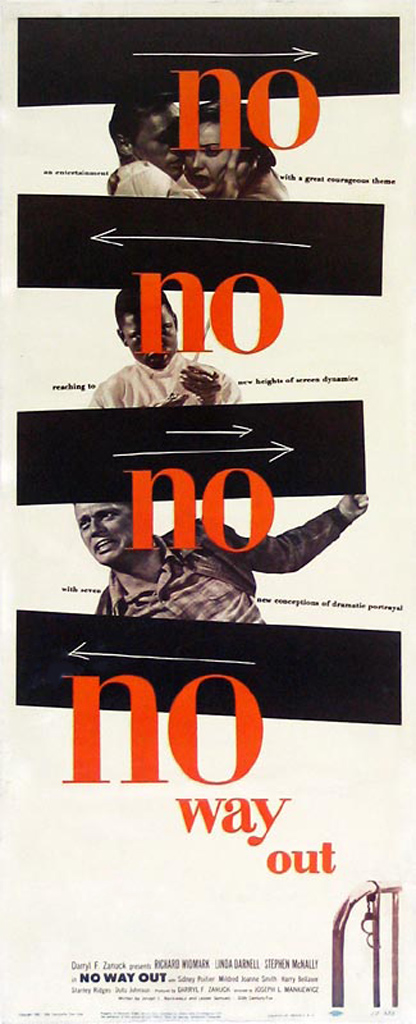
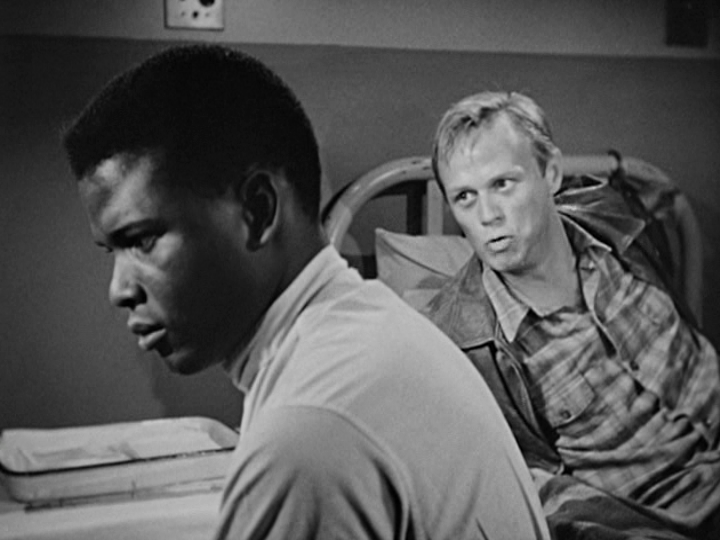
No Way Out (1950)
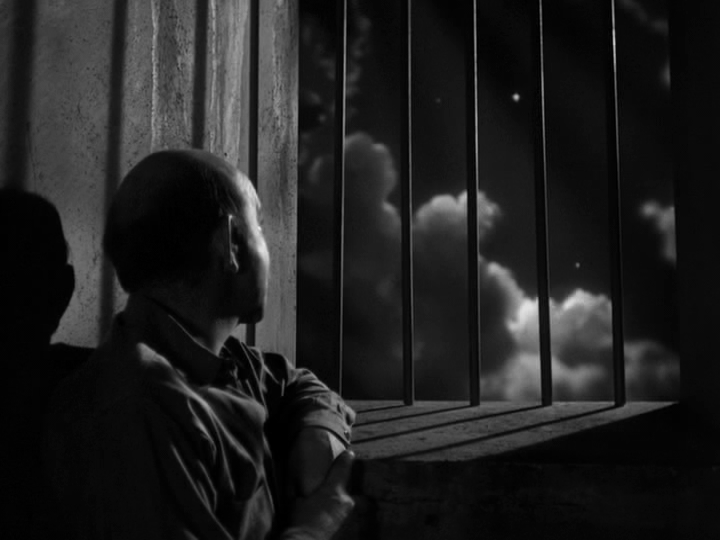
“Ain’t that a lot to ask of us — being better than them when we get killed proving we’re just as good?”
“There’s something missing. Always when he talked to me there was a certain look in his eyes. Now it’s gone. There’s no emotion. The words are the same, but there’s no feeling.”
|
Synopsis: |
|
Genres, Themes, Actors, and Directors:
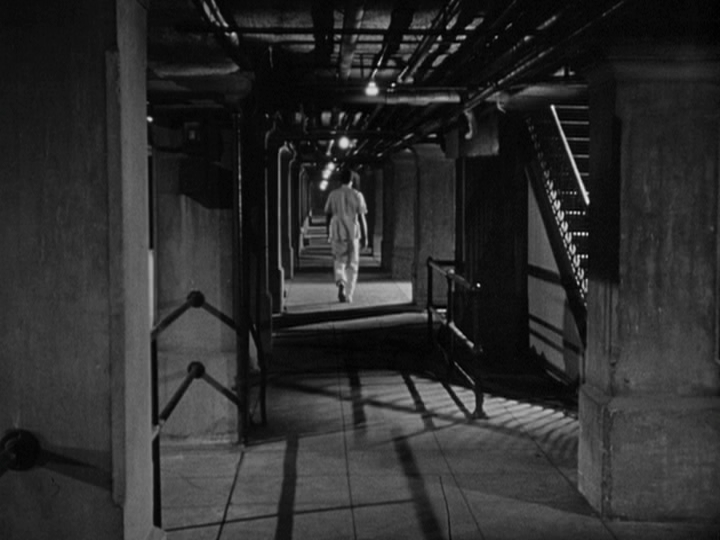
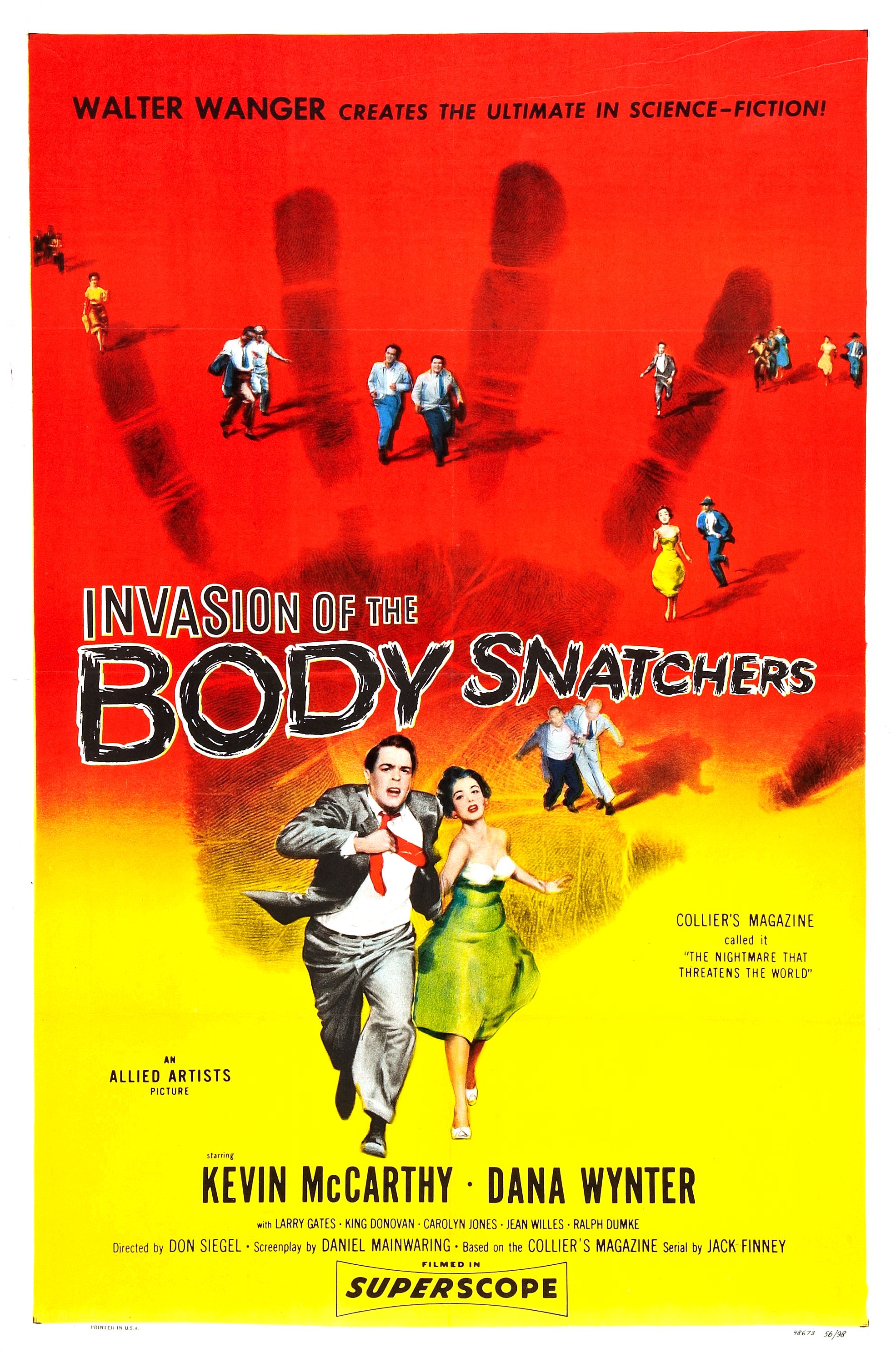
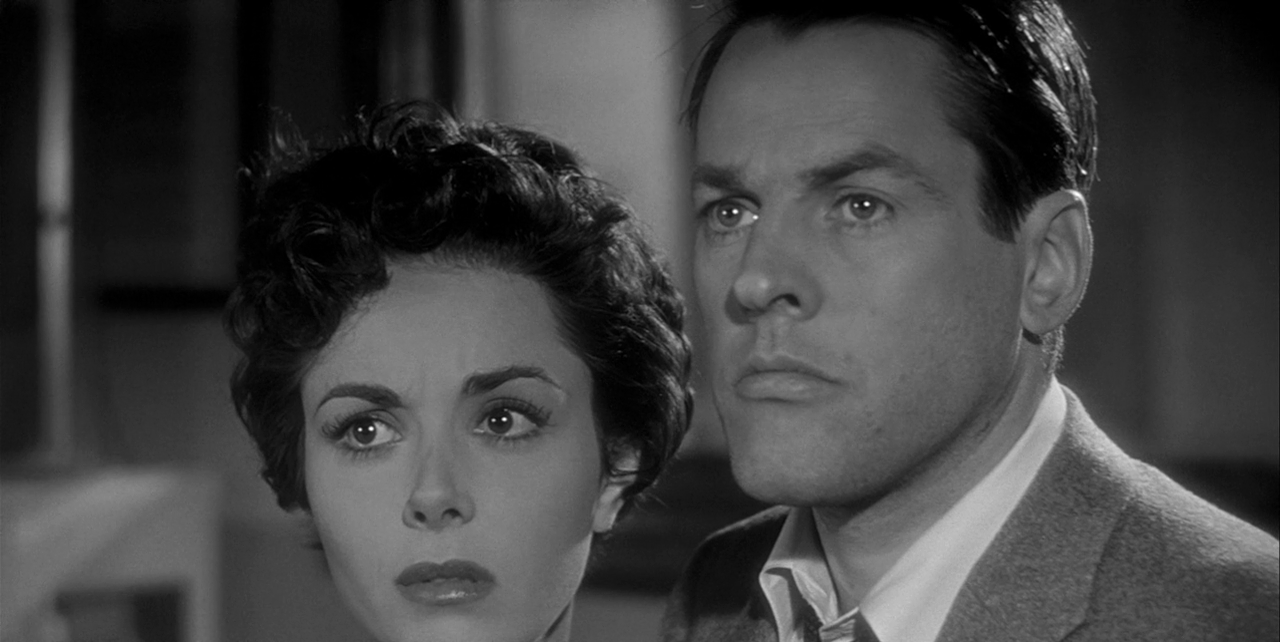
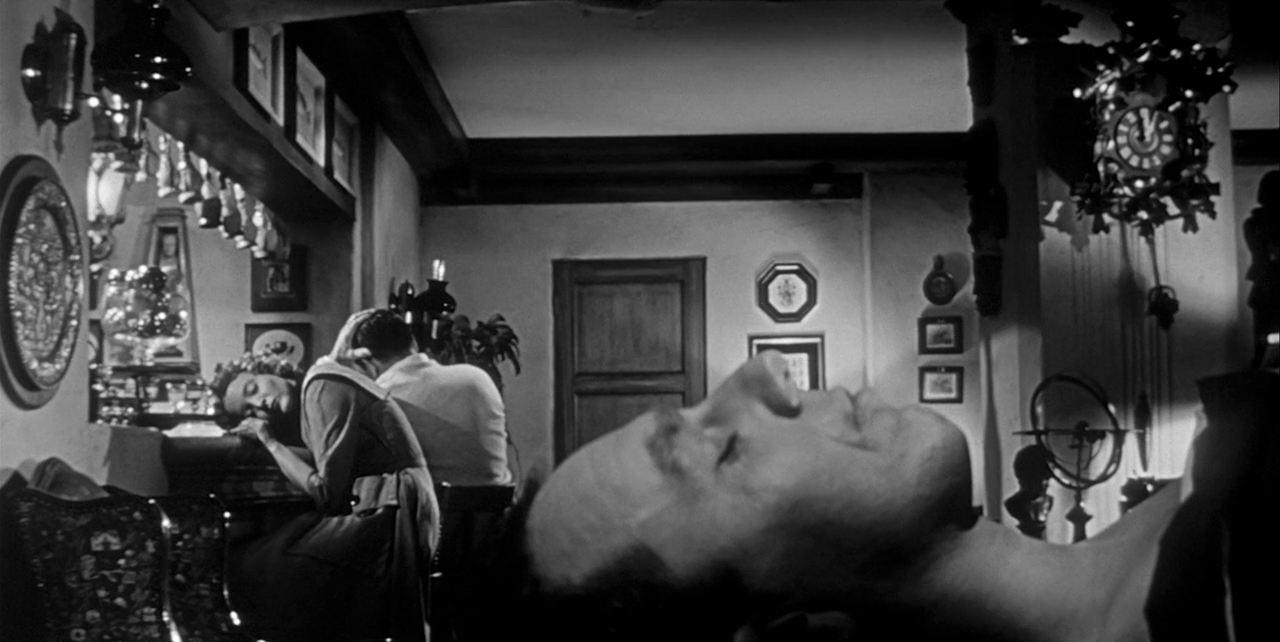
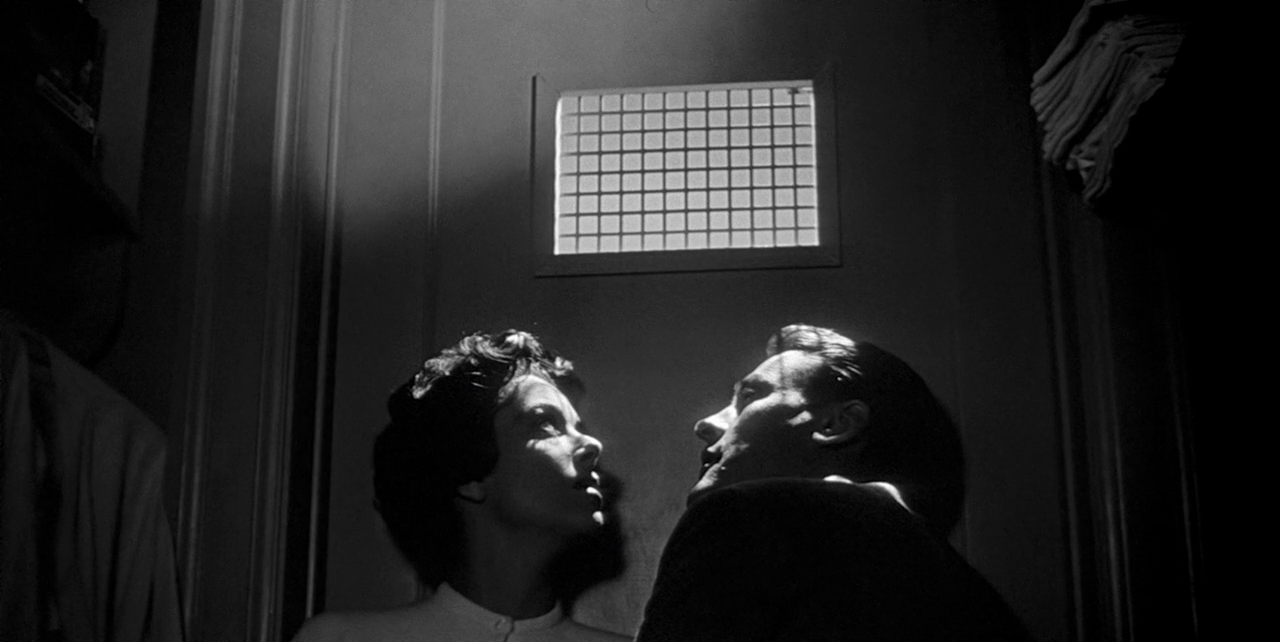
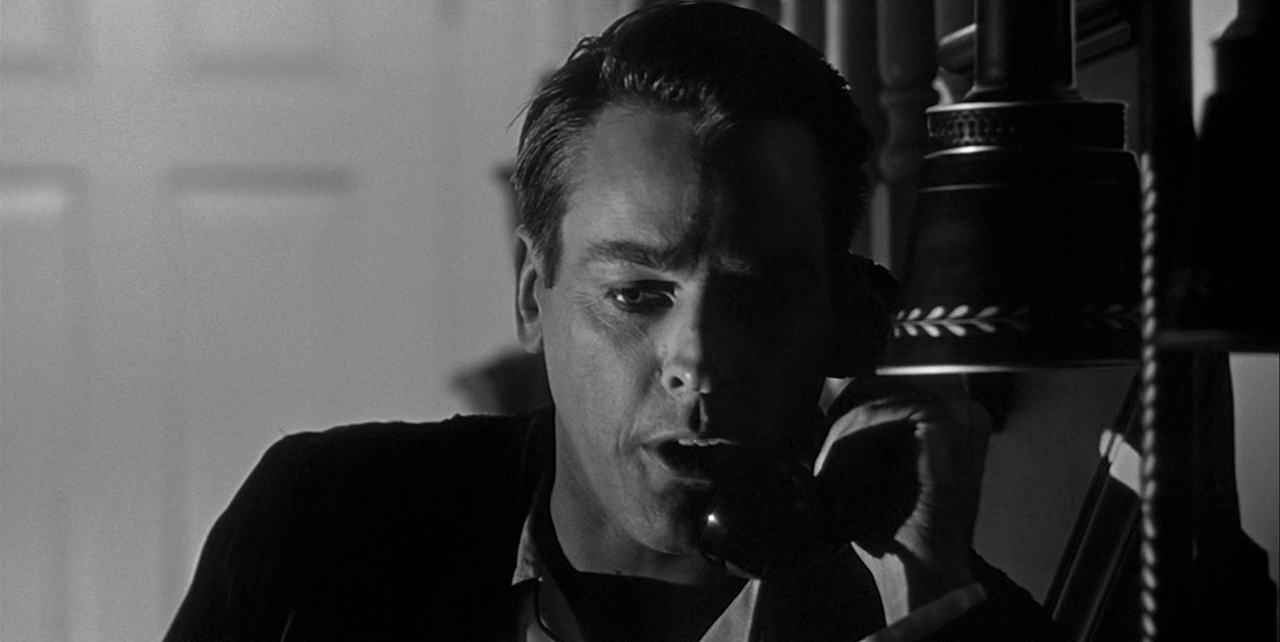
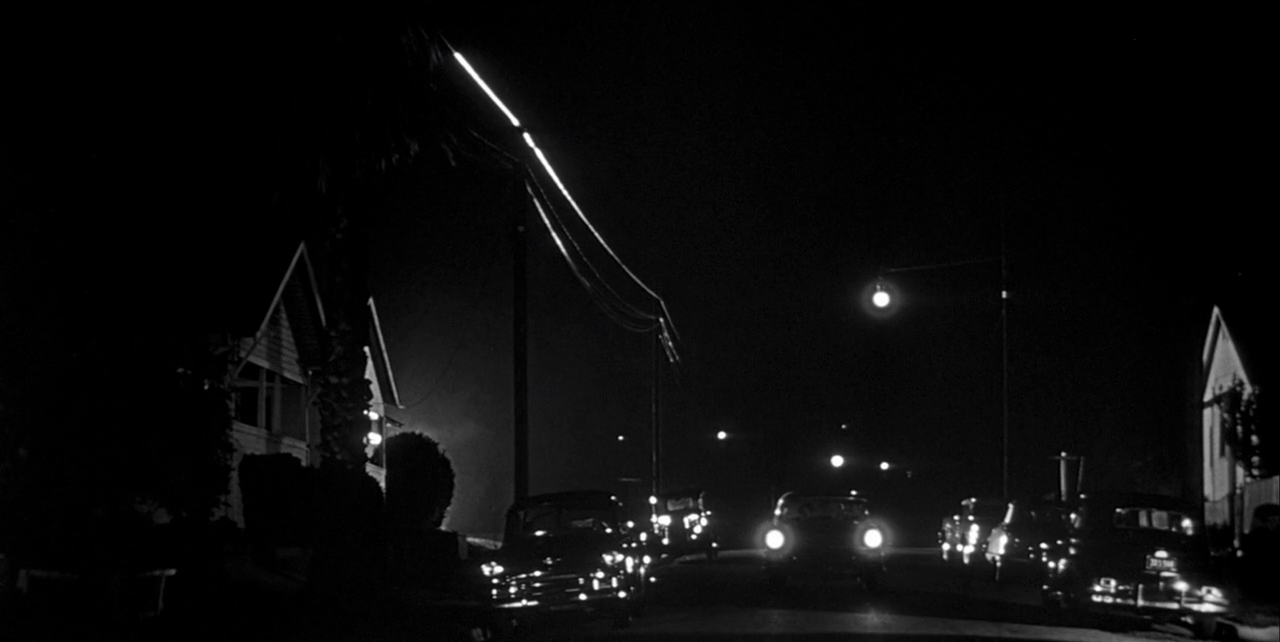
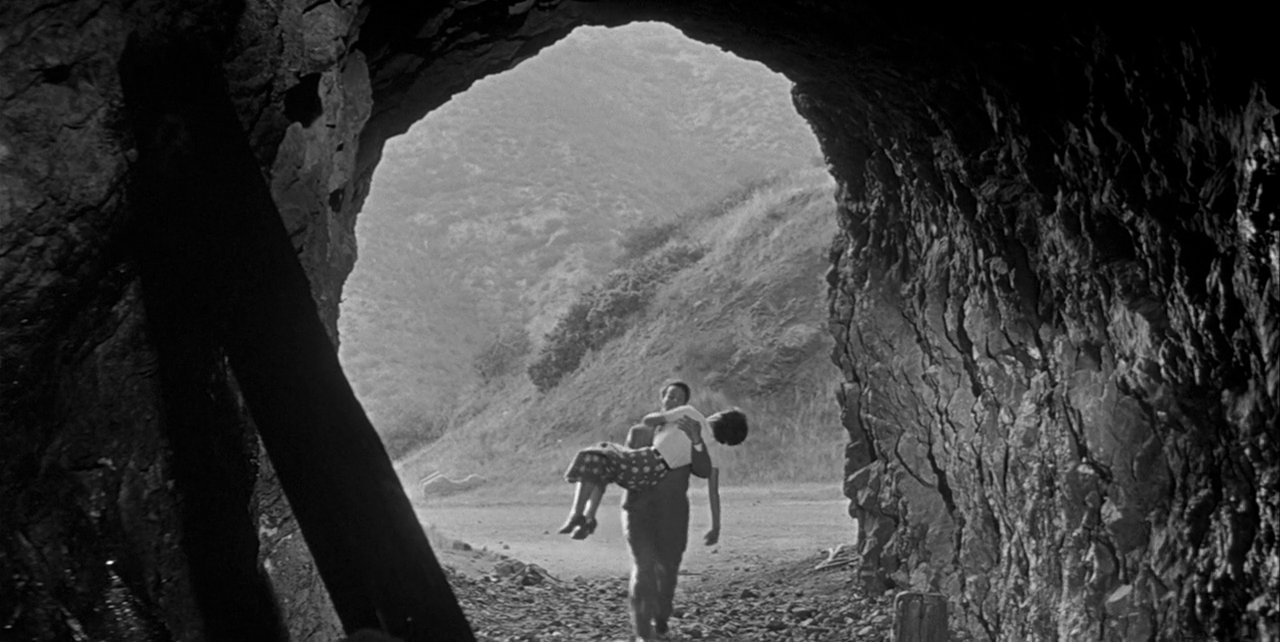
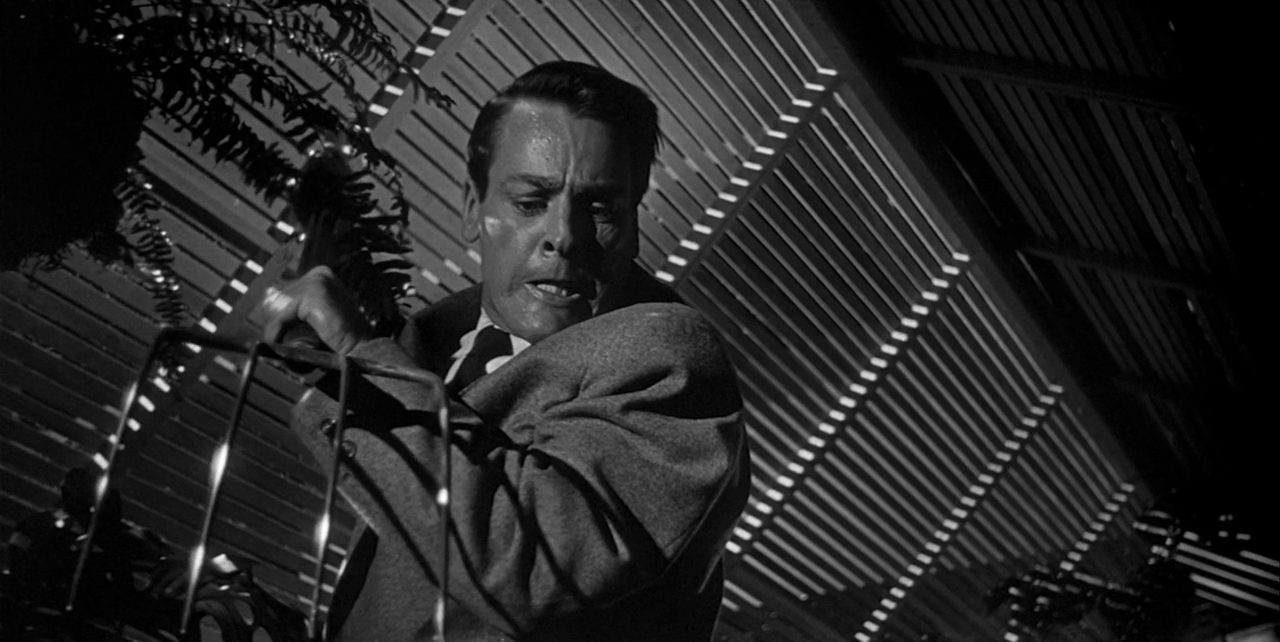
Response to Peary’s Review: I think Peary misses the boat in his comparison of the two films, given that both are creepily effective in their own ways. However, there’s no denying that this earlier version is a true classic of the genre and era. While Peary writes that it’s “controversial because it can be seen as either anti-communist or anti-McCarthy polemic”, at this point in history that doesn’t really matter: the idea of witnessing “your loved ones becoming your enemy”, and “fighting to retain your ability to love” is terrifying no matter what your political leaning. Siegel’s smart direction and Ellsworth Fredericks’ noir-ish cinematography combine to make the visuals consistently impressive, and McCarthy gives an excellent leading performance: he is fully invested in his role as a man determined to resist the lure of sleep and conformity at any cost. Redeeming Qualities and Moments:
Must See? Categories
(Listed in 1001 Movies You Must See Before You Die) Links: |
“There’s a lot of ugly things in this world, son. I wish I could keep ’em all away from you. That’s never possible.”
|
Synopsis: |
|
Genres, Themes, Actors, and Directors:
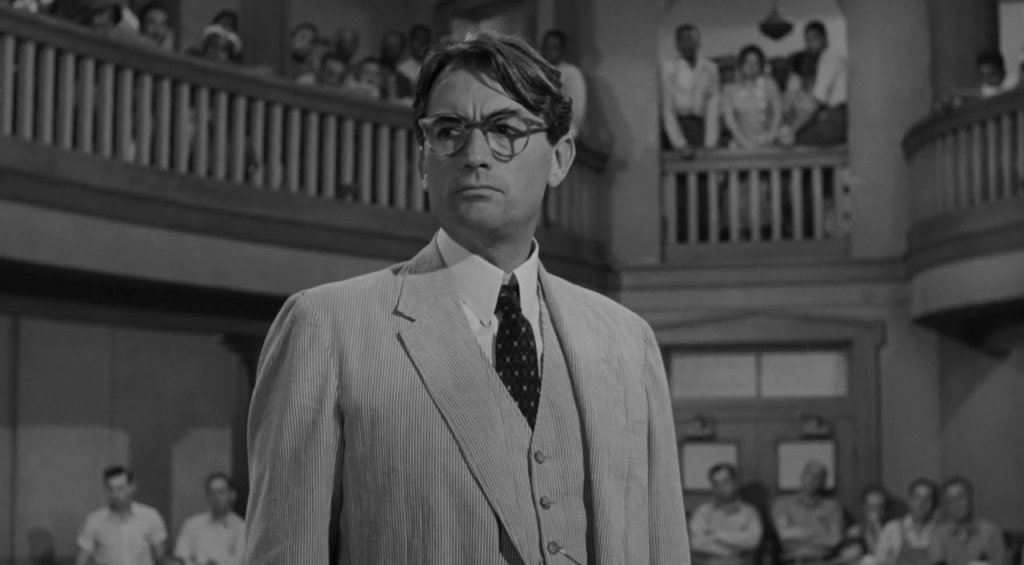
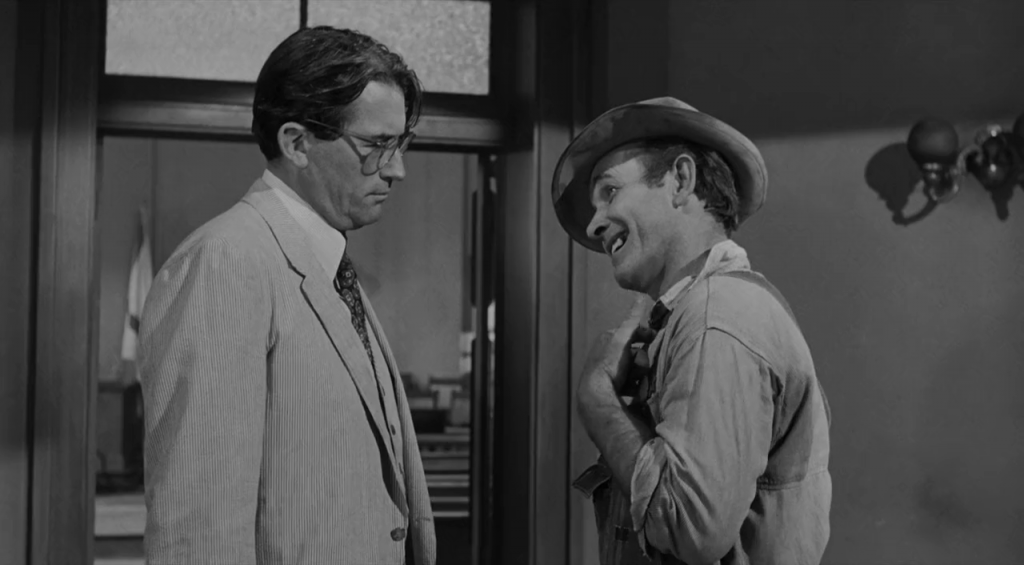
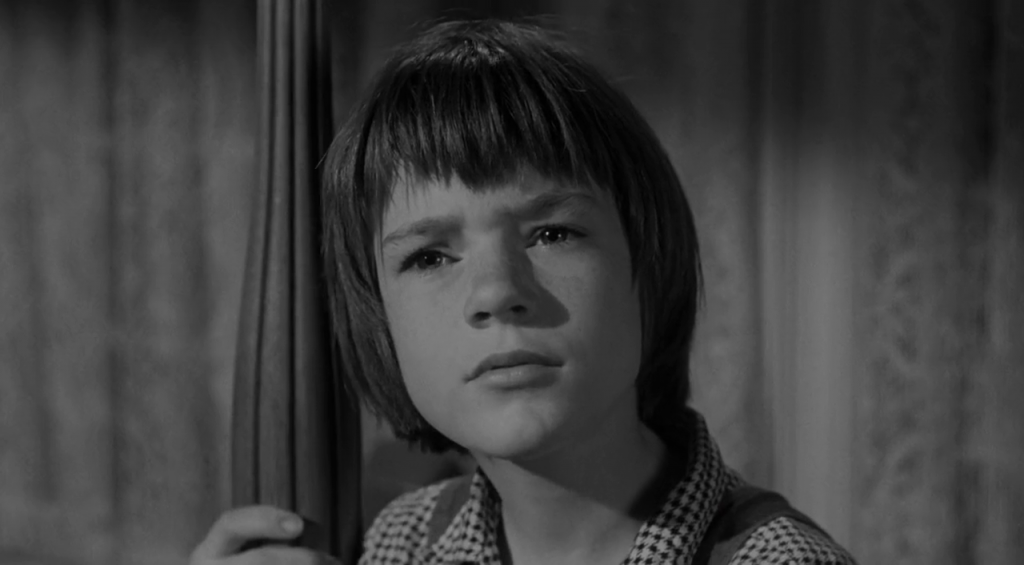
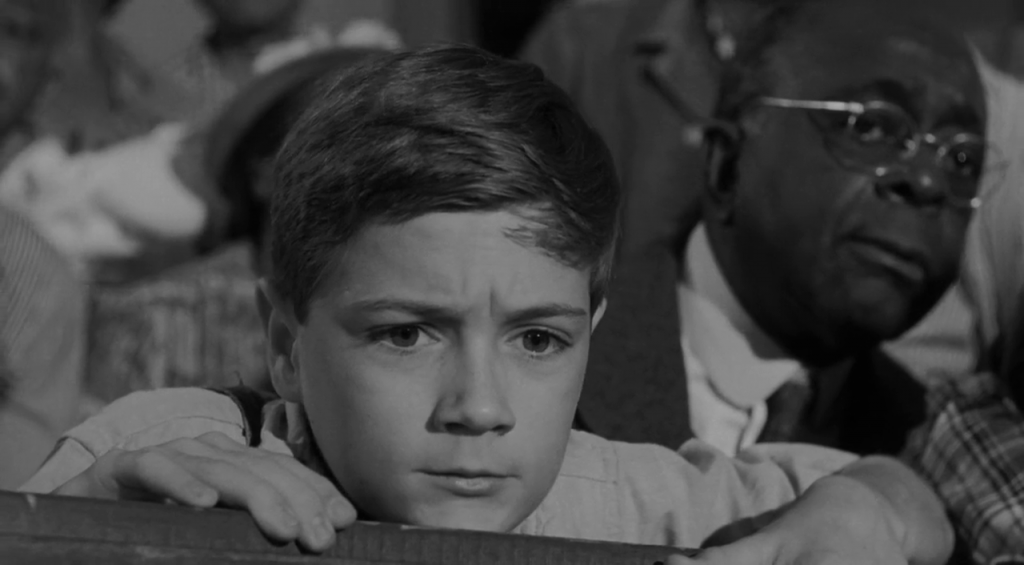
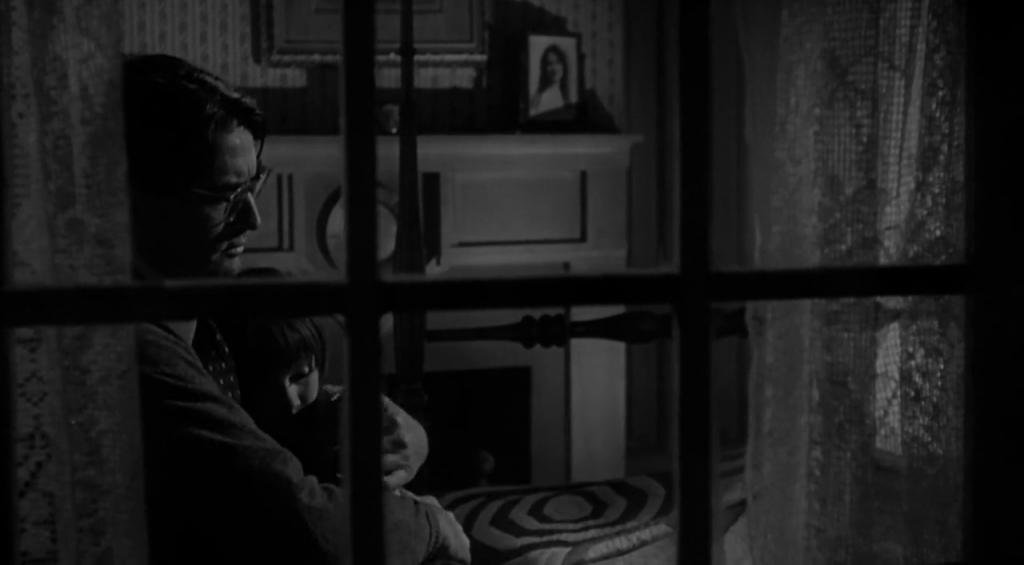
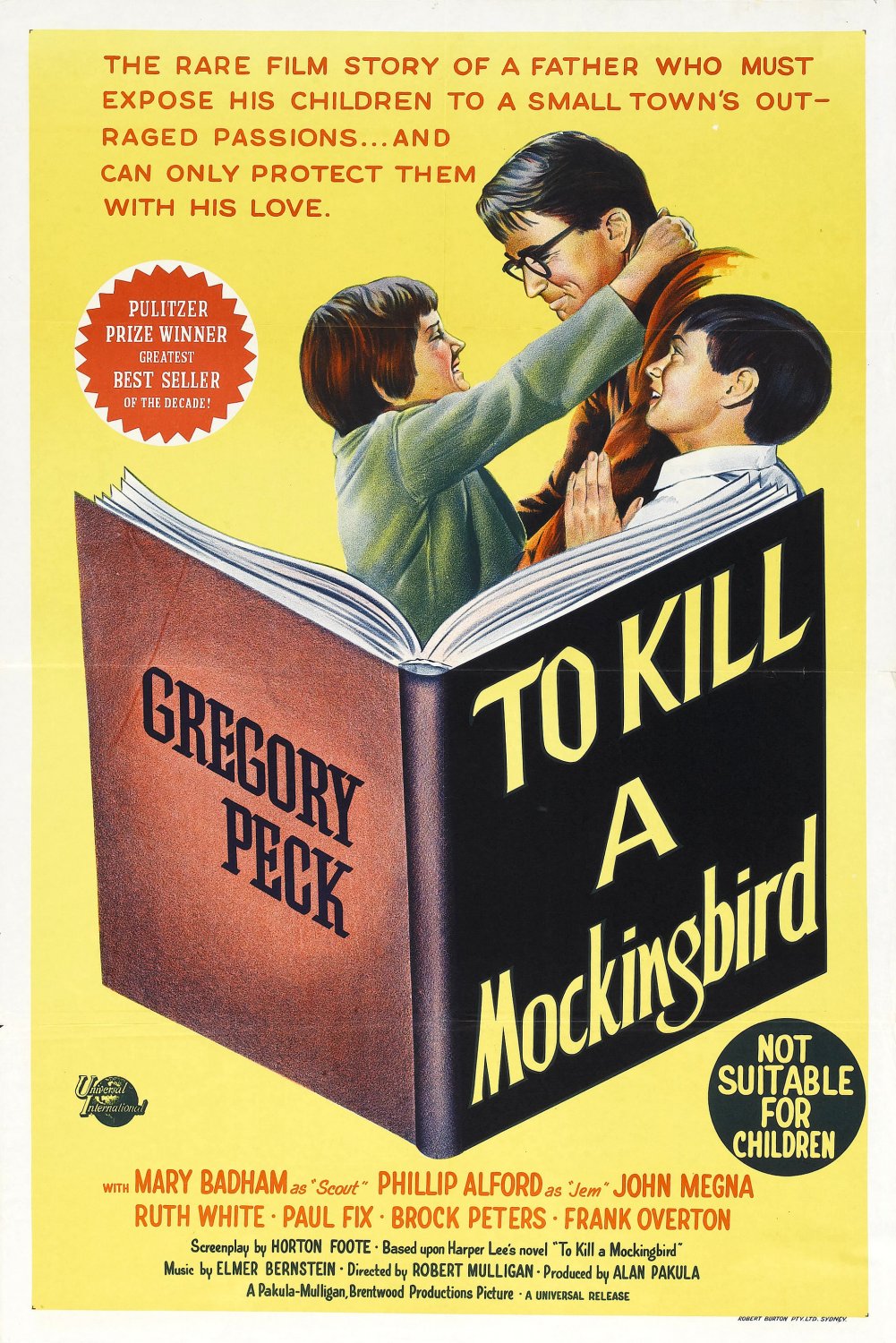
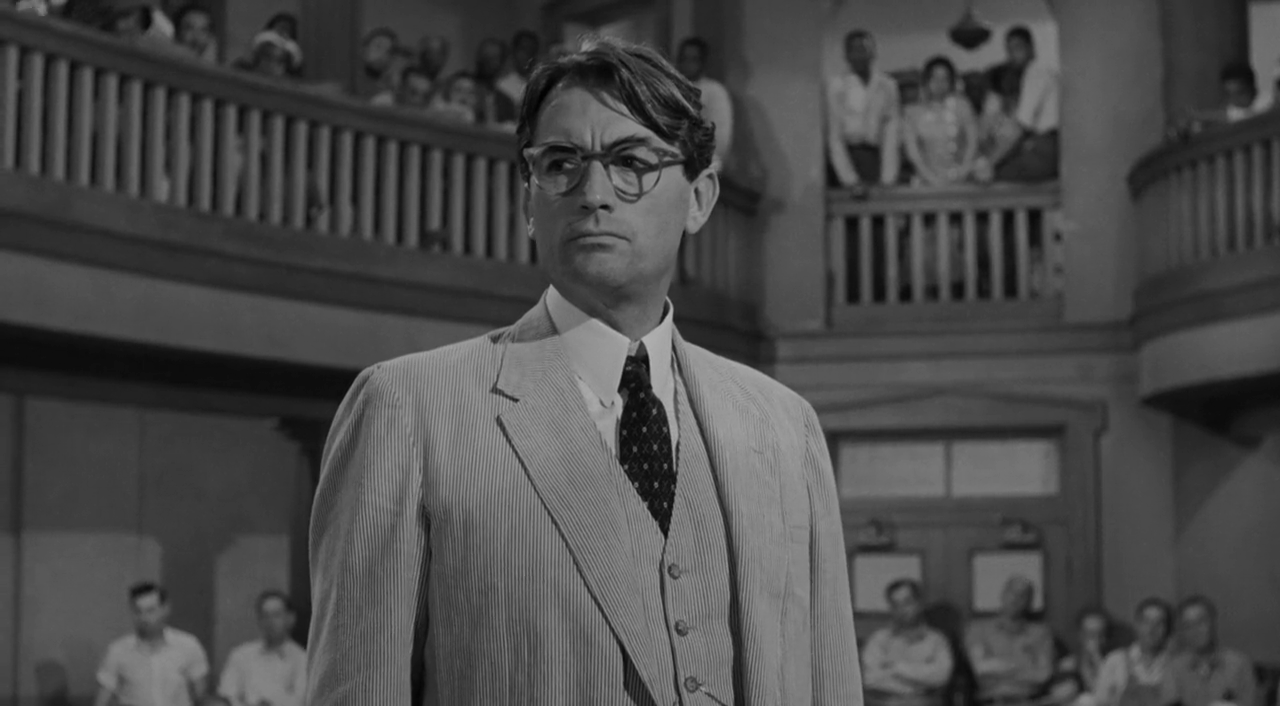
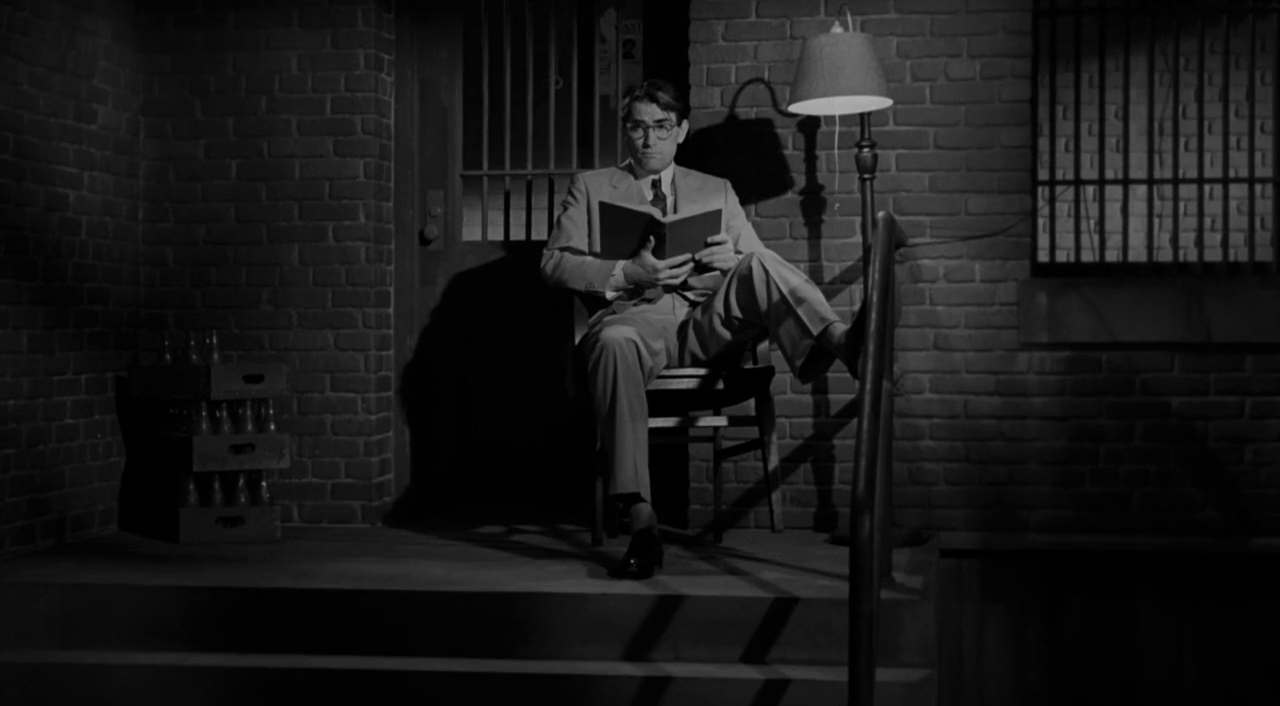
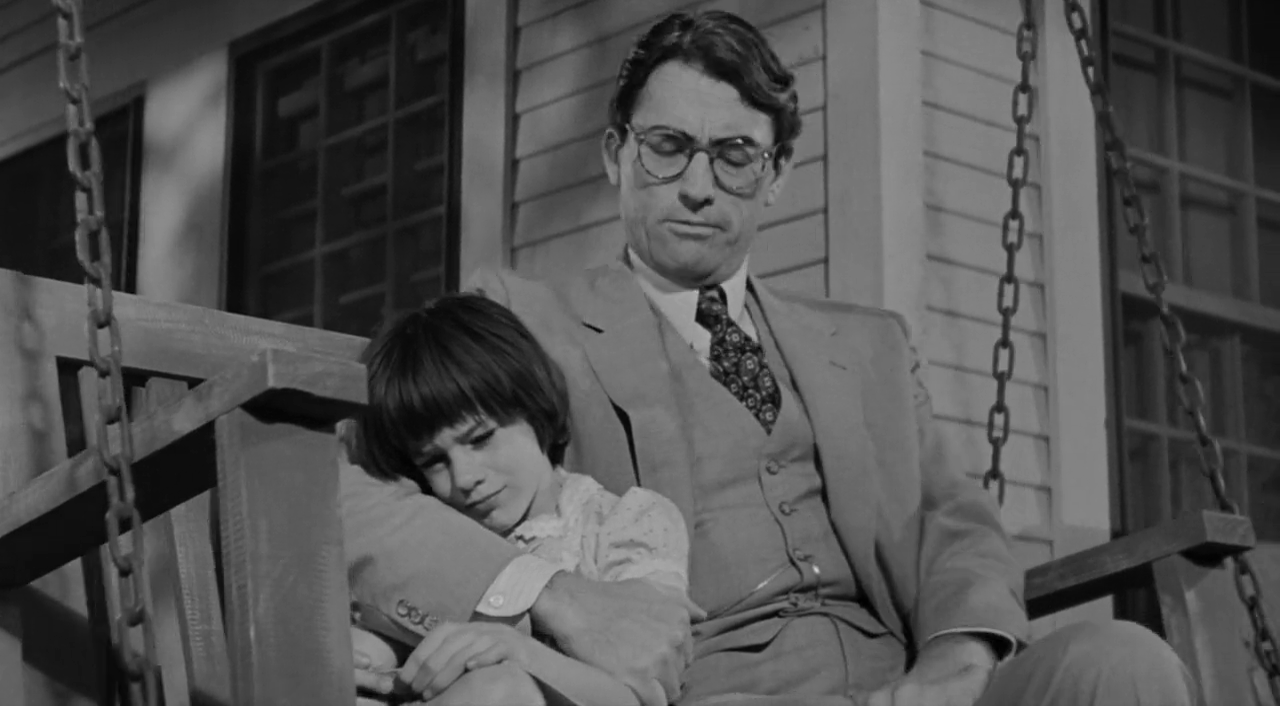
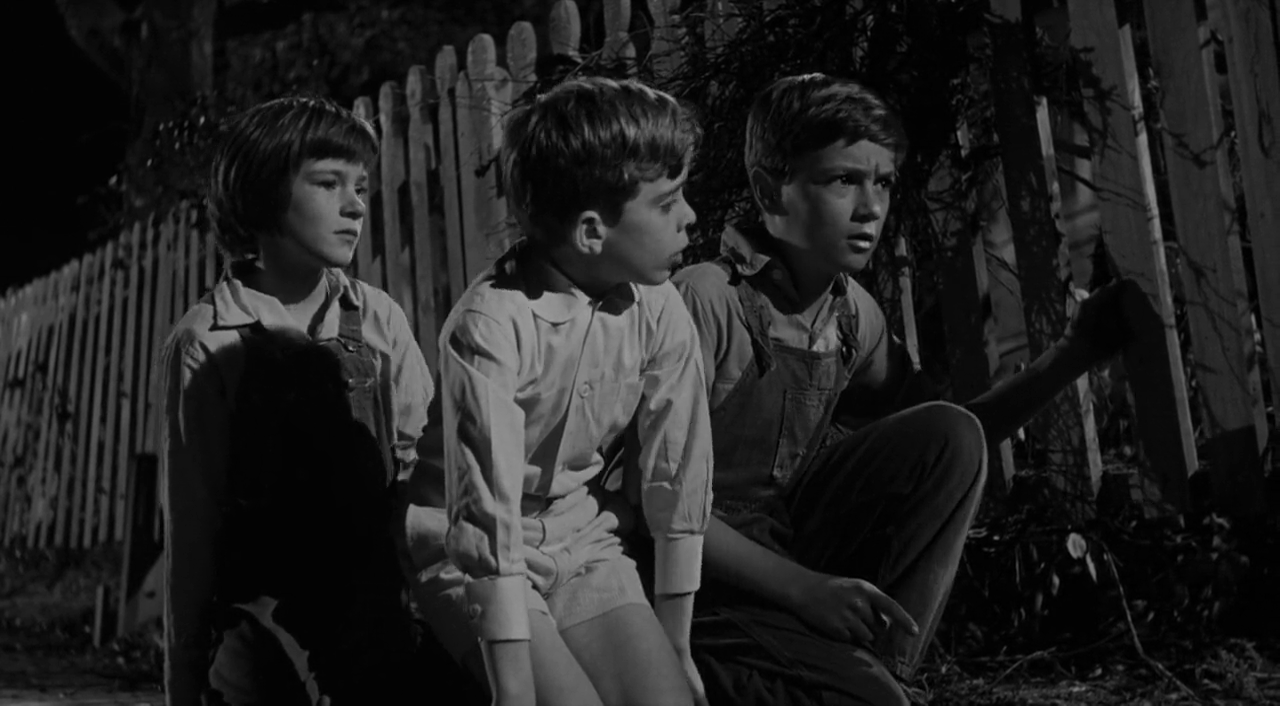
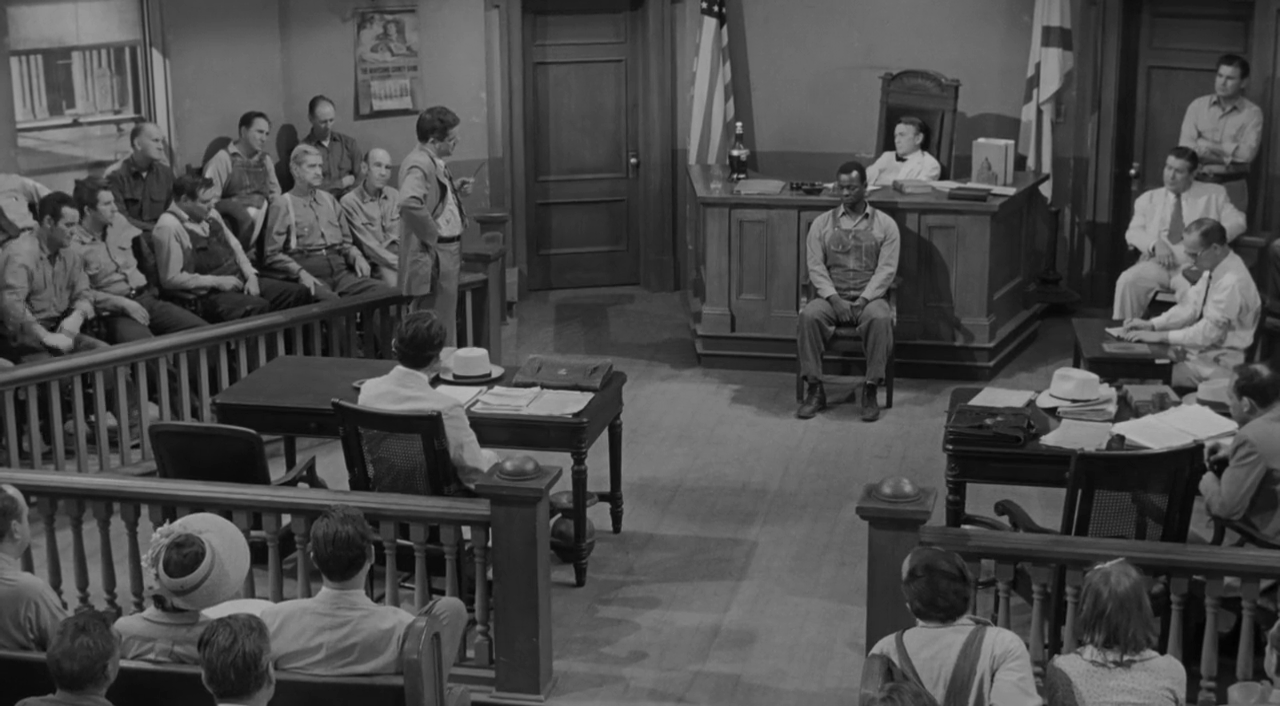
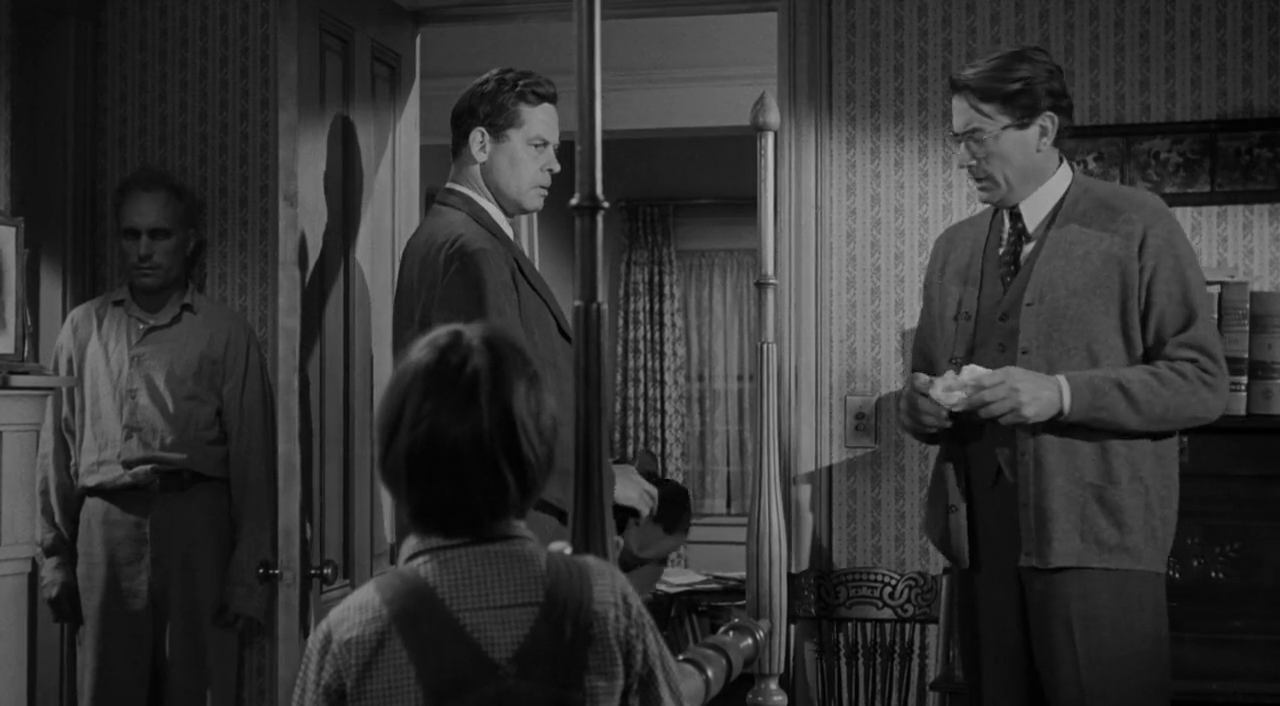
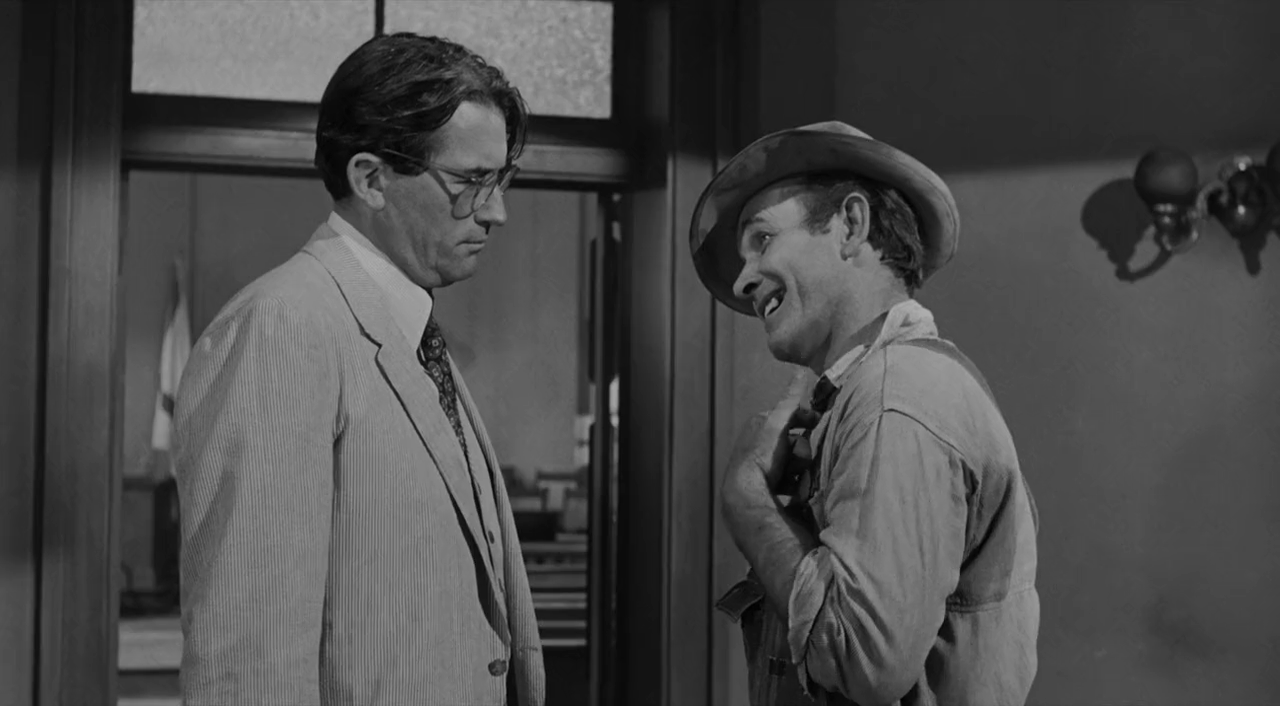
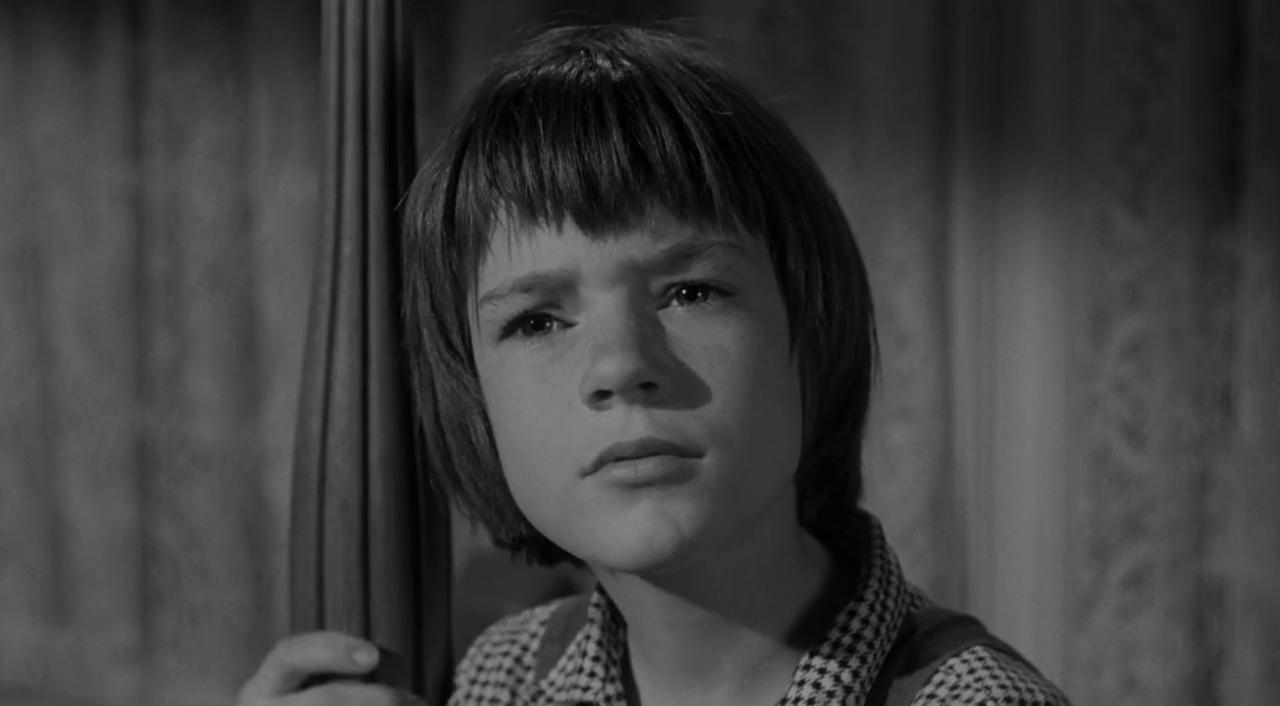
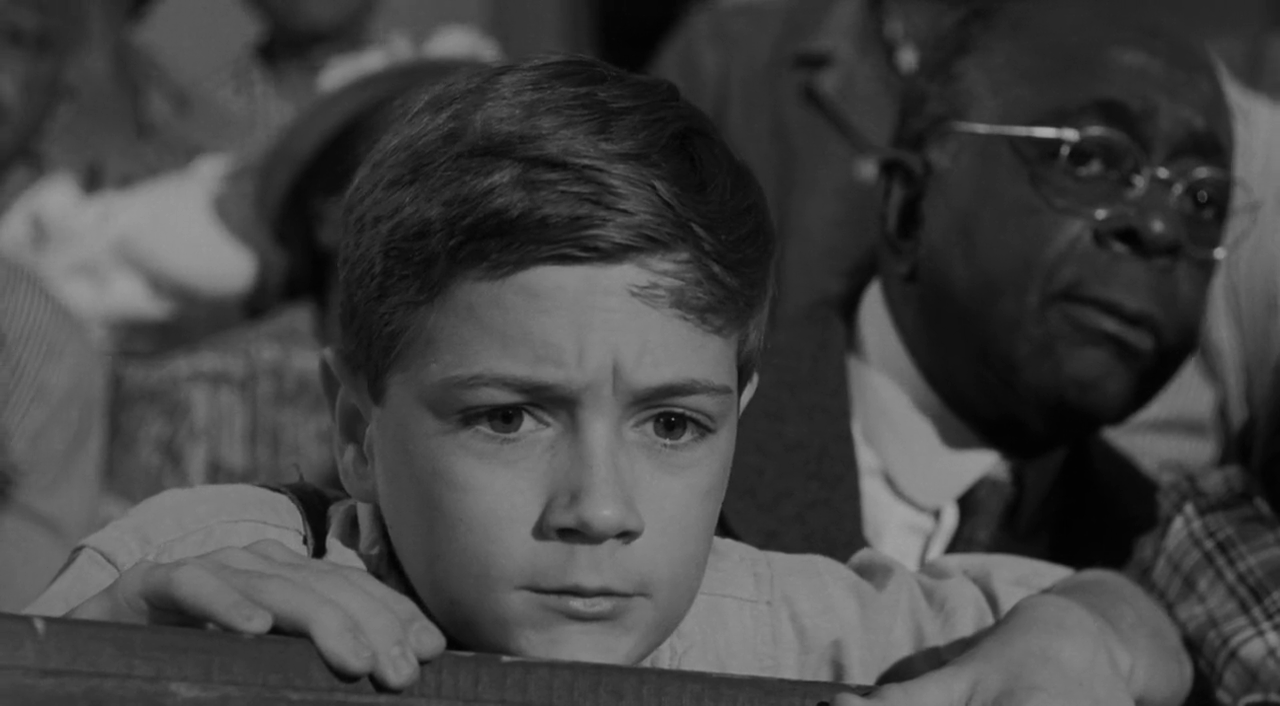
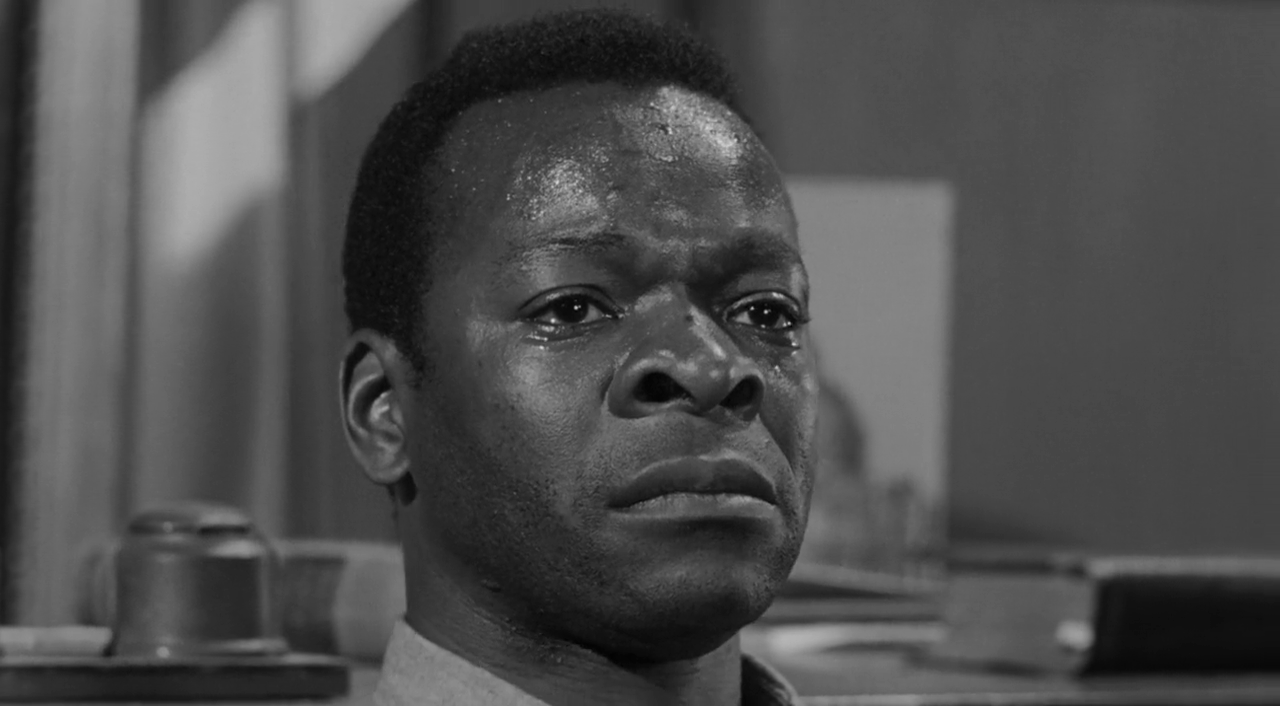
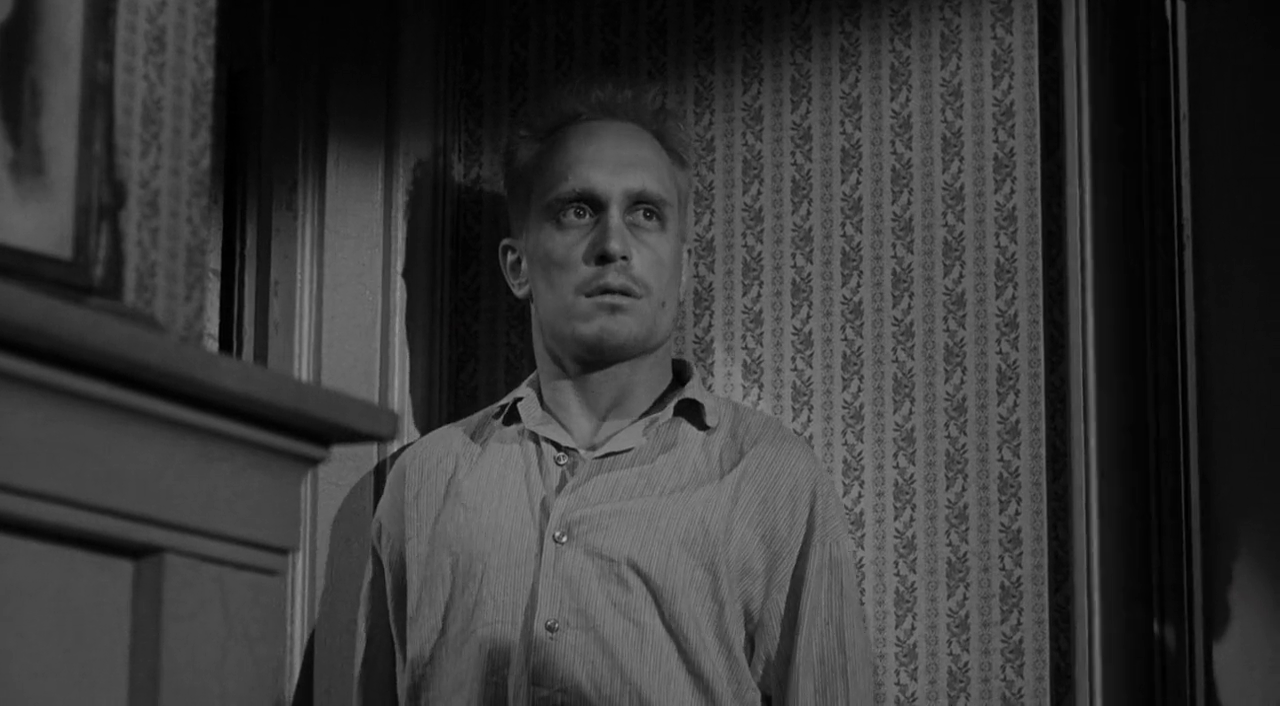
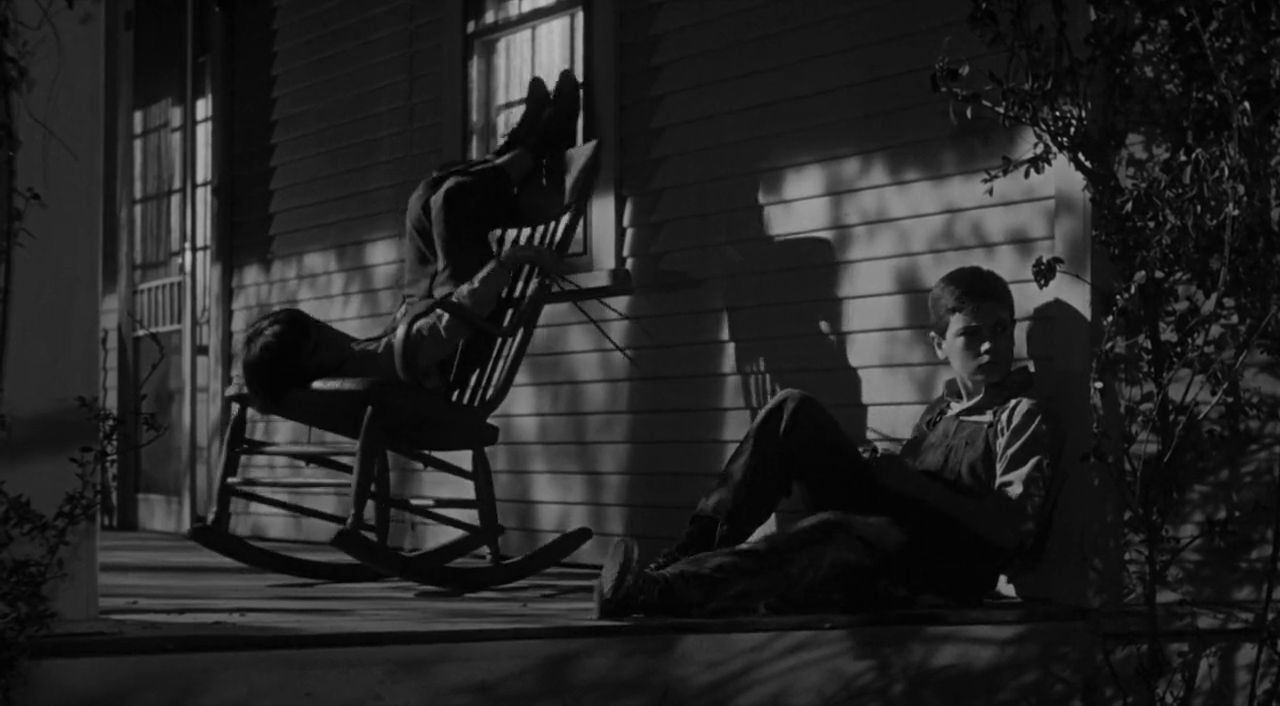
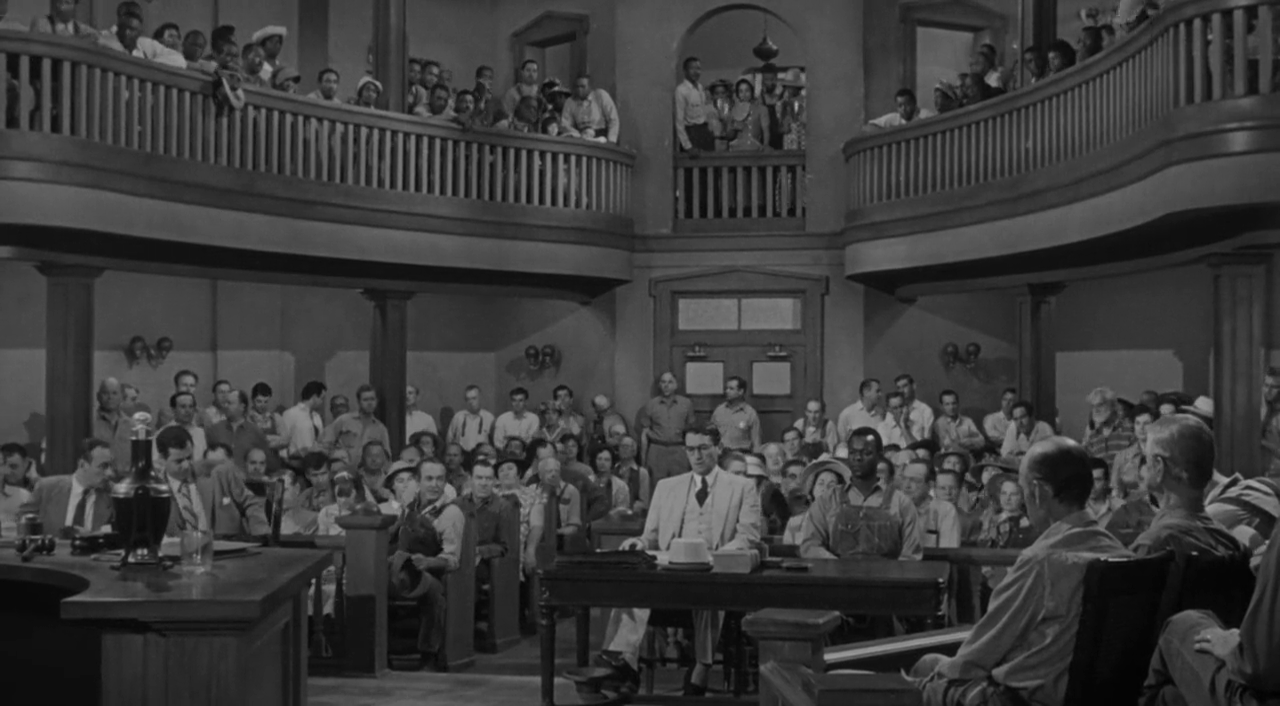
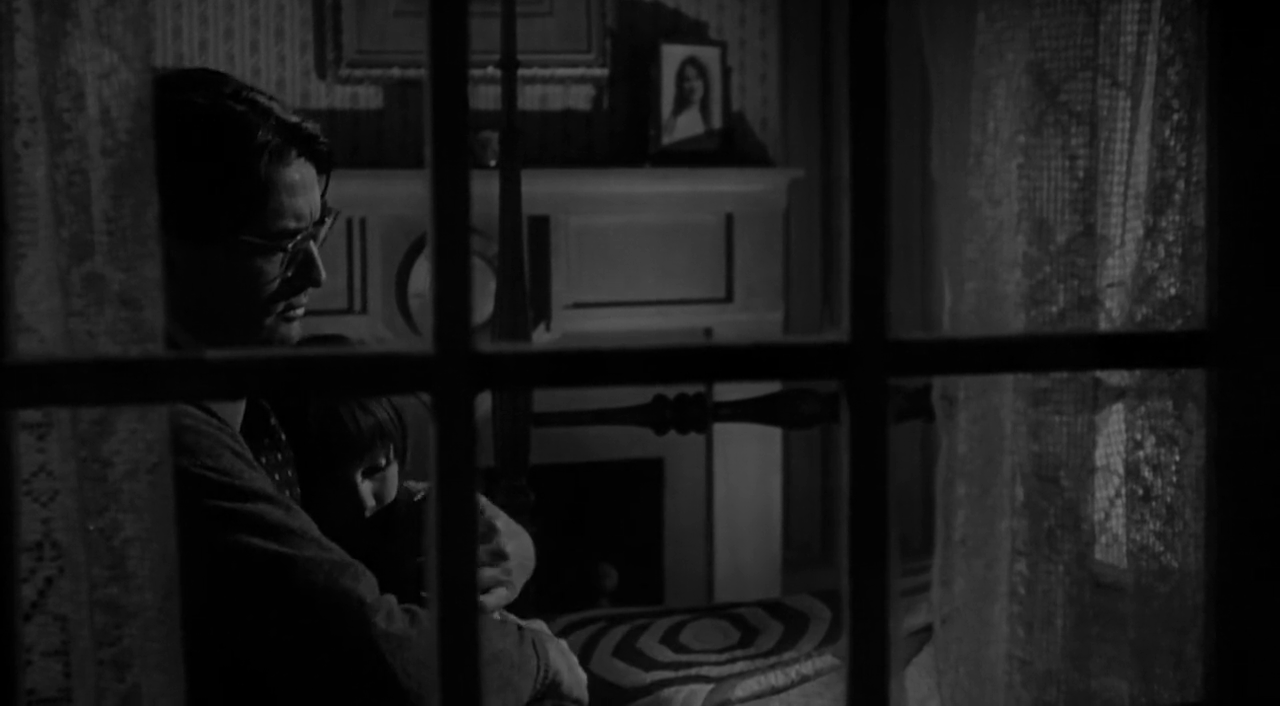
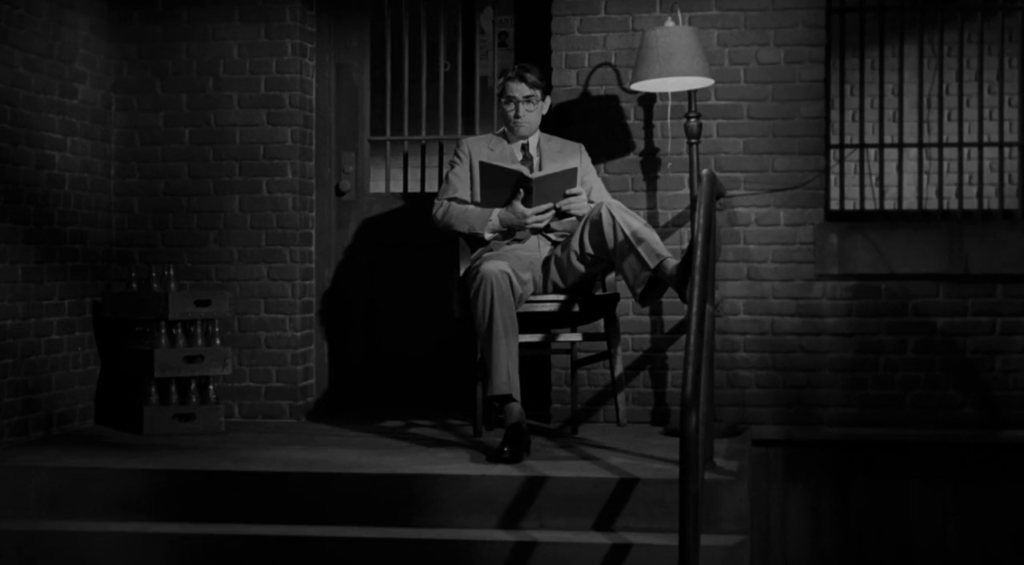
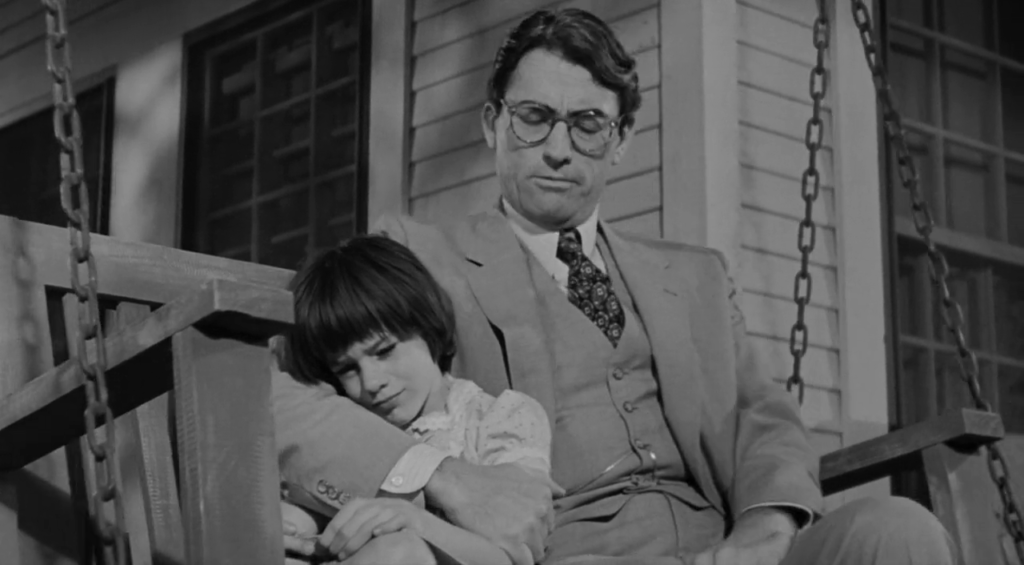
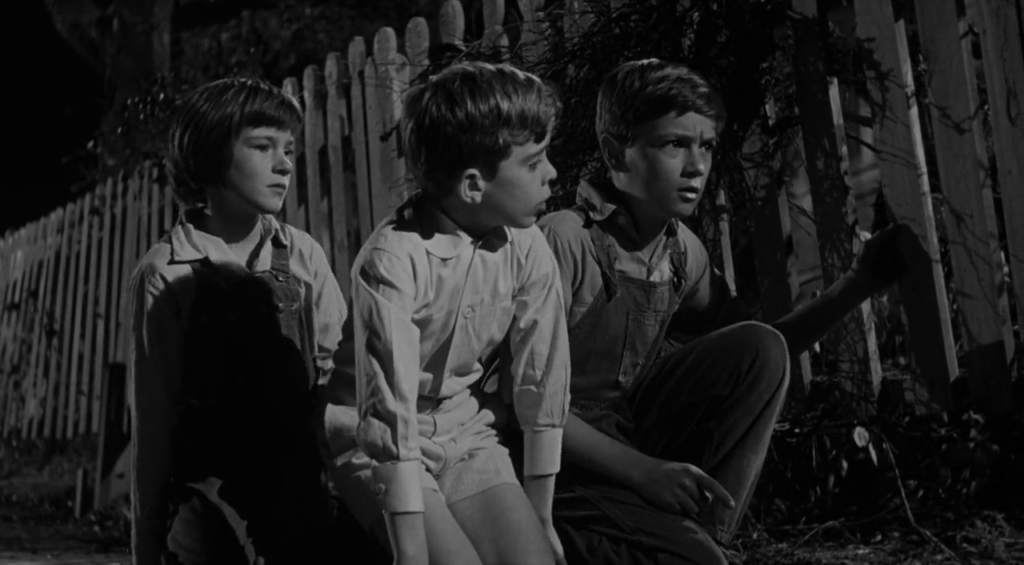
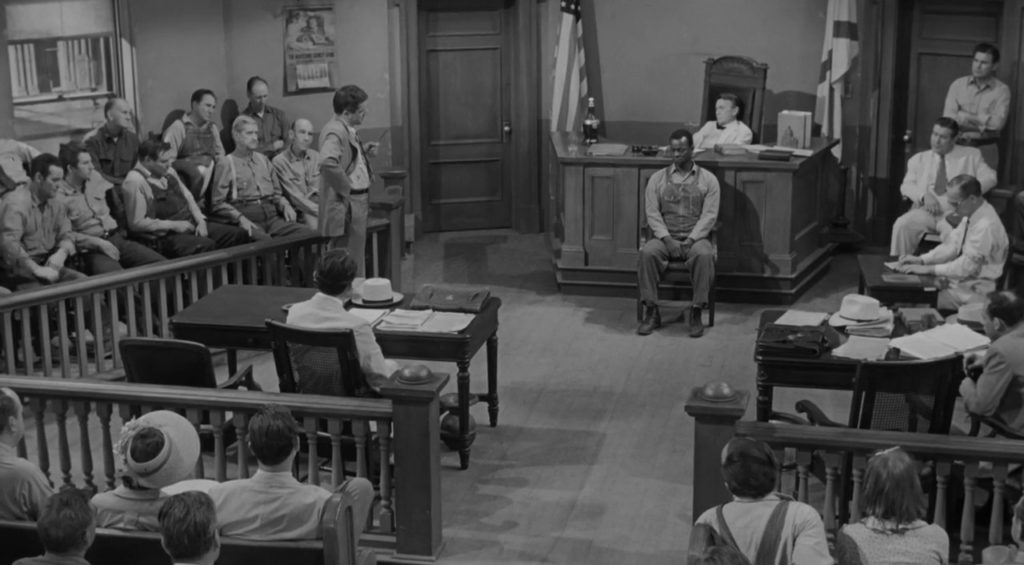
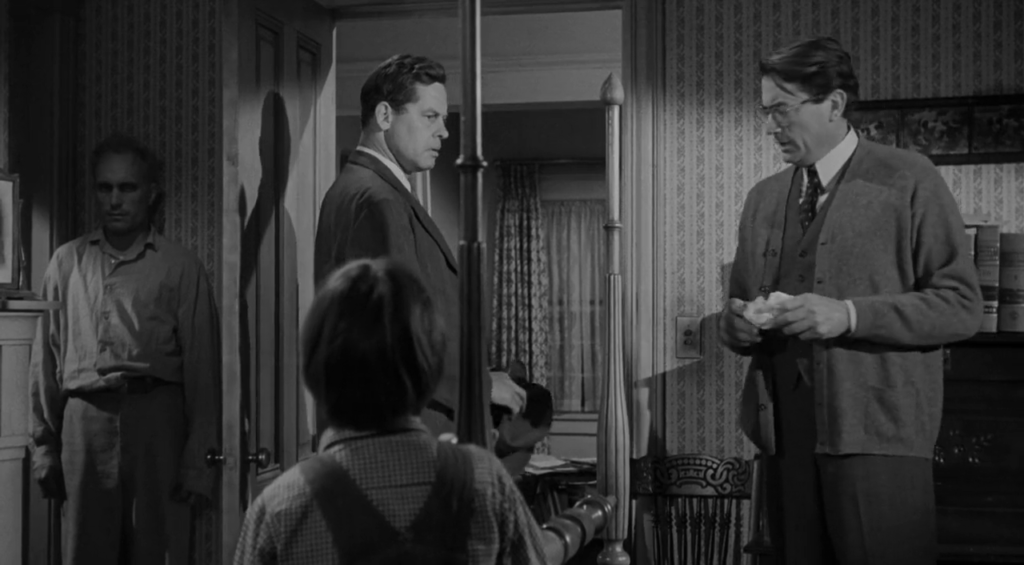
Review: I’m not sure this matters or is even accurate: Atticus openly acknowledges that his strategy will involve appealing the foregone conclusion (guilty) of a racist jury; his “deliberate, low-keyed courtroom summation” — which Peary wishes “had more fire” — makes complete sense in the context of his deeply racist town, where simply the act of defending an (innocent) black man can bring death threats to his family. Regardless of how one feels about Peck’s performance, To Kill a Mockingbird remains a classic on many levels — beginning with Elmer Bernstein’s instantly recognizable score, which is impossible to extricate from one’s experience of the film. Equally poignant is Atticus’s relationship with his kids: Peck most definitely was “the man you’d want for your father”, and it’s hard to believe any child watching this movie wouldn’t melt with envy at the sight of Atticus cuddling Scout (Badham) in his lap: … or allowing Jem (Alford) the opportunity to accompany him on a life-changing visit to Peters’ house. Speaking of Scout and Jem, the screenplay’s child-driven perspective (Kim Stanley narrates in flashback, as Scout-grown-up) is yet another successful facet: the entire story is framed within the nostalgia-tinged reminiscences of a young girl smitten by her father’s love, courage, and wisdom. TKAM could be viewed as a meditation on the universal desire — however fleeting — to admire one’s parent(s) as the epitome of all that is right about the world. Badham and Alford’s performances (neither pursued a long-term acting career) are among the best given by child actors; while Megna is fine as young Truman Capote (er, “Dill”), he’s clearly more suited to a supporting role. Peters, previously cast as villains, is heartbreaking as the wrongly accused man who had the temerity to “feel sorry for a white woman”; his impossible situation highlights racism’s toxic blight on humanity, a reality which Horton Foote doesn’t shy away from in his adapted screenplay. With that said, it’s a little disconcerting SPOILER ALERT how abruptly the narrative shifts in the final half-hour from Peters’ brutal murder to the subplot about a mysterious, “ultra-white” neighbor (Duvall) who saves Atticus’s kids. Ultimately, however, the ending vividly illustrates the need for decent individuals to protect one another no matter the cost, and for diversity to be not only accepted but embraced. Redeeming Qualities and Moments:
Must See? Categories
(Listed in 1001 Movies You Must See Before You Die) Links: |
“You know dear, we’re drifting apart, you and I — and I don’t like it.”
|
Synopsis: |
|
Genres:
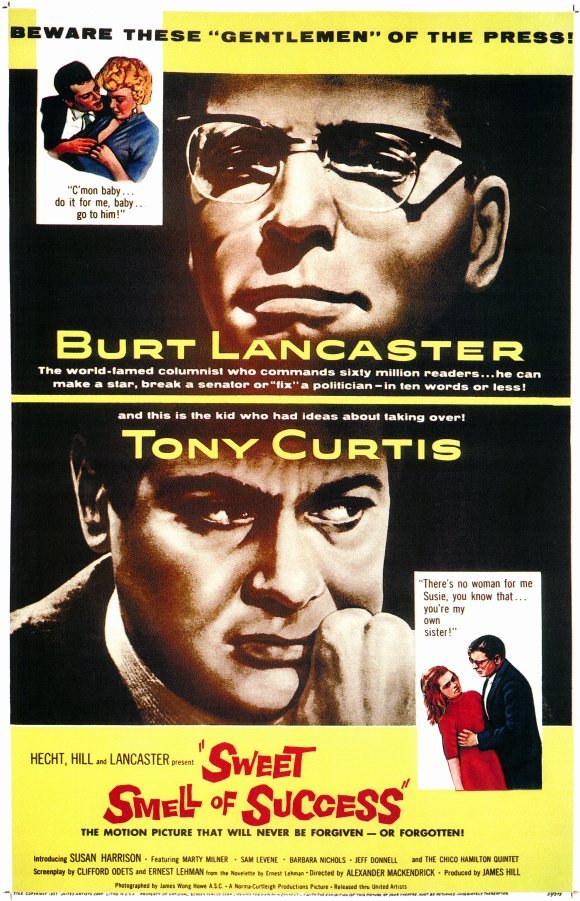
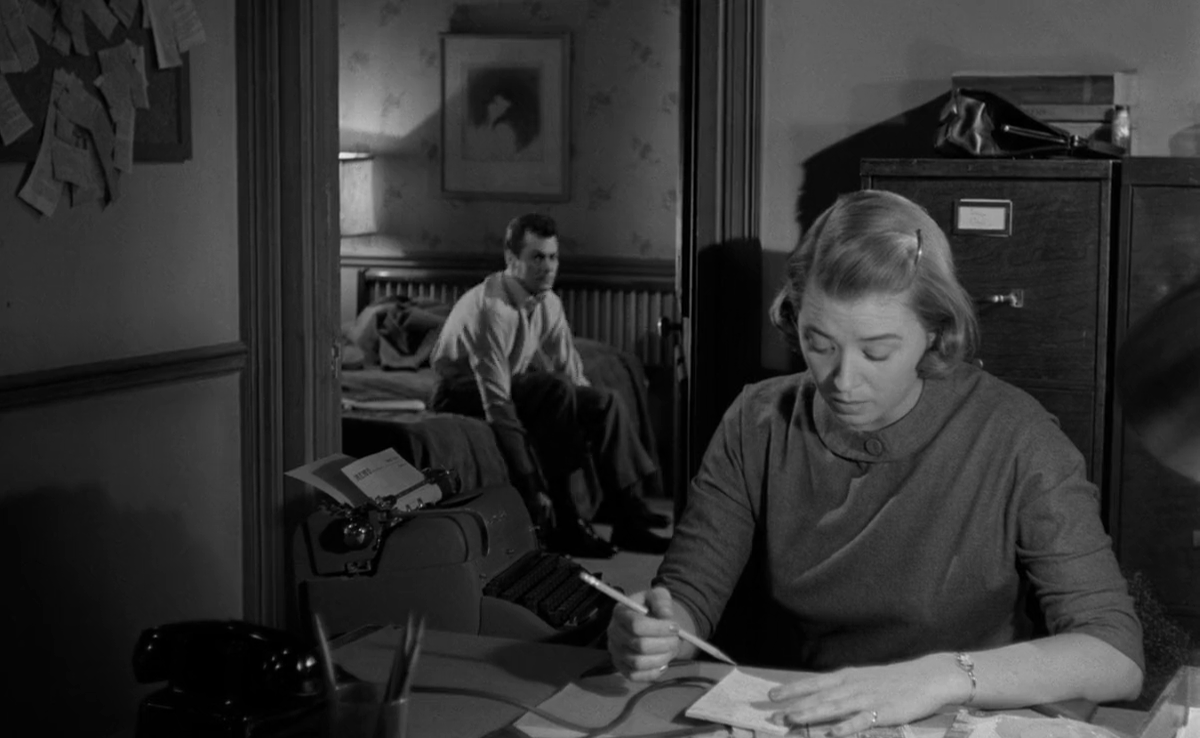
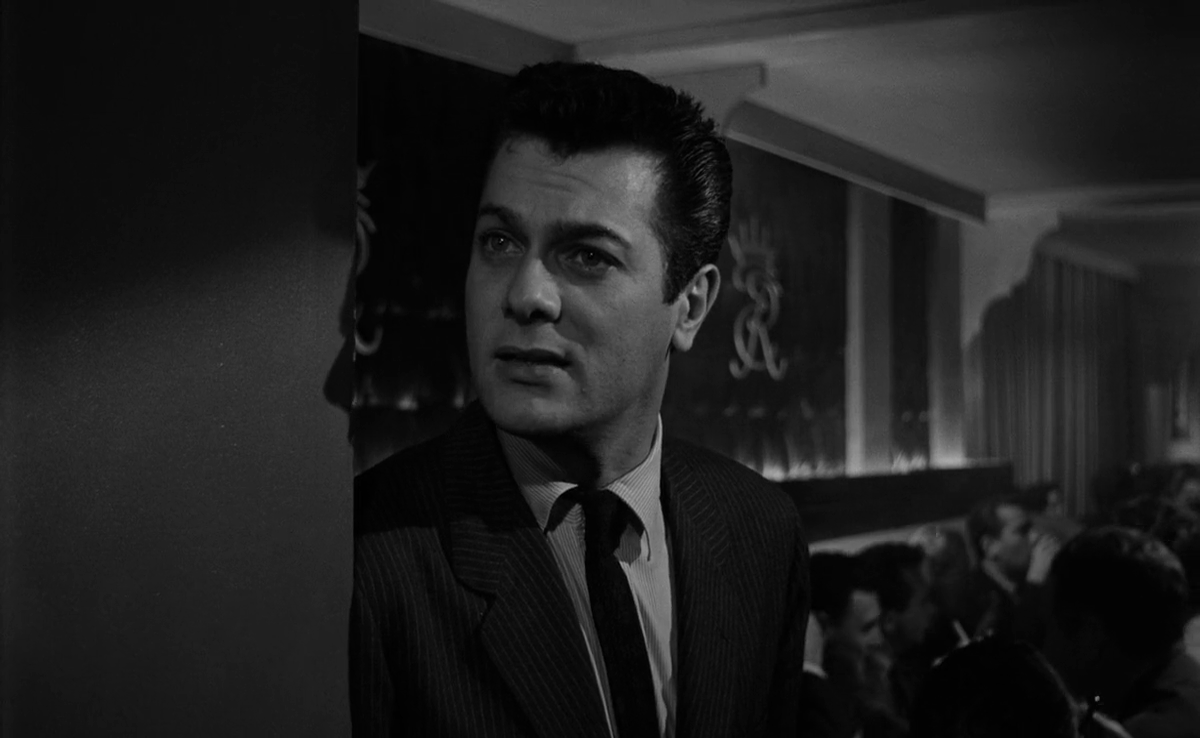
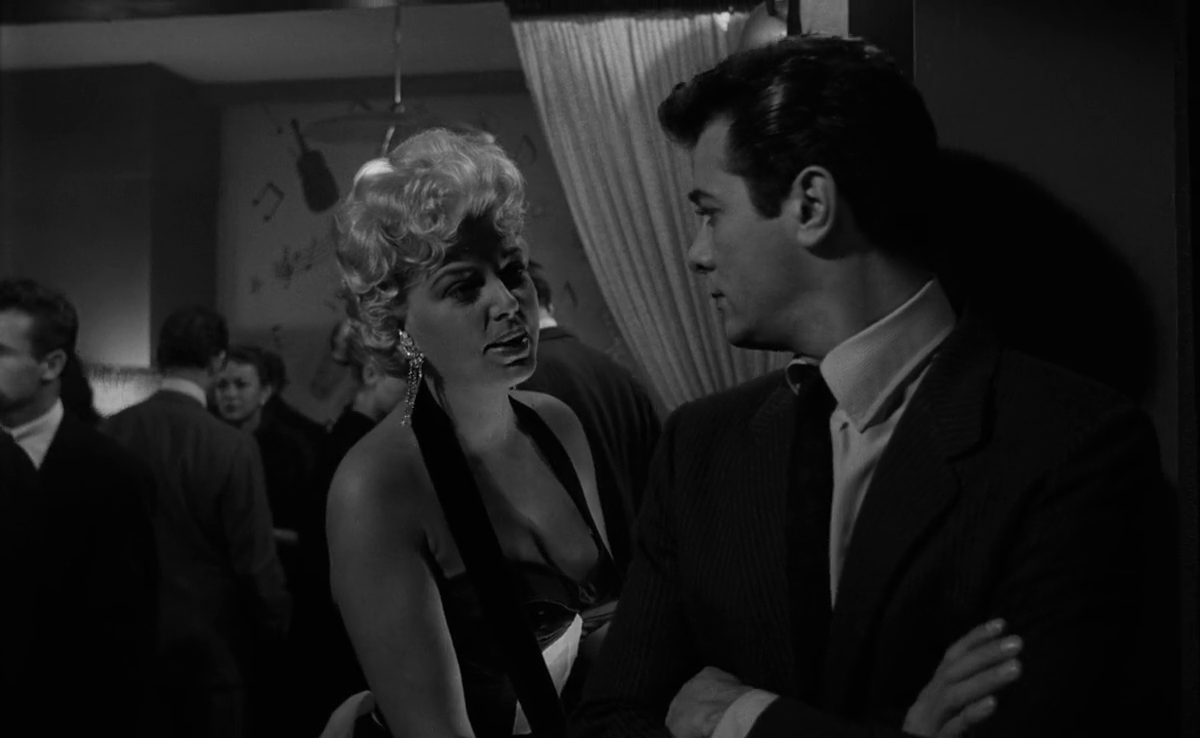
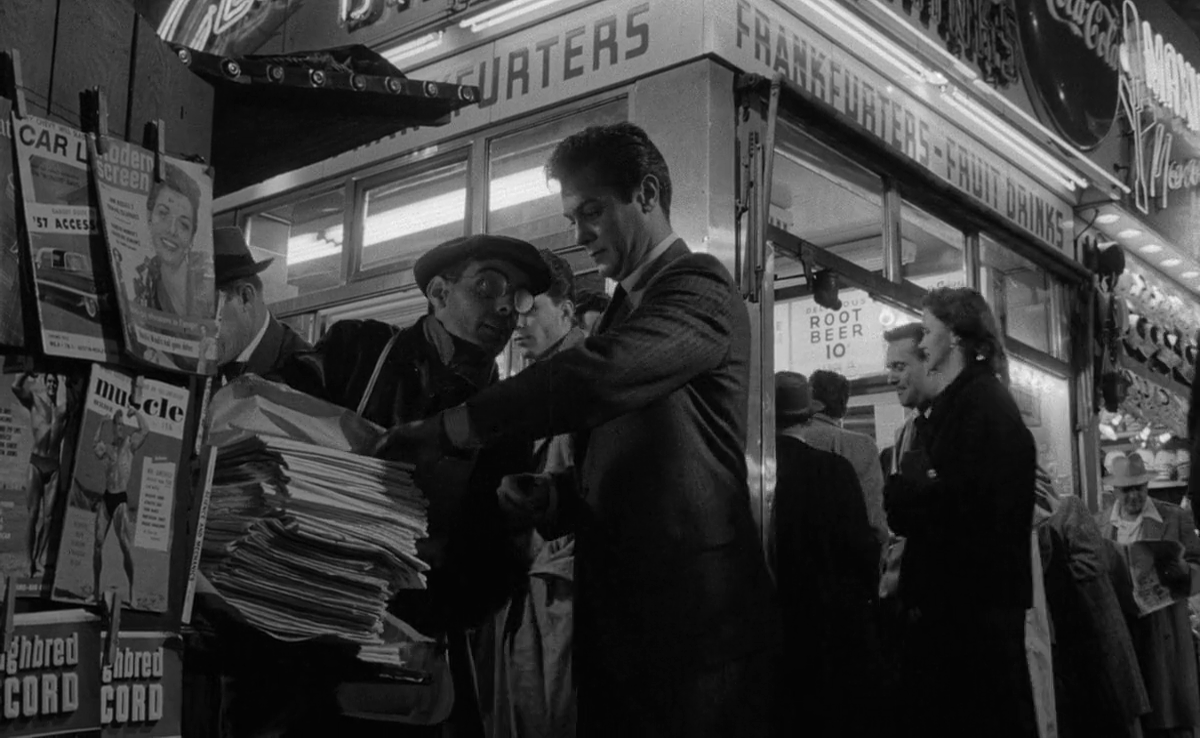
Response to Peary’s Review: (Hunsecker was reportedly based on Walter Winchell, who was similarly upset about his daughter’s romance — but there’s a difference.) Other distressing scenes and characters abound. Early in the film we’re shown Curtis entering his apartment/office, where his deeply despondent, love-sick, homely secretary (Jeff Donnell) lies on his behalf and makes it clear she’s at his beck and call no matter how badly he treats her. (“So, what’ll you do if I feel nervous?” he taunts her. “Open your meaty, sympathetic arms?”) Meanwhile, in a nightclub, Hunsecker viciously tears into a politician (William Forrest) naively attempting to pass his mistress (Autumn Russell) off as the ward of a talent agent (Jay Adler). Shortly after this, Curtis blackmails a buxomy, sympathetic cigarette-girl (Barbara Nichols) into sleeping with a lecherous reporter (David White) so that White will help out Curtis’s cause by printing something unsavory in his column about Milner. Despite its challenging moral landscape, however, the film remains compulsively watchable, thanks to a script chock-full of zingy one-liners:
and typically stunning, noir-ish cinematography by James Wong Howe. (Be sure to check out TCM’s article “Behind the Camera” for fascinating insights into Howe’s craft and decision making.) Excellent use is made of New York locales: we feel we’re trapped in this city’s snare of publicity and sleaze, with Elmer Bernstein’s jazzy score simply adding to the hectic surrealism. While it’s true, as Peary writes, that “Milner and Harrison seem out of place” in the film, Curtis and Lancaster — and other supporting players — are top-notch. All film fanatics should view this grueling film at least once (and probably again), though they’re excused for not wanting to revisit it often. Redeeming Qualities and Moments:
Must See? Categories
(Listed in 1001 Movies You Must See Before You Die) Links: |
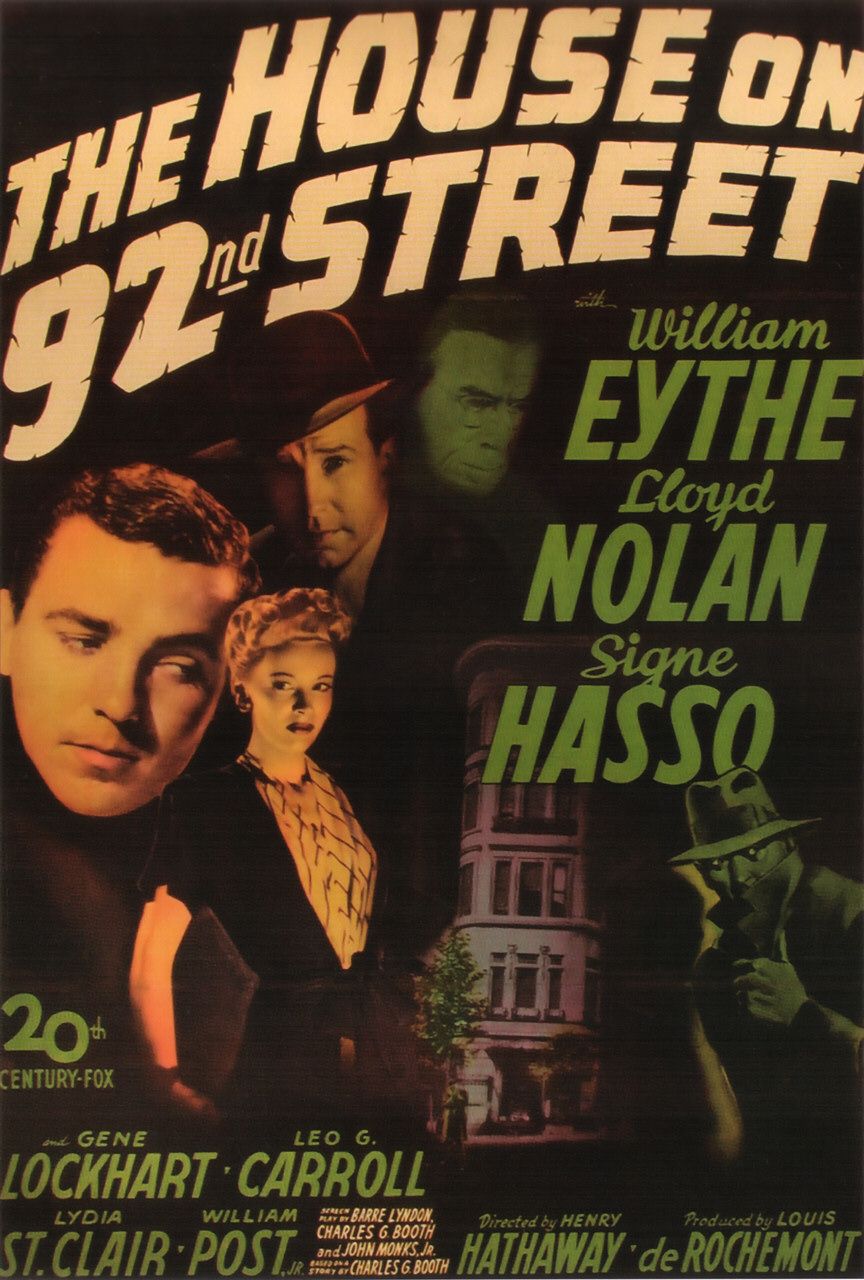
“The Germans felt that Dietrich was an extremely valuable man; so did the FBI.”
|
Synopsis: |
|
Genres, Themes, Actors, and Directors:
Review: … the dialogue is clunky, and lead actor Eythe isn’t all that memorable (likely intentionally so, given that he was playing someone attempting to remain calm and discrete). Sadly, Sebold apparently had a very challenging time of it after his life-threatening efforts on behalf of the United States; a book about this unsung hero was recently released. Redeeming Qualities and Moments: Must See? Links: |
“Yesterday, Jean Dexter was just another pretty girl. But now she’s the marmalade on a hundred thousand pieces of toast.”
|
Synopsis: |
|
Genres, Themes, Actors, and Directors:
Review:
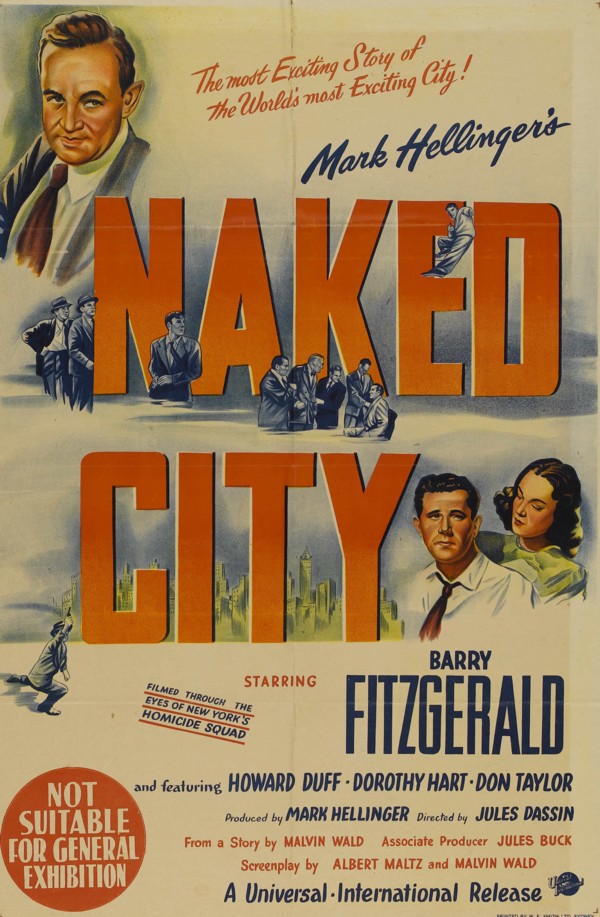
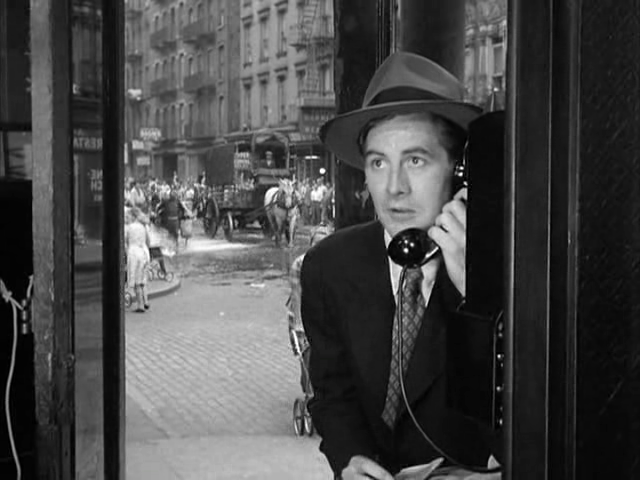
(Be sure to check out TCM’s article for fascinating background info on Hellinger, who was apparently quite a character.) Meanwhile, Barry Fitzgerald and Don Taylor: … are far too straight-out-of-Hollywood as the detective duo assigned to investigate the murder, and Howard Duff is pretty bland as the key player in the intrigue. The true power of this flick lies in its many shots of New York City in the late 1940s; to that end, it serves as an invaluable cinematic time capsule. Redeeming Qualities and Moments:
Must See? Links: |
“Time presses — and I’ve run out of means of persuasion.”
|
Synopsis: |
|
Genres, Themes, Actors, and Directors:
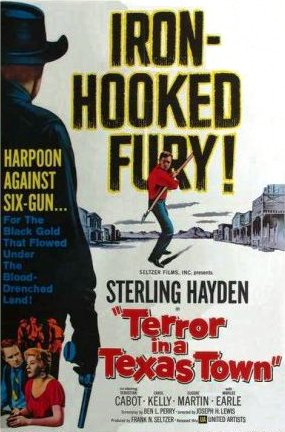
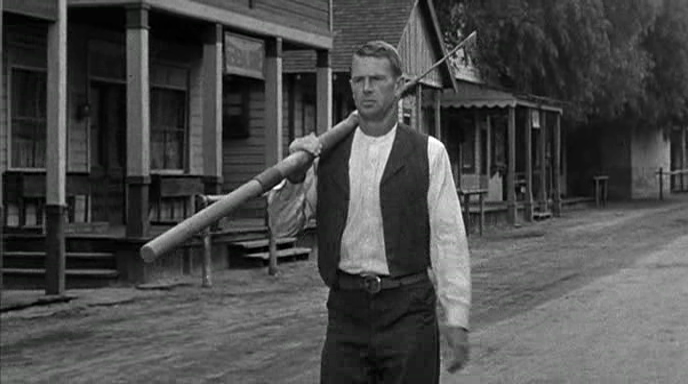
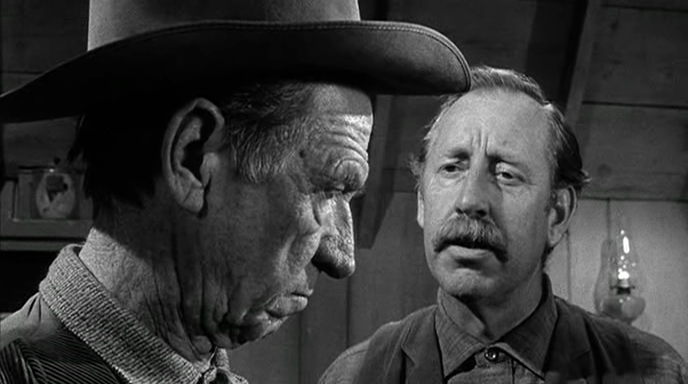
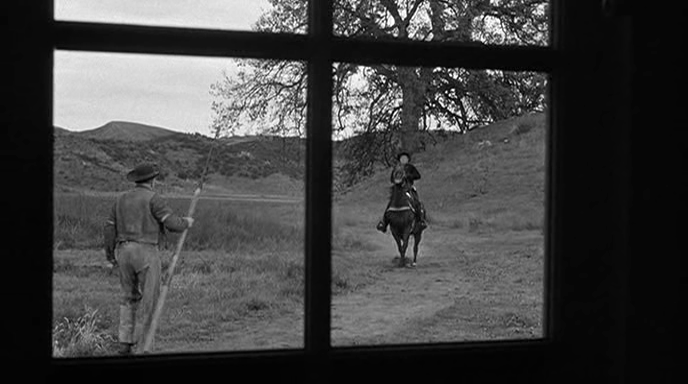
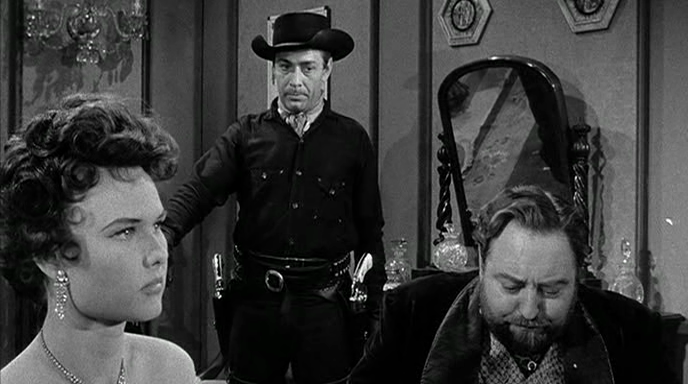
Review: … and we also see Frank Ferguson — who played Marshal Williams in …Guitar — in a key supporting role. Unfortunately, once Hayden opens his mouth, disbelief must be suspended: his Swedish accent is highly dubitable, and comes and goes randomly. Young is menacing but not especially memorable as the key baddie (where are Lee Van Cleef or Lee Marvin when you need them?). However, Joseph H. Lewis’s unique directorial stamp makes this film worth a look; see stills below. Redeeming Qualities and Moments: Must See? Links: |
“I did something wrong once.”
|
Synopsis: |
|
Genres, Themes, Actors, and Directors:
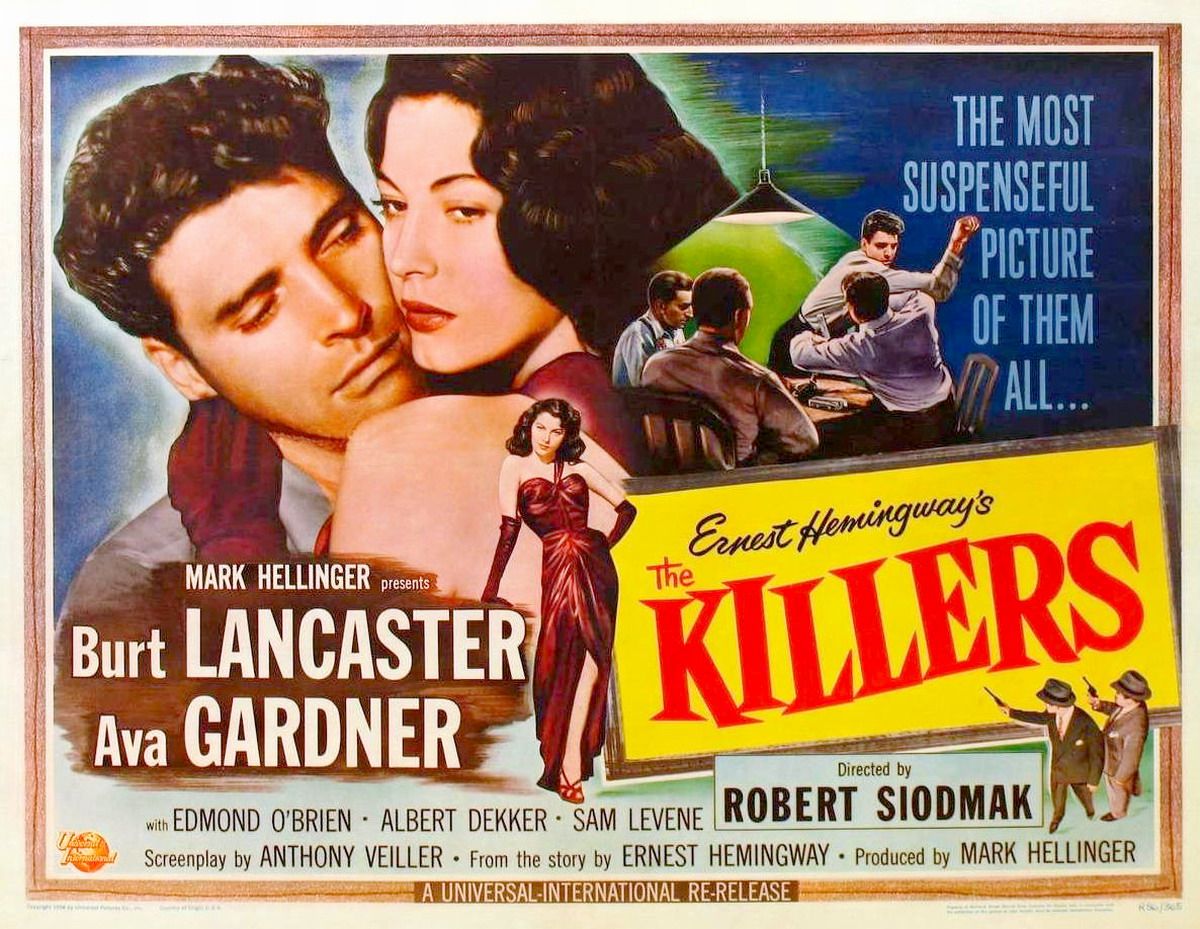
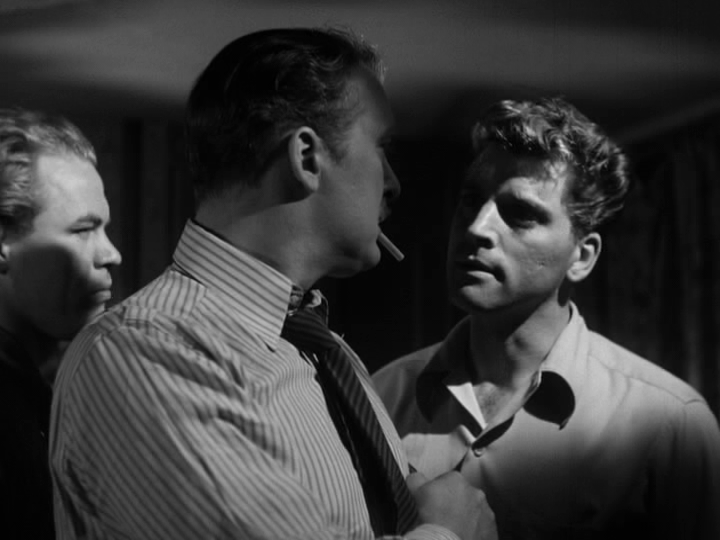
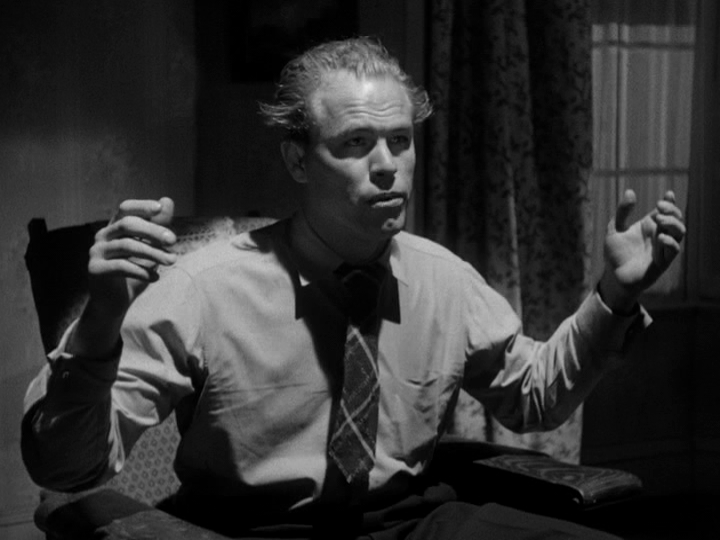
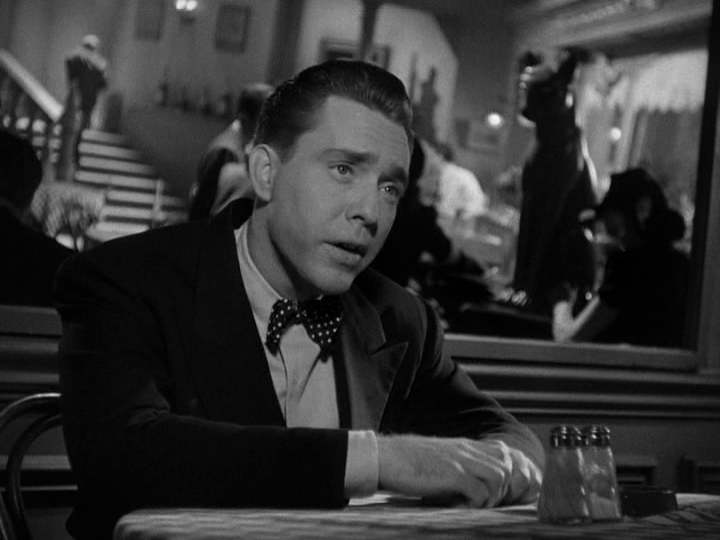
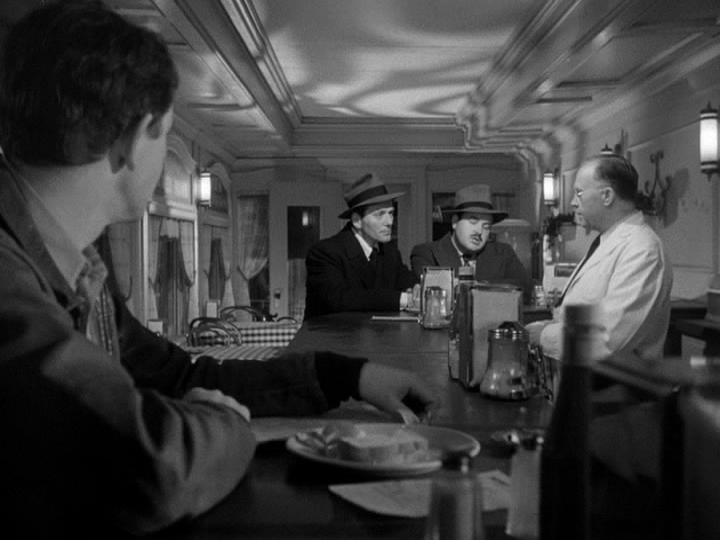
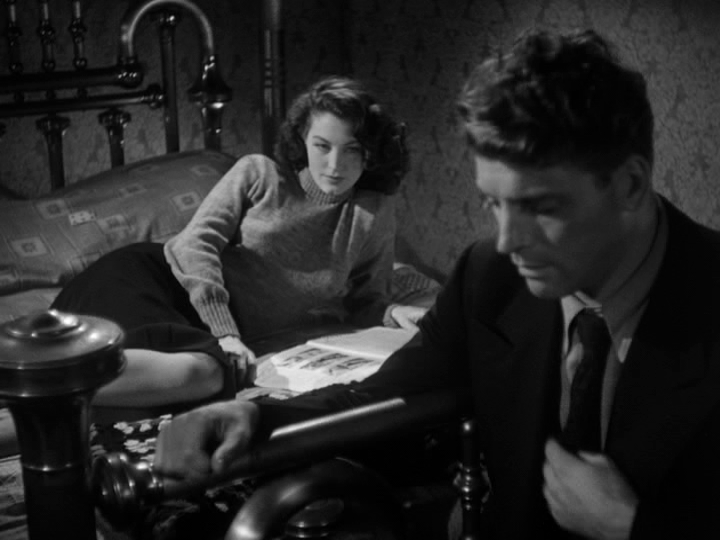
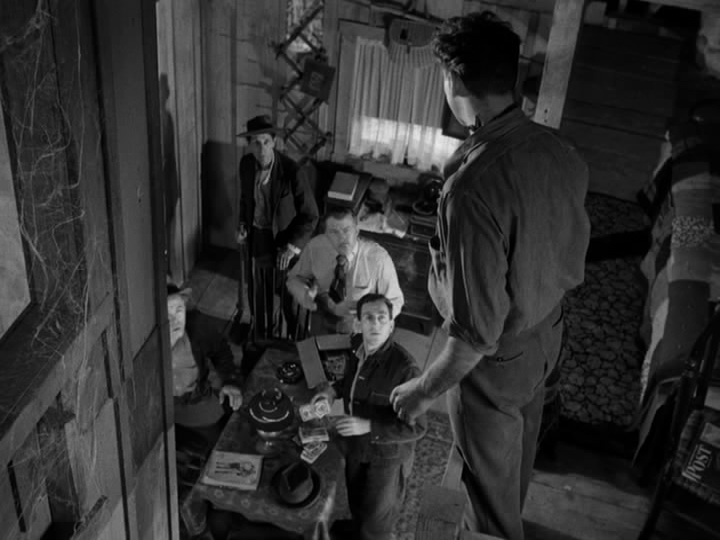
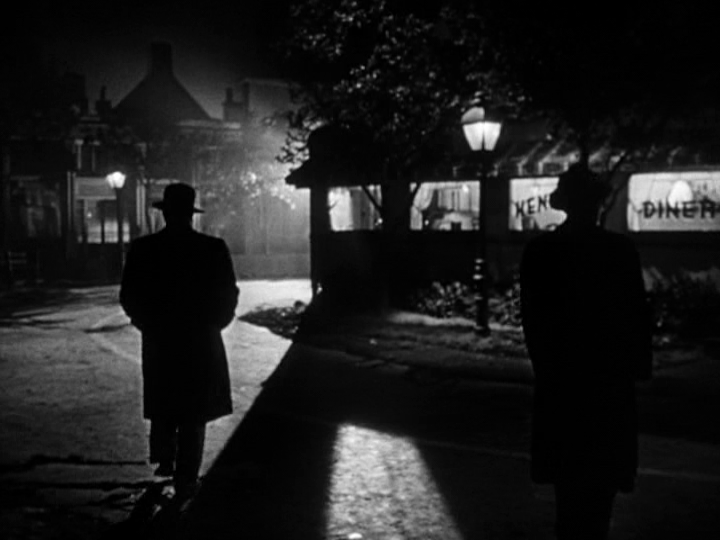
Response to Peary’s Review: Peary writes that Lancaster is “somewhat stiff but okay in his movie debut”, though I actually find him perfectly suited for his cipher-role as a duped noir chump who we learn about exclusively through the memories of those who knew him — including his policeman-friend (Sam Levene), his former girlfriend (Virginia Christine), and a crook named Dum Dum (Jack Lambert). Gardner is sexy and charismatic, but primarily a noir icon rather than a fully-fledged character — at least until her “final, loopy moments on the screen” when she shows evidence of “strong dramatic acting”. O’Brien is really the film’s primary protagonist: despite being given multiple gentle warnings by his boss (Donald MacBridge) to stop wasting time on the case, he persists out of sheer determination, ensuring we learn the truth about the Swede! However, it’s Elwood Bredell’s atmospherically noir-ish cinematography that remains the film’s true stand-out, with many visually memorable scenes — including the highly tense opening sequence in the diner. The 1964 remake by Don Siegel is also worthy viewing; both films are enjoyable in different ways. Redeeming Qualities and Moments:
Must See? Categories
(Listed in 1001 Movies You Must See Before You Die) Links: |
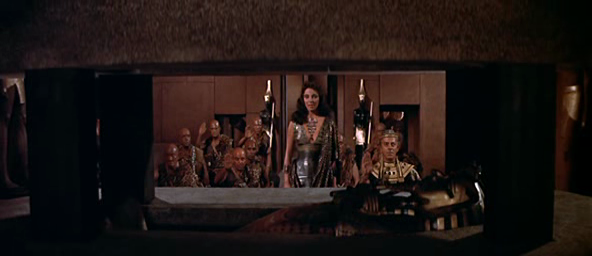
“What reason is there to build a pyramid to hold a tomb if the tomb may be violated?”
|
Synopsis: |
|
Genres, Themes, Actors, and Directors:
Response to Peary’s Review: Redeeming Qualities and Moments: Must See? Categories
Links: |

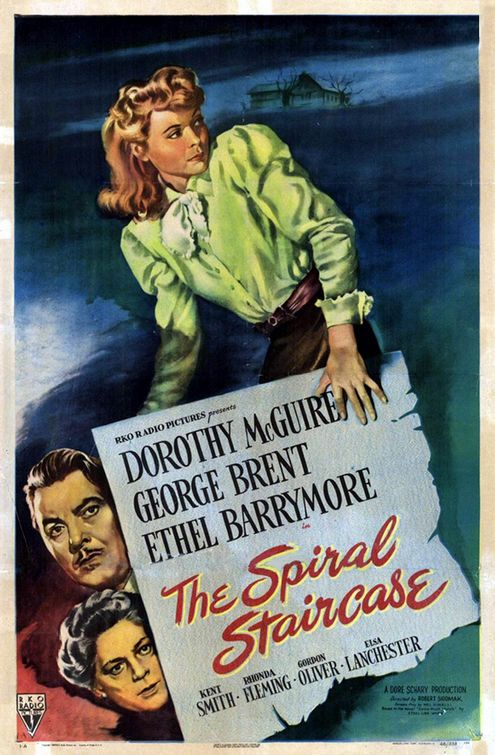
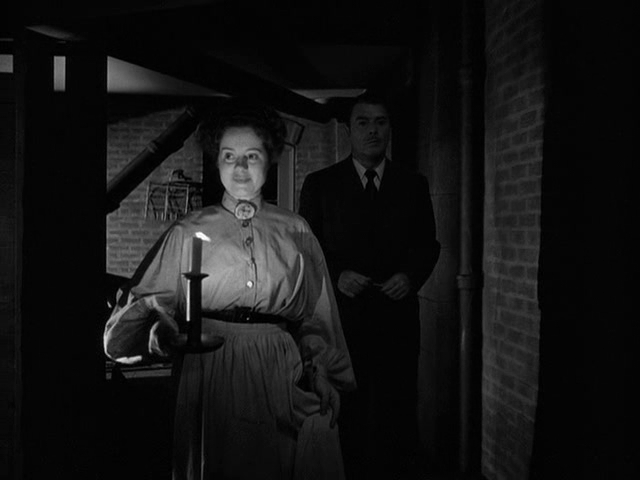
“Even with her eyes shut, she seems to be watching you like an evil spirit.”
|
Synopsis: |
|
Genres, Themes, Actors, and Directors:
Response to Peary’s Review: Redeeming Qualities and Moments: Must See? Links: |