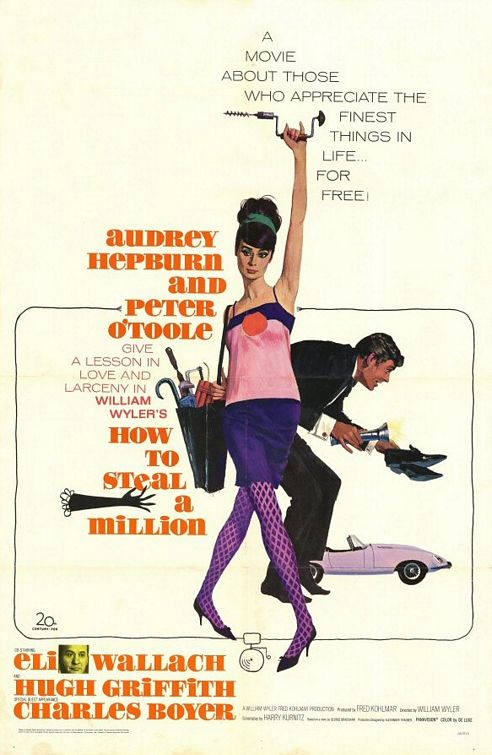
How to Steal a Million (1966)
“Pappa, I keep telling you: when you sell a fake masterpiece, that is a crime!”
|
Synopsis: |
|
Genres, Themes, Actors, and Directors:
Review: Redeeming Qualities and Moments:
Must See? Links: |
“Pappa, I keep telling you: when you sell a fake masterpiece, that is a crime!”
|
Synopsis: |
|
Genres, Themes, Actors, and Directors:
Review: Redeeming Qualities and Moments:
Must See? Links: |
“The ranchers’ empire, a vast grazing land — a once endless territory now divided and cut by farmers’ fences.”
|
Synopsis: |
|
Genres, Themes, Actors, and Directors:
Review: Redeeming Qualities and Moments:
Must See? Links: |
“Life must be lived; one has to move on!”
|
Synopsis: |
|
Genres, Themes, Actors, and Directors:
Response to Peary’s Review: Redeeming Qualities and Moments:
Must See? Links: |
“I will not be responsible for what happens to us if you make me give up my protections!”
|
Synopsis: |
|
Genres, Themes, Actors, and Directors:
Review: Redeeming Qualities and Moments:
Must See? Categories
Links: |
“This is, I think, a two-pipe problem.”
|
Synopsis: |
|
Genres, Themes, Actors, and Directors:
Review:
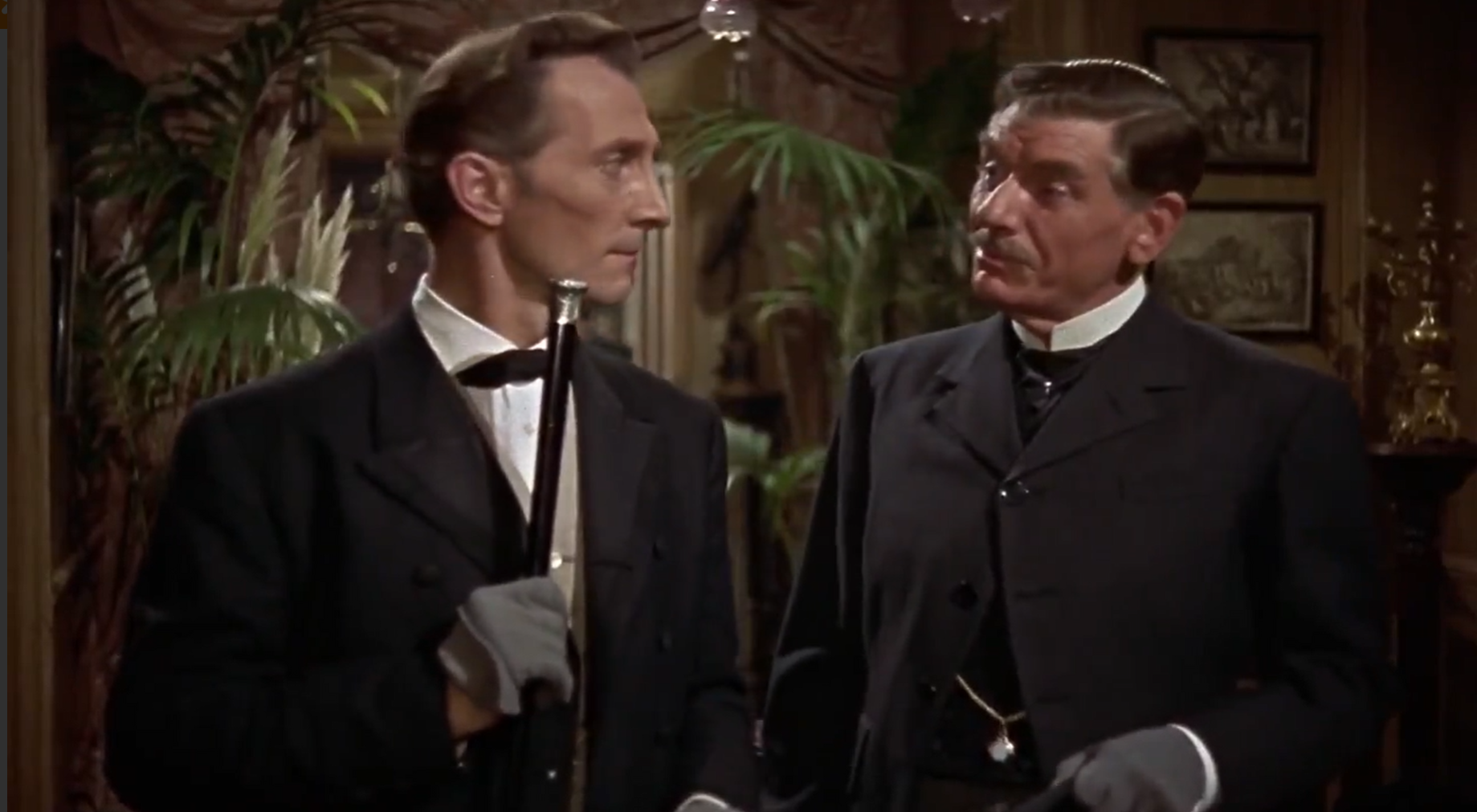
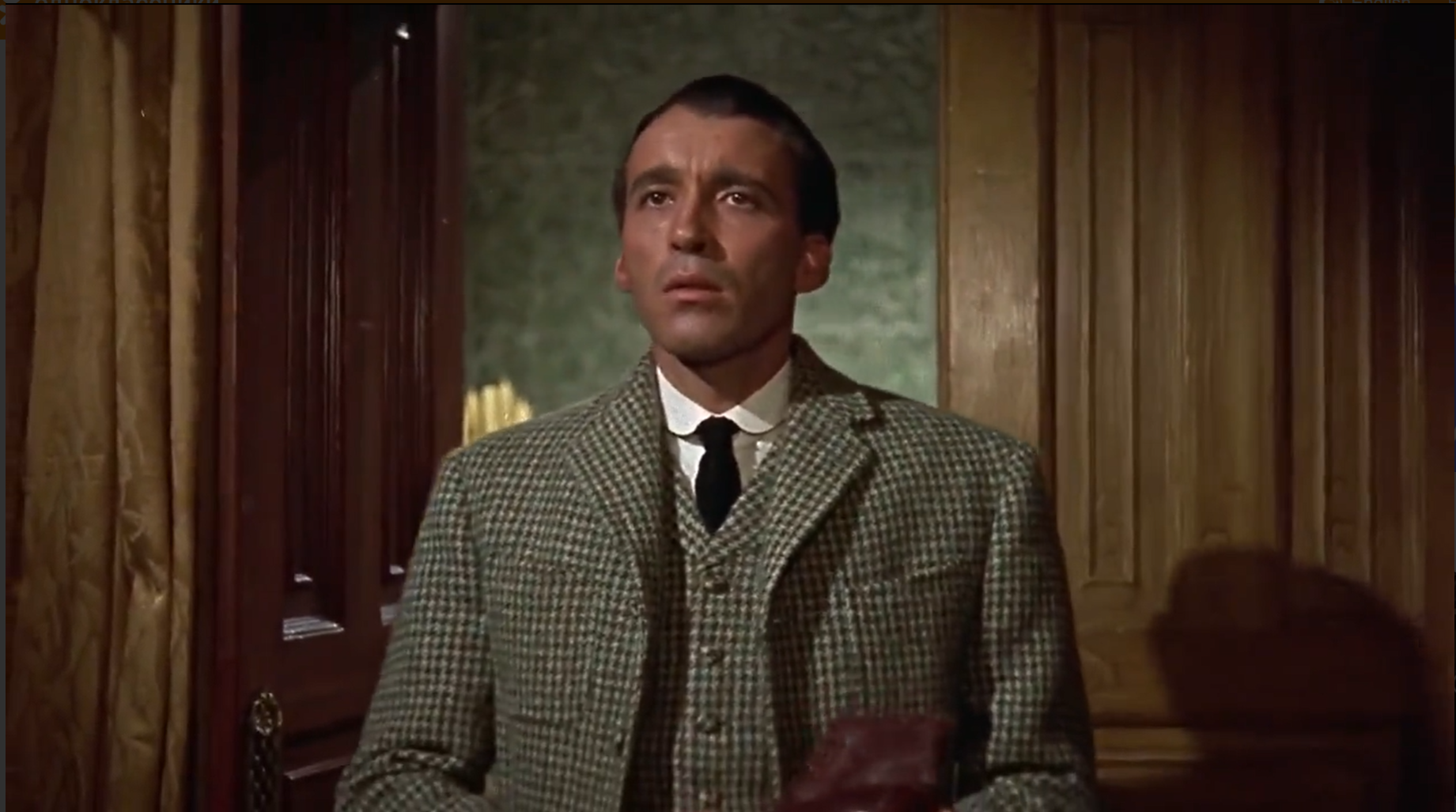
Meanwhile, Lee is miscast in the central role as an heir whose life is in perpetual danger; we’re so used to reading sinister overtones into Lee’s every move that it feels awfully strange to realize he’s simply a neutral foil here.
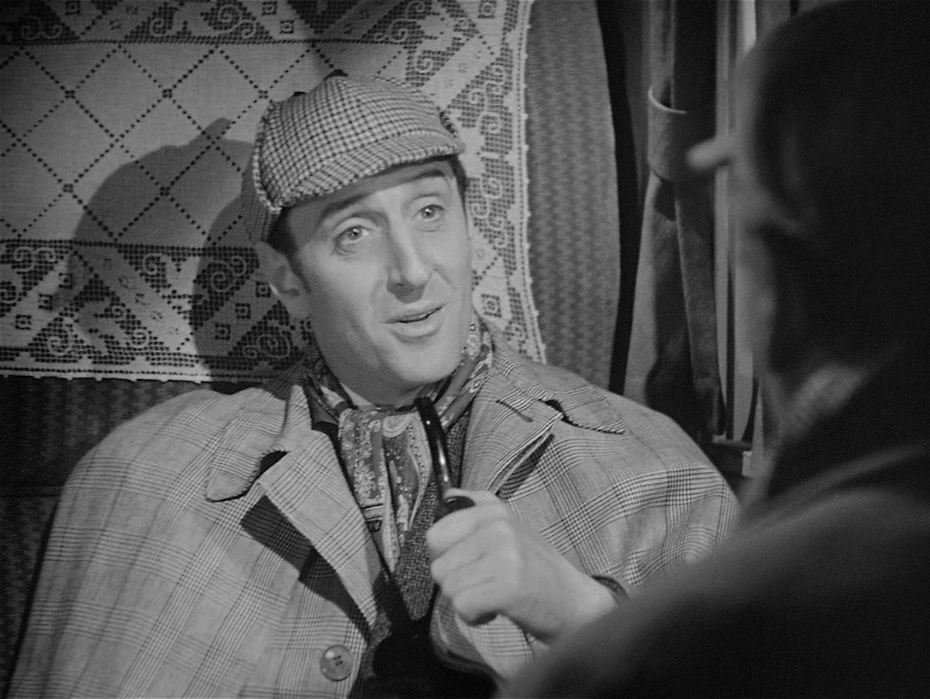
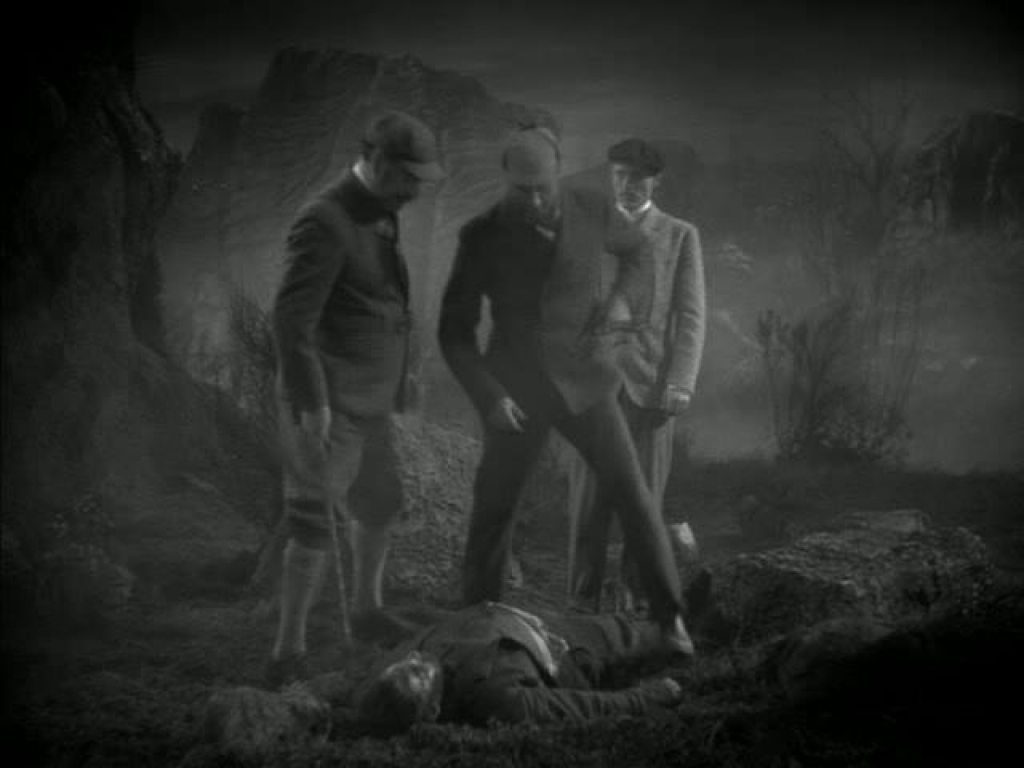
Jack Asher’s color cinematography is lush and beautiful to look at but doesn’t evoke the same level of menace as the black-and-white hues of this film’s celebrated 1939 predecessor. The narrative itself remains relatively faithful to the original story, while incorporating some additional horror elements (i.e., a lethal tarantula) to satisfy those who associate “Hammer Studios” with overt chills and thrills; unfortunately, however, the dramatic finale with the “hound” is far from menacing — again, it was better handled in the 1939 version, which is ultimately the one I recommend film fanatics check out instead. Redeeming Qualities and Moments:
Must See? Links: |
“Mr. Holmes, you’re the one man in all England who can help me.”
|
Synopsis: |
|
Genres, Themes, Actors, and Directors:
Response to Peary’s Review: Note: I was inspired to revisit some of Peary’s recommended Holmes titles after watching the excellent new BBC series “Sherlock”, which updates the characters to contemporary London. Each episode is nearly 1.5 hours, making the series more like a set of films than a T.V. show. They’re enormously clever, and definitely worth a look. Sherlock Holmes, by the way, is the “most portrayed literary character in film”, according to the Guinness Book of World Records. Redeeming Qualities and Moments:
Must See? Categories
Links: |
“A thief and a prostitute: the perfect candidate for the Schuler Circus.”
|
Synopsis: |
|
Genres, Themes, Actors, and Directors:
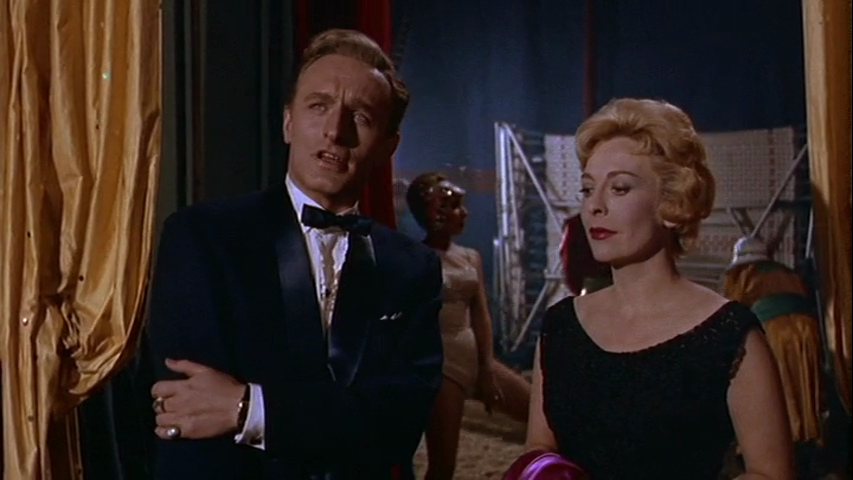
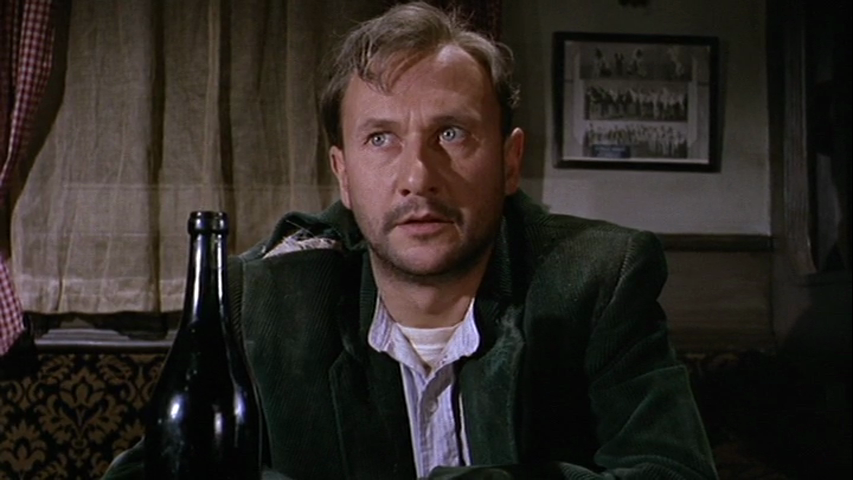
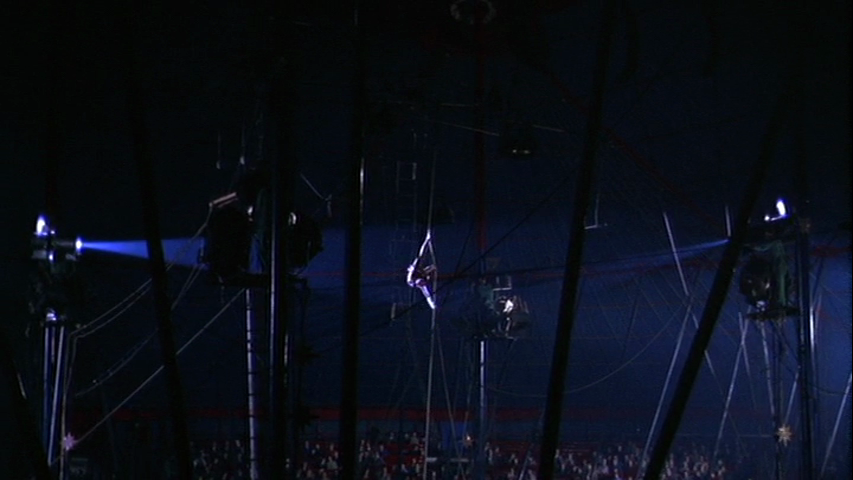
Review: German-born Diffring is nicely cast as the troubled lead of the film, who is clearly a “baddie” but not entirely evil; from the film’s opening sequence — in which a woman (Wilde) shrieks with horror at the botched job that’s been done on her face — it’s made clear that Diffring never intended for things to work out this way, and that he actually takes great pride in the stellar work he’s able to carry out, under the right circumstances. With that said, we soon learn that Diffring’s Dr. Rossiter/Schuler is an egomaniacal control freak who desires not only to make disfigured women beautiful again, but to hold them forever accountable to his will (and sexual desires). His choice (as a fugitive) to run a very-public circus, as well as his uncanny ability to turn all the women he takes under his wing into stellar acrobats, are evidence of the flawed logic listed previously; but they help to propel the undeniably sensationalist story towards its inevitable conclusion, with several gruesomely circus-themed deaths thrown in along the way. Meanwhile, fine use is made of Billy Smart’s actual circus performers; fans of this type of entertainment will surely enjoy seeing its historical capturing on film. Redeeming Qualities and Moments:
Must See? Links: |
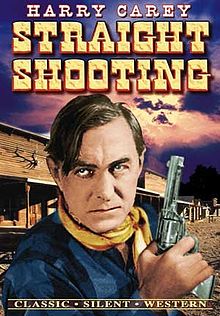
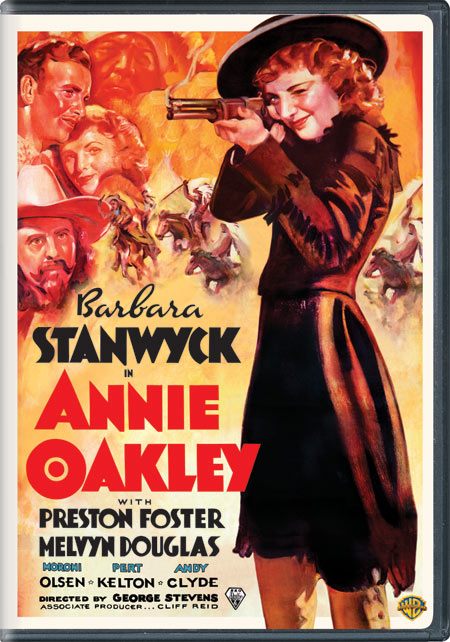
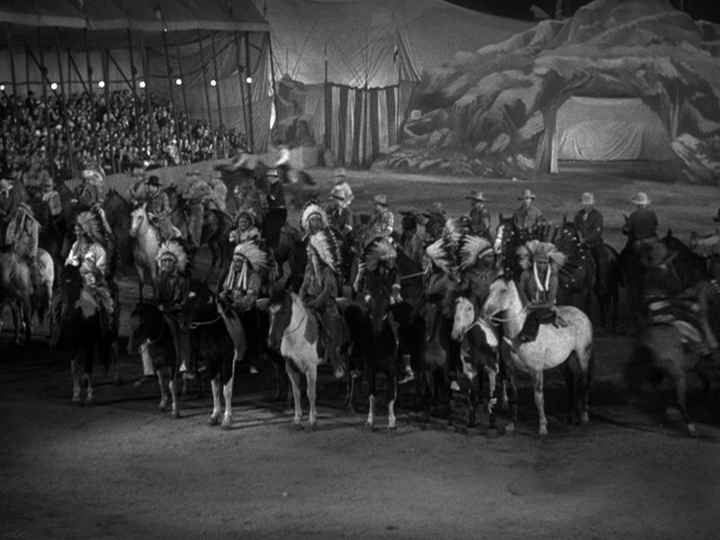
“I never knowed any woman could shoot good enough to join this outfit.”
|
Synopsis: |
|
Genres, Themes, Actors, and Directors:
Response to Peary’s Review: Redeeming Qualities and Moments:
Must See? Links: |
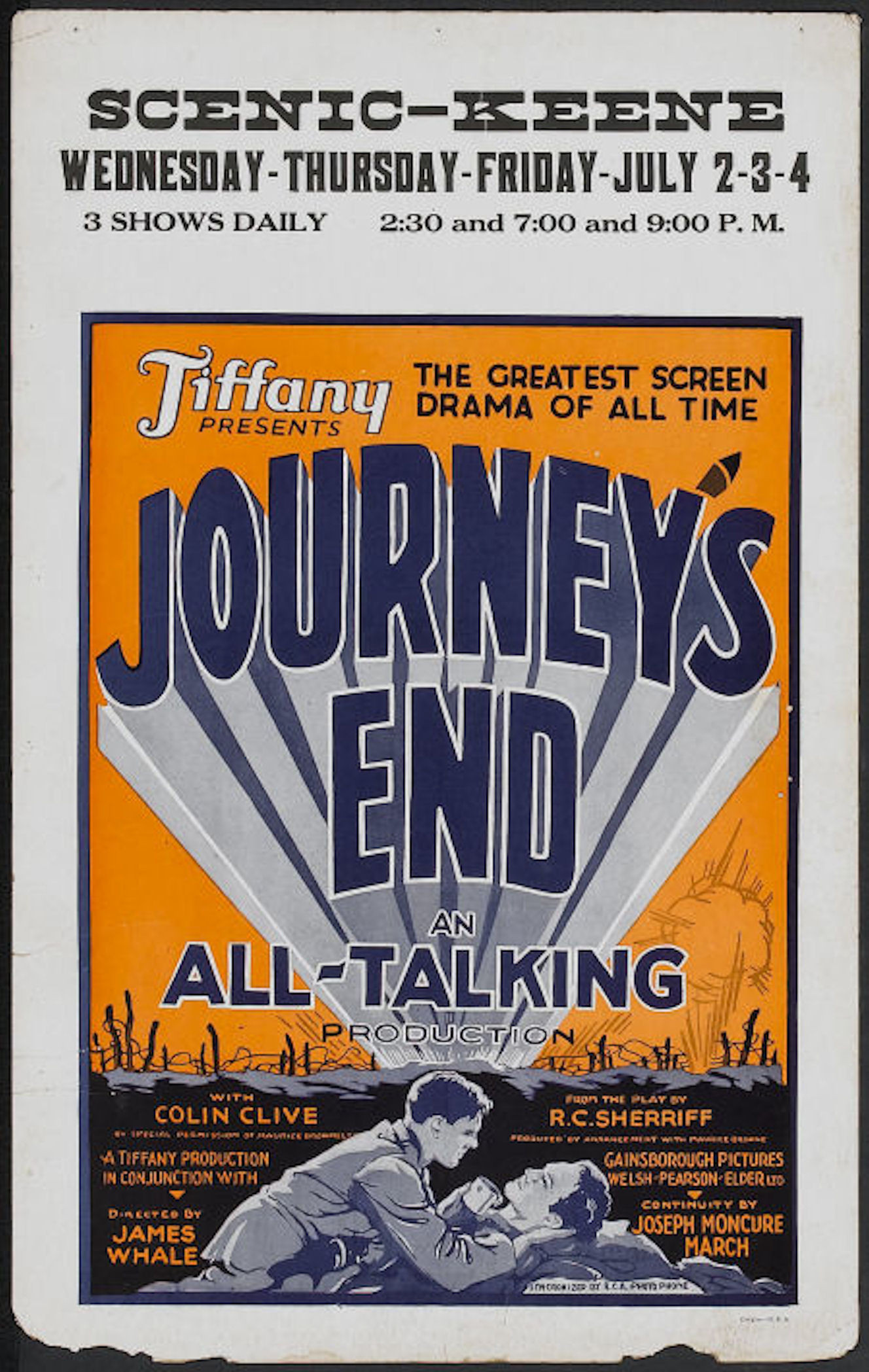
“Think of it all as romantic — it helps.”
|
Synopsis: |
|
Genres, Themes, Actors, and Directors:
Review:
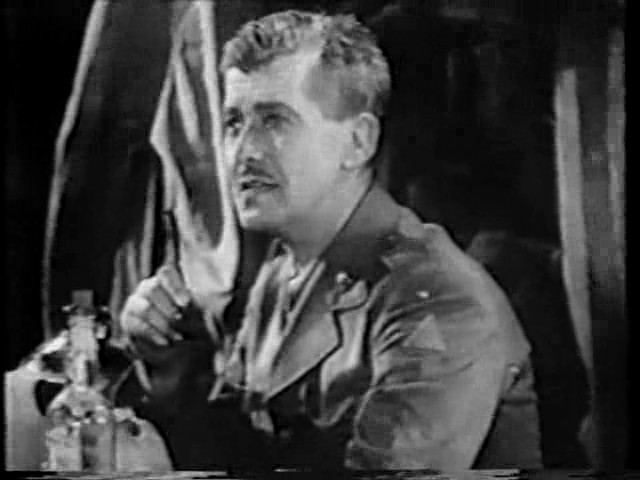
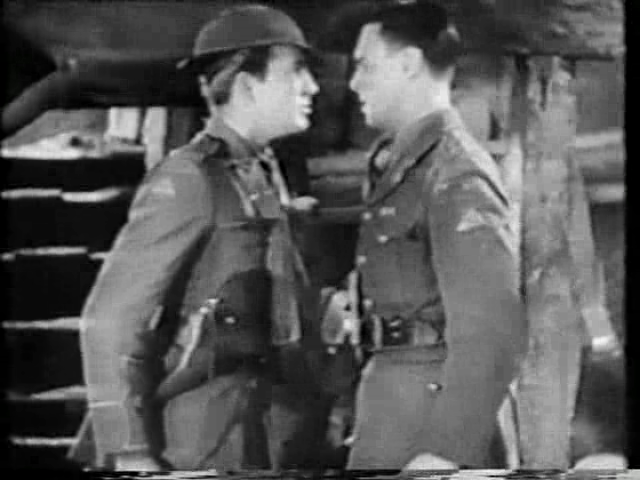
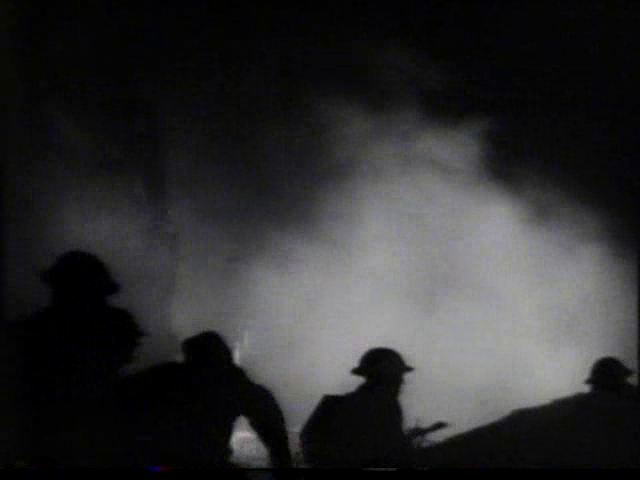
That damned, silly, necessary nuisance of a war, indeed! Meanwhile, in the midst of such civilized discussion, we witness a quietly powerful character study of a man (Clive is simply brilliant) struggling to reconcile the reality of his daily lived experiences with the stalwart persona he must maintain, for the sake of all his men. He lives in terror of the rumors he’s sure must be circulating about him (notably, that he’s taken to drinking at all hours of the day), but the storyline surprises us in its ultimate revelations about Clive’s reputation. Viewers willing to sit patiently through what may be the most “talky”, least-action-filled war film ever made will be rewarded by numerous instances of quiet authenticity. My favorite scene is one in which the seasoned Maclaren (affectionately known as “Uncle”) and the green, gung-ho Manners are about to go up into battle; Maclaren reads from Alice in Wonderland while enjoining Manners to use these precious final moments to think about anything at all other than their imminent task. Less successful are periodic snippets of “comedic relief” provided by the company’s clueless cook (Charles K. Gerrard) and a rotund lieutenant (Billy Bevan) who seems resolutely determined to care more about his next meal than the chaos surrounding him. However, it’s moments like all of these, taken together, which ultimately help viewers to understand the complex psychology behind warfare, as these men prepare themselves in a variety of ways to face truly unspeakable horrors. Redeeming Qualities and Moments:
Must See? Links: |
“It doesn’t mean anything. I want it to mean something — anything!”
|
Synopsis: |
|
Genres, Themes, Actors, and Directors:
Review:
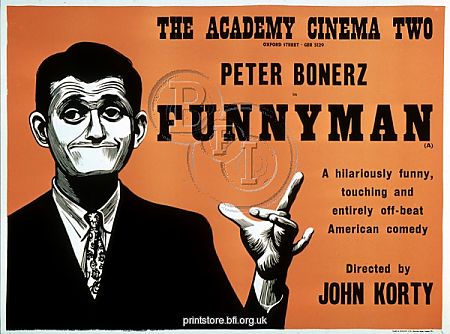
When Perry throws a tantrum and demands to be given a chance to put on a solo show, we’re curious to see what he’ll come up with — but the result is imminently forgettable. Meanwhile, the rest of the film turns into essentially a meandering road trip, as Bonerz leaves the city (to where, we’ve never sure) and encounters a variety of diverse individuals. I won’t say more, at risk of giving away too much of the plot, but suffice it to say that the final half-hour or so consists of a series of intriguingly cinéma vérité encounters without nearly enough narrative context to sustain them. Ultimately, the entire affair comes across as simply self-indulgent — which is not to say it doesn’t hold interest on some level. Korty is a strong enough director that even his overly experimental, New Wave-inspired cinematic palette — including frequent shifts from b&w cinematography to various tinted hues — can be forgiven as simply an attempt to bring a fresh perspective to the proceedings. However, while The Crazy-Quilt is a hidden must-see gem (buy a copy from Korty himself!), Funnyman is only worth seeking out if you have a strong interest in the early development of Korty’s unusual oeuvre. Note: Bonerz had supporting roles in a few big-name films after this — including What Ever Happened to Aunt Alice? (1969) (not listed in Peary’s book), Medium Cool (1969), and Catch-22 (1970) — and was the coke-sniffing psychiatrist in Serial (1980); his best-known role was probably as Dr. Jerry Robinson on “The Bob Newhart Show”. However, the bulk of his career has been spent as a director; see his listing at IMDb for more details. Redeeming Qualities and Moments:
Must See? Links: |