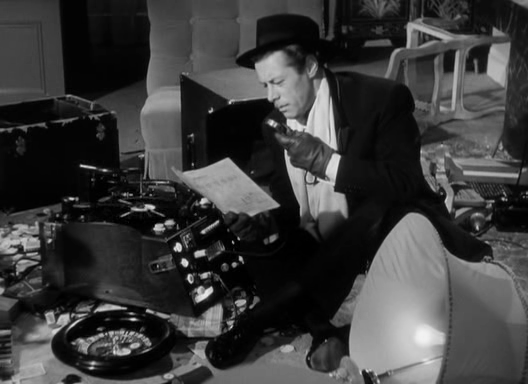
Unfaithfully Yours (1948)
“Oh Alfred, what is the matter? You’re acting like a crocodile with a toothache.”
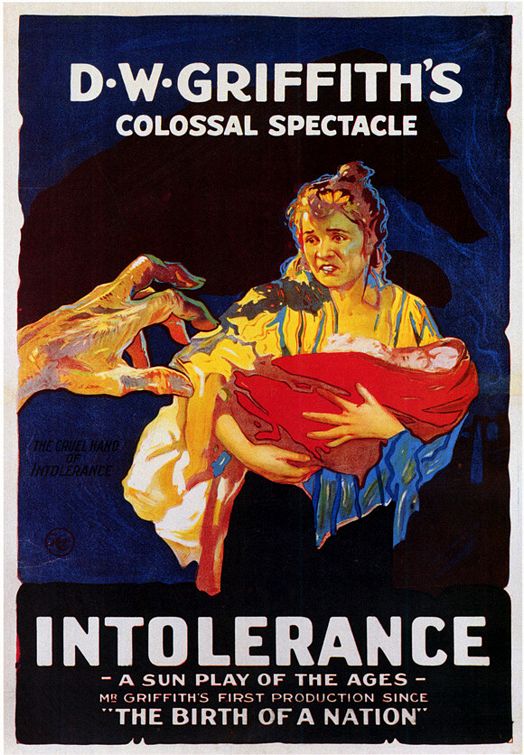
“Our play is made up of four separate stories, laid in different periods of history, each with its own set of characters. Each story shoes how hatred and intolerance, through all the ages, have battled against love and charity.”
|
Synopsis: |
|
Genres, Themes, Actors, and Directors:
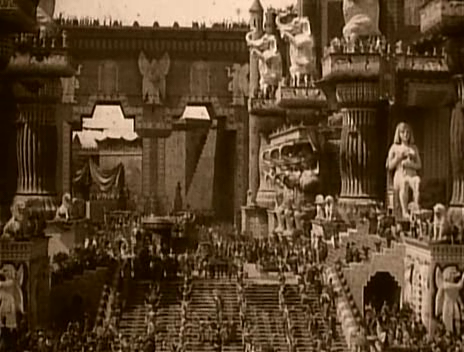
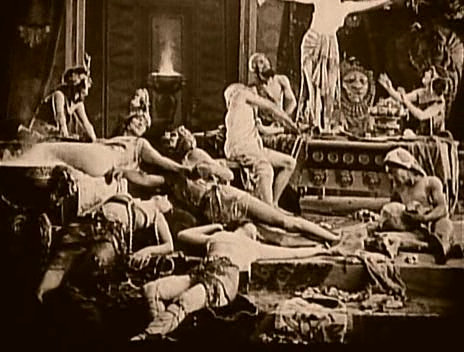
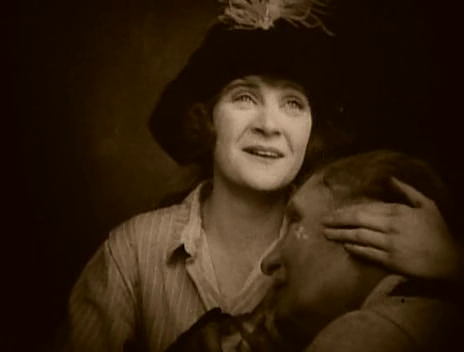
Response to Peary’s Review: With that said, there’s no denying that this three-hour-long silent movie will, for most ffs, feel like a bit of a long haul to get through. While Peary’s only complaint about the film is that Griffith’s “theme of ‘intolerance’ is a feeble link between the episodes” (he notes that Griffith “seems passionate only about the modern story”), I would argue that Griffith’s overly pedantic presentation style comes across as terribly dated throughout, and will be off-putting to most young ffs. Meanwhile, his groundbreaking attempt to weave numerous stories together has the unfortunate side effect of shifting our attention away from each scenario just as we’re beginning to make sense of it (and the characters). Indeed, despite its undeniable historical value, it’s difficult for me to agree with Peary that “this film has greatness written all over it”, simply given that it doesn’t touch me on an emotional level. I’m ultimately much more aligned with the sentiment of Time Out’s reviewer, who argues that despite the film’s “overwhelming” “visual poetry”, its “thematic approach no longer works”, and the “title cards are [both] stiffly Victorian and sometimes laughably pedantic”. As Chris Edwards argues in his “Silent Volume” blog, Intolerance “is not a silent film for someone new to the medium.” Of special interest, however, is what Time Out’s reviewer refers to as “the unbridled eroticism of the Babylon harem scenes”, which “demonstrate just what Hollywood lost when it later bowed to the censorship of the Hays Code”; indeed, these scenes are presented with such surprising casualness and lack of moral approbation that one can’t help feeling a renewed respect for Griffith’s sensibilities. Meanwhile, the enormously expensive, expansive sets truly are astonishing, and the lengthy recreation of a Babylonian battle is especially impressive in its rigor and attention to detail. I’m also fond of Mae Marsh’s performance as the female protagonist of the modern episode, playing a young woman whose falsely accused husband (Robert Harron) simply can’t seem to get a break in life; while her travails are presented in an overly melodramatic fashion, we remain fascinated throughout by her uniquely expressive face. Redeeming Qualities and Moments:
Must See? Categories
(Listed in 1001 Movies You Must See Before You Die) Links: |
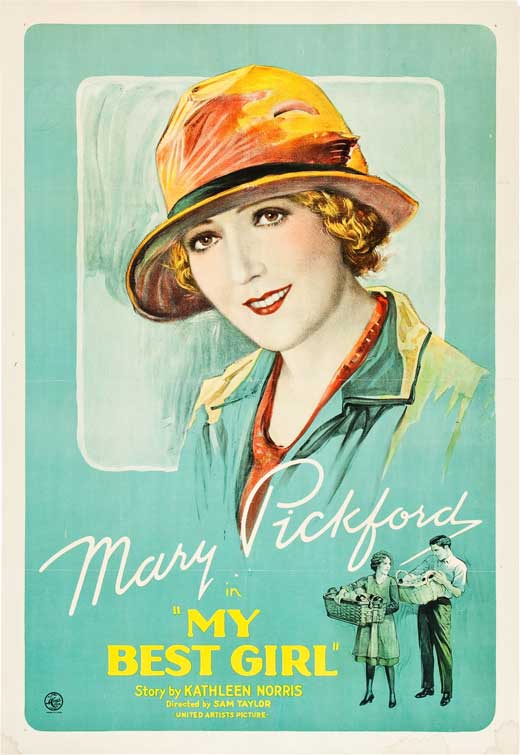
“You wouldn’t have kissed me if I weren’t your best girl.”
|
Synopsis: |
|
Genres, Themes, Actors, and Directors:
Response to Peary’s Review: In his Alternate Oscars book (where he gives Pickford the Best Actress award for the year), Peary points out that My Best Girl is a “semi-remake of the recent It, starring Clara Bow”, with both films featuring a likeable young shopgirl who falls in love with the store’s wealthy heir. However, one minor problem with My Best Girl is that the otherwise charming Rogers prolongs his real identity from Pickford for far too long. While we understand that he must maintain his deception until he’s proven himself worthy to his father (by advancing his career at the store without the help of his name), there’s no excuse for his continued deception after this; we can’t help feeling sorry for Pickford as she’s kept in the dark by the man she loves — and we certainly don’t blame her for her complex, conflicted reaction upon learning the truth. Regardless, if one can accept this discomfiting narrative hitch, the film remains an enjoyable cross-class romantic comedy, one which allowed Pickford to play a character perhaps closest to her own life story. Redeeming Qualities and Moments:
Must See? Categories
Links: |
“In a man’s life there is sometimes a good love and a bad love.”
|
Synopsis: |
|
Genres, Themes, Actors, and Directors:
Review: Redeeming Qualities and Moments: Must See? Links: |
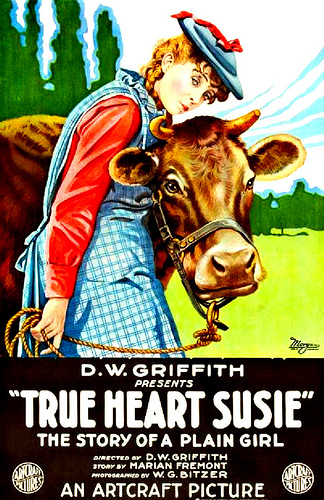
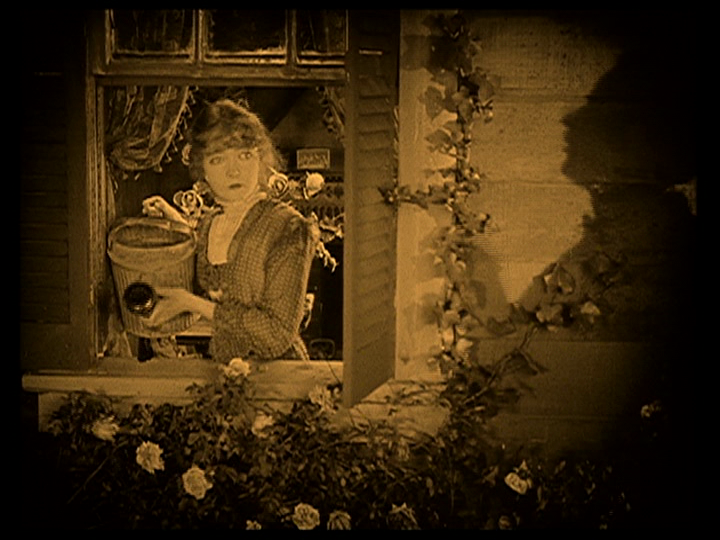
“Do men look for the true heart in women? Or are most of them caught by the net of paint, powder, and suggestive clothes?”
|
Synopsis: |
|
Genres, Themes, Actors, and Directors:
Review: Note: The life-story of handsome Harron — who had earlier co-starred in the modern episode of Griffith’s Intolerance (1916) — is quite tragic and mysterious; he died from a gunshot wound the year after this film was released, under shadowy circumstances (was it suicide or an accident?). Redeeming Qualities and Moments: Must See? Links: |
[Note: The following review is of a non-Peary title; click here to read more.]
“Mother promised to see me, just one little minute to-day.”
|
Synopsis: |
|
Genres, Themes, Actors, and Directors:
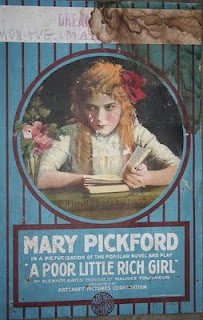
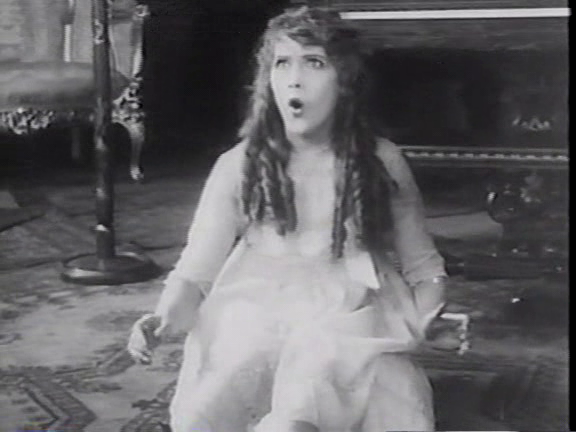
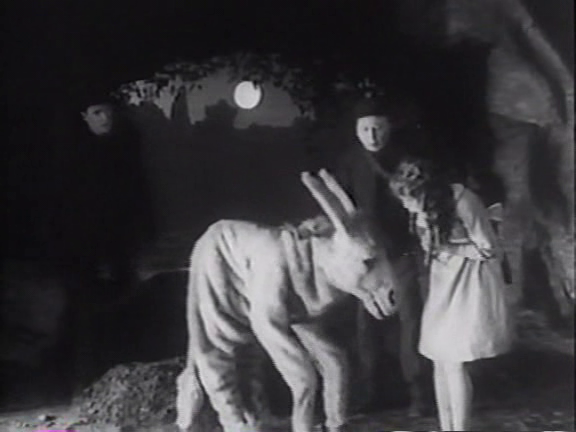
Review: Unfortunately, the cliched storyline for TPLRG (scripted by Frances Marion, and based on a play by Eleanor Gates) isn’t all that interesting or well-told; indeed, at times it almost seems like a parody of itself, given that Pickford’s supporting cast members were intentionally chosen for their extreme height, and certain sets were built to provide a skewed vision of Pickford’s stature. Yet director Maurice Tourneur (father of Jacques Tourner) manages to turn the final third of the film — as a drugged Pickford translates some of the little-understood metaphors she’s heard into literal imagery — into a uniquely surreal Wonderland dreamscape. This section alone at least partially redeems the movie, helping to justify my claim that it’s “must-see”; however, it’s likely that any of Pickford’s other popular child-role titles — such as Rebecca of Sunnybrook Farm (1917), Pollyanna (1920), or Little Lord Fauntleroy (1921) — might suffice just as well. Note: The 1997 documentary Mary Pickford: A Life on Film (scripted by Rita Mae Brown and narrated by Whoopi Goldberg) is highly recommended as an insightful overview of Pickford’s life and career, one which places special emphasis on her role as a pioneering female businesswoman in Hollywood. Redeeming Qualities and Moments: Must See? Categories
Links: |
“Death to the oppressors! We shall take revenge!”
|
Synopsis: |
|
Genres, Themes, Actors, and Directors:
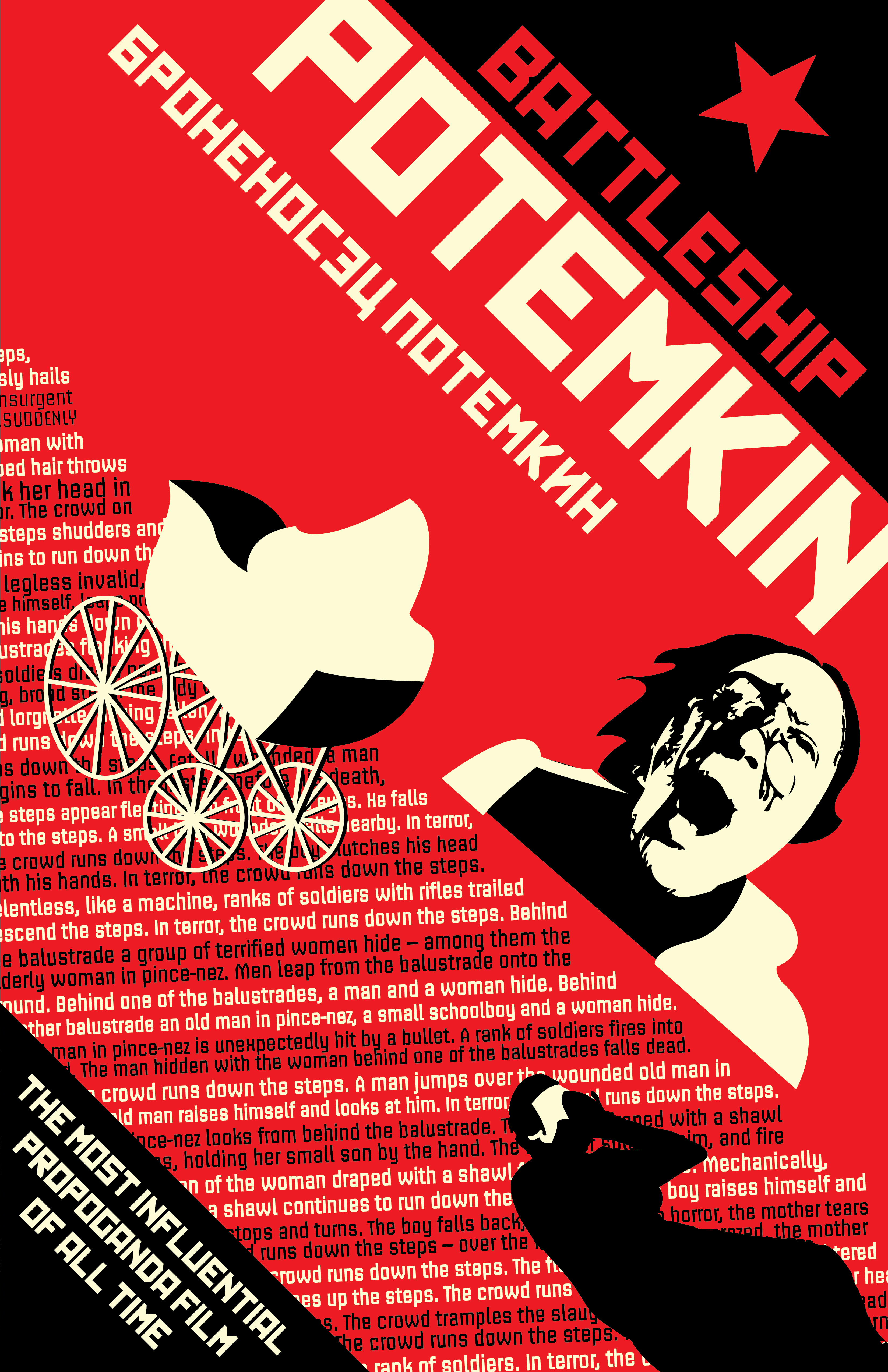
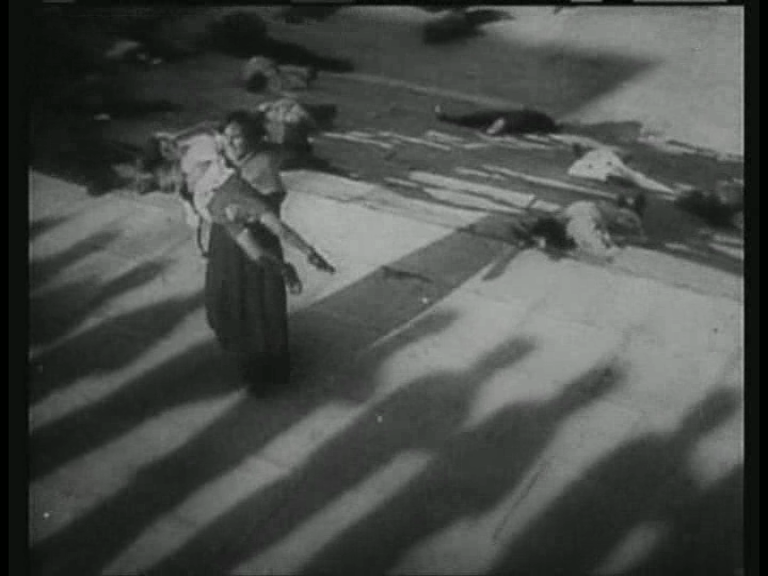
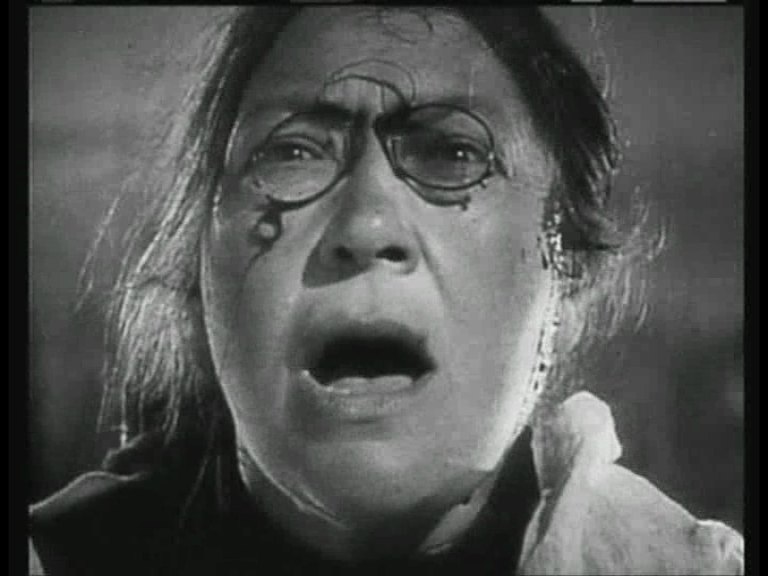
Response to Peary’s Review: As Peary notes, this “first non-documentary about a political action/historical event proved not only that a cleverly edited series of images could draw viewers into the film’s action and stimulate the emotions but also that the juxtaposition of two images — one of a character, the other of a symbolic object/prop — was a valuable propaganda device because it forced viewers to deduce that the symbol relates to the character”. Peary points out that in the remarkably effective opening section of the film (the first of five), “Eisenstein builds tension by cutting back and forth between armed guards and helpless sailors”. In the film’s most celebrated (third) section — in which “the Czar’s forces march down the ‘Odessa Steps’ and massacre men, women, and children in their path” — Eisenstein similarly “builds tension and creates terror by cutting back and forth between marching faceless soldiers and their victims (whose scared faces are shown in close-ups).” (Indeed, this sequence is so relentlessly devastating that virgin viewers deserve a few words of forewarning — and if you haven’t seen it in a while, get ready to feel your stomach in your throat.) Peary further points out that during the Odessa Steps sequence, “time stands still, so what would take place in seconds goes on and on — [the] camera pans down the steps, moves back to where the soldiers are, and we start over again”. He notes that “there’s an odd rhythm to the sequence, so that we feel things are going fast (too fast for the victims to think clearly) but simultaneously feel that the cruelty will never stop”; he then makes a potent connection between ‘The Odessa Steps’ and the most famous horror movie sequence of all time — the shower scene in Hitchcock’s Psycho. He concludes his review by noting simply that Potemkin (which circulated in various states of disrepair and politically strategic editing for decades, and was recently restored) is “certainly as influential as The Birth of a Nation and Citizen Kane.” It’s a film which, despite its seemingly distant and foreign subject matter, bears multiple viewings, simply for its overall cinematic impact. Redeeming Qualities and Moments:
Must See? Categories
(Listed in 1001 Movies You Must See Before You Die) Links: |
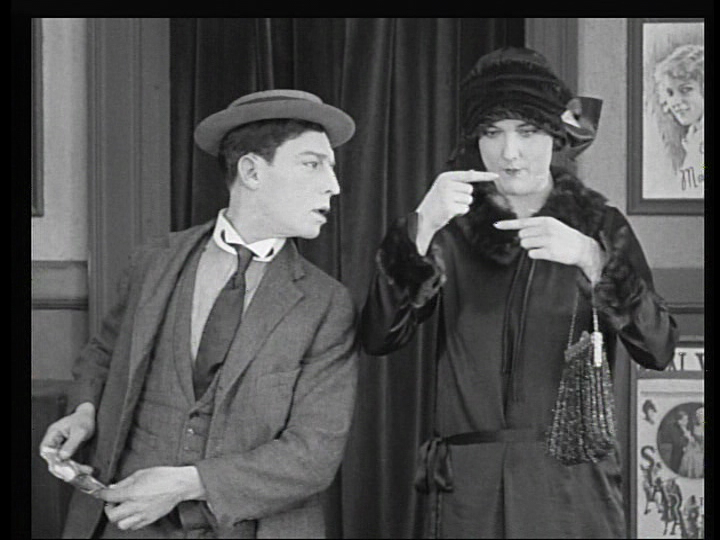
“Say, Mr. Detective: before you clean up any mysteries, clean up this theater!”
|
Synopsis: |
|
Genres, Themes, Actors, and Directors:
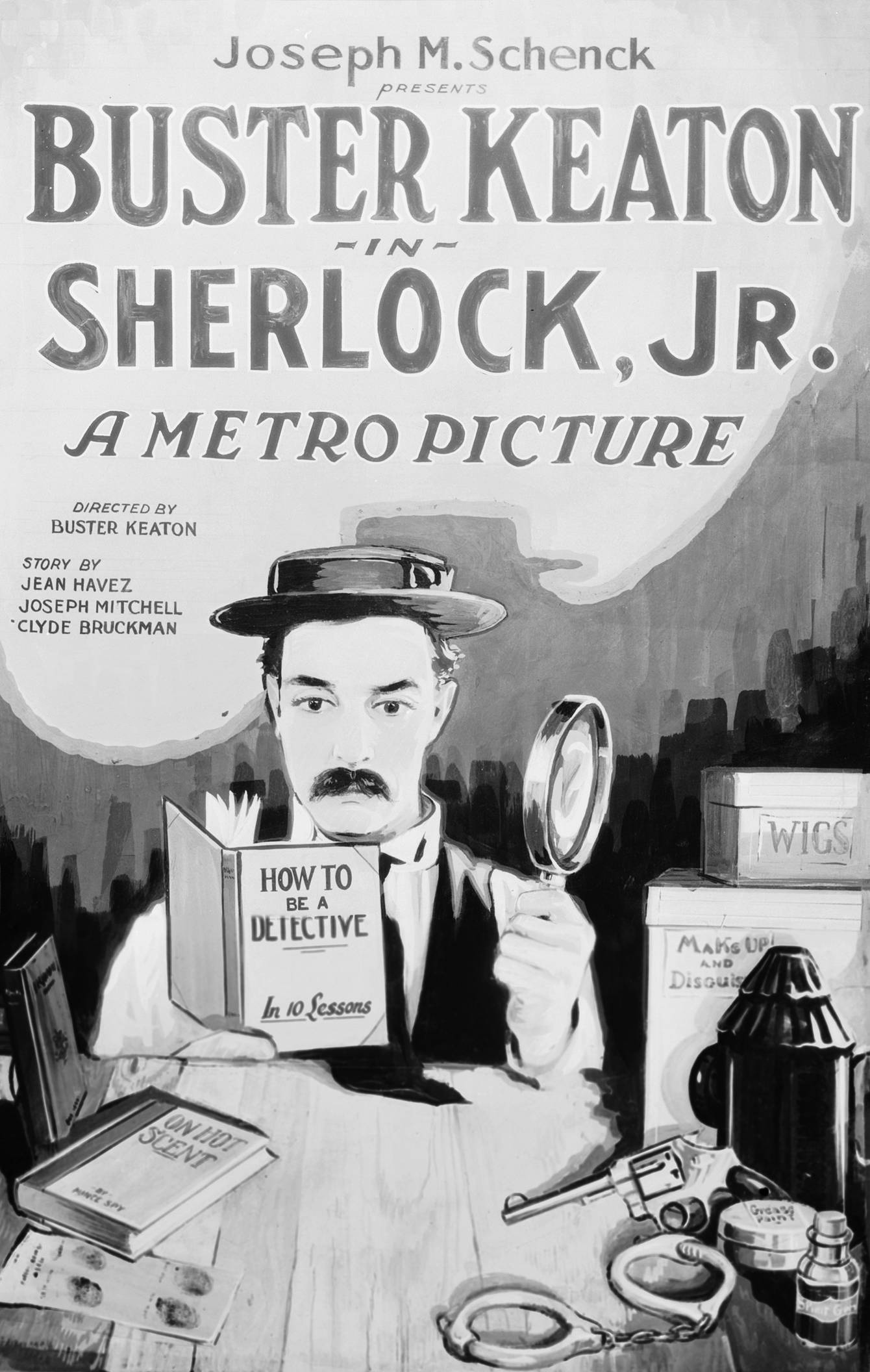
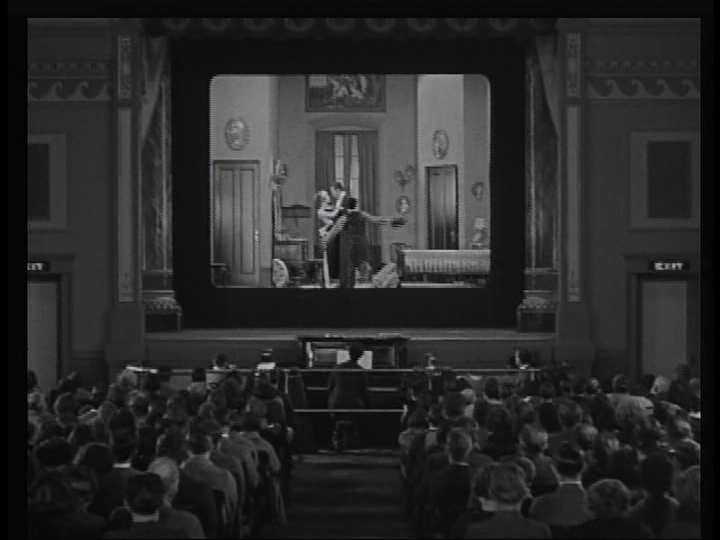
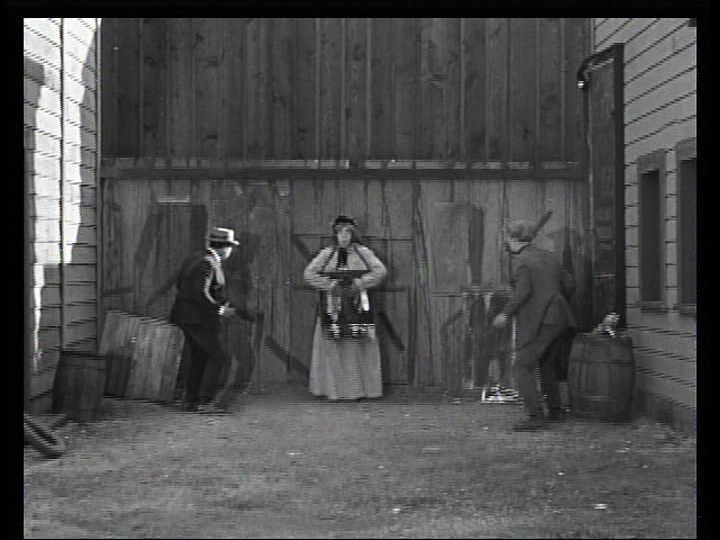
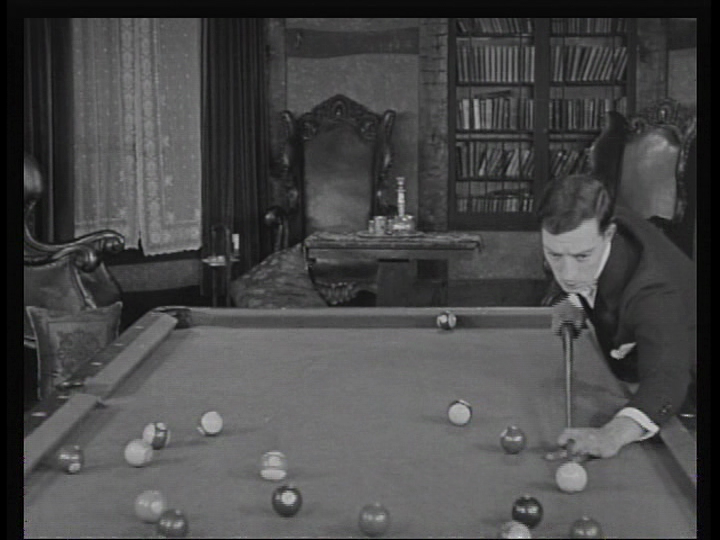
Response to Peary’s Review: After discussing the “brilliantly conceived and edited scene” in which Keaton “dreams that he walks toward the screen and climbs into the action”, Peary highlights just a few of the film’s many others “great moments” — including “Keaton riding on the handlebars of a fast-moving, driverless motorcycle, [Keaton] playing expert pool, and, in a bit you have to see to believe, [Keaton] escaping during a chase sequence by diving into a small case held by a peddler woman (actually his male assistant) and apparently disappearing through her body”. He labels the action in the film “furiously paced, inventive, [and] stupefying”, and ends his review by noting that this “picture is proof positive that Keaton was more in control of and in love with the film medium than Chaplin”. (Ah, the enduring Chaplin-versus-Keaton wars — even Peary, an avowed Chaplin fan, clearly can’t help taking a stance.) Redeeming Qualities and Moments:
Must See? Categories
(Listed in 1001 Movies You Must See Before You Die) Links: |
“Oh no, it’s not haunted — just enchanted.”
|
Synopsis: |
|
Genres, Themes, Actors, and Directors:
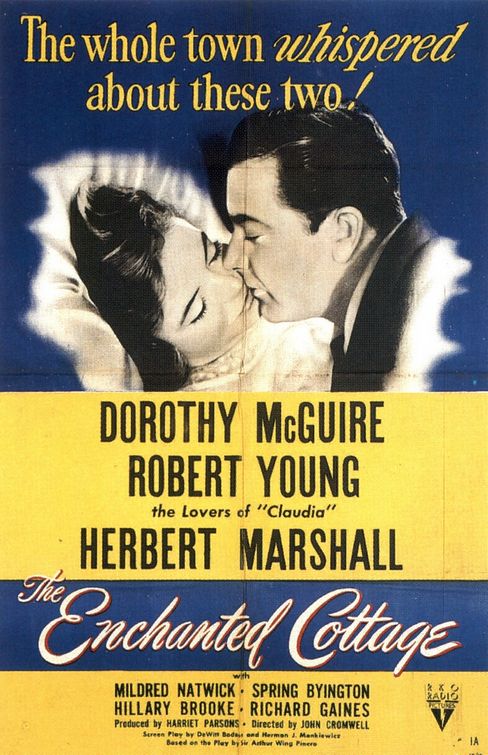
Response to Peary’s Review: I actually don’t find the script to be “embarrassing”, given that it unabashedly sets out to tell a particular tale of romance between two deeply troubled individuals. The “fantasy” element (i.e., the fact that Young and McGuire genuinely believe they’re seeing physical changes in each other) mostly worked for me, on a metaphorical level; let’s just say I was willing to go along for the ride. What’s less convincing is McGuire’s physical appearance as a dowdy lass: it’s perfectly true, as many have pointed out, that her “defects” could be (and are) easily fixed by a new haircut, a bit of make-up, and a renewed sense of self-confidence. One scene — in which multiple GIs at a dance glance at her from afar, then turn away once they get a closer look — edges close to campy melodrama, but is believable if you’re willing to acknowledge that McGuire (prior to falling in love with Young) simply projects, without meaning to, some kind of “stay away from me” vibe of “ugliness”. Young, meanwhile, does a fine job shifting from self-assured pilot to embittered veteran to a man renewed by love; and Natwick projects an appropriate aura of mystery as a landlady who’s lived with her house’s secrets for many decades. Redeeming Qualities and Moments: Must See? Links: |
“A man’s life ain’t worth a hill of beans except he lives up to his own conscience.”
|
Synopsis: |
|
Genres, Themes, Actors, and Directors:
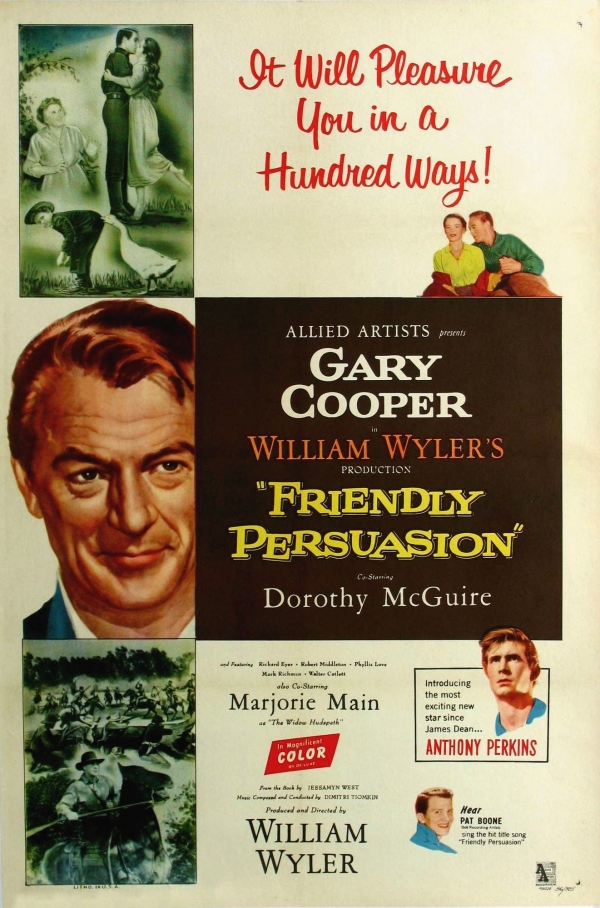
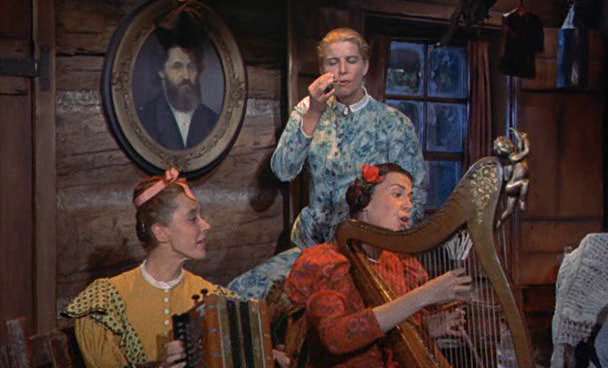
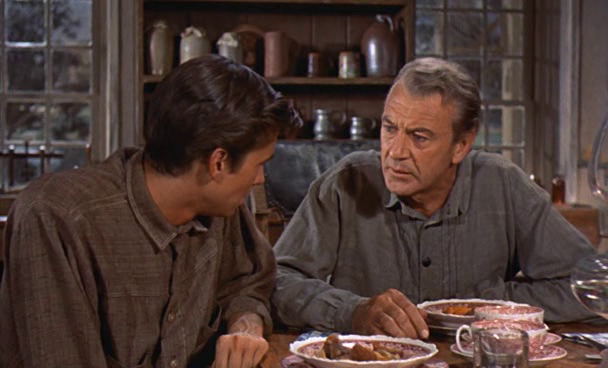
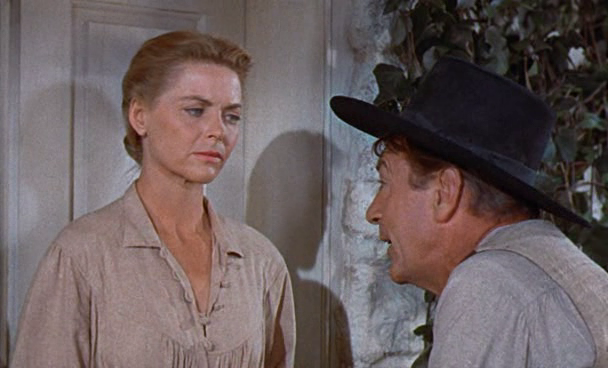
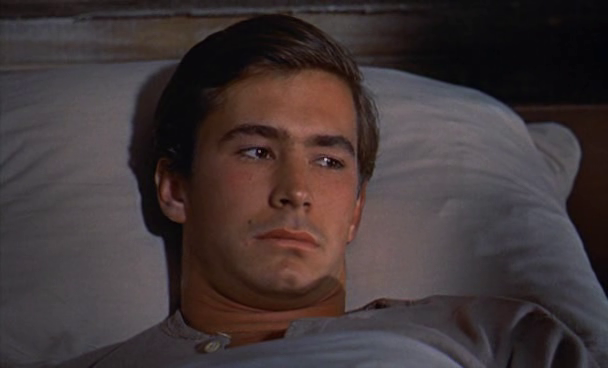
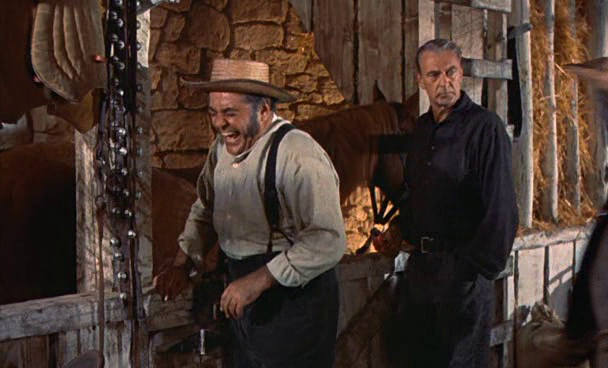
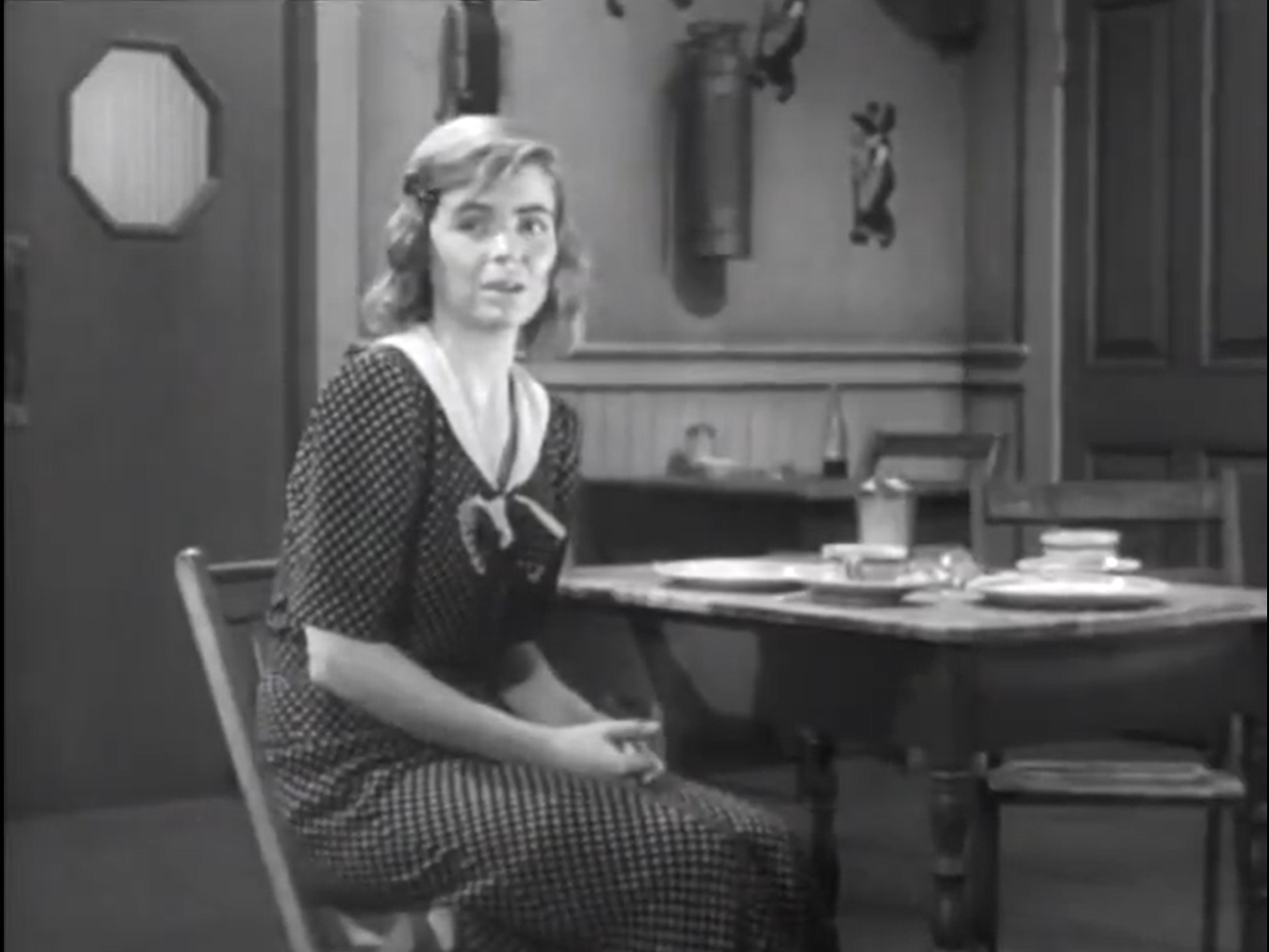
Review: Indeed, the presence of fighting nearby causes an enormous internal conflict for Perkins, who hates the very idea of harming his fellow men, yet knows that to stay away from the conflict entirely is (for him) equally detestable. To that end, Wyler and black-listed screenwriter Michael Wilson (whose Oscar nomination was rescinded, then later restored) do a remarkable job infusing the narrative with strong hints of how challenging it can be to maintain a pacifist attitude during wartime; numerous powerfully-written scenes highlight the ways in which various characters struggle against either the urge, or the perceived need, to harm someone else — such as when Perkins’ tussle-happy friend (John Smith) agrees to participate in a wrestling match at the local fair, then stops as he realizes (in horror) that he’s actually hurting his opponent. Later, in a series of provocative but sensitively handled scenes, not only Perkins but Cooper and McGuire each find themselves squarely confronting the need or desire to act against their pacifist ideals. The performances throughout the film are simply wonderful. Cooper and McGuire’s marriage is presented as firmly grounded in mutual respect and love; the scene in which they butt heads over whether Cooper will be allowed to bring the organ he’s bought into the house shows their ability to eventually resolve marital conflict through loving compromise. Love (who, on a personal note, I knew later in her life, when she went by a different name completely) is simply charming in one of her few film roles, and Eyer demonstrates once again why he was one of the most natural and appealing kid-actors around. Meanwhile, Perkins appropriately won rave reviews (and an Oscar nomination) for his sensitive portrayal as Josh Birdwell, whose internal conflict over whether or not to take up a gun never hits a false note. Note: There’s an odd little interlude in which Cooper and Perkins travel the countryside selling their wares, and stay the night with a widow (Marjorie Main) and her three man-hungry daughters (Edna Skinner, Marjorie Durant, and Frances Farwell); the broad humor of this scene feels a touch out of place, but is so enjoyable that one doesn’t really mind. Redeeming Qualities and Moments:
Must See? Categories
Links: |