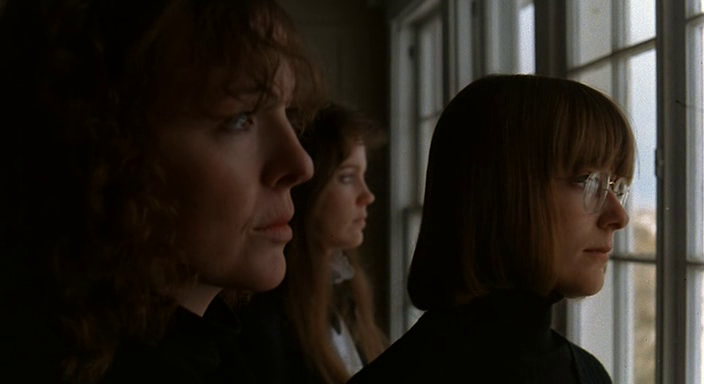
Last of Sheila, The (1973)
“My mouth is so dry they could shoot Lawrence of Arabia in it.”
|
Synopsis: |
|
Genres, Themes, Actors, and Directors:
Review: Redeeming Qualities and Moments:
Must See? Categories
Links: |
“My mouth is so dry they could shoot Lawrence of Arabia in it.”
|
Synopsis: |
|
Genres, Themes, Actors, and Directors:
Review: Redeeming Qualities and Moments:
Must See? Categories
Links: |
“The greatest mystery is right here — right under our feet.”
|
Synopsis: |
|
Genres, Themes, Actors, and Directors:
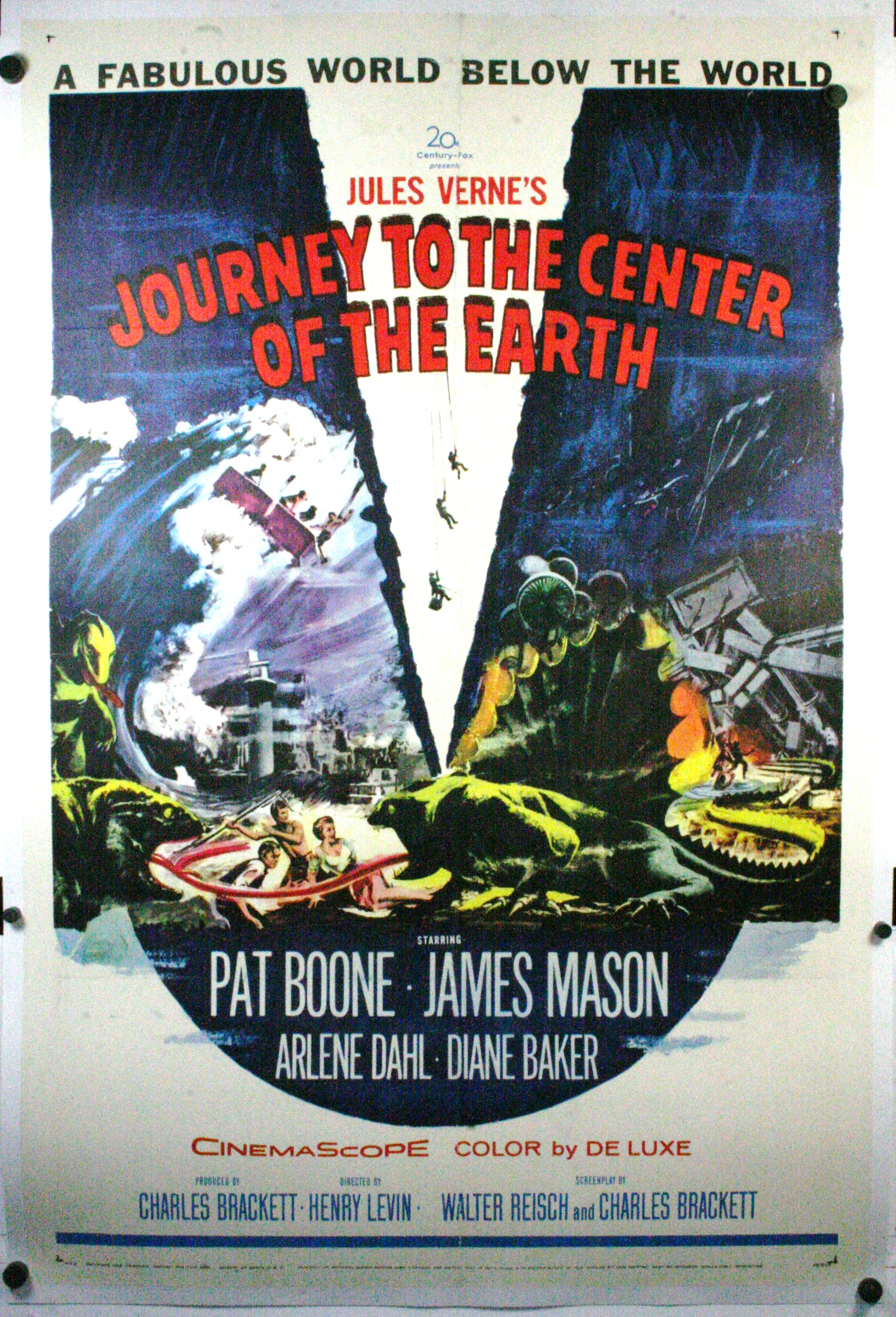
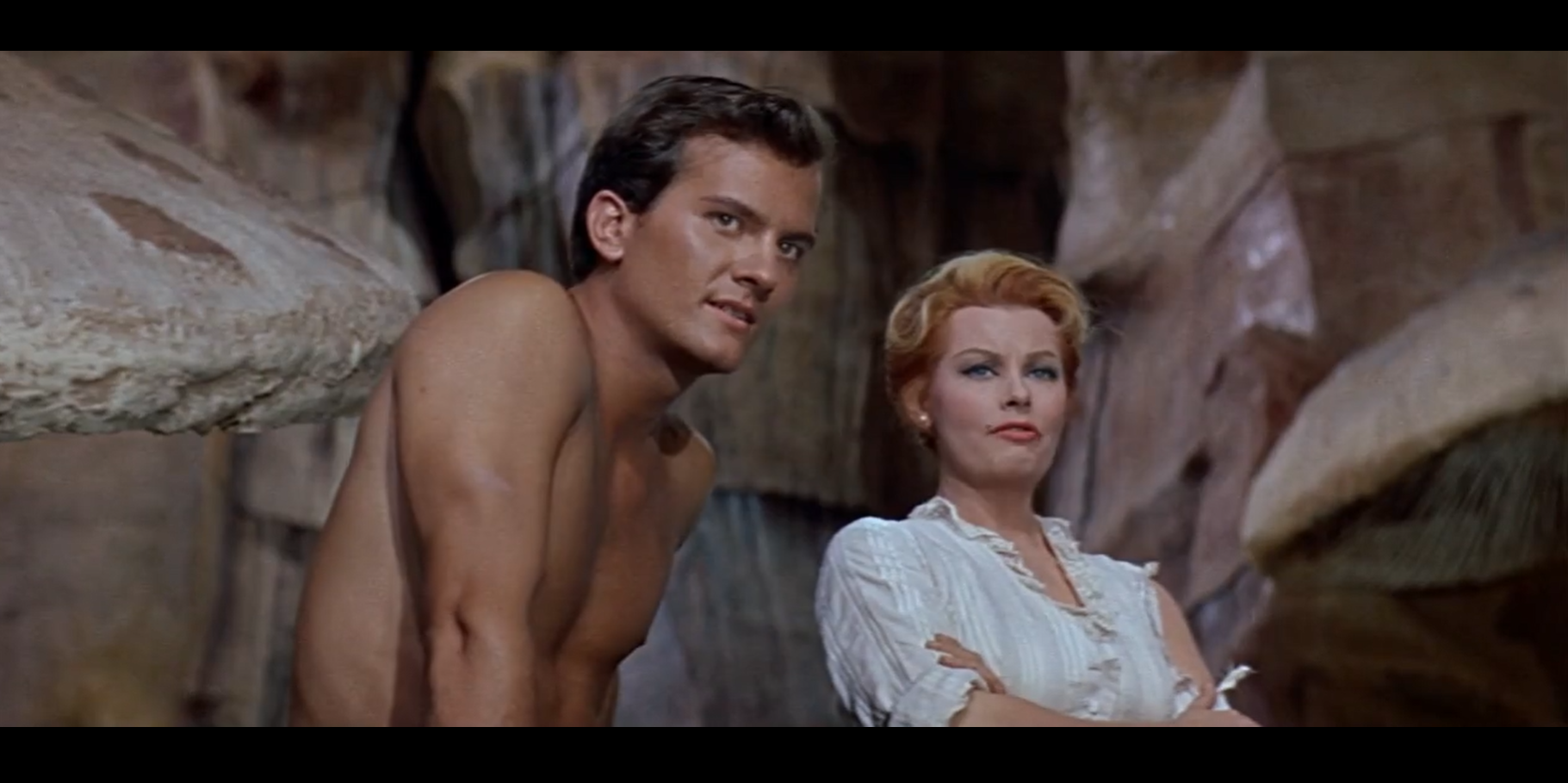
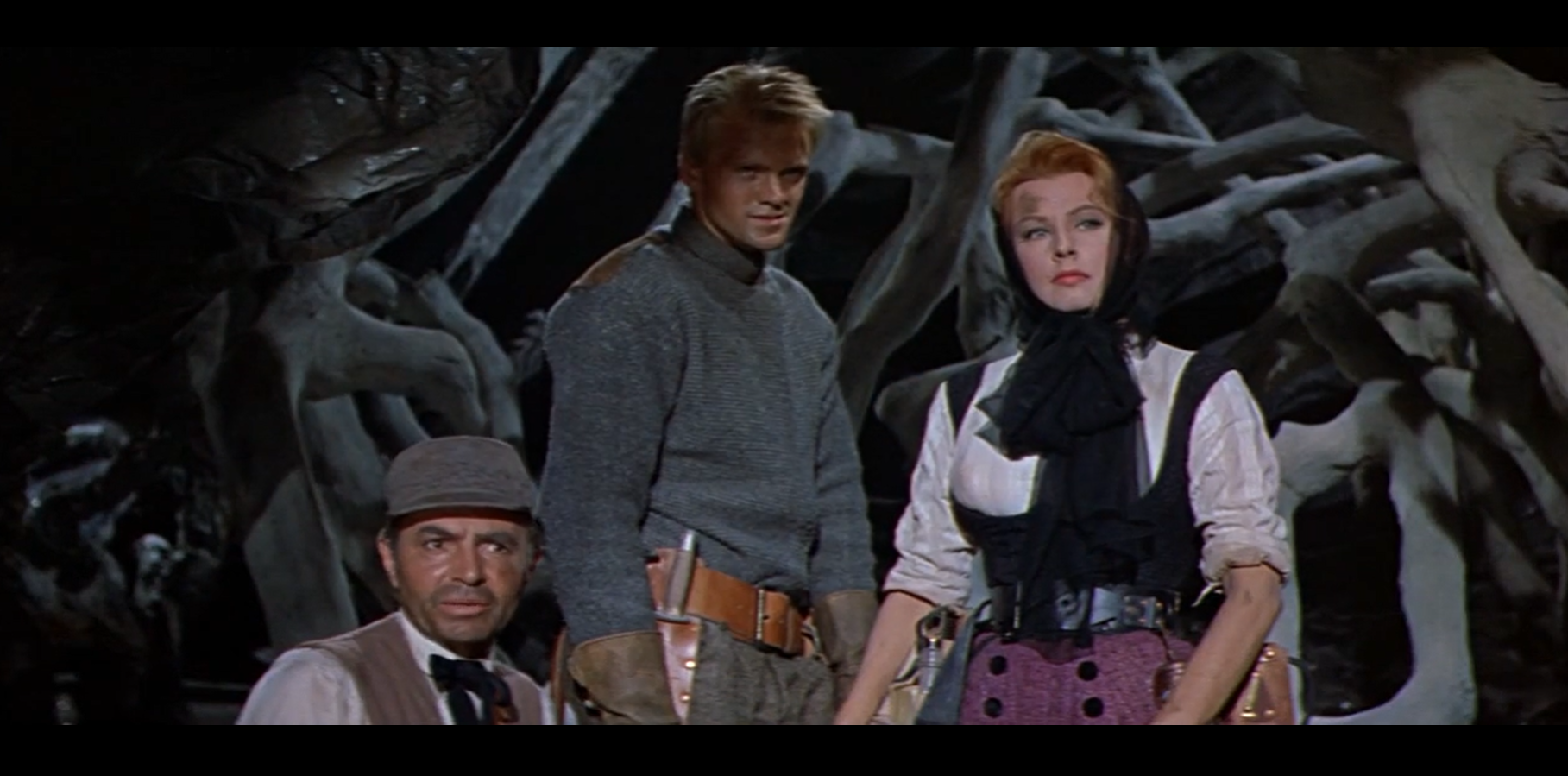
Review: Modern-day adult viewers, however (at least those without any similar nostalgic hold on the film), will likely find themselves simply bored and/or annoyed by the story, which takes 45 minutes to finally deposit its characters on their journey towards the “center of the Earth”, and from thence is patently sanitized to include an often-shirtless Pat Boone (!):
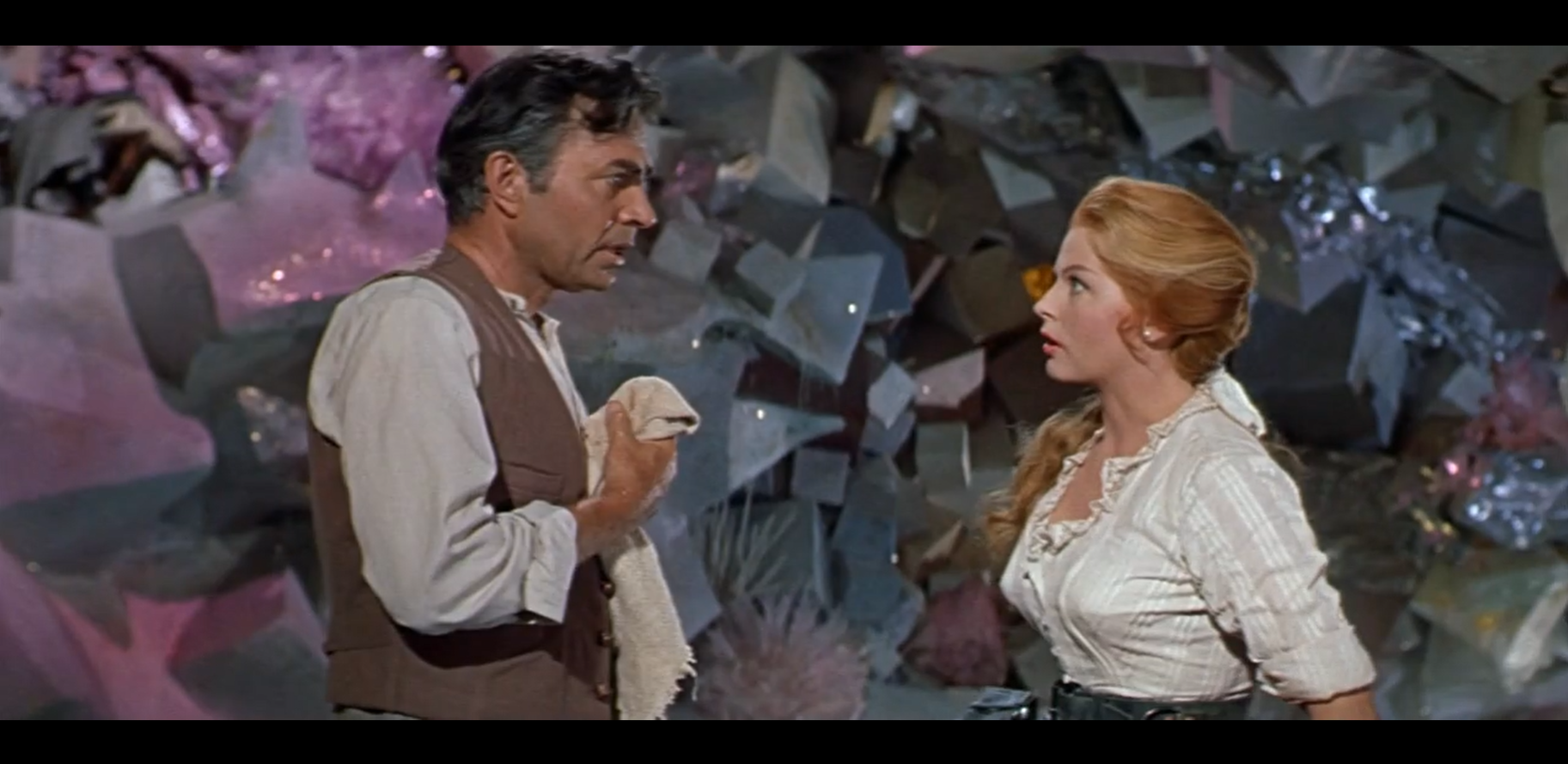
… a feisty female (Dahl) maintaining a perfectly made-up face no matter how deep into the Earth she descends:
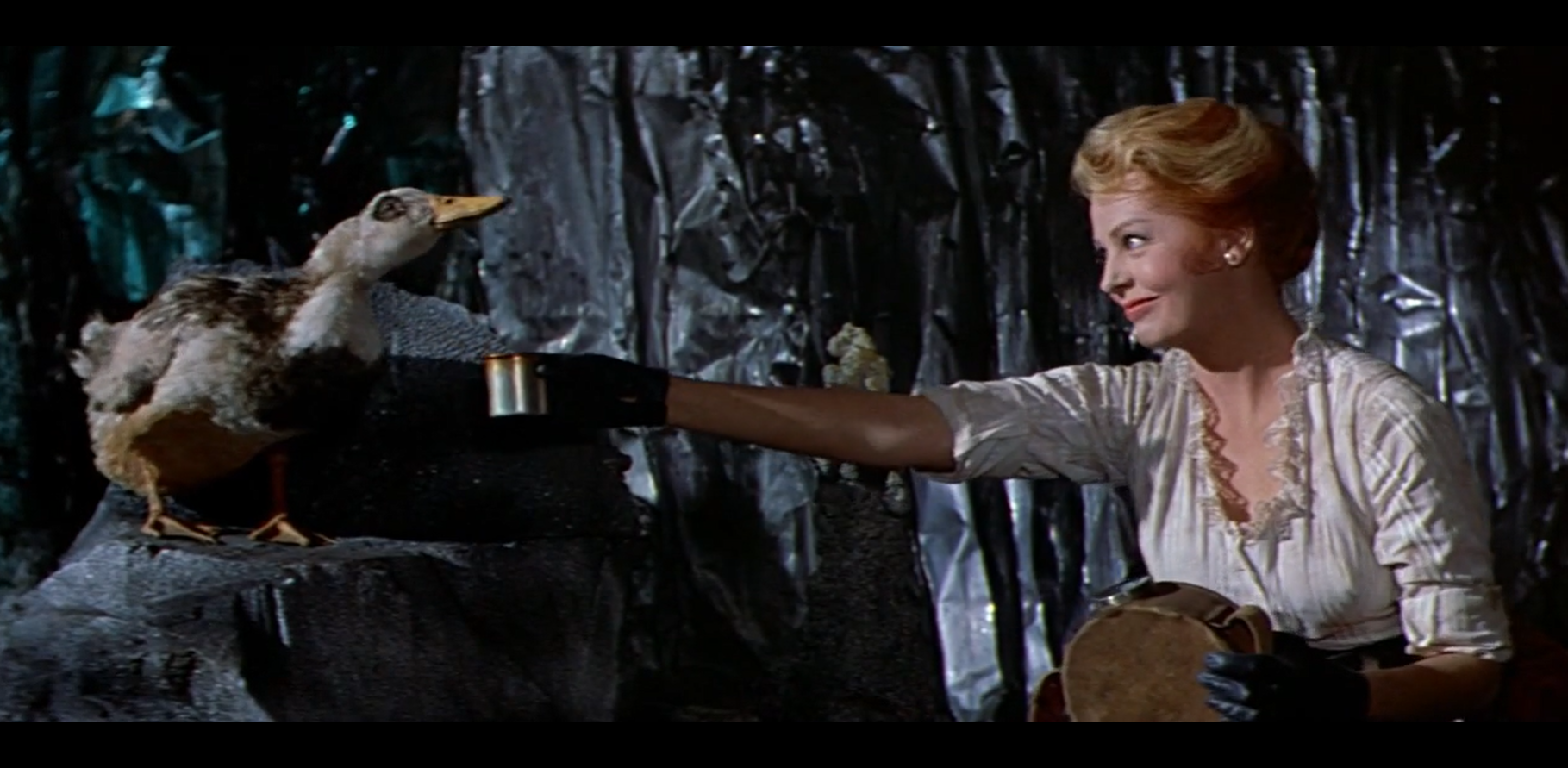
… and a pet goose (!).
As noted by Richard Scheib on his Moria site, while “Verne wrote a dark, claustrophobic Age of Exploration fantasy”, the film adaptation “is a ridiculously opulent Cinemascope colour spectacle” in which “the center of the Earth is illogically depicted as a colourful and well-lit world of studio-floor splendour and crystalline formations”, and “the result is more akin to a 19th Century tea party than serious exploration”. Indeed, if this kind of thing is your cup of tea, then definitely indulge; otherwise, there’s no need to bother checking it out. Redeeming Qualities and Moments:
Must See? Links: |
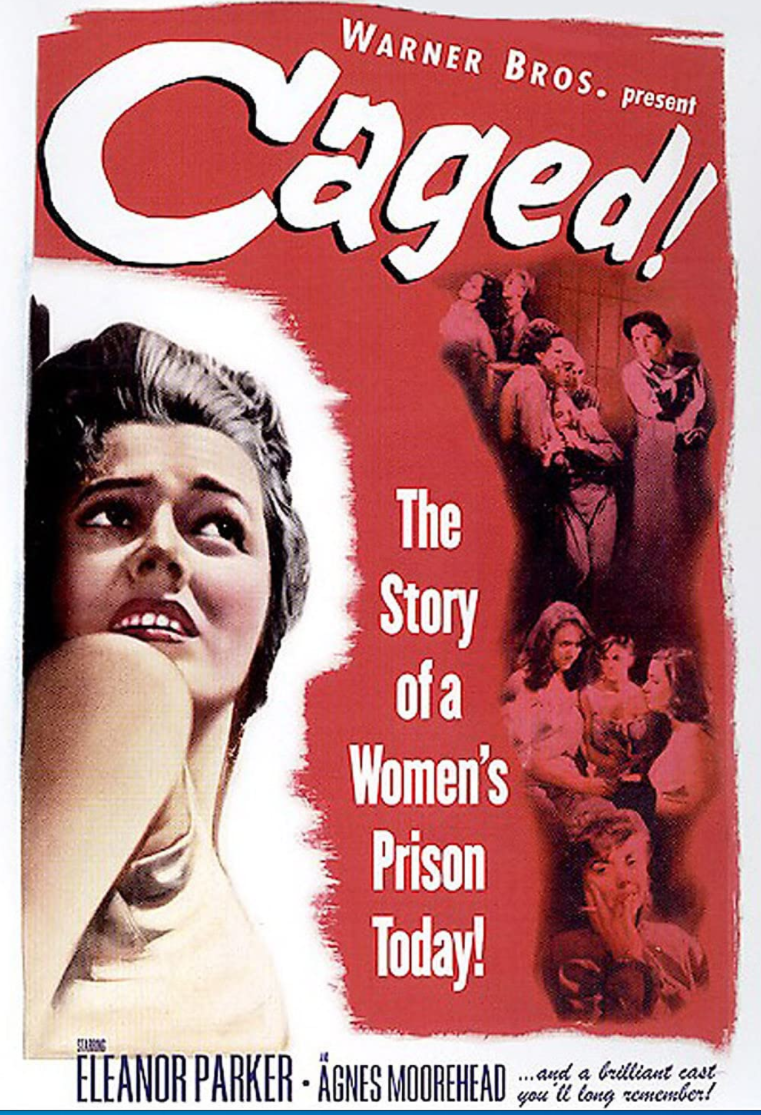
“Home, sweet home — just like the big cage at the zoo, only you clean it up instead of the keeper.”
|
Synopsis: |
|
Review:
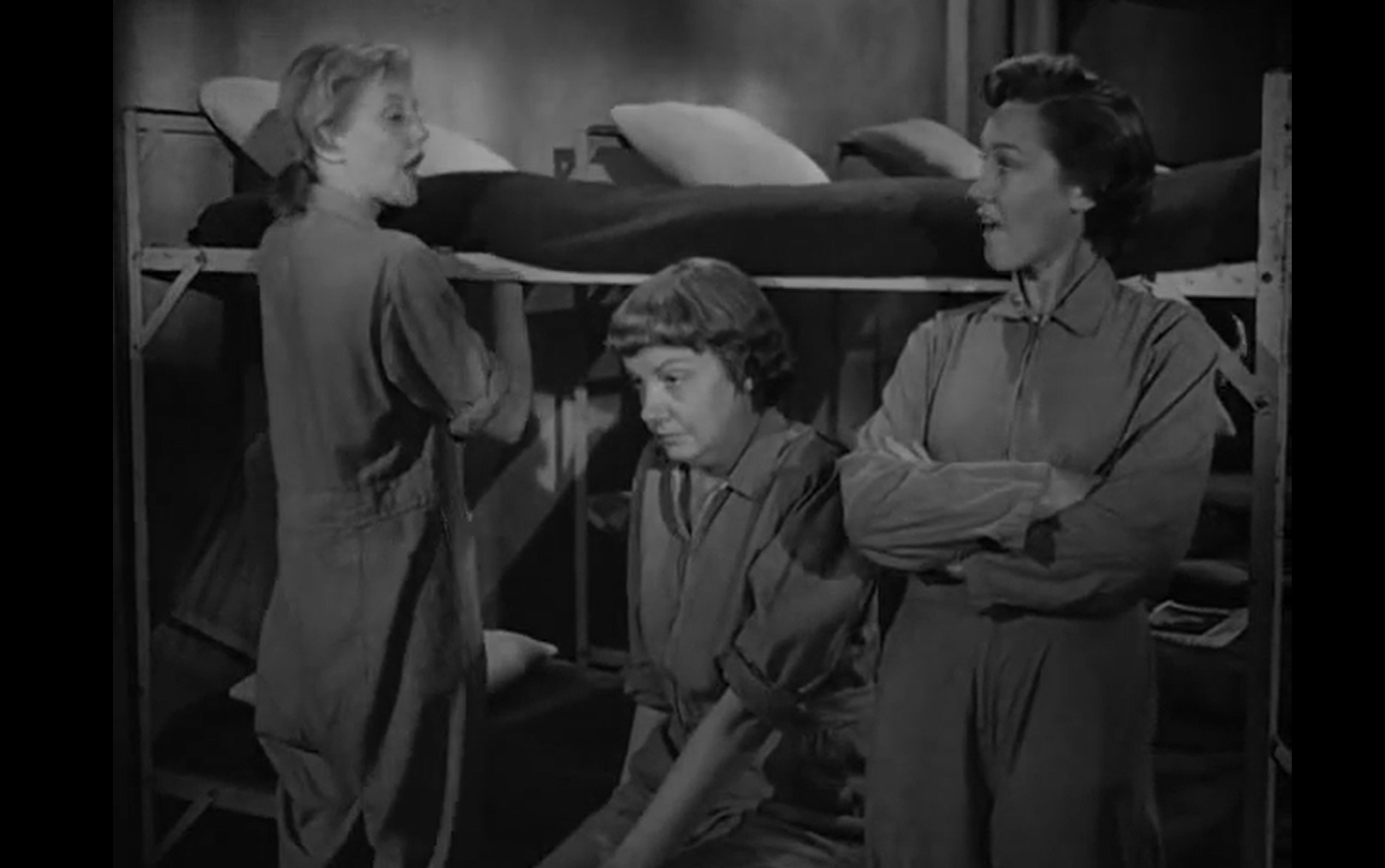
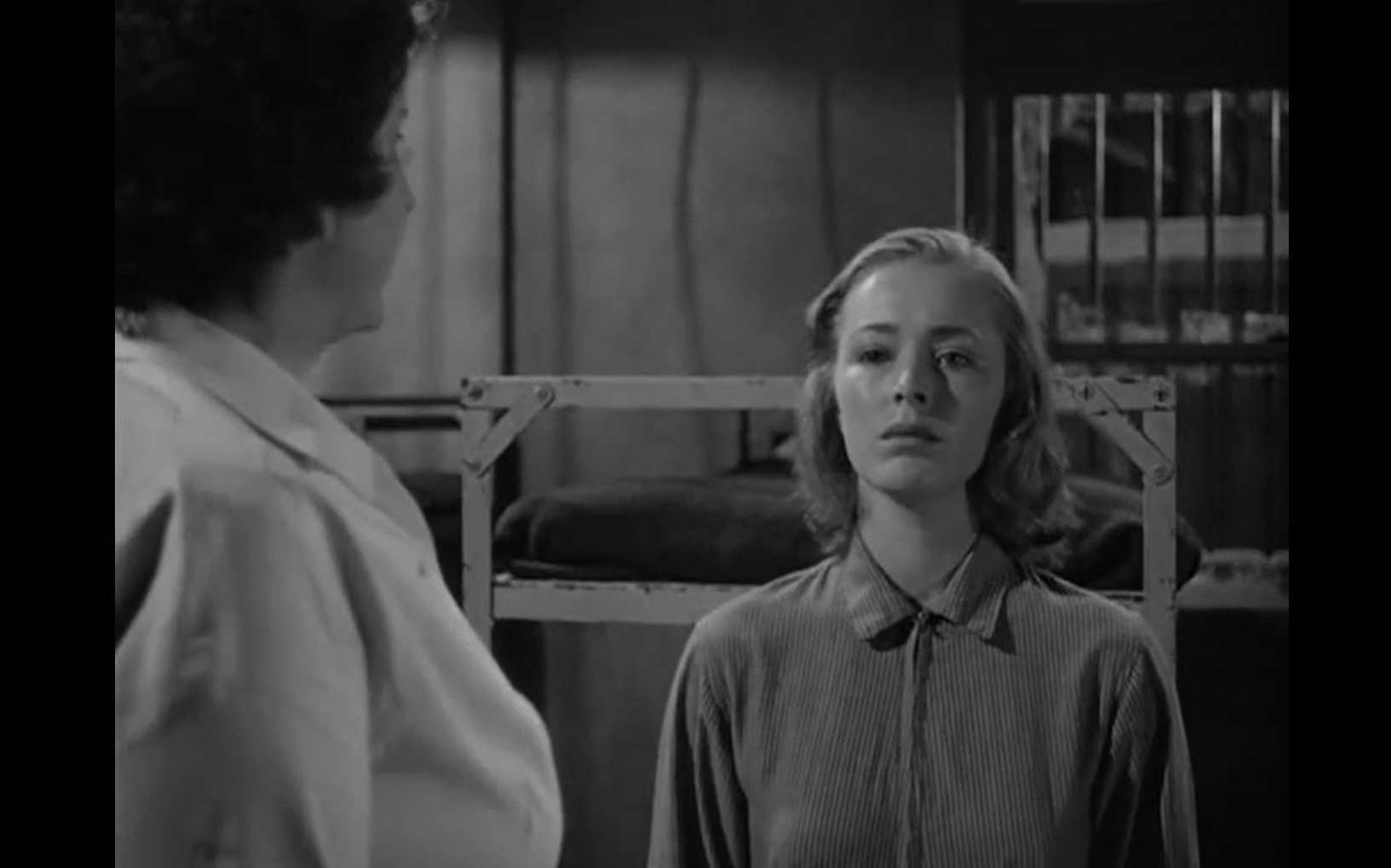
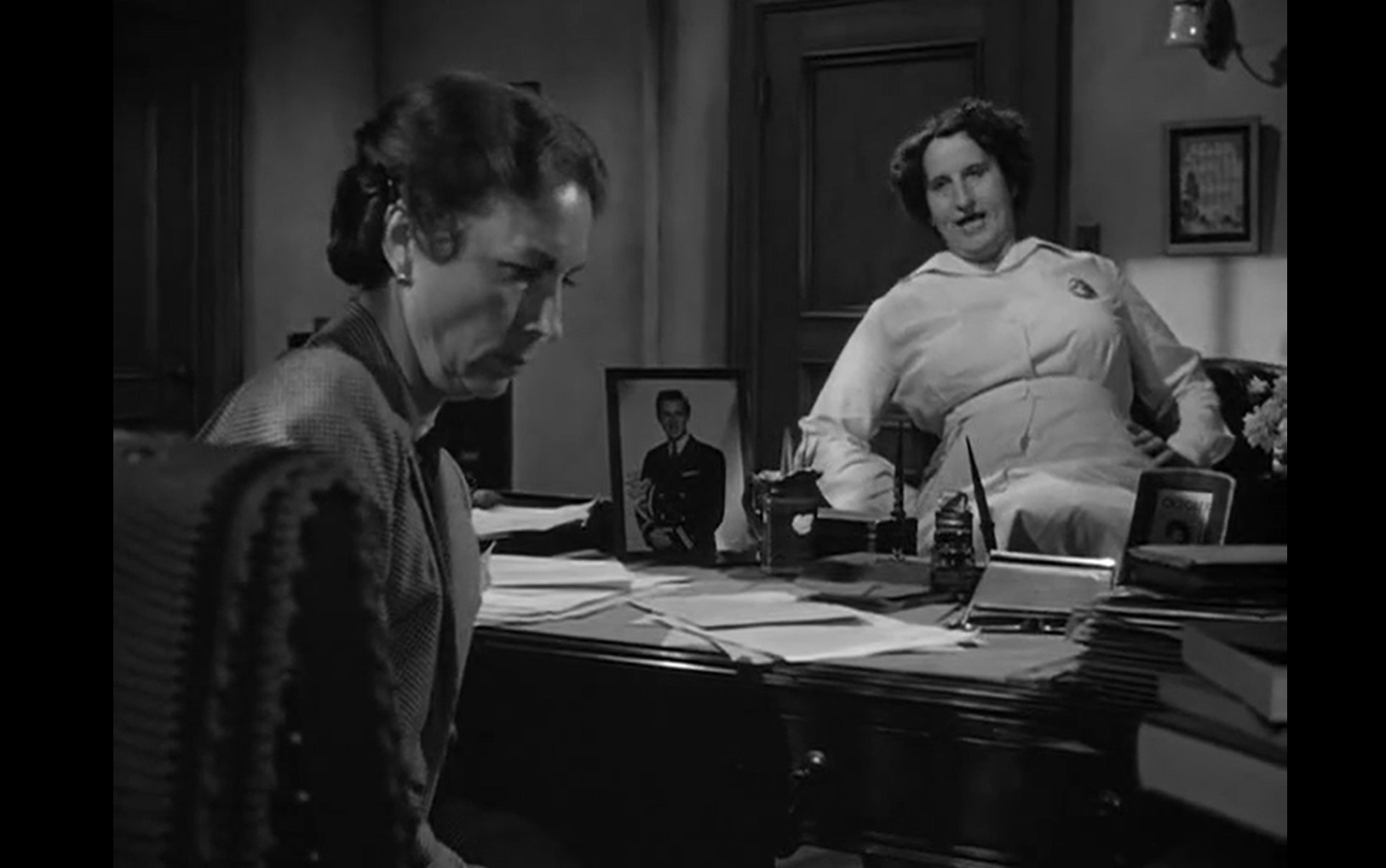
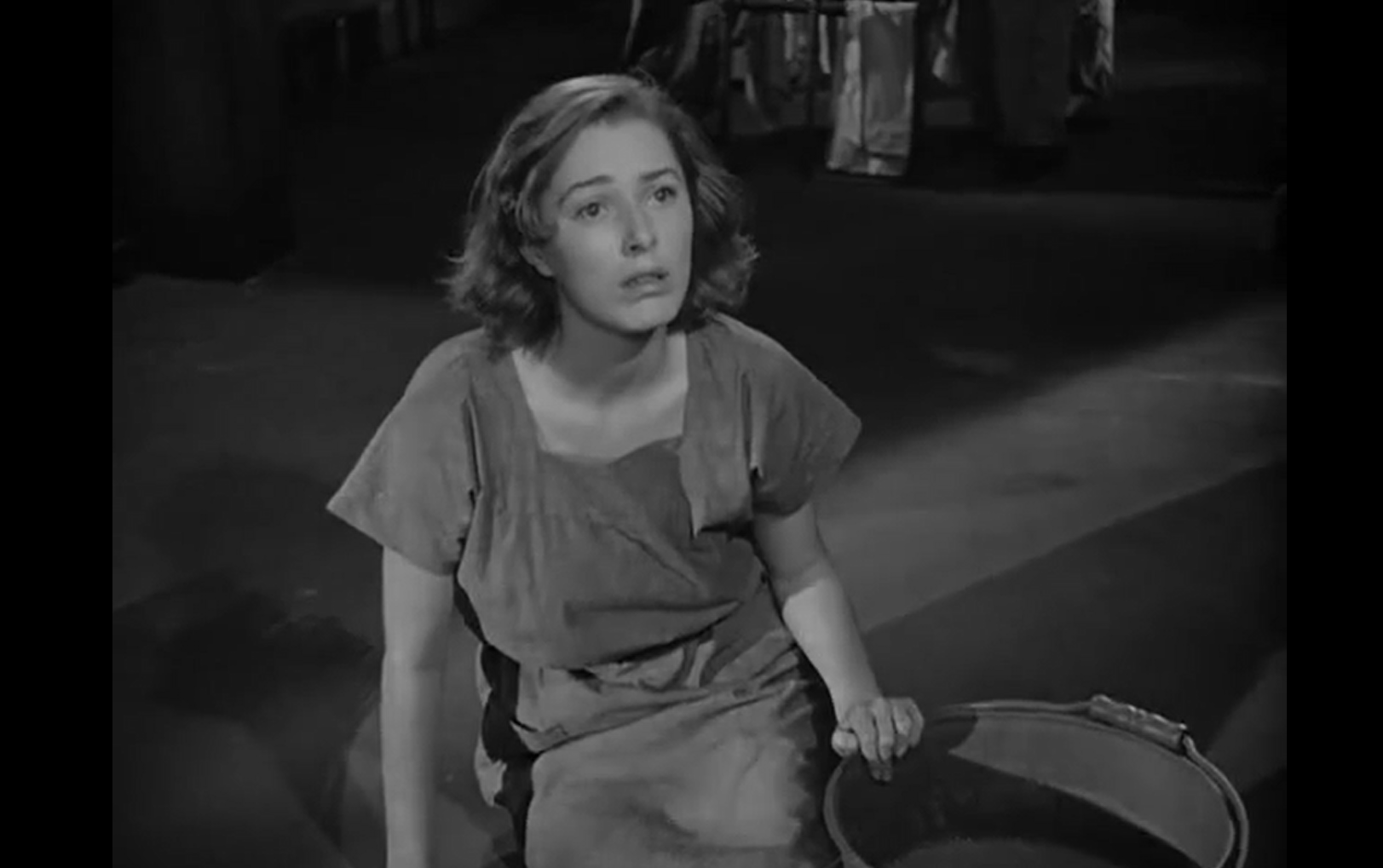
Eleanor Parker gives a sympathetic performance as a naive, poverty-ridden young woman who undergoes a drastic change in personality once she realizes how incurably corrupt the prison system is:
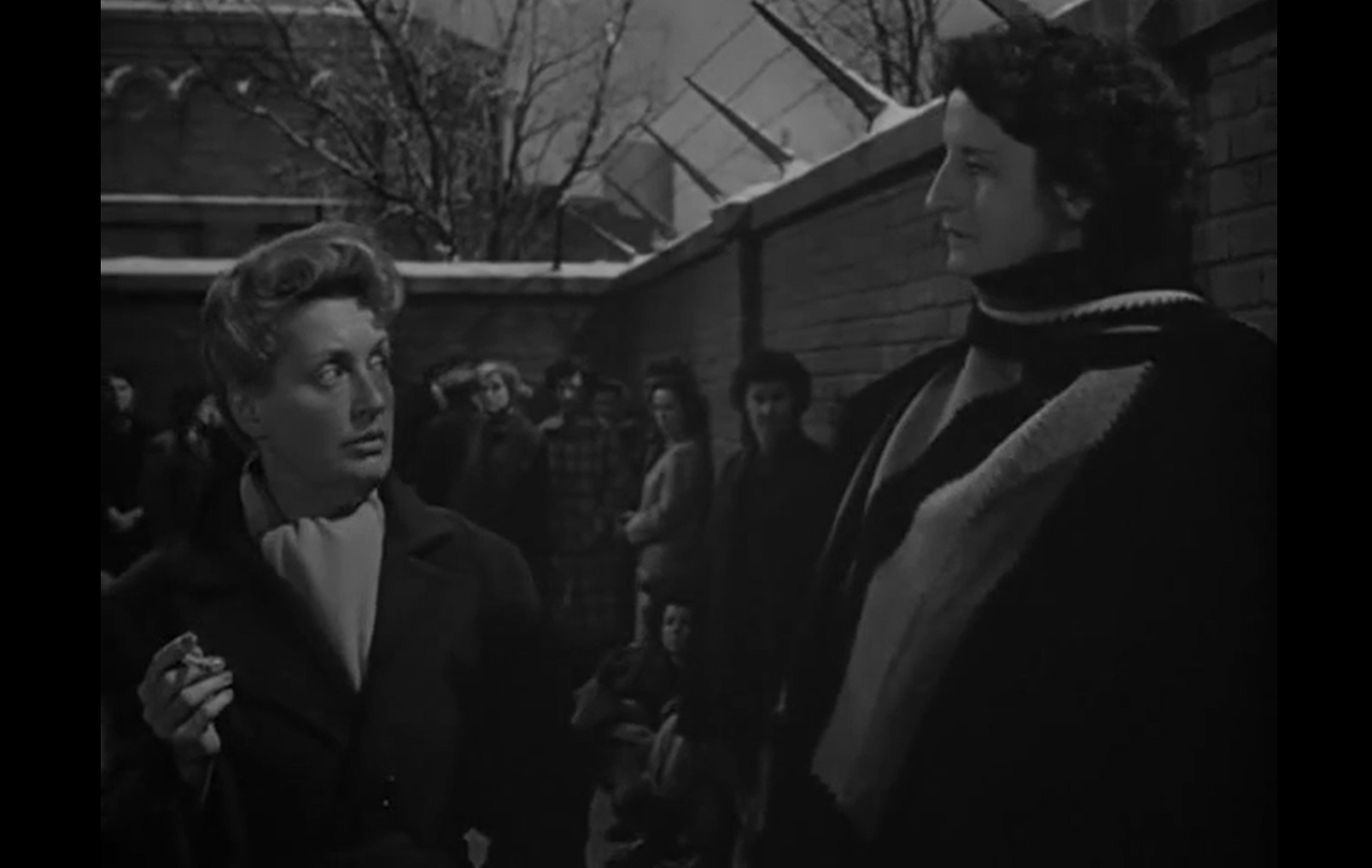
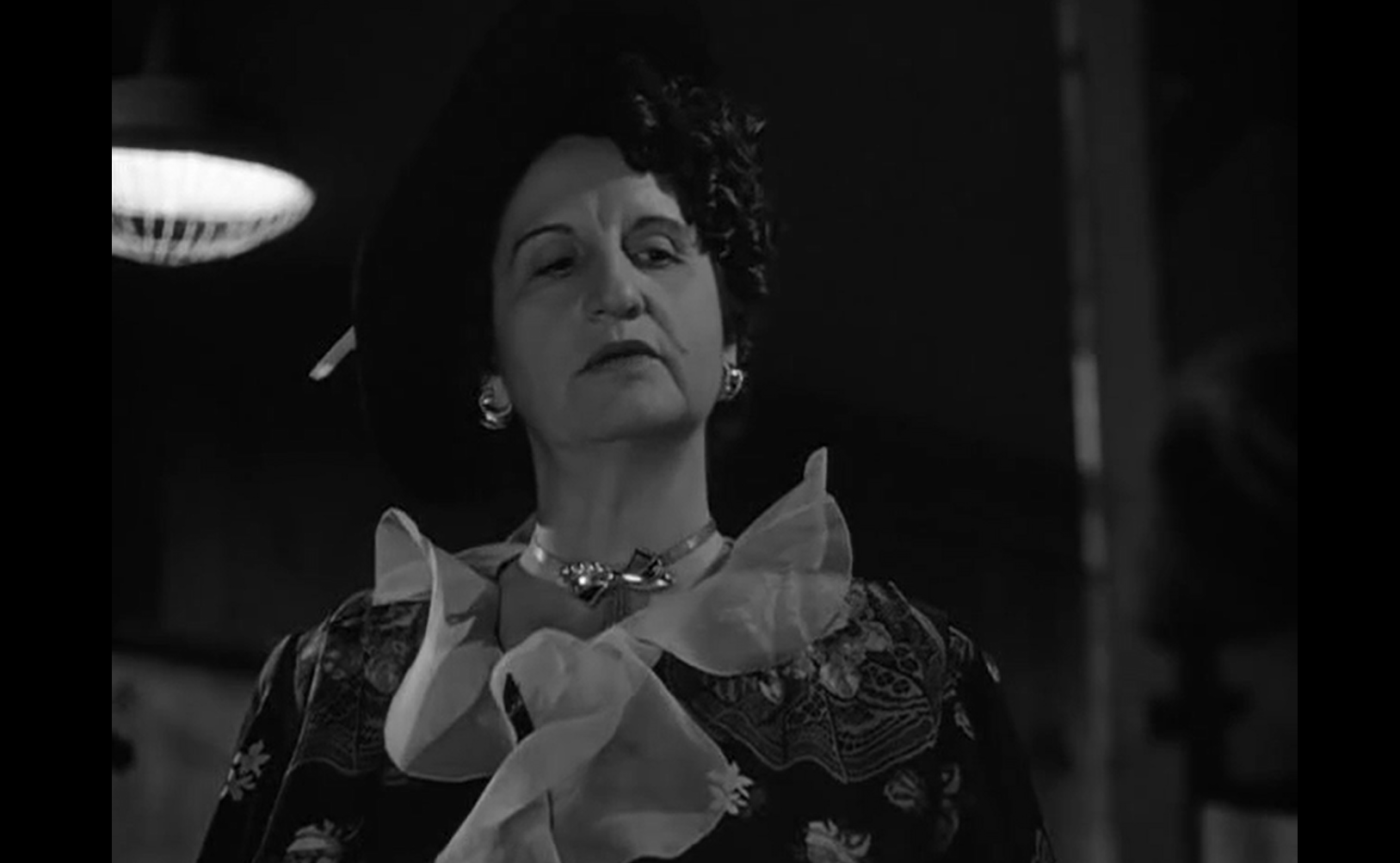
Her role here hints at the even more impressive performance she would later give as a woman with split personalities in Hugo Haas’s Lizzie (1957). Equally memorable is Hope Emerson as a truly sadistic warden with nary a shred of empathy in her bones; while she was apparently a lovely woman in real life, this remains (for better or for worse) the on-screen role she’s most commonly associated with.
Meanwhile, Agnes Moorehead (as the prison’s director) serves as Emerson’s moral counterpoint, wanting the best for “her girls” yet dealing with massive political resistance at every turn.
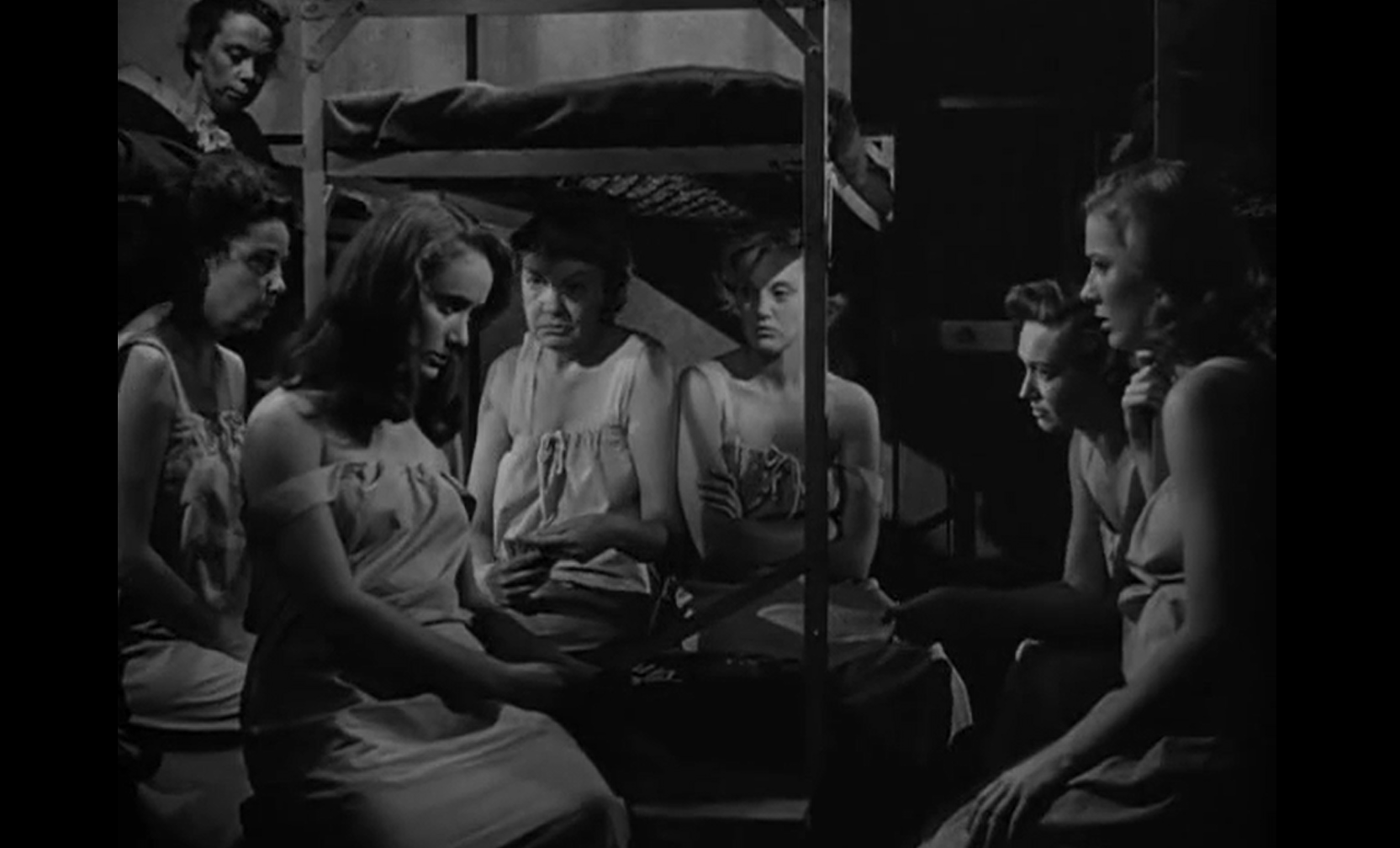
Carl Guthrie’s atmospheric cinematography adds to the film’s potency, effectively evoking the horror-ridden nature of the screenplay, which pulls no punches in its depiction of prison-life as a noxious brew of corruption. Redeeming Qualities and Moments:
Must See? Categories
Links: |
“Whatever I am — whether it’s a new me or an old me — remember, I’m still just an entertainer.”
|
Synopsis: |
|
Genres, Themes, Actors, and Directors:
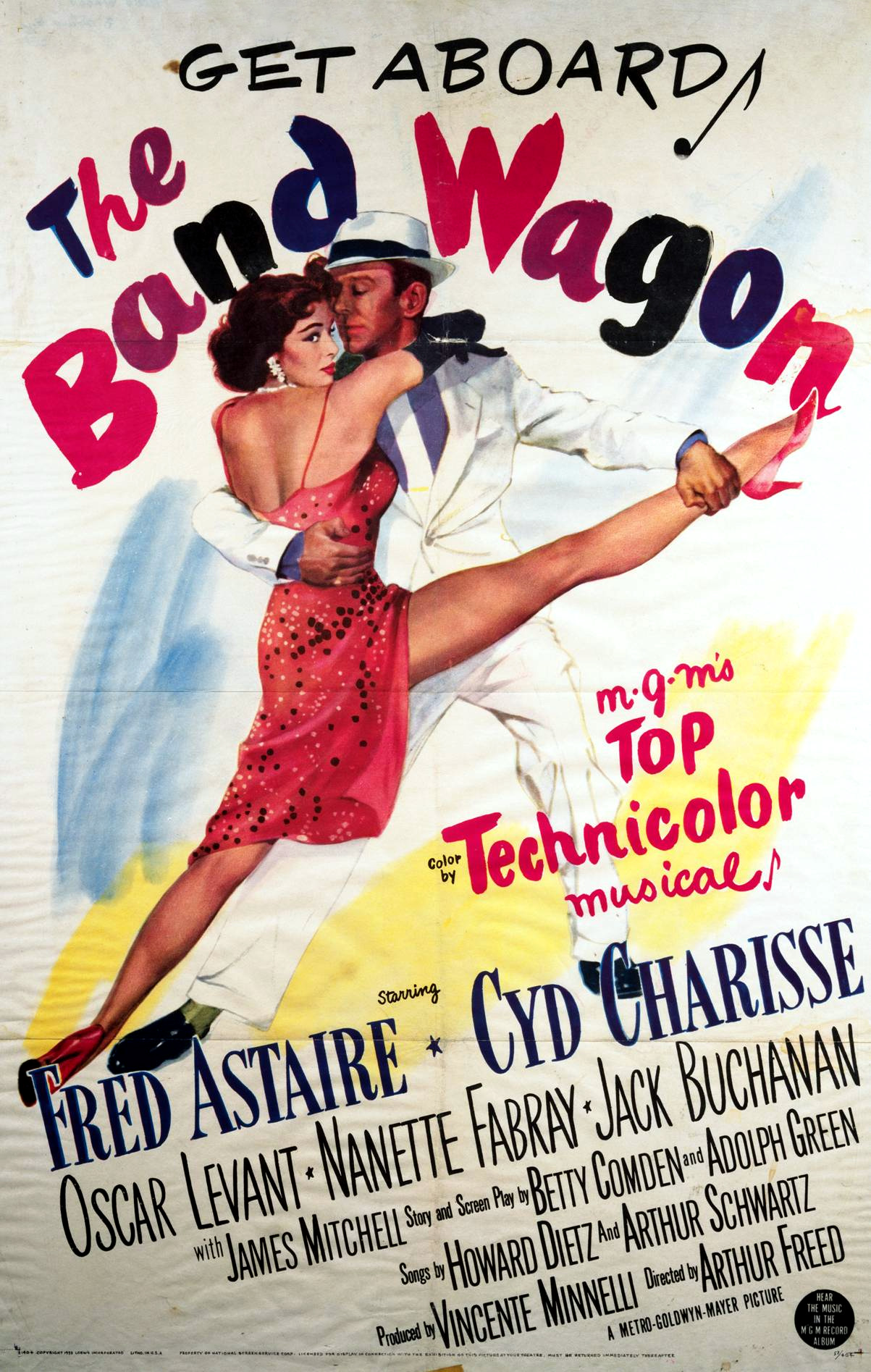
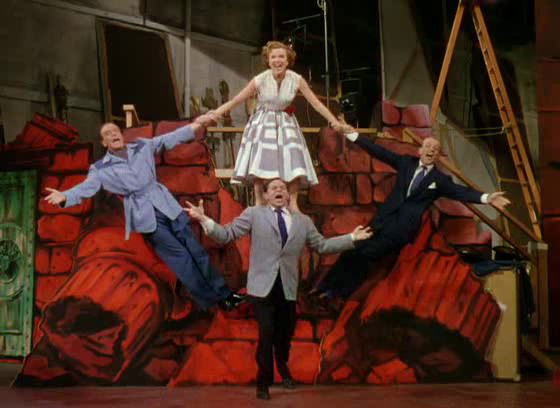
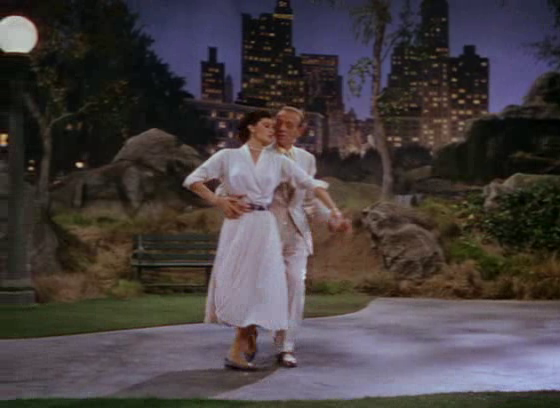
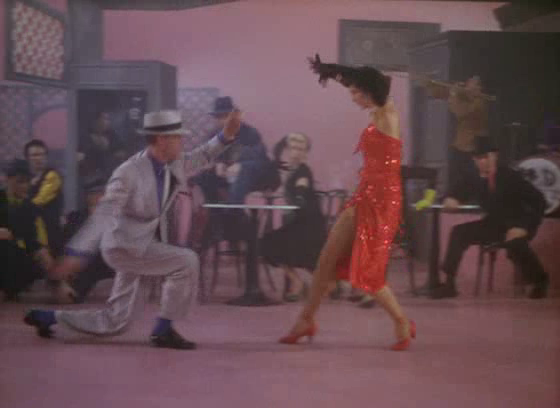
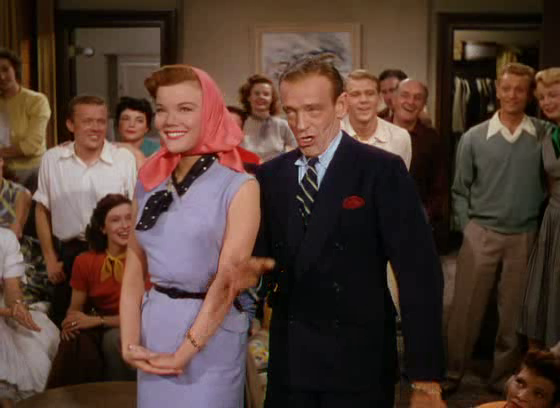
Response to Peary’s Review: In terms of the performances, I’m a big fan of Nanette Fabray’s turn as a character loosely based on Comden herself. She’s relentlessly cheerful, yet in a way that comes across as infectious rather than annoying (and film fanatics will be glad to have seen this big-name musical actress in at least one movie). Her musical number with Astaire and Buchanan (“Triplets”) remains my personal favorite in the film — though it’s a bit sad to know how painful it was for Fabray to film it. Equally memorable — in a film filled with memorable sequences — is Astaire’s early shoeshine number, danced with real-life shoe shiner Leroy Daniels. And naturally, all film fanatics will want to see the film where the infinitely hummable “That’s Entertainment!” was first showcased; it’s performed here with plenty of flair and creative choreography. The Band Wagon is frequently compared with its predecessor, Singin’ In the Rain (also co-written by Comden and Green, and produced by Arthur Freed), with fans endlessly debating the merits of one versus the other, and many taking a decisive “side”. In truth, while I’ll admit to being a more devoted fan of SITR, both films remain vibrantly colorful, cheerily escapist, masterfully danced musicals in their own right. My primary complaint with The Band Wagon lies with the lackluster romantic subplot between Astaire and Charisse, whose “rivalry” never really poses much of a narrative threat — then again, when those two dance together, all such concerns melt away, and we remember why we’re sitting down to watch a film like this in the first place. Redeeming Qualities and Moments:
Must See? Categories
(Listed in 1001 Movies You Must See Before You Die) Links: |
“On this voyage, there’s to be no he-ing or she-ing.”
|
Synopsis: |
|
Genres, Themes, Actors, and Directors:
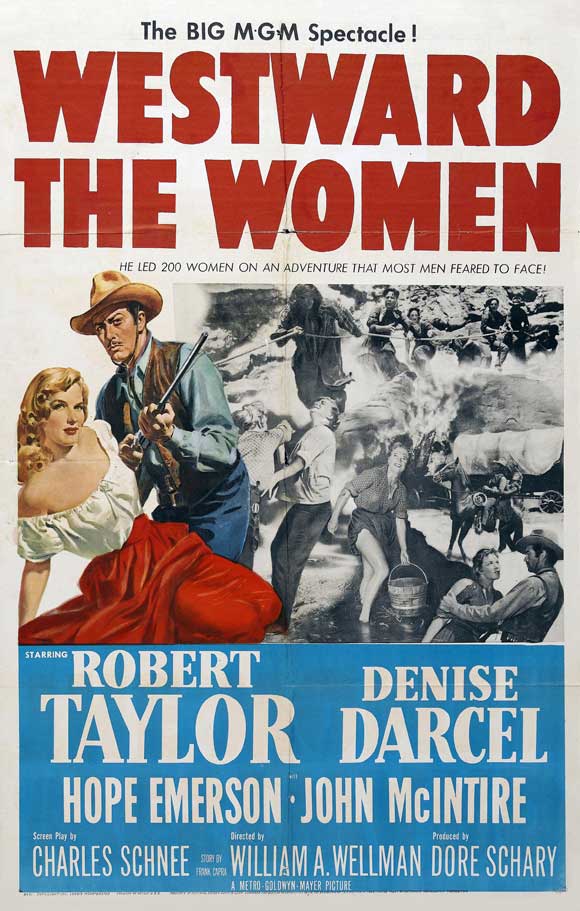
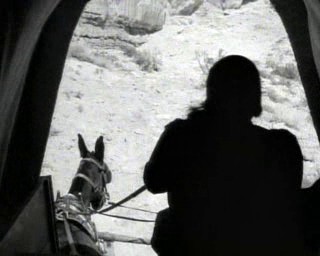
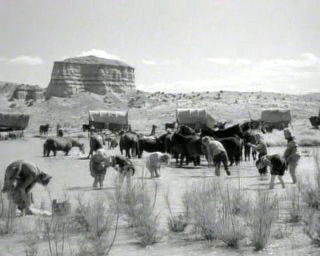
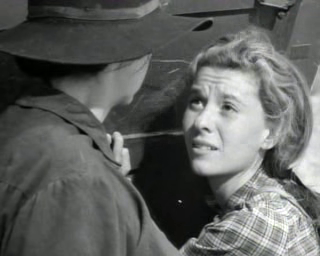
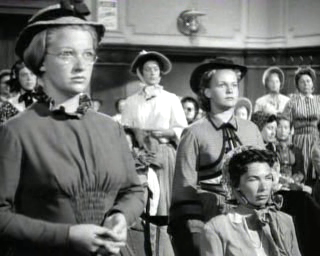
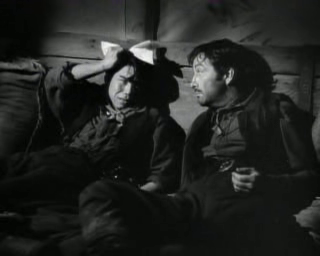
Review: Taylor is appropriately gruff and stalwart in the lead role, but it’s the motley women themselves who linger longest in one’s memory. Larger-than-life Emerson (best known for her performance as a prison warden in 1950’s Caged) had perhaps her noblest supporting role here; however, most of her fellow actresses are unknown faces, adding to the film’s sense of authenticity. Meanwhile, Japanese character-actor Henry Nakamura gives a refreshingly caricature-free performance as “Ito” the cook; his drunken scene with Taylor (see still below) provides one of the film’s most random yet memorable moments. Kudos also belong to Wellman and DP William Mellor, who bring the harsh western landscape to realistic life. (According to TCM’s article, camera filters were used “as sparingly as possible” to give “the film an intentionally stark, sunbaked look”.) While not all narrative threads work — obligatory romantic tensions between Taylor and a former showgirl (Denise Darcel) are simply yawn-worthy, for instance — the majority of the story is a compelling treat, making this a film ffs will want to return to from time to time. Redeeming Qualities and Moments:
Must See? Categories
Links: |
 I’ve now posted on all 18 of the Woody Allen titles listed in Peary’s GFTFF — which happens to cover every single feature he directed (and/or starred in) up to the time of the book’s release. Interestingly, I’m voting all but one as “Must See” — providing evidence either of Allen’s indisputable genius during the first half of his lengthy career, and/or my personal fondness for his work:
For Allen fans, it’s nearly impossible to pick a favorite title from the above list, or even a few favorites, given that so many of his earlier movies delight on a variety of different levels. Like many others, I have a personal fondness for Annie Hall (it’s probably the Allen title I find most consistently clever, enjoyable, and romantic) — but I also wouldn’t want to live without repeat visits of Sleeper or Zelig (close runners-up). Manhattan earns my dubious vote as the most highly regarded Allen film which I find least personally satisfying, though (naturally) there’s much about it to appreciate — and I’ll try it again in later years to see if my opinion has changed.
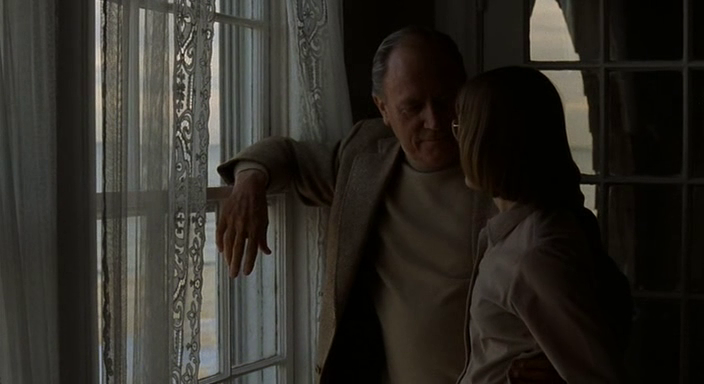
Having recently rewatched so many of Allen’s films during a short period of time, I’m once again enormously impressed by the trajectory of his creative vision — shifting from his “early, funny” films (each an enjoyably gonzo comedic treat), to the heartbreaking yet life-affirming insight of Annie Hall, to the devastating emotional rigor of Interiors, to the complexity and joy of Hannah and Her Sisters. Meanwhile, those interested in tracing thematic trends across an auteur’s lifelong vision will surely have a field day with Allen’s work, given how much of it is based so closely on elements of his own life — carefully crafted as fictional narrative, yet oh-so-clearly a manifestation of his own idiosyncrasies and interests. Some parallels are obvious — i.e., the close overlap between the three grown sisters in Interiors and those in Hannah and Her Sisters. Others are subtler — i.e., as Peary astutely points out in Cult Movies 3, the connection between Alvy Singer’s initially liberating yet ultimately claustrophobic “mentoring” of “naive” Annie Hall, and the “imposing, Nosferatu-like” role played by “Max von Sydow as Barbara Hershey’s possessive, soon-to-be-dumped mentor” in Hannah and Her Sisters.
Any discussion of Allen’s career would, of course, be incomplete without mentioning what he’s produced since 1987 — which amounts to an astonishing film-a-year, much of it (unfortunately) not worthy of a film fanatic’s attention. Below is a chronological list of his theatrically-released full-length features as of 2012:
It’s been too long since I’ve seen many of these films to say definitively whether I’d vote them as “modern must-see” titles or not — but the ratio of essential to non-essential titles in this list will certainly be much, much lower. I’ll check back in later, as I rewatch the second half of Allen’s oeuvre and carefully select the wheat from the chaff. [ADDENDUM: I’m casting my votes now, as I rewatch these later titles; as predicted, very few are “must see”, though a surprising number are recommended — at least for Allen fans.]
P.S. (8/9/12): I recently stumbled upon this indispensable website/blog for Allen fans:
http://www.everywoodyallenmovie.com/
It’s dedicated to much the same project I’ve been engaged in myself recently, albeit on a grander, much more detailed scale. You’ll find yourself unable to stop clicking from title to title, reading Trevor’s insights into each Allen film as he watches them in chronological order and makes extensive thematic connections. What’s most interesting to me is how strongly we differ in our critical opinions of many of Allen’s later titles, demonstrating once again how fickle and subjective Allen-allegiance can be; I think it ultimately comes down to each viewer needing to decide for him/herself whether any given (post-1987) title is worth watching or not. At any rate, definitely check his site out!
P.S.S. (1/8/21): Well, life keeps evolving, as does the internet. It appears that everywoodyallenfilm.com is no longer, and I can’t find traces of it anywhere — however, for diehard fans, there are other sites devoted to covering Allen’s oeuvre and ongoing projects, including https://www.woodyallen.com/ and http://www.woodyallenpages.com/. Allen has remained as prolific as ever, continuing to churn out roughly a movie a year since 2012 for a total of 7 additional feature-length films and a T.V. mini-series — none of which, sadly, I have any interest in checking out.
“Radio — it’s all right once in a while.”
|
Synopsis: |
|
Genres, Themes, Actors, and Directors:
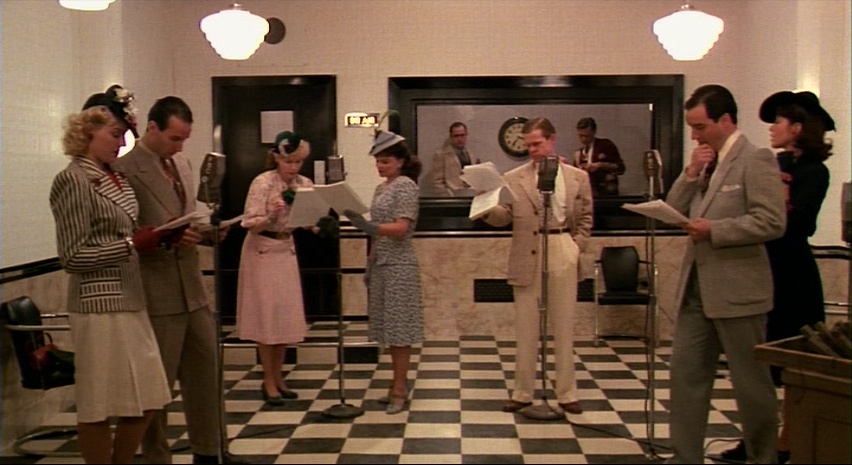
Review: Meanwhile, several radio stars themselves come to all-too-human life — most notably the dapper male half (David Warrilow) of the morning radio show “Roger and Irene”, possessing an insatiable lust for a young cigarette girl (Mia Farrow) whose own infatuation with radio eventually blossoms in unexpected ways. Farrow’s trajectory is one of two the film perhaps follows most closely — the other being that of Wiest, whose desire to meet and marry Mr. Right clashes with her incurable pickiness. Farrow’s ditzy character remains a bit of a caricature, but Wiest turns Aunt Bea into a lovably neurotic soul we can’t help wishing the best for. But the primary memory one leaves the film with is that of a collective era, painstakingly recreated through Santo Loquasto’s period sets (and shot by DP Carlo di Palma). Redeeming Qualities and Moments:
Must See? Categories
Links: |
“A relationship, I think, is like a shark. You know? It has to constantly move forward or it dies. And I think what we got on our hands is a dead shark.”
|
Synopsis: |
|
Genres, Themes, Actors, and Directors:
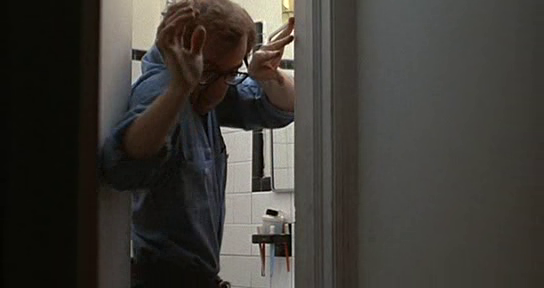
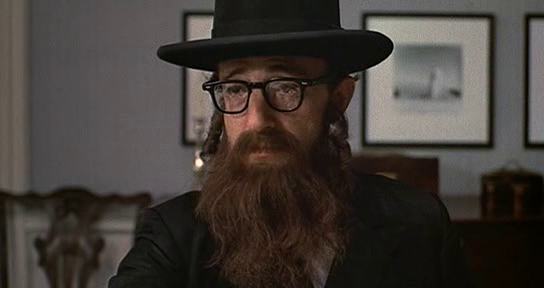
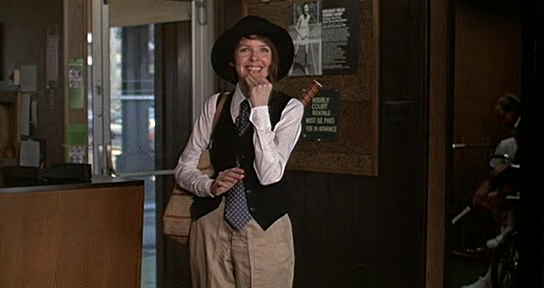
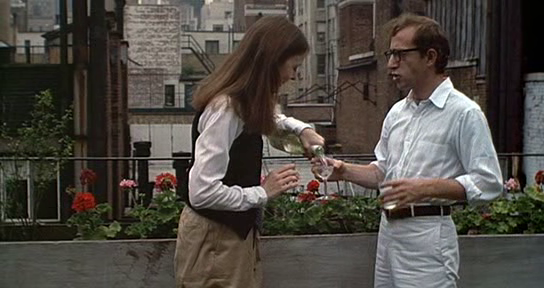
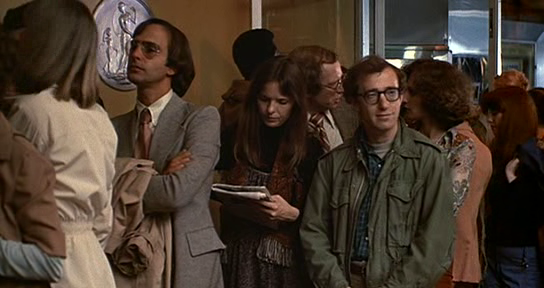
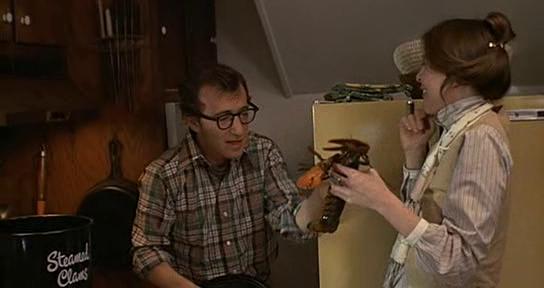
Response to Peary’s Review: Peary spends part of his review in both GFTFF and Alternate Oscars — where, like the Academy, he designates Annie Hall as Best Picture of the Year — naming some of the picture’s “so many great moments” (indeed, it’s difficult to resist doing this — my stills below attest to my own challenge in picking just a few scenes to highlight!). These include the classic balcony scene, “during which Allen provides subtitles that reveal what each is really thinking (both worry they’re blowing it with each other)”; “Alvy silencing an obnoxious, self-impressed, self-professed [Marshall] McLuhan expert who talks pretentious drivel in a movie line by pulling McLuhan out of a poster to tell the man, ‘You know nothing of my work'”; “Alvy battling monstrous spiders in Annie’s bathtub”:
… “Grammy Hall look[ing] at Alvy and… see[ing] him as an Hassidic Jew with a long black beard, curls, black hat, and black frock coat”:
… “Alvy “sneez[ing] $2,000 worth of cocaine across a room”:
… and many, many more. In his review of Annie Hall for his third Cult Movies book, Peary writes that “it’s safe to say that every Woody Allen film has a cult following”, but “only Annie Hall is loved… by every Allen fan, as well as those obstinate moviegoers who still won’t concede Allen is a great filmmaker.” (One wonders what Peary would think at this point about Allen’s most recent spate of lackluster films… But I’m still more than willing to agree with his assessment.) He notes that “it’s actually hard to find someone who hasn’t seen this irresistible movie several times, who doesn’t have a tender spot for it…, who wouldn’t make it the Woody Allen film they’d like to have if stranded on a desert island”. He further notes the historical relevance of the film by writing that it “marked Allen’s transition from a functional and slapdash, though instinctively funny, filmmaker to one who is technically innovative, thematically sophisticated, intent on capturing the beauty of the women and the city (New York) he loves, eager to explore his characters, and passionate about using the storytelling medium to its fullest”. To that end, one little-discussed aspect of Annie Hall is how cinematically creative it is — see Tim Dirk’s Greatest Films site for an overview of the many techniques Allen employs throughout the film. Redeeming Qualities and Moments:
Must See? Categories
(Listed in 1001 Movies You Must See Before You Die) Links: |
“Life’s short; you don’t get any medals for being a boy scout.”
|
Synopsis: |
|
Genres, Themes, Actors, and Directors:
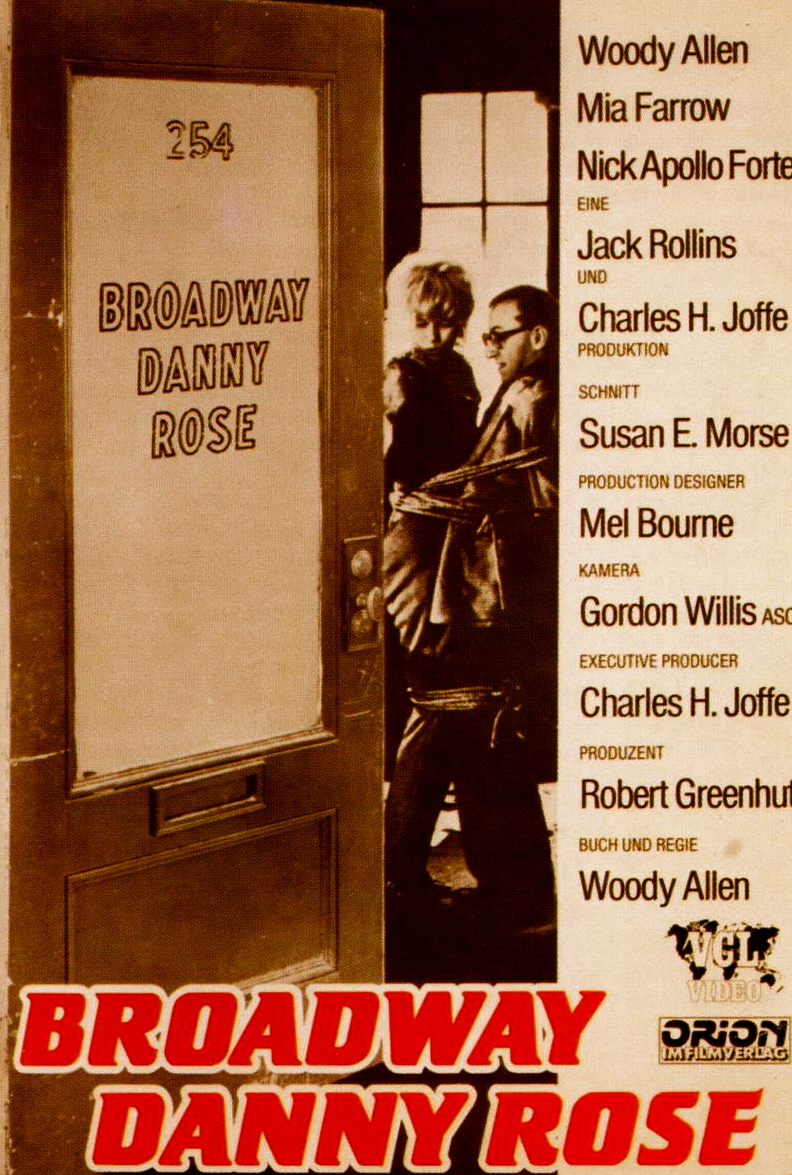
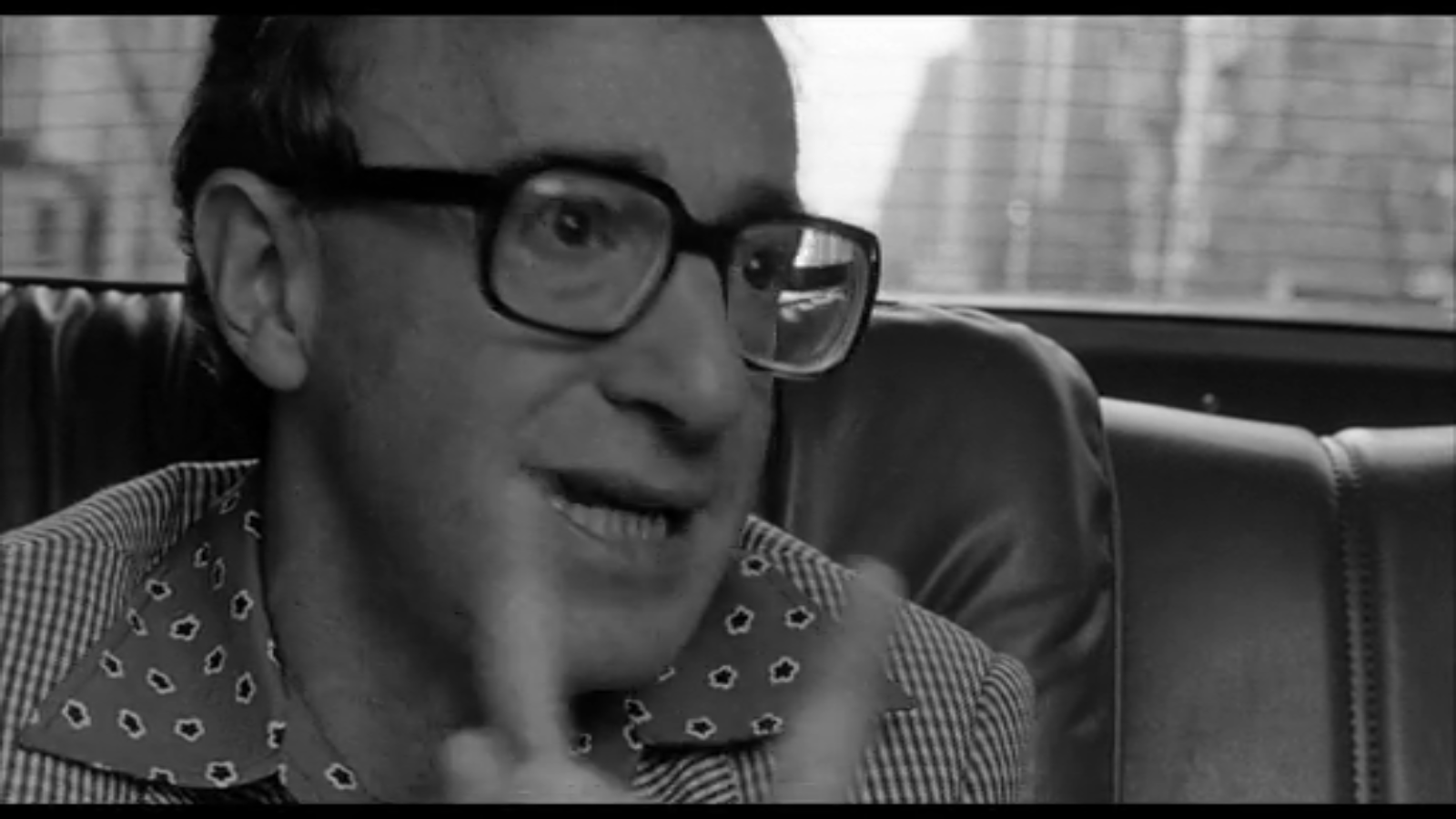
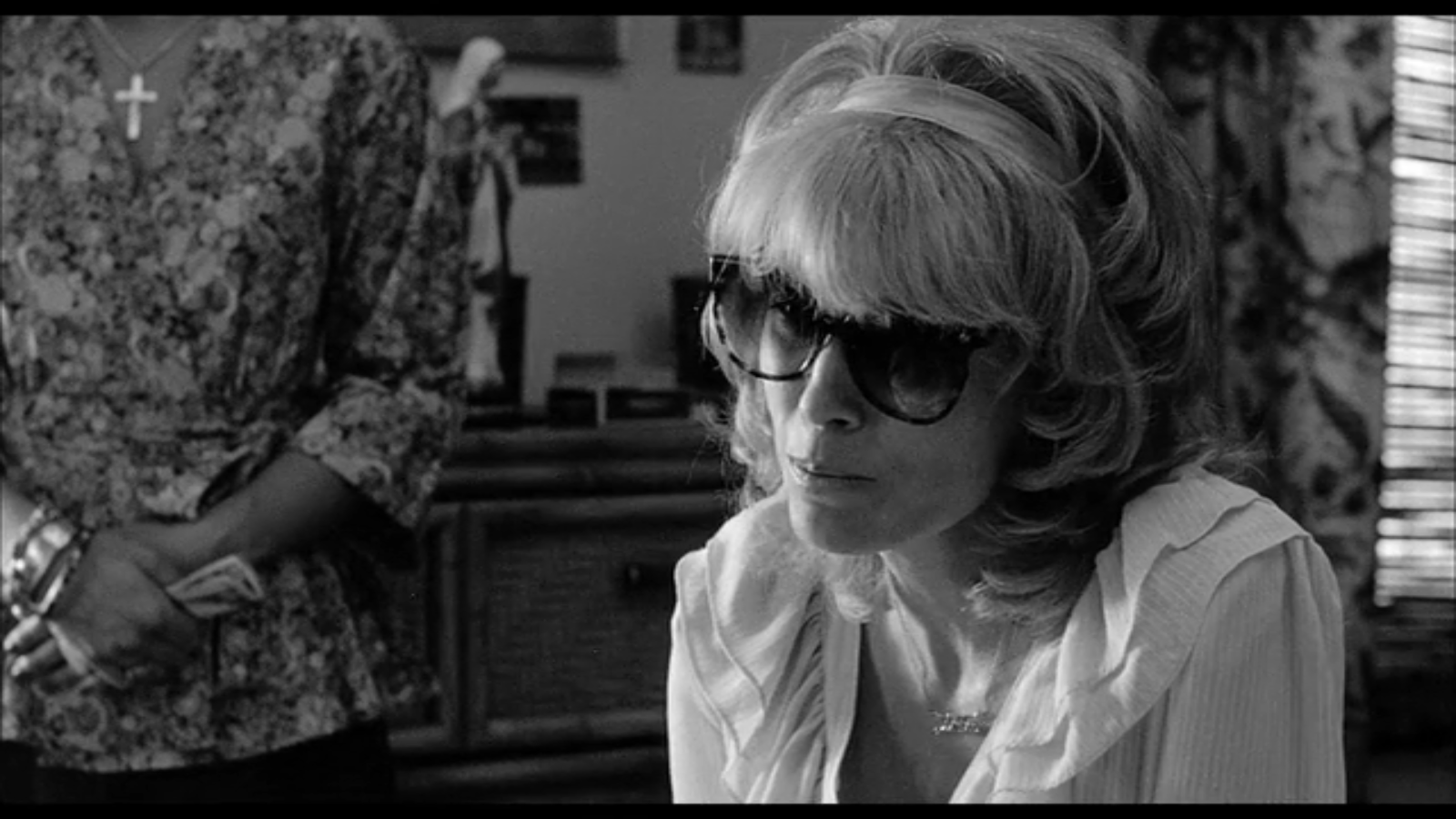
Response to Peary’s Review: Though Allen does a fine job playing such a sympathetic character — and Forte is completely convincing in his debut role (he wrote his own songs as well) — Farrow’s performance is the true surprise here: she’s literally unrecognizable at first in her “blond wig and dark glasses”, using a “convincing New Jersey accent”; her character’s cynical, self-preserving approach to life functions as an effectively stark contrast to Danny’s eternally helpful optimism. Meanwhile, Allen’s use of a flashback structure to frame the storyline — involving a group of stand-up comedians who reminisce in a diner about Danny Rose — perfectly establishes the film’s tone and milieu, allowing Allen to pay homage to the performance medium that gave him his start in show business. One may question why DP Gordon Willis chose to film the picture in (admittedly gorgeous) b&w (perhaps to evoke an era of nostalgia?); but while I believe the film could have worked just as well in color, I won’t begin to quibble. Redeeming Qualities and Moments:
Must See? Categories
Links: |
“She has no direction; I expected such great things from her.”
|
Synopsis: |
|
Genres, Themes, Actors, and Directors:
Response to Peary’s Review:
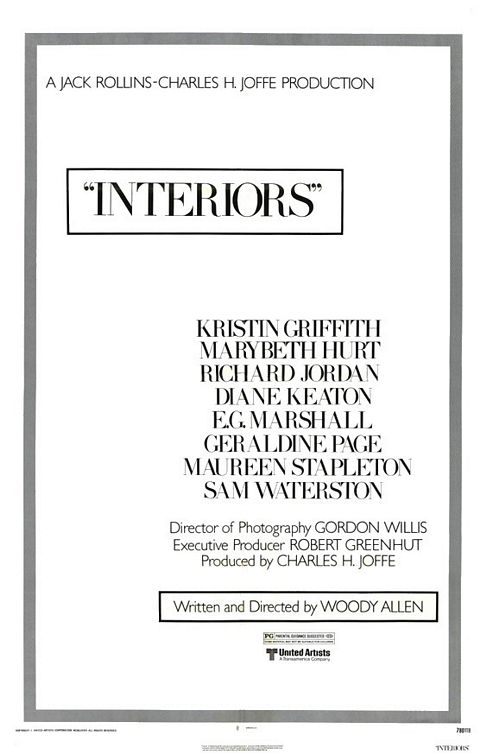
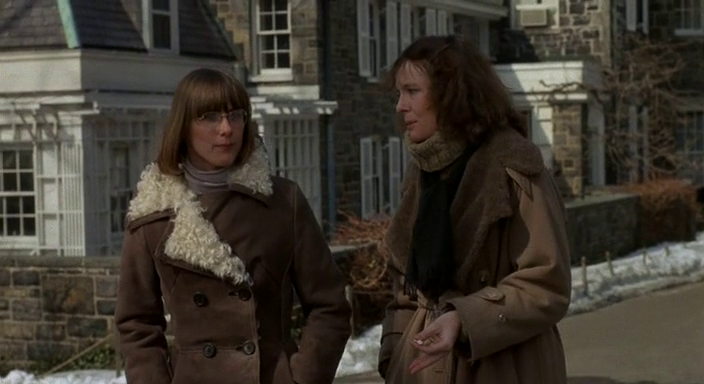
He writes that “what’s most impressive about Allen’s film is that he creates a logic for why his characters respond to each other as they do”; even if we don’t particularly enjoy watching these sisters (and Keaton’s dissatisfied husband) wallow in their sorrows — and find the “snobby pretentiousness” of their “criticism of books, plays, [and] articles” unbearable — they’re indisputably all-too-human. Indeed, with a mother like Page — who during the film “suffers a breakdown and attempts suicide”, yet was clearly mentally unhinged long before the action begins — it’s no surprise at all to see what a mess Keaton et al. are (nor to question the desire of Marshall to get out of the marriage as gently yet quickly as he can).
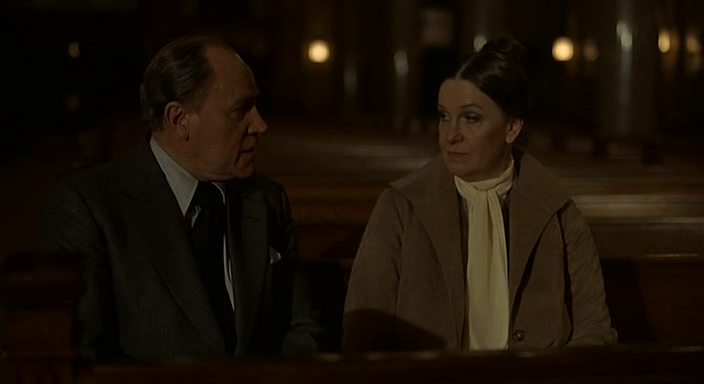
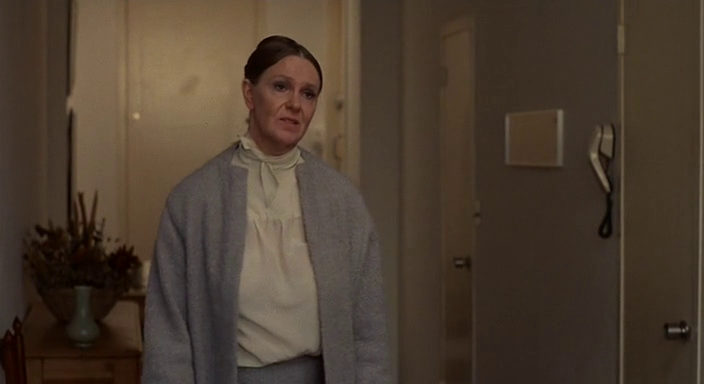
Page’s tragic performance is note-perfect, as is Marshall’s — though arguably the most memorable “older” performance is given by Stapleton, “whose bright clothes are a jolt to the picture”, and who “brings life to the drained group”. Peary notes that a final scene involving Stapleton and Hurt (which I won’t spoil here like Peary does) is the “most special” moment for him, in a film filled with “many emotionally devastating moments”. To that end, how well you ultimately respond to Interiors depends largely on: a) your willingness to suspend preconceived judgments about what a Woody Allen film “should” be, and b) your willingness to invest in the outcome of these (mostly) not-very-likable characters. For my part, I was resistant at first (as Peary notes, it’s still far “too serious” a film), but quickly found myself caught up in the power of Allen’s uncompromising vision. Good for him for daring to make a movie just the way he envisioned it, and to foil his fans’ expectations. Redeeming Qualities and Moments:
Must See? Categories
Links: |