Chapman Report, The (1962)

Chapman Report, The (1962)

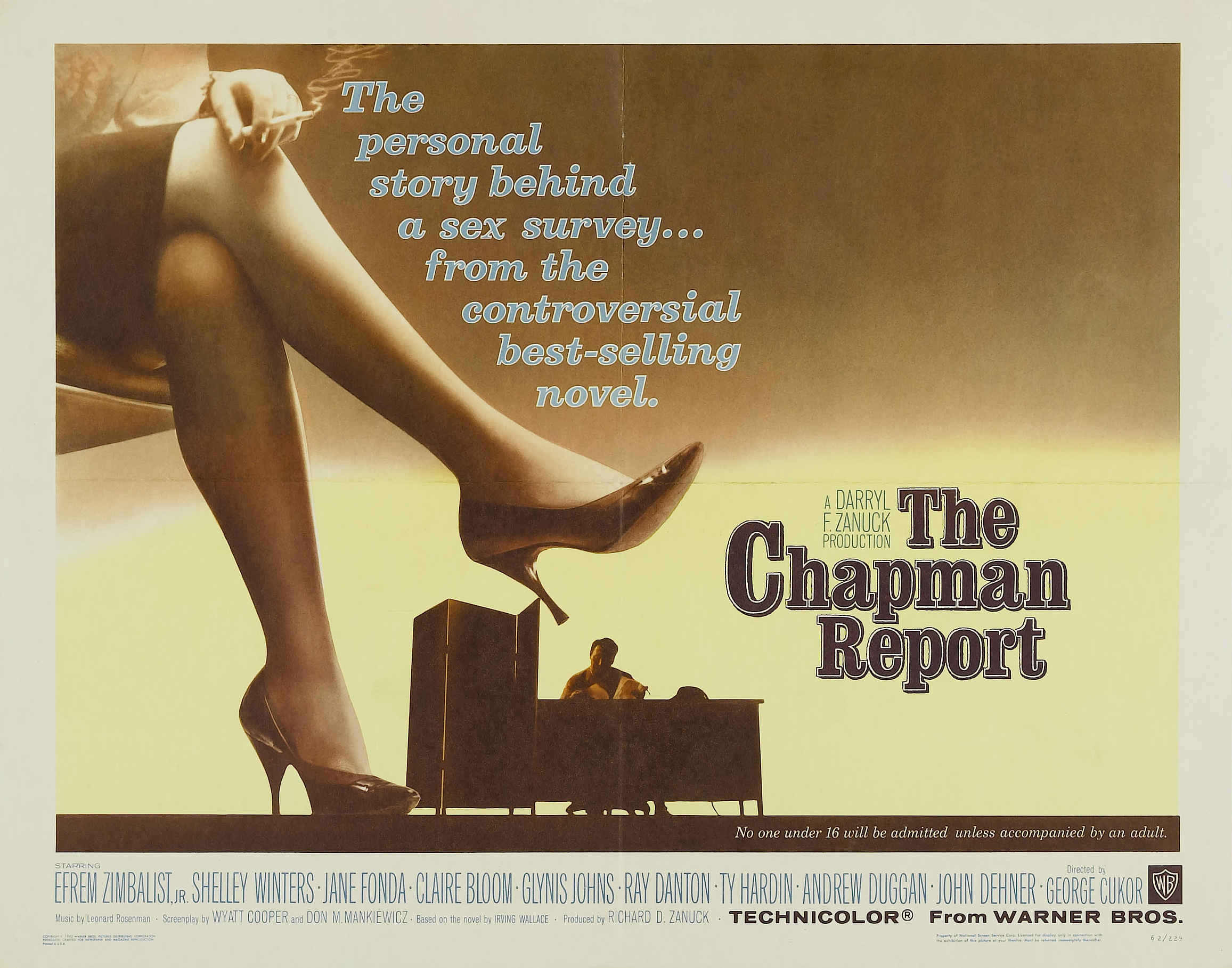
“Help me — I don’t want to be half a woman!”

Synopsis:
Four suburban women — a frigid widow (Jane Fonda), a sexually active divorcee (Claire Bloom), an aspiring sculptress (Glynis Johns), and an adulterous housewife (Shelley Winters) — find themselves questioning their sexual practices when they participate in a Kinsey-esque survey.

Genres, Themes, Actors, and Directors:

  • Claire Bloom Films
  • Cloris Leachman Films
  • Ensemble Cast
  • George Cukor Films
  • Glynis Johns Films
  • Housewives
  • Jane Fonda Films
  • Sexuality
  • Shelley Winters Films

Review:
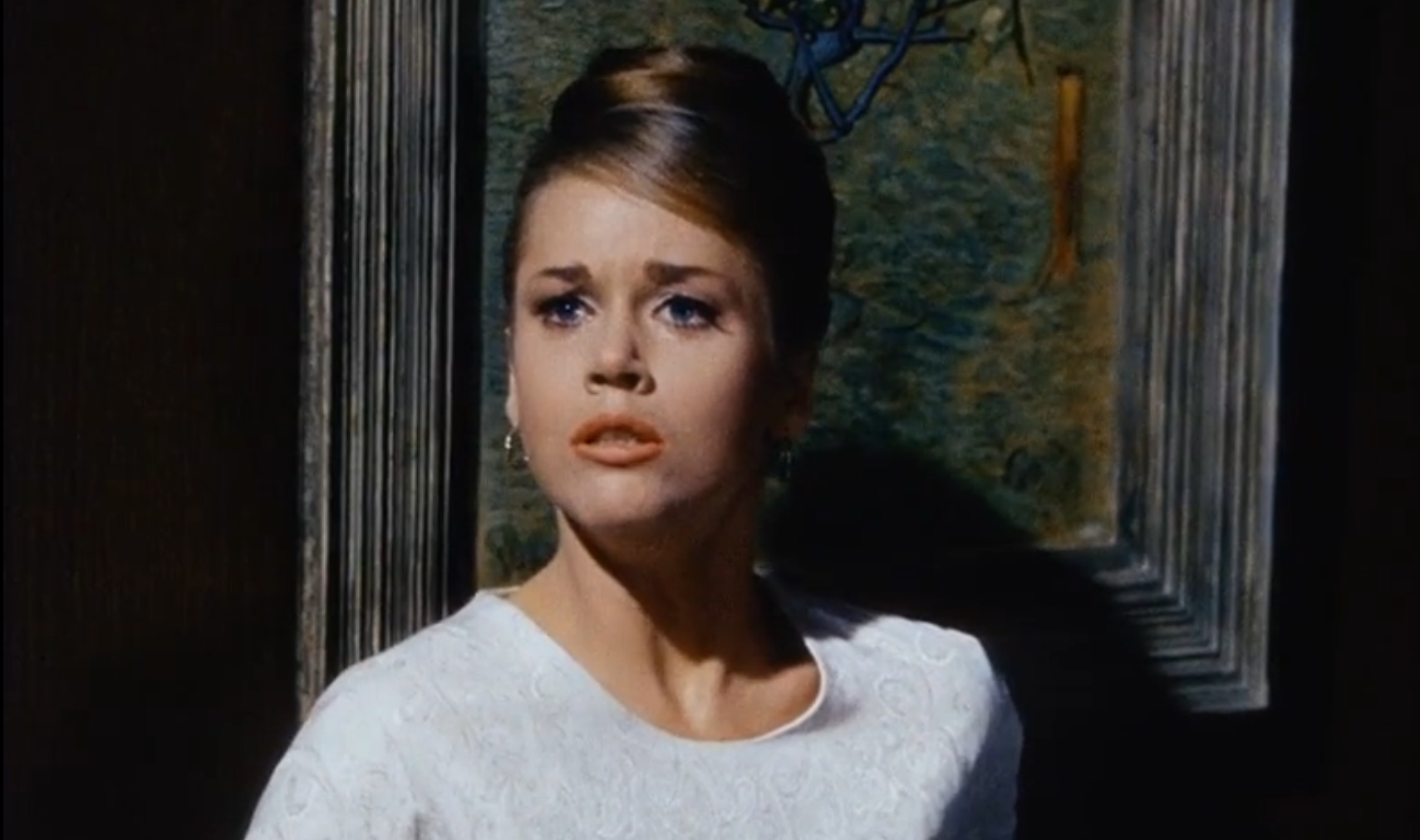
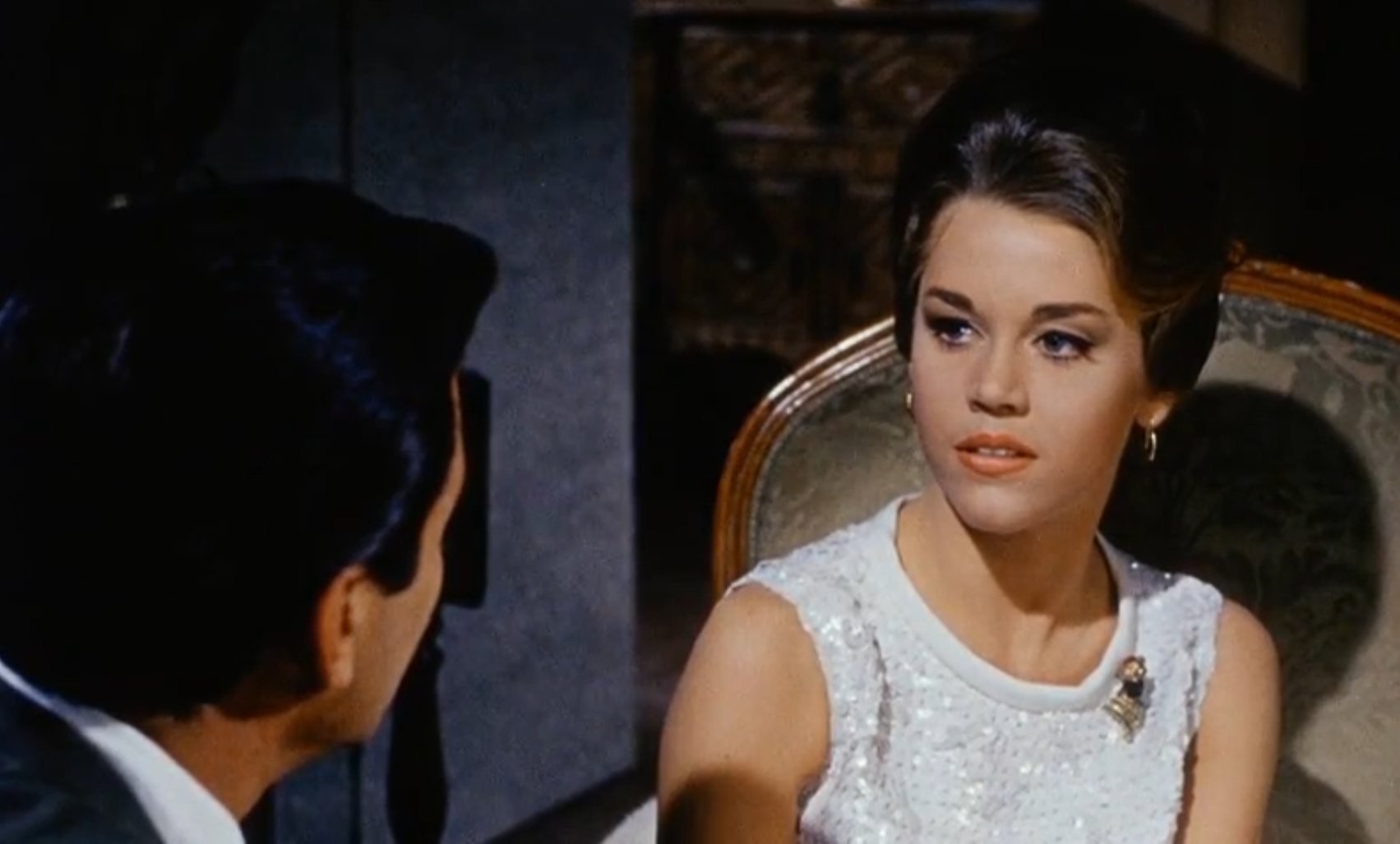
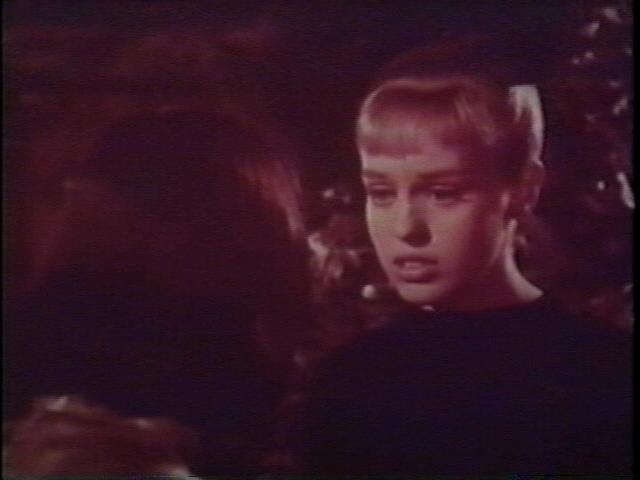
Lambasted by most reviewers as “unforgivably cheap and trashy”, this star-studded melodrama — based on a novel by Irving Wallace — is actually a tame, thinly veiled attempt to capitalize on the popularity of Dr. Kinsey’s infamous sex reports. Ironically, despite Kinsey’s valiant attempt to make “sex” a household term, the word itself is rarely used in this film; characters instead refer to sex as “the physical act”, as when interviewer Efren Zimbalist Jr. says to Fonda’s character: “You’re not the first woman to be afraid — to find the physical act repellent.” Unfortunately, director George Cukor’s choice to cover the gamut of possible sexual issues facing “average” American women makes it difficult for us to care very much about any one of them. Yet the actresses do their best with the screenplay’s limited material: young Jane Fonda isn’t nearly as bad here as most seem to think:

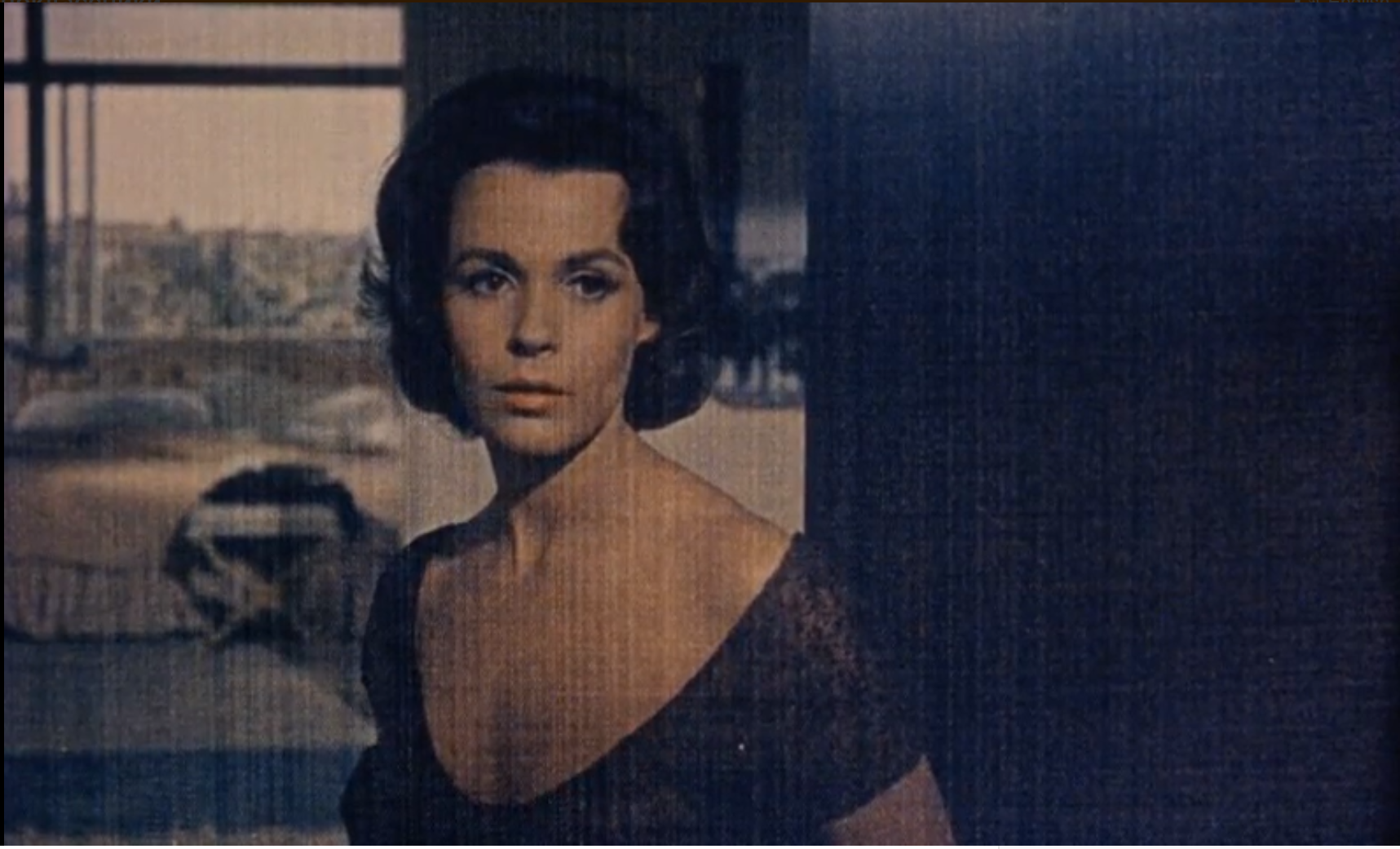
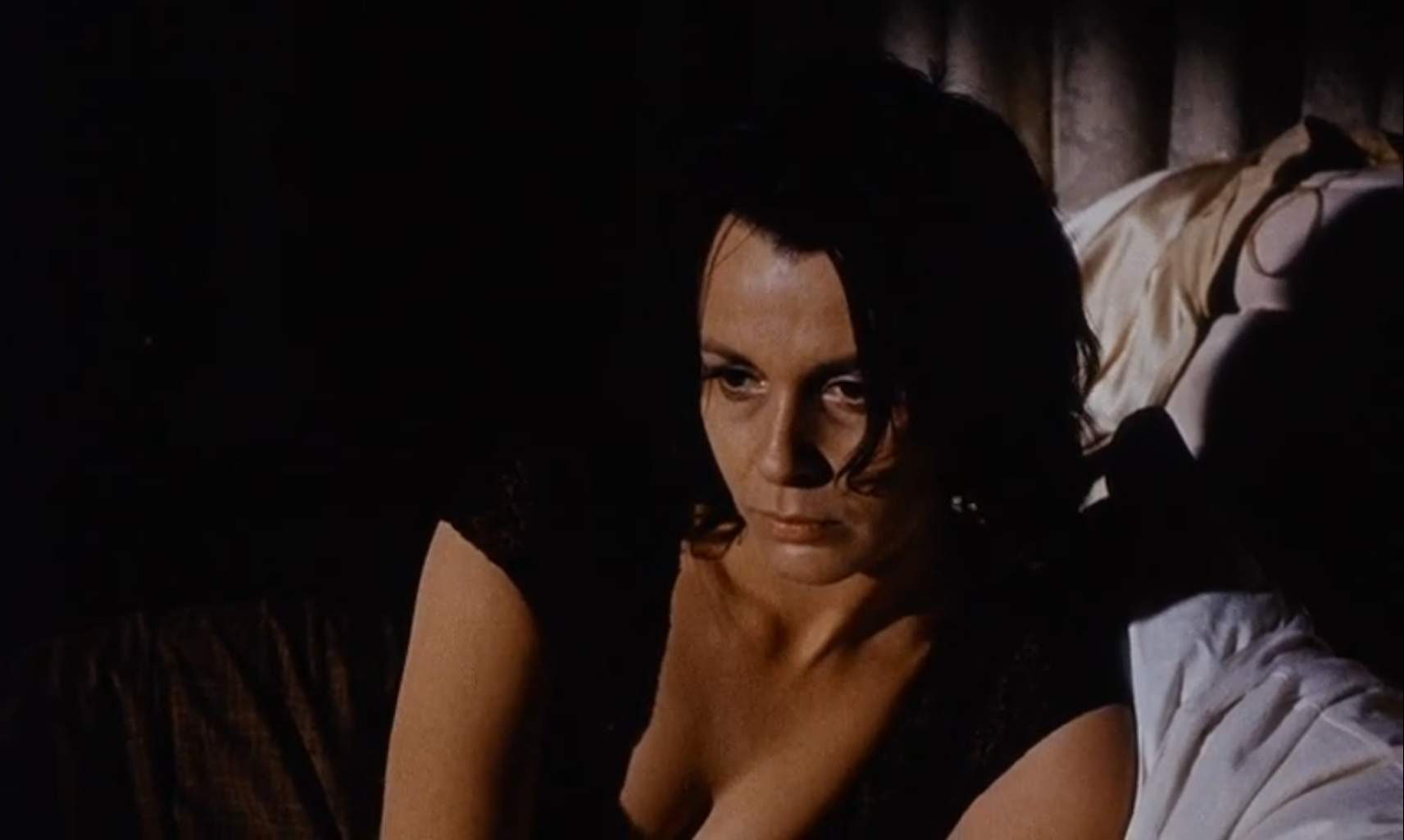
Claire Bloom (always the consummate actress) gives a nuanced performance with hints of unrevealed depth:

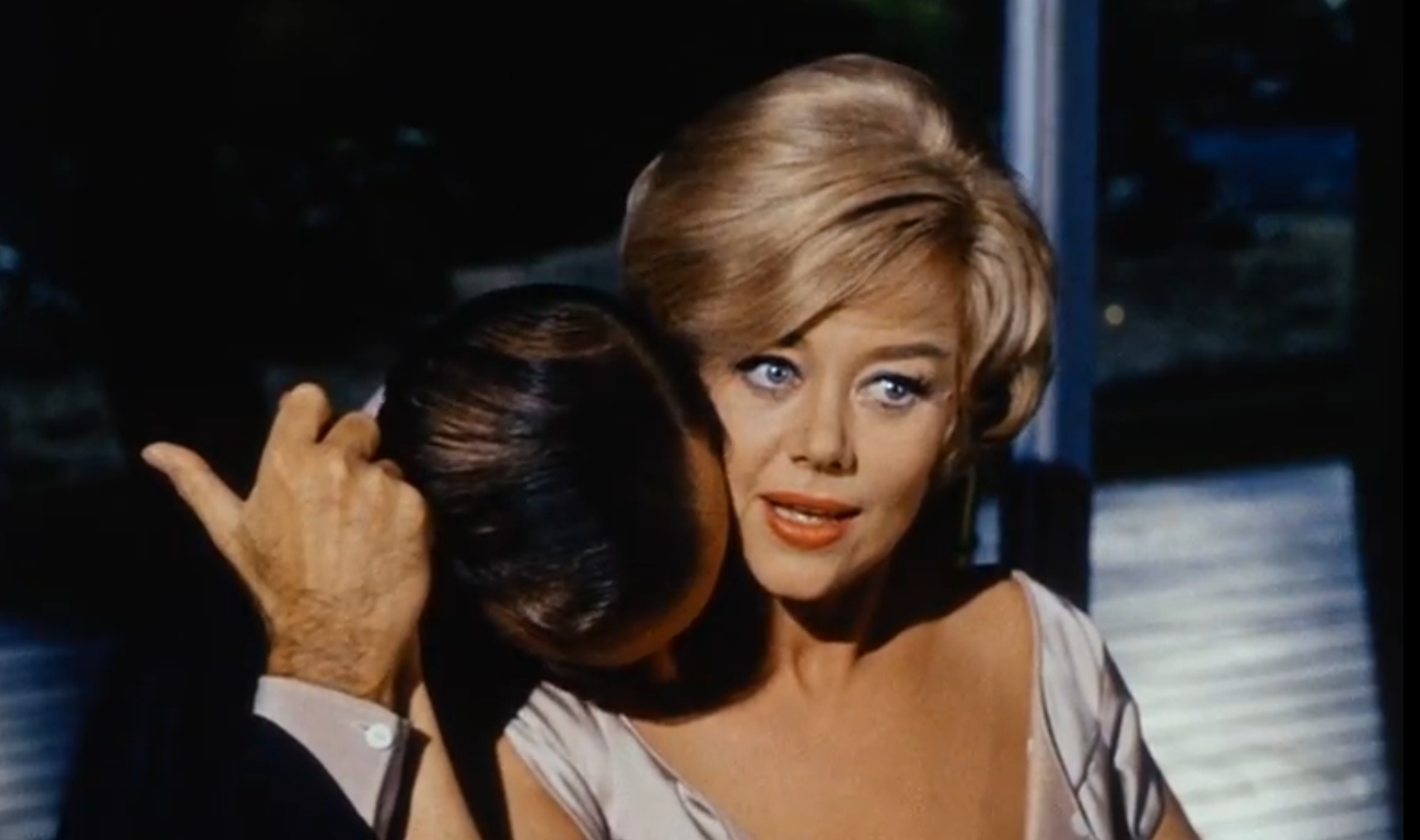
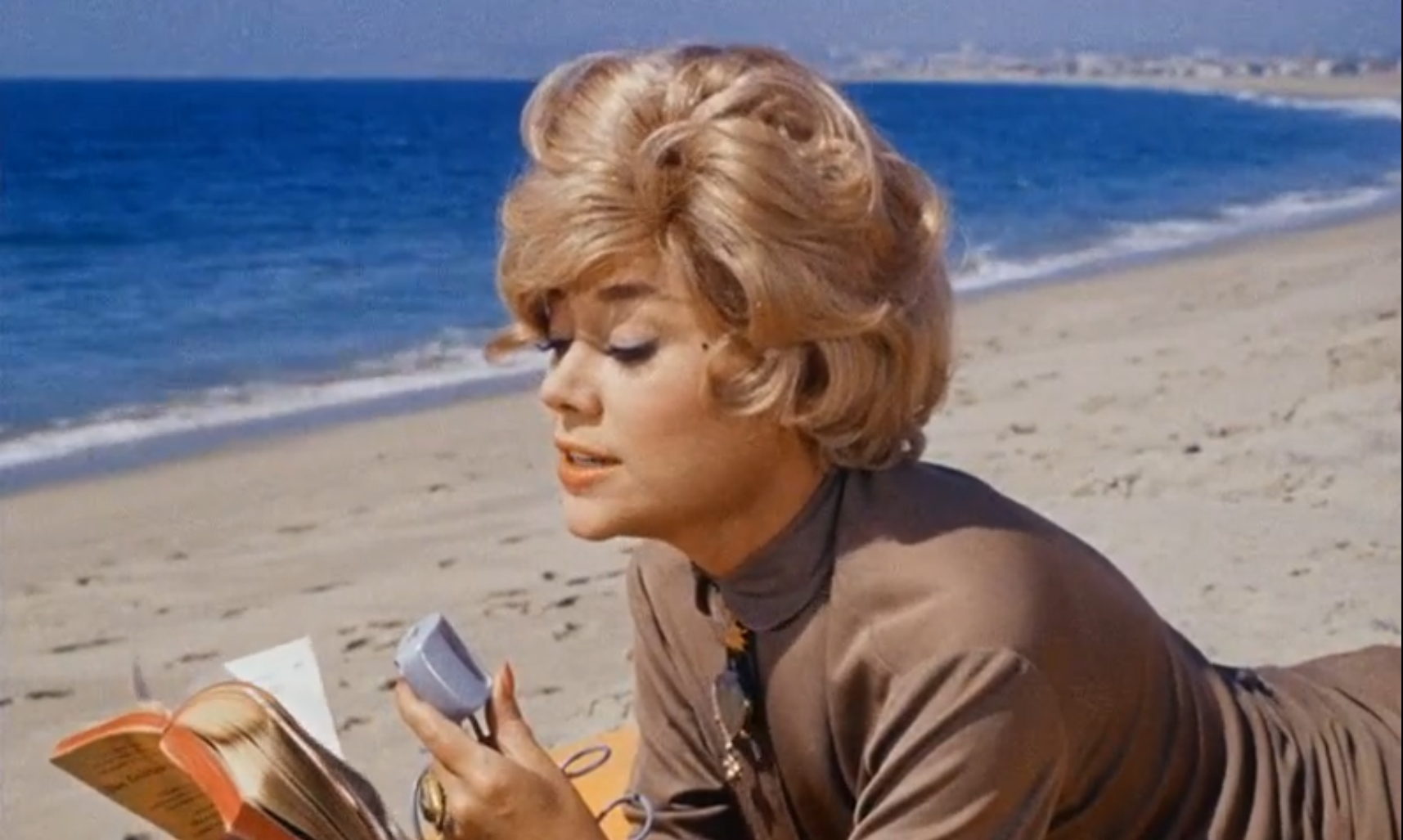
and Glynis Johns provides welcome comedic relief.

Winters’ performance alone is rather half-hearted, but this seems to be primarily a function of her under-written character.

Indeed, the film’s worst scenes are those when the women aren’t present — nearly every interaction between the researchers themselves, for instance, comes across as dry and stiffly written.

At first glance, The Chapman Report appears to be preaching heavy-handedly against sex surveys in general — since, rather than remaining a “neutral” collection of data, Dr. Chapman’s work (as predicted by a concerned “member of society”) stirs up deeply uncomfortable feelings in each of its leading participants. Yet this moral attitude gradually shifts, once we realize that participating in the interviews simply pushed these women to confront what was buried not-so-deeply inside of themselves all along. By the end — in typical mid-century fashion — the ideal of marriage in America prevails, with sex put in its “rightful” place as an act of love between man and wife.

Redeeming Qualities and Moments:

  • Jane Fonda’s unfairly maligned performance as the “frigid” widow
  • Claire Bloom as the sultry, suicidal divorcee
  • Glynis Johns in the film’s “comic relief” role

Must See?
No. This “infamously bad” melodrama now holds curiosity appeal, but is ultimately not must-see viewing.

Links:

Shanks (1974)

Shanks (1974)

Synopsis:
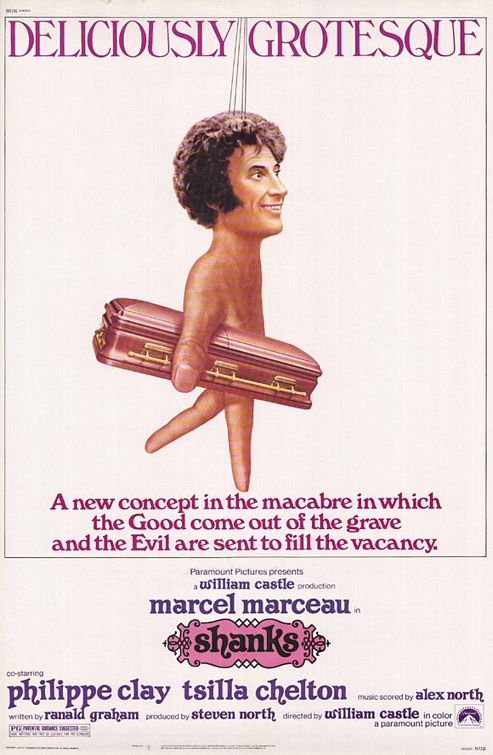
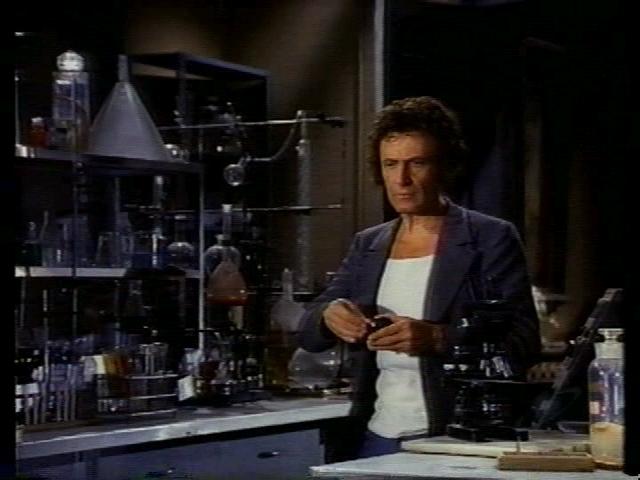
A mad scientist (Marcel Marceau) teaches a deaf-mute puppeteer named Malcolm Shanks (also Marceau) how to revive and manipulate the dead.

Genres, Themes, Actors, and Directors:

  • Deafness
  • Horror
  • Mad Doctors and Scientists
  • Puppets and Ventriloquism
  • William Castle Films
  • Zombies

Review:
This odd curio — William Castle’s final directorial effort, and Marcel Marceau’s lone starring role — is a disappointment with patches of brilliance. Marceau and his fellow mimes (Tsilla Chelton and Philippe Clay as his manipulative sister- and brother-in-law) aren’t very good as “straight” actors; but once their characters have died and are forced to perform as puppets, they’re simply wonderful. Unfortunately, the sloppy screenplay is a distraction, with poorly written characters, a weird friendship between Shanks and a young girl (Cindy Eilbacher), and the inexplicable arrival of a motorcycle gang in the final fourth of the film (which does nothing but show off Castle’s seeming desire to have “marionettes” fighting hoodlums). The concept behind Shanks is a clever one, but ultimately too limited in narrative scope; the story would have worked better as either a ballet or a short film. Watch for a cameo by Castle as the grocery store owner.

Redeeming Qualities and Moments:

  • Many cleverly choreographed and performed “live action” puppet sequences
  • A truly bizarre — albeit disappointingly executed — premise for a horror film

Must See?
Yes, simply for its historical relevance as Castle’s last movie and Marceau’s only leading role in a film.

Categories

  • Historically Relevant

Links:

13 Frightened Girls (1963)

13 Frightened Girls (1963)

“The cover’s unbelievable — it’s a natural, the dream of a lifetime. The daughter of a diplomat can go anywhere she wants!”

Synopsis:
The daughter (Kathy Dunn) of an American diplomat (Hugh Marlowe) acts as a spy in order to protect the job of her secret agent crush, Wally (Murray Hamilton).

Genres, Themes, Actors, and Directors:

  • Amateur Sleuths
  • Cold War
  • Hugh Marlowe Films
  • Spies
  • Teenagers
  • William Castle Films

Review:
Three years after directing the gimmicky horror flick 13 Ghosts (1960), schlockmeister William Castle returned to the selling power of this infamously unlucky number with his 13 Frightened Girls — strictly a marketing ploy, since the “13 girls” (beautiful daughters of diplomats from around the world) don’t make a meaningful appearance en masse until the final moments of the film, at which point they’re giddy rather than frightened. Instead, 13 Frightened Girls turns out to be an unrealistic yet fluffily enjoyable tale of a teenage Mata Hari — code name “Kitten” — who is conveniently able to discover one valuable state secret after the other through her friends.

Kathy Dunn — Louisa in the original Broadway version of “The Sound of Music” — is excellent in the lead role: her cheery good looks, blonde tresses, and all-around pluck are reminiscent of her more famous counterpart, Hayley Mills. Though she finds herself in a heap of trouble again and again — and some scenes are genuinely tense — the film’s cartoonish score fortunately reassures us that our heroine won’t ever suffer serious harm. If you’re able to accept the improbable details of the story (why are all the diplomats’ children teenage girls of the same age?); awful performances by the “girls” (most of their acting careers went nowhere after this film); and occasionally stilted dialogue (“Candy, you must go– There is much danger!”), you might find yourself guiltily enjoying this innocuous Cold War trifle.

Redeeming Qualities and Moments:

  • Kathy Dunn’s appealing, energetic performance in the lead role
  • A fun, if highly unrealistic, “Nancy Drew” premise

Must See?
No. It’s not clear why Peary includes this enjoyable yet minor title in the back of his book, other than its status as a film directed by William Castle.

Links:

Mr. Hulot’s Holiday (1953)

Mr. Hulot’s Holiday (1953)

“Hulot: H — U — L — O — T.”

Synopsis:
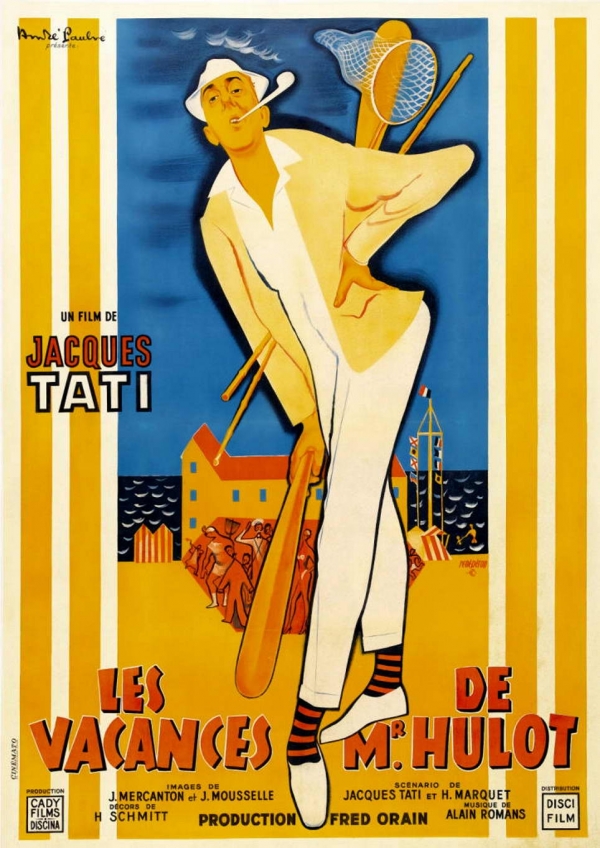
Bumbling Monsieur Hulot (Jacques Tati) visits a seaside hotel in Brittany, where he accidentally causes mayhem.

Genres, Themes, Actors, and Directors:

  • Comedy
  • French Films
  • Jacques Tati Films
  • Misfits
  • Vacation

Response to Peary’s Review:
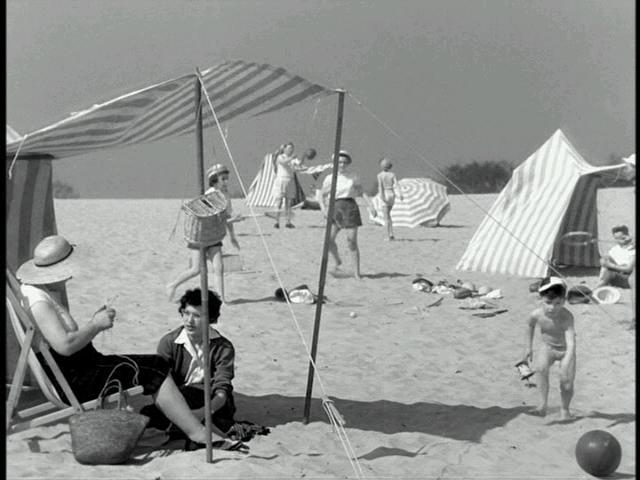
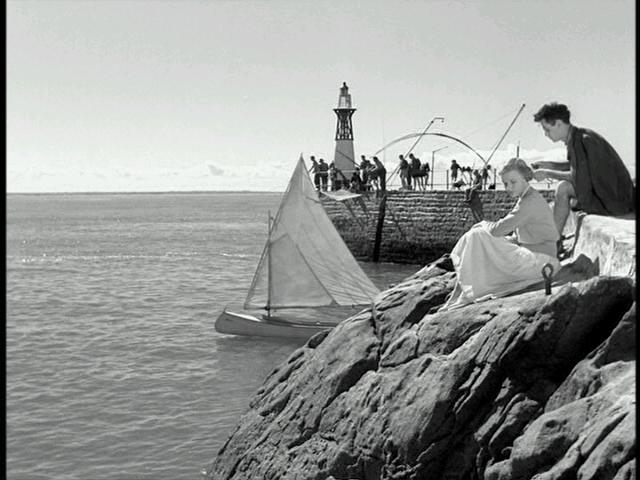
Peary — along with just about every other critic on the planet (see links below) — considers this Jacques Tati classic to be “as enjoyable as a day at the beach.” He praises the “intricate visual gags”, the “enjoyable slapstick”, and the “appealing”, “childlike” nature of Hulot, and notes that “much laughter comes from watching Hulot’s fellow vacationers.” For my part, however, I fail to see the appeal of the film on any comedic level. While it’s visually beautiful to look at, the vacationers aren’t intriguing in the slightest, and Monsieur Hulot is, quite simply, not funny: his strange, stork-like walk holds interest for about three seconds, then quickly becomes both redundant and ridiculous; his sight gags seem like they would be amusing only for the very young. Indeed, I can understand the appeal of Mr. Hulot’s Holiday for families with children — it’s an innocent, innocuous movie, and kids may very well appreciate watching a silly-looking man making a fool of himself again and again. Ultimately, however, I consider Tati to be wearing Emperor’s Clothing — everyone insists there’s genius to be had, but I’m just not seeing it.

Redeeming Qualities and Moments:

  • An interesting “time capsule” glimpse at vacationers in 1950s France
  • Beautiful b&w cinematography
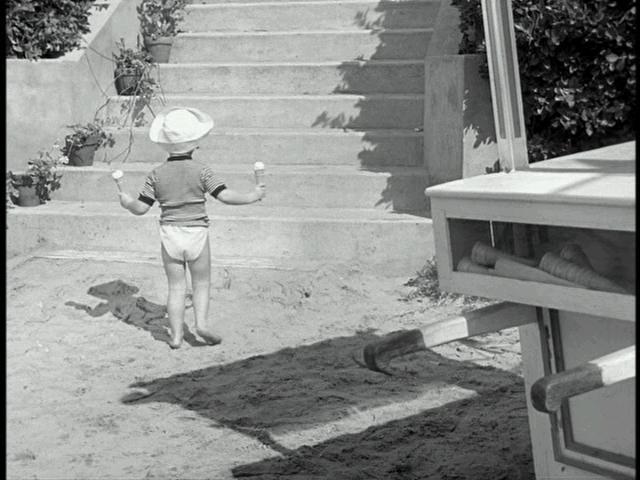
  • Some genuinely sweet images — such as a young boy in diapers carefully carrying two ice cream cones
  • A few mildly clever sight gags — such as when Hulot’s paint can is washed out to sea and then back again, just in time

Must See?
Yes. Though it’s not at all to my tastes, this remains an undisputed classic of world cinema, and should be seen by all film fanatics.

Categories

  • Genuine Classic

(Listed in 1001 Movies You Must See Before You Die)

Links:

Five Against the House (1955)

Five Against the House (1955)

“It’s the greatest hoax of the century — it’s nefarious as Fu Manchu, and as practical as a zipper!”

Synopsis:
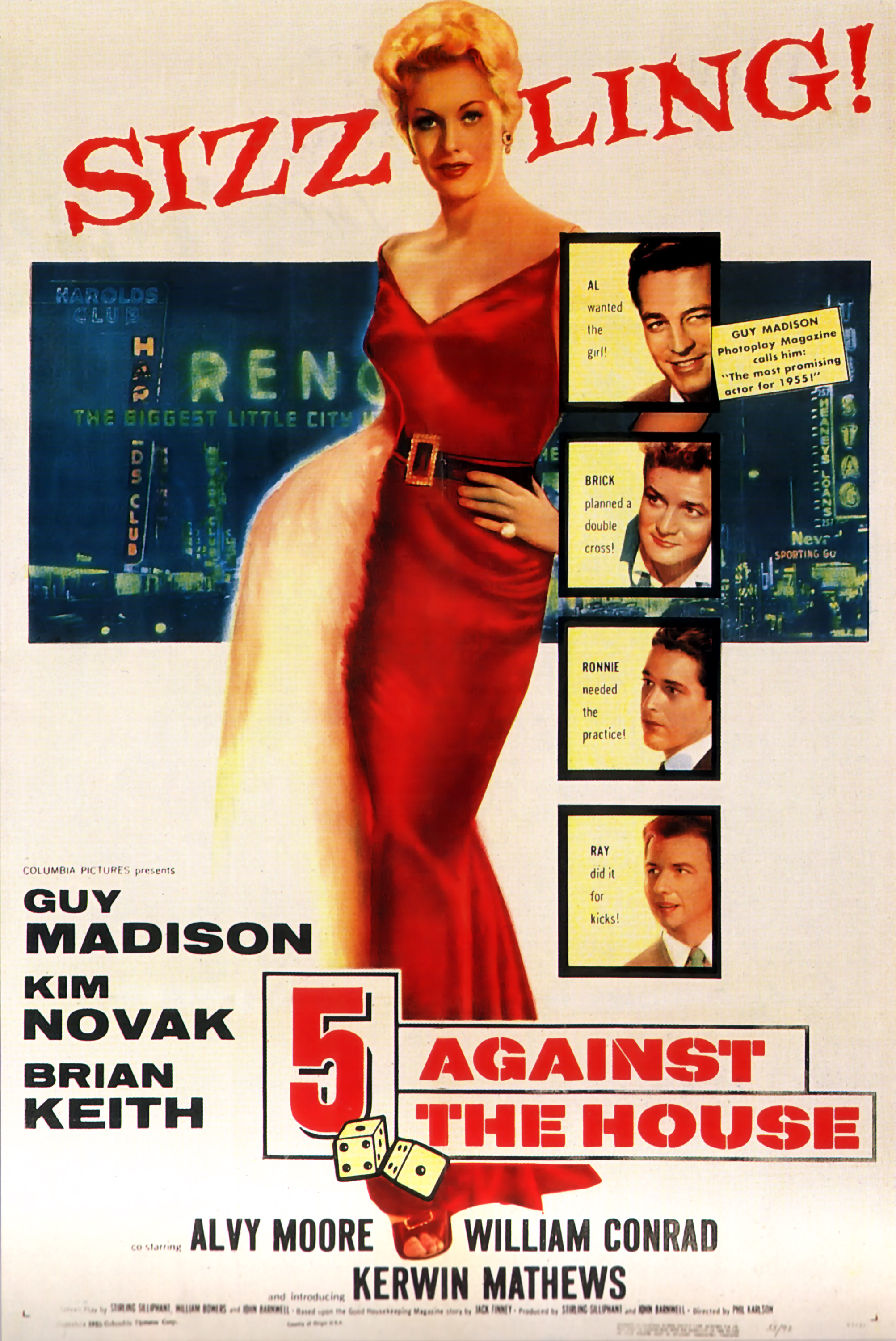
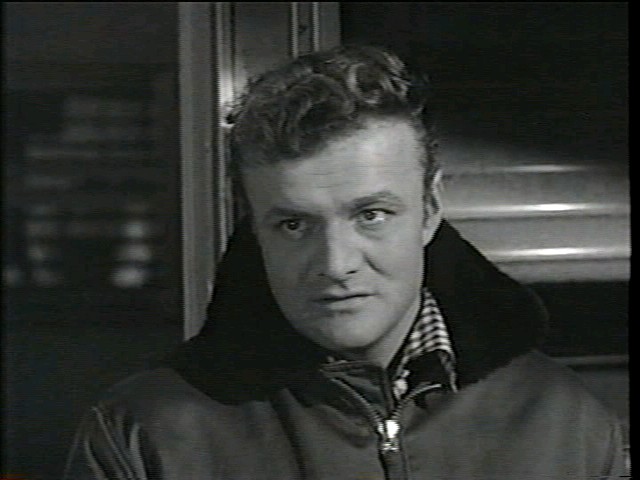
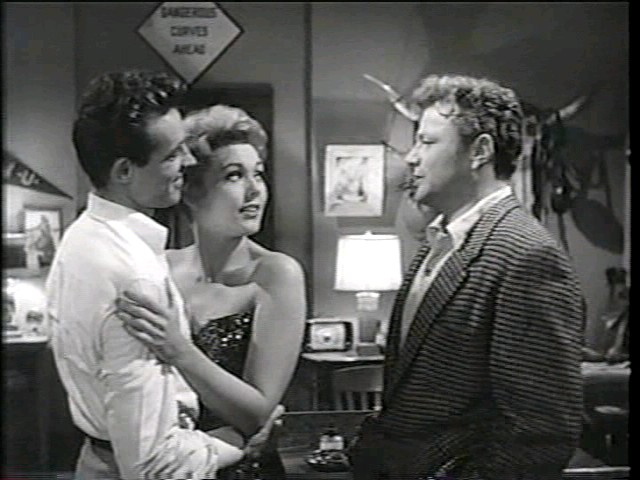
Three college buddies plan a casino heist as a lark, intending to give back the money immediately. But when one of them — damaged Korean War veteran Brick (Brian Keith) — decides he wants to keep the money, it’s up to his friend Al (Guy Madison) to stop the entire scam.

Genres:

  • Brian Keith Films
  • Casinos
  • Heists
  • Kim Novak Films
  • Phil Karlson Films
  • Veterans

Review:
This unusual caper flick (directed by Phil Karlson) effectively draws upon the theme of veterans struggling to live “normal” lives in mainstream society. While Al (Madison) is on the fast track to success as a lawyer, and desires nothing more than to marry his sweetheart (Kim Novak) and settle down, his friend Brick (Keith) represents the opposite extreme: a man so broken by his experiences as a soldier that no amount of schooling or friendship can erase the damage that’s been done. Meanwhile, their young, carefree buddies Ronnie (Kerwin Matthews) and Roy (Alvy Moore) serve as a telling contrast: they are content with simply having fun, scoring with chicks, tormenting a naive freshman (Jack Dimond), and (for Ronnie at least) proving their genius against the seemingly impervious machinations of a casino.

Karlson maintains genuine tension and interest throughout the movie, thanks to fine performances by most of the actors, clever dialogue, and a nicely shot casino heist. The emphasis on character and friendship is refreshing — rather than watching seasoned crooks hoping to make “one final score” (an overused trope if there ever was one), we see a drama which may revolve around a heist, but is ultimately about pride (Ronnie), survival (Brick), and loyalty (Madison).

Note: Ronnie’s cool, calculated plotting is reminiscent of John Dall’s character in Hitchcock’s Rope (1948) — though ultimately Five Against the House is more concerned with the veterans’ stories than with Ronnie’s potential psychopathy.

Redeeming Qualities and Moments:

  • Brian Keith’s sympathetic performance as the damaged war veteran
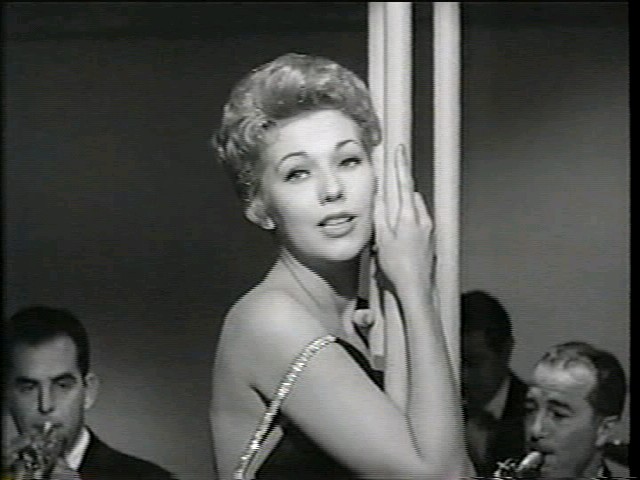
  • Kim Novak in one of her earliest roles
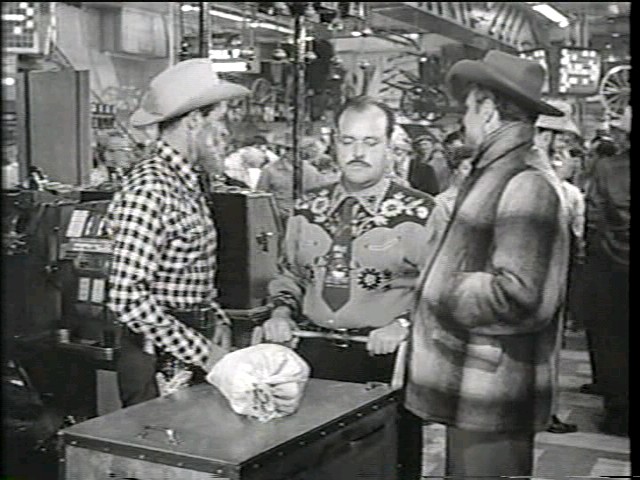
  • The tense casino heist (especially well-played by Eric Berg as the cash cart man)
  • A clever script with many memorable lines:

    “I think you two are going to like marriage… I’ve heard it described as something like tennis, played with 40-mm cannons.”

Must See?
No, but it’s a nifty caper flick, and definitely worth watching if you can find a copy.

Links:

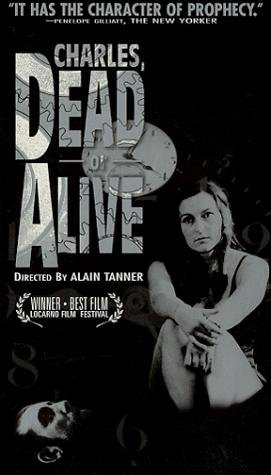
Charles, Dead or Alive (1969)

Charles, Dead or Alive (1969)

“Each of us is defined by what he does. This being the case, the only thing left for me is to undo myself neatly.”

Synopsis:
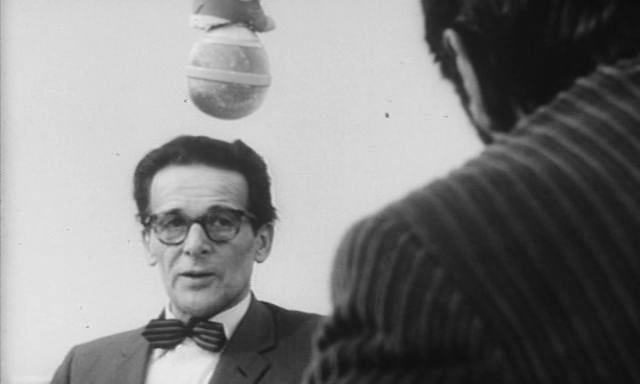
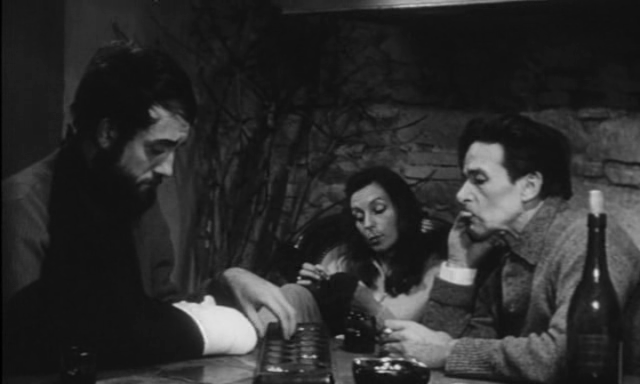
On the 100th anniversary of his family’s watchmaking company, Charles De (Francois Simon) experiences a midlife crisis and runs away from home. His family hires a private investigator (Walter Schochli) to look for him; in the meantime, Charles enjoys his new life with a young Bohemian couple (Marcel Robert and Marie-Claire Dufour) he has met by chance.

Genres, Themes, Actors, and Directors:

  • Counterculture
  • Midlife Crisis
  • Search
  • Swiss Films

Review:
Swiss director Alain Tanner’s feature debut isn’t quite as accessible as his later masterpieces — such as Jonah Who Will Be 25 in the Year 2000 (1976 — but nonetheless effectively showcases his signature style and themes. The smart, literate script is primarily concerned with showing us the inner transformation of the title character (well-played by Francois Simon), doing so through an insightful, sometimes humorous presentation of divergent lifestyle choices. While it may not be for all tastes, Charles… remains recommended viewing for all film fanatics.

Redeeming Qualities and Moments:

  • Francois Simon as the soul-searching businessman
  • Effective b&w cinema verite camera work

Must See?
No, though it’s certainly worth a look as Tanner’s feature debut, and for holding a special place in the history of Swiss cinema.

Links:

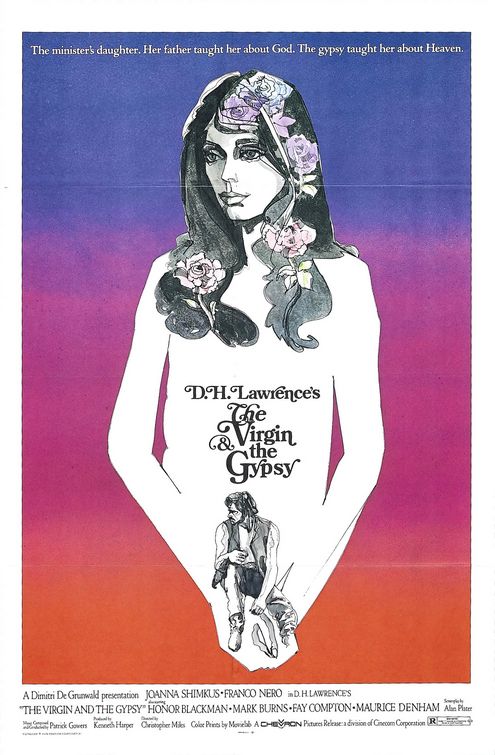
Virgin and the Gypsy, The (1970)

Virgin and the Gypsy, The (1970)

“I should like to fall violently in love.”

Synopsis:
Yvette (Joanna Shimkus), a repressed clergyman’s daughter in 1920s England, lusts after a swarthy gypsy (Franco Nero) and befriends an unmarried couple (Honor Blackman and Mark Burns) who have been shunned for “living in sin”.

Genres, Themes, Actors, and Directors:

  • Coming of Age
  • Cross-Class Romance
  • Gypsies
  • Historical Drama
  • Morality Police

Review:
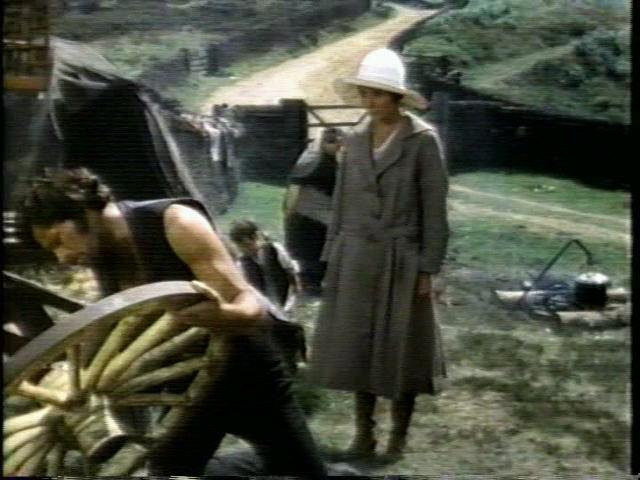
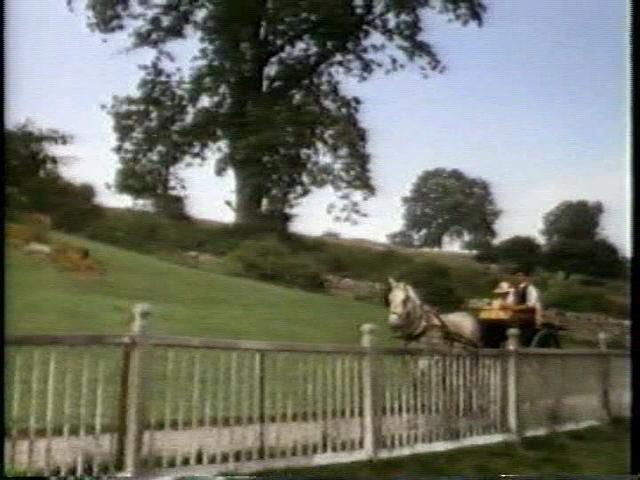
Christopher Miles’ adaptation of D.H. Lawrence’s posthumous novella is an unassuming, lushly photographed tale of sexual awakening and coming-of-age. Joanna Shimkus is perfect in the title role, playing a young woman who longs to break free from the moral restrictions of her uptight family. Even more impressive, however, is the way in which Miles deftly evokes the details of life for various classes in 1920s England: we see the minutiae of both the gypsy camp (an unidentifiable stew boils over an open fire on the hillside) and Yvette’s upper-middle-class family (a servant carefully doles meat and potatoes onto each member’s shiny plate). While the movie is perhaps overly metaphorical during its final climactic moments, this somehow seems to fit with the overall tone of the fable-like tale.

Redeeming Qualities and Moments:

  • Beautiful Joanna Shimkus (Sidney Poitier’s wife) as “the virgin”
  • Meticulously rendered period detail of both upper-middle-class and Gypsy life in 1920s England
  • Lush cinematography of northern English landscapes
  • Effective use of imagery to evoke Yvette’s sense of inhibited freedom

Must See?
No, but it’s recommended.

Links:

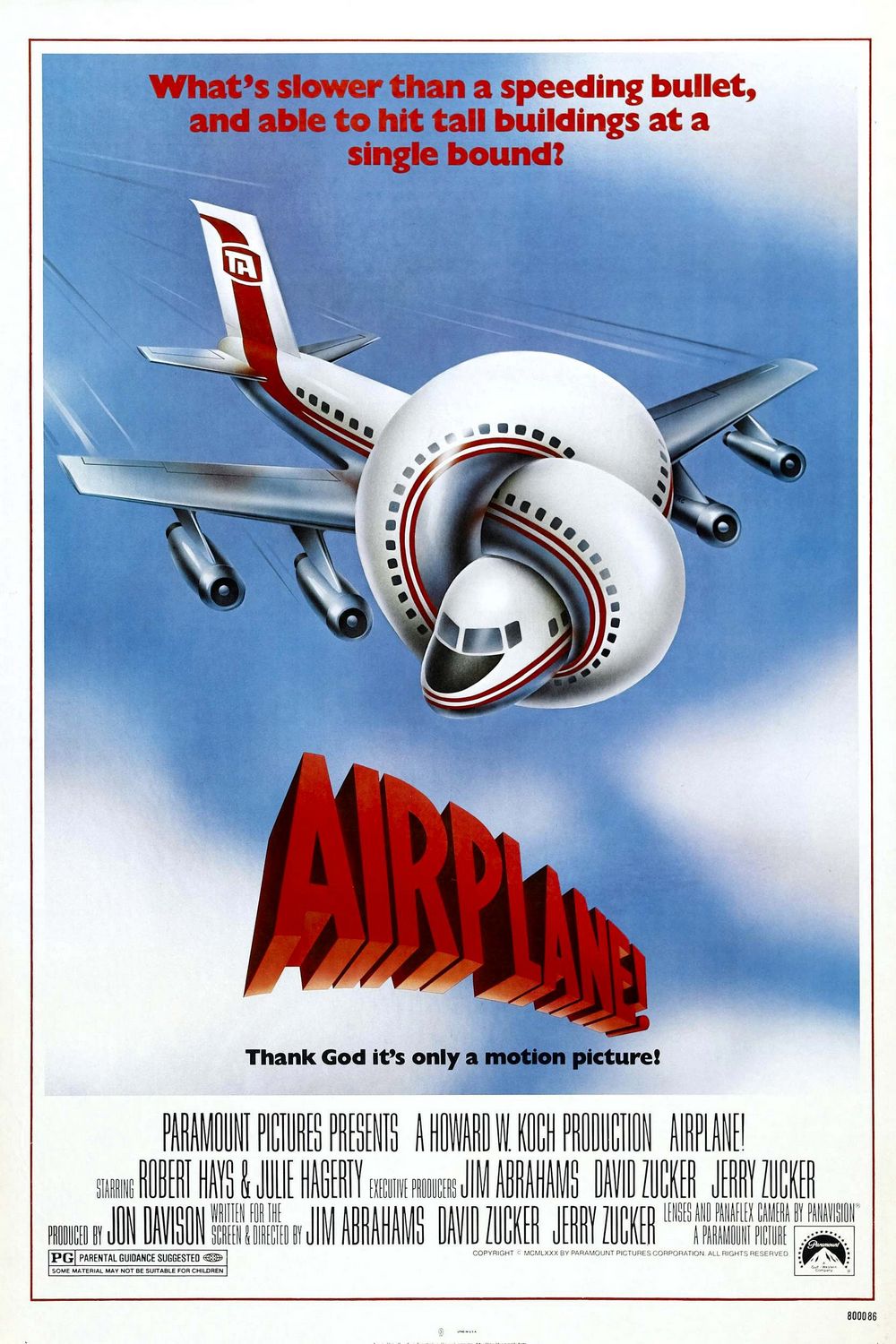
Airplane! (1980)

Airplane! (1980)

“There’s no reason to become alarmed, and we hope you’ll enjoy the rest of your flight. By the way, is there anyone on board who knows how to fly a plane?”

Synopsis:
A former fighter pilot (Robert Hays) in love with a stewardess (Julie Hagerty) must take over a plane when its pilots (Peter Graves and Kareem Abdul-Jabbar) fall ill from food poisoning.

Genres, Themes, Actors, and Directors:

  • Airplanes and Pilots
  • Comedy
  • Disaster Flicks
  • Lloyd Bridges Films
  • Robert Stack Films<
  • Satires and Spoofs

Response to Peary’s Review:
As Peary notes, “much of the humor” in this “ambitious, amusing spoof” by the Zucker brothers (previously known for 1977’s Kentucky Fried Movie) “comes from exaggeration of cliches” as well as “the fact that everything said is taken literally”. When “the shit hits the fan”, for instance, we see this actually happening; and when a stewardess (Hagerty) is asked whether she’s prepared to “face some unpleasant facts”, she answers truthfully: “No.” While this type of humor could easily become tedious, it rarely does; instead, scene after scene has us howling with sheepish laughter. Over the years, Airplane! has become a cult favorite, with certain lines — “And don’t call me Shirley” — instantly memorable. As Peary puts it, “the gags come fast and furiously and it’s amazing how many are funny.”

Redeeming Qualities and Moments:

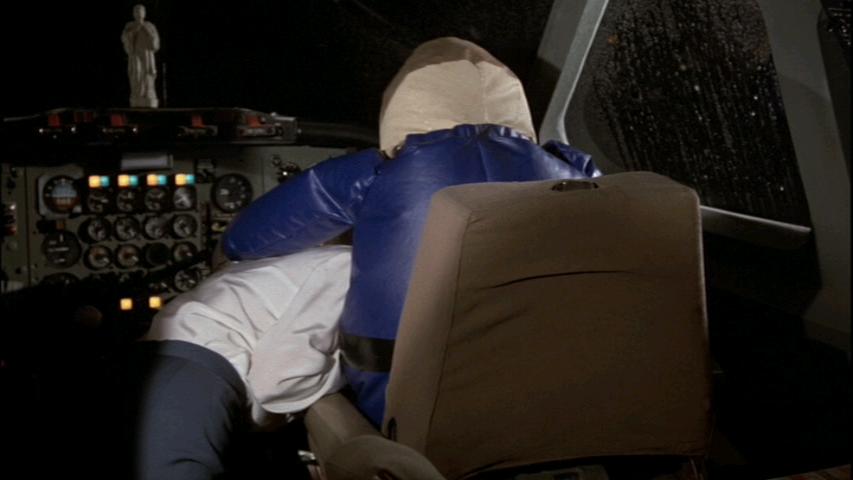
  • Hagerty giving a literal “blow job” to an inflatable co-pilot
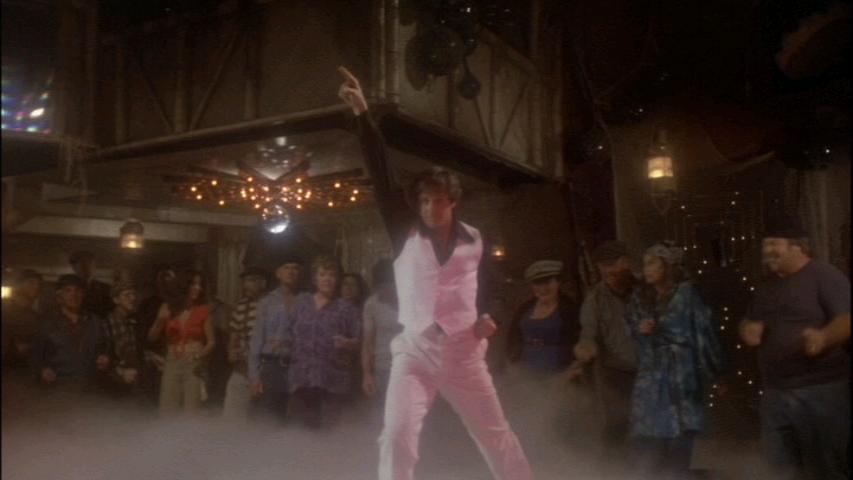
  • Hagerty and Hays dancing to “Stayin’ Alive”
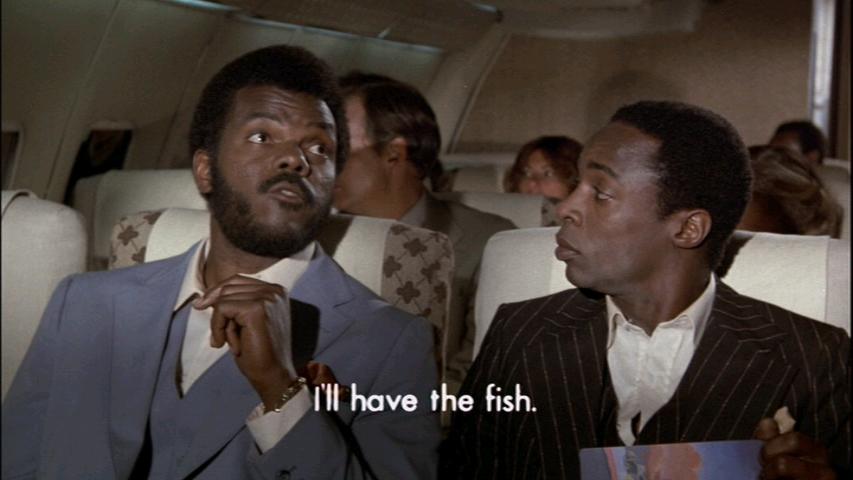
  • Two black passengers (Norman Alexander Gibbs and Al White) using incomprehensible jive-talk (with useful subtitles provided)
  • Captain Oveur’s inappropriate questions to a boy (Rossie Harris) who visits the cockpit: “Joey, do you like movies about gladiators?”
  • Countless memorable lines and hilarious wordplay:

    “I am serious– And don’t call me Shirley.”

Must See?
Yes. Airplane! remains one of the most consistently amusing satires ever made, and merits repeat viewing by all film fanatics.

Categories

  • Genuine Classic

(Listed in 1001 Movies You Must See Before You Die)

Links:

Speedy (1928)

Speedy (1928)

“Gee, Babe — you’ve done more for baseball than cheese has for Switzerland!”

Synopsis:
A young man known as “Speedy” (Harold Lloyd) loses one job after the other, but keeps his spirits up by going to Coney Island with his girlfriend, Jane (Ann Christy). Meanwhile, he helps Jane’s grandfather, “Pop” (Bert Woodruff), save his horse-drawn trolley — the last one in New York — from being bought by nefarious railroad business tycoons.

Genres, Themes, Actors, and Directors:

  • Comedy
  • Harold Lloyd Films
  • New York
  • Silent Films

Review:
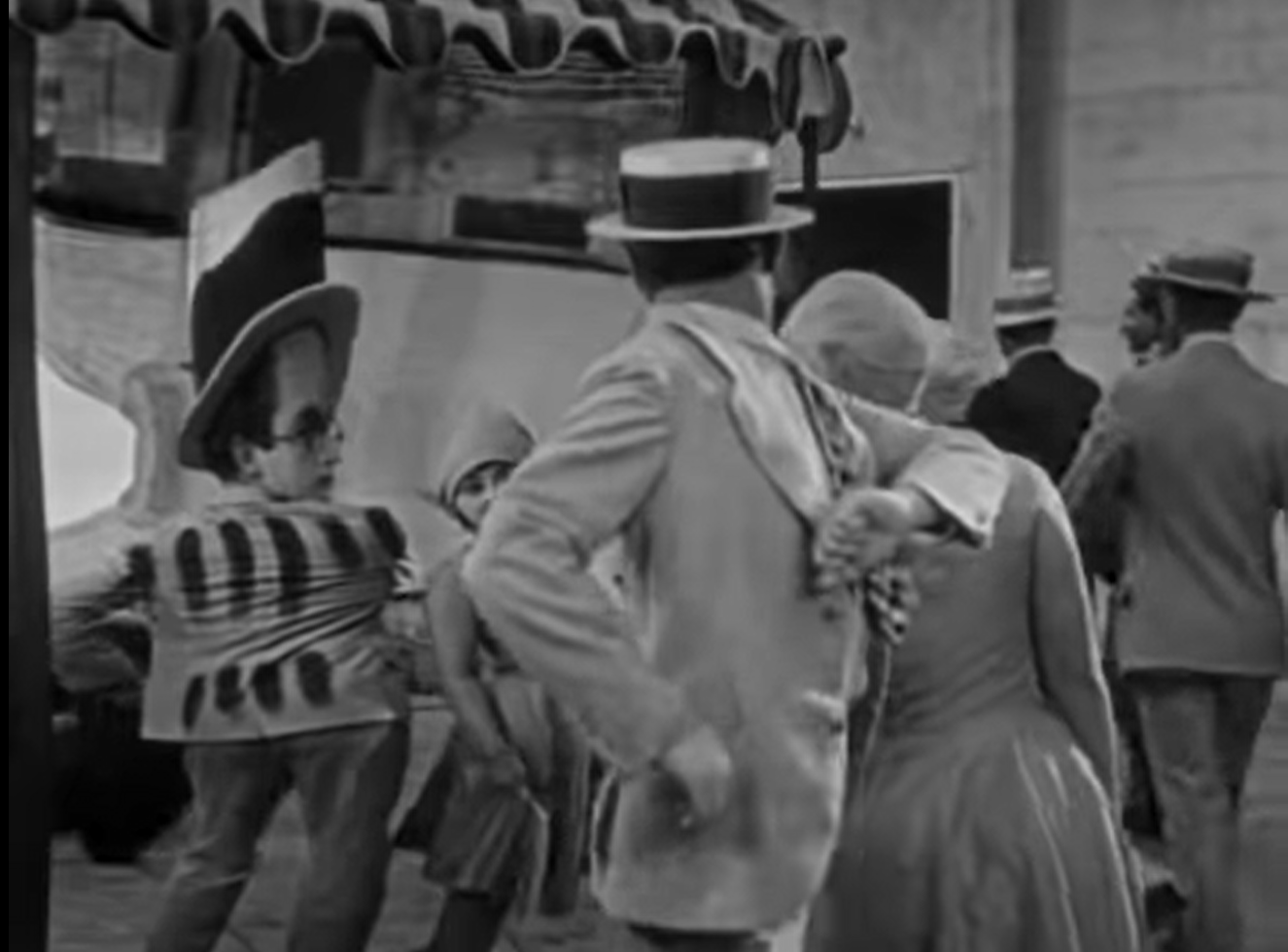
Harold Lloyd’s final silent film features many amusing segments and sight gags, a fascinating peek at 1920s New York (including an extended cameo by Babe Ruth), and an overall air of infectious gaiety. Unfortunately, however, the movie doesn’t hold together very well as a cohesive narrative, and the final chase scene — while certainly well-executed — devolves into an uninteresting slapstick brouhaha. For those seeking their first exposure to Harold Lloyd’s immense talents, check out Safety Last! (1923) or The Freshman (1925) instead.

Redeeming Qualities and Moments:

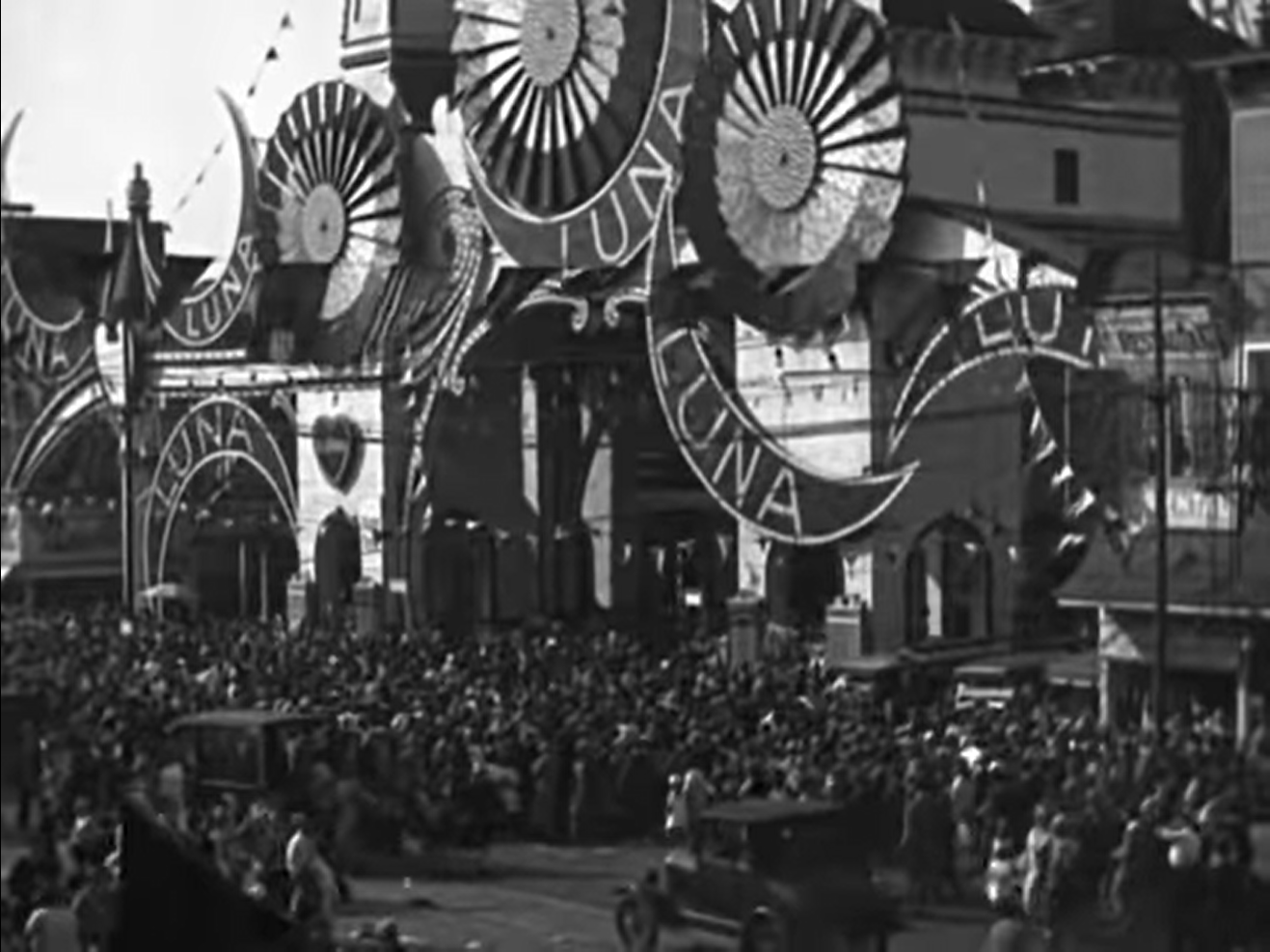
  • A fascinating “time capsule” glimpse of 1920s New York (especially Coney Island)


  • The fun subway sequence
  • Speedy using donuts and pretzels to signal baseball scores to his workmates

Must See?
No, though it’s certainly a “must see” for fans of Harold Lloyd and/or silent comedies.

Links:

Mommie Dearest (1981)

Mommie Dearest (1981)

“I’m going to make a perfect life for you– I’m going to give you all the things I never had, my beautiful little darling!”

Synopsis:
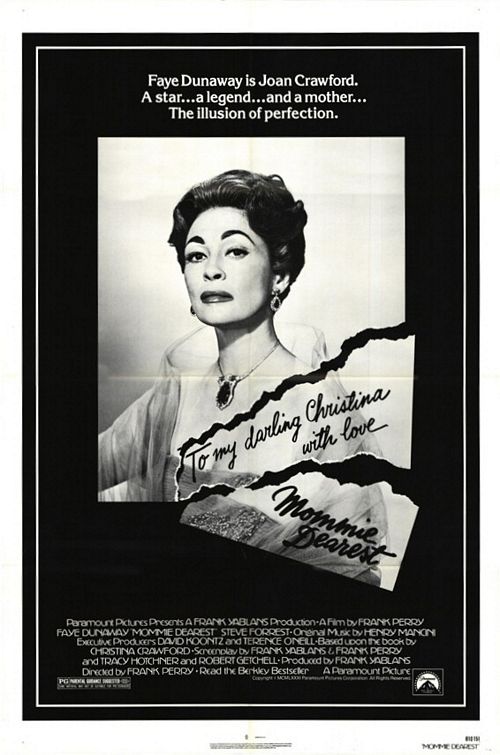
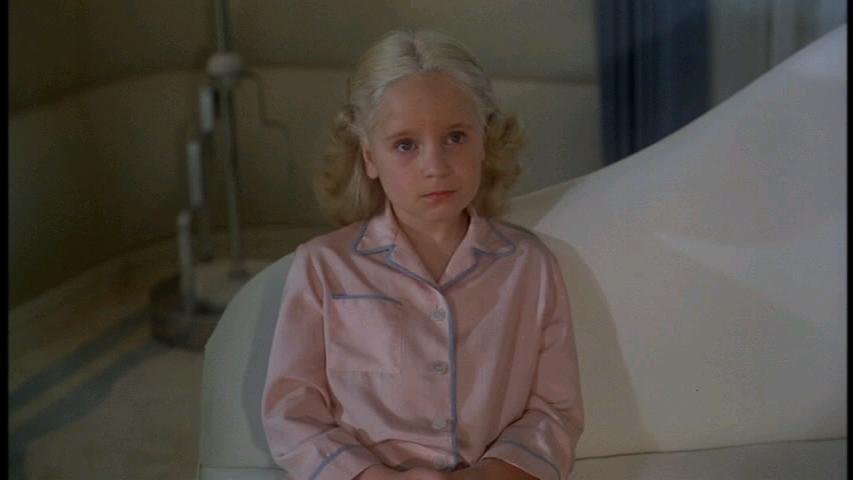
Christina Crawford (Diana Scarwid and Mara Hobel) tells about growing up with her abusive adoptive mother, Joan Crawford (Faye Dunaway).

Genres, Themes, Actors, and Directors:

  • Actors and Actresses
  • Biopics
  • Child Abuse
  • Evil Mothers
  • Faye Dunaway Films
  • Frank Perry Films
  • Hollywood

Response to Peary’s Review:
Peary’s response to this cinematic adaptation of Christina Crawford’s best-selling autobiography is similar to that of most critics at the time (Roger Ebert, for instance, gave it one star out of four; see link below). Peary calls it “ludicrous”, “mediocre”, and “trivial”, and lambastes it for both fabricating “nearly every event that takes place,” and eliminating “real people” in place of composites. He complains that Dunaway is simply playing “the Crawford who is [already] familiar to viewers — the Crawford of the movies, newsreels, and personal appearances”, rather than “the Crawford of Christina’s book”, simply so that the “sheepish” filmmakers could try to “dodge negative backlash” from her fans.

I’ll admit that my initial response to Mommie Dearest was the same as Peary’s. I watched it immediately after reading Crawford’s book, and was upset by how egregiously the filmmakers had mangled Christina’s story of her abusive childhood. Watching it again years later, however, I can appreciate Mommie Dearest for what it unintentionally turned out to be: a film so clumsily made — and so far removed from its source material — that it’s actually entertaining. Indeed, it is precisely the film’s “staggeringly bad scenes and campy dialogue” which have contributed to its cult over the years, allowing those who “laugh at its overall ineptitude” (click here for a long list of goofs) to have a grand old time.

Plus, despite its obvious flaws, the film contains many moments of genuine insight into Crawford’s character. When Dunaway holds her infant daughter in her arms for the first time, and is reminded by her boyfriend (Steve Forrest) that Christina is both a “very lucky” and a “very expensive” baby, we are reminded that Crawford ultimately bought her children rather than adopted them. When Dunaway reacts with thinly-veiled jealousy as reporters seem more interested in filming her daughter than her during Christina’s birthday party, we really “get” how difficult it was for Crawford to share the limelight, even with her own kids. And when Dunaway expresses her heartfelt gratitude to the crowd of fans standing outside her house after she won an Oscar for her performance in Mildred Pierce (1945), we learn why her following was so enormous — and so loyal — for so many years.

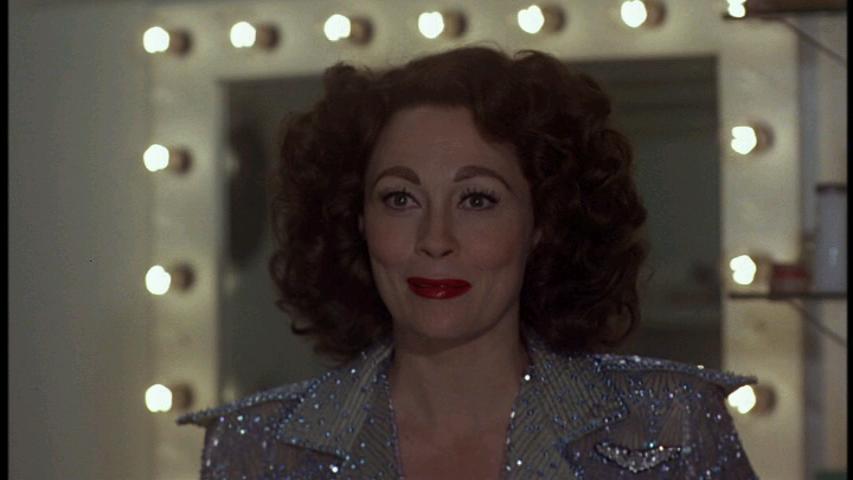
Most impressive of all, however, is the powerhouse performance by Faye Dunaway, who, though “she overacts at times,” makes “a gallant effort playing Crawford not as a villain, but as a ‘warrior’.” Indeed, it’s absolutely fascinating to gain an inside glimpse at this rags-to-riches actress, someone who took her status as a beloved Hollywood star so seriously that she was willing to work as hard as it took to maintain it. Though Peary argues that “Dunaway’s Crawford comes across as no less sympathetic” than her daughter, I disagree: when watching Crawford obsessively scrubbing her own floor, jogging to stay in shape, and getting up at the crack of dawn to arrive at the studio on time, we understand that this was a driven woman who, quite simply, didn’t have a clue about how to be an effective mother.

Redeeming Qualities and Moments:

  • Faye Dunaway’s powerhouse portrayal as Hollywood icon Joan Crawford
  • Mara Hobel’s impressive performance as young Christina
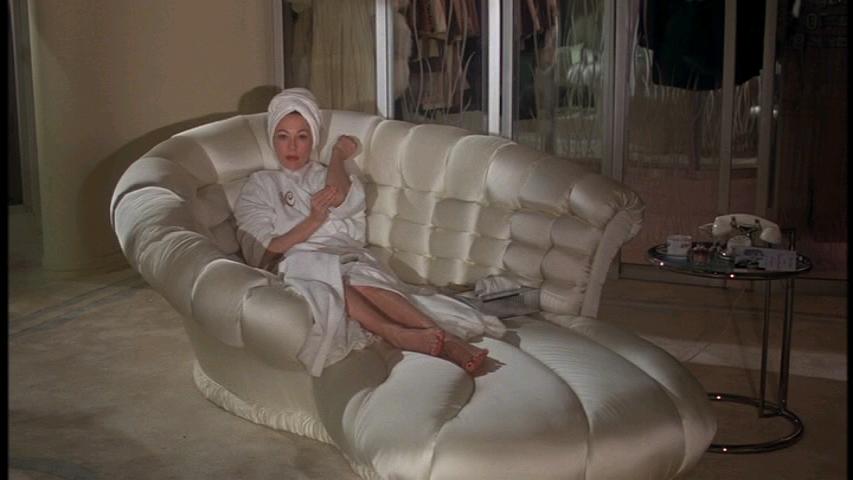
  • Appropriately baroque set designs and costumes
  • Countless memorable lines by Joan:

    “I’m not mad at you; I’m mad at the dirt.”
    “I can handle the socks.”
    “Don’t fuck with me, fellas. This ain’t my first time at the rodeo!”
    “Tear down that bitch of a bearing wall and put a window where it ought to be!”
    “Tina! Bring me the axe!”

    And, of course:

    No– wire– hangers!”

Must See?
Yes. This notoriously “bad” movie has become a true camp classic, and should be seen at least once by every film fanatic. Discussed at length in Peary’s Cult Movies 2 (1983).

Categories

  • Cult Movie
  • Noteworthy Performance(s)

Links: