Somebody Up There Likes Me (1956)
“What’s better: stealing, starving, or fighting?”
|
Synopsis: |
|
Genres, Themes, Actors, and Directors:
Review: Redeeming Qualities and Moments:
Must See? Links: |
[Note: The following review is of a non-Peary title; click here to read more.]
“I once thought if I were queen I’d be so happy — to be applauded and adored and obeyed.”

Synopsis:
When Empress Maria Theresa of Austria (Alma Kruger) tells her daughter Marie Antoinette (Norma Shearer) that she will become the next queen of France, Marie is excited for the new adventure but is quickly demoralized when she realizes her husband-to-be (Robert Morley) is an overweight, shy man who would prefer to be left alone to make locks. Marie finds solace in socializing at court, befriending a power-hungry duke (Joseph Schildkraut) and falling for a Swedish count (Tyrone Power) while resisting taunts from mean-spirited Madame du Barry (Gladys George). After Morley’s father (John Barrymore) dies, Marie and Louis (Morley) eventually have two children — but the wrath of the people of France has been building, and the royal family soon find themselves caught in a deadly spiral.
Genres, Themes, Actors, and Directors:
Review:
Norma Shearer’s crowning role as the “First Lady of MGM” was playing the title character in this big-budget biopic (directed by W.S. Van Dyke) about the infamous French queen who died at the guillotine (and apparently never actually said, “Let them eat cake.”). Perhaps unsurprisingly, the film paints Marie in an almost uniformly positive light: she’s shown offering tremendous empathy and compassion towards Morley even when he’s at his most unsympathetic, and the eventual companionship they develop through their marriage is a worthy portrait of how arranged marriages can evolve into trusting alliances. Meanwhile, Morley’s portrayal of King Louis XVI is notable for refusing to villainize him, instead showing simply that he was constitutionally unsuitable for his role. The sets and costumes are marvelous, and the story-line reasonably engaging (though Power’s character is only given a peripheral role at best; I suppose MGM wanted to keep Shearer’s character “pure” and free from the actual ongoing affair she had with him in real life). The most intriguing supporting character is played by Joseph Schildkraut, whose make-up as the Duke d’Orleans is highly effective — see stills below for a comparison of his character “putting on an act” versus revealing his inner (true) character.
Redeeming Qualities and Moments:


Must See?
No, though it’s worth a look for Shearer’s Oscar-nominated performance.
Links:
“Davy Crockett don’t lie.”
|
Synopsis: |
|
Genres, Themes, Actors, and Directors:
Review:
his controversial service as a congressman from Tennessee…
and his participation in the Battle of the Alamo.
Parker comes across as appropriately humble, stalwart and brave, and we appreciate his authentic respect for the Native Americans he interacts with.
However, this film likely won’t be of much interest to modern film fanatics given that it was clearly marketed at youth audiences of the day — who responded by kicking off an absolute mania for Davy Crockett paraphernalia, especially coonskin caps.
Fair warning: the title song is guaranteed to remain stuck in your head for hours or days after watching this film (I’m humming it to myself right now…). Redeeming Qualities and Moments:
Must See? Links: |
“A good miracle is only a good trick — unless it is made part of a new religion.”
|
Synopsis: |
|
Genres, Themes, Actors, and Directors:
Review:
Mayo has received flak for being decked out with outrageously gaudy eye make-up:
and the artistically minimalist sets are criticized as… not realistic enough.
But once one accepts the stylized world on display here, it’s possible to get caught up in the melodrama, which involves Newman eventually meeting the Apostle Peter (Lorne Greene) to add his visage to the chalice.
Angeli is lovely as an innocent young Christian who falls for Newman:
and the scenes set in Nero’s Rome are appropriately surreal — particularly the one in which Nero and his wife are offered platter after platter of gold-plated delicacies with outrageous combinations of edibles.
When Nero (Aubuchon) reminds his wife, “We must not let our people go home in a grumbly mood… We must give them something to watch.”, one can’t help thinking how little has changed in 2000 years vis-a-vis the public’s desire for outrageous spectacles.
Note: Watch for blonde (!) Natalie Wood playing Mayo’s younger self.
Redeeming Qualities and Moments:
Must See? Links: |
“What’s in it for me?”
|
Synopsis: |
|
Genres, Themes, Actors, and Directors:
Review:
According to one poster on IMDb, “After losing everything he made in Hollywood and after getting [out] with barely a change of clothes from revolutionary Havana in 1959 this man needed a stake. So he sold the story of his life to B studio Allied Artists and the result was The George Raft Story.” Still, one wonders exactly what the point was, other than to highlight Raft’s many criminal connections, and give individuals like Al Capone (Neville Brand):
and Bugsy Siegal (Brad Dexter):
opportunities for “cameo” appearances; other notable individuals in Raft’s life — including Betty Grable, for instance — had to be renamed (in this case, Jayne Mansfield played “Lisa Lang”).
The script gets off to a decidedly odd start, with an extended comedy act in a nightclub (who exactly are those fellows?)
before Raft’s then-girlfriend Sheila (Julie London) sings a ditty:
As the film closes, penniless Raft is given advice to accept roles like Spats Colombo in Some Like it Hot and learn to embrace typecasting because at least it provides a living. Okay.
Note: Check out this interesting article for a blow-by-blow overview of all the films Raft either made or turned down, with an emphasis on the ramifications of the latter. Redeeming Qualities and Moments:
Must See? Links: |
“It’s as though there were a piece of the sun locked up in here!”
|
Synopsis: |
|
Genres, Themes, Actors, and Directors:
Review:
As scientists intensely committed to their craft, they are quite happy viewing their arrangement as a practical one — though the screenplay eventually shows the depth of love that emerges through their happy and productive union (including the birth of two daughters).
Meanwhile, it’s to the screenplay’s immense credit that lines like, “All right, then — radium won’t be separated from barium.” are authentically interesting (and comprehensible to lay audiences). We watch in eager anticipation as Marie gradually comes to understand (with help from Pierre) the next steps she must take to uncover and isolate radium — then eventually learns about the harm she’s unintentionally caused herself due to so much exposure, but decides it’s worth the risk to continue (albeit with more protections).
The movie is atmospherically filmed throughout (by director Mervyn LeRoy and DP Joseph Ruttenberg), making it a visual treat as well. Redeeming Qualities and Moments:
Must See? Categories
Links: |
“When you know what you want, why waste time?”
|
Synopsis: |
|
Genres, Themes, Actors, and Directors:
Review:
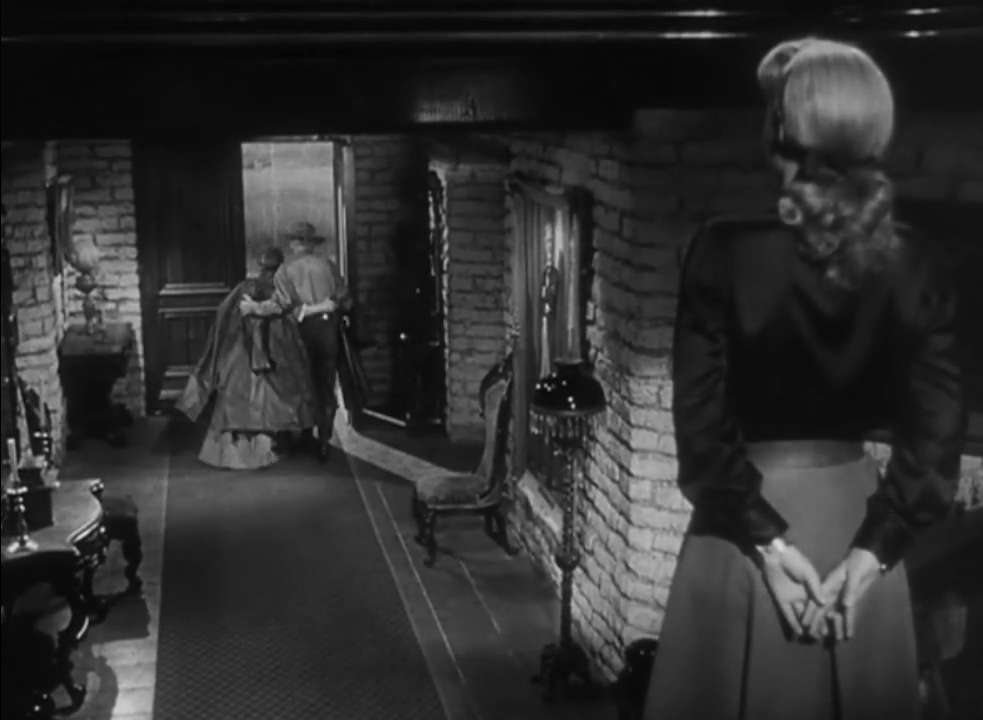
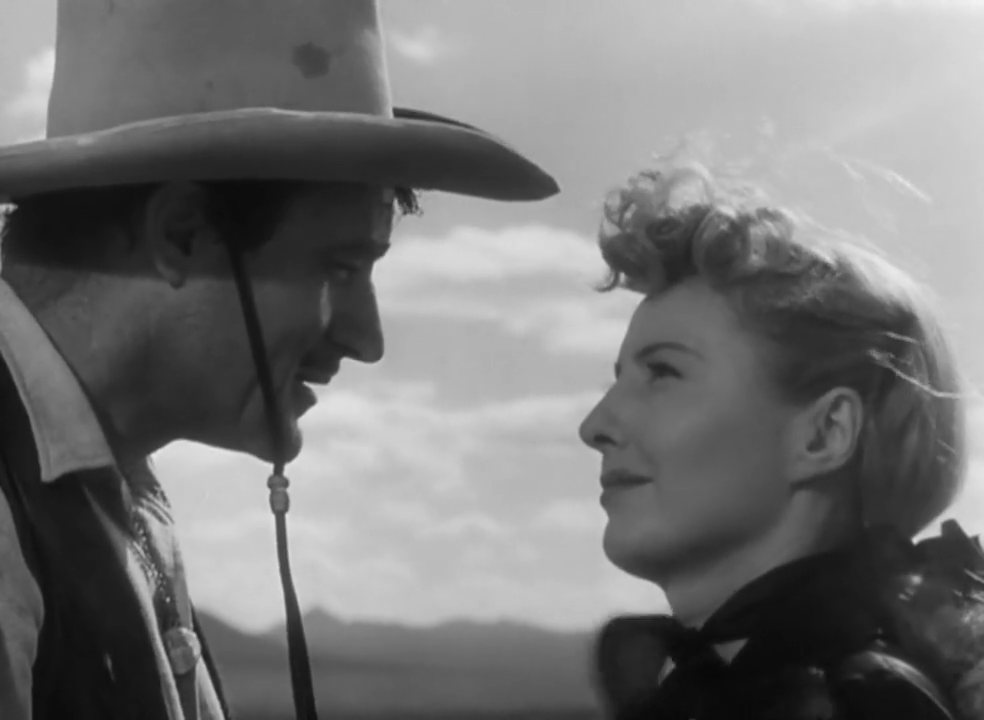
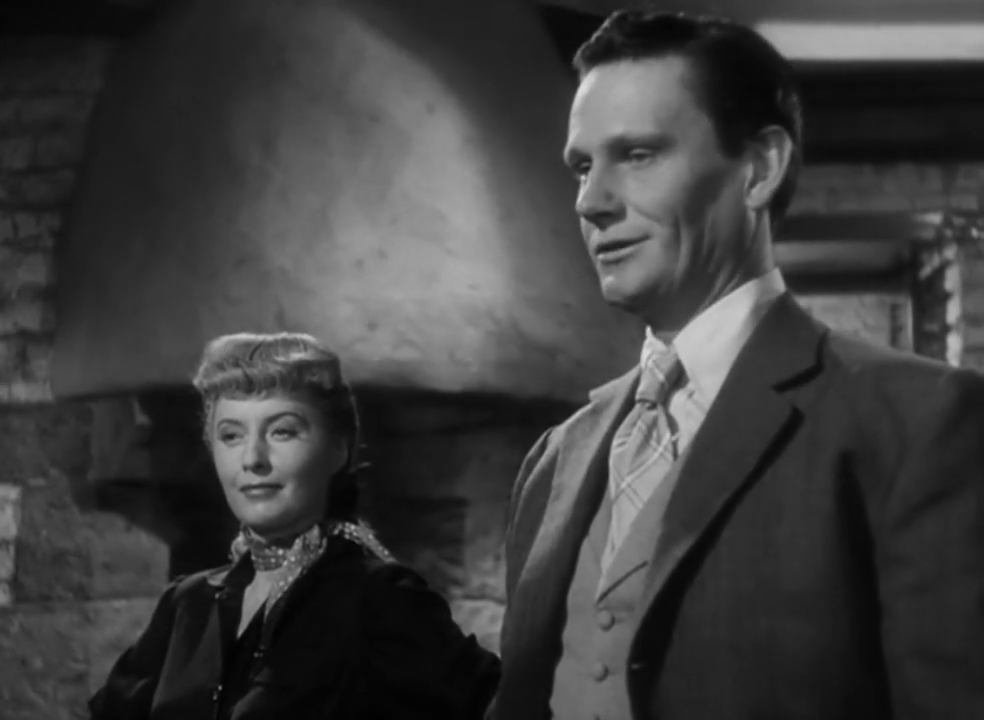
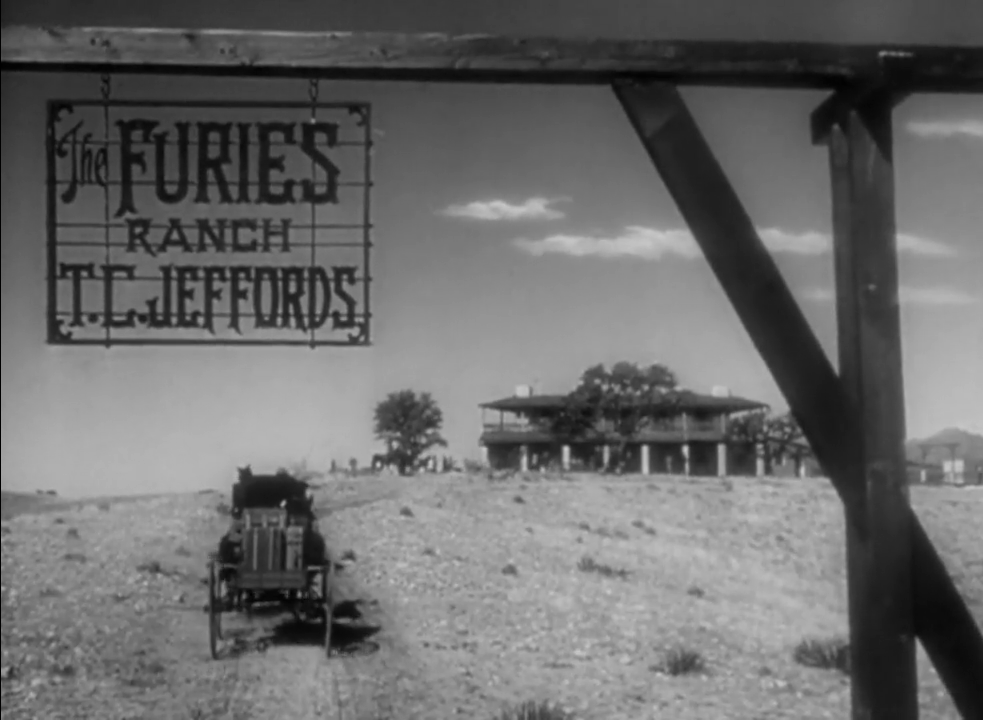
with Stanwyck clearly coveting a role as her father’s lead partner — to the point of turning violent and vicious once that’s threatened.
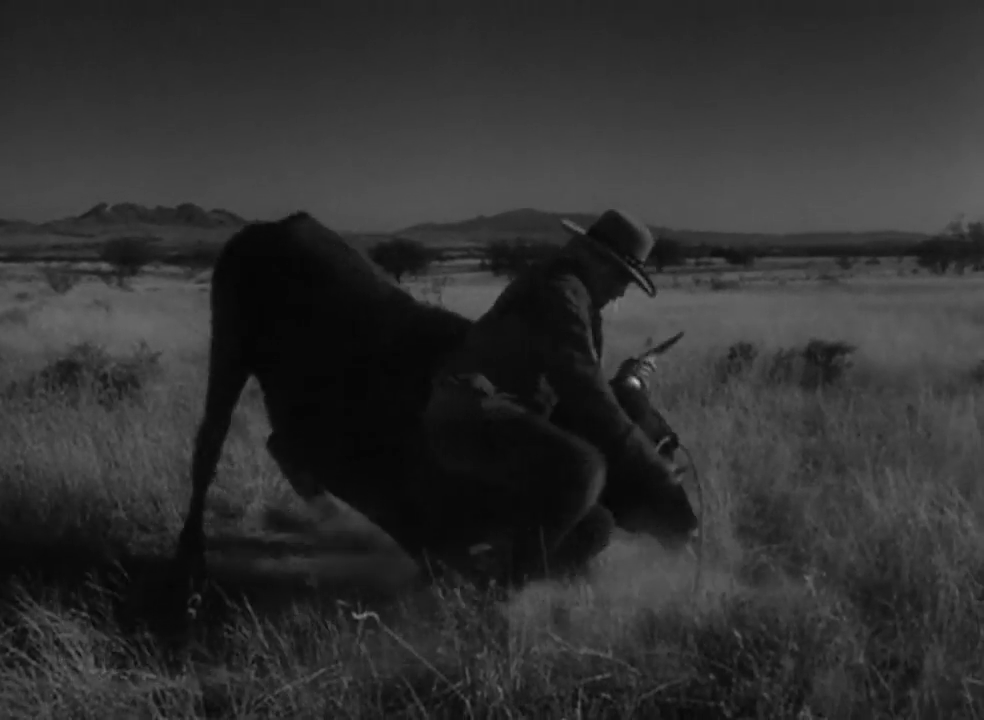
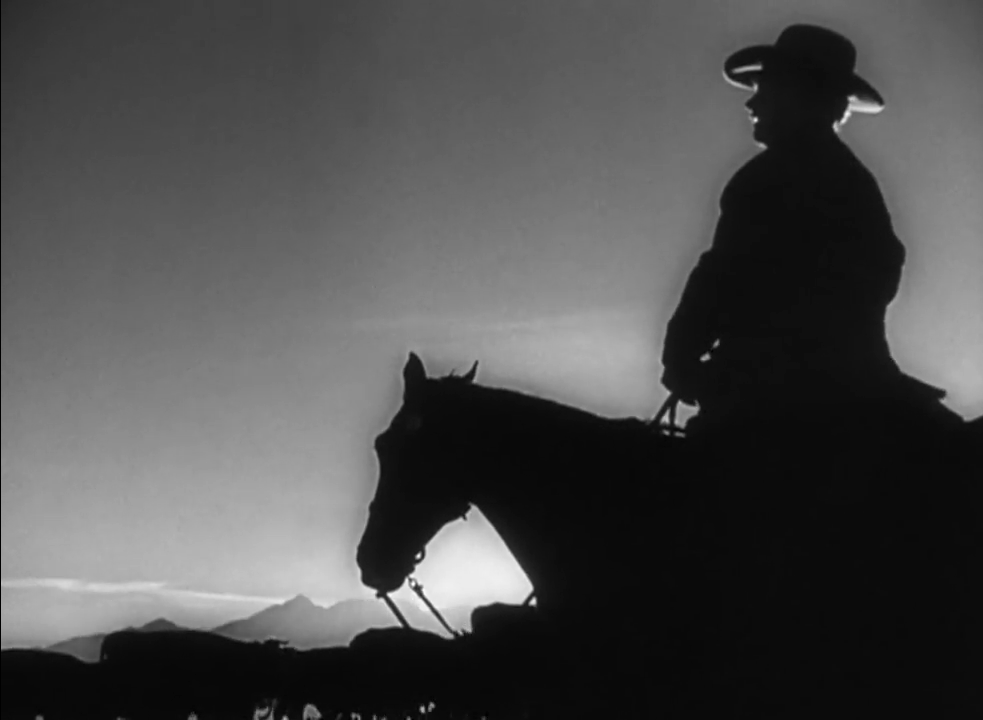
In his final role before dying of a heart attack, Huston is a larger-than-life, enigmatic figure, someone whose raw exuberance for ranching is contagious:
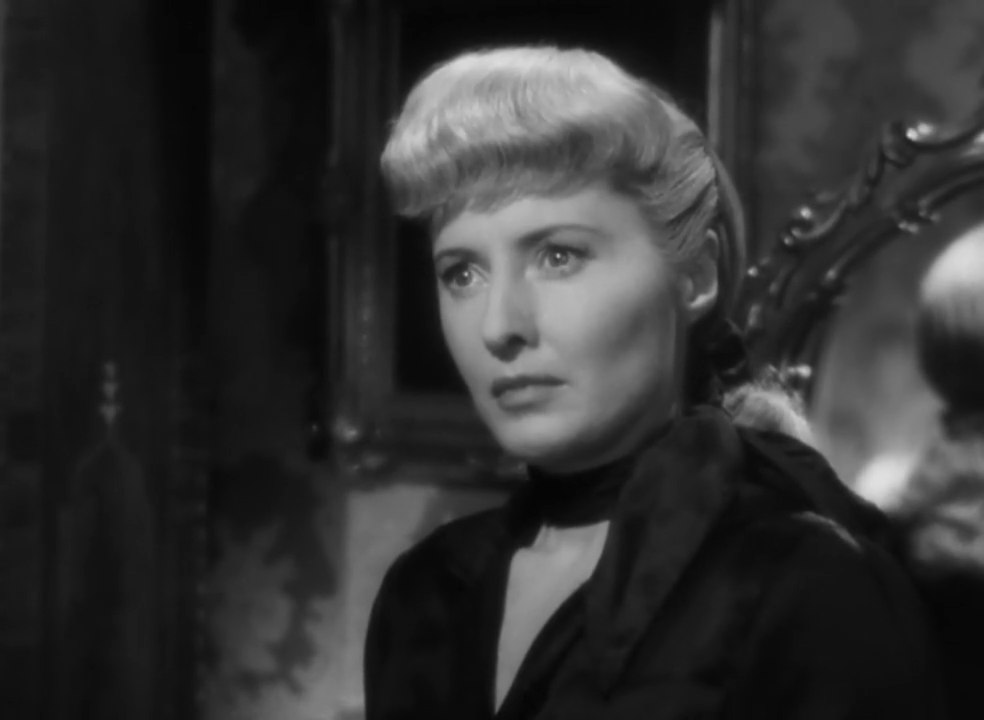
… and Stanwyck gives a powerful performance as a woman with intense emotions whose passion for her home (inextricably tied to her her father) ultimately surpasses all other goals in her life.
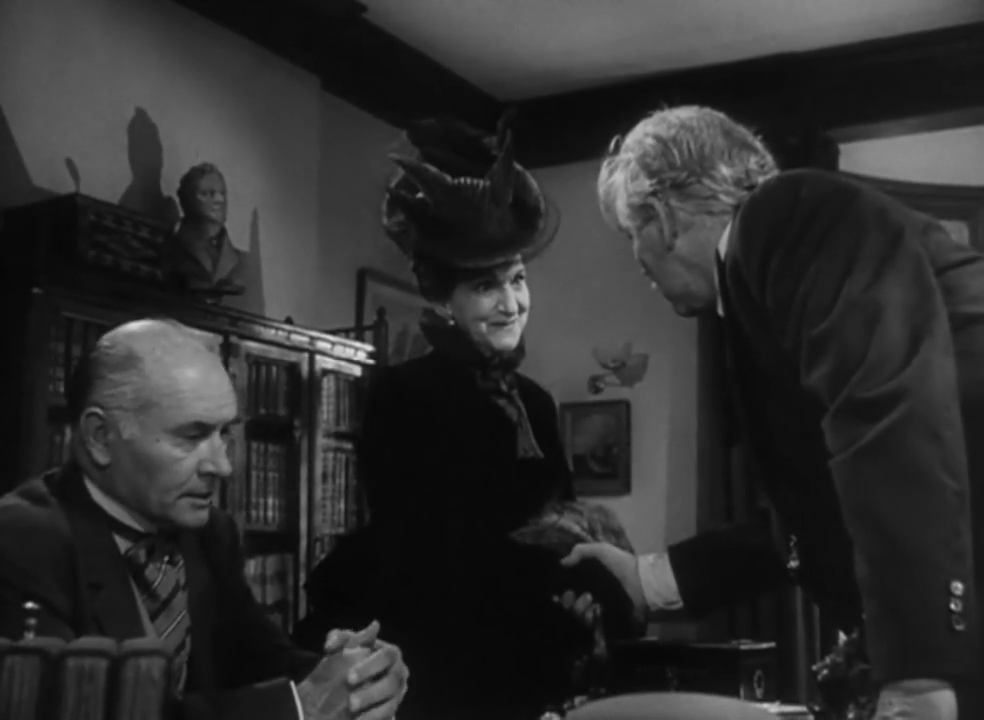
Three middle-aged actresses — Judith Anderson…
Beulah Bondi (as the wife of an influential banker)…
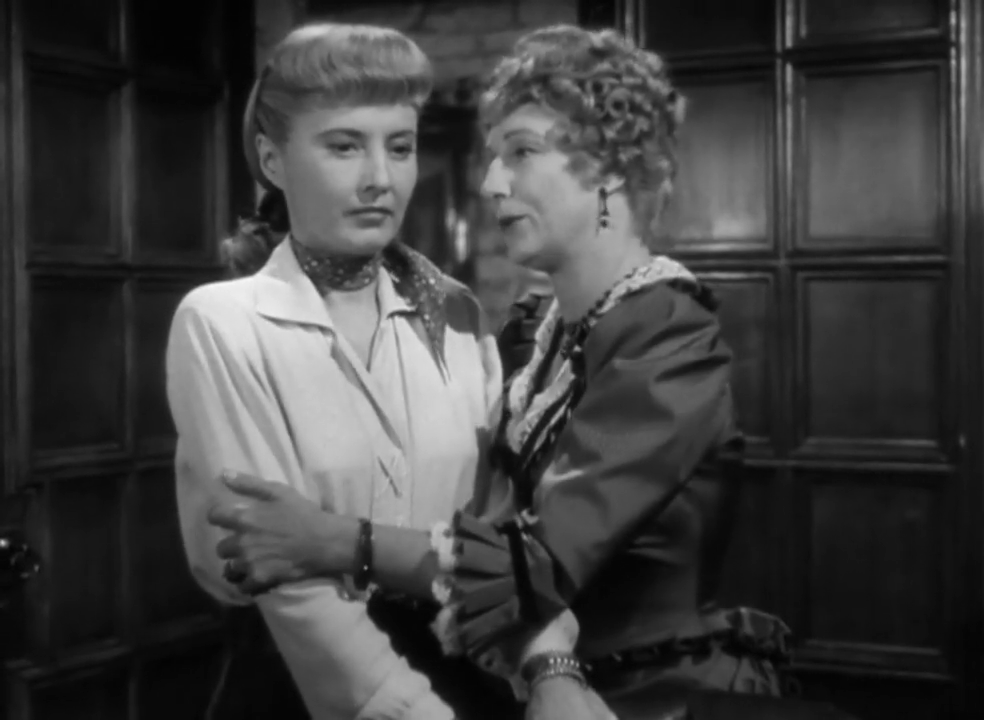
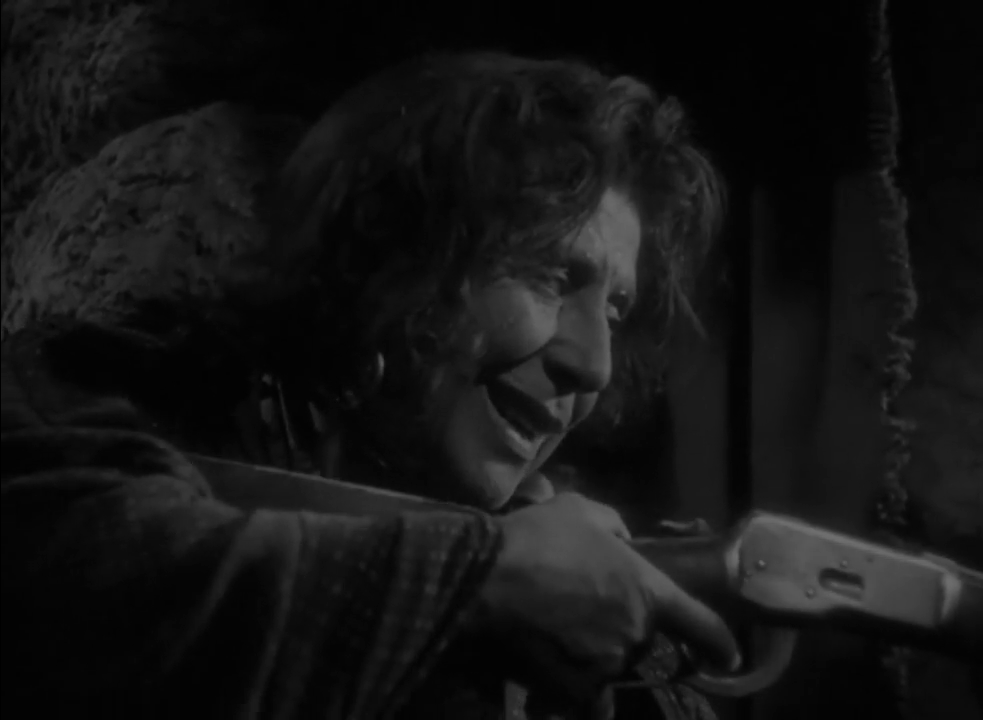
and Blanche Yurka (as Roland’s mother):
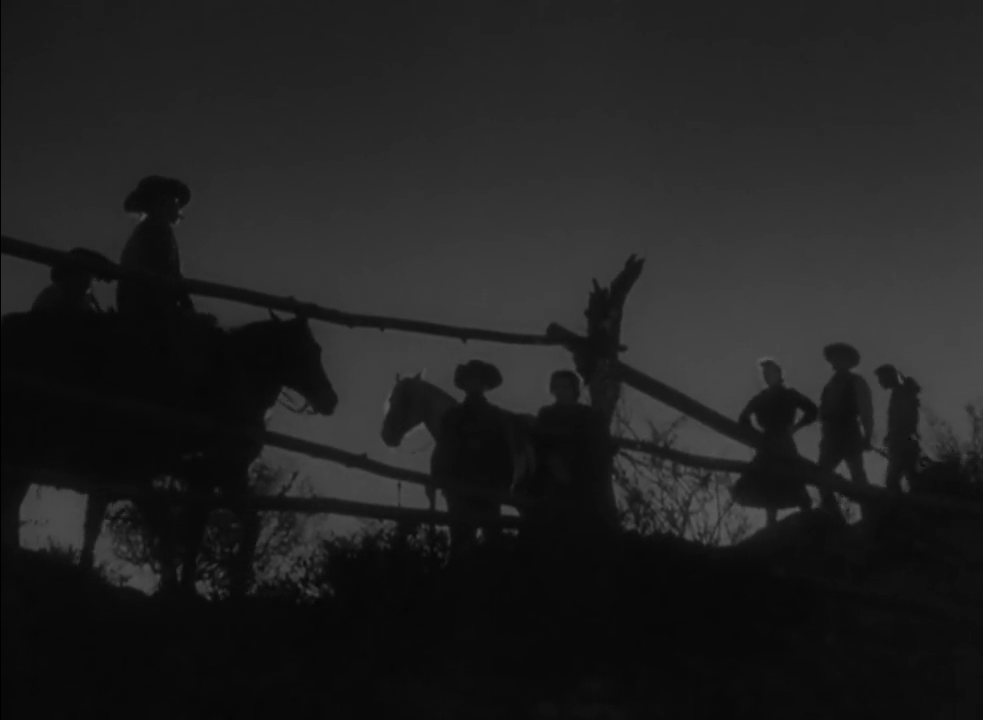
are given memorable supporting roles as well. Meanwhile, the gothic cinematography by Victor Milner is appropriately moody:
providing many haunting shots and moments. This one is well worth a look. Redeeming Qualities and Moments:
Must See? Categories
Links: |
“I don’t know much about the law; ain’t had much book learning. But the good Lord gave me a nose for smelling a horse thief a mile off — and what you need in these parts is a marshal that’s better at smelling than spelling.”
|
Synopsis: |
|
Genres, Themes, Actors, and Directors:
Review:
As described in TCM’s article:
Redeeming Qualities and Moments:
Must See? Links: |
“I’m here and I’m going to stay here!”
|
Synopsis: |
|
Genres, Themes, Actors, and Directors:
Review:
A subplot about the rivalry between a rebel named Natchakoa (Anthony Caruso) and a college-educated Blackfoot named Colorados (Lance Fuller):
as well as the jealousy felt by a woman (Yvette Duguay) who has her heart set on Colorados, and believes Stanwyck is in her way:
takes up some time, but basically this is a standard shoot-em-up flick between ranchers-and-Indians, with some pretty hoary dialogue (“When that girl gets an idea, she’s just as stubborn as a mule with a broken hind leg.”). The amount of anti-Indian rhetoric is notable for its blatant racism, and serves as a potent reminder of where we’ve come from:
Redeeming Qualities and Moments:
Must See? Links: |
“Everybody’s where they wanna be.”
|
Synopsis: |
|
Genres, Themes, Actors, and Directors:
Response to Peary’s Review:
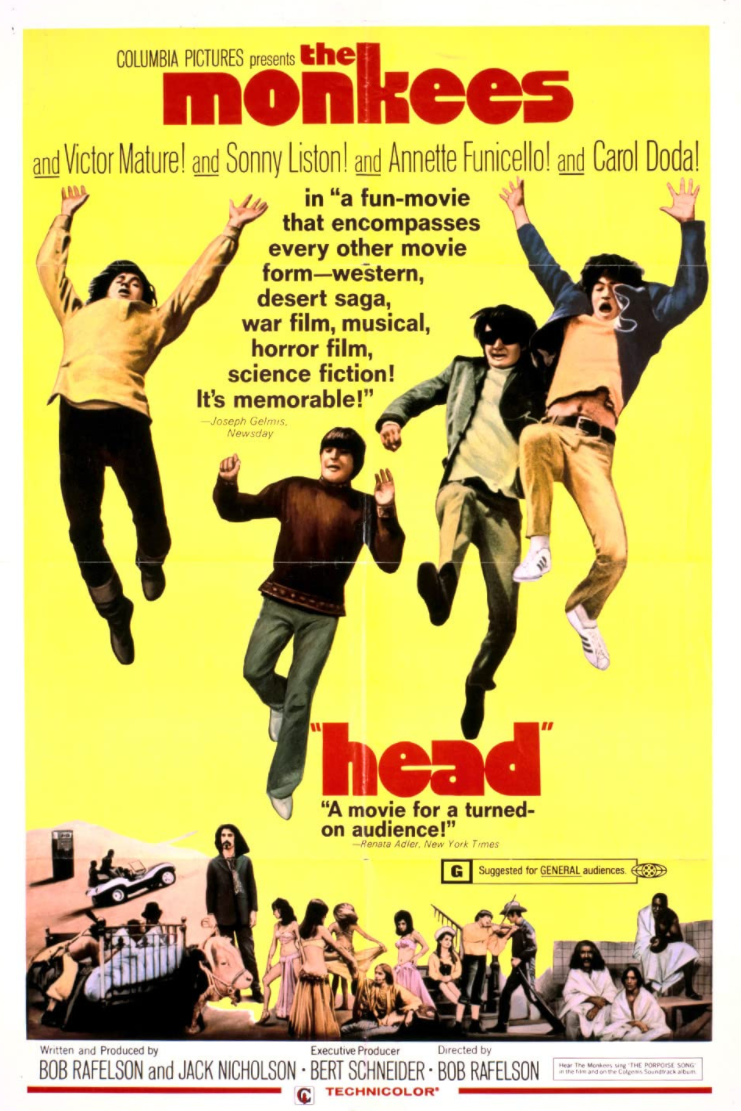
However, he argues that “the film is a mess (by design — that’s the shame) and tedious,” and thus only “recommended for Monkees fans who comprise [the] film’s cult today”; “others will be disappointed. I’m in agreement with Peary’s review, which accurately captures both the chaos and the frustration of this intentionally “cult-like”, self-referential satire. Rafelson himself has admitted that the entire screenplay was written while tripping on acid — and there’s deliberately very little coherence across scenes. At one point, we’re told that what we’re seeing from then on is a policeman’s dream, but since the dream portion never “ends”, we’re left wondering whether this was simply one more “joke” meant to trip us up (literally). With that said, film fanatics may have fun trying to recognize the various classic movie clips scattered throughout — which include The Black Cat (1934), Golden Boy (1939), City for Conquest (1940), and Gilda (1946). Redeeming Qualities and Moments:
Must See? Links: |