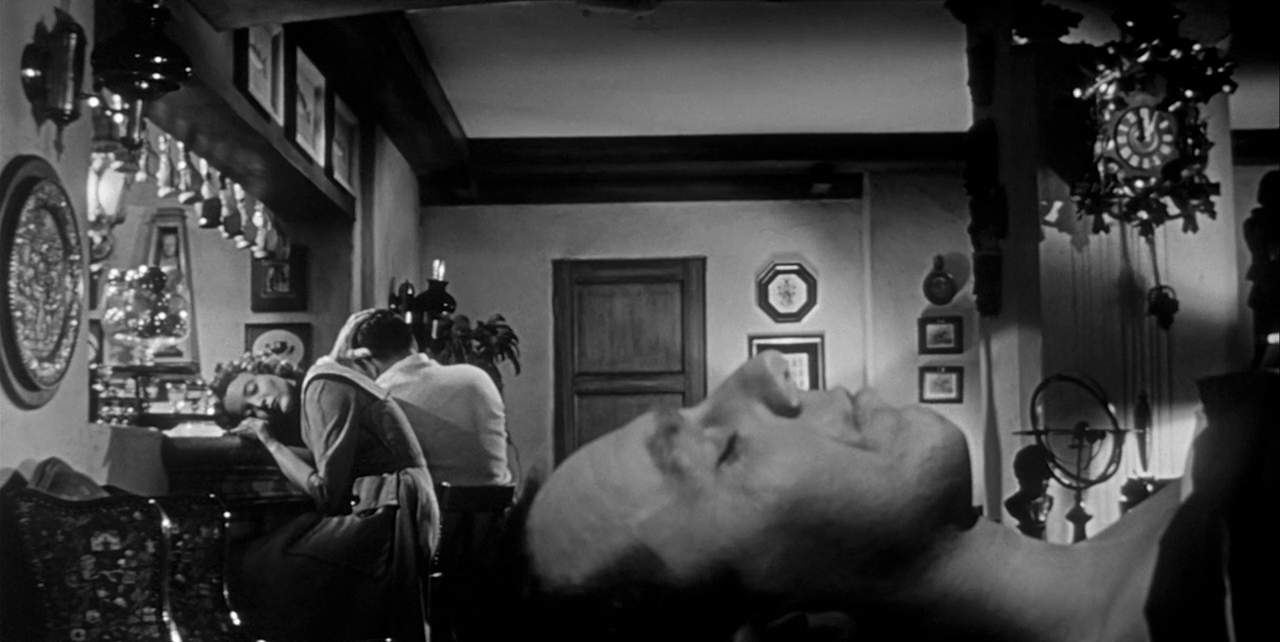
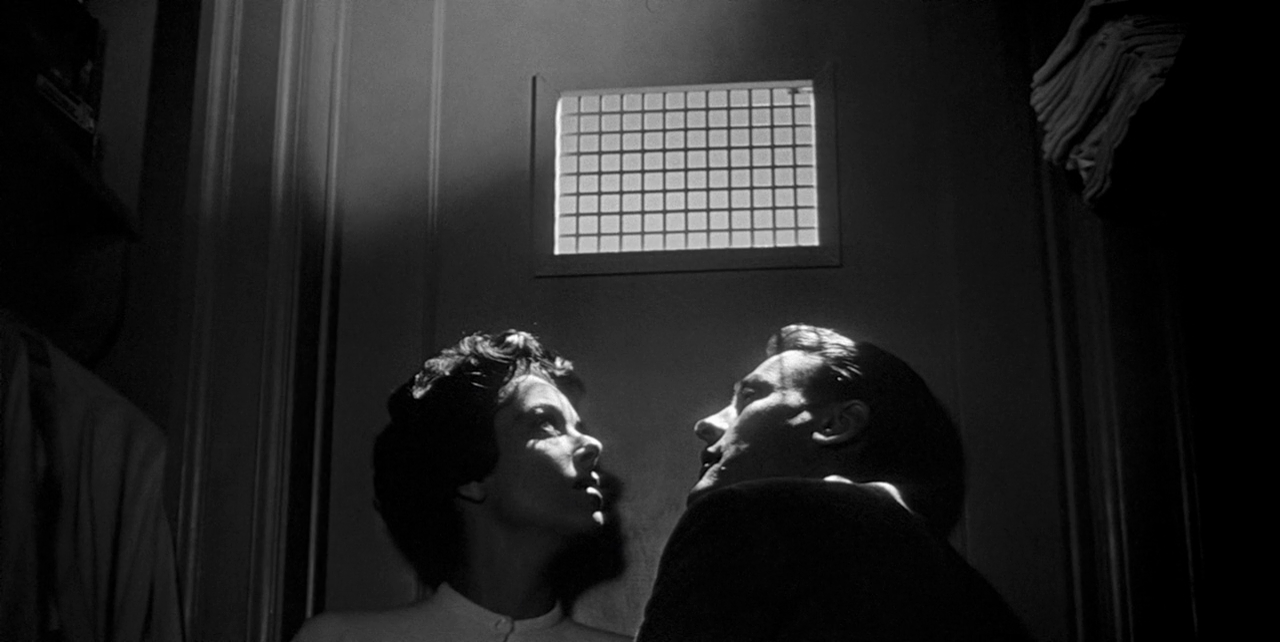
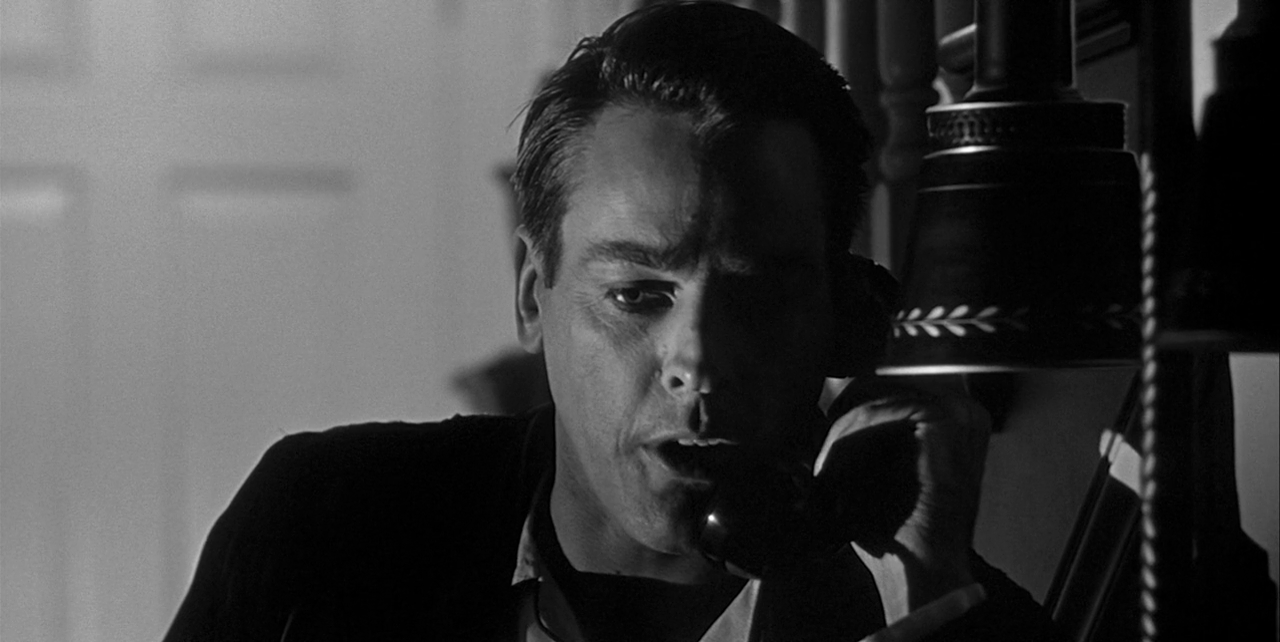
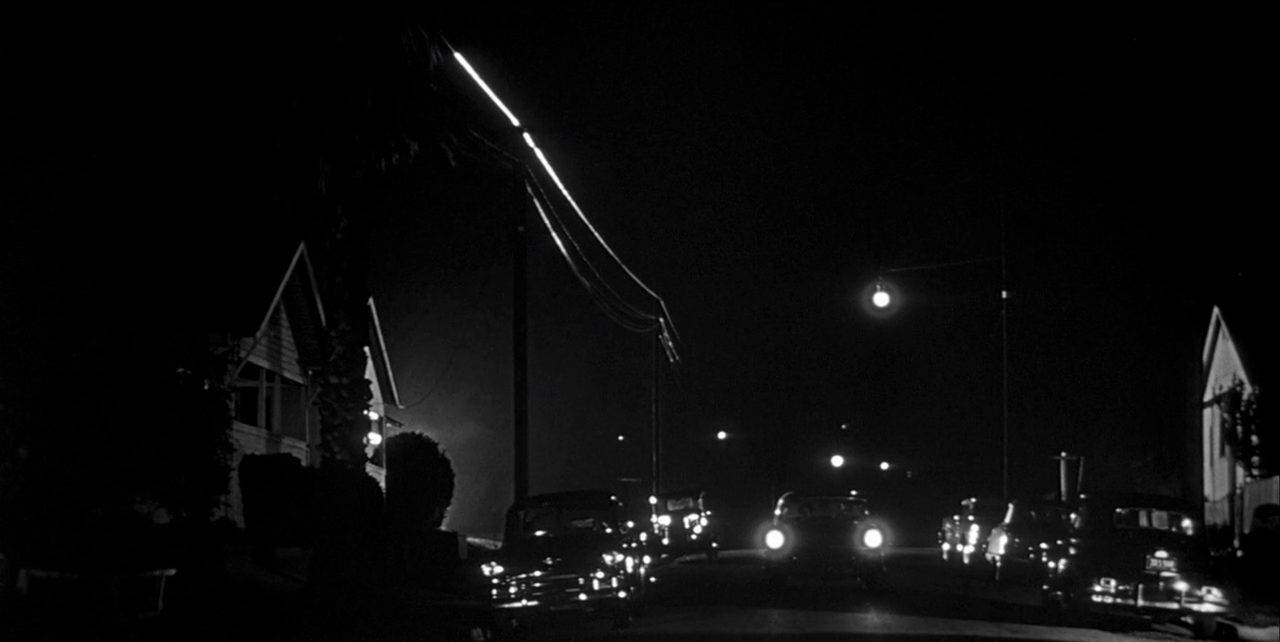
Funny Thing Happened on the Way to the Forum, A (1966)

Funny Thing Happened on the Way to the Forum, A (1966)

“Poor little moth — she fluttered too near my flame.”

Synopsis:
In ancient Rome, a slave (Zero Mostel) desperate to escape from his brutish owners (Patricia Jessel and Michael Hordern) convinces his young master (Michael Crawford) to trade his freedom for a young virgin (Annette Andre) recently purchased by the owner of a courtesan-house — but matters become more complicated when he learns Andre has just been sold to a soldier (Leon Greene), and Hordern mistakenly believes he has been given “access” to Andre himself.

  • Ancient Greece and Rome
  • Buster Keaton Films
  • Comedy
  • Mistaken or Hidden Identities
  • Musicals
  • Richard Lester Films
  • Slavery

Response to Peary’s Review:
Peary refers to this screen adaptation of Larry Gelbart, Burt Shevelove, and Stephen Sondheim’s popular Broadway hit as a “spirited, tremendously underrated musical comedy”. He calls out director Richard Lester’s “wild cutting and frantic camera work (handled by Nicolas Roeg)” as setting “the anarchical tone for the slam-bang mix of slapstick, satire, burlesque-vaudeville, farce, and absurd humor”, and he notes that while “not all the gags work and the pacing falters on occasion”, there are “a surprising number of hilarious moments”. He writes that “Lester captures period flavor and finds Wizard of Id-like humor in the brutality the strong and powerful dish out and the weak and powerless endure”.

With all that said, I’ll admit to not being a fan of this beloved cult favorite — primarily due to my distaste over how objectified, sexualized, and/or demonized every single female character is. Could Jessel’s pasty make-up:

— or that of her mother (Beatrix Lehmann) — be any more garishly witch-like? Could beautiful women’s bodies be any more fondled, used as dining tables, or assumed to be merely objects for male pleasure (or reproduction)? However, things become more enjoyable (for me) once Greene (giving “a funny performance”) arrives on the scene; his narcissistic rhetoric is consistently laugh-out-loud humorous:

Miles Gloriosus: What is she like?
Pseudolus: A face so fair, a heart so pure – Sir, if you had been born a woman, you would have been she!
Miles Gloriosus: As magnificent as that?

Buster Keaton, in his final role before dying of cancer, seems literally lost during most of the film (for good reason), but has a nice moment at the end when his character suddenly becomes a pivotal part of the storyline. All film fanatics should check this film out at least once, and more often if it tickles your particular fancy.

Redeeming Qualities and Moments:

  • Zero Mostel as Pseudolus
  • Leon Greene as Captain Miles Gloriosus
  • Nicolas Roeg’s cinematography
  • Richard Williams’ closing credits

Must See?
Yes, as a cult comedy favorite.

Categories

  • Cult Movie

Links:

Revenge of the Nerds (1984)

Revenge of the Nerds (1984)

“Those nerds are a threat to our way of life!”

Synopsis:
Two freshmen (Robert Carradine and Anthony Edwards) arrive at college ready to have fun and meet beautiful girls, but quickly find themselves homeless when a group of jocks take over their dorm. Banding together with other outcasts — including an underage genius (Andrew Cassese), a booger-eating misfit (Curtis Armstrong), a gay African-American (Larry B. Scott), an Asian exchange-student (Brian Tochi), and a bespectacled violin-player (Timothy Busfield) — they find a house and try to form a new fraternity.

Genres, Themes, Actors, and Directors:

  • College
  • Comedy
  • Misfits
  • Revenge
  • Underdogs

Response to Peary’s Review:
Peary writes that this “surprise box-office hit” may be “just a silly teen comedy”, but is a “standout in [the] raunchy Porky’s genre because at least you don’t mind identifying with these characters.” He argues that while “there are some funny bits”, the “most enjoyment comes simply from hearing Carradine’s horsy laugh”:

and complains that “the bullying tactics of the football players are too cruel to be funny”. I disagree. Sure, the jocks are cruel and brutish (cartoonishly so):

but they get theirs BIG TIME, and the protagonists — a resilient, quirky bunch — eventually have the upper hand. What’s not to love about THAT? Edwards’ romance with a bespectacled female nerd (Michelle Meyrink) is an especially heartwarming subplot.

This may be the ultimate underdogs-get-their-day flick. Watch for a slimmish John Goodman as the jocks’ coach, and Bernie Casey as the head of Lambda Lambda Lambda, the historically black fraternity the nerds attempt to join.

Redeeming Qualities and Moments:

  • Many enjoyably humorous moments


Must See?
Yes, as a feel-good cult favorite.

Categories

  • Cult Movie

Links:

No Way Out (1950)

No Way Out (1950)

“Ain’t that a lot to ask of us — being better than them when we get killed proving we’re just as good?”

Synopsis:
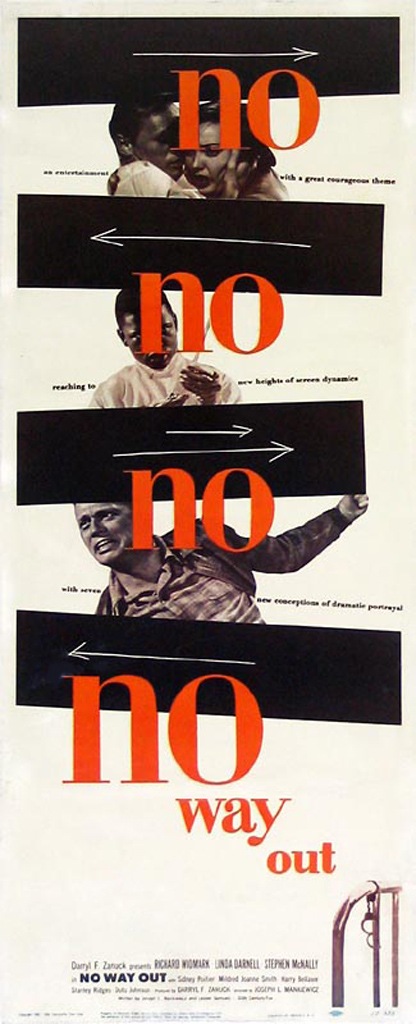
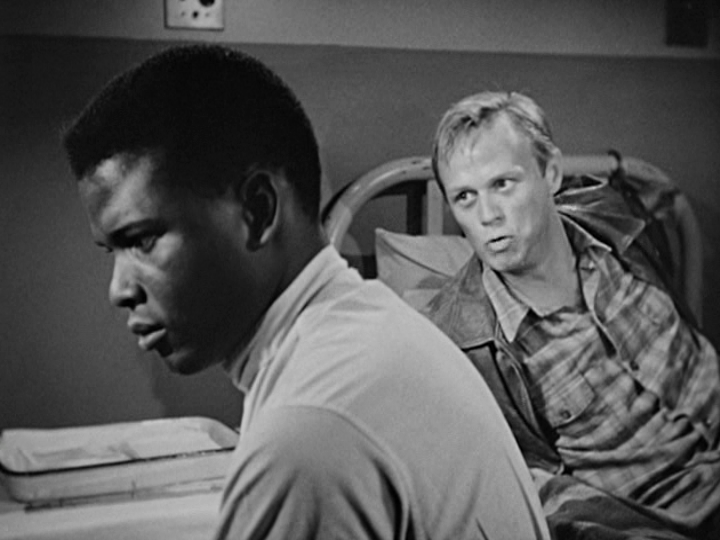
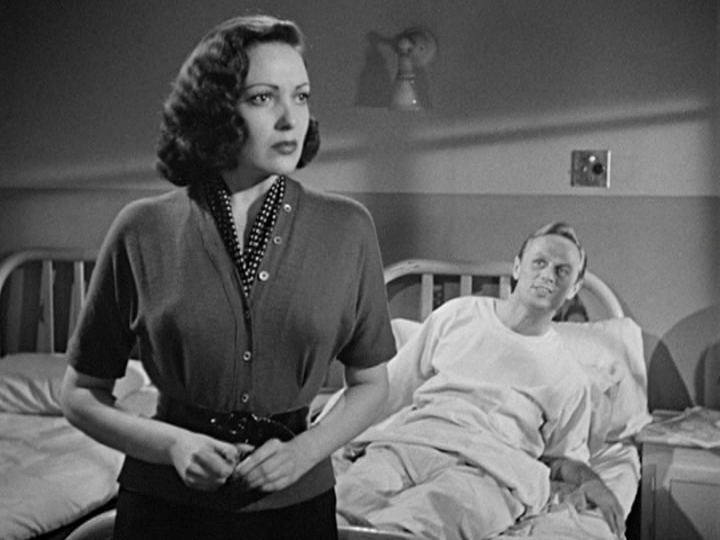
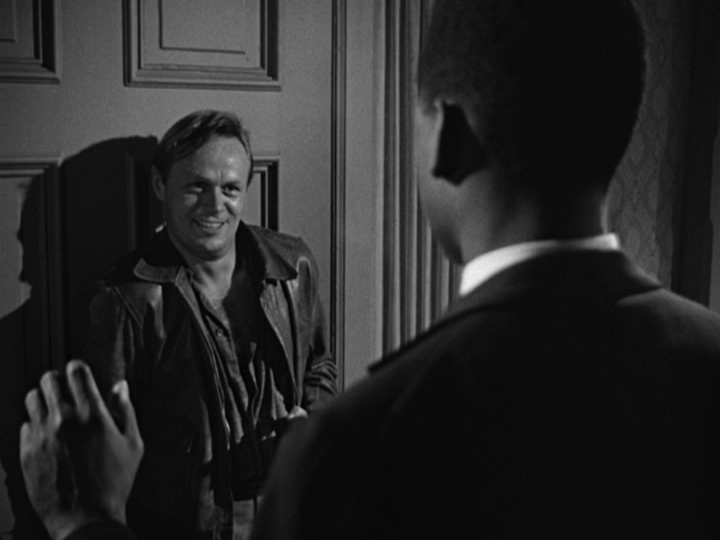
A viciously racist thug (Richard Widmark) is convinced a young black doctor (Sidney Poitier) has intentionally killed his brother (Harry Bellaver) during a spinal tap. Poitier wants an autopsy done to prove Bellaver was suffering from a brain tumor, but Widmark and his hearing-impaired brother (Dick Paxton) refuse — so, with the help of his white mentor (Stephen McNally), Poitier approaches Bellaver’s ex-wife (Linda Darnell) for help.

Genres, Themes, Actors, and Directors:

  • Doctors and Nurses
  • Joseph L. Mankiewicz Films
  • Linda Darnell
  • Revenge
  • Race Relations and Racism
  • Richard Widmark Films
  • Sidney Poitier Films

Review:
Sidney Poitier made an auspicious screen debut in this no-holds-barred look at racial tensions and violence in mid-century America. Written and directed by Joseph L. Mankiewicz, the film plays out as a sort of noir in which an innocent protagonist (Poitier) becomes trapped in the snare of a sociopath who will stop at nothing to destroy him. Widmark is such a vile character that one could attempt to dismiss his rantings as those of a crazy “mad dog” — but Mankiewicz cleverly positions him within a wider community of individuals, so we see his actions and words are merely the extreme end of the racism spectrum. In a fine, nuanced performance (perhaps her best), Darnell plays a down-trodden woman from the wrong side of the tracks who slowly experiences a change of heart as she’s exposed to decent men and women, both black and white. Poitier is excellent, and Dick Paxton as Widmark’s deaf-and-mute brother is also highly effective without speaking a word. Widmark’s central performance would have been even more impactful if he’d dialed down his gleeful venom, though he’s to be commended for taking on this distasteful role at all, and his choices are understandable.

No Way Out remains an invaluable entry in cinematic history simply for showing middle-class African-Americans attempting to live “normal” lives in the midst of nearly constant bigotry, and for exposing the abhorrent underbelly of racism (notably, the camera focuses on a couple of white women during the “race riot” scene, indicating their complicity as well). No Way Out is tough but essential viewing, and deserves wider recognition, especially as its sordid truths continue to play out today. In his engaging DVD commentary for the movie, film historian Eddie Muller provides numerous insights into the making of the film, as well as its reception — which, not surprisingly, didn’t do well in small American towns (though it was apparently well-received by critics in big cities). Modern audiences should be forewarned that racist diatribes and slurs run throughout the screenplay — a fact which has made it difficult for this film to be shown on television, and it’s not available to rent through Netflix (I had to locate a copy through my local library).

Redeeming Qualities and Moments:

  • Sidney Poitier as Dr. Brooks
  • Linda Darnell as Edie
  • Fine supporting performances
  • A refreshingly stark look at mid-century racial tensions
  • Milton Krasner’s noir-ish cinematography


Must See?
Yes, as a groundbreaking classic.

Categories

  • Genuine Classic
  • Historically Relevant

Links:

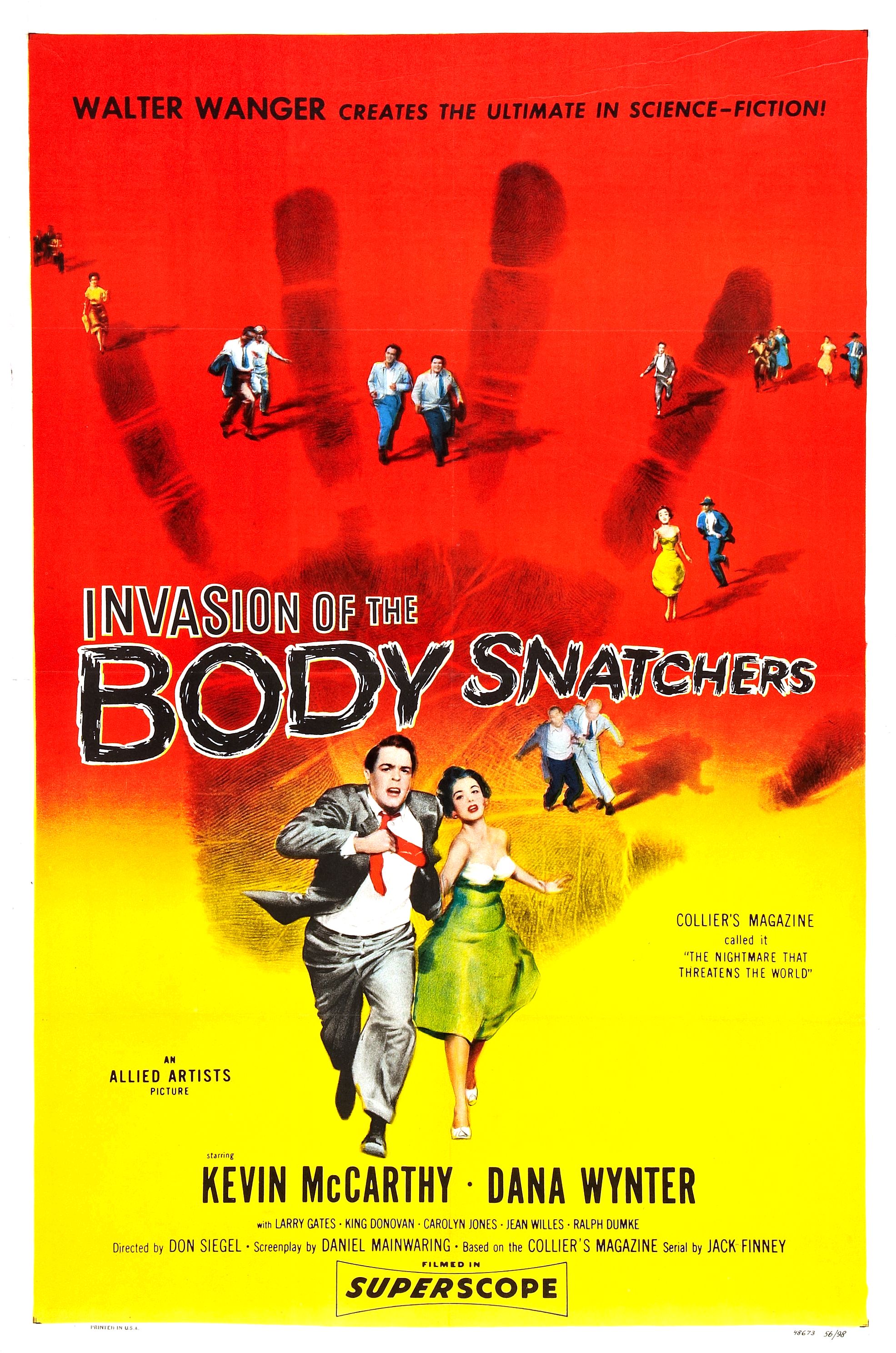
Invasion of the Body Snatchers (1956)

Invasion of the Body Snatchers (1956)

“There’s something missing. Always when he talked to me there was a certain look in his eyes. Now it’s gone. There’s no emotion. The words are the same, but there’s no feeling.”

Synopsis:
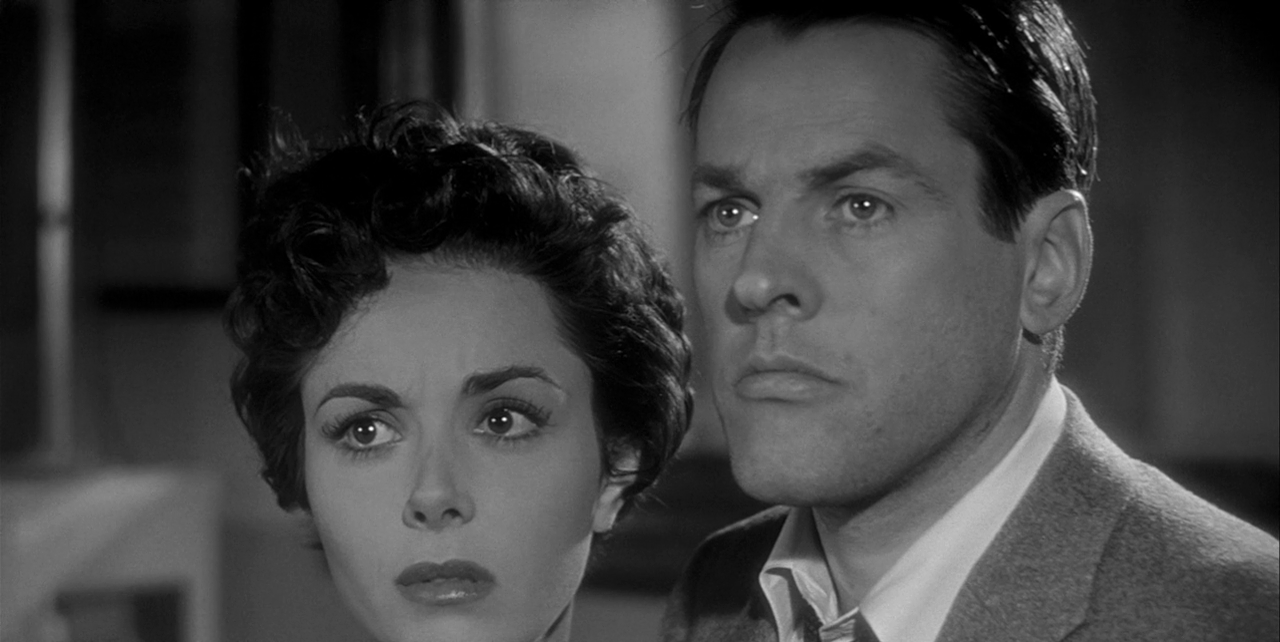
As patients complain that their loved ones are “lookalike imposters”, a doctor (Kevin McCarthy) in a California town tries to protect himself, his new girlfriend (Dana Wynter), and his married friends (King Donovan and Carolyn Jones) from mysterious pods with human-like figures in them.

Genres, Themes, Actors, and Directors:

  • Aliens
  • Carolyn Jones Films
  • Don Siegel Films
  • Kevin McCarthy Films
  • Living Nightmare
  • Mistaken or Hidden Identities
  • Possession
  • Science Fiction

Response to Peary’s Review:
Peary refers to this extra-terrestrial invasion flick as “one of the all-time great science-fiction films, one of the few that make the fantastic seem perfectly credible”. He argues that director Don “Siegel’s film outshines Phil Kaufman’s 1978 remake… in pacing”, given that “the excitement just keeps building”, with “several tricks” used “to establish tension: having characters leave their motors running when they get out of their cars; having much activity take place in basements and other dark, shadowy settings; and, most effective of all, establishing that aliens have replaced [McCarthy’s] friends so we’re paranoid about everything ordinary and familiar”. Peary adds that Siegel “used staples of the action film he knew so well: diverse camera angles, penetrating close-ups of characters mixed with mysterious longshots…, and sharp editing”.

I think Peary misses the boat in his comparison of the two films, given that both are creepily effective in their own ways. However, there’s no denying that this earlier version is a true classic of the genre and era. While Peary writes that it’s “controversial because it can be seen as either anti-communist or anti-McCarthy polemic”, at this point in history that doesn’t really matter: the idea of witnessing “your loved ones becoming your enemy”, and “fighting to retain your ability to love” is terrifying no matter what your political leaning. Siegel’s smart direction and Ellsworth Fredericks’ noir-ish cinematography combine to make the visuals consistently impressive, and McCarthy gives an excellent leading performance: he is fully invested in his role as a man determined to resist the lure of sleep and conformity at any cost.

Redeeming Qualities and Moments:

  • Kevin McCarthy as Dr. Miles Bennell
  • Siegel’s taut, exciting direction

  • Ellsworth Fredericks’ noir-ish cinematography

  • Excellent use of on-location shooting in Southern California
  • Many truly creepy scenes

Must See?
Yes, as a genuine sci-fi classic. Discussed at length in Peary’s first Cult Movies book.

Categories

  • Genuine Classic

(Listed in 1001 Movies You Must See Before You Die)

Links:

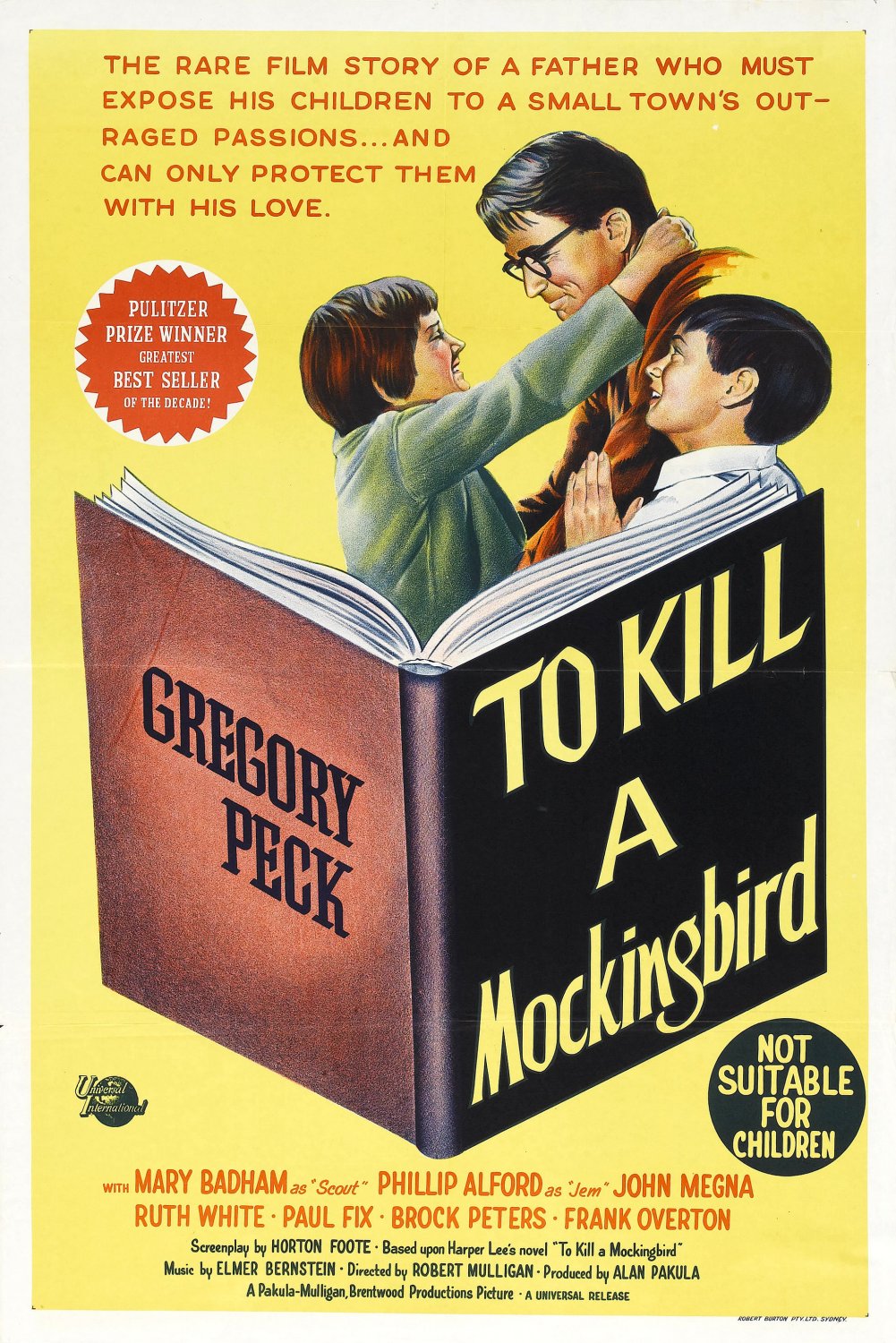
To Kill a Mockingbird (1962)

To Kill a Mockingbird (1962)

“There’s a lot of ugly things in this world, son. I wish I could keep ’em all away from you. That’s never possible.”

Synopsis:
The tomboy-daughter (Mary Badham) of a widowed lawyer (Gregory Peck) reflects back on a summer when she, her older brother (Phillip Alford), and their friend Dill (John Megna) witness Peck attempting to defend a black man (Brock Peters) who has been falsely accused of raping a white woman (Collin Wilcox) in their small southern town.

Genres, Themes, Actors, and Directors:

  • Childhood
  • Courtroom Drama
  • Deep South
  • Falsely Accused
  • Father and Child
  • Flashback Films
  • Gregory Peck Films
  • Lawyers
  • Race Relations and Racism
  • Robert Duvall Films
  • Robert Mulligan Films
  • Small Town America

Review:
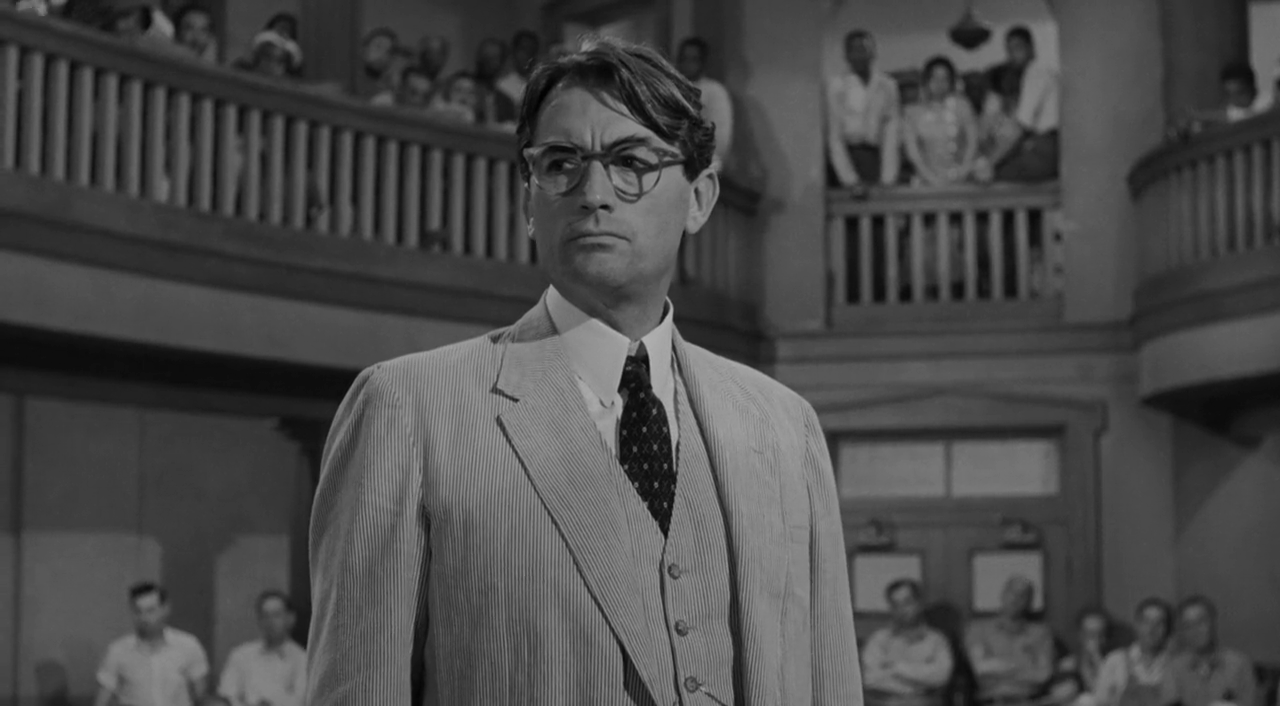
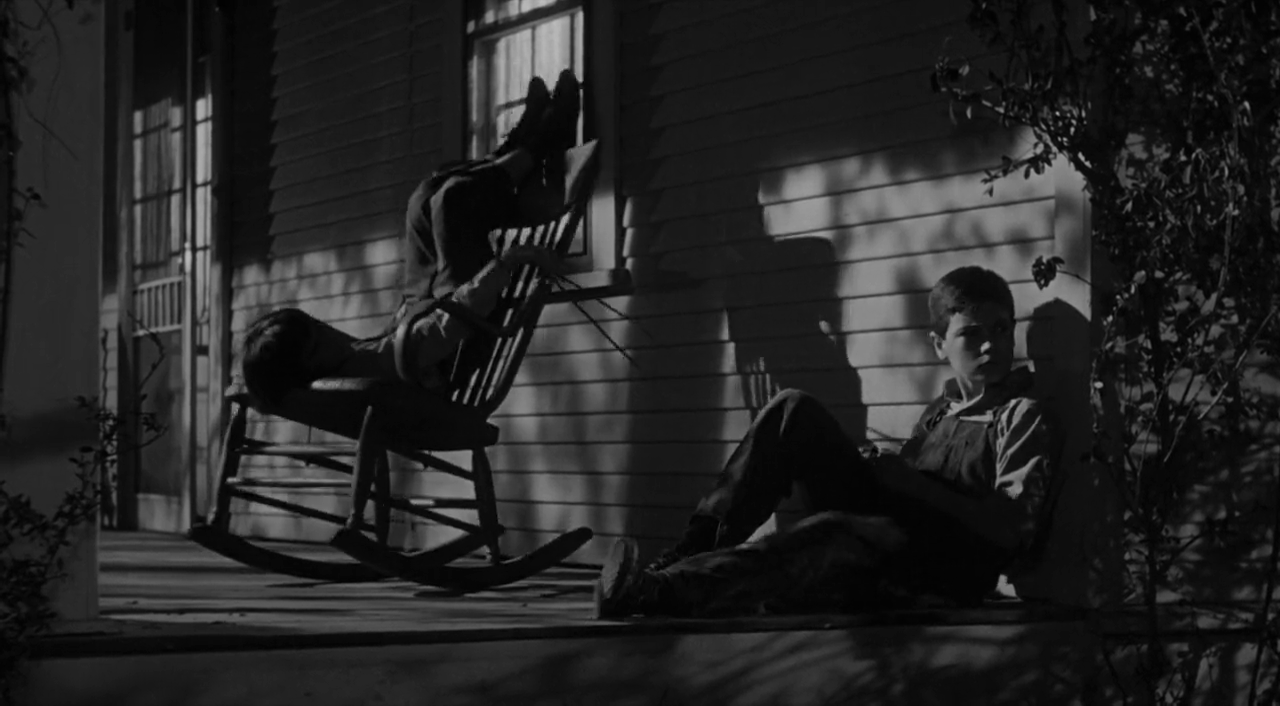
Peary doesn’t review this beloved adaptation of Harper Lee’s Pulitzer-Prize winning novel in his GFTFF, but he does discuss Gregory Peck’s Oscar-winning performance in Alternate Oscars, where he gives the award to Peter O’Toole for Lawrence of Arabia instead. He notes that as widowed lawyer Atticus Finch, “Peck displayed quiet authority, patience and fair-mindedness, a strong sense of right and wrong, warmth, humility, and courage” — but he argues that “Peck’s performance isn’t nearly as impressive as we thought at the time”, given that he “doesn’t come across as a particularly competent defense attorney”.
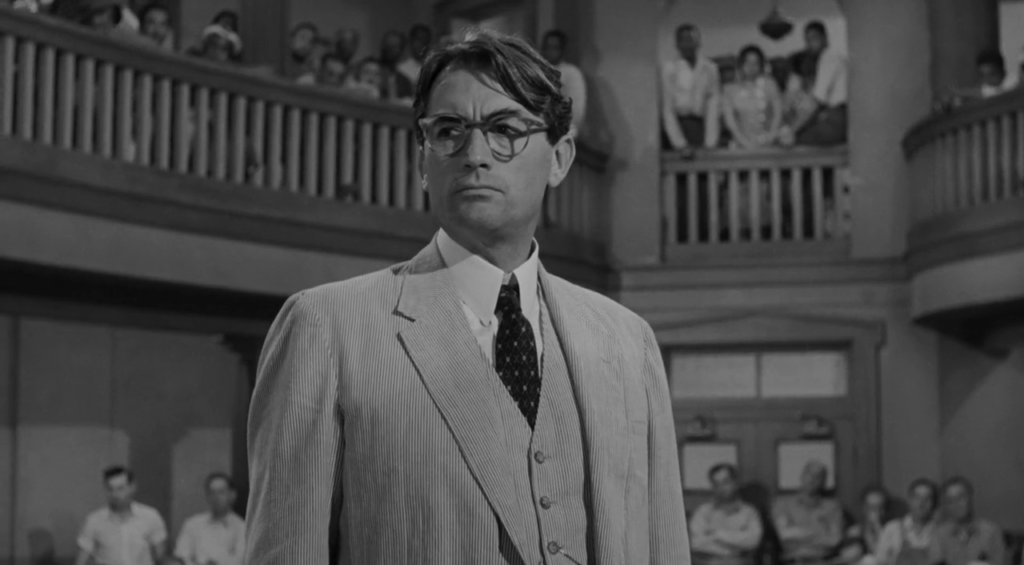
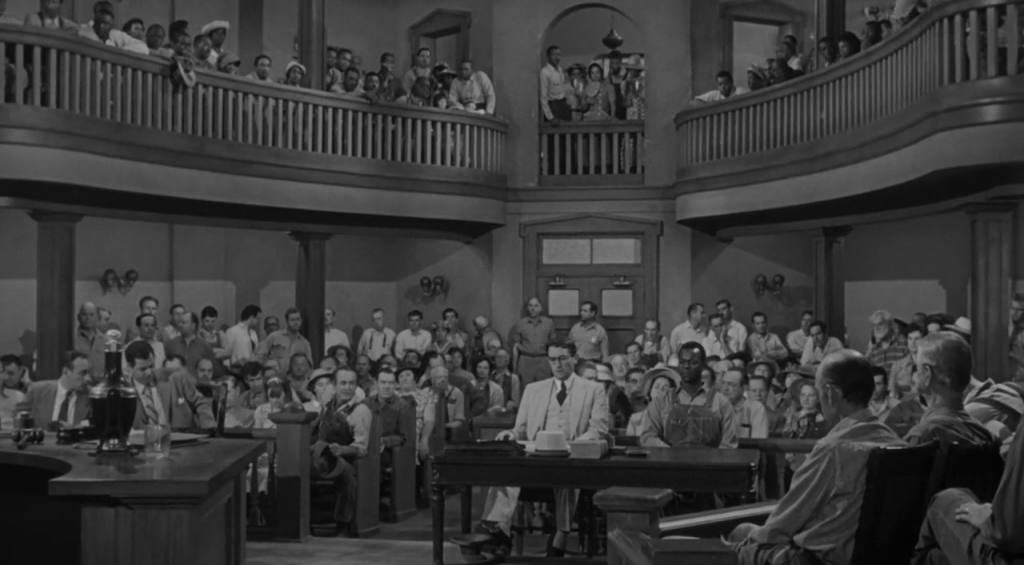
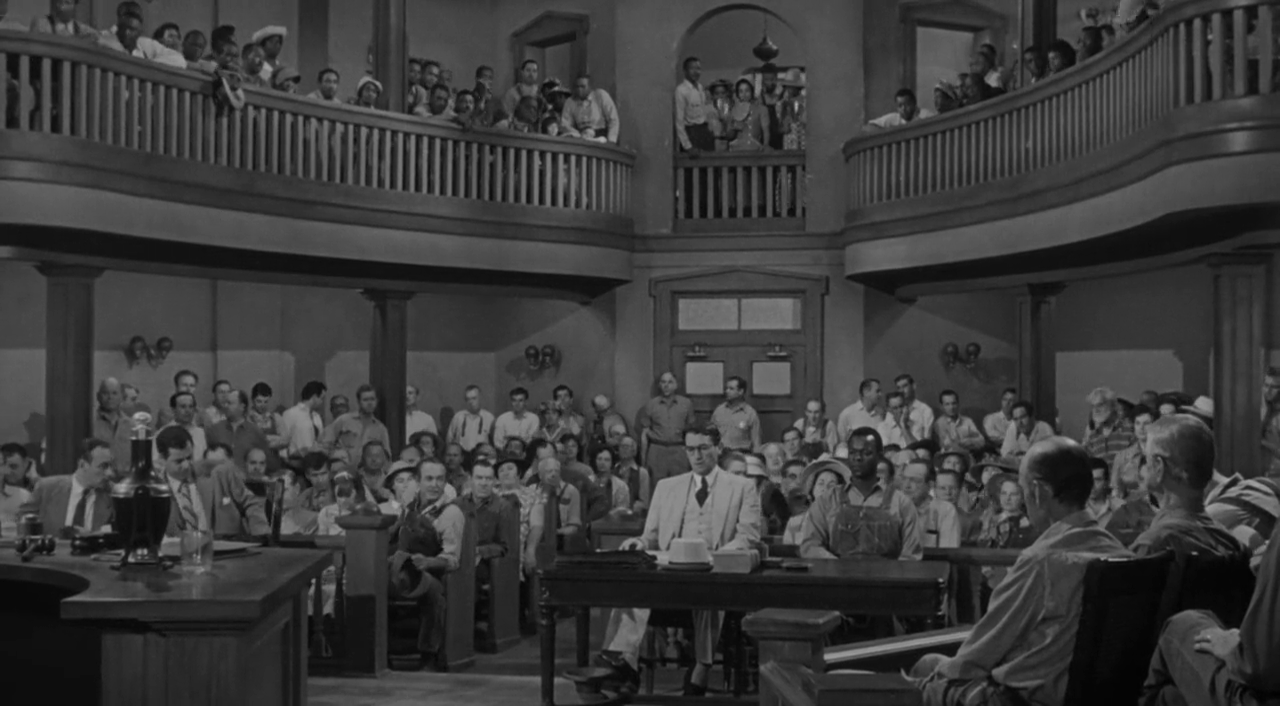
I’m not sure this matters or is even accurate: Atticus openly acknowledges that his strategy will involve appealing the foregone conclusion (guilty) of a racist jury; his “deliberate, low-keyed courtroom summation” — which Peary wishes “had more fire” — makes complete sense in the context of his deeply racist town, where simply the act of defending an (innocent) black man can bring death threats to his family.
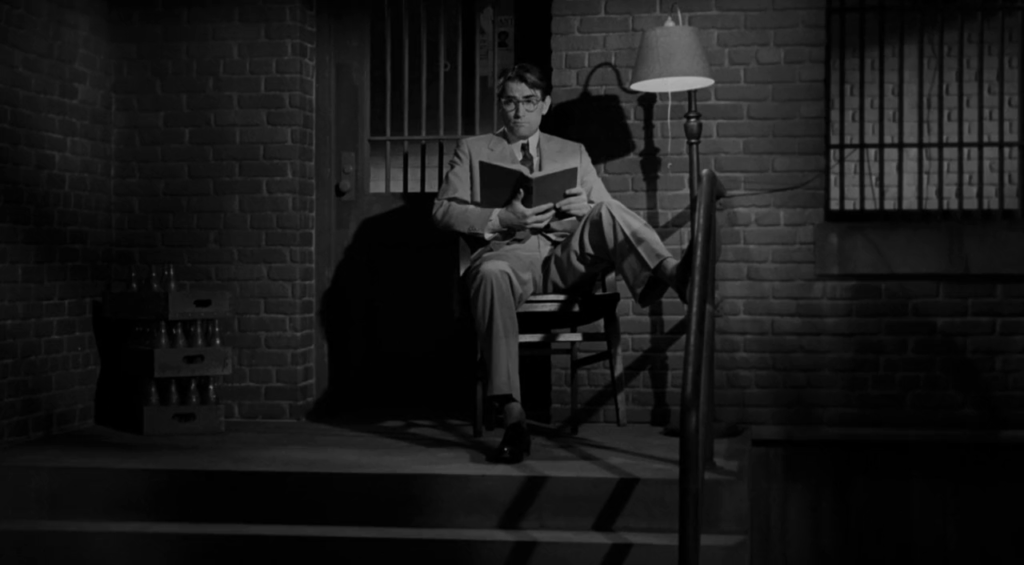
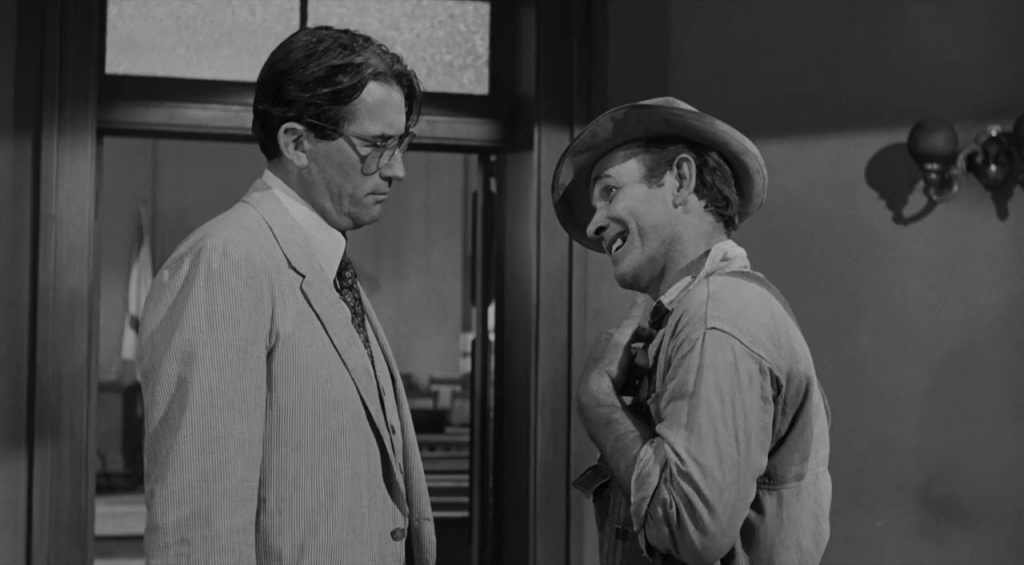
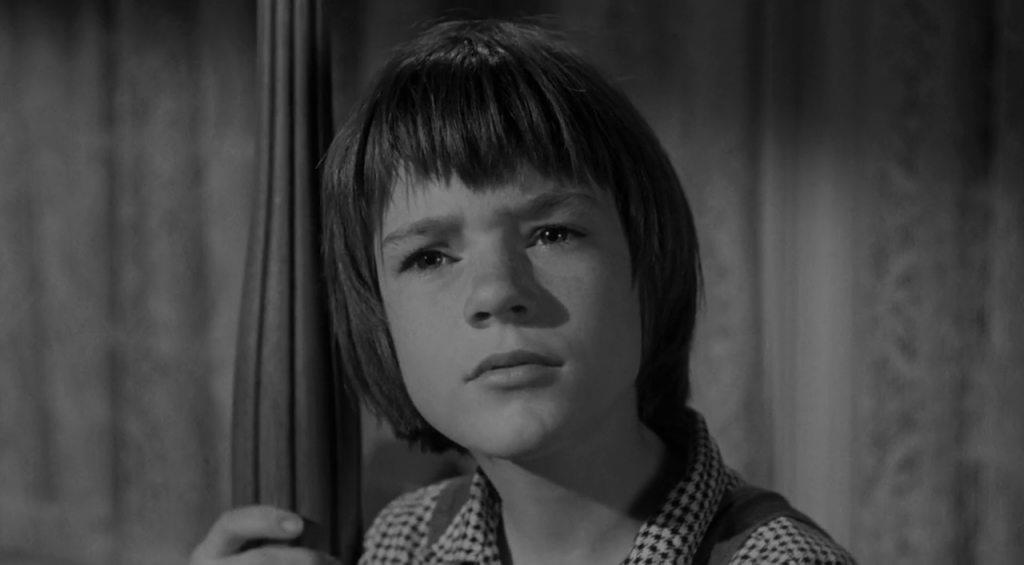
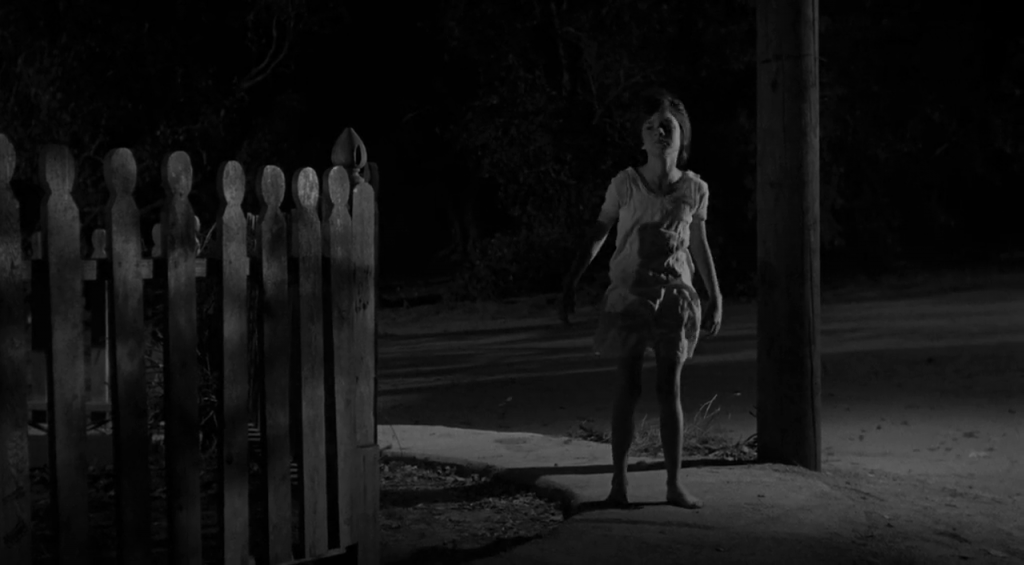
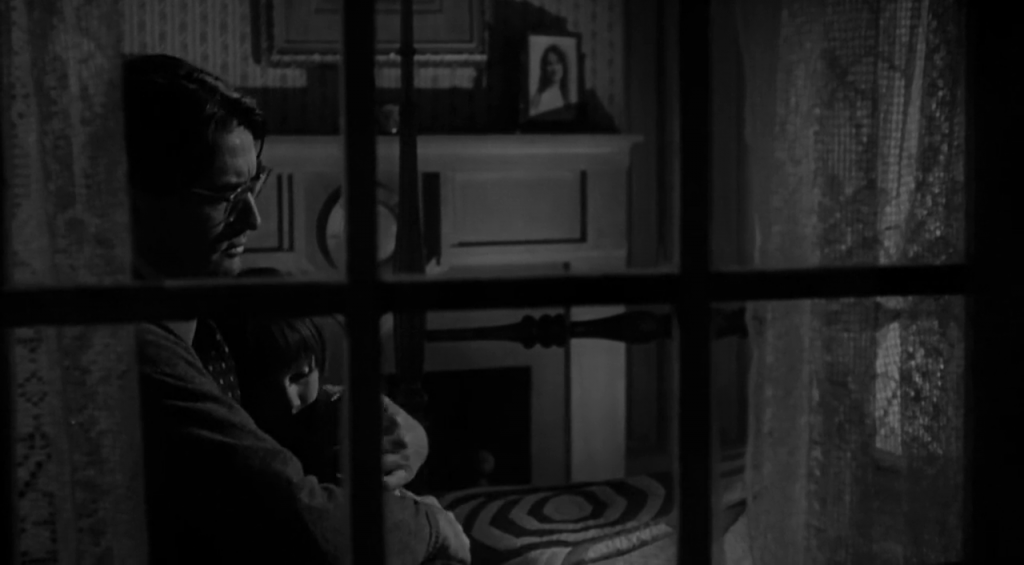
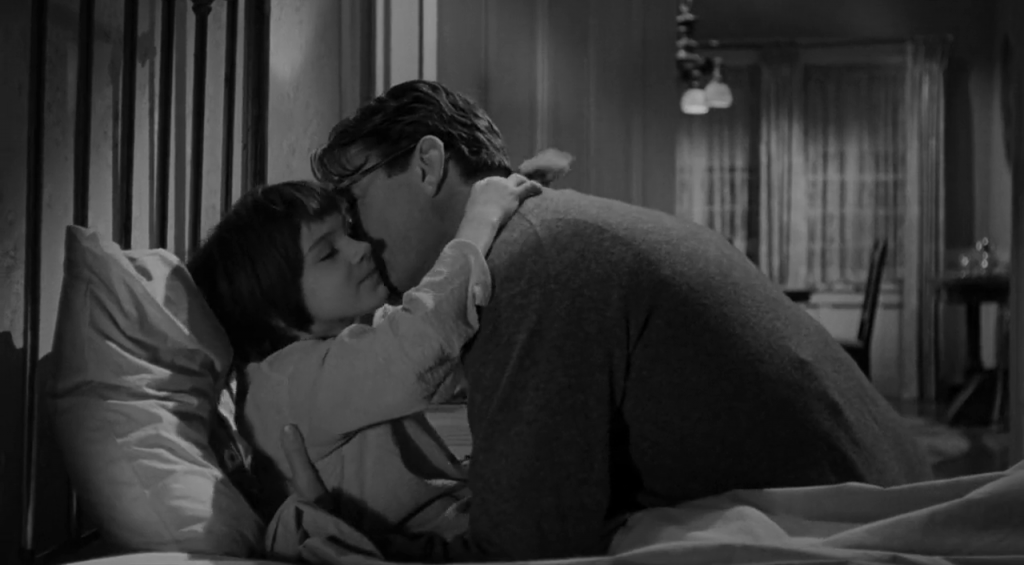
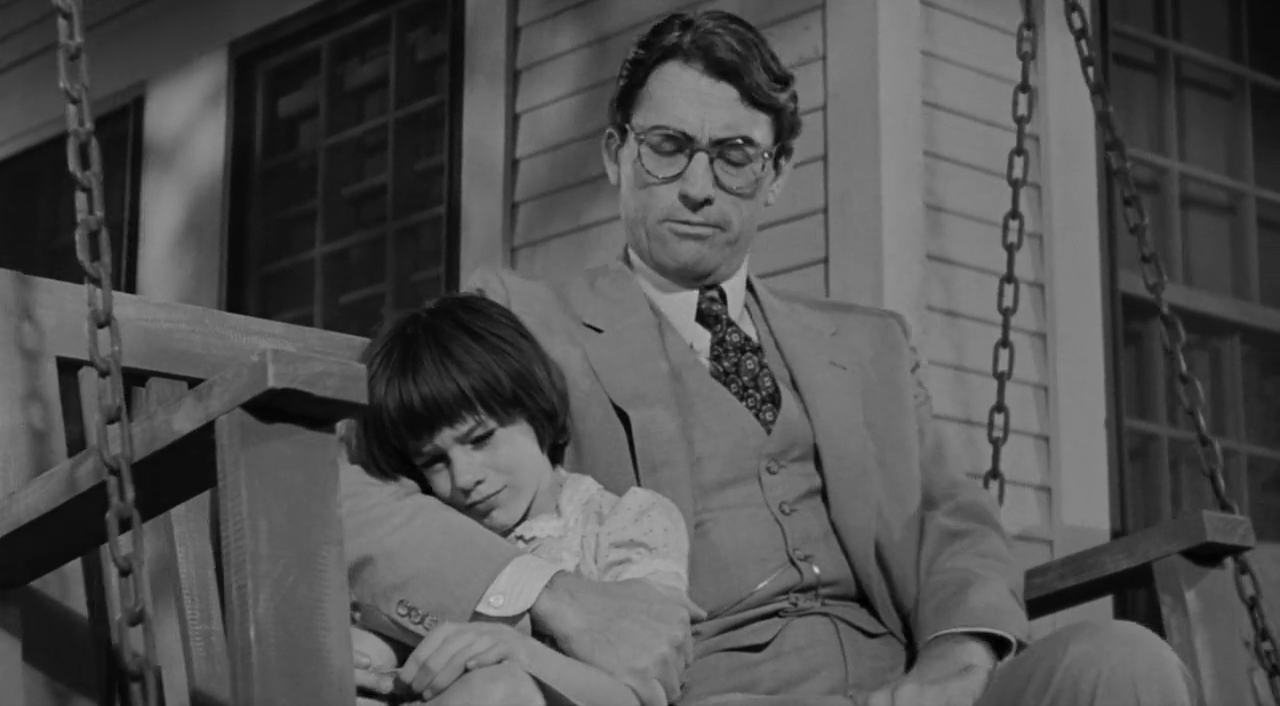
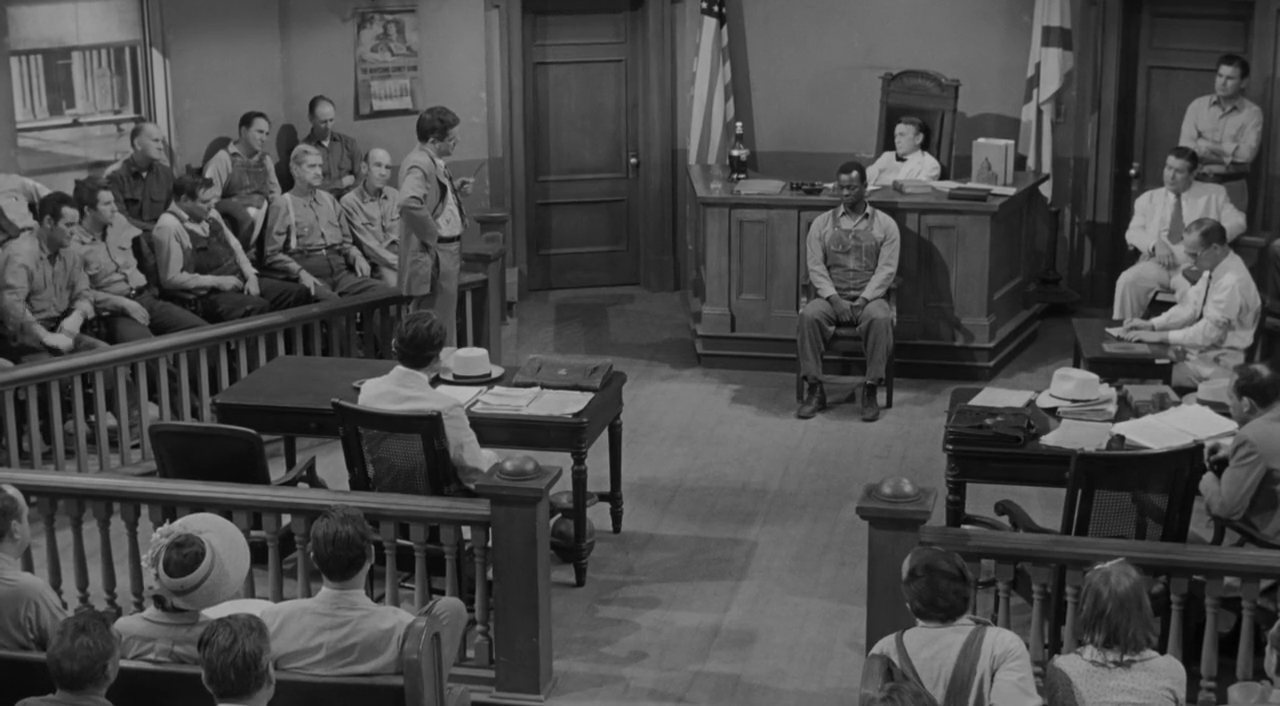
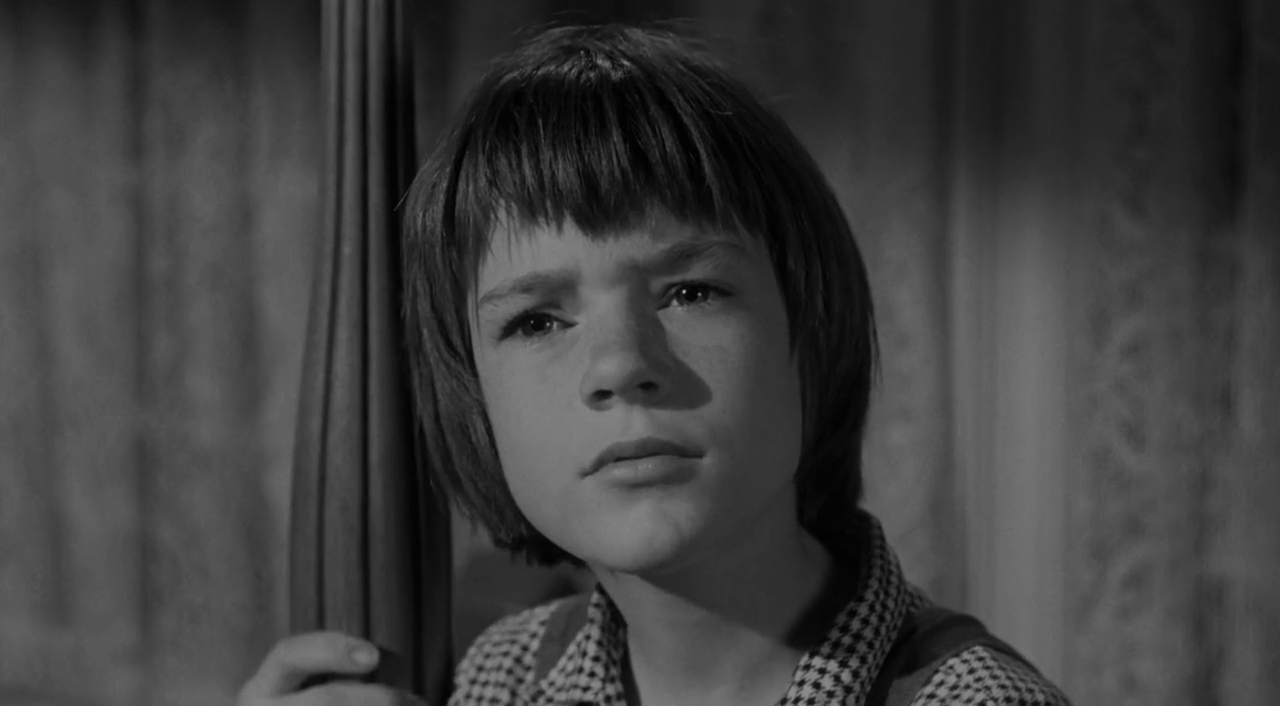
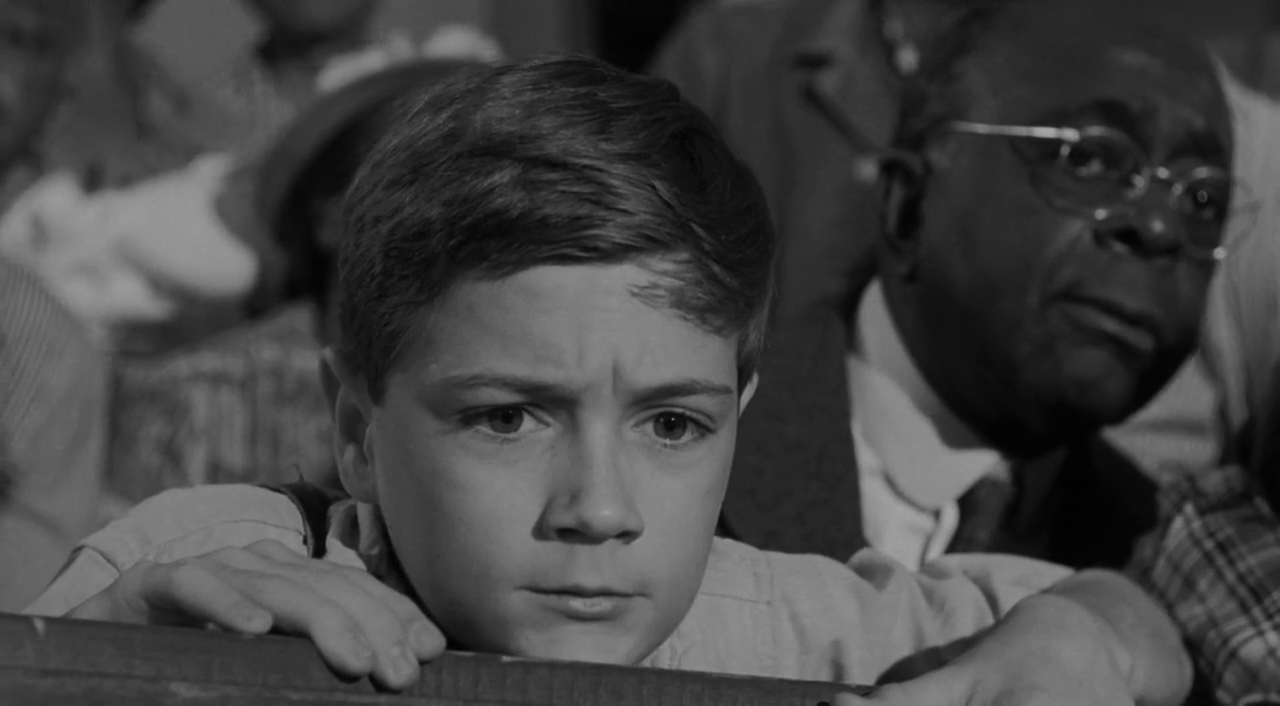
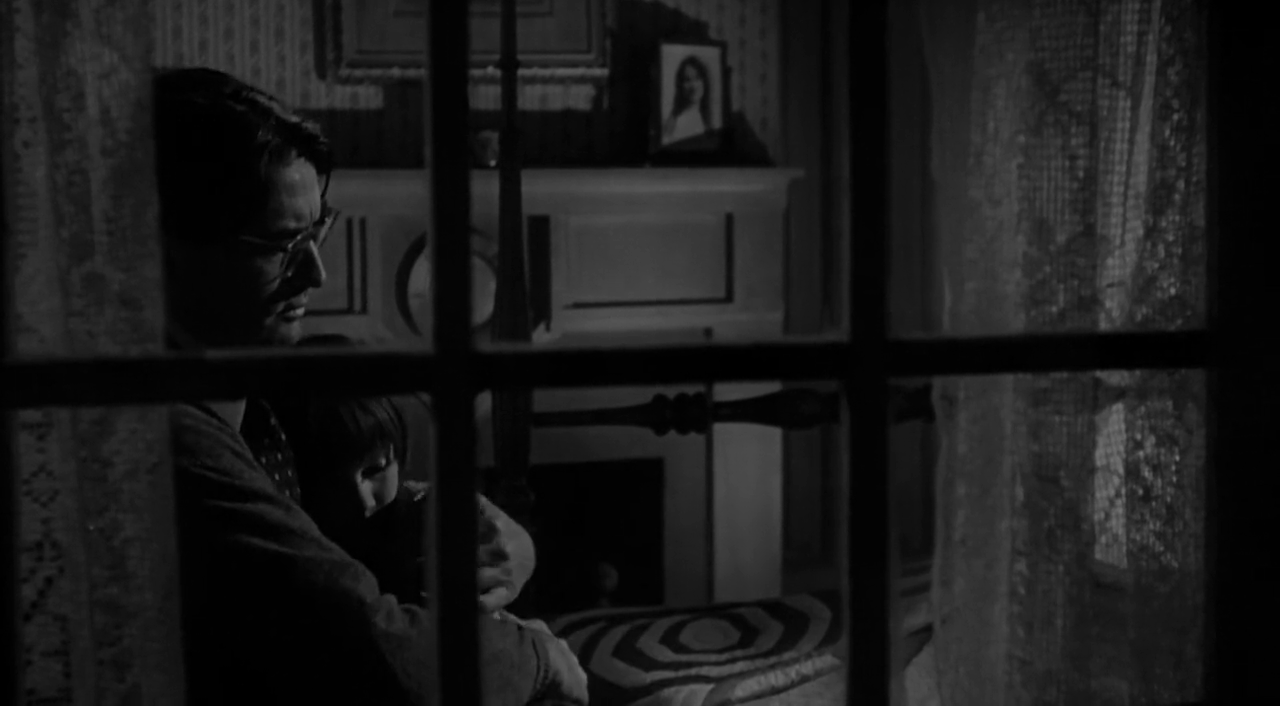
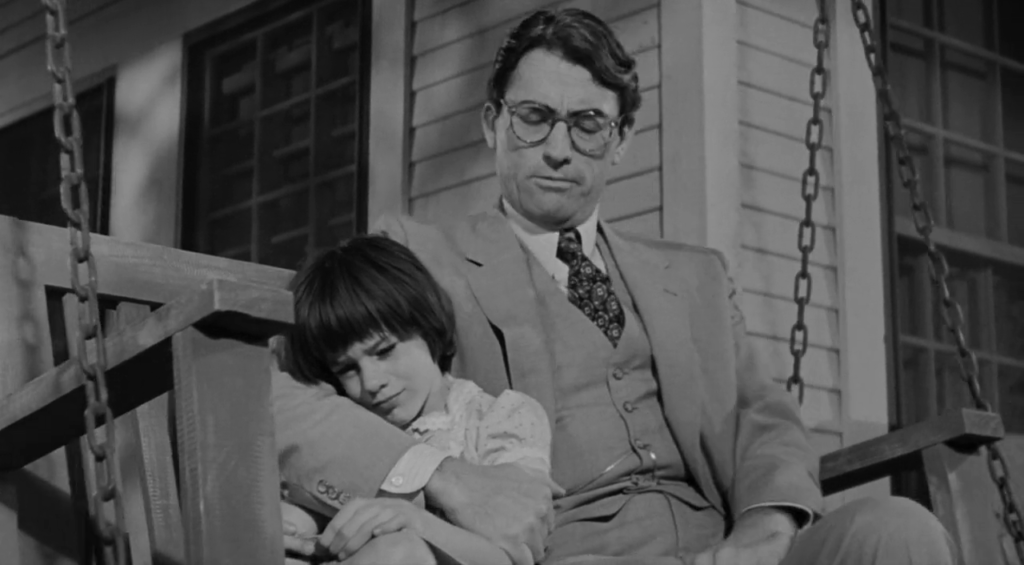
Regardless of how one feels about Peck’s performance, To Kill a Mockingbird remains a classic on many levels — beginning with Elmer Bernstein’s instantly recognizable score, which is impossible to extricate from one’s experience of the film. Equally poignant is Atticus’s relationship with his kids: Peck most definitely was “the man you’d want for your father”, and it’s hard to believe any child watching this movie wouldn’t melt with envy at the sight of Atticus cuddling Scout (Badham) in his lap:
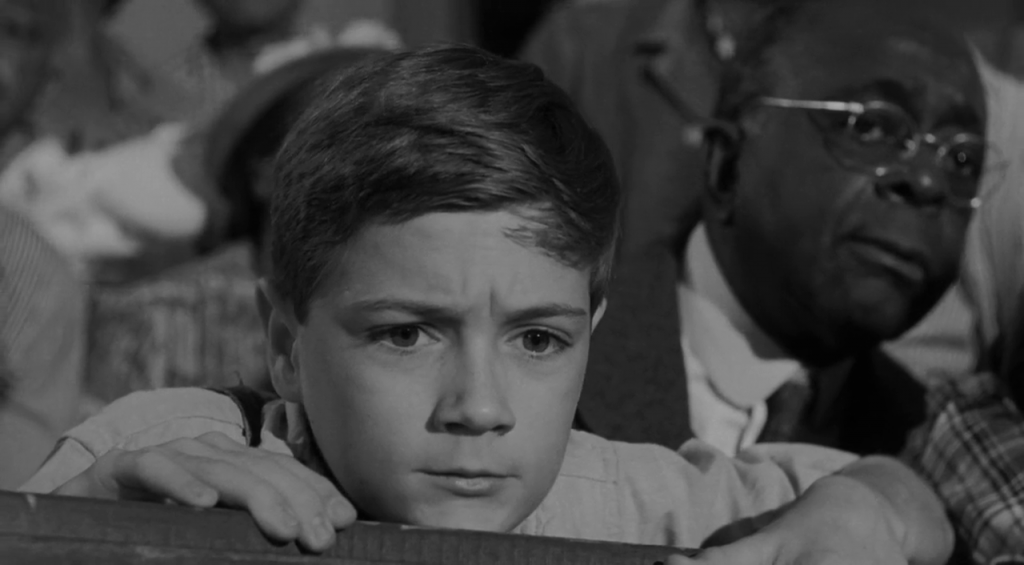
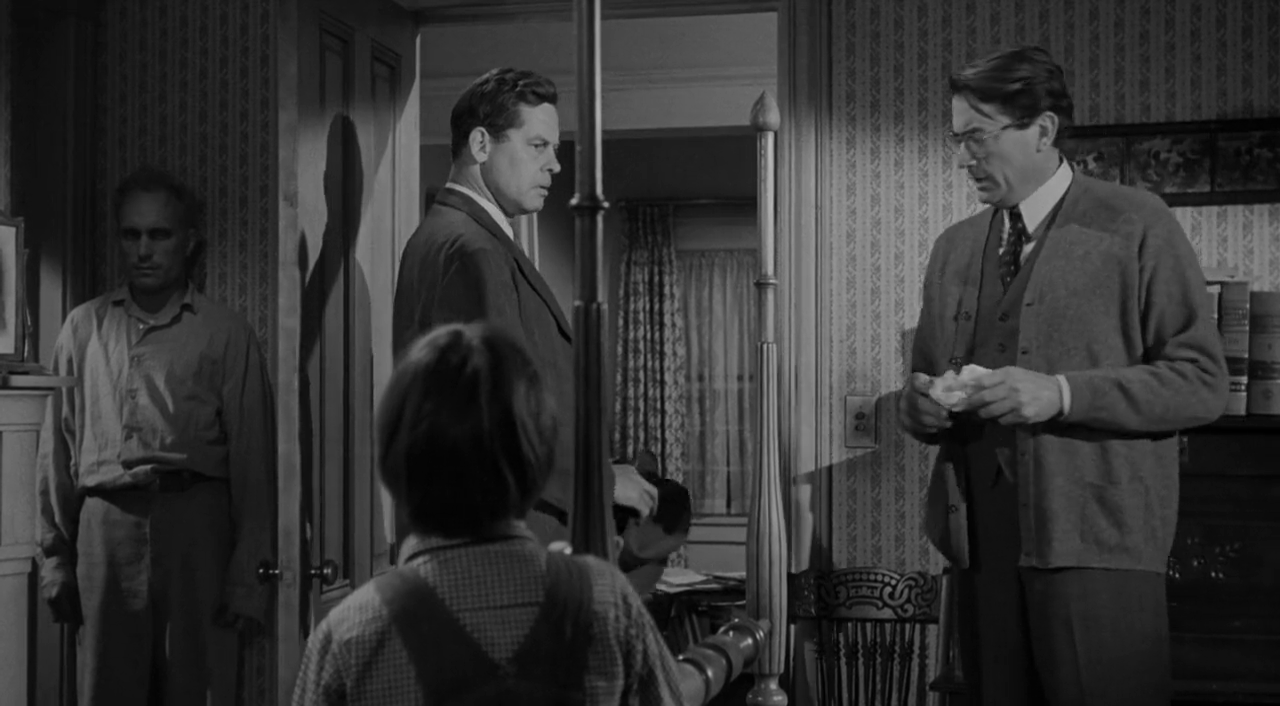
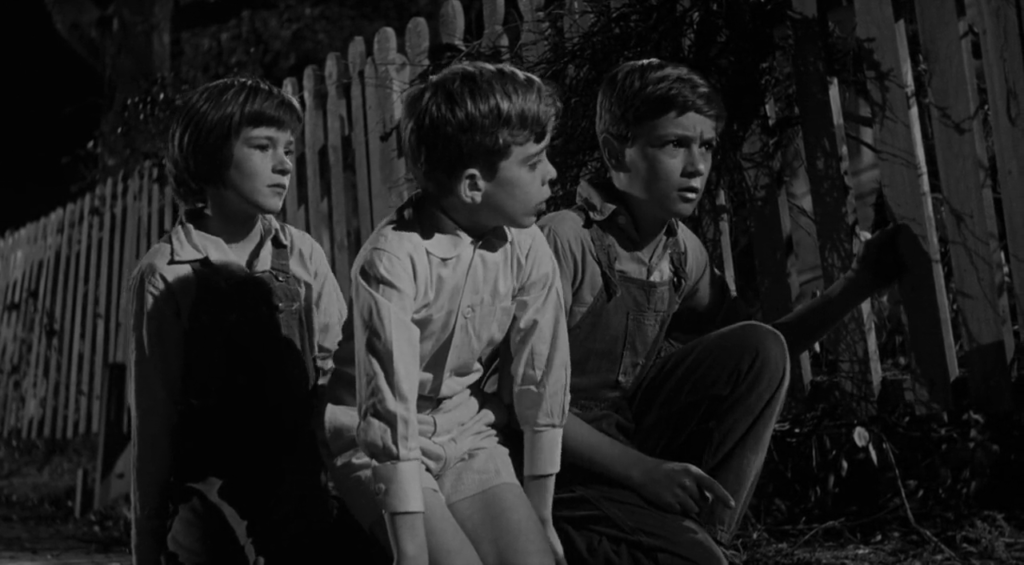
… or allowing Jem (Alford) the opportunity to accompany him on a life-changing visit to Peters’ house. Speaking of Scout and Jem, the screenplay’s child-driven perspective (Kim Stanley narrates in flashback, as Scout-grown-up) is yet another successful facet: the entire story is framed within the nostalgia-tinged reminiscences of a young girl smitten by her father’s love, courage, and wisdom. TKAM could be viewed as a meditation on the universal desire — however fleeting — to admire one’s parent(s) as the epitome of all that is right about the world.

Badham and Alford’s performances (neither pursued a long-term acting career) are among the best given by child actors; while Megna is fine as young Truman Capote (er, “Dill”), he’s clearly more suited to a supporting role.
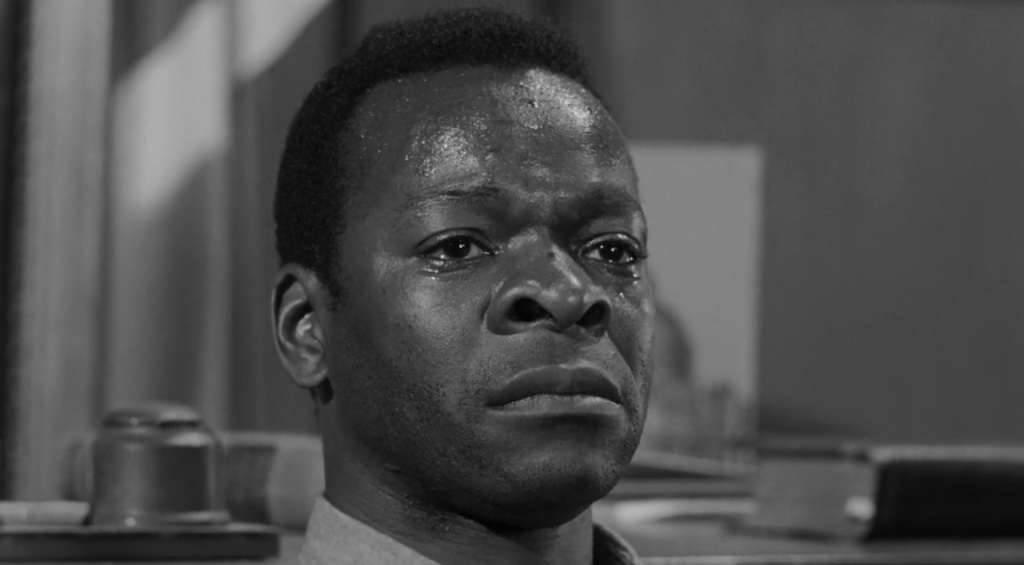
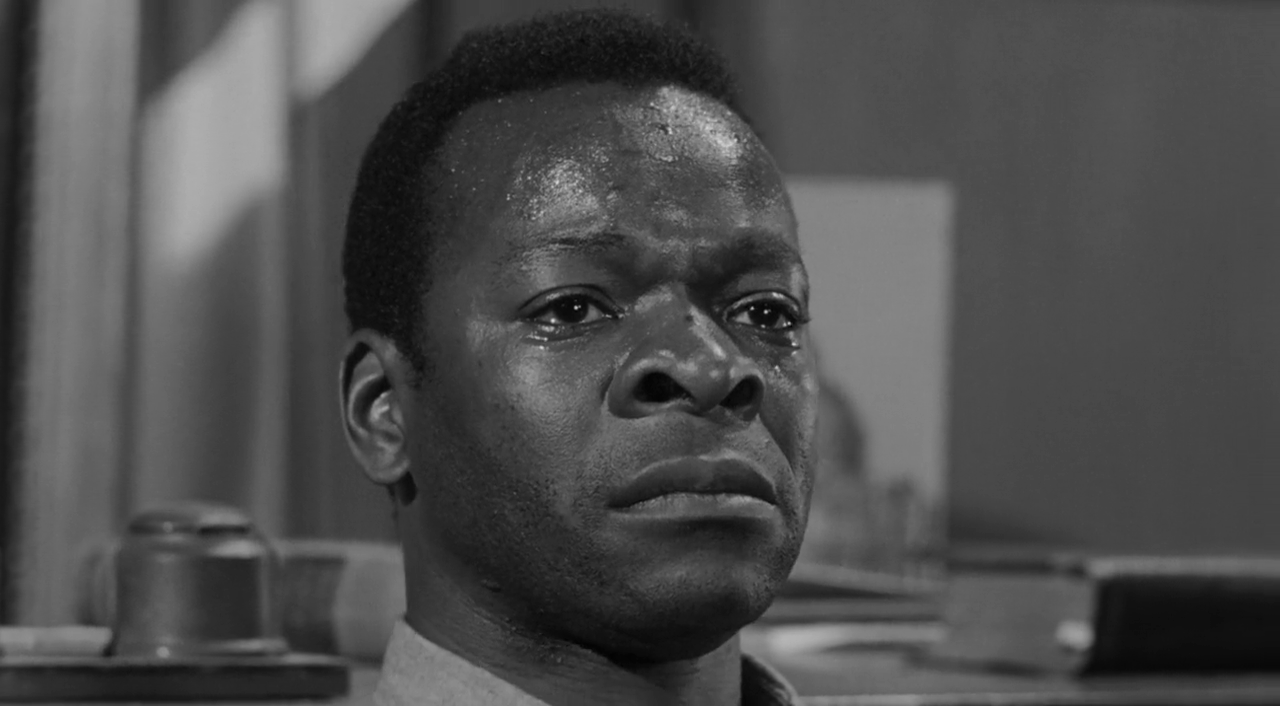
Peters, previously cast as villains, is heartbreaking as the wrongly accused man who had the temerity to “feel sorry for a white woman”; his impossible situation highlights racism’s toxic blight on humanity, a reality which Horton Foote doesn’t shy away from in his adapted screenplay.
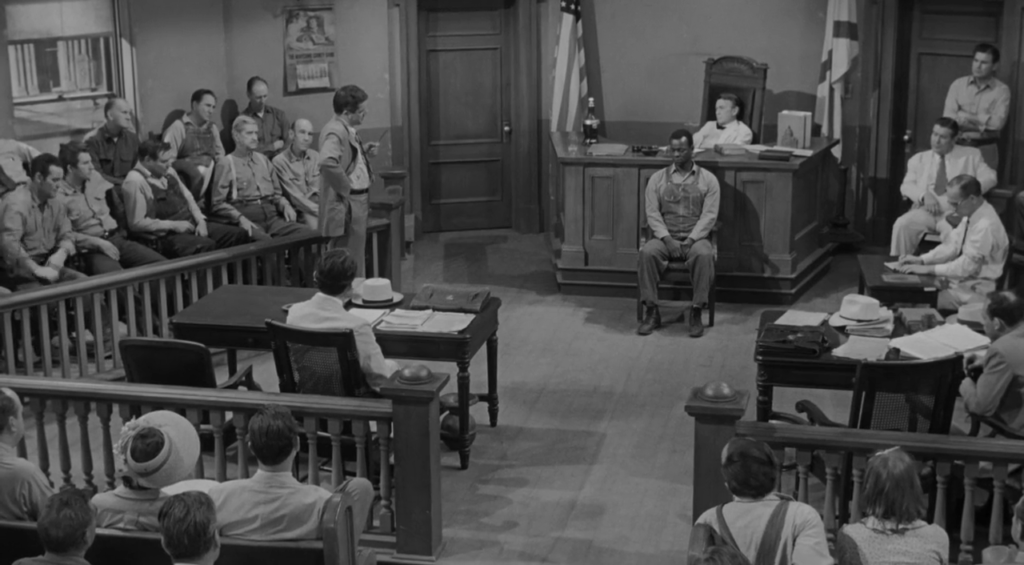
With that said, it’s a little disconcerting

SPOILER ALERT

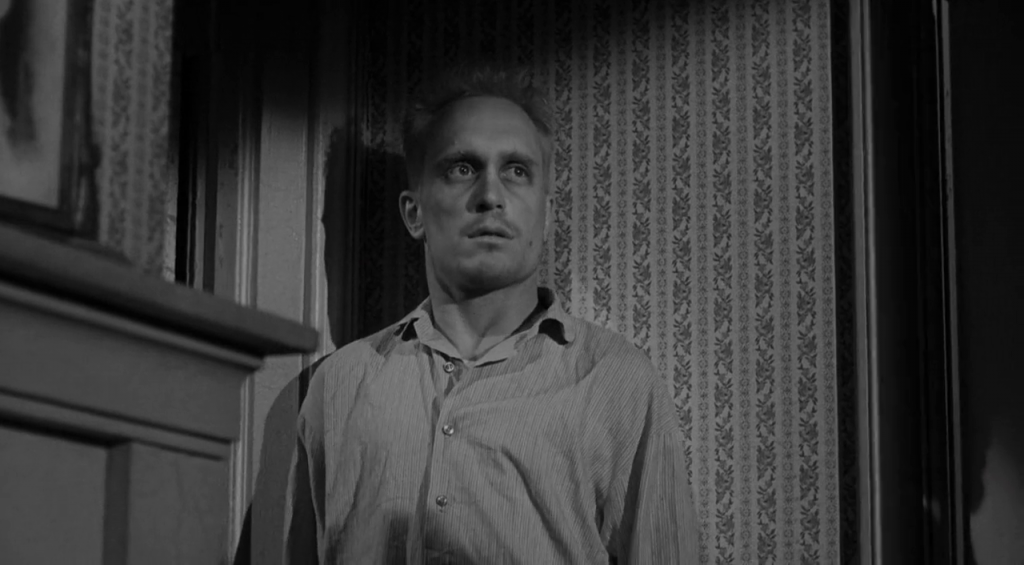
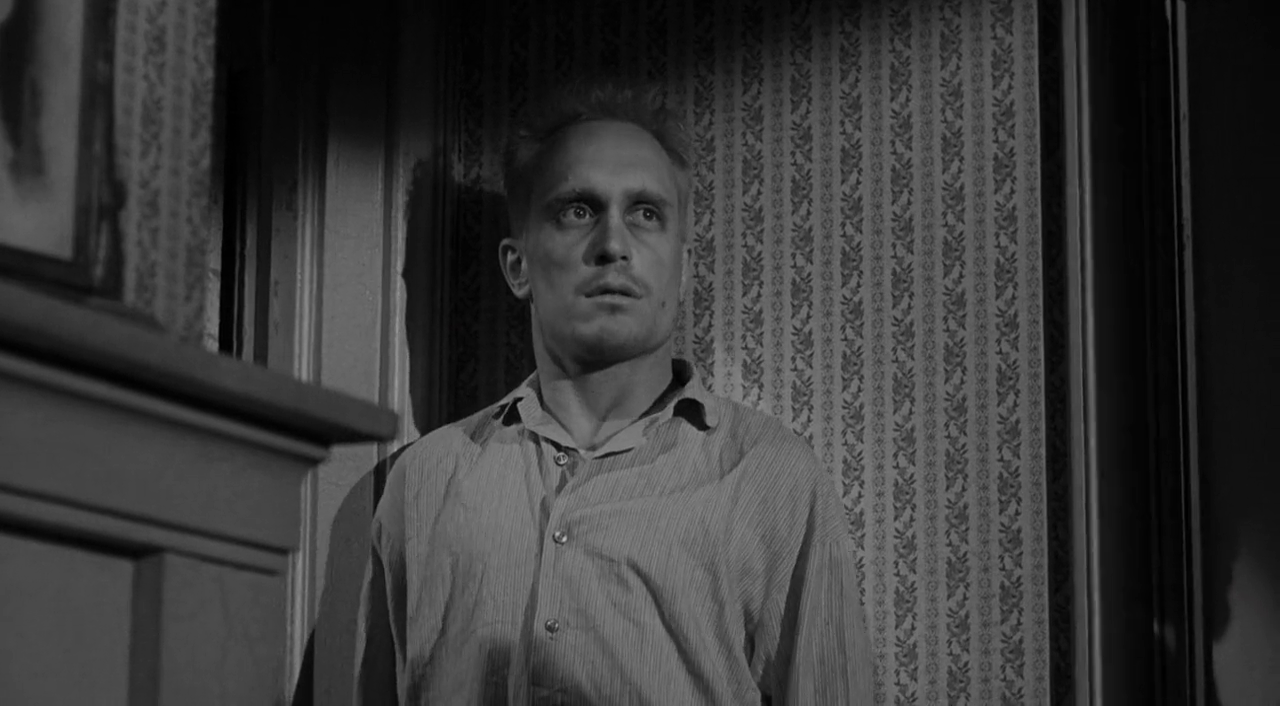
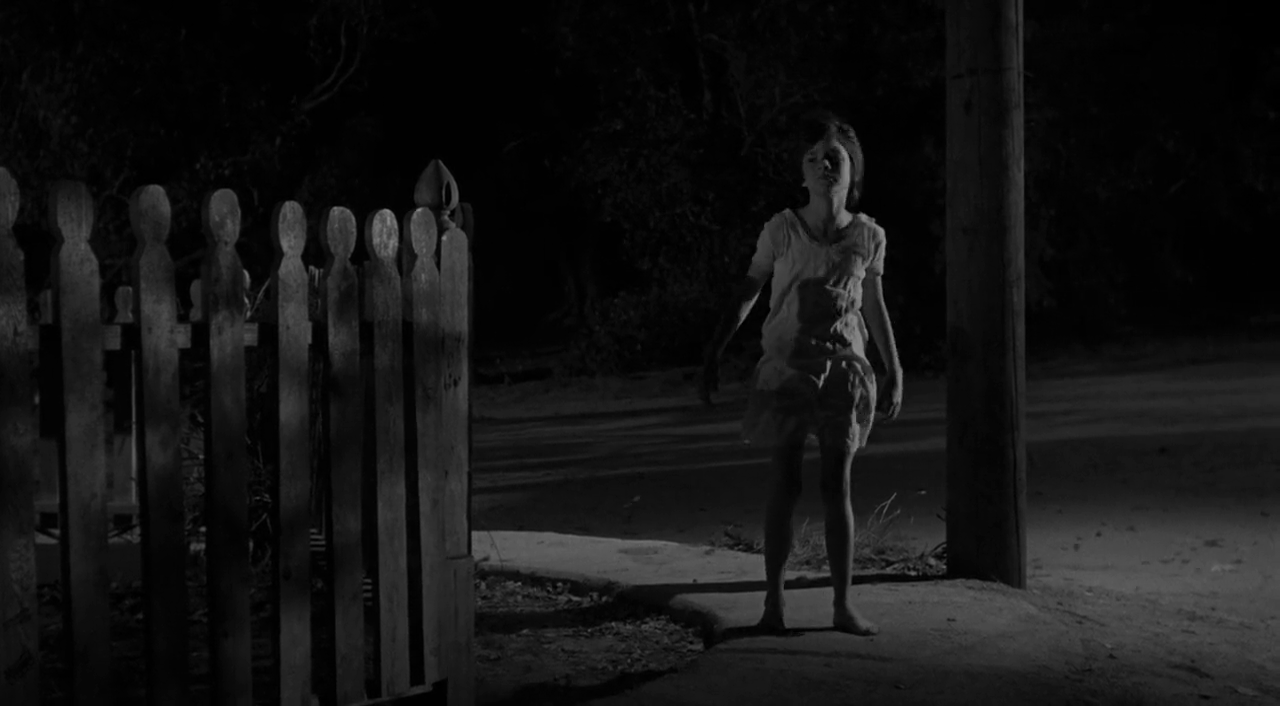
how abruptly the narrative shifts in the final half-hour from Peters’ brutal murder to the subplot about a mysterious, “ultra-white” neighbor (Duvall) who saves Atticus’s kids.
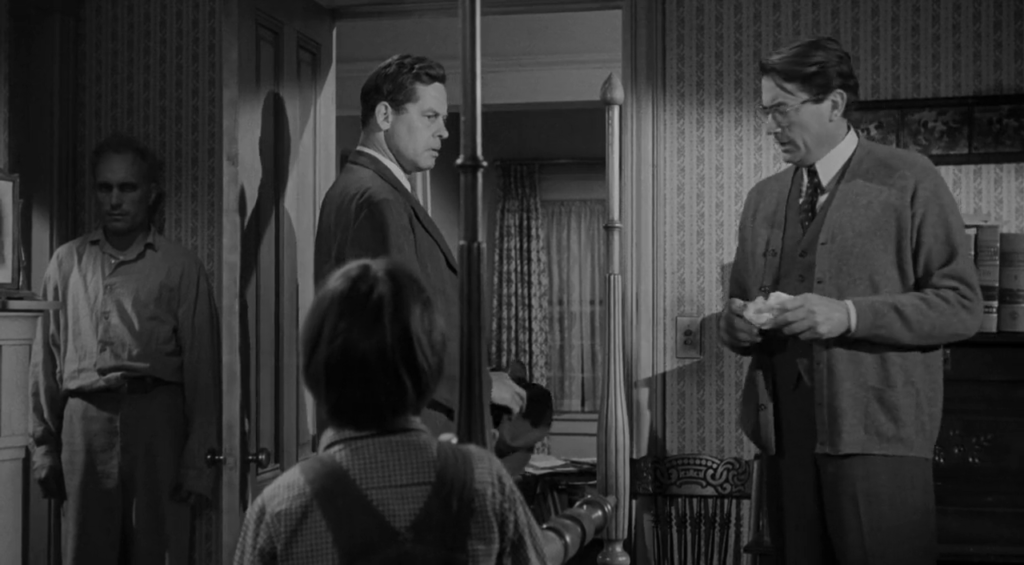
Ultimately, however, the ending vividly illustrates the need for decent individuals to protect one another no matter the cost, and for diversity to be not only accepted but embraced.

Redeeming Qualities and Moments:

  • Gregory Peck as Atticus Finch
  • Mary Badham as Scout
  • Philip Alford as Jem
  • Brock Peters as Tom Robinson
  • Robert Duvall as Boo Radley
  • Stephen Frankfurt’s title sequence

  • Russell Harlan’s cinematography


  • Horton Foote’s adapted screenplay
  • Elmer Bernstein’s lyrical, highly memorable score

Must See?
Yes, as a deserved classic.

Categories

  • Genuine Classic
  • Oscar Winner or Nominee

(Listed in 1001 Movies You Must See Before You Die)

Links:

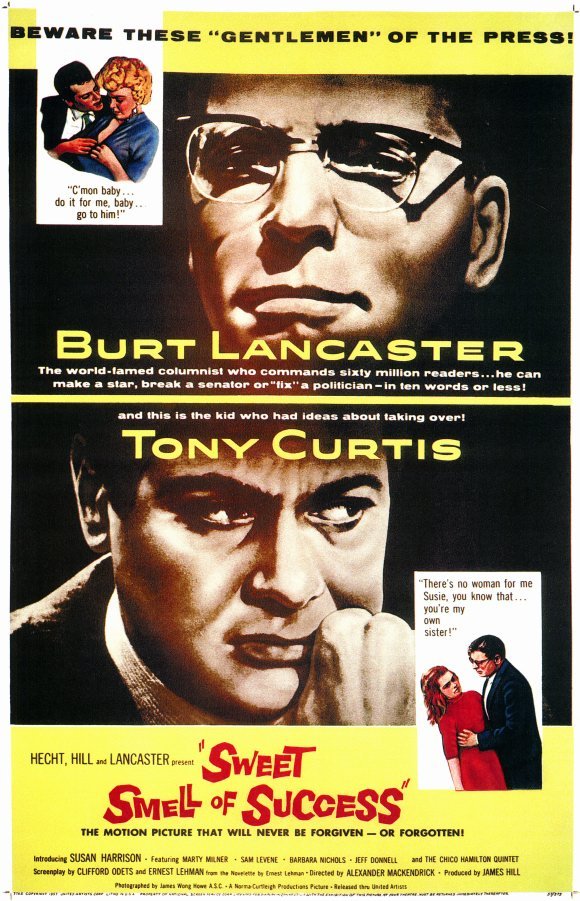
Sweet Smell of Success (1957)

Sweet Smell of Success (1957)

“You know dear, we’re drifting apart, you and I — and I don’t like it.”

sweet-smell-success-poster

Synopsis:
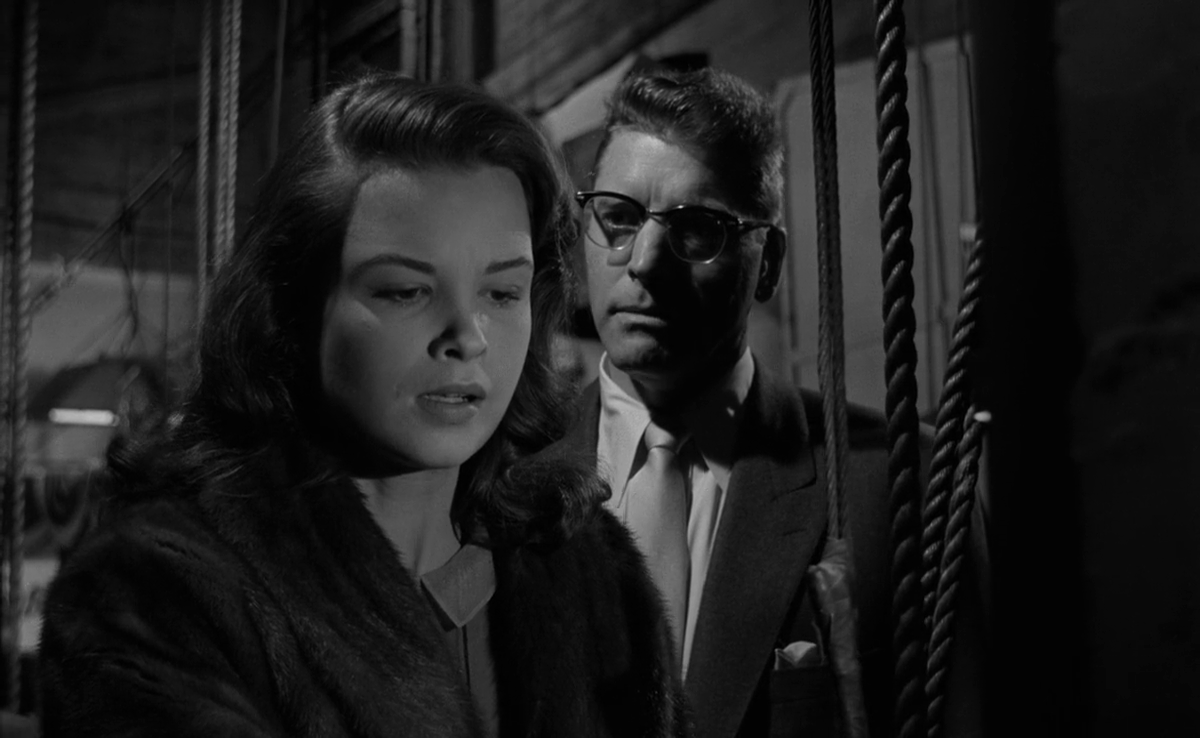
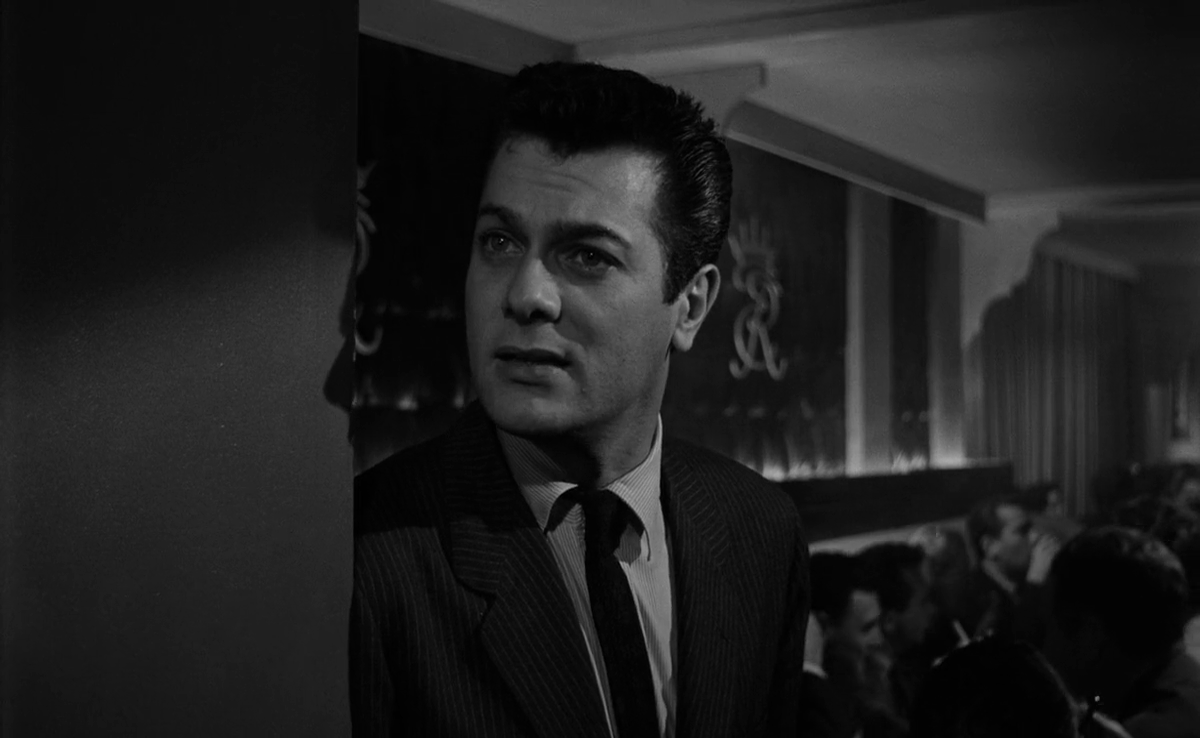
An ambitious press agent (Tony Curtis) reliant on favors from widely-read columnist J.J. Hunsecker (Burt Lancaster) panics when he’s unable to carry out Hunsecker’s request to break up a romance between Hunsecker’s beloved sister (Susan Harrison) and her musician-boyfriend (Marty Milner).

Genres:

  • Alexander Mackendrick Films
  • Burt Lancaster Films
  • Corruption
  • Journalists
  • New York City
  • Tony Curtis Films

Response to Peary’s Review:
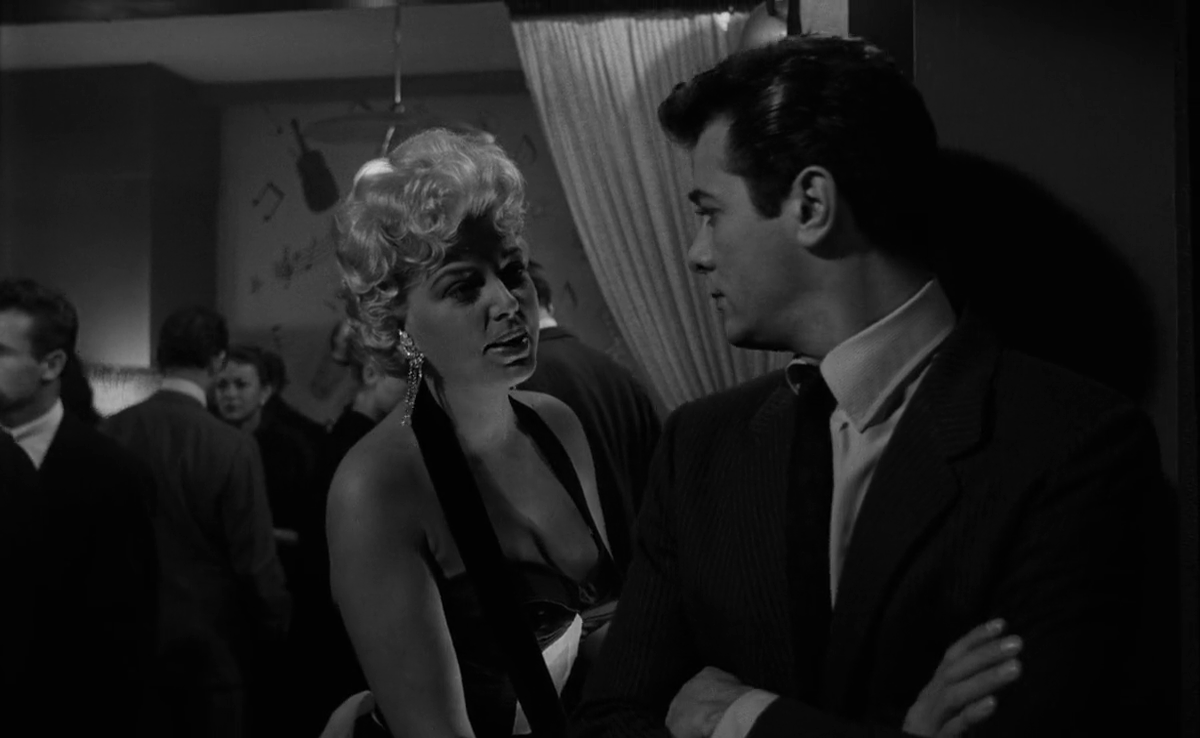
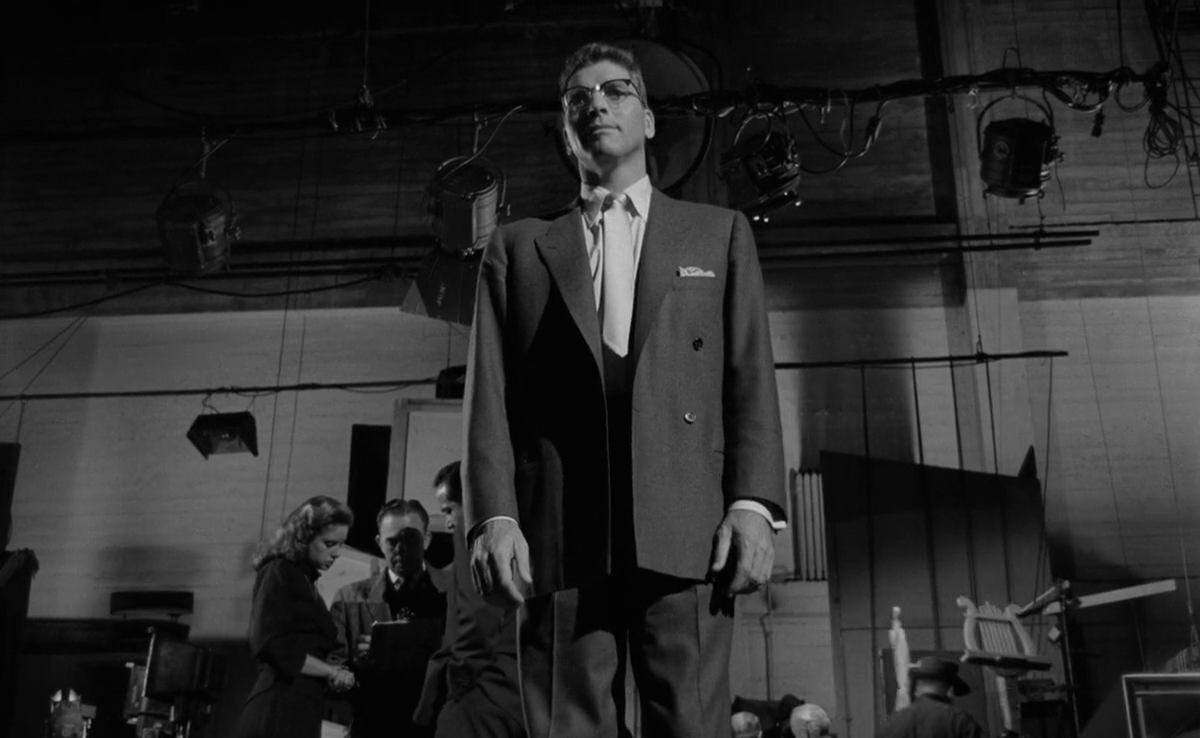
Peary writes that this “savage glimpse at the sleazy New York show-biz scene” — co-scripted by Clifford Odets and Ernest Lehman — is “crisply directed by [Brit] Alexander Mackendrick, with strong emphasis placed on New York locales” and a “great array of characters”. He accurately notes that it presents an “ugly, dark… world full of paranoia, hatred, hustling, squirming, backbiting, lying, blackmailing, sex traded for favors, schemes, threats, broken dreams, ruined lives, money, and power”. Indeed, this is one truly bleak flick: as if being reminded of rampant corruption and power dynamics weren’t enough to make us quiver for the state of humanity, we’re exposed to Lancaster’s unsavory fixation on his beautiful younger sister, which propels the entire narrative.

(Hunsecker was reportedly based on Walter Winchell, who was similarly upset about his daughter’s romance — but there’s a difference.)

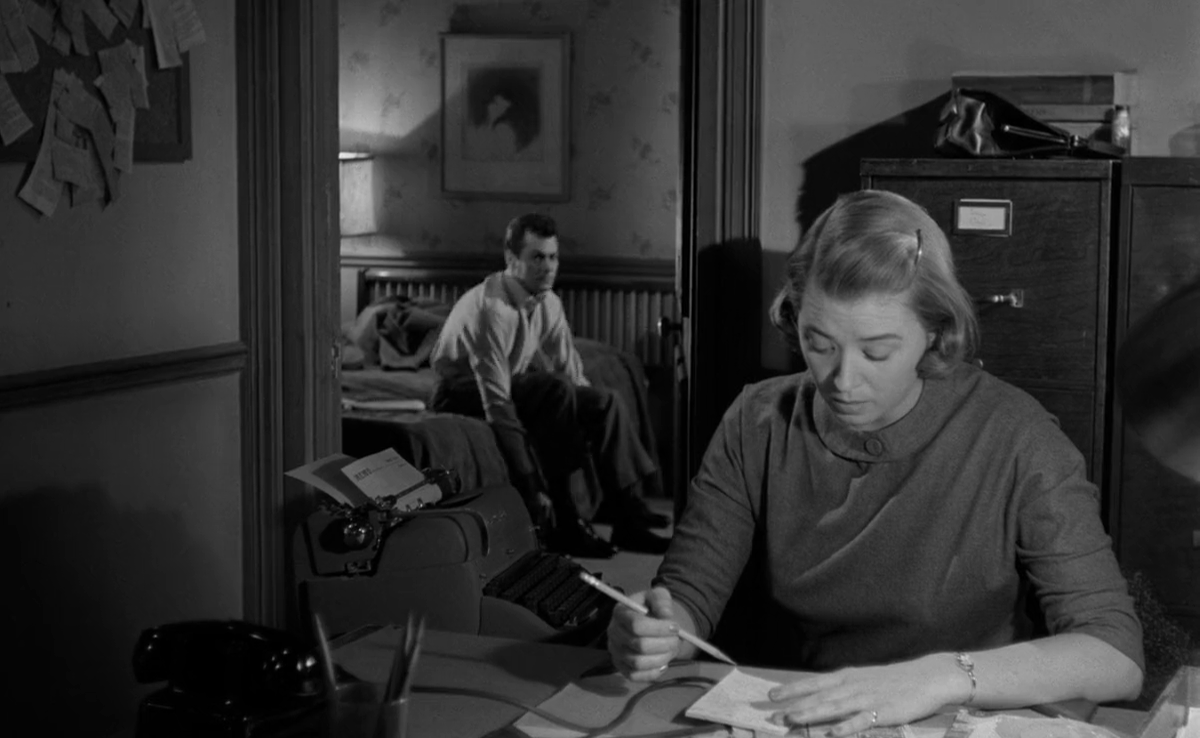
Other distressing scenes and characters abound. Early in the film we’re shown Curtis entering his apartment/office, where his deeply despondent, love-sick, homely secretary (Jeff Donnell) lies on his behalf and makes it clear she’s at his beck and call no matter how badly he treats her. (“So, what’ll you do if I feel nervous?” he taunts her. “Open your meaty, sympathetic arms?”)

Meanwhile, in a nightclub, Hunsecker viciously tears into a politician (William Forrest) naively attempting to pass his mistress (Autumn Russell) off as the ward of a talent agent (Jay Adler).

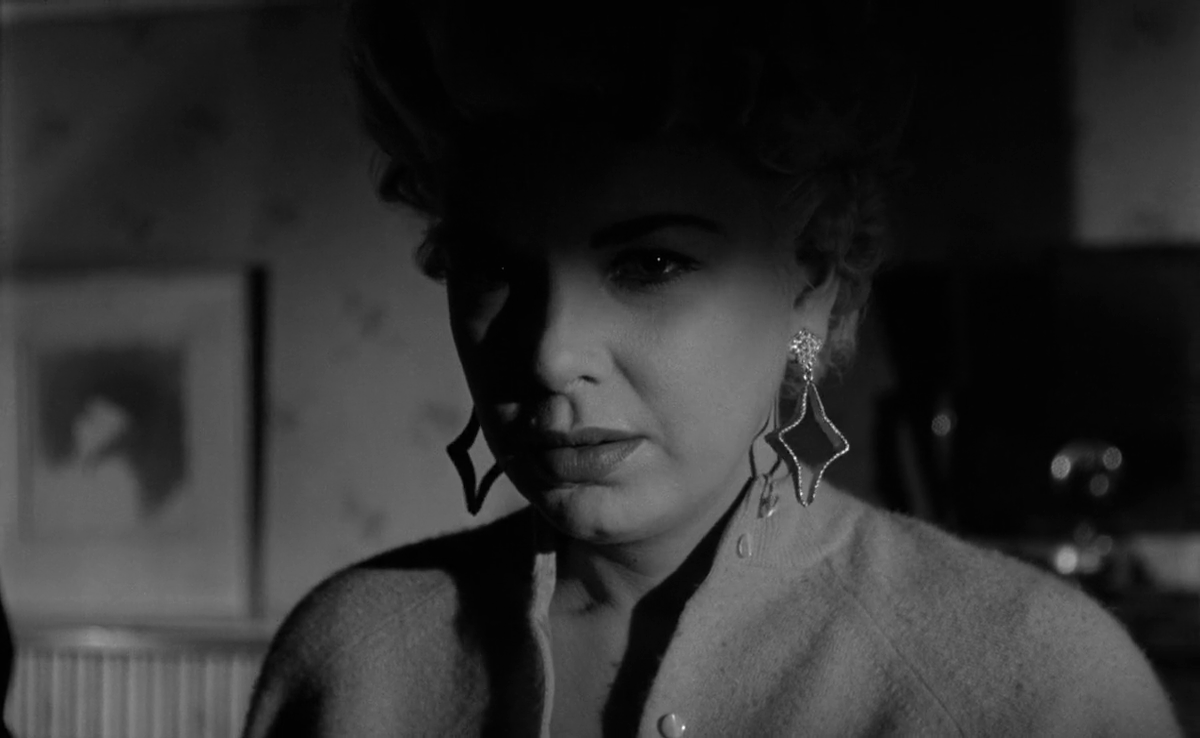
Shortly after this, Curtis blackmails a buxomy, sympathetic cigarette-girl (Barbara Nichols) into sleeping with a lecherous reporter (David White) so that White will help out Curtis’s cause by printing something unsavory in his column about Milner.

Despite its challenging moral landscape, however, the film remains compulsively watchable, thanks to a script chock-full of zingy one-liners:

“I’d hate to take a bite outta you. You’re a cookie full of arsenic.”
“What am I, a bowl of fruit? A tangerine that peels in a minute?”
“Watch me run a 50-yard dash with my legs cut off!”
“My right hand hasn’t seen my left hand in thirty years.”

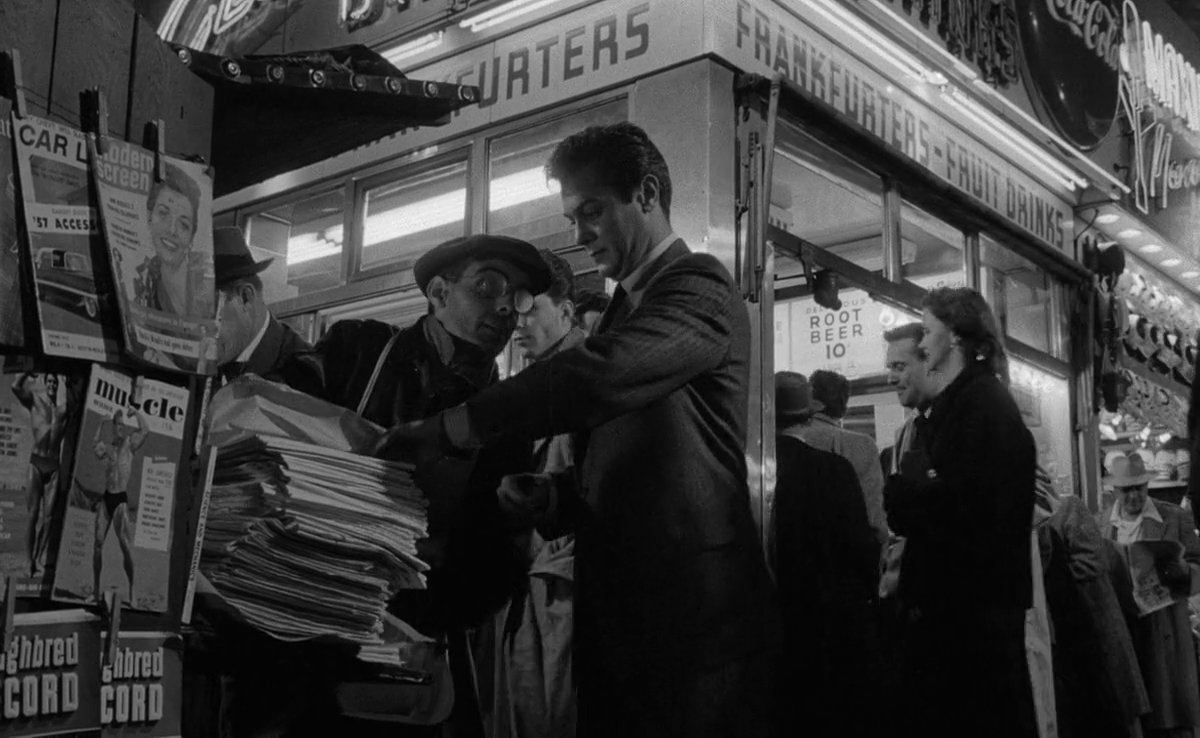
and typically stunning, noir-ish cinematography by James Wong Howe. (Be sure to check out TCM’s article “Behind the Camera” for fascinating insights into Howe’s craft and decision making.) Excellent use is made of New York locales: we feel we’re trapped in this city’s snare of publicity and sleaze, with Elmer Bernstein’s jazzy score simply adding to the hectic surrealism. While it’s true, as Peary writes, that “Milner and Harrison seem out of place” in the film, Curtis and Lancaster — and other supporting players — are top-notch. All film fanatics should view this grueling film at least once (and probably again), though they’re excused for not wanting to revisit it often.

Redeeming Qualities and Moments:

  • Tony Curtis as Sidney Falco (nominated as one of the Best Actors of the Year in Peary’s Alternate Oscars)
  • Burt Lancaster as J.J. Hunsecker
  • Barbara Nichols as Rita
  • James Wong Howe’s cinematography

  • Highly effective use of NYC locales

  • Elmer Bernstein’s score

Must See?
Yes, as a bleak classic. Nominated as one of the Best Films of the Year in Alternate Oscars.

Categories

  • Genuine Classic

(Listed in 1001 Movies You Must See Before You Die)

Links:

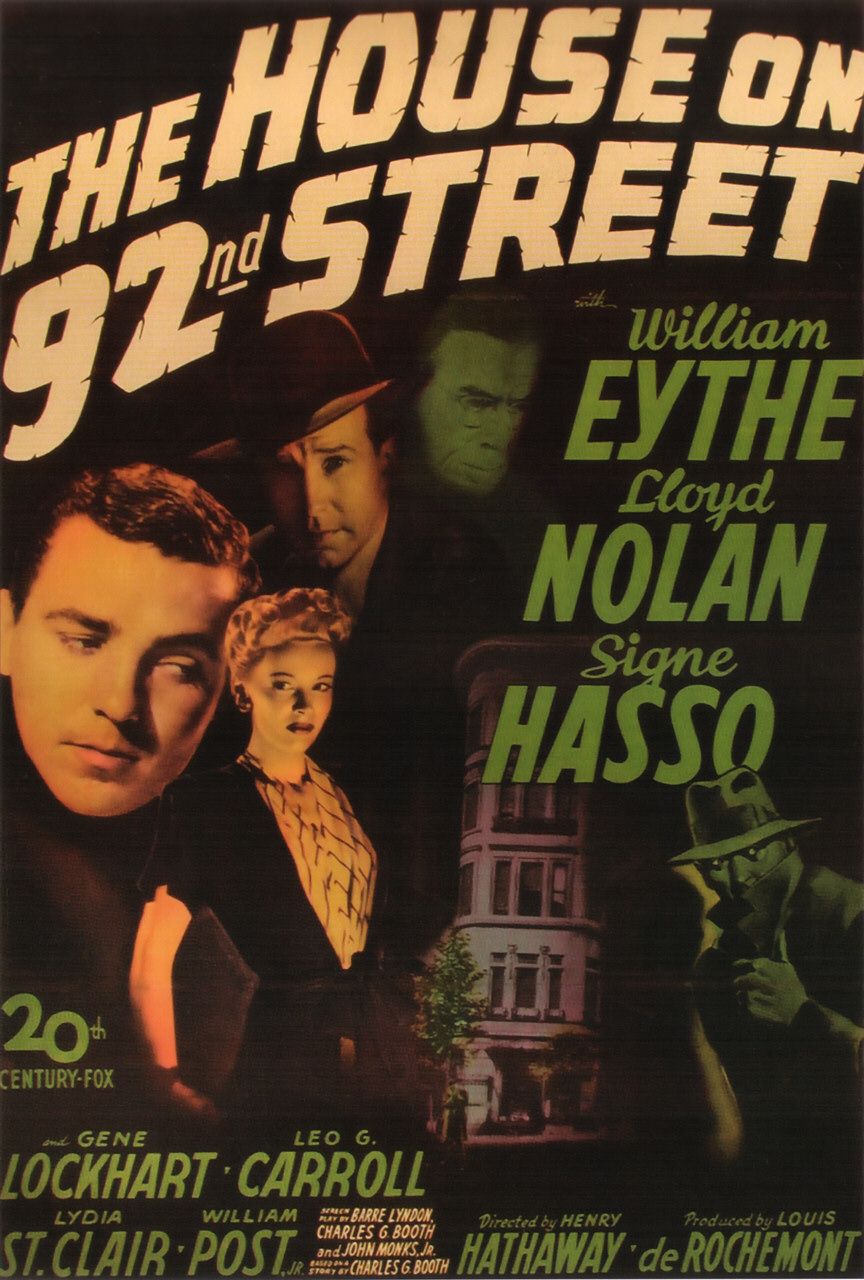
House on 92nd Street, The (1945)

House on 92nd Street, The (1945)

“The Germans felt that Dietrich was an extremely valuable man; so did the FBI.”

Synopsis:
A German-American university student (William Eythe) is recruited by a group of Nazi spies — led by a dress-shop owner (Signe Hasso) — but instead becomes a double-agent for the FBI.

Genres, Themes, Actors, and Directors:

  • Henry Hathaway Films
  • Historical Dramas
  • Mistaken or Hidden Identities
  • Nazis
  • Signe Hasso Films
  • Spies
  • World War II

Review:
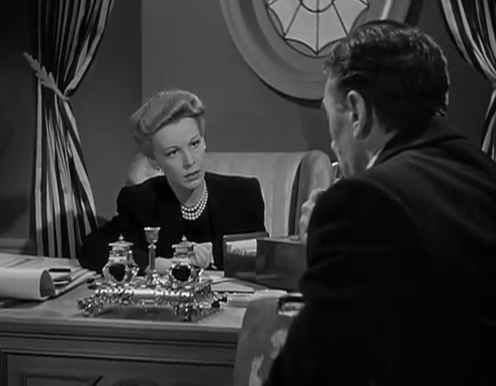
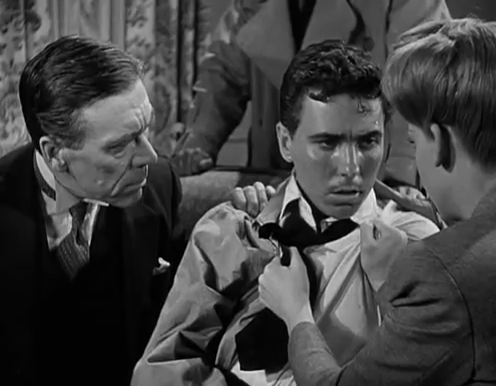
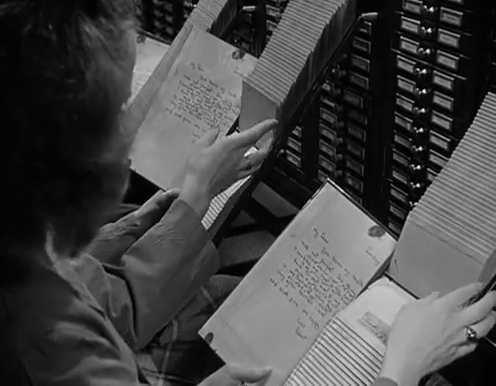
Winner of an Academy Award for best original story, this semi-documentary look at the take-down of an American Nazi spy ring — based on the life of William G. Sebold — was the first film made with full cooperation by the FBI, and was enormously popular with audiences who were surely giddy with relief by the end of World War II. Unfortunately, other than telling an interesting real-life tale — and effectively incorporating some authentic footage — the film hasn’t held up all that well. The Nazi spies are pure baddies:

… the dialogue is clunky, and lead actor Eythe isn’t all that memorable (likely intentionally so, given that he was playing someone attempting to remain calm and discrete).

Sadly, Sebold apparently had a very challenging time of it after his life-threatening efforts on behalf of the United States; a book about this unsung hero was recently released.

Redeeming Qualities and Moments:

  • Nice incorporation of authentic footage with dramatic material

  • Norbert Brodine’s cinematography

Must See?
No, though it’s worth a look. Listed as a film with Historical Importance.

Links:

Naked City, The (1948)

Naked City, The (1948)

“Yesterday, Jean Dexter was just another pretty girl. But now she’s the marmalade on a hundred thousand pieces of toast.”

Synopsis:
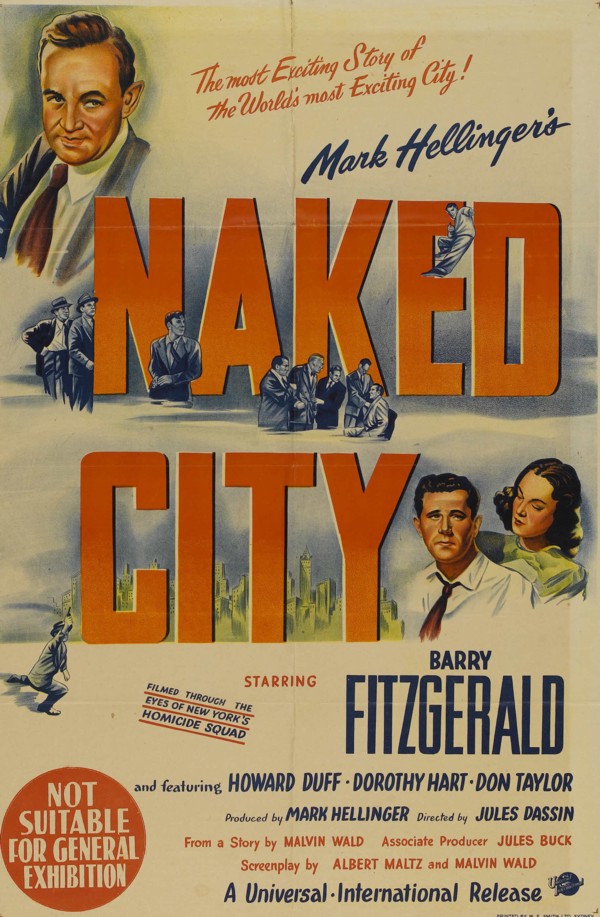
A detective (Barry Fitzgerald) and his assistant (Don Taylor) search for clues related to the murder of a model whose lying boyfriend (Howard Duff) is engaged to her co-worker (Dorothy Hart).

Genres, Themes, Actors, and Directors:

  • Barry Fitzgerald Films
  • Detectives and Private Eyes
  • Jules Dassin Films
  • Murder Mystery
  • New York City

Review:
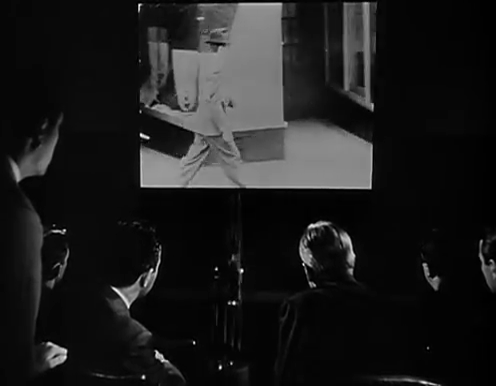
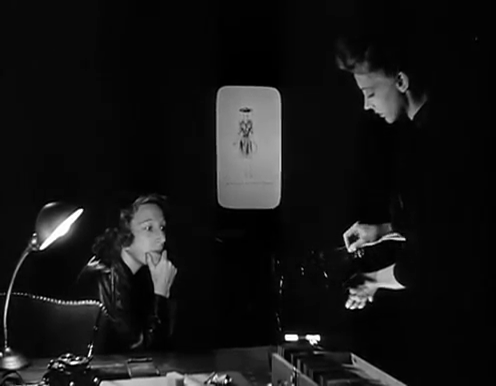
Jules Dassin‘s documentary-style police procedural is notable as the first major Hollywood film shot in New York City streets and locales. There are some surprisingly gritty scenes — including the initial murder of the model, shown briefly but graphically during an opening montage of NYC at 1:00 in the morning, and the final confrontation with one of the killers — but the film itself suffers from the same syndrome as Undercover Man (1949), with too much pedantic emphasis placed on giving viewers the “inside scoop” on how law enforcement does its grueling work. Journalist-producer Mark Hellinger provides an overly earnest voice-over, with lines such as these:

The 10th precinct station is in the Chelsea district of New York, a rather shabby building on a rather shabby street. Acts of violence in Manhattan are reported to the third floor of this building, because, here, rather quietly, the homicide squad does its work.

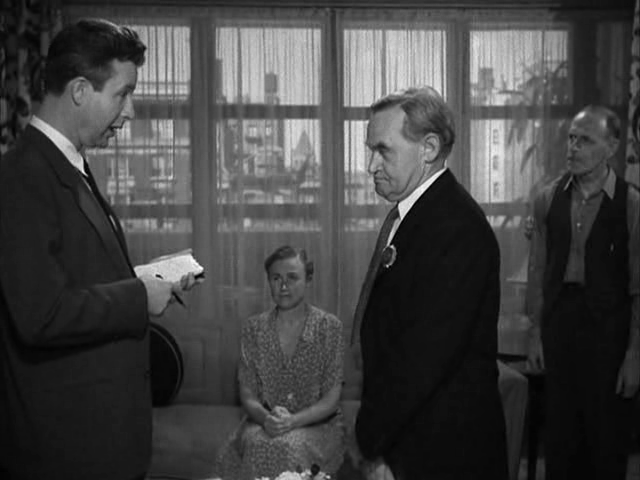
(Be sure to check out TCM’s article for fascinating background info on Hellinger, who was apparently quite a character.) Meanwhile, Barry Fitzgerald and Don Taylor:


… are far too straight-out-of-Hollywood as the detective duo assigned to investigate the murder, and Howard Duff is pretty bland as the key player in the intrigue.

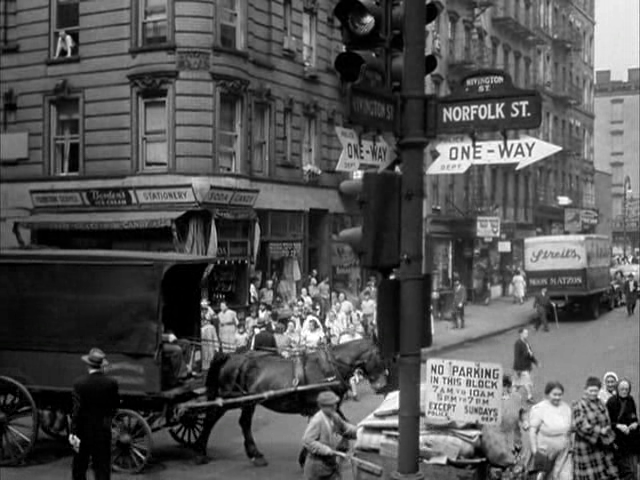
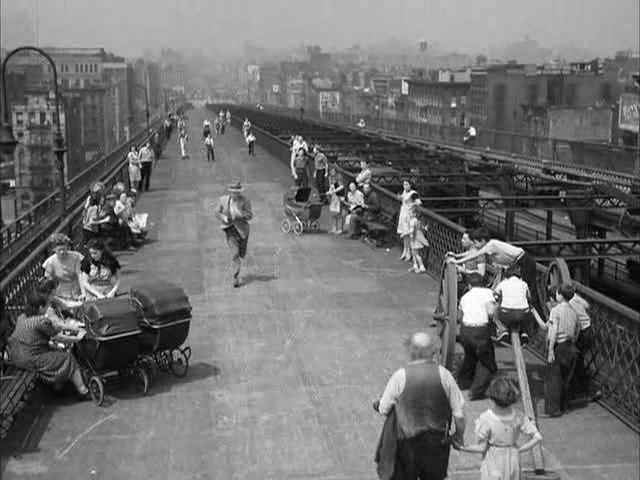
The true power of this flick lies in its many shots of New York City in the late 1940s; to that end, it serves as an invaluable cinematic time capsule.

Redeeming Qualities and Moments:

  • Fine use of authentic NYC locales


  • Atmospheric cinematography by Oscar-nominated William H. Daniels

  • Ted de Corsia as Willy Garzah

Must See?
No, but it’s certainly worth a one-time look. Listed as a film with Historical Importance in the back of Peary’s book. Selected for preservation in the United States National Film Registry in 2007 by the Library of Congress as being “culturally, historically, or aesthetically significant”.

Links:

Terror in a Texas Town (1958)

Terror in a Texas Town (1958)

“Time presses — and I’ve run out of means of persuasion.”

Synopsis:
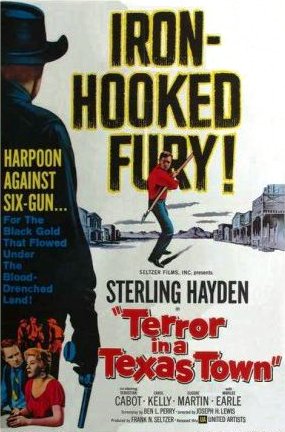
A corrupt businessman (Sebastian Cabot) with a beautiful “secretary” (Marilee Earle) hires a ruthless gunslinger (Nedrick Young) with a self-loathing girlfriend (Carol Kelly) to kill any farmers who refuse to sell their oil-rich land to him — starting with the father (Ted Stanhope) of a Swedish-American whaler (Sterling Hayden) who arrives in town and refuses to accept Cabot’s claim that the land isn’t legally Hayden’s.

Genres, Themes, Actors, and Directors:

  • Corruption
  • Joseph H. Lewis Films
  • Sterling Hayden Films
  • Westerns

Review:
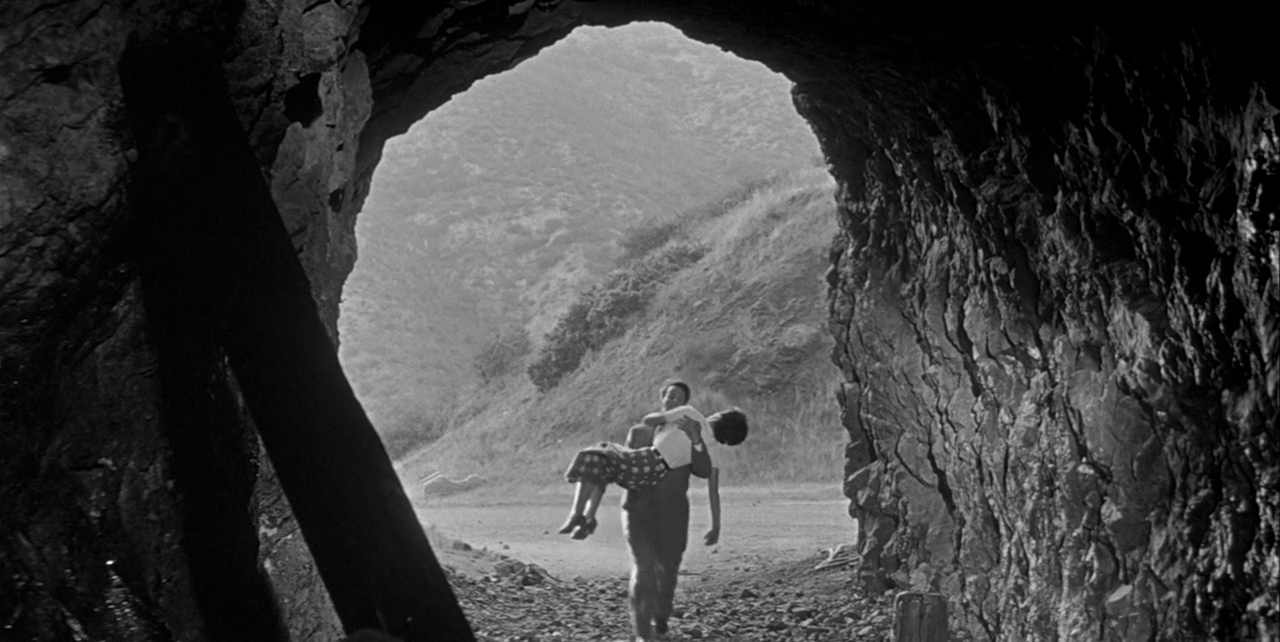
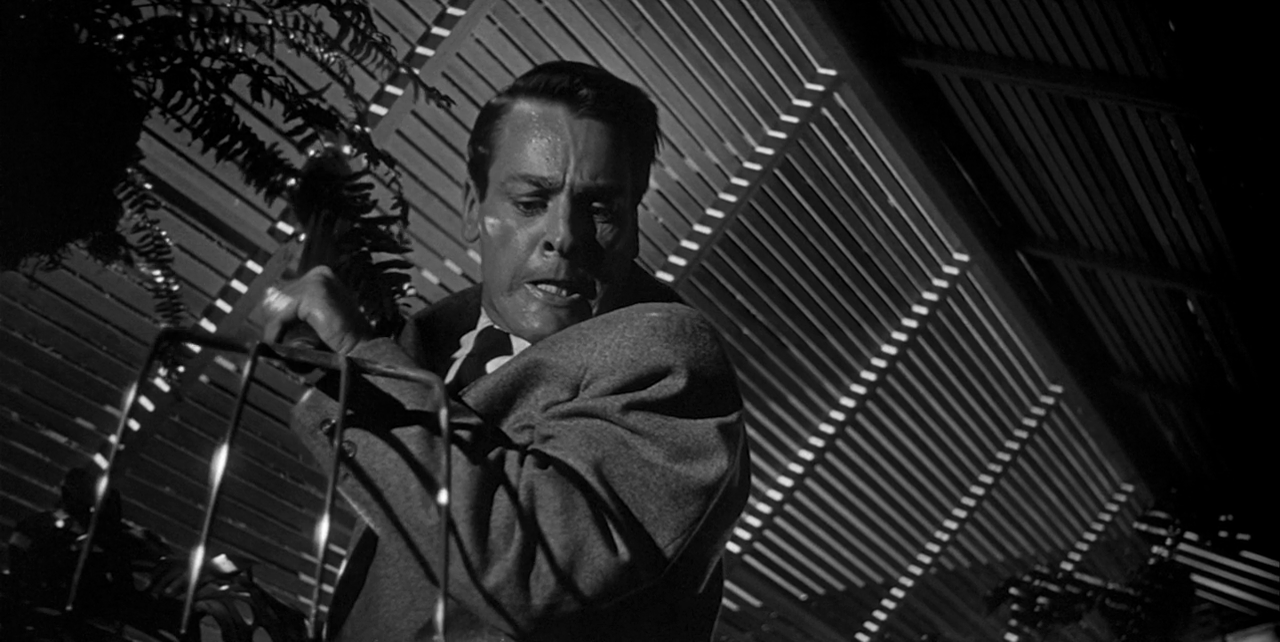
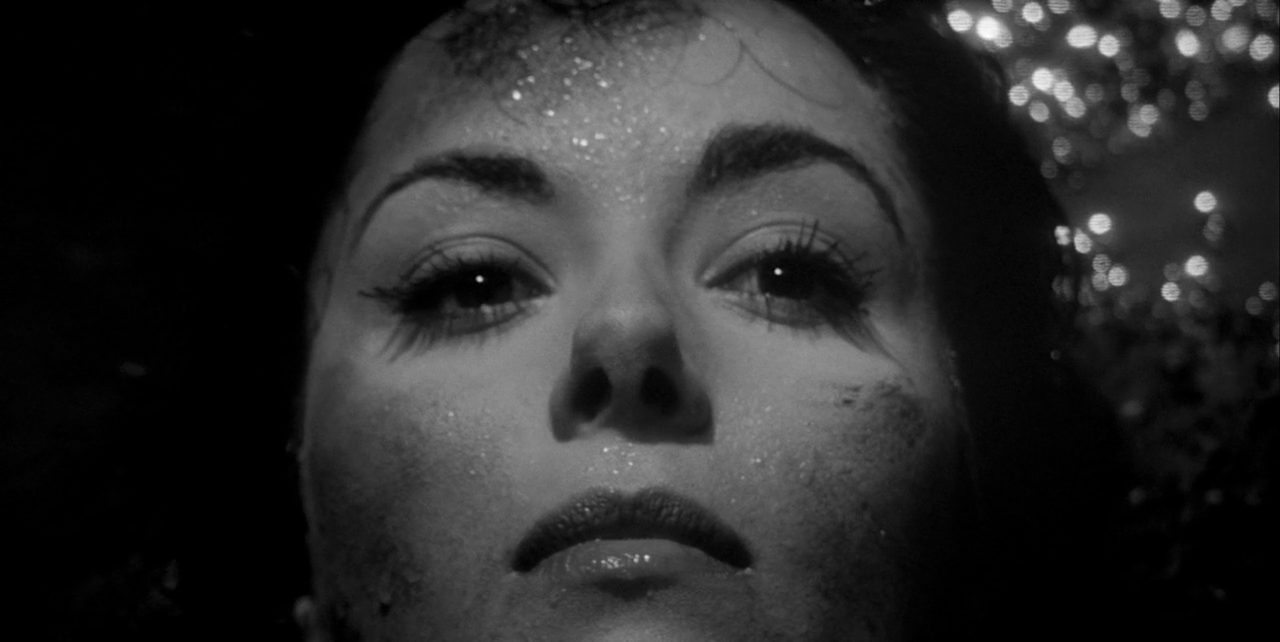
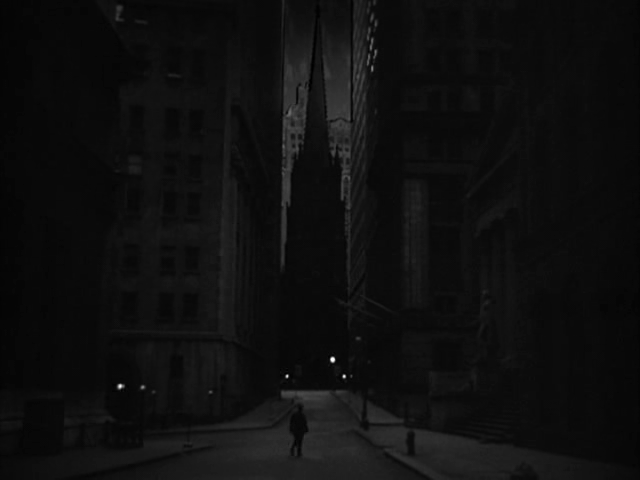
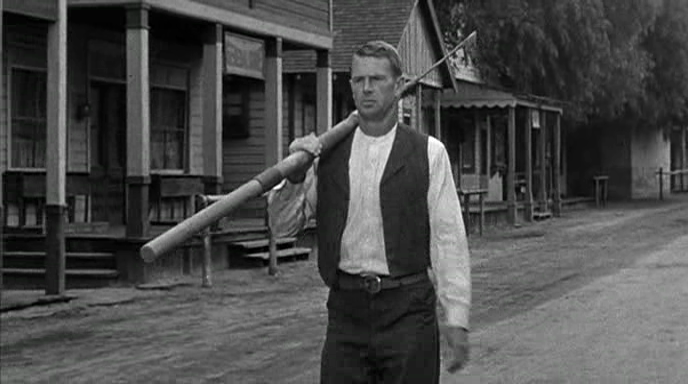
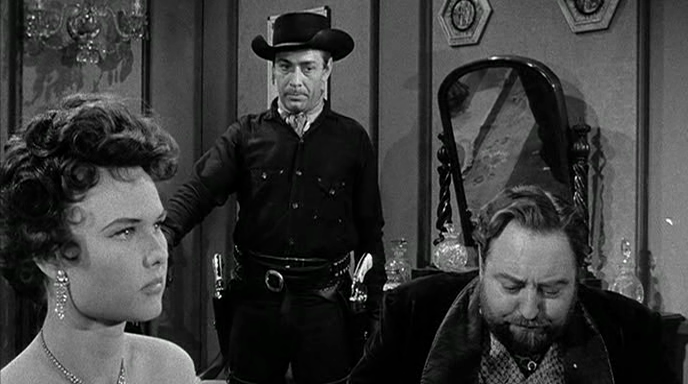
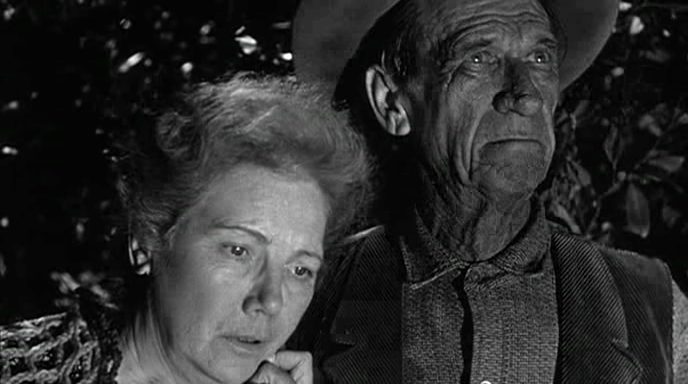
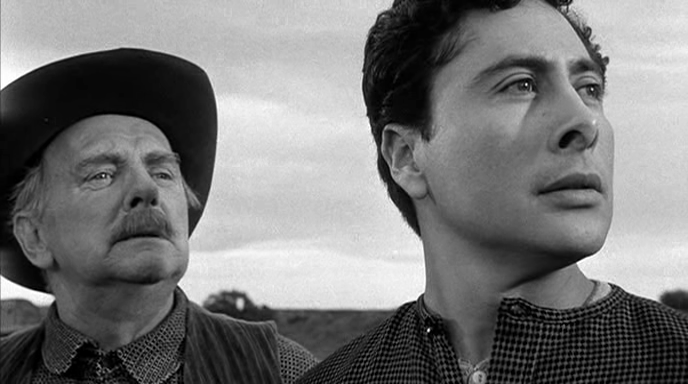
Ghost-written by Dalton Trumbo, this western tells a fairly straight-forward tale of good-versus-evil in a lawless town, with the “fat cat” businessman literally a rotund guy, and a sociopathic hitman perennially clad in black. Shades of Nicholas Ray’s Johnny Guitar (1954) are immediately evoked as Hayden emerges in the opening scene, wielding a whale harpoon against an unseen foe:

… and we also see Frank Ferguson — who played Marshal Williams in …Guitar — in a key supporting role.

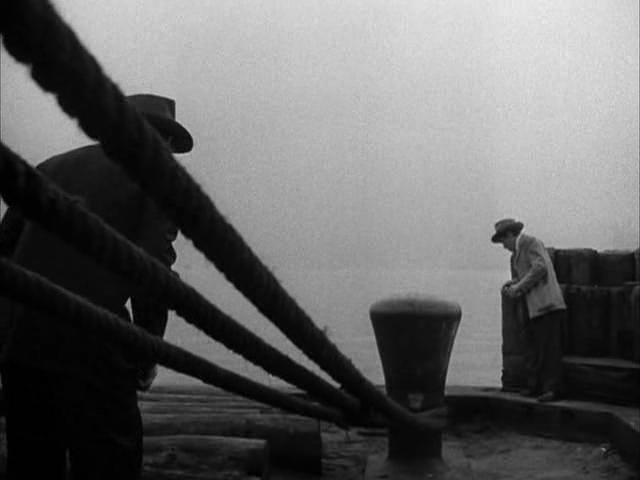
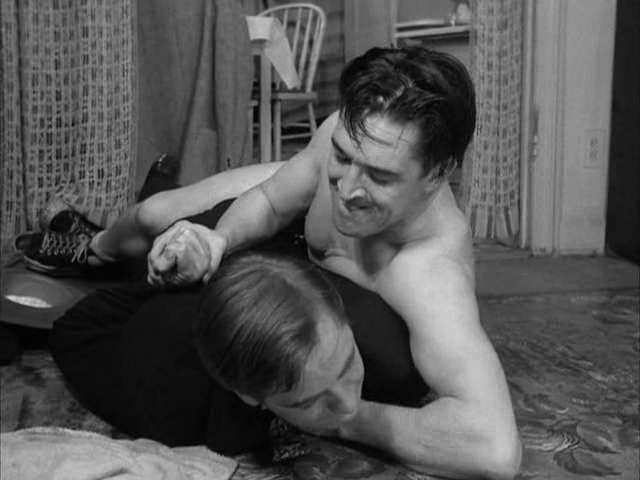
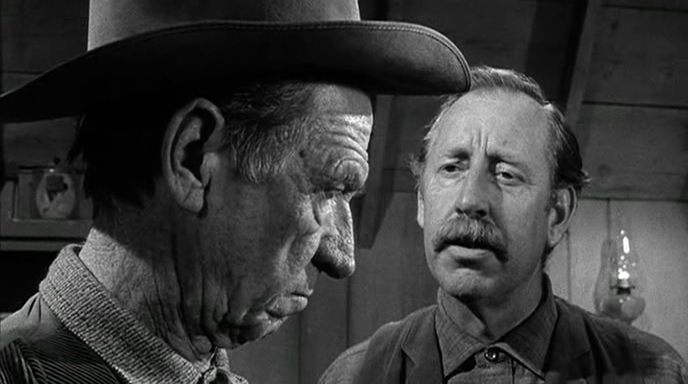
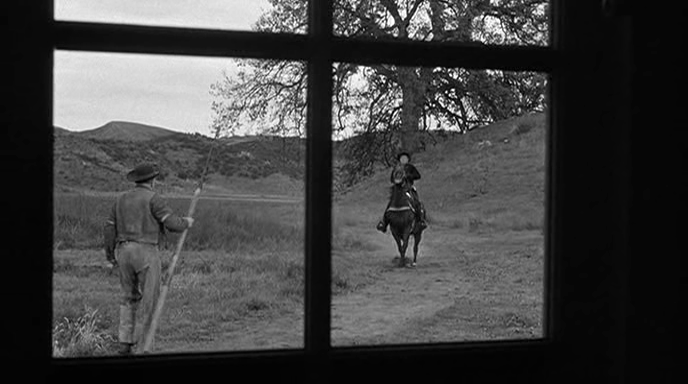
Unfortunately, once Hayden opens his mouth, disbelief must be suspended: his Swedish accent is highly dubitable, and comes and goes randomly. Young is menacing but not especially memorable as the key baddie (where are Lee Van Cleef or Lee Marvin when you need them?). However, Joseph H. Lewis’s unique directorial stamp makes this film worth a look; see stills below.

Redeeming Qualities and Moments:

  • Joseph Lewis’s top-notch direction

  • Fine cinematography

Must See?
No, though it’s worth a one-time look.

Links:

Killers, The (1946)

Killers, The (1946)

“I did something wrong once.”

Synopsis:
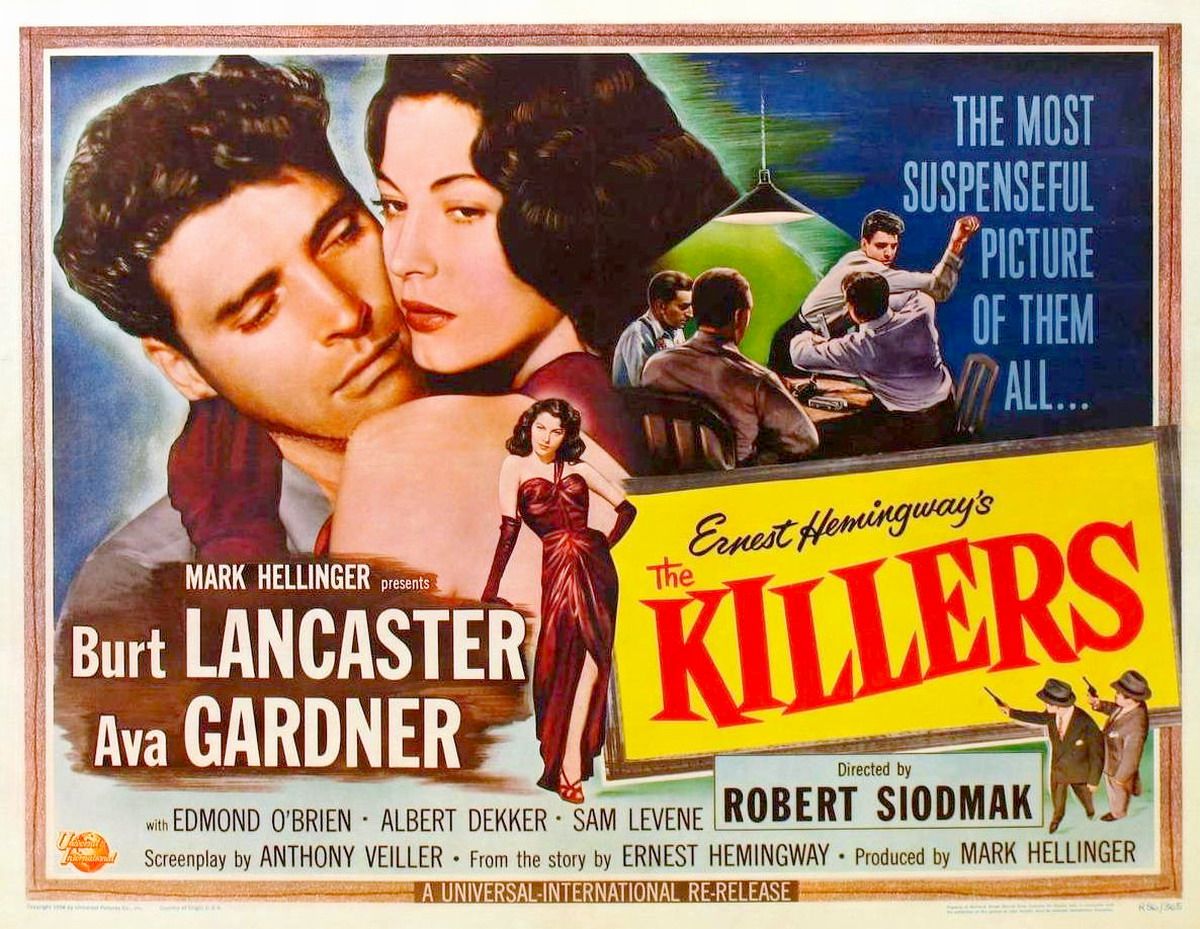
When two hit-men (William Conrad and Charles McGraw) kill a former boxer (Burt Lancaster) known as “The Swede”, an insurance agent (Edmond O’Brien) slowly unravels a complex tale of Lancaster’s obsessive love for a beautiful singer (Ava Gardner), as well as his involvement in a heist organized by crime boss “Big Jim” (Albert Dekker).

Genres, Themes, Actors, and Directors:

  • Ava Gardner Films
  • Burt Lancaster Films
  • Edmond O’Brien Films
  • Femmes Fatales
  • Flashback Films
  • Heists
  • Hit Men
  • Obsessive Love
  • Robert Siodmak Films

Response to Peary’s Review:
Peary writes that this elaboration on Ernest Hemingway’s “concise but powerful short story about a couple of hitmen rubbing out an ex-boxer in his hotel room” features “sharp dialogue, strong, atmospheric direction by Robert Siodmak, and an excellent cast”, but he argues that “the storyline that was chosen is fairly conventional” and “has dated”. However, the reverse-chronology flashback structure is uniquely effective: despite “knowing from the start that [Lancaster’s] character is dead”, we remain curious to learn how he arrived in his hopeless situation.

Peary writes that Lancaster is “somewhat stiff but okay in his movie debut”, though I actually find him perfectly suited for his cipher-role as a duped noir chump who we learn about exclusively through the memories of those who knew him — including his policeman-friend (Sam Levene), his former girlfriend (Virginia Christine), and a crook named Dum Dum (Jack Lambert).

Gardner is sexy and charismatic, but primarily a noir icon rather than a fully-fledged character — at least until her “final, loopy moments on the screen” when she shows evidence of “strong dramatic acting”.

O’Brien is really the film’s primary protagonist: despite being given multiple gentle warnings by his boss (Donald MacBridge) to stop wasting time on the case, he persists out of sheer determination, ensuring we learn the truth about the Swede!

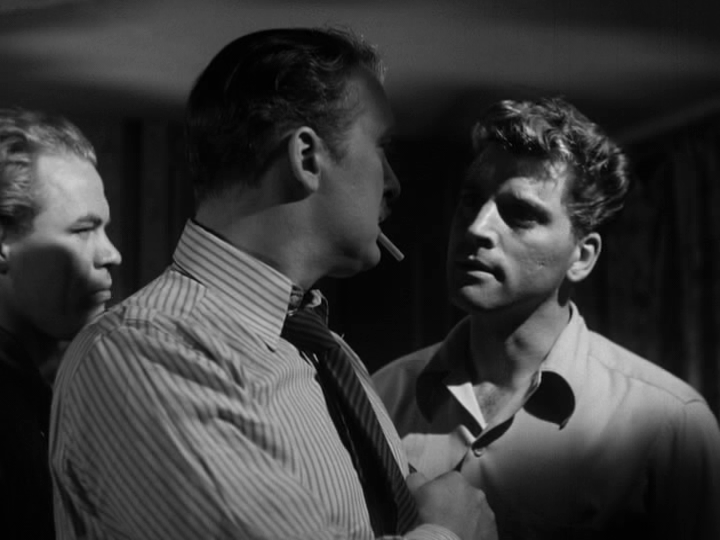
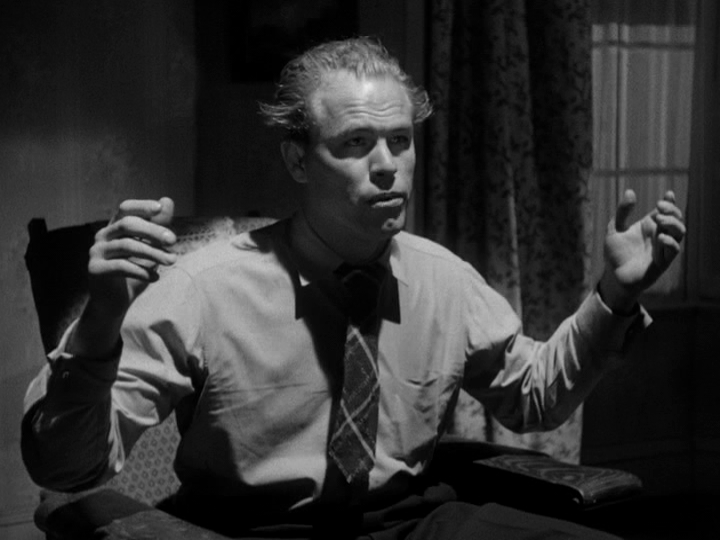
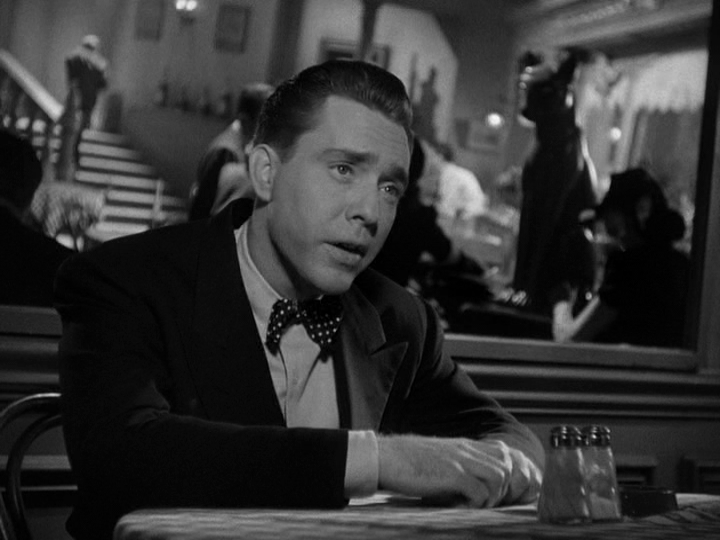
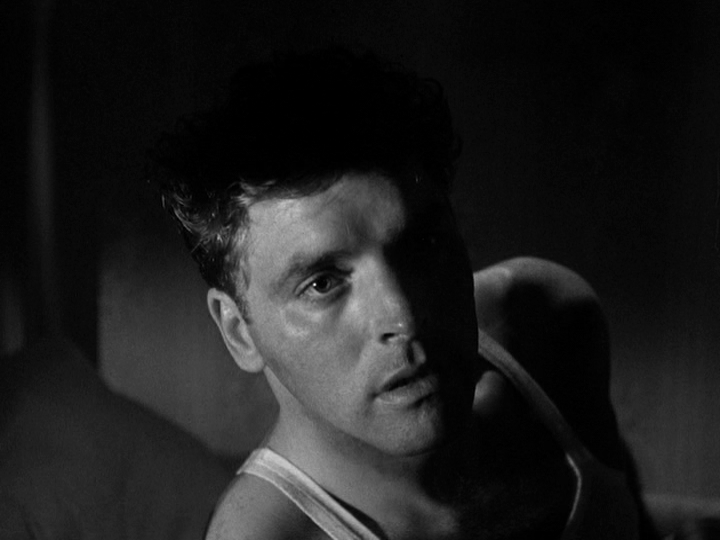
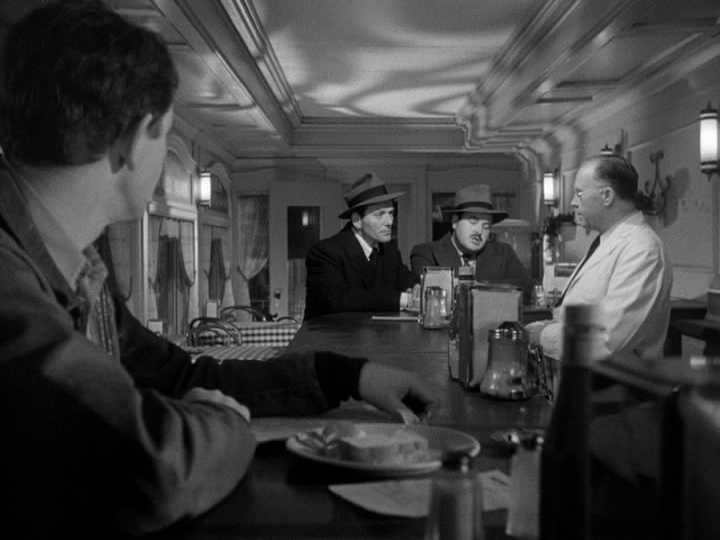
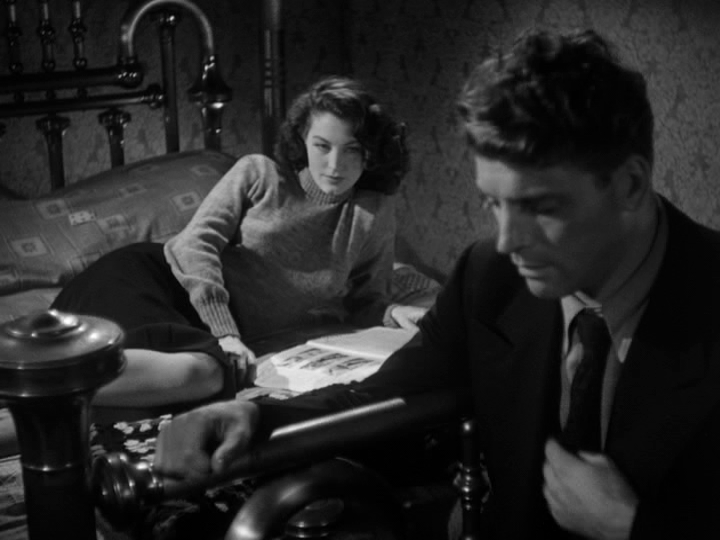
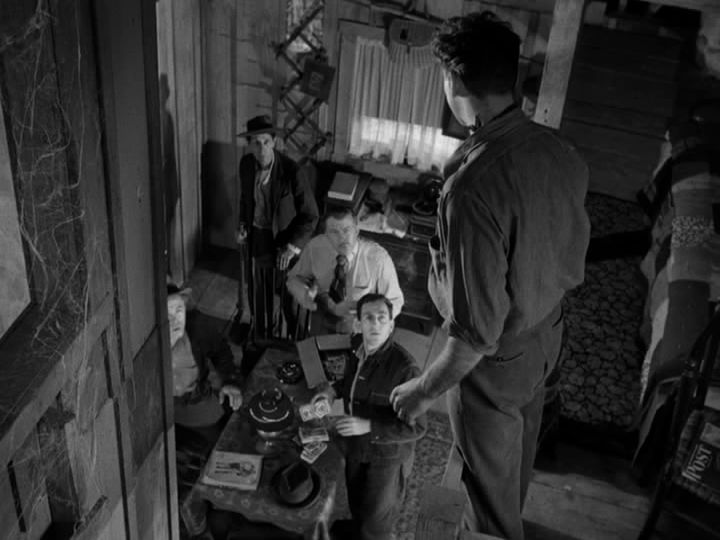
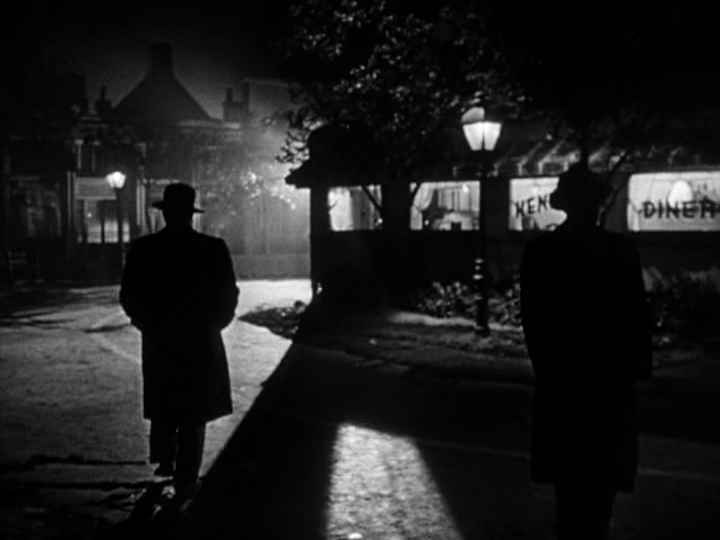
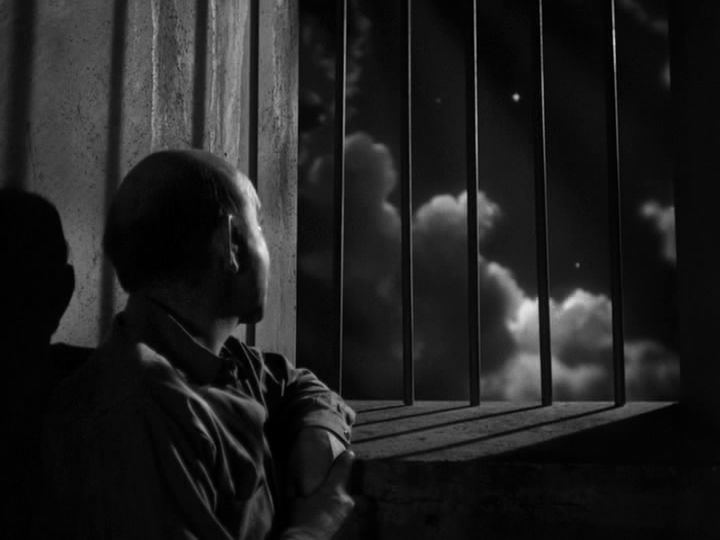
However, it’s Elwood Bredell’s atmospherically noir-ish cinematography that remains the film’s true stand-out, with many visually memorable scenes — including the highly tense opening sequence in the diner. The 1964 remake by Don Siegel is also worthy viewing; both films are enjoyable in different ways.

Redeeming Qualities and Moments:

  • Burt Lancaster as “The Swede”
  • Fine supporting performances
  • The tension-filled opening sequence
  • Siodmak’s direction

  • Elwood Bredell’s cinematography

  • Anthony Veiller’s well-crafted screenplay
  • Miklos Rozsa’s score

Must See?
Yes, as a noir classic. Selected in 2008 for preservation in the United States National Film Registry by the Library of Congress.

Categories

  • Genuine Classic
  • Important Director

(Listed in 1001 Movies You Must See Before You Die)

Links: