Drums Along the Mohawk (1939)
“This is no place for you; it’s no place for any woman!”
|
Synopsis: |
|
Genres, Themes, Actors, and Directors:
Review: Redeeming Qualities and Moments:
Must See? Categories
Links: |
“This is no place for you; it’s no place for any woman!”
|
Synopsis: |
|
Genres, Themes, Actors, and Directors:
Review: Redeeming Qualities and Moments:
Must See? Categories
Links: |
“Sometimes when you fight the devil, you got to jab him with his own pitchfork.”
|
Synopsis: |
|
Genres, Themes, Actors, and Directors:
Response to Peary’s Review:
… and, though it probably wasn’t intended that way, the hell-raising looks to be more fun.” He advises us to “forget Joseph Schrank’s script and enjoy the precious footage of some of the most famous black performers at their peaks”, including Waters, Anderson, Horne, John ‘Bubbles’ Sublett, and Duke Ellington’s band, as well as Ingram reminding “us of the shrewd, intelligent, boldly laughing genie he played in The Thief of Bagdad.” As one of two all-black musicals produced that year — along with Stormy Weather (1943) — this film remains worth a look for historical purposes alone, but viewers will likely find themselves appreciating the chance to see Waters at her finest; her role here and in The Member of the Wedding (1952) indicate that she should have been given far more opportunities to grace us with her presence on screen. Redeeming Qualities and Moments:
Must See? Categories
Links: |
“We are not animals — we are men!”
|
Synopsis: |
|
Genres, Themes, Actors, and Directors:
Review:
Actually, this one hits particularly close to home for me, given that my parents were both very young children in Nazi-occupied Norway, and my grandfather could easily have been killed for harboring two Resistance fighters behind his farm. With that “insider knowledge” put on the table, there isn’t much to distinguish this from other European-based Resistance flicks of the era, given that the Hollywood casts speaks in English, and location shooting was done in Monterey, California:
— but the storyline remains an archetypically strong one, showing the various stances one could take, and how deeply impacted families were by loyalty in various directions. Redeeming Qualities and Moments:
Must See? Links: |
“I wouldn’t worry about this country if I were you. We’ve got this thing licked.”
|
Synopsis: |
|
Genres, Themes, Actors, and Directors:
Response to Peary’s Review:
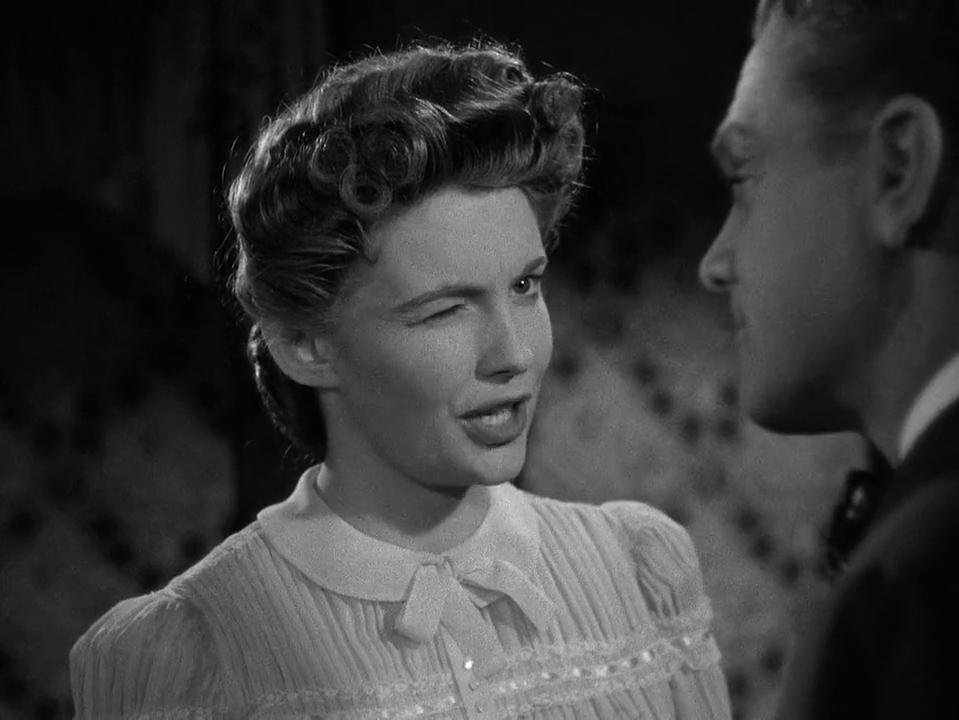
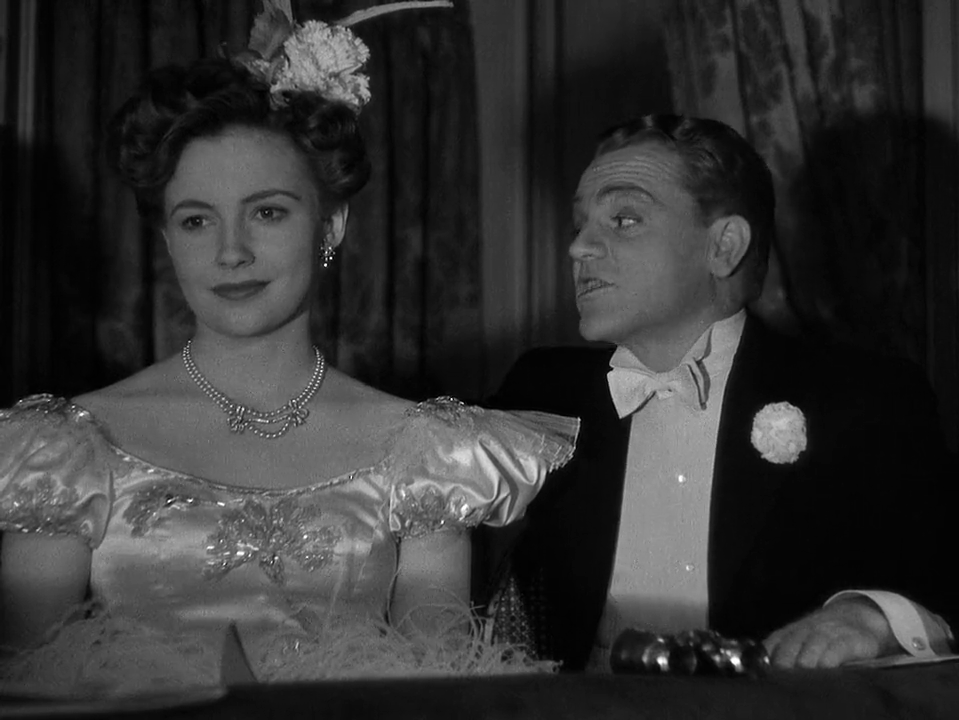
He notes that Cagney’s scenes with Joan Leslie — “extremely winning as Cohan’s girlfriend, then wife” — are “very special”:
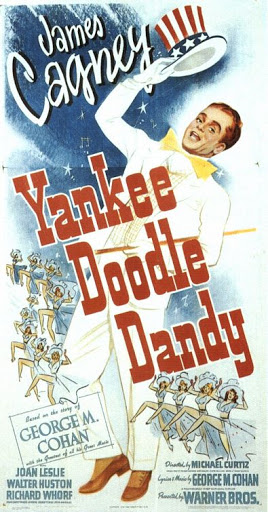
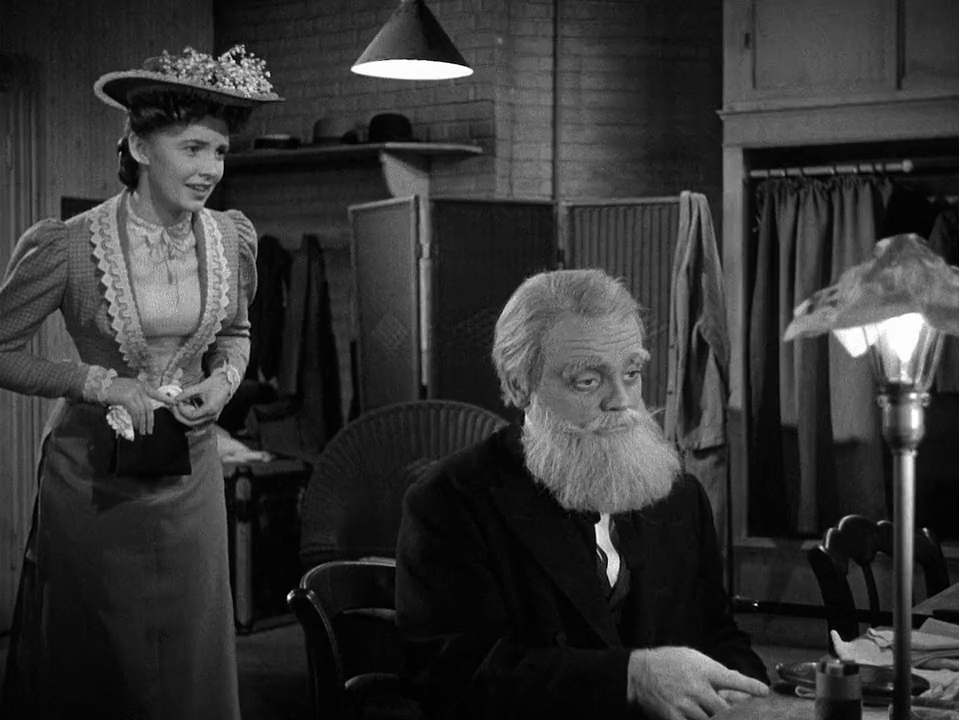
but he reminds us that “what’s even more impressive is that Cagney proves to be one of the few actors we’ve had who can comfortably play tender scenes with other men”. He adds that the “lavish production is strongly directed by Michael Curtiz”, with the “musical numbers… particularly well done in a non-Busby Berkeley style”; I didn’t realize until watching this film that Cohan was responsible for writing several enormously famous and “infectious songs”, including “Over There”, “Grand Old Flag”, “Give My Regards to Broadway”, and the title song. Peary acknowledges, however, that the “film is odd in that almost nothing bad happens to its protagonist.” Indeed, Cohan’s direct involvement in and oversight of the film’s script and production very clearly impacted the directions it goes in (or not). While Cohan allowed for his youthful self (Douglas Croft) to be authentically portrayed as brash and arrogant, he makes sure we see his loyalty, work ethic, and patriotism above all else (including his earnest attempt to enlist in the army despite being too old at 39). This may very well be authentic — indeed, Cohan was the first person in any artistic field to earn a Congressional Medal of Honor from the president — but it would have been even more interesting to see what challenges he faced other than the flop of his one attempt at “serious” drama, and the question of whether or not to return to the stage after retirement. It’s also a bit odd that no mention is made at all of Cohan’s four children — perhaps because one was with his first wife, who he divorced, and who doesn’t appear in this story. One imagines this all played a lot fresher when it was released, with Cohan’s artistic legacy much more firmly entrenched in older Americans’ minds, and his bold patriotism serving as much-needed inspiration for Americans still processing their country’s entry into the war. Meanwhile, Cagney’s performance remains as powerful as ever, and well worth watching. Peary agrees with the Academy’s designation of Cagney as Best Actor of the Year in his Alternate Oscars, where he highlights Cagney’s “inimitable” dancing style, “which mixes elastic-legged tap with fast, across-the-frame balletlike toe-walking, his legs straight, his rear out, his shoulders moving as if he were a gangster about to strike a blow, his upper torso angled forward, his head raised proudly.” Peary notes that Cagney “has some great dance moments onstage; and backstage when, disguised as an old man, he shocks Mary [Leslie] (whom he has just met) with some furious footwork:
… and at the White House, when he taps down the staircase” — but he points out that perhaps most memorable of all “are those [moments] when Cagney-Cohan sincerely tells his audience, ‘My father thanks you, my mother thanks you, my sister thanks you, and I thank you.'” Redeeming Qualities and Moments:
Must See? Categories
(Listed in 1001 Movies You Must See Before You Die) Links: |
“With rape and violence rampant in this land — with human flesh cheapened and vulgarized — one of the last bastions of decency is the general satisfaction one gains from making a horse head bookend.”
|
Synopsis: |
|
Genres, Themes, Actors, and Directors:
Review:
and her boyfriend (Keith Singleton) who are killed on Jamie Lee Curtis’s birthday as they’re about to have sex; an unseen villain who not only breathes heavily but actually drools over the phone; flashing body count numbers appearing across the screen each time another victim is found; and many openly disturbed potential suspects, including the principal (Joe Talarowski), the aging school secretary (Mimi Weddell):
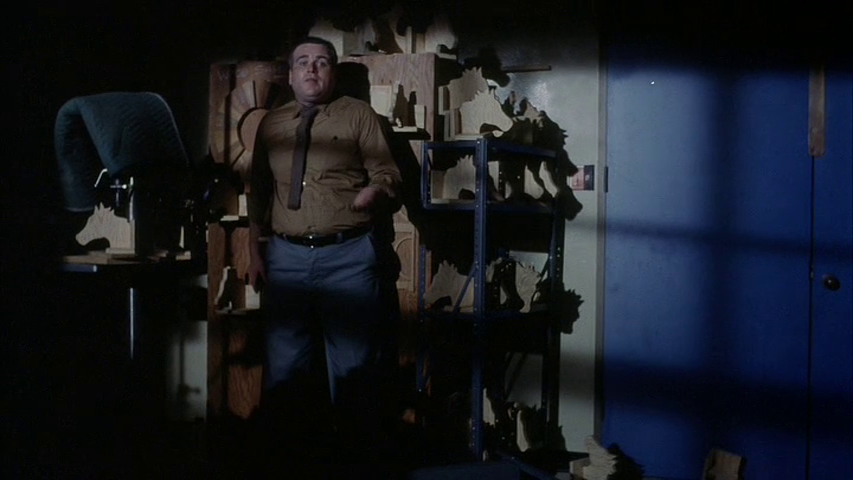
… the woodshop instructor (Joe Flood):
…the distracted school psychiatrist (Carl Jacobs), and the double-jointed janitor (The Stick).
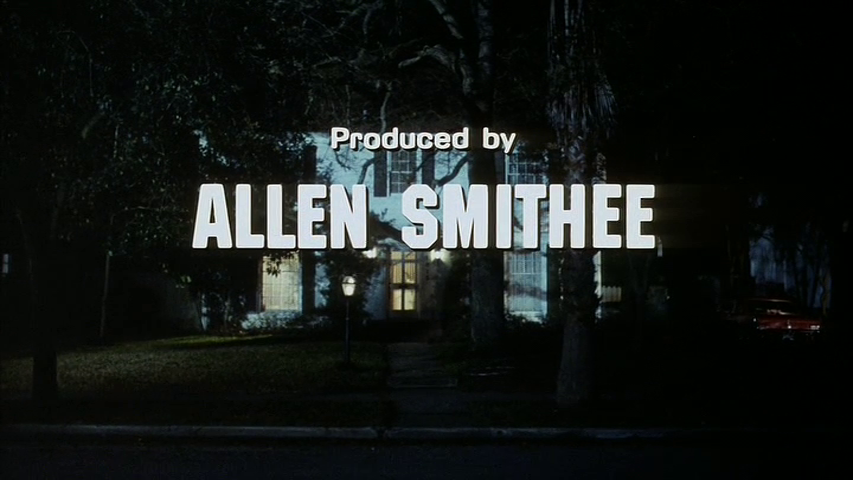
The premise is amusing (of course), but unfortunately the jokes fall flat as often as they succeed. Note: Interestingly, as pointed out in Spinning Image’s review, co-director Michael Ritchie (who opted for an “Alan Smithee” producer designation on this) actually helmed a number of reputable and interesting flicks, including The Candidate (1972), Smile (1975), and The Bad News Bears (1976). Redeeming Qualities and Moments:
Must See? Links: |
“They’ve pushed us into a corner; we must strike.”
|
Synopsis: |
|
Genres, Themes, Actors, and Directors:
Review:
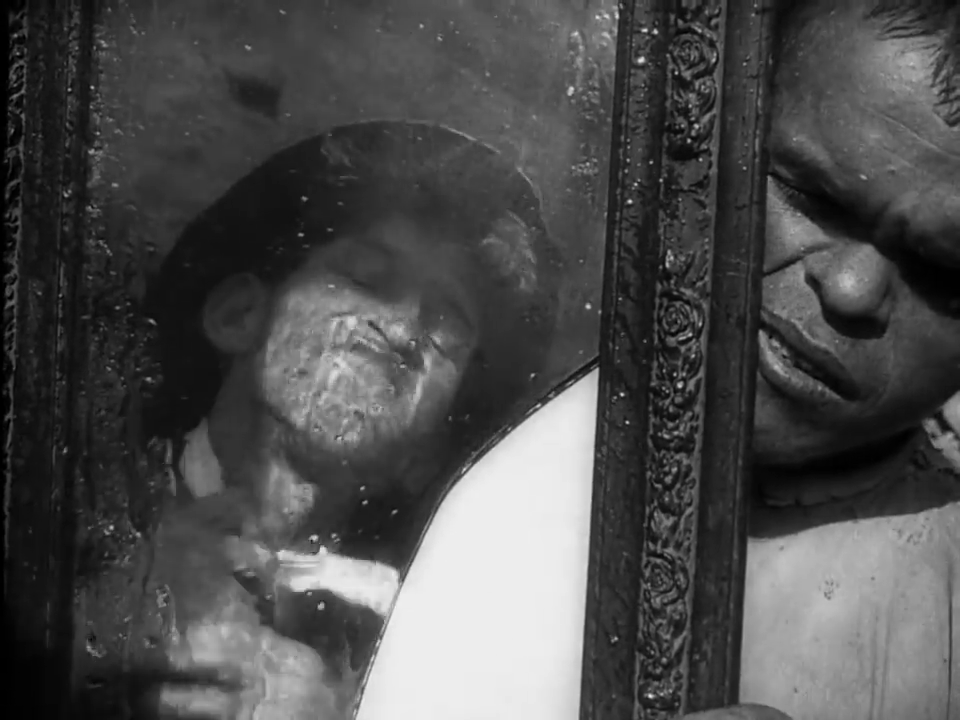
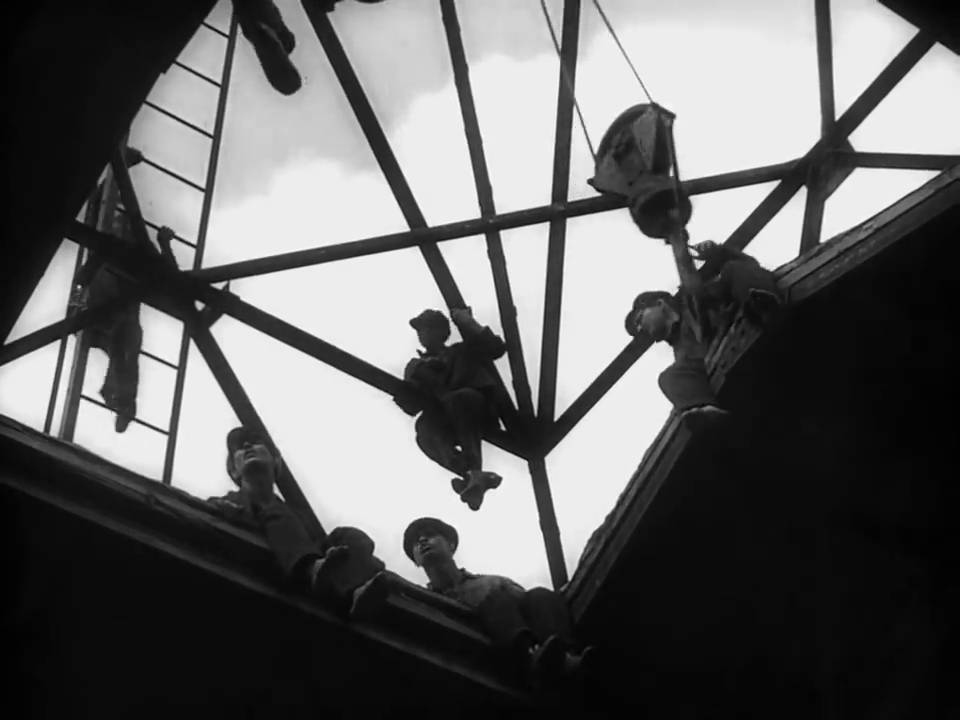
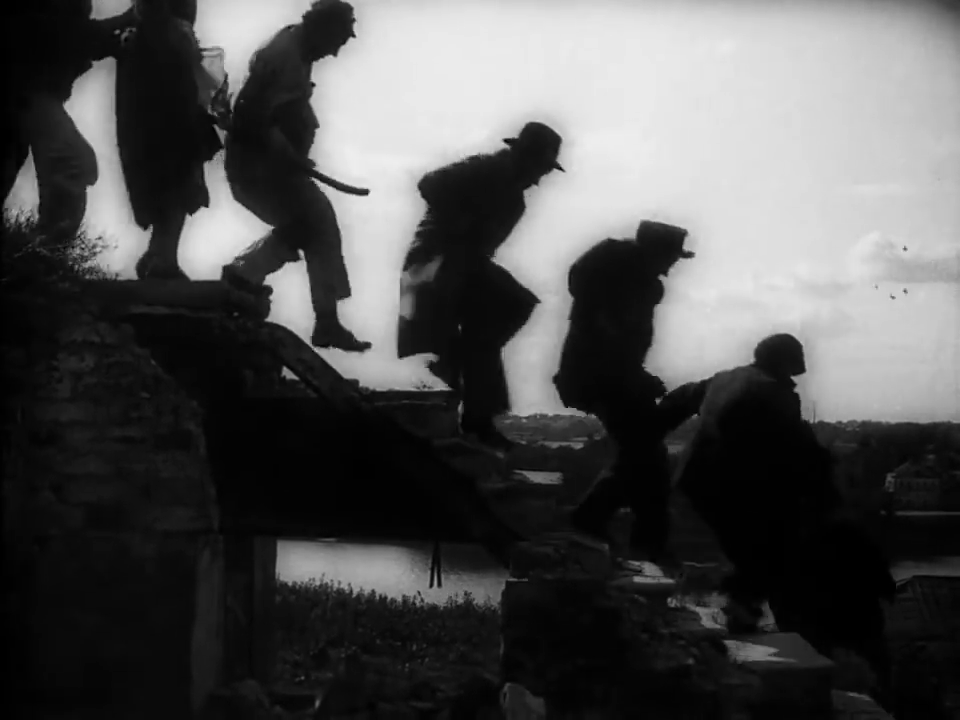
We are introduced to the factory and its labor leaders (“At the factory all is quiet”); see a worker taking his life after being falsely accused of theft (“Reason to strike”); view the immediate after-effects of the strike — including parents having joyful time to spend with their young children (“The factory dies down”); witness the lingering negative impacts of no income or food (“The strike draws out”); see arson and looting carried out (“Provocation and debacle”); and, finally, watch the proletariat being decimated by the police (“Extermination”).
This all rings eerily close to home, given recent uprisings and subsequent looting and arson stemming from societal unrest and dissent; viewers should be forewarned that Eisenstein pulls no punches in his depiction of class warfare. Redeeming Qualities and Moments:
Must See? Categories
(Listed in 1001 Movies You Must See Before You Die) Links: |
“I’m just a kid, and I don’t know what I’m doing sometimes. But I think you should know better when you’re all grown up.”
|
Synopsis: |
|
Genres, Themes, Actors, and Directors:
Review:
Barrymore’s role is actually somewhat peripheral, given that our primary focus is on the rise-and-fall of two aspiring artists who initially work well together:
then descend into farcical ineptitude as their own desires (O’Neal’s lust for Stone, Long’s longing for revenge) replace any sense of moral obligation or concern as parents.
Interestingly, this is foreshadowed during the first party Long and O’Neal attend upon arriving in Hollywood, when a guest informs Long that she’s a parent but “isn’t that into parenting” at the moment.
Because this couple can’t move beyond their petty selfishness to recognize the harm they’re causing their loved ones, they lose everything they value. I wish Barrymore had even more screen time, since she’s infinitely more sympathetic than either O’Neal or Long — but the adult stars do well in their roles, and are suitably convincing. Redeeming Qualities and Moments:
Must See? Links: |
“She’s the queen of the night.”
|
Synopsis: |
|
Genres, Themes, Actors, and Directors:
Response to Peary’s Review:
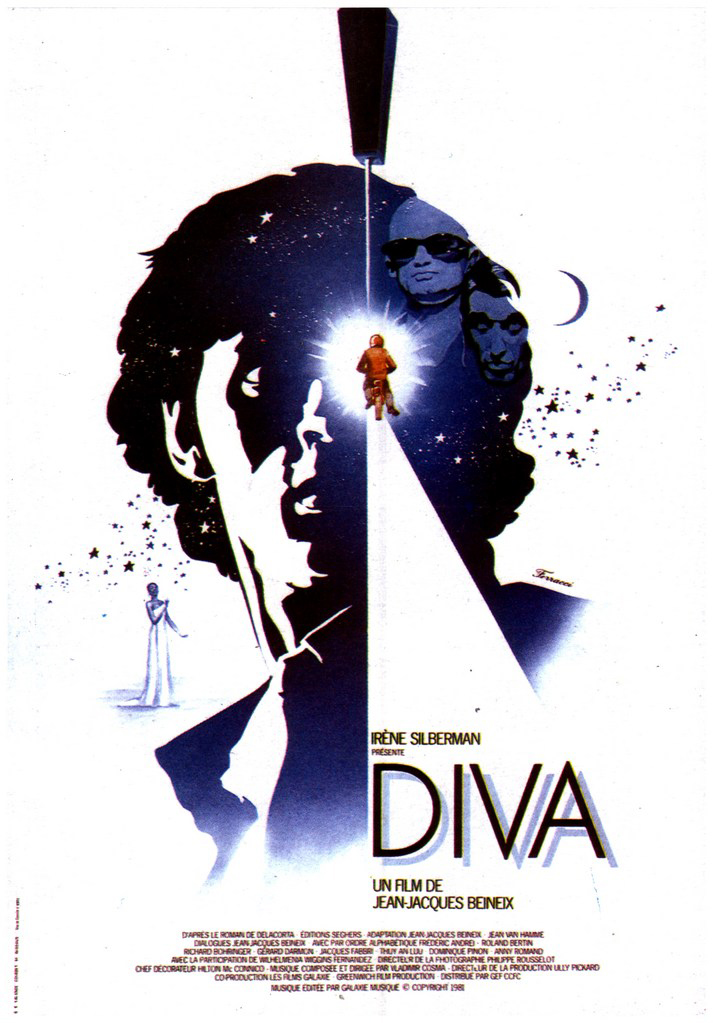
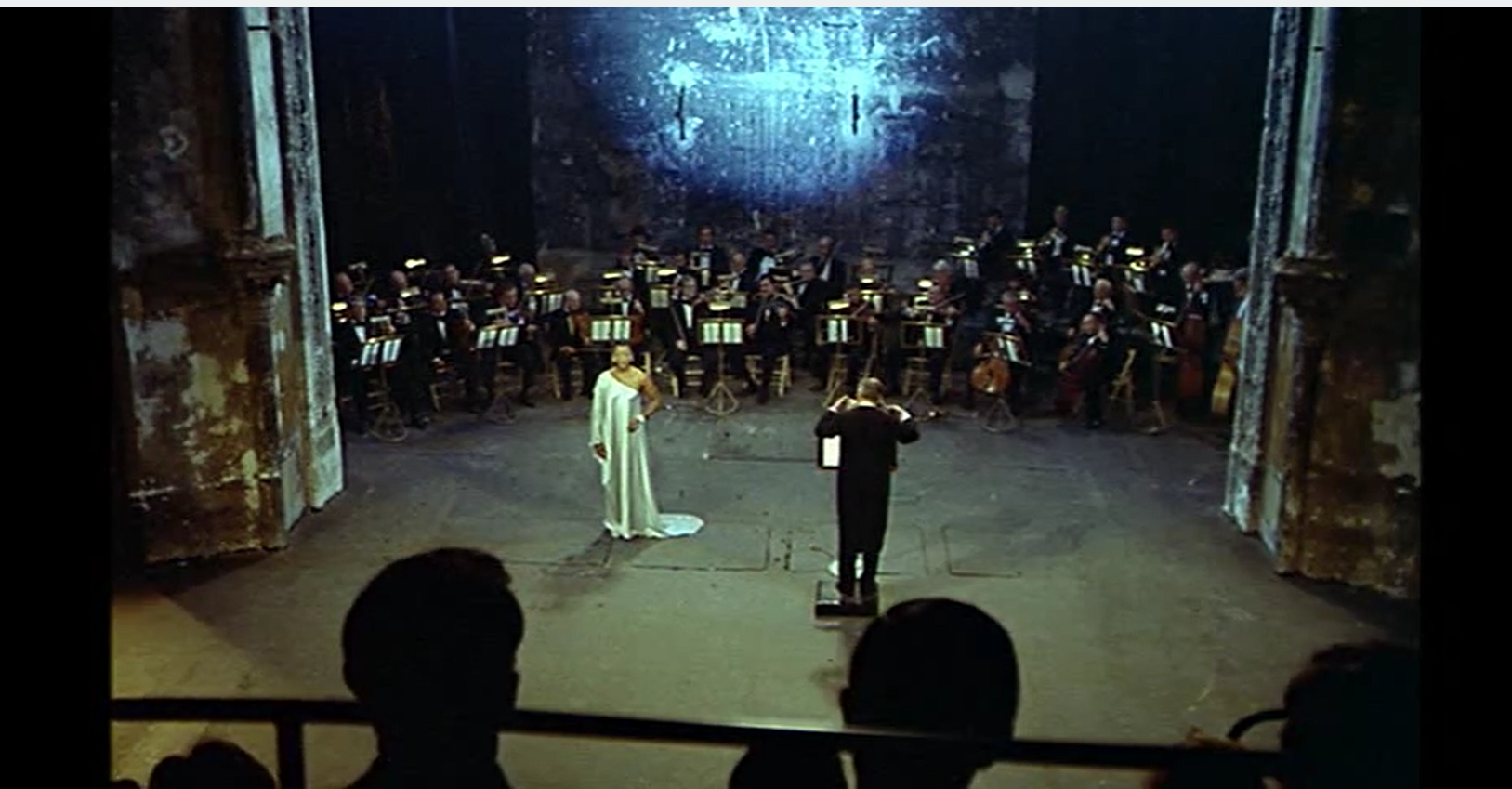
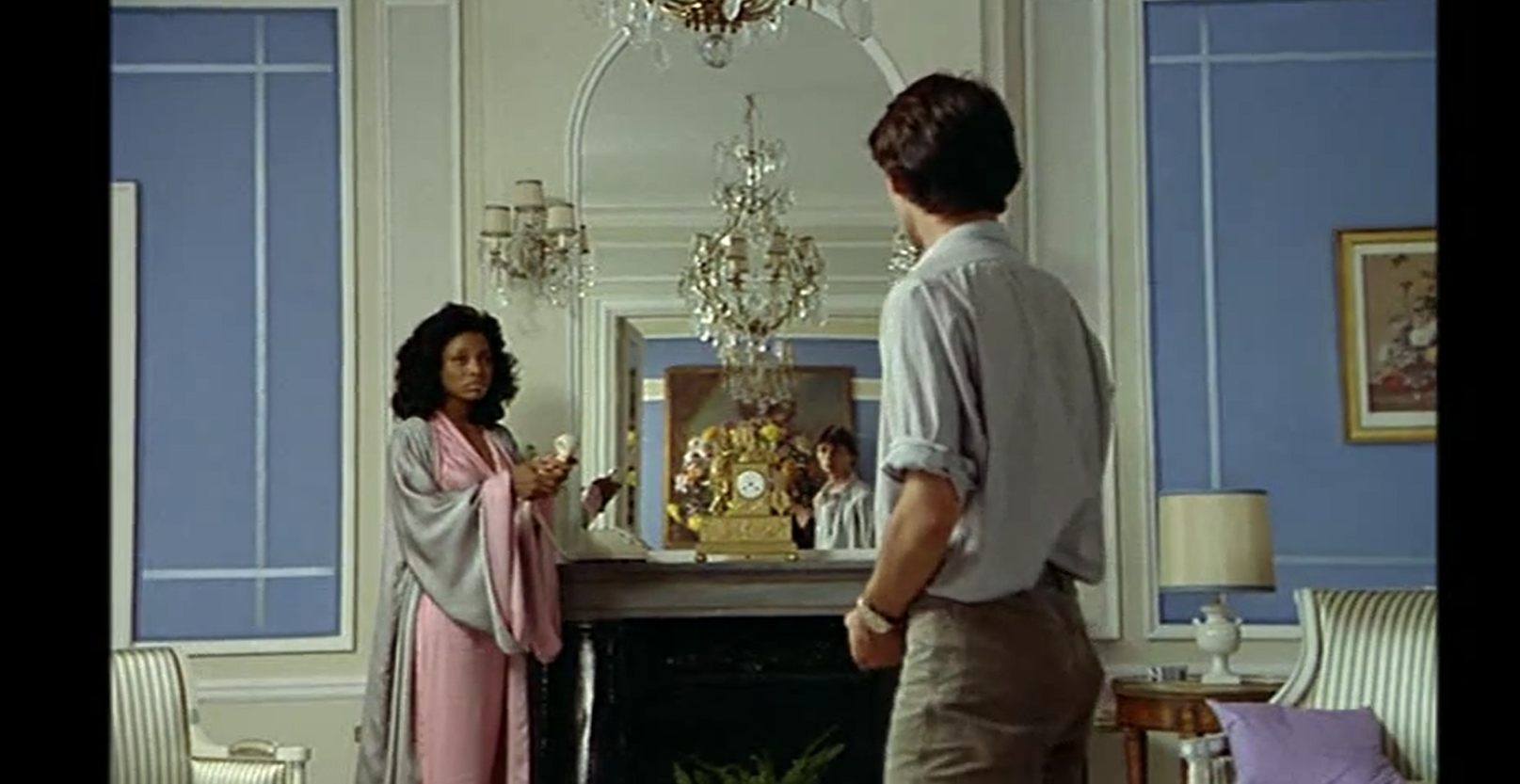
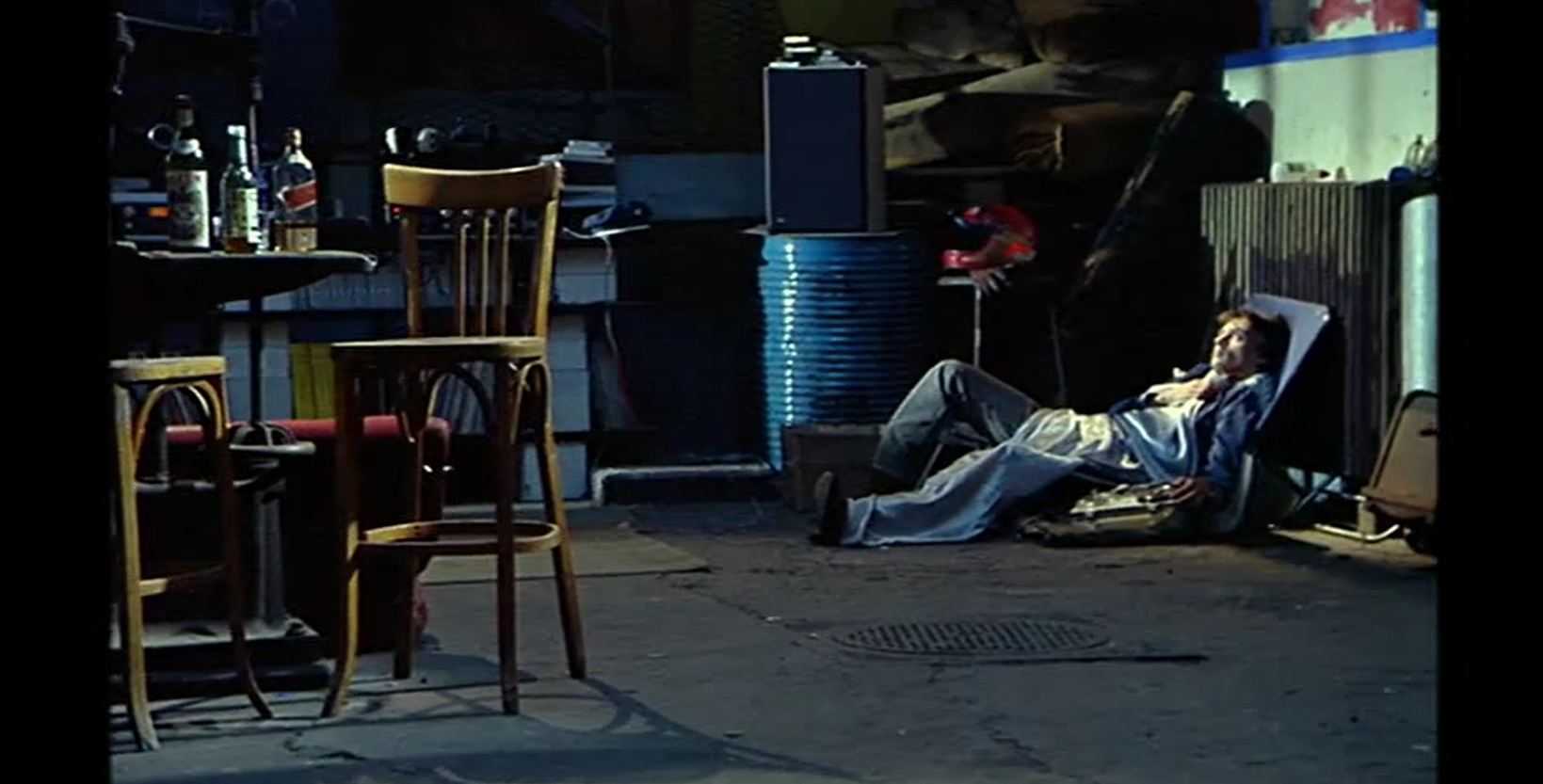
… Alba [Luu], a teenage, hedonistic Vietnamese shoplifter and Gorodosh [Bohringer], her adult, white, Zen-freak boyfriend; the tall, handsome, suave Latin thug [Damon] and his short, indented-faced, punk-garbed, blond, younger partner (Dominique Pinon is a memorable screen villain), who always has a Walkman blaring in his ears.” Peary points out that “Beineix underscores [these] odd teams by mixing rock and classical music”, and that “visually, Beineix uses his frame like a Pop-art canvas, filling the spaces between his black, blue, and red images with white light, direct or reflected.” (Beineix’s DP was Philippe Rousselot.) He notes that Beineix is “thrilled with movement, so he places his characters on wheels (Jules’s moped, Gorodosh’s classic white Citroen, Alba’s roller skates, etc.) and lets the camera run wild, almost as if it had a life of its own. (One of the highlights is a mad car-motorcycle chase.)” He adds that Beineix “makes weird choices at every turn and very few don’t have big payoffs.” Peary elaborates on his detailed analysis of this film in his Cult Movies 3 book, where he notes that “it is precisely Beineix’s determination to mix diverse elements such as opera and a lowbrow crime drama that makes the film so outrageous and entertaining”, and points out that Beineix’s “actors come in all shapes and sizes and from various backgrounds”. He argues that what the film’s survivors “have in common is a capacity to love people and love good music” — indeed, “love and music are shown to be pure, purifying forces”, while “the criminals are those people who prostitute love… or music…; in the minds of Delacorta and Beineix the businessmen who deal in record piracy are just as ruthless as down-and-dirty street criminals.” Peary ends his lengthy Cult Movies review by noting that “the film is about how a singer’s lovely voice and a series of strange circumstances cause Jules, Cynthia, Alba and Gorodish to interact”, with the result “that all of them break out of their depressed past-obsessed states, reveal inner goodness…, find love, and make commitments to the future”. He notes that while this is a “cheery, sentimental theme that would seem out of place in typical low-budget crime thrillers”, he thinks “it’s one of the reasons Diva is such a crowd pleaser” — and I agree. This delightful, quirky, visually vibrant flick remains as unique as it was upon its release, and has held up remarkably well — there’s no other film quite like it, and I doubt there ever will be. Redeeming Qualities and Moments:
Must See? Categories
Links: |
“It’s not compulsory, only you’ve got to join — see?”
|
Synopsis: |
|
Genres, Themes, Actors, and Directors:
Response to Peary’s Review:
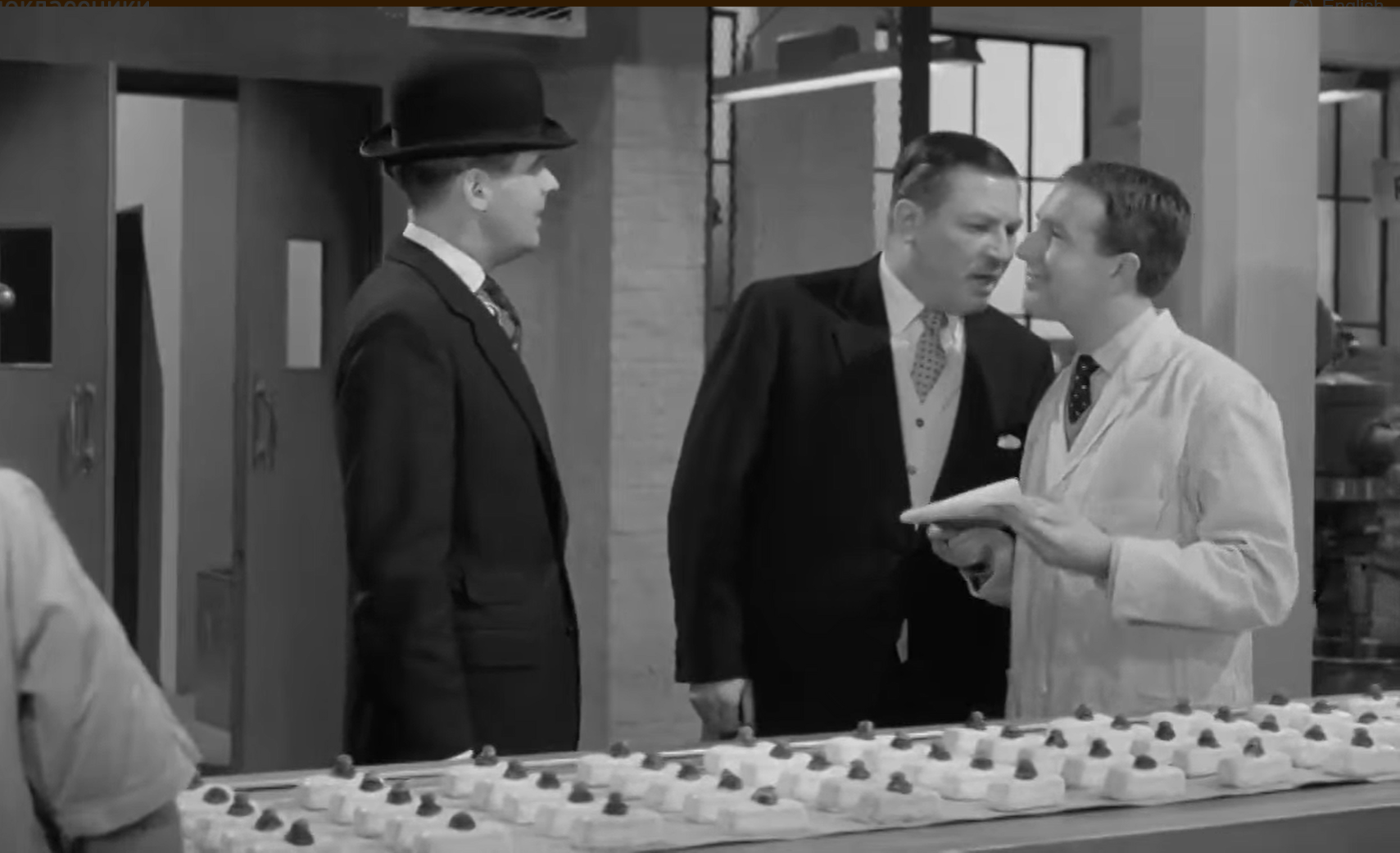
… and then “becomes the unwitting pawn of both the corrupt management and the workers’ union” — remains a “sharp, cynical comedy” that “chastises workers, but is clearly sympathetic toward them” given “they’re not bad sorts, and much preferable to their sneaky, crooked bosses who are willing to sell out their country for a profit.”
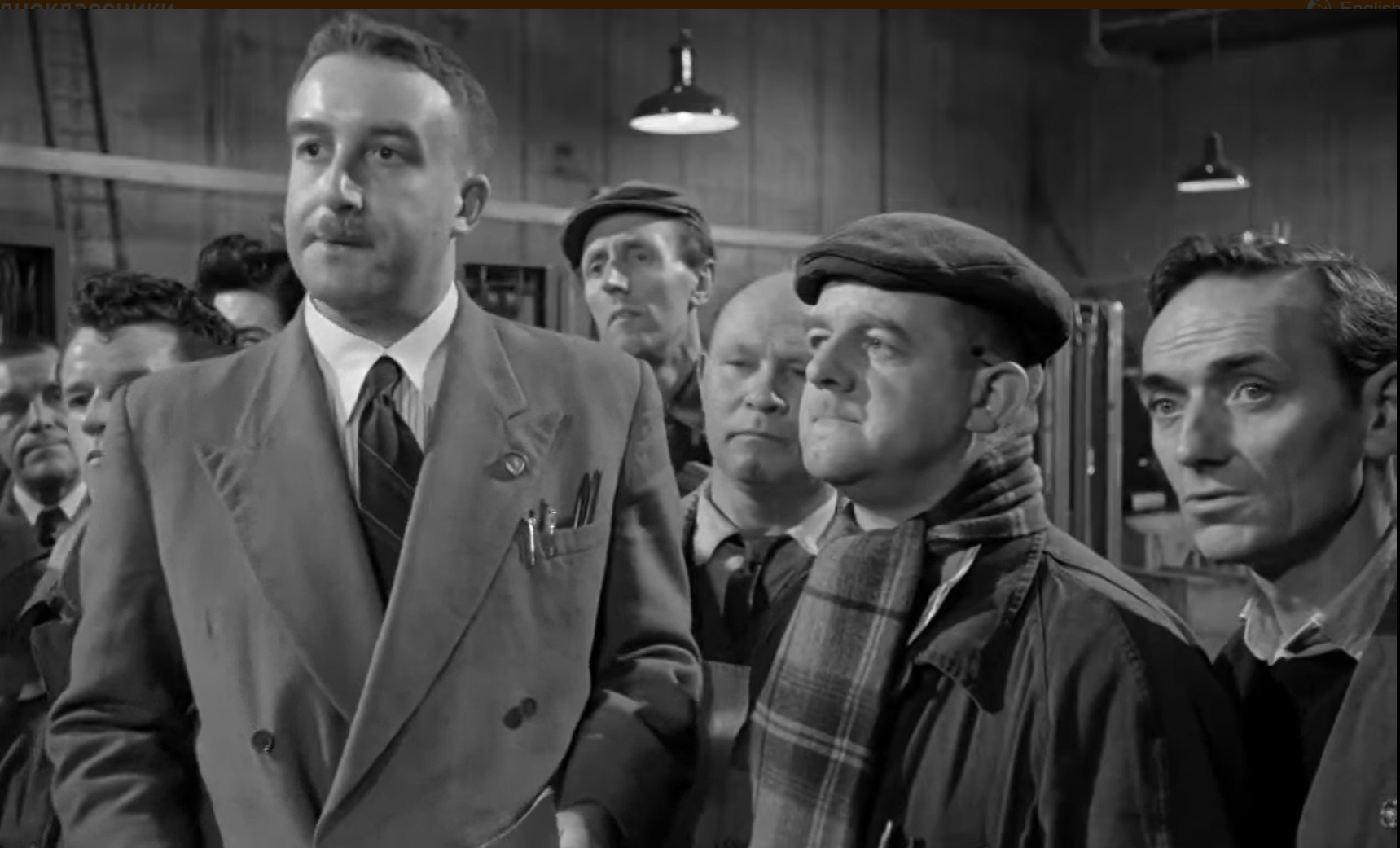
He adds that he doubts “if an American union-made film will ever deal so bravely with similar labor-management problems”. While this film mercilessly skewers labor-related problems of the day in a way that likely resonated deeply with many viewers, I’ll admit to feeling a bit detached from it: the basic theme of corruption on both sides of the aisle — not just with smarmy businessmen (of course), but with labor unions determined to ensure that “no worker is fired, be he incompetent, lazy, or doing work that a machine could handle in a tenth of the time”:
— is loud and strong, but the protagonist is too much of a twit to relate to in any way. Sellers is a top reason to watch the film:
His devotion to the cause of Labor comes through loud and strong, and his character seems like a flesh-and-blood individual capable of authentic growth and emotion. Redeeming Qualities and Moments:
Must See? Links: |
“Like cats, there are so many young people, wandering to and fro.”
|
Synopsis: |
|
Genres, Themes, Actors, and Directors:
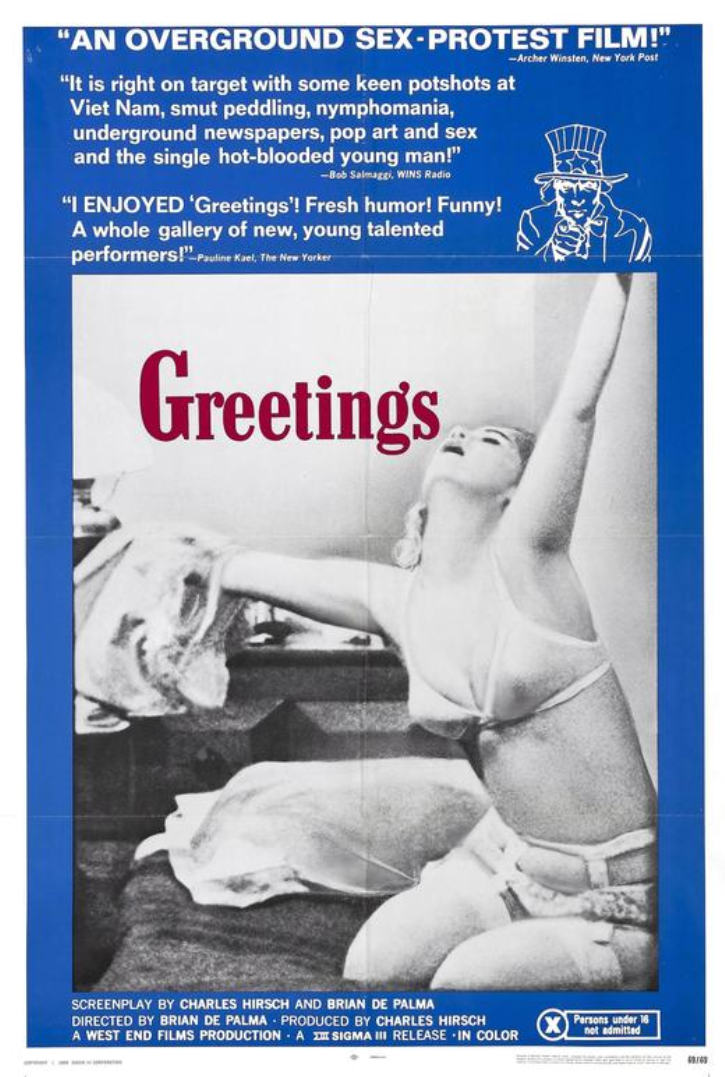
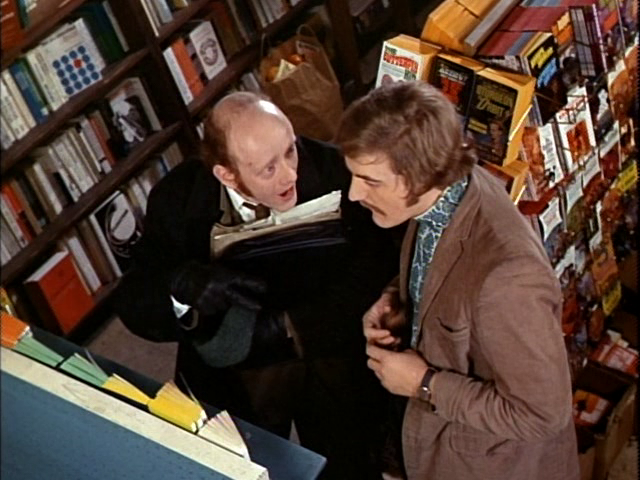
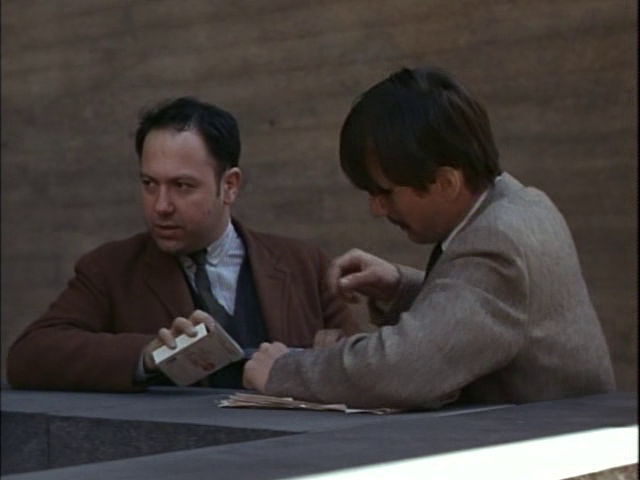
Response to Peary’s Review: Peary elaborates upon all these points in his lengthier Cult Movies review, where he discusses the many cinematic influences on display. He writes that while “De Palma’s studio-backed pictures of the seventies and eighties invariably call attention to Alfred Hitchcock,” the “cinema-verite look to some of the scenes and the use of new footage and segments of Lyndon Johnson speeches… to counterpoint the disturbing images of ‘reality’ we see, suggest the influence of such diverse documentarians of the period as D.A. Pennebacker [Don’t Look Back, (1967)] and Emile D’Antonio [Point of Order, (1964); Millhouse: A White Comedy (1967)].” Meanwhile, as Graham “starts examining photos of the Kennedy assassination and considers enlarging some to see if he can discover another gunman in Dallas’s infamous grassy knoll, he becomes increasingly like the David Hemmings character in Michelangelo Antonioni’s Blow-Up (1966).” Finally, Peary points out De Palma’s obvious debt to Jean-Luc Godard, given that “the young characters who inhabit De Palma’s world could very well be acquaintances of Jean-Pierre Leaud and his compadres in Godard’s Masculin Feminine (1966) and La Chinoise (1967).” Peary goes on to write about how “Greetings is most interesting today as a testament of its times” (I agree). He notes that “not only does it reflect the political unrest and malaise of 1968 America — and the despair in Vietnam — but it… has a left-wing, anti-government/society/authority/status quo bias” and “is concerned with disillusioned young [white, heterosexual] males” (the genders, races, and sexual orientations of the protagonists would surely be more diverse if the film were made today) “who look for a direction in and meaning to life (another side to the previous year’s The Graduate.”) Indeed, much of this film should feel quite familiar in many ways to millenials, who are similarly skeptical of their government and seeking a point to their lives in the midst of rampant commercialism, greed, violence, racism, and (currently) a global pandemic. Even if technology has advanced, we remain — like the three characters here — obsessed with voyeurism, sex, and conspiracy; not that much has changed. Redeeming Qualities and Moments:
Must See? Links: |