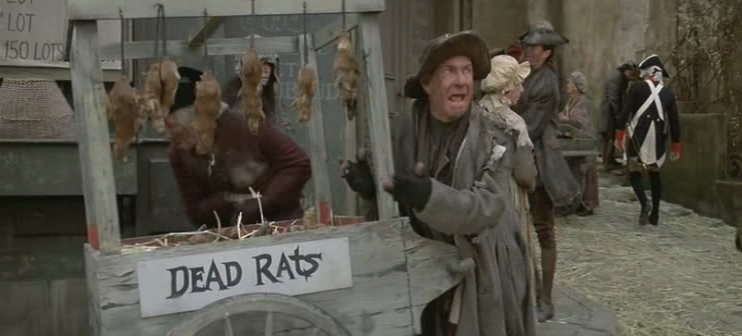
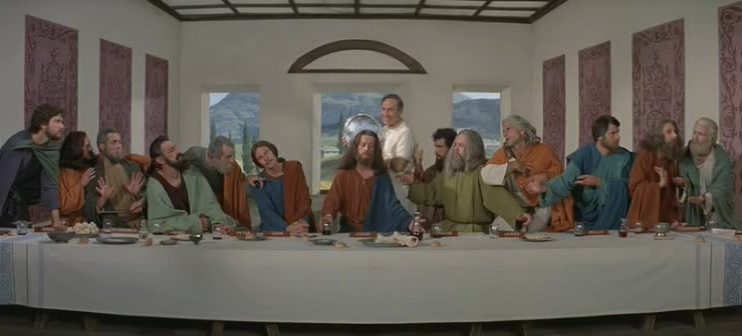
History of the World: Part I (1981)
“And of course, with the birth of the artist came the inevitable afterbirth: the critic.”
|
Synopsis: |
|
Genres, Themes, Actors, and Directors:
Review: Redeeming Qualities and Moments:
Must See? Links: |
“There is one thing standing between me and that property — the rightful owners.”
|
Synopsis: |
|
Genres, Themes, Actors, and Directors:
Response to Peary’s Review: Redeeming Qualities and Moments:
Must See? (Listed in 1001 Movies You Must See Before You Die) Links: |
“Read, read! We’ve got to find the worst play ever written!”
|
Synopsis: |
|
Genres, Themes, Actors, and Directors:
Response to Peary’s Review: While I’m far from a diehard Brooks fan — and agree in general with Peary’s complaint (in Cult Movies) that he tends to “equate innovation with simply breaking taboos” — I don’t share Peary’s sentiments about Brooks’ anarchic debut film, which remains bitingly humorous throughout most of its quickly-paced running time. I don’t find Max and Leo “too sweet” to pull off a scheme like this (they each have their reasons for conspiring in the plan), and I believe Mostel’s over-the-top, iconic performance as Bialystock is spot-on. I’ll admit that my interest in the storyline begins to wane once Shawn hits the stage, wowing the fictional audience with his “flower power” rendition as Hitler, given that I find his aged-hippie character dated and not really all that funny. But this somehow suits the arc of the film perfectly, given that we’re meant to be thrown off balance when Max and Leo’s plans go so horribly awry (they don’t find Shawn funny, either). While not all scenes are consistently humorous — I could do without the silly, sexist inclusion of “Ulla” (Lee Meredith) as Max and Leo’s token blonde secretary, for instance — the balance is clearly in favor of scenes that “work”, making The Producers an enjoyably outrageous comedy that film fanatics won’t want to miss. Redeeming Qualities and Moments:
Must See? Categories
(Listed in 1001 Movies You Must See Before You Die) Links: |
“Pride is a luxury that neither you nor I can afford at this time in our lives.”
|
Synopsis: |
|
Genres, Themes, Actors, and Directors:
Response to Peary’s Review: Redeeming Qualities and Moments:
Must See? Links: |
“These idiots suspect me. They want to detain me.”
|
Synopsis: |
|
Genres, Themes, Actors, and Directors:
Review: Redeeming Qualities and Moments:
Must See? Links: |
“They stopped by a river full of torrents: they decided the tumbling water was like Ann, the eddies like Claude, the peaceful pools like Muriel.”
|
Synopsis: |
|
Genres, Themes, Actors, and Directors:
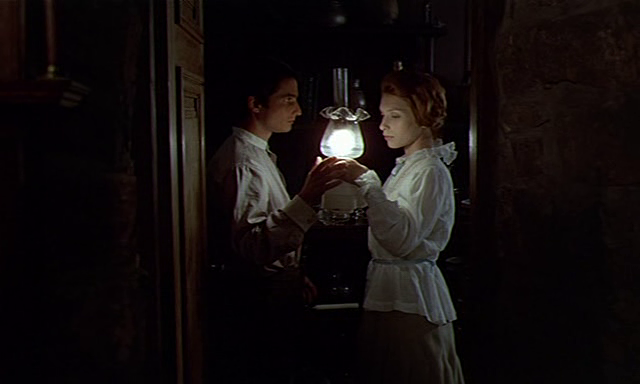
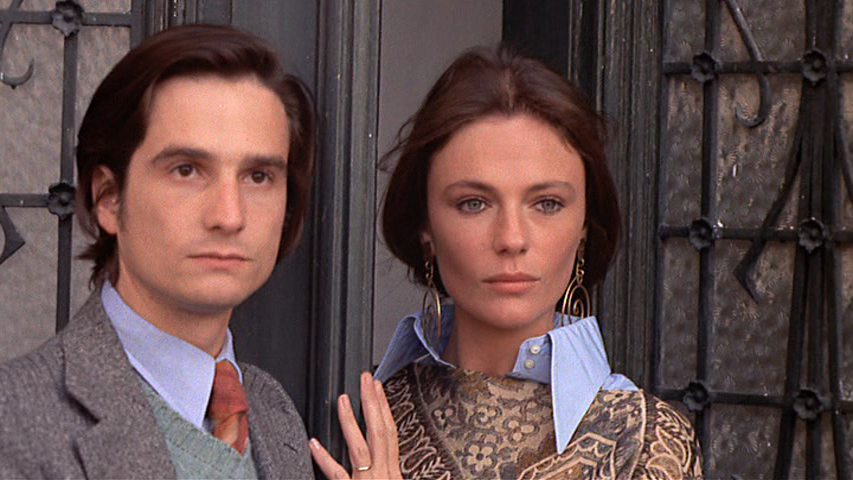
Review: There’s no denying the “pictorial beauty” of Two English Girls, which is consistently gorgeous, with fine attention paid to period detail. However, the storyline itself suffers from being too much of a somber literary adaptation, with Truffaut’s customary voice-over dominating the proceedings. Ultimately, those who have seen Truffaut’s Jules and Jim (and which film fanatic hasn’t?) will recognize this later film as simply a variation on the same theme; indeed, Leaud’s callow character is clearly based on Roche, and is even seen at one point writing and publishing a novel called Jerome et Julien, “about a woman who loved two men… It was his story, which transposed his love for the two sisters.” But while Jules and Jim remains a heady New Wave classic, utilizing creative editing and a non-linear storyline, Two English Girls takes more than two hours to tell its multi-year tale, and eventually becomes somewhat wearisome. In sum, I find myself agreeing with Peary’s initial take on the movie (as “depressing and endless”), rather than with his later enthusiasm. Redeeming Qualities and Moments:
Must See? Links: |
“We burn them to ashes, and then burn the ashes — that’s our official motto.”
|
Synopsis: |
|
Genres, Themes, Actors, and Directors:
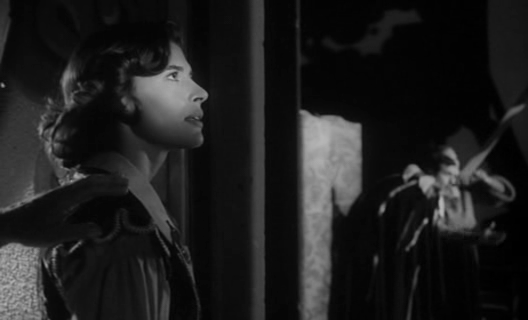
Response to Peary’s Review: While Peary’s hypothesis is a provocative one, I don’t think it quite holds water. First, as much as he adored every aspect of films and filmmaking, Truffaut was a deeply literate man who found tremendous value in books and writing — as is evident not only in many of his other films (where he often shows his characters engaged in thoughtful writing), but through his lifelong work as a screenwriter, as well as his frequent decision to adapt novels for the screen. Second, Montag isn’t shown being “seduced” by Clarisse in any way — in fact, their relationship never smacks of anything other than complicity in their growing awareness of how restricted their lives are. Linda and Clarisse (cleverly portrayed by the same actress — though this wasn’t Truffaut’s original intent) simply serve as dueling catalysts in Montag’s deeply personal struggle — indeed, Fahrenheit 451 is all about Montag. On that note, Werner and Truffaut notoriously butted heads over their conception of how Montag should be portrayed, to the point where their friendship ended bitterly and Werner attempted to sabotage continuity in the final scenes of the film by cutting his hair (!). While many disagree, I find Werner’s performance to be oddly compelling, in a robotic sort of way — he acts exactly how I would imagine a man in his position (and within this particular society) might act under such circumstances. Meanwhile, though Christie’s performance as short-haired Clarisse (her wig is terrible) isn’t particularly noteworthy, she does a fine job portraying Linda as a willing Stepford Wife, exhibiting an appropriate air of befuddlement when her husband suddenly begins to sabotage the secure life they’ve created for themselves. The best performance in the film, however, is a brief one given by stage actress Bee Duffel as “The Book Lady”, whose love of books overrides any other sense of self-preservation; she’s haunting to watch in her few moments on screen. As a whole, however, I agree with Peary that the film is somewhat of a “disappointment”, perhaps due in part to limitations in the original novel (which I haven’t read in many years — but message board posts on IMDb corroborate this suspicion). There are ultimately too many glaring inconsistencies and unanswered questions in the story itself to allow this adaptation to be anything other than a provocatively stylized rendering of a uniquely dystopian society; as DVD Savant puts it, “Conceptual problems that may have been easy to evade in print, leap out of the movie screen”, mostly revolving around Truffaut’s choice to show the entire society as “printless”. Yet it’s certainly worth a one-time look by film fanatics — for its visuals, its enduringly relevant themes, and a stand-out score by Bernard Herrmann. Redeeming Qualities and Moments:
Must See? Links: |
“Shooting a movie is like a stagecoach ride in the old west. At first you hope for a nice trip; soon you just hope to reach your destination.”
|
Synopsis: |
|
Genres, Themes, Actors, and Directors:
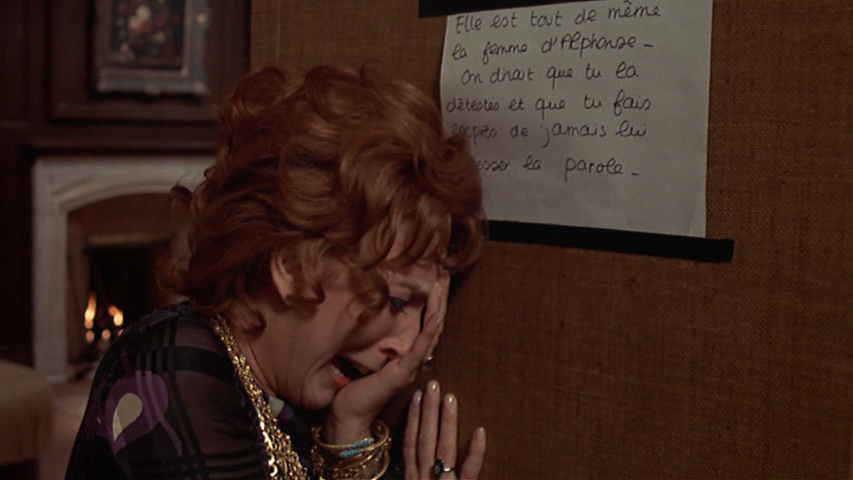
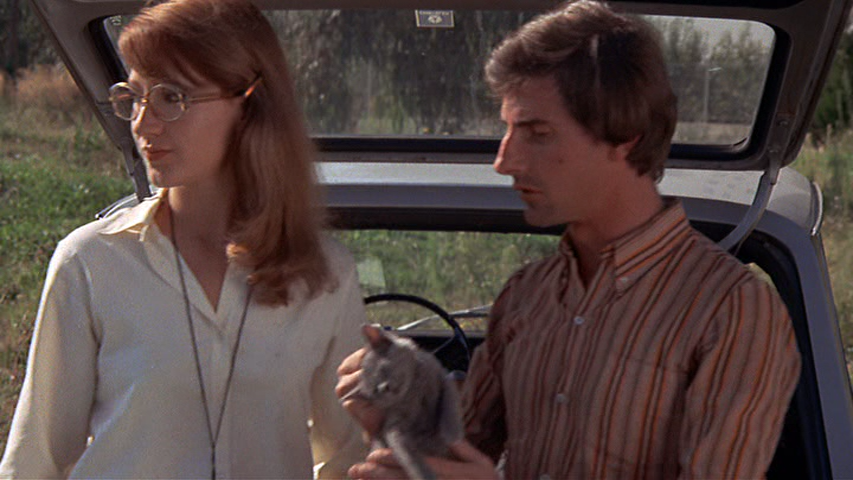
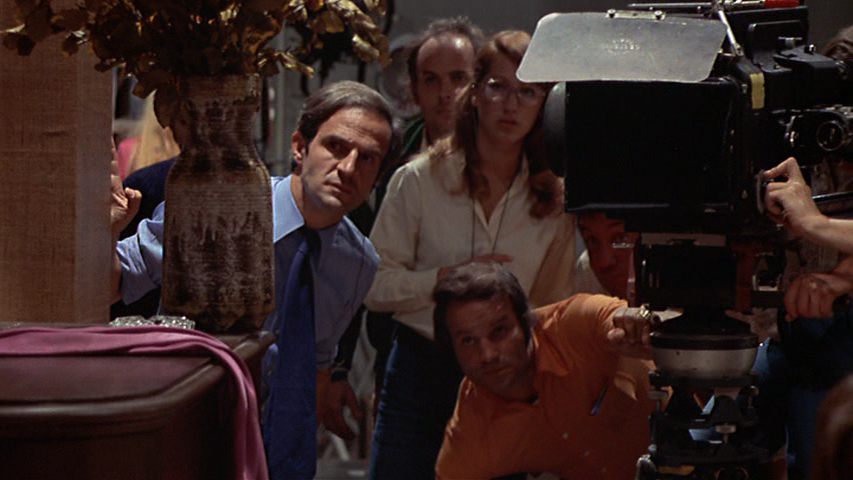
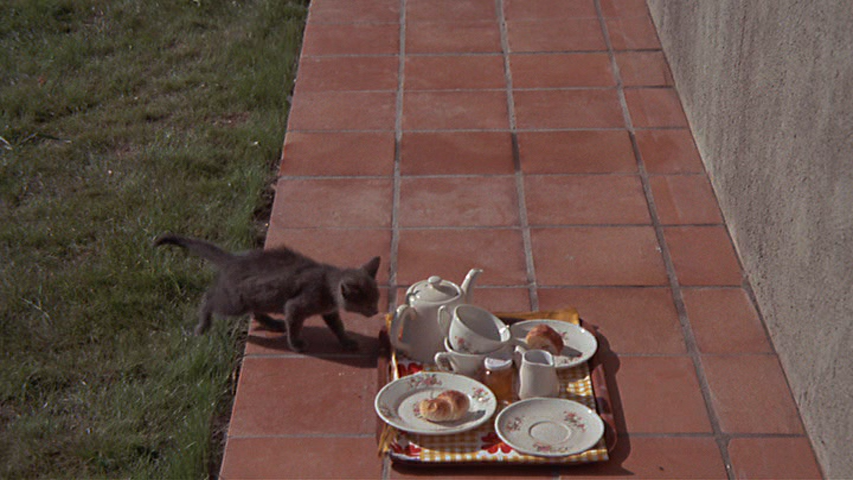
Response to Peary’s Review: Regardless, Day for Night remains a delightfully absorbing backstage drama, one which almost instantly makes us (as viewers) regret any criticism we heap upon “poor” filmmakers, given what a miracle it apparently is that anything noteworthy ever emerges from their efforts. In addition to a classic scene involving a kitten who refuses to drink the milk placed in front of it, the most memorable instance of such insanity is the tragic yet hilarious extended sequence in which drunk Cortese attempts in vain to remember her lines and open up the correct door; to that end, Cortese perfectly embodies an aging diva desperate to maintain her dignity while clearly on the path towards irreparable decline, and Jean-Pierre Aumont is equally well-cast as her past-and-present romantic co-star. Much less involving is the storyline involving Leaud’s callow, self-absorbed young star; his single-minded passion for a free-spirited young woman (Dani) is simply a distraction. However, Bisset gives a fine, vulnerable performance as the female star of the film, who doesn’t arrive on set until fairly late in the film but remains a dominant presence. She’s never been lovelier (and her French is quite remarkable). Redeeming Qualities and Moments:
Must See? Categories
(Listed in 1001 Movies You Must See Before You Die) Links: |
“I think the only cause of his dumbness is the isolation in which he lived.”
|
Synopsis: |
|
Genres, Themes, Actors, and Directors:
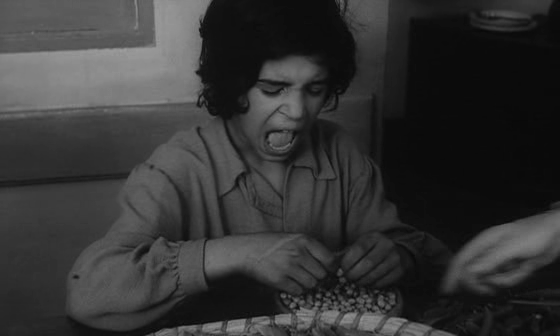
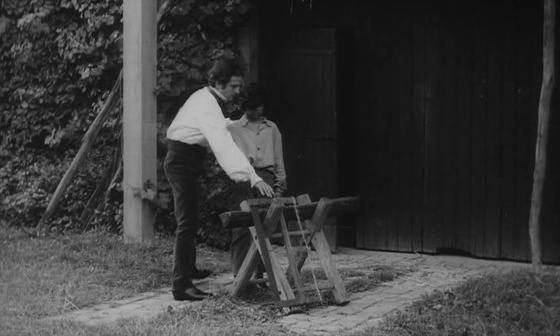
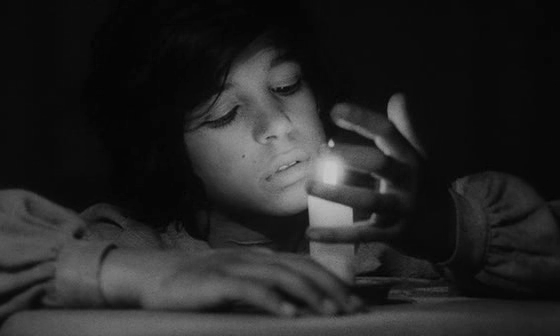
Response to Peary’s Review: Unlike Peary, most other critics found (and continue to find) much to praise about the film; for instance, Time Out’s reviewer calls it “as lucid and wryly witty a film as you could wish for, uncluttered by superfluous period detail”, with “a beautiful use of simple techniques” — such as “black-and-white photography, Vivaldi music, even devices as outmoded as the iris” — “giv[ing] it a very refreshing quality”. While my ultimate opinion lies somewhere in between Peary’s and the above assessment, what I’m most impressed by in the film is the astonishing performance given by Cargol, a gypsy selected from 2,500 potential boys to play the title role. Cargol (who apparently never acted again, instead turning to a career in music as an adult) is never anything less than entirely believable, seemingly remaining oblivious to the presence of the camera as he gives one of the most convincing child performances I’ve ever seen on screen. It’s for his performance alone that I recommend this film as one-time must-see viewing for film fanatics (who will surely also appreciate Nestor Almendros’ luminous b&w cinematography). Note: Click here to read some additional background on the film, told in part from the perspective of Truffaut’s daughter, Laura, who was on the set as a child. Redeeming Qualities and Moments:
Must See? Categories
Links: |
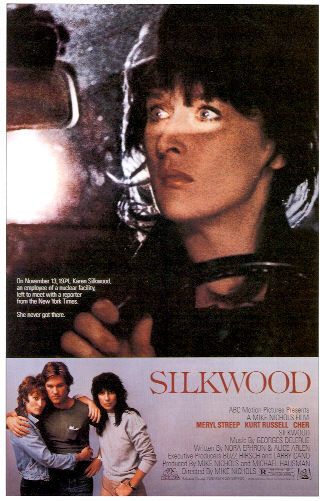
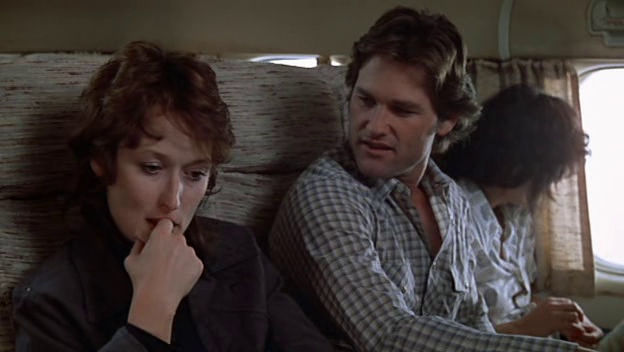
“I think you’d do just about anything to shut down this plant.”
|
Synopsis: |
|
Genres, Themes, Actors, and Directors:
Review: Note: Click here to read a follow-up story in People Magazine about the various individuals in Silkwood’s real life. Redeeming Qualities and Moments:
Must See? Categories
Links: |