Some Like It Hot (1959)

Some Like It Hot (1959)

“Now you know how the other half lives.”

Synopsis:
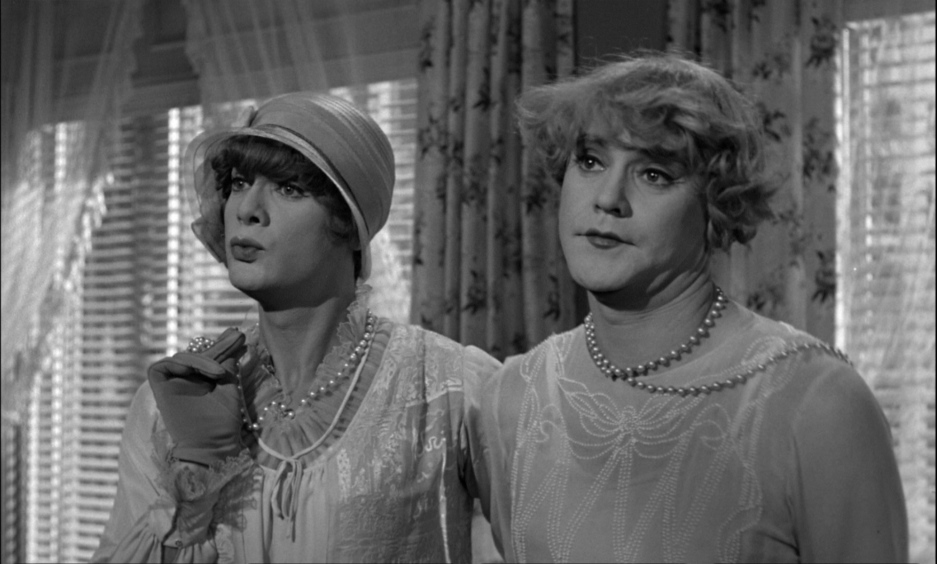
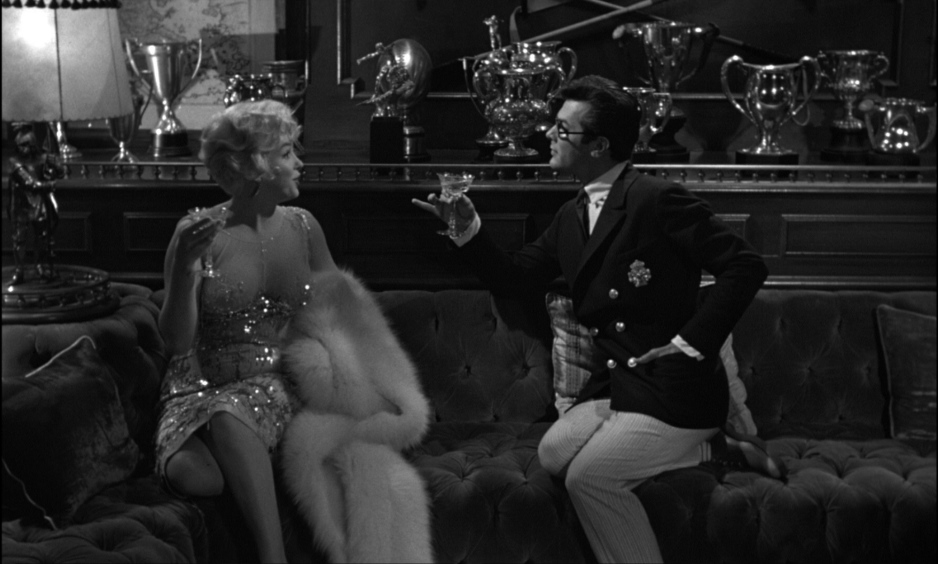
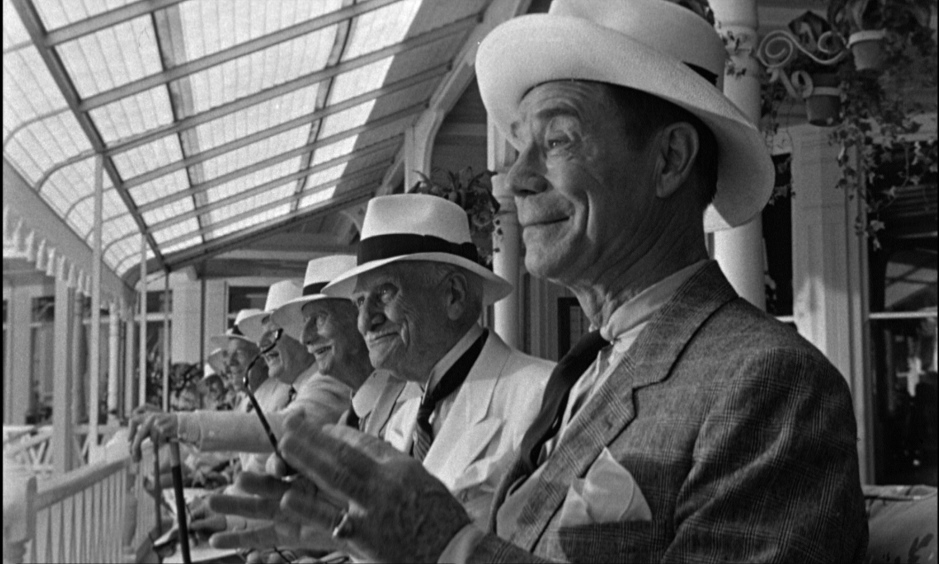
In 1920s Chicago, a pair of struggling musicians (Jack Lemmon and Tony Curtis) who accidentally witness a murder committed by mob boss Spats Colombo (George Raft) flee to Florida in disguise as members of an all-girl band. “Josephine” (Curtis) soon adopts the persona of a wealthy oilman to seduce sexy bandmate Sugar Kane (Marilyn Monroe), while “Daphne” (Lemmon) is wooed by an older millionaire (Joe E. Brown) who has no idea Daphne is actually a man.

Genres, Themes, Actors, and Directors:

  • Billy Wilder Films
  • Comedy
  • Fugitives
  • Gender Bending
  • George Raft Films
  • Jack Lemmon Films
  • Marilyn Monroe Films
  • Millionaires
  • Mistaken or Hidden Identities
  • Pat O’Brien Films
  • Tony Curtis Films

Response to Peary’s Review:
In his Alternate Oscars — where he votes Some Like It Hot the Best Film of the Year — Peary accurately notes that this classic farce by director Billy Wilder features “sparkling, high-energy comic performances by Marilyn Monroe, Jack Lemmon, Tony Curtis, and Joe E. Brown”, as well as “a dazzling array of lead and secondary characters, all with quirky, aggressive personalities”, and “hilarious, furious, and often sexy interplay among those characters”. He points out the film’s “enlightened ahead-of-its-time sexual-identity theme”, its “frenetic pacing”, and its “consistently clever, daring, and provocative” script — by Wilder and I.A.L. Diamond — which is perpetually “straddling the boundaries of bad taste”. He names some of its “many wonderful moments”, including “such classic scenes as Monroe’s Sugar [Kane] sexily wiggling up the train compartment aisle singing ‘Running Wild’; Sugar sharing secrets and a train berth with the increasingly titillated ‘Daphne’; … ‘Daphne’ dancing into the night with Osgood [Brown], a flower moving from mouth to mouth on their deadpan faces; [and] ‘Josephine’ reminding ‘Daphne’ of the reasons why s/he can’t marry Osgood”.

Peary argues that SLIH features “Marilyn Monroe’s most delectable performance”, and names her Best Actress of the Year in Alternate Oscars, where he notes that while she “plays a character who has been pushed around in life… [she] doesn’t try to win audience sympathy or pass herself off as lovable, as she does in other films”. Instead, he posits, she “concentrated on comedy”, and comes across as “truly funny in this film”. Indeed, there’s truly no evidence of the infamous inter-personal conflicts between Monroe and others that plagued the film’s production. Meanwhile, Peary names Jack Lemmon Best Actor of the Year in Alternate Oscars, where he notes that Lemmon is “howlingly funny” playing a “character who is excitable, frantic, flustered, argumentative, cynical, sarcastic, curious, horny, and slightly mischievous”. What’s most impressive about Lemmon’s characterization is the way he “jumps into the zaniness [of his “insane predicament”] and allows himself to become screwy and happy”. Peary notes that “as in all of his most successful comedies, he’s appealing here because, in addition to his immense talent, he seems to be enjoying himself so much”.

In his analysis of the film for GFTFF (elaborated upon in his more extensive reviews for Cult Movies 2 and Alternate Oscars), Peary notes that “in Wilder’s screen world, people are identified by what they wear, carry, or own, but by [the] film’s end, [the] characters will be identified by who they are”. He notes that “interestingly, Jerry and Joe don’t become silly movie females when they don women’s clothing”, instead becoming “tough, smart, fun-to-be-with broads who take guff from no man and are loyal friends to other women”. He points out that “like Sylvia Scarlett, [the movie’s] theme is that when a person lives as the other sex, he or she has the opportunity to explore previously latent aspects of the personality”; to that end, he argues that “Daphne and Josephine aren’t the alter egos of Jerry and Joe” so much as they are “more (extensions) of the two men”. Ultimately, SLIH remains the best and smartest of countless cross-dressing comedies to come out of Hollywood, offering an enduring treat to both first-time viewers as well as those returning for repeat visits.

Redeeming Qualities and Moments:

  • Marilyn Monroe as Sugar Kane (named Best Actress of the Year in Alternate Oscars)
  • Jack Lemmon as Jerry/Daphne (named Best Actor of the Year in Alternate Oscars)
  • Tony Curtis as Joe/Josephine (nominated as one of the Best Actors of the Year in Alternate Oscars)
  • Joe E. Brown as Osgood Fielding III
  • A memorable, clever script, full of plenty of one-liners: “I always get the fuzzy end of the lollipop.”

Must See?
Yes, of course — as a most enjoyable comedy classic.

Categories

  • Genuine Classic
  • Important Director
  • Noteworthy Performance(s)
  • Oscar Winner or Nominee

(Listed in 1001 Movies You Must See Before You Die)

Links:

Lady From Shanghai, The (1948)

Lady From Shanghai, The (1948)

“Everybody is somebody’s fool.”

Synopsis:
An Irish drifter (Orson Welles) immediately becomes smitten with a beautiful woman (Rita Hayworth) he helps rescue from a rape attempt. Soon he’s invited to serve as a ship’s mate on a yacht trip hosted by Hayworth’s wealthy, crippled husband (Everett Sloane), where Sloane’s business partner (Glenn Anders) attempts to convince Welles to take the rap for a murder he won’t actually commit.

Genres, Themes, Actors, and Directors:

  • Femmes Fatales
  • Framed
  • Orson Welles Films
  • Plot to Murder
  • Rita Hayworth Films

Response to Peary’s Review:
Peary writes that this “longtime cult favorite” — infamous as the movie “held back for two years by Columbia chief Harry Cohn, who was horrified that Welles would chop off the flowing red hair of Rita Hayworth” in addition to going “way over budget on a film that [he] couldn’t understand” — may be “Orson Welles’s most enjoyable film”. He notes that “the film has always given critics trouble because it’s hard to categorize”, given that the “story itself” (based on Sherwood King’s novel If I Die Before I Wake) “is classic film noir material”, but it could also be seen as “more of a twist on Gilda,” and “anticipates Beat the Devil” because of its “tongue-in-cheek humor, the improvisation, the bizarre characters, the blonde (played by an actress known for a different hair color) who is a habitual liar, [and] the sense that the director is having a grand time behind his camera”. Indeed, as Peary points out, “Welles has fun simply by setting his significant scenes in such unusual places as an aquarium (for a love scene), a Chinese theater, and an amusement-park Crazy House”, which serves as the location for Welles’ justifiably “celebrated shootout in the Hall of Mirrors”.

I’m in complete agreement with Peary’s assessment of this convoluted yet consistently enjoyable and creatively filmed noir, which — like most of the titles in Welles’ oeuvre — never fails to keep one engaged on (at the very least) a visual level. Welles-the-actor has been criticized for his attempt at an Irish brogue here in the lead role, but I find it convincing enough, and a nice change from his typically sonorous boom. It’s remarkably easy to buy his characterization as a chump who’s fully aware he’s being taken advantage of by Hayworth and her crew, yet can’t seem to find a way out of the nightmare he’s pulled into. The screenplay (co-written by Welles) is full of zingy one-liners (“I’ve always found it very sanitary to be broke”), and will certainly keep you on your toes throughout — though I actually don’t find it quite so difficult to follow as others claim. Meanwhile, Hayworth is as gorgeous as ever, easily convincing us that she’s someone Welles would lose his head over.

Redeeming Qualities and Moments:

  • Orson Welles as Michael O’Hara
  • Everett Sloane as Arthur Bannister
  • Glenn Anders as George Grisby
  • Innovative direction by Welles

  • Atmospherically noir-ish cinematography

  • Fine location footage in the Bay Area of California

  • The justifiably famous “hall of mirrors” finale

Must See?
Yes, as one of Welles’ best films.

Categories

  • Genuine Classic
  • Important Director

(Listed in 1001 Movies You Must See Before You Die)

Links:

Becky Sharp (1935)

Becky Sharp (1935)

“She’s hard, she’s selfish — she’ll take advantage of you!”

Synopsis:
In early 19th century England, a socially ambitious orphan named Becky Sharp (Miriam Hopkins) seduces various men in her attempt to rise out of poverty, though she only truly loves her soldier-husband (Alan Mowbray).

Genres, Themes, Actors, and Directors:

  • Frances Dee Films
  • Historical Drama
  • Literature Adaptation
  • Miriam Hopkins Films
  • Rouben Mamoulian Films
  • Social Climbers
  • Strong Females

Response to Peary’s Review:
Peary notes that while this screen version of “Langdon Mitchell’s stage adaptation of Thackeray’s Vanity Fair… restores several episodes from the novel, it differs in drastic ways”, specifically by eliminating “most of his social criticism”, failing to adequately express “how class pressures mold the character of Becky Sharp”, and making Becky “the one major character in the film”. While Becky is traditionally viewed as the “anti-heroine” of the novel — in contrast with the lead character of Amelia (played as a supporting role in the film by Frances Dee) — “Becky becomes our heroine [in the movie], the feisty figure whom we identify with or root for as she uses every trick in the book… to get what she wants.”

Peary points out that while “in the book she is ruthless”, the “script eliminates her many unforgivable acts”, leaving us to “see only her virtues”. He notes that she possesses “charm, wit, intelligence, resilience, [and] vitality” — and that while she “is selfish”, she “wants the best for her social husband… and best friend [Dee] as well as for herself”, and is “willing to sacrifice her own happiness so that they will be happy”.

Peary ultimately argues that while this film “may not be Thackeray”, it’s nonetheless “an enjoyable, if flimsy, period piece, with a likable heroine and a dynamic performance from Hopkins” (who he nominates as one of the Best Actresses of the Year in his Alternate Oscars). Unfortunately, I can’t quite agree with Peary that Becky comes across as a “likable heroine”, and I’m not overly impressed with Hopkins’ performance, in which she seems to indulge her worst tendencies towards shrillness and hyperactivity.

With that said, her Becky remains a clever, savvy heroine to be sure, and one can’t help sympathizing with her position in a society which so roundly rejects her from the get-go; meanwhile, her marriage to Mowbray demonstrates that she is capable of true love, even if her designs on men are always and forever calculated to help her maneuver her way out of poverty.

As Peary notes, however, the film is really “best known for being the first to use three-color Technicolor process”, and represents a “remarkable job [done] with [early] color experimentation”. He points out that director Rouben Mamoulian (with assistance from DP Ray Rennahan) “decided to use color thematically to express character mood, and added more and more color as the film progresses and the plot thickens”, with “every shot look[ing] color-coordinated”. He notes that his “favorite shot comes [early] in the film”, as “Mowbray and another red-jacketed soldier stand in the foreground in front of a hanging white sheet, through which we can see the black silhouettes of Hopkins and Dee — so within the frame Mamoulian contrasts color with black and white”.

He’s right to note that this is “very clever”, as is the film’s most famous sequence taking place “on the eve of Waterloo”, as the guests at a gala ball “leave according to their color group so only the ones in red remained in the ballroom”.

Redeeming Qualities and Moments:

  • Fine use of early Technicolor cinematography

Must See?
No, though it’s worth a look simply for its historical relevance.

Links:

Follow the Fleet (1936)

Follow the Fleet (1936)

“Gosh, you’re glad to see me.”

Synopsis:
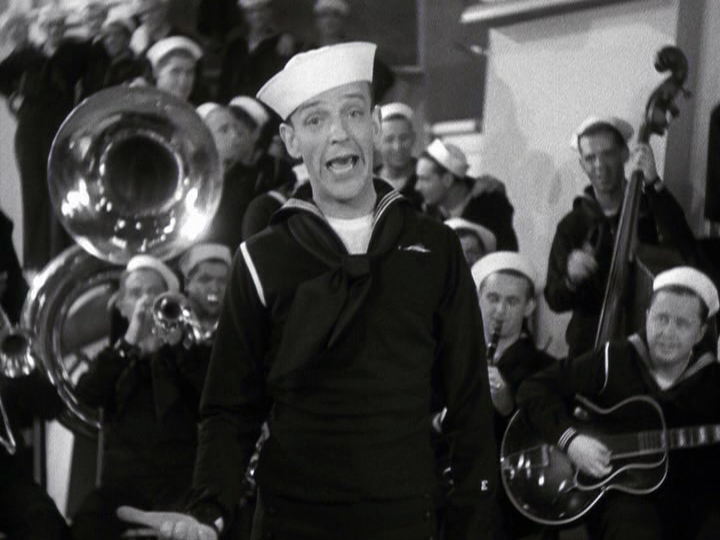
A sailor (Fred Astaire) on leave visits his former dance partner (Ginger Rogers) in hopes of rekindling their romance; meanwhile, his shipmate (Randolph Scott) falls for Rogers’ sister (Harriet Hilliard), but is scared away by her desire for marriage.

Genres, Themes, Actors, and Directors:

  • Dancers
  • Fred Astaire Films
  • Ginger Rogers Films
  • Musicals
  • Romance
  • Sailors
  • Winning Him/Her Back

Response to Peary’s Review:
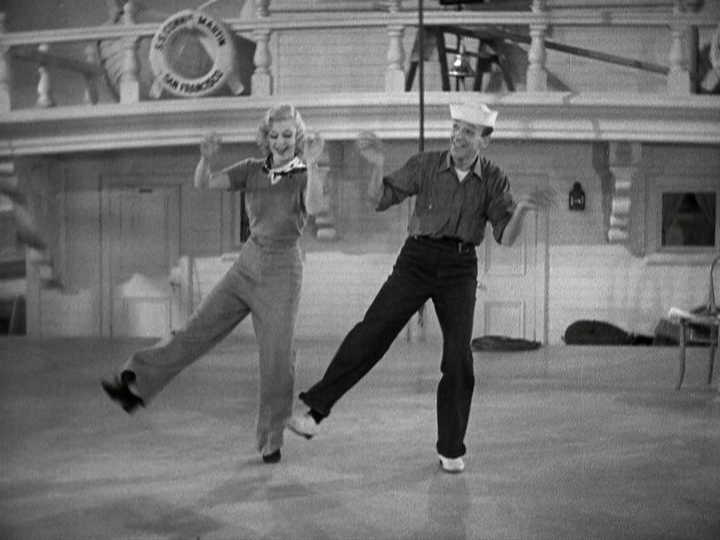
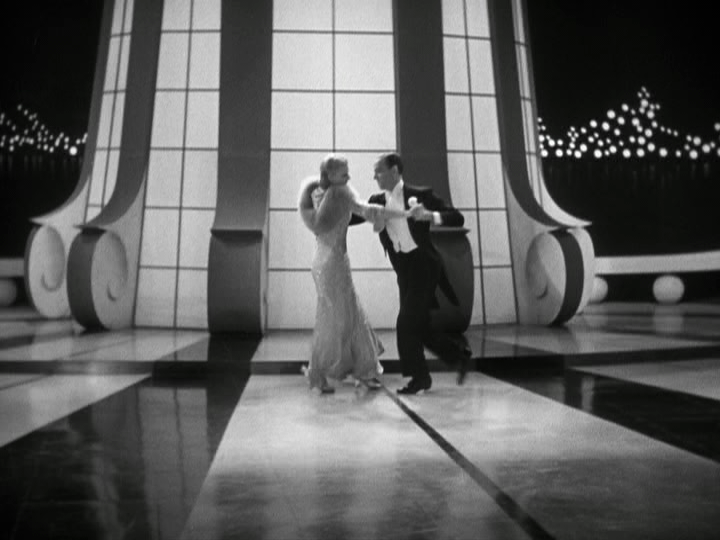
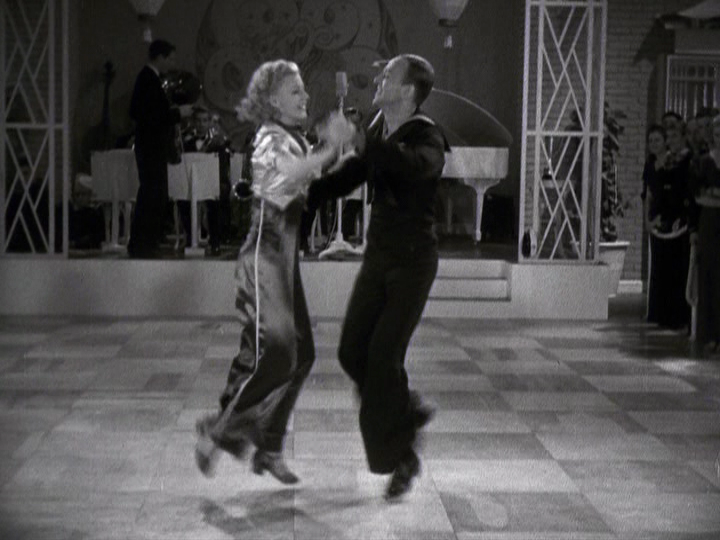
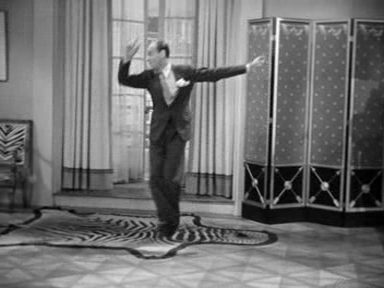
Peary accurately points out that the “hackneyed” subplot between Hilliard and Scott in this fifth Astaire-and-Rogers musical — an adaptation of Hubert Osborne’s 1922 play Shore Leave — “slows down the film and [unfortunately] becomes more important than the Astaire-Rogers romance”. With that said, the fact that Irving Berlin “contributed seven songs” to the soundtrack — including “We Saw the Sea”, “Let Yourself Go”, and “I’d Rather Lead a Band” — nearly makes up for the boring and predictable storyline. As Peary notes, the film’s “highlight” may be the “most playful number in the series,” when Astaire and Rogers dance to “I’m Putting All My Eggs in One Basket”, “during which Rogers intentionally dances out of synch with Astaire, as if she were a little girl… who imaginatively finds silly things to do with her feet and body each time they begin a new series of steps” — it’s a true delight to watch.

While the “plot has been criticized for making Astaire and Rogers into the comedy team”, I agree with Peary that this is “okay for a change because they’re funny” — at least up until the unexpectedly somber final number, Berlin’s “Let’s Face the Music and Dance”, which takes the characters completely out of their storyline but remains an “elegant and romantic” finale.

Redeeming Qualities and Moments:

  • Fine dancing and/or singing by Rogers and Astaire, to numerous classic tunes by Irving Berlin


Must See?
No, though it’s definitely worth a look simply for the dancing and songs, and is must-see for any Astaire/Rogers fans.

Links:

Gay Divorcee, The (1934)

Gay Divorcee, The (1934)

“Chances are that fate is foolish.”

Synopsis:
A professional dancer (Fred Astaire) falls in love-at-first-sight with a beautiful young woman (Ginger Rogers) while she’s traveling through Paris with her aunt (Alice Brady). After a fruitless attempt to successfully woo her, their paths accidentally cross again when Astaire accompanies his lawyer-friend (Edward Everett Horton) to a hotel where Horton is helping Rogers seek a divorce from her stuffy husband (William Austin), courtesy of a hired co-respondent (Erik Rhodes).

Genres, Themes, Actors, and Directors:

  • Divorce
  • Fred Astaire Films
  • Ginger Rogers Films
  • Mistaken or Hidden Identities
  • Musicals
  • Play Adaptations
  • Romantic Comedy

Response to Peary’s Review:
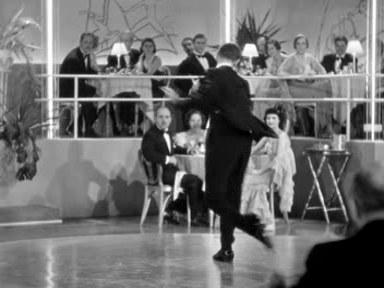
Peary writes that “having stolen Flying Down to Rio [1933] from its topbilled stars, Fred Astaire and Ginger Rogers were given their first lead roles in this delightful adaptation of Dwight Taylor’s stage musical, The Gay Divorce, in which Astaire had just starred in London”. He correctly points out that the scene in which Rogers finally falls for the persistent Astaire “after they dance together to… Porter’s ‘Night and Day’ [is] one of the most elegant, seductive numbers in the entire Astaire-Rogers series” — indeed, it epitomizes the role of dance-as-lovemaking in the films, complete with Astaire lighting up a cigarette once the number is done. Peary notes that the “stars are appealing, playing very likable characters”; we can’t help but root for their romance to succeed, and it’s fun to see how they eventually overcome the mistaken-identity subplot they become immersed in.

Ultimately, of course, the storyline in any Astaire-and-Rogers film matters much less than its dancing, songs, and humor. To that end, it’s too bad that most of Cole Porter’s original songs were axed (leaving only his iconic “Night and Day”), but Astaire’s song-and-dance performance of “A Needle in a Haystack” is quite memorable, and 17-year-old Betty Grable’s rendition of “Let’s K-nock K-nees” (sung to Horton) is pleasant as well. I’m much less a fan of the “famous, extravagantly produced 17-minute song-dance ‘The Continental’,” which goes on for far too long — but it is fun to see how Astaire and Rogers manage to “slip past Rhodes and onto the ballroom floor”, courtesy of a clever (if patently obvious) ploy using a silhouette on a record player.

Meanwhile, playing “the ridiculous Italian co-respondent (a union man), Rhodes is absolutely hilarious” — he steals the movie whenever he’s on screen, whether he’s bungling his line-of-code (“Chance is a fool’s name for fate”) in an infinitely creative number of ways, or “calling his wife long distance” and boasting “that his nine-year-old son, whom he thinks he heard in the background, already has a voice that’s becoming deeper” (!). Alice Brady is effective as the ultimate ditzy socialite, and Horton is well-cast as a bungling lawyer struggling to live up to his father’s reputation — though Eric Blore (fresh from the stage play) is unfortunately given too few funny lines to make much of an impression.

Redeeming Qualities and Moments:

  • Astaire’s initial seduction-by-dance of Rogers (set to the music of Cole Porter’s “Night and Day”)
  • Alice Brady as Aunt Hortense
  • Erik Rhodes as Tonetti
  • A fun and frothy storyline
  • Some fine solo dancing by Astaire

Must See?
Yes, as a most enjoyable Astaire-and-Rogers musical. Nominated as one of the Best Films of the Year in Peary’s Alternate Oscars.

Categories

Links:

Boy Who Could Fly, The (1986)

Boy Who Could Fly, The (1986)

“Sometimes we need to believe in a little magic, especially when there’s so much pain.”

Synopsis:
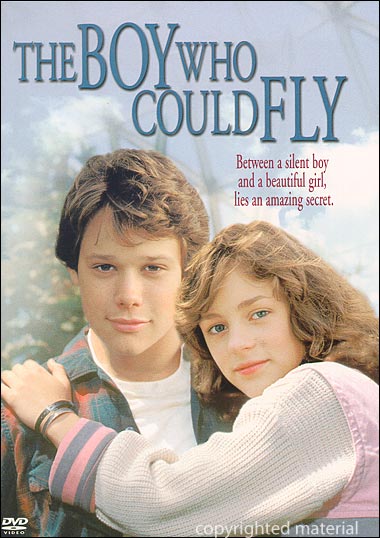
After moving to a new town with her widowed mother (Bonnie Bedelia) and younger brother (Fred Savage), a teenage girl (Lucy Deakins) befriends and falls in love with her mute neighbor (Jay Underwood), who has believed he can fly ever since his parents died in a plane crash when he was five.

Genres, Themes, Actors, and Directors:

  • Fantasy
  • Friendship
  • Nonconformists
  • Teenagers

Review:
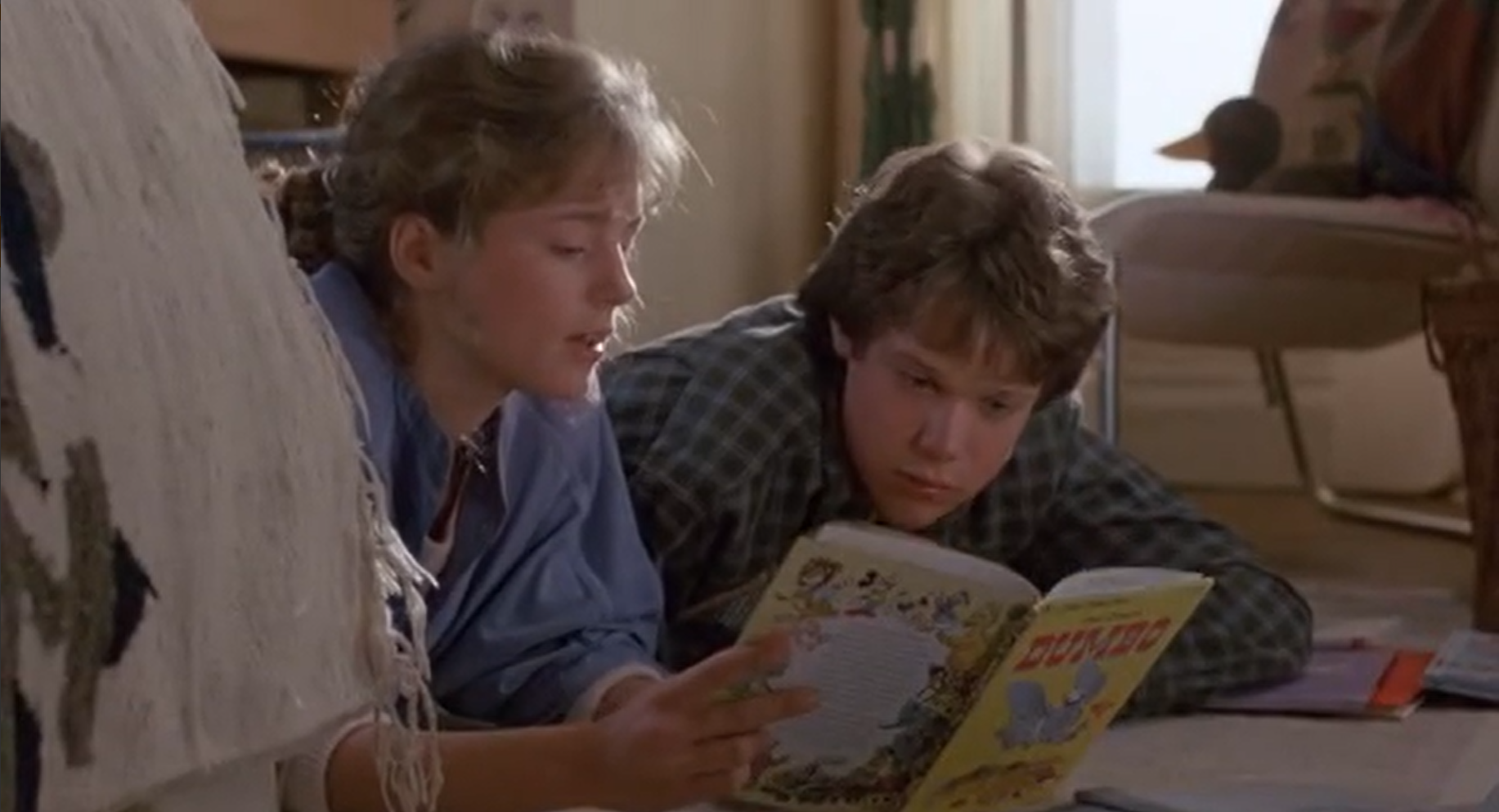
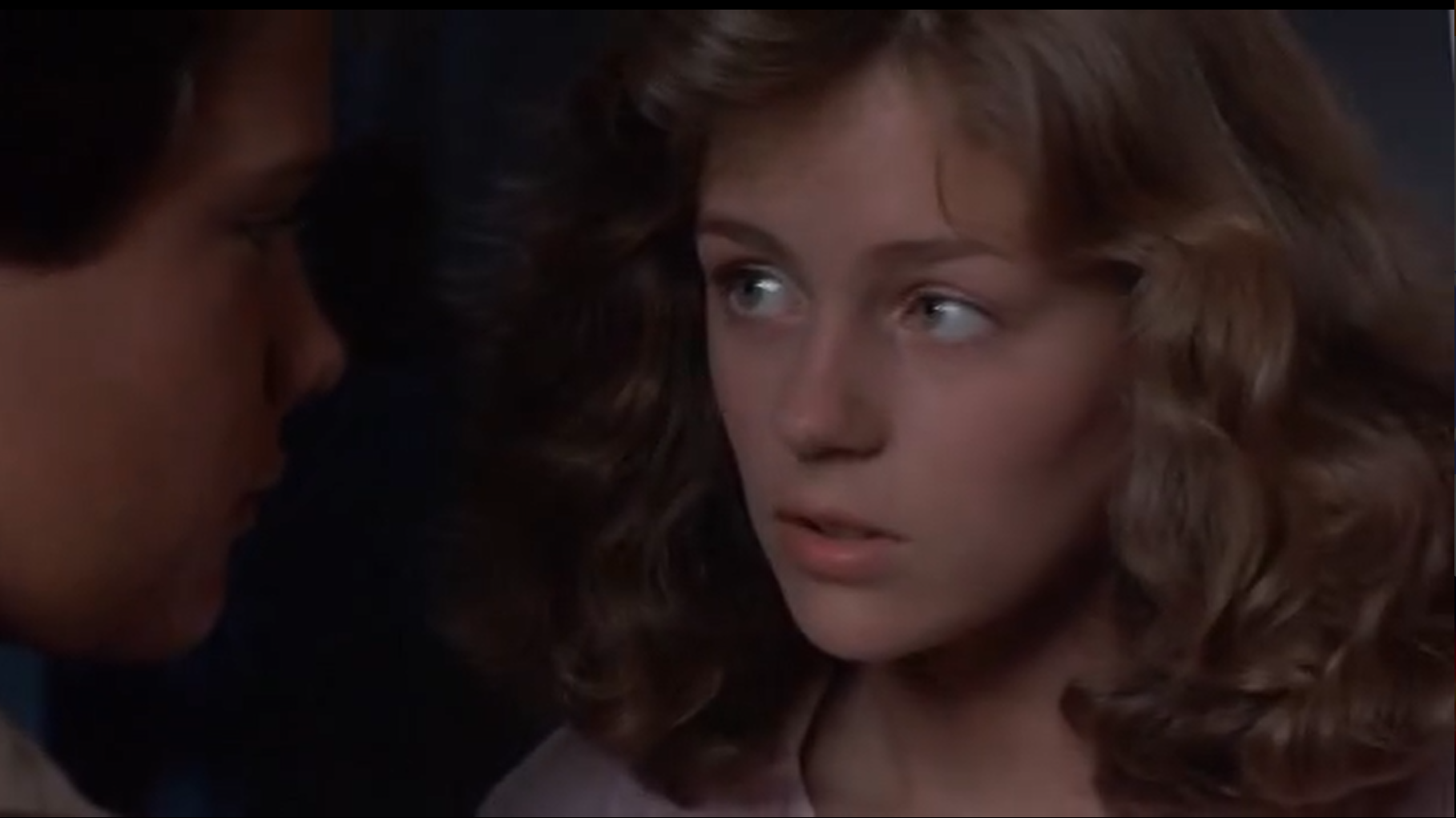
Although it was well-received upon its release, this quirky ’80s teen romance will primarily be of interest to those who remember enjoying it years ago — especially one-time teenage boys who had a crush on beautiful 15-year-old Deakins (who looks remarkably like her screen mother, Bonnie Bedelia). The storyline, while sensitively handled in most cases, follows an overly worn path in showing how Deakins and her grieving family adjust to life in a new town: Savage (before his breakthrough fame on “The Wonder Years”) deals with predictably menacing neighborhood bullies who won’t let him ride his bike around the corner:

… Deakins longs from afar to be part of the predictably hip “in crowd” at school:

… and Bedelia (predictably) struggles to adapt to working life after 13 years away (she’s absolutely flummoxed by the introduction of computers into the insurance business).

The major selling point of the film is Deakins’ relationship with Underwood, which is touching, but leaves one with too many questions left unanswered about Underwood’s situation and supposed special abilities.

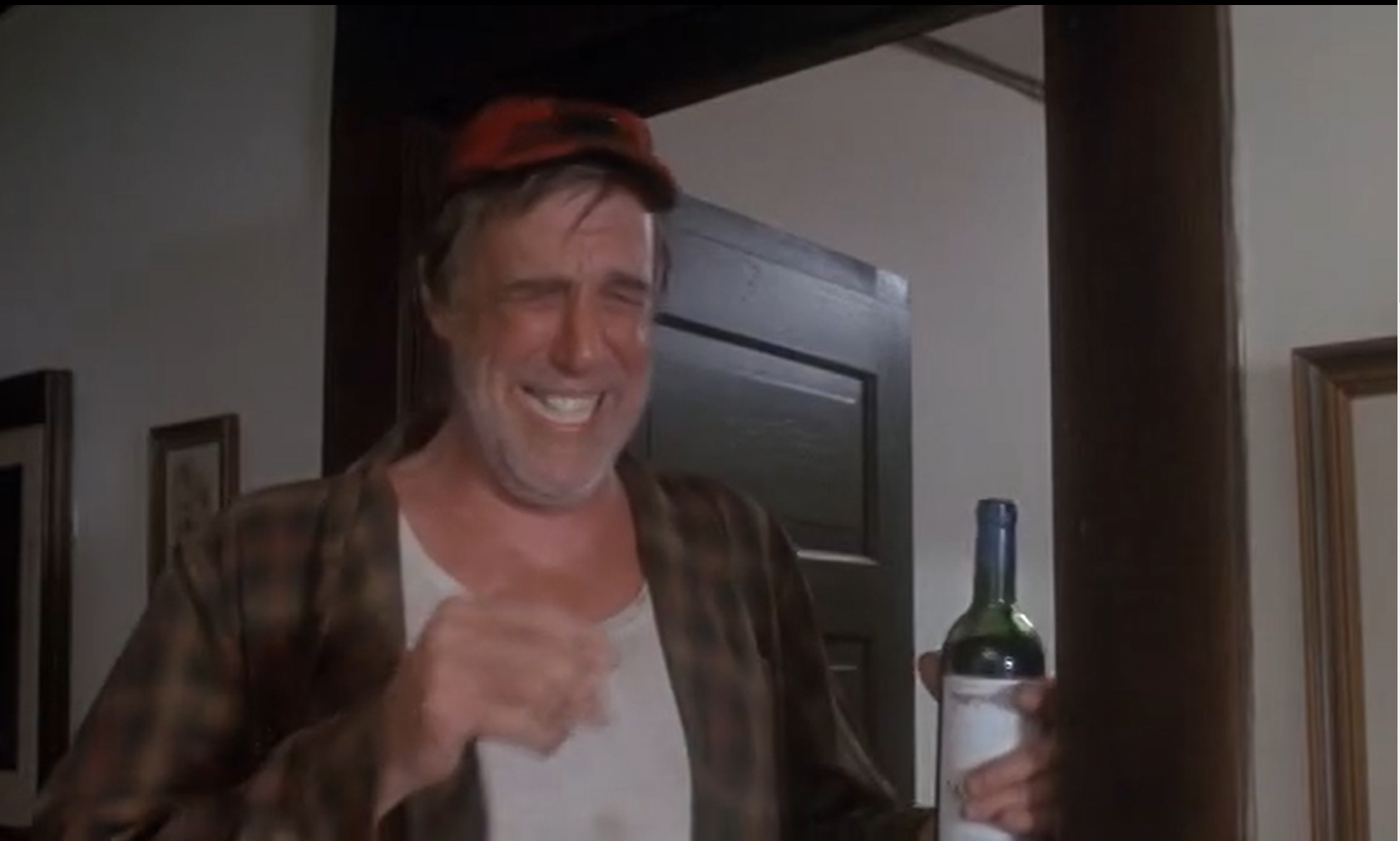
His character is referred to as “autistic”, but doesn’t necessarily display characteristic signs of this, instead apparently suffering from selective mutism and emotional disturbance after his parents’ untimely death. (Could this gaffe be a function of autism only recently being better understood?) Meanwhile, his alcoholic caretaking uncle (Fred Gwynne, playing his role as a caricature):

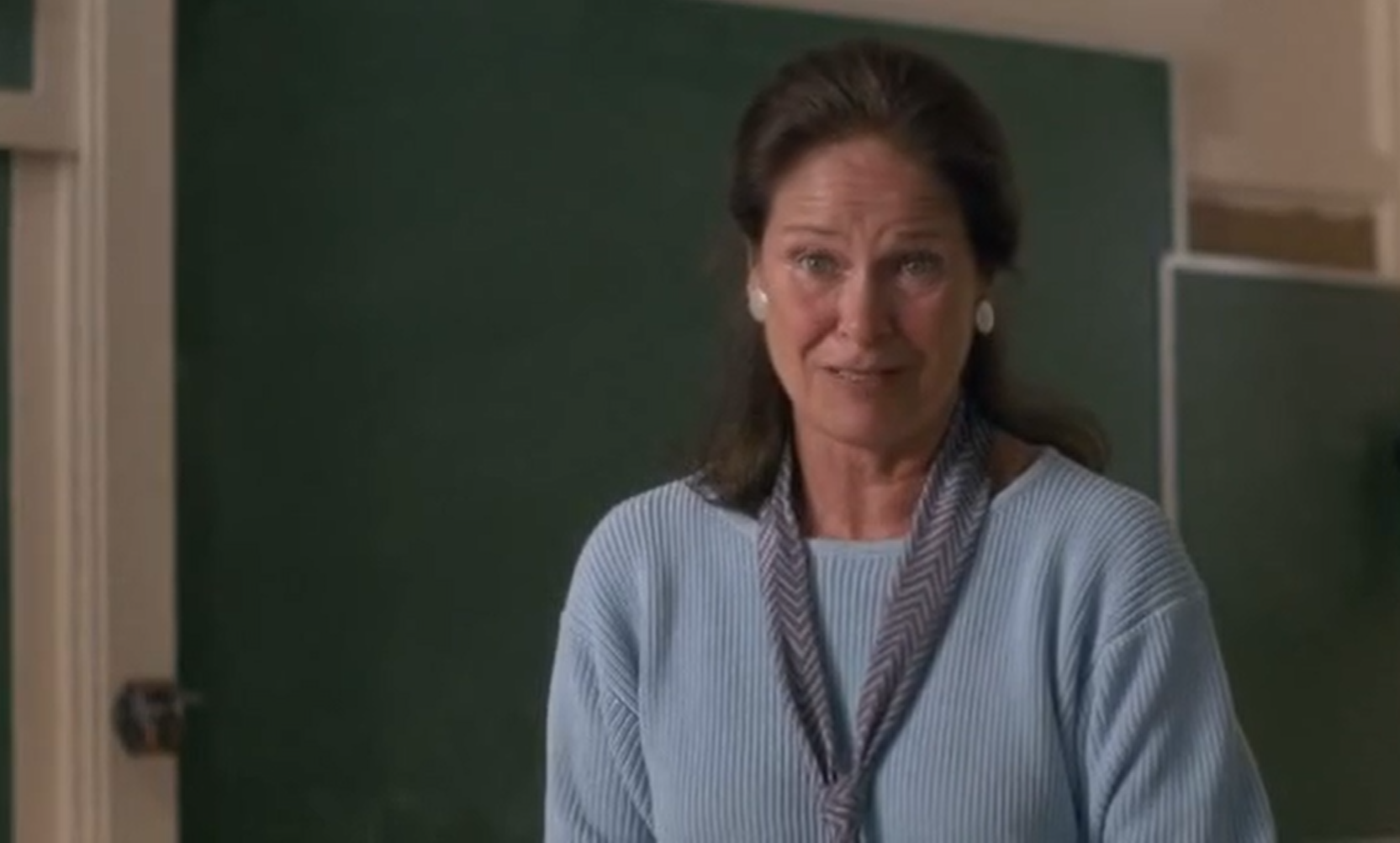
claims to have seen his nephew fly, but he’s clearly about as unreliable a witness as one could muster. Underwood’s number one fan appears to be a kind and understanding English teacher (Colleen Dewhurst):

but her role is severely underwritten, and we never understand exactly how or why she’s come to play such a critical part in his welfare.

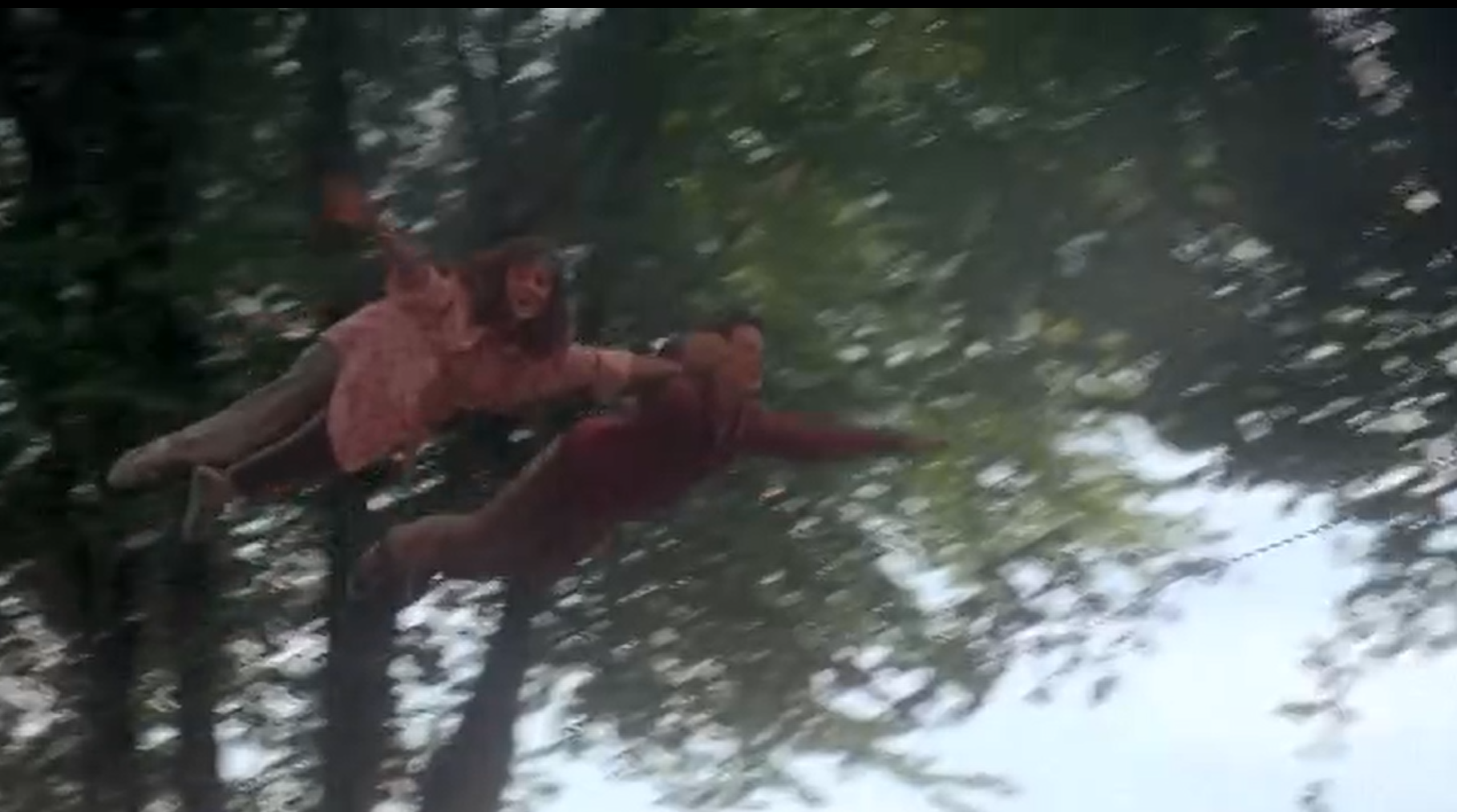
Eventually, writer/director Nick Castle chooses to turn Underwood’s situation into an actual fantasy rather than an exploration of his troubled inner fantasy-life, which may have thrilled audiences at the time (the special effects enhance the film’s romantic potential) but is ultimately the less satisfying choice.

While I hate to be a grinch, I can’t agree with Peary’s assessment of this one as a Personal Recommendation.

Redeeming Qualities and Moments:

  • Lucy Deakins as Milly
  • Bonnie Bedelia as Charlene

Must See?
No; this one will primarily be of interest to viewers who remember it fondly from their youth. Listed as a Sleeper and a Personal Recommendation in the back of Peary’s book.

Links:

Bell Book and Candle (1958)

Bell Book and Candle (1958)

“It might be pleasant to be humdrum once in a while.”

Synopsis:
A modern-day witch (Kim Novak) living “underground” in New York City with her brother (Jack Lemmon) and aunt (Elsa Lanchester) secretly casts a spell to lure her neighbor (James Stewart) away from his fiancee (Janice Rule). Meanwhile, her brother foolishly cooperates with an occult author (Ernic Kovacs) on his latest book, threatening to expose their true identities.

Genres, Themes, Actors, and Directors:

  • Elsa Lanchester Films
  • Jack Lemmon Films
  • Janice Rule Films
  • Jimmy Stewart Films
  • Kim Novak Films
  • Play Adaptations
  • Romantic Comedy
  • Witches and Wizards

Response to Peary’s Review:
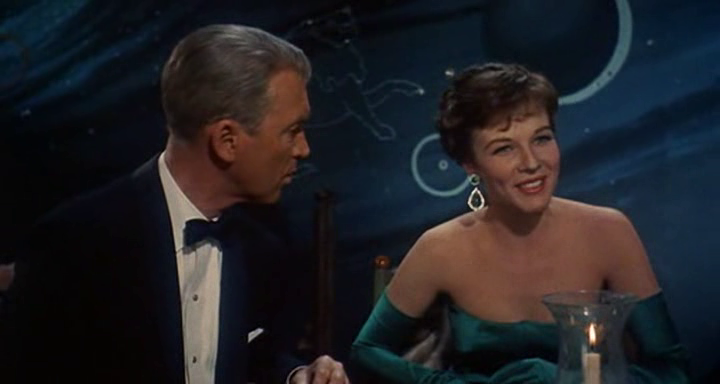
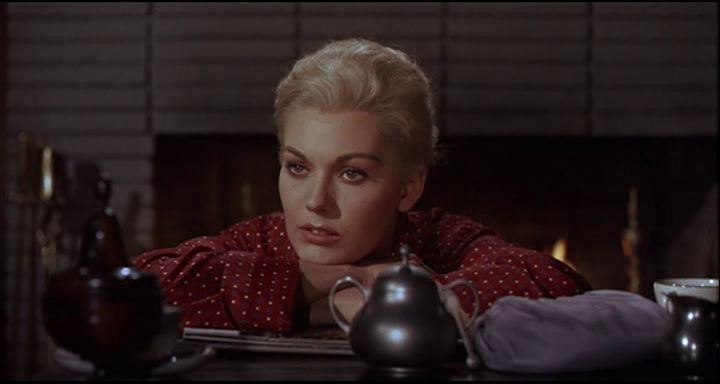
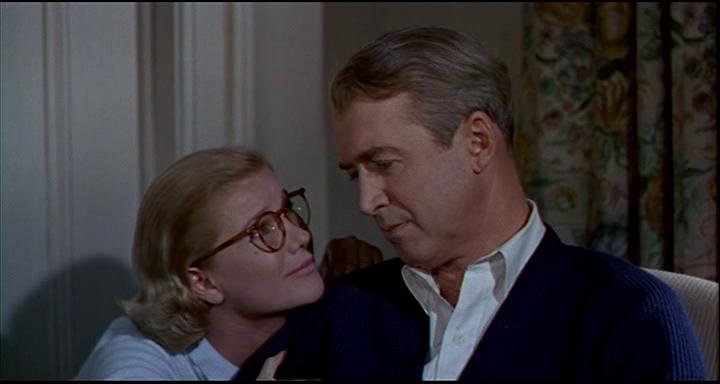
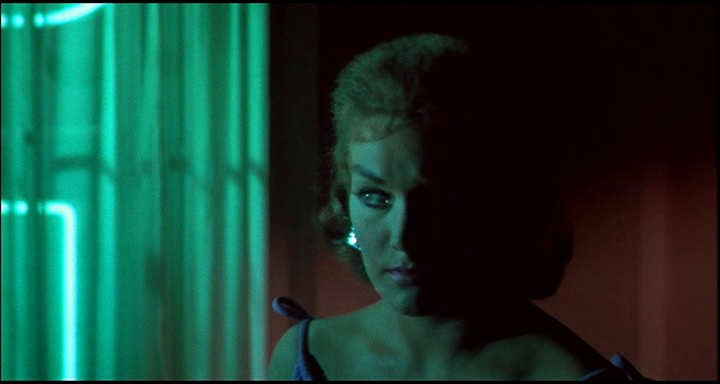
Peary writes that people who “saw this mild comedy” — an “adaptation of John van Druten’s play” — when it was released in theaters may “have a soft spot for it”, but warns that “otherwise you’ll be disappointed, even bored”. He notes that while a “dream comedy cast was assembled”, “everyone seems to have taken tranquilizers”, and argues that the “picture cries out for wildness, even slapstick humor”, thanks to “lifeless direction by Richard Quine”. I’m in full agreement with Peary’s assessment of this disappointing “follow-up” to Novak and Stewart’s romantic pairing the same year in Vertigo. Novak, while appropriately sexy and seductive, seems decidedly bored throughout much of the film:

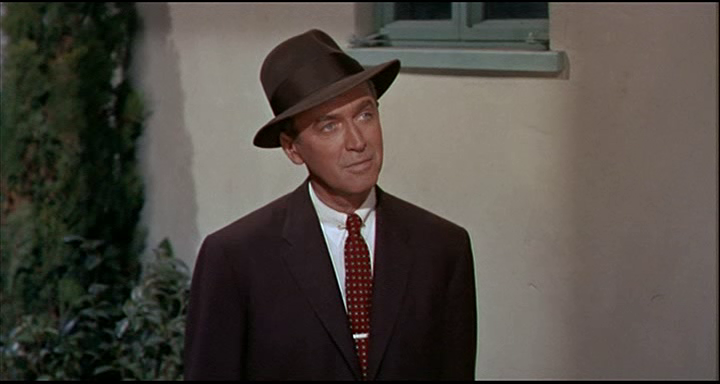
while Stewart brings nothing new to his rather thankless role as a spellbound chump.

Meanwhile, Lanchester is typecast in a throwaway role as Novak’s ditzy aunt:

and Lemmon is merely serviceable as Novak’s foolhardly brother.

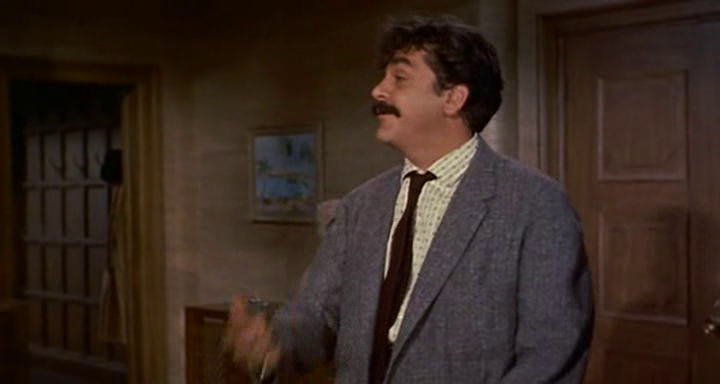
Smidgens of relief come from both Janice Rule as Stewart’s smug fiancee, and Ernie Kovacs as the perennially befuddled “occult” author, but they ultimately can’t save the predictable storyline from itself.

Redeeming Qualities and Moments:

  • Janice Rule as Merle Kittridge
  • Ernie Kovacs as Sidney Redlitch

Must See?
No; this one isn’t must-see viewing.

Links:

Vertigo (1958)

Vertigo (1958)

“One doesn’t often get a second chance.”

Synopsis:
A retired policeman (James Stewart) with a fear of heights is asked by his friend (Tom Helmore) to follow his beautiful wife (Kim Novak), who has recently become obsessed with her suicidal ancestor. Soon Stewart finds himself obsessively in love with Novak, and is devastated when events take a surprising turn for the worst.

Genres, Themes, Actors, and Directors:

  • Detectives and Private Eyes
  • Framed
  • Hitchcock Films
  • Jimmy Stewart Films
  • Kim Novak Films
  • Mistaken or Hidden Identities
  • Obsessive Love

Response to Peary’s Review:
Peary begins his review of what he refers to as “Hitchcock’s most perplexing film” by noting the significance of the opening scene (a “chase across a San Francisco roof”), which demonstrates how the lead character, ‘Scottie’ Ferguson (Stewart), develops the debilitating vertigo that plagues him throughout the remainder of the film. He astutely points out that “after the cop who tries to save [dangling Stewart] plummets to his death”, “Hitchcock never shows [Stewart] being rescued” — thus, “by leaving Scottie in mid-air, Hitchcock instills in us the feeling… that Scottie has slipped into a surreal, dreamlike netherworld that exists between life and death, the present and the past, the real and illusionary”. He further notes that “because a cop died in his place, [a guilty] Scottie is attracted to death, which is embodied by the beautiful, ethereal, [suicidal] Madeleine” (a “well cast” Kim Novak).

To say more about the film’s suspenseful, psychologically intense storyline is to immediately give away spoilers; unfortunately Peary’s entire review (like most you’ll find online) is simply riddled with them. Suffice it to say that a significant death occurs about halfway through the film, and a further critical plot twist is revealed about 2/3rds of the way through — both of which should come as a deliciously unexpected surprise to novice viewers, thus adding to the film’s enduring legacy as a first-rate thriller. With that said, I’ll agree with Peary that the “unique and brilliant” structure of the film — in which “the picture becomes an intense, psychological character study of Scottie” rather than a potential murder mystery — is somewhat “infuriating”; like Peary, “I prefer the mystery unraveling to Scottie unraveling and becoming unbearably obsessive, tyrannical, and self-destructive”. Plus, as he notes, the surprisingly “tragic ending is… unsatisfying and depressing”.

Vertigo — which in recent years has steadily scaled the ranks of various highly regarded “best movie” lists, especially since a gorgeous restoration was completed in 1996 — is often cited as Hitchcock’s masterpiece, and certainly remains one of his most discussed and analyzed films. This is due in part to the fact that the story — in which middle-aged Stewart develops a near-pathological obsession with an aloof “icy blonde” — seems to mirror Hitchcock’s own idiosyncratic fascination with such women. However, while I admire the film on many levels, it’s ultimately not a personal favorite. Scottie’s treatment of Novak eventually becomes far too disturbing to easily stomach, and it’s not much fun to witness Hitchcock’s relentless assertion that when “given a choice of women, men are so weak they’ll always pick the helpless over the independent, the attractive over the plain, the frigid over the accessible, and the illusionary over the real” — indeed, the character of Barbara Bel Geddes’ “Midge” (Stewart’s ex-fiancee, who harbors an enduring crush on him) is never allowed to become anything more than a sorry symbol for everything “normal” and healthy Stewart is rejecting.

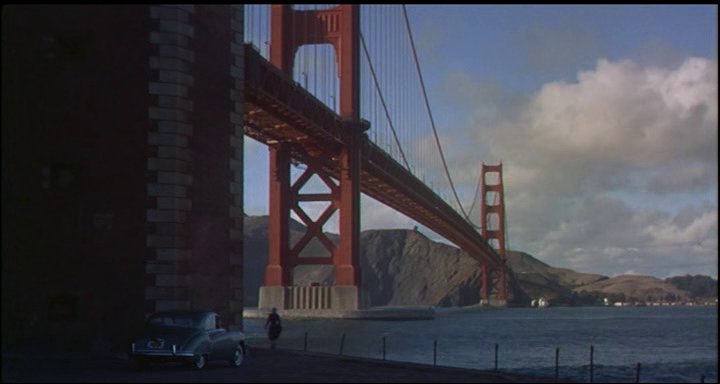
Yet regardless of how film fanatics may feel about the film’s ultimate ranking within Hitchcock’s pantheon, there’s much about it to enjoy — including Novak’s surprisingly nuanced performance(s), excellent use of Bay Area locales, and Bernard Herrmann’s justifiably celebrated score (one of his best). It remains a classic film ffs won’t want to miss viewing at least once — and likely more often, simply to absorb its complex psychological layering and storyline.

Redeeming Qualities and Moments:

  • Jimmy Stewart as Scottie Ferguson
  • Kim Novak as Madeleine/Judy
  • Barbara Bel Geddes as Midge
  • Fine VistaVision cinematography
  • Good use of Bay Area locales
  • Bernard Herrmann’s score

Must See?
Yes, as one of Hitchcock’s most highly regarded classics.

Categories

  • Genuine Classic
  • Important Director

(Listed in 1001 Movies You Must See Before You Die)

Links: (spoilers in nearly every review – be forewarned!)

Sunrise (1927)

Sunrise (1927)

“This song of the Man and his Wife is of no place and every place; you might hear it anywhere, at any time.”

Synopsis:
A simple country farmer (George O’Brien) is persuaded by his vampish lover (Margaret Livingston) to murder his wife (Janet Gaynor) on a boat trip — but O’Brien’s conscience gets the better of him, and he finds himself unable to carry through with his plans. He and Gaynor renew their love for one another during a romantic trip to New York City, but face unexpected challenges when they’re caught in a storm on their way back home.

Genres, Themes, Actors, and Directors:

  • Character Arc
  • City vs. Country
  • Femmes Fatales
  • F.W. Murnau Films
  • Homicidal Spouses
  • Janet Gaynor Films
  • Silent Films

Response to Peary’s Review:
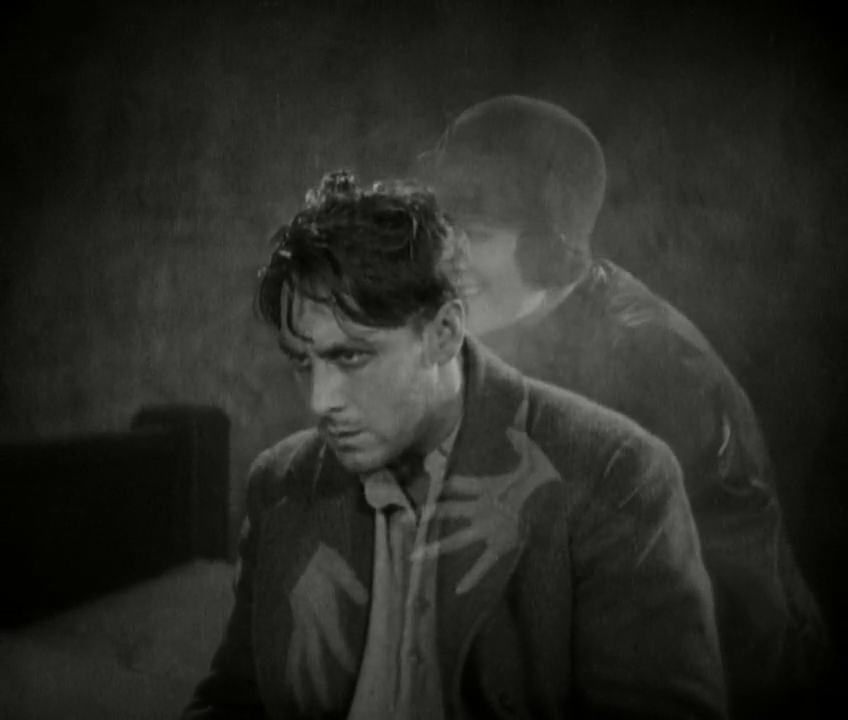
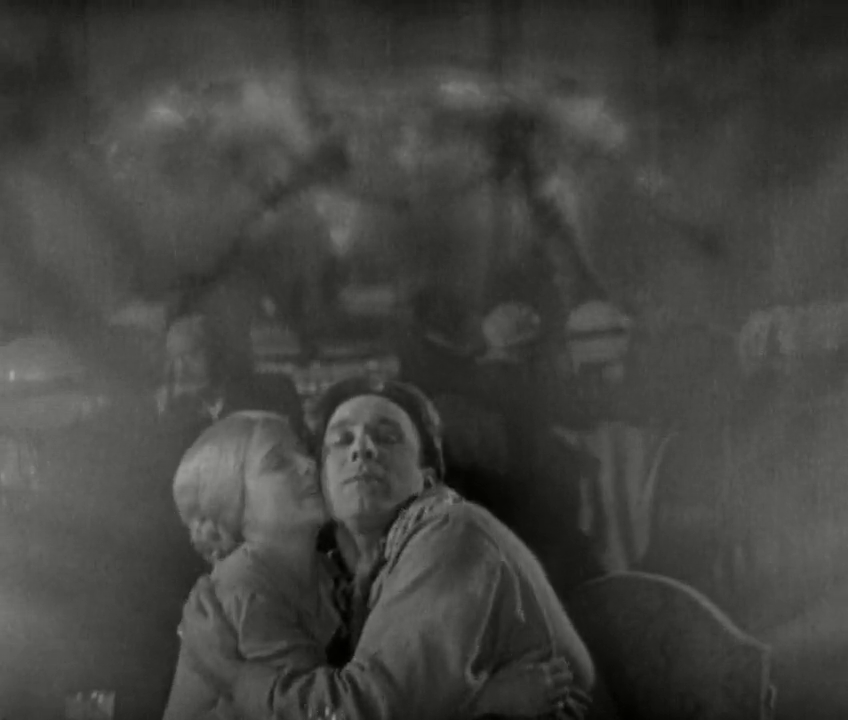
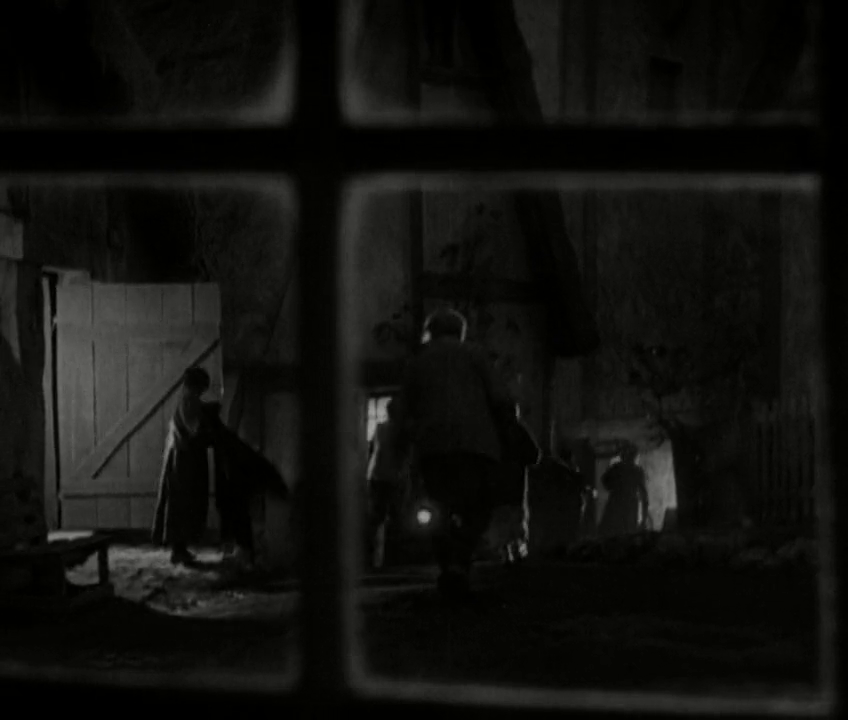
Peary writes that F.W. Murnau’s “American debut” remains a “great silent film”, one which “takes a simple, universal story and gives it startling emotional impact through breathtaking camera work”. He argues that “between The Birth of a Nation and Citizen Kane there is no better example in American film of visual storytelling”, given that the “expressionistic (sometimes lyrical) film… reveals the psychology of its characters from movement to movement through intricate lighting, camera movement and positioning, choice of setting, scenic design, and superimpositions (that reveal thoughts) and other special effects”. He points out that the “picture has a European look because it was designed in Germany before Murnau came to the U.S.”, and argues that the “acting is fine, with Gaynor and O’Brien showing why they were one of the era’s most likable screen teams, and Livingston making a devilish femme fatale“.

In his Alternate Oscars book, Peary names Sunrise the Best Picture of the Year, arguing that the actual winner, William Wellman’s Wings (1927), “pales in comparison” and “has dated badly”, and pointing out that Sunrise actually won the “Artistic Quality of Production” award, a category which was soon abandoned and is no longer remembered.

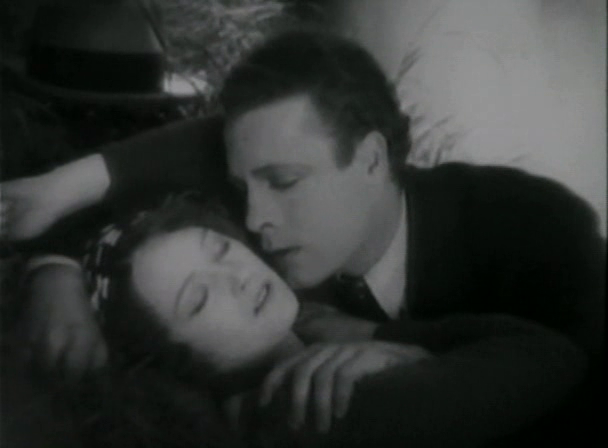
Peary’s not at all alone in his laudatory view of this visually stunning silent film, which is consistently innovative and atmospheric in its presentation style. However, one’s enjoyment of the story itself will depend greatly on an ability to view it as a fable rather than a realistic tale of infidelity and renewed marital trust. After all, Gaynor’s The Wife (as in Murnau’s equally fable-like The Last Laugh [1924], the major characters aren’t given names) manages to fairly quickly forgive her husband (The Man) for having homicidal tendencies towards her (!), allowing their New York trip to function as a second honeymoon rather than worrying about his dangerously mercurial nature. Meanwhile, the details of the entire narrative remain remarkably simplistic, in a fairy tale-like fashion; Peary himself refers to it as a “fable-morality play”.

In Alternate Oscars, Peary notes that Vidor’s thematically similar masterpiece from the same year (The Crowd) is every bit as impressive and “artistic” as Murnau’s film, but that Sunrise was still a better choice as Best Picture of the Year (calculated at that point from August 1927 to August 1928), simply given that it “turned out to be more influential”. He points out that both films “are about how a married couple’s enduring love neutralizes the hostile, destructive, corruptive powers of the city”; indeed, having recently rewatched The Crowd myself, the similarities are strikingly notable. Yet I found myself much more emotionally engaged in the travails of The Crowd‘s realistic (albeit “every man”) protagonists, while Sunrise‘s The Man and The Wife simply function as convenient archetypes, held at remove. Indeed, at times Murnau’s film edges dangerously close to stereotyping in its overly-simplistic presentation of city-versus-country, with O’Brien and Gaynor shown as naive hicks who can’t quite keep up with the pace of city living.

With all that said, there really is no denying the visual impact of Sunrise, which uses cinematographic techniques to tremendous effect, clearly demonstrating once again why F.W. Murnau is considered a pivotal figure in the early days of feature-length cinema. For that reason alone, it’s most certainly worth a look by all film fanatics.

Redeeming Qualities and Moments:

  • Charles Rosher and Karl Struss’s cinematography

  • Excellent use of “in-camera” effects

  • Creative intertitles
  • Atmospheric sets and art direction

Must See?
Yes, as a visually evocative silent classic.

Categories

  • Genuine Classic
  • Important Director
  • Oscar Winner or Nominee

(Listed in 1001 Movies You Must See Before You Die)

Links:

Crowd, The (1928)

Crowd, The (1928)

“The crowd laughs with you always… But it will cry with you for only a day.”

Synopsis:
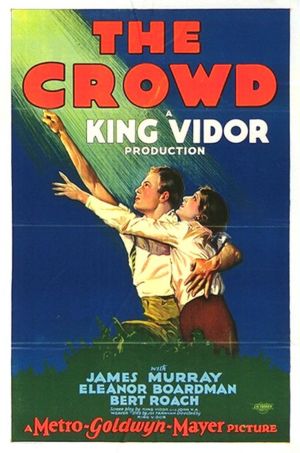
An idealistic young man (James Murray) born at the turn of the 20th century struggles to make a living in 1920s New York while maintaining a happy home life with his new wife (Eleanor Boardman) and young kids.

Genres, Themes, Actors, and Directors:

  • King Vidor Films
  • Marital Problems
  • New York City
  • Silent Films

Response to Peary’s Review:
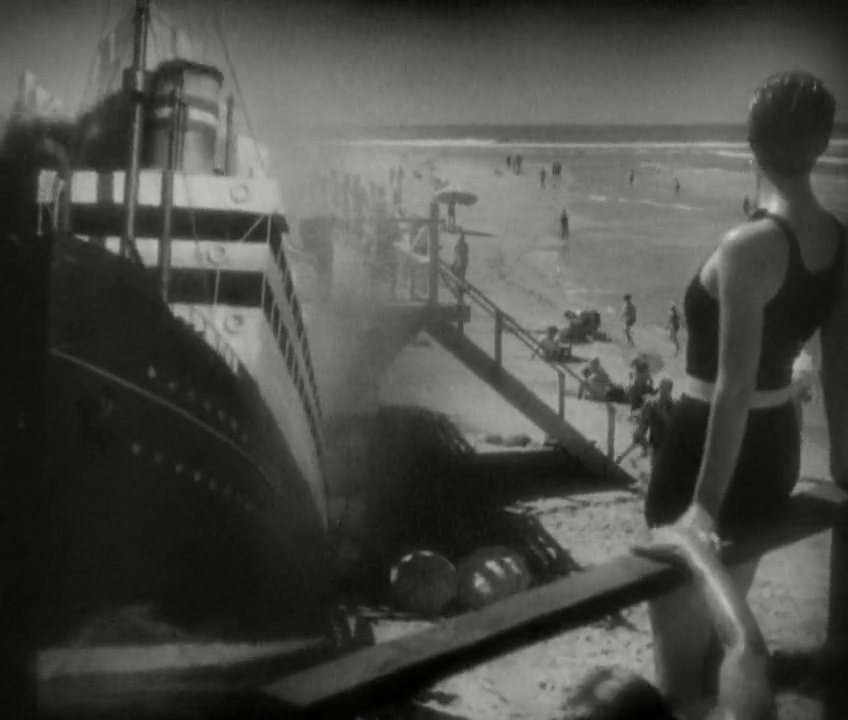
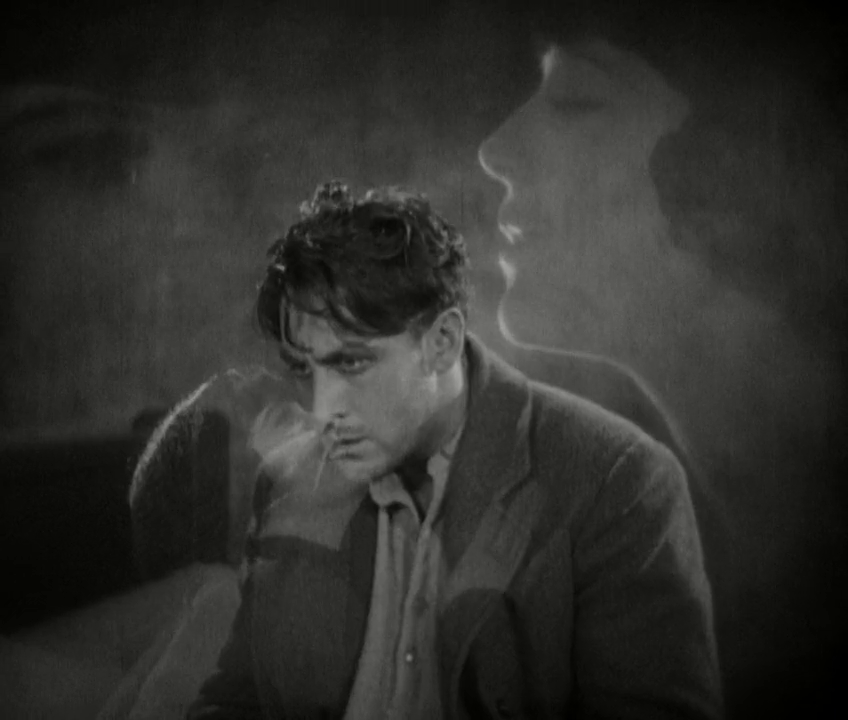
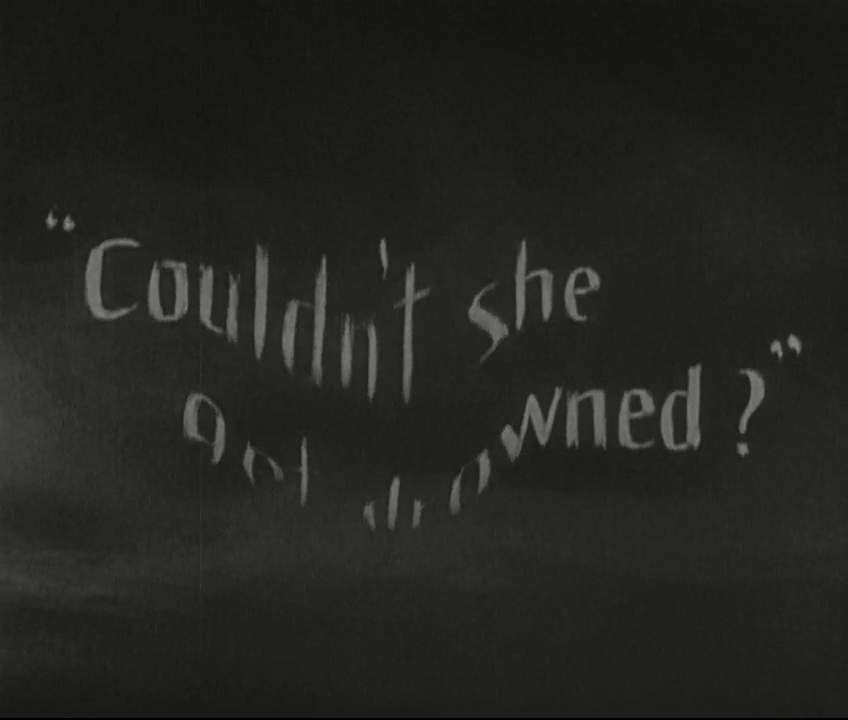
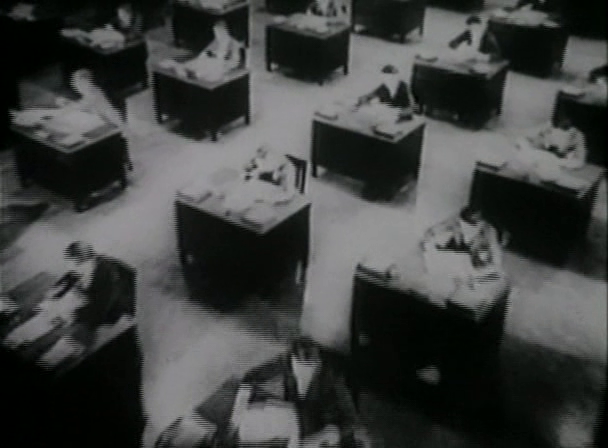
Peary writes that this “truly wonderful silent movie” — “directed with remarkable visual virtuosity by King Vidor” — will appeal to “fans of such films as 1939’s Made for Each Other and The Marrying Kind [1952].” He notes that “like those two films, it blends humor and heartbreak” in its tale of a “a young couple… who fall in love on a blind date, immediately marry, and almost break up due to financial and familial difficulties”, and points out that the “film’s theme is that since few people become rich it’s okay to be one of the faceless crowd, just as long as you never become trampled on by that crowd”. He notes that the “film has marvelous visuals of New York”, which is sometimes “portrayed as romantic… [and] at other times [as] frightening”, but always as “extremely crowded”. He further notes Vidor’s much-lauded technique of either showing “a crowd in a long shot and zoom[ing] into a close-up of an individual or begin[ning] with a close-up of an individual and pull[ing] back to reveal the enormity of the surrounding crowd”.

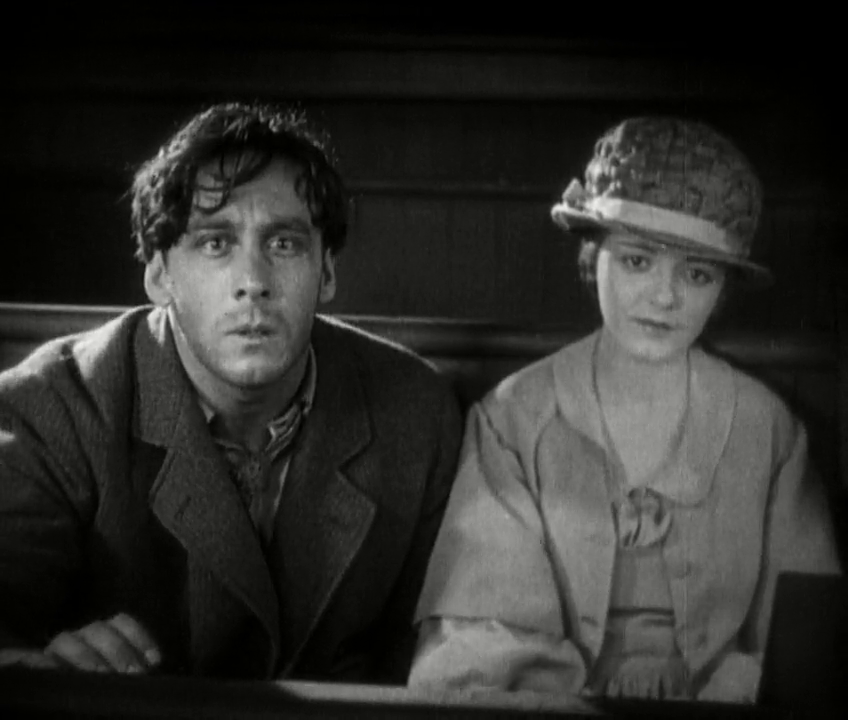
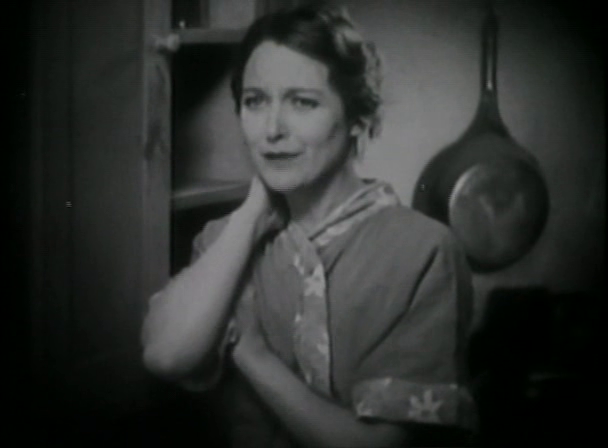
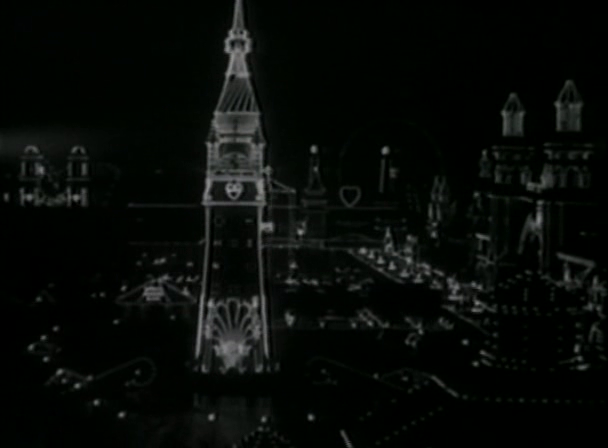
While I admire Vidor’s clear directorial prowess, what I find most impressive about this film is how “extremely engaging” the two leads are; they seem to genuinely be falling in love with each other during the initial Coney Island date sequence (and more so during their romantic Niagara Falls honeymoon sequence), and one fully believes in the arc of their troubled marital journey. Boardman (Vidor’s real-life wife) demonstrates true screen presence as “Mary”, leading one to wonder why her career never took off as it could have; meanwhile, Murray (as “John”) is convincingly irritating as her well-meaning but immature husband, who behaves like a jerk at times yet ultimately wants the best for his young family, and truly loves Mary. His character is both frustrating to watch, and entirely believable.

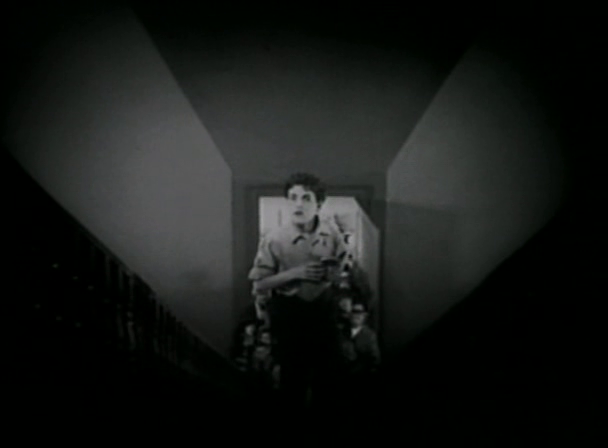
There’s a pivotal moment early in the film, when John is shown leaving the office with his friend (Bert Roach), who convinces him to take the night off from studying to go out on the town and have a fun time on a double date. In typically compacted cinematic fashion, John meets Mary on this date, immediately proposes to her, and from thence is shown prioritizing family life over personal advancement. It’s all the more ironic, then, that his subsequent lack of time to focus on “improving himself” results in a life of semi-poverty for his family. Could the real moral here be that one should wait to marry and start a family until one has secured a solid livelihood? Reviewers don’t seem to focus much on this point, though Peary does note that John “would rather spend time with [Mary] and their children than play up to the bosses in the hope of getting a promotion”.

Ultimately, The Crowd remains a real-life, warts-and-all romance above all else, showing how John and Mary weather the storms of overbearing in-laws, a deeply tragic personal loss, and John’s growing realization that his father’s dreams for him once upon a time — “There’s a little man the world is going to hear from all right” — are easier said than realized.

Redeeming Qualities and Moments:

  • Eleanor Boardman as Mary (nominated as one of the Best Actresses of the Year in Peary’s Alternate Oscars)
  • James Murray as John
  • Creative direction by King Vidor

  • A fun glimpse of 1920s New York

Must See?
Yes, for the fine lead performances and Vidor’s solid direction. Nominated as one of the Best Films of the Year in Peary’s Alternate Oscars.

Categories

  • Important Director
  • Noteworthy Performance(s)

(Listed in 1001 Movies You Must See Before You Die)

Links: