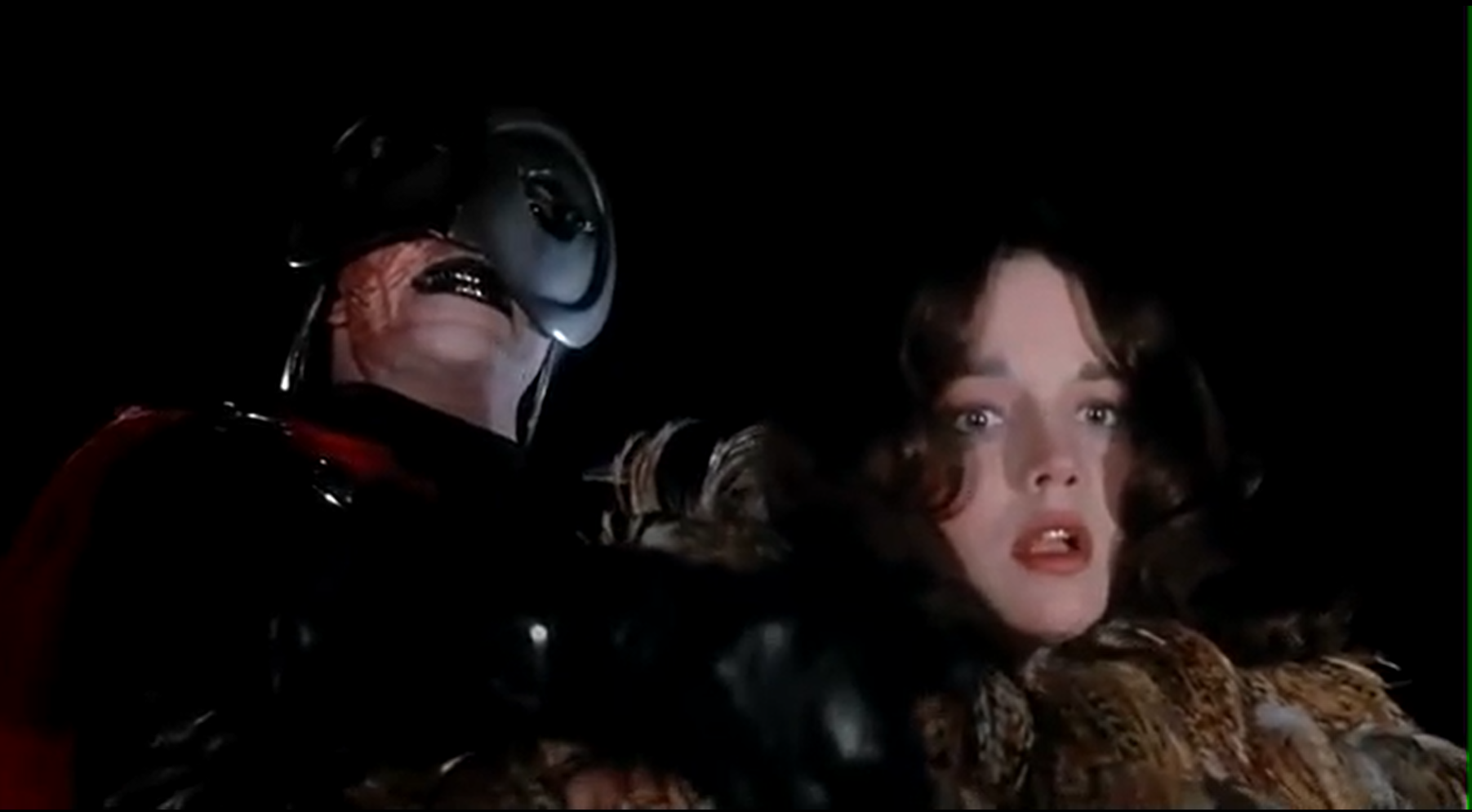
Maniac (1980)
“This has got to stop! It’s silly — and it’s not getting us anywhere.”
|
Synopsis: |
|
Genres, Themes, Actors, and Directors:
Response to Peary’s Review: Redeeming Qualities and Moments:
Must See? Links: |
“This has got to stop! It’s silly — and it’s not getting us anywhere.”
|
Synopsis: |
|
Genres, Themes, Actors, and Directors:
Response to Peary’s Review: Redeeming Qualities and Moments:
Must See? Links: |
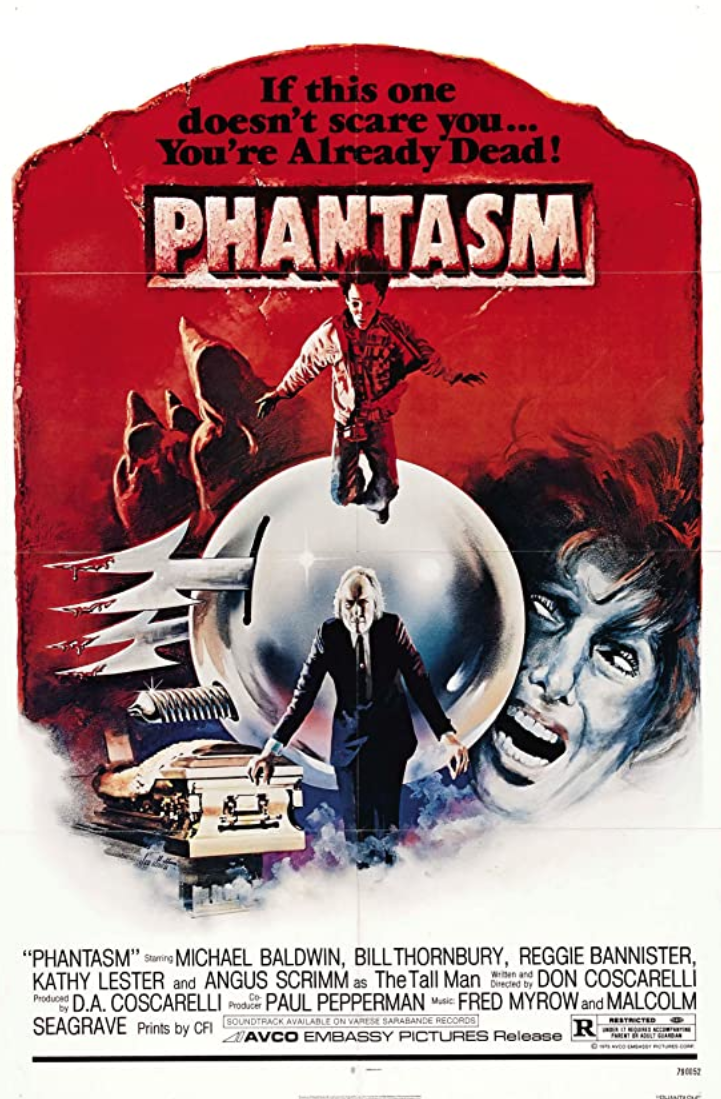
“I can’t figure this thing out. But I do know one thing: something weird is going on up there.”
|
Synopsis: |
|
Genres, Themes, Actors, and Directors:
Review:
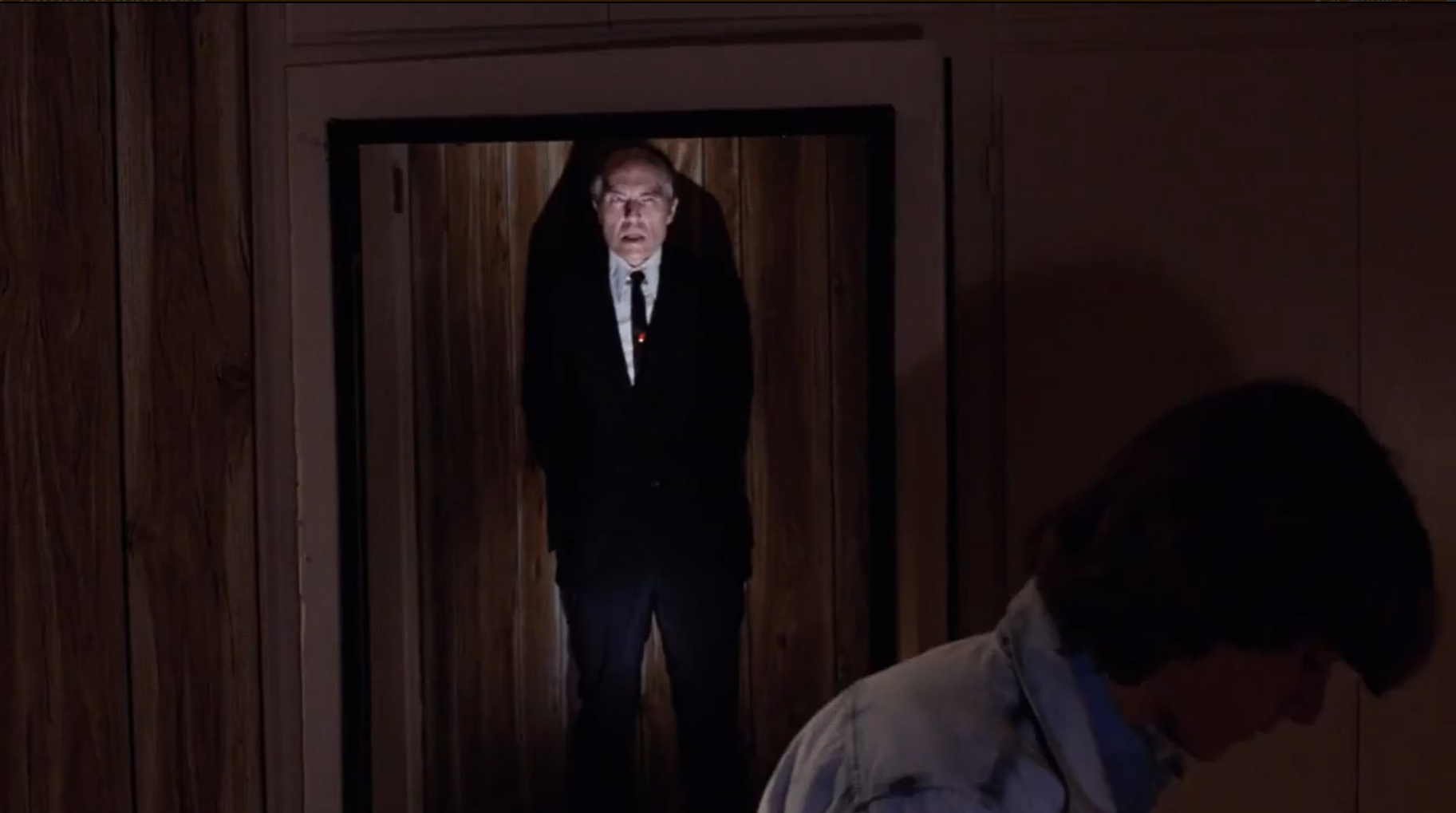
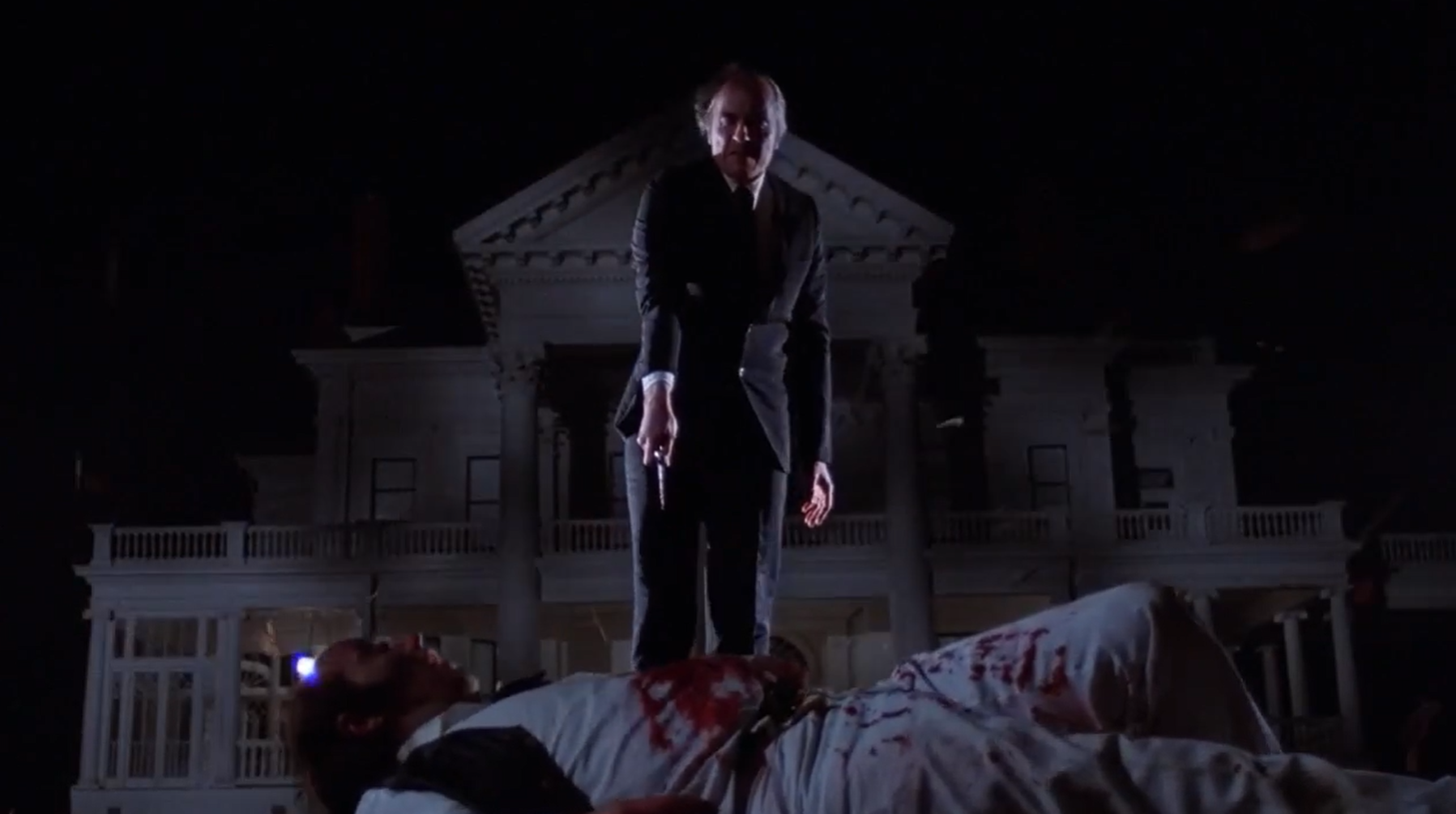
However, I personally find Phantasm to be a mess of a movie — to the extent that I started talking back to it at a certain point, simply out of incredulity at the choices being made:
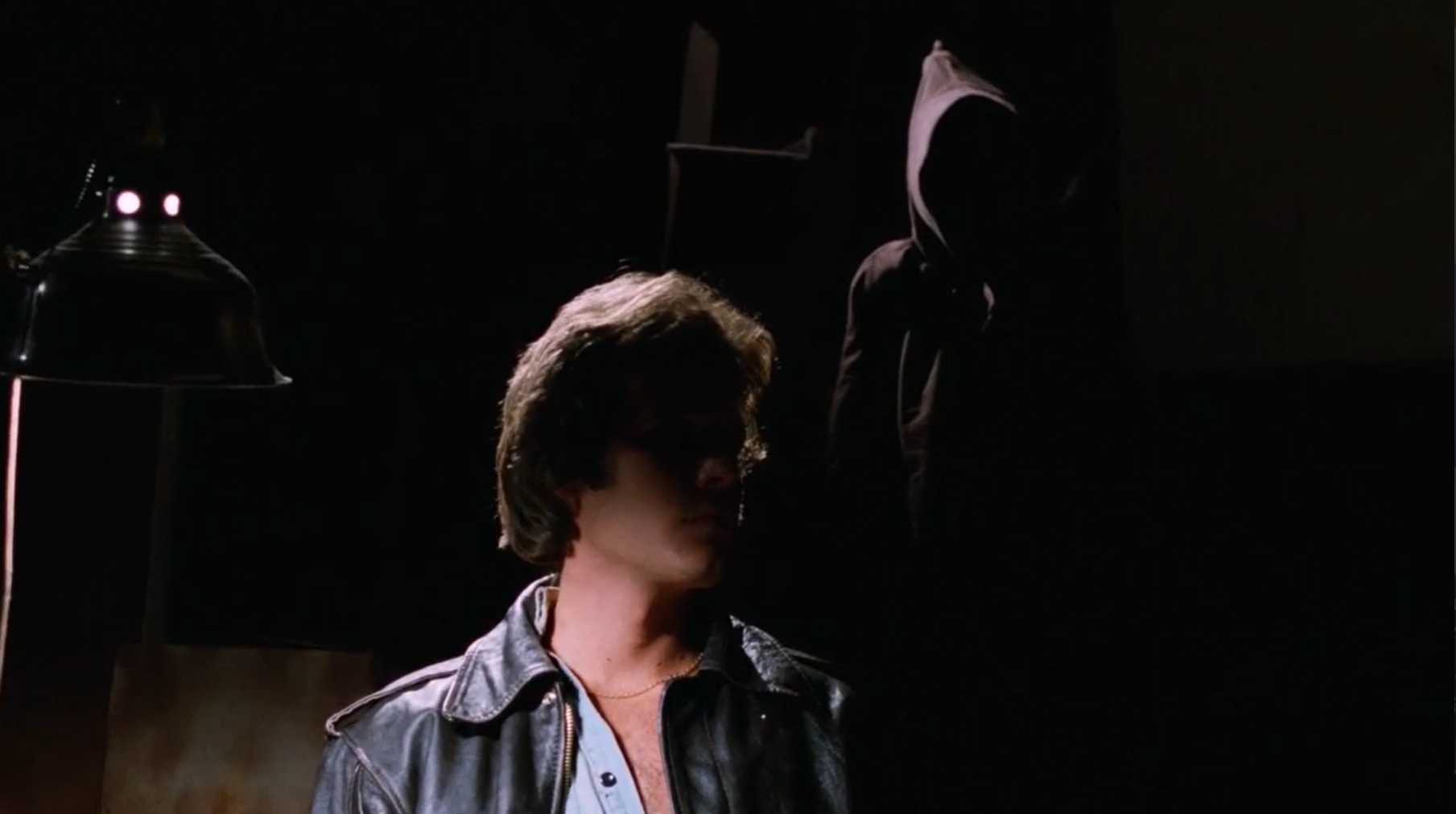
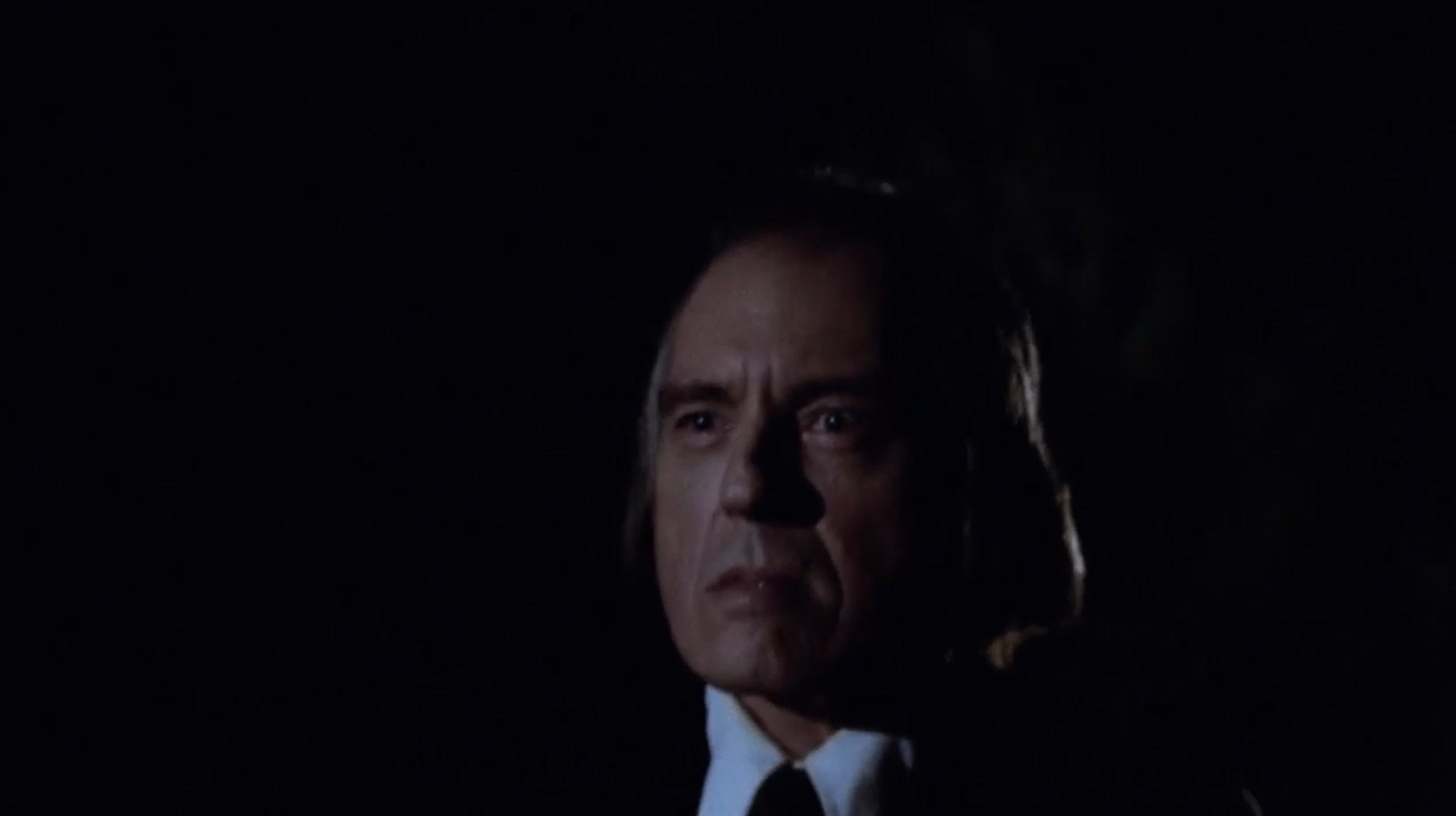
Coscarelli clearly seems to be aiming for a form of giallo in his use of atmospheric cinematography and Goblin-esque music (as well as a windshield shattering at one point), but can’t seem to make up his mind which horror film tropes he wants to settle on, ultimately simply throwing them all in — including killer hooded dwarves:
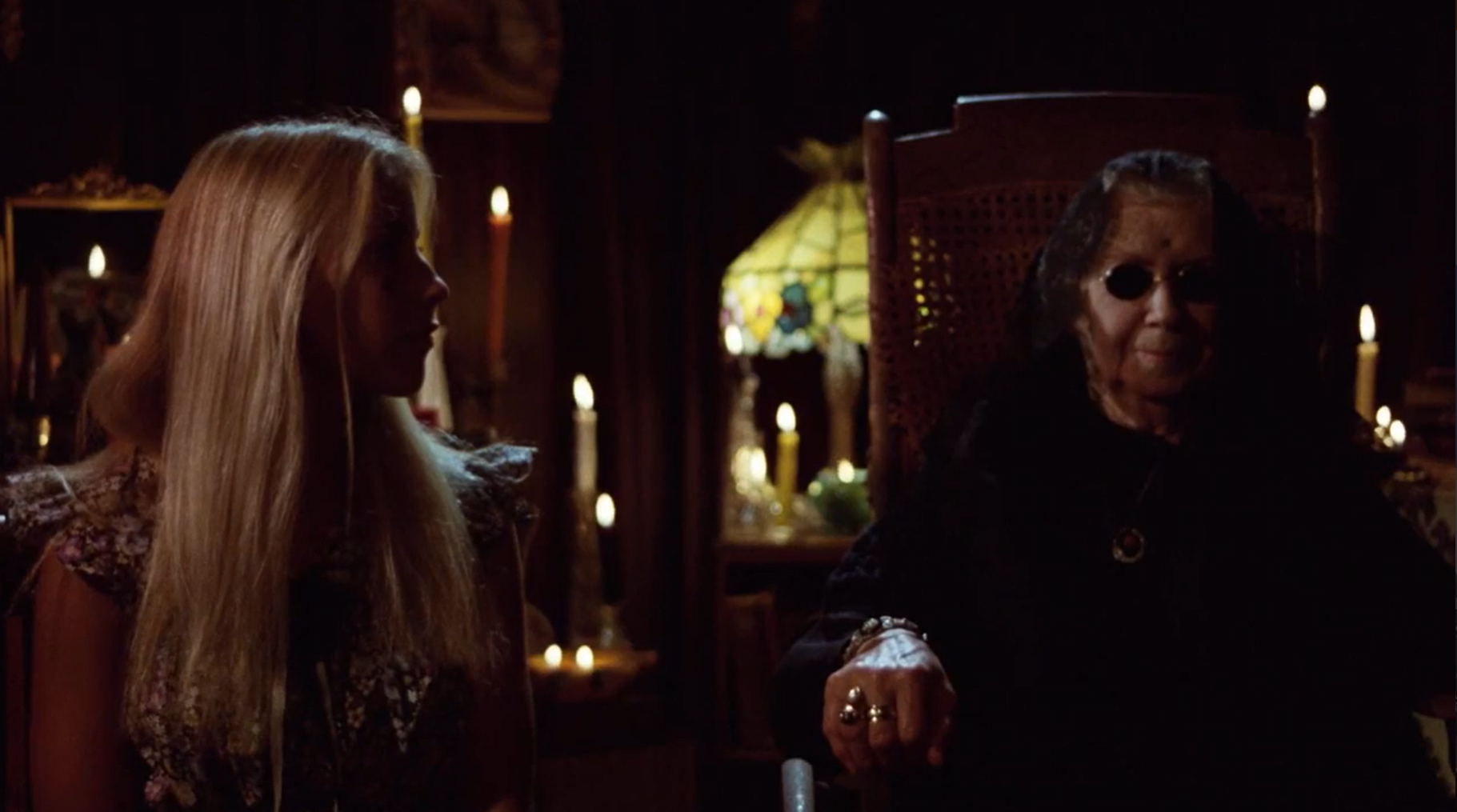
… a blind seer:
… a disembodied finger:
… a (seemingly) self-driving car:
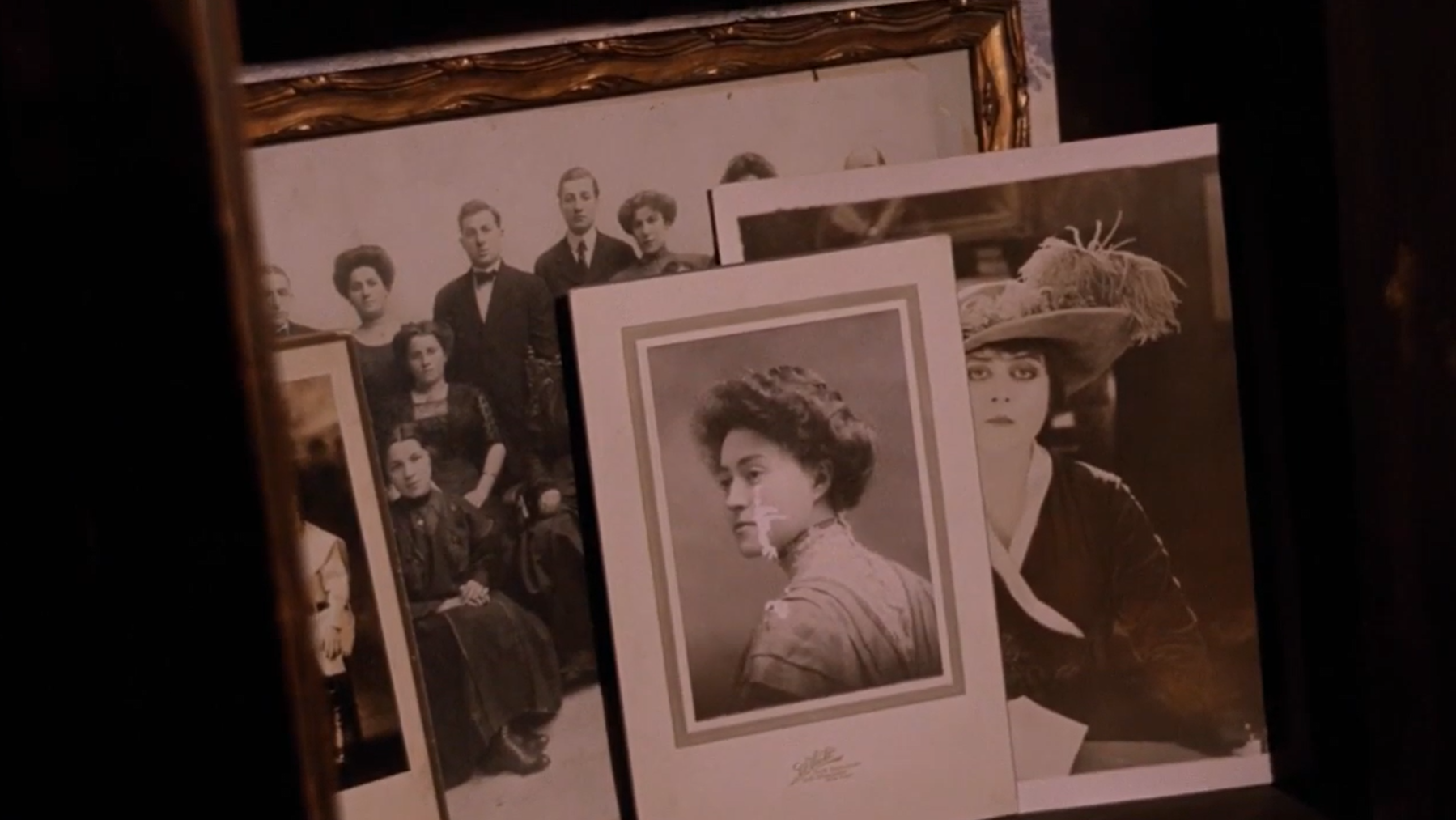
… the discovery of meaningful old sepia-toned photos in a cluttered antique shop:
… a chase scene through the dark woods:
… and death-after-sex:
In addition, there’s a brief time/space warp sequence that presumably gives Pearson all sorts of insights into what the Tall Man is ultimately aiming for:
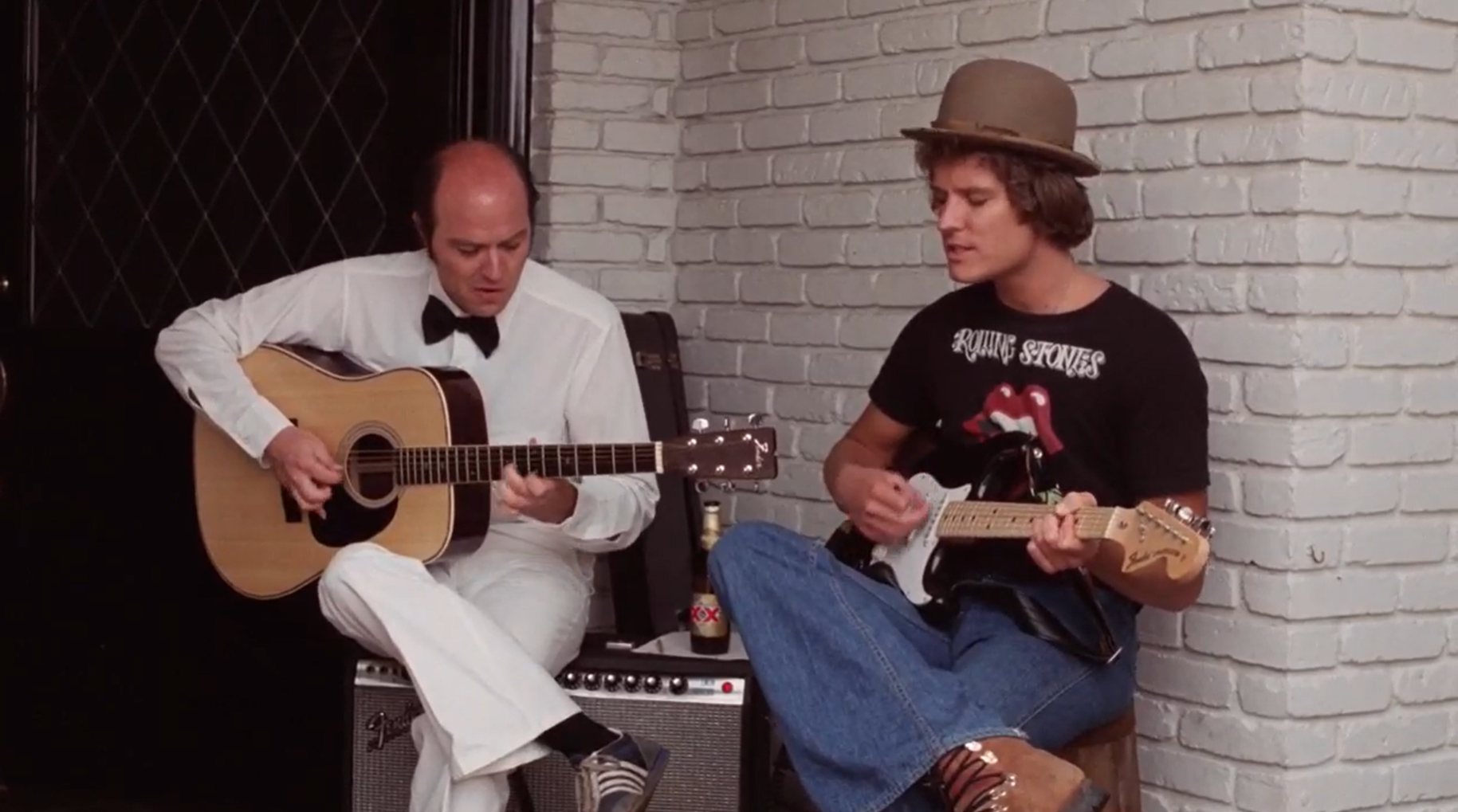
… as well as a truly random musical interlude:
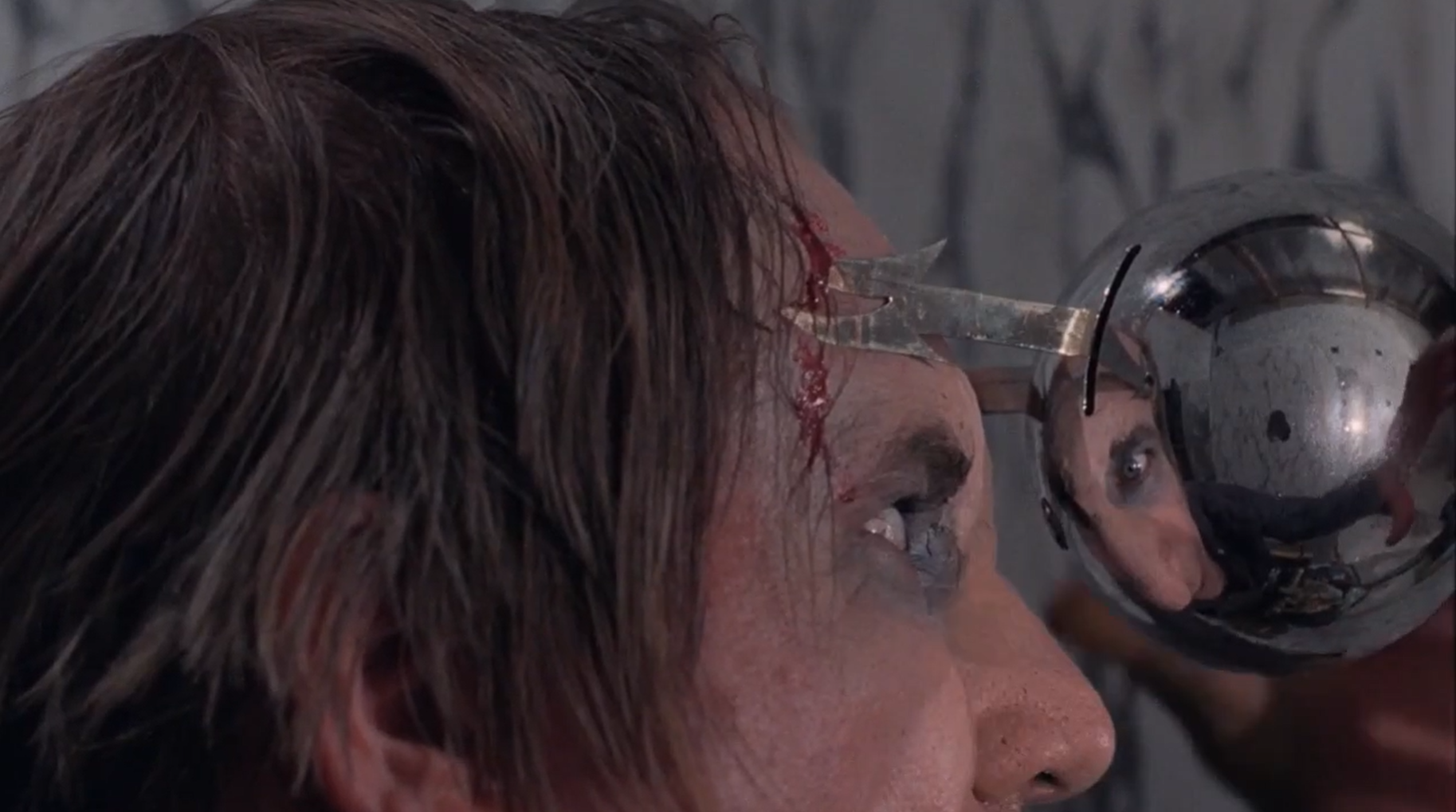
… and a special effects sequence — a lethal silver ball hurtling straight at a bad-guy — which nearly all viewers seems to agree is one of the film’s highlights (too bad there’s no rhyme or reason to its nifty if terrifying existence).
Finding out that Phantasm originally ran over three hours helps to explain the many narrative fragments that simply don’t cohere. I understand that this film was originally conceived through dreams by Coscarelli, and should be viewed as a nightmare-like tale. But for those who prefer narrative cohesion, you’ll want to stay away. Redeeming Qualities and Moments:
Must See? Categories
Links: |
“There are no secrets in Washington.”
|
Synopsis: |
|
Genres, Themes, Actors, and Directors:
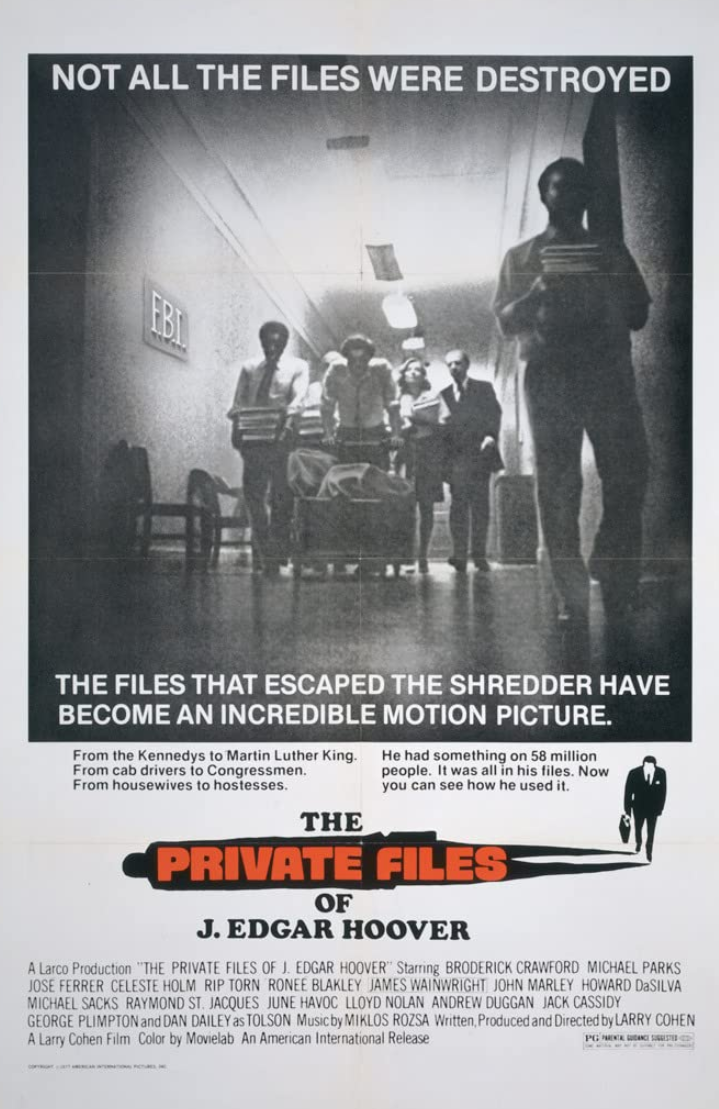
Review:
Thanks to ingenuity and grit — as well as former First Lady Betty Ford’s appreciation for Dan Dailey, in what ended up being his final role:
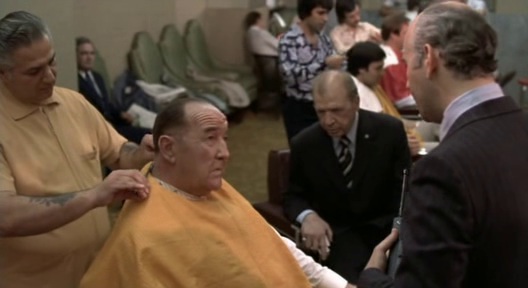
— Cohen managed to direct this movie in many of its original locations, including casting Hoover’s actual barber and waiter:
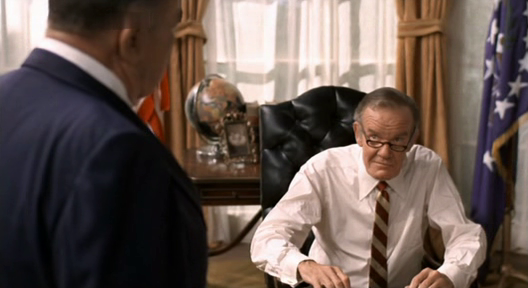
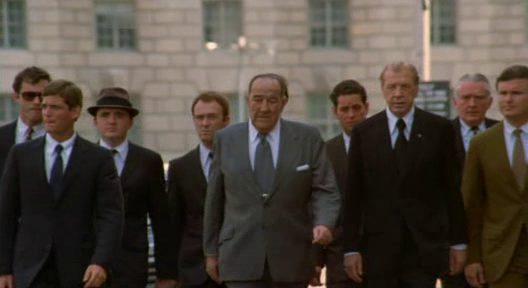
Unfortunately, the film itself isn’t all that satisfying or comprehensible unless you happen to be an American history buff with knowledge of the various rapid-fire events unfolding between the 1920s and 1970s; as noted by Janet Maslin in her review for the New York Times, the movie “hovers midway between soap opera and expose”, and “mostly barrels along at a flat, uninteresting pace, with no big scenes to give it any structure.” With that said, I felt much better informed after following up by watching an actual documentary about Hoover, which filled in many gaps, and helped me understood writer-director-producer Larry Cohen’s intent to highlight the rampant corruption (no surprise!) behind just about every political situation and figure in U.S. history — and how Hoover managed to keep his position for decades due to his savvy intelligence. Among many scenes, we see young Hoover (James Wainwright) taking over the FBI just after the Palmer Raids:
… Hoover’s desire to give the FBI both respectability and authentic clout:
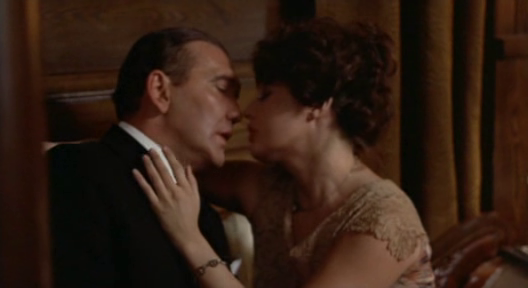
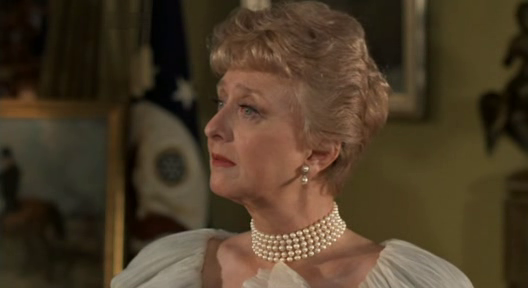
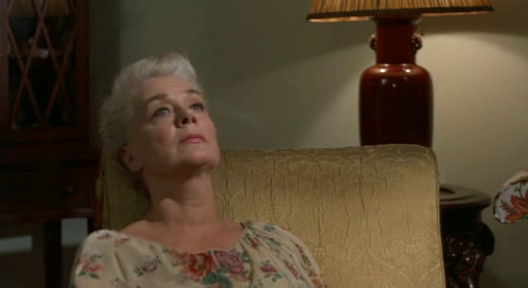
… the deep mistrust Hoover held for women (Ronee Blakley, Celeste Holm) who were romantically interested in him at various points in his career:
… the role Hoover’s hovering mother (June Havoc) may have played in his personality and/or sexual orientation:
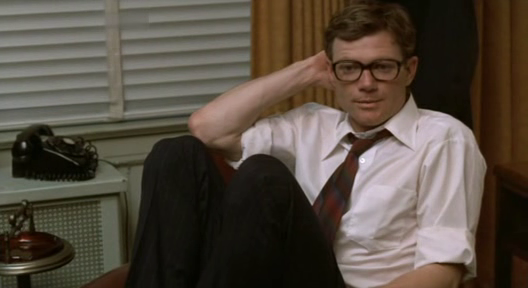
… Hoover’s frustration at suddenly being the underling of a much-younger RFK (and how he managed to reassert his authority):
… Hoover’s close alliance with Joe McCarthy (George Wallace):
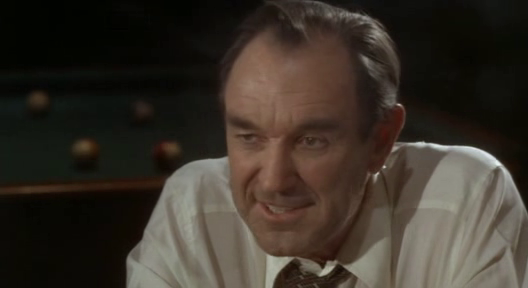
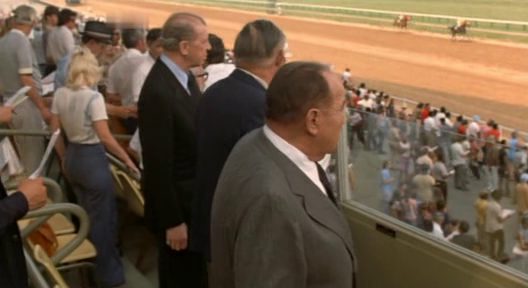
… and Hoover’s lifelong addiction to gambling, which may have led to his avoidance of dealing with the Mafia.
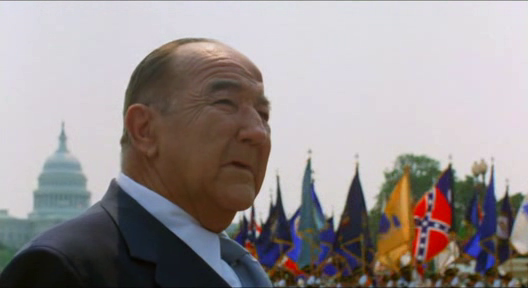
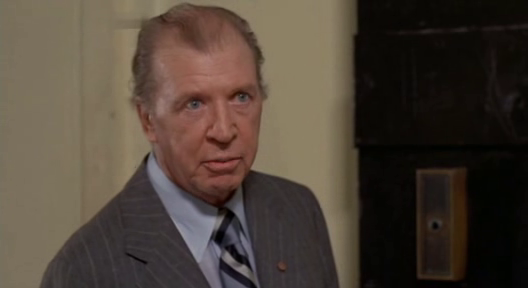
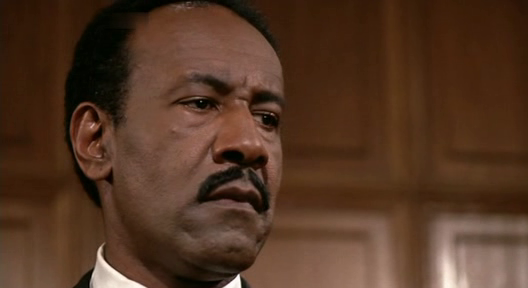
Note: You’ll have to give wide berth to the appearances of the actors playing various Big Names in History here, who look almost nothing like their real-life counterparts (see if you can guess who’s on screen in each of the stills below):
(1. FDR, 2. LBJ, 3. MLK.) Note: I haven’t (yet) seen Clint Eastwood’s 2011 film J. Edgar, starring Leonardo Di Caprio in the title role, though I’m especially curious now to check it out in comparison. Redeeming Qualities and Moments:
Must See? Links: |
“But the trees, Ash — they know! Don’t you see? They’re alive!”
|
Synopsis: |
|
Genres, Themes, Actors, and Directors:
Response to Peary’s Review: I’ll admit to not really understanding the next line in Peary’s review, in which he writes: “Anyone would love to have the blood-and-spare-parts concession” (?). And I disagree with Peary that “It would be fun to trip over the overly mobile cameraman during one of his too frequent tracking shots” (meaning, I don’t think this technique is overused for the genre). Peary concludes his review by conceding that this is a “cult film for the gore generation — but only the most bloodthirsty wouldn’t trade in a few splatter effects for some substance.” While I’m no fan at all of gore-fests — and most definitely not an Evil Dead devotee — I think Peary’s missing the “bad movie” element of this film. The dialogue is at times humorously lame (“You bastards! Why are you torturing me like this? Why?!”), and I can easily imagine sitting around with a group of friends having fun at this film’s expense (“Those creepy white eyes! Those dang possessed bodies that just won’t stop reviving no matter how much they’re hacked up! No, don’t — don’t trust the temporarily-human-zombie!!!”) while simultaneously admiring 22-year-old Raimi’s clear moviemaking genius. Redeeming Qualities and Moments:
Must See? Categories
(Listed in 1001 Movies You Must See Before You Die) Links: |
“He wouldn’t ask me to do anything that wasn’t right.”
|
Synopsis: |
|
Genres, Themes, Actors, and Directors:
Response to Peary’s Review:
Peary notes that while the “picture has a strong underground reputation”, he “can’t figure out why” — and I must say I agree. I wanted this mish-mosh of a film to be much more (and much less) than it is. Redeeming Qualities and Moments:
Must See? Links: |
“It kills like an animal — and when we find it, we’re going to have to destroy it like one.”
|
Synopsis: |
|
Genres, Themes, Actors, and Directors:
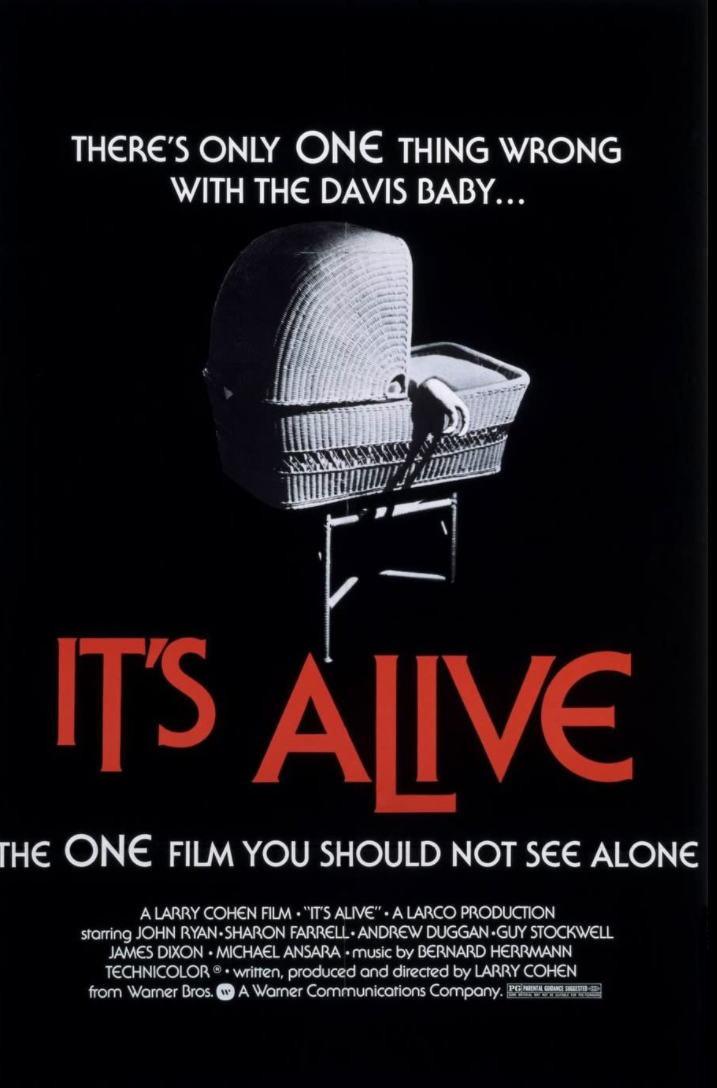
Response to Peary’s Review: Peary points out that Ryan — a classically trained actor who spent many years of his career on stage — gives a “surprisingly fine performance”; indeed, he elevates the entire script up a notch, particularly during the touching moments near the end of the film. I like how the L.A. River Basin is used as a metaphorical watery womb for Ryan and his baby to bond within and emerge from (albeit to a fatally hostile crowd). Equally sympathetic and nuanced is Farrell as the creature’s mother, who knows something is “not right” but is ignored by the men-in-power around her throughout her pregnancy, during the birth process, and after her baby has gone missing. I agree with Cohen’s choice to not show much of Rick Baker’s mutant baby design, instead hinting at Its demonic appearance through quick flashes without dwelling on It; appropriately enough, It exists primarily in the shadows. (Cohen has cited Val Lewton’s horror films as an influence, and this makes sense.) Redeeming Qualities and Moments:
Must See? Categories
Links: |
“Hey — you wanna see something really scary?”
|
Synopsis: |
|
Genres, Themes, Actors, and Directors:
Response to Peary’s Review: Peary accurately notes how disappointing Spielberg’s “Kick the Can” is on every level, and laments that the ending of “It’s a Good Life” has turned moralistic, with “even a boy… capable of terrible deeds want[ing] help, need[ing] sincere friendship, and prefer[ing] guidance… to being a spoiled brat.” He argues that the final episode — in which “John Lithgow takes over William Shatner’s role” — is the best, and that it works well to have Lithgow playing a “sane man” who “no one will believe” rather than a “former mental patient.”
Finally, Peary discusses the tragedy of “Time Out”, which infamously resulted in the death-by-helicopter of Vic Morrow and two illegally hired children he was acting with, thus making “it difficult to appreciate the episode on any level.”
He notes that “special-effects experts Rob Botton and Craig Reardon should be singled out for creating some truly spectacular creatures”:
— and that “best of all is Landis’s truly wacky and terrifying prelude with Dan Aykroyd and Albert Brooks.”
Note: Watch for Dick Miller (naturally!) in a cameo role during the beginning of “It’s a Good Life”:
Redeeming Qualities and Moments:
Must See? Links: |
“What you see on that show — it’s for real; it’s not acting.”
|
Synopsis: |
|
Genres, Themes, Actors, and Directors:
Response to Peary’s Review: Redeeming Qualities and Moments:
Must See? Categories
(Listed in 1001 Movies You Must See Before You Die) Links: |
“You’re my only witness to this murder, and you’re a peeper. In my book, that’s a pervert and a sex offender.”
|
Synopsis: |
|
Genres, Themes, Actors, and Directors:
Response to Peary’s Review:
and “the storyline’s so predictable that the intricacy of De Palma’s direction seems wasted” (only the fact that Wasson’s clearly being duped is predictable; everything else caught me by surprise). Meanwhile, he asserts that “when De Palma starts showing off with one of his long non-dialogue passages (when Wasson follows Shelton), the picture becomes boring.”
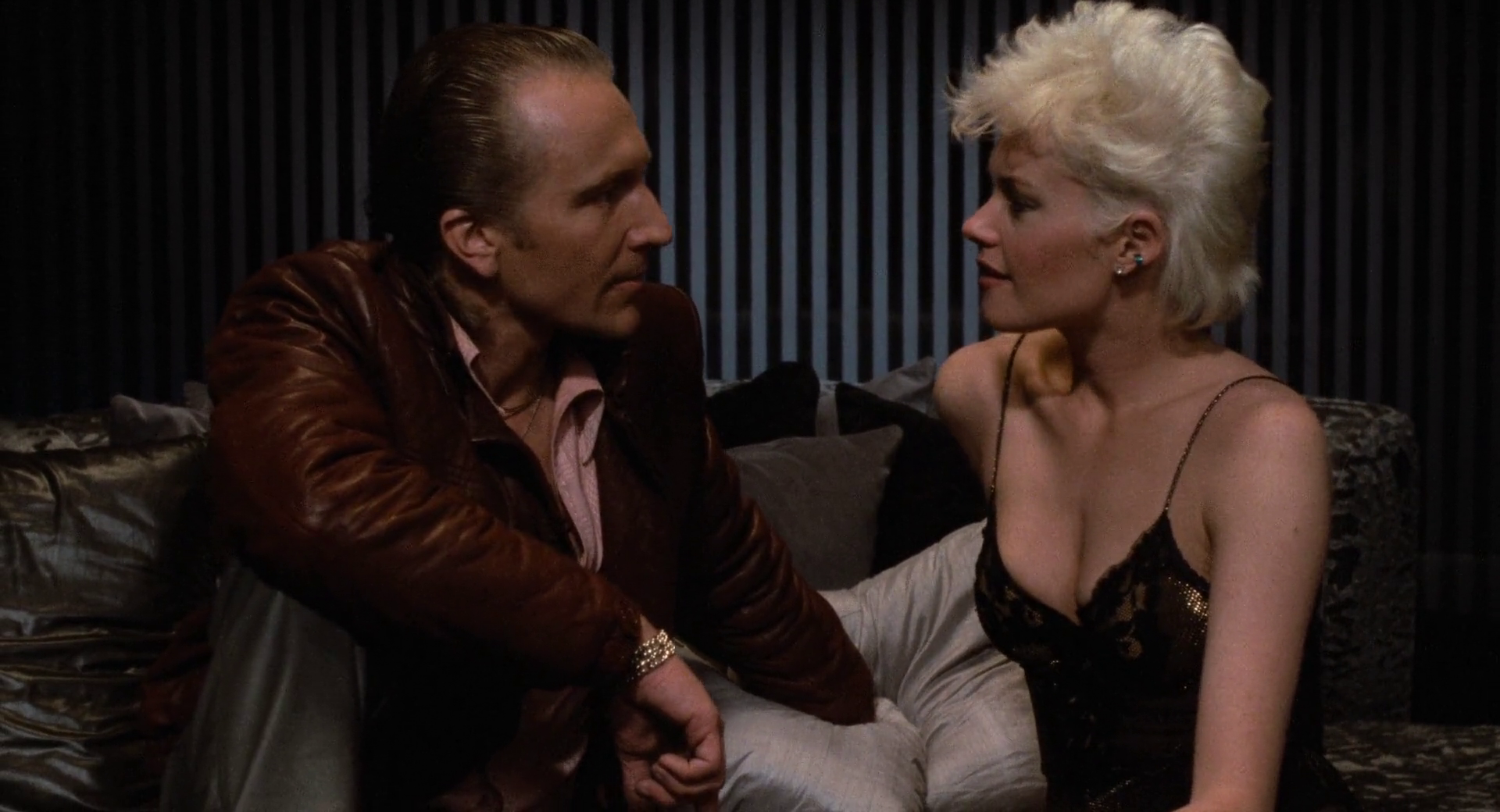
He adds (I agree) that “as a platinum-blond [adult film] star, Melanie Griffith is the best reason to see this picture”.
While I’m not as dismissive of this film as Peary seems to be, I’ll agree it’s not must-see viewing and ultimately one of De Palma’s lesser films. However, there’s enough creativity to recommend it for one-time viewing, especially if you’re a De Palma fan. Redeeming Qualities and Moments:
Must See? Links: |
“But I wrote the music!”
|
Synopsis: |
|
Genres, Themes, Actors, and Directors:
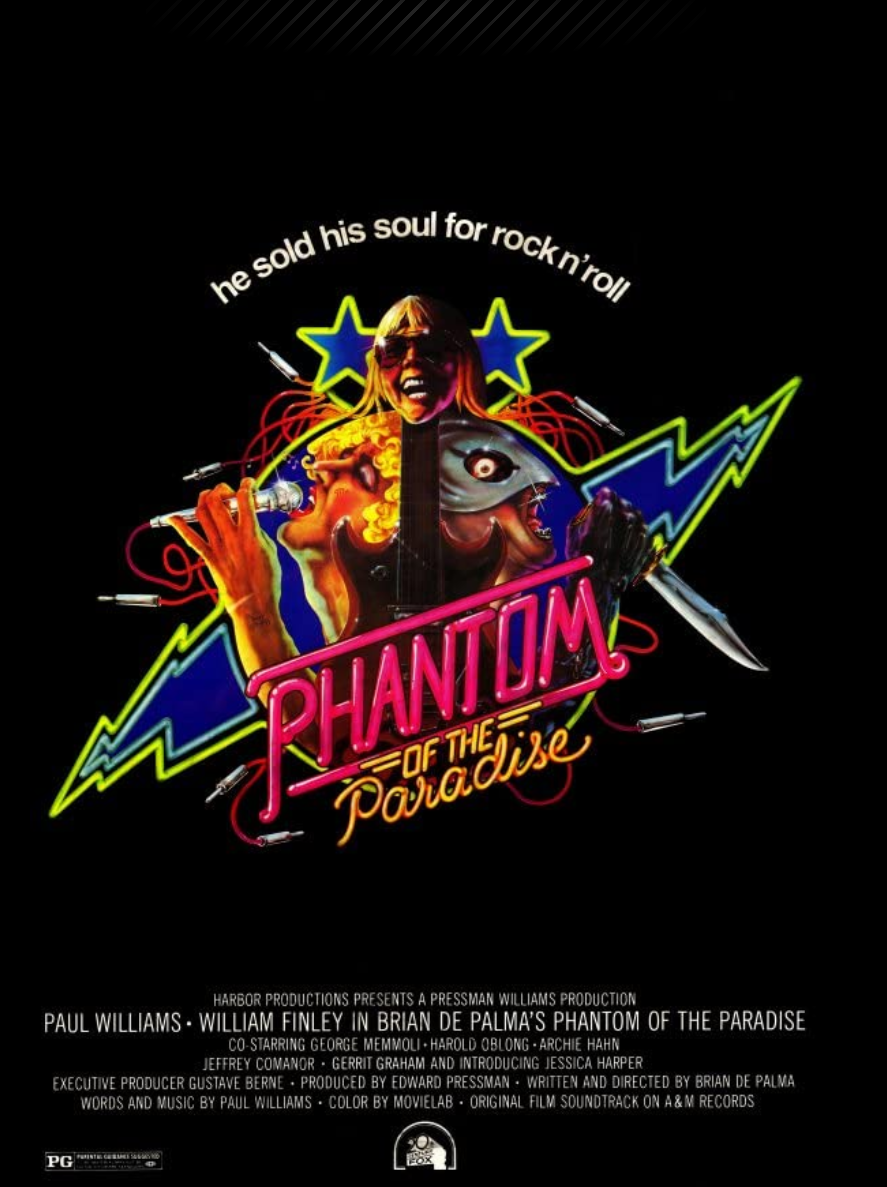
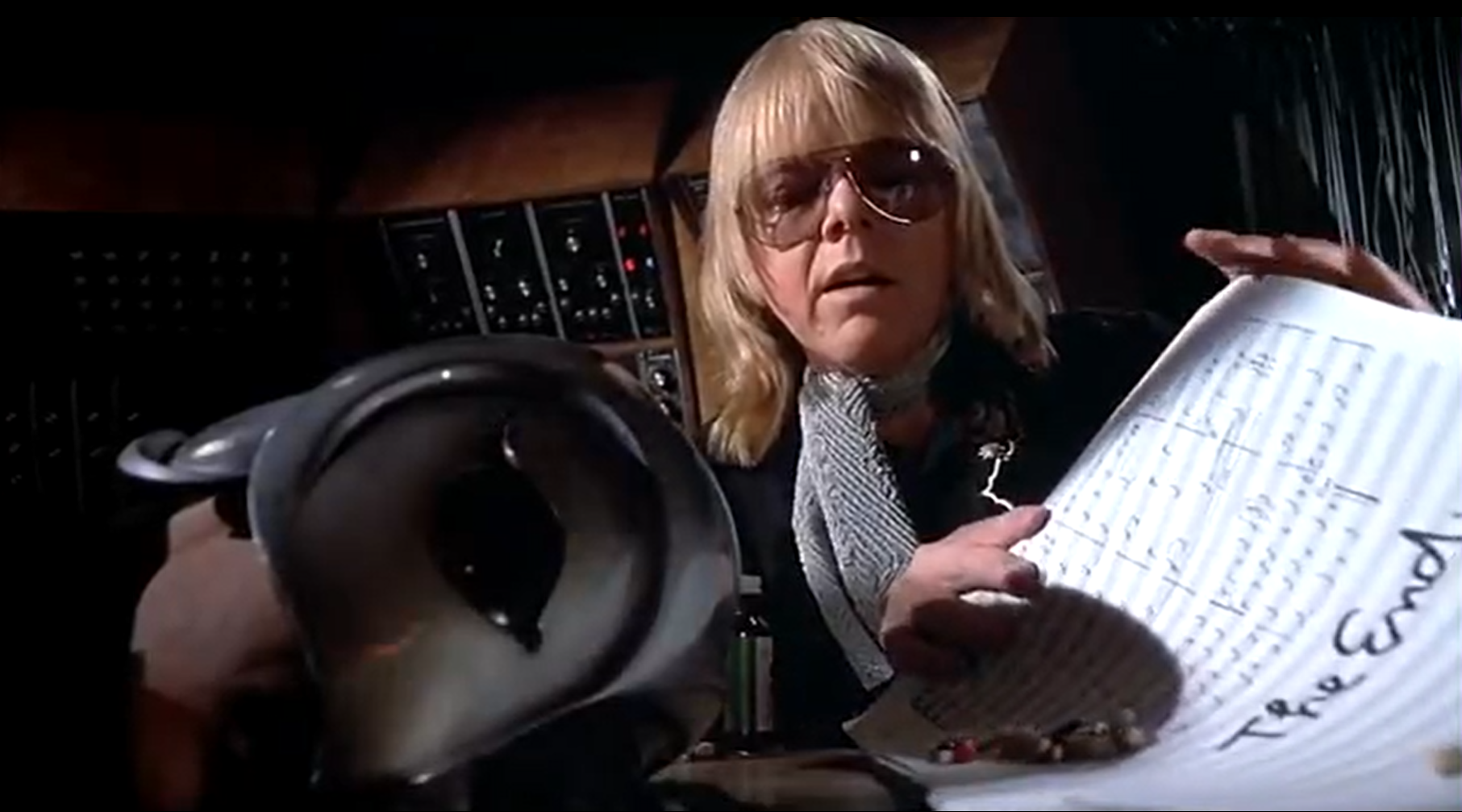
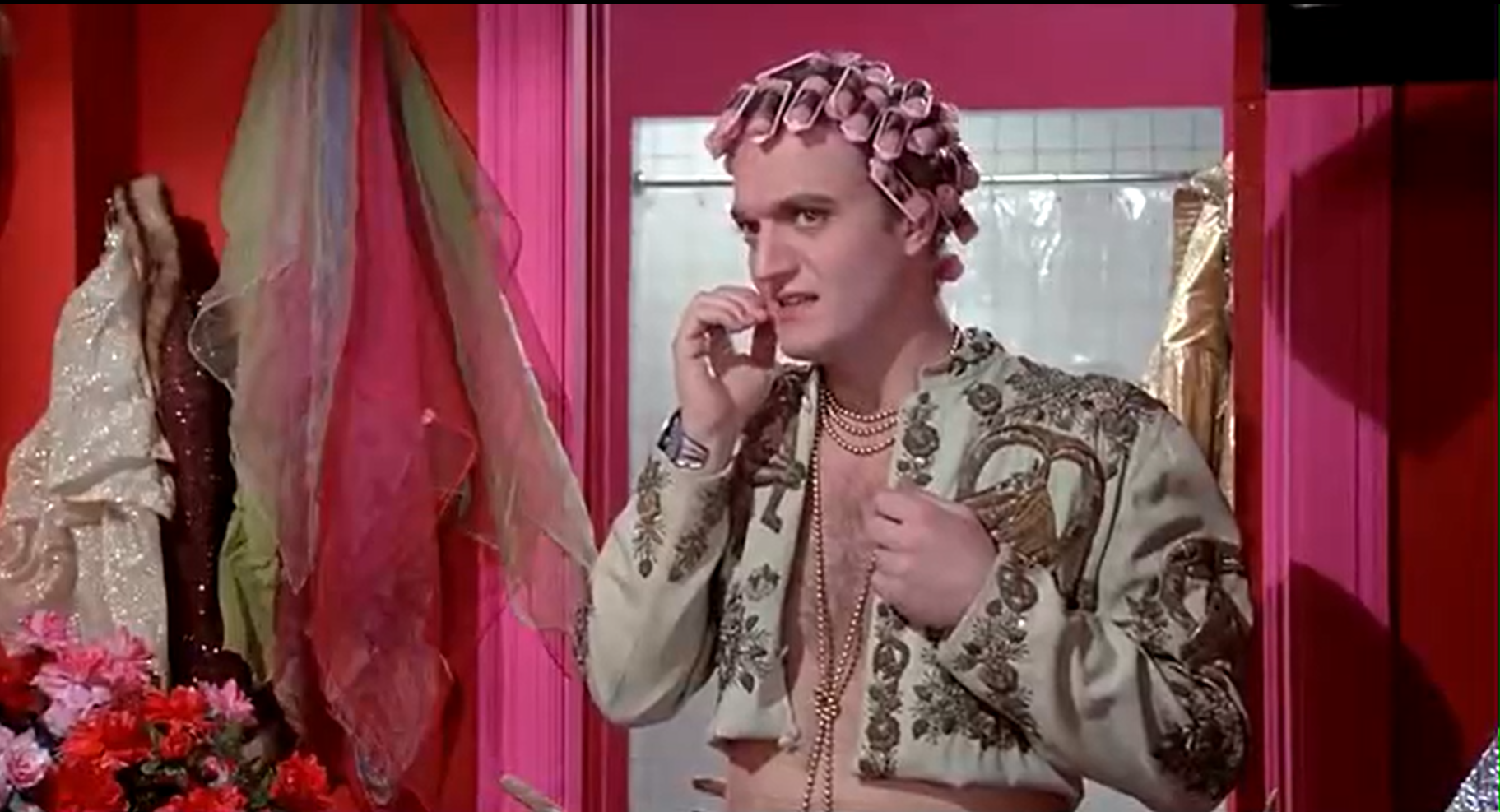
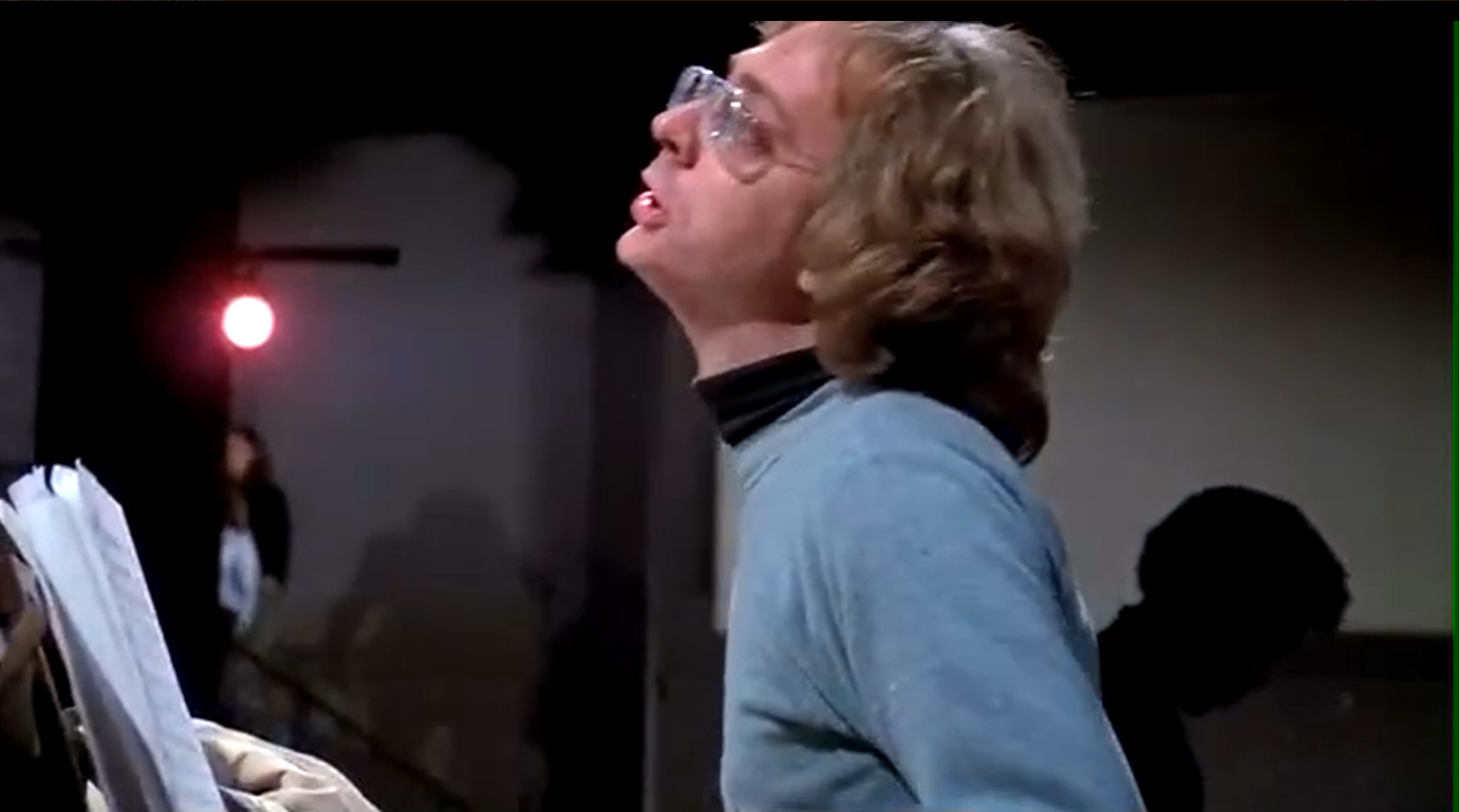
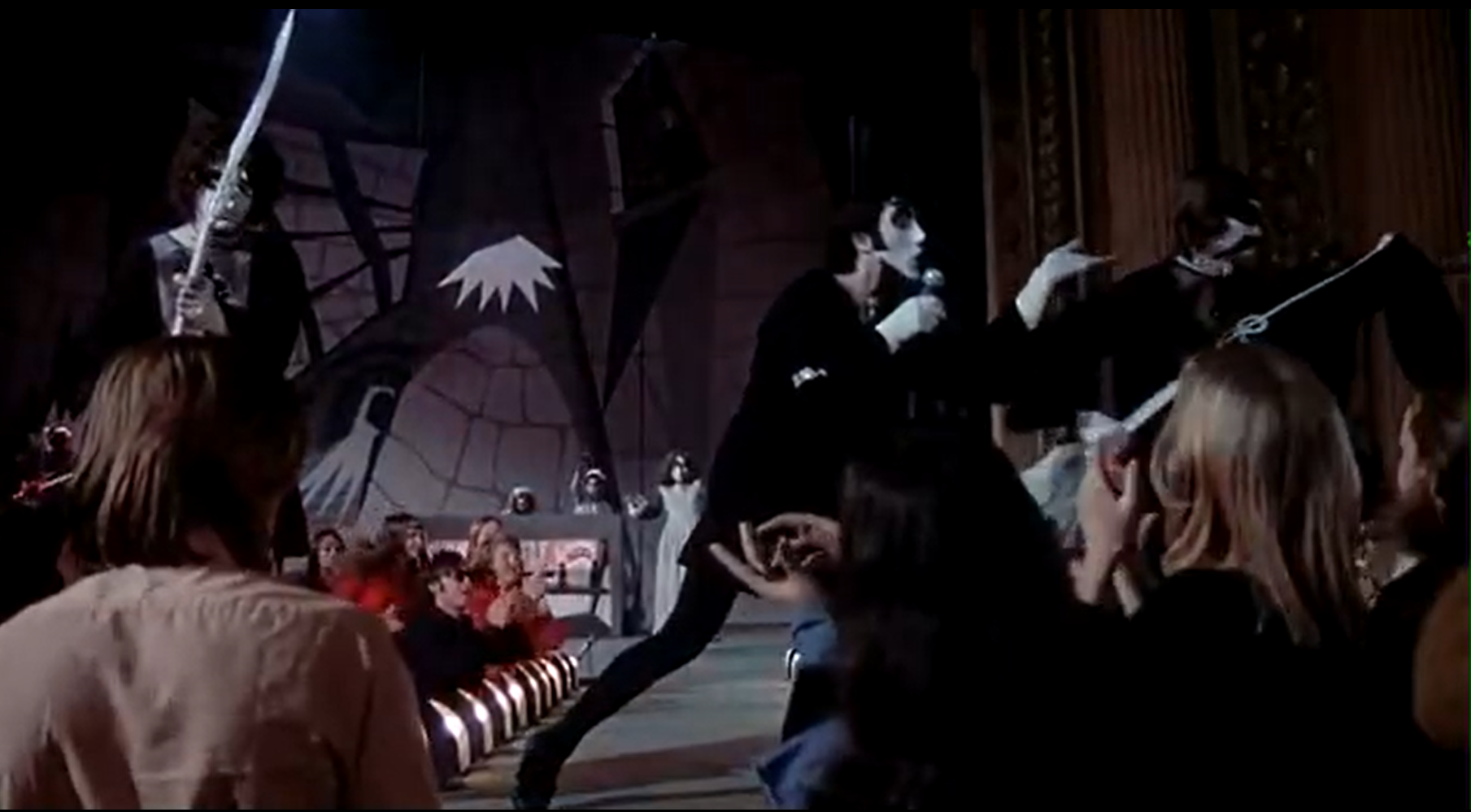
Response to Peary’s Review: While Phantom of the Paradise was “poorly received by many critics when released, it has attained a large cult following” — and in his Cult Movies 2 book, Peary discusses this movie at greater length. He writes that, “Remarkably, De Palma put together a simple storyline despite combining plot and theme elements from numerous sources, including Goethe, Oscar Wilde, Nathanael West, Gaston Laroux’s 1911 novel The Phantom of the Opera as well as the 1925, 1943, and 1962 movie adaptations, King Kong (1933), Beauty and the Beast (1946), possibly The Hunchback of Notre Dame (1923 and 1939 versions), and Alfred Hitchcock’s Psycho (1960) and The Man Who Knew Too Much (1956), with its assassination-attempt-at-concert sequence.” He notes that, “looking back, it’s hard to believe the hostility some critics felt toward the film” — but it’s equally fortunate that Pauline Kael “expressed admiration for [De Palma’s] wit, manic theatricality, and wild love for his medium,” in addition to recognizing “back then that De Palma’s amateurish streaks and erratic talents (which are still very much in evidence) are not, in his case, liabilities.” Indeed, “his unpredictability — you can’t count on him to direct or write two scenes in a row that are polished or follow cinematic conventions — is one of the reasons he’s been an interesting filmmaker.” I agree with both Kael and Peary. Peary points out how appropriate it is that this film “begins with [a] Rod Serling… narration,” given that “most episodes on Serling’s classic television anthology The Twilight Zone were about characters who lose their identity” — and “in Phantom, Winslow [Finley] becomes the symbol of all struggling young songwriters whose music (their identity) is stolen by big-shot record producers and musicians.” In fact, he notes, Winslow “represents all young artists, filmmakers included, who are used and discarded without the world ever knowing they existed.” Indeed, while this black comedy is often played for laughs — it’s easy to ridicule how naive and inept Finley’s Phantom comes across time and again — he does metaphorically represent the extreme result of every insult ever hurled at a deeply creative person. Meanwhile, Beef’s campy performance instantly evokes The Rocky Horror Picture Show (1976), which at the time was still just a stage production; while Graham can’t really hold a candle to Tim Curry (who could?), he has a lot of fun with his role and is consistently enjoyable to watch. Also weirdly good is Williams as the gnome-ish Swan: the sway this guy holds over seemingly the entire world is truly diabolical. Redeeming Qualities and Moments:
Must See? Categories
Links: |