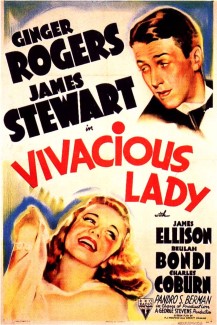
Vivacious Lady (1938)
“And dad, I might add that she’s the finest wife any man could hope to have!”
|
Synopsis: |
|
Genres:
Review: Redeeming Qualities and Moments:
Must See? Links: |
“And dad, I might add that she’s the finest wife any man could hope to have!”
|
Synopsis: |
|
Genres:
Review: Redeeming Qualities and Moments:
Must See? Links: |
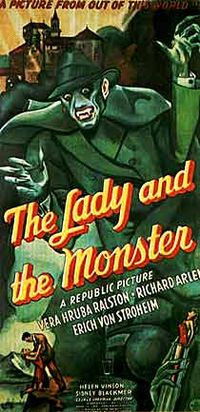
“Would it not be the achievement of all time to keep the brains of great thinkers, scientists, authors, statesmen, alive? To derive benefit from their wisdom and thinking power, even after their death — to make them literally immortal?”
|
Synopsis: |
|
Genres, Themes, Actors, and Directors:
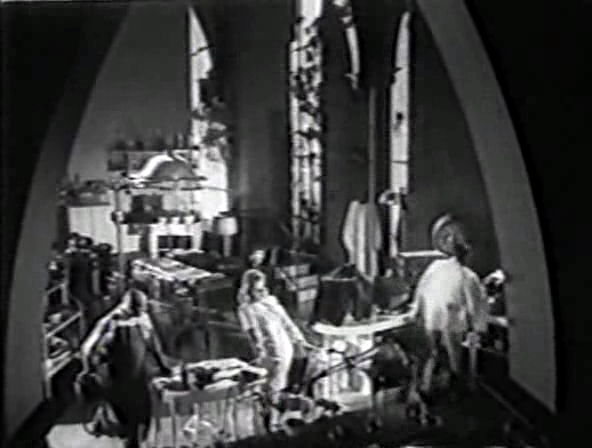
Review: Part of the success of the screenplay (which eventually becomes too confusing for its own good) is in the way we’re never quite sure who’s “good” or “bad”: we know that Donovan was a fraudulent financier and an overall not-nice person, but is his motivation in getting a convicted murderer out of jail completely self-serving or not? And how far will Professor Mueller (von Stroheim) go with his project, even if it means placing Arlen’s life at increased risk? Meanwhile, the film is surprisingly hypnotic to look at (see stills below), with creepy, shadow-filled gothic sets and stunning noir cinematography by Oscar-winning D.P. John Alton. Film fanatics will likely enjoy seeing von Stroheim in a semi-leading role as mad (but-not-too-mad) Prof. Mueller, while Czech figure-skater-turned-actress Vera Hruba Ralston delivers a notoriously awful performance — fun for laughs if nothing else. The Lady and the Monster isn’t must-see viewing, but it’s certainly worth a look if you can find a copy. Redeeming Qualities and Moments:
Must See? Links: |
“I wanna go back to sleep! If I don’t get at least 600 years, I’m grouchy all day.”
|
Synopsis: |
|
Genres, Themes, Actors, and Directors:
Response to Peary’s Review:
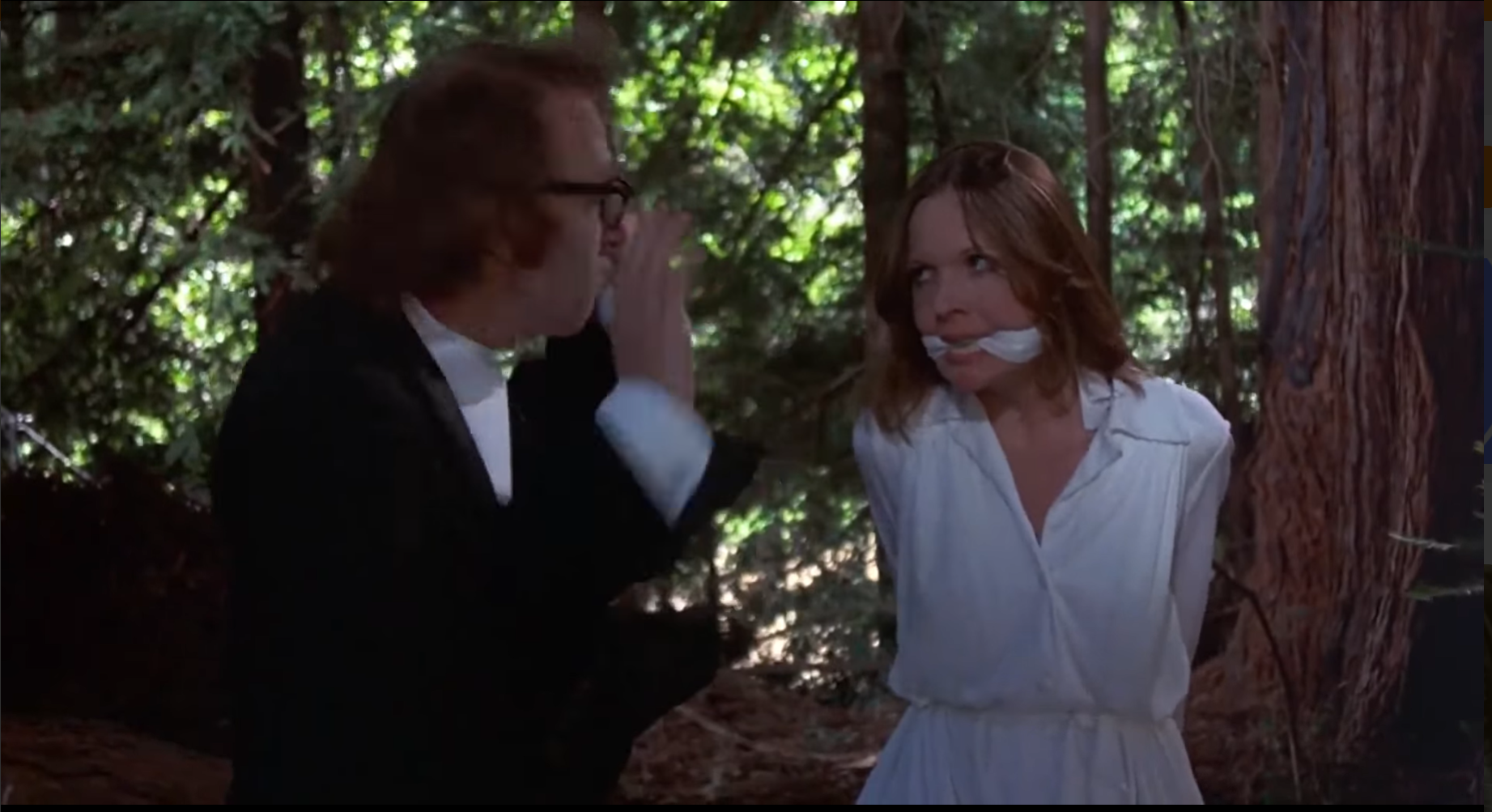
… to timely satire (when shown a photo of Norman Mailer by an inquisitive archaeologist, Allen informs him that Mailer “donated his ego to Harvard Medical School”):
… to mind-blowing lunacy (Allen wins a Miss America award [!]:
… and later — oh, so randomly — channels Blanche DuBois in a scene from A Streetcar Named Desire).
For such a silly story, Sleeper is surprisingly full of memorable moments: few will be able to forget the botched “nose cloning” sequence near the end of the film, for instance:
… or the movie’s coterie of futuristic “gadgets” — including the efficient Orgasmatron box:
… the drug-providing “Orb” (which provokes Allen into a rare fit of laughter on-screen):
… and some instant chocolate pudding powder which quickly grows out of Allen’s control.
Though most of the supporting actors are unknowns, Keaton — in her second film with Allen, after Play it Again Sam (1972) — is charmingly nutty as Allen’s foil and love interest, who undergoes a dramatic transformation from squealing hedonist to committed revolutionary:
Meanwhile, Allen himself has loopy fun channeling Buster Keaton, Charlie Chaplin, and Bob Hope (among others). Like the best must-see films, Sleeper — which, mercifully, never takes itself too seriously — can easily be revisited by film fanatics from time to time, and is the perfect introductory Allen movie to show to one’s non-ff friends. Redeeming Qualities and Moments:
Must See? Categories
(Listed in 1001 Movies You Must See Before You Die) Links: |
“My mother thinks I’m the devil and that God is a UFO.”
|
Synopsis: |
|
Genres, Themes, Actors, and Directors:
Review:
Early on, for instance, we see poor “Ruby” (Mayo) being told that she’ll have to pay $55 for the privilege of interviewing for a job; to emphasize the point that there’s no way Ruby can afford this exorbitant and inexplicable fee, Turko offers a close-up of a few pennies (!) in Ruby’s hand. Later, Ruby agrees to participate in a cheesy porn film (a satire of Star Wars called, naturally, Sex Wars) to earn some quick money — but when things go comically haywire through no fault of her own, she’s assigned all the blame and thrown off the set. Most frustrating of all is the way Ruby’s half-black baby (his mixed race is merely exploited as one more strike against Ruby) disappears from the majority of the film altogether; as a result, we never believe that she’s really desperate to create a life with him. A truly authentic film about the perils of solitary teen motherhood clearly has yet to be made. Redeeming Qualities and Moments: Must See? Links: |
“Nothing that happens to another human being is alien to us: there, but for the grace of God, go I.”
|
Synopsis: |
|
Genres, Themes, Actors, and Directors:
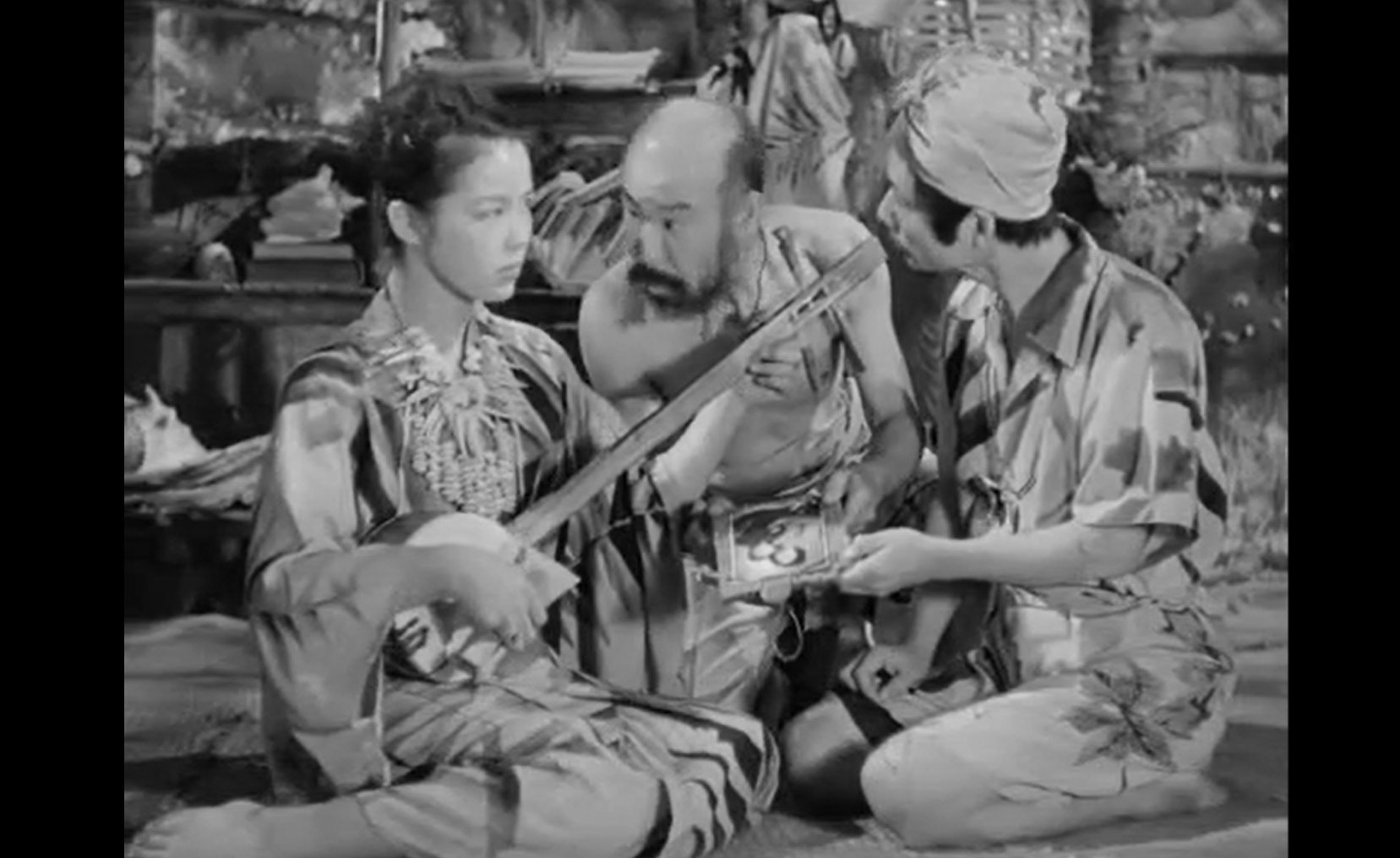
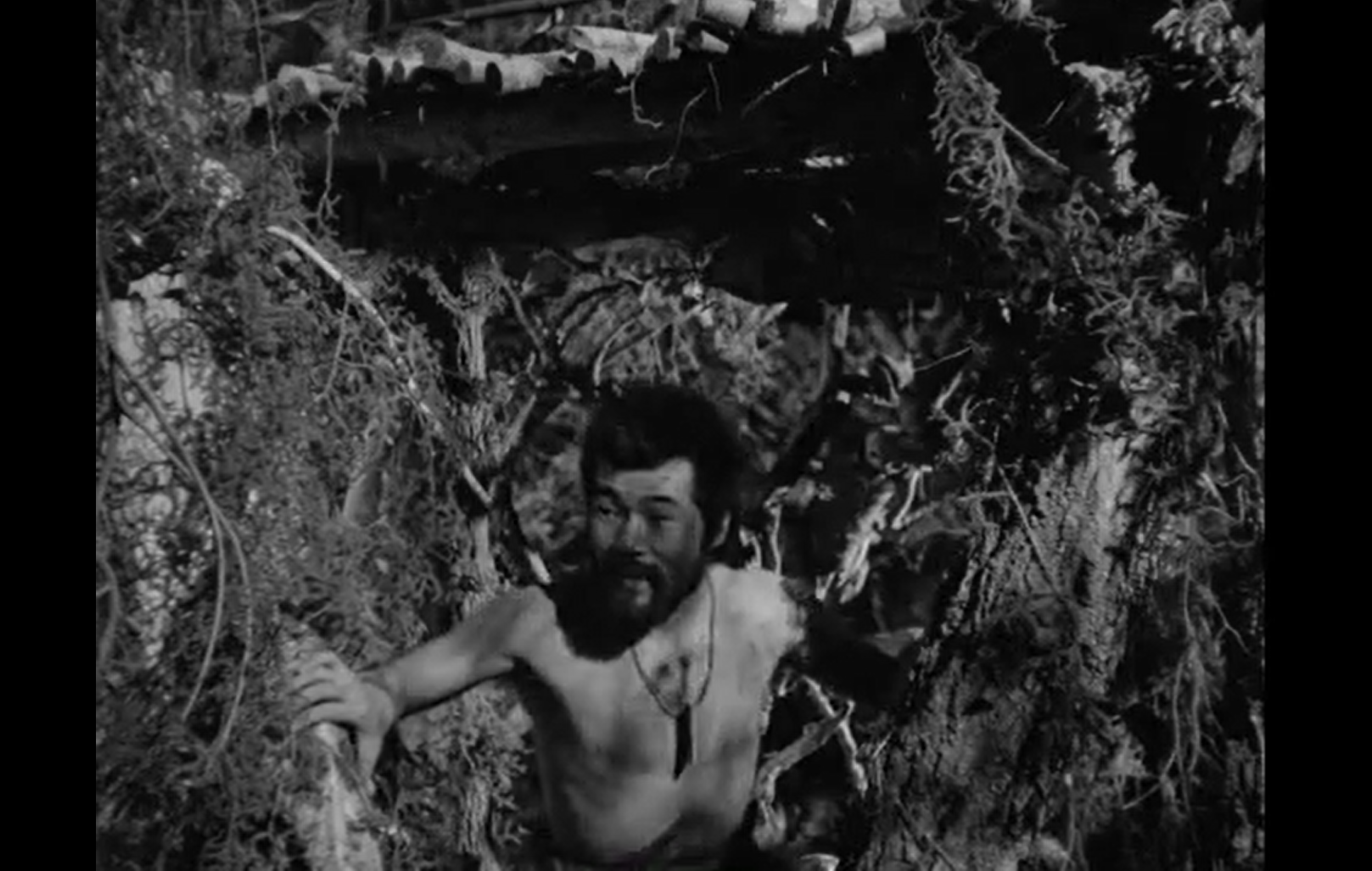
Review: With Anatahan, von Sternberg very intentionally broke all the “rules” one might expect from a wartime film based on a real-life historical event: he utilized a Kyoto sound stage rather than an actual island, cast Kabuki actors rather than cinematic stars, and implemented a voice-of-God narration over unsubtitled Japanese — all in an effort to create a highly stylized allegory of rivalry and desire. Trapped on an island with only one woman, and patriotically bound to stay put rather than allow themselves to be captured by the enemy, the deluded soldiers’ most basic impulses come into play; they ultimately represent a microcosm of society at its most primitive. Meanwhile, we’re seduced by the beauty of von Sternberg’s unearthly imagery; although he famously said, “I care nothing about the story, only how it is photographed and presented”, Anatahan proves that von Sternberg was entirely capable of marrying the two. Redeeming Qualities and Moments:
Must See? Categories Links: |
“There’s life beyond birth.”
|
Synopsis: |
|
Genres, Themes, Actors, and Directors:
Review:
Her decision to leave Johnson and marry Finch is never explained (is it love at first sight?), but the downward spiral that quickly ensues — as Finch’s career takes off and their marriage hits the rocks — makes it clear that her desire for an idyllic family existence will become more and more remote. While we can’t help wanting to understand more about Jo’s addiction to having children (which plays a pivotal role in the dissolution of her marriage to Finch), Bancroft’s performance is nonetheless impressive, and she deservedly earned an Oscar nomination for her work; she embodies her depressive London housewife so fully that it’s easy to forget she’s Brooklyn-born rather than British.
Peter Finch as her philandering husband is appropriately duplicitous, while both James Mason and Maggie Smith are deliciously unforgettable in supporting roles. While it’s rarely enjoyable to watch chronic infidelity played out on-screen — and The Pumpkin Eater is no exception to this rule — the film remains must-see viewing simply for Bancroft’s memorable central performance. Note: Interestingly, while director Jack Clayton helmed several provocative films about the complex lives of children (The Innocents, Our Mother’s House), Bancroft’s kids aren’t given much of a role here; it’s all about the dysfunctional adults instead. Redeeming Qualities and Moments:
Must See? Categories
Links: |
“I may not know a winner when I see one, but I sure know a loser.”
|
Synopsis: |
|
Genres, Themes, Actors, and Directors:
Review:
What they all have in common, however, is a willingness to put their health and sanity on the line for three meals a day and the remote possibility of fringe benefits. Remarkably, we can’t help staying gruesomely fascinated by these characters’ fates even as we know (either from gut intuition, or from previous viewings of the film) that little good will come to them. The metaphor of Dance Marathon-as-Life — both are nasty and brutish, and then you die (or lose) — is apparent, but is so effectively framed as a bleakly vibrant history lesson that it’s easy to forget we’re watching anything other than a unique human drama playing out in front of our eyes. They Shoot Horses… isn’t for the faint of heart, and won’t likely be a repeat favorite — but it’s certainly must-see viewing at least once for all film fanatics. Redeeming Qualities and Moments:
Must See? Categories
Links: |
“You know, weddings are the happiest events I could possibly dream of — and yet somehow, when they’re over, it’s always so sad.”
|
Synopsis: |
|
Genres, Themes, Actors, and Directors:
Review: Interestingly, the characters one would consider most central to the event — that is, the bride (unknown, braces-clad Amy Stryker) and her groom (Desi Arnaz, Jr.) — are among the most peripheral; only gradually do we learn what brought them together, and they never become fully developed protagonists. While their future happiness is threatened a few times throughout the film — by Arnaz’s former high society girlfriend (Pam Dawber), by Stryker’s wigged-out sister (Mia Farrow), and, later, in an infamous shower scene, by Arnaz’s military academy roommate — this isn’t really the primary thrust of the story; there isn’t one. The most humorous of the film’s many subplots concerns beefy Pat McCormick’s relentless pursuit of Carol Burnett (mother-of-the-bride) — not out of lust, as we might expect, but from a pure conviction that she is his long-lost soul-mate. While Burnett’s cinematic performances are often (as here) over-the-top, she does a hilarious job showing her character’s gradual shift from absolute lack of comprehension to giddy acceptance of McCormick’s overtures. Meanwhile, deeper familial dramas (such as Nina Van Pallandt’s drug addiction, and the truth behind her marriage to Vittorio Gassman, who seems to have mafia ties) are handled with both humor and sensitivity. Part of Altman’s genius lies in the way he treats all his characters — no matter how minor — with respect; we sense that each has an interesting story to tell, if only we had the time to spend with them. Redeeming Qualities and Moments:
Must See? Categories Links: |
“There must be someplace where them songs are for real.”
|
Synopsis: |
|
Genres:
Response to Peary’s Review: Redeeming Qualities and Moments:
Must See? Categories
Links: |
“I know that you cannot live on hope alone, but without it, life is not worth living.”
|
Synopsis: |
|
Genres, Themes, Actors, and Directors:
Review: Redeeming Qualities and Moments:
Must See? Categories
Links: |