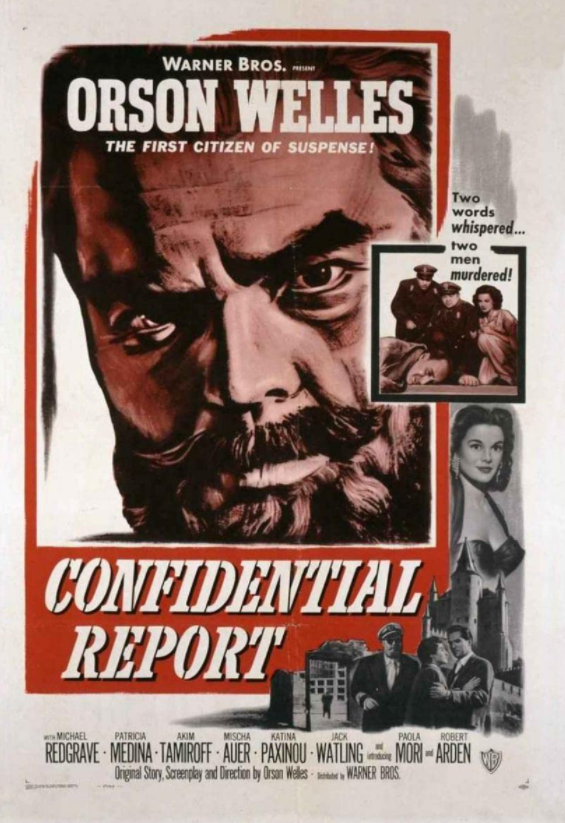
Mr. Arkadin / Confidential Report (1955)

Mr. Arkadin / Confidential Report (1955)

“You’re a fool — but not a silly fool. And I’m not ungenerous.”

Synopsis:
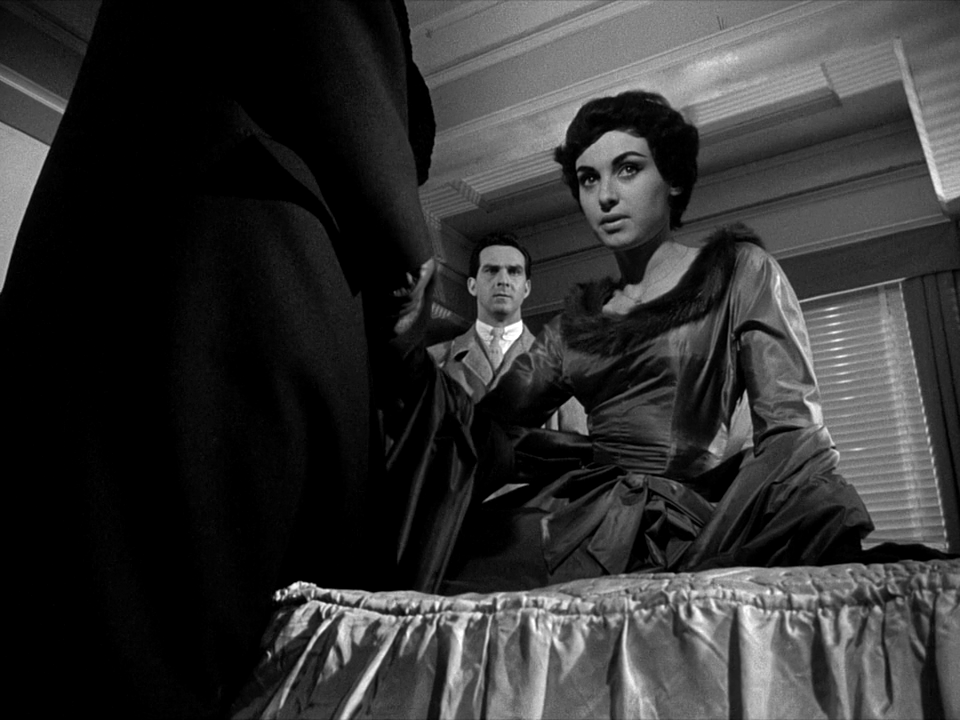
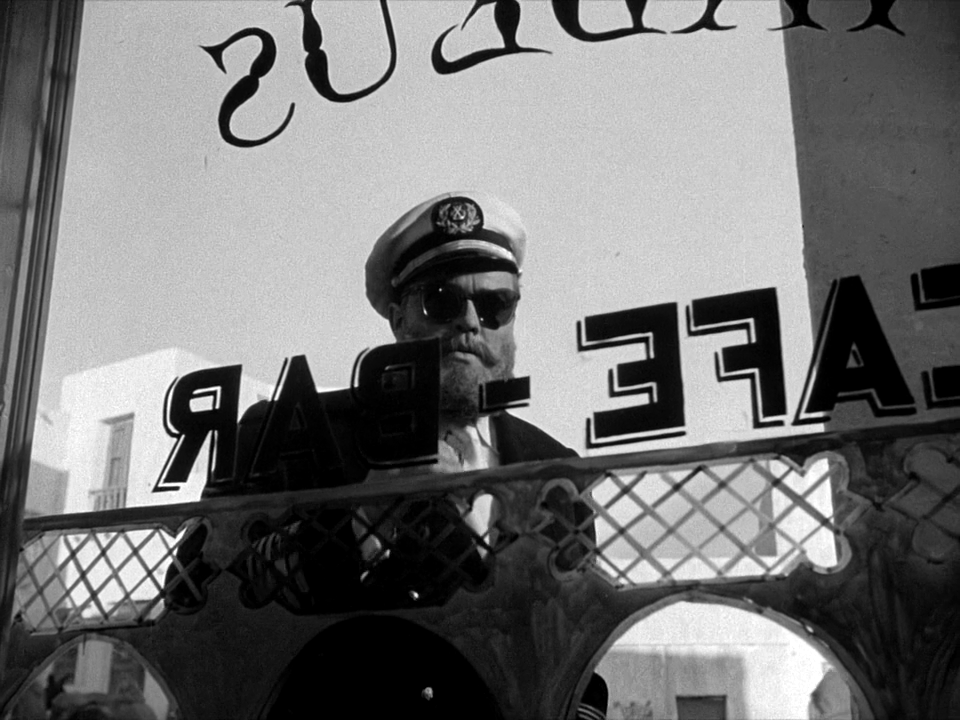
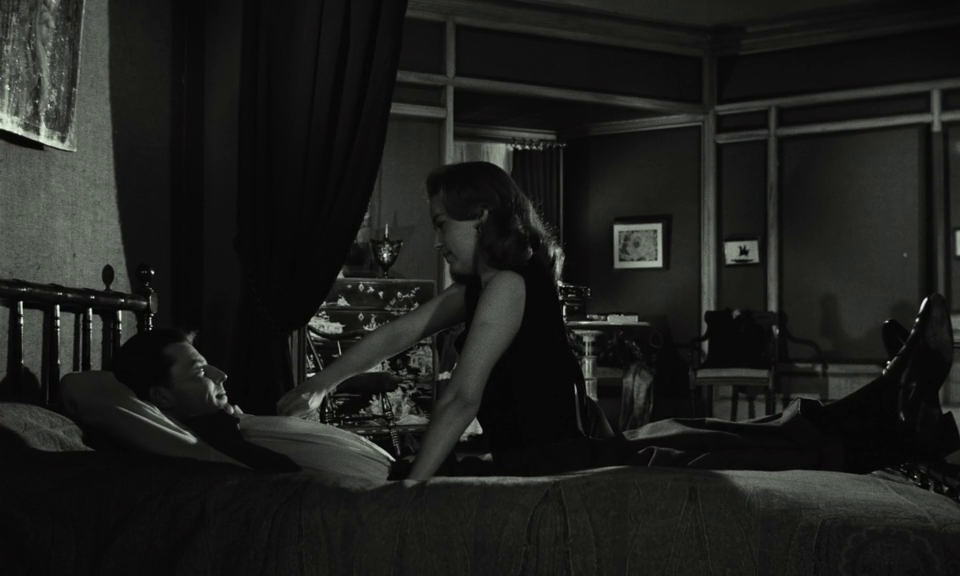
After warning a terminally ill German (Akim Tamiroff) that his life in danger by a Russian oligarch (Orson Welles), a petty American smuggler (Robert Arden) shares the story of how he and his girlfriend (Patricia Medina) first learned about Mr. Arkadin (Welles) and his daughter Raina (Paola Mori), and how Arden was hired by Mr. Arkadin to research his mysterious past.

Genres, Themes, Actors, and Directors:

  • Akim Tamiroff Films
  • Detectives and Private Eyes
  • Flashback Films
  • Michael Redgrave Films
  • Orson Welles Films

Response to Peary’s Review:
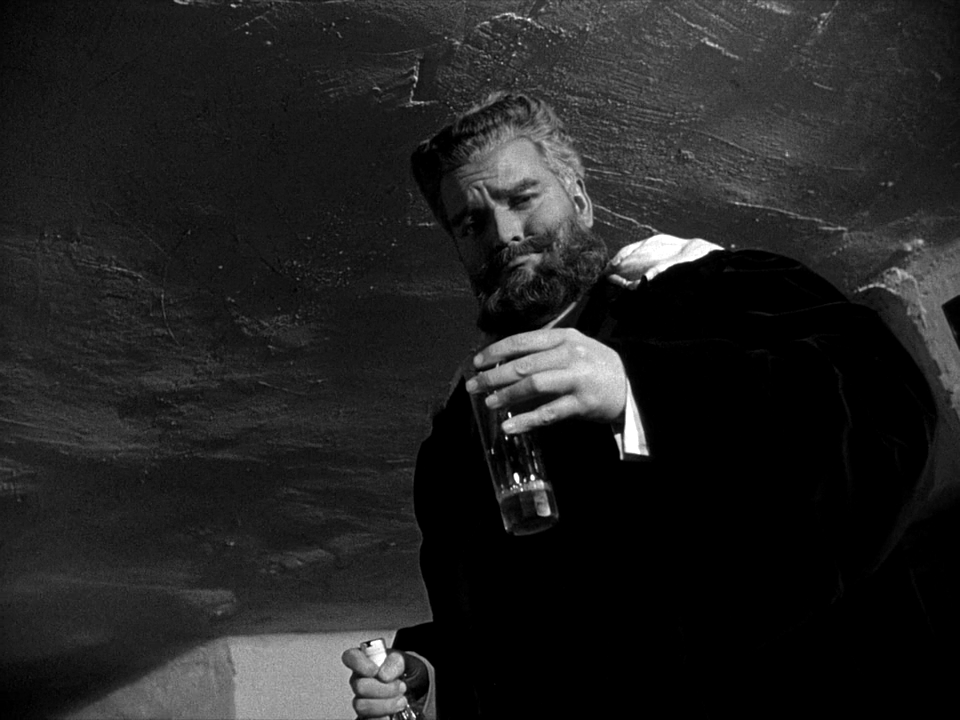
As Peary writes, “If Orson Welles hadn’t had Herman Mankiewicz’s help writing Citizen Kane, it might have come out something like this interesting but empty Kane variation.” He notes that “as in Kane, Welles plays a man of many faces/masks, a reclusive financier… with a shady past” who “wants to get fortune hunter Robert Arden away from his daughter.”

He adds that “just as William Alland [the reporter in Citizen Kane] put together pieces of Kane’s life, Arden learns what transpired in Arkadin’s life,” all while “Arkadin disposes of those people Arden speaks to who know how he made his fortune.” Peary points out that the “picture is bizarrely photographed and full of delightful cameos,” but he notes that “Arden’s a terrible actor”:

… “the low budget’s a problem, and we never really care about Arkadin’s past because Welles never establishes the person Arkadin is in the present.”

While this film has its supporters, I’m in agreement with Peary’s assessment — as well as DVD Savant’s description of the film as “an arresting whirlwind of original images, eccentric characters and convoluted storytelling”. This movie is indeed creative and convoluted — to a fault. As with so many of Welles’ ventures, its production history was riddled with challenges, and there is no one “definitive” cut of the film (instead, Criterion’s DVD release offers several versions for viewers to choose from); but this can’t take away from the central issue that the film is terribly dubbed, erratically edited, and not very cohesive.

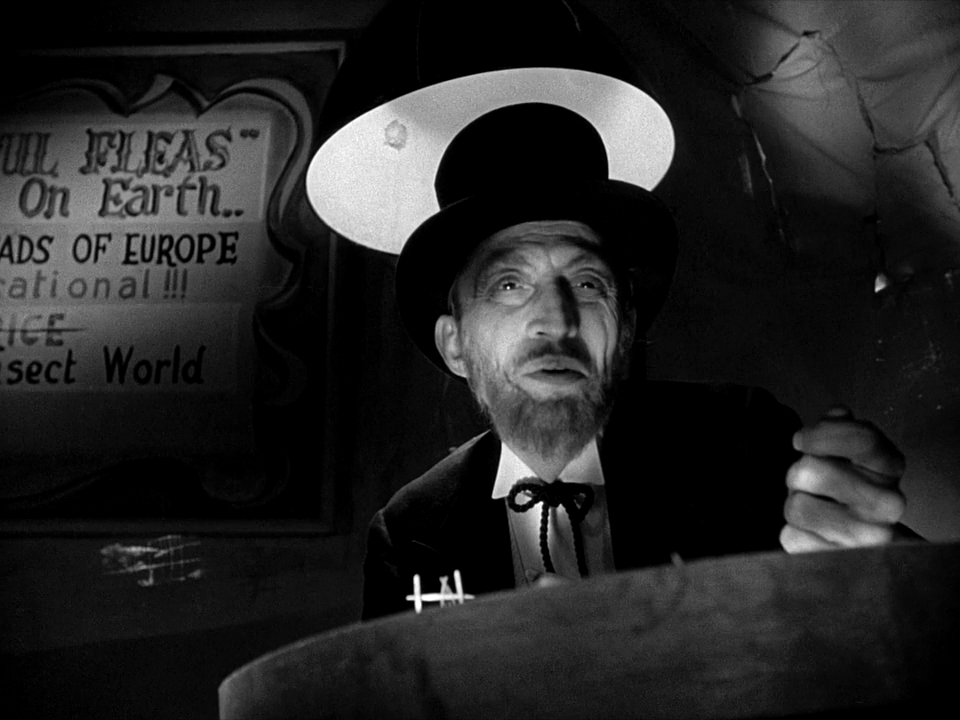
Instead, we simply watch in morbid fascination to see what Welles will serve up next in terms of weird characters and bizarre sets. Among these are Mischa Auer as ringmaster of a flea circus:

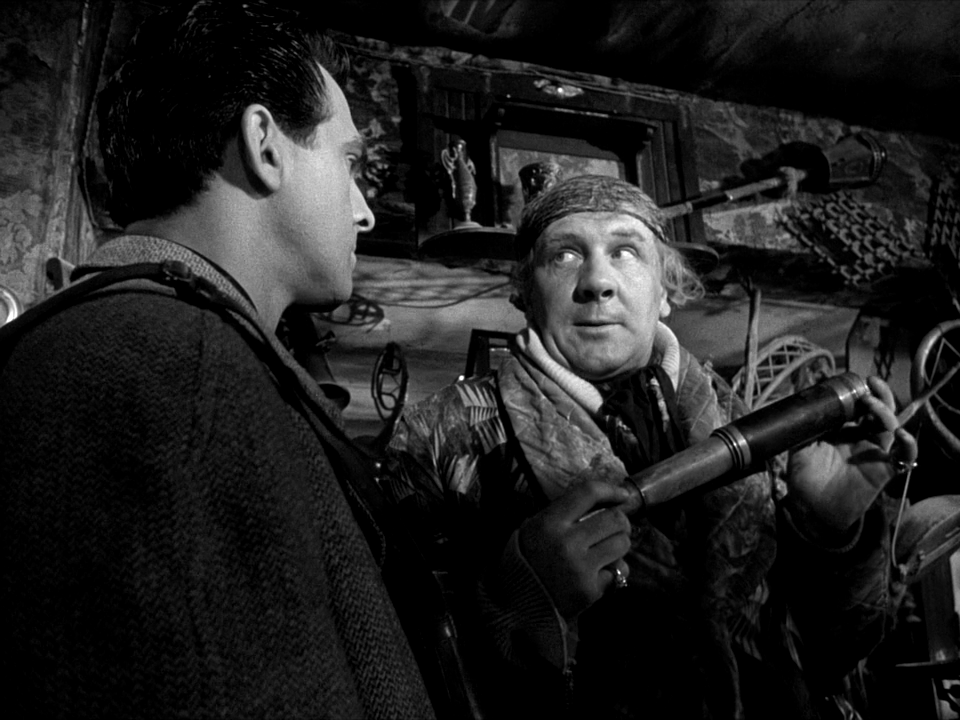
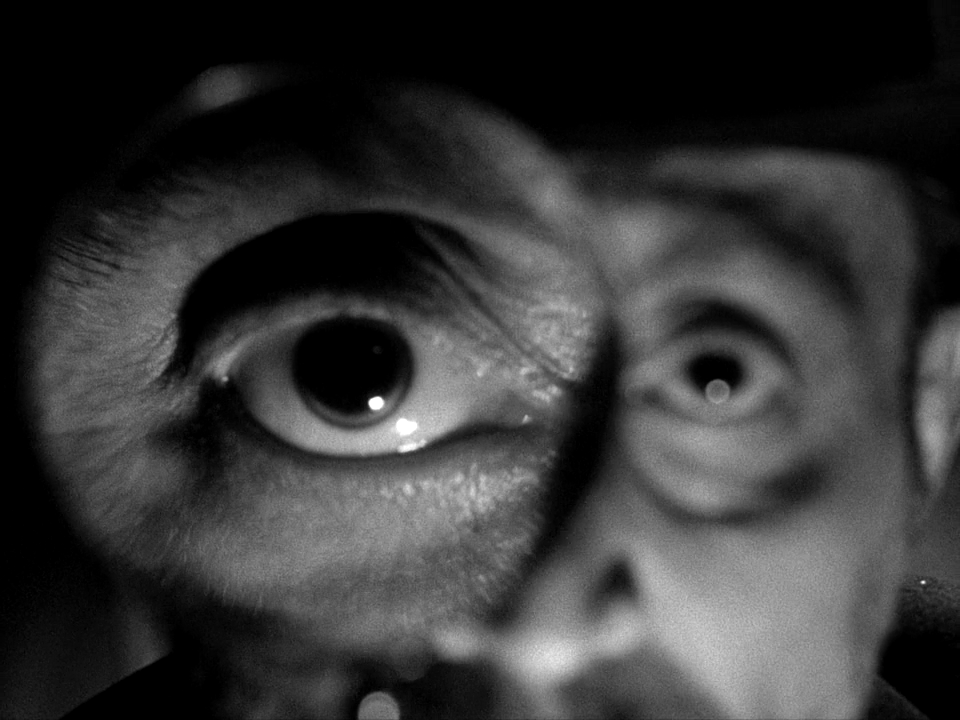
… Michael Redgrave as a hairnet-wearing antiques dealer trying to sell Arden a broken telescope:

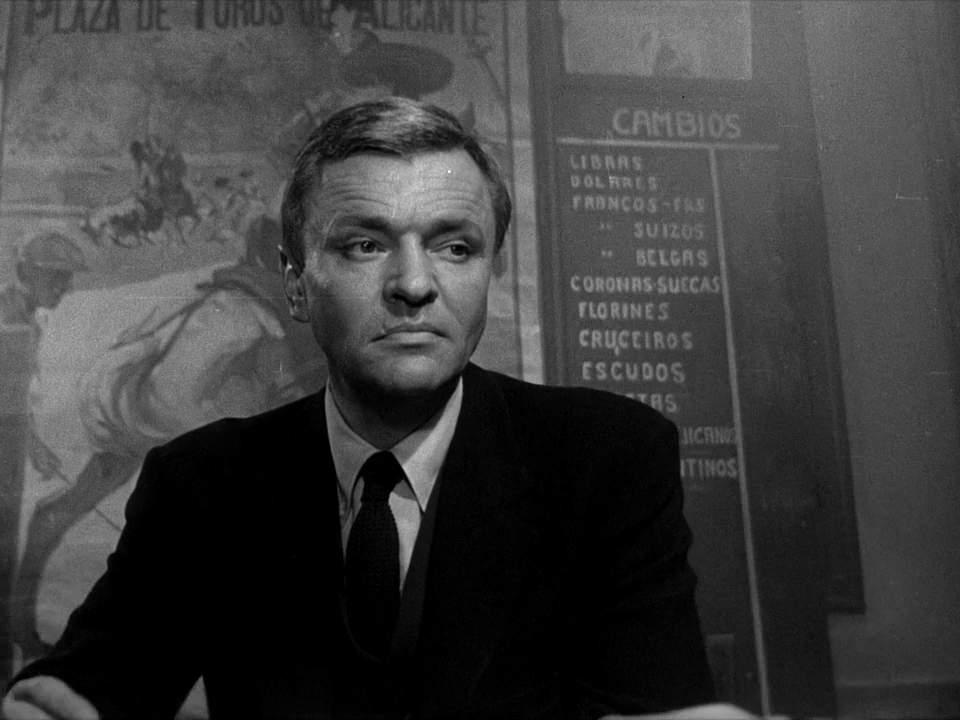
… Peter Van Eyck as an informant who gets to speak one of the best lines in the movie (“I never remember pretty women; it’s so expensive”):

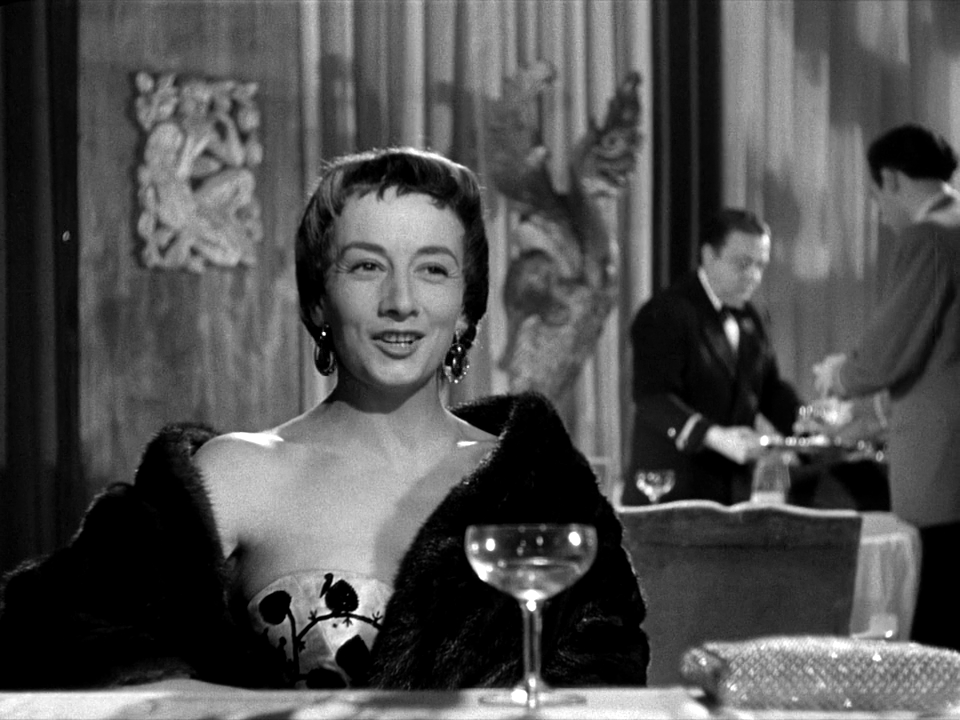
… Suzanne Flon as the Baroness Nagel:

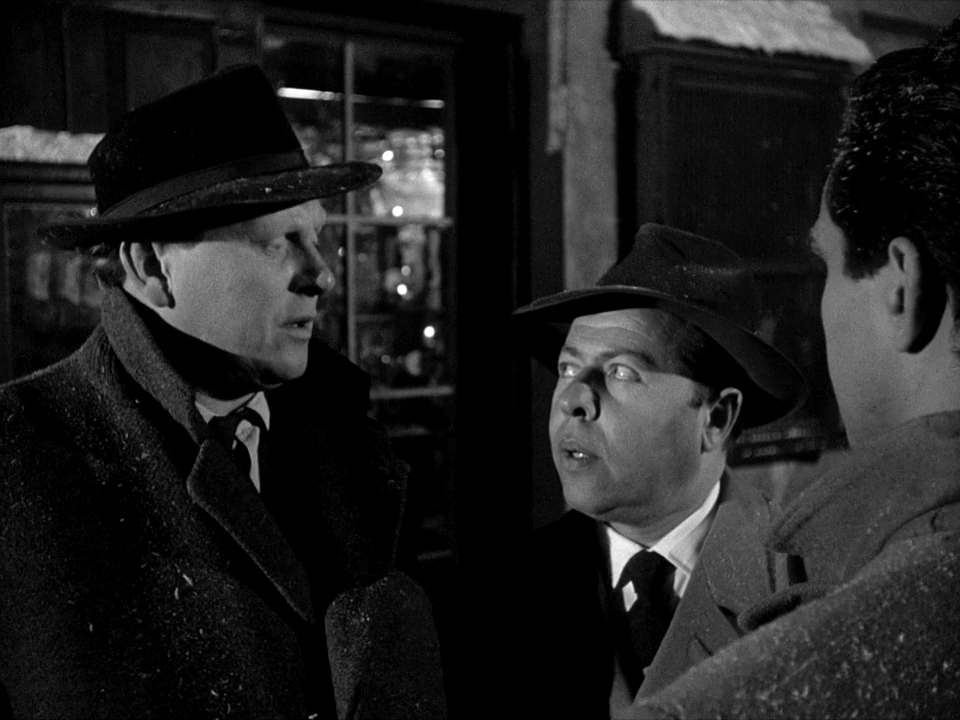
… and Gert Fröbe (“Goldfinger”) as a German policeman.

Note: The title character’s name is pronounced Ar-KAHR-din, with the emphasis on the second syllable, rather than ARK-a-din like one might imagine; it takes some getting used to.

Notable Performances, Qualities, and Moments:

  • Patricia Medina as Mily
  • Jean Bourgoin’s cinematography

  • Creative direction and sets

Must See?
No, though of course Welles fans will consider it essential.

Links:

Attack! (1956)

Attack! (1956)

“It’s not a matter of conclusive facts, sir.”

Synopsis:
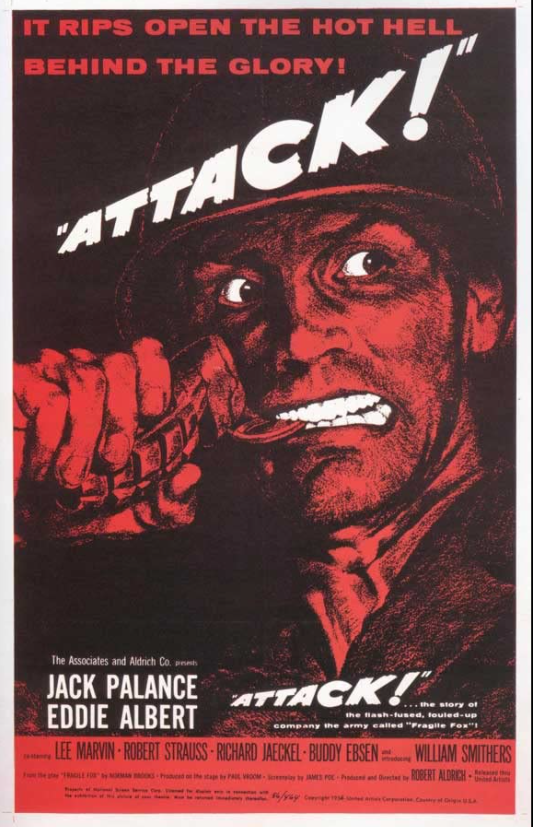
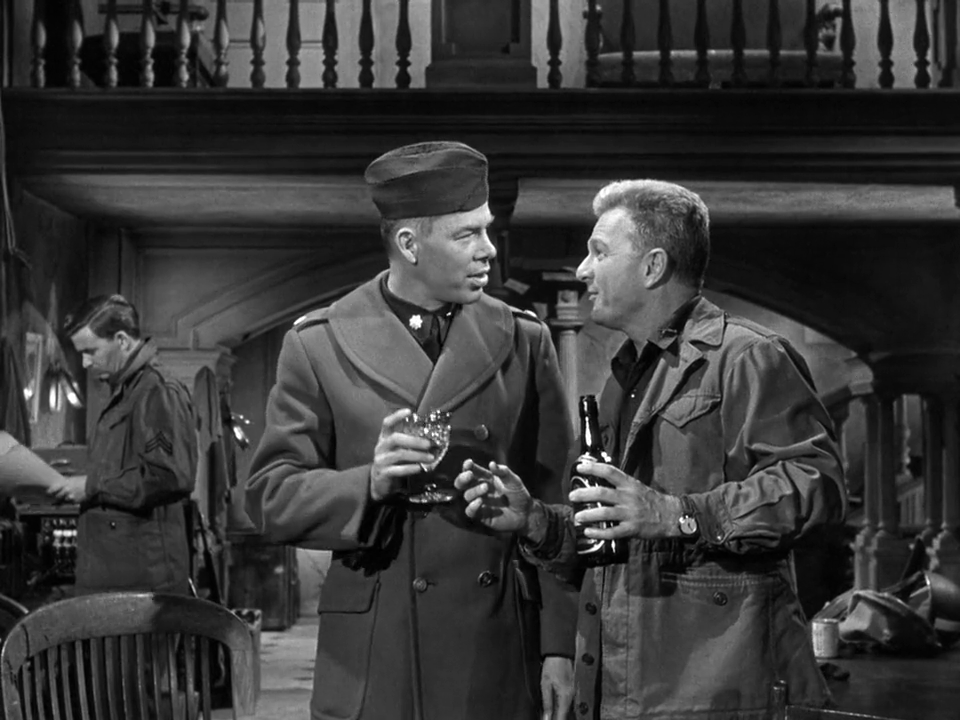
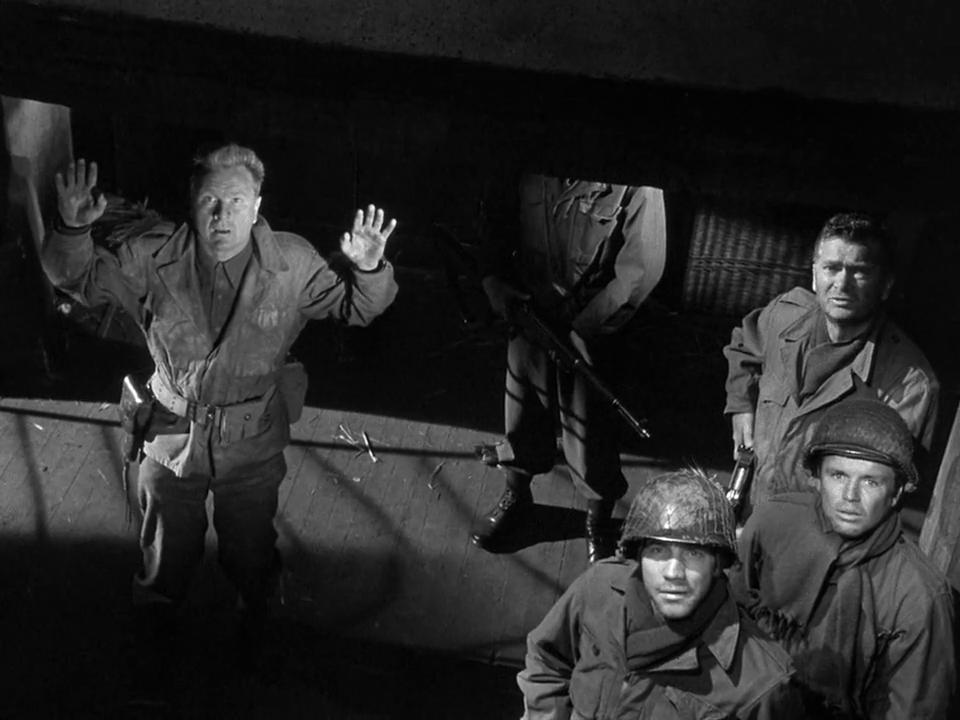
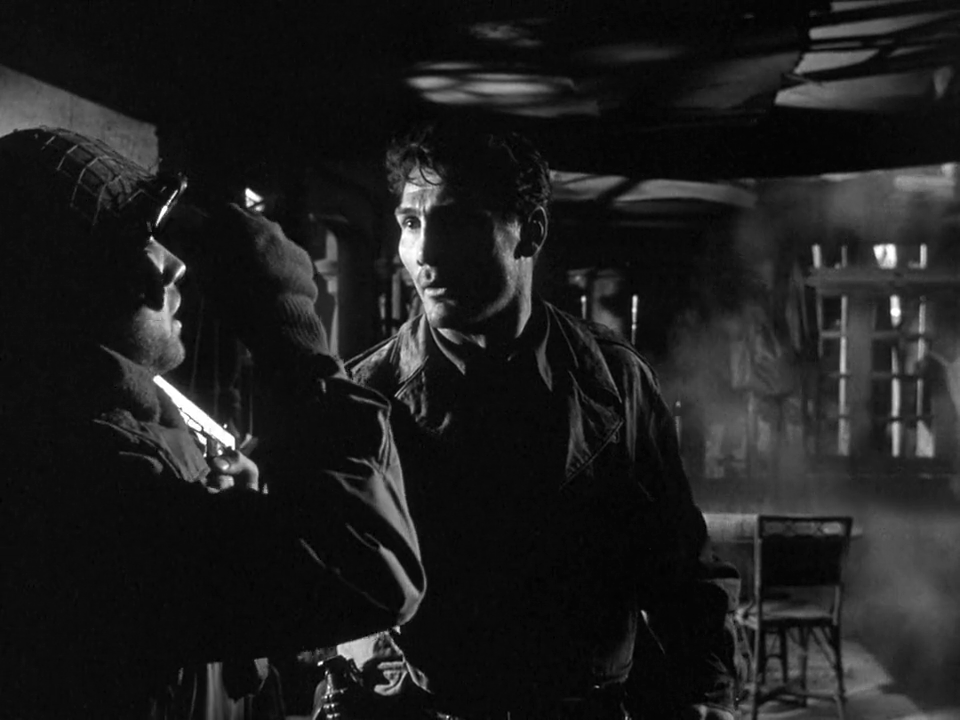
During World War II, a cowardly captain (Eddie Albert) protected by a career officer (Lee Marvin) hoping to capitalize on Albert’s family connections is allowed to continue in his role, even after causing the deaths of an entire platoon led by Lt. Costa (Jack Palance) — but will Costa and his fellow soldiers allow yet another slaughter to occur once they’re back in battle?

Genres, Themes, Actors, and Directors:

  • Cowardice
  • Eddie Albert Films
  • Jack Palance Films
  • Lee Marvin Films
  • Richard Jaeckel Films
  • Robert Aldrich Films
  • Soldiers
  • World War Two

Response to Peary s Review:
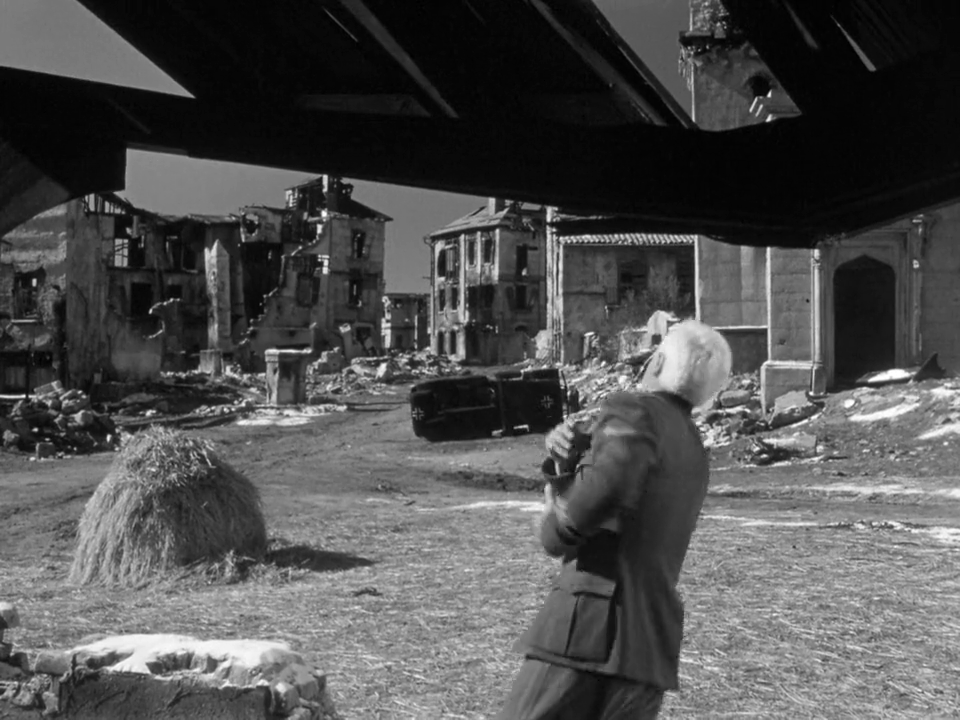
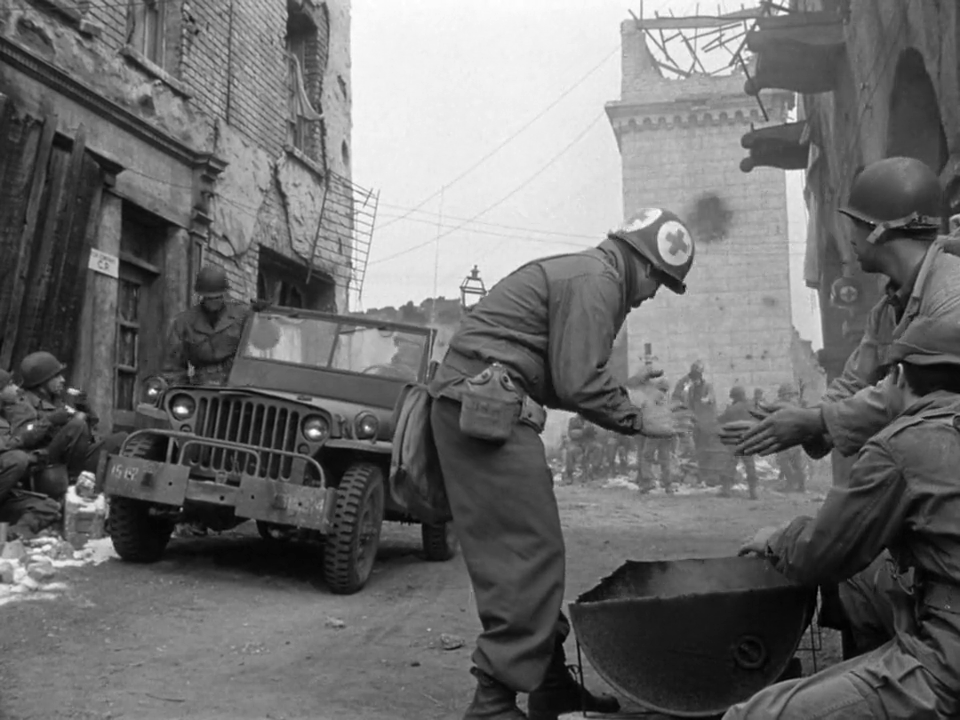
In his review of this “tough, taut, thought-provoking anti-war film set in Belgium in 1944,” Peary opens by writing that “Robert Aldrich’s expertly directed action scenes are brutal, with emphasis placed on our soldiers’ fears and the tremendous pain they feel when they’re injured.” He notes that “the seemingly invincible enemy tanks that emerge from the rubble with their wiggling gun heads coming into view first and their turrets rotating are presented as monsters, much like the giant ants in Them!.”

However, “if the Nazis weren’t terrifying enough, the American GI finds himself to be the potential victim of U.S. army bureaucracy that allows soldiers to be sacrificed rather than cause a stink by recalling incompetent officers.”

He goes on to write, “In this war, platoon leaders punch their own men, high-rank officers slap captains, captains punch enemy prisoners, Americans push a captured German office (Peter Van Eyck being very arrogant) into the Germans’ line of fire to be mowed down”:

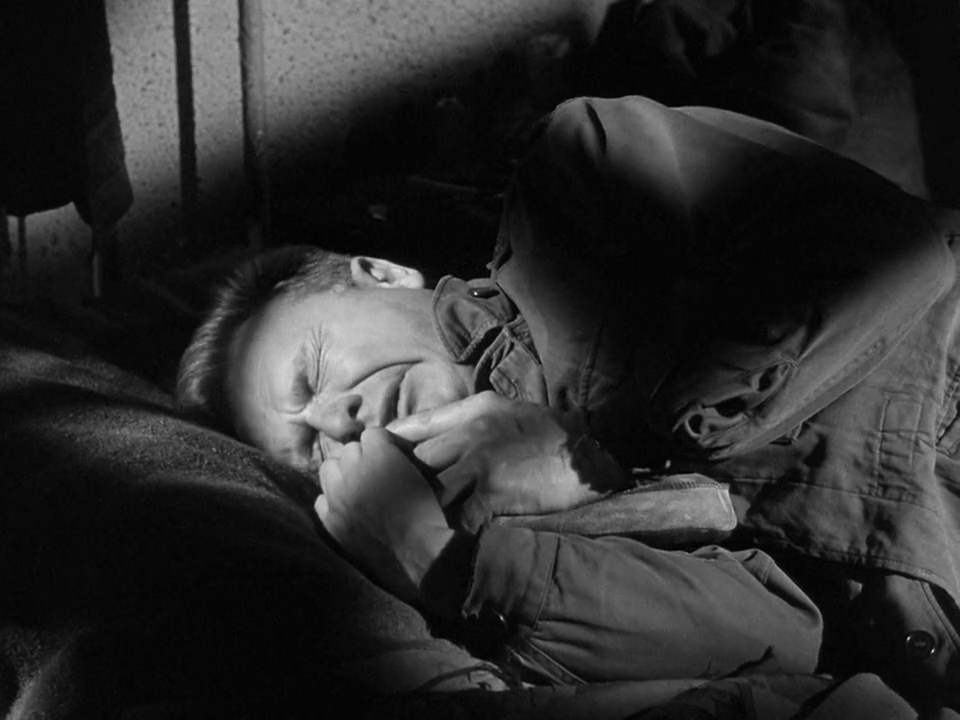
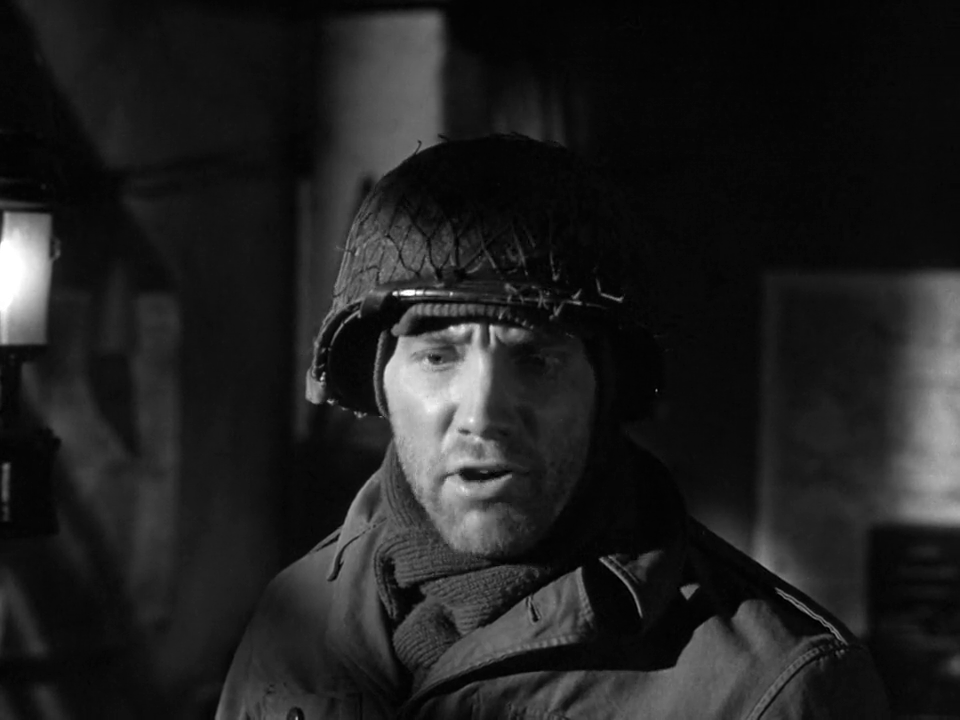
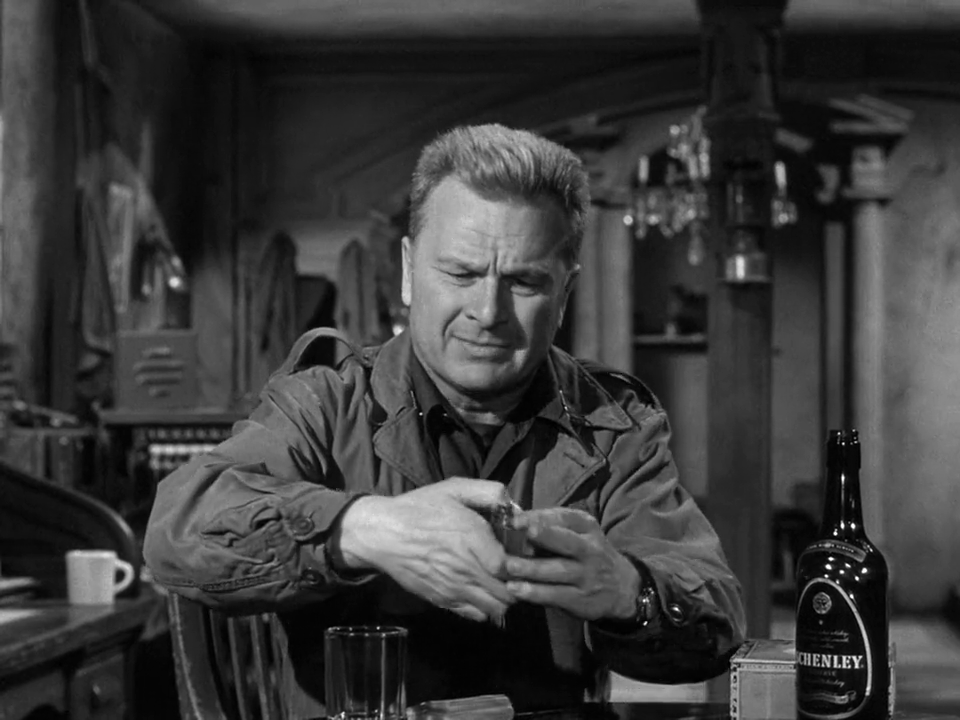
… “a captain is willing to turn his men over to the enemy so that he won’t be shot, [and] the captain’s men are willing to kill him.” Yikes. Peary notes that “Eddie Albert gives a memorably creepy performance as a crazed, sadistic captain whose cowardice has cost the lives of many men”:

… while “Jack Palance is staunchly heroic as the leader of a platoon.”

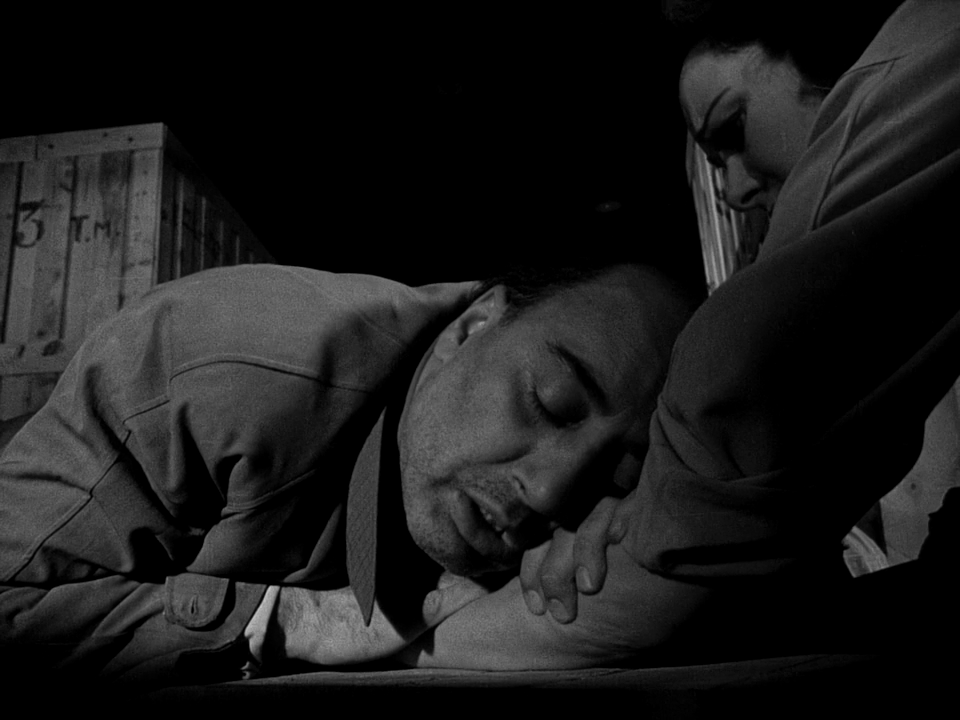
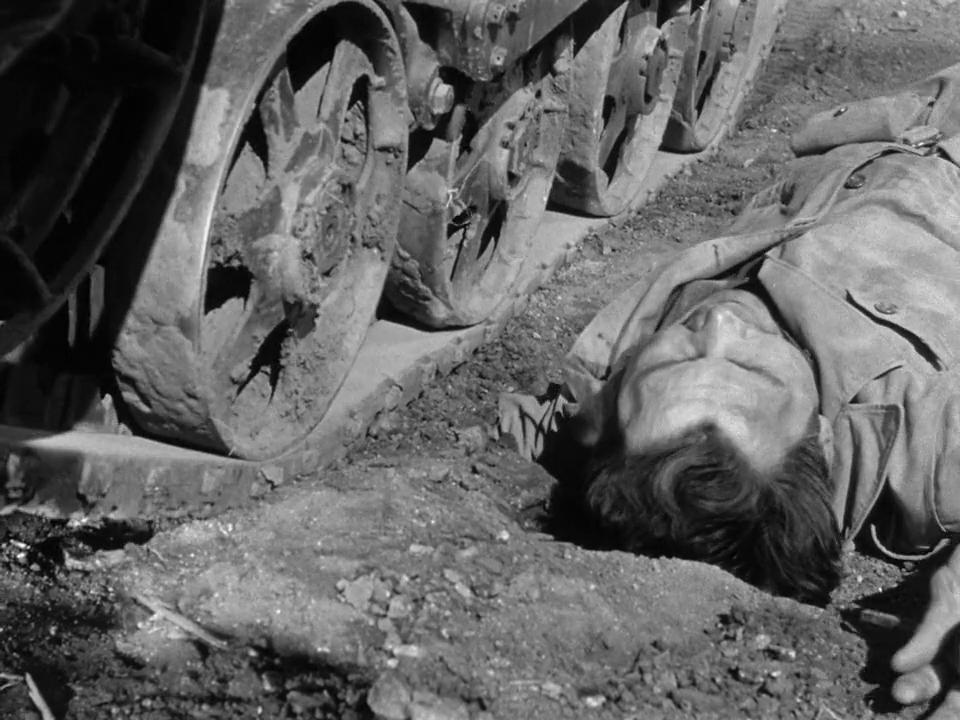
Of special note is an infamously gruesome sequence in which…

SPOILER ALERT

… Palance’s arm is crushed under an enemy tank when he has nowhere else to turn.

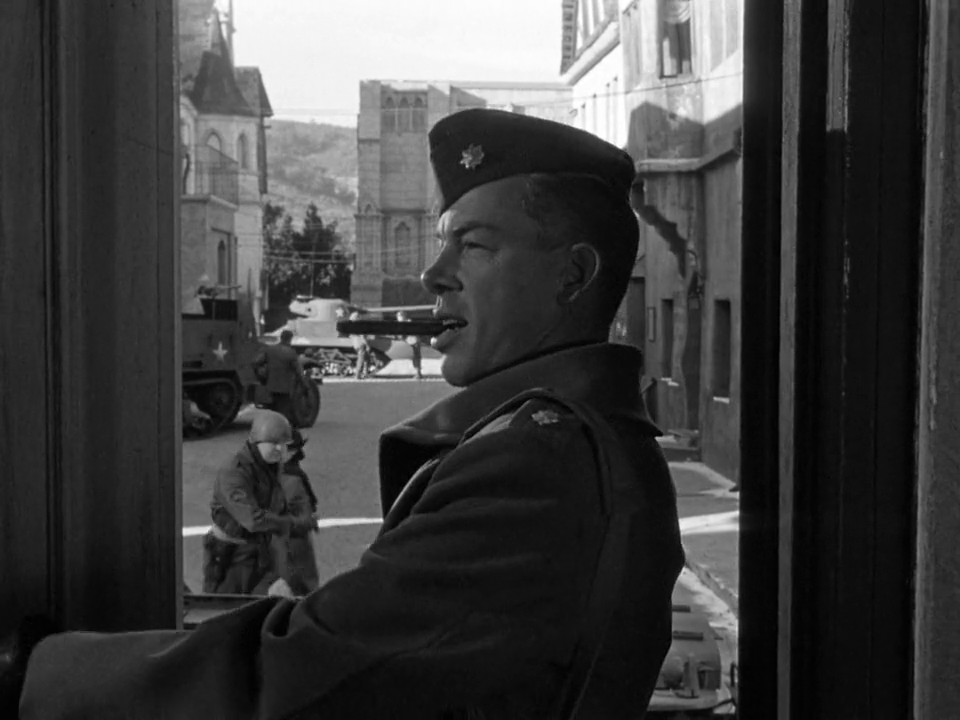
Rounding out the cast are Lee Marvin as a hard-nosed but morally ambiguous leader willing to turn a blind eye when necessary; Buddy Ebsen as a loyal comrade; Richard Jaeckel as a private given hardly any lines; and William Smithers in a pivotal role as a lieutenant standing up to the horrors surrounding him.

Notable Performances, Qualities, and Moments:

  • Jack Palance as Lt. Joe Costa
  • Eddie Albert as Capt. Erskine Cooney
  • Lee Marvin as Lt. Col. Clyde Bartlett
  • Joseph Biroc’s cinematography


Must See?
Yes, as a powerful war-era classic.

Categories

  • Genuine Classic
  • Important Director

Links:

Liaisons Dangereuses, Les (1959)

Liaisons Dangereuses, Les (1959)

“Which of us molded the other?”

Synopsis:
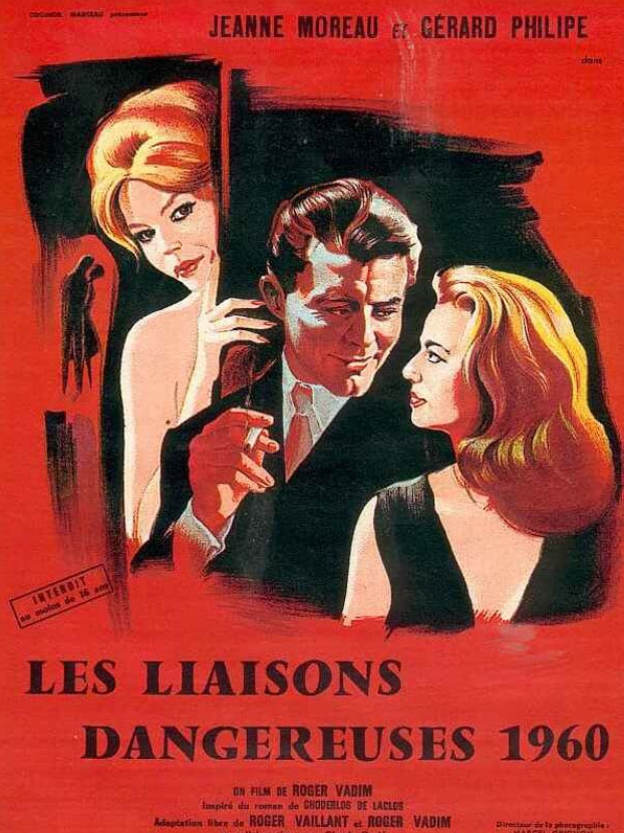
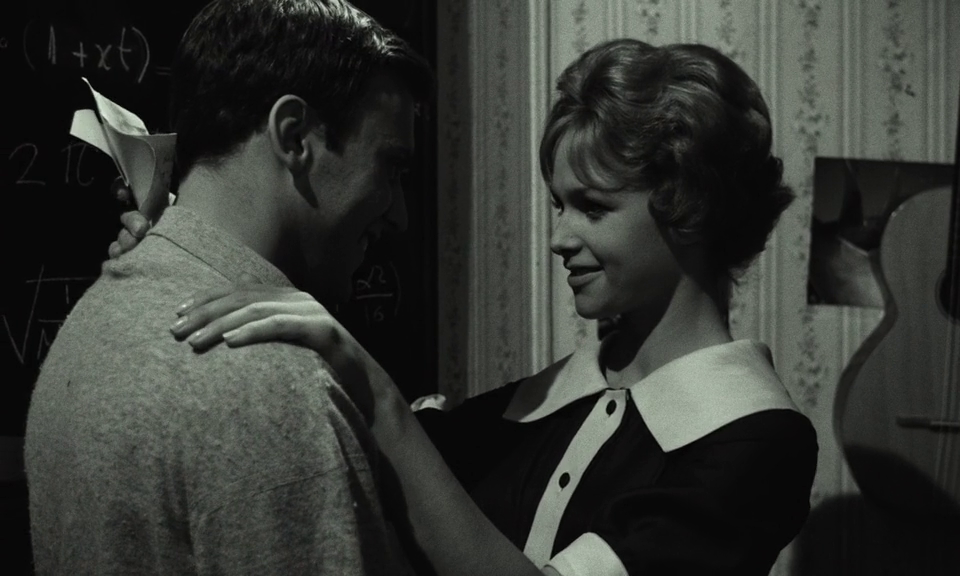
A French couple — Valmont (Gérard Philipe) and Juliette (Jeanne Moreau) — whose marriage revolves around seducing and then abandoning new “conquests” find their happiness compromised when Valmont beds a virginal teenager (Jeanne Valérie) whose fiance (Jean-Louis Trintignant) has been waiting patiently for her while pursuing his studies, then falls in love with a married woman (Annette Vadim) who sparks new feelings within him.

Genres, Themes, Actors, and Directors:

  • French Films
  • Infidelity
  • Jeanne Moreau Films
  • Love Triangle
  • Roger Vadim Films
  • Sexuality

Review:
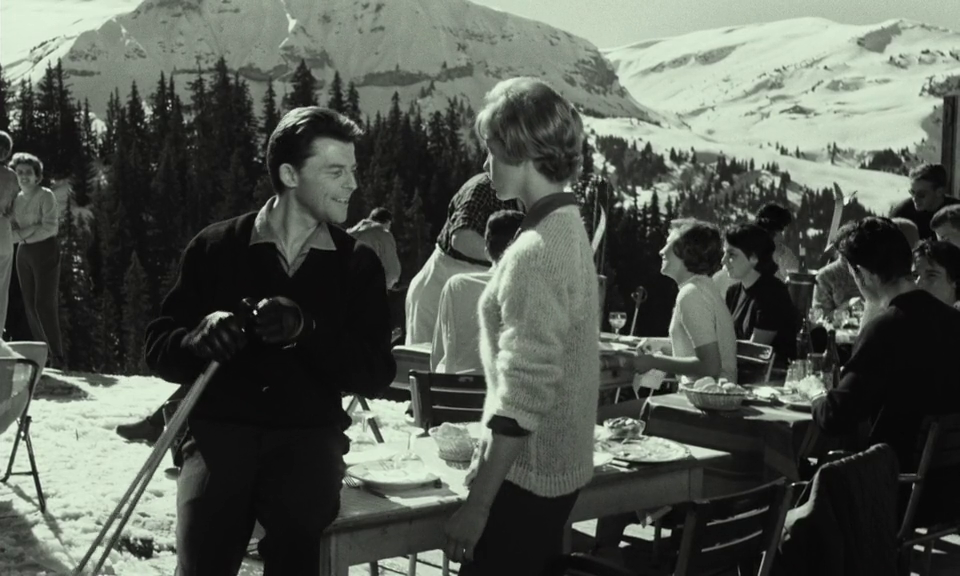
Roger Vadim’s adaptation of Pierre Choderlos de Laclos’ 1782 novel is an interesting entry in the cinematic annals of this scandalous story’s numerous iterations. Featuring a rich, jazzy soundtrack by Thelonius Monk, and upscale settings in snowy retreats:

… the action and settings have clearly been modernized, but the basic tenet of sociopaths using others for their own pleasure is as relevant as ever. Moreau and Philipe — in his final performance before dying at age 36 from liver cancer — are well cast in the lead roles as the master manipulators (here a married couple rather than friends, as in the novel) whose own sexual gratification revolves around their exploitation of others:

Vadim’s real-life wife Annette is appropriately tragic as Philipe’s most complex conquest:

… and Valérie and Trintignant are believable as a naive young couple whose lives are also changed forever by their involvement with Valmont and Juliette:

Fans of this harsh classic tale will want to check this version out — but/and should be prepared for a startling update to the story’s original ending.

Notable Performances, Qualities, and Moments:

  • Marcel Grignon’s cinematography
  • Thelonius Monk’s score

Must See?
No, but it’s recommended.

Links:

French Cancan (1955)

French Cancan (1955)

“Yes, it’s true. I’m his mistress and I’m proud of it.”

Synopsis:
A nightclub manager (Jean Gabin) hires a talented young laundry worker (Françoise Arnoul) to dance the cancan in his new facility — but Arnoul’s boyfriend (Franco Pastorino) is upset when she falls for Gabin, and a wealthy prince (Giani Esposito) is equally disappointed that Arnoul won’t accept his offer of marriage.

Genres, Themes, Actors, and Directors:

  • Dancers
  • French Films
  • Historical Drama
  • Jean Gabin Films
  • Jean Renoir Films
  • Love Triangle
  • Musicals

Review:
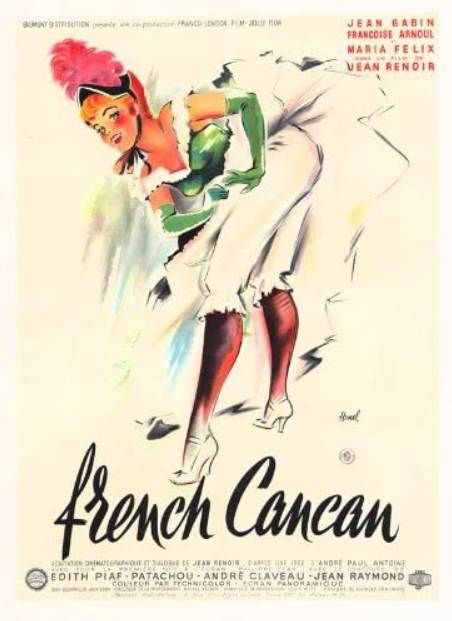
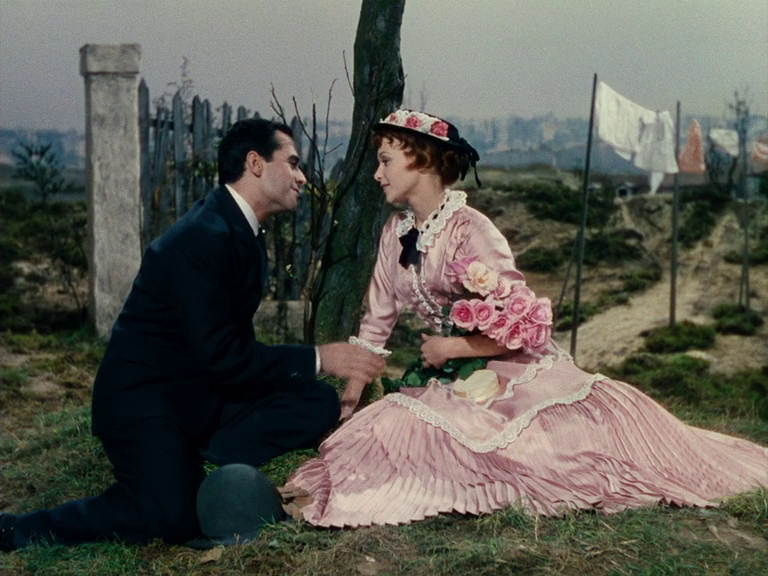
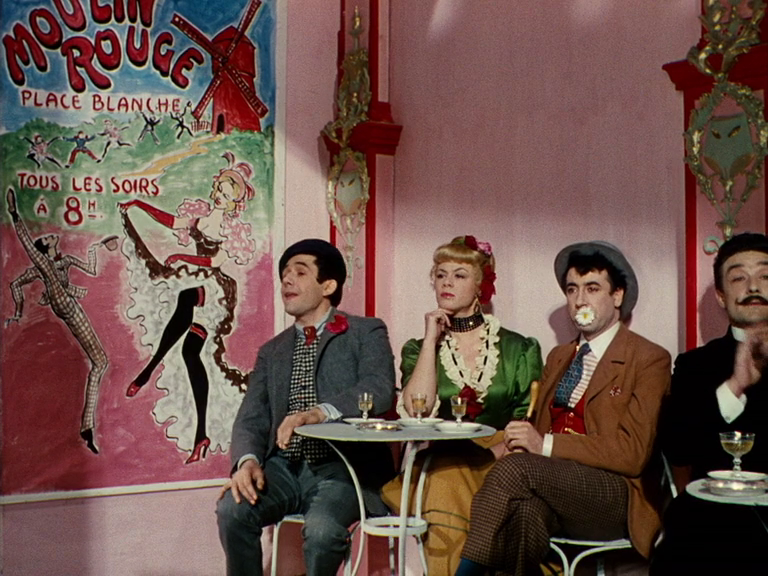
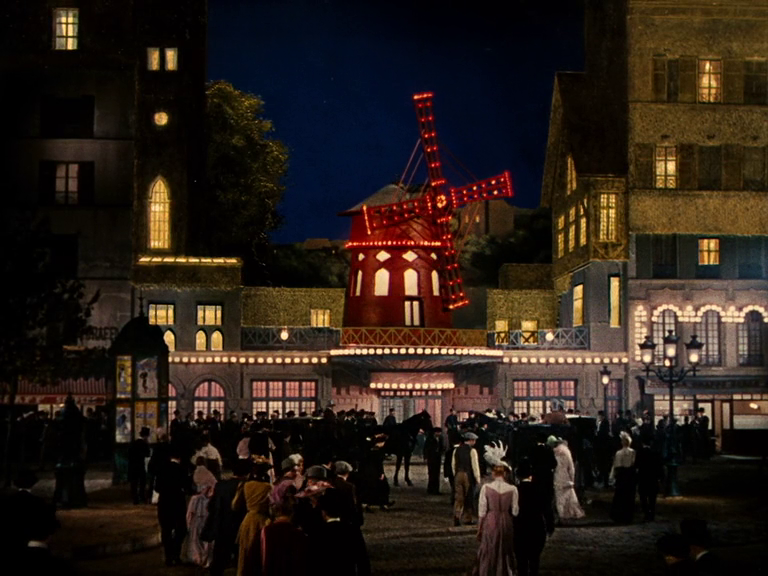
One of Jean Renoir’s three post-Hollywood musical comedies — after The Golden Coach (1952) and before Elena and Her Men (1956) [not listed in GFTFF] — was this vibrant fictional homage to the founding of the Moulin Rouge nightclub in Paris. It’s pure fantasy all the way, filmed entirely on sets:

… and with a featherweight storyline designed simply to showcase that love of the stage tends to triumph over all other considerations (even the promise of wealth and royalty).

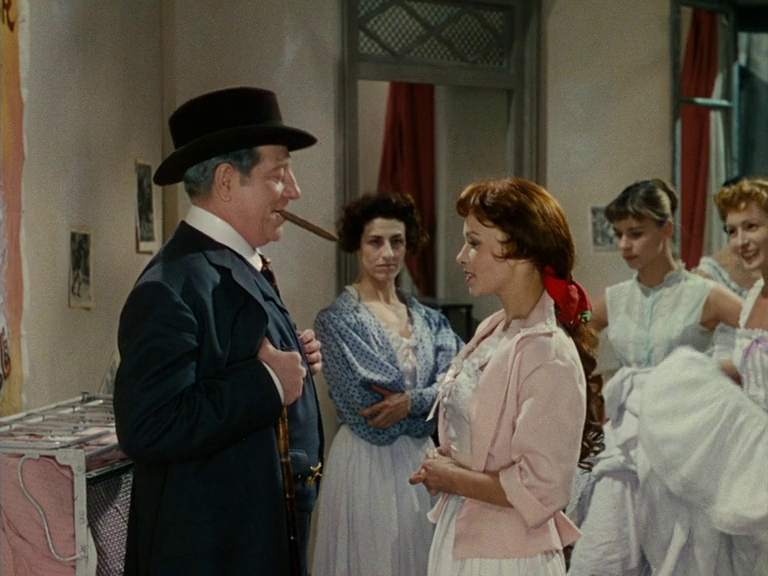
Gabin strolls leisurely through his role as an aging but still desirable impresario:

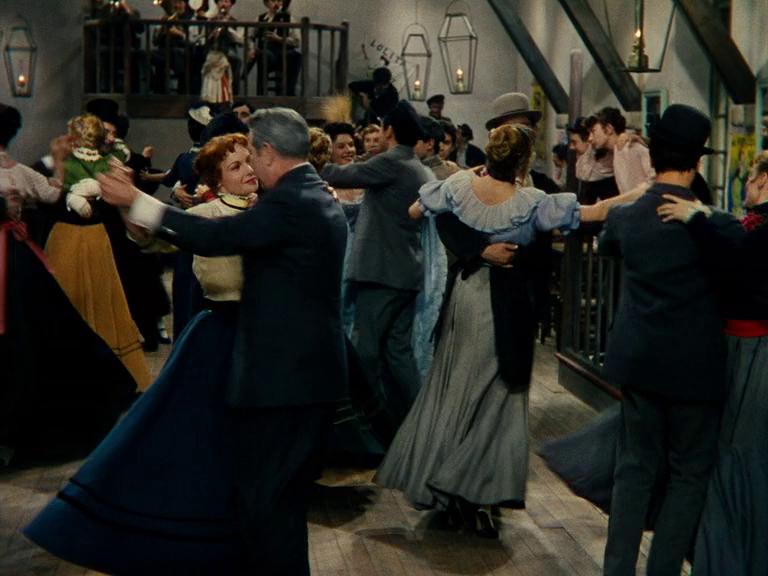
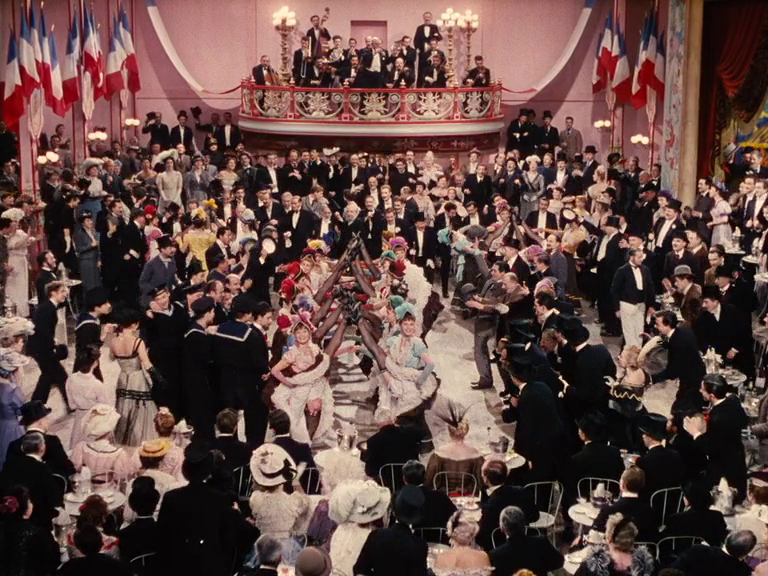
… but it’s the dancing one really keeps an eye out for, and to that end the film opens and closes with plenty of spectacle.


Fans of such fare will surely enjoy this, but it’s not must-see viewing.

Notable Performances, Qualities, and Moments:

  • Fine period sets and Technicolor cinematography

Must See?
No, though of course Renoir fans will want to check it out.

Links:

Purple Plain, The (1954)

Purple Plain, The (1954)

“I think he cracked up years ago.”

Synopsis:
A Canadian RAF pilot (Gregory Peck) struggling with flashbacks to his wife’s death is taken by a kind doctor (Bernard Lee) to visit the home of a missionary (Brenda de Banzie) in Burma, where he meets and falls in love with a beautiful young nurse’s aide (Win Min Than). Soon Peck’s trauma decreases enough that he’s able to help support his crew through a dangerous and unexpected crash landing.

Genres, Themes, Actors, and Directors:

  • Airplanes and Pilots
  • Character Arc
  • Gregory Peck Films
  • Mental Breakdown
  • Survival
  • World War II

Review:
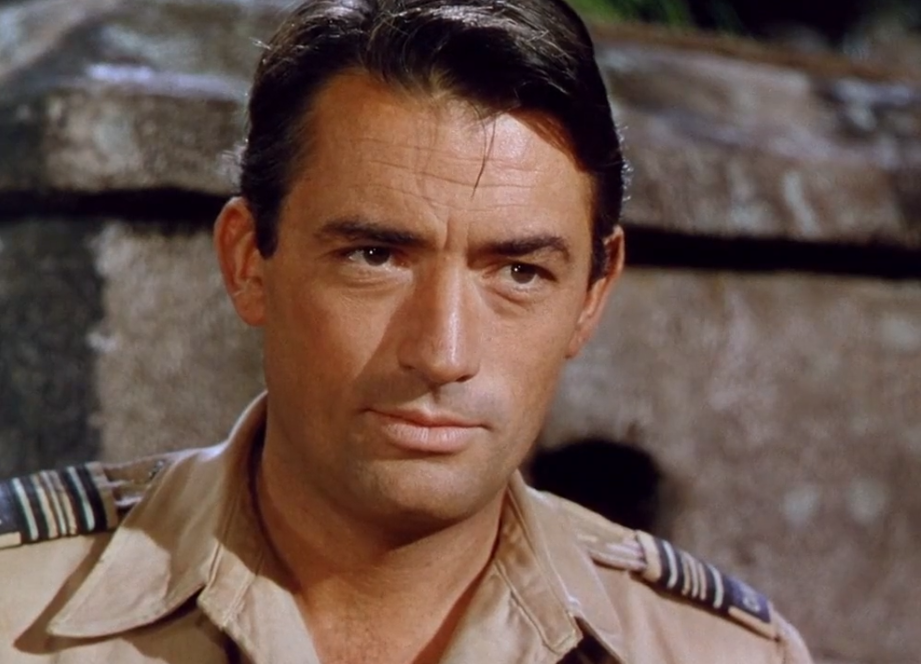
Former child-actor-turned-editor Robert Parrish didn’t get a chance to direct many films, but this BAFTA-nominated feature remains among his best. Evoking memories of his starring turn in Twelve O’Clock High (1949), Peck once again plays a fighter pilot under pressure, with Parrish making good use of atmospheric flashbacks to give us context for why Peck has “cracked up”:

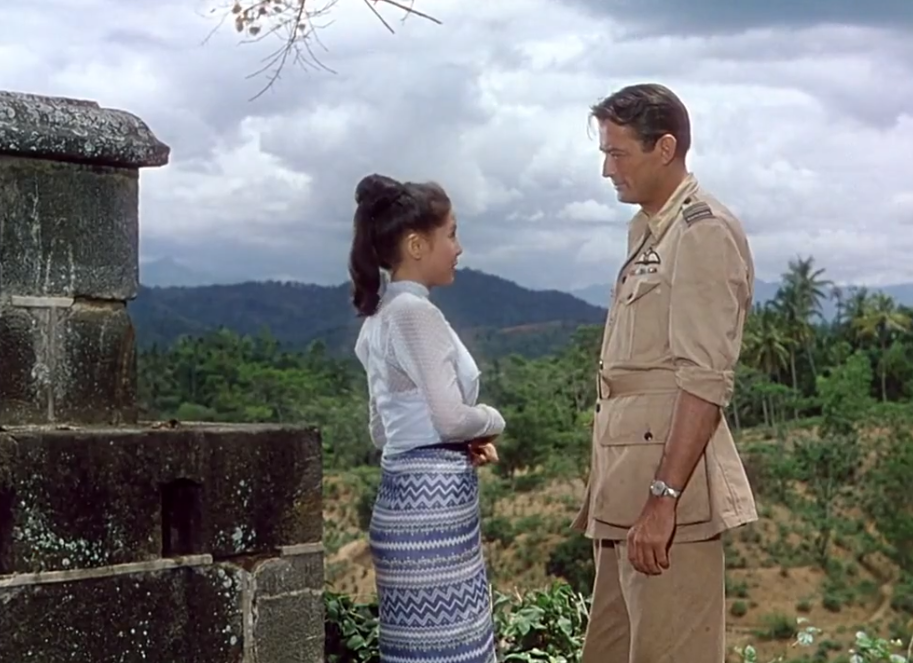
The storyline then shifts into two new directions: Peck’s budding romance with Than —

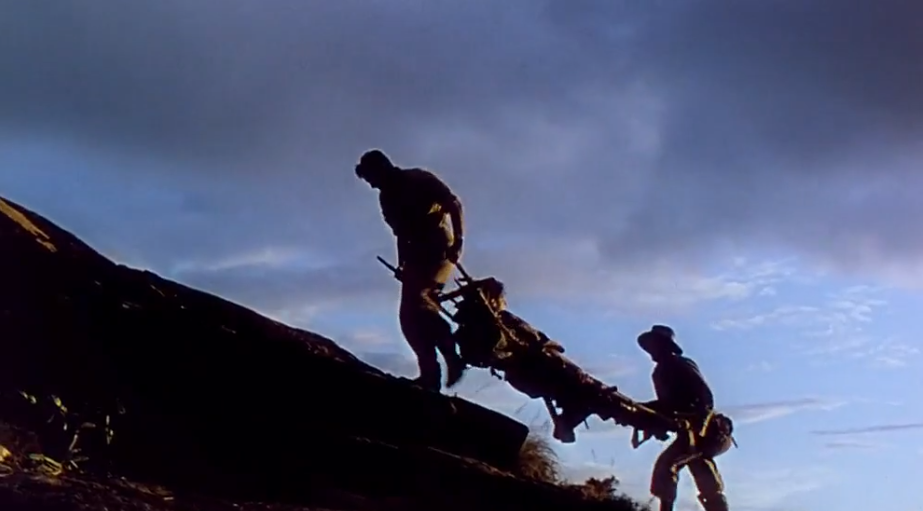
… and a gripping crash-survival scenario.

As DVD Savant notes, the overall storyline “hits an emotional chord” through a story (by Eric Ambler) whose “details have an unspoken feeling of faith and abiding inner peace.” Indeed, it’s refreshing seeing Peck (in yet another fine performance) being given a new chance at life after the grief he’s suffered.

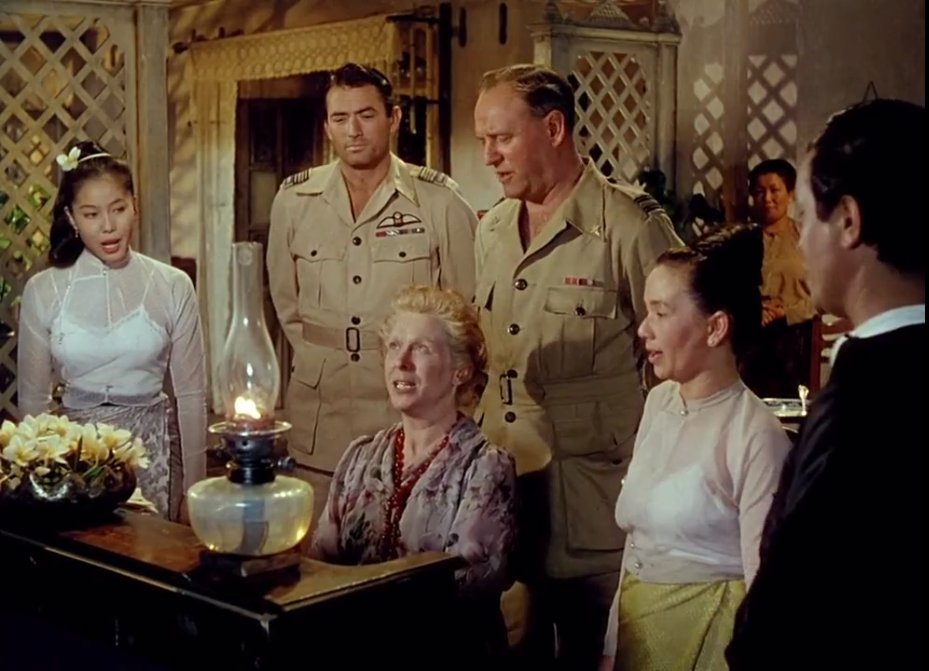
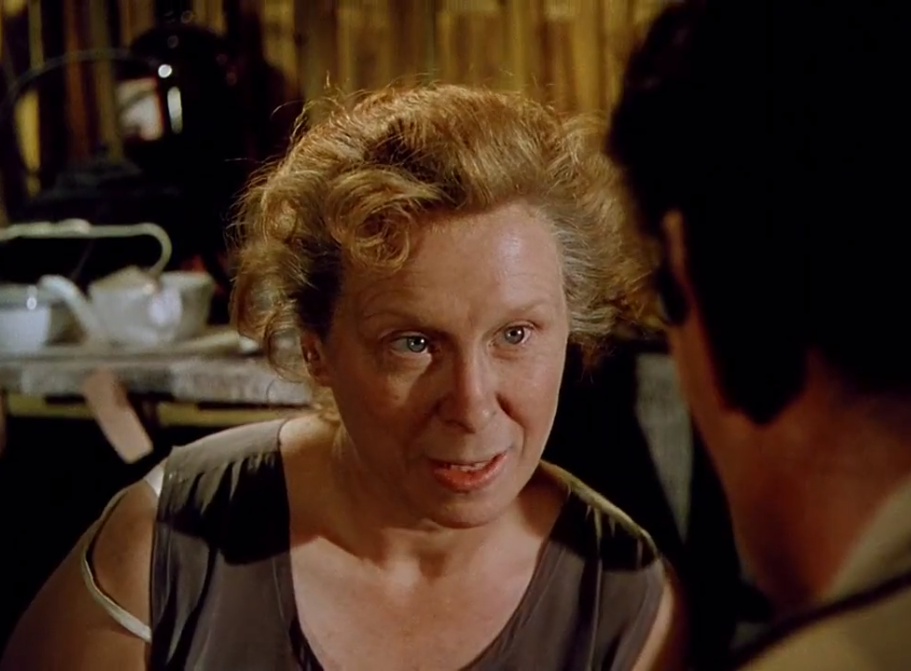
Also of note is British character actress Brenda de Banzie in a memorable role as an earnest, hymn-belting missionary:

While The Purple Plain isn’t must-see viewing, it’s recommended as a “good show”.

Notable Performances, Qualities, and Moments:

  • Gregory Peck as Bill Forrester
  • Brenda de Banzie as Miss McNab
  • Geoffrey Unsworth’s cinematography

Must See?
No, but it’s recommended for one-time viewing.

Links:

Gervaise (1956)

Gervaise (1956)

“Someone had you before me, and I’m glad it was him.”

Synopsis:
In 19th century France, an unmarried laundry woman (Maria Schell) with two kids endures taunts from a neighbor (Suzy Delair), then marries a roofer (François Perier) who turns to alcoholism after a nasty accident. A kind blacksmith (Jacques Harden) offers solace and love to Gervaise (Schell), but when her former lover (Armand Mestral) comes to live in their house, she reaches her last straw.

Genres, Themes, Actors, and Directors:

  • Feminism and Women’s Issues
  • French Films
  • Historical Drama
  • Maria Schell Films
  • Marital Problems
  • Rene Clement Films
  • Strong Females

Review:
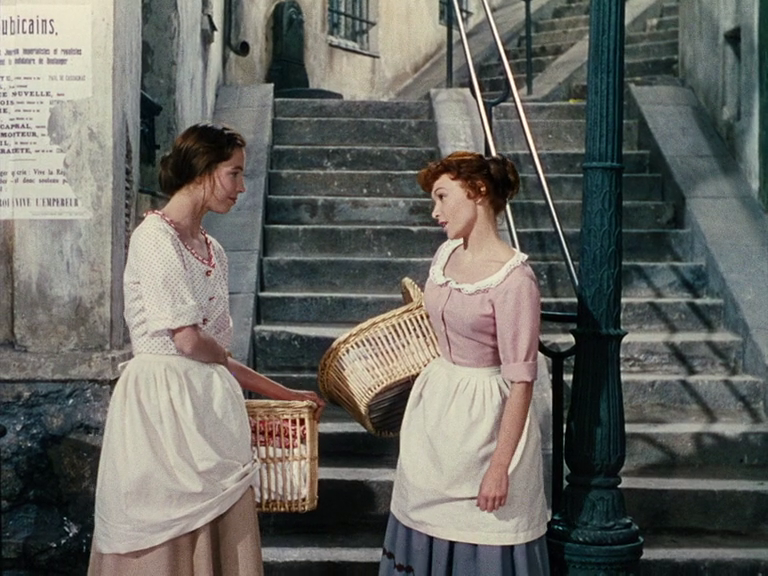
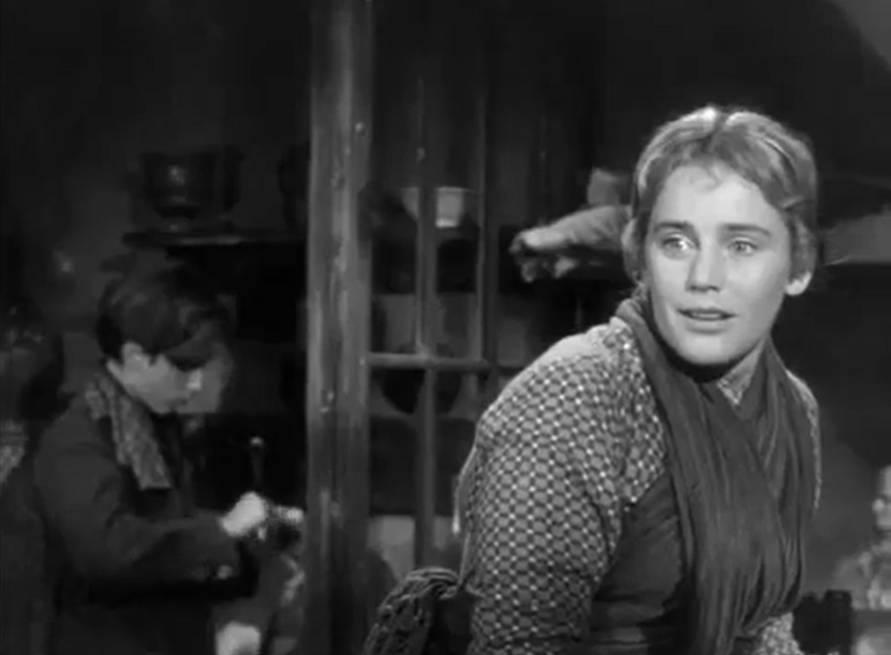
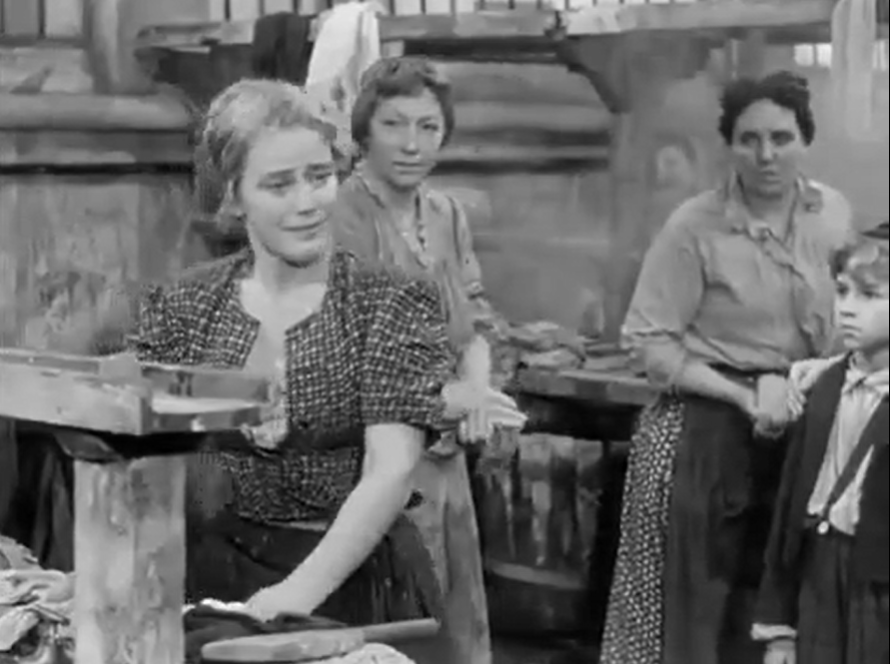
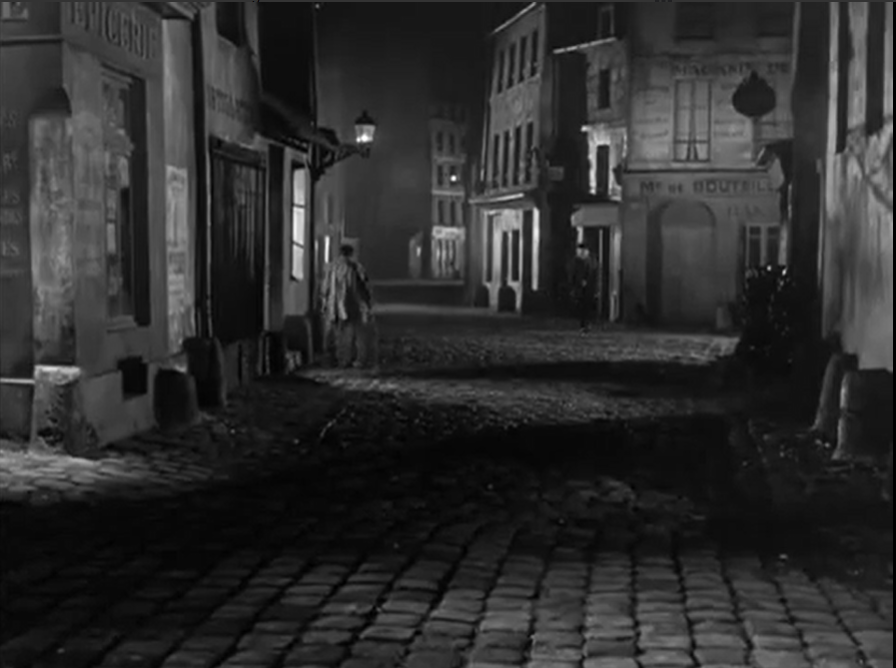
Rene Clement directed this adaptation of Emile Zola’s 1877 novel L’Assommoir, a prequel of sorts to Nana (1880) and part of the same series of 20 naturalist novels about the Rougon-Macquart family. Clement’s steady directorial hand — supported by DP Robert Juillard and fine historical sets — is in clear evidence throughout, and Schell is appealing in the title role:

However, the overall storyline — about women’s issues vis-à-vis poverty and single motherhood — is so bleak, one must be in the right space to handle it. We feel for Schell’s predicament: it’s hard enough for her to earn a rough living as a laundry woman while enduring teasing about her marital status:

… but when her new husband turns to drink and then invites her older children’s father (Mestral) to come live with them, she is really put into a pickle. Things stay rough and don’t get a whole lot better; be forewarned.

Notable Performances, Qualities, and Moments:

  • Maria Schell as Gervaise
  • Fine attention to period detail

Must See?
No, though it’s recommended for one time viewing if you can stomach it. Listed as a film with Historical Importance in the back of Peary’s book.

Links:

House of Bamboo (1955)

House of Bamboo (1955)

“It’s hard for you to understand; no foreigner does.”

Synopsis:
An American military policeman (Robert Stack) posing as the friend of a dead gangster in Japan begins to work for the gang’s leader (Robert Ryan), whose current henchman (Cameron Mitchell) isn’t happy about his number-one spot being taken over by Stack. Meanwhile, Stack has a romance with his deceased friend’s widow (Shirley Yamaguchi), who is posing as his “kimono girl”.

Genres, Themes, Actors, and Directors:

  • Cameron Mitchell Films
  • Gangsters
  • Hidden or Mistaken Identities
  • Robert Ryan Films
  • Robert Stack Films
  • Sam Fuller Films

Response to Peary’s Review:
Peary writes that this “taught low-budget action picture” is “one of Sam Fuller’s best films,” explaining that “Fuller believed that WWII didn’t end with the armistice — Japan was controlled by the U.S. military and exploited by American thugs and profiteers; loyalty among war vets was of utmost importance; [and] Americans still looked down on Japanese culture.” Indeed, many critics have noted the absurdity of the story on display here, with American gangsters creating a powerful syndicate in Japan despite not speaking the language, and despite the presence of the all-powerful Yakuza. With that enormous caveat aside, the film is indeed an impressive thriller with vibrant sets, gorgeous cinematography, and plenty of tension.

Peary points out that the “storyline involving Stack and Ryan greatly resembles that between police infiltrator Edmond O’Brien and gang leader James Cagney in White Heat” — and “as in Walsh’s film, we tend to sympathize with the trusting, insane gang leader” — Ryan’s “mad ex-GI” — “instead of the man who commits the unforgivable: betrayal.”

Critics have also pointed out potential homoerotic valences between Ryan, Mitchell, and Stack — especially given a disturbingly brutal but beautifully filmed bathtub sequence later in the film. After being so disappointed by Fuller’s first CinemaScope outing, Hell and High Water (1954), I was very pleasantly surprised to see Fuller back in true form here, showcasing masterful framing and peak storytelling skills. This one remains well worth a look.

Notable Performances, Qualities, and Moments:

  • Robert Ryan as Sandy Dawson
  • Excellent use of authentic locales
  • Fine sets
  • Strong direction

  • Joseph MacDonald’s cinematography

Must See?
Yes, as a fine crime flick by a master director.

Categories

  • Good Show
  • Important Director

Links:

Strada, La (1954)

Strada, La (1954)

“Are you really a woman? You look like an artichoke.”

Synopsis:
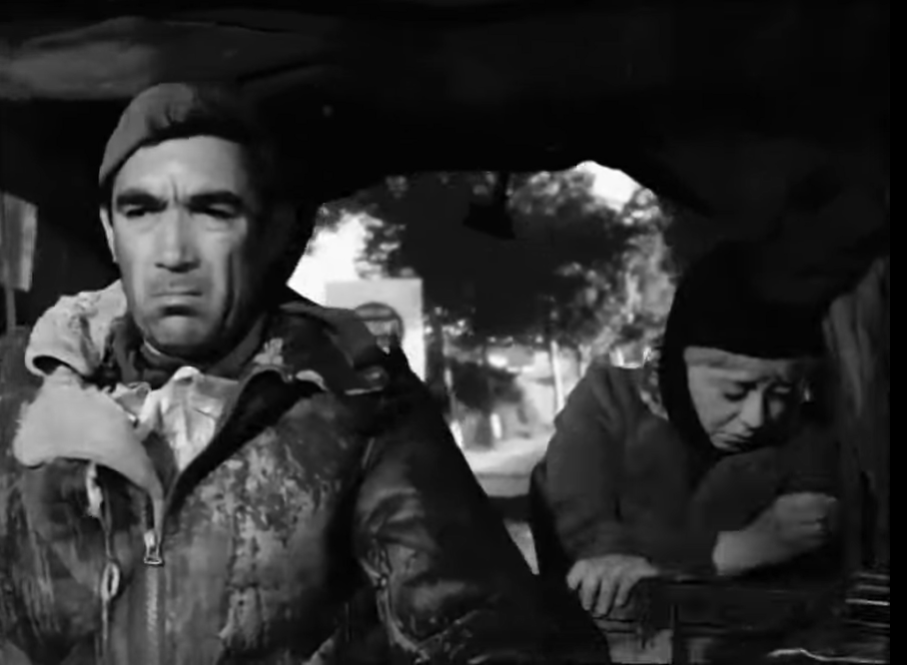
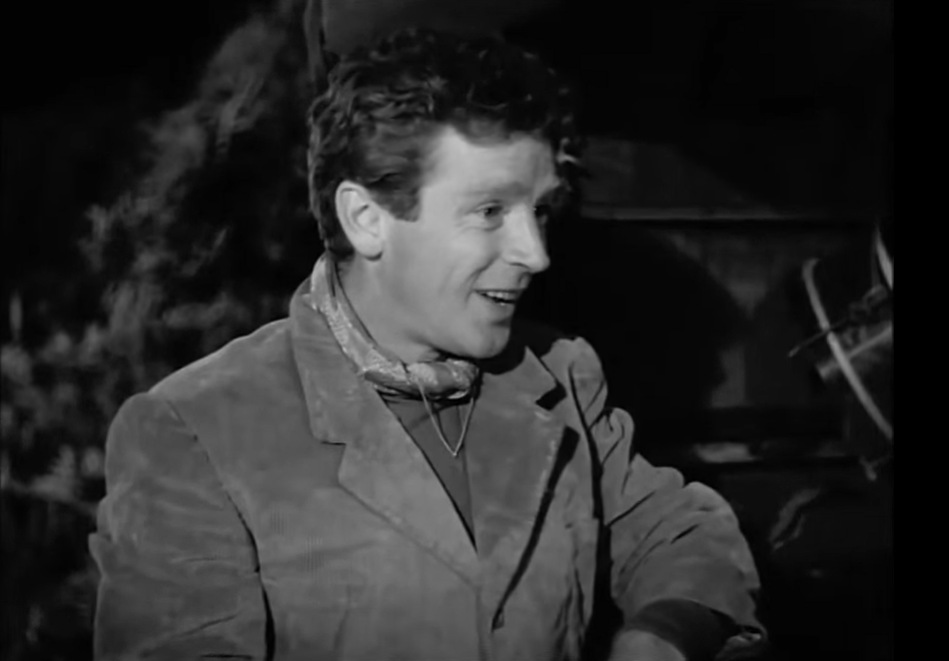
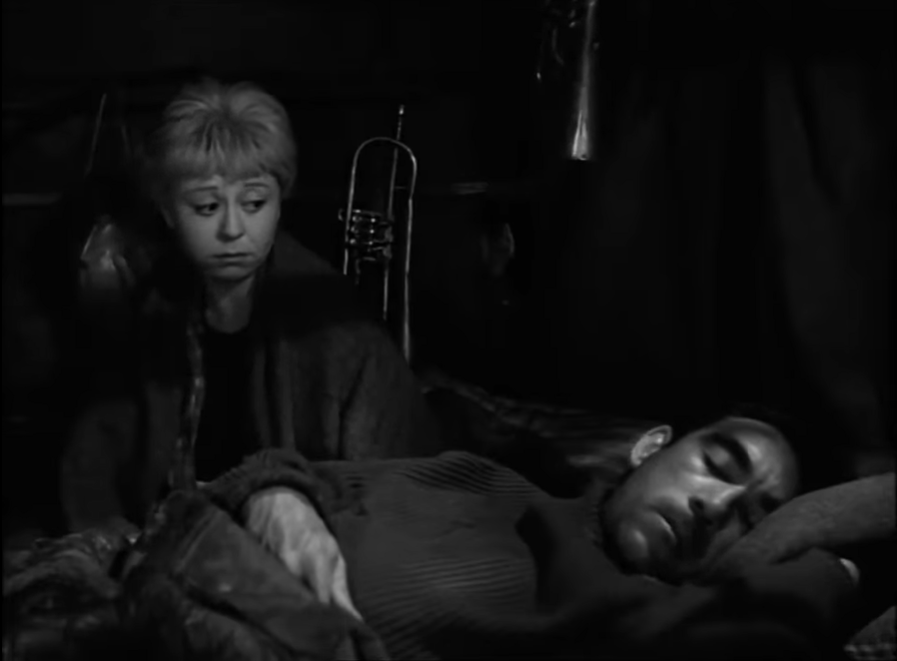
When a simple-minded young woman (Giuletta Masina) is purchased by a brutish strongman (Anthony Quinn) to be his assistant in his traveling act, she soon encounters a whole new world of people and places — including a silly Fool (Richard Basehart) who likes to goad Quinn to dangerous degrees. Will Masina stay by Quinn’s side through thick and thin, or strike out on her own?

Genres, Themes, Actors, and Directors:

  • Anthony Quinn Films
  • Carnivals and Circuses
  • Domestic Abuse
  • Federico Fellini Films
  • Italian Films
  • Richard Basehart Films
  • Road Trip

Response to Peary’s Review:
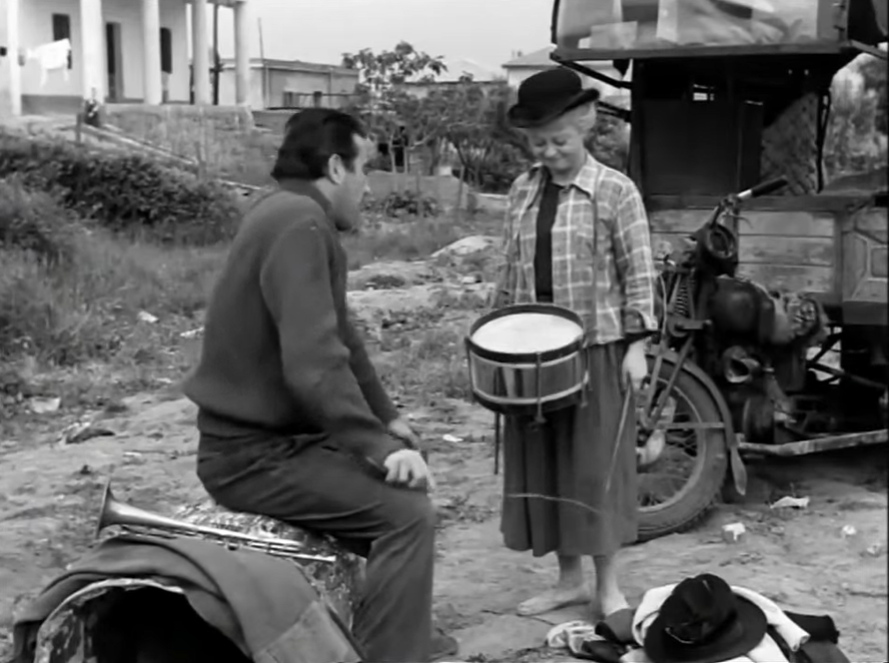
Peary writes that “along with The Bicycle Thief, Federico Fellini’s classic is the most loved of Italy’s neorealist films of the post-WWII era.” It features Giuletta Masina as “a poor, innocent simpleton” who has “no sense of self-worth to begin with,” and “is made to feel even more inconsequential by [Quinn’s] insensitive brute who drinks heavily, sleeps with other women, insults her talents…, and beats her as if she were a dog.”

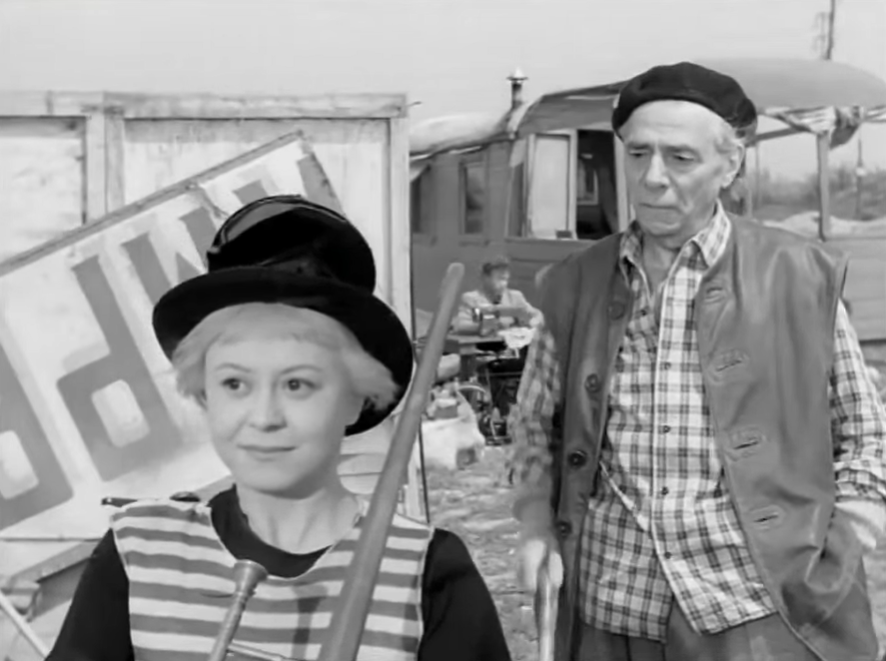
Masina’s Gelsomina gets numerous offers to leave her life and start anew — including to “join a circus, run off with a clown and tightrope walker… or stay in a convent” — but “she becomes convinced that Quinn really does need her,” and “perhaps he loves her.” Peary asserts that “Masina mugs too much,” but concedes “she’s captivating. With a round face, dimples, and large, expressive eyes, she has the look of a clown” and will “remind you of a cross between Harpo Marx, Charlie Chaplin, and a puppy.”

Peary argues that her “serious scenes don’t really work because her temporary switch from gamine to disgruntled adult is too swift,” and “the result is that her performance seems inconsistent, although the real problem is with the character.” He further adds that “Quinn’s character is also a bit hard to figure out — it’s true that the bigger they are, the harder they fall, but when the mighty Quinn lies in a drunken heap, what is he thinking?”

I don’t share Peary’s concerns about either character. While it’s true that Gelsomina undergoes significant changes, this is because she’s been thrown out into the world for the first time and is finally meeting a wide range of people. She’s learning that she doesn’t have to simply comply and fit in and “act dumb”. Meanwhile, Quinn’s character (as Martin Scorsese — a huge fan of the film — has pointed out), is representative of so many violent men who simply can’t see farther than their next carnal need, which eventually leads to self-destruction; kind and/or lusty, fun-loving women may be waiting in the wings for awhile, but not indefinitely.

Basehart’s character, however, is perhaps the most intriguing in the entire film. This “fool” — first seen walking on a highwire (though surely this is a double…):

— becomes a pivotal character in the storyline, given that he can’t help telling the truth and calling out hypocrisy, at risk of his own safety.

Finally, as Peary points out, the film provides “memorable glimpses of [the] Italian countryside, crowded villages, [and] excitement over rituals (weddings, religious parades, circus acts).” Indeed, we see an entire world on display here — one that has left an indelible mark on cinematic history.

Note: Richard Basehart has been an interesting actor to get to know through watching him in a wide range of titles and roles — from Maximilian Robespierre in Anthony Mann’s Reign of Terror (1949), to a fearful corporal in Sam Fuller’s Fixed Bayonets! (1951), to an alcoholic priest in Jean Negulesco’s Titanic (1953), to his role as Ishmael in John Huston’s Moby Dick (1956), to this Italian film with Fellini (he was living in Rome at the time he was cast). What an unusual and varied career.

Notable Performances, Qualities, and Moments:

  • Giuletta Masina as Gelsomina
  • Anthony Quinn as Zampano
  • Richard Basehart as the Fool
  • Otello Martelli’s cinematography
  • Nino Rota’s score

Must See?
Yes, as a foreign classic.

Categories

  • Foreign Gem
  • Important Director

(Listed in 1001 Movies You Must See Before You Die)

Links:

Floating Clouds (1955)

Floating Clouds (1955)

“You said that you would do anything for me; now you only want to get rid of me!”

Synopsis:
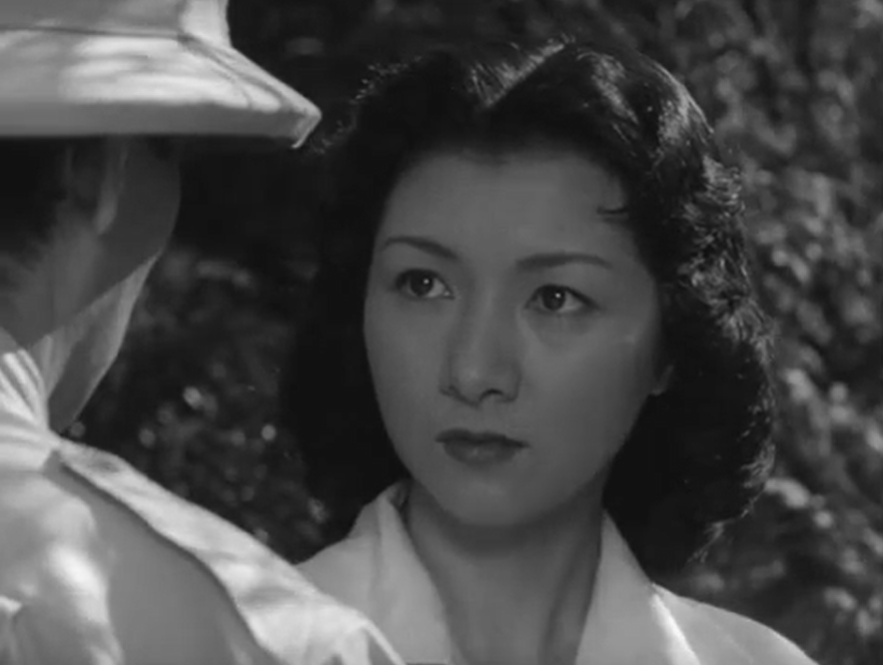
A woman (Hideko Takamine) seeks out the man (Masayuki Mori) she had an affair with in French Indochina during the war, only to find him still married to his sickly wife (Chieko Nakakita) and flirting with a much younger married woman (Mariko Okada). Will Takamine, who eventually turns to prostitution to survive, be able to forget about Mori and leave him behind — or are they destined to somehow live a life together?

Genres, Themes, Actors, and Directors:

  • Feminism and Women’s Issues
  • Japanese Films
  • Star-Crossed Lovers

Response to Peary’s Review:
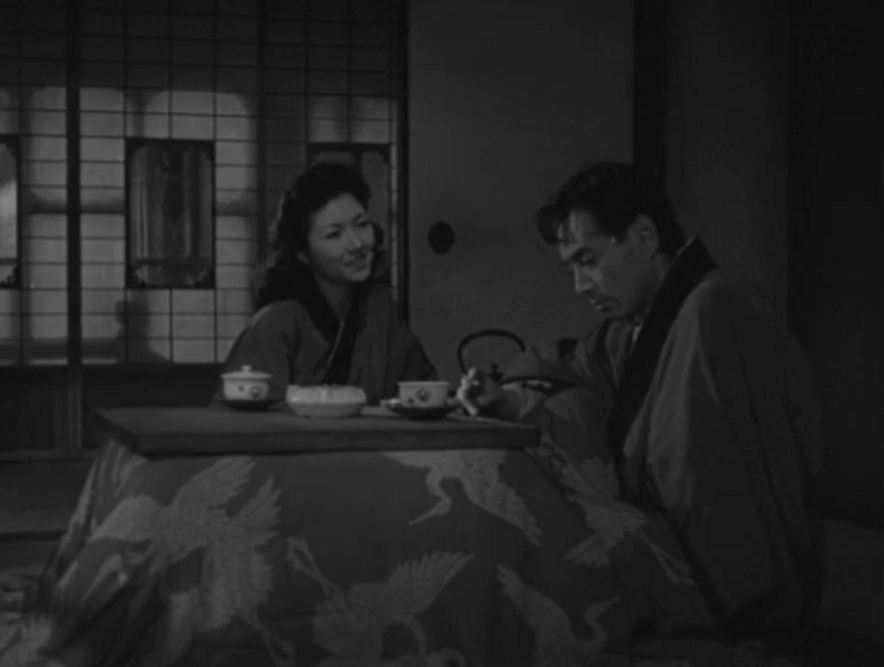
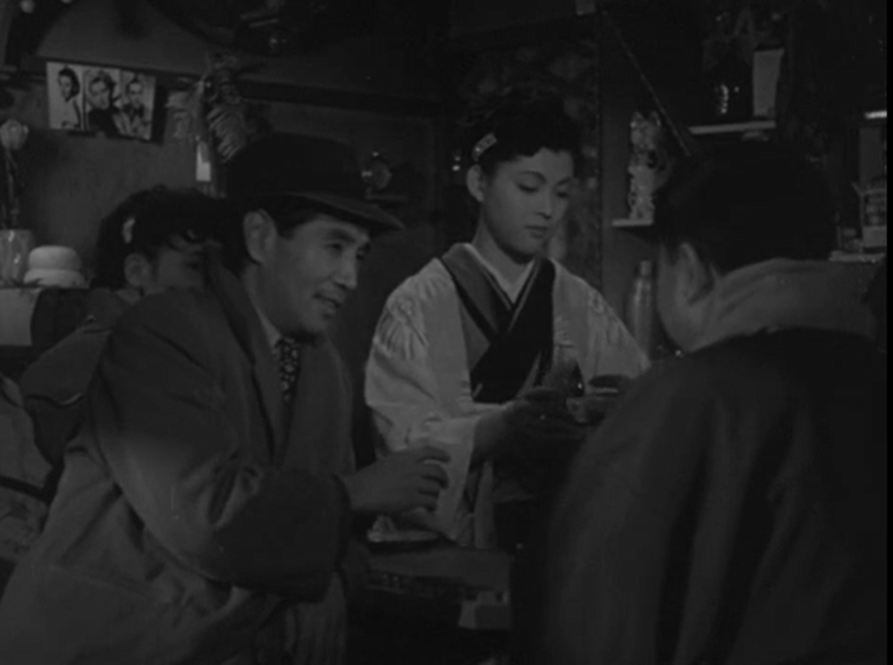
Peary writes that this “most famous film in the 37-year career of Mikio Naruse” features the star of 17 of his movies — “beautiful Hideko Takamine,” who “gives a sympathetic performance as a young woman” who “will suffer great indignities” because of her enduring love for a married man.

He argues that “Naruse wanted the misery of Takamine and the women who are exploited by insensitive men to reflect the depressed, defeated country,” and asserts that Naruse “believed that the widespread ill-treatment of women was the reason postwar Japan was such a miserable place.” He points out that the “direction by Naruse is typically unobtrusive,” with the camera rarely moving “away from the actors” — but he notes that rather than “being static,” this “unusual film” has “a distinct romantic flow,” and we “feel deeply about what happens to these interesting people.”

I agree with Peary’s points. These flawed characters — who often don’t make “smart” decisions, instead basing their responses on passion or familiarity — feel very real. To that end, however, viewers should be forewarned that the storyline is almost relentlessly bleak; there are no easy solutions or outcomes for these protagonists.

Notable Performances, Qualities, and Moments:

  • Hideko Takamine as Yukiko
  • Masayuki Mori as Kengo
  • Fine cinematography and sets

Must See?
Yes, to see Naruse’s most celebrated film — but be sure to check out When a Woman Ascends the Stairs (1960) as well.

Categories

  • Important Director

Links:

Red and the Black, The (1954)

Red and the Black, The (1954)

“Never has sin been committed with less joy.”

Synopsis:
After seducing the mother (Danielle Darrieux) of the children he’s tutoring, an upwardly mobile aspiring priest named Julien Sorel (Gérard Philipe) takes a new position in the household of a lawyer (Jean Mercure) whose virginal daughter (Antonella Lualdi) falls for and seduces him — but how will Darrieux react when she learns her former lover has not gone into the priesthood after all?

Genres, Themes, Actors, and Directors:

  • Courtroom Drama
  • Cross-Class Romance
  • Danielle Darrieux Films
  • Flashback Films
  • French Films
  • Historical Drama
  • Infidelity
  • Social Climbers

Review:
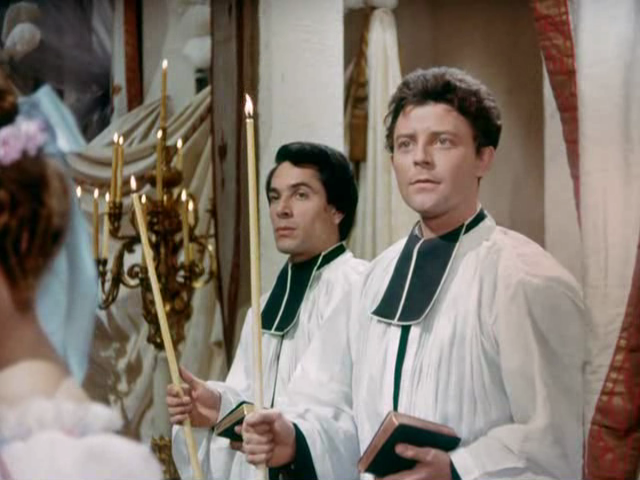
French director Claude Autant-Lara helmed this adaptation — named Best Film of the Year by the French Syndicate of Cinema Critics — of Stendhal’s 1830 two-volume novel. The book is known as the first “psychological novel”, given Stendhal’s use of interior monologues for the main character — a rhetorical structure retained here to surprisingly good effect (i.e., they help us to better understand the thoughts and motivations of this complex character, but aren’t overused).

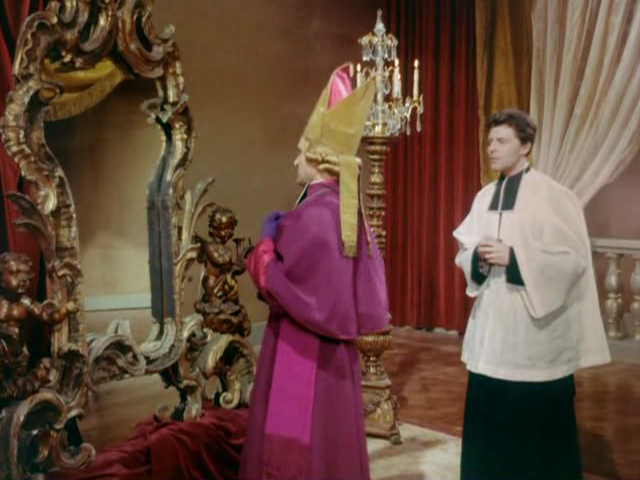
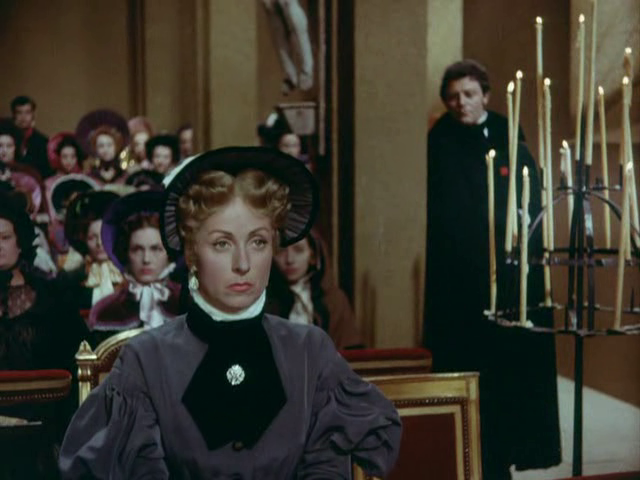
Sorel is an intriguing protagonist — someone we don’t especially like, but are curious to learn more about as we see the various moves he makes, especially knowing he’ll end up in court defending himself (the film is structured as a lengthy flashback occurring during his trial for shooting a woman). We wonder why he wants to be a priest, for instance — but a key scene when he observes a bishop genuflecting in front of the mirror helps us understand that he’s eager to climb the heights of this profession and be adored in precisely this way:

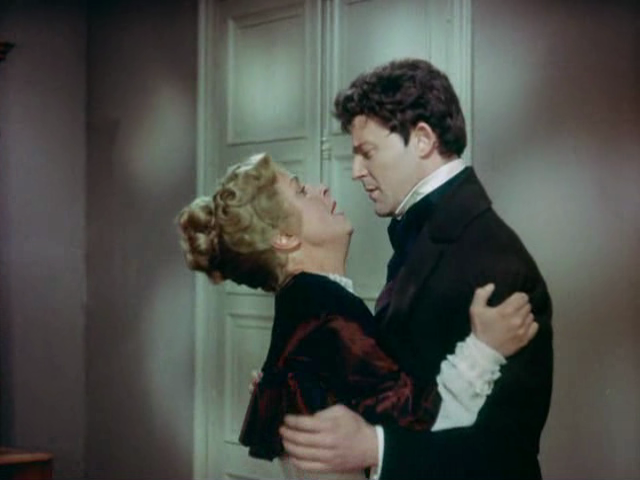
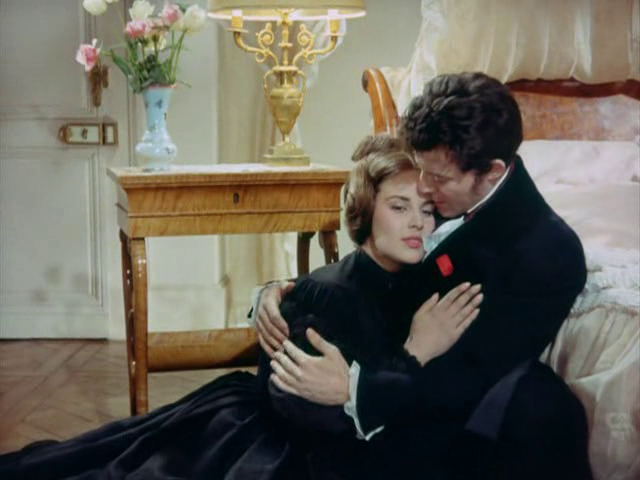
Meanwhile, his predatory seduction of Darrieux’s Mme. de Rénal feels loathesome, yet he does seem to eventually love her in his own way:

As the story progresses, we continue to learn more about Sorel’s ambitions and how calculated he is about every single decision in his life. While he’s temporarily foiled time and again, he eventually “succeeds” in landing a higher spot in society — only to have it all unravel due to jealousy and passion. C’est la vie.

Note: This film has existed in a variety of lengths over the years, ranging from 113 minutes to 194 minutes; the latter is the version I saw, and it never seemed to drag (though I did watch it over several different sittings).

Notable Performances, Qualities, and Moments:

  • Fine sets, costumes, and cinematography

Must See?
No, though it’s worth a look if it sounds of interest.

Links: