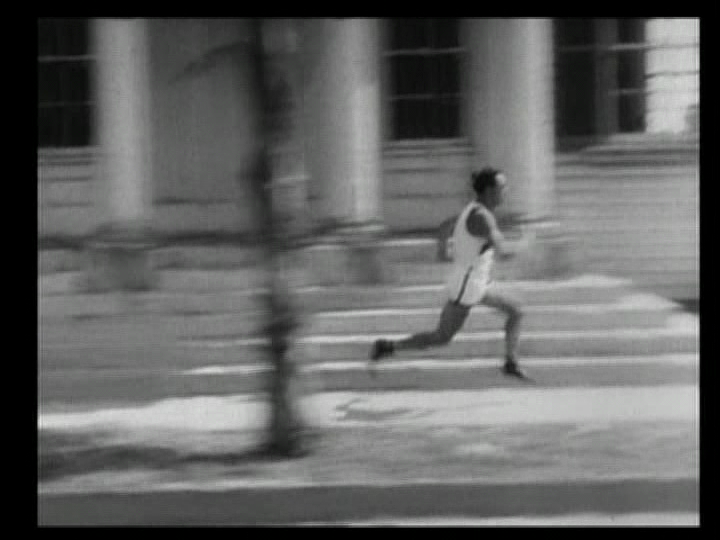
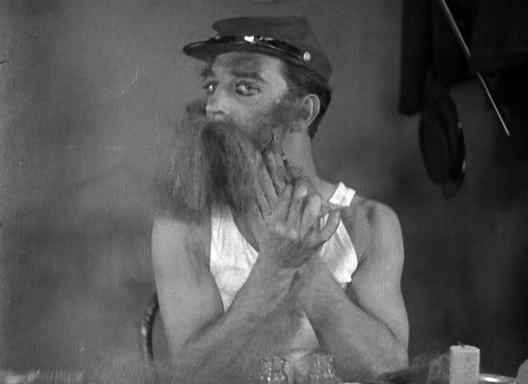
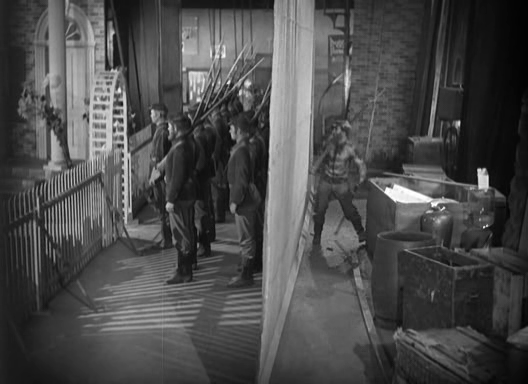
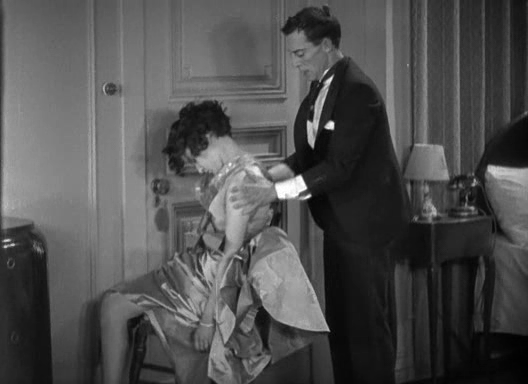
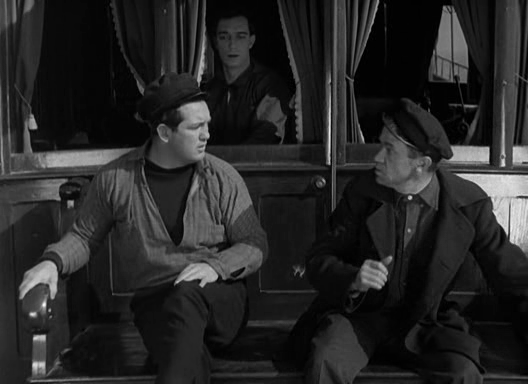
College (1927)
“Anyone prefers an athlete to a weak-knee’d, teachers’ pet.”
|
Synopsis: |
|
Genres, Themes, Actors, and Directors:
Review: Redeeming Qualities and Moments:
Must See? Links: |
“Anyone prefers an athlete to a weak-knee’d, teachers’ pet.”
|
Synopsis: |
|
Genres, Themes, Actors, and Directors:
Review: Redeeming Qualities and Moments:
Must See? Links: |
“I’m my own police.”
|
Synopsis: |
|
Genres, Themes, Actors, and Directors:
Response to Peary’s Review: However, it’s difficult to contemplate Ladd’s fine performance in isolation, given the importance of his relationship with “beautiful, buxom blonde Lake”, who in this film “found her ideal screen partner”. Peary notes that “with those dreamy eyes, a peek-a-boo hairstyle, and a husky voice to match Ladd’s”, they “are an electrifying screen couple” — a statement made all the more complex given that Lake is happily engaged to a policeman (Robert Preston) who’s on Raven’s trail. Naturally, loyalties quickly become conflicted, and it’s fascinating to watch as Lake and Ladd — who are clearly smitten with each other on some level — carefully negotiate their positions. Indeed, whenever they’re on-screen, we’re glued; the rest of the “taut” storyline, while competent and finely directed, feels mostly like icing. Interestingly, in his review, Peary refers to This Gun For Hire as “one of the few forties crime dramas that weren’t really noir films” — yet it certainly possesses many noir elements (including atmospheric cinematography and a sense of deeply pervasive cynicism), and it’s generally considered by others to be part of this genre. Perhaps Peary’s opinion is due to the occasional shifts in tone throughout the film — most notably when Lake performs a couple of unusual musical ditties (by Jacques Press and Frank Loesser); meanwhile, Cregar’s performance as Raven’s most direct nemesis lacks a requisite sense of menace — he’s a bit too much of a blubbering coward to be fully convincing in the role. However, all told, I would most certainly classify this one stylistically as noir. Two of my favorite moments: Lake unexpectedly pecks Ladd on the cheek; Lake leaves a steady trail of evidence behind her while being held hostage by Ladd. Redeeming Qualities and Moments:
Must See? Categories
Links: |
“All things in heaven and earth are wonderful! But the greatest wonder is man’s freedom to choose between good and evil.”
|
Synopsis: |
|
Genres, Themes, Actors, and Directors:
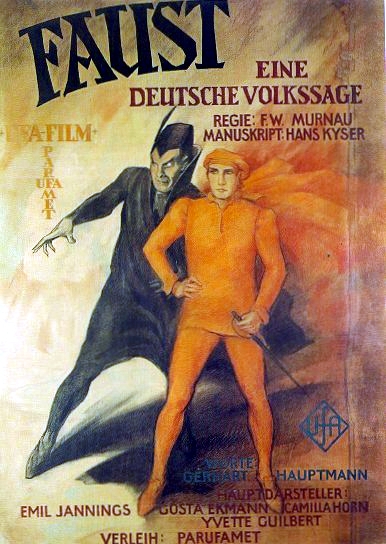
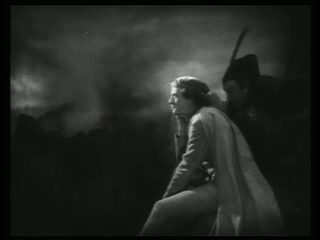
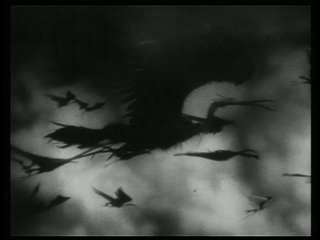
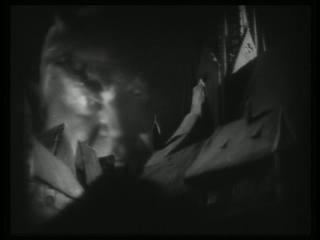
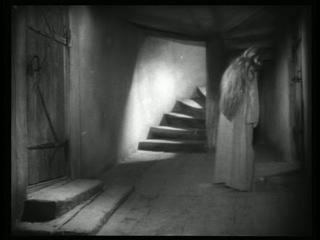
Review: The film’s middle scenes — as Faust explores a life of hedonism, then becomes smitten by a fair maiden, while Mephistopheles himself flirts with the maiden’s mother (Frida Richard) — are often noted as its least compelling, perhaps in part because the imagery is no longer quite so consistently stunning; by the film’s final tragic act, however, the momentum and visual interest have picked up once again. Interestingly, it’s Mephistopheles himself (played with impish glee by Jannings) who emerges as the film’s most memorable character. We’re reminded time and again that Faust’s entire journey is predicated upon Mephistopheles’ whims: once Mephistopheles decides that Faust has made a mistake in falling for Gretchen (Horn), he quickly sets the wheels in motion to “help” Faust see the error of his ways. By the end of Faust’s bitterly tragic saga, we come to believe that any type of consort with the devil is truly a compromised bargain: there is no room for goodness or humility once one has crossed over to the Other Side. Note: Interestingly, in his “Greatest Films” review, Roger Ebert points out that Faust is ranked by IMDb users as one of the top horror films of all time (even placing it above Murnau’s more widely recognized, Dracula-themed Nosferatu); however, I’m not quite sure I would label it within that genre myself, as it’s less a horror film than a morality/folk tale. Redeeming Qualities and Moments:
Must See? Categories Links: |
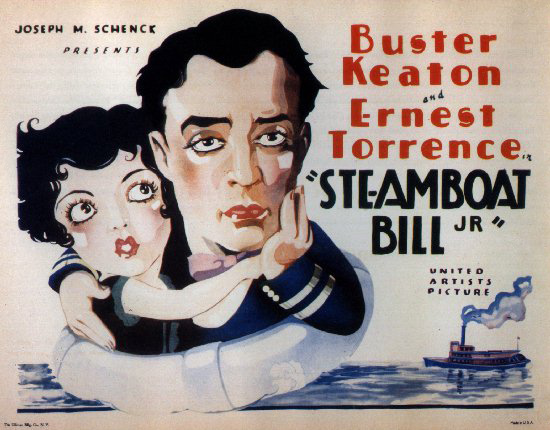
“This floating palace should put an end to that thing Steamboat Bill is running.”
|
Synopsis: |
|
Genres, Themes, Actors, and Directors:
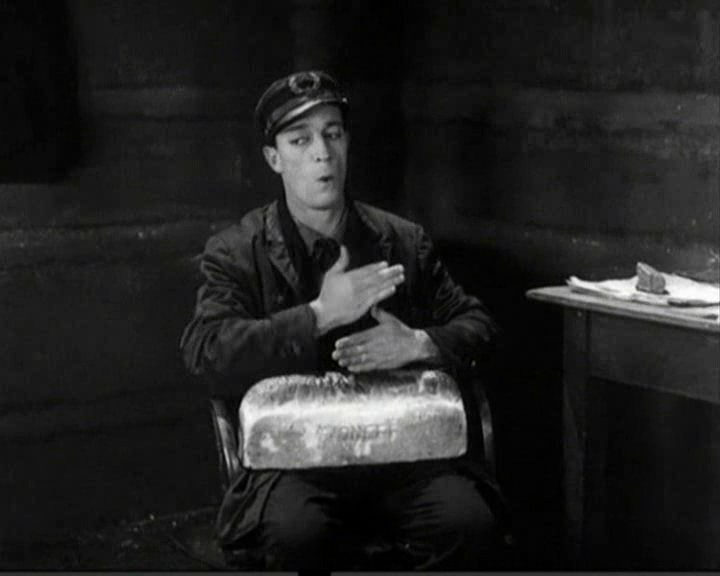
Review: My favorite line (as a handful of smuggled tools fall out of a loaf of bread Keaton is trying to hand over to his father in jail):
Note: In his Alternate Oscars, despite conceding that SBJ “isn’t a pivotal Keaton film”, Peary nonetheless names Keaton Best Actor of the Year for his performance here, noting that “one can see why many consider him the most lovable of the silent stars and every bit as sexy as the silent screen’s romantic athlete, Douglas Fairbanks”. Amen to that! Redeeming Qualities and Moments:
Must See? (Listed in 1001 Movies You Must See Before You Die) Links: |
“If you let your mind wander back through History you will find that the only thing that has not changed since the World began is — LOVE.”
“You have no idea what a long-legged gal can do without doing anything.”
|
Synopsis: |
|
Genres, Themes, Actors, and Directors:
Response to Peary’s Review: Despite its decidedly discomfiting premise, however, the film remains consistently amusing and engaging, with “stars McCrea, Colbert, Vallee, and Mary Astor (as Vallee’s sister, who takes a liking to McCrea when he poses as Colbert’s brother) weaving their way through a crazy world of landlords, cops, cabbies, eccentrics, men named Toto, and the gun-toting, boozing, harmonizing Ale & Quail members” — yes, the storyline really is as wacky as that rundown indicates! I’m especially tickled by the performances given by Vallee and Astor, who prove beyond a doubt that the idle-rich are indeed — as Sturges himself believed — “funny” folk; and Robert Dudley is note-perfect as the deaf old coot who starts the narrative ball rolling. Meanwhile, Colbert is at her loveliest (it’s nice to see her with her hair down here — literally!), and handsome McCrea is well-cast as her perpetually affronted husband. Redeeming Qualities and Moments:
Must See? Categories
(Listed in 1001 Movies You Must See Before You Die) Links: |
“There are two forms of life fighting for survival in this valley, and only one of them can win; it’s got to be us.”
|
Synopsis: |
|
Genres, Themes, Actors, and Directors:
Response to Peary’s Review:
but Corman’s cast of reliable B-actors continue to take the situation so seriously that we’re willing to suspend our giggles and our disbelief. Note: You may recognize handsome good-guy lead Richard Denning from The Creature From the Black Lagoon (1954) — a more “reputable” B-level variation on a similar theme. Redeeming Qualities and Moments:
Must See? Links: |
“Never wait too long between shots, or your finger may change its mind.”
|
Synopsis: |
|
Genres, Themes, Actors, and Directors:
Review: NB: Sturges’ last film, made in France (titled The French, They Are a Funny Race, or The Diary of Major Thompson), isn’t listed in Peary’s book. Redeeming Qualities and Moments:
Must See? Links: |
“Moriarty’s as curious about my movements as I am about his.”
|
Synopsis: |
|
Genres, Themes, Actors, and Directors:
Review:
… made all the more interesting by the introduction of Holmes’ sociopathic “arch-enemy”, Moriarty (Zucco):
… who — recognizing Holmes’ desire to alleviate boredom above all else — plays fast and furious with people’s lives by perpetuating a serial murder scheme simply to keep Holmes distracted. It’s a remarkably dastardly thematic element, and definitely adds an intriguing twist to the entire affair. Note: If you’re at all a Holmes fan, be sure to compare this film with the sixth entry in the modern British mini-series Sherlock, which features a somewhat similar storyline about Moriarty and Holmes’ ongoing “rivalry”. Redeeming Qualities and Moments:
Must See? Links: |
“There are only two cures for love: marriage and suicide.”
|
Synopsis: |
|
Genres, Themes, Actors, and Directors:
Review: Redeeming Qualities and Moments:
Must See? Links: |