Captain Blood (1935)

Captain Blood (1935)

“I’ve resented you because you’re beautiful, and I’m a slave. Do you understand that?”

Synopsis:
When a physician (Errol Flynn) in 17th century England is convicted of conspiracy against the crown after tending to a wounded rebel, he and others are sent to work as slaves in an American colony overseen by a cruel governor (Lionel Atwill) whose beautiful niece (Olivia de Havilland) purchases Flynn, much to Flynn’s chagrin. Flynn and his men eventually become pirates on the high seas, partnering with a captain (Basil Rathbone) who takes de Havilland as a hostage — but will Flynn rescue her, or let his resentment continue to drive a wedge through their nascent cross-class romance?

Genres:

  • Basil Rathbone Films
  • Cross-Class Romance
  • Errol Flynn Films
  • Historical Drama
  • Lionel Atwill Films
  • Michael Curtiz Films
  • Olivia de Havilland Films
  • Pirates
  • Slavery

Response to Peary’s Review:
Peary writes that this “rousing adaptation of Rafael Sabatini’s novel about a 17th century English pirate made a star of Errol Flynn, who made the most of his first lead role”, and notes that it “boasts of marvelous action sequences; extremely intelligent dialogue; spirited direction by Michael Curtiz; and an earnest, strong performance by Flynn.”

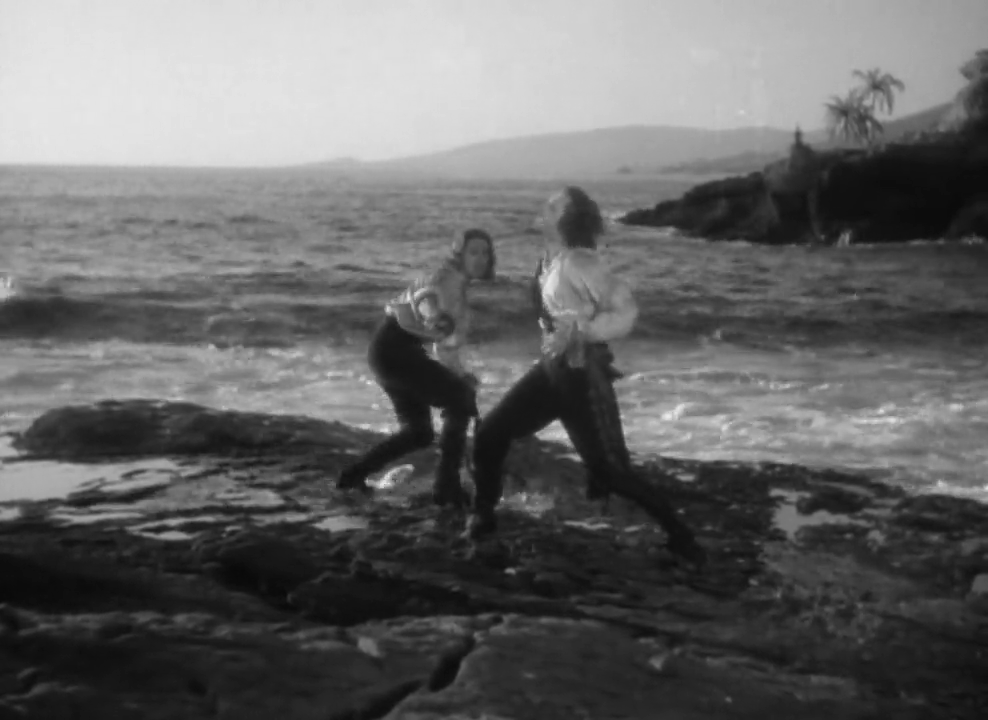
He adds that a highlight of the film is the “Flynn-Basil Rathbone swordfight-to-the-death on a rocky beach, during which the opponents smile constantly” — and that the inaugural on-screen pairing of beautiful young de Havilland and Flynn represents “one of the cinema’s truly wonderful romantic teams”.

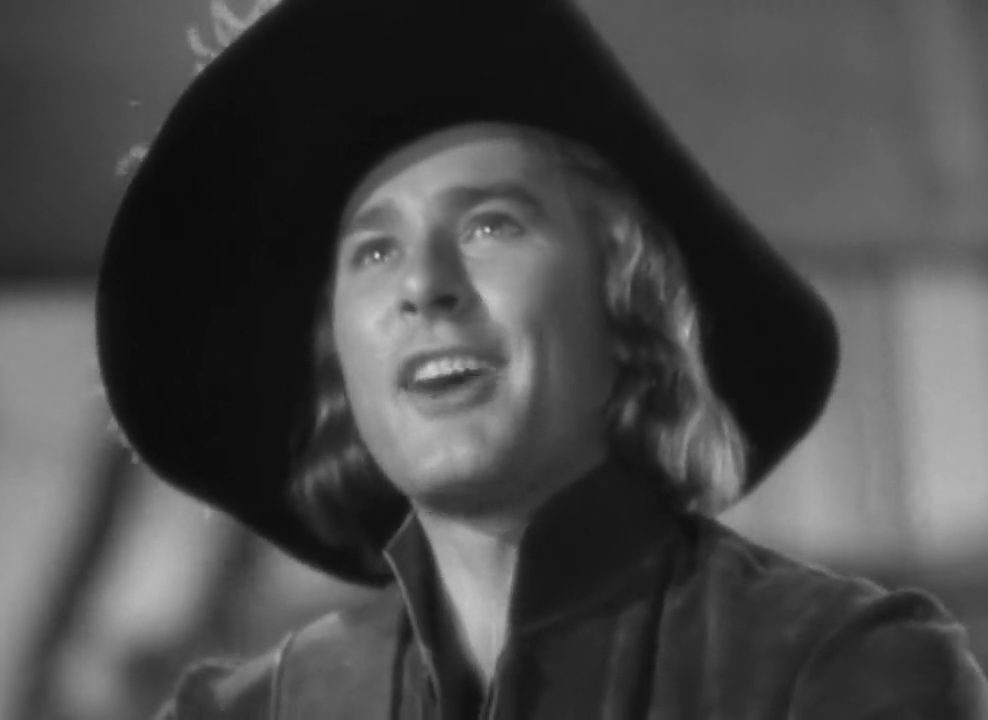
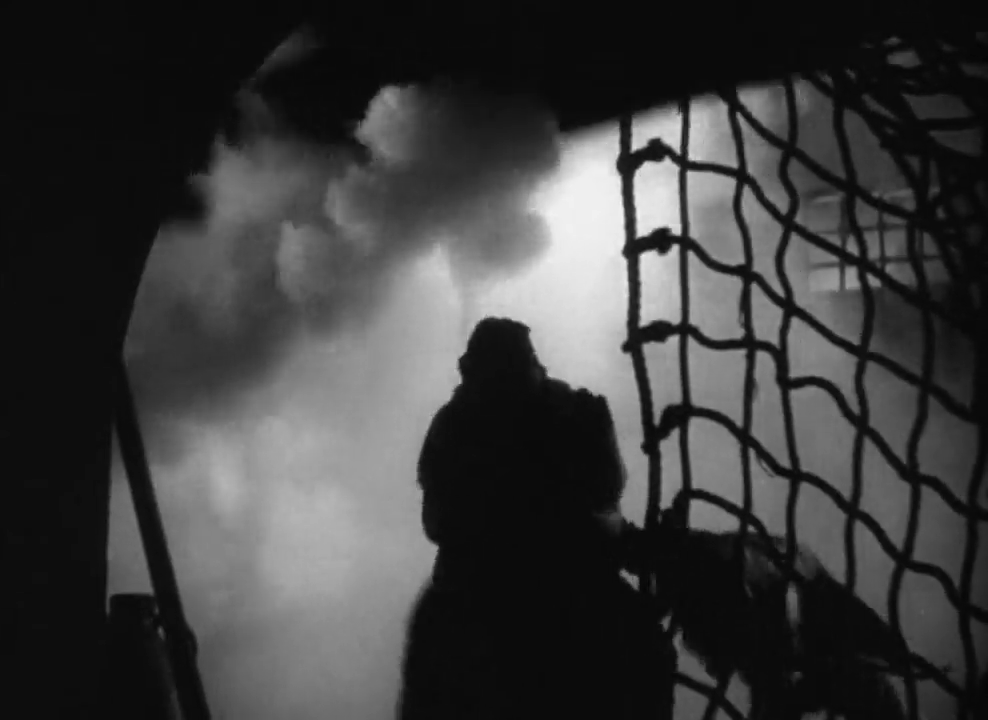
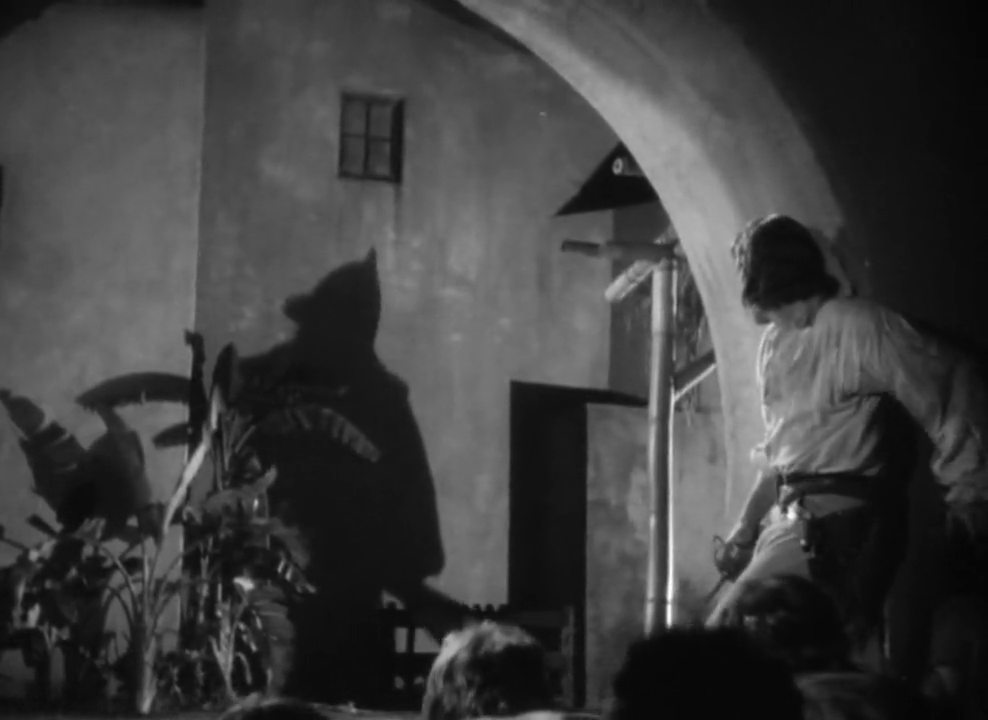
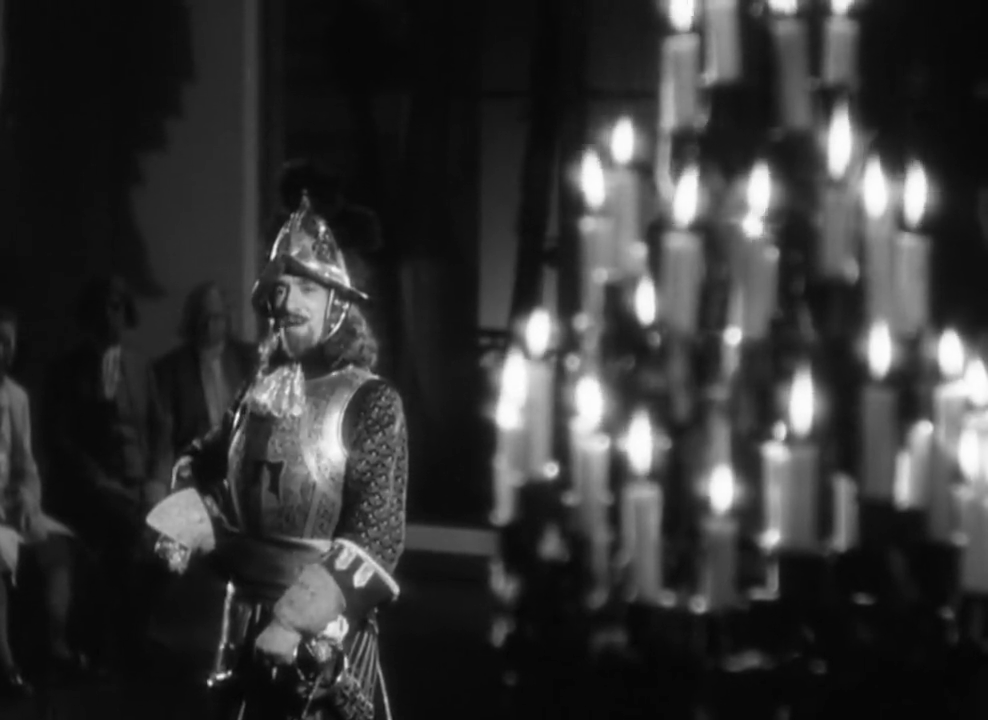
Indeed, fans of swashbuckling romantic dramas will find much to enjoy here, though I’ll admit it’s not a personal favorite: I’m not thrilled by the buffoonish nobility, Rathbone’s faux-French accent, or Flynn’s hairstyle (!). In the film’s favor are marvelous cinematography (by Ernest Haller and Hal Mohr), rousing action scenes (Curtiz is indeed masterful), and Erich Wolfgang Korngold’s “excellent” debut score. As a curiosity, listen for Blood’s surprisingly forthright and graphic proclamation that “If a man molest a woman captive against her will, he, too, shall receive the same punishment.”

Note: Sadly, supporting character Ross Alexander — who plays Jeremy, the ship’s navigator — had a tragic (closeted gay) personal life and killed himself just after this film was made.

Redeeming Qualities and Moments:

  • Atmospheric cinematography


  • Expertly directed combat scenes


  • Erich Wolfgang Korngold’s score

Must See?
Yes, once, for its historical importance.

Categories

  • Historically Relevant

(Listed in 1001 Movies You Must See Before You Die)

Links:

Beverly Hills Cop (1984)

Beverly Hills Cop (1984)

“This thing is very personal to me.”

Synopsis:
When his visiting buddy (James Russo) is murdered, a Detroit-based detective (Eddie Murphy) travels to Beverly Hills to investigate potentially criminal dealings at the art gallery where Russo worked, managed by their mutual friend (Lisa Eilbacher); but will Murphy’s efforts be foiled by local cops (John Ashton and Judge Reinhold) who resent his involvement?

Genres:

  • Criminal Investigation
  • Eddie Murphy Films
  • Police

Response to Peary’s Review:
Peary writes that this “phenomenally successful Eddie Murphy comedy-crime drama” contains “some nice moments between Murphy and Beverly Hills cops Judge Reinhold and John Ashton, whom he wins over”, but argues that the “story is terribly written” and that director Martin Brest’s “comic touches are always disruptive”. However, he concedes that “Murphy saves the day, successfully fighting through his bad lines and improvising — hilariously — like crazy” as he “invade[s] ritzy establishments (fancy hotels, restaurants, art galleries, Beverly Hills mansions) or institutions and, using his con act, imitate[s] authority figures”. I think Peary’s a bit too harsh on this cult ’80s favorite: while it may be a “big joke” that Daniel Petrie’s script “received an Oscar nomination” (!), Beverly Hills Cop (the first in a lengthy franchise) remains a serviceable, well-executed, fast-paced thriller with plenty of danger and laughs. Murphy’s loyalty and persistence are charming, and the theme song is catchy enough to deserve its own “must-listen” status.

Redeeming Qualities and Moments:

  • Eddie Murphy as Axel Foley

  • Harold Faltmeyer’s catchy theme song

Must See?
Yes, as a cult favorite.

Categories

  • Cult Movie

(Listed in 1001 Movies You Must See Before You Die)

Links:

Nosferatu the Vampyre / Nosferatu der Nacht (1979)

Nosferatu the Vampyre / Nosferatu der Nacht (1979)

“Lucy, my wife, is in danger — I must save her.”

Synopsis:
In 19th century Europe, a real estate agent (Bruno Ganz) is sent by his boss (Roland Topor) to secure a sale with Count Dracula (Klaus Kinski) in Transylvania. Dracula quickly becomes enamored from afar with Ganz’s beautiful wife (Isabelle Adjani), and sets sail to ravish her.

Genres:

  • Bruno Ganz Films
  • German Films
  • Vampires
  • Werner Herzog Films

Response to Peary’s Review:
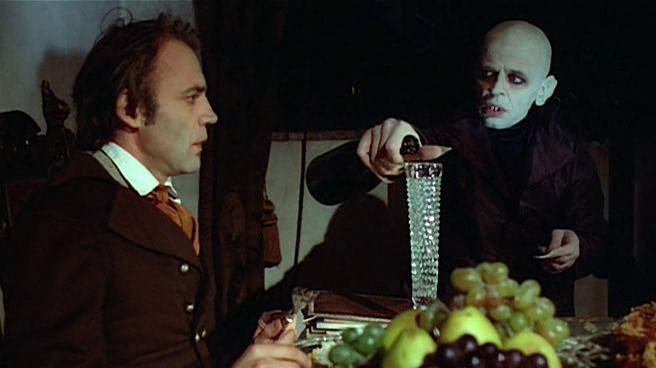
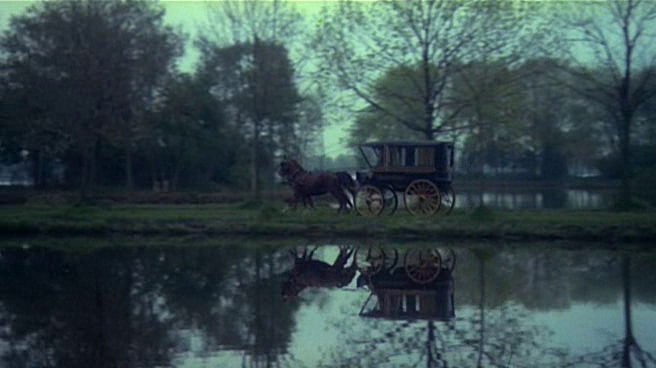
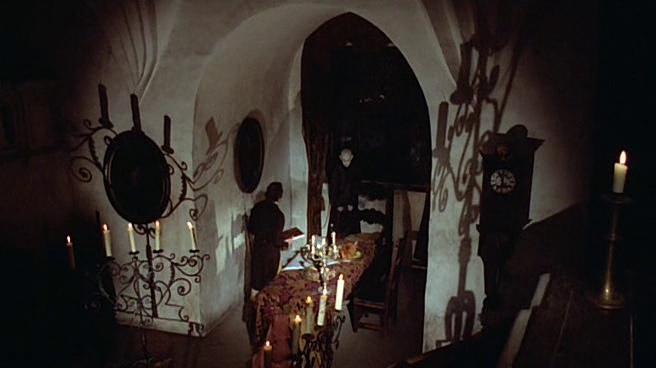
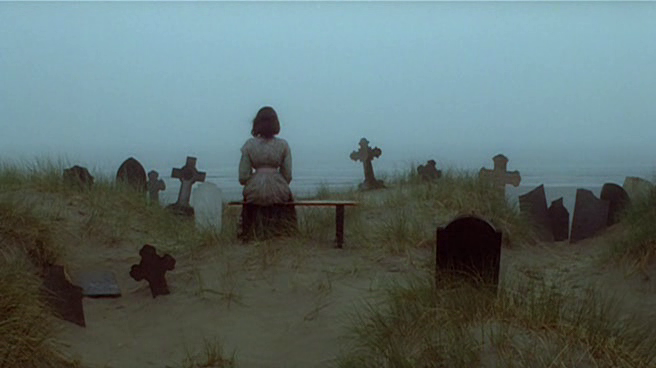
Peary writes that “Werner Herzog’s remake of F.W. Murnau’s horror classic is beautifully filmed but too slow”, and notes that you’ll be “half asleep” by the time Ganz “reaches the castle of Count Dracula”. He writes that “what’s most disappointing is that the themes and storyline are almost identical to Murnau’s still widely circulated film, making one wonder if Herzog undertook the project only to see if he could make Kinski look like Max Schreck’s vampire (he comes mighty close)”. While it’s true that Herzog’s film is an unmistakably direct homage to Murnau’s film — he’s called it the best movie to come out of Germany — Herzog brings a unique vision to the project, making it distinctively his own. Working with cinematographer Jörg Schmidt-Reitwein, he crafts a luminously saturated historical landscape in which mortals interface warily with vampires, and it’s easy to imagine Dracula’s legend taking root. I agree with Peary that the film moves too slowly — patience is required; but Kinski is mesmerizing as the tortured Nosferatu, and the visuals (including impressive sets, costumes, make-up, and hundreds of live rats) are highly memorable.

Redeeming Qualities and Moments:

  • Klaus Kinski as Nosferatu
  • Jörg Schmidt-Reitwein’s cinematography

  • Fine period sets and costumes

  • Effectively creepy make-up
  • Many memorable scenes and images
  • The eclectic and haunting soundtrack by Popul Vuh and others

Must See?
Yes, as a visually evocative homage to a cinematic classic.

Categories

  • Good Show

(Listed in 1001 Movies You Must See Before You Die)

Links:

Peary Interviewed on Podcast

Peary Interviewed on Podcast

Click here for a podcast interview in which Danny Peary talks about his film review career (including writing this book) for 2.5 hours. It’s very informative!

Filmfanatic.org is mentioned at 2:06:40.

Speaking of that — since launching this site in 2006, I’ve written 2,231 reviews of titles in GFTFF (1,327 from the back of the book, 904 from the front) — which means I’m more than halfway through!

Only 12 more years and I’ll have covered everything.

It’s been a fun journey and I look forward to many more years of viewing and reviewing!

– Sylvia (FilmFanatic)

Ali: Fear Eats the Soul/Fear Eats the Soul (1974)

Ali: Fear Eats the Soul/Fear Eats the Soul (1974)

“With people like that in the house, dirt takes over.”

Synopsis:
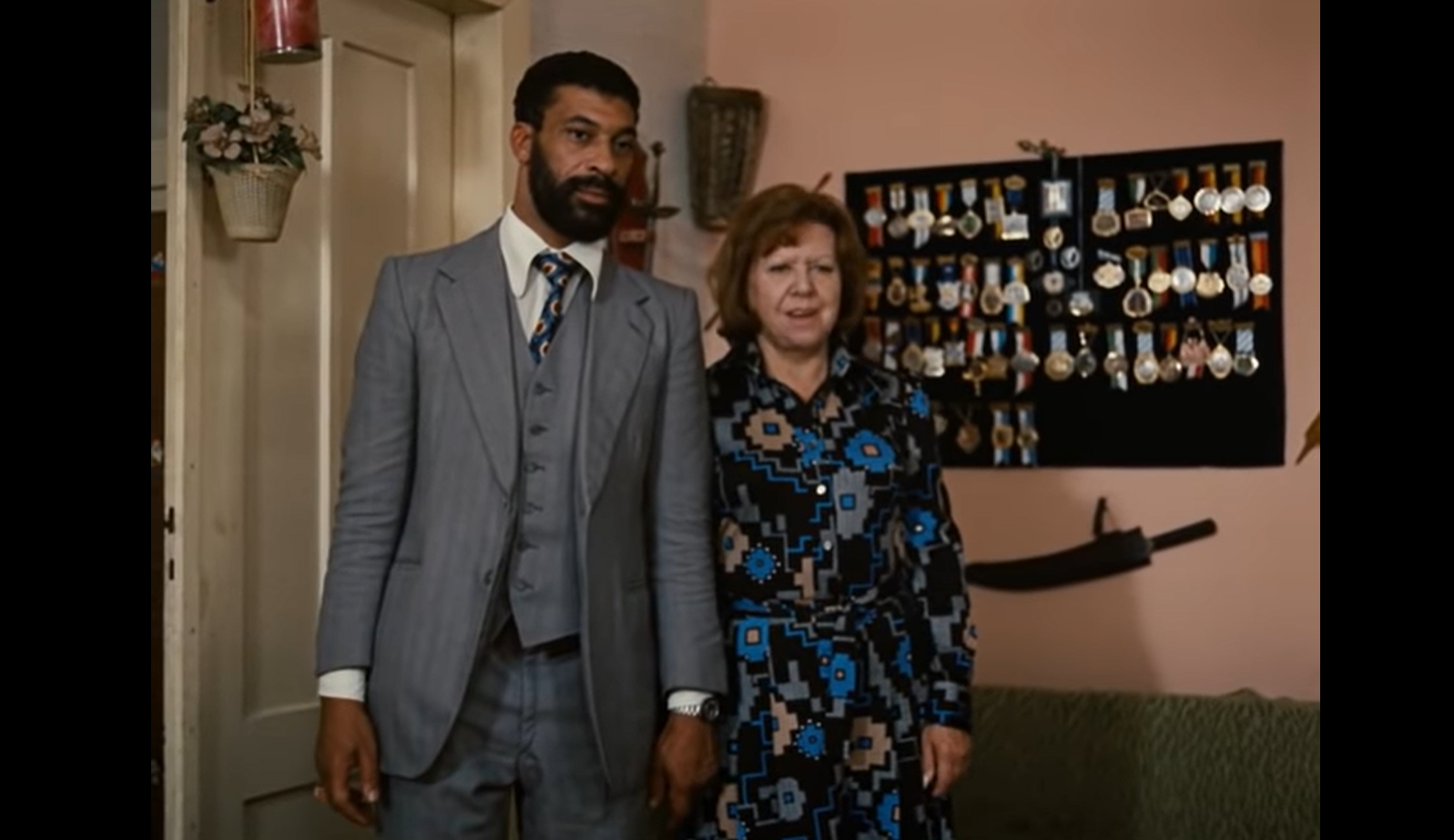
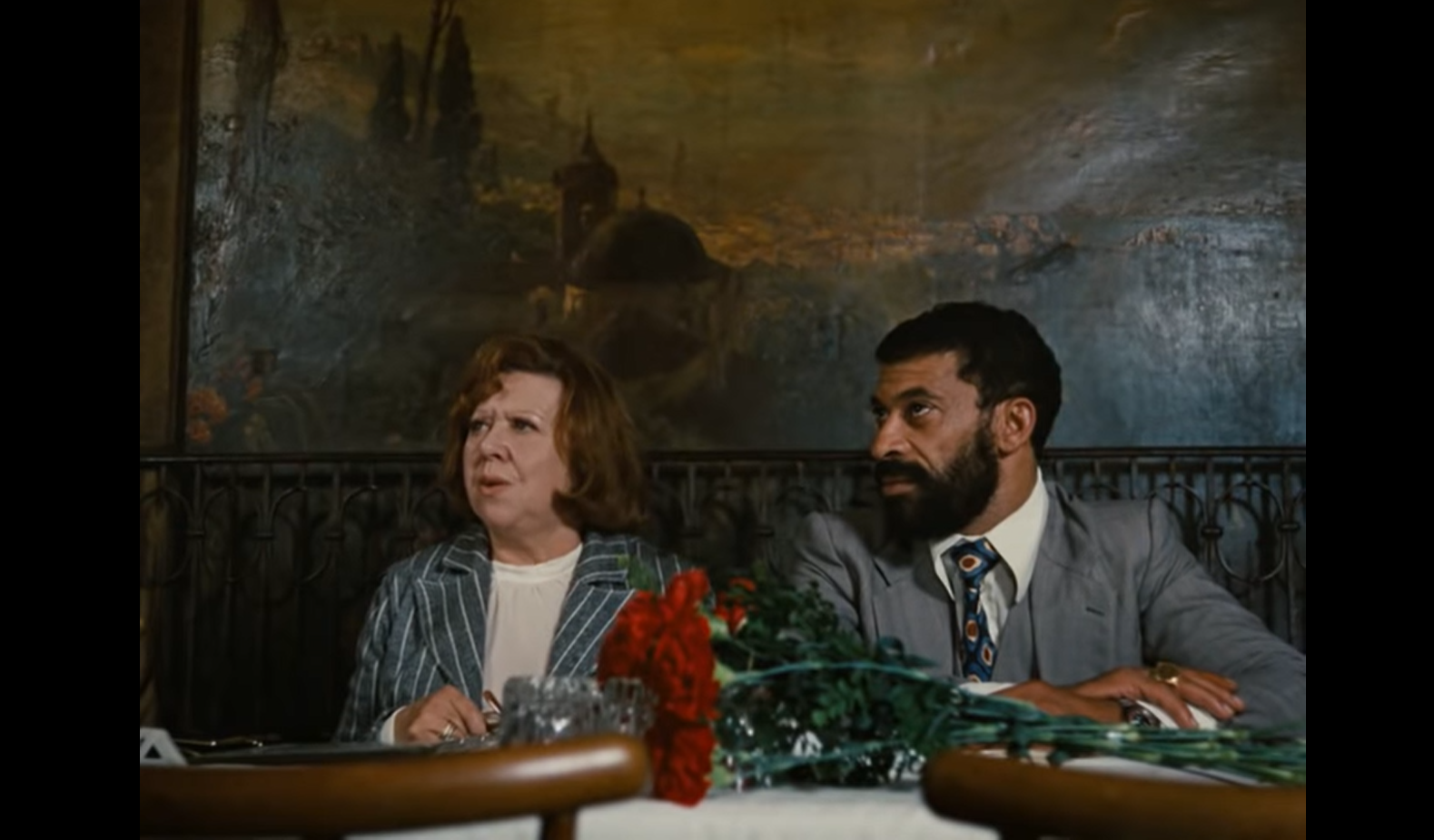
A widowed German housecleaner (Brigitte Mira) falls in love with a much-younger Moroccan mechanic (El Hedi ben Salem), but the couple’s May-December, cross-cultural romance must withstand constant scrutiny and prejudice from their neighbors, friends, and family.

Genres:

  • Cross-Cultural Romance
  • Fassbinder Films
  • German Films
  • Marital Problems
  • May-December Romance
  • Racism

Response to Peary’s Review:
Peary writes that “for those who consider the films of Rainer Werner Fassbinder too esoteric and perverse, here is one that has universal appeal”; in fact, “it was Fassbinder’s breakthrough film internationally, the reason many people worldwide were willing to examine his more difficult, less accessible films.” He writes that “the couple is strong enough to endure” the “constant racial prejudice [Salem] and other Arabs in Germany are subjected to, but in time Mira’s own prejudices surface and threaten to shatter the marriage”. He concludes his review by noting that this remains “a simple, extremely poignant film, all the more fascinating because Fassbinder deals with racial prejudice in modern Germany — against Arabs, not Jews.” Indeed, Mira and Salem’s unique cross-cultural romance remains as touching and relevant as ever — perhaps even more so in the early 21st century, as Europe’s demographics continue to shift contentiously.

Mira is perfectly cast in the central female role, and fans will definitely want to check out the 2003 interview with her on Criterion’s digital restoration DVD. Salem’s personal story (he was Fassbinder’s lover in real life) mirrors his onscreen tragedy, albeit on an even more catastrophic scale; I’d love to find a copy of the 2012 documentary about him entitled My Name is Not Ali, but haven’t had any luck so far. Suffice it to say that this films reminds us how being an “outsider” — whether older, darker-skinner, less-attractive, foreign, lower-class, gay — remains an ongoing challenge for many (if not most) humans across the globe. Ali: Fear Eats the Soul is simultaneously a balm for one’s heart (“When we’re together, we must be nice to each other — otherwise, life’s not worth living.”) and a cautionary tale that our souls are hardly free from the xenophobic fear “Ali” warns us of.

Note: Peary writes that “Fassbinder admired the work of Douglas Sirk, and critics were quick to point out the film’s similarity to Sirk’s All That Heaven Allows,” as well as themes from Sirk’s Imitation of Life.

Redeeming Qualities and Moments:

  • Brigitte Mira as Emmi
  • Many memorable, poignant scenes
  • Rich cinematography

Must See?
Yes, as a foreign classic.

Categories

(Listed in 1001 Movies You Must See Before You Die)

Links:

Love Me Tonight (1932)

Love Me Tonight (1932)

“Nothing could be commoner than a commoner who’s a tailor!”

Synopsis:
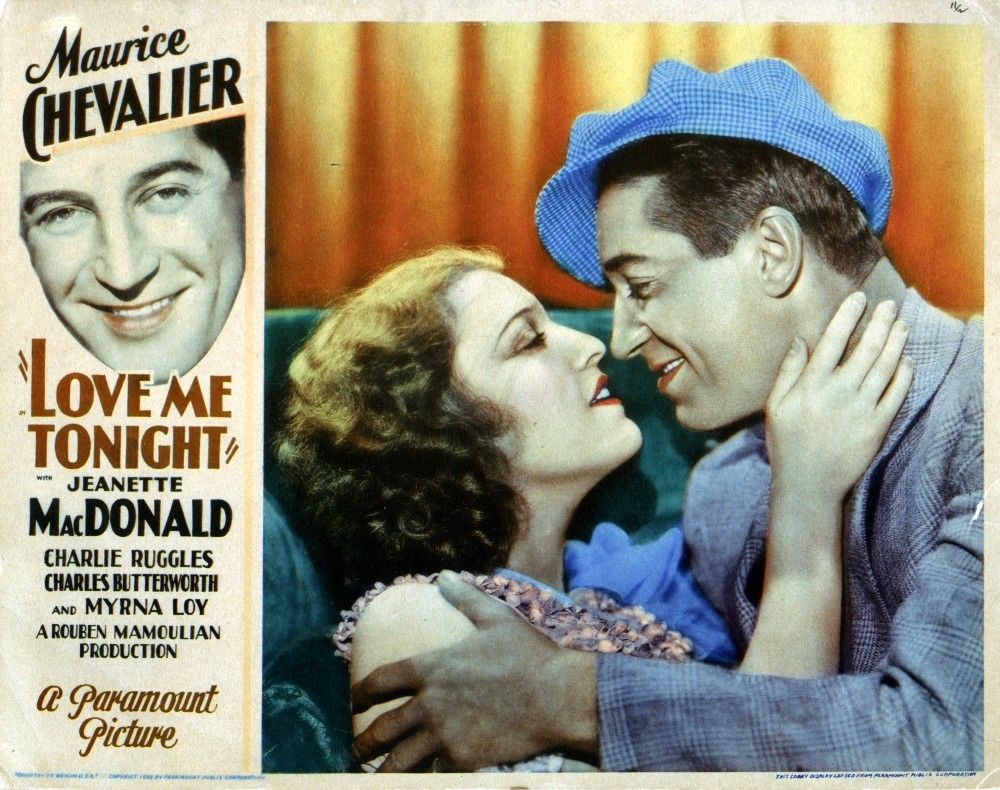
A tailor (Maurice Chevalier) seeking money owed to him by a spendthrift nobleman (Charles Ruggles) is given the identity of a baron when he arrives at a castle overseen by Ruggles’ ducal uncle (C. Aubrey Smith). Smith’s nymphomaniac niece (Myrna Loy) immediately makes a play for Chevalier, while Chevalier woos a widowed princess (Jeanette MacDonald) who is also being courted by a count (Charles Butterworth) — but what will happen when Chevalier’s lowly tradesman status is ultimately revealed?

Genres:

  • Cross-Class Romance
  • Jeanette MacDonald Films
  • Love Triangle
  • Maurice Chevalier Films
  • Mistaken or Hidden Identities
  • Musicals
  • Myrna Loy Films
  • Romantic Comedy
  • Rouben Mamoulian Films
  • Royalty and Nobility

Review:
There’s much to enjoy about this delightful Rogers and Hart romantic comedy, directed with flair by Rouben Mamoulian and considered a cinematic musical breakthrough given Mamoulian’s seamless integration of lyrics into the storyline. The film’s opening sequence — in which a small town outside of Paris slowly comes to life in the morning, eventually forming an ad hoc orchestra of synchronized found-sounds — is worthy viewing on its own, and nicely kicks off the entirely serviceable storyline of a good-natured tailor (Chevalier) whose generosity lands him in trouble with his fellow tradespeople, and forces him to seek immediate renumeration from Ruggles. Love Me Tonight‘s pre-Code credentials are clearly in view throughout, ranging from Loy’s blunt sexual desires (“Tell me, do you ever think of anything but men, dear?” “Oh, yes.” “Like what?” “Schoolboys.”) to many of Rodgers and Hart’s lyrics, such as during the opening sequence:

Chevalier: How’s your bakery?
Baker’s Wife: I need a beau.
Chevalier: Where’s your husband?
Baker’s Wife: He needs the dough!

Meanwhile, during the iconic ditty “Isn’t it Romantic?”, Chevalier sings:

Kiddies are romantic, and if we don’t fight, we soon will have a troop!
We’ll help the population — it’s a duty that we owe to France!

Later, as Princess Jeanette is wooed by a dogged but boring older suitor (Charles Butterworth), double-entendres and word-play abound:

Butterworth: Princess! Jeanette!
MacDonald: Count, I’m going to bed!
Butterworth: I’ve just come up to join you.
MacDonald: Join me?
Butterworth: Join you in a little chat before dinner.
[Later, after Butterworth retreats and falls]
Butterworth: I’ll never be able to use it again!
MacDonald: Oh, Count, did you break your leg?
Butterworth: No, I fell flat on my flute!

And so on and so on; the script and lyrics are chock-a-block full of amusing sexual inferences and references. The film is also visually innovative throughout. As noted by DVD Savant:

In [one] song, the dog pipes up with a note (in the right key!) and even a bas-relief on the wall chimes in with a lyric. Yet another tune plays out over an image of Maurice sleeping in his bed. An image of the sleeping Jeanette dissolves in next to him, forming a literal pre-echo of a visual motif in 1959’s Pillow Talk… We’re surprised when a zoom lens is used to zero in on a smokestack in the first scene, and even more intrigued to see a mounted hunting party ‘leave quietly’ by galloping away in slow motion. Almost every scene introduces something new.

Definitely check this one out; it’s my favorite Chevalier-MacDonald film by far.

Redeeming Qualities and Moments:

  • The delightfully creative opening sequence
  • Innovative cinematic techniques
  • Victor Milner’s cinematography


  • Refreshingly risque and humorous Pre-Code content
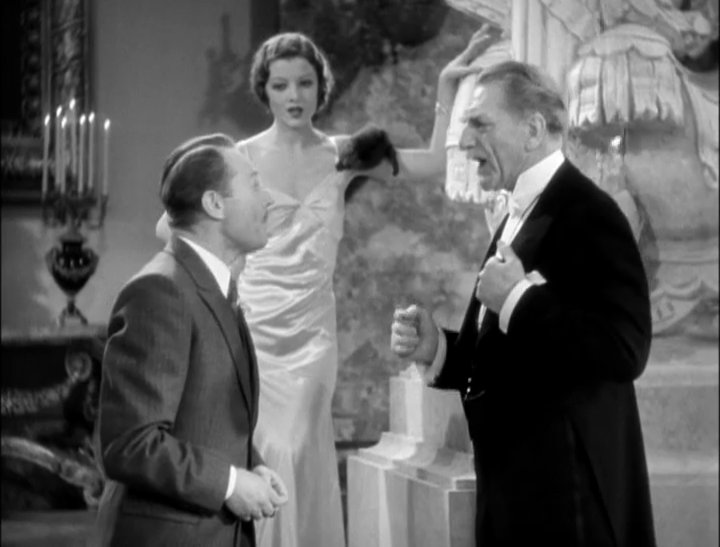
  • Rodgers and Hart’s soundtrack

Must See?
Yes, as a fine early musical. Listed as a film with Historical Importance and a Personal Recommendation in the back of Peary’s book.

Categories

(Listed in 1001 Movies You Must See Before You Die)

Links:

Boom Town (1940)

Boom Town (1940)

“You’re my girl, see? And you always will be — even if I have to lick you to prove it.”

Synopsis:
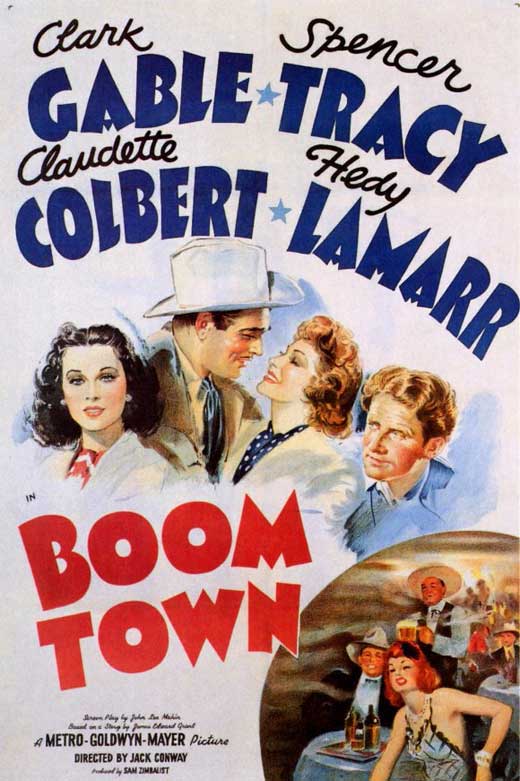
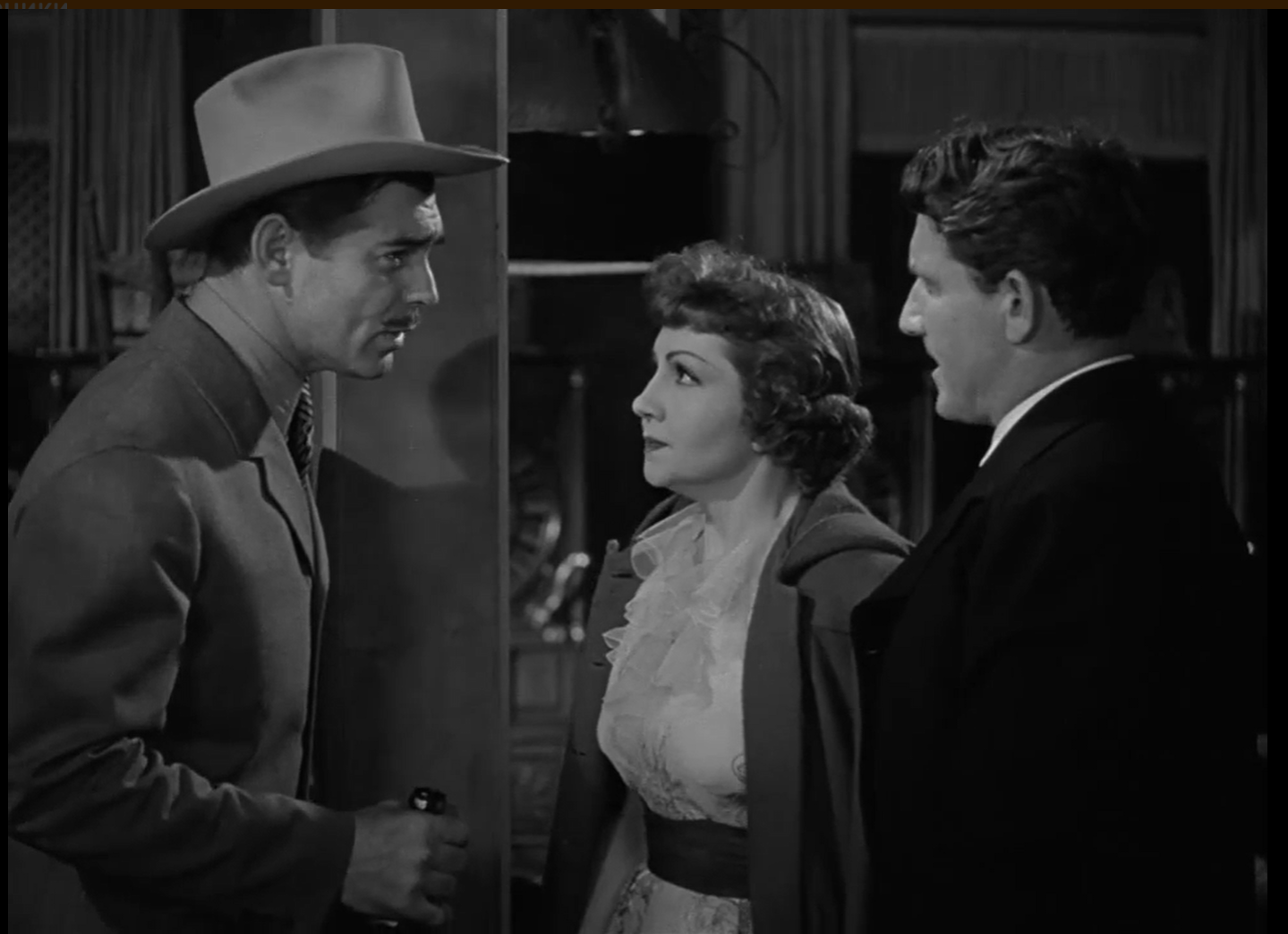
Two aspiring oil barons — “Big” John McMasters (Clark Gable) and “Square” John Sand (Spencer Tracy) — become business partners, but find their relationship strained when Gable marries Tracy’s would-be love interest (Claudette Colbert). Gable’s ongoing affair with a beautiful charmer (Hedy Lamarr) in New York causes loyal Tracy to do what he can to save Colbert from heartbreak — including wooing Lamarr himself.

Genres:

  • Clark Gable Films
  • Claudette Colbert Films
  • Frank Morgan Films
  • Friendship
  • Hedy Lamarr Films
  • Lionel Atwill Films
  • Love Triangle
  • Marital Problems
  • Oil Drilling
  • Rivalry
  • Spencer Tracy Films

Review:
The perils of “wildcatting” (drilling for oil in unknown fields) nearly take second place to the pitfalls of loving another man’s wife in this sprawling tale of frenemies battling for both the heart of the same woman, and bragging rights as oil barons. It’s a true challenge to keep track of who’s up or down oil-wise at any given time, given how often their fortunes shift — but what’s not confusing is the endurance of Tracy’s thankless love for Colbert, whose similarly thankless love for Gable is met with repeated infidelities.

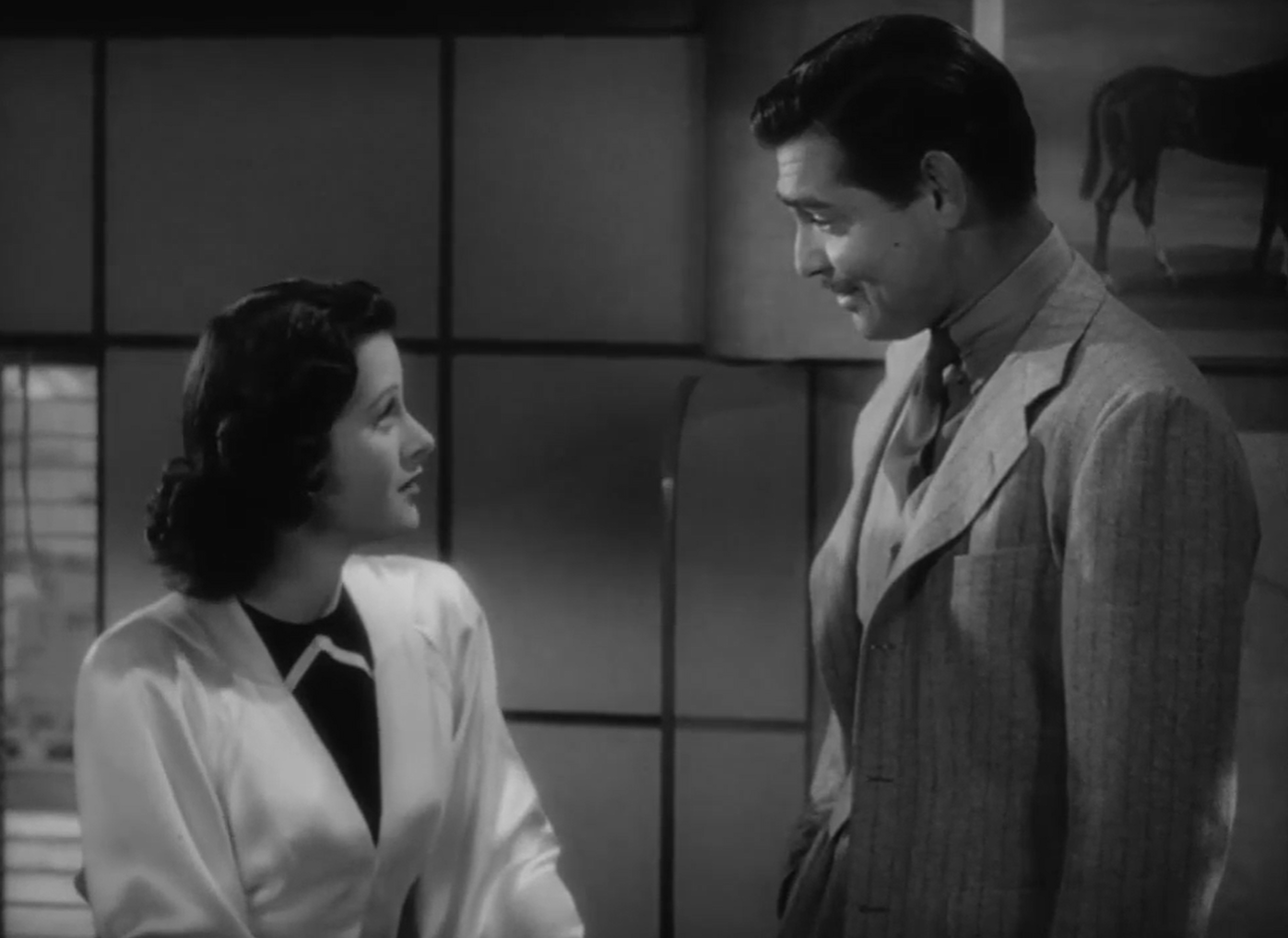
Lamarr is beautiful eye candy as the primary rival for Gable’s affections:

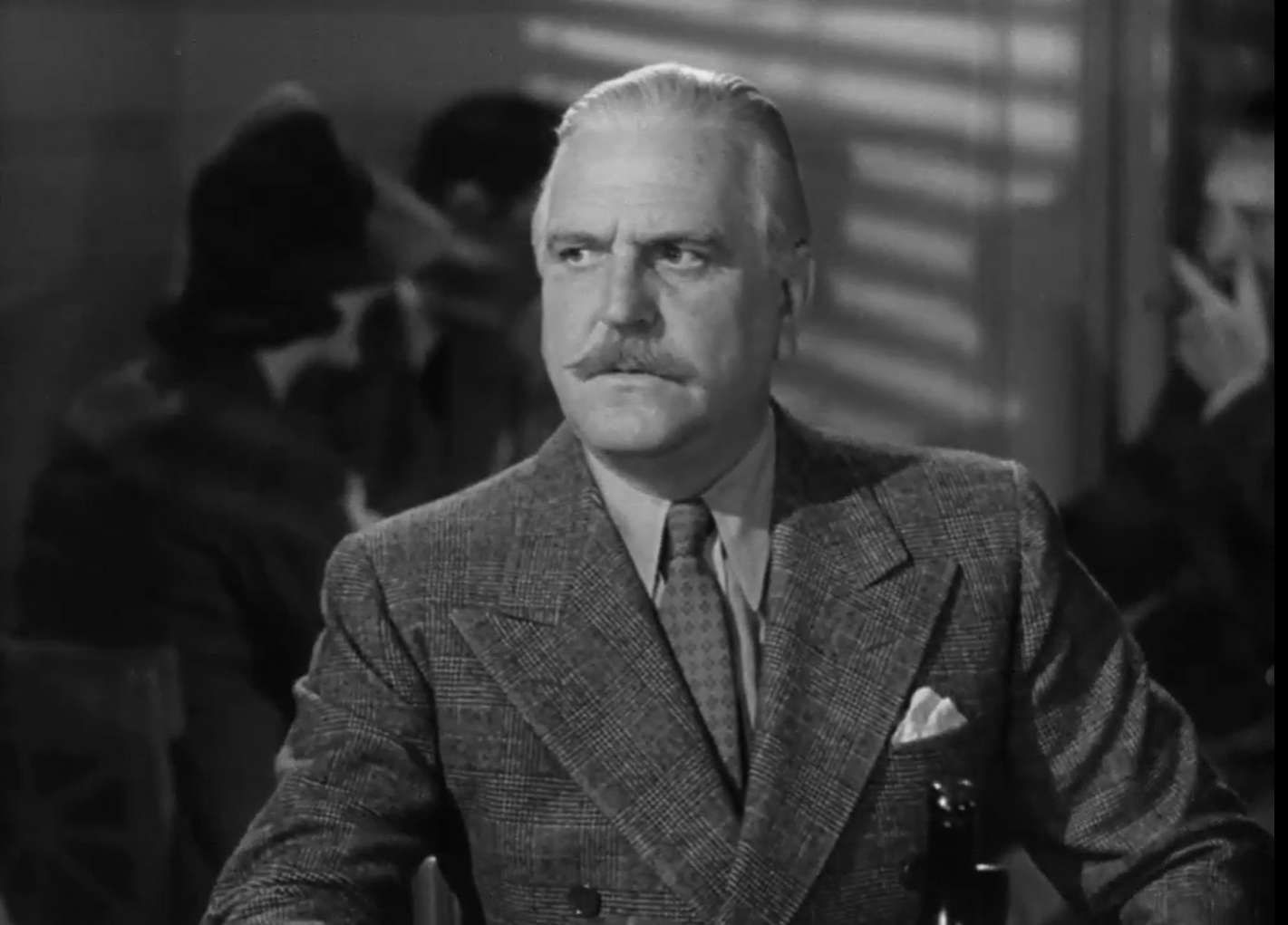
… and Frank Morgan plays a spluttering equipment financier whose loyalties waver as often as his clients’ fortunes.

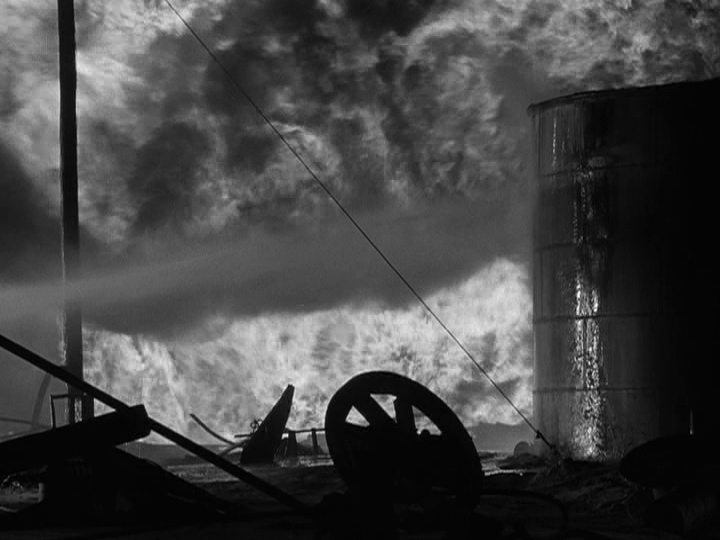
The most engaging scenes in this flick are those of oil fires raging away — yikes!

Note: If this subject interests you at all, be sure to check out the 1992 Pulitzer Prize winning book The Prize: the Epic Quest for Oil, Money, and Power, which was turned into an 8-hour miniseries documentary that is well worth watching.

Redeeming Qualities and Moments:

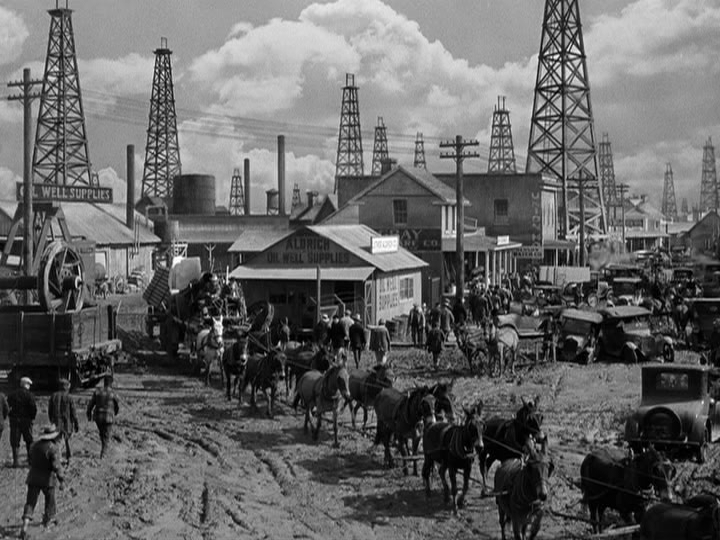
  • Good historical recreation of early oil towns
  • The terrifying oil fire scene

Must See?
No; this one isn’t must-see except for diehard fans of the stars.

Links:

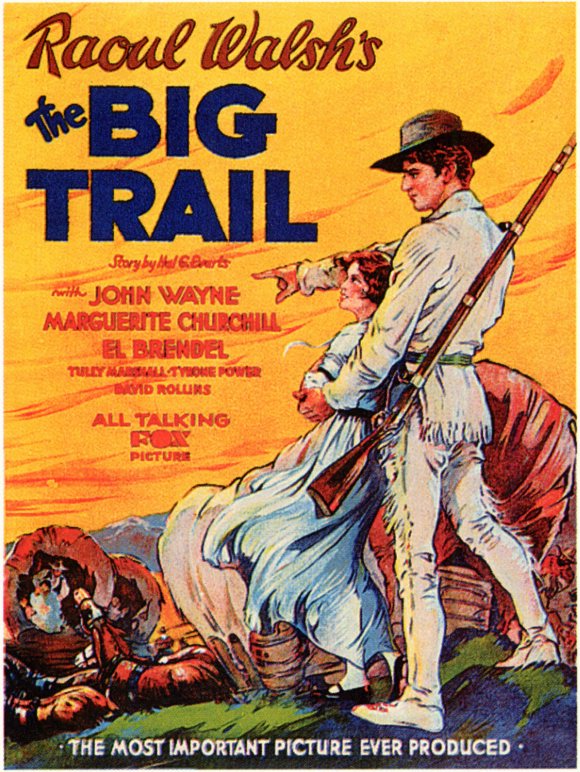
Big Trail, The (1930)

Big Trail, The (1930)

“We can’t turn back — we’re blazing a trail that started in England.”

Synopsis:
A frontiersman (John Wayne) seeking revenge on the man who killed his trapping partner agrees to lead a wagon trail headed west, not knowing the man he’s looking for is actually the sinister wagon boss (Tyrone Power, Sr.). Meanwhile, he falls in love with a beautiful widowed mother (Marguerite Churchill) who resists his advances, and is instead interested in a duplicitous gambler (Ian Keith).

Genres:

  • Historical Drama
  • John Wayne Films
  • Raoul Walsh Films
  • Settlers
  • Westerns

Review:
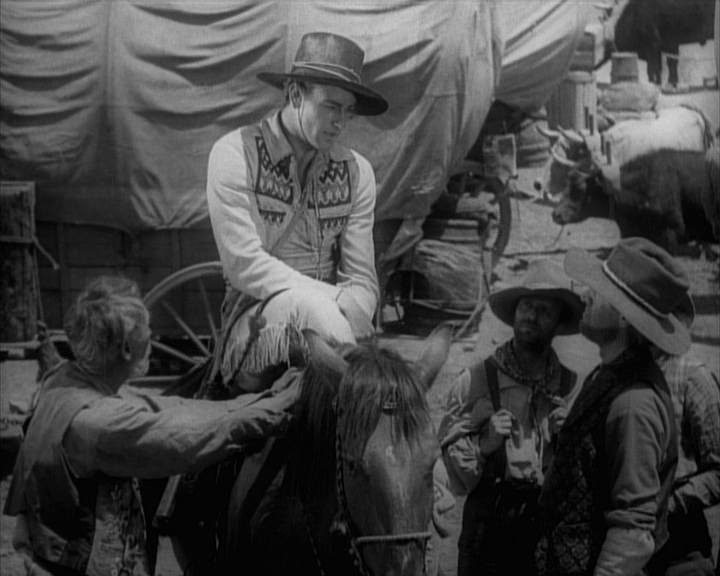
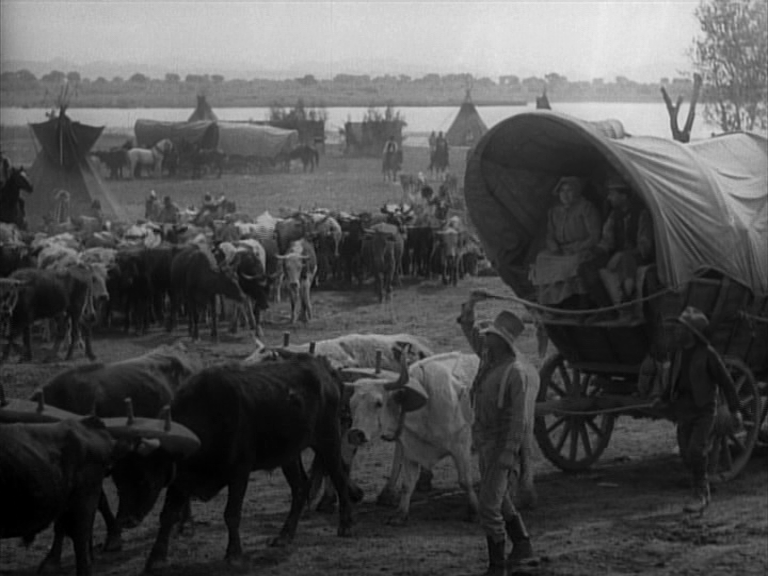
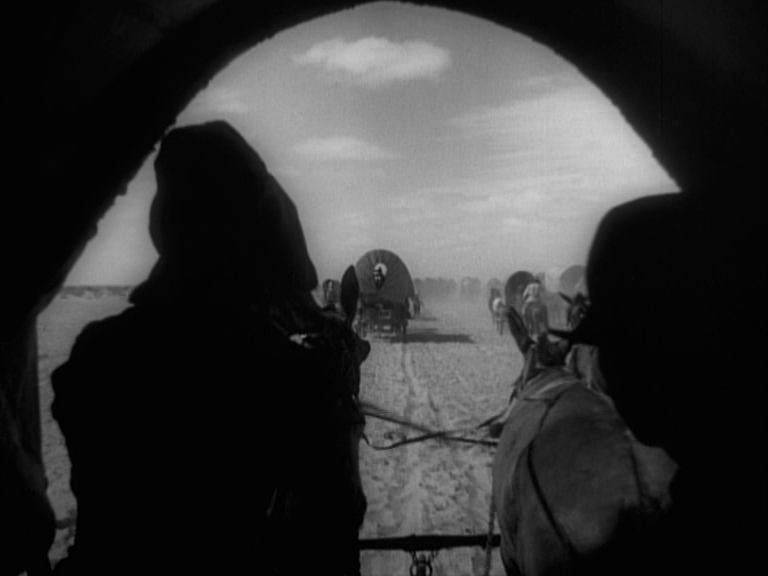
Raoul Walsh’s epic early western is notable for featuring Wayne in his first leading role:

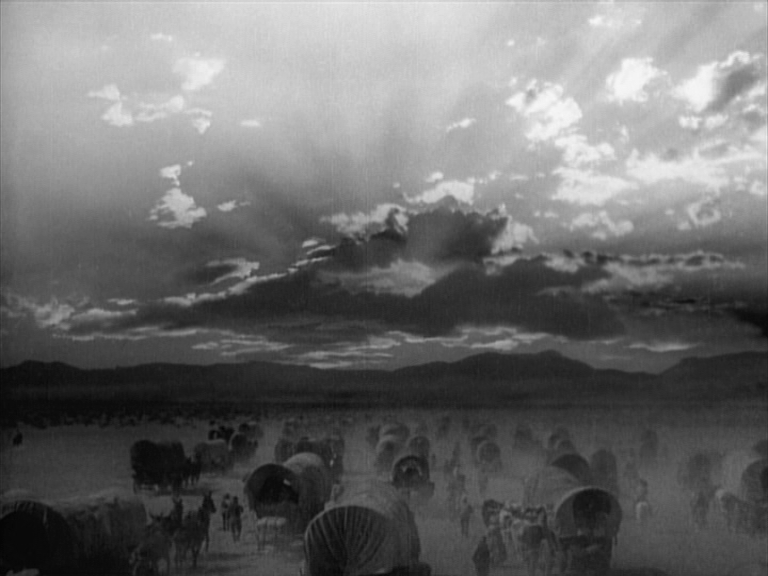
… and for being shot in an experimental wide-screen process known as Grandeur 70. As an impressive recreation of the challenges of westward expansion, it visually rivals The Covered Wagon (1923); but its narrative is too cliched to maintain substantial interest. Power’s identity as The Baddie is not only revealed early on, but entirely foreseeable give his over-the-top performance:

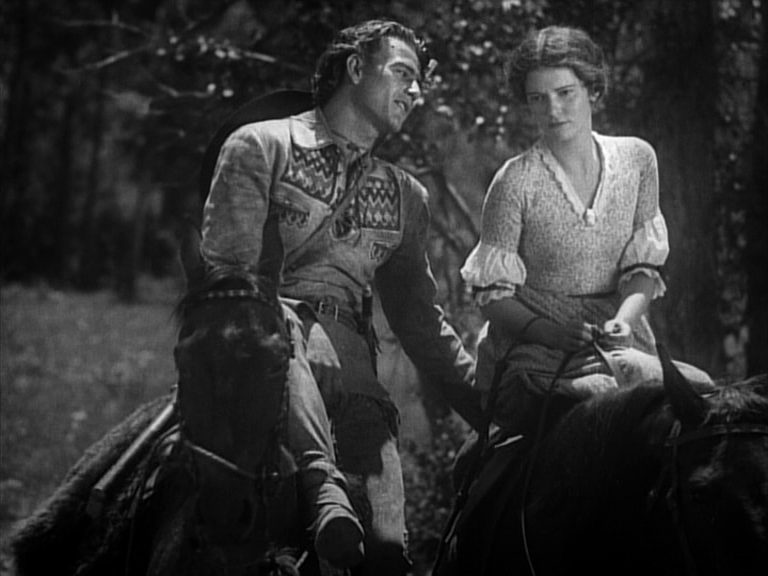
… and Wayne’s romancing of Churchill (who’s offended by his accidental kiss of her early on, and can’t seem to let that go) is similarly predictable.

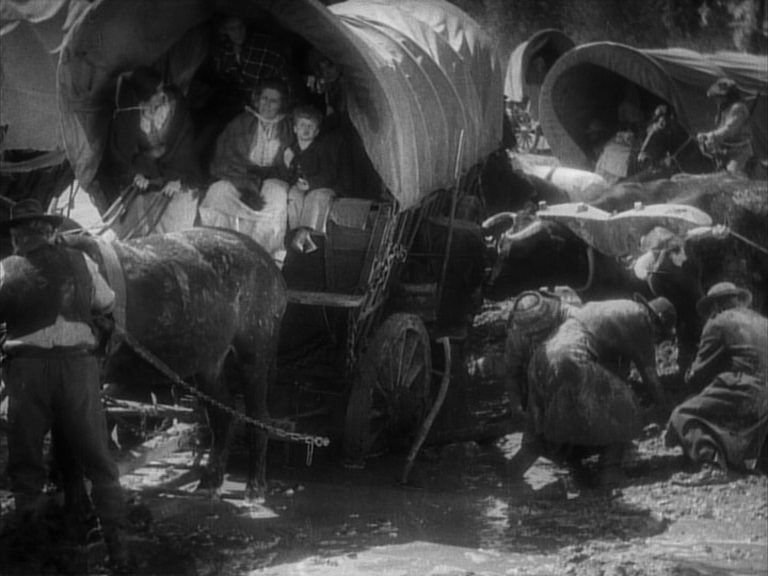
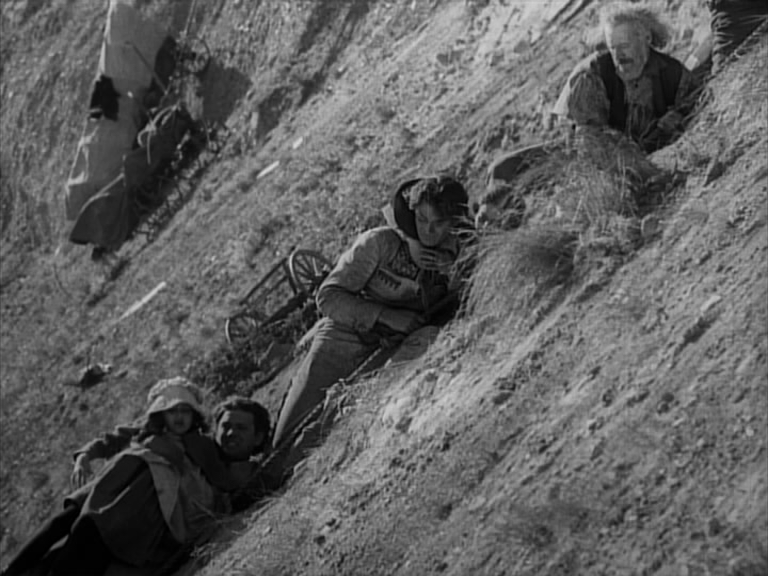
The best scenes are those showcasing the numerous perils faced by the intrepid settlers; the worst are those featuring “comic relief” El Brendel as a Swede terrorized by his menacing mother-in-law (Louise Carver).

Redeeming Qualities and Moments:

  • Impressive recreations of the Westward Movement


  • Fine cinematography

Must See?
No, but it’s worth a one-time look. Listed as a film with Historical Importance in the back of Peary’s book.

Links:

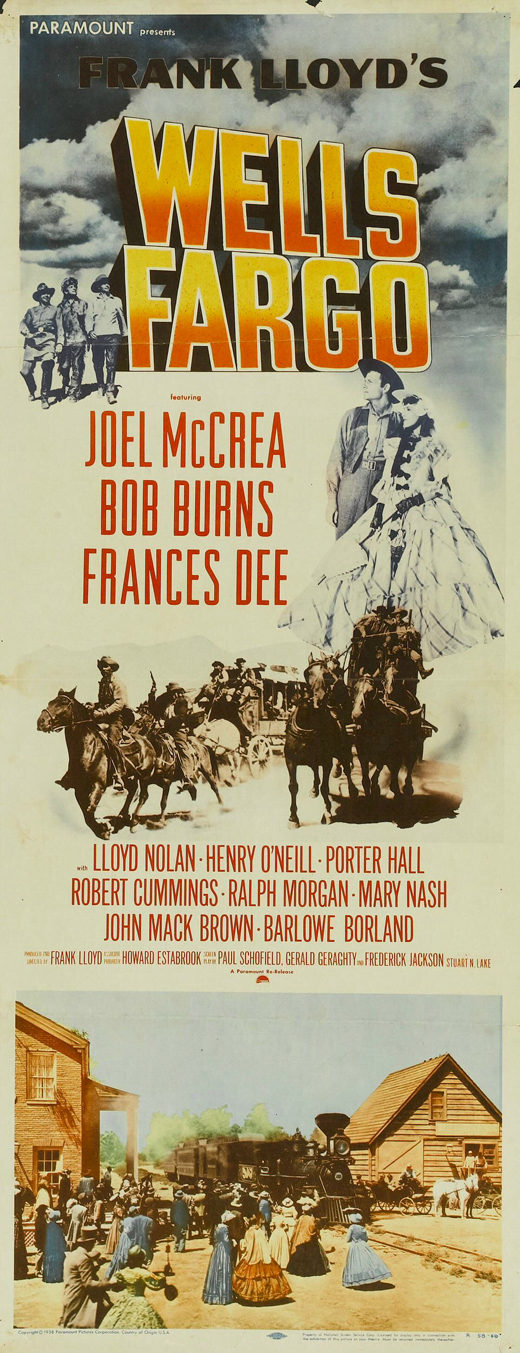
Wells Fargo (1937)

Wells Fargo (1937)

“In the old days, we had one important rule: get there.”

Synopsis:
An ambitious messenger (Joel McCrea) for the Wells Fargo Company in pre-Civil War America helps shape the future of communication and banking across the states while maintaining a long-distance marriage with his southern wife (Frances Dee).

Genres:

  • Frances Dee Films
  • Historical Drama
  • Joel McCrea Films
  • Westerns

Review:
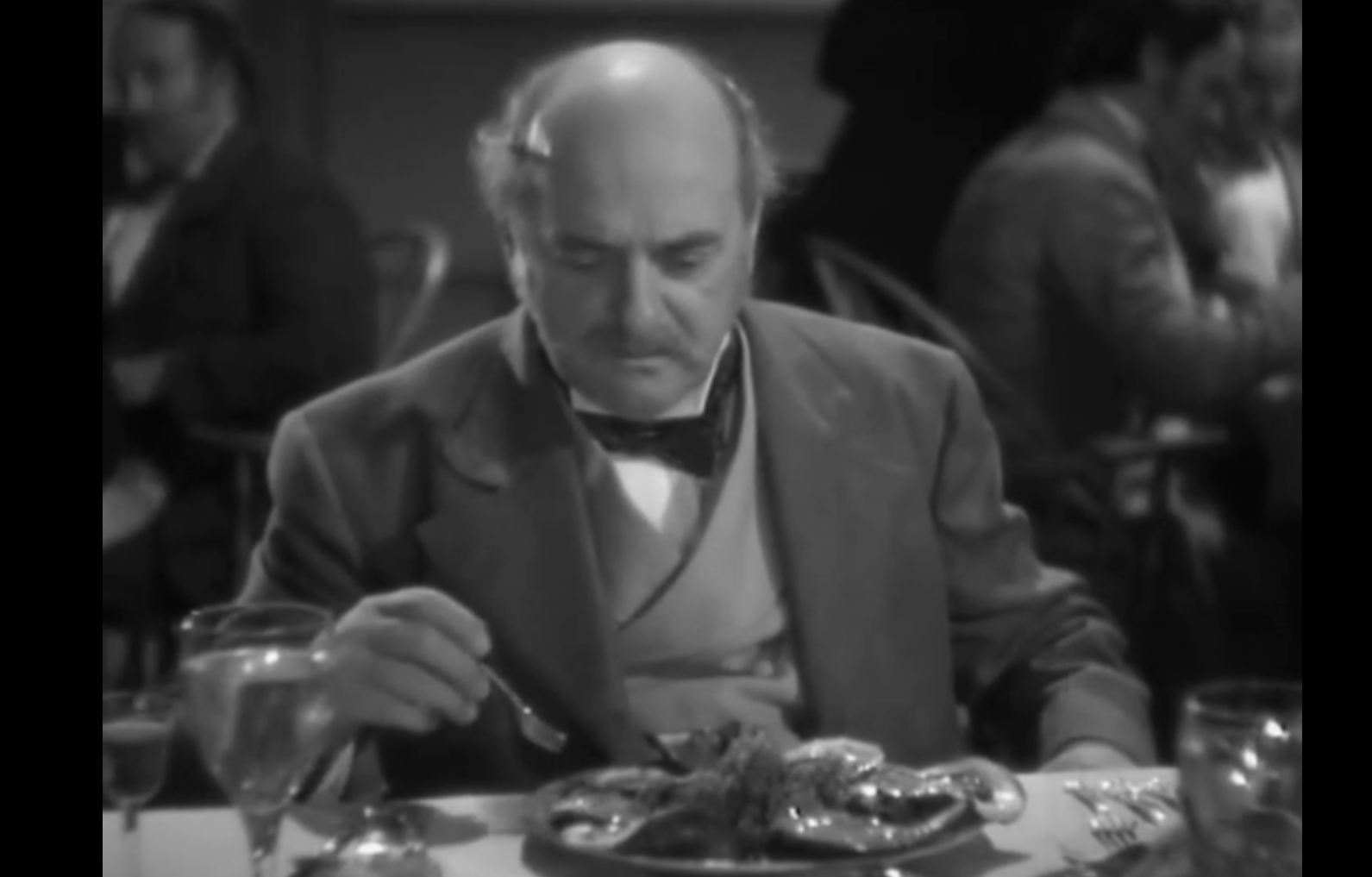
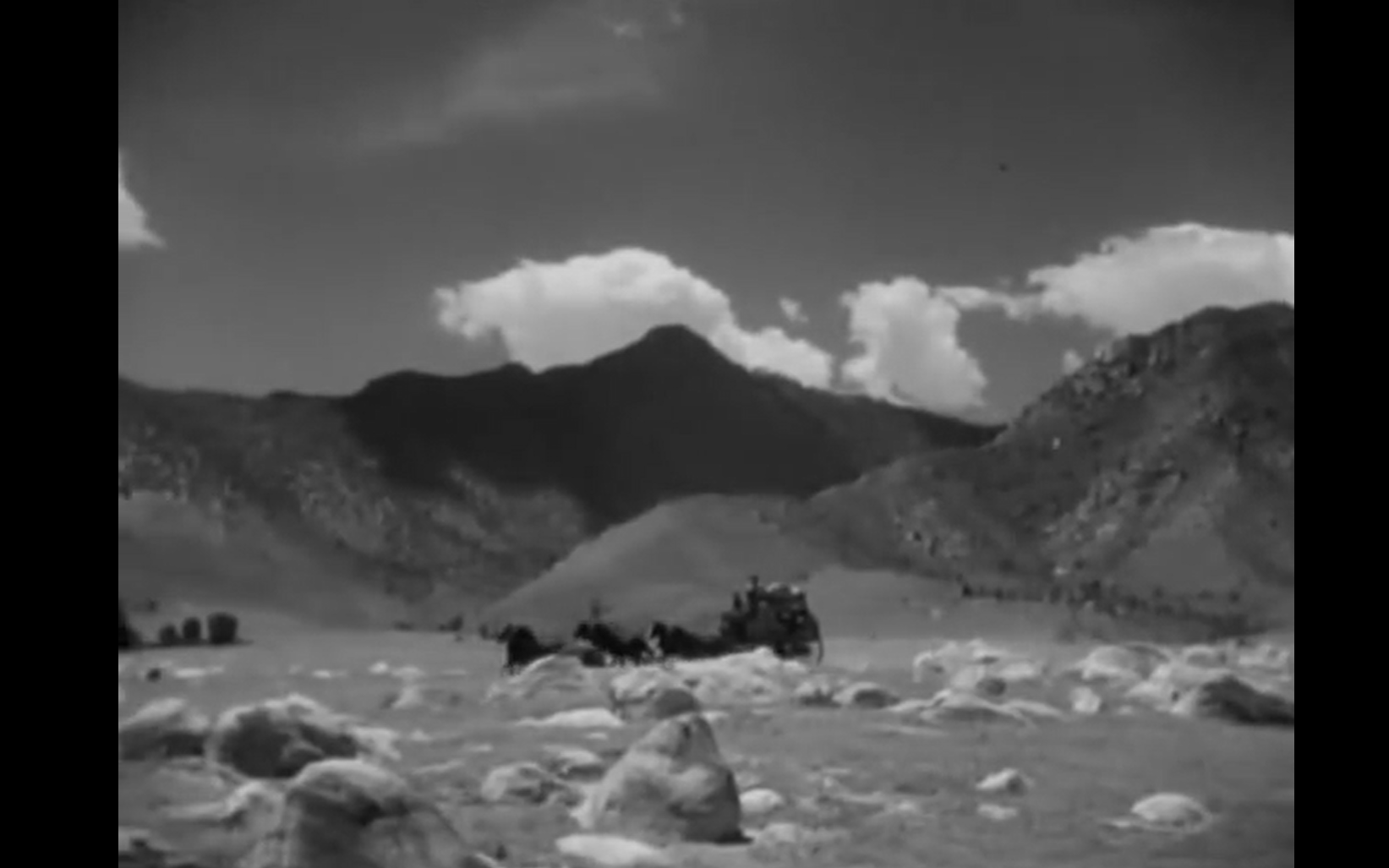
The primary goal of this episodic western is to showcase the impressive historical trajectory of transcontinental communication in 19th century United States: we’re shown the marvel of eating fresh oysters in New York (before salmonella sets in!):

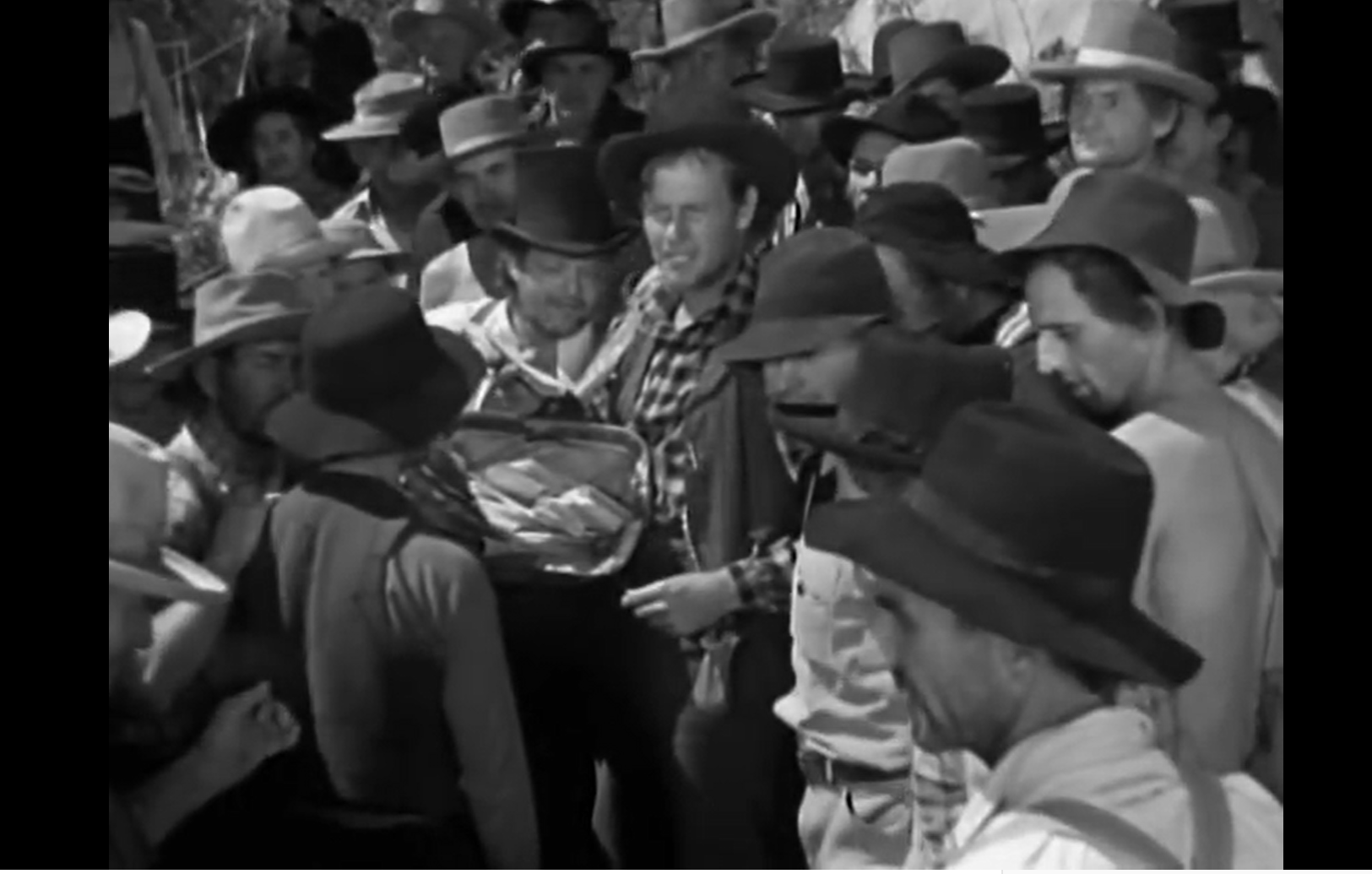
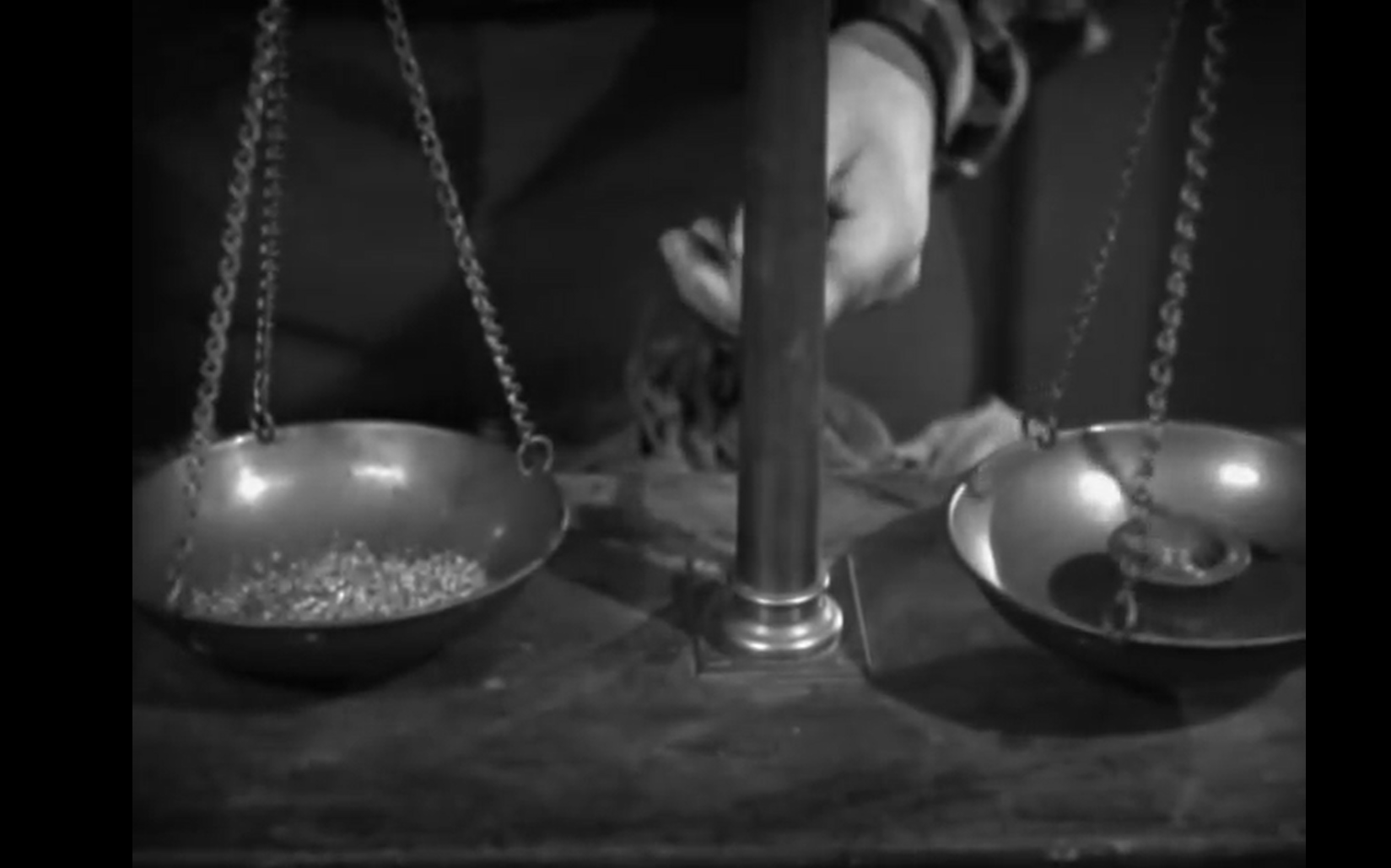
… the remarkable ability for Americans to send letters to their loved ones during the Gold Rush:

… and the challenges of transferring money during an era of continuous robberies and land battles across the nation.

However, the jam-packed storyline is hampered by far too many historic moments in one movie, as well as too much time spent on McCrea’s marital challenges.

This film will primarily be of interest to McCrea fans wanting to see him in his first film opposite Dee (his real-life spouse).

Redeeming Qualities and Moments:

  • Interesting historic footage of the dangerous, time-consuming work involved in helping Americans communicate

Must See?
No, unless you’re a fan of this type of historical western.

Links:

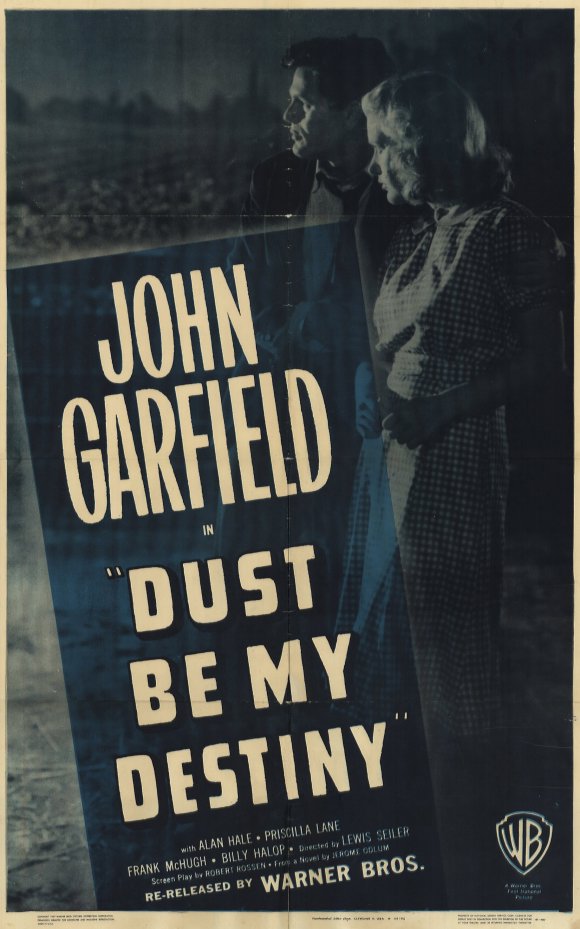
Dust Be My Destiny (1939)

Dust Be My Destiny (1939)

“As far as they’re concerned, I’m hanging by the neck already!”

Synopsis:
An ex-con (John Garfield) embittered about being wrongly imprisoned is picked up for train-hopping and sent to a work farm, where he falls in love with the stepdaughter (Priscilla Lane) of a cruel foreman (Stanley Ridges) who dies shortly after a fight. On the lam, the falsely accused couple live a low-key life thanks to the generosity of a deli owner (Henry Armetta) who hires them, and later the owner of a newspaper (Alan Hale) who hires Garfield as a photographer — but the murder allegation continues to haunt them, and Garfield is convinced he’ll never get an even break.

Genres:

  • Alan Hale Films
  • Criminal Couples on the Run
  • Ex-Cons
  • Falsely Accused
  • Fugitives
  • John Garfield Films
  • Marital Problems
  • Newlyweds
  • Priscilla Lane Films

Response to Peary’s Review:
Peary asserts that this “exciting, romantic, well-acted” Warner Brothers flick — a “sleeper” — is “one of the best couple-on-the-lam films”, with Garfield and Lane (who he argues gives “her most appealing performance”) playing “a couple you can really root for.”

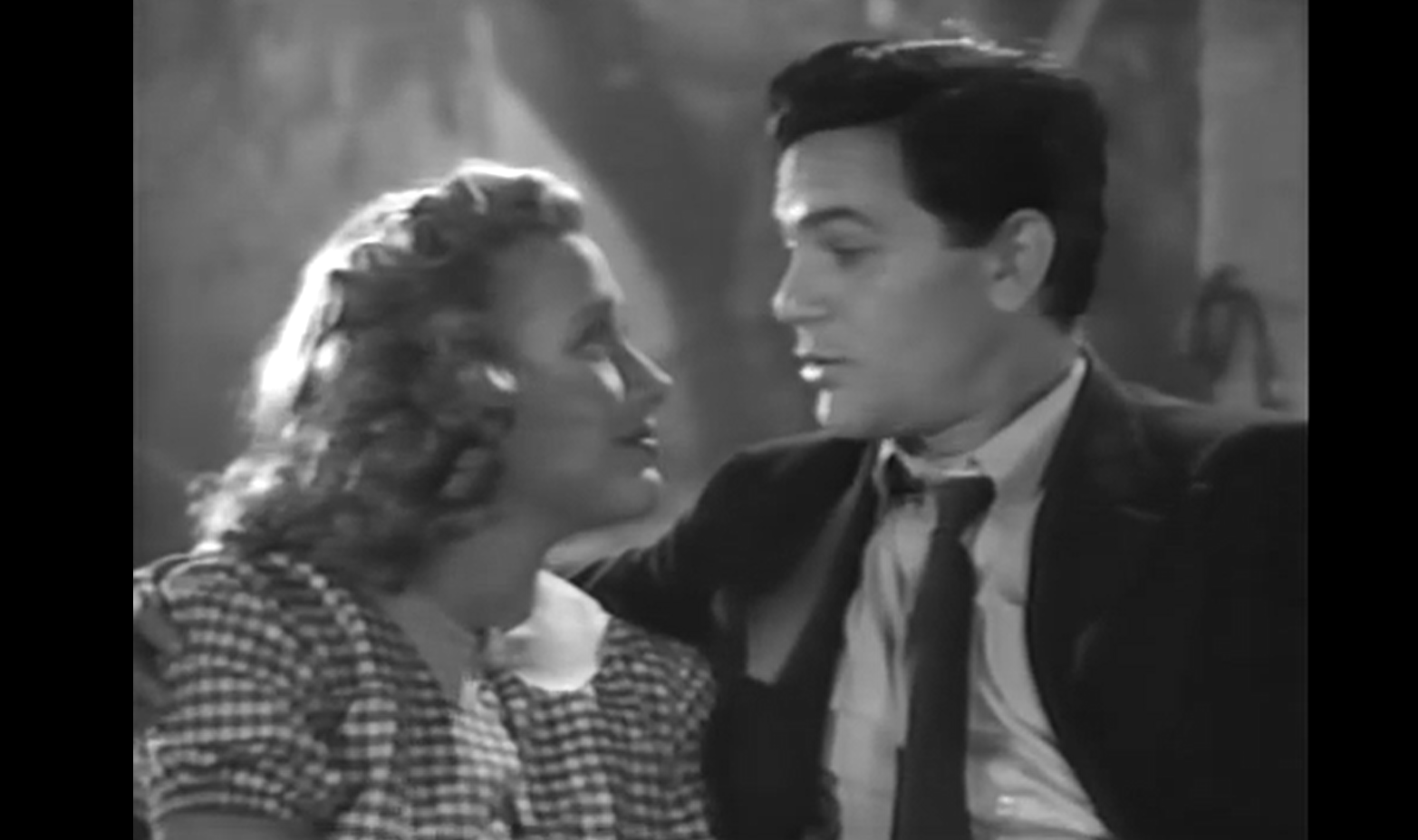
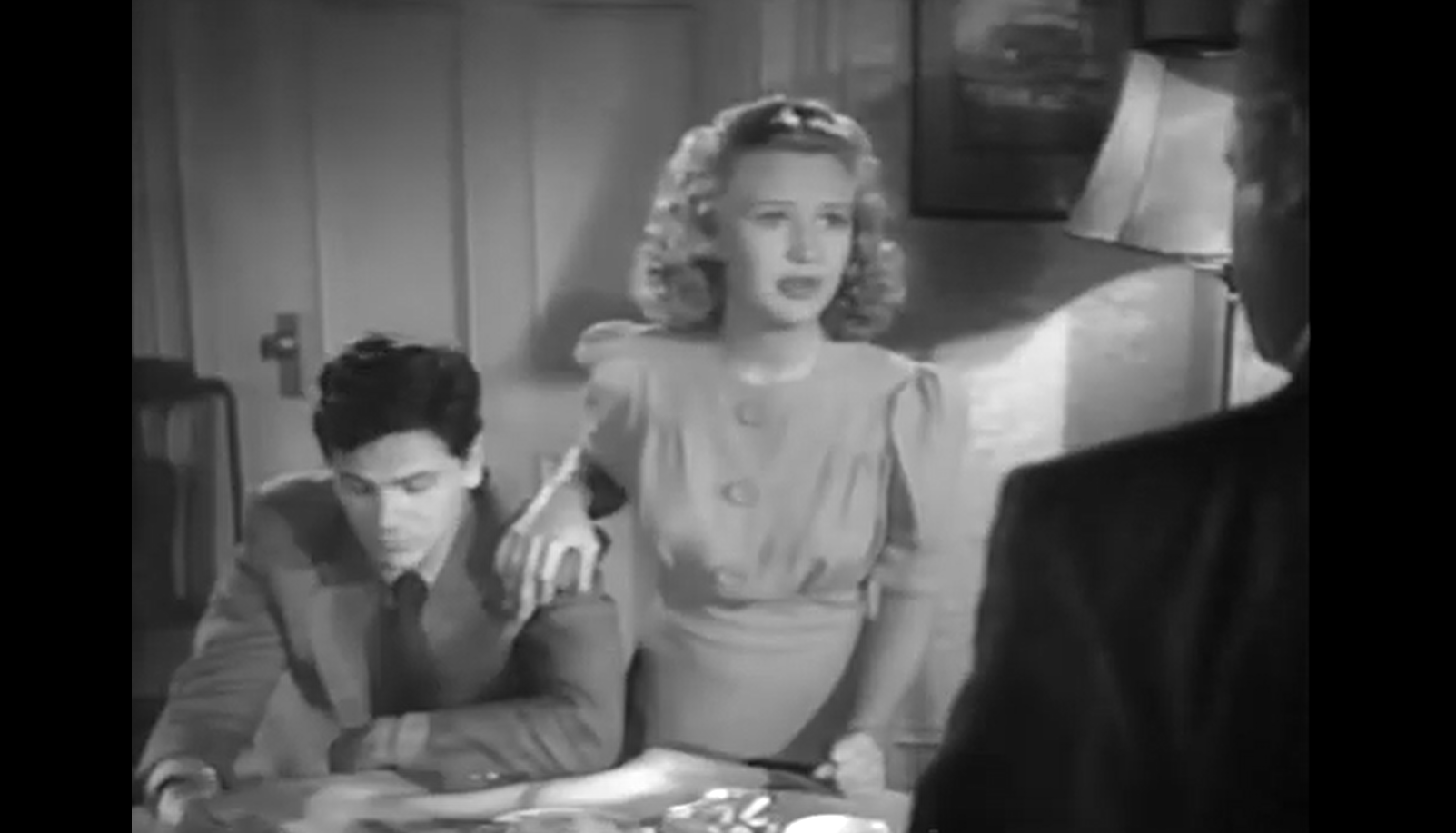
Sadly, I disagree on all counts. Lane’s performance comes across as poorly directed:

… and the outcome of nearly every scene is predictably telescoped; as noted in the original New York Times review by Frank Nugent, “It’s not even fun anymore, outguessing the script” of a film which lies in “an apparently interminable line of melodramas about the fate-dogged boys from the wrong side of the railroad tracks.” Several key factors play against the film’s success. First, Garfield has a chip on his shoulder from the get-go: we never have a chance to see him as anything but a bitterly doomed protagonist who can’t seem to avoid fighting at the worst times.

Meanwhile, the world Garfield and Lane inhabit is too neatly black-and-white, with most primary characters either out to get the couple, or convinced they’re just a plucky pair needing a decent job.

Most egregiously, there’s no way Garfield and Lane would or could have a chance at marital bliss once they initially run away from the law; I know this was a different era, but isn’t it inevitable they’ll be found? The most labored scene shows Lane attempting to strike out on her own due to the sheer exhaustion of being on the lam, only to realize within a few minutes that being with Garfield is worth it no matter what (though nothing has changed about their circumstances).

Call me a sourpuss, but I wasn’t engaged by this one at all.

Redeeming Qualities and Moments:

  • Atmospheric cinematography

Must See?
No; only seek this one out if you’re a true Garfield fan.

Links: