Browsed by
Category: Response Reviews

My comments on Peary’s reviews in Guide for the Film Fanatic (Simon & Schuster, 1986).

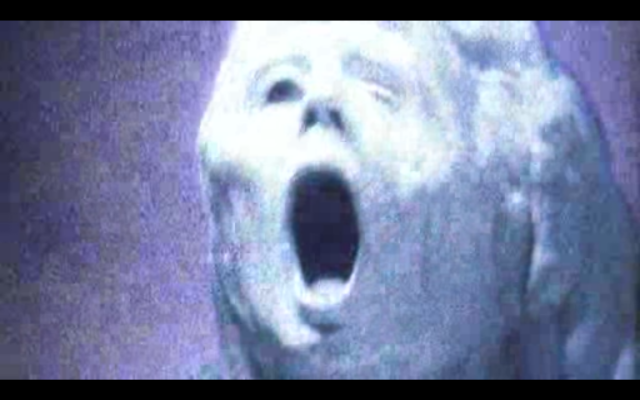
Carnival of Souls (1962)

Carnival of Souls (1962)

“I feel sorry for you and your lack of soul!”

Synopsis:
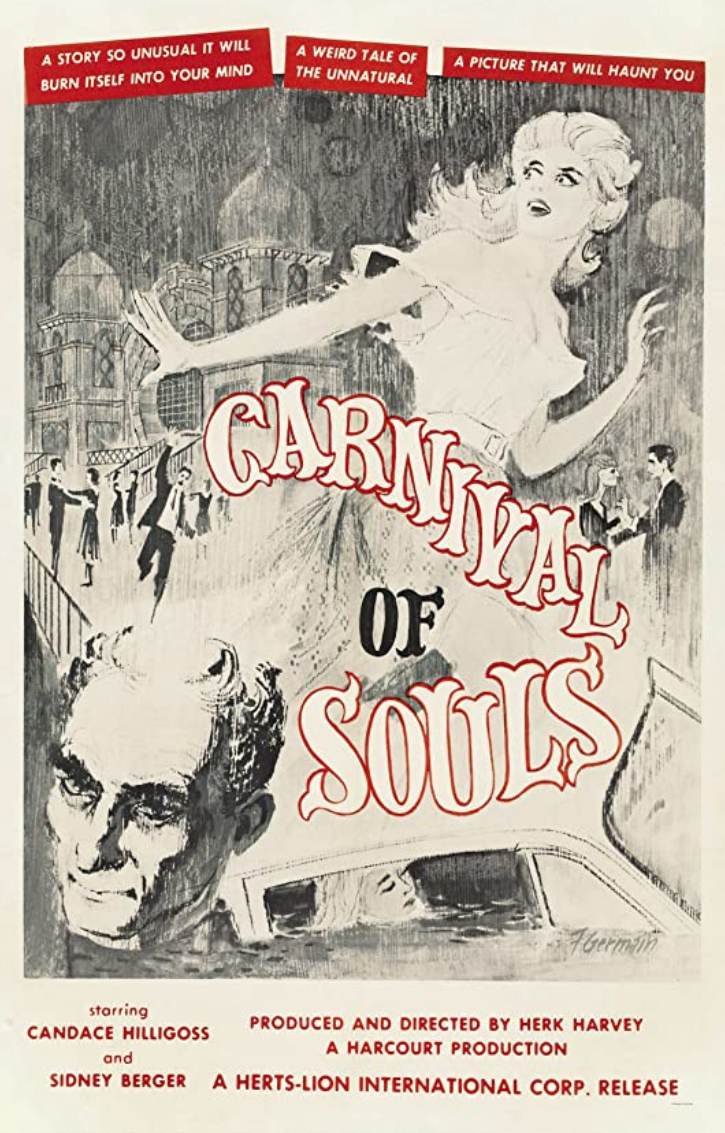
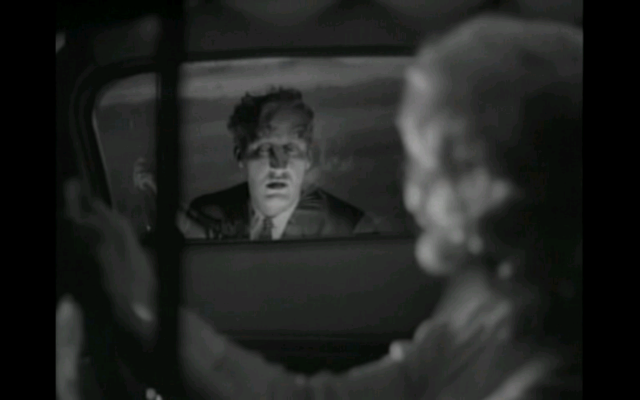
After emerging from a fatal car crash, a young woman (Candace Hilligoss) travels to her new job as a church organist in Utah, but remains haunted by the presence of a ghoulish man (Herk Harvey), and unable to emotionally connect with anyone around her.

Genres, Themes, Actors, and Directors:

  • Horror
  • Living Nightmare
  • Untimely Death

Response to Peary’s Review:
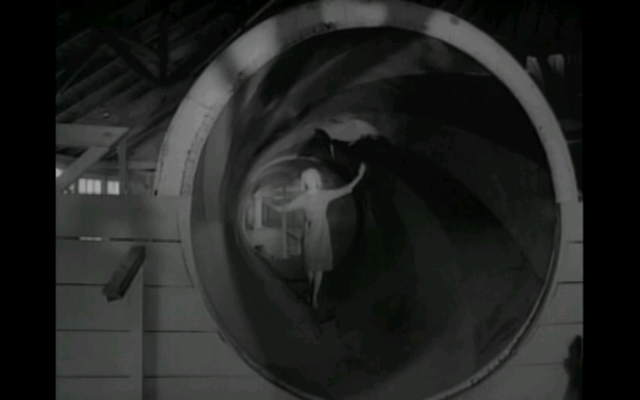
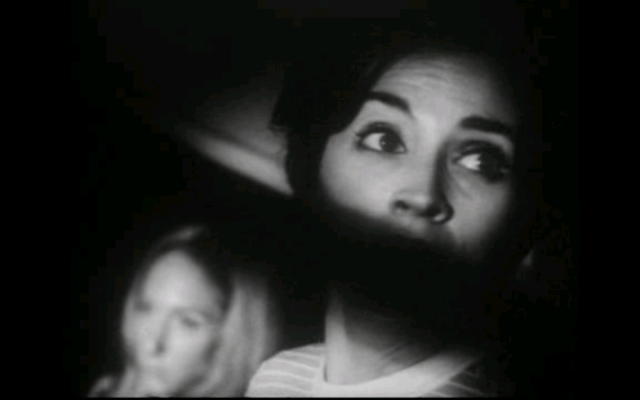
Peary refers to this low-budget cult classic as a “sleeper that moviegoers always mention as one of their personal discoveries”. He comments on its “many clever ‘eerie’ scenes”, such as the two times when “Mary [Hilligoss] finds that she can’t hear anything and that people neither hear nor see her” (reminiscent of a “Twilight Zone” episode); the scene when she “climbs onto a bus, only to find that it is full of ghouls”; and the creepy finale at a deserted carnival pavilion. Indeed, for such a low-budget venture by a relatively novice director (this was Herk Harvey’s first and only feature-length narrative movie after a career in industrial film production), it possesses a surprising amount of atmosphere and panache, with striking b&w cinematography, creative direction, and a particularly noteworthy organ score by Gene Moore.

In his review, Peary argues that “rather than being a straight horror film, [Carnival of Souls] delivers a message similar to the one in Invasion of the Body Snatchers about how we are turning into pod people”, given that “Mary is such a passive, uninvolved (soulless) character”. (Interestingly, the Strasberg-trained Hilligoss apparently complained about this very description, and attempted to inject even more life into her protagonist.) Unfortunately, Peary’s review glibly gives away spoilers, as do other online reviews — so be duly forewarned; but chances are you’ll find yourself guessing the truth about Mary’s “situation” long before the end. Remade in 1998 by Wes Craven.

Note: According to TCM, Carnival of Souls was restored and revived in theaters in 1989, and made available on home video the following year, thus entering into mainstream moviegoers’ cultural consciousness just a few years after Peary’s GFTFF was published.

Redeeming Qualities and Moments:

  • Candace Hilligoss as Mary
  • Many genuinely frightening images
  • Striking cinematography by Maurice Prather
  • Effective use of pre-existing locales
  • Creative direction and editing
  • Gene Moore’s organ score

Must See?
Yes, as a genuine cult classic.

Categories

  • Cult Movie

Links:

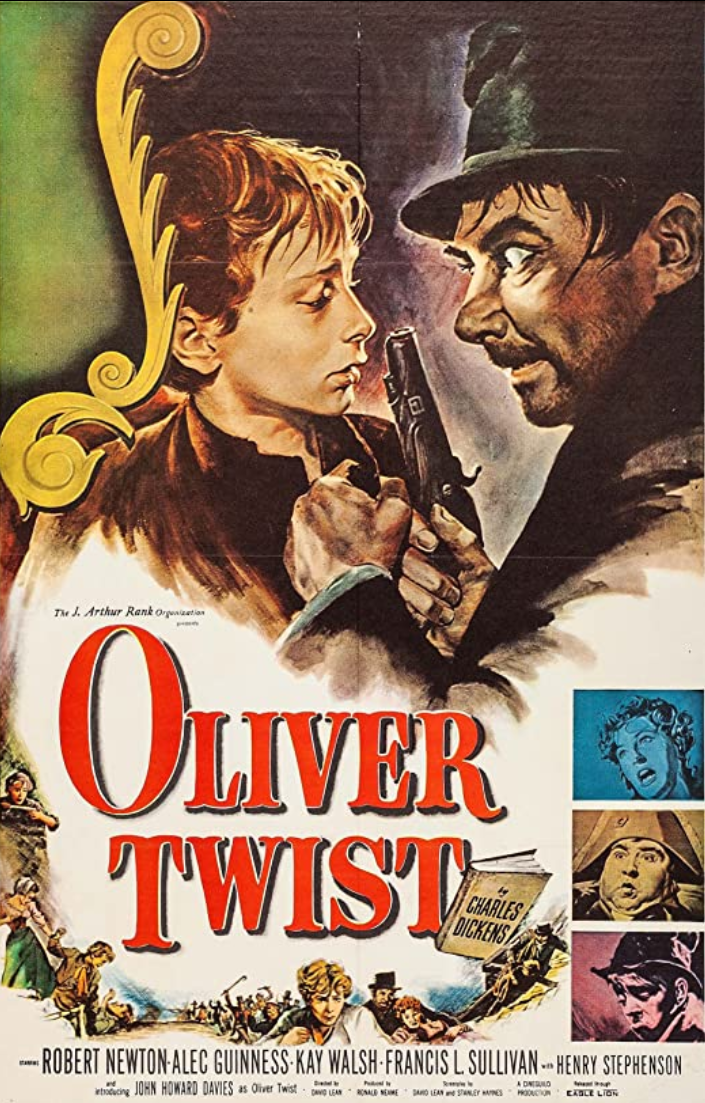
Oliver Twist (1948)

Oliver Twist (1948)

“Please sir — I want some more.”

Synopsis:
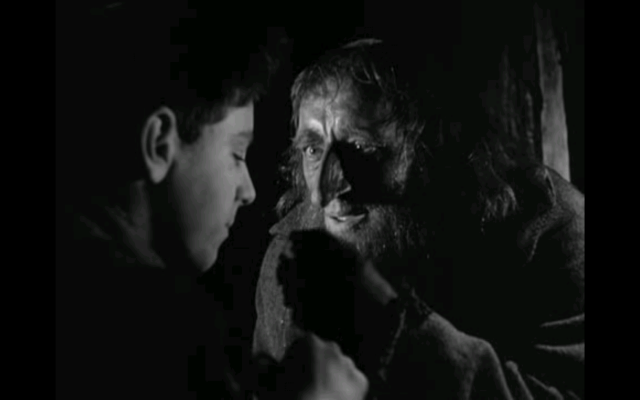
Orphaned Oliver Twist (John Howard Davies) joins a gang of pickpockets led by miserly Fagin (Alec Guinness) and evil Bill Sykes (Robert Newton).

Genres, Themes, Actors, and Directors:

  • Alec Guinness Films
  • David Lean Films
  • Literature Adaptation
  • Orphans
  • Robert Newton Films
  • Thieves and Criminals

Response to Peary’s Review:
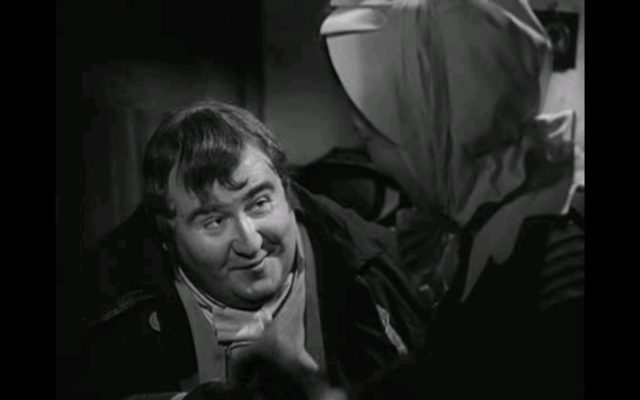
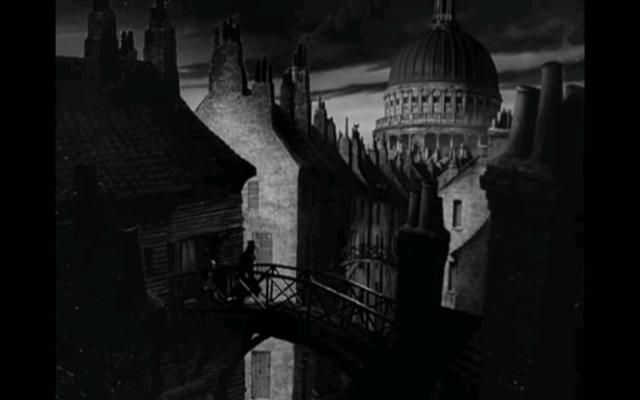
As Peary notes, David Lean’s adaptation of this classic serialized Dickens novel is “a dark, highly atmospheric, punishing film”, one which will doubtless make you “really get upset [by] watching likable eight-year-old Oliver… be pushed around the cruel world”. Indeed, as much as I genuinely admire this brilliantly crafted film, I find it challenging to sit through, especially during the traumatic second half, when Oliver is torn away from his would-be kindly benefactor (Henry Stephenson), and Bill Sykes (a “terrifying” Robert Newton) shows his true colors by beating “to death his sympathetic companion, Nancy”. Indeed, this is a no-holds-barred Dickensian universe — starting from the astonishingly dramatic opening sequence, in which Oliver’s soon-to-die mother (Josephine Stuart) staggers across the moors in labor, hoping to make it to the Parrish Workhouse in time to give birth to her son. Meanwhile, DP Guy Green’s high-contrast b&w cinematography is never anything short of stunning, and the supporting cast (including Francis L. Sullivan as Mr. Bumble) is consistently strong.

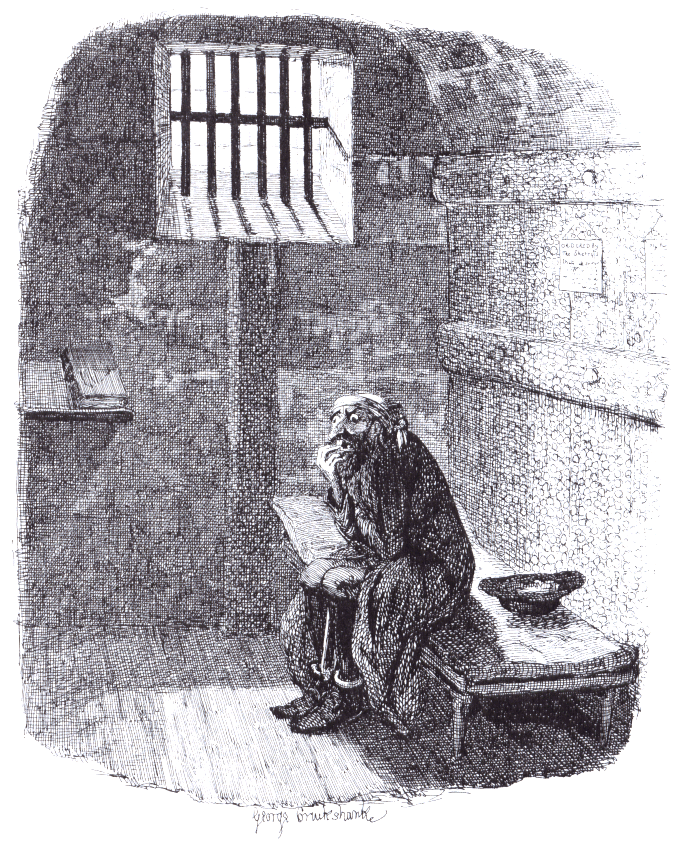
The film is perhaps “best remembered”, however, for its infamous portrayal of “the Jew”, Fagin, by a youthful Alec Guinness in heavy prosthetics. Jewish groups at the time objected strongly enough that its U.S. release was delayed for several years, and “bits with the character were deleted” (they’ve since been restored); meanwhile, modern viewers continue to be dismayed by the overt anti-Semitism evident in Guinness’s characterization. While I certainly can’t argue with these sentiments, I find myself in agreement with Peary’s concise, somewhat neutral assessment of Guinness’s performance as “mannered, effeminate, [and] creepily effective”. Ultimately, for better or for worse, Lean and Guinness remain faithful to Dickens’ original conception of Fagin — and to Cruikshank’s illustrations in the original serialised novel. Indeed, it’s this close attention to detail that marks both Oliver Twist and Great Expectations (the latter generally considered to be the superior of the two films) as enduring cinematic adaptations.

P.S. Watch for teenage Anthony Newley in his first significant role as the Artful Dodger.

Redeeming Qualities and Moments:

  • John Howard Davies as Oliver
  • Alec Guinness as Fagin
  • Robert Newton as Bill Sykes
  • A fine ensemble cast of supporting players
  • John Bryan’s set designs
  • The powerful opening sequence
  • Guy Green’s dramatic cinematography
  • David Lean’s masterful direction
  • Jack Harris’s smart editing

Must See?
Yes, as another literary masterpiece by David Lean.

Categories

Links:

Holiday Inn (1942)

Holiday Inn (1942)

“You could melt her heart right down to butter, if you’d only turn on the heat!”

Synopsis:
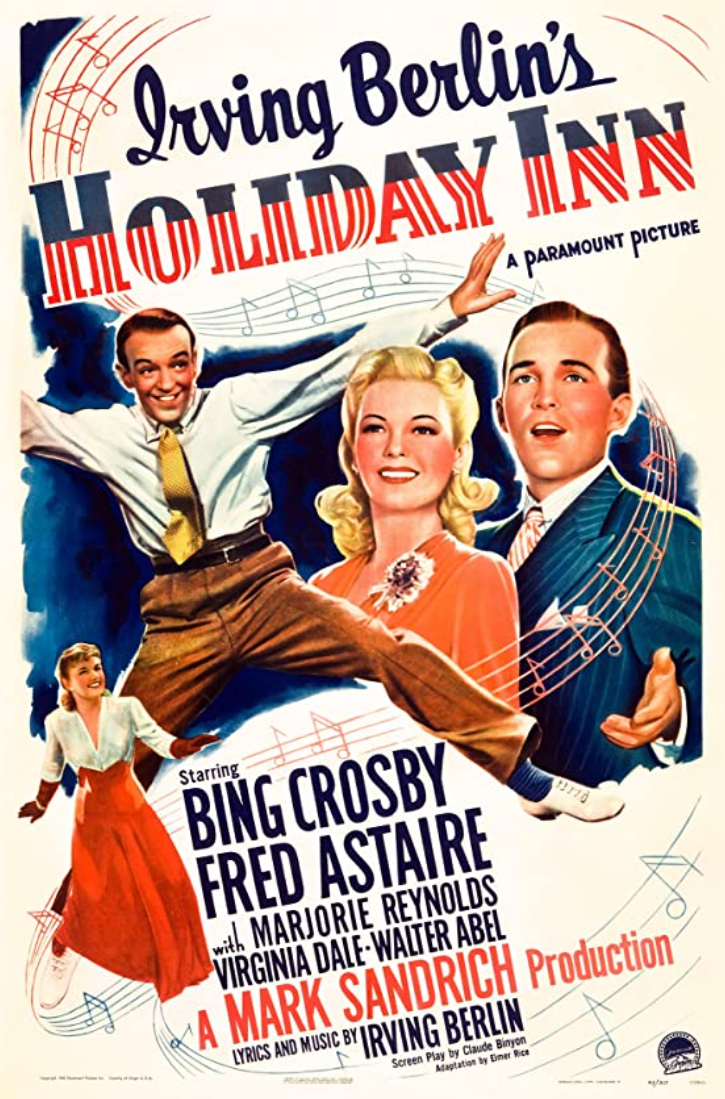
A song-and-dance team (Bing Crosby and Fred Astaire) in love with the same woman (Virginia Dale) part ways when Crosby decides he wants to open a rural inn featuring performances only on holidays. Tensions arise when his new dancing protegee and love interest (Marjorie Reynolds) strikes the fancy of Astaire, who tries to steal her for his own performing — and romantic — purposes.

Genres, Themes, Actors, and Directors:

  • Bing Crosby Films
  • Dancers
  • Fred Astaire Films
  • Love Triangle
  • Musicals
  • Winning Him/Her Back

Response to Peary’s Review:
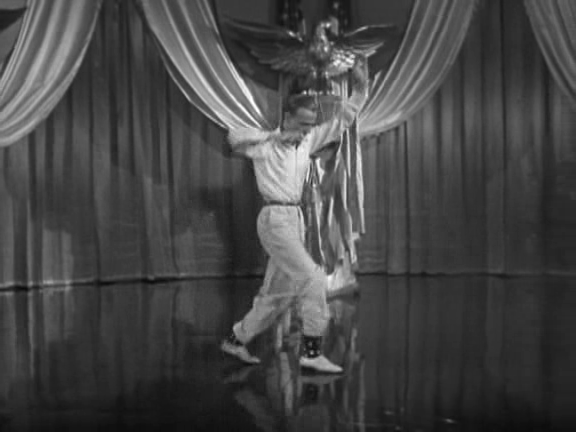
Peary notes that this holiday TV favorite, while “not a great musical”, is nonetheless “enjoyable and extremely popular”, and argues that while the “plot’s a bit foolish… Berlin’s score is lively and patriotic and Crosby’s crooning and Astaire’s dancing are super”. This just about wraps the film up in a nutshell: it’s worthy viewing for Astaire’s knock-out dance routines (his infamous shuffle with firecrackers is particularly stunning, as is his equally infamous “drunk dance”), and most film fanatics will probably be curious to see a movie with such enduring popularity. Yet it’s actually somewhat disturbing to watch Astaire being such a heel; while the entire plot hinges on this inevitability — and we highly suspect the “right man” will win the girl in the end — the ride until then is mildly discomfiting. Equally cringe-worthy is a minstrel number performed on — of all days — Abraham Lincoln’s birthday, in praise of good ol’ Abe, savior of the slaves; and the stereotypical mammy role played by Louise Beavers simply heightens how dated the film really is in some ways. But that Astaire sure can dance (Reynolds is quite good, too), and that Crosby sure can croon, and Berlin wrote a passel of fun tunes to celebrate the major American holidays — so enjoy these elements, and feel free to tune out the rest.

Note: The hotel chain Holiday Inn was indeed named after this movie; see TCM’s article for more trivia.

Redeeming Qualities and Moments:

  • Many enjoyable dance sequences with Astaire

  • A fine Irving Berlin score (including, naturally, the Oscar-winning “White Christmas”)

Must See?
Yes, simply for its historical popularity — and to see the incomparable Fred Astaire at work.

Categories

  • Historically Relevant

Links:

Night of the Living Dead (1968)

Night of the Living Dead (1968)

“Yeah, they’re dead. They’re all messed up.”

Synopsis:
A woman (Judith O’Dea) whose brother (Russell Streiner) has just been killed by zombies seeks refuge in an abandoned house with other refugees — including a determined young man (Duane Jones), a young couple (Keith Wayne and Judith Ridley), and a middle-aged man (Karl Hardman) with a wife (Marilyn Eastman) and an infected daughter (Kyra Schon).

Genres, Themes, Actors, and Directors:

  • George Romero Films
  • Horror
  • Survival
  • Trapped
  • Zombies

Response to Peary’s Review:
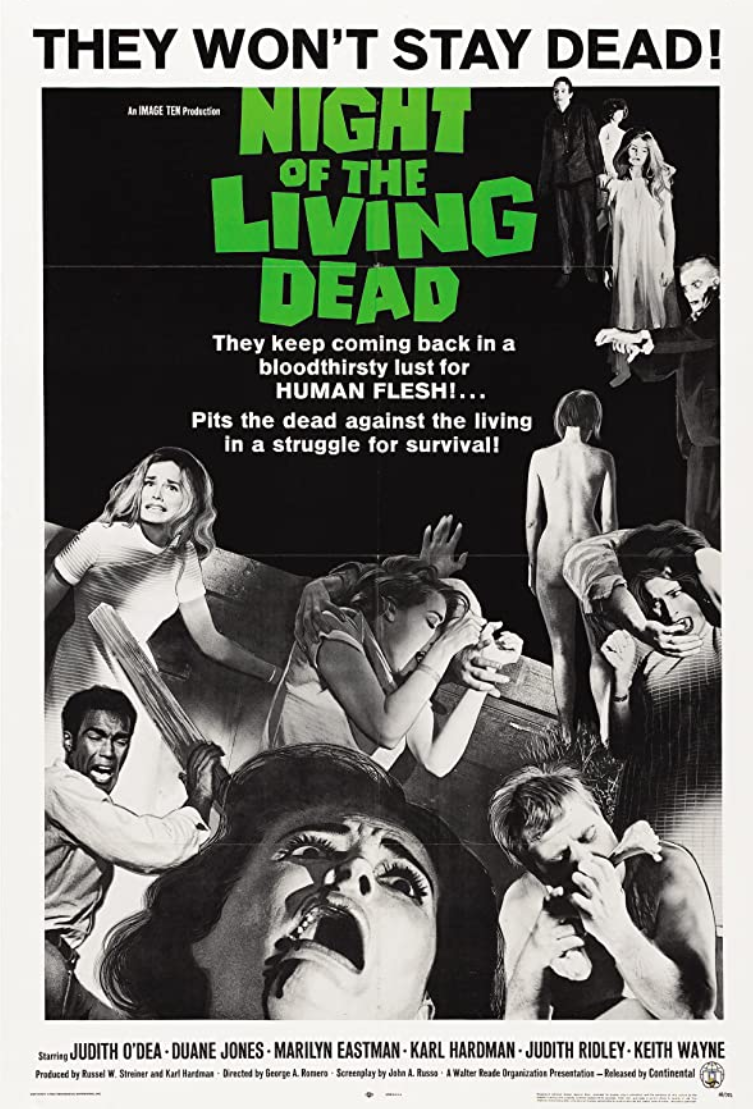
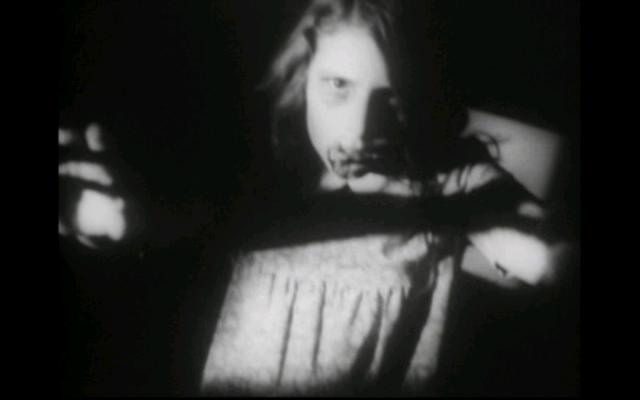
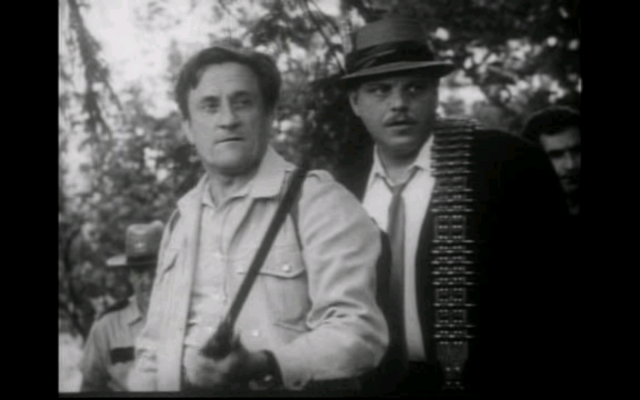
Peary begins his review of George Romero’s cult horror classic by asserting that it “no longer scares the daylight out of viewers because the films it spawned have been much more graphic”, but he notes that “you’ll still be impressed by Romero’s style, wit, and themes”. However, fledgling film fanatics (and those like myself, who don’t tend to seek out horror flicks on a regular basis) will surely find themselves genuinely frightened, at least during the third section of the film, when the situation builds to a feverish pitch, and it becomes increasingly clear that most members of our ensemble cast are not long for this (living) world. Peary calls out “a couple of jump-out-of-your-seat moments featuring ghouls unexpectedly shooting their hands through windows and trying to grab someone”, and these are indeed twitch-inducing — but I find myself even more deeply disturbed by the scenes taking place down in the basement (an inherently scary location).

Peary notes that this “pessimistic and unsentimental” film taps into our most “basic fears: monsters that won’t go away, darkness, claustrophobia”, with “even blood relations [turning] on their loved ones when infected by a ghoul’s bite”. He offers numerous other titles for comparison, noting that NOTLD has “much in common with Invisible Invaders, Carnival of Souls, and, the most obvious influences, Psycho and The Birds;” he points out that in both NOTLD and The Birds, for instance, “people congregate in [a] house for one reason only: fear”. He notes parallels between the literal attacks perpetrated from the outside of the house by the “ghouls”, and the internal verbal sparring between Jones (interestingly, the “script never mentions that [he] is black”) and boorish Hardman — and points out the ironic fact that “Hardman’s plan for survival… turns out to be superior to the implemented plan of Jones”, something apparently not noted by any other critics at the time.

Be forewarned: for first-time viewers, the powerful surprise ending is sure to make you go, “Now wait a minute!!!” It comes as a visceral shock, and was a bold move by screenwriter John A. Russo.

Note:Why does Peary call the zombies “ghouls” throughout his review? I’m really not sure.

Redeeming Qualities and Moments:

  • Effective high-contrast cinematography
  • Dramatic editing and camera angles
  • Some truly frightening images
  • A brutally startling ending, with creative closing credits

Must See?
Yes, as an undisputed horror classic. Discussed at length in Peary’s Cult Movies.

Categories

  • Cult Movie
  • Genuine Classic

(Listed in 1001 Movies You Must See Before You Die)

Links:

Veronika Voss (1982)

Veronika Voss (1982)

“Everything I have belongs to you — all I have left to give you is my death.”

Synopsis:
A morphine-addicted actress (Rosel Zech) in postwar Germany falls in love with a sports journalist (Hilmar Thate) who slowly learns about his new lover’s unhealthy relationship with her doctor (Annemarie Duringer).

Genres, Themes, Actors, and Directors:

  • Actors and Actresses
  • Alcoholism and Drug Addiction
  • Fassbinder Films
  • German Films
  • Has-Beens

Response to Peary’s Review:
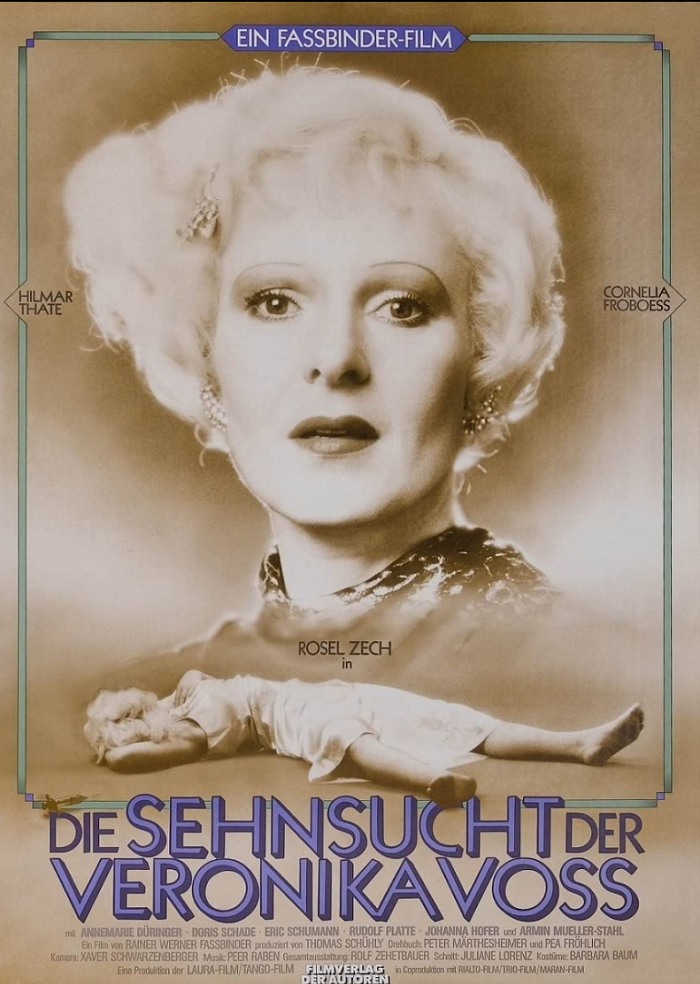
Peary seems less than enthusiastic in his review of this “rare uncomplicated Fassbinder picture”, the “last film in… Fassbinder’s postwar trilogy, following The Marriage of Maria Braun and Lola.” Loosely based on the career of UFA actress Sybille Schmitz, it tells an absorbing tale of addiction, dependence, and domination, with Thate’s everyman journalist finding himself unexpectedly lured into Zech’s troubled existence. Peary cites the film as “of interest mainly because of what Veronika Voss represents”: both “the once great, proud Germany that shrinks away in pain, guilt, and humiliation and the victims of the postwar social order.” In addition, he notes that “Fassbinder, who often identified with his heroines, probably related to Veronika Voss’s drug addiction since his own dependency was increasing at the time”, and conjectures that “perhaps Fassbinder sensed [that] his imminent demise… would be similar to Veronika Voss’s”.

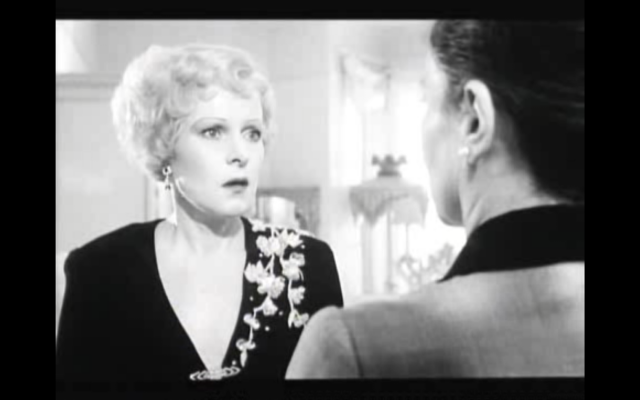
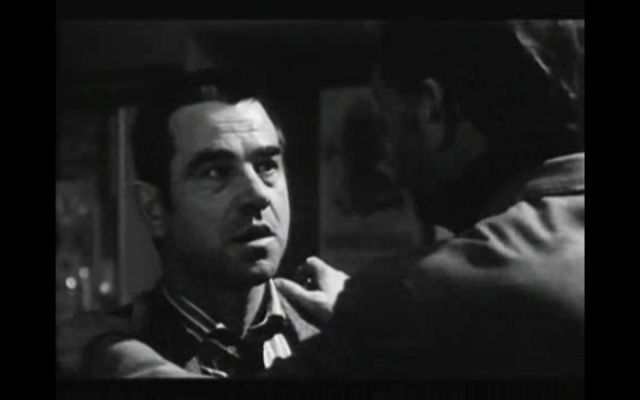
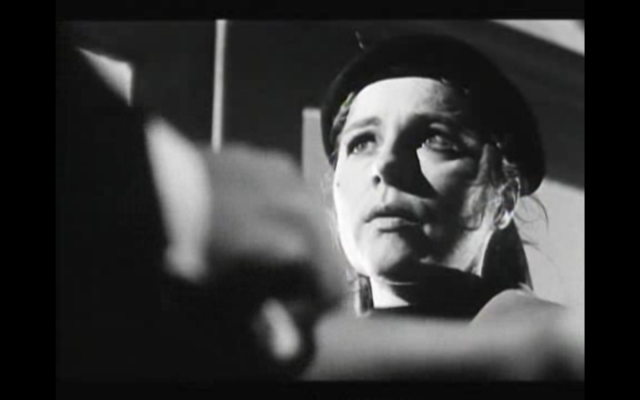
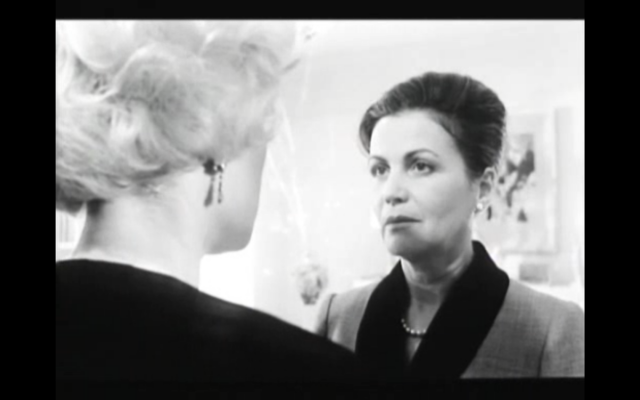
I find the film much more enjoyable than the above analysis would indicate. While it’s certainly of interest on a number of historical and thematic levels, it also simply “works” as a compelling, finely acted character drama. Xaver Schwarzenberger’s rich black-and-white cinematography and Rolf Zehetbauer’s stark set designs (note the blindingly white quarters of Dr. Katz’s “office”) help to create an “other-worldly” post-WWII landscape, one which resonates effectively with Voss’s warped existence. Indeed, the film is a fascinating combination of standard melodrama (Fassbinder was heavily influenced by Douglas Sirk) and post-modern surrealism: in one of the movie’s strangest scenes, for instance, Zech openly propositions Thate in front of his girlfriend (Cornelia Froboess), who thus knows about his betrayal yet ends up assisting Thate in his attempt to uncover the truth behind Zech’s mysterious relationship with her doctor (Duringer). Film fanatics — whether fans of Fassbinder’s oeuvre or not — are sure to find this one worth a look.

Note: Parallels are often made between this and Billy Wilder’s masterful Sunset Boulevard, given that both Zech’s Veronika Voss and Gloria Swanson’s Norma Desmond are aging “has beens”, desperate for a resurgence of their failing careers, who lure an impressionable young man into their troubled lives. This is definitely the darker of the two.

Redeeming Qualities and Moments:

  • Rosel Zech as Veronika Voss
  • Hilmar Thate as Robert Krohn
  • Cornelia Froboess as Henriette
  • Annemarie Duringer as Dr. Katz
  • Striking b&w cinematography
  • Effectively stark sets

Must See?
Yes, as one of Fassbinder’s most compelling films.

Categories

  • Foreign Gem
  • Important Director

Links:

Altered States (1980)

Altered States (1980)

“There’s a physiological pathway to our earlier consciousnesses. There has to be.”

Synopsis:
In search of the Ultimate Truth, a determined psychiatrist (William Hurt) takes hallucinatory drugs and undergoes sensory deprivation — but when he starts experiencing physiological changes, his wife (Blair Brown) and colleagues (Bob Balaban and Charles Haid) begin to fear for his safety.

Genres, Themes, Actors, and Directors:

  • Ken Russell Films
  • Mad Doctors and Scientists
  • Marital Problems
  • Multiple Personalities
  • Science Fiction
  • William Hurt Films

Response to Peary’s Review:
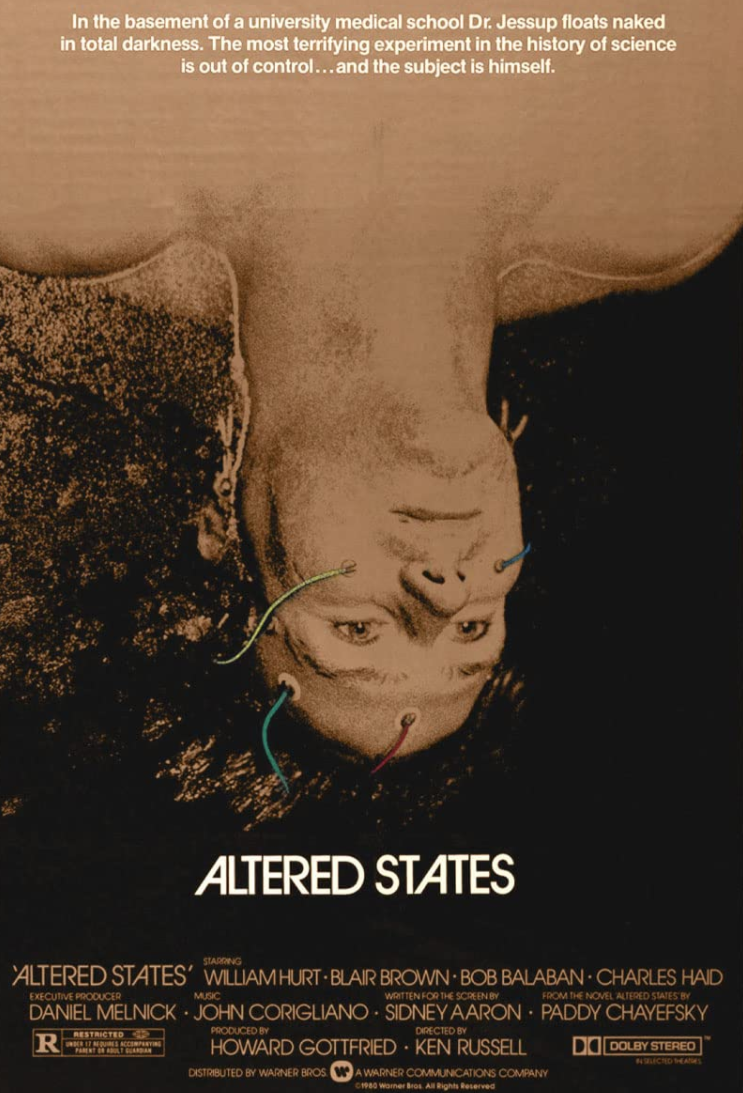
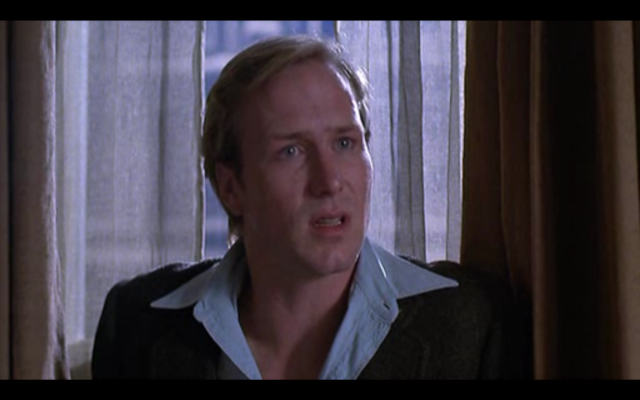
Peary accurately labels this surreal, mind-bending cult favorite by director Ken Russell — based on a novel by Paddy Chayefsky — a “Jekyll-and-Hyde variation” which “takes viewers on [an] ambitious, if hokey, exploration of man’s origins” and “advances [the] intriguing theory that there can be genetic change if one’s consciousness is manipulated”. Through foolhardy experimentation with hallucinatory drugs and sensory deprivation — Chayefsky’s story was purportedly inspired by “John Lilly’s mind-expansion experiments in the mid-sixties” — Hurt’s Dr. Jessup actually turns into a primitive apeman (played by dancer Miguel Godreau) and eventually regresses into an “embryonic state”. Given this fascinating sci-fi/horror premise, it’s too bad that “towards the end, the storyline drops several intellectual planes” and is content with making “simplistic points” about the nature of Truth and Life. Without giving away spoilers (like Peary does), suffice it to say that the film “unfortunately avoids controversy” with an overly pat ending that is perhaps meant to appeal to mass audiences, but will likely alienate the type of viewers most drawn towards this type of heady material.

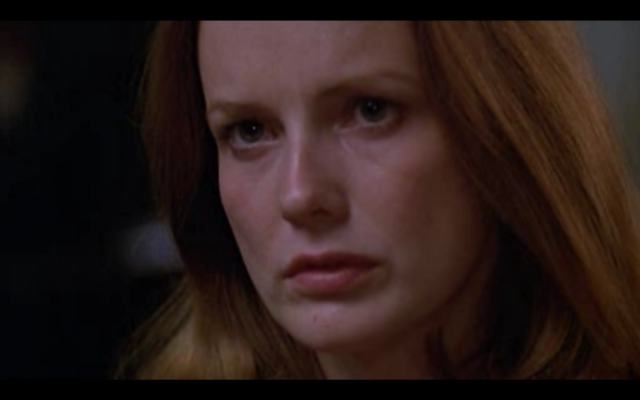
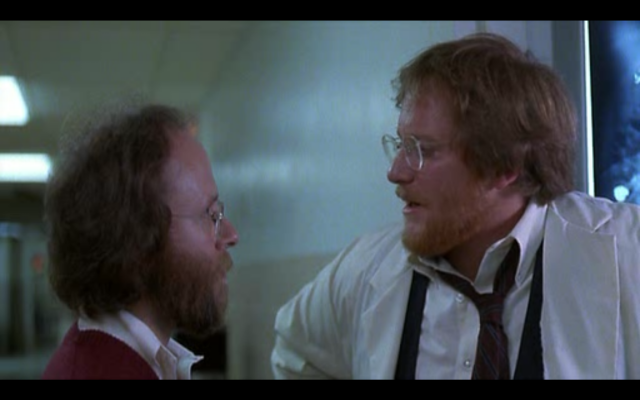
Peary does point out, however, that “there is much that is noteworthy” in the film — including its “blasting soundtrack” (which “won the picture an Oscar”), special effects by Bran Ferren (which Peary argues are “often ill-chosen but dynamic”, though I found them appropriately surreal throughout), and the “remarkable make-up work” of “the legendary Dick Smith” (who worked on, among many other titles, The Exorcist and Scanners — click here for his website). Peary notes that Russell “keeps things under surprising control for a change”, and does wonders with Chayefsky’s “overwritten script”; in his more detailed analysis of the film for his Cult Movies 2 book, Peary explains that Russell “solved much of [Chayefsky’s] overwritten dialogue problem by having his actors talk so quickly that lines that would make no sense to the average viewer anyway are lost” — a technique which works remarkably well, and actually helps to impress upon us the essential fact that “the characters are loquacious about erudite subjects”. As Peary notes, the fine ensemble cast “are all believable, and smooth, as they deliver intellectual diatribes” (with Blair particularly noteworthy in what could have been a somewhat thankless role). Despite its flaws, then, film fanatics will surely want to check out this audacious, visually evocative, finely acted headtrip at least once.

Redeeming Qualities and Moments:

  • William Hurt as Eddie Jessup
  • Blair Brown as Emily Jessup
  • Bob Balaban and Charles Haid as Eddie’s colleagues
  • Memorable hallucinatory imagery
  • Dick Smith’s makeup
  • John Corigliani’s Oscar-nominated score

Must See?
Yes, as a cult favorite by a famed director.

Categories

  • Cult Movie
  • Important Director

Links:

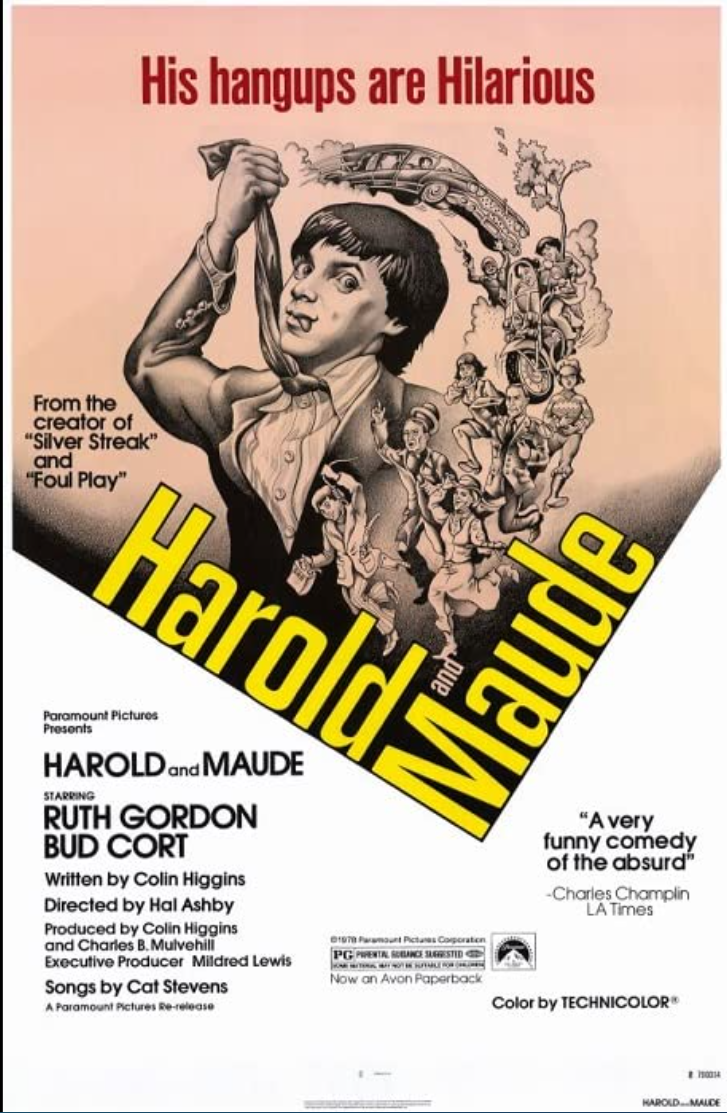
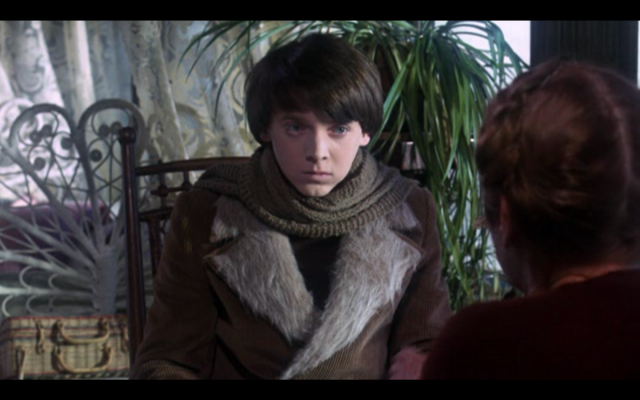
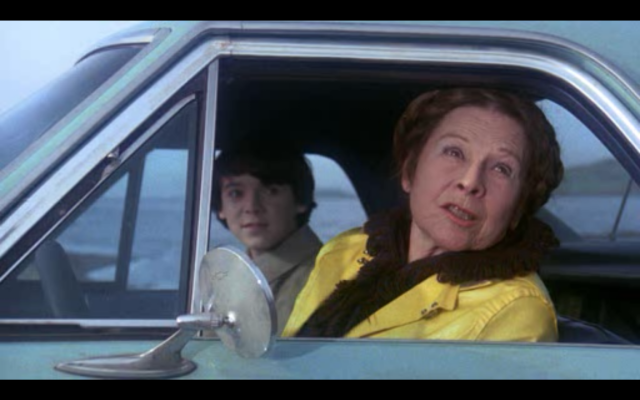
Harold and Maude (1971)

Harold and Maude (1971)

“Tell me about yourself. What do you do when you aren’t visiting funerals?”

Synopsis:
The depressed grown son (Bud Cort) of an overbearing mother (Vivian Pickles) meets a vivacious older woman (Ruth Gordon) and falls in love.

Genres, Themes, Actors, and Directors:

  • Black Comedy
  • Bud Cort Films
  • Death and Dying
  • Hal Ashby Films
  • May-December Romance
  • Misfits
  • Nonconformists
  • Ruth Gordon Films
  • Suicide

Response to Peary’s Review:
As Peary notes, this black comedy by director Hal Ashby remains “one of the most popular of all cult movies” — one which, unlike King of Hearts (another counter-culture hit of the era), actually “holds up quite well today”. Peary argues that it possesses an “uplifting quality, a breeziness, a spark, [and] a wonderful sense of successful rebellion that more than compensates for first-time screenwriter Colin Higgins’s self-indulgences, puerile moments, and misdirected flights of fancy”. When I first saw Harold and Maude as a teenager, it hit me in just the right way: I could relate (along with so many others) to Harold’s sense of repression, and was truly taken with the film’s uniquely perverse sense of black humor; each of Harold’s infamous “faux suicide” attempts — and his mother’s utterly nonchalant responses to them — took me by giddy surprise. Meanwhile, I remember being genuinely inspired by the “simple things” Maude teaches Harold: “not to back away from life, to be an individual, to experiment, to take chances, and to sing and dance and play music”.

Watching it again years later, I’m much more aware of the script’s heavy-handed faults, yet there’s still much here to take delight in. Cort and Gordon are perfectly cast as cinema’s most enduring odd couple, epitomizing a “May-December romance” taken to chronological extremes (Gordon’s 80-year-old character could actually be 20-year-old Cort’s great-grandmother — just chew on that one for a while). The suicide attempts remain clever and often laugh-out-loud funny; my particular favorite has Harold committing elaborate hara-kiri in front of his third blind date, an aspiring actress named Sunshine (Ellen Geer) who — rather than reacting with horror like her predecessors — shrieks with delight and proceeds to join Harold in his dramatics (though I wish the scene went on for a bit longer — I’d like to know what happened next!). And it’s true, as Peary notes, that there are “touching glimpses” throughout the film which reveal the shadow-side of Maude’s exuberance for life — though along with many others, I find the film’s surprising ending a bit “infuriating”, and am not quite sure I agree with Peary that it “makes sense”.

P.S. In both his GFTFF and Cult Movies reviews of the film, Peary makes an interesting comparison between Harold and Maude and Val Lewton’s Curse of the Cat People, noting the parallels between Ruth Gordon and Simone Simon, who becomes “an unhappy little girl’s imaginary playmate, her one friend, until the girl can turn elsewhere”.

Redeeming Qualities and Moments:

  • Bud Cort as Harold
  • Ruth Gordon as Maude (Peary nominates her as best actress of the year in his Alternate Oscars)
  • Vivian Pickles as Harold’s mom
  • Harold’s faux suicide attempts
  • Cat Stevens’ “terrific, cheery” score

Must See?
Yes, as a genuine cult favorite.

Categories

  • Cult Movie

(Listed in 1001 Movies You Must See Before You Die)

Links:

Heartbreak Kid, The (1972)

Heartbreak Kid, The (1972)

“I married a grouch!”

Synopsis:
A newlywed (Charles Grodin) falls in love with a gorgeous blonde (Cybill Shepherd) he meets on his honeymoon, and suddenly realizes he should never have married his wife (Jeannie Berlin).

Genres, Themes, Actors, and Directors:

  • Black Comedy
  • Cross-Class Romance
  • Cybill Shepherd Films
  • Eddie Albert Films
  • Elaine May Films
  • Marital Problems
  • Neil Simon Films
  • Newlyweds

Response to Peary’s Review:
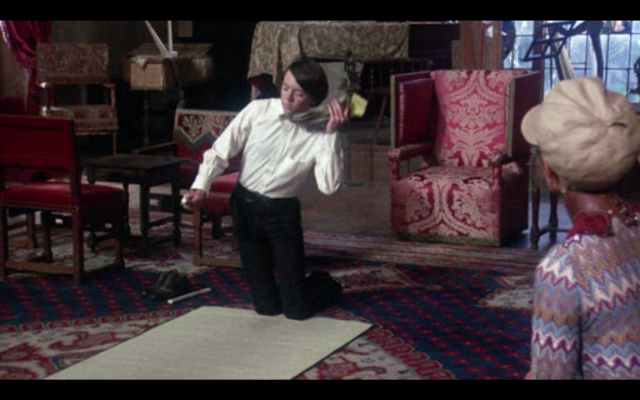
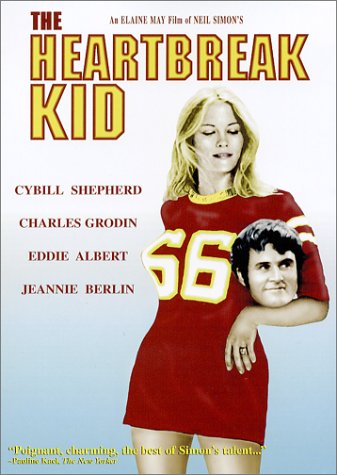
Peary begins his review of The Heartbreak Kid — director Elaine May’s second feature film — by noting the “interesting phenomenon” of “Jewish boys from the East [who] may end up marrying Jewish girls from the East” but “invariably get wild crushes on blond Midwest WASPs” — exactly the scenario played out in this wickedly funny black comedy, scripted by Neil Simon and based on the short story “A Change of Plan” by Bruce Jay Friedman. As we watch this “series of short skits strung together, in which Grodin somehow manages again and again to talk, through prime BS, a bad situation into his favor”, we do indeed “shake our heads because we can’t believe he has the gall to say what we’re hearing, or [to be] so tactless and insensitive, or… to get away with what he does”.

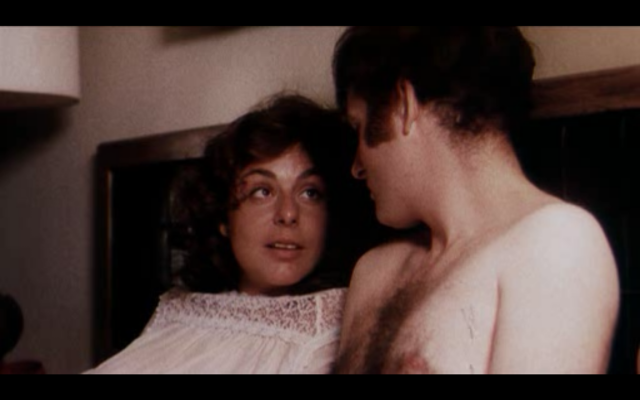
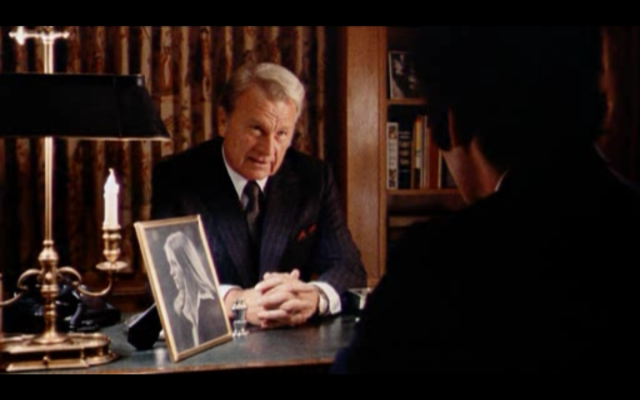
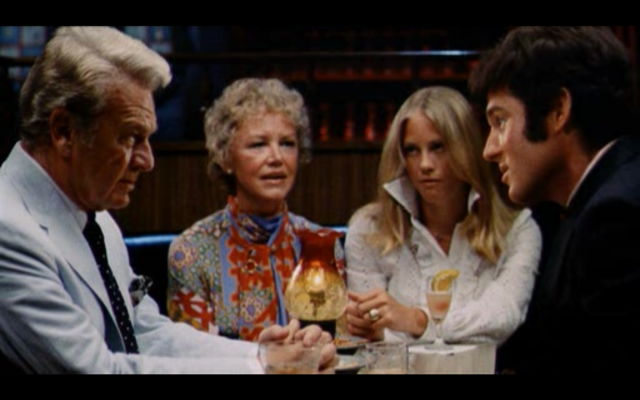
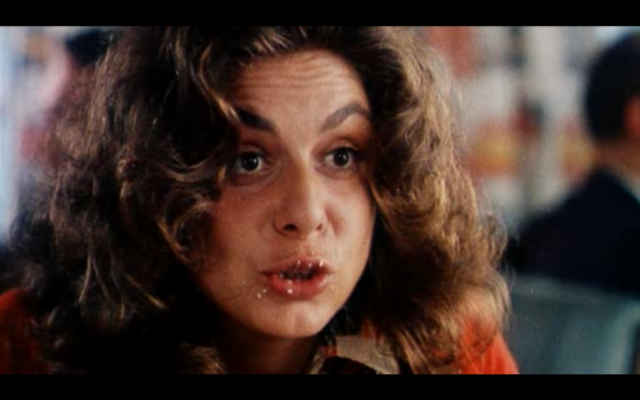
Indeed, it’s deeply discomfiting to find oneself laughing at Grodin’s bald-faced deceit towards his hapless wife, who becomes trapped in the ultimate living nightmare during what should be the happiest time of her life. Nonetheless, the film is so full of “hilarious, sharply satirical scenes” — Berlin irritating Grodin by drawing circles on his chest; Berlin smearing egg salad all over her face; Grodin waxing enthusiastic about the humble pleasures of midwestern food — that we can’t help remaining glued to the screen, curious to know what will happen next to our determined anti-hero. Deftly directed by May, and wonderfully acted by the “superb cast” — including Jeannie Berlin in what should have been a career-defining role (what happened?), Eddie Albert in a priceless performance as Kelly’s WASPy father (who solemnly asserts he wouldn’t approve of Grodin “if you tied me to a horse and dragged me forty miles by my tongue”), and Audra Lindley as Kelly’s “easily impressed mother” (watch her quietly hilarious silent reactions).

Note: The parallels between this and May’s feature debut, A New Leaf (1971), are startlingly clear: Grodin’s Lenny Cantrow and Walter Matthau’s Henry Graham are both arrogant, self-centered men who make life miserable for their new wives (Jeannie Berlin and Elaine May, respectively) — both of whom are sloppy, mildly irritating, but ultimately utterly endearing to audiences. Knowing Berlin is May’s real-life daughter makes the parallels even eerier.

Redeeming Qualities and Moments:

  • Charles Grodin as Lenny
  • Jeannie Berlin as Lila
  • Eddie Albert as Kelly’s disapproving father
  • Audra Lindley as Kelly’s mother
  • Many humorously memorable scenes

  • Neil Simon’s dark but often hilarious screenplay:

    “There is no deceit in the cauliflower.”

Must See?
Yes, as a disturbingly provocative dark comedy.

Categories

  • Good Show

Links:

Mixed Blood (1984)

Mixed Blood (1984)

“You must always do what your mother tells you, you hear? Always.”

Synopsis:
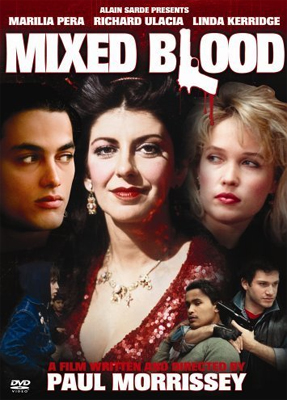
The leader (Marilia Pera) of a Brazilian drug gang is disturbed when her dim-witted son (Richard Ulacia) falls for the girlfriend (Linda Kerridge) of her supplier (Ulrich Berr); meanwhile, tensions with a rival Latino gang continue to escalate.

Genres, Themes, Actors, and Directors:

  • Drug Dealers
  • Gangs
  • Grown Children
  • New York City
  • Paul Morrissey Films
  • Rivalry

Response to Peary’s Review:
In his review of this darkly satirical gangland drama by writer/director Paul Morrissey — which he refers to as “unusual, to say the least” — Peary analyzes it as a “weird variation on The Godfather,” and conducts a point-by-point comparison of the two films. He notes, for instance, that “again we have a territorial war between crime ‘families’; again the warriors sleep on mattresses on the floor”, etc. It’s an interesting set of associations — but the obvious difference between the two films is that The Godfather endures as an iconic classic of cinema, while Mixed Blood will likely only be of interest to fans of Morrissey’s eclectic oeuvre — or those curious to see Marilia Pera (so effective as a prostitute in 1981’s Pixote) in a truly unique lead performance. Playing a “middle-aged, eccentric gypsy… who sings Carmen Miranda songs”, her presence is never anything other than intriguing; listen to her strange line delivery, for instance, as she talks about how many funerals she’s had to endure over the years.

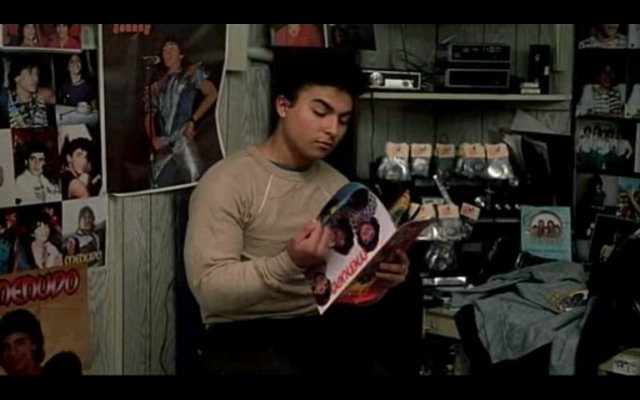
As Peary notes, while the “extreme violence” of the film can be off-putting, the “exaggerated gore and bizarre situations” help to mediate this somewhat. Indeed, Mixed Blood is an odd mixture of time-capsule realism — one scene actually takes place in a store dedicated exclusively to Menudo memorabilia! — and satire (note the drug-dealing scene, which shows purchases being made at a the equivalent of a lemonade stand). Peary argues that while the film “doesn’t always work”, it’s “exciting and funny, in unusual ways” — a sentiment I can’t quite agree with, though I’ll agree it’s worth a one-time look for Pera alone.

Redeeming Qualities and Moments:

  • Marilia Pera as Rita La Puenta
  • Effectively seedy location shooting throughout “Alphabet City”
  • An interesting time-capsule glimpse of 1980s New York

Must See?
No, though it’s worth a look simply for Pera’s performance.

Links:

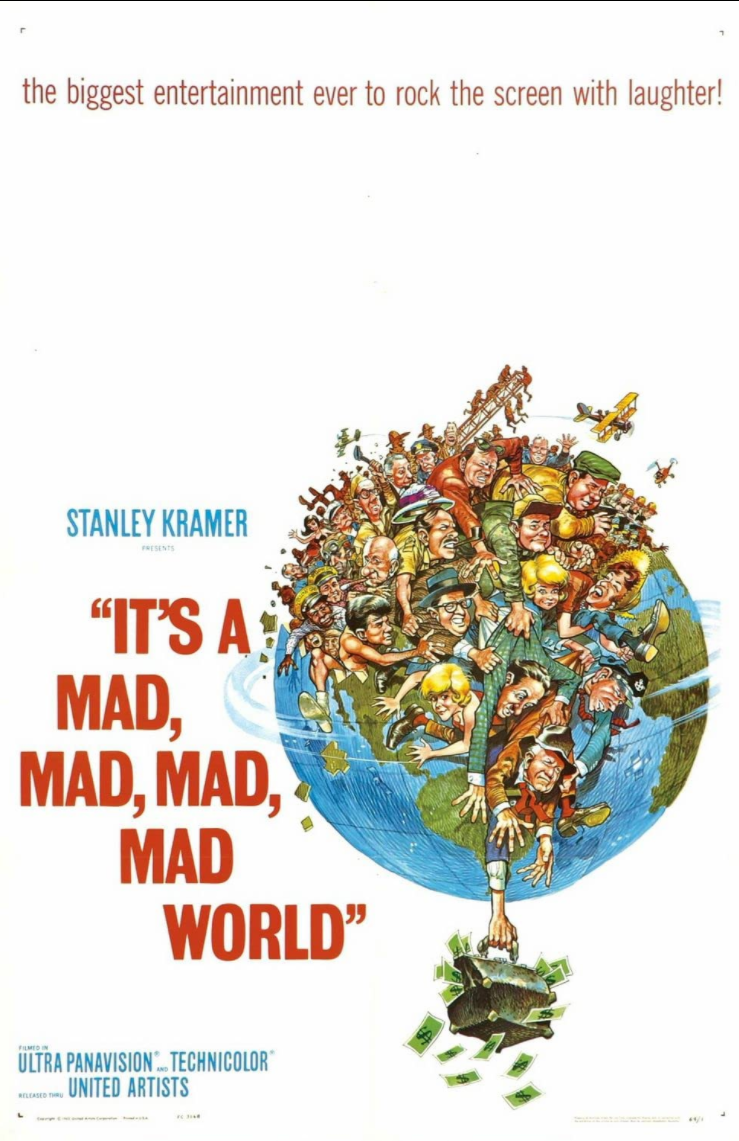
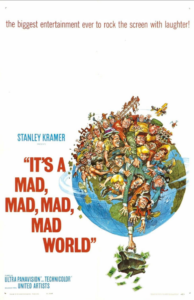
It’s a Mad Mad Mad Mad World (1963)

It’s a Mad Mad Mad Mad World (1963)

“There’s money in this for all of us. Right?”

Synopsis:
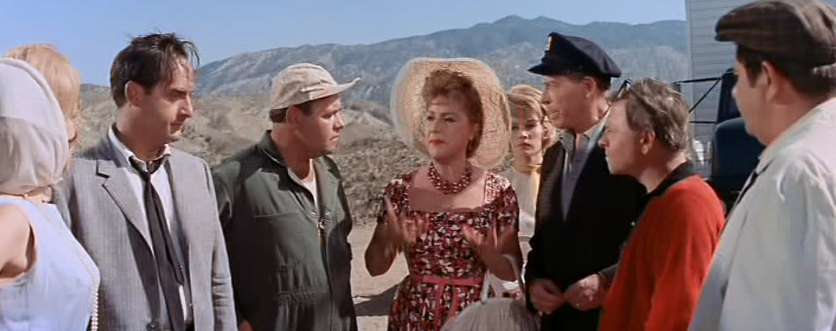
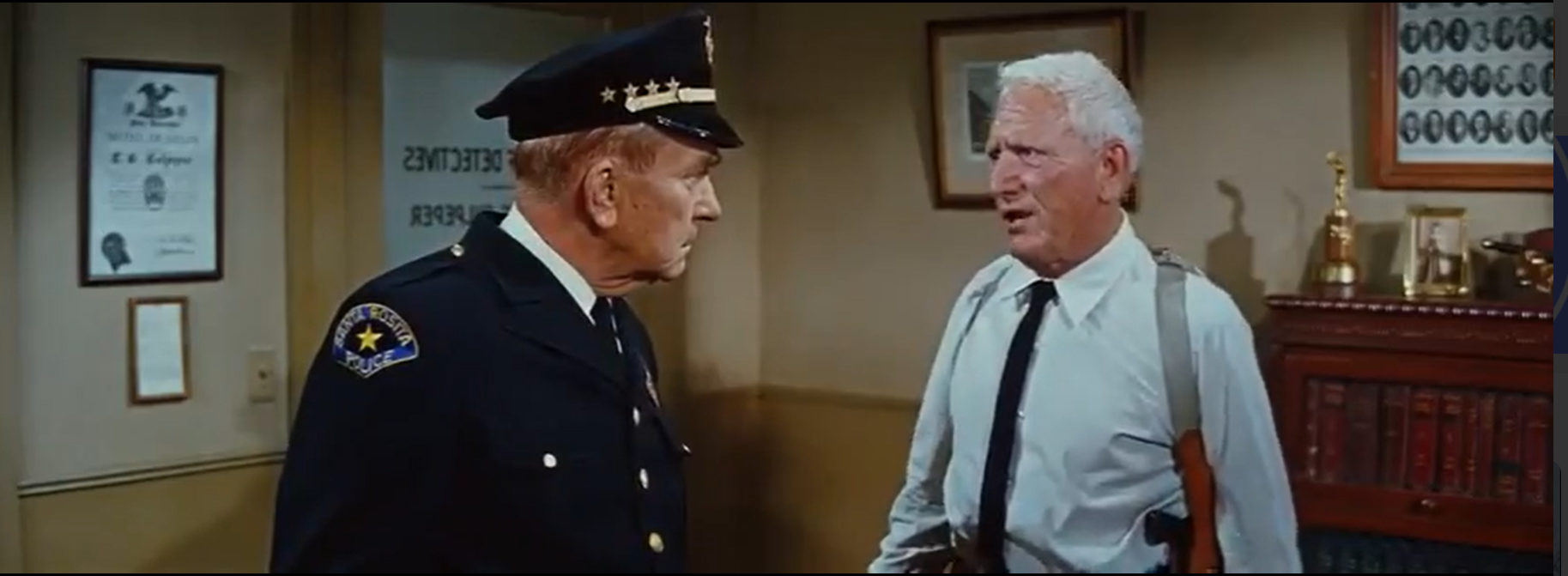
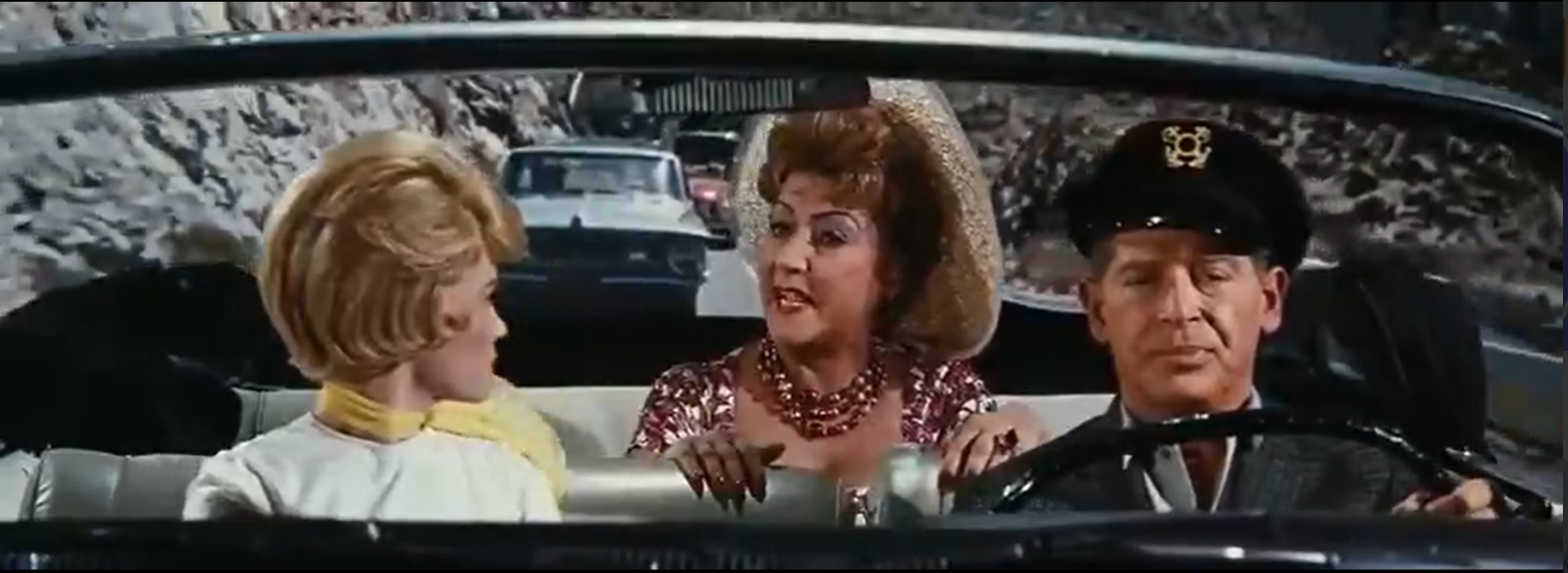
As he lies dying from a car crash, an ex-con (Jimmy Durante) tells a motley group of witnesses — Mickey Rooney, Buddy Hackett, Sid Caesar, Edie Adams, Jonathan Winters, Milton Berle, Dorothy Provine, and Ethel Merman — about a stash of money he has hidden under a “giant W”. Soon they are in a fierce competition — secretly overseen by a police detective (Spencer Tracy) — to be the first to find it.

Genres, Themes, Actors, and Directors:

  • Car Chase
  • Comedy
  • Detectives and Private Eyes
  • Ensemble Cast
  • Greed
  • Hidden Treasure
  • Mickey Rooney Films
  • Peter Falk Films
  • Spencer Tracy Films
  • Stanley Kramer Films
  • Zasu Pitts Films

Response to Peary’s Review:
Peary is mostly enthusiastic in his GFTFF review of this all-star cult comedy — produced and directed by Stanley Kramer as a “salute to slapstick” — which was one of just five feature films shot in a single-lens version of Cinerama. He argues that the “all star cast” — most of whom are “known for their verbal skills” — “prove equal to the task”; that “there are some spectacular stunts and some imaginative plot twists”; and that while the film may “be too long”, this nonetheless “allows all the stars ample time to be in the spotlight”. He notes that while “much humor… falls flat”, there is “also a great deal of hilarity in [the] film, both visual and verbal”, with Kramer effectively demonstrating “that old, familiar slapstick bits are still funny”. Finally, he argues that Kramer miraculously “manages to maintain a frantic pace throughout” the film’s lengthy (nearly three hours — and it was originally much longer!) running time.

In his later, more detailed analysis of the film written for Cult Movies 3, however, Peary is suddenly much more critical. He claims that … Mad World “makes a mockery of humanity” given that the individuals seeking the hidden money are either “stupid, loud, vulgar, mean, corrupt, shameless, and[/or] greedy”. He points out that we never really feel much “affection” for any of the characters — other than Spencer Tracy, for a little while:
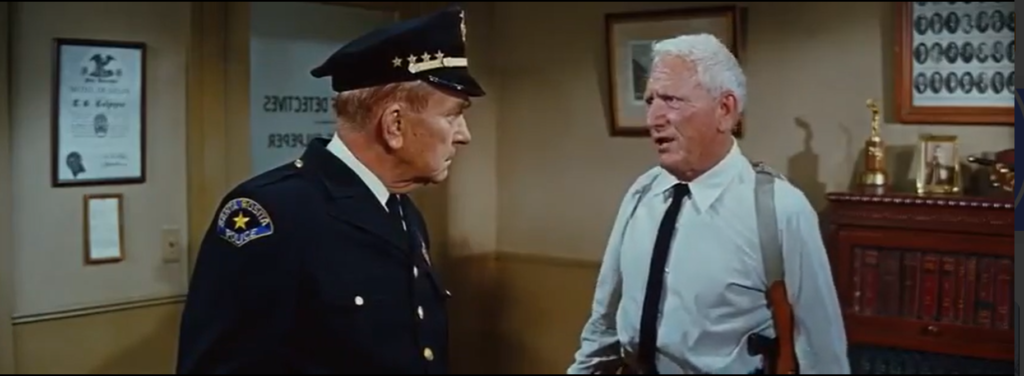
— and that “we miss a sympathetic character to root for, someone who has a noble purpose for acquiring the money”. In this review, he argues that despite its purported aim to serve as an homage to silent slapstick films, the film is “filled with superfluous dialogue” used “to camouflage… uninspired sight gags”, which in turn lack “intricate pacing” or any “build to a big-laugh payoff”. He posits that “the wrong types of comedians were cast” (he’s especially disparaging of Rooney and Hackett, who he claims “should have been replaced by… two much zanier performers”), and, in sum, refers to … Mad World as a “disappointing, wrongly conceived film” — though one which is “by no means a total disaster”.

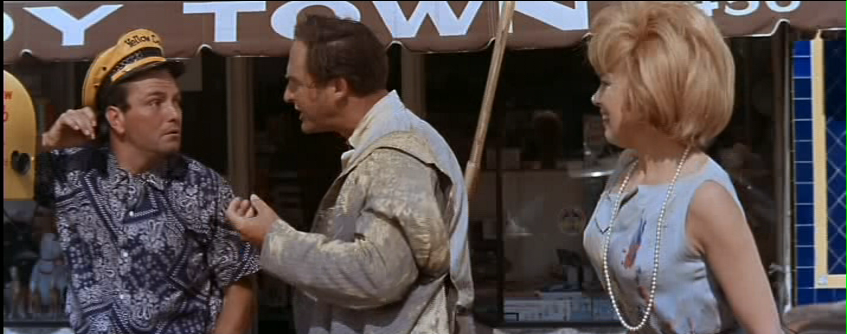
After reading both reviews – and scratching my head plenty over how one reviewer could offer such widely divergent takes on the same film — I found myself agreeing primarily with Peary’s Cult Movies 3 review. While I find the premise and plot twists remarkably clever — and enjoyed “watching for cameos from the likes of Jerry Lewis” and others — overall there’s little here to actively engage anyone but cult followers of the film. And while it’s true, as Peary notes, that the lengthy running time allows most of the stars ample time to shine, none of them are at their comedic best. Sid Caesar, just for instance — so brilliant in his sketch comedy series (see Ten From Your Show of Shows, 1973) — is merely serviceable here playing a married man trying to blast his way out of a locked hardware store; and despite Peary’s claims that Ethel Merman was a “good sport to play such a character”, her outrageously obnoxious mother-in-law is someone you desperately hope to see obliterated within a few moments of her arrival on-screen.
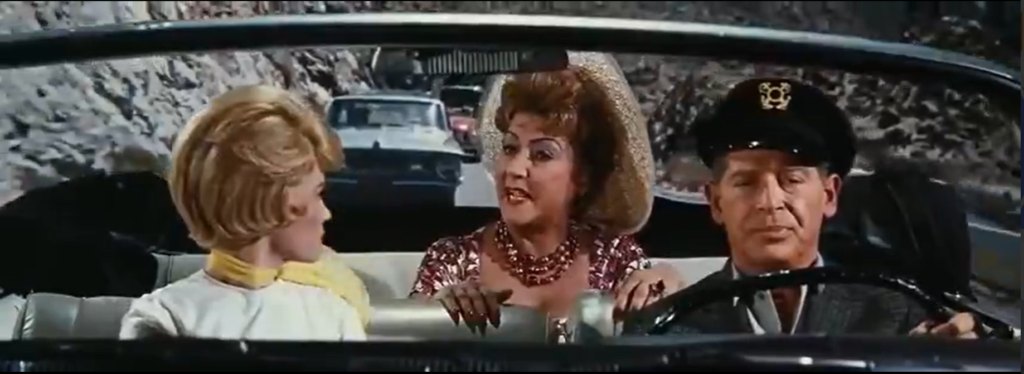
Meanwhile, all the stunts and sight gags go on for about three times as long as they need to — and I’ll agree with Peary that they’re mostly uninspired. The most amusing sequences — indeed, the only ones that had me giggling out loud — involve Dick Shawn as Merman’s grown son, who’s first seen dancing groovily with his robotic girlfriend (Barrie Chase), then sobbing protectively as he races to “rescue” his mother.
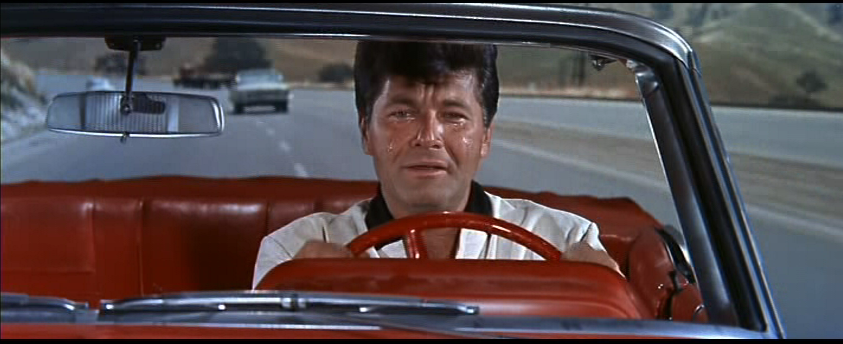
While I appreciate this film on multiple levels (including its historical value as a Cinerama production), it’s ultimately not one I’ll be returning to again any time soon. Click here for a fun set of comparative photos with actual locations of all major sequences revealed.

Note: Interestingly, Peary points out that this “was one of the first films since Griffith’s 1916 Intolerance to cut back and forth between several story lines”; it’s strange to think that so many years went by before this practice began to become as commonplace as it is today.

Redeeming Qualities and Moments:

  • A clever premise
  • Fun cameos by a plethora of comedic greats
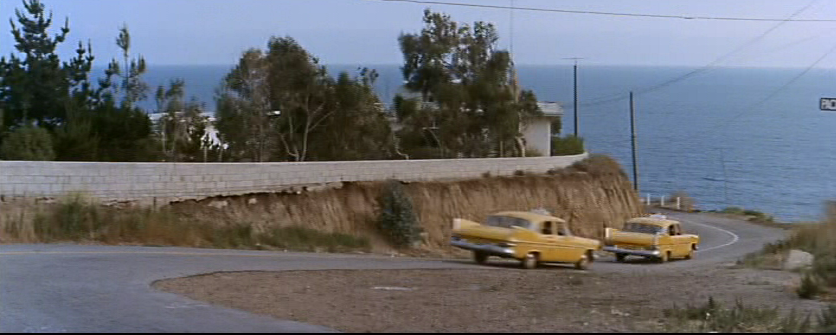
  • Fine location shooting throughout Southern California
Must See?
Yes, simply as a cult favorite with historical importance.

Categories

  • Cult Movie
  • Historically Relevant

Links: