Blackboard Jungle (1955)

Blackboard Jungle (1955)

“This is the garbage can of the educational system.”

Synopsis:
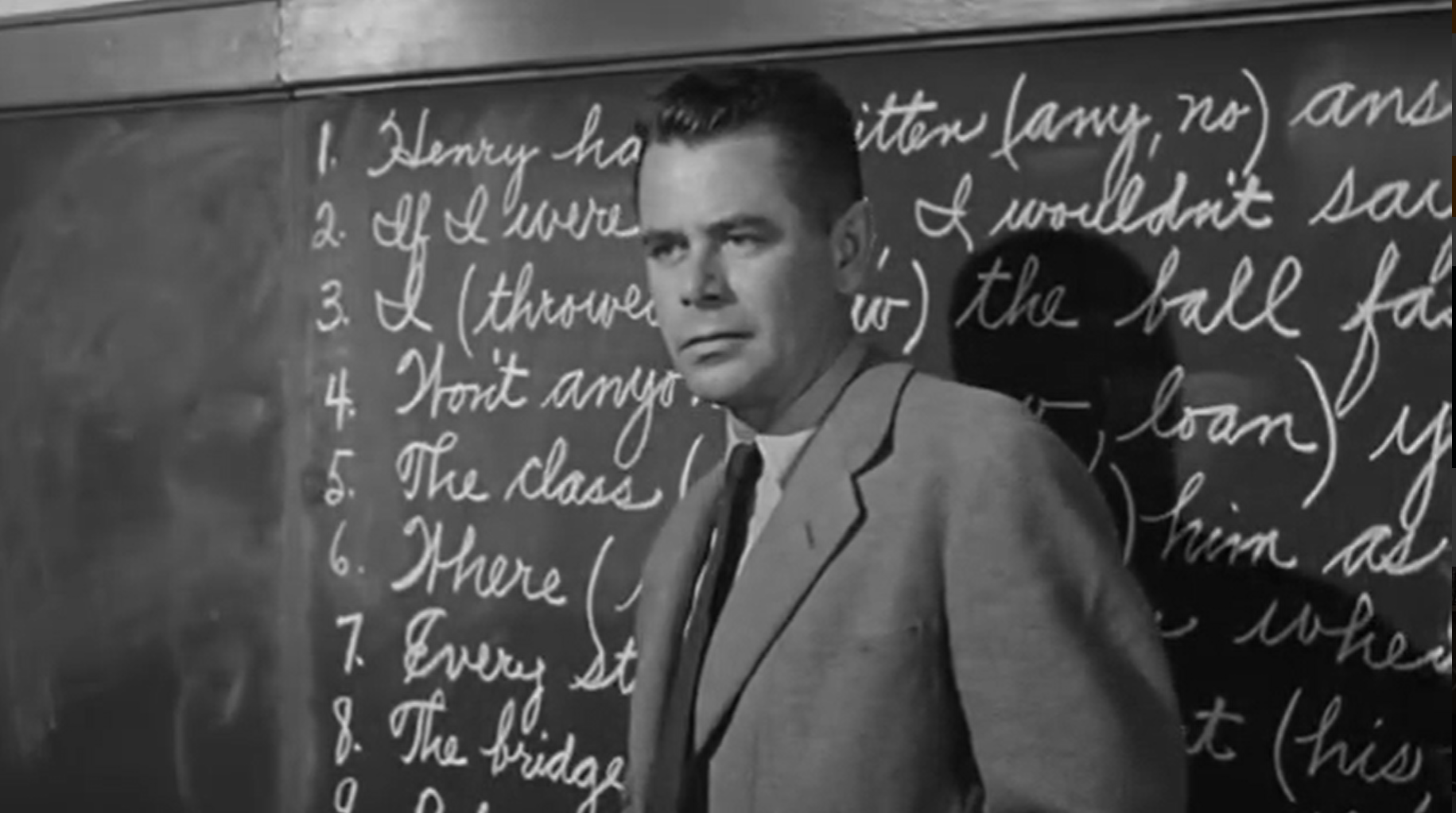
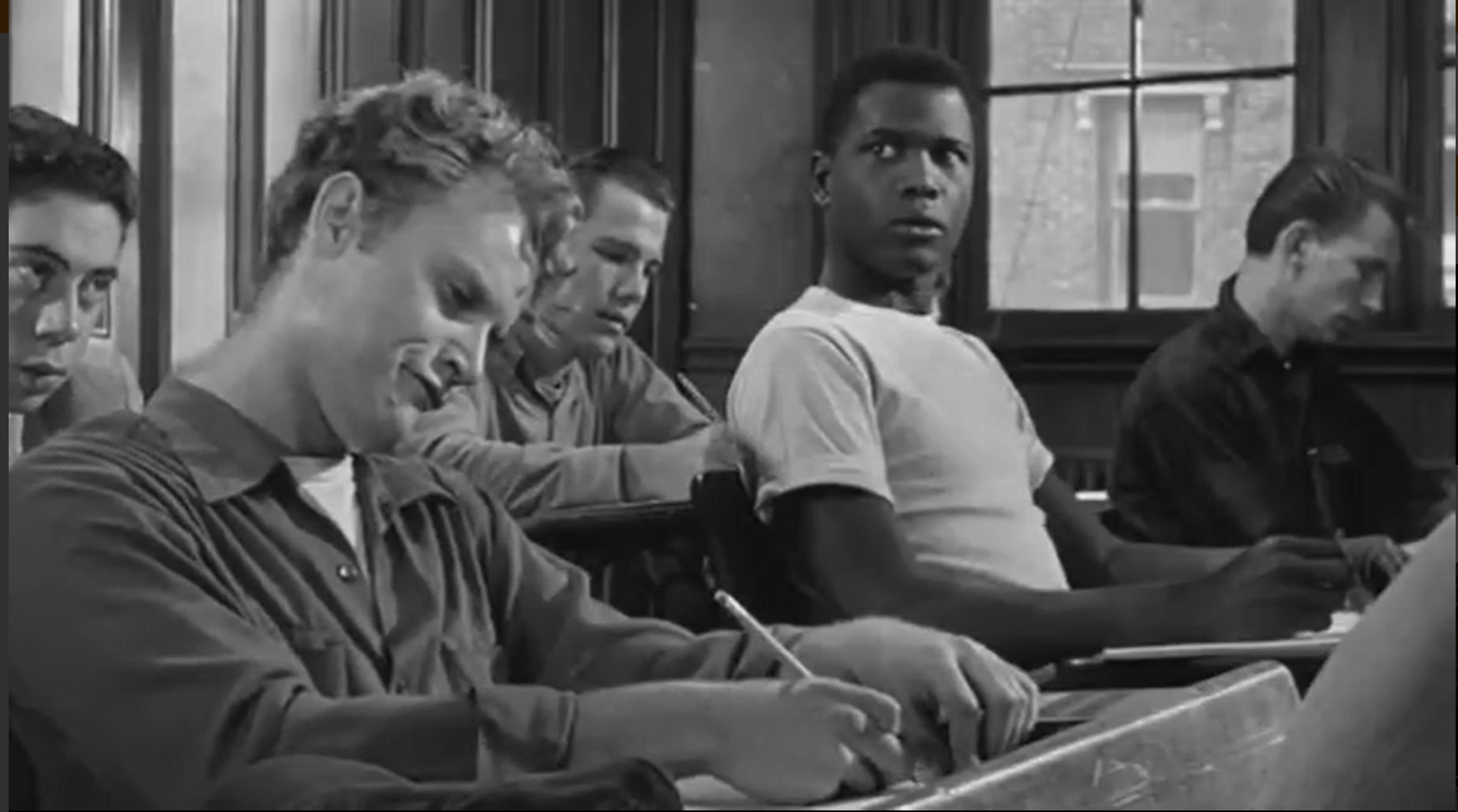
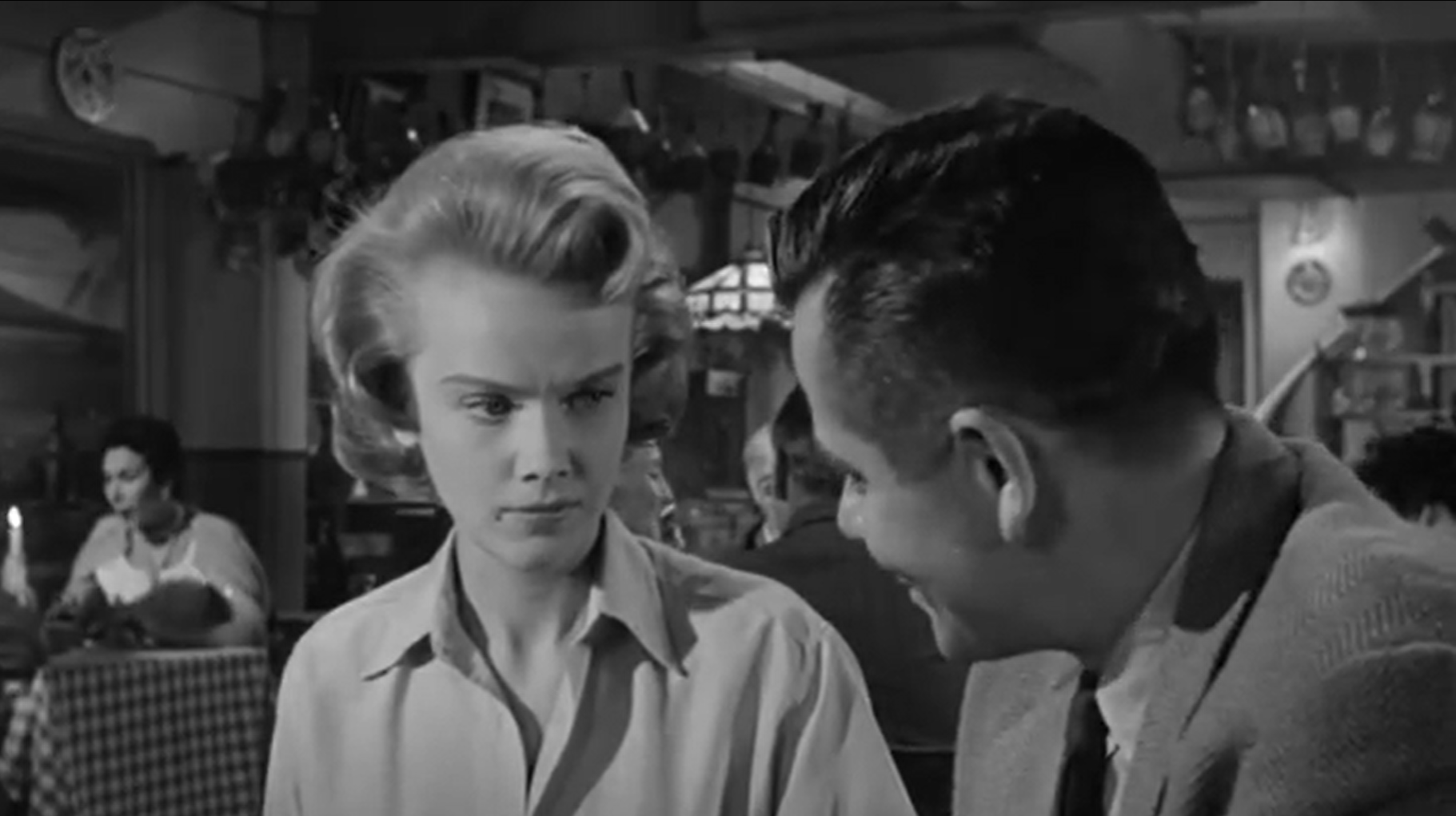
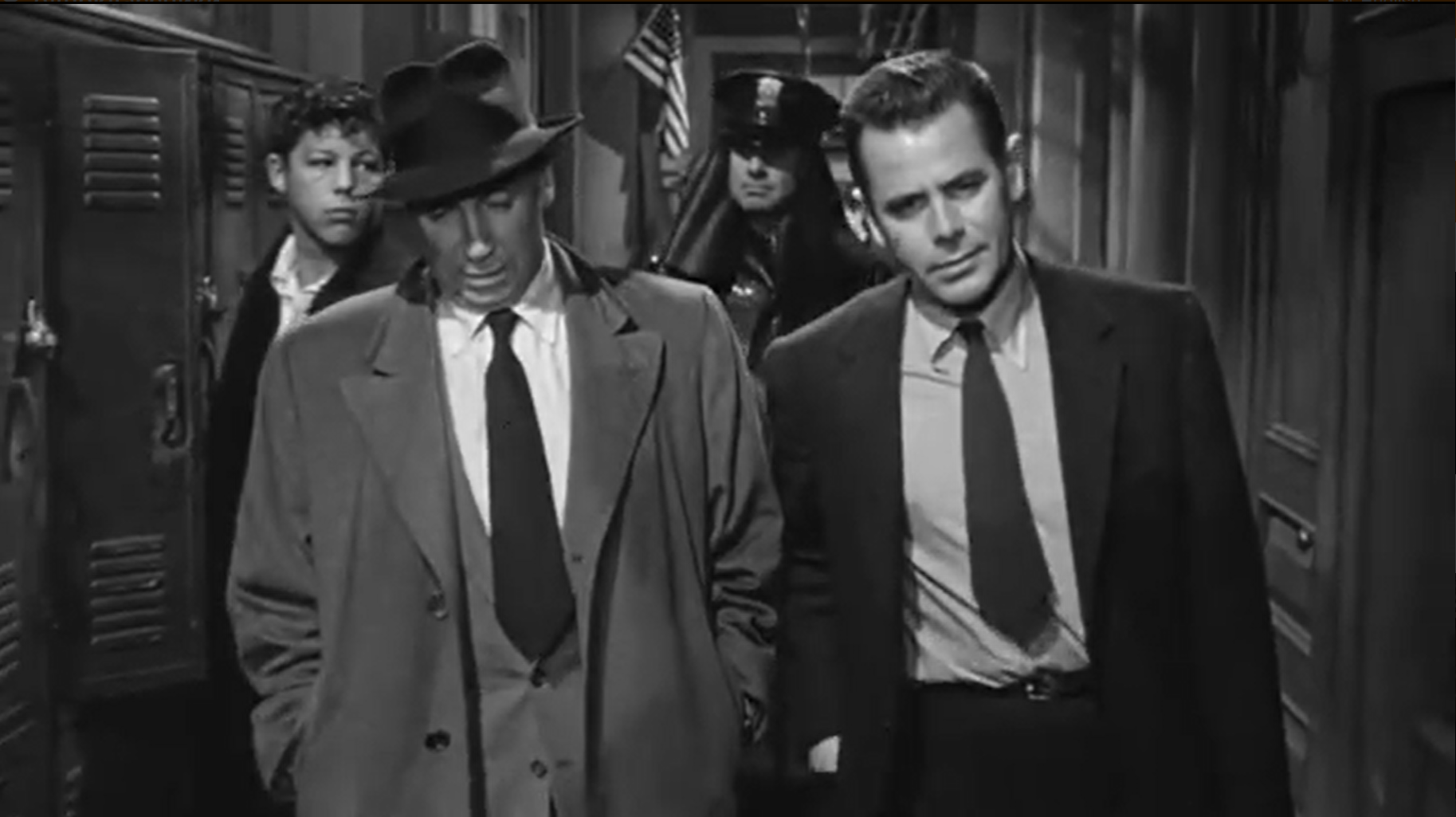
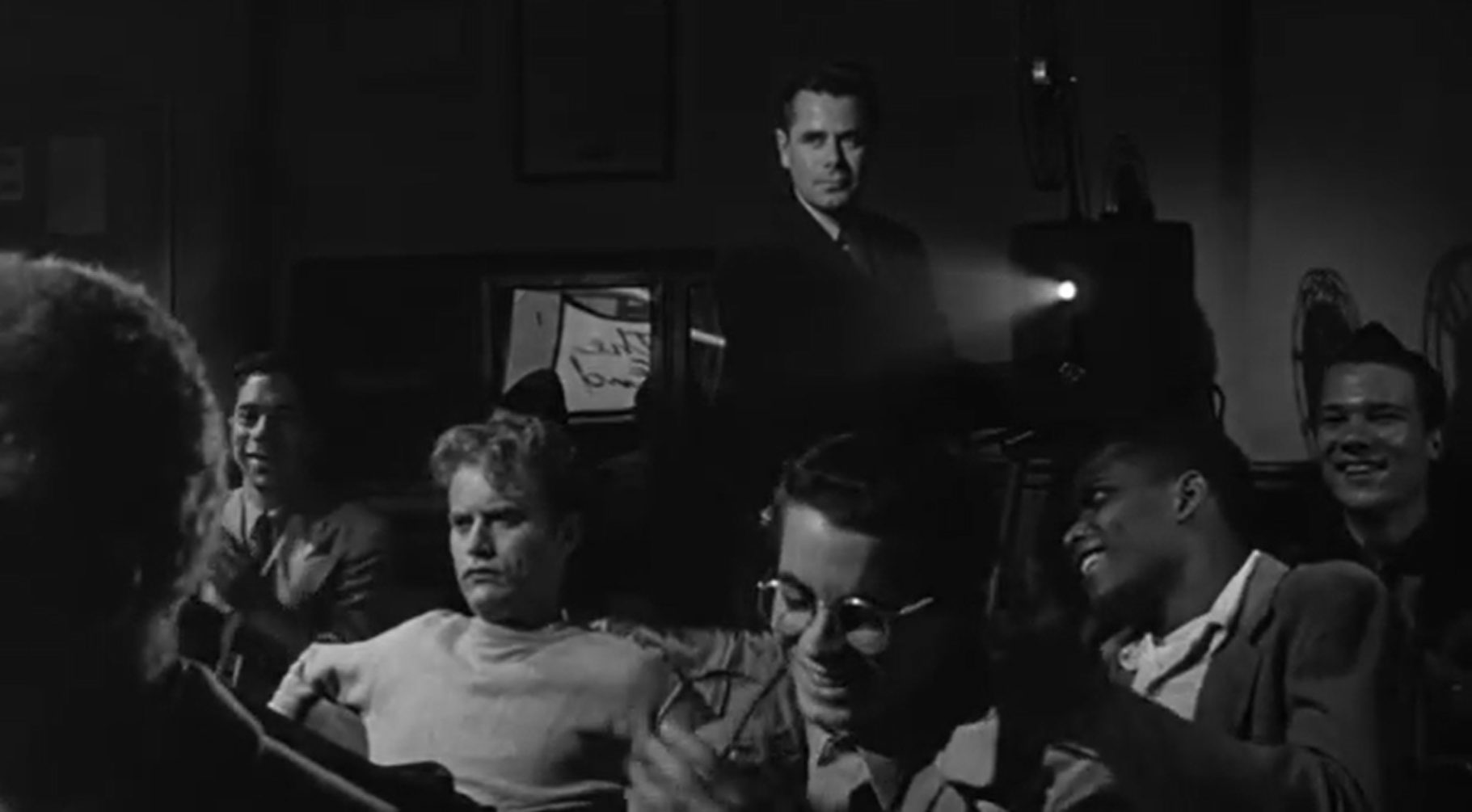
A high school English teacher (Glenn Ford) with a pregnant wife (Anne Francis) is determined to survive his new job at a school with challenging discipline problems, including those led by a sullen and violent teen (Vic Morrow). Can Mr. Dadier (Ford) rely on a student leader (Sidney Poitier) to help him positively influence his classroom?

Genres, Themes, Actors, and Directors:

  • Anne Francis Films
  • Glenn Ford Films
  • Juvenile Delinquents
  • Louis Calhern Films
  • Richard Brooks Films
  • Sidney Poitier Films
  • Teachers

Review:
Richard Brooks directed and wrote the Oscar-nominated script for this adaptation of Evan Hunter‘s “social commentary” novel about a rookie teacher navigating the treacherous waters of an inner city vocational high school.

The film is notable for its influential rock ‘n roll soundtrack (including Bill Haley and the Comets’ “Rock Around the Clock” as its theme song), for its alleged source as inspiration for youth violence, and for Sidney Poitier’s early performance as one of the only black students at the school.

While dated and cliched in some ways (“It’s gonna have your looks and my brains” Ford reassures his pregnant wife about their future child):

… the film continues to pack a surprising punch. Ford’s character is both sympathetic and realistic, and it’s enjoyable to watch his genuine respect for the students yielding gradual positive effects. The dialogue is often punchy (“They don’t even know their multiplication tables.” “Of course not; all they can multiply is themselves.”), and Russell Harlan’s cinematography is top-notch.

Note: The Blackboard Jungle was selected in 2016 for preservation in the United States National Film Registry by the Library of Congress as being “culturally, historically, or aesthetically significant”.

Redeeming Qualities and Moments:

  • Glenn Ford as Mr. Dadier
  • Russell Harlan’s cinematography

Must See?
Yes, as a still-compelling drama. Listed as a film with Historical Importance and a Personal Recommendation in the back of Peary’s book, and nominated as one of the Best Movies of the Year in his Alternate Oscars.

Categories

  • Good Show

Links:

Manhattan Melodrama (1934)

Manhattan Melodrama (1934)

“Die the way you lived — all of a sudden. That’s the way to go. Don’t drag it out.”

Synopsis:
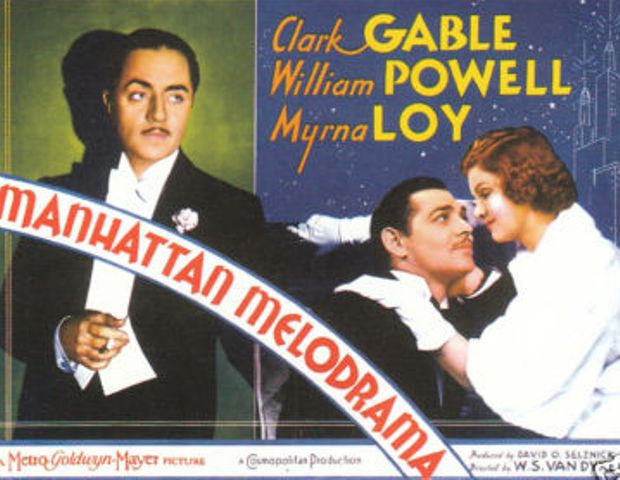
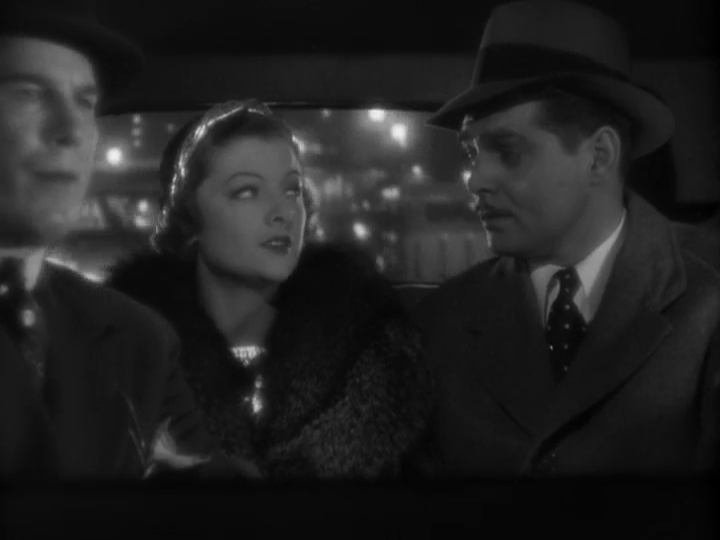
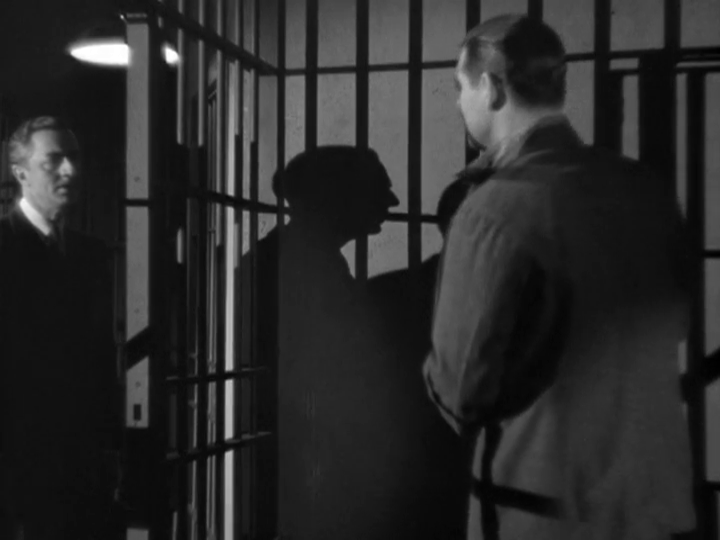
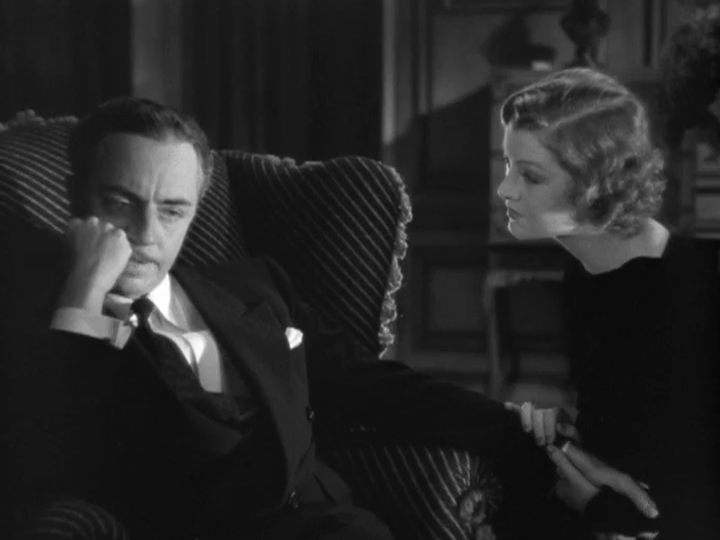
After their parents die in a tragic accident at sea, two boys — one rambunctious (Mickey Rooney), the other studious (Jimmy Butler) — become lifelong friends while taking radically different career paths. Blackie (Clark Gable) becomes a notorious racketeer with a loyal moll (Myrna Loy), while Jim (William Powell) becomes a lawyer with aspirations towards governorship. Will their friendship withstand Loy’s realization that she wants more out of life than a gangster’s existence?

Genres, Themes, Actors, and Directors:

  • Clark Gable Films
  • Friendship
  • Love Triangle
  • Mickey Rooney Films
  • Myrna Loy Films
  • Orphans
  • William Powell Films
  • W.S. Van Dyke Films

Review:
Friendship and loyalty trump all else in this melodramatic tale of boys united forever through tragedy, turned into men who consistently “do the right thing” even when it goes against what society or their heart might tell them to do. DVD Savant writes cynically that “Manhattan Fairy Tale would be a better title for this fantasy with its scrupulously honest politico, gloriously noble racketeer and the glamorous but virtuous sweetheart who loves them both.” To that end, all three characters are surprisingly sympathethic, if unrealistic: one could only hope for such forthright and noble acquaintances, lovers, and allies. James Wong Howe’s cinematography is typically atmospheric, and the story moves along at a reasonable clip. This one is not quite must-see viewing but worth a look.

Note: This film is infamous for being the movie John Dillinger was watching before being gunned down by police outside the Biograph Theater in Chicago.

Redeeming Qualities and Moments:

  • James Wong Howe’s cinematography

  • Fine lead performances (Peary nominates Loy as one of the Best Actresses of the Year in his Alternate Oscars)

Must See?
No, but it’s worth a one-time look as Oscar-winner for Best Original Story. Listed as a film with Historical Importance and a Personal Recommendation in the back of Peary’s book.

Links:

Down Argentine Way (1940)

Down Argentine Way (1940)

“It would have pleased me very much more if YOU could have had the horse.”

Synopsis:
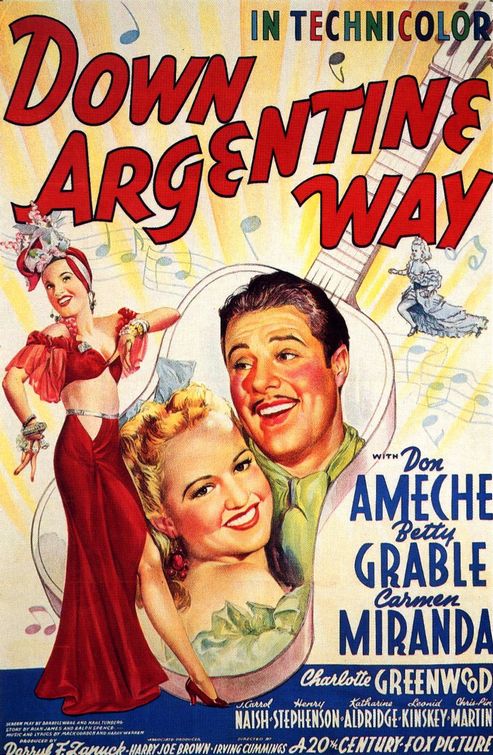
An Argentinian (Henry Stephenson) instructs his son (Don Ameche) to travel to New York and sell his prize horses to anyone except family members of socialite Binnie Crawford (Charlotte Greenwood), whose brother cheated him years ago. Naturally, Ameche falls in love with Greenwood’s niece (Betty Grable) — who is interested in buying one of his horses — and makes an excuse for being unable to sell one to her. Grable travels to Argentina to learn more about Ameche’s odd behavior, and soon the couple are hiding their romance from Stephenson.

Genres:

Review:
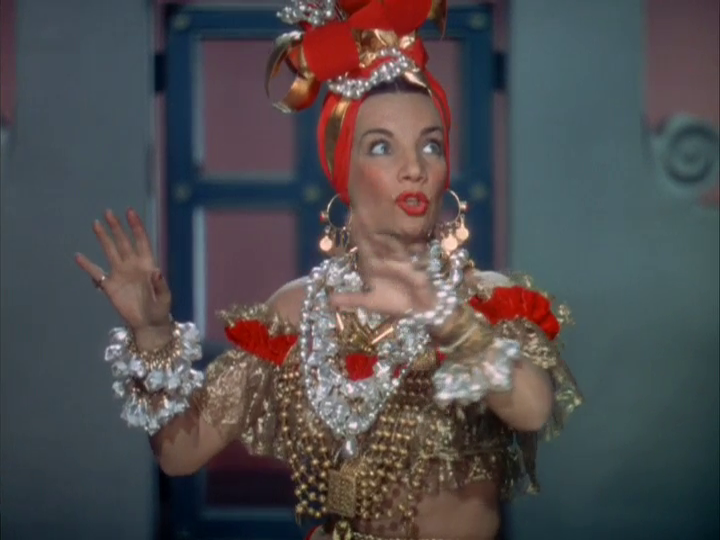
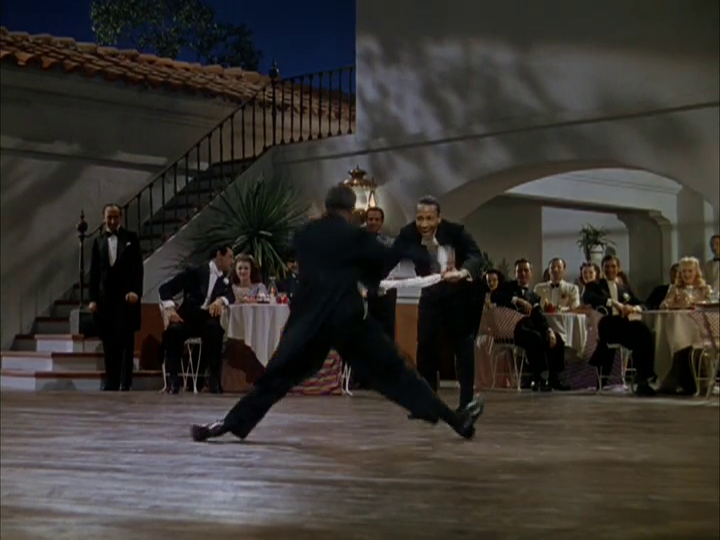
This fluffy musical — the first in a series of “Good Neighbor Policy” films designed to curry friendship with Latin America during an era of increasing Nazi presence — is notable both for featuring Betty Grable in her breakthrough role, and for the screen debut of flamboyant nightclub singer Carmen Miranda. A box office hit, the film was clearly popular with audiences of the day but doesn’t leave much for modern viewers to appreciate — other than the vibrant Technicolor cinematography and some delightful performances by Miranda (who sings “Mamãe Eu Quero”) and the tap dancing Nicholas Brothers. Grable is at least cheery and pleasant; as noted by Stephanie Zacharek in her article for TCM:

There’s something eager-to-please about [Grable’s] singing and dancing — she doesn’t have the laid-back, smart-alecky cool of, say, Ginger Rogers… Grable’s appeal in Down Argentine Way — even beyond those stunning legs, which would later be insured by Lloyd’s of London for $1 million — radiates from a place that has nothing to do with strict acting chops. She’s a persistently warm, accessible presence; there’s something kind and forthright about her.

This is true enough, but wasn’t sufficient to hold my interest; and the final scenes revolving around race track shenanigans are pure filler. Skip this one unless you’re a diehard Grable or Miranda fan.

Redeeming Qualities and Moments:

  • Carmen Miranda and the Nicholas Brothers’ show-stopping tunes

Must See?
No; feel free to skip this one. Listed as a film with Historical Importance in the back of Peary’s book.

Links:

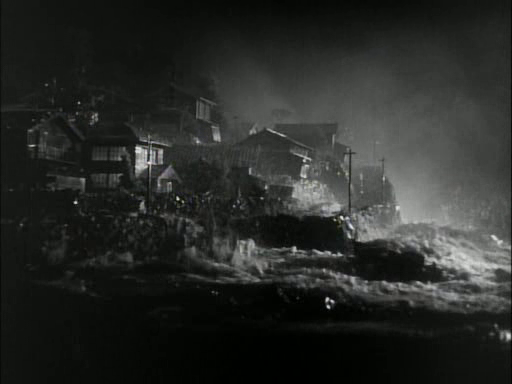
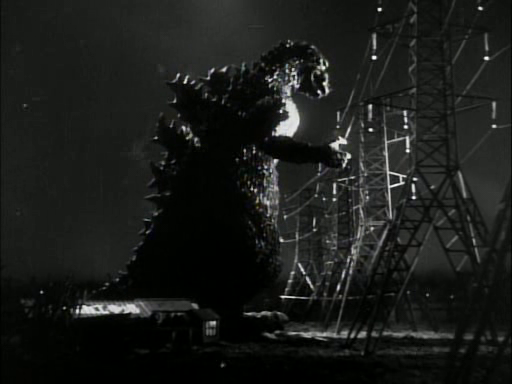
Godzilla, King of the Monsters! (1956)

Godzilla, King of the Monsters! (1956)

“Neither man nor his machines are able to stop this creature.”

Synopsis:
An American journalist (Raymond Burr) recounts a story of witnessing an atomic sea monster destroying Tokyo, while a scientist (Akihiko Hirata) whose fiancee (Momoko Kochi) is in love with a captain (Akira Takarada) knows now is not the right time to reveal her shift in loyalties.

Genres:

  • Flashback Films
  • Japanese Films
  • Mutant Monsters
  • Nuclear Threat
  • Raymond Burr Films

Response to Peary’s Review:
Peary writes that “Japan’s answer to King Kong” began “as a 98-minute Japanese film called Gojira, directed by Inoshiro Honda”, which “won many awards and broke box-office records all over Japan”. He adds that this version, “directed by Terry Morse, eliminates a lot of of Honda’s material and introduces an American reporter… who serves as a narrator and, in cleverly edited scenes, appears to talk to the Japanese characters from Honda’s film”. Unfortunately, as Peary notes, Burr “bungles it” but “what makes both versions interesting — even though they aren’t enjoyable or exciting… is that, unlike all those giant creatures of American SF films of the fifties, Godzilla was not simply a bad consequence of foolhardy nuclear testing.” Rather, the “mericiless monster which kills and destroys with machine-like precision is meant to be the embodiment of the atomic bombs dropped on Hiroshima and Nagasaki”. He adds that “this horror film gave Americans one of their first opportunities to see Japanese rage and disgust over what America did to them in August 1945”.

Peary writes about the film at length in his Cult Movies 2 book, where he notes that “even with the popularity of campy (as in bad) movies, [he is] at a loss to explain the cult in American for Japanese monster movies”. He describes how beloved Godzilla — or Gojira — is in Japan, and cites Ed Godziszewski in noting it “is considered… by many to be the second greatest Japanese film ever made, next to Kurosawa’s The Seven Samurai” — and that because of its success, “Toho [Studios] produced a wave of science fiction and fantasy films until the mid-’70s”. Peary spends the bulk of his Cult Movies review comparing the two versions of the film (which have been re-released through Criterion with plenty of extras), noting inconsistencies and pointing out ways in which many (but not all) references to the A bomb were deleted in the Americanized version. In GFTFF, Peary concludes that “The Honda version ends gloomily, the Morse version optimistically” — but adds that “only Honda’s version makes a plea for peace and no more bomb-testing”.

Note: As a major cult movie, Godzilla has many fans who have written volumes about it and its many sequels (see Moria’s review for a run-down).

Redeeming Qualities and Moments:

  • Impressive special effects
  • Atmospheric cinematography


Must See?
Yes, for its cult status.

Categories

  • Cult Movie

Links:

Flying Serpent, The (1946)

Flying Serpent, The (1946)

“Dr. Lambert, I wish there had never been any such thing as Aztec Indians! Father does nothing but think, dream and talk Aztecs!”

Synopsis:
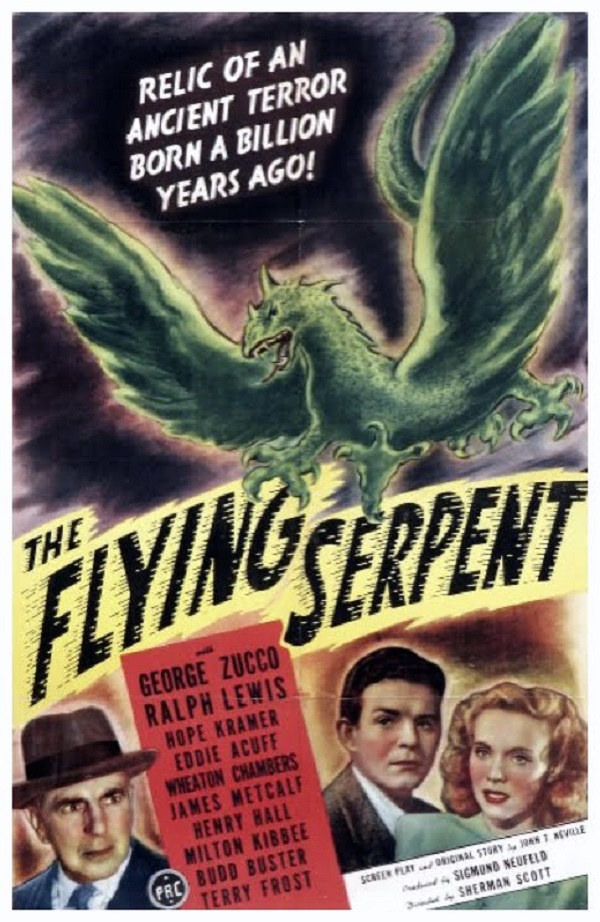
An archaeologist (George Zucco) who has discovered the existence of the ancient winged god Quatzelcoatl tries to prevent anyone — including his daughter (Hope Kramer) — from knowing about its presence, given that it watches over enormous hoards of treasure.

Genres:

  • Fantasy
  • Mad Doctors and Scientists

Review:
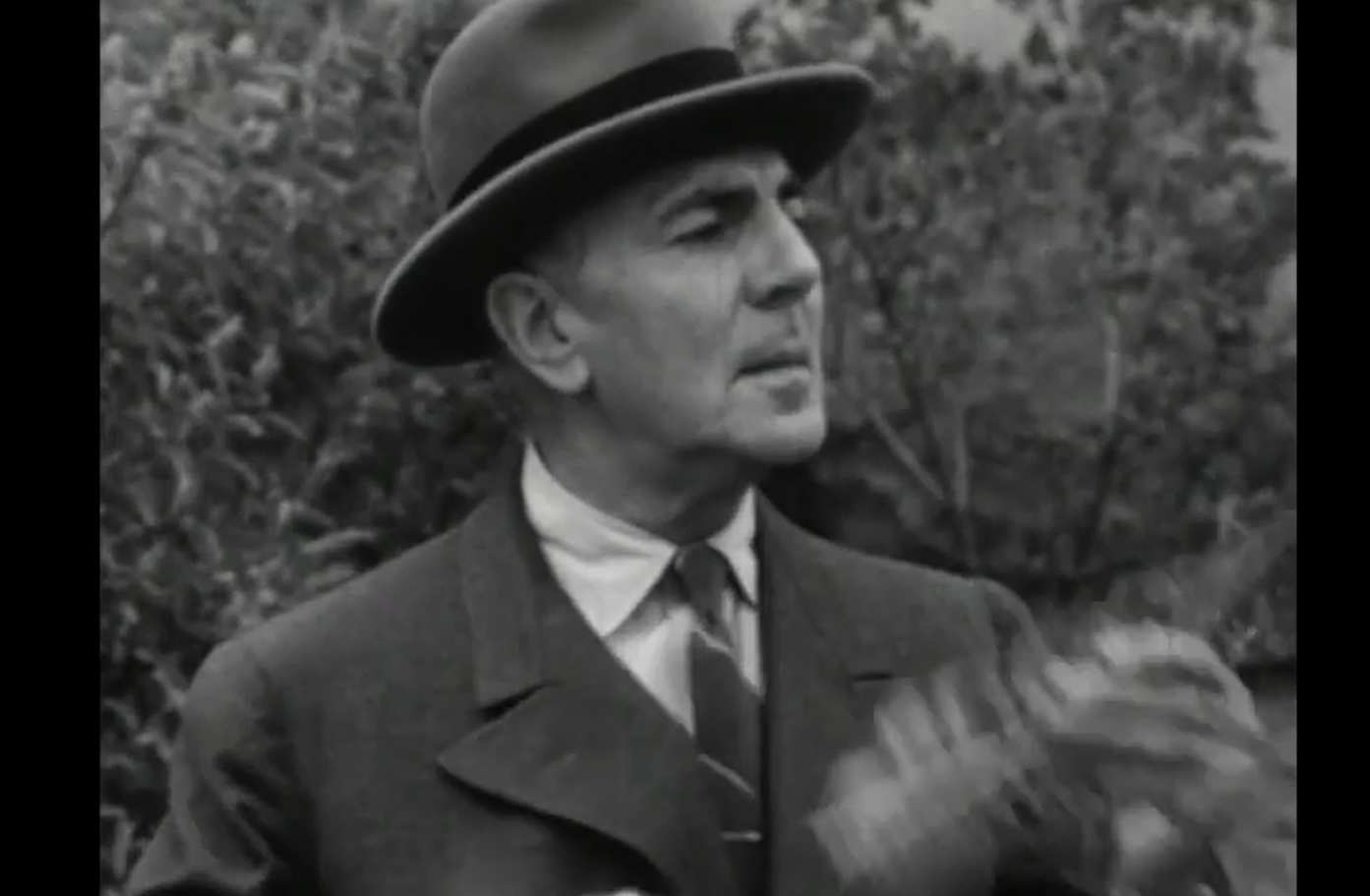
This Poverty Row cheapie is perhaps best known as the film that likely inspired Larry Cohen’s Q: The Winged Serpent (1982). Zucco was a reliable B-grade screen villain — playing Moriarty in The Adventures of Sherlock Holmes (1939) and another mad doctor in The Mad Ghoul (1940) — and he’s appropriately maniacal here.

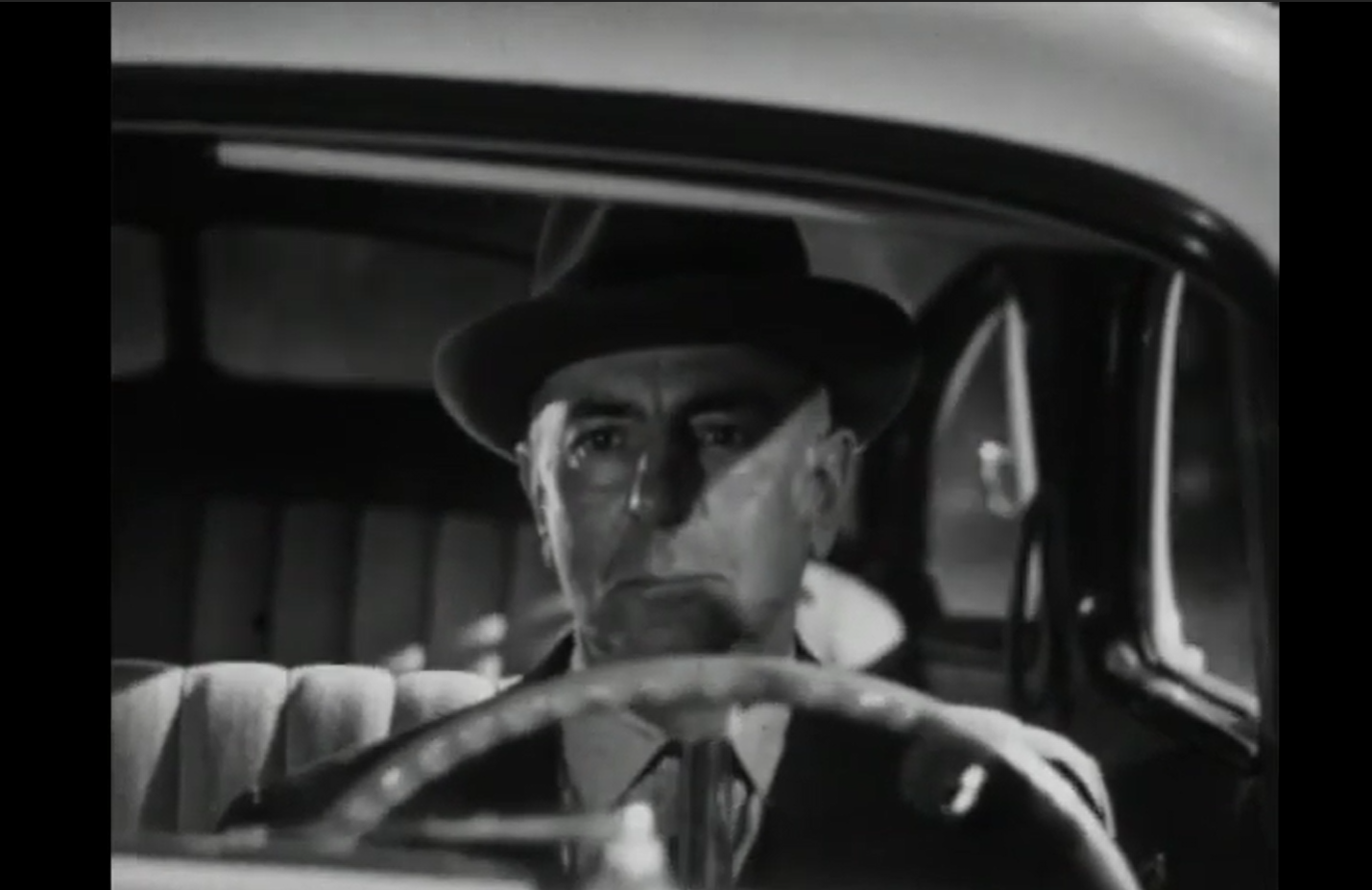
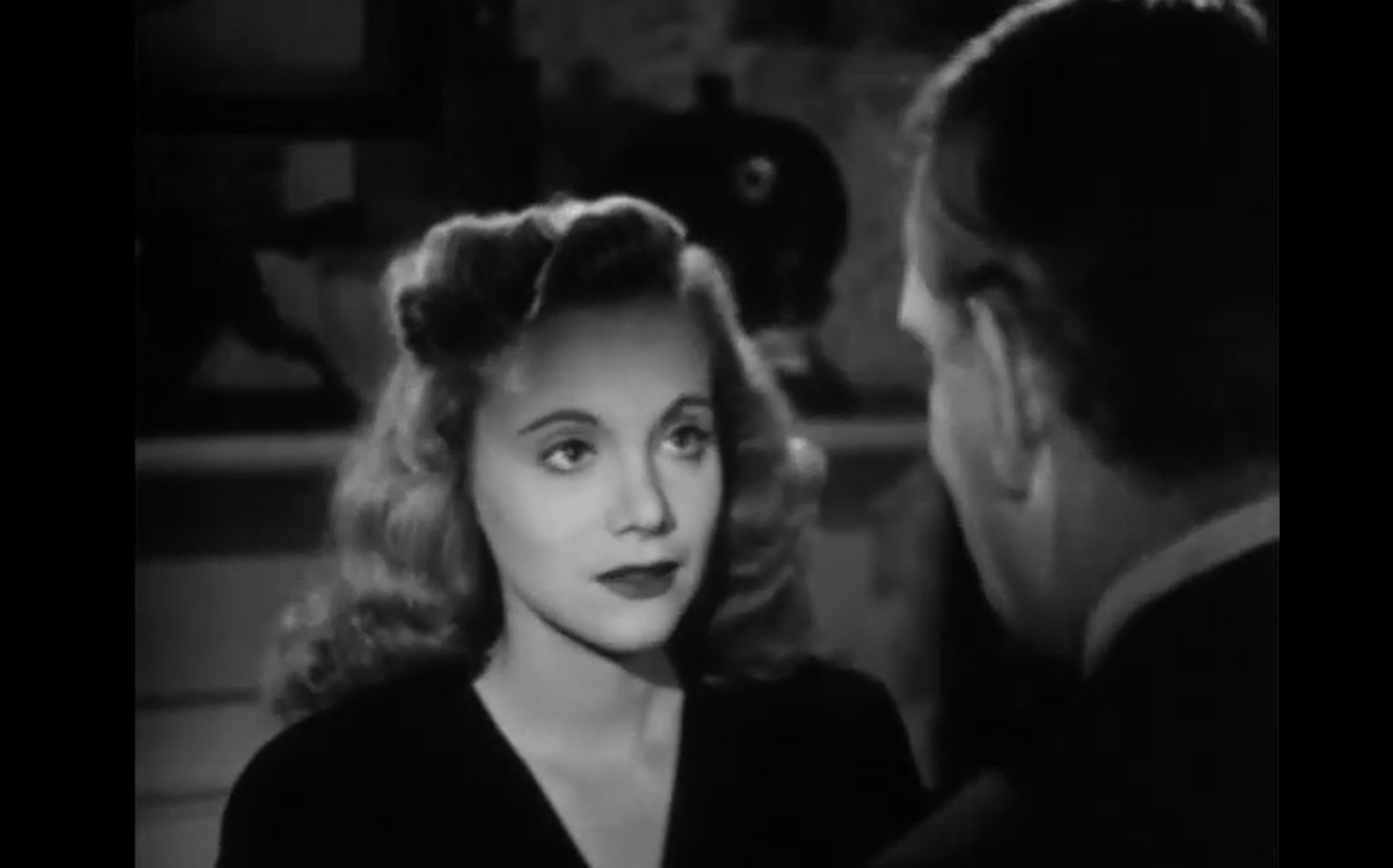
However, the acting overall is tepid:

… the dialogue laughable:

“He’s a scientist — ALL scientist!”

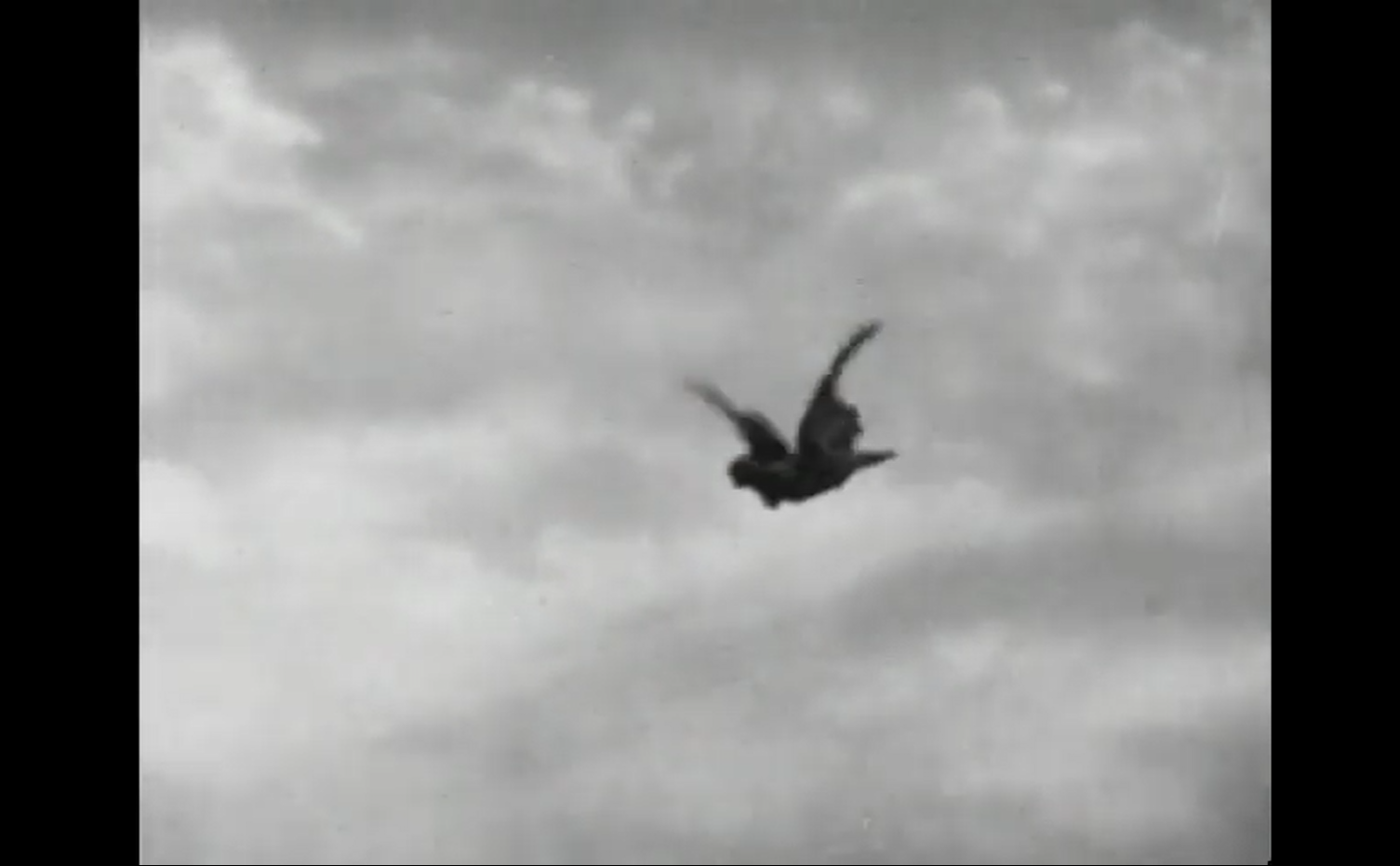
… the tiny winged serpent clearly a stringed puppet:

… and the narrative — involving Zucco’s attempts to knock off various interlopers by strategically leaving one of Quetzalcoatl’s feathers to be discovered, knowing she’ll go insane and kill the holder — is, in a word, silly.


The existence of an intrepid radio show host (Ralph Lewis) determined to solve the mystery is novel but unconvincing.

At least the whole thing clocks in at under an hour.

Redeeming Qualities and Moments:
Not much — though some of the dialogue does elicit a few chuckles.

Must See?
Nope; skip this clunker, by all means. Listed as a Camp Classic in the back of Peary’s book.

Links:

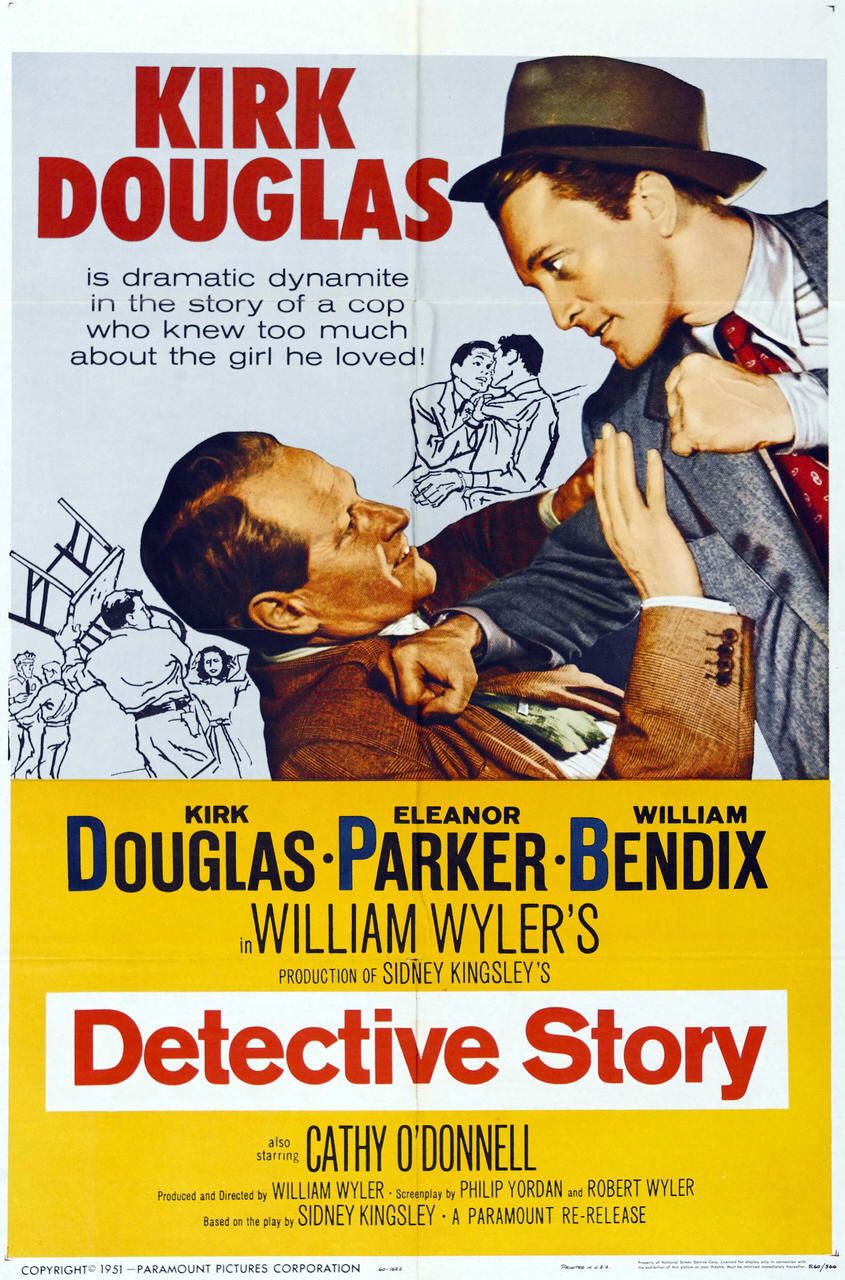
Detective Story (1951)

Detective Story (1951)

“Congratulations, Carl — you’re still a lucky man. You must have been kissed in your cradle by a vulture.”

Synopsis:
An embittered detective (Kirk Douglas) finds his values shaken when he learns his beloved wife (Eleanor Parker) has a connection with a noted abortionist (George Macready) he’s been trying to prosecute for a year. Meanwhile, Douglas and his colleagues — including his supervisor (Horace McMahon) and a fellow detective (William Bendix) — manage a variety of other cases, including a shoplifter (Lee Grant) who seems curiously content to hang out and people-watch; a young man (Craig Hill) who has stolen from his boss to impress a model whose sweet sister (Cathy O’Donnell) has nursed a lifelong crush on him; and a psychopathic convict (Joseph Wiseman) whose every action and reaction is unpredictable.

Genres:

  • Detectives and Private Eyes
  • Eleanor Parker Films
  • George Macready Films
  • Kirk Douglas Films
  • Marital Problems
  • Play Adaptations
  • William Bendix Films
  • William Wyler Films

Review:
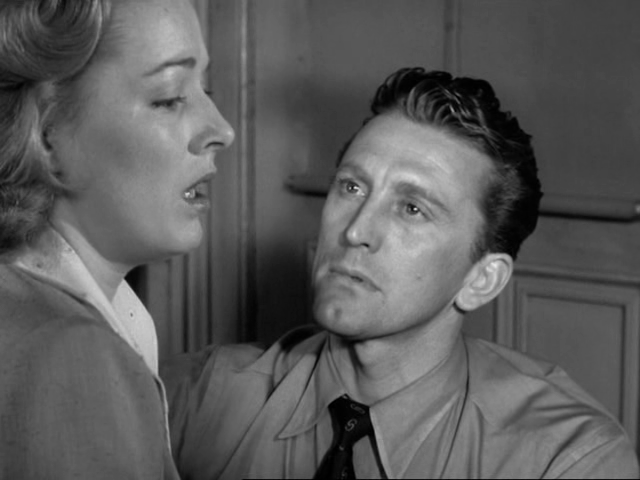
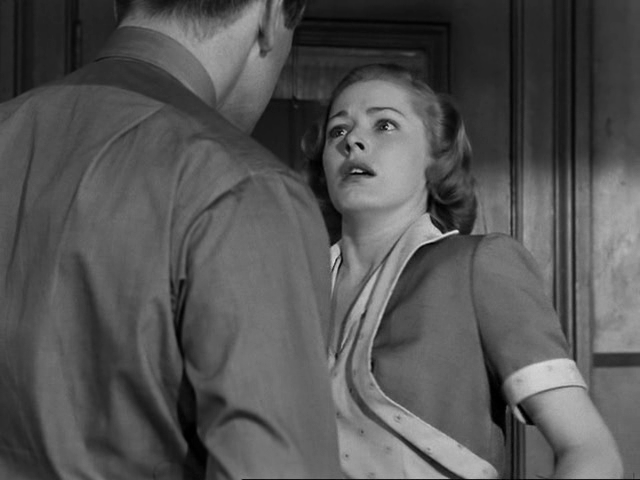
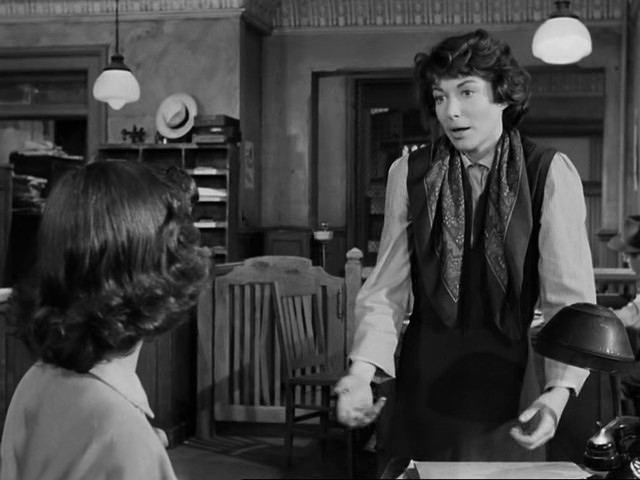
William Wyler directed this adaptation of a play by Sidney Kingsley which takes place within a single day at the 21st precinct in New York. Critical responses seem mixed about the authenticity of both Douglas’s character and the narrative pivot, with DVD Savant arguing that “the enjoyable Kirk Douglas gives one of his first over-modulated ‘star’ performances, throwing the film off balance”, and Bosley Crowther pointing out we need “not search too hopefully for plausibility in this case” given how far-fetched the connection is between Parker and Macready. I’m not disturbed by either of these factors, and find both Douglas’s performance and the central scenario quite believable. While this is very much a filmed play — with revelatory action “unnaturally” concentrated into one time stretch — Wyler nicely highlights the claustrophobia of the high-tension setting, and Douglas’s crisis seems almost inevitable given the stress he puts himself under each day (compounded by his personal history); it’s unusual to watch such a train wreck happening to a major movie star in a film of this era. The supporting performances are all noteworthy, with Parker and Bendix especially sympathetic, and Wiseman effectively playing, as DVD Savant puts it, “a mass of ethnic gestures distorted through a lowlife’s self-awareness”.

Redeeming Qualities and Moments:

  • Kirk Douglas as Detective McLeod
  • Eleanor Parker as Mary McLeod
  • A fine supporting cast

  • Lee Garmes’ cinematography

Must See?
Yes, as a strong outing by a master director.

Categories

  • Good Show

Links:

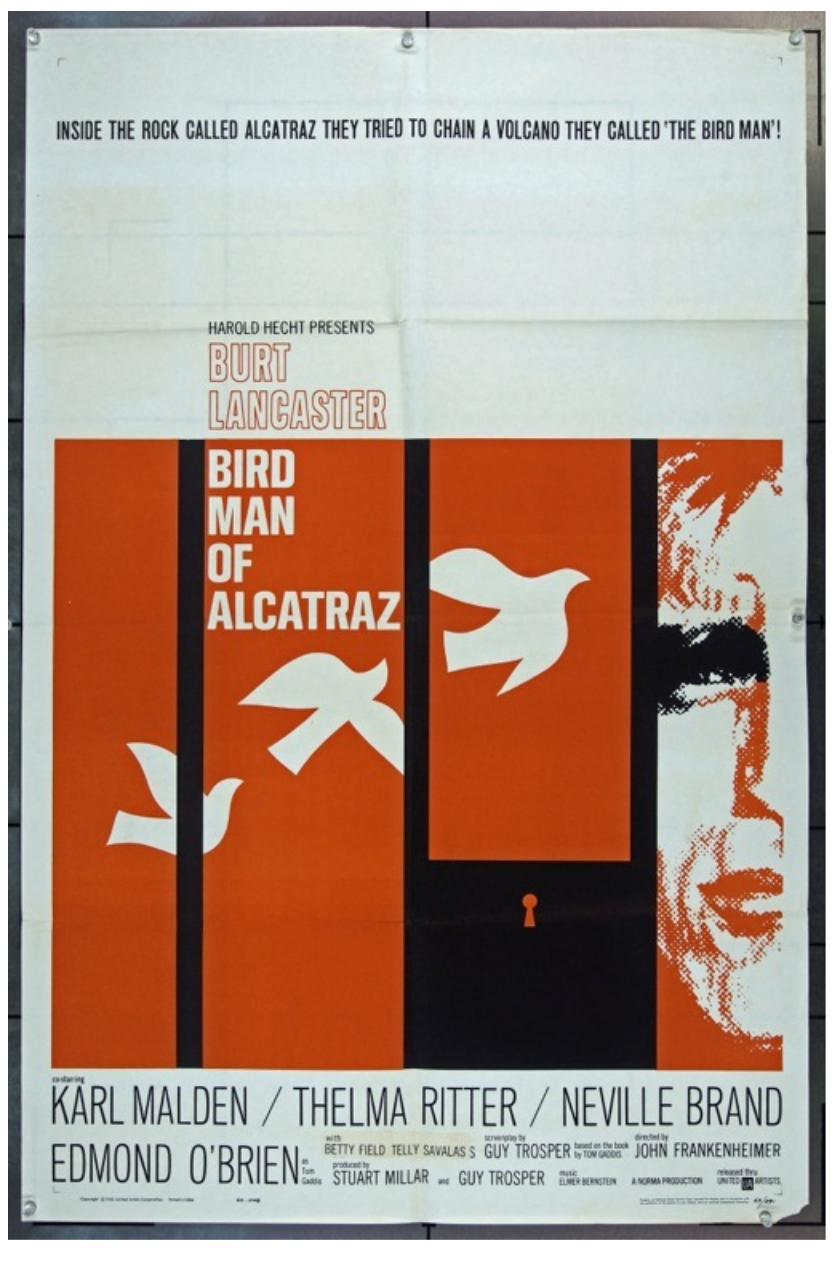
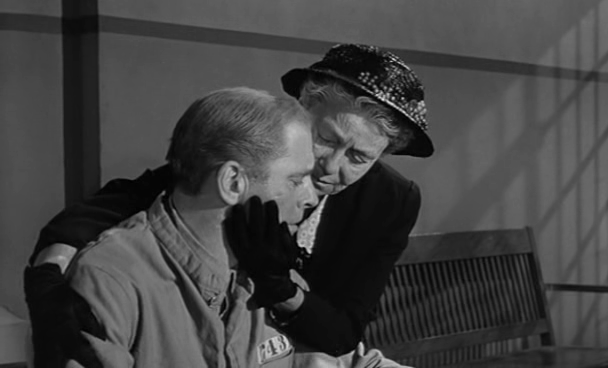
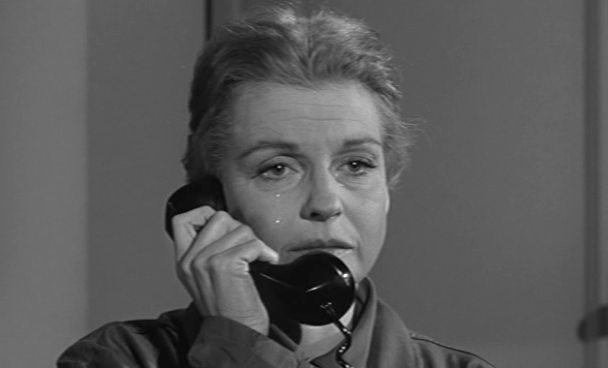
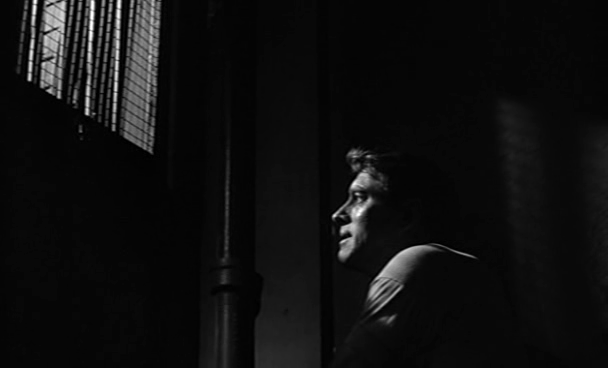
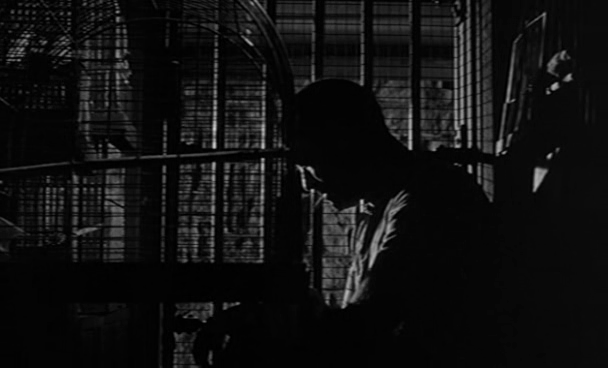
Birdman of Alcatraz (1962)

Birdman of Alcatraz (1962)

“Even a convict’s got a right to breathe.”

Synopsis:
Against the wishes of his prison warden (Karl Malden), a convicted killer (Burt Lancaster) at Leavenworth Federal Penitentiary — whose domineering mother (Thelma Ritter) has negotiated a life sentence for him rather than hanging — begins raising canaries in his cell and becomes a renowned expert in ornithology. Eventually he marries a woman (Betty Field) he meets through his bird research, and life seems to be looking up — until resentful Malden has him transferred to Alcatraz, without his birds.

Genres:

  • Betty Field Films
  • Biopics
  • Burt Lancaster Films
  • Character Arc
  • Hugh Marlowe Films
  • John Frankenheimer Films
  • Karl Malden Films
  • Neville Brand Films
  • Prisoners
  • Telly Savalas Films
  • Thelma Ritter Films

Review:
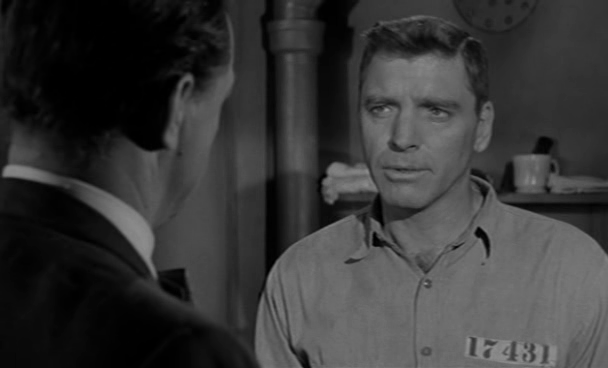
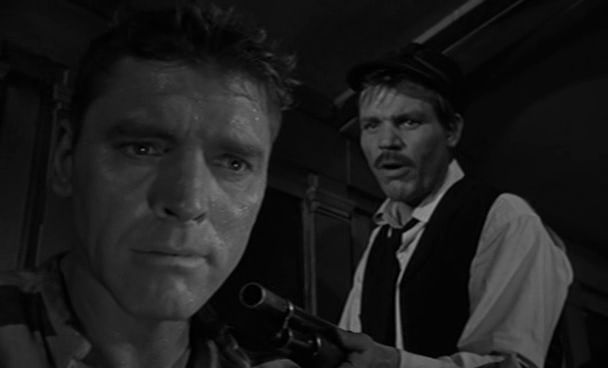
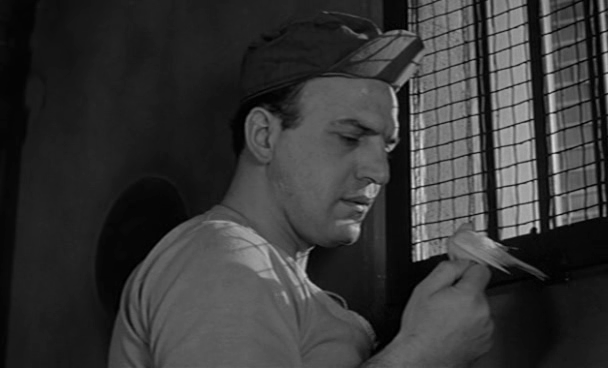
This highly fictionalized biopic about sociopathic but industrial prisoner Robert Stroud (whose life story was memorialized in a 1955 book by Thomas Gaddis) remains an absorbing, well-acted film about a man who — cinematically, at least — recovered his sense of humanity within the most abject of conditions by connecting with birds. Thankfully, Lancaster’s initial crimes and temperament aren’t sugar-coated: the rationale behind Malden’s determination to keep him isolated for the rest of his life makes logical sense. While Malden is ultimately posited as an inflexible and grudge-holding baddie, Lancaster is no saint either; rather, he’s a weary and pragmatic man who comes to understand the inevitability of his situation. A surprisingly hard-hitting narrative moment occurs midway through the film, when details of Ritter’s character are revealed and Lancaster’s history (posited here as stemming at least in part from his “momma issues”) is brought to light; he’s forced to make a challenging choice, and “does the right thing”. Watch for Telly Savalas in a small but notable role as Lancaster’s next-door cellmate; Neville Brand playing against type in a wonderfully modulated turn as Lancaster’s long-time guard; and Field’s honorable performance as the woman who unknowingly threaten’s Ritter’s dominance over Lancaster.

Redeeming Qualities and Moments:

  • Burt Lancaster as Robert Stroud
  • Fine supporting performances across the board


  • Burnett Guffey’s cinematography

  • Elmer Bernstein’s score

Must See?
Yes, as an engaging and well-made drama.

Categories

  • Oscar Winner or Nominee

Links:

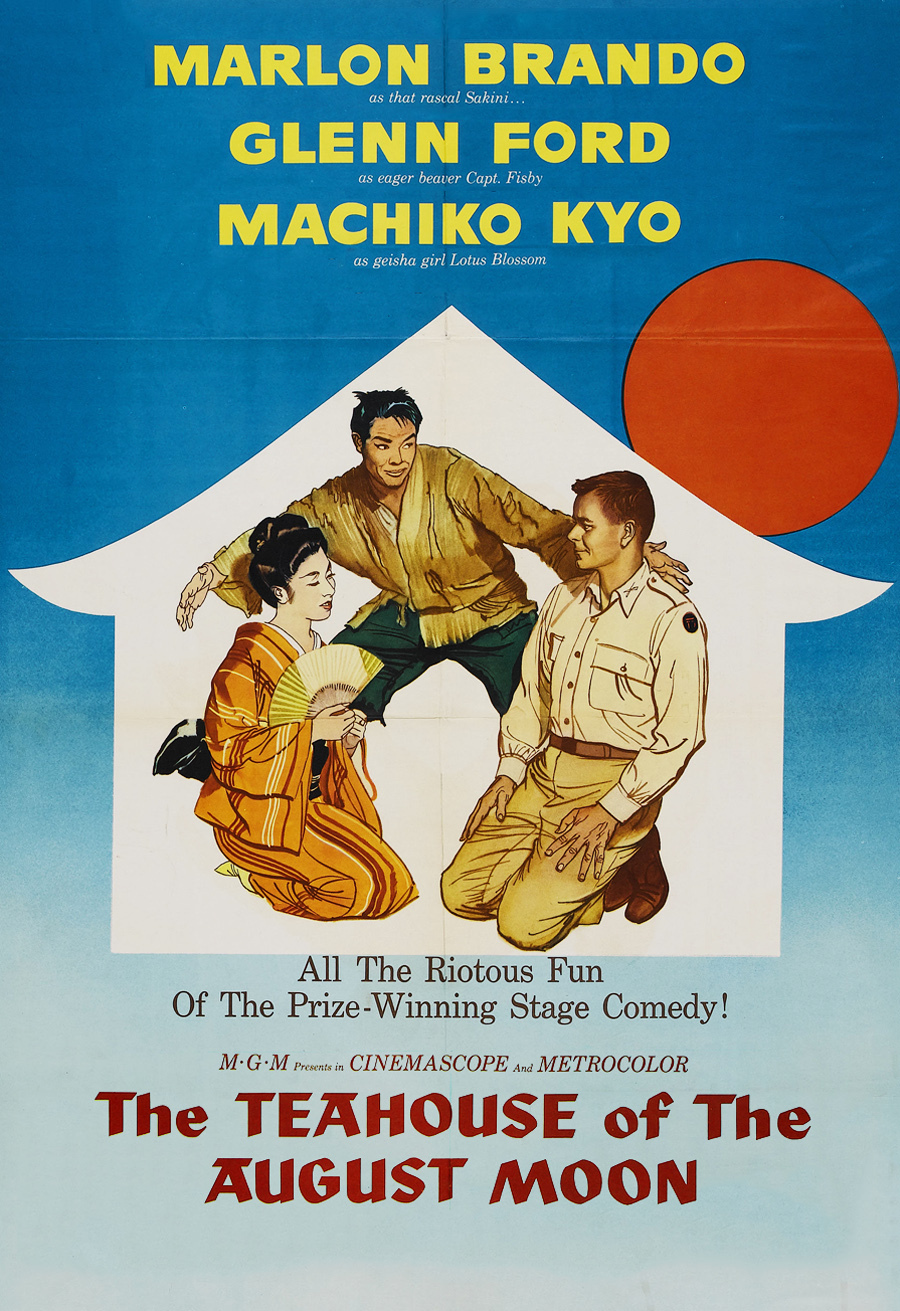
Teahouse of the August Moon, The (1956)

Teahouse of the August Moon, The (1956)

“It’s my job to teach these Okinawans democracy — and they’re going to learn democracy if I have to shoot every last one of them!”

Synopsis:
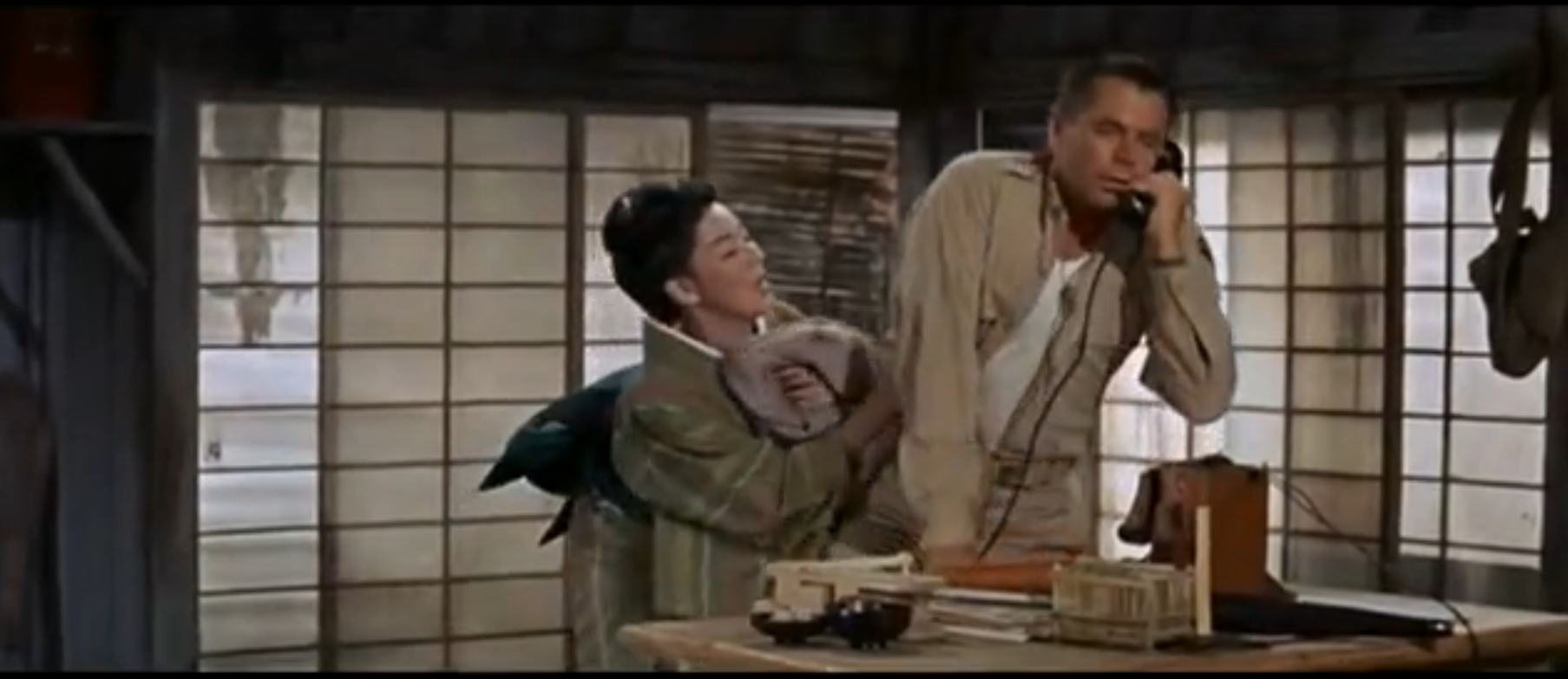
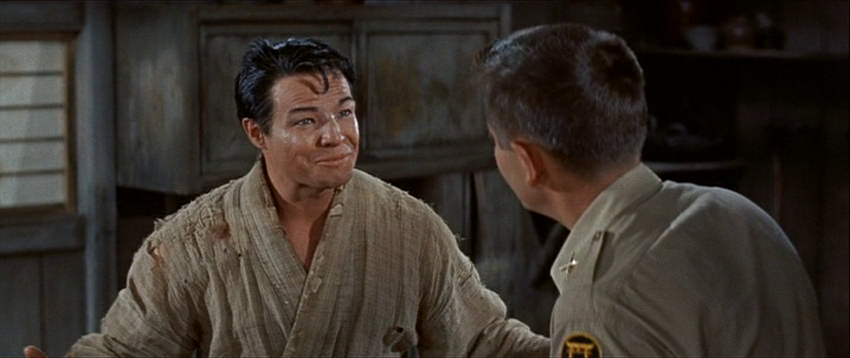
In post-WWII Japan, a bumbling American captain (Glenn Ford) is sent to Okinawa to set up a school and bring democracy to the village. Once there, his wily interpreter (Marlon Brando) helps him understand that the villagers have different goals in mind — including gifting him a geisha girl (Machiko Kyo) and convincing him to use American funds to build a teahouse instead of a school. A visiting military doctor (Eddie Albert) is soon lured into helping with agriculture, and he and Ford assist the village in selling homemade brandy; it’s up to Ford’s promotion-seeking superior (Paul Ford) to set everything straight.

Genres, Themes, Actors, and Directors:

  • Eddie Albert Films
  • Glenn Ford Films
  • Marlon Brando Films
  • Military
  • Play Adaptation
  • Satires and Spoofs

Review:
Based on the Pulitzer Prize- and Tony-winning 1953 play by John Patrick (itself based on a 1951 novel by Vern Sneider), this “occupation comedy” arouses immediate suspicion and distaste given the casting of Marlon Brando as a Japanese man — but he’s surprisingly effective and inoffensive, most likely due to his genuine love of the play and respect for his craft. According to TCM’s article:

The role of Sakini had been played by David Wayne on Broadway, but since he had little track record in movies, the part went to Marlon Brando who had loved the play so much he saw it three times. Brando intended to use some of his salary to finance a United Nations film program in Asia. True to his reputation, he worked on making his role as authentic as possible, studying the motions and spoken accents of real Okinawans though he had to adapt the language slightly to be more intelligible to American audiences.

Meanwhile, DVD Savant writes that Brando’s character is “a natural prankster who uses his charm and guile to completely derail Captain Fisby’s [Ford’s] mission. He completely manipulates the situation by selectively interpreting, or misinterpreting, Fisby’s words.” Indeed, the entire film handily mocks America for trying to impose democracy wholesale onto a different culture, and it’s refreshing watching the villagers quietly and insistently get what they want. As Savant — who argues the film “takes a bit of getting used to” — notes:

… It’s disconcerting at first to see the presentation of the Okinawans as ‘cute’ and inoffensive ‘little people.’ Only slowly do we realize that they are the ones in control of the situation, and by the end the film is awarding them full respect while lampooning the American military as hopeless dummies.

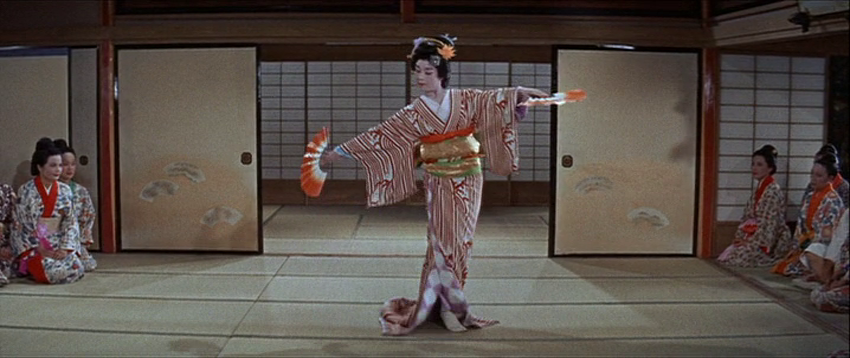
Beautiful Machiko Kyo — star of Akira Kurosawa’s Rashomon (1950); the Academy Award-winning Best Foreign Picture Gate of Hell (1953); Kenzi Mizoguchi’s Ugetsu (1953), Princess Yang Kwei Fei (1955), and Street of Shame (1956); Yasujiro Ozu’s Floating Weeds (1959); and Kon Ichikawa’s Kagi (1961) — acquits herself very nicely, and is especially delightful during an initial tussle with Ford as she struggles to get his clothes off.

Redeeming Qualities and Moments:

  • Amusing lead performances
  • Beautiful Technicolor cinematography

Must See?
No, but it’s worth a one-time look.

Links:

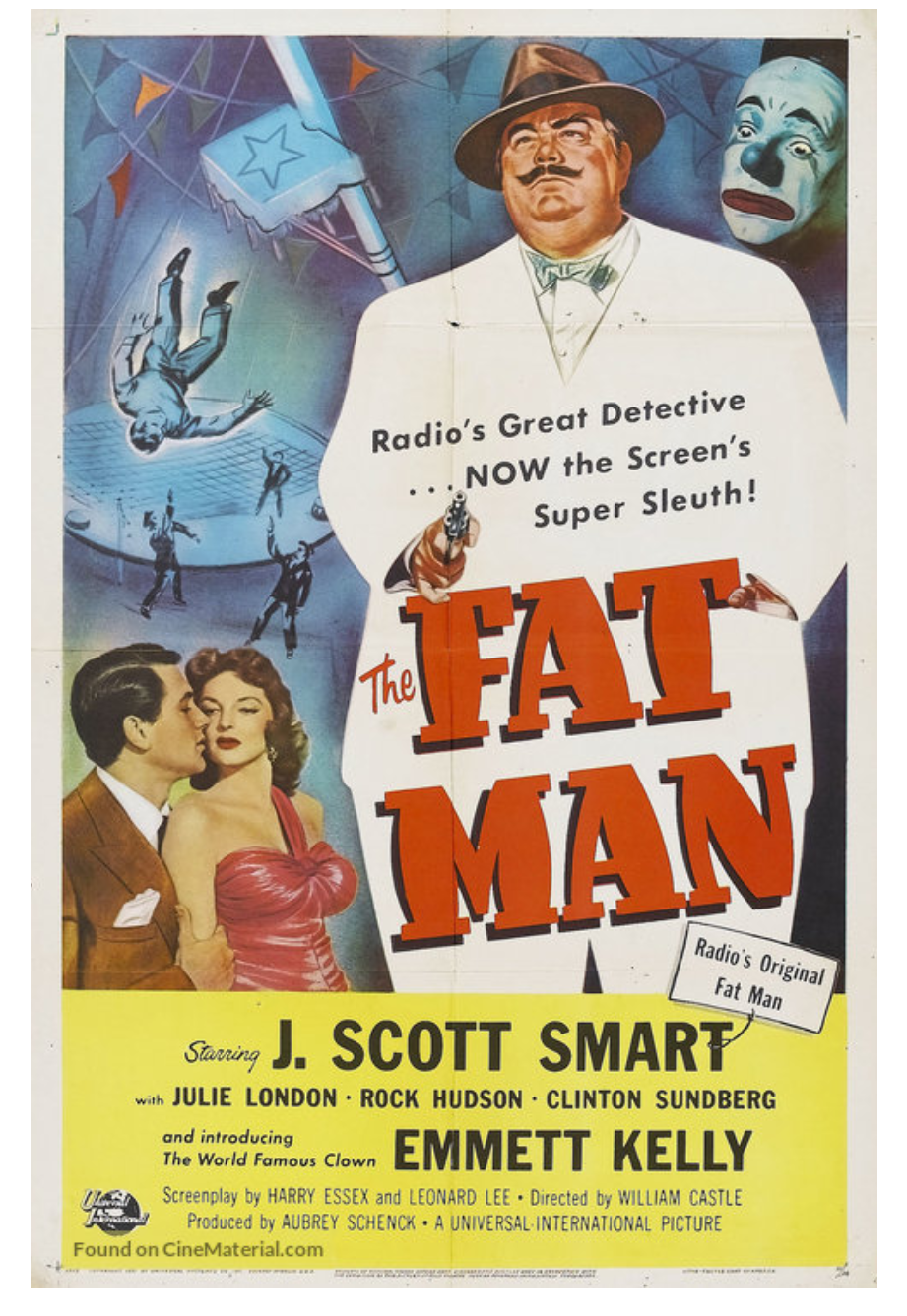
Fat Man, The (1951)

Fat Man, The (1951)

“Why would anyone want to kill a nice person like the doctor?”

Synopsis:
A portly private eye (J. Scott Smart) hired by a dental nurse (Jayne Meadows) to investigate the sudden murder of her boss (Ken Niles) soon learns that the survival of dental records from an ex-con (Rock Hudson) married to a cocktail waitress (Julie London) and friends with a clown (Emmett Till) may have something to do with the mystery.

Genres, Themes, Actors, and Directors:

  • Detectives and Private Eyes
  • Flashback Films
  • Murder Mystery
  • Rock Hudson Films
  • William Castle Films

Review:
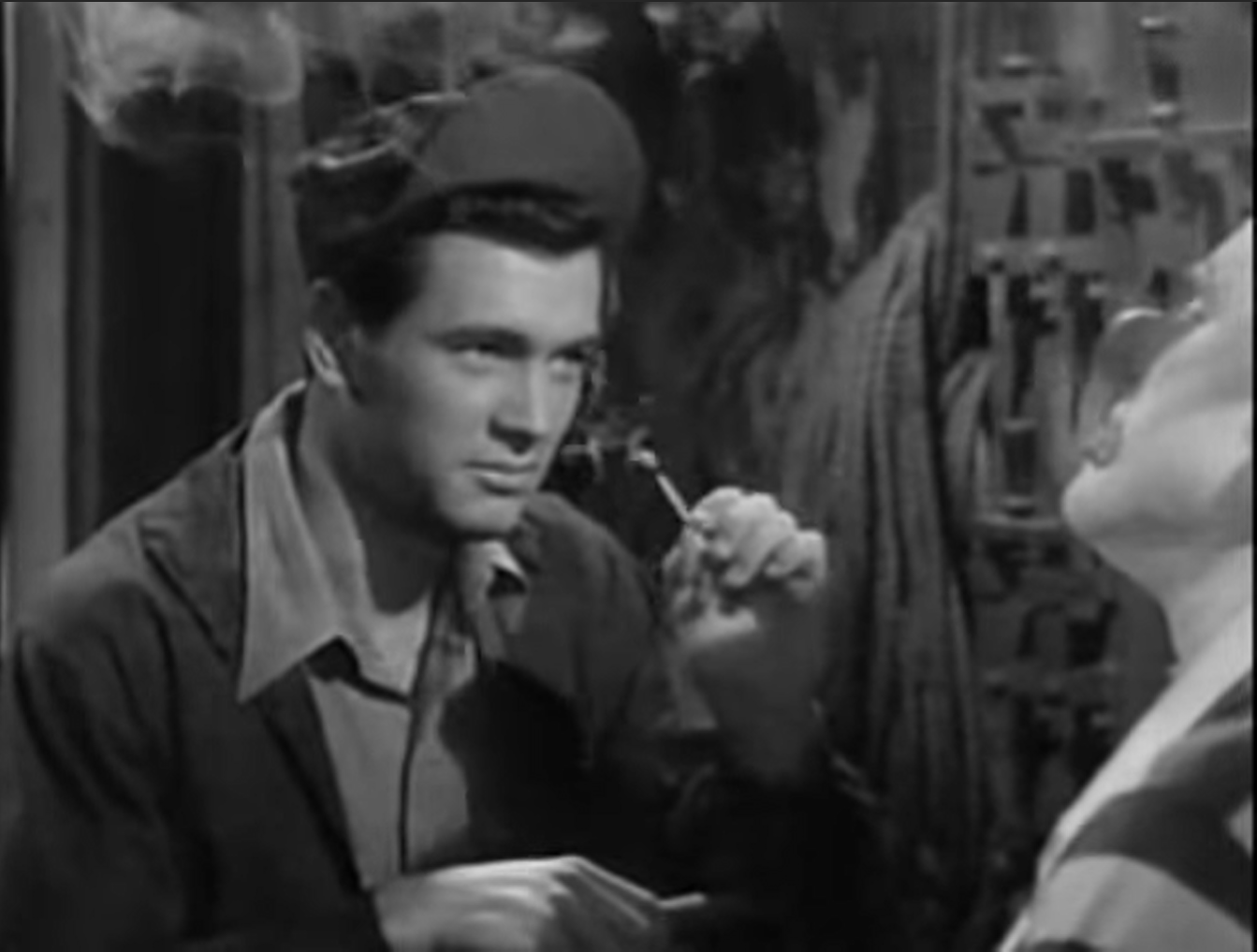
Directed by William Castle and based on a radio series of the same name (created by Dashiell Hammett), this flashback-filled detective noir is primarily notable for an early co-starring presence by Hudson:

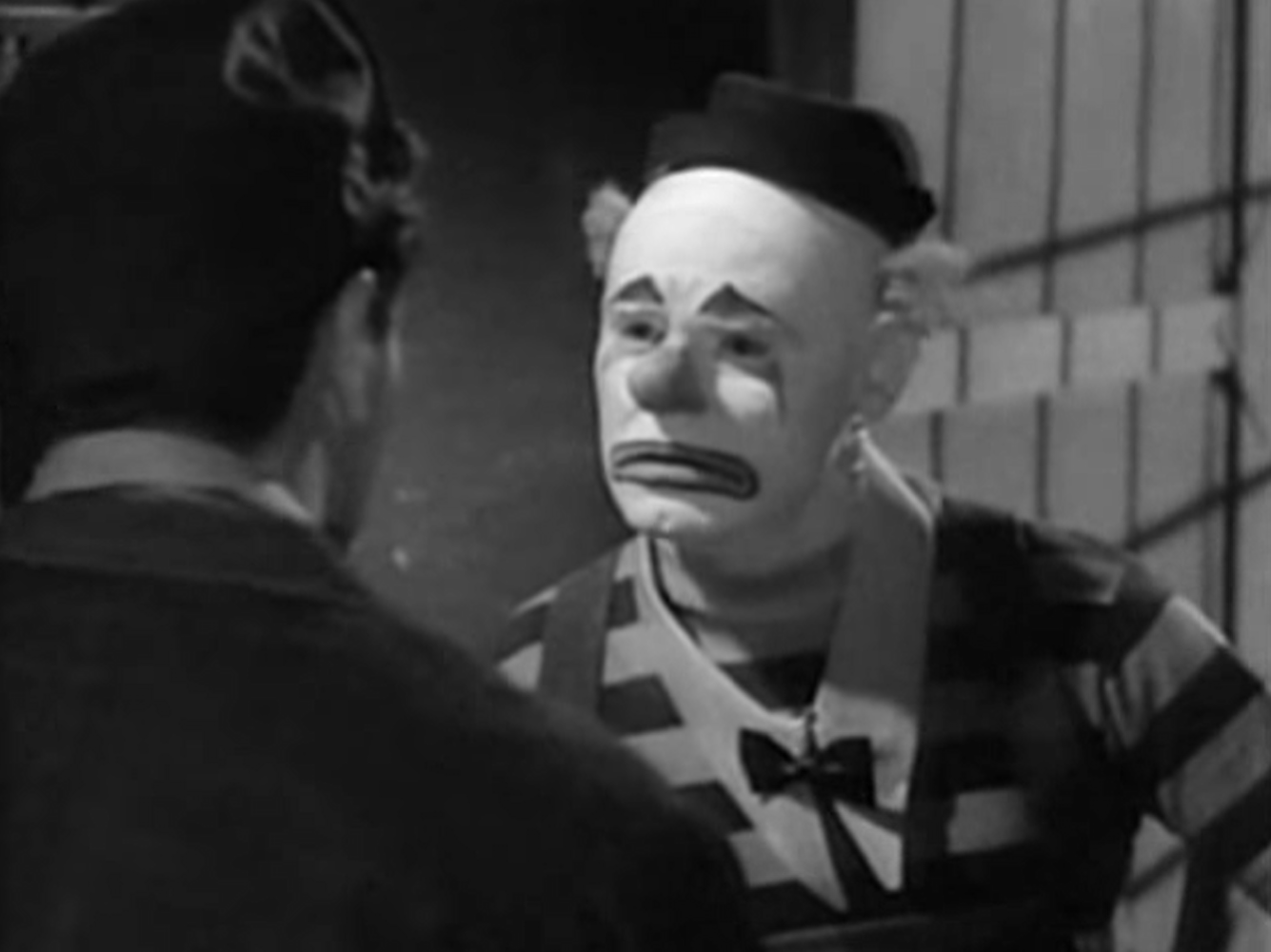
and for featuring the screen debut of world-famous clown Emmett Kelly (Ed Deets):

… who would co-star in The Greatest Show on Earth (1952) the following year. Unfortunately, Smart isn’t all that distinctive as a private dick; the fact that he enjoys eating isn’t particularly relevant or interesting.

However, the film as a whole is well-produced, and is worth a look for fans of the genre and era.

Redeeming Qualities and Moments:

  • Irving Glassberg’s cinematography

Must See?
No, though it’s worth a one-time look — and as a public domain title, it’s easy enough to find.

Links:

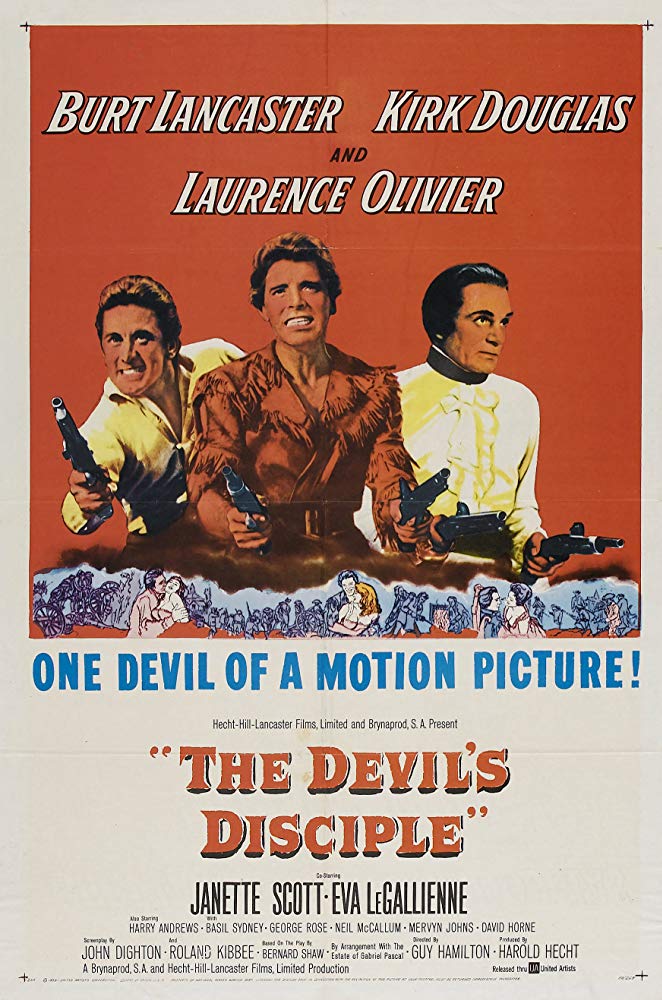
Devil’s Disciple, The (1959)

Devil’s Disciple, The (1959)

“We don’t arrest them unless we’re going to hang ’em.”

Synopsis:
During the American Revolutionary War, a priest (Burt Lancaster) rides with a local parishioner (Neil McCallum) to the imminent hanging of McCallum’s father, wrongly accused of treason by Major Swindon (Harry Andrews) and his superior, General Burgoyne (Laurence Olivier) — but they are too late to save him. McCallum’s prodigal brother (Kirk Douglas) rescues his father’s hung body and returns it to his childhood home, where Lancaster insists on allowing Douglas safe haven despite the protests of his wife (Janette Scott). When Lancaster is called away to oversee the sudden funeral of Douglas’s mother (Eva Le Gallienne), Douglas is mistaken by British soldiers for Lancaster, and taken away to be hanged. How will Lancaster respond when he returns and learns what has transpired — including his wife’s sudden affection for Douglas?

Genres, Themes, Actors, and Directors:

  • American Revolutionary War
  • Burt Lancaster Films
  • Falsely Accused
  • Harry Andrews Films
  • Historical Drama
  • Kirk Douglas Films
  • Laurence Olivier Films
  • Play Adaptation
  • Priests and Ministers
  • Revolutionaries

Review:
This adaptation of George Bernard Shaw’s 1897 play is one of four Peary-listed titles co-starring Douglas and Lancaster — including Gunfight at the O.K. Corral (1957), The List of Adrian Messenger (1963), and Seven Days in May (1964).

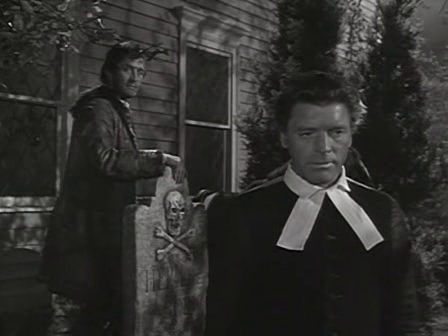
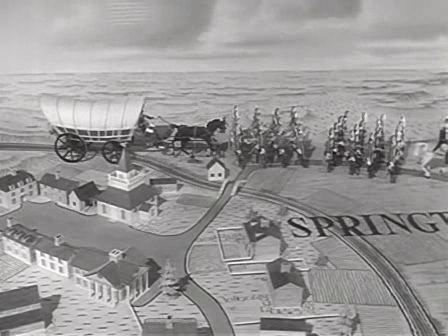
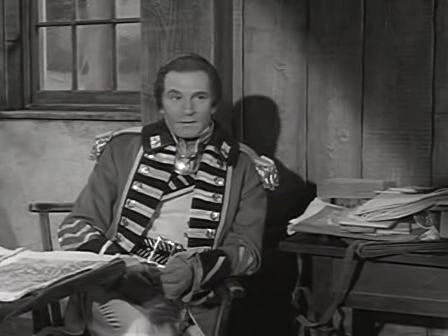
It’s a curiously told story, with Lancaster’s wife experiencing a rapidly shifting hate-love relationship with Douglas that doesn’t ring realistic, and the final sequences exhibiting more slapsticky physical humor than one would expect in an historical drama about war, treason, and executions. Most noteworthy is Olivier’s supporting performance as a gentlemanly Brit who, along with inept Andrews, represents the distance and disdain that led to England’s eventual defeat in the war. Also of note are the clever, unexpected animated sequences using maps and stop motion:

… and Jack Hildyard’s atmospheric cinematography.

Redeeming Qualities and Moments:

  • Olivier as General Burgoyne
  • Jack Hildyard’s cinematography

Must See?
No, though it’s worth a one-time look.

Links: