Year of Living Dangerously, The (1982)
“We’ll make a great team, old man: you for the words, me for the pictures. I can be your eyes.”
“I shall stay until the wind changes.”
|
Synopsis: |
|
Genres, Themes, Actors, and Directors:
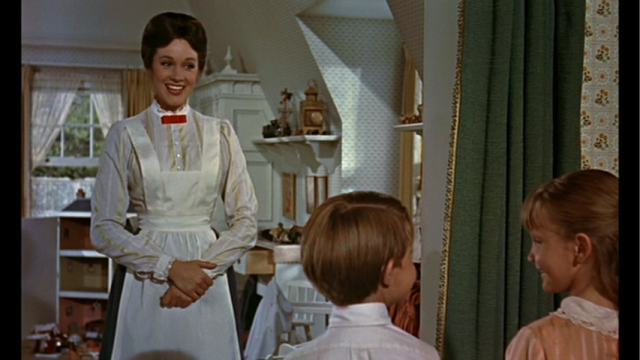
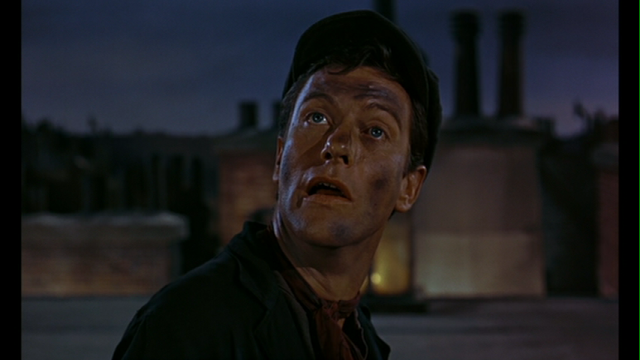
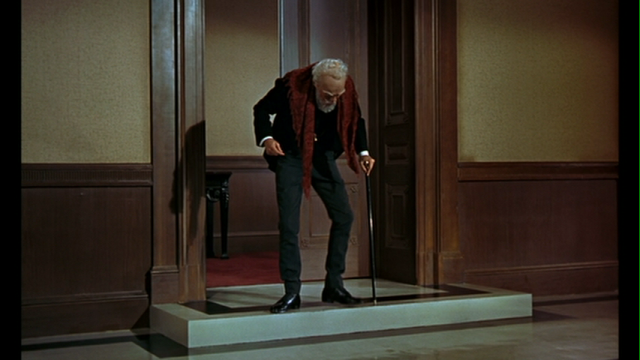
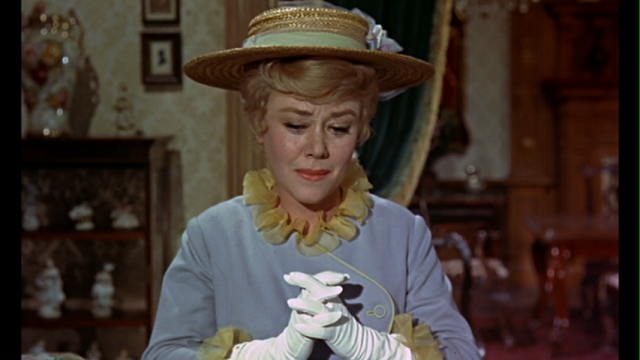
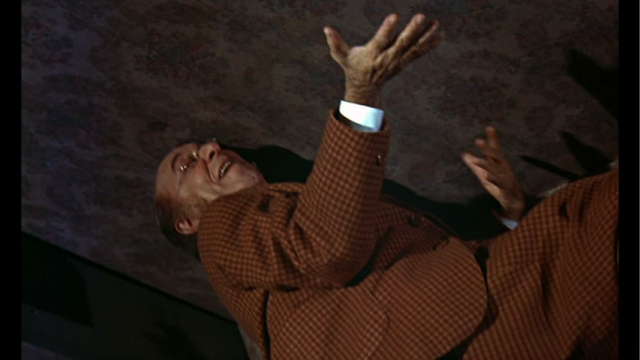
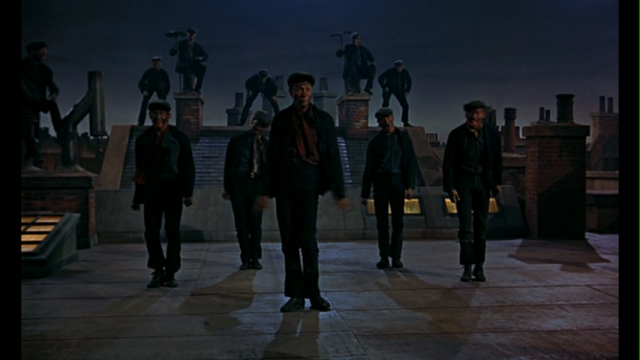
Response to Peary’s Review: Yet Peary’s assessment seems unduly harsh, given that beautiful Andrews (whose iconic voice is in peak form here) literally glows in the title role, and creates an undeniably memorable character in her film debut. Meanwhile, though Peary gripes about Van Dyke’s obviously “phony cockney accent”, kids won’t care — and his “Bert” is such a changeable fellow (he holds down no less than four different jobs throughout the film: a one-man band, a chalk artist, a chimney sweep, and a kite salesman) that it actually makes sense for his accent to be somewhat difficult to pin down. In addition, his “cameo” role as the elder Mr. Dawes (which he fought to get) is enormously enjoyable (apparently Dotrice and Garber weren’t told that it was Van Dyke underneath all that makeup and snowy white hair!). With that said, I’ll agree with Peary about some of the film’s flaws. First, at 139 minutes, it is indeed “about 40 minutes too long”, and could have used some serious editing. The chalk-drawing sequence, for instance — though imaginatively conceived — ultimately drags on longer than necessary; and while I enjoy Ed Wynn’s improvisatory turn as the high-on-laughter “Uncle Albert”, this entire musical sequence does nothing to further the plot, instead simply showcasing Poppins at her least appealing (she’s all simpering, thin-lipped disapproval, but what’s the harm in wanting to laugh yourself silly every once in a while?). Finally, I’ll agree with Peary that Andrews’ character isn’t given enough screentime: as he points out in Alternate Oscars, she “disappears for such long, pivotal stretches of the movie that her part nearly becomes a supporting one”. It should be noted that Peary is not the only critic of this beloved film: P.L. Travers — author of the “Mary Poppins” series (there were 8 books in all) — was notoriously displeased with the way in which her fictional creation was transferred to the big screen. According to an article by Caitlin Flanagan for The New Yorker*, Travers’ “Mary Poppins” was far from the stern but loving caretaker portrayed by Andrews:
For better or for worse, however, Disney’s version of Mary Poppins is the one most children will grow up getting to know — and, given its historical importance, the film itself remains indispensable viewing (at least once) for all film fanatics. Note: A weird bit of trivia on the film, according to IMBd: “Many of the nannies in the large queue of applicants for the job at the start of the film were actually men in drag.” !!! * Thanks to my friend David for pointing this article out to me! Redeeming Qualities and Moments:
Must See? Categories
Links: |
“To a pretty woman like you, Sevillinois must become pretty dull.”
|
Synopsis: |
|
Genres, Themes, Actors, and Directors:
Review: a quartet of willing customers arrives in perfect harmony, ready to sing — you guessed it — barbershop tunes (including the title song). Unfortunately, much less effort is spent on character development; as a result, we’re asked to care about people we’ve barely been given a chance to get to know. Wayne (a notable character actor — you’ll recognize him… from somewhere…) doesn’t quite have the charisma to carry the leading role — and he’s not helped any by the script, which has him deceiving his wife (Peters, looking extremely fetching) from the very beginning of their marriage. Without advance warning, he takes her to a small town, rather than a big city for their honeymoon (as promised); he lies to her about having purchased (rather than leased) the barber shop; and he continually makes decisions about their future without consulting her. No wonder she’s royally teed off by the middle of the film, at which point she petulantly flees to Chicago (can you blame her?) and promptly gets herself killed. Unfortunately, once she’s absent from the film, we care even less about what happens next to our widowed protagonist — so you may be tempted (as I was) to tune out completely from this point on. Redeeming Qualities and Moments: Must See? Links: |
“You want to know everything? Well, believe me, you don’t.”
|
Synopsis: |
|
Genres, Themes, Actors, and Directors:
Review: Redeeming Qualities and Moments:
Must See? Links: |
“When I’m old and gray, I won’t remember my past. We have to do it now, while we’re still young.”
|
Synopsis: |
|
Genres, Themes, Actors, and Directors:
Review: Playing the film’s titular protagonist, Robin Williams is competent and generally sympathetic, but slips into variations on himself far too easily to convince us that his T.S. Garp really exists as a viable character. Much more believable is Glenn Close in her Oscar-nominated feature debut as Garp’s eccentric, asexual mother: her performance remains the film’s primary redeeming virtue. Jon Lithgow (also nominated for an Academy Award) is both dignified and amusing in a supporting role as Garp’s transsexual friend, Roberta, but his character — like much of the film — is sadly under-written. Indeed, it’s disappointing to see so many intriguing storylines — including Mary Beth Hurt’s affair with a graduate student (Mark Soper): … Close’s relationship with a reformed hooker (Swoozie Kurtz): and the existence of a group of extremist feminists known as the Ellen James society: (who cut off their tongues in solidarity with a young rape victim) — treated with so little consideration. By the end of the film, one can only guess at the richer themes and characterizations in Irving’s novel, which fail to make a lasting impression on-screen. Redeeming Qualities and Moments: Must See? Links: |
“I’m sure glad I didn’t raise me any girls… Who knows how they’da turned out!”
|
Synopsis: |
|
Genres, Themes, Actors, and Directors:
Review: Corman, working with a slightly higher budget than usual, does an admirable job recreating the Depression era exploits of the Barkers, who — much like Bonnie Parker and Clyde Barrow — became notorious celebrities in their day. But the Barkers’ criminal misadventures ultimately take a backseat to the more fascinating saga of their bizarrely dysfunctional family dynamics, which eventually — perhaps inevitably — precipitate their fatal undoing. Winters (100% invested in her role; she’s perfectly cast here) is the glue that holds this perverted household together; but when she starts ordering the deaths of innocent hostages — first a vivacious young swimmer (Pamela Dunlap) who flirts (at her own unknowing peril) with De Niro, then a compellingly decent millionaire (Pat Hingle) who’s been kidnapped for ransom — her children finally begin to realize that Mommy doesn’t always know best. Alas, by this point it’s too late for any genuine redemption to come to the Barker clan — so bloodthirsty audiences can rest assured that a riveting denouement lies in wait. Note: In a 1970 interview with Sight and Sound magazine, Corman himself acknowledged that comparisons with the previous year’s cult hit Bonnie and Clyde were inevitable, but noted that his approach “was not to romanticize or glorify, but to stay closer to what I felt the reality was.” While Bonnie and Clyde is clearly the superior film in many ways, the two movies ultimately rest upon their own unique merits. Redeeming Qualities and Moments:
Must See? Categories
Links: |
“Why should you want a girl like me? We were never really married.”
|
Synopsis: |
|
Genres, Themes, Actors, and Directors:
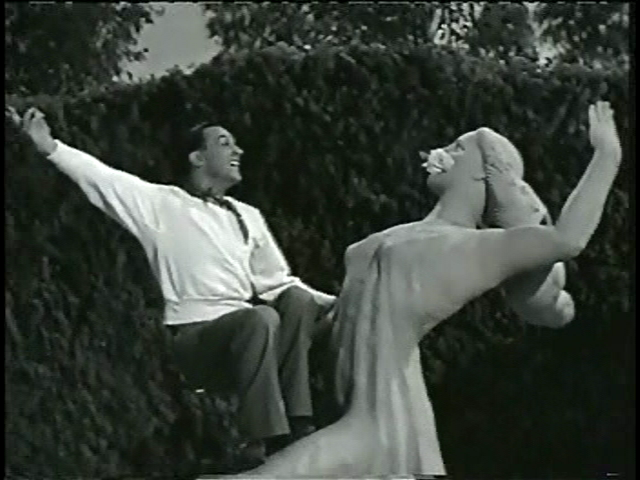
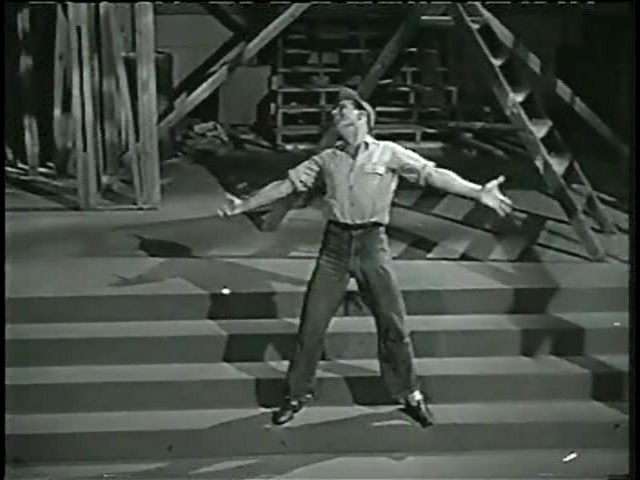
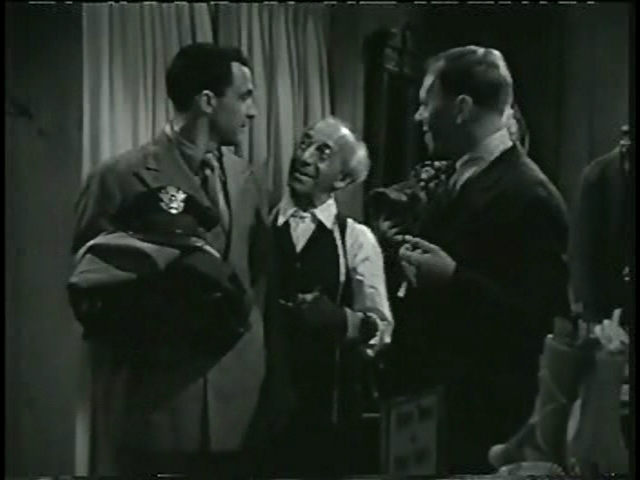
Review: La Cava does manage to slide some nifty sexual innuendos into his Code-era script: a bathing-averse boy naively whines that he “wants to watch [Margo] take a bath”; there are repeated references made to the fact that McDonald and Kelly aren’t “really” married since they never had a chance to consummate their vows. Unfortunately, however, La Cava wastes the talents of lovely Phyllis Thaxter as a young widowed mother Gogarty meets about halfway through the film; while we want her to emerge as a viable rival for Gogarty’s affections (they’re infinitely better suited for one another!), instead she simply serves as convenient bait to make McDonald jealous. Living in a Big Way is redeemed in part by several energetic dance sequences (choreographed by Kelly and his longtime creative partner, Stanley Donen), which any true Kelly fan won’t want to miss; but the film as a whole isn’t must-see viewing. Note: Kelly’s character appears to be slapped with such a ridiculous-sounding last name simply because he’s in a screwball comedy; it’s repeated ad nauseum throughout the film, presumably due to its inherent giggle-value (?). Redeeming Qualities and Moments:
Must See? Links: |
“I’ve made her a great success in the theater; she must live like a successful woman.”
|
Synopsis: |
|
Genres, Themes, Actors, and Directors:
Review: To her credit, Arzner recognized the limitations of what she was given to work with; in a 1977 interview with Guy Flatley for The New York Times, she noted:
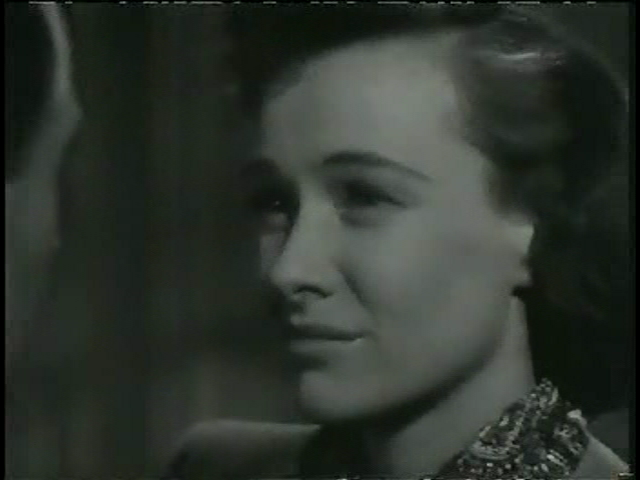
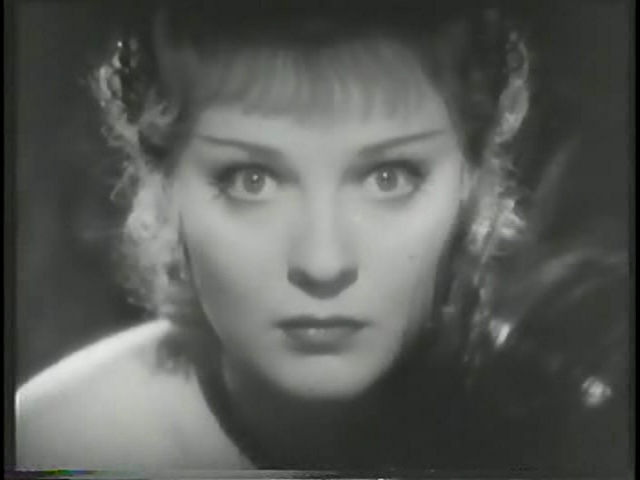
To be fair, Sten actually exhibits a flirty, emboldened charm appropriate for the character she’s playing; it’s her lackluster costars (Atwill in particular is regrettably wooden), and the stale, overly familiar plot — a much-sanitized version of Zola’s episodic novel — which really sink this film. Ultimately, only Gregg Toland’s stunning cinematography (see stills below) elevates Nana a notch above pedestrian. Redeeming Qualities and Moments: Must See? Links: |
“Love alone can make the fallen angel rise — for only two together can enter Paradise.”
|
Synopsis: |
|
Genres, Themes, Actors, and Directors:
Review: It’s smoldering Darnell who — much to Faye’s reported dismay — really carries the film (indeed, Faye was so upset about this fact that she blamed Preminger for butchering her role through editing, and infamously walked away from Fox Studios before her contract was up). While wide-eyed, leggy Darnell was never a truly accomplished actress (my first film appreciation professor — during a discussion of 1950’s No Way Out — snarkily pointed out that Darnell’s idea of acting was to pout or sneer), she radiates insouciant sex appeal, and fits the femme fatale bill perfectly. **** SPOILERS **** Therefore, when she dies halfway through the film, so does any inherent tension in the story. The issue of how poor, duped Faye will respond to news of Andrews’ deception fails to hold our attention; meanwhile, her more intriguing spinster sister (Anne Revere) — with a “love lost” story of her own — is given far too little screen time. While many critics have noted that the film’s unsatisfying denouement is its weakest element — and I’ll agree — ultimately it’s just a capstone on what is mediocre noir at best. Note:The following year, many of the key plot and character elements of Fallen Angel — a roadside California diner, a troubled drifter, an ambitious femme fatale waitress, etc. — would show up in the superior noir classic The Postman Always Rings Twice. Redeeming Qualities and Moments:
Must See? Links: |
“There’s a lotta things about me you don’t know anything about, Dottie — things you wouldn’t understand. Things you couldn’t understand. Things you shouldn’t understand.”