Aguirre, the Wrath of God (1972)

Aguirre, the Wrath of God (1972)

“Fortune smiles on the brave and spits on the coward.”

Synopsis:
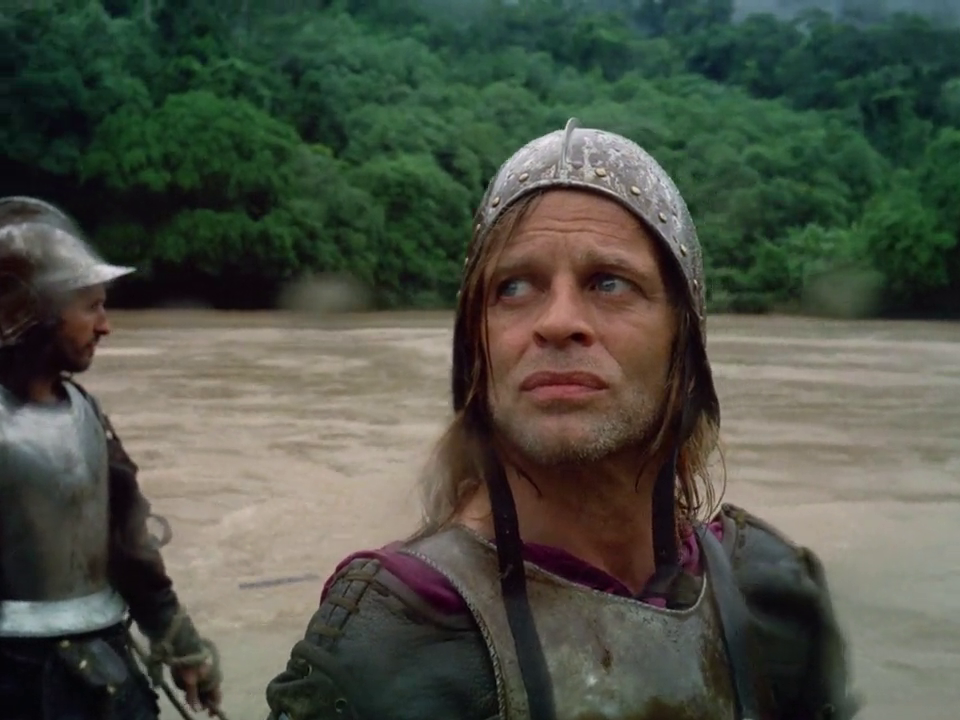
When a mad Spanish conquistador (Klaus Kinski) rebels against the leader (Ruy Guerra) of an expeditionary crew sent by Francisco Pizarro in search of fabled El Dorado on the Amazon River, the fortunes of Kinski’s entire crew — including Guerra’s wife (Helene Rojo), Kinski’s 15-year-old daughter (Cecilia Rivera), a nobleman (Peter Berling), an African slave (Edward Roland), and a monk (Del Negro) chronicling their travails — quickly unravel.

Genres, Themes, Actors, and Directors:

  • At Sea
  • Historical Drama
  • Living Nightmare
  • Ruthless Leaders
  • South and Central America
  • Werner Herzog Films

Response to Peary’s Review:
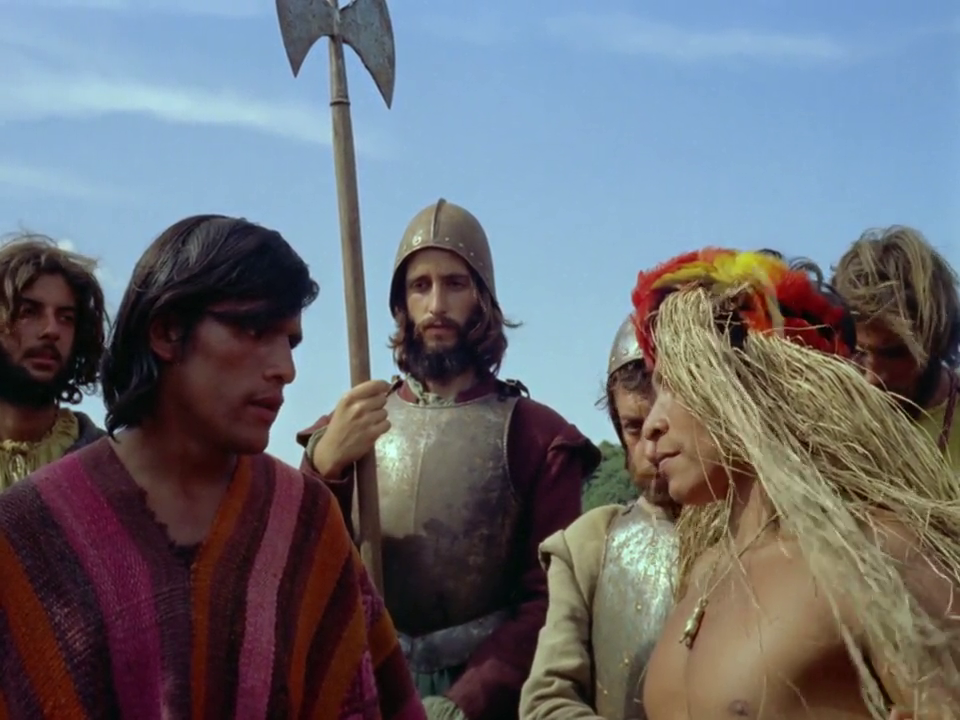
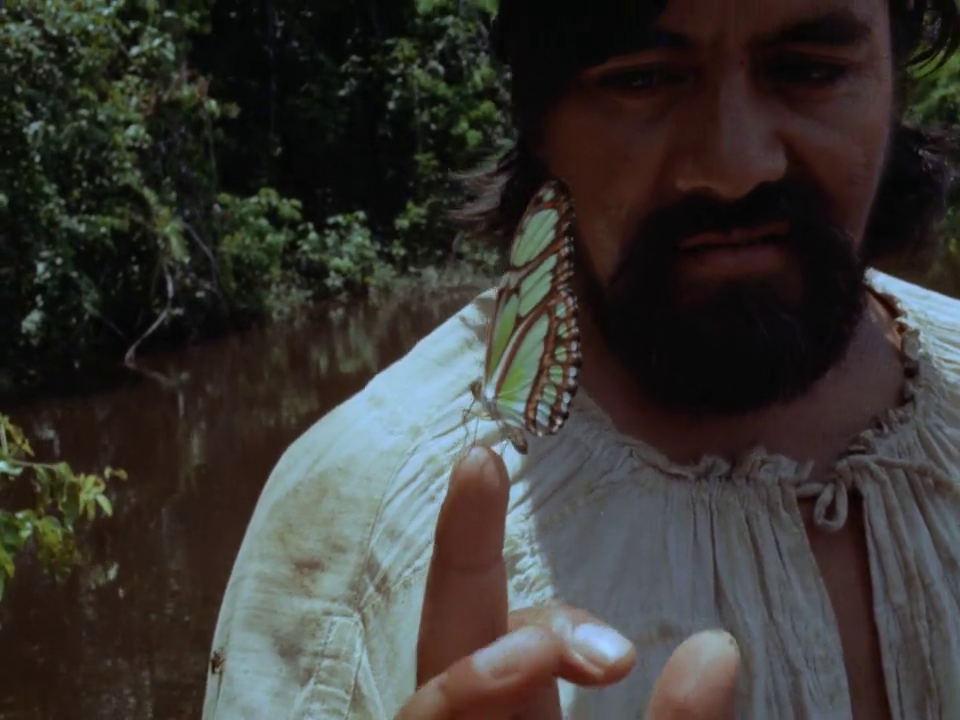
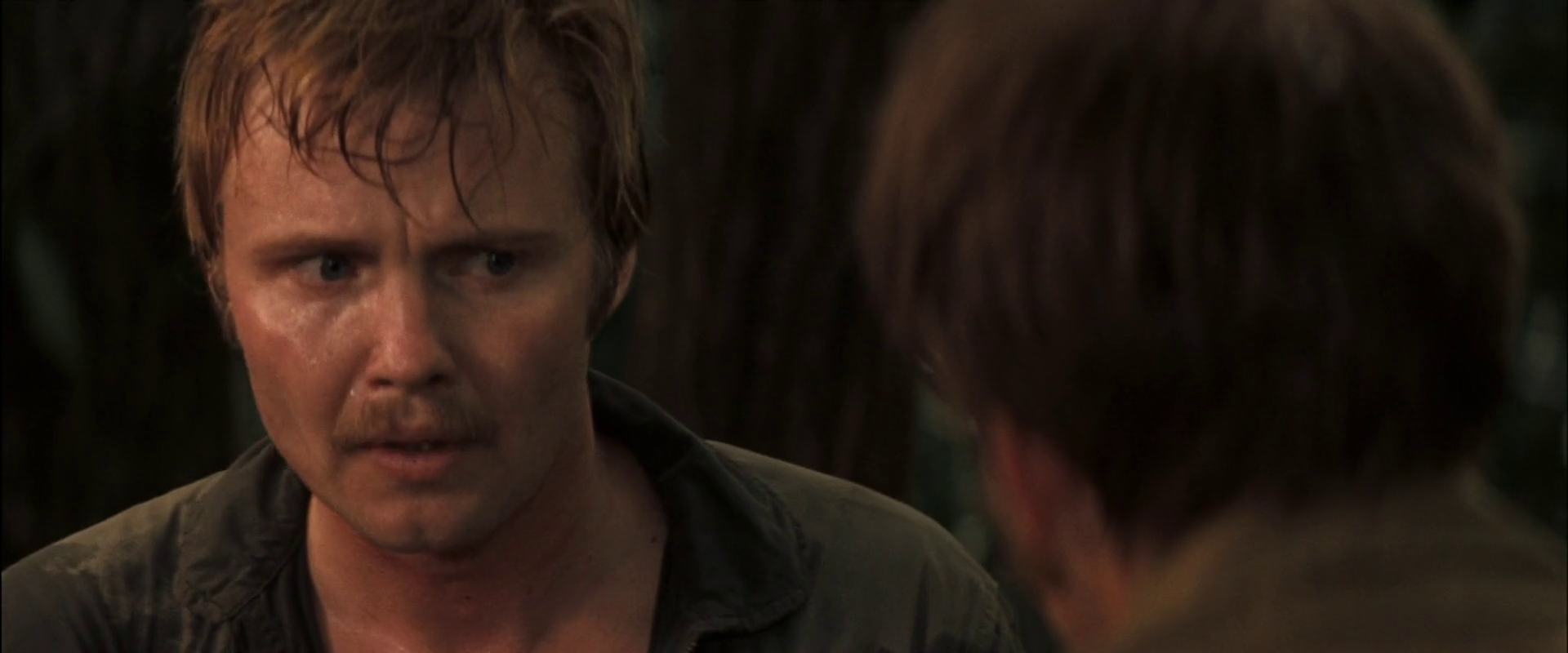
Peary writes that this “fictional masterpiece” by director Werner Herzog was the result of Herzog taking “his cast and crew to unexplored regions of South America — steep mountain ledges and an Amazon tributary”, thus representing “filmmaking under the most trying circumstances” but with “priceless” results, given that “Thomas Mauch’s camera has gone back in time to a lost world that is at once beautiful and terrifying.” Peary points out that this “spellbinding” film — which “at first… is dreamlike”, but ultimately becomes “hallucinatory” — begins “with an incredible image of perhaps a thousand soldiers in full armor, women in long dresses, and Indian slaves dragging cannons along a narrow, steep mountain path”, and ends “with a delirious image of lone-survivor Aguirre stranded on a monkey-covered raft”. He writes that “the journey downriver is full of haunting images: ghostly figures moving in the brush, ready to pick off intruders with arrows, spears, and poison darts; an abandoned cannibal village; a small raft caught in a roaring whirlpool; [and a] hooded black horse that stands abandoned in the prehistoric jungle.” He points out that, “as in [his] other films, Herzog delights in placing characters in hostile environments where, having nothing tangible to fight, they are unable to cope” and “eventually their minds become mush from the constant horror, depression, and fear of death.”

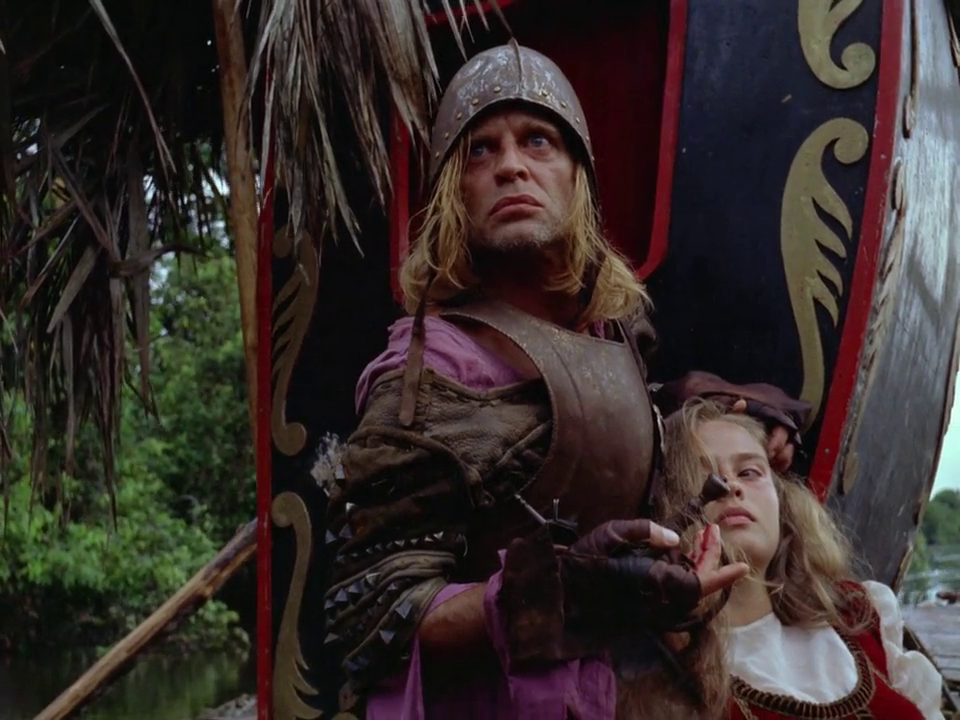
Peary points out that “Aguirre himself has little dialogue, and that is delivered without emotions, but seconds after we first see Kinski — sneering and snarling, gnarled like Richard III, standing at an angle as if to signify he’s at odds with the world, twisting his head before moving his body — we recognize that he is contemptuous of the world and tortured by inner demons.” Peary argues that “certainly Aguirre is meant to represent Hitler (though George Armstrong Custer also is appropriate)”, but “his consistently poor leadership and frustration are treated with such mock delight by Herzog that there’s evidence Aguirre is used as a comic villain, and the film itself is, though somberly presented, a comedy about a most embarrassingly unsuccessful expedition, carried out not by heroic figures, but by nefarious Spanish imperialists who deserved the sad end Herzog happily writes for them”. Peary concludes his GFTFF review by noting that “Popol Vuh’s music contributes greatly, making the journey come across as a funeral procession.”

Peary’s comprehensive review (elaborated upon in Cult Movies) nicely describes this incomparable film, “whose very production seems too remarkable to comprehend.” It’s well worth viewing, numerous times.

Redeeming Qualities and Moments:

  • Klaus Kinski as Don Lope de Aguirre
  • Thomas Mauch’s cinematography

  • Many memorable, haunting images


  • Popul Vuh’s soundtrack

Must See?
Yes, of course, as an influential and long-standing cult favorite by a master director.

Categories

(Listed in 1001 Movies You Must See Before You Die)

Links:

Salt of the Earth (1954)

Salt of the Earth (1954)

“I want to arise, and push everything up with me as I go.”

Synopsis:
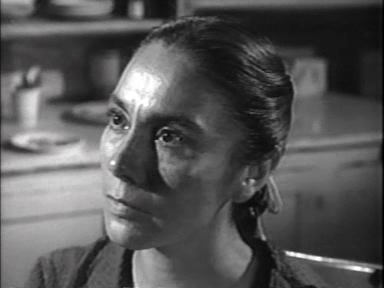
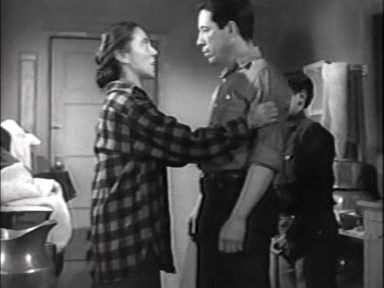
Along with others in her community, the wife (Rosaria Revueltas) of a zinc mine worker (Juan Chacon) resists traditional gender norms in supporting the men in their strike for better working and living conditions.

Genres, Themes, Actors, and Directors:

  • Feminism and Women’s Issues
  • Labor Movement
  • Marital Problems
  • Mining Towns
  • Strong Females

Response to Peary’s Review:
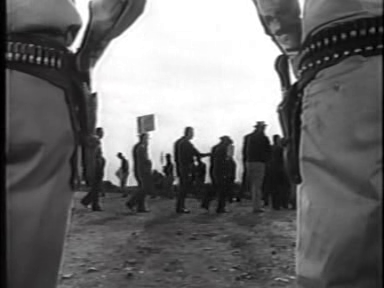
Peary begins his review of this “remarkable, stirring political film” by explaining that it “tells the true story of a successful 13-month strike at a zinc mine in New Mexico, begun in 1953… that was won because the wives of the miners took over the picket line after a Taft-Hartley injunction enjoined their husbands from picketing.” He writes that “not only does this film give women proper recognition for their contribution to the labor movement of the seventies, in that it makes an issue of equality in jobs, equality in the home, and sexual equality” but that “this was the first American narrative film set in America that dared to have women standing with their husbands against the oppressors”: “Significantly, their liberation is achieved by them independently — it is not, cannot, be given them by men; their liberation is then in turn a liberating catalyst for men, who are also trapped by sex-role conventions.” He adds that “the film’s strong theme is that the liberated woman is no real threat to her man; her existence will benefit him.”

Despite being “called a subversive film in Congress and the New York Times before its release”, this is actually a “pro-human rather than anti-American” film, one “which makes no pitch for revolution — just solidarity against the power elite, encompassing racial brotherhood and sexual equality”. Peary notes that the “script was written with cooperation of the participants in the strike, many of whom act in the film”, and that “we are touched by the characters because they are not epic figures — only when they stand together do they take on heroic proportions.” This engaging film (one that “lives up to the legend”) possesses “many scenes [that] will cause smiles, tears, cheers”, and was selected by Peary (over On the Waterfront, which he doesn’t even nominate) as Best Movie of the Year in his Alternate Oscars, where he refers to it as “the greatest political narrative ever made in the United States.”

In his Alternate Oscars review, Peary notes his pleasure in giving the award to a film “made by people blacklisted in Hollywood (director [Herbert] Biberman, producer Paul Jarrico, writer Michael Wilson, cinematographers Leonard Stark and Stanley Meredith, composer Sol Kaplan, [and] actor Will Geer, among them), television workers, and blacks not allowed in Roy Brewer’s segregated International Alliance of Theatrical and State Employees; was cast mostly with the working people the film is about; was condemned in the Hollywood Press, The New York Times, and by RKO box Howard Hughes and members of HUAC; was processed surreptitiously because Hollywood labs refused to handle it; was edited secretly; and was booked into only thirteen theaters nationally (and those theaters were picketed) because Brewer’s IATSE projectionists refused to show it.” With such a lengthy list of constraints, one might expect this movie to be both less polished and more pedantic than it is — but it remains surprisingly engaging, and more relevant than ever. It’s a pleasure to know, as Peary writes from taking with producer Jarrico, that it “has been seen, probably, by more people than any film in history.”

Redeeming Qualities and Moments:

  • Rosaura Revueltas as Esperanza
  • Fine performances by the non-professional cast
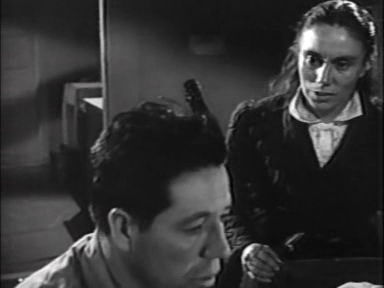
  • Powerful direction and cinematography
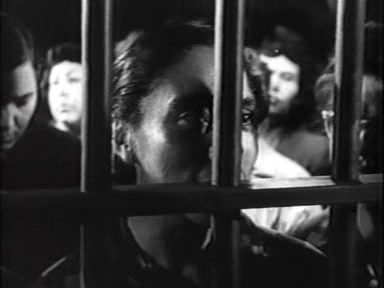
  • Appropriately disturbing evidence of entrenched racism and sexism
Must See?
Yes, both for its historical relevance and as a still-noteworthy drama. Discussed at length in Peary’s Cult Movies 2 book.

Categories

  • Cult Movie
  • Historically Relevant

(Listed in 1001 Movies You Must See Before You Die)

Links:

Deliverance (1972)

Deliverance (1972)

“Sometimes you have to lose yourself before you can find anything.”

Synopsis:
When four friends (Burt Reynolds, Jon Voight, Ned Beatty, and Ronny Cox) go on a canoeing vacation in the backwoods of Georgia, they quickly find themselves endangered by both extreme rapids and brutal local denizens.

Genres, Themes, Actors, and Directors:

  • Burt Reynolds Films
  • Class Relations
  • Deep South
  • John Boorman Films
  • Jon Voight Films
  • Living Nightmare
  • Masculinity
  • Ned Beatty Films
  • Rape
  • Survival
  • Vacation

Response to Peary’s Review:
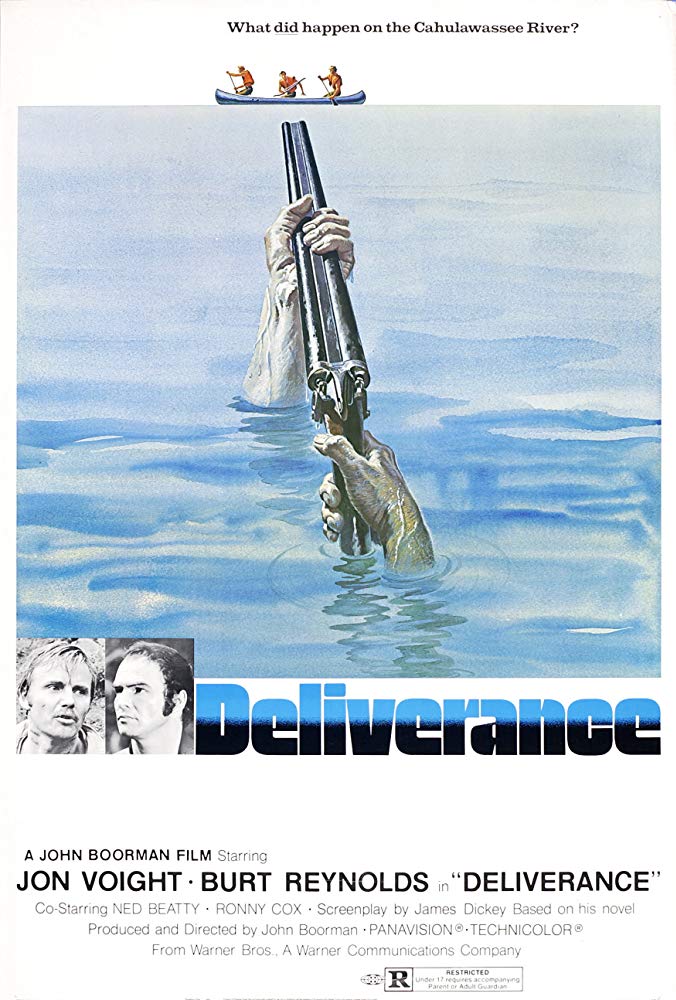
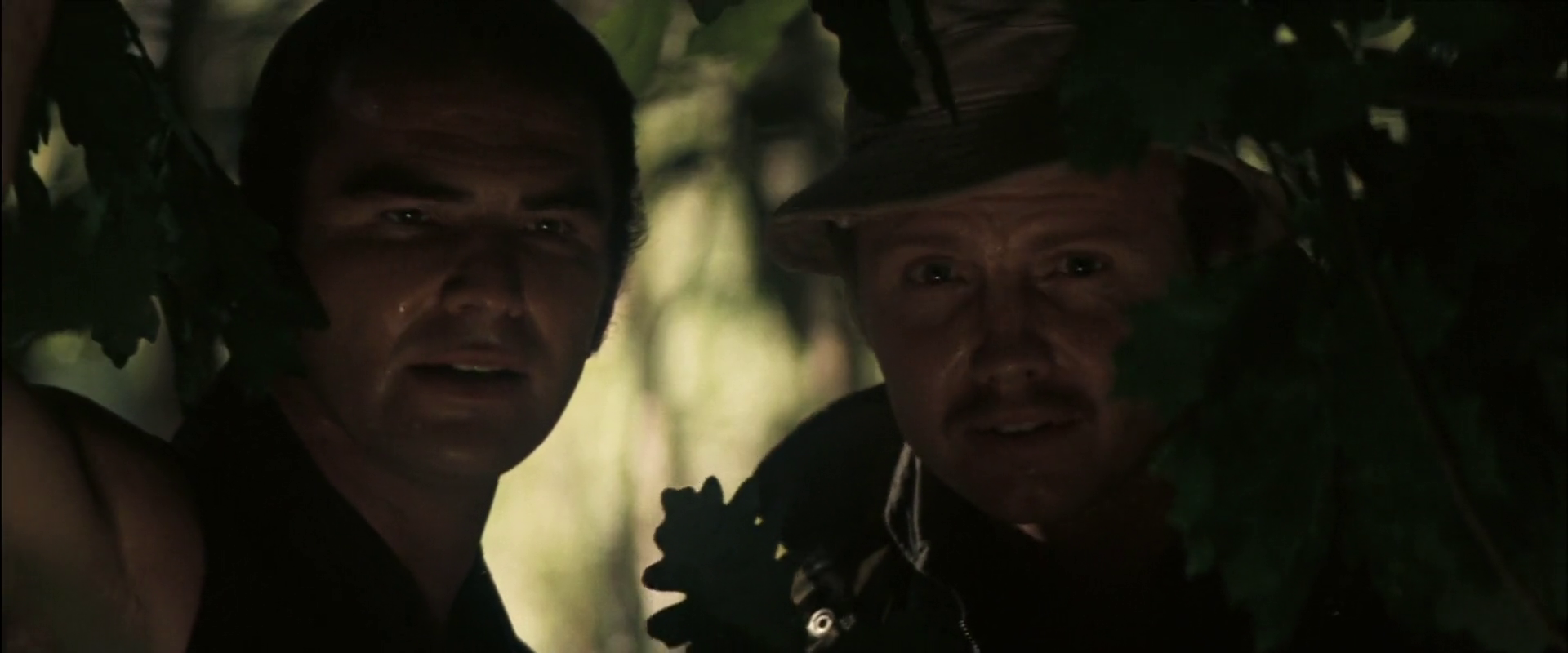
Peary opens his review of this disturbing thriller by noting that “in some of our more terrifying dreams we may find ourselves thrust into an alien, hostile environment where we are at the mercy of strangers from another culture who want to kill us for reasons we can’t comprehend”. He argues that “no film better captures the essence of this particular nightmare than this thrilling version of James Dickey’s novel, directed by John Boorman and scripted by Dickey”: “Indeed, this film depicts the male’s worst nightmare — having his masculinity threatened.” Peary describes the “illiterate hillbillies” encountered by the vacationing quartet as people “whose bodies and brains seem to have been damaged by malnutrition, disease, and inbreeding”; when Voight and Beatty “take the wrong fork in the river and find themselves threatened by two vile and frightening backwoodsmen (Bill McKinney, Herbert ‘Cowboy’ Coward)”, viewers are subjected to “an unforgettably shocking scene”.

Peary argues that the “film is both provocative and an extremely powerful nail-biter”, and adds the weirdly unnecessary caveat that “it’s too intense and violent for kids” (no kidding!!!). Finally, he points out that the movie is “beautifully filmed by Vilmos Szigmond”, and that a “highlight is when Cox plays ‘Dueling Banjos’ with a young hillbilly” (Billie Redden, a local who was cast for his appearance rather than actual ability to play the banjo). I have little to add to Peary’s accurate review, other than stressing that this is a film I fully acknowledge as brilliant, but don’t want to watch again for a really, really long time. With that said, I adore everything about the dueling banjos scene — from the creative camera angles (it’s no coincidence that Redden is placed far above Cox) and close-ups of Redden’s face, to the juxtaposition of the beginning of this scene with Reynolds’ negotiations to find drivers for their trip, to Beatty’s disparagingly throwaway comment about “genetic deficiencies” as Redden deftly strums, to the old man in a hat hopping around in dancing delight (while Beatty openly mocks him), to Cox’s humble admission near the end of the song (“I’m lost”) as Redden’s grin widens and he continues playing. This group does indeed become lost, unaware of the dangerous and impenetrable power dynamics they’re about to enter into.

Redeeming Qualities and Moments:

  • Strong lead performances
  • Vilmos Zsigmond’s cinematography

  • Ronny Cox and Billy Redden’s banjo duet/duel (and the soundtrack based on the tune)

Must See?
Yes, as a disturbing and powerful classic.

Categories

  • Genuine Classic

(Listed in 1001 Movies You Must See Before You Die)

Links:

Hunchback of Notre Dame, The (1939)

Hunchback of Notre Dame, The (1939)

“I’m not a man and I’m not a beast. I’m as shapeless as a man on the moon!”

Synopsis:
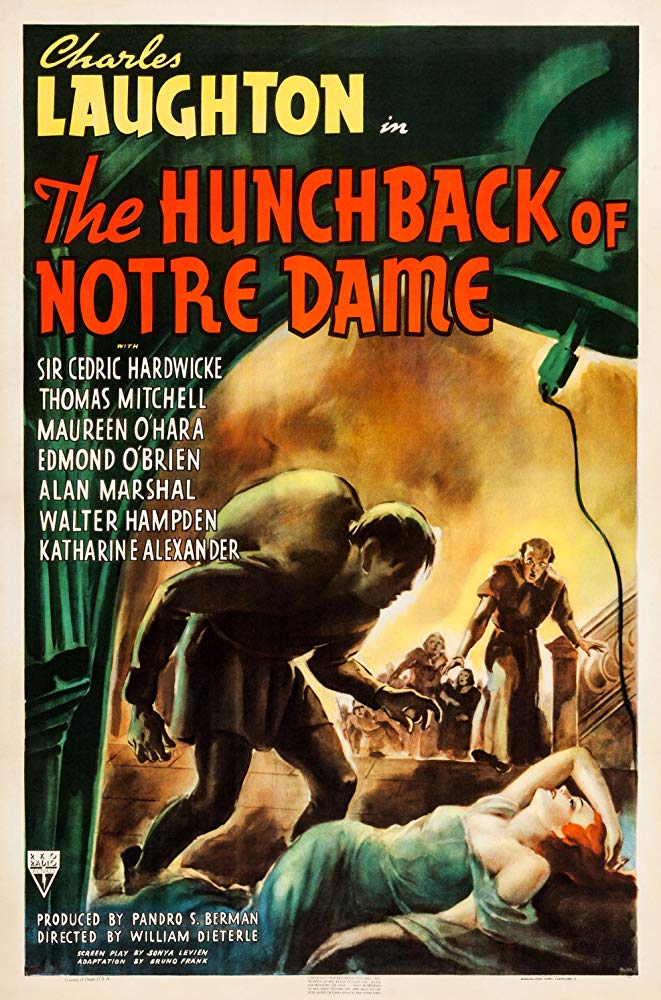
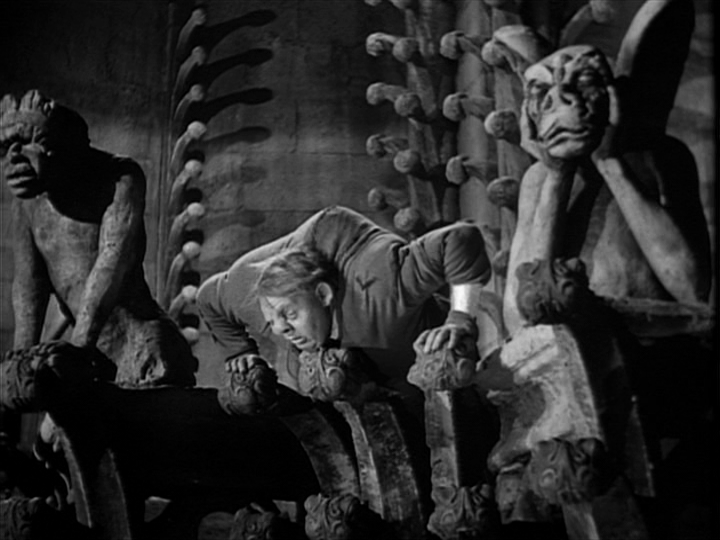
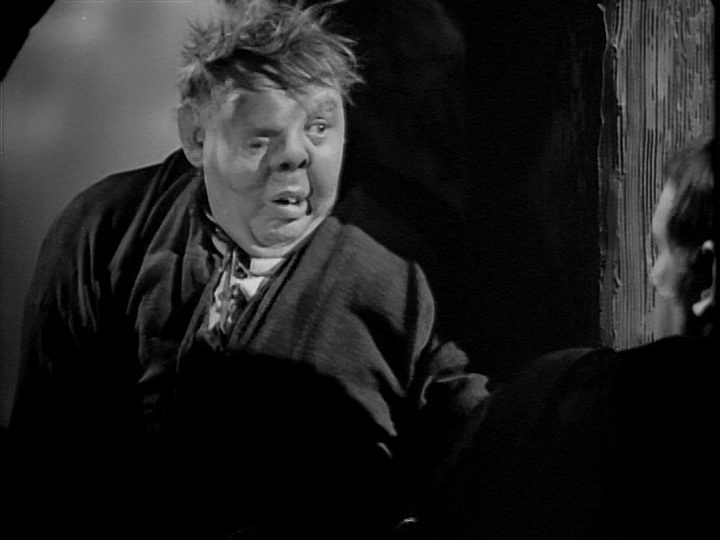
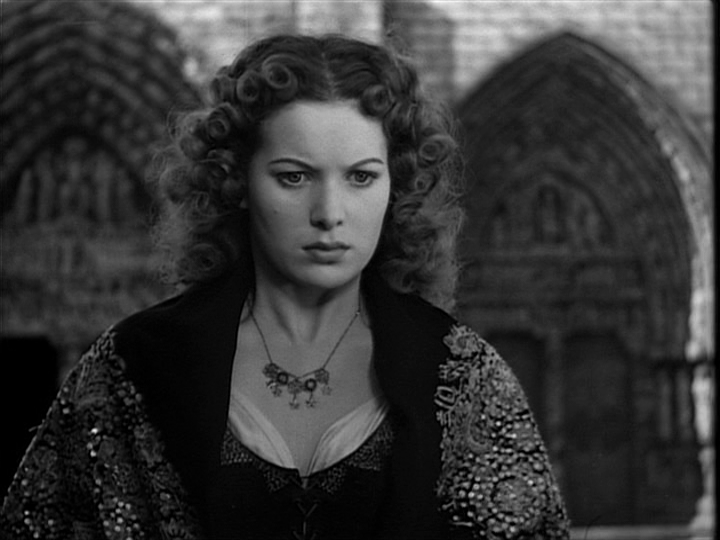
In medieval Paris, a hunch-backed bell-ringer (Charles Laughton) at Notre Dame Cathedral provides sanctuary for a young gypsy woman (Maureen O’Hara) falsely accused of murder by an insanely jealous chief justice (Cedric Hardwicke) who lusts after her. Will Esmeralda (O’Hara) be saved by her new husband (Edmond O’Brien), the King of the Beggars (Thomas Mitchell), or Quasimodo (Laughton) himself?

Genres, Themes, Actors, and Directors:

  • Charles Laughton Films
  • Disfigured Faces
  • Edmond O’Brien Films
  • Falsely Accused
  • Gypsies
  • Historical Drama
  • Maureen O’Hara Films
  • Misfits
  • Thomas Mitchell Films
  • William Dieterle Films

Response to Peary’s Review:
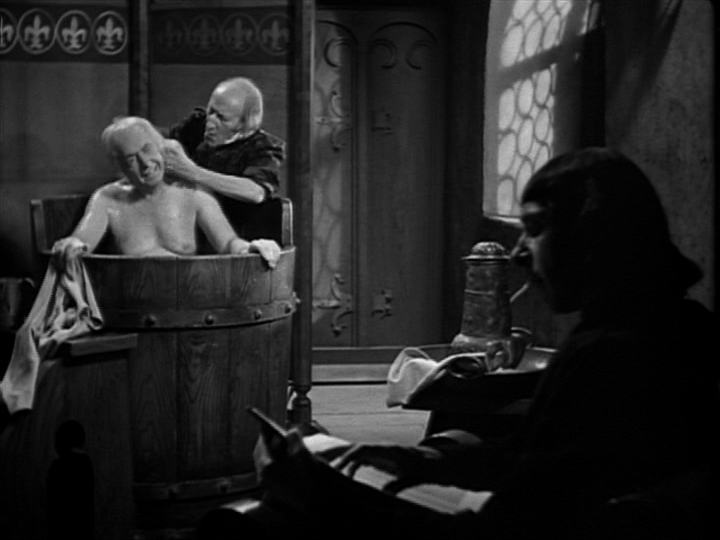
Peary writes that this “visually impressive telling of Victor Hugo’s classic, set in 11th-century Paris”, features an “excellent cast” — including a young Edmond O’Brien “looking skinny”.

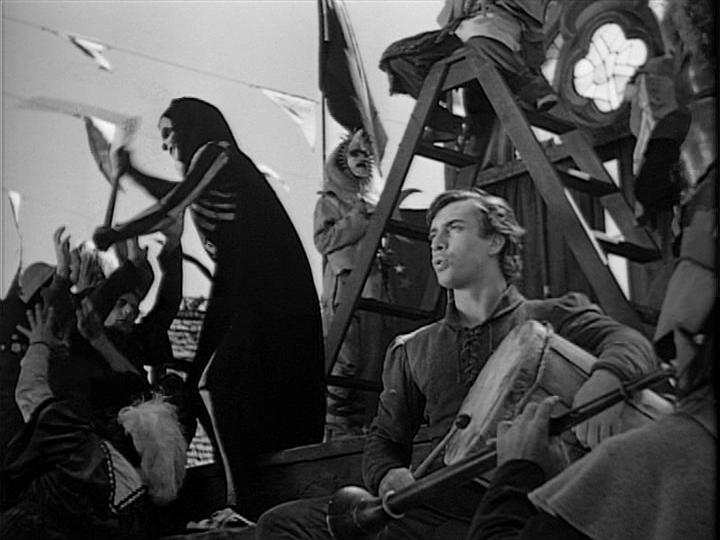
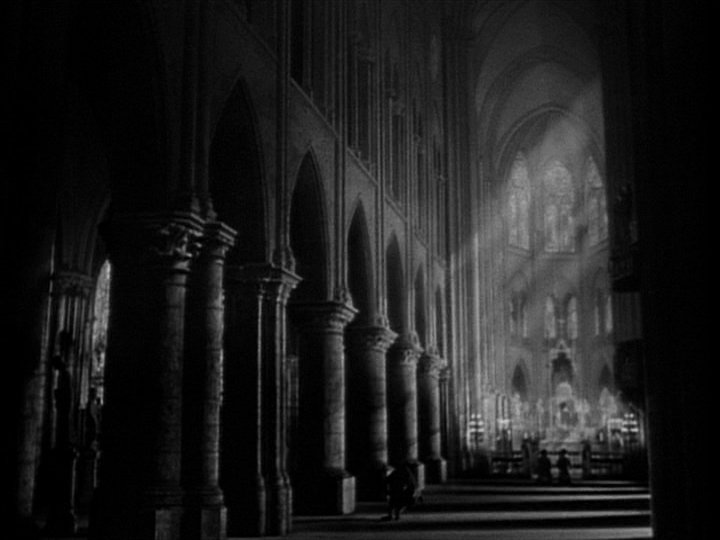
He notes that director William Dieterle handles “the crowd scenes (more than 3000 extras were employed) expertly” and instructed “cameraman Joseph H. August to use some interesting angles.” However, he argues that while “Laughton has received a great deal of praise for his performance”, he “doesn’t really get much opportunity to act” given that “what few lines he has are intended to make us (or Esmeralda, or the Parisians in the streets) feel sorry for him”.

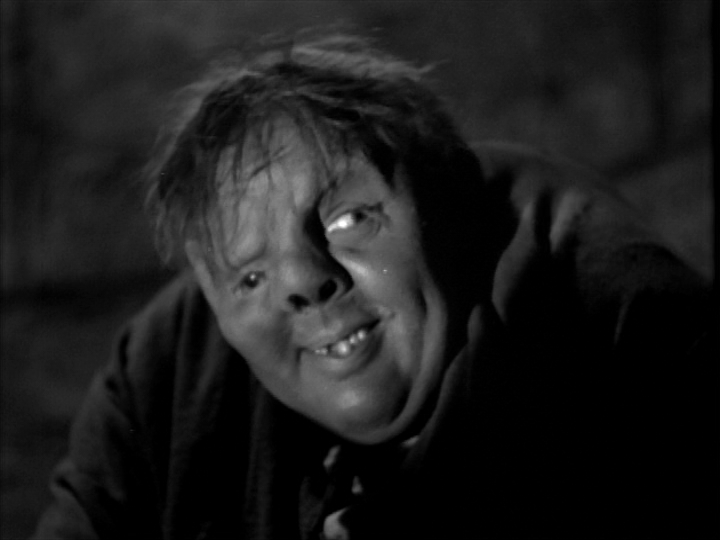
Peary believes “the film surely would have worked better if Laughton’s hunchback didn’t let his physical appearance completely dominate his every thought and word, because he’ll get enough pity as it is just from his hideous looks (the make-up people must have used a deformed walrus as Quasimodo’s model”). He argues that “O’Hara, who is breathtakingly beautiful, comes across better.”

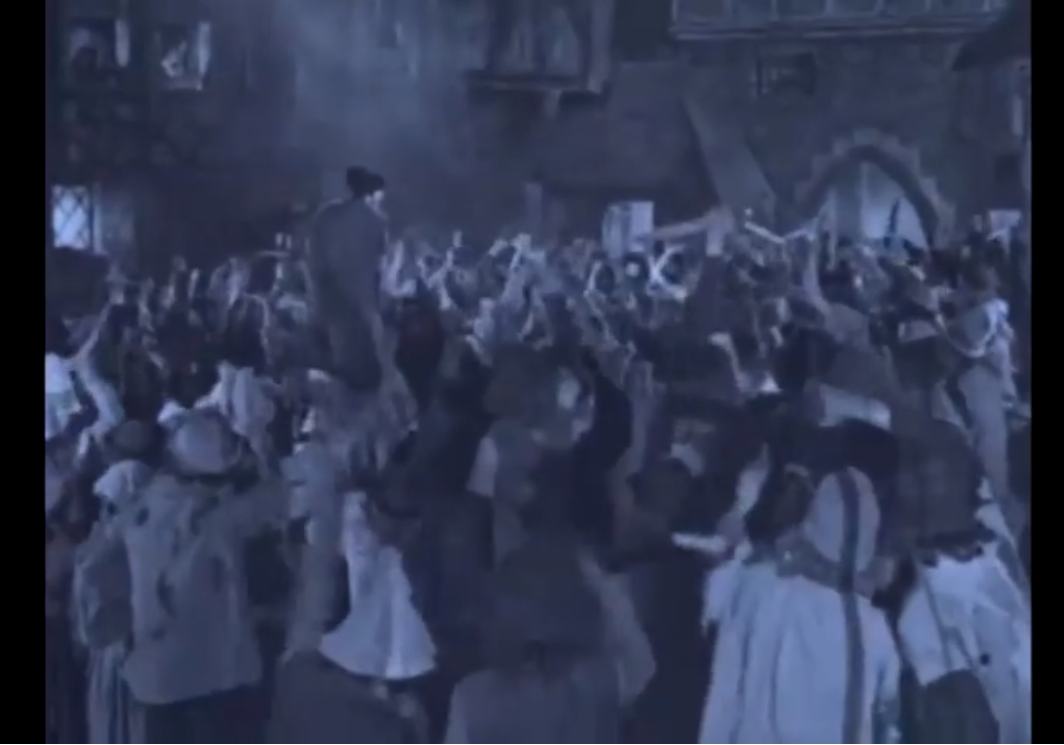
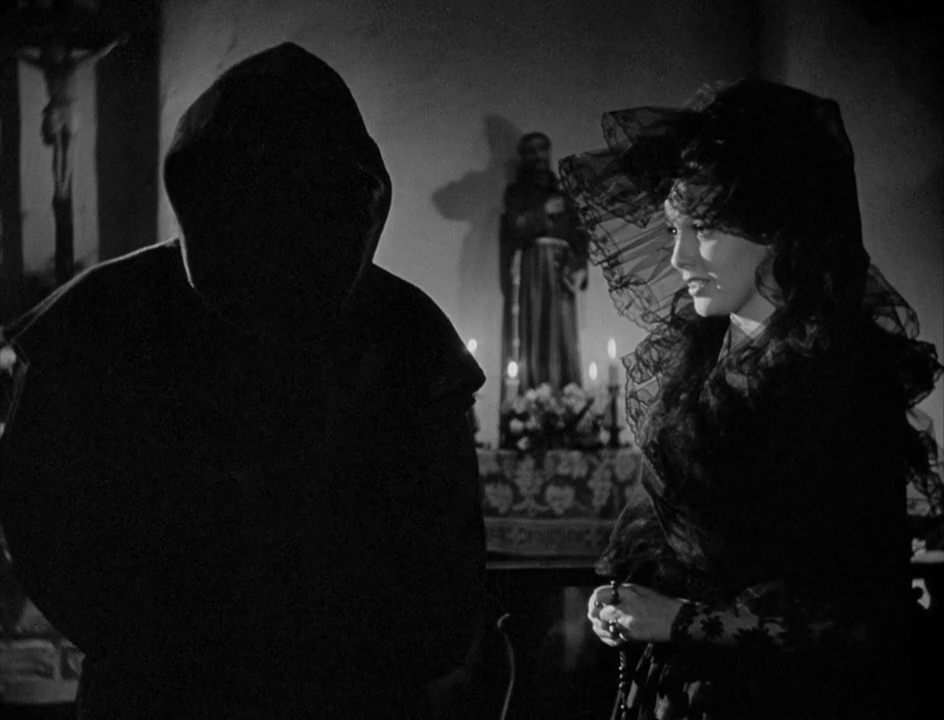
I’m less critical of Laughton’s performance and make-up than Peary, though I’ll admit to not being a huge fan of the storyline either in this adaptation or the earlier silent version with Lon Chaney, Sr. — Quasimodo’s personality and background ultimately seem under-developed (is he mentally challenged, and/or simply irreparably traumatized?), as does that of Hardwicke’s character:

… and the damsel-in-distress, Beauty-and-the-Beast narrative hook doesn’t do much for me. It’s once again the sets and crowds (along with atmospheric cinematography) that most impress in this film.

Redeeming Qualities and Moments:

  • Charles Laughton as Quasimodo
  • Maureen O’Hara as Esmeralda
  • Van Nest Polglase’s sets
  • Joseph August’s cinematography
  • Perc Westmore’s make-up

Must See?
No, though it’s worth a look as an Oscar-nominated classic.

Links:

Hunchback of Notre Dame, The (1923)

Hunchback of Notre Dame, The (1923)

“All Quasimodo knew was that this girl had once been kind to him.”

Synopsis:
A deformed bell-ringer (Lon Chaney, Sr.) in Notre Dame Cathedral provides sanctuary to a young gypsy woman (Patsy Ruth Miller) falsely accused of killing a nobleman (Norman Kerry) who was actually stabbed by the jealous and unscrupulous brother (Brandon Hurst) of an archdeacon.

Genres, Themes, Actors, and Directors:

  • Disabilities
  • Falsely Accused
  • Gypsies
  • Historical Drama
  • Lon Chaney, Sr. Films
  • Misfits
  • Silent Films

Response to Peary’s Review:
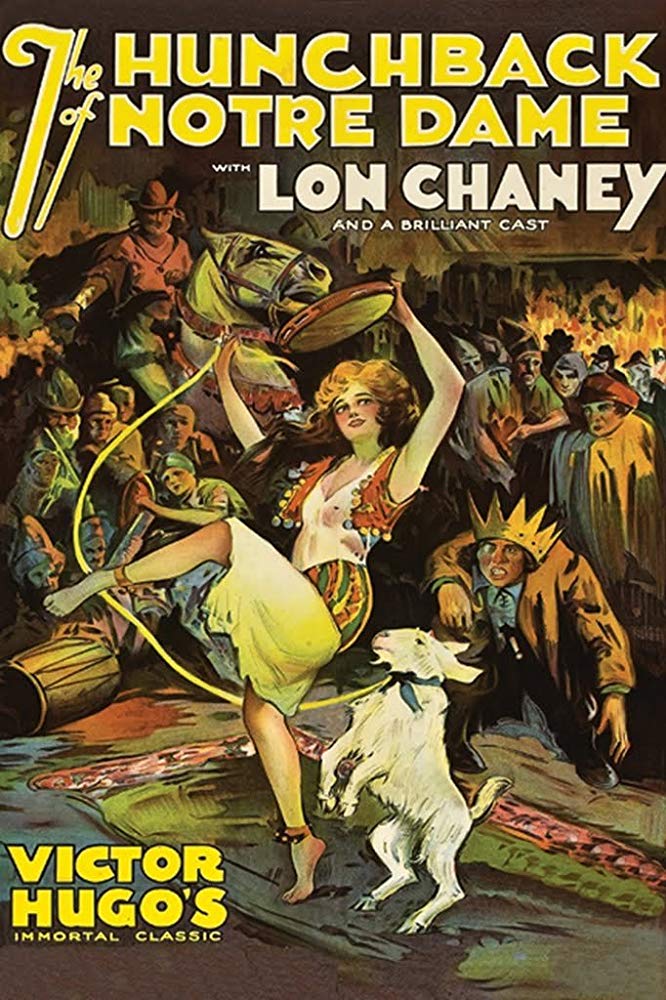
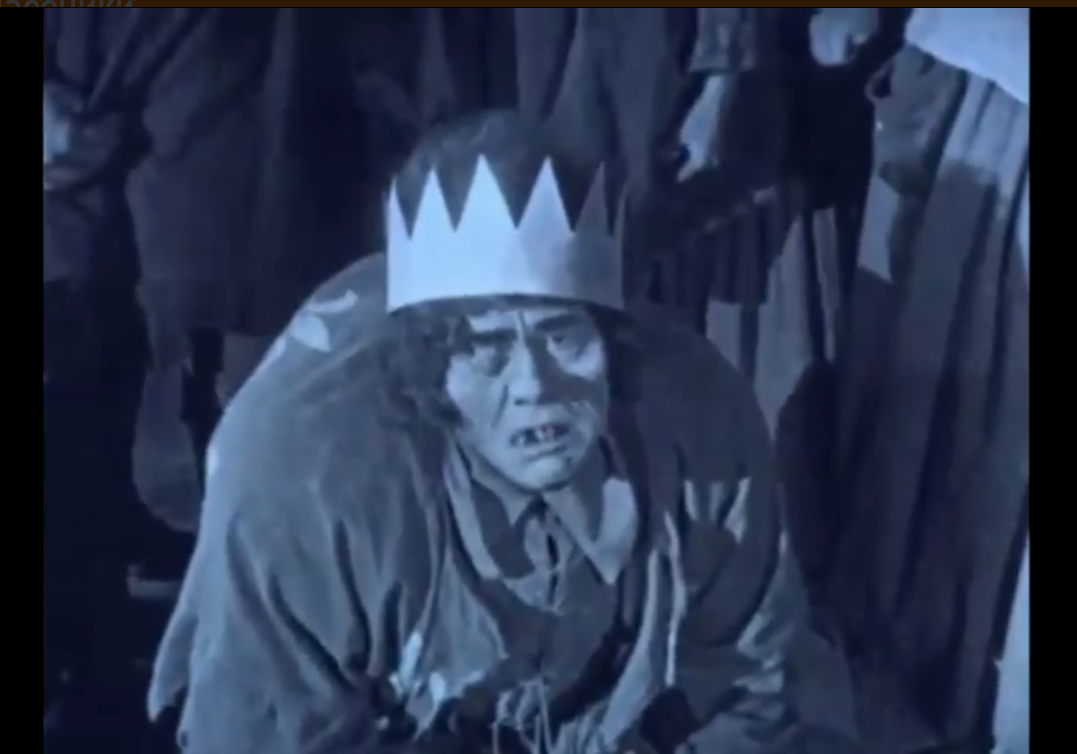
Peary recommends that film fanatics see this “first of many screen adaptations of Victor Hugo’s classic” before any others. He notes that it’s an “impressive production with large sets and hundreds of extras”, “beautifully photographed, ambitiously staged by director Wallace Worsley, and marvelously acted” by Chaney and Miller. He points out that the “key to Chaney’s definitive performance as Quasimodo is that his expressions and gestures are subtle, not demonstrative as one would expect in a silent picture”; he argues that while “later actors who played the hunchback hammed it up and worked too hard to get our pity”, “Chaney realized that the make-up alone was strong enough to make viewers feel sympathy for the hunchback — he wanted to show that Quasimodo’s personality was opposite of his monstrous exterior”. Peary concludes his review by noting that “the finale is extravagant and exciting, then poignant.” While I’m suitably impressed with how lavishly well-mounted this early silent flick is, I share less of Peary’s overall enthusiasm. It’s certainly worth a look for Chaney’s memorable performances, but the storyline creaks.

Redeeming Qualities and Moments:

  • Lon Chaney, Sr. as Quasimodo
  • Impressive sets (spanning 19 acres) and handling of large crowds

Must See?
No, though it’s worth a look as a lavish early silent adaptation, and to see Chaney, Sr. in one of his signature roles.

Links:

Dodge City (1939)

Dodge City (1939)

“We’re the public disgrace of America.”

Synopsis:
A wagon train driver (Errol Flynn) falls for the beautiful sister (Olivia de Havilland) of an immature young man (William Lundigan) who is accidentally killed in a cattle stampede. Meanwhile, he reluctantly agrees to become sheriff of a town dominated by a corrupt cattle buyer (John Cabot).

Genres, Themes, Actors, and Directors:

  • Ann Sheridan Films
  • Corruption
  • Errol Flynn Films
  • Michael Curtiz Films
  • Olivia de Havilland Films
  • Settlers
  • Sheriffs
  • Ward Bond Films
  • Westerns

Review:
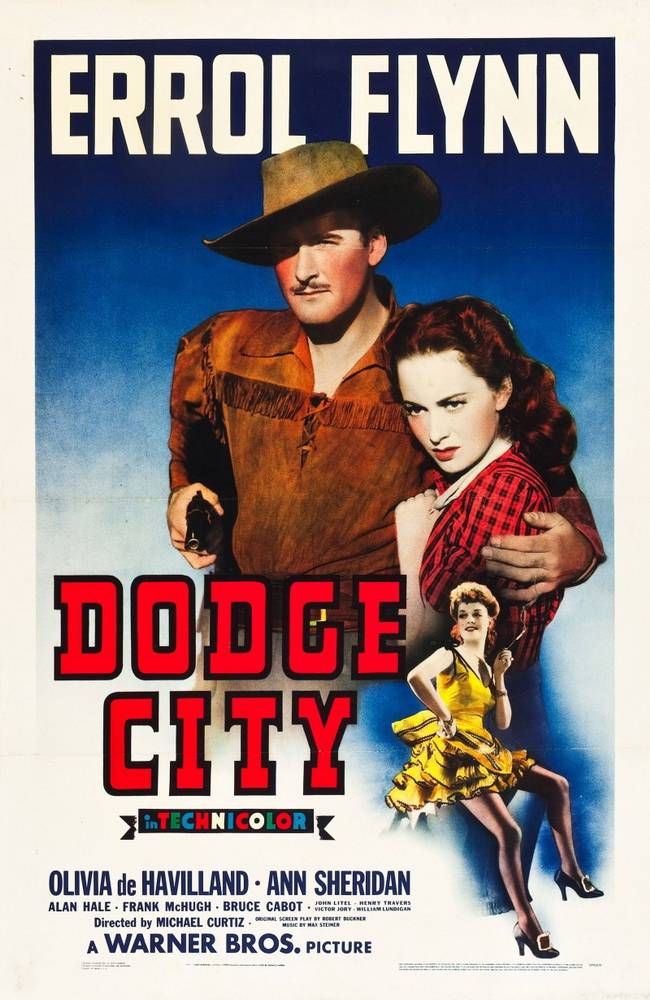
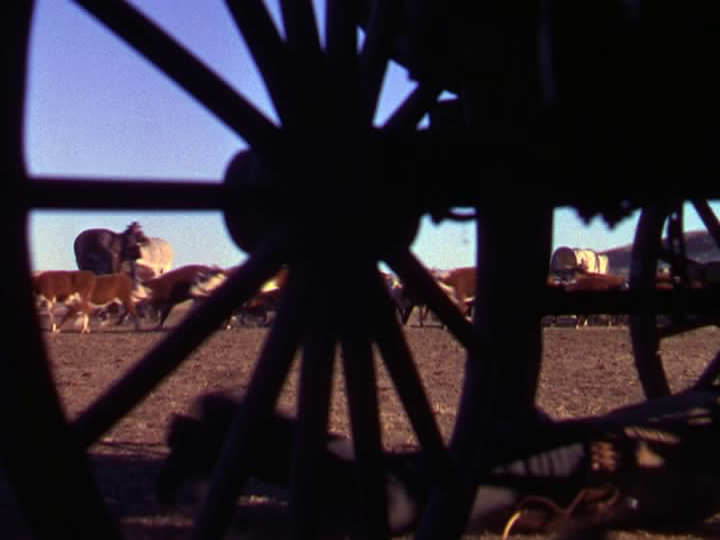
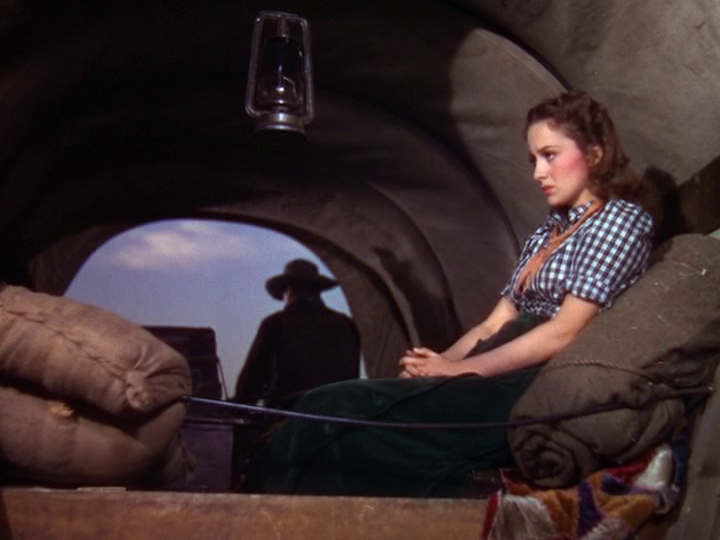
Errol Flynn made his western debut in this competently directed (by Michael Curtiz) yet narratively predictable oater about a reluctant sheriff taking over the lawless frontier town of Dodge City, Kansas. Flynn handles his role well, and the Technicolor cinematography is gorgeous — but as DVD Savant puts it so bluntly in his review, Dodge City “can only be described as a big-studio superwestern, an attempt to put a fancy wrapper on the same themes as had been playing out in cheap series oaters for thirty years.” A similar storyline was handled with greater panache in Jacques Tourneur’s Wichita (1955), which is recommended instead.

Redeeming Qualities and Moments:

  • Sal Polito and Ray Rennahan’s cinematography


Must See?
No, though it’s certainly worth a look by Western fans.

Links:

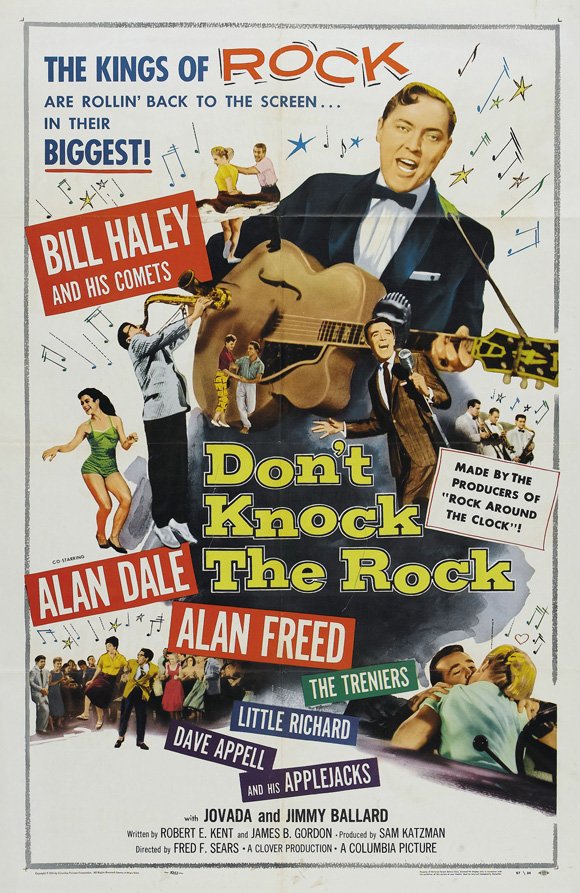
Don’t Knock the Rock (1956)

Don’t Knock the Rock (1956)

“Rock ‘n roll is for morons!”

Synopsis:
A hot young crooner (Alan Dale) attempts to get away from clamoring crowds of groupies by returning to his hometown, where he learns that its conservative mayor (Pierre Watkins) and a local columnist (Fay Baker) disapprove of rock ‘n roll’s influence on youth. Things quickly become even more complicated when Dale falls for Baker’s daughter (Patricia Hardy), and the rock-loving teenage daughter (Jana Lund) of an influential townsman (George Cisar) repeatedly attempts to seduce Dale.

Genres:

  • Generation Gap
  • Morality Police
  • Musicians
  • Rock ‘n Roll

Response to Peary’s Review:
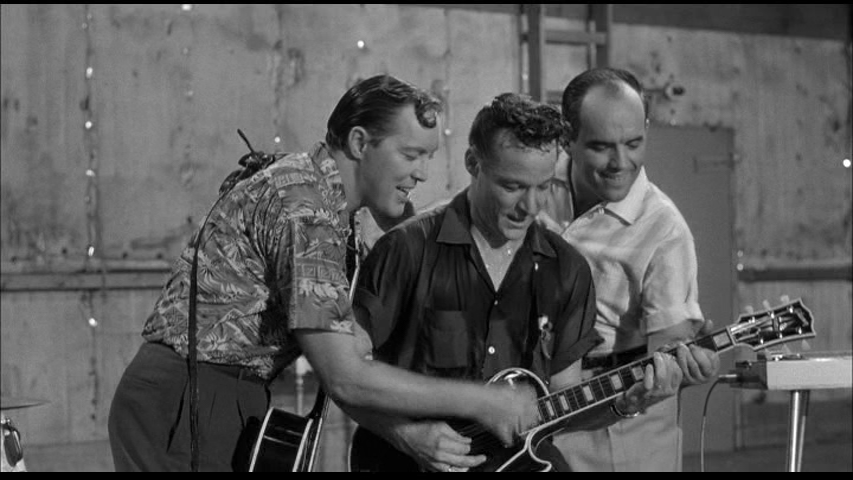
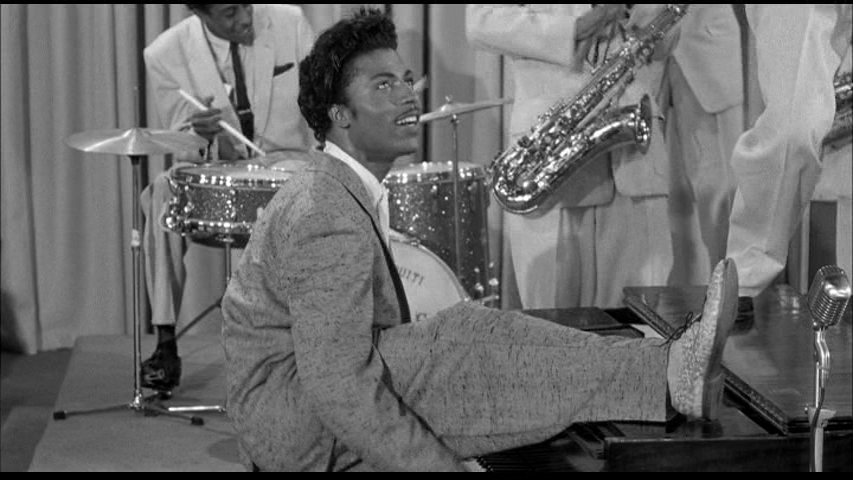
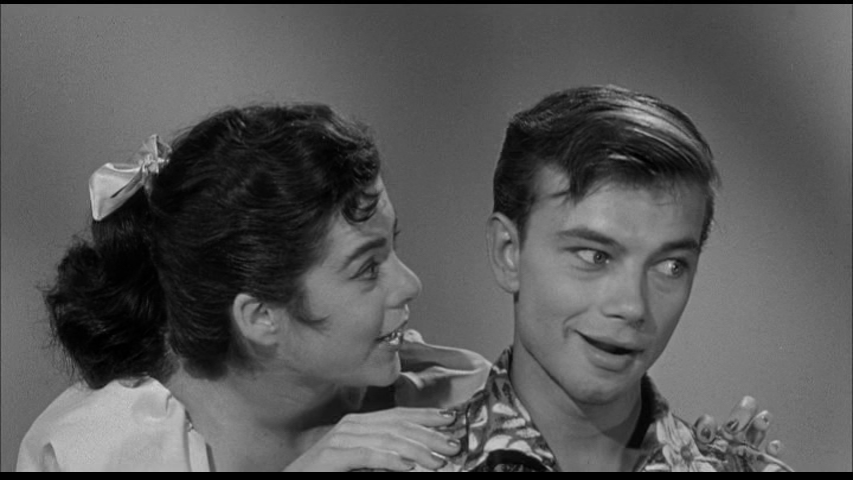
Modern film fanatics likely won’t have heard of crooner Alan Dale, who sings nicely but displays decidedly underwhelming acting chops in this companion piece to Rock Around the Clock (1956). The film’s most notable subplot involves a seductive underage teen (Lund) who literally won’t take no for an answer: if cell phones were around at that time, Dale would want to film their interactions as evidence on his own behalf. Of course, this “generation clash” flick is really all about showcasing key players in the rock ‘n roll “movement”, and to that end there are several enjoyable musical numbers by big names — however, it’s certainly not must-see viewing for anyone other than die-hard fans of this genre and era.

Redeeming Qualities and Moments:

  • Several fun musical sequences

  • Humorously over-the-top displays of cross-generational clashing

Must See?
No; skip this one unless you’re a fan of the musicians or up for a few chuckles. Listed as a Camp Classic in the back of Peary’s book.

Links:

Brother Orchid (1940)

Brother Orchid (1940)

“I always was a great guy for orchids. That’ll be my new tag: Brother Orchid.”

Synopsis:
Before a crime lord (Edward G. Robinson) travels to Europe in search of some “class”, he helps his loyal girlfriend (Ann Sothern) secure a job and leaves his territory in the hands of an underling (Humphrey Bogart). Upon his return, he is nearly killed by Bogart and hides out with a group of flower-growing monks (including Donald Crisp and Cecil Kellaway) who help him achieve a change of heart. When Robinson learns his girlfriend is about to marry a wealthy cowboy (Ralph Bellamy), he emerges from seclusion and decides to take action — but will his new, more charitable outlook on life impact his choices?

Genres, Themes, Actors, and Directors:

  • Ann Sothern Films
  • Cecil Kellaway Films
  • Character Arc
  • Donald Crisp Films
  • Gangsters
  • Humphrey Bogart Films
  • Mistaken or Hidden Identities
  • Priests and Ministers
  • Ralph Bellamy Films

Review:
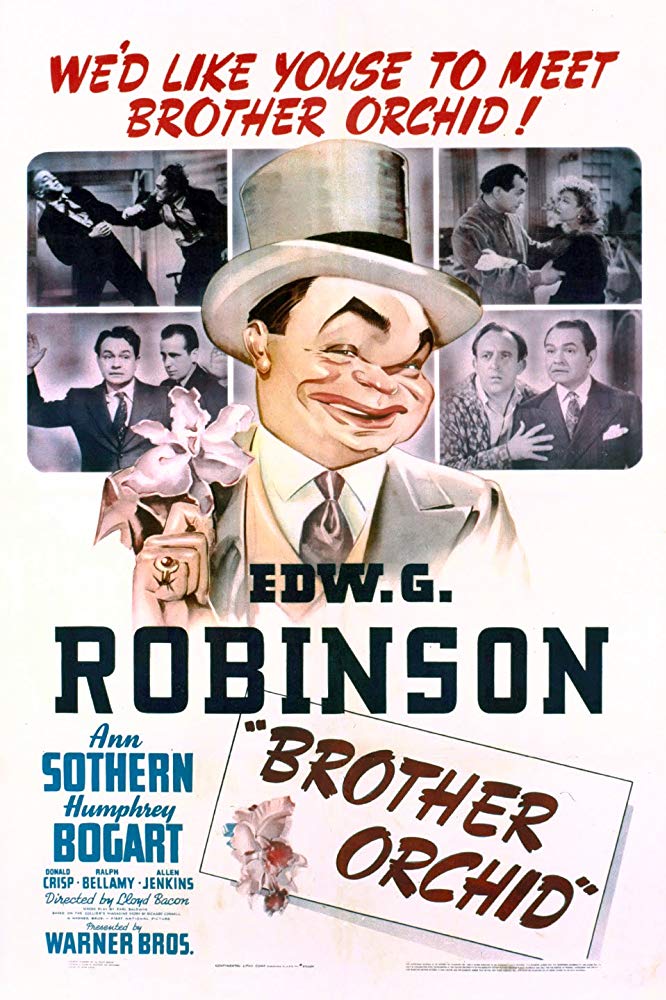
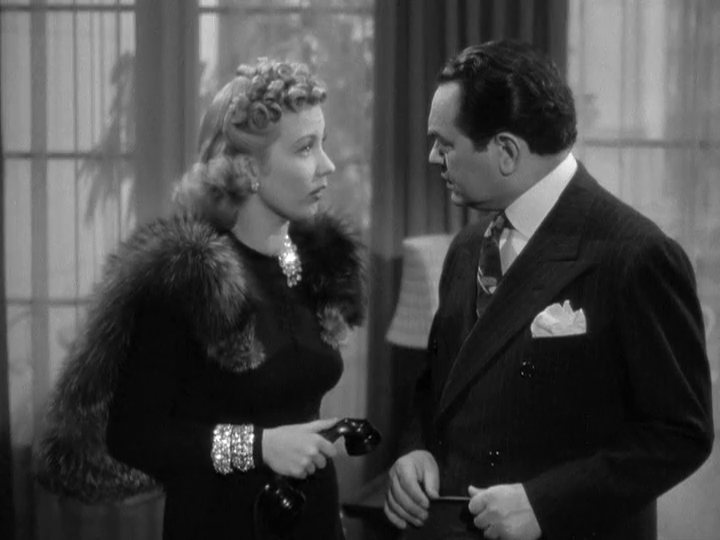
According to TCM’s article, this comedic crime flick (featuring Edward G. Robinson and Humphrey Bogart in their fourth and penultimate on-screen pairing before Key Largo in 1948) was purportedly made by Robinson in exchange for his casting in the more serious, non-gangster-themed Confessions of a Nazi Spy (1939) and The Sea Wolf (1941). As a farce, it pales in comparison with Robinson’s delightfully goofy A Slight Case of Murder (1938) — however, it offers enough off-beat touches and narrative twists that fans likely won’t be too disappointed. Bogart’s performance is inconsequential, but Sothern is well-cast as Robinson’s deeply loyal albeit “dizzy” moll.

Redeeming Qualities and Moments:

  • Edward G. Robinson as Little John Sarto
  • Ann Sothern as Flo
  • Effective cinematography

Must See?
No, though it’s worth a one-time look.

Links:

Mark of Zorro, The (1940)

Mark of Zorro, The (1940)

“How could I refuse a man anything with a naked sword in his hand?”

Synopsis:
A 19th century Spanish don (Tyrone Power) is shocked to find that his father (Montagu Love) has been replaced as governor of Los Angeles by a corrupt alcalde (J. Edward Bromberg). Donning a mask, Power becomes “Zorro” the masked avenger, fighting the villainous Bromberg and his henchman (Basil Rathbone), and winning the heart of Bromberg’s beautiful niece (Linda Darnell).

Genres, Themes, Actors, and Directors:

  • Basil Rathbone Films
  • Historical Drama
  • Linda Darnell Films
  • Mistaken or Hidden Identities
  • Rouben Mamoulian Films
  • Tyrone Power Films

Review:
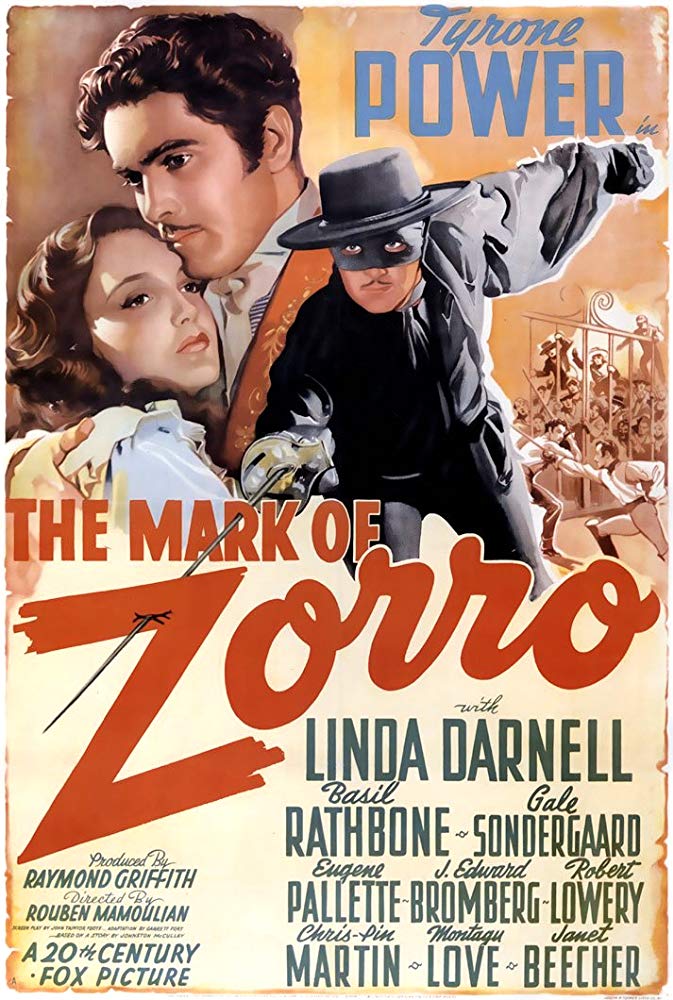
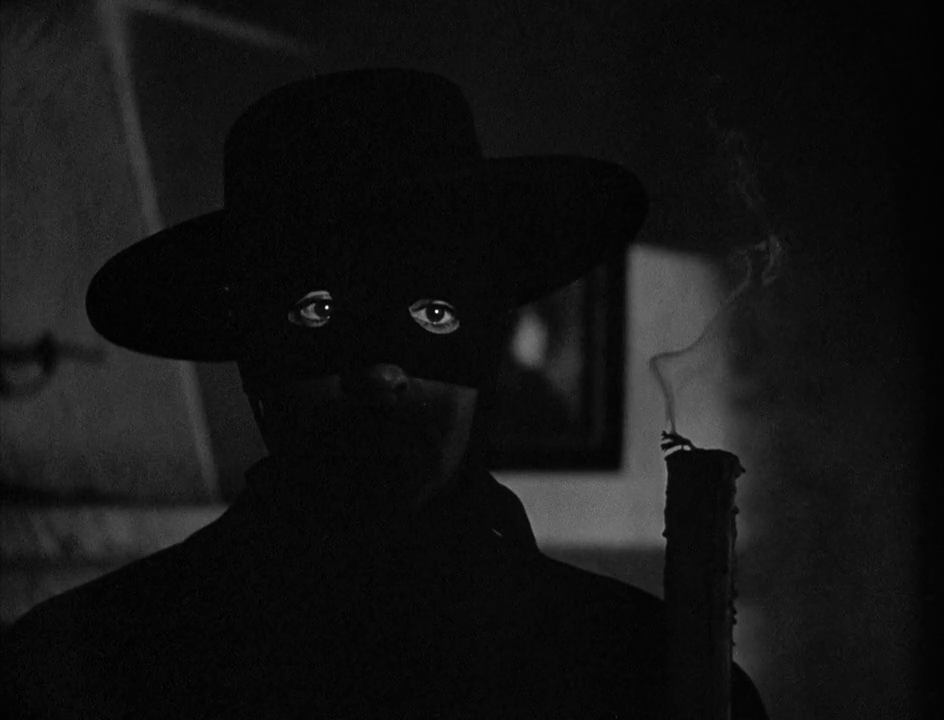
This remake of the 1920 silent-era film (starring Douglas Fairbanks, Sr.) brought the fictional masked vigilante Zorro to a new generation of movie-going viewers. 20th Century Fox matinee-idol Power is well-cast in the title role, bringing verve and elan to a character embodying a hybrid of Robin Hood and The Scarlet Pimpernel. The cinematography is appropriately atmospheric, and Rouben Mamoulian directs with a solid hand throughout; a particular highlight is Power’s thrilling duel with Rathbone. With that said, the humor, romance, and corruption-driven narrative aren’t all that memorable, and I suspect modern film fanatics won’t be quite as taken with this outing as 1940 audiences were. It’s primarily worth a look for its (and Power’s) historical popularity.

Redeeming Qualities and Moments:

  • The truly exciting swashbuckling scene between Power and Rathbone
  • Arthur C. Miller’s atmospheric cinematography

Must See?
No, though it’s recommended for one-time viewing given its historical relevance. Listed as a film with Historical Relevance and a Personal Recommendation in the back of Peary’s book. Named to the National Film Registry in 2009 by the Library of Congress.

Links:

Monty Python Live at the Hollywood Bowl (1982)

Monty Python Live at the Hollywood Bowl (1982)

“They’re a typical Hollywood audience: all the kids are on drugs and all the adults are on roller skates.”

Synopsis:
Monty Python’s comedy troupe performs live in front of an audience at the Hollywood Bowl.

Genres, Themes, Actors, and Directors:

  • Comedy
  • Monty Python Films

Review:
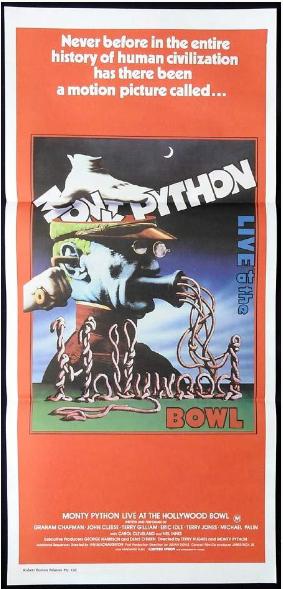
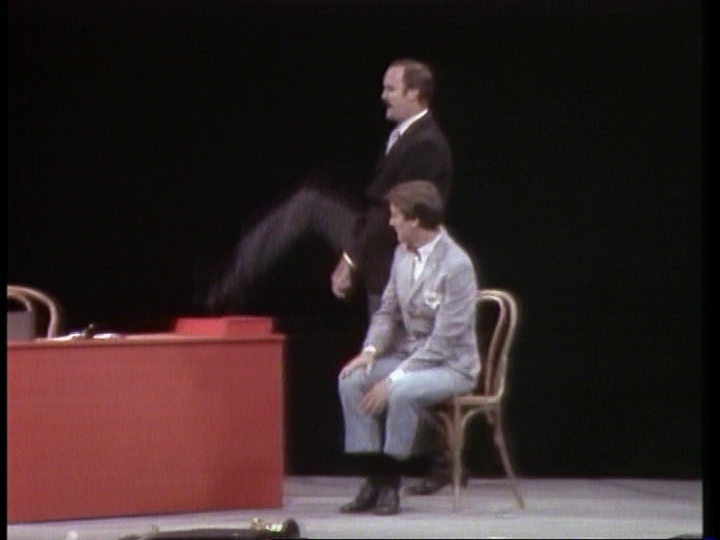
Peary lists all five Monty Python feature films in his GFTFF: And Now For Something Completely Different (1971), Life of Brian (1979), Monty Python and the Holy Grail (1975), Monty Python’s The Meaning of Life (1983), and this cinematic rendering (by director Terry Gilliam) of the troupe’s four live performances at the Hollywood Bowl in September, 1980. Peary’s clearly a completist, and there’s nothing at all wrong with adding this enjoyable ensemble work to one’s viewing list (click here for a complete run-down of the many sketches on display). However, film fanatics not already enamored with the group should probably start with one of their better-known classics and work their way towards this one as desired. With that said, … Live at the Hollywood Bowl brings a unique flavor to the team’s oeuvre in terms of incorporating direct audience participation; we are given an undeniable sense of how authentically engaged and delighted fans were.

Redeeming Qualities and Moments:

  • Numerous enjoyable skits, animation, and audience participation

Must See?
No, though of course Monty Python fans will want to check this one out.

Links: